Archive
Domaine Bousquet – Reaching New Heights
 I might be ostracized for saying this, but I will risk saying this anyway – the wine world is simple. It might even be called predictable.
Here is how it works. Plant the vineyard. Make sure it produces good grapes. Make good wines. Learn about your vineyard. Divide it into plots. Learn how those plots are different. Identify better plots. Grow better grapes. Make better wines. Repeat. Next, make great wines.
See? I told you it is simple, right? So above is a simple recipe for success. Agreed?
Okay, let’s get back down to earth. The simplicity described above is only an appearance, a view from the outside. The simplicity is achieved through the countless amounts of hard work, passion, dedication, vision. Other than that, it is very simple.
Domaine Bousquet is less than 30 years old, and yet it is one of the most impressive wine businesses in the world. How? Anecdotal evidence is in the fact that I tasted lots and lots of wines from Domaine Bousquet, and I’m yet to find the wine I didn’t like. To take it into the real perspective, please allow me to quote myself:
I wrote about the history of Domaine Bousquet very extensively on these pages, so I’m not going to regurgitate everything that I already said – instead, I would like to suggest that you read this post, and also this one. However, I will illustrate my statement about the most impressive wine business with a few pictures. Here is what high altitude (1,200 m/4,000 ft) desert looked like in 1990 when Frenchman Jean Bousquet first fell in love with the area while on vacation in Argentina:
Source: Domaine Bousquet
Here is what it looks like today:
Source: Domaine Bousquet
Here is what domain Bousquet has accomplished in less than 30 years, after being formed in 1997:
Certified B corporation, certified regenerative organic, biodynamic, USDA organic… you can continue decoding the icons on your own. 5 million bottles are produced annually, and I never had a wine from Domaine Bousquet that I didn’t like. I rest my case.
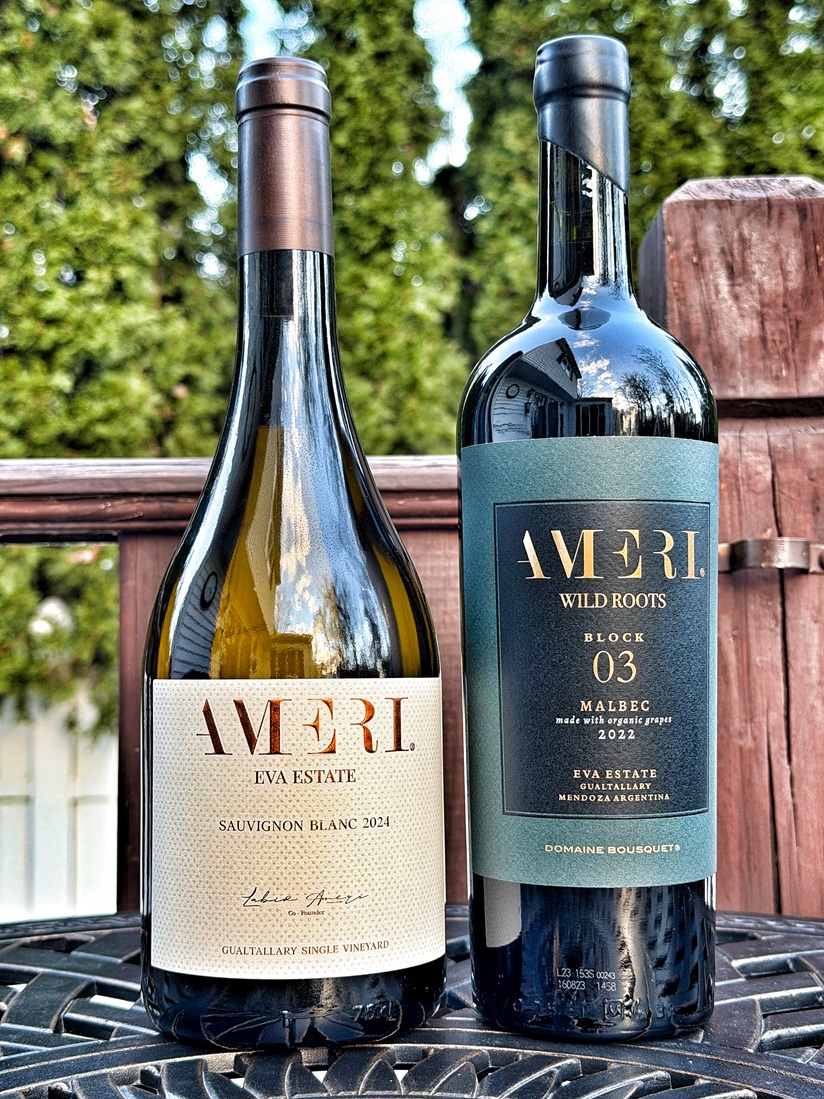
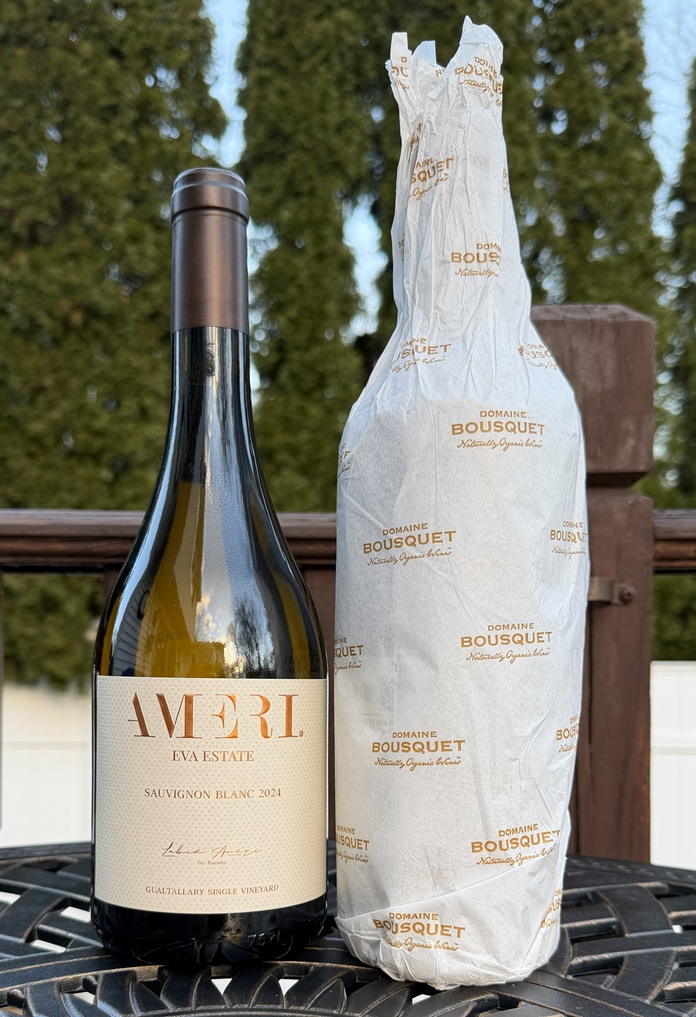
Recently, I was offered to taste two of the latest wines from the Domaine Bousquet, and this is why I had to talk about a simple recipe for making good great wines.
These wines are vineyard-specific, and even block-specific – as we mentioned, this often happens when the great wines are made. Quoting information on the Domaine Bousquet website, these wines are “Crafted from organic grapes grown in our Eva Estate vineyard in Gualtallary, Tupungato at 1,257 meters above sea level, in the heart of the Uco Valley. This wine originates from a detailed study of 123 soil pits conducted with geologist Guillermo Corona, which identified distinct soil profiles and geomorphic units across the vineyard.”
Both wines were nothing short of stunning.
2024 Domaine Bousquet Ameri Eva Estate Organic Sauvignon Blanc (12.5% ABV, $35, grapes sourced from Plot No 9, fermented in French oak barrels (50% new, 50% second use), aged for 8 months in barrel and 6 months in bottle) had a very unique profile for the Sauvignon Blanc. It didn’t have the grapefruit, nor it have a cat pee. Instead, it was reminiscent of a nice, balanced Chardonnay, with a hint of buttery notes and a touch of honey. Delicious, balanced whitestone fruit, lemon, smooth but vibrant. If we need a style comparison, Pouilly-Fumé is the only Sauvignon Blanc that comes to mind, and otherwise, Ornellaia’s Poggio Alle Gazze would be my next best comparison. A delicious wine (8+), probably the best Sauvignon Blanc I tasted in a while. Oh yes, and this wine will age. It went from restrained fruity on the first day to tart and acidic on the second to the beautiful fruit medley on the third. Definitely worth the price in my opinion.
2022 Domaine Bousquet Ameri Wild Roots Block 3 Organic Malbec (14.5% ABV, $85, fermented with native yeasts in 400-liter oak barrels, followed by a 30-day maceration, aged for 12 months in French oak, one year in bottle) was even more impressive than the previous wine. Layers of luscious fruit, cedar, a hint of vanilla (a hallmark of Malbec in my book), minerality, a touch of black currant, perfectly integrated tannins, impeccable balance. This wine would easily compete with the best California Cabernet Sauvignons, for sure in a blind tasting. (9-), will also age nicely, considering the evolution over the 3-4 days the wine was opened.
Here you are, my friends. Two new wines from Domaine Bousquet, two next-level wines. still competitively priced considering the amount of pleasure they are offering. I’m not sure what’s next for Domaine Bousquet, but one thing is for sure – I expect more great wines to come our way.
Until the next time – cheers!
Pinot Noir Battle – Let the Best (but Most Unexpected) Win…Again
It all started with a few tweets. I noticed a very high praise for the German Pinot Noirs shared by some of the European wine lovers I’m connected to on Twitter (still can’t make myself call it X, so you will have to forgive me for that). Particularly, Pinot Noir from Ahr was regarded as the best in the world, handily beating Burgundies on any occasion. I was intrigued and started searching for the Pinot Noir from Ahr, which proved to be challenging.
Ahr is a tiny region, one of the smallest in Germany – according to Wines of Germany, Ahr has only about 529 hectares of vineyards (around 1,323 acres), which comprises 40 single vineyards. 65% of the vineyard area is planted with Pinot Noir, about 860 acres – for comparison, the Jackson Family mostly Pinot Noir plantings in Oregon alone amount to roughly 600 acres. You can imagine that finding Pinot Noir from Ahr in the US was rather challenging.
The more I saw Ahr Pinot-praising tweets, the more I wanted to try it. Then one day I checked Wine.com, and there it was – Pinot Noir from Ahr, made by Meyer-Näkel. I quickly went to the Twitter folks to check if this wine would sufficiently represent the Ahr region, got an approving nod, and bought a bottle.
Once the wine arrived, I thought of the best way to try it. When it comes to learning about wine, tasting wines side by side is the best way to learn. Oh yeah, and if you want to be honest with yourself, blind tasting is the only way. We tend to be led by what we know, by our beliefs. Once we know that the wine costs $100, we want to believe that it is better than the bottle which costs $50. Once we see a bottle of Cabernet Sauvignon from Napa Valley in California, we automatically assume that it will be much better than the Cabernet Sauvignon from Lake County or Lodi. Nothing is wrong with us, this is how the brain works – so once you remove all the factors of influence, once you get one on one with the liquid in your glass without knowing the producer, the region, the price – it is very easy to be honest with yourself. So blind tasting it is.
Sometimes we don’t realize how fast the time passes. I love talking about blind tastings when I’m talking about wine, and I have a few of my favorite blind tasting examples, one of them particularly being the Pinot Noir blind tasting we have done in the past. What I didn’t realize is that the particular wine tasting I remember so well took place almost 15 years ago (time flies, isn’t it). The outcome of the tasting was very surprising, with South African Pinot Noir from Hamilton Russell beating California, Burgundy, and others – 15 years ago I didn’t even know that South Africa produced Pinot Noir!
Many things have happened in the wine world over these 15 years – of course, Pinot Noir is one of the oldest red wines produced in the world, but now it is literally produced everywhere – I don’t know if today there is a country which doesn’t produce Pinot Noir wines (maybe Spain?). Also, the quality of Pinot Noir throughout the world got a lot higher. The tasting you are about to read about is the perfect illustration of both points – the widespread geography and quality.
Okay, a blind tasting of Pinot Noir. The Ahr Pinot Noir got high praise, so we need to compare it with the best of the best – which means that we have to have California, Oregon, and Burgundy in the tasting, plus whatever else we might be able to find. I asked for a few samples of Oregon Pinot Noir. Very conveniently, Last Bottle had an offer for Chacra Pinot Noir from Patagonia – a different Pinot Noir from Chacra was James Suckling’s wine of the year recently, so this was a good addition to the tasting. Bottle by bottle, we assembled 12 Pinot Noirs from around the world, and the battlefield was ready to be set up.
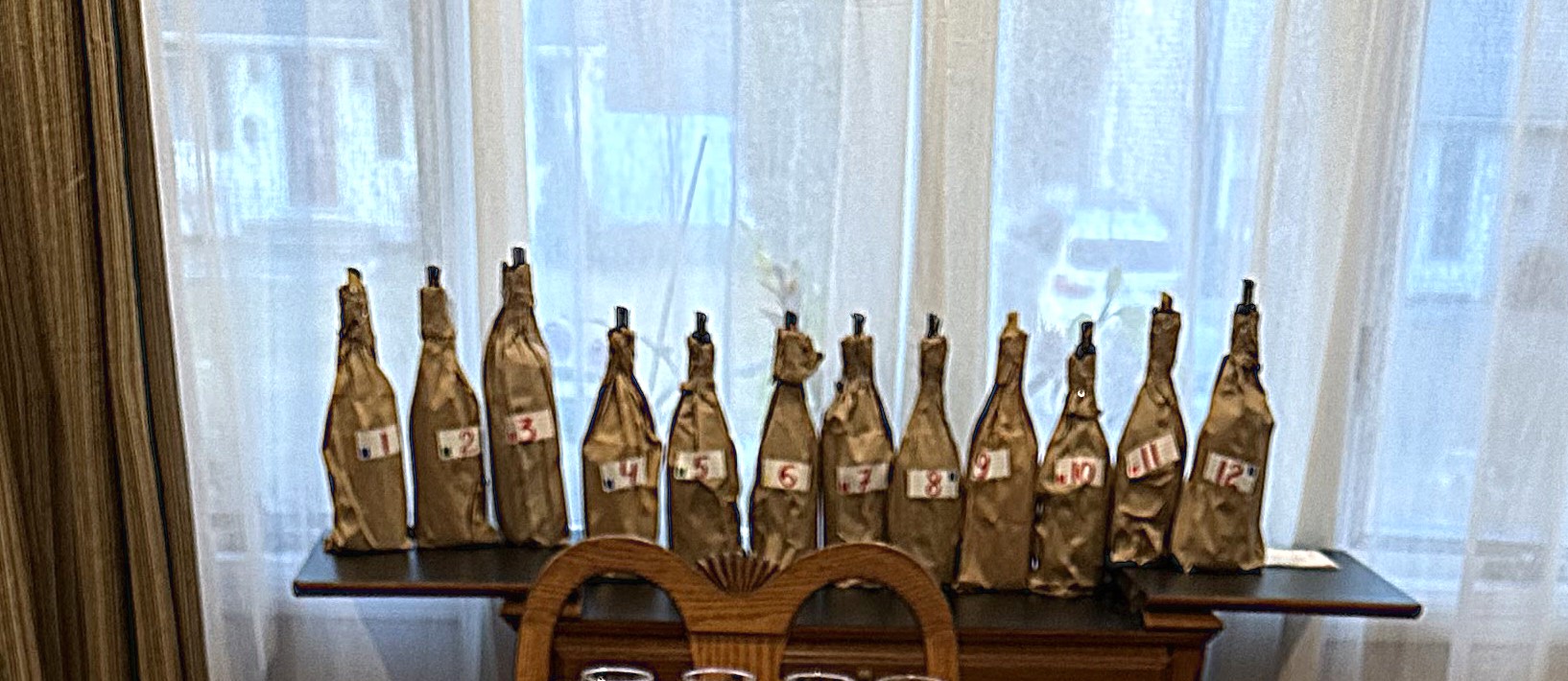
This is a blind tasting, so we placed all bottles in the paper bags, and then my daughter who was now a participant in the tasting put the labels randomly on the bags (15 years ago her role was limited only to attaching the labels :)). I also prepared a few of the “reference points” for everybody to use in the form of the crushed fruit in the glass – I didn’t find plums in the store, but we had many other relevant “references” – cherries, pomegranate, blueberries, raspberries, blackberries, and even liquid smoke.


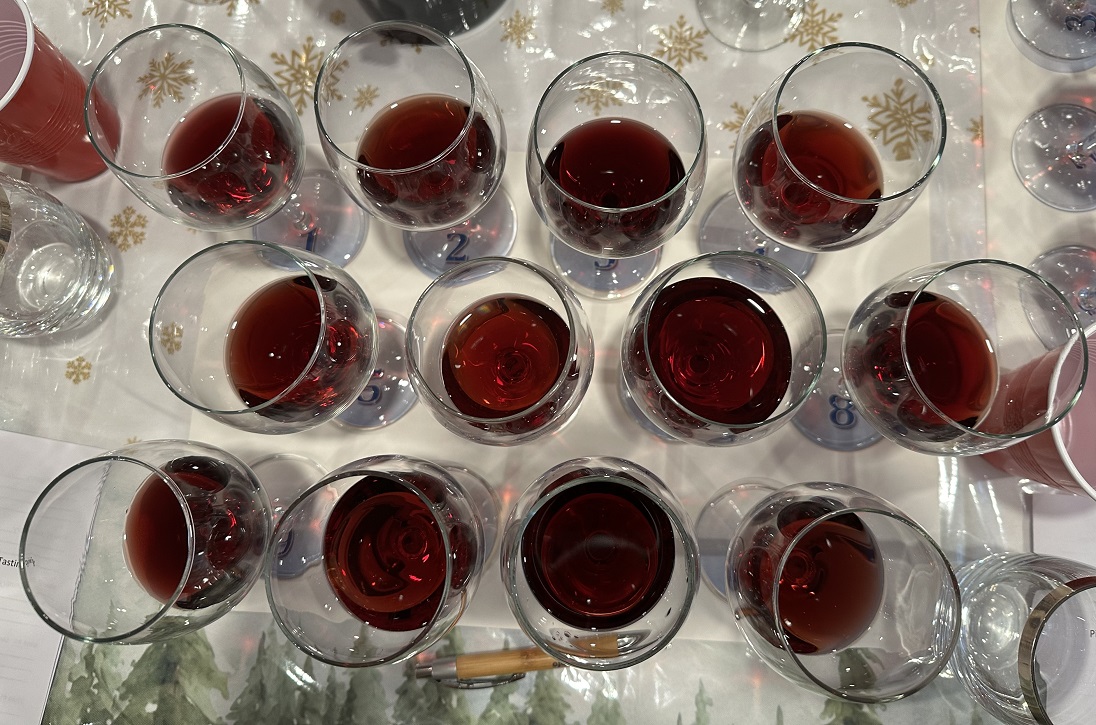
We also had paper for taking notes, and as a reference, I included all the countries that were present in the tasting so we could try guessing the countries for each wine. All countries except the two, as both Zak and I brought in one “surprise” each – Pinot Noir from the countries that are not really known as Pinot Noir producers – we didn’t know what wine the other person was bringing. Here is the list of countries that were offered for everyone’s reference: Argentina (Patagonia), California (Santa Rita Hills), France (Burgundy), Germany (Ahr), New York (Finger Lakes), New Zealand (Central Otago), Oregon (Willamette Valley, 2 wines), Poland, Washington, Surprise 1 (European country not listed above), Surprise 2.
Off we went, tasting and discussing the wines, trying to figure out what was what. Consciously tasting 12 wines in a row is not an easy fit, especially when you try to at least identify the countries. Also, each person (there were 8 of us) was supposed to decide on 3 of their favorite wines so we would be able to vote for the most popular wine of the night, so we had to score each wine. Here score is simply comparative within your notes – 1 through 5, E to A, doesn’t matter, as long as everyone can decide on their favorites.
Here are my notes for all 12 wines as the tasting was happening.
Wine #1: Country: New World (have no idea what I was thinking, I guess something outside of Europe), Vintage: 2021. Cherries, lots of cherries, raspberries, tart cherries on the palate, good balance, nice. Score: 8
Wine #2: Country: Oregon, Vintage: 2021. Iodine, cherries, tart, pepper, tannins, earthy, rocky. Score: 8+
Wine #3: Country: Poland?, Vintage: 2021. Cherries, initially fresh berries, fresh raspberries, sweet cherries, good balance. Score: 8
Wine #4: Country: Argentina?, Vintage: 2019. Gunflint, fresh, crisp, tart, rocky, cherries, excellent. Score:8/8+. Tasting again at the end of the tasting, the wine lost something, so finally score is 8
Wine #5: Country: California?, Vintage: ? Almost black color, dark, aged, medicinal nose, iodine, sweet cherries on the palate, tart. Score: 8-, after retesting later – 8, wine improved.
Wine #6: Country: Oregon? No, Vintage: ?, carrot juice on the nose, very grippy tannins on the palate, cherries. Score: 7+
Wine #7: Country: ? , Vintage: ? Beautiful color, Rutherford dust, hint of cherries, tannins and cherries on the palate, good balance. Score: 8 initially, 8+ after breathing
Wine #8: Country: Germany, Vintage: ? Love the garnet color, smoke, tar, concentrated nose. Wow! Superb – cherries, concentrated, good acidity, good balance. Score: 8++
Wine #9: Country: Oregon, Vintage: ? Pencil shavings, Rutherford dust, tannins, cherries, elegant but needs a touch more acidity. Score: 8
Wine #10: Country: ?, Vintage: ? Pomegranate seeds, cherries, very tight. Cool aid, cherry cola Score: 8-
Wine #11: Country: Finger Lakes, Vintage: ? Smoke and rubber, tar, on the nose. Rubber, tannins, cherries, became more balanced after breathing Score: 7+ initially, improved to 8 on the second tasting.
Wine #12: Country: Oregon, Vintage: ? Cherries, vegetation, cool aid on the nose. Cherries, good balance, good acidity, excellent. Score: 8+, went down to 8 after re-tasting as the finish showed sugar candy.
Ugh, this was not an easy tasting, but it was finally complete. Time to decide on favorites. First, everyone had to make their own decisions for the 3 favorite wines. After re-tasting and struggling, my list of favorites in descending order looked like this:
1st favorite: #8
2nd favorite: #2
3rd favorite: #7
Next, the vote. Remember, each person (there were 8 of us) was allowed to vote for 3 favorite wines, thus we just called the wine number and asked to see a show of hands. Here are the results.
Wine #1 – 1
Wine #2 – 5
Wine #3 – 1
Wine #4 – 0
Wine #5 – 0
Wine #6 – 3
Wine #7 – 3
Wine #8 – 3
Wine #9 – 3
Wine #10 – 1
Wine #11 – 1
Wine #12 – 3
Therefore we had a clear winner – wine number 2, and 5 wines in the second place with 3 votes each – #6, #7, #8, #9, and #12.
Next came the best and final part of the blind tasting – the reveal! Would you believe me If I told you that the revealed bottle elicited a loud “oh, wow, really” literally from everyone? Surprise after surprise after surprise.
The most popular wine? Pinot Noir from (drum roll, please)
Japan!
Seriously, Japan??? How? Yes, Japan makes wine, but to make Pinot Noir that shows better than Oregon, California, Burgundy, and all other countries? Just wow. Apparently, this is an impossible-to-get “cult” wine, produced in minuscule quantities, $100 wholesale but $300 retail if you can even find it? That was the first “surprise” wine.


Pinot Noir from Poland that was very good? How about that? My favorite wine of the tasting, Southern Lines from Central Otago, by some absolute miracle was $15 per bottle – how is that even possible (it is a case buy if you can find it at that price).
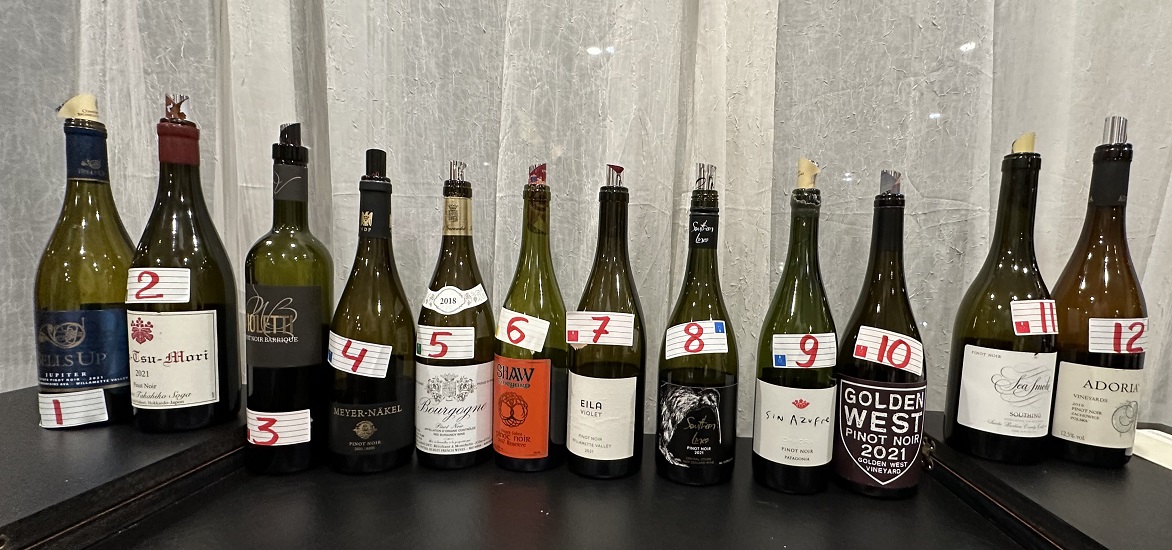
Here is the full list of wines in the numbered order:
- 2021 Bells Up Jupiter Pinot Noir Estate Chehalem Mountains AVA (13.5% ABV, $50)
- 2021 Domaine Takahiko Soga Nana-Tsu-Mori Pinot Noir Hokkaido Japan (13% ABV, $300?)
- 2022 Violetti-Rebbau Pinot Noir Barrique Vin de Pays Suisse (13% ABV, $N/A)
- 2021 Meyer-Näkel Pinot Noir Ahr Germany (12.5% ABV, $56 at Wine.com)
- 2018 Paul Garaudet Pinot Noir Bourgogne AOC (13% ABV, $39)
- 2017 Shaw Vineyard Pinot Noir Reserve Finger Lakes New York (13% ABV, $N/A)
- 2021 EILA Violet Pinot Noir Willamette Valley (12.7% ABV, $65)
- 2021 Southern Lines Pinot Noir Central Otago New Zealand (13.5% ABV, $15)
- 2022 Chakra Sin AzuFre Pinot Noir Patagonia Argentina (12% ABV, $30 Last Bottle)
- 2021 Golden West Pinot Noir Goden West Vineyard Royal Slope Washington (14% ABV, $21)
- 2011 Sea Smoke Southing Pinot Noir Santa Rita Hills Santa Barbara County (14.5% ABV, $100?)
- 2021 Adoria Vineyards Pinot Noir Zachowice Poland (12.5% ABV, $25)
You see, this is what blind tasting does. Under the guise of the brown bag, all wines are “the same”. You are not influenced by anything – “ahh, I brought this wine, it must be better”, “ahh, the guy in the store was raving about it so much”, “ahh, it got 99 points from Suckling” – none of this matters. You let your palate be the judge. Wine has to give you pleasure.


As the wines were left at my house after the tasting, I was the lucky bastard who had an opportunity to taste them over the few next days. This is not how the general population consumes wines, so this has very little bearing on the results and the whole tasting process, but I can tell you that for example, the Sea Smoke Southing became literally my favorite wine – it developed a depth of flavor and a beautiful complexity – if it would taste like that during the tasting it would be handily the wine number 1, for sure for me. The Pinot Noir from Ahr also developed additional layers, with gunflint and roasted meat notes now dominating the flavor profile in a very respectful manner, making it a lot more pleasant to drink – again, in that state it would again get a much higher rating in my book. And pretty much across the board, the Pinot Noirs continued their evolution and most of them were still drinkable even 5 days after being open – a testament to quality.
Here we are. 15 years later, the most unexpected Pinot Noir wins again. But this is the beauty of wine. The mystery, the enigma, the art. Wine is a liquid art form, and this tasting delivered an unmeasurable amount of pleasure and created new memories. This is what life is all about, isn’t it? Creating good great memories. And wine is exceptionally good at that. Onward and upward.
For The Love Of The Cab: Cabernet Deep Dive with Domaine Bousquet
I can’t speak for all oenophiles, but at least speaking about moi, there is one question that I dread the most:
What is your favorite wine?
This is not a question I ever want to hear – of course, as soon as people figure that you are “into wine”, this is the question everyone thinks is the most appropriate. And yet this is bad – scrap that – horrible question as it doesn’t have an answer. Or it has an answer – accepting that the answer will be different every time the question is asked.
Maybe a better question to ask is
What is your favorite wine today?
At least this is a question that I can answer.
Today, my favorite wine is Cabernet, or Cabernet Sauvignon and Cabernet Franc, to be more precise. Cabernet is what we are going to talk about today. And not just any Cabernet – all organic Cabernet from Argentina.
I have to admit that Cabernet Sauvignon is one of my most favorite wines not only today but on any day. I find a classic profile of cassis, eucalyptus, and bell pepper, sometimes accompanied by mint and anise simply magical. When I see Cabernet Sauvignon on the label, this immediately sets my expectations – and that is exactly where a huge disappointment opportunity lies. The wine might be very good, but if it is called Cabernet Sauvignon, and then doesn’t offer the aforementioned classic traits, that immediately becomes a letdown, sometimes even unjustifiably so. The good thing is that Argentinian Cabernet Sauvignon is usually very well versed in its classic expression, so it is generally a Cabernet Sauvignon that doesn’t disappoint.
Domaine Bousquet is one of the most impressive wine businesses in the world. I wrote about the history of Domaine Bousquet very extensively on these pages, so I’m not going to regurgitate everything that I already said – instead, I would like to suggest that you read this post, and also this one. However, I will illustrate my statement about the most impressive wine business with a few pictures. Here is what high altitude (1,200 m/4,000 ft) desert looked like in 1990 when Frenchman Jean Bousquet first fell in love with the area while on vacation in Argentina:
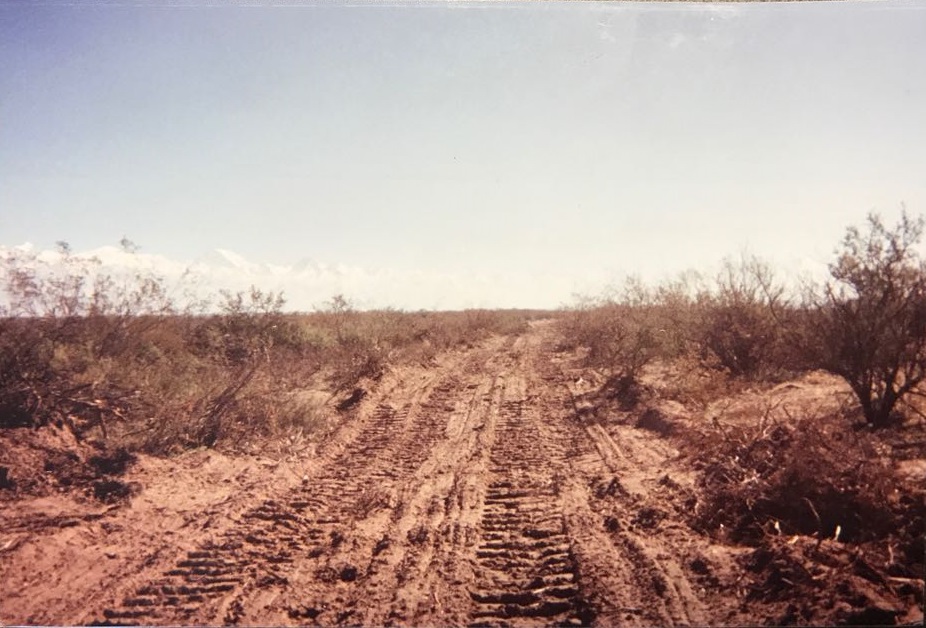
Source: Domaine Bousquet
Here is what it looks like today:
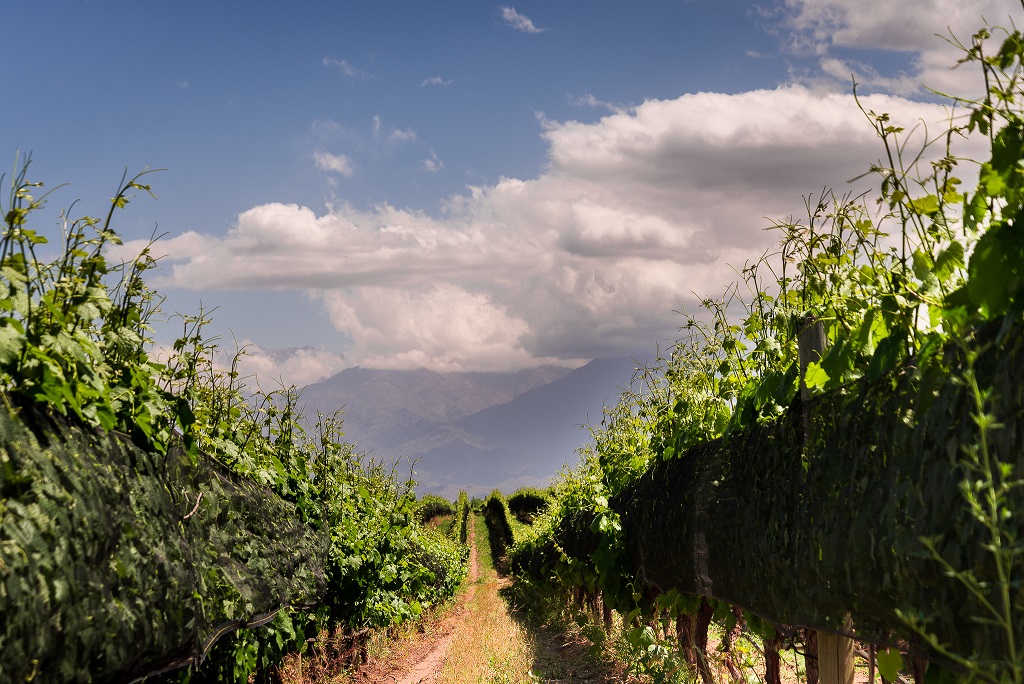
Source: Domaine Bousquet
Here is what domain Bousquet has accomplished in less than 30 years, after being formed in 1997:

Certified B corporation, certified regenerative organic, biodynamic, USDA organic… you can continue decoding the icons on your own. 5 million bottles are produced annually, and I never had a wine from Domaine Bousquet that I didn’t like. I rest my case.
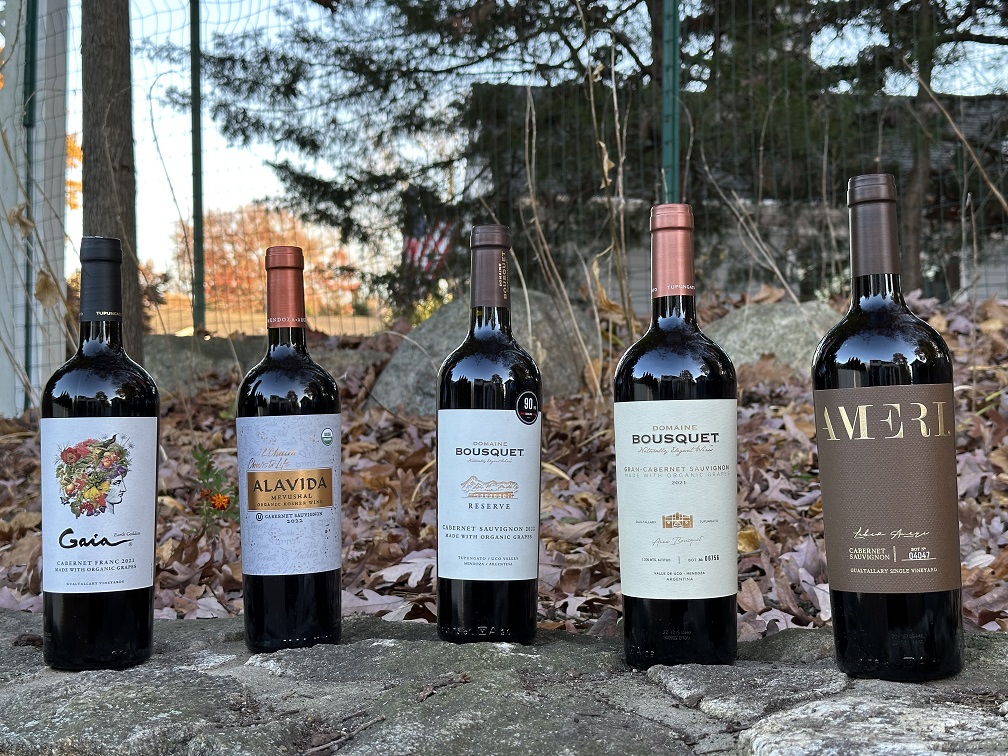
Today we are focusing on Cabernet wines from Domaine Bousquet. While Malbec might be a king of Argentinian wines, Cabernet Sauvignon probably is a royal prince. Argentinian Cabernet Sauvignon wines are world-famous and well sought after. Domaine Bousquet offers a full range of Cabernet wines, both in price and in style. I had an opportunity to taste through such a range, so here are my impressions.
Let’s start with Cabernet Franc first. I love the label for this wine, it is very lively and colorful.
2021 Domaine Bousquet Gaia Organic Cabernet Franc Uco Valley (14.5% ABV, $20, 100% Cabernet Franc, 10 months in used French oak)
Dark garnet
Classic, a distant hint of bell pepper, cassis, eucalyptus.
Cassis, soft tannins with firm structure, a touch of peppery notes, good acidity, excellent balance.
8, delicious and classic
Similar to Hebrew’s L’Chaim! Alavidaalso means To Life! in Spanish. USDA Organic (no SO2 added), unoaked, and Kosher wine is perfect not just for the holidays, but for any day.
2022 Domaine Bousquet Alavida Kosher USDA-Certified Organic Cabernet Sauvignon Uco Valley (14.5% ABV, $18, 100% Cabernet Sauvignon, no added SO2, Kosher)
Dark garnet, almost black
Dark fruit, a hint of dark chocolate
Fresh wild berries, playful, good mid-palate weight, herbs, a touch of sweet oak, excellent balance, delicious.
8, excellent
2022 Domaine Bousquet Cabernet Sauvignon Reserve Tupungato / Uco Valley (14.5% ABV, $18, 6-8 months in French oak, organic grapes, vegan friendly)
Dark garnet
Blueberries on the nose, a hint of eucalyptus
A touch of cassis, tart, a bit astringent, but still well balanced. Tannins are noticeable but well integrated.
7+, needs time
2022 Gran Bousquet Organic Cabernet Sauvignon Uco Valley (14.5% ABV, $25, 85% Cabernet Sauvignon, 15% Malbec, 10 months in French oak, 50% new, 50% used)
Dark garnet
Cassis and eucalyptus in the nose
Cassis, a touch of bell pepper, voluptuous, generous, perfectly balanced, excellent acidity; a delight.
8+, outstanding. This wine was a “California rendition” of Cabernet Sauvignon. Also at this price point, it is a steal.
Ameri is not just a single vineyard but also plot-specific wine made only in exceptional years.
2021 Domaine Bousquet Ameri Single Vineyard Organic Cabertnet Sauvignon Uco Valley (14.5% ABV, $36, 100 Cabernet Sauvignon, 12
months in French oak, 65% new, 35% used)
Dark garnet
Cassis, a hint of bell peppers, a whiff of a leather and sweet oak, complex and inviting.
The beautifully restrained palate leads with acidity, cassis, dark chocolate, well integrated tannins. Wine lost none of its freshness after 3 days. Can age for 25+ years. Outstanding.
8+, delicious. Old world, acidity-driven style, reminiscent of Bordeaux.
Here you are, my friends. 5 beautiful organic, high-altitude Cabernet wines, well worth seeking and enjoying.
Have you had Domaine Bousquet wines? What are your thoughts? Cheers!
Low Calories, Low Alcohol Wines – Second Encounter
About a year ago, I tried for the first time the wine deliberately produced to be in the “low calorie, low alcohol” category – you can find the story here. You might want to refer to that article as I made an effort there to explain how calories are calculated in wine, which I’m not planning to repeat today.
Back in April, I was offered to taste two of the low-calorie, low-alcohol wines – and this is where the story started. To put things in perspective – the “low calories, low alcohol” Pinot Noir I tasted a year ago had 124 calories per standard glass – versus 154 calories in the glass of full-bodied Cabernet Sauvignon – with 30 calories difference, you make your own conclusions. To be clear, I relegate the “low calories” sentiment to pure marketing – therefore when I got an email with an offer to review two low-calorie wines, my first inclination was to respectfully decline. Also, the wine labels in the picture had a clear message depicted with the standout letters LO CA – I attributed CA to California which was also kind of a letdown as I prefer Californian wines to be unmanipulated.
After skimming (sic!) through the email I wrote back a reply (tirade, rather) explaining how I would only write about wines if I like them, and I wouldn’t write about them if I don’t like them – of course, this was obvious, but nevertheless, I decided for some reason to stress it and then agreed to try the wines.
A few days later I got the wines and then it was time to taste them. I took pictures of the bottles and studied the labels of the wines I was about to open. The wines are from California, so it is given that the white wine is Chardonnay, and the red should be Cabernet Sauvignon… Malbec? Why does it say Malbec? Malbec from California? What an unusual choice for the low-calorie wine!
oohhh…
Why does it say “Argentina” on the label?
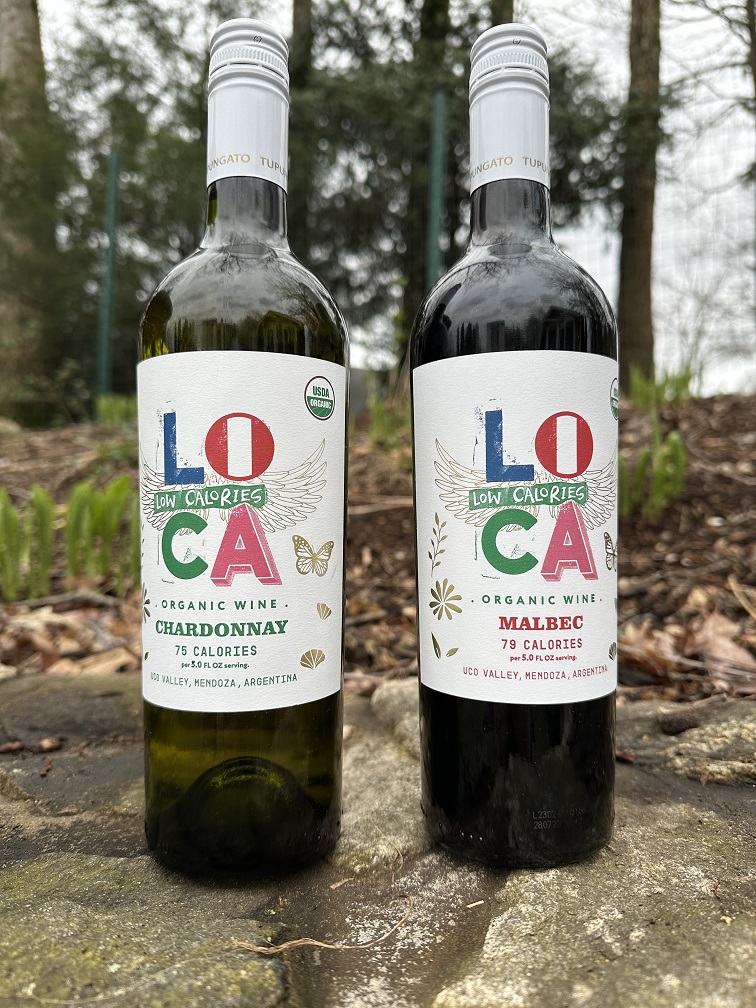
Ah, the wines are from Argentina! LO CA simply stands for LOw CAlories, that CA has nothing to do with California (also “loca” means “crazy” in Spanish, but this is probably unrelated?). And the wines are produced not by some unknown little winery but by Domaine Bousquet, possibly the best organic wine producer from Argentina and one of my favorite producers overall as so far I haven’t had a bottle of wine from Domaine Bousquet that I didn’t like. And now I feel embarrassed.
Remember I told you that I skimmed through the email instead of actually reading it (horrible habit, I know)? If would carefully read the email this embarrassing situation would’ve been avoided, as I would just gladly accept the wines from Domaine Bousquet – I quickly rushed to write an apologetic email explaining my error in judgment.
From here on I was a lot more encouraged to taste the wines, and now was really looking forward to the first sip.
In almost 35 years of its existence (while vacationing in Argentina, Frenchman Jean Bousquet purchased 1,000 acres of arid desert in Gualtallary Valley in Uco Valley in 1990, the beginning), the folks at Domaine Bousquet accomplished truly a lot – a lot more than thousands and thousands of other wineries accomplished in their lifetime. Domaine Bousquet produces 4 million liters (the equivalent of 5.3 million bottles) of wine 95% of which is exported to 50 countries. More importantly, the winery started practicing organic viticulture in 1997, and today it is USDA-certified organic, Ecocert-approved, and Regenerative Organic Certified™. To make sure you can fully appreciate it, there are only 21 regenerative organic certified wineries in the world at the moment of this writing and Domaine Bousquet was the first winery in Argentina to obtain this certification.
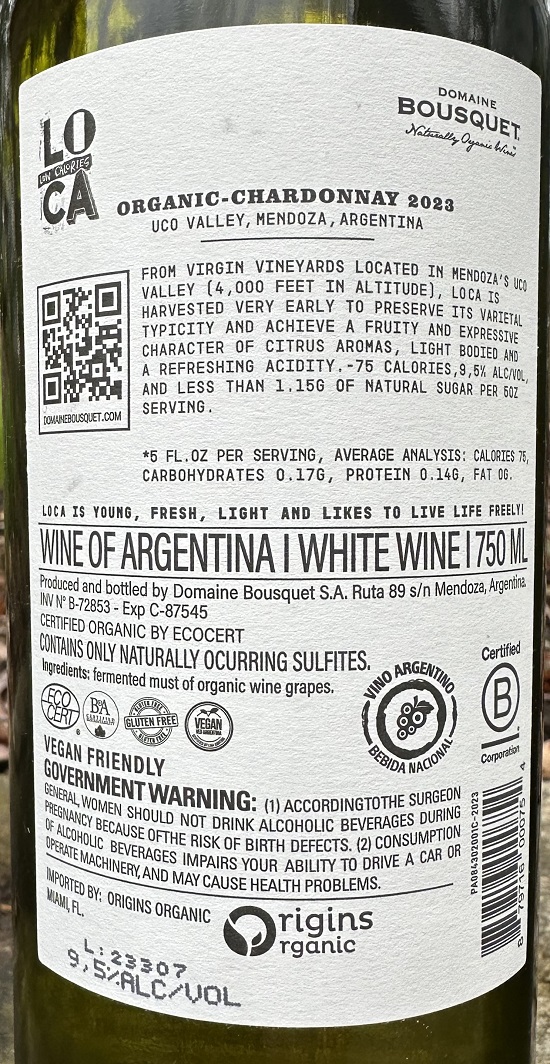 How do you make your wines low calorie, low alcohol without any manipulation? I didn’t think of it, but as I started working on this post I had to read a bit about the wines I was tasting, and it appears that it is easy 😀you just harvest early.
Here is the information from the winery notes for these two wines:
“Grapes were harvested in the early summer, between late January and early February, about two months earlier than for standard bottlings. To guarantee optimum quality, different parcels were picked at different times. The grapes were then fermented in stainless steel tanks for 12-17 days. Bottling followed shortly after to ensure peak freshness, preserve its varietal typicity, and achieve a fruity and expressive character.”
Now, the culmination point – my impressions after tasting the wines.
2023 Domaine Bouquet LO CA USDA Organic Chardonnay Uco Valley (9.5% ABV, $14, Residual Sugar: 1,21; Acidity / PH: 7.72/3.21; 75 Calories):
This was an interesting experience. The nose was muted, and on the palate, there was still not much except the acidity. The wine had nothing but the acidity. Dont’ get me wrong – it was drinkable, but it was truly competing with Muscadet for the title of “Best oyster wine”. I would be more receptive to this wine if the label wouldn’t say Chardonnay, but instead simply said “white wine”, as I have certain varietal expectations for Chardonnay wines. Over the next few days, the wine continued to be drinkable and complexity increased a bit, but still the acidity was the key element.
Verdict: Food wine. I would love it with oysters, and I’m sure you would too. You can probably have a glass on its own on a hot summer day, but better have the food ready.
2023 Domaine Bouquet LO CA USDA Organic Malbec Uco Valley (9.5% ABV, $14, Residual Sugar: 1,21; Acidity / PH: 5.62/3.62; 79 Calories)
This wine was even more interesting than the Chardonnay. Beautiful ruby color. Nose of the fresh, just harvested wild berries, delightful. The palate offered the same berry medley, fresh wild berries all the way but without structural support, and of course acidity driven. This wine reminded me of how Beaujolais Nouveau was 10 years ago, just fresh berries and nothing else. The wine lasted for a few days, gaining a bit more complexity (a welcomed development). I wouldn’t say it is my wine, but if you are looking for a refreshing wine for a hot summer day, this might do it. And I only realized now, when I’m writing this, that I should’ve chilled the wine and it probably would make it more interesting.
Verdict: It is drinkable, and if you are really looking to cut some calories, this might be the wine you need – just don’t overdo it, because an extra glass with low calories will instantly negate all your “low-calorie” achievements. Serve chilled.
Here you go, my friends. Two organic wines, low calorie, low alcohol – perfect to serve at your next summer party. Just have the food ready.
As Expected
Is “expectation” a wine term?
In a direct sense it is not, of course – “expectation” is not the name of the grape, not a wine descriptor, and not the name of the winemaking process. And nevertheless, for anyone who proclaims “serious affection, a.k.a love, a.k.a obsession” to the simple beverage produced from the grape juice, I would argue that “expectation” is a wine term, or at least, a wine-related term.
Expectations start from the very first look at the bottle – even before we see the label, the bottle’s shape and overall appearance initiate a thought process regarding the bottle’s content. Obviously, once we carefully look at the label, our expectations are enhanced further. Okay, young Barolo, I need to get the decanter ready. Ohh, this Sauvignon Blanc is too warm – I need to chill it before the guests arrive.
But then these are not even real expectations. Once you recognize the region, the grape, the producer – this is when the mind games of expectations start. Looking at the bottle of Opus One, Petrus, Penfolds Grange, or Dom Perignon, I’m sure that the mind of an average wine lover goes ballistic – “this is going to be amazing”. The brain would not accept anything less. Even after you try the wine, the brain will interject into the message from your palate if it is anything less than “oh my god, I love this”. But before I mount my favorite horse it appears that there is an idiom “to mount a hobbyhorse” (I hope there is a saying like this in English, as there is one in Russian), let me change the direction to where I’m actually trying to arrive.
As we are discussing the meaning of the wine term “expectations”, it is interesting to see how your expectations are built. Let’s say you tried a bottle of wine from an unknown producer, and you liked it. Then you tried another one. And another one – and I don’t mean in one sitting – slowly over time. As you keep liking the wines, your expectations are being built. You try new vintages, new wines from the same producer and your expectations keep growing. Once you become really familiar with the producer, you take a bottle you never had before, and before even opening it, you are confident that this will be a good wine – you expect nothing less. You might not love each and every wine from a given producer after you try them, but at least in terms of expectations, your ways are set. Just to give you an example, I expect excellent wines from La Rioja Alta, Lopez de Heredia, Field Recordings, Turley, Carlisle, Masciarelli, and lots of others – and yet while I’m writing this post, I’m drinking the wine from Carlisle that I don’t really enjoy at this moment (just opened the bottle, the wine needs to breathe). The fact that I don’t enjoy one particular wine doesn’t affect my general expectations – next time, holding a bottle of Carlisls in my hands, I would fully expect that I will like the wine “at hands”.
A “circle of expectations” is not cast in stone. As we taste wines from the new producer, we build confidence and our expectations are growing to the point of this unconditional trust. Today, I want to share with you one of my latest additions – Domaine Bousquet from Argentina.
Domain Bousquet is not even 30 years old – it was founded in 1997, so in the wine world this is a very short period of time – but take a look at this simple picture above, which perfectly summarises Domain Bousquet’s achievements – Certified Organic with multiple designations, biodynamic Demeter certified, 1st in Argentina and 4 th in the world regenerative organic winery – you can continue researching this very impressive list on your own. But this is the wine we are talking about, so all of the certifications take a back seat to the content of the glass. What’s inside of glass matters – does it give you pleasure or not. And Domaine Bousquet produces damn impressive wines.
I was introduced to the wines of Domaine Bousquet exactly 3 years ago, and that introduction started with their Charmat method sparkling wines – organic, delicious, and inexpensive. Next, in August of the same year, 2021, I had an opportunity to taste an extended lineup of Domaine Bousquet wines, that were also excellent. Earlier this year I was blown away by their unoaked organic wines containing no added SO2, and then one more time in December when I tasted their Classic method sparkling wines which were world-class superb and an absolute steal at $18.
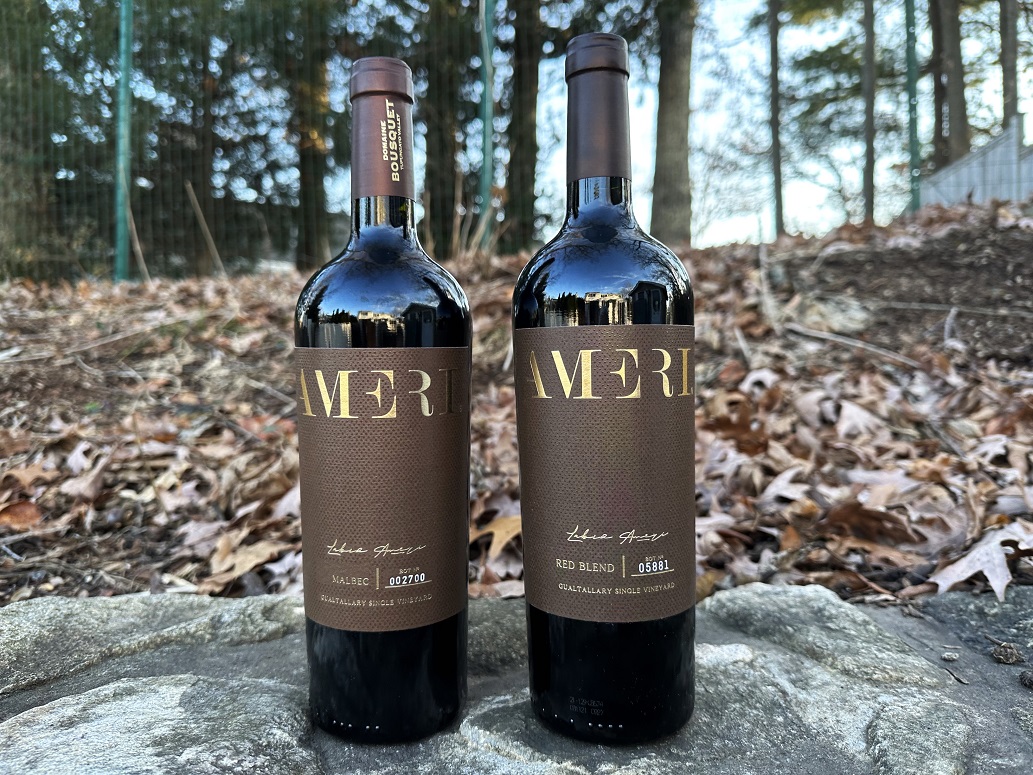 Now, I had an opportunity to taste some of their very best wines. These wines perfectly speak to my obsessed oenophile mind, as they are not even single-vineyard, but rather single-plot wines – and they are produced only in exceptional years. You know that I don’t like quoting the original winery notes, but I feel that in this case it is appropriate:
“Named for Domaine Bousquet co-owner Labid al Ameri, Ameri is not just“single vineyard” but “specific cluster,” and made only in exceptional years. At 1,257m/4,125 ft, the highest of the estate, the certified-organic vineyard, located in Gualtallary in the Andean foothills, gets a perfect combination of near constant intense daytime sunlight and huge day/night temperature differentials. The result is fruit with increased levels of sugar AND acid, flavor, and aromatics.”
Yes, I had expectations regarding these wines. I expected these wines to be well-made and tasty. And my expectations were met. Fully.
Here are my notes:
2020 Domaine Bousquet Ameri Malbec Gualtallary Mendoza Argentina (14.5% ABV, $37, 100% Malbec, 12 months in French oak)
Dark garnet, almost black
Cherries, plums, eucalyptus
Cherries, espresso, firm structure, good acidity, good balance
8, excellent
2020 Domaine Bousquet Ameri Red Blend Gualtallary Mendoza Argentina (14.5% ABV, $37, 60% Malbec, 20% Cabernet Sauvignon,10% Syrah, 10% Merlot, 12 months in French oak)
Dark garnet, almost black
Plums, fresh raspberries, mocha
Cherries, a hint of cassis, eucalyptus, sweet oak, perfectly integrated tannins, firm structure, excellent balance
8, delicious.
Both wines were just perfect from the get-go, but both also lasted for at least 5 days on the counter with the air being pumped out – a testament to the quality.
Here you are, my friends – all-organic, delicious, top-shelf wines from Argentina – delivering the pleasure.
As expected.
Brilliance of the Bubbles
 Champagne, anyone?
Well, I’m not in the mood to celebrate anything going on in the world right now. But I still drink wine, and while Champagne = Celebration is deeply ingrained in our minds, here I’m just talking about Champagne as a type of wine, the same as white, red, and Rosé. And I need to further correct myself – I’m not even talking about Champagne, the sparkling wine produced only in the Champagne region of France. The subject of today’s post is generic “bubbles”, the sparkling wine produced elsewhere in the world.
Simplistic on the surface, “bubbles” is an interesting wine category. Nobody is born craving wine, wine is an acquired taste. Bubbles might be the next level of acquired taste compared to wine, especially if we can exclude social pressure from consideration. Classic Champagne typically boasts cut-through acidity and is expected to be devoid of any traces of fruit for the joy of purists. And god forbid any sweetness can be detected in the glass… Not the wine someone intuitively craves. But this is not the biggest issue with the “bubbles”. The bigger problem is that people are well-trained to recognize the word Champagne, and once they hear that word, whether they truly love the liquid in the glass or not becomes irrelevant – “ahh, it is Champagne!”.
As anecdotal evidence, my favorite example is Kevin Zraly’s Windows on the World wine classes. The last class in the series of 8 started with Champagne. 4 wines were poured blindly to the group of roughly 120 students. After tasting all 4 wines, we were asked to have a show of hands for our favorite Champagne. I don’t remember details about wines #1, #2, and #3, but there was a somewhat equal spread between these three wines. Wine #4, however, had barely any hands raised. As the wines were revealed, Kevin Zraly said “and this is why, people, you shouldn’t drink vintage Champagne” – wine #4 was Dom Perignon, creme de la cream of Champagne world. Have we known that we were drinking Dom Perignon, I guarantee that wine #4 would be adored by everyone.
Before you get any wrong ideas, let me assure you – this is not a Champagne-bashing post. I love good Champagne as much as any other hard-core Champagne aficionado is. 2002 Pol Roger Sir Winston Churchill Champagne was my wine of the year in 2016. I have enjoyed immensely Krug, both vintage and non-vintage. Champagne Lanson, Duval-Leroy, Piper-Heidsieck, Bollinger, and on, and on, and on. But the point I’m trying to make here is that when looking for bubbles, you shouldn’t hang up on Champagne and only Champagne – sparkling wines are made everywhere today, and there are lots and lots of very worthy bubbles you can enjoy, as long as you are willing to accept that great sparkling wines don’t have to come only from Champagne.
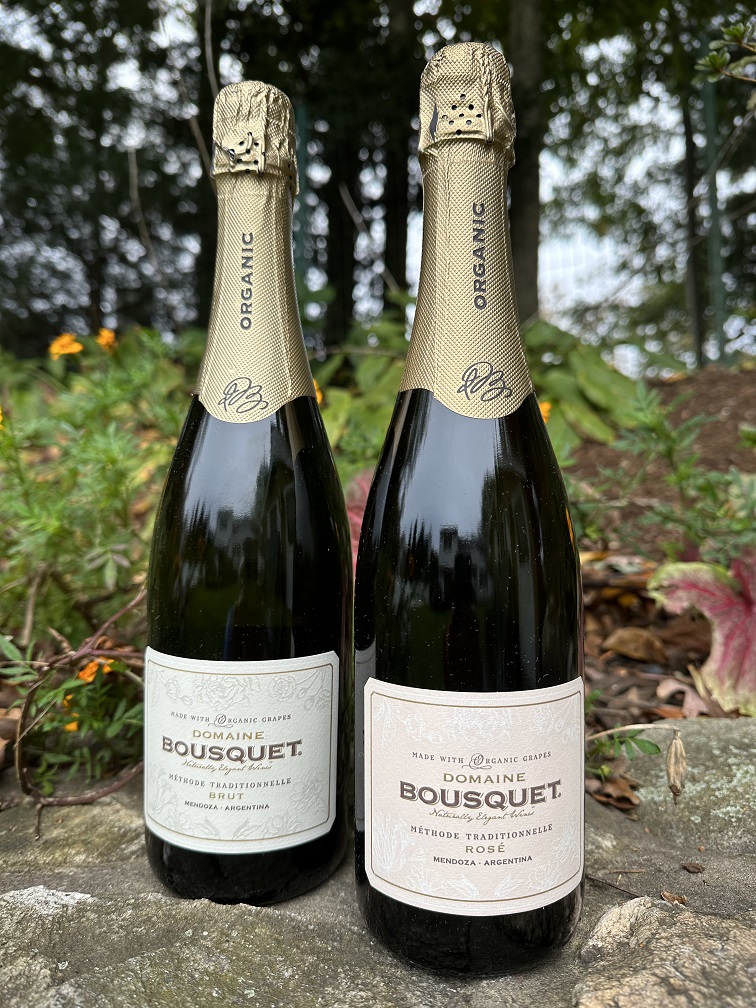
For an example of the great bubbles from outside of Champagne, let’s take a trip to Argentina. On a world scale, Argentina arguably didn’t reach yet the status of a world-class sparkling wine producer. And for me as a wine lover, this is very good news – it means I can still enjoy sparkling wines from Argentina at reasonable prices. Just to give you an example, we can look at the sparkling wines of South Africa, known as Cap Classique. Back 3 years ago, Graham Beck Brut Rosé Methode Cap Classique, one of my favorite sparkling wines from South Africa, could be found at my local wine shop for $16.99. The price two weeks ago? $30.99. So before it happens to Argentinian bubbles, let me bring you into the know.
Please meet Domaine Bousquet. Well, this might not be the correct way to introduce Domaine Bousquet here – if you are reading this blog regularly (are you??) then you already met Domaine Bousquet on multiple occasions. If you look at the Domaine Bousquet website, you will see that they present themselves as the #1 organic, regenerative and sustainable winery in Argentina. When I think of Domaine Bousquet, especially after tasting their wines, my first thought usually is “how do they do it???”. As an example of “how do they do it”, Domaine Bousquet offers USDA-certified organic wines (!) called Virgen that taste great and cost only $13 as the suggested retail price. And my latest discovery in the “how do they do it” category is two of their classic method sparkling wines.
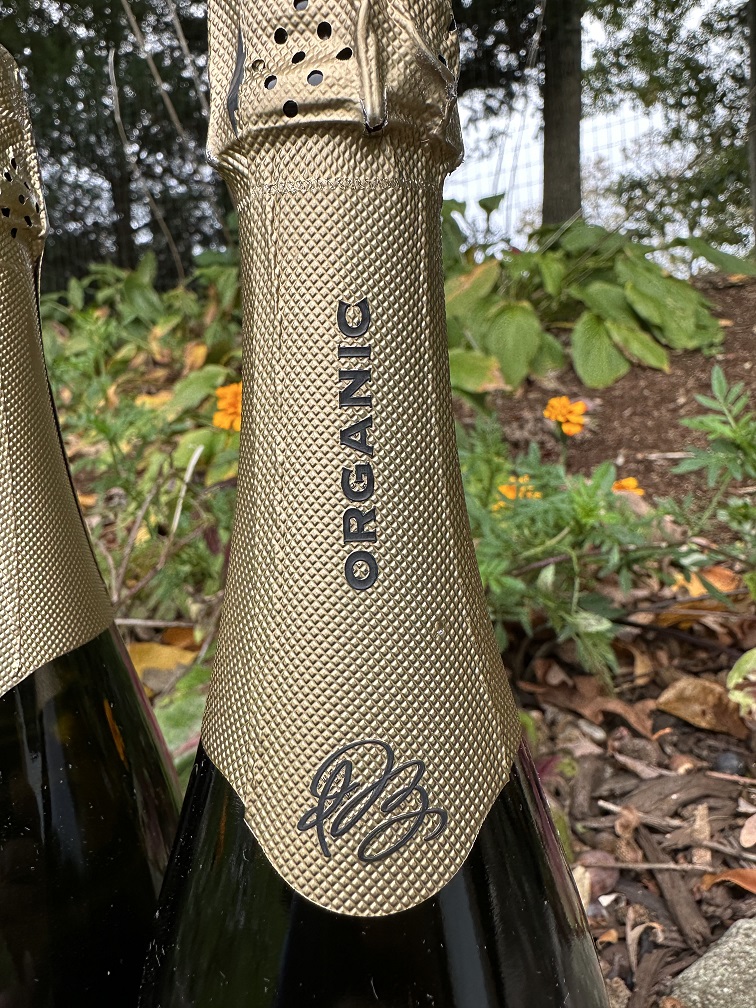
I wrote about Domaine Bousquet sparkling wines before. Those were excellent wines produced using the Charmat method (secondary fermentation in the tank), the same method that is used in the production of Prosecco. These two new wines I’m talking about are produced using the classic method, with the secondary fermentation in the bottle – the same way classic Champagne wines are produced, hence the name Classic Method, a.k.a. Méthode Champenoise, a.k.a. Méthode Traditionnelle.


From the very first whiff, both wines were just spectacular. NV Domaine Bousquet Brut Organic Méthode Traditionnelle Mendoza Argentina (12% ABV, $18 SRP, 75% Chardonnay, 25% Pinot Noir, 6 months on the lees) had a perfect nose of freshly toasted bread, brioche and apples. The palate was followed with the same toasted bread notes, perfectly fine mousse, crispy profile with just apple notes, just a pure delight.
And NV Domaine Bousquet Brut Rosé Organic Méthode Traditionnelle Mendoza Argentina (12% ABV, $18 SRP, 75% Pinot Noir, 25% Chardonnay, 6 months on the lees) was even better – the wine had an absolute precision that only the best Champagne and sparkling wines possess. Salmon pink in the glass, freshly baked, just out of the oven toasted bread on the nose – I couldn’t and didn’t want to put my glass down for a few minutes. After appropriately admiring the bouquet, the first sip perfectly matched the expectations – fine mousse, cut-through acidity, brioche, green apples, perfect structure, impeccable balance.
If I were to pair dinner with these two wines, I would have fresh oysters and seafood with the Brut, and then a steak with the Brut Rosé – you can keep the salad.
Here are two brilliant sparkling wines from Argentina – organic and delicious. In a blind tasting, these two wines can safely challenge any Champagne or sparkling wines – and I would definitely put my money on the Domaine Bousquet wines to win the popular vote.
Taking the price into account, and the holiday season upon us, these are definitely case-buy recommendations – these wines are perfect as a gift and perfect to enjoy at any moment, knowing that you didn’t have to break the bank to get the pleasure.
Have you had these wines? What are your favorite sparkling wines outside of Champagne? Cheers!
Virgen Wines – No SO2 Organic and Delicious
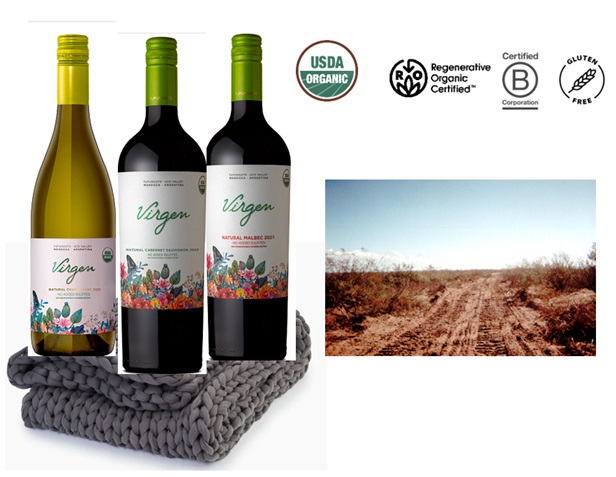 No added SO2.
Organic.
Delicious.
Simple, right?
Organic seems to be the word of the town. Four years ago, in 2019, 6.2% of the vineyards in the world were certified organic. In absolute terms, it doesn’t sound impressive. However, we need to take into account a few factors. First, many vineyards practice organic farming but are not inclined to undergo an official certification process due to the high cost. Second, and probably more important, is that from 2005 till 2019 the organic vineyard plantings increased by 13% per year, compared with non-organic vineyard plantings’ growth rate of 0.4% per year, according to the article in Drinks Business. I have a feeling that the organic vineyard growth could even have accelerated over the last four years, but we will need to wait to see the official data.
But grapes from organic vineyards don’t automatically mean that the wine can be called organic too – this gets a bit tricky, as every country has different rules for what wine can be called “organic” – this is why you can see on many labels the statement “made with organic grapes” instead of simple “organic”.
SO2, an abbreviation for Sulfur Dioxide, is an essential element in winemaking. It is used literally at every stage of the winemaking process because of a few important properties. SO2 is an anti-microbial agent, regulating harmful yeast and bacteria growth in wine. It also has anti-oxidative properties, protecting the wine from oxidation. It is important though that the use of SO2 is not excessive for a variety of reasons – one of such is an allergic reaction it can cause.
So here is the culprit – if you want to import your wine to the USA, and you want to be able to simply state on the label “organic”, you are not allowed to add sulfites (it is okay to add sulfites to the organic wine in Europe and Canada). This doesn’t mean that the wine will have no sulfites – sulfites are a natural by-product of fermentation, and they are always present in wine – but they will be present in minuscule quantities in the organic wines. However, not adding sulfites is not for the faint at heart – considering how many things can go wrong in the winemaking process – this is why today you see the majority of wines labeled with “made from organic grapes”.
Domain Bousquet was founded in 1990 in the high-altitude desert in Tupungato Uco Valley in Mendoza, Argentina, on the pure vision, passion, and conviction of its founder, Jean Bousquet. Jean was told that he is making a mistake of his life when he purchased 1,000 acres of nothing but dry, empty, arid land. Today, Domain Bousquet sustainably and organically farms 667 acres of vineyards, produces 50 million liters of wine, 95% of which is exported to 50 countries around the world, and ranks among the top 20 Argentinian wineries in terms of export. Domaine Bousquet also just extended its leadership in organic winemaking by introducing the wines produced without adding any SO2 – and this is exactly what we are talking about today.
Three new wines were just added to Domaine Bousquet’s collection, under the name of Virgen – Chardonnay, Cabernet Sauvignon, and Malbec. All three are certified USDA organic, unoaked, and have no added SO2. To ensure the proper handling that these wines require, Domaine Bousquet even decided to ship them wrapped in a blanket.
When I received an invitation to review these new wines, my instant inclination was a simple “nope, not doing that”. No USDA organic wines made me excited so far. But the next thought was … well, these are just the samples, it might be interesting – especially if I can compare them with the same wines made in the traditional way – and this is pretty much what I was able to do.

Winemaker Rodrigo Serrano. Source Domaine Bousquet
In my mind, producing wines without SO2 requires a leap of heart. So even before I got the wines, I decided to ask Domaine Bousquet’s winemaker, Rodrigo Serrano, a few questions about his inspiration and goals – here is our short conversation:
[TaV]: You had been farming organically since the beginning, so your wines have always been made from organic grapes. Getting USDA Organic certified is another test, as you now need to certify the entire winemaking process. Why did you decide to opt for this certification?
[RS/DB]: We did it because we had the opportunity to experience it in 2018. Little by little I moved away from the use of SO2, until I suggested trying a wine without using it. I felt like an innovator, without knowing the real magnitude of this.
[TaV]: Virgen wines do not have SO2 added, so special care must be taken during the transport of wines. How did you come up with the idea for a blanket? How does it help protect wines?
[RS/DB]: The theory says that the temperature is very harmful, so in a wine like this, in which there is no protection, extreme care is taken. Today with experience, we understand that both in Virgin and in the rest, the temperature is harmful, so we put the blanket in all shipments. It helps by generating an air chamber between the wall of the transport container and the wine box, obtaining less impact from the outside temperature on our bottles.
[TaV]: What is the expected shelf life of Virgen wines?
[RS/DB]: Initially I was not optimistic, today with more than 5 years of experience, we still have 2018 stock, and it remains correct.
[TaV]: Somewhat related question: Once virgin wines have arrived at someone’s home, how should they be stored? How long can they be stored before having to consume them?
[RS/DB]: It must be stored like the rest, away from light, with a temperature no higher than 20°C and no less than 5°C.
[TaV]: Can “SO2-free” wines age? Did you experiment with that?
[RS/DB]: It is a challenge that we have ahead of us, to work with sulfite-free wines for aging, we are working on it, but for the moment they are only projects.
[TaV]: I see that Domaine Bosquet is not only organic, it is also certified Organic Regenerative. How is Regenerative Organic different from just Organic? What did you have to do to obtain the Regenerative Organic certification? How long did it take you?
[RS/DB]: ROC is something incredible, and for this I recommend watching KISS the Ground. He will answer better than anyone. It took us a few years to certify it, but I don’t work extra, considering that our philosophy coincides 100%
[TaV]: Last question. Far beyond viticulture, Domaine Bosquet is also a certified B Corp. Why did you decide to become a B Corp? Why is this important for you?
[RS/DB]: As with ROC, the coincidence in our philosophy, measuring the social and environmental impact, led us to this certification in a natural way.


Obviously, the proof is in the pudding glass, so next I tasted the wines, and – spoiler alert – was blown away. Here are my notes in the exact order I tasted the wines:
2021 Domaine Bousquet Virgen Natural Cabernet Sauvignon Tupungato Uco Valley Mendoza Argentina (14% ABV, $13, no added SO2)
Dark garnet
Chocolate and tobacco on the nose, a hint of berries
Blackberries, a hint of cassis, black plums, minerally driven, rich and luscious, good structure, crisp acidity.
8, outstanding on its own, and a great surprise as the wine is unoaked.
2021 Domaine Bousquet Virgen Natural Malbec Tupungato Uco Valley Mendoza Argentina (14% ABV, $13, no added SO2)
Dark Garnet
A hint of barnyard upon opening. On the second day barnyard smell disappeared, leaving behind only dark fruit.
On the palate, the wine is just spectacular. Imagine taking a load of perfectly ripe, perfectly crunchy, perfectly fresh berries – blueberries, raspberries, and wild strawberries, and sending it into your mouth – now you know how this wine tastes. Perfect structure, perfect balance, perfect acidity.
8+/9-, kudos to the winemaker.
2022 Domaine Bousquet Virgen Natural Chardonnay Tupungato Uco Valley Mendoza Argentina (13.5% ABV, $13, no added SO2)
Light golden
Asian pear, herbs
The palate is matching the nose, Asian pear, a touch of honey, herbs.
7/7+ first day. The wine somewhat improved on the second day, but overall didn’t go anywhere near the reds
And here is my “Frame of reference”:
2021 Domaine Bousquet Cabernet Sauvignon Reserve Tupungato Uco Valley Mendoza (14.5% ABV, $19.99)
Garnet
Dark berries, cherries
A touch of cassis, eucalyptus, clean, classic, perfectly balanced, good acidity.
8, very good
2021 Domaine Bousquet Malbec Reserve Tupungato Uco Valley Mendoza (14.5% ABV, $19.99)
Garnet
Dark fruit, espressoFresh berries, salivating acidity, medium body, playful, perfectly balanced.
8+, delicious.
Let’s discuss our tasting.
First, both of the no SO2 reds were outstanding. The unadulterated fresh berries are really something to experience when they are delivered in a fully balanced, perfectly structured way. No SO2 Cabernet Sauvignon was perfectly on par with the reserve Cabernet Sauvignon; I liked no SO2 Malbec even more than the reserve version, even though I wouldn’t complain about either. Second, I managed to get the answer to the question about the aging of the no SO2 wines. I left both no SO2 Cabernet Sauvignon and Malbec on the countertop, closing back the screw cap, and the wines were perfectly delicious on the second and third days. In my book, that means that the wines have at least another 10 years of life easily. Not that I’m suggesting that you should age these wines, but it is good to know that you really don’t have to consume them the same day you got them from the store.
Here you are, my friends – organic, no SO2, and delicious. These wines are worth seeking out, whether you care about sulfites or not. And if you have friends who complain about headaches and sulfites – they might love you even more after they will taste these wines. If you had a chance to taste these wines already – let me know what you think!
Daily Glass: Trial and Error, and Variety of Opinions
Drinking wine is complicated.
I guess I lost you right here and now.
Let’s try again.
Drinking wine is not complicated. Things preceding the wine getting into your glass are complicated. Deciding on the wine to buy, deciding on the wine to drink, deciding how long to keep the bottle before opening is complicated. Dealing with influences, both positive and negative is complicated. If you don’t see it that way – you are lucky. And if you do share my opinion, let me have your ear.
Today, let’s talk about influences. First, let’s take a look at the positive influences. A trusted friend said that the wine was amazing and you must try it. You visited your favorite, trusted wine store, and the salesperson recommended the wine. You saw a raving review for the wine on the website you already bought 10 excellent wines before. You obviously trust the recommendation and happily buy the wine. All is good, right?
Of course, all is good. Maybe not all, but almost all. What might not be good in such a beautiful picture? The expectations. Getting a recommendation from a trusted source sets your expectations. It sets them way, way too high. If your high expectations are not met upon the first sip that obviously creates disappointment. What was supposed to bring you instant joy is now making you upset. Your expectations now failed, and because it was a trusted source, it makes things even worse.
Before you get too upset, let’s think. Maybe the problem is not with the recommendation, but with the way you took it? This is wine, remember? Aeration, temperature, mood, food, environment – all affect the perceived taste of wine. Serve heavy red too cold, and the wine will become bitter. Serve it too hot, and you will be running away from the alcohol hit. Serve a 3 years old bottle of Howell Mountain Cabernet Sauvignon without decanting, and I literally guarantee you pain and disappointment. In wine, these little things matter.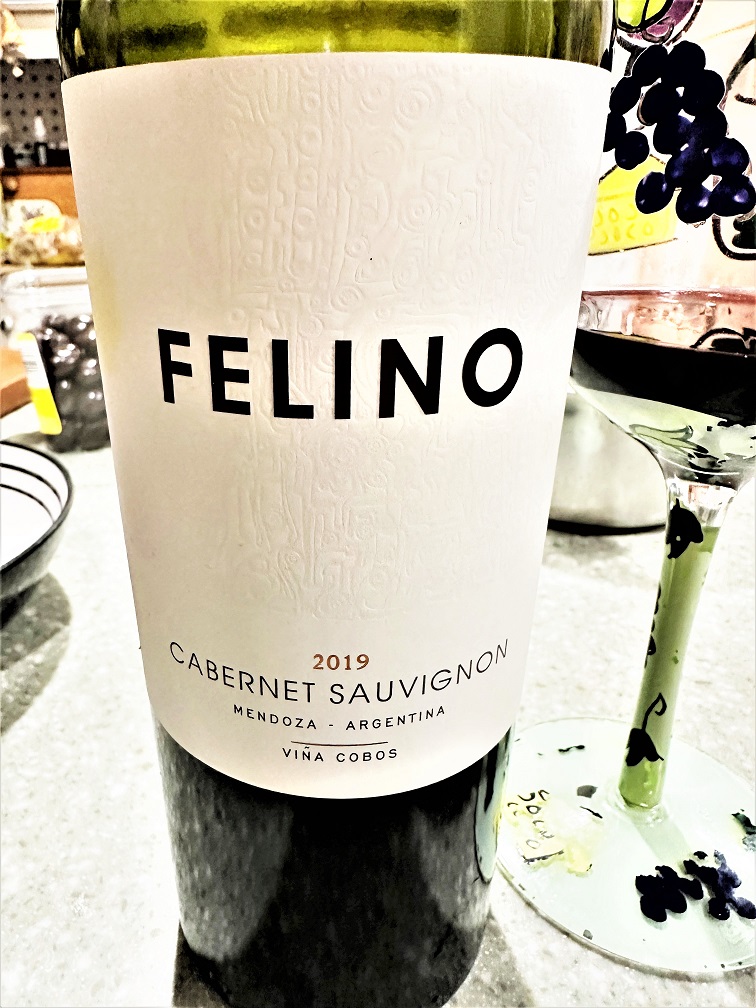
Case in point – 2019 Viña Cobos Felino Cabernet Sauvignon Mendoza (14% ABV, $6.98 ($22 original price), 100% Cabernet Sauvignon, aged for 8 months in oak barrels 10% new). A few months back, I got an email from Wine Exchange, with an offer no wine lover can resist – outstanding Cabernet Sauvignon which was originally priced at $22 and is now $6.98 as a black Friday promotion. I bought 6 bottles. A week or so later opened one and had a feeling of being duped – the wine didn’t show much of anything. I made a mental knot to remember that this was not the wine I can enjoy. Can you imagine my level of disappointment? Of course, at this price, nobody can really complain, but the disconnect between the trusted expert’s recommendation and the actual experience was too dramatic and definitely contributed to the feeling of disappointment.
Two weeks ago, I was looking for a bottle to open for a house guest and just came across this wine again – yeah, sometimes I suck as a host, I know. After my guest had a few glasses (I was not drinking that evening), I pumped the air out and put the bottle aside. The next evening, I was not looking forward to it, but I said I would just have a sip and then put the bottle aside to cook with. Wow. What a transformation. The wine was beautiful, it opened up, it had cassis, it had cherries, it was clean and succulent, exactly as the description promised. Do you see now what I’m talking about? The positive expectations were not met – I’m glad I didn’t stop at that moment of disappointment, but the overall experience could’ve turned out for the worst.
Now, let’s talk about the negative influence. When a trusted expert tells you that the bottle of wine is not good or that you will not like it – you listen. If this is the conversation in the wine shop before you buy the bottle, the outcome is clear – you would just not buy the bottle. And if you already own the bottle? Well, it is what it is then…
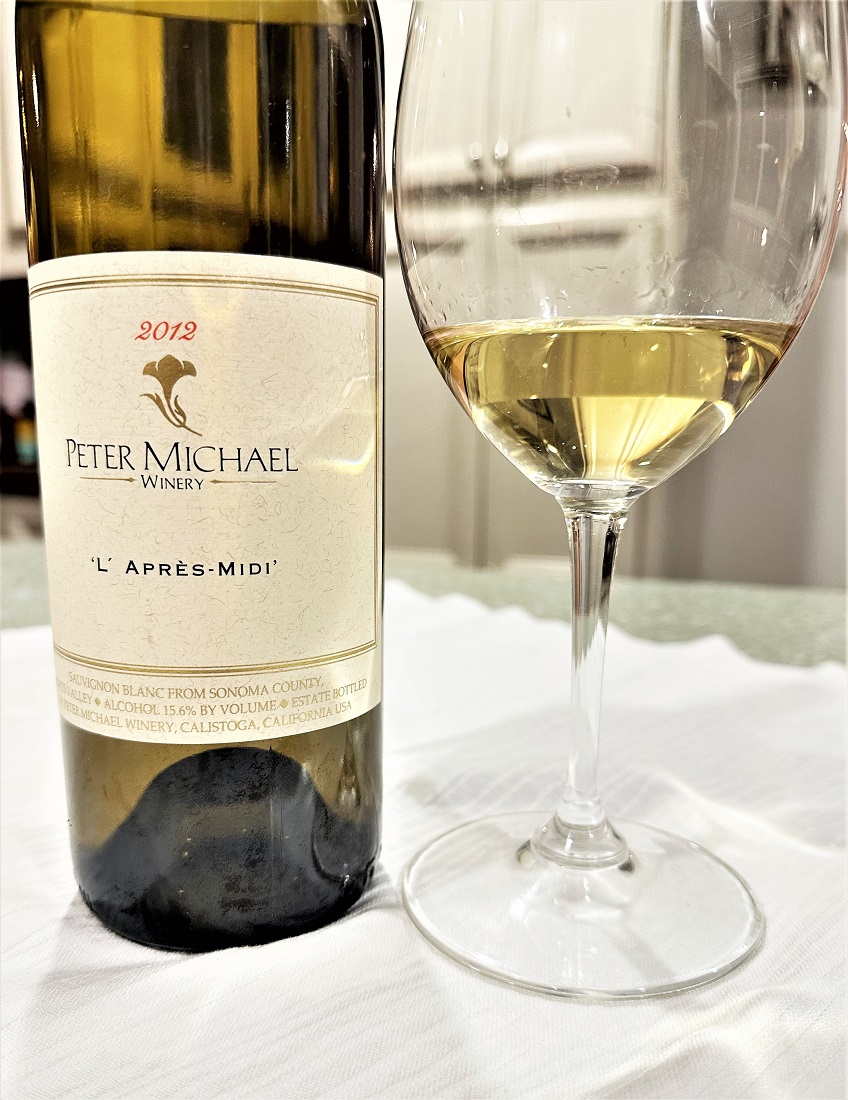
A few weeks ago, I spoke with my friend Zak (the wine store owner) who mentioned his recent experience with Peter Michael wine – he open a bottle of an older Peter Michael Sauvignon Blanc, and it was practically on the way out, actively developing tertiary aromas. A few days after this conversation, after a long day, I suddenly had an urge for a glass of white wine late in the evening. This doesn’t happen that often, but hey, obey your craving… After mindlessly pulling a few shelves in the wine cabinet, I came across the one with Peter Michael bottles. “Aha, this 2012 Peter Michael L’Après-Midi Estate Napa Valley (15.6% ABV, 95% Sauvignon Blanc, 5% Semillon, 8 months in French oak) is probably gone already anyway, why don’t I open that”.
“Whoa” was my instant reaction upon the first sip. 10 years old white wine from California, with 15.6% ABV… You would definitely expect the wine to turn, and yet it was fresh, complex, exuberant, brimming with juicy whitestone fruit, plump vanilla, and fresh acidity. Could my low expectations contribute to the elevated enjoyment? This is always a possibility, but I’m not sure. The wine was not comparatively good, it was simply good on its own. What made my experience different from Zak’s? I have no idea – it is a mystery. And this mystery is what makes wine so much fun.
There you are – an account of indecisive winelover dealing with influences and preconceived notions.
But for some reason, I don’t think my situation is unique. I’m sure you got your own stories – do tell…
Trapiche: Beautiful Perfection
Over my lifespan as a wine lover and especially, as a blogger, I tasted tens of thousands of wines. This is not a bragging statement, but purely statistical. Also, out of all those wines, every year a few hundred wines are covered in this blog.
Out of all these wines, there are probably 50 or so that are near and dear to my heart, These are my reference wines. These are the wines I would reach out to illustrate the comparison or simply deliver the message. For example, Bogle Petite Sirah is my favorite example of a budget-priced (typically around $9.99), delicious, consistently drinkable wine. Of course, I occasionally come across wines which equally or even tastier and cost even less, but Bogle is still the wine that is ingrained in my memory, and hence it is my ready-to-use reference.
I always think that all of my reference wines are already covered on the blog – 50-60 wines is not a high number spread out over the 12 years of blogging, and yet from time to time I engage in a futile search for the articles about some of these reference wines, only to say to myself “really?”.
When it comes to Argentinian Malbec, my reference wine is Trapiche Broquel Malbec. Malbec definitely came of age lately, especially with a dramatic increase in popularity over the last few years. While I tasted lots and lots of absolutely delicious renditions of Argentinian Malbec, it is still generally not my go-to wine. But if presented with the Trapiche Broquel Malbec, nobody would need to ask me twice to have a glass or a three.
There are 145 posts in this blog that include the word “Malbec” (not including the one you are reading now). None of these posts talk about my reference wine, Trapiche Broquel Malbec. Well, this is not entirely true – in a few posts, Trapiche Broquel Malbec is used precisely as I presented it here – as a reference. Nevertheless, there are no posts discussing any particular vintages of this wine or presenting any tasting notes.
And so will not be the post you are reading at the moment. But – at least this post is about two of the Trapiche wines I had an opportunity to taste (but none of them are Broquel Malbec).
It is so interesting when you think that you know something, and then it appears that no, you really don’t. I knew the Trapiche name and had a number of their wines over the years, but I had no idea that Trapiche is the biggest winery in Argentina. Founded in 1883, the winery stayed in the family for a long time, transitioning from father to son, until it was acquired by the Grupo Peñaflor, one of the 10 largest wine producers in the world, exporting its wines to more than 90 countries.

Trapiche vineyards span throughout Mendoza, the most famous winemaking region in Argentina from the Andes mountains to the Atlantic ocean around the town of Chapadmalal. Trapiche is using biodynamic farming methods and is very much focused on farmland diversity and sustainability. Trapiche’s hard work and dedication didn’t go unnoticed, acknowledged by multiple international awards, such as the “50 Most Admired Wine Brands” selection by Dinks International (the only winery in Argentian to get on that list 5 times over 5 different vintages), or Wine Enthusiast’s “The New World Winery of the Year” in 2019.
I had two bottles of Trapiche wines to try – 2020 Trapiche Broquel Cabernet Sauvignon Mendoza (14% ABV, $14.99, 100% Cabernet Sauvignon, 14 months in oak barrels) and 2019 Trapiche Gran Medalla Malbec Mendoza (14.5% ABV, $24.99, 100% Malbec, 18 months in new French oak, 1 year in the bottle). I have to tell you that I opened the bottles not without trepidation. I never had either one of these wines, I really like Broquel Malbec, and I really wanted to avoid disappointment…
First I opened Cabernet Sauvignon. The initial nose was not the one typical of the Cabernet Sauvignon – it did smell like a typical Argentinian Malbec would. I wanted to compare the nose side by side, so I quickly opened and poured in the glass the Malbec. The smell was practically identical – the vanilla, warm herbs, plums, with the Malbec bottle offering a bit more intensity. While I appreciate this nose on Malbec, I like the Cabernet Sauvignon to be a bit more traditional.
But the palate of the Cabernet Sauvignon didn’t disappoint, showing cassis with a wallop of dark cherries, a touch of bell peppers, and eucalyptus. As the wine was opening up, it transitioned through a few stages, making cassis more explicit and then adding up the level of acidity on the finish. A very good rendition with an excellent QPR (Drinkability: 8-).
The Gran Medalla Malbec was produced to commemorate the 125th anniversary of the winery, and it is sourced from the best Trapiche vineyard parcels in Uco Valley. And boy, did this wine delivered… This was Malbec like no other. The was the wine that stops you in your tracks; you want the time to stop so you can enjoy that perfect flavor in your mouth endlessly. The wine had the perfect amount of ripe, succulent dark cherries, sweet oak, and sage, weaved around a perfect core of smooth tannins, delivering layers upon layers of pure pleasure. This was the wine that you always dream of drinking, but it is so hard to find. Thinking about the $25 suggested retail price, this wine has great QPR and it is literally a steal if you will be able to find it. (Drinkability: 9-).
There you are, my friends – a case of wine’s beautiful perfection. Which also doesn’t need you to break the bank. Cheers!
Sparkle Every Day
Ohh, festive times… Bubbles, laughter, smiles, more bubbles, and more laughter and smiles.
We still think of bubbles as a holiday or otherwise celebratory wine, but it doesn’t have to be like this – every day is worth celebrating, and good bubbles bring something special – they have a magic power to make things better.
But now the bubbles are on everyone’s mind – the last two weeks before the New Year celebration, bubbles need to be consumed and gifted. Very appropriately, I’m inviting you on a trip around the world, to taste some sparkling wines, and maybe even find new favorites or discuss the old and familiar.
You can’t beat the classics, so let’s start in the place which started it all (I know it is contested, like everything else nowadays, but let’s just skip that discussion) – the Champagne, of course.


I’m starting today with Champagne which is unique and different, and in reality should warrant a full post, as this is Champagne with the story. In 1975, Bruno Paillard, tracing his family grower and negociant heritage back to 1704, started working as a Champagne negociant. In 1981, at 27 years of age, Bruno sold his old collectible Jaguar and started his own Champagne company with the vision of producing a different style of Champagne. In 1984, he designed a unique above-ground cellar to be able to fully control temperature during the production of Champagne. By 1988, he already was collecting raving reviews from the critics such as Hugh Johnson, and others.
Bruno Paillard calls his approach to Champagne production Multi-Vintage, as even non-vintage-designated wines still have known proportions of reserve (vintage) still wines used during production. Also, every bottle of Bruno Paillard Champagne carries a disgorgement date on its back label. I had an opportunity to taste Bruno Paillard Premiere Cuvee Champagne, which comprises 35 out of 320 Champagne crus, with up to 50% of the wine coming from 25 reserve vintage wines since 1985:
MV Bruno Paillard Premiere Cuvée Champagne (12% ABV, $60, 45% Pinot Noir, 33% Chardonnay, 22% Pinot Meunier, 36 months on the lees, 5 months in the bottle, disgorged in June 2020)
Fine mousse, crisp
Classic nose – toasted bread, very clean, delicate
Classic palate – toasted bread, minerality, a hint of apples, fresh, round, great energy, cut-through acidity, delicious overall
8+, superb. If you can drink it every day, more power to you – but it is well worth at least an occasional celebration.
As we are in Europe, let make another stop along the way – all the way down to the South of Italy – in Sicily.
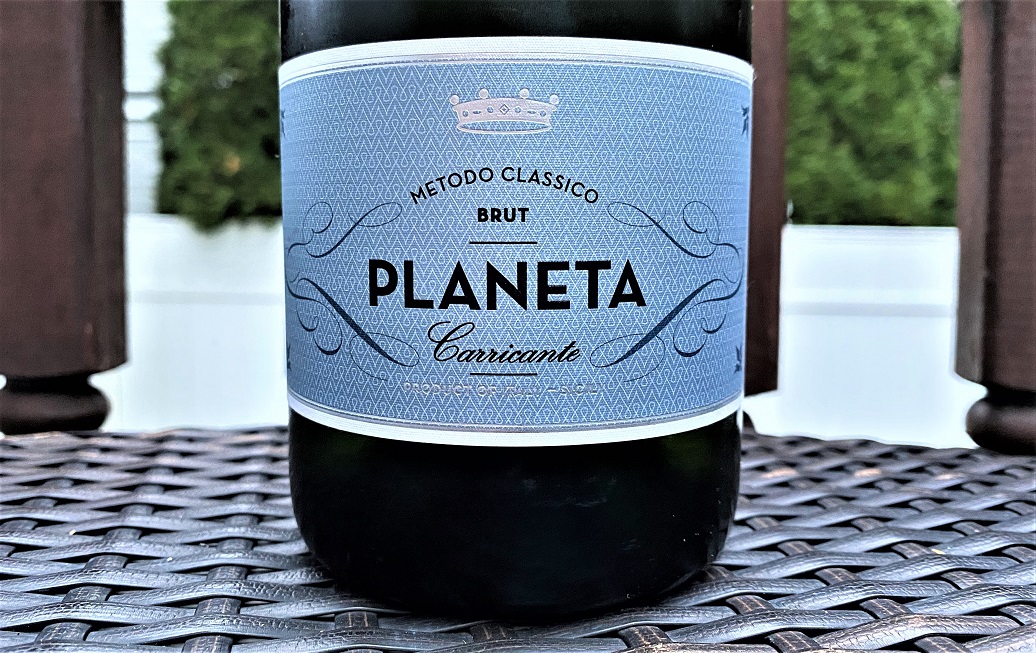
Italy is no stranger to spectacular classical style (method Champenoise) bubbles – powerful Ferrari and others up north in the Trentodoc, majestic Franciacorta in Lombardy, and more classic sparkling wines everywhere in between. However, this was my first encounter with the classic-style bubbles from Sicily.
Not to be overdone, this wine comes from Planeta, which is one of the most famous and best producers in Sicily – still, I never heard of their sparkling wines. This wine was made out of the local white grape called Carricante, but if you would try it blind, it would be very hard to distinguish this wine from an actual classic Champagne.
NV Planeta Carricante Brut Methodo Classico Sicilia DOC (12% ABV, $42, 100% Carricante)
Light Golden color
Beautiful intense nose, minerality, a touch of gunflint, toasted notes
A touch of green apple, minerality, toasted bread, good acidity, medium to full body.
8+, outstanding. Mostly available in restaurants, but you still can find it in a few liquor stores.


Now, let’s cross the Atlantic all the way and then some, going to the west side of North America – we are stopping by in California, to be precise. Here I have two wines to offer to your attention.
If you like California sparkling wines, then you don’t need an introduction to Scharffenberger. Found in 1981 by John Scharffenberger, the winery was built from the get-go for sparkling wine production, showcasing the terroir of Mendocino country.
In 2004, the winery became a part of the Roeder Collection. Overall, it continues the same traditions as 40 years ago, and today the 120 acres estate is sustainably farmed and Fish Friendly Farming certified.
Scharffenberger produces a range of Non-Vintage sparkling wines, all made using the classic method, all made from various proportions of Chardonnay and Pinot Noir. The wine I want to offer for your holiday festivities and casual daily life celebrations is Brut Rosé:
NV Scharffenberger Brut Rosé Excellence (12.5% ABV, $26, 55% Chardonnay, 45% Pinot Noir)
Salmon pink
Toasted bread, brioche, a touch of strawberries
Tart strawberries, hazelnut, freshly baked bread, crisp, generous, invigorating
8+, excellent bubbles for any day
Now, we are still staying in California, but moving about 2 hours south and east from Mendocino to the Russian River Valley. Here, in 1984, Judy Jordan started her J Vineyards and Winery (at the age of 25). Throughout the years, Judy acquired 9 vineyards, managing 300 acres of vines around the area. Her brother John Jordan manages the eponymous Jordan winery in Sonoma, producing “Chardonnay, Cabernet, and Hospitality” (I really love this quote of his as I had an opportunity to experience all three at the wine bloggers conference 2017).
During my first wine bloggers conference in 2014 in Santa Barbara, I attended joint Jordan reception, hosted by J Vineyards and Jordan Winery, creating the most magnificent experience between delicious J Vineyards bubbles and Jordan Cabernet verticals.
Why am I telling you all of this and how is it relevant to the J sparkling wine I tasted? Actually, there is no real connection, except the sad feeling of the loss of true authenticity, after J Vineyards was sold to E and J Gallo in 2015. If you visit the J Vineyards website today, it is all about selling the wine. There is no “about” section. There is no history of the estate. Just buy, buy, buy. Buy this or buy that. Okay, okay – I get it – wine is a business. But it can be a business with soul – sadly, I don’t think E and J Gallo know how to operate one.
This J Vineyards Cuvée 20 was originally produced to celebrate the 20th anniversary of the winery but then became a standard feature in the sparkling wine lineup.
NV J Vineyards Cuvée 20 Russian River Valley (12.5% ABV, $38)
Straw pale, fine mousse
Gunflint is a primary element
Toasted bread, gunflint, a touch of lemon, crisp, energetic, perfect cleansing acidity
8/8+, needs food – oysters, cheese, steak – any food.
Let’s now take a long flight down south, to the Argentinian desert, to visit Domaine Bousquet in Tupungato.


Actually, I already wrote a long post about Domaine Bousquet sparkling wines, at the beginning of this year. These are essentially the same wines I tasted before, only with the new labels. If you are interested in learning more about Domaine Bousquet, please refer to the post above, and I will just share my latest tasting notes here:
NV Domaine Bousquet Brut Tupungato Argentina (12% ABV, $13, 75% Chardonnay, 25% Pinot Noir, Charmat method, organic grapes, vegan)
A yellowish tint in the glass
A hint of apple, fresh, clean
Perfectly round, good acidity, a touch of toasted notes, apples, easy to drink
8-, very good
NV Domaine Bousquet Brut Tupungato Argentina (12% ABV, $13, 75% Pinot Noir, 25% Chardonnay, Charmat method, organic grapes, vegan)
beautiful salmon pink
fresh, a touch of strawberries
more strawberries on the palate, fresh, clean, good acidity, nice body
8-, perfect for every day
And we are done. I’m leaving you here with a few of the options for your festive and daily bubbles – different prices, different wines, but all worthy of a life celebration as it happens. Cheers!
Last Bottle Sign Up ($10 credit)




 Talk-A-Vino