Archive
Wine Quiz #129 – Beaujolais Nouveau Edition
 The Wine Quiz series is not meant to intimidate. The whole idea here is to have fun and learn something new. When answering the questions, it is fully encouraged to use all available sources of information, including Google or any other search engine. There are no embarrassing answers – the most embarrassing thing is not giving it a try…
Welcome to your new wine quiz!
Let’s start with the answers to the last quiz #128. In that quiz, you had three sets of items, and for each set, you had to figure out what that set was representing, and which item (or items) didn’t belong. Here are the questions, now with the answers:
Question 1:
Adelaide Hills
Blackwood Valley
Currency Creek
Eden Valley
Hunter
King Valley
Waitaki Valley
Answer: This is a list of Australian wine regions. The item which doesn’t belong is the last one, Waitaki Valley, as this region is located in neighboring New Zealand.
Question 2:
Anjou
Chinon
Jasnières
Orléans
Reuilly
Rully
Saumur
Answer: Most of the items on this list are the wine regions in Loire Valley, except Rully, which is located in Burgundy.
Question 3:
Cayuse
Clos Erasmus
No Girls
Penfolds
Pingus
Vega Sicilia
Answer: This was probably the most difficult one. This is the list of famous producers, which all make wines out of Tempranillo grapes, except Clos Erasmus, a famed Spanish producer in Priorat, which doesn’t make wines out of the Tempranillo.
We didn’t have a lot of players, except Lynn who answered the second question correctly and definitely deserves an honorable mention.
Last Thursday, November 19th, was the third Thursday in November, and thus it was the day to celebrate a brand new Beaujolais Nouveau 2020 release. In honor of that celebration, I have a very simple quiz for you, all about the simple wine, Beaujolais Nouveau:
Question 1: True or False: Beaujolais Nouveau wines can age
Question 2: The ideal serving temperature for Beaujolais Nouveau is
- 46°F to 50°F (8°C to 10°C)
- 50°F to 54°F (10°C to 12°C)
- 54°F to 57°F (12°C to 14°C)
- 57°F to 61°F (14°C to 16°C)
Question 3: True or False: During the first half of the 20th century, Beaujolais Nouveau was released and celebrated in December instead of November.
Question 4: True or False: Nouveau wines (the wines of new harvest) are produced only in the Beaujolais region in France, and not anywhere else in the world.
Good luck, enjoy the quiz and the rest of your weekend! Cheers!
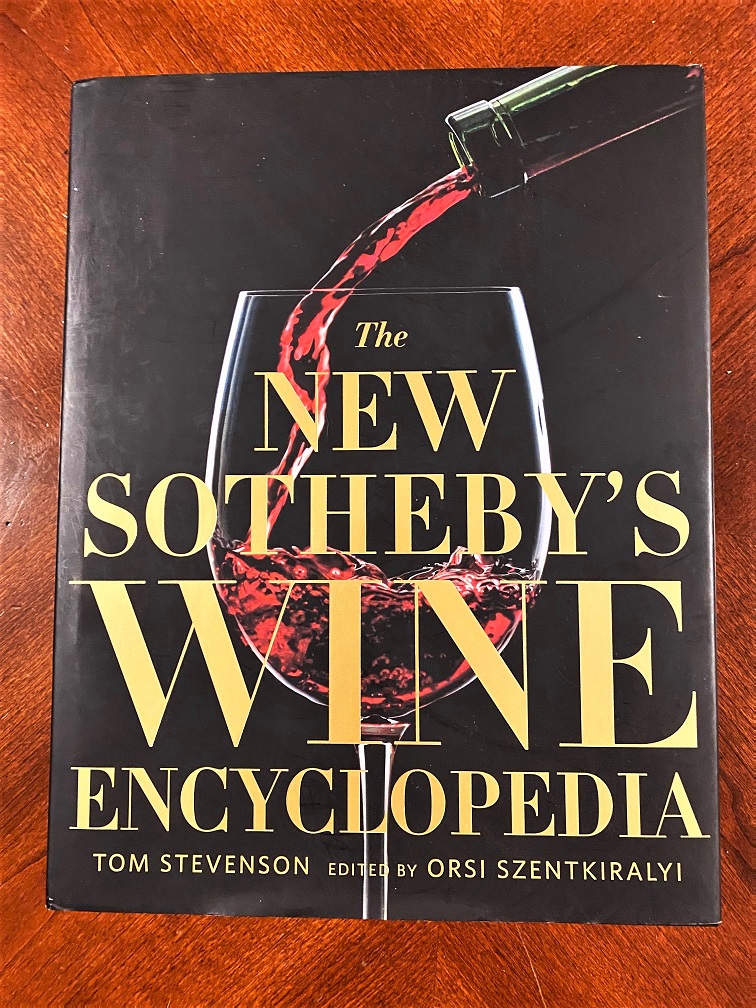
The New Sotheby’s Wine Encyclopedia – A Must Have For A Winelover
 Do you like wine books?
Better question: do you read wine books?
Wine book is the next best “wine thing” after the wine itself – assuming you drink wine for pleasure, and not for the effects of alcohol. Reading the wine book gives you the pleasure of learning about your favorite subject, it is available to you any time you want it, and you don’t have to limit your consumption. There is also an ultimate pleasure of nesting in the favorite chair with a book in your hands, and turning off all the annoyances of the world at least for some time.
Only who reads the books today, right?
We live in the times when Google knows all the answers, or at least it pretends that it does, so we can search, find, read, and instantly forget whatever information we obtained. Depending on your luck, that information might be totally wrong or irrelevant, but that can be a subject for the whole other conversation. But when we reach out to Google, we think that we are saving time and doing ourselves a favor by simplifying our lives – all of it instead of opening the book and actually reading to learn and understand. But oh, who has time to read. Hey, google…
Today I want to bring your attention to the book which you don’t have to read. Yep, you heard me right. You don’t really have to read it. But you must have it. Makes no sense? Oh yes, it does.
You want to have “The New Sotheby’s Wine Encyclopedia” by Tom Stevenson edited by Orsi Szentkiralyi because this is not some general book, this is an encyclopedia. An encyclopedia is a tool. You use it when you need an answer to a question. You use it when you want to deepen your knowledge of a particular subject, be it history of winemaking, wines of Fitou AOC, differences between Cordon de Royat and Geneva Double Curtain vine training systems, or what to do if your wine smells like burnt rubber.
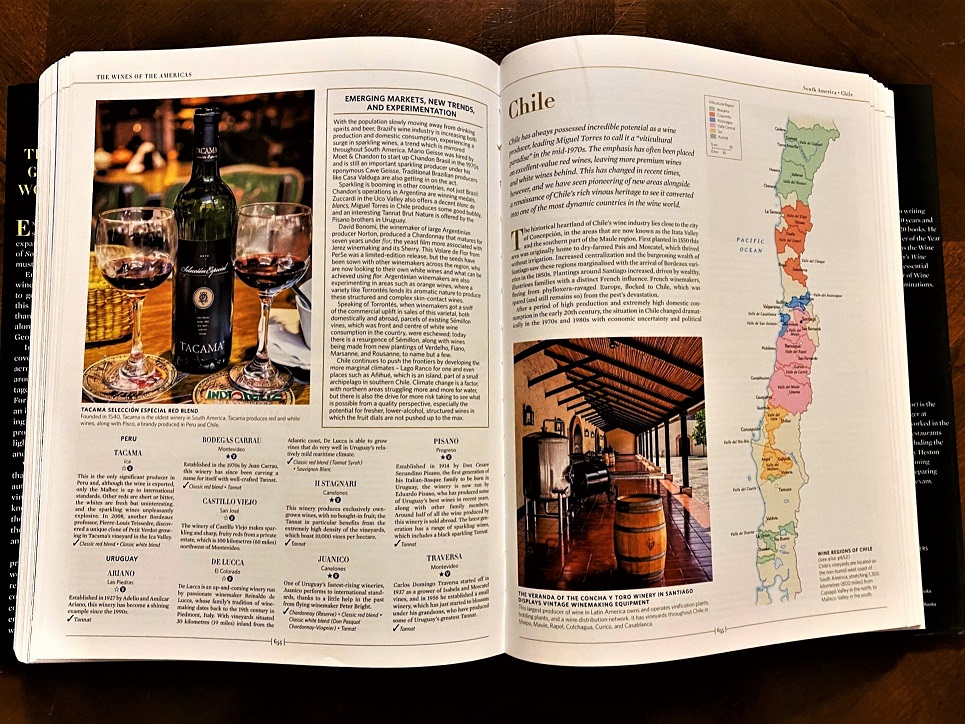
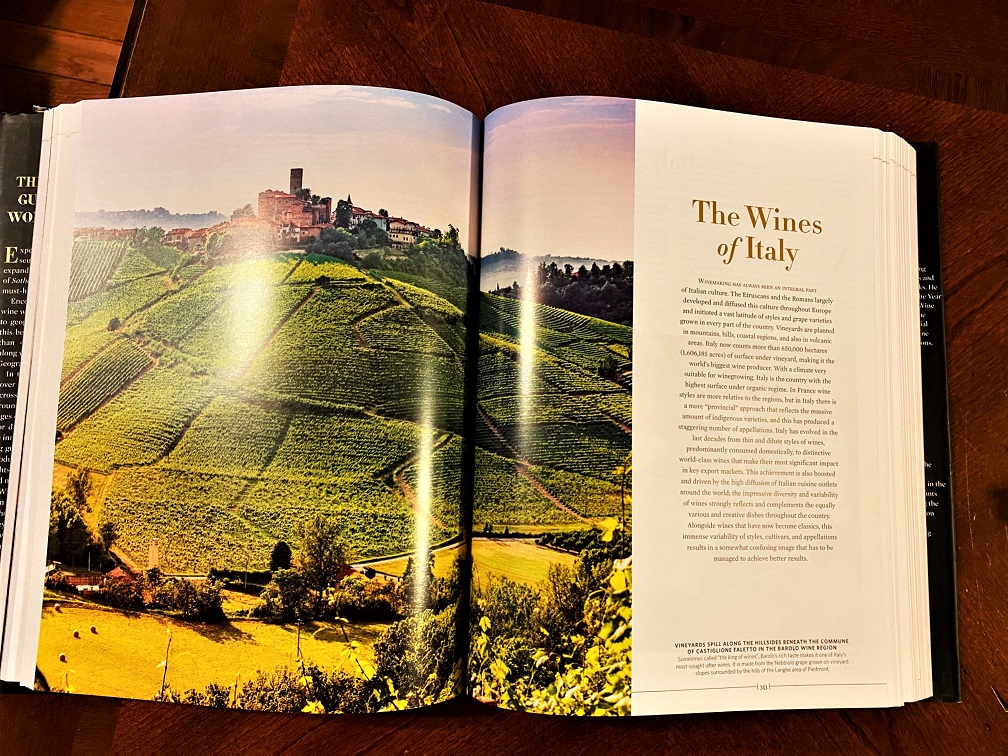
This is not a pocket-size book, but this is what makes it great. 800 beautifully illustrated pages (the book is published by the National Geographic, so great imagery is rather expected). This is a sixth edition of the book, containing more than 400 photographs, 120 National Geographic maps, and there is hardly a wine subject or a wine region that escapes the attention of the author.
It was interesting for me to see is a difference in the coverage of the different wine regions – to illustrate what I mean, see the picture below:
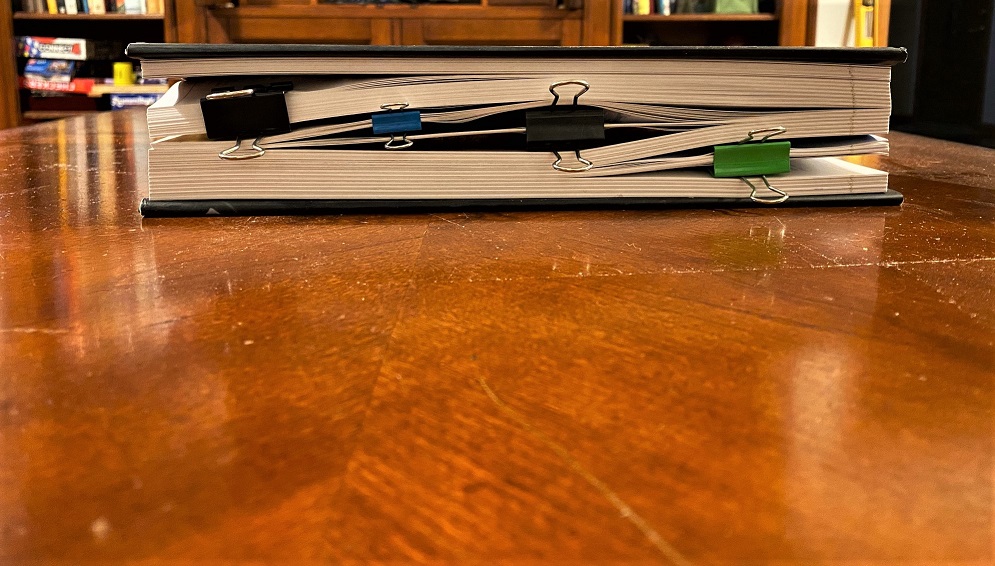
If you will look at clips from left to right, the first and the biggest set of pages is covering France, the next small section is dedicated to Italy, the next, even tinier, is Spain, and the last a bigger one is wines of the United States. But really, no wine region is left uncovered, even including such exotic winemaking destinations as China, India, and Japan.
My favorite part might be the last section of the book, called Micropedia. This section is a collection of wine terms and abbreviations. Yes, you can find many of these terms with the help of Google, but it might not be that easy. For example, the very first term explained in the Micropedia is ABC. If you search for “wine ABC” online, the first page which will come up will most likely be dedicated to the ABC wine store (it was for me, at least) – while the ABC used in the wine speak typically means Anything But Chardonnay or Anything But Cabernet. So if you want to know what ABC stands for, or agrafe, rondelle, or uvaggio for that matter, The New Sotheby’s Wine Encyclopedia will save you lots of time and effort (don’t take my word for it, go search for those terms).
Whether you want to learn about appellation you never heard of, the history of winemaking, or see the map of wine regions in Slovenia, this is the book which you will find the most helpful, no matter what your question is. You can find this book on Amazon and Barnes & Noble, and you can thank me later for the advice. I’m off to read about Madeira. Cheers!
The New Sotheby’s Wine Encyclopedia was provided to me as a sample, free of charge. Opinions are my own.
Hey French – Drink Italian
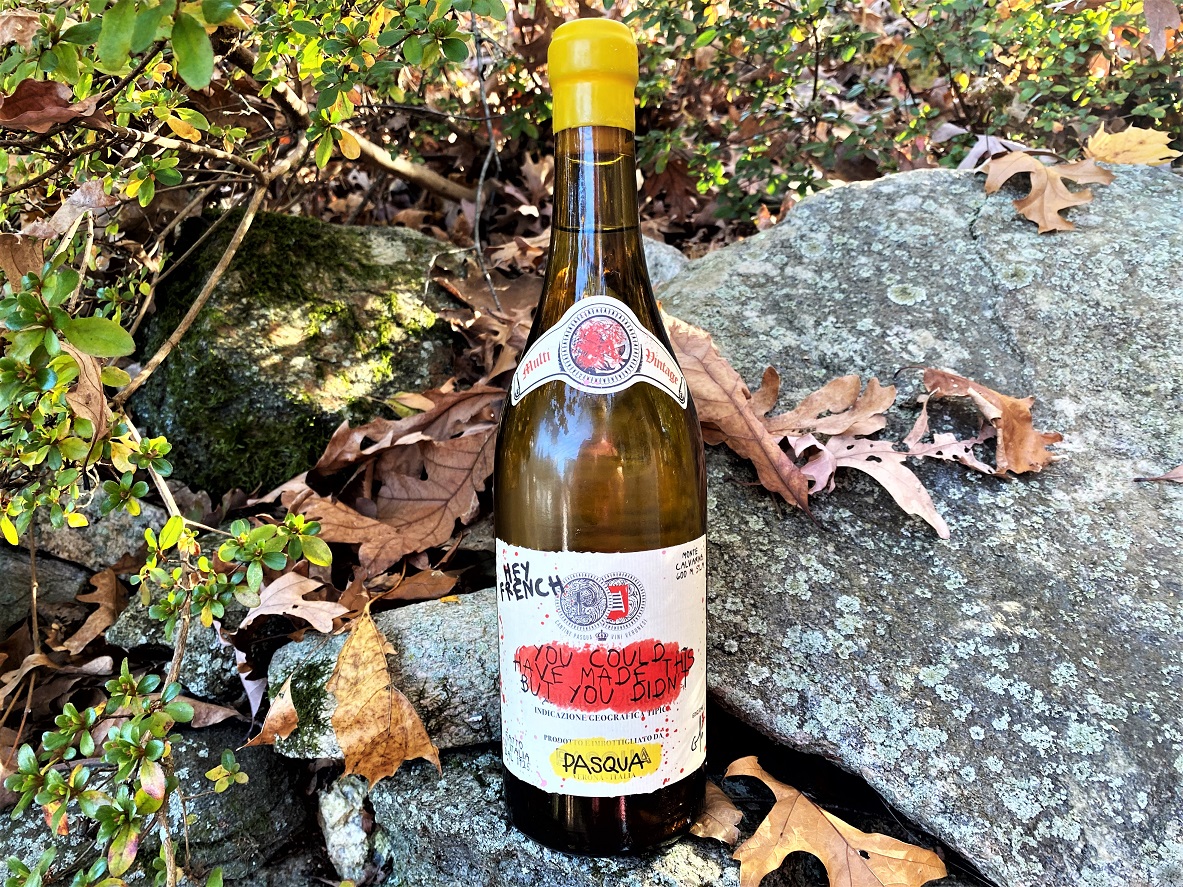 I mean no disrespect.
The title of this post is only suggesting that you should drink Italian wine. A particular Italian wine. And it doesn’t mean that French people should drink Italian wine – even though they will not regret if they will. Everybody can (should?) drink this Italian wine – Hey French.
The Pasqua brothers started Pasqua Vigneti e Cantine winery almost 100 years ago, in 1925 near the town of Verona in Northern Italy. Now with the family’s third generation at the helm, the winery continues and advances its traditions. I came across Pasqua wines for the first time almost 10 years ago – I found Pasqua Amarone at Trader Joe’s in Boston, and it was as good as Amarone under $20 can be. Then I discovered (also at Trader Joe’s) PassimentoSentimento, a tribute to the most famous Italians from Verona – Romeo & Juliet. At the beginning of this year, 2020, I had the pleasure of tasting Pasqua Famiglia Amarone at the Gambero Rosso event in New York. And then I was offered to try a sample of the latest addition to the Pasqua portfolio – maybe even a winner of the longest wine name contest – Hey French. You Could Have Made This Wine But You Didn’t.
This wine is definitely unique. To begin with, the wine is identified as “multi-vintage”, which is not a typical term in the wine world. The standard term is non-vintage, it is typically applied to Champagne and some other sparkling wines. And of course, a typical Champagne is a blend of multiple still wines from multiple vintages – however, it is rare to find a non-vintage still red or white wine. Hey French is deliberately identified as multi-vintage and it takes its inspiration from Champagne (hence Hey French in the wine’s name). The wine is made out of the grapes coming from the 4 best vintages of the decade – 2013, 2015, 2016, 2017, from one of the best vineyards in the area, Monte Calvarina, and 3 grapes – primarily Garganega (the grape used for the production of Soave Classico), with the addition of Pinot Bianco and Sauvignon Blanc. A total of 18 wines were used to produce Hey French Edizione 1.
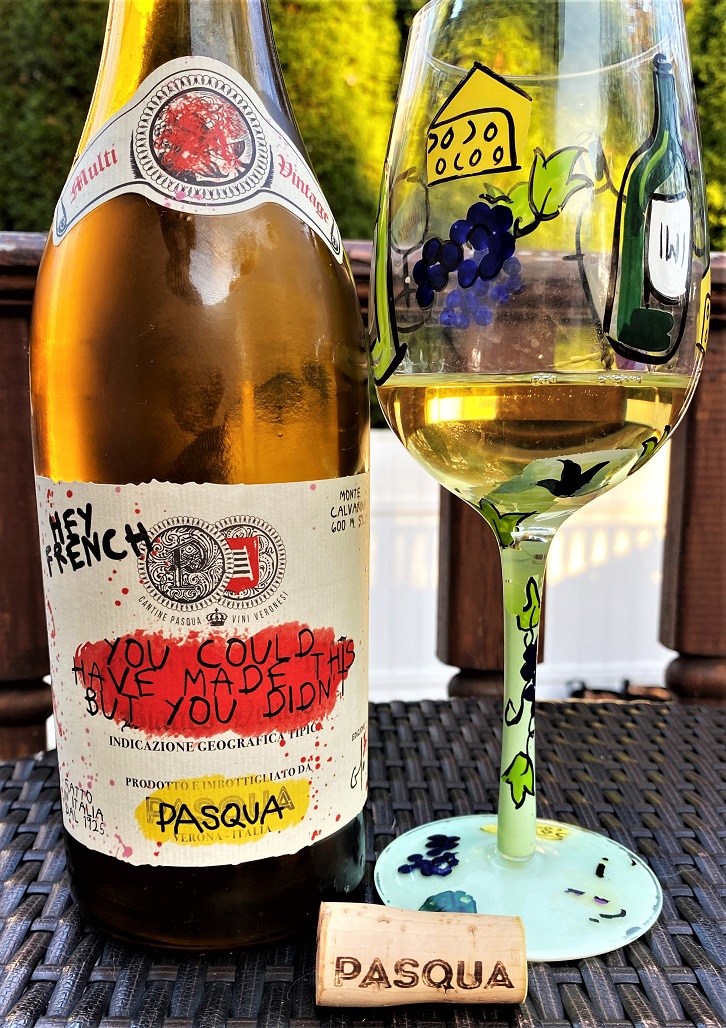
How was the wine? In a word, delicious.
Multi-vintage Pasqua Hey French You Could Have Made This Wine But You Didn’t Edizione 1 Veneto Bianco IGP (13.5% ABV, $40, blend of best 4 vintages of last decade)
Intense gold
Vanilla, apples, plums, Chardonnay-like
Fresh, lip-smacking, precise, clean acidity, whitestone fruit, granny smith apples, a hint of nutmeg, a hint of butter, round, plump, herbs, perfectly dry, delicious.
8/8+, superb.
Based on my experience with Pasqua wines so far, the company is accustomed to making bold moves (drinkable Amarone under $20 at Trader Joe’s clearly is a good indicator). This multi-vintage wine should also be categorized as such – $40 still wine without vintage designation with a playful label (designed by the celebrity Cuban-French artist CB Hoyo) might not be an easy sell. Once you try this wine, which is an absolutely solid, world-class wine, you would be happy to drink it again and again, but you know how preconceived notions work with wine…
The bottom line is simple – find this wine and try it. Additionally, offer it to your friends to taste blind, and then watch for the surprise on their faces once you reveal the wine – life’s little pleasures. Cheers!
Wine Quiz #128 – Which One Doesn’t Belong
The Wine Quiz series is not meant to intimidate. The whole idea here is to have fun and learn something new. When answering the questions, it is fully encouraged to use all available sources of information, including Google or any other search engine. There are no embarrassing answers – the most embarrassing thing is not giving it a try…
Welcome to the weekend and your new wine quiz!
Our last quiz was about pairings. Pairing is a very important concept around wine, so you were presented with a few of the lists of paired objects, and you had to identify proper pairings. Here are questions, now with the answers:
Question 1: Here is the list of countries and wines which are famous and unique, often made for thousands of years in their respective countries. Can you pair these countries with their wines?
| 1. France | A. Egri Bikaver |
| 2. Georgia | B. Kindzmarauli |
| 3. Greece | C. Malaga |
| 4. Hungary | D. Retsina |
| 5. Italy | E. Vin Jaune |
| 6. Spain | F. Vin Santo |
Answer: France – Vin Jaune, Georgia – Kindzamarauli, Greece – Retsina, Hungary – Egri Bikaver, Italy – Vin Santo, Spain – Malaga.
Question 2: Celebrity wines had been all the rage lately, with more and more celebrities getting into the ownership of the vineyards, wineries, and wine labels. Here is a short list of wines and celebrities behind them – can you create the right pairings here?
| 1. Brad Pitt | A. Avaline |
| 2. Cameron Diaz | B. Armand de Brignac |
| 3. Jay-Z | C. Hampton Water |
| 4. Jon Bon Jovi | D. Maison No 9 |
| 5. Post Malone | E. Studio Rosé |
Answer: Brad Pitt – Studio Rosé, Caneron Diaz – Avaline, Jay-Z – Armand de Brignac, Jon Bon Jovi – Hampton Water, Post Malone – Maison No 9.
Question 3: Many wines today represent blends, a combination of different grapes in different proportions. Some of those mixes and proportions are strictly regulated by the appellation laws – for example, Brunello di Montalcino can only be made from 100% Sangiovese Grosso. Some of the rules are rather well-established practices, such as the use of Petite Verdot in the Bordeaux blends, for color and power. Below is the list of main and supporting grapes – you need to pair them properly and also name the wine or an appellation where such grapes are combined together – again, either by the appellation rules or by common practices.
| Main grape | Secondary grape |
| 1. Montepulciano | A. Grenache |
| 2. Sangiovese | B. Sagrantino |
| 3. Syrah | C. Sangiovese |
| 4. Tempranillo | D. Petitte Sirah |
| 5. Zinfandel | E. Viognier |
Answer: Montepulciano – Sangiovese (Rosso Conero wines in Marche, Italy), Sangiovese – Sagrantino (Montefalco Rosso wines in Umbria), Syrah – Viognier (Côte-Rôtie, France), Tempranillo – Grenache (Rioja, Spain), Zinfandel – Petite Sirah (Turley, Carlisle, and other Zinfandel producers often do that).
Sadly, nobody attempted to answer this quiz, so once again I have to keep all the lavish prizes to myself.
Today we are going to play game of “which one doesn’t belong”. Below are lists of names – for each question, you need to figure out what is common between those names, and then find one item which shouldn’t be on that list. Here we go:
Question 1:
Adelaide Hills
Blackwood Valley
Currency Creek
Eden Valley
Hunter
King Valley
Waitaki Valley
Question 2:
Anjou
Chinon
Jasnières
Orléans
Reuilly
Rully
Saumur
Question 3:
Cayuse
Clos Erasmus
No Girls
Penfolds
Pingus
Vega Sicilia
Good luck, enjoy the quiz and your weekend! Cheers!
Wednesday’s Meritage #150
Meritage Time!
In the last issue of Meritage (#149) we talked about Italian police uncovering the crime ring focused on the production of the fake Sassicaia. While essential in its own right, this should be designated as a child’s play comparing with what’s coming. This week the wine press was overflowing with the news that the most famous wine fraudster of modern time, Rudy Kurniawan, is about to be released from jail. This article on wine-searcher is full of predictions for Kurniwan spreading his wings after deportation and doing again what he does best – making fake wine. I guess we will see, but the lovers of the first-growth and DRC should probably take notice.
Tre Bicchieri Gambero Rosso tasting in New York is one of my favorite wine events to attend – this year, it was the last grand wine tasting I managed to attend before covid took the world under its blanket. I don’t think we will have an opportunity to taste the Tre Bicchieri 2021 winners next year, but at least we can read about them in the Tre Bicchieri magazine. I can give you a few of the interesting stats – for example, 46,000 wines were tasted, 467 wines were awarded Tre Bicchieri, and 1,800 wines received Due Bicchieri Rossi award. You can also read about 12 special awards such as Bubbles Of The Year which went to 2011 OP Pinot Nero Dosaggio Zero Farfalla Cave Privée Ballabio, or Meditation Wine Of The Year which went to 1976 Vernaccia Di Oristano Antico Gregori – Contini. Don’t know about you, but I would loooooove to taste Meditation wine of the year…
When it comes to wine, is 20 years a long period of time or not? Of course, it depends. In today’s world, everything is changing fast, and while particular wine in the bottle might only barely start its aging after 20 years, the same 20 years bring a lot of change to the world of wine and wine culture at large. This article by Richard Hemming MW published at JancisRobinson.com looks into some of the changes in wine production, wine consumption, and more.
You know what time of the year this is, right? Yes, the holidays are coming! While the holidays are great, they also bring with them uneasy questions – presents. Presents are difficult and finding some suggestions always helps. If you have a wine lover in your life (and you probably do if you are reading this), here is one list I can recommend to flip through – you might find some good ideas there.
Last but not least – another grape holiday is almost upon us. On Monday, November 9th, we will be celebrating Tempranillo! Tempranillo is one of my absolute favorites, whether in its Rioja, Ribera del Duero, or Toro rendition – but Tempranillo today is one of the most planted and most popular grapes in the world, so you can look for it well beyond Spain. California, Washington, Oregon, Texas, Australia all produce delicious Tempranillo wines. Get your favorite bottle ready and make sure to share your Tempranillo experiences with the world on November 9th.
That’s all I have for you today. The glass is empty, but the refill is on the way. Cheers!
Jerez – A Tasty Treat and Halloween Candy Solution
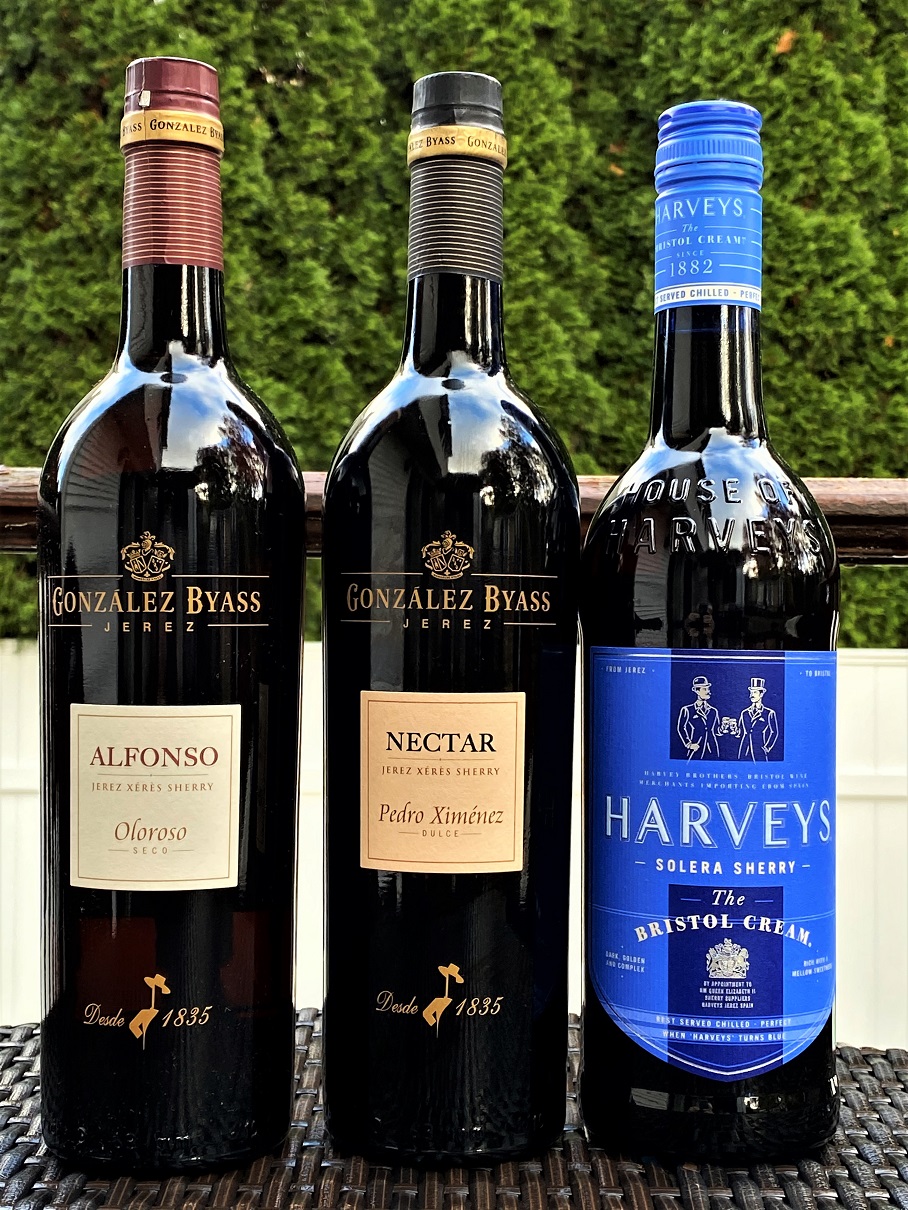 Yes, I know. Halloween is history now, so why am I even mentioning it?
Because I know that those Halloween candies are still lurking around, and will be for a while. And Halloween candy is not something which would make you crave the wine. But it doesn’t have to be that way. There are wines out there which will help you get rid of the candies – with pleasure. What am I suggesting? Let’s talk about Sherry, also known as Jerez.
Jerez wines (officially known as Jerez-Xérès-Sherry) take its name from the town Jerez de la Frontera in Andalusia, Spain, with the grapes coming from the vineyards surrounding the town. Jerez is one of the oldest winemaking regions in Europe, tracing its roots to more than 3,000 years back. Sherry is a fortified wine, and it came to being around the 8th century when the distillation process was invented. As a fortified wine Sherry can be compared to Port, however, the major difference is that Port is typically fortified in the middle of the fermentation process, to preserve the sugars in the wine, where Sherry wines are typically fully fermented, and then fortified, so with the exception of the particular style of Pedro Ximénez, most of the Sherries are dry wines.
There are many styles of Sherry wines, offering various levels of dryness, complexity, and oxidative qualities. Sherry wines are often also produced using the solera method, where the wines of the different vintages or constantly combined and resulting wines might represent a blend of hundred of vintages. The world of Sherry is quite complex, so if you want to read about all the different styles, this Wikipedia article contains a lot of good information.
González Byass started in 1835 in Jerez de la Frontera, in the heart of the Sherry country. Now in the 5th and 6th generation, González Byass is one of the major sherry producers, combining a number of Sherry brands under one umbrella. I had three sherries from González Byass to play with the candies – let me tell you how did it go.

First, the dry wine – Gonzalez Byass Alfonso Jerez Oloroso Seco. As it is a dry wine, it expectedly didn’t work too well with most of the candies, but I found some options:
Gonzalez Byass Alfonso Jerez Oloroso Seco (18% ABV, $25, Palomino 100%, aged for 8 years in solera)
Light amber color
Hazelnuts, sapidity, herbs
Hazelnuts, clean acidity, Rosemary, beautifully complex
Worked best with Payday because of explicit saltiness – not really with Reese’s or KitKat

The bottle on the right is directly from the wine fridge and it is ready to drink – the Harveys letters are blue
I recently wrote about Harveys – after years of personal neglect, this became a gateway wine for me to warm up again to the world of Jerez. As Harveys is quite sweet but not super-sweet, it provided the best pairing option for the majority of candies.
Harveys The Bristol Cream (17.5% ABV, $20, 80% Palomino, 20% Pedro Ximénez, a blend of 7 yo Fino, Oloroso, PX and Amontillado Soleras)
Dark amber color
Light herbaceous nose, a touch of dried fruit
Dried fruit on the palate, good acidity, refreshing
Nice with Reese’s, works well with KitKat, excellent with Payday
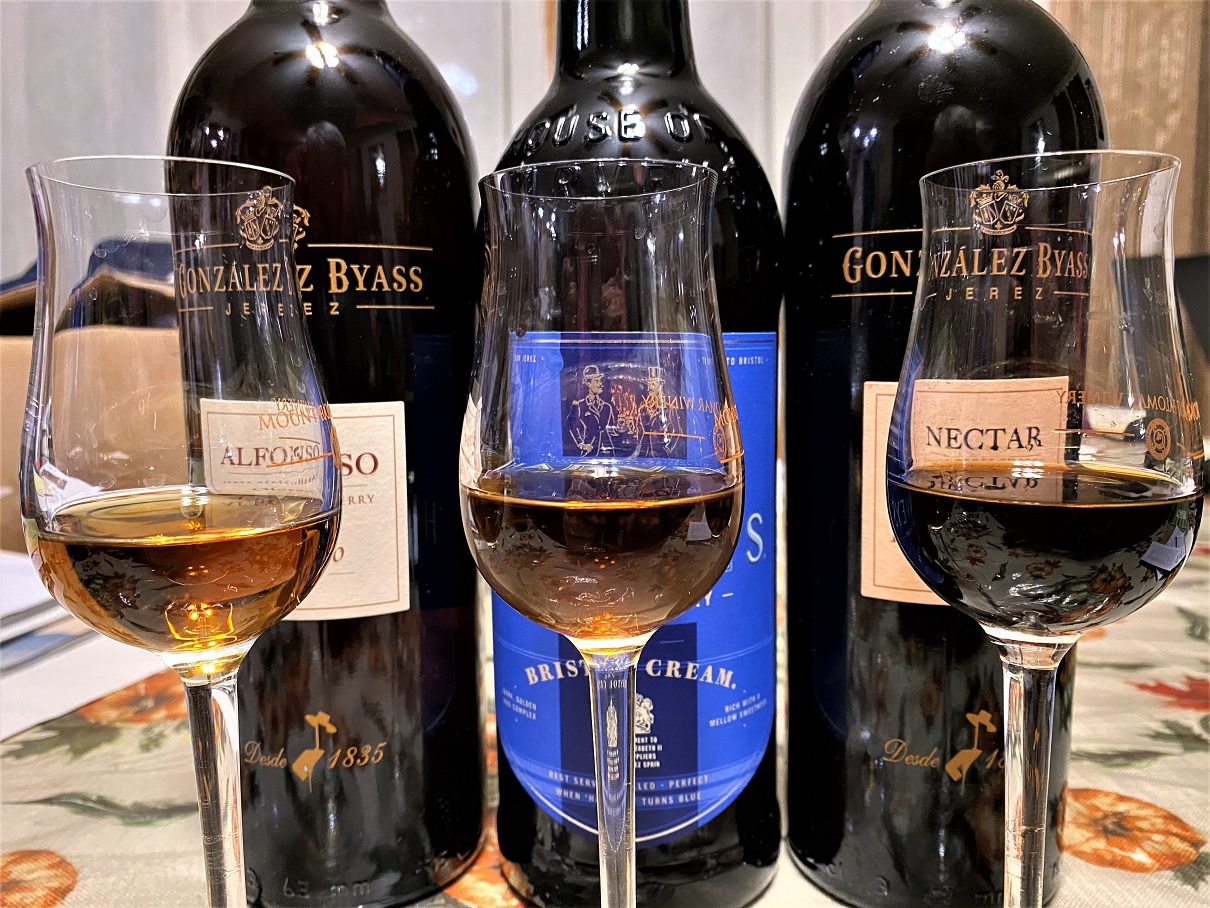
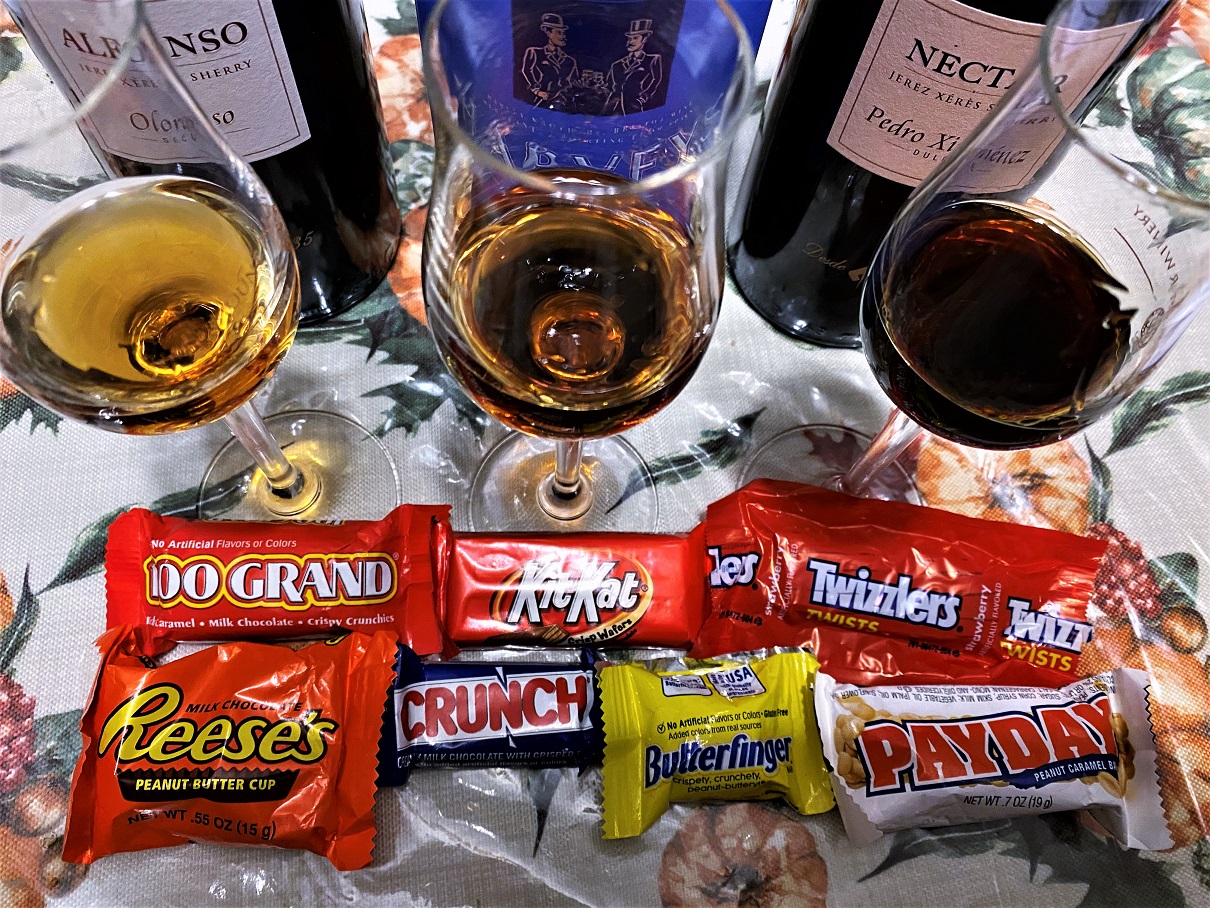
Nectar is seriously sweet wine (residual sugar of 370 grams per liter), but it is nevertheless very balance and delivers tremendous pleasure. The Pedro Ximénez (usually abbreviated as PX) is one of my most favorite dessert wines in general. The Pedro Ximénez grapes are dried on the mats for 2 weeks before pressing, losing 40% of liquid and becoming practically raisins – this explains the depth of color you can see in the picture above.
Gonzalez Byass Nectar Pedro Ximénez Dulce (15% ABV, 25%, 100% Pedro Ximénez, aged for about 8 years in solera)
Very dark amber color, almost black
Dried figs, dates, inviting.
Dried figs all the way, delicious, clean acidity on the finish, perfect balance
Great with KitKat, complements
Excellent with Reese’s, okay with Payday, Butterfinger – not so much
There you are, my friends. Don’t sweat the Halloween candies – pair them with a good Sherry. Or you know what – you can actually dump the candy – Sherry should be enough to keep you happy. Cheers!
Daily Glass: Unlimited Pleasures
I opened the bottle.
The wine was delicious. I will be happy to drink it again.
The end.
Simple story, right? Boring too, I guess, but – it doesn’t always work like that. Quite an opposite – I opened the wine. It was okay. I don’t want to drink it again. The end. But this is not the story anyone wants to talk about.
Let’s go back to the delicious wine.
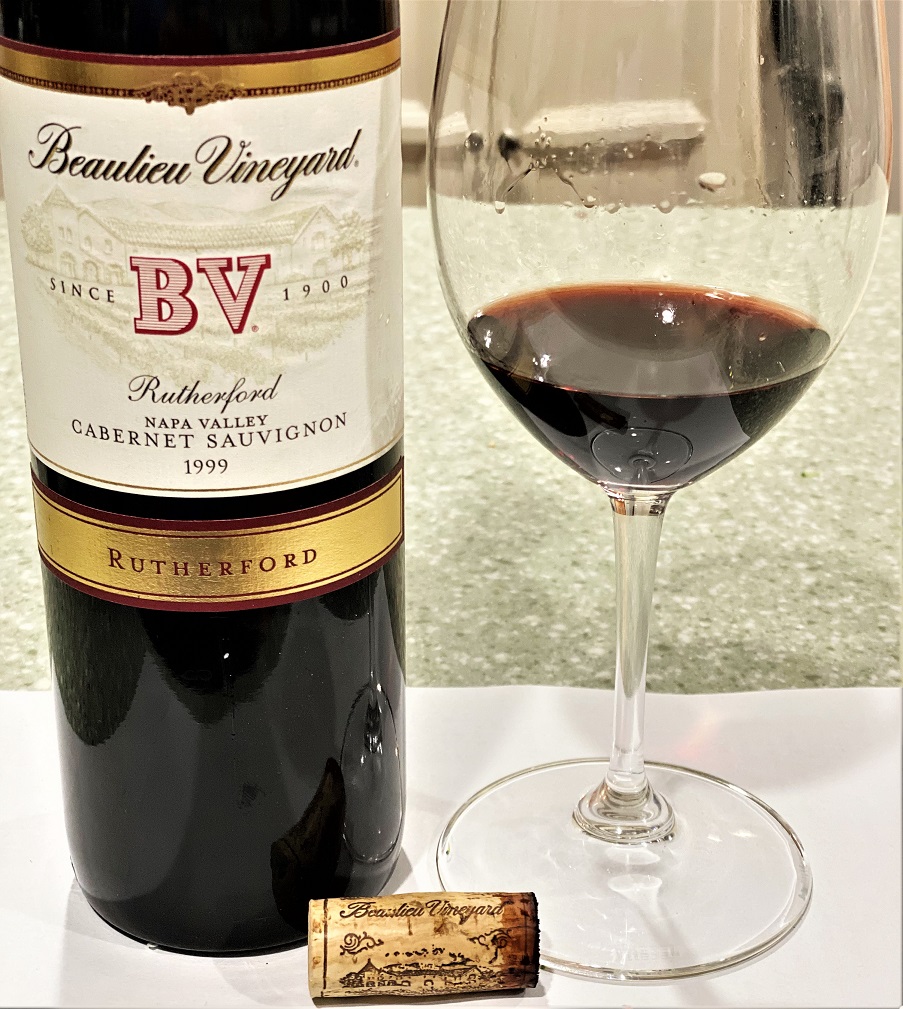
If you read this blog for any extended period of time, I’m sure you already know: I love aged wines. Contrary to what typical wine articles advocate – stating that the absolute majority of the wines should be consumed young and should never be aged – I absolutely believe that a significant number of wines, especially reds, not only can age but also improve with age. The evolution of the wine in the bottle is what we are after. Young wine can be perfect and deliver lots of pleasure to the drinker. Well-aged wine delivers lots and lots more – it is not just pleasure, it is often the whole experience. My latest proof and case in point (wish you were there) – 1999 BV Rutherford Cabernet Sauvignon.
If you like drinking aged wines, and share my view that many wines can age, the good news is that you don’t always have to personally buy the wine and wait for 20 years before drinking it. I found this wine while browsing the Benchmark Wine website. Benchmark Wine Group buys collections and then sells the wines at the market price without an auction. “Collection” doesn’t necessarily mean only DRC and Petrus – collections also include wines suitable for everyday drinking. Those “everyday wines” represent great value, as aging is included, and often it doesn’t cost you anything – I paid $30 for this exact 1999 BV Rutherford – and I can get the current (2016) vintage of the same wine in New York area for $29.99. Yep, I rest my case.
BV, which is short for Beaulieu Vineyard, is one of the iconic California wineries, founded in 1900. This is where André Tchelistcheff, often referred to as Maestro, honed his winemaking craft, completely changed winemaking at BV, and tremendously influenced winemaking in California ever since his arrival to Napa in 1938. It is impossible to talk about André Tchelistcheff within a short blog post, and I’m sure you can find hundreds of articles and books talking about his legacy. André Tchelistcheff retired from the active winemaking duties in 1973 – and I read somewhere that the last great vintage from BV was 1972. I wish I could compare 1999 which I had with 1972, but for my palate, even 1999 completely over-delivered.
The wine opened up with an intense nose of eucalyptus and mint – you could tell from a distant corner of the room that this was classic California Cabernet Sauvignon in the glass. The palate followed with layers upon layers of black currant, eucalyptus, mint, bell pepper, all interwoven in complete harmony. A perfect balance of fruit, acidity, tannins – every sip was repeating that full performance over and over again.
At the end of the evening, the wine showed a bit of the plum and dried fruit and made me think that I was lucky to catch the wine at its peak. On the second day, the wine showed a bit more restrained, somewhat losing great energy it had the previous evening. On the third day, the wine changed again, bringing back the same black currant and eucalyptus, however this time in much leaner, classic Bordeaux fashion, and really showing up young, full of energy and promise.
Not only this was a delicious, well-aged wine, but it was also [expectedly] a memory catalyst. I had an instant flashback of memories of a wonderful visit we had at BV about 8 years ago, tasting not only multiple vintages of Georges de Latour Private Reserve Cabernet Sauvignon, but also unique clonal Cabernet Sauvignon wines. It is amazing in how many ways you can enjoy a simple sip of delicious wine.
That is my story, friends. Well-aged wines are amazing – can you tell yours?
Wine Quiz #127 – A Pairing Exercise
The Wine Quiz series is not meant to intimidate. The whole idea here is to have fun and learn something new. When answering the questions, it is fully encouraged to use all available sources of information, including Google or any other search engine. There are no embarrassing answers – the most embarrassing thing is not giving it a try…
Welcome to the weekend and your new wine quiz!
Our last quiz was about finding the item which doesn’t belong – and providing an explanation as to why it doesn’t belong. Here are the questions, now with the answers
Question 1:
Cork taint, Maderization, Mercaptan, Oxidation, Sapidity
Answer: This is a list of the wine faults, with the exception of Sapidity, which is a flavor descriptor, not a wine fault. If you want to learn more about wine faults, here is a good article.
Question 2:
Salta, Patagonia, Jujuy, La Rioja, Atacama, Catamarca
Answer: this is a list of the wine regions in Argentina with exception of one – Atacama. The Atacama is actually a wine region in Chile. In case you want to check this further, here are the links for wine regions in Argentina and Chile.
Question 3:
Madeira, Marsala, Banyuls, Port, Sherry, Sauternes
Answer: These are all fortified wines, and most of them are sweet – with the exception of Sauternes, which is just a sweet wine, but not fortified.
I’m happy to see the increased participation in the quiz, and also happy to say that Jason Brandt Lewis and Dorothy Schuler almost got it right – they both correctly answered questions 1 and 3, but not question 2 – they definitely deserve an honorable mention and a nice glass of wine.
Dorothy mentioned in her reply that the last quiz was very easy. Today’s quiz might be even easier!
Pairing is one of the important concepts around wine. We like to pair wine with food, music, mood, ambiance, and people. So let’s play the game of pairing today. Here are the questions.
Question 1: Here is the list of countries and wines which are famous and unique, often made for thousands of years in their respective countries. Can you pair these countries with their wines?
| 1. France | A. Egri Bikaver |
| 2. Georgia | B. Kindzmarauli |
| 3. Greece | C. Malaga |
| 4. Hungary | D. Retsina |
| 5. Italy | E. Vin Jaune |
| 6. Spain | F. Vin Santo |
Question 2: Celebrity wines had been all the rage lately, with more and more celebrities getting into the ownership of the vineyards, wineries, and wine labels. Here is a short list of wines and celebrities behind them – can you create the right pairings here?
| 1. Brad Pitt | A. Avaline |
| 2. Cameron Diaz | B. Armand de Brignac |
| 3. Jay-Z | C. Hampton Water |
| 4. Jon Bon Jovi | D. Maison No 9 |
| 5. Post Malone | E. Studio Rosé |
Question 3: Many wines today represent blends, a combination of different grapes in different proportions. Some of those mixes and proportions are strictly regulated by the appellation laws – for example, Brunello di Montalcino can only be made from 100% Sangiovese Grosso. Some of the rules are rather well-established practices, such as the use of Petite Verdot in the Bordeaux blends, for color and power. Below is the list of main and supporting grapes – you need to pair them properly and also name the wine or an appellation where such grapes are combined together – again, either by the appellation rules or by common practices.
| Main grape | Secondary grape |
| 1. Montepulciano | A. Grenache |
| 2. Sangiovese | B. Sagrantino |
| 3. Syrah | C. Sangiovese |
| 4. Tempranillo | D. Petitte Sirah |
| 5. Zinfandel | E. Viognier |
I hope you will find this fun, and I’m looking forward to congratulating many winners!
Good luck, enjoy the quiz and your weekend! Cheers!
Champagne, Champagne, Champagne for Everyone!
Yes, I issued the call for Champagne. And no, it is not because of the Friday night, lottery winning, huge job promotion, or an official ending of the COVID-19. Today, October 23rd, 2020 is the official celebration of the bubbles that became synonymous with success and life’s happy moments – today we celebrate Champagne, a quintessential celebration itself.
My appreciation for Champagne came long after wine became an obsession. I grew up drinking sweet bubbles of unknown pedigree under the name of “Soviet Champagne” – who would care about naming rights back then. So the first encounter with crisp, tiny, and ultra-acidic bubbles was not love at first sight. It is interesting that how I can’t name a pivotal wine, but I can easily name a pivotal Champagne – Krug Vintage, I don’t remember if it was 2002, 2003, or 2004, but that encounter with greatness during PJ Wine grand tasting in New York absolutely changed my perspective on the Champagne. And if you care to know, I even have my favorite Champagne of all times – 2002 Pol Roger Cuvee Sir Winston Churchill – pure magic.
Today, sparkling wines are produced everywhere. All countries, all types of grape (sparkling Tannat? no problems. Sparkling Shiraz? of course!), and literally all wineries. There are absolutely stunning bubbles produced in Italy (Franciacorta, Trentodoc), Spain, and the USA (if you ever had Roederer L’Ermitage or late disgorged Gloria Ferrer, you know what I’m talking about). But today, it is all about Champagne, in its pure form.
Champagne also has the capability of bonding the memories – as it is often linked to the special moments, just seeing that bottle of Perrier-Jouët, Cristal, Dom Perignon, or Bollinger can trigger the onslaught of happy thoughts. True, any wine can do this, but Champagne has some special powers.
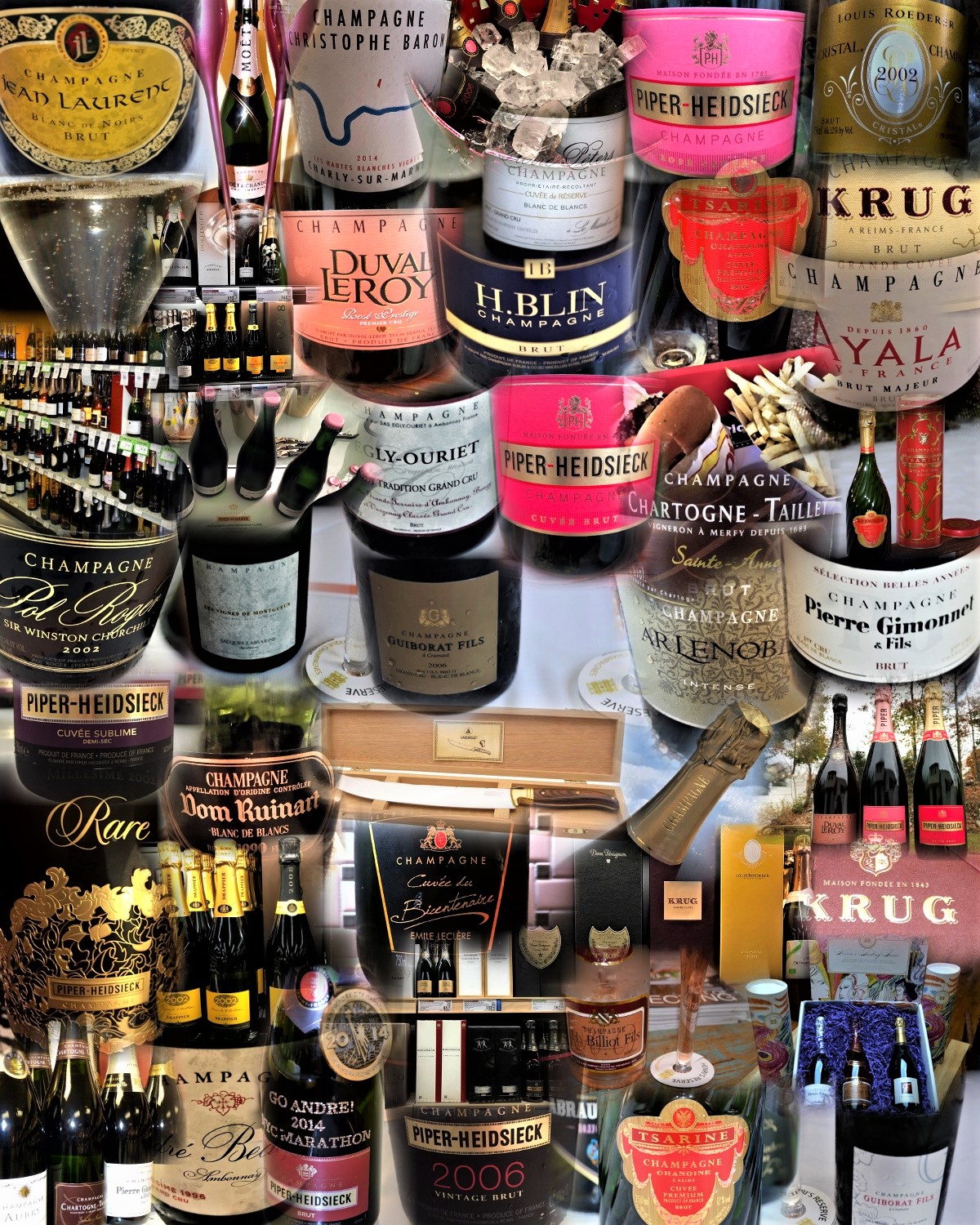
In recognition of the holiday, I’m offering you a collage of some of my Champagne experiences:
I also can’t miss an opportunity to mention the sabering – opening of the Champagne bottle with a special sword, the saber (hence the name). Sabering has some ground rules and requires basic skills – it can be done with the saber, but it is even more fun to use a random object, such as a wine glass, a stapler, or an iPhone – but this should be a conversation for another time. Sabering or not, but the opening of the Champagne bottle often goes wrong – and I want to leave you today with a little compilation of such, well, accidents.
One of my favorite quotes of all times is not about Champagne, but about life – in the words of the singer Pitbull, “every day above ground is a great day”. Don’t wait for a special occasion – open that Champagne bottle today – as the present should always be celebrated.
Cheers!
Wednesday’s Meritage #149
Meritage Time!
Let’s start with something you already knew, and hopefully, participated in – if not, it is not too late: do you know that October is #MerlotMe month? Way before social media was a thing, one mediocre movie (Sideways, 2004) almost killed Merlot wine sales in the USA. I remember about 8-10 years ago, a friend of mine who has a wine store didn’t have a single bottle of wine with Merlot name on the label at his wine store – nobody would buy it. The situation is much better today, but still, while some of the very best wines in the world – Petrus, Le Pin, Masseto are made exclusively from Merlot, Merlot wines still need everyone’s help to restore its pre-sideways status. You still have time to grab a bottle of Merlot from your favorite producer (need advice? how about L’Ecole No 41 or Duckhorn) and join the celebrations.
Wine can often be considered an art form. For example, Sassicaia, one of the very best super-Tuscan wines Italy has to offer. If you ever had a sip of this wine, you would agree that it is transformational, and might have a similar effect as looking at the beautiful painting. Art forms are often subject to imitations – this is actually a bad choice of the term – counterfeiting is what I’m talking about. At $300+ per bottle, Sassicaia represents a lucrative target for the counterfeiting – and that what some folks in Italy thought too. Italian police were working for more than a year to catch counterfeiting Sassicaia ring in Northern Italy – you can read the full story in the Wine Spectator article.
We grow from the adversities – this is a known fact. The poorer the soil, the harder vines have to work, the better fruit they will bear. When humans have to concur the obstacles, they grow, invent, persevere, and overcome. Humankind at the moment is fighting with the silent, invisible killer, COVID – but looking for the proverbial “silver lining”, we (humans) continuing to move forward, and whatever we invent to deal with the virus, is helping us advance far beyond that singular task. Case in point – dealing with vine diseases, such as powdery mildew. It turns out that the same UV light which is effective against the virus is effective in the fight against powdery mildew. Take the UV light source, put it on the robot tractor, and let it roam the vineyards during the night – problem solved. Or at least the solution looks very promising. For more details, read this article.
The last one for today is not even the news. It is simply a powerful story. An account of the fighting and winning against one of the most powerful forces on Earth – wildfire. This is a terrifying read, but I can’t recommend it highly enough – the story of the Smith family, defending their Smith-Madrone winery and vineyards against the recent Glass Fire, is a must-read in my opinion. You can find it here.
That’s all I have for you today. The glass is empty, but the refill is on the way. Cheers!
Last Bottle Sign Up ($10 credit)




 Talk-A-Vino