Archive
Happy New Year! Lots of Good Experiences, Good Memories, and Good Wine!

Celebrate! Celebrate! Let’s Open Some…
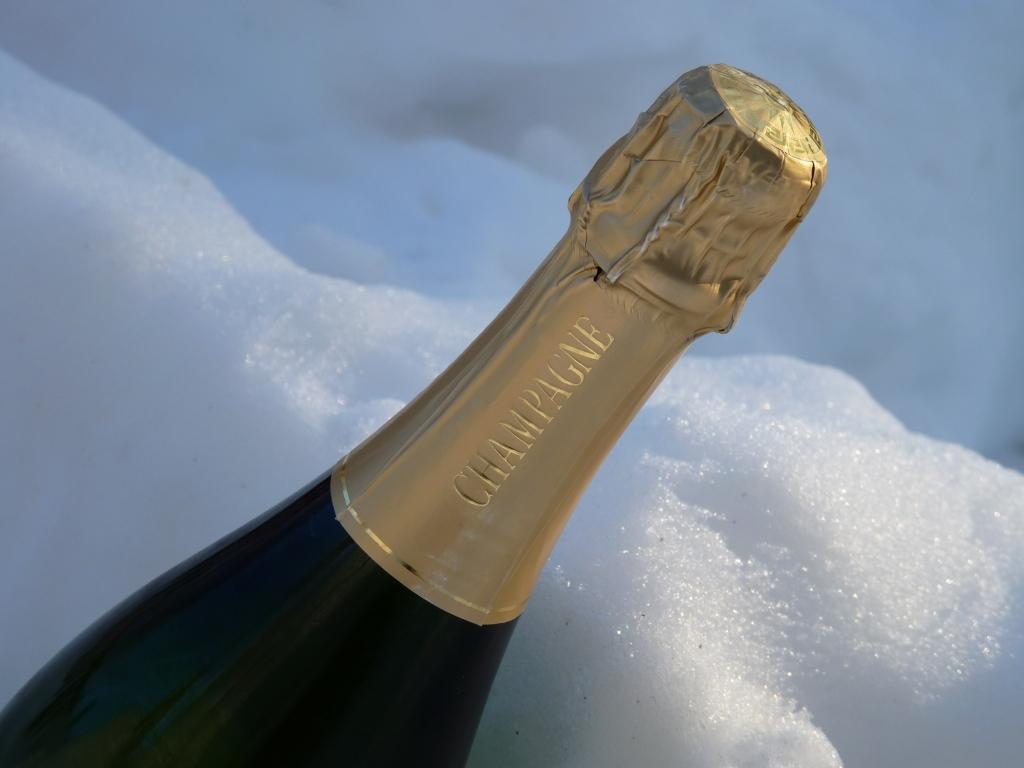 Champagne! Of course, Champagne. No celebration is complete without the toast of “bubbly” – New Year’s arrival, wedding anniversary, winning of the Grand Prix, christening of a new ship, and many other occasions, big and small are acknowledged with Champagne.
Champagne is a very interesting subject in general, but even more so when New Year’s arrival is around the corner. You can find articles and blog posts about Champagne everywhere – here is a good example, post by Dr. Vino. Well, let’s join the conversation about Champagne.
Champagne is a wine which belongs to the group of so called “sparkling wines” – the wines with many tiny bubbles (there are at least 49 million bubbles in a bottle of champagne – feel free to count yourself if you don’t believe it). As many other things in life, discovery of Champagne is a combination of accident and luck – on a very primitive level, not fully fermented bottle of wine was frozen, then temperature rose, fermentation restarted (this time, in a bottle) – voila, you got a bottle of Champagne.
Well, small clarification will be appropriate – Champagne is both a wine and a place – in France, of course, where else. Are Champagne and Sparkling wine synonyms? No. Any Champagne is Sparkling wine, but not any sparkling wine is Champagne. Only sparkling wines produced in Champagne region in France using so called méthode champenoise can be called Champagne. All other sparkling wines produced outside of the Champagne region, even using the same method, can only be called Sparkling Wine.
Let’s play a little game which we will call “what is in the name”. Champagne only comes from Champagne, what about about other sparkling wines? Today sparkling wines produced everywhere, from wide variety of grapes and at ever increasing pace. Only this year I had sparkling Malbec (very good) and sparkling Shiraz (don’t do it). In United States sparkling wines are produced in California (lot’s of good wines), Oregon, New Mexico (surprisingly good), New York and many other states. Traveling through the world, a lot of sparkling wines have their own names. Let’s see if you will recognize some of them:
Prosecco – sparkling wine from Italy
Sekt – sparkling wine from Germany
Cava – sparkling wine from Spain
Cremant – sparkling wine from France (Cremant d’Alsace, Cremant de Bourgogne, Cremant de Loire, Cremant du Jura and many others)
Blanquette de Limoux – comes from Limoux in Languedoc, France with the claim of being the first Sparkling Wine, before Champagne became Champagne.
Champagne is endless subject – no way to cover it in the short blog post. Let’s stop our world tour right here, and let’s talk about the celebration “at hands” – New Year 2011. What bottle are you going to open to celebrate arrival of the New Year? How about a little dream? Again, you said? True, just a few days ago I wrote a post about the wines to dream of. Something was missing in that post, I think – and that “something” is … Champagne! There was no Champagne mentioned in that list. So we need to fix it. And if you need a Champagne to dream of, I have only one recommendation – Krug.
 If you wonder why I so focused on one and only one Champagne, I can tell you – I had a chance to try it, and I was blown away. At the PJ Wine Grand Tasting event in November 2009, Krug 1996 was served among others, no doubt excellent Champagnes (Veuve Clicquot Rose, Dom Perignon 2000, …). I made a mistake – pretty much fatal, as it appeared – to start tasting from the Krug 1996. I had vintage champagnes before, and never really appreciated them. Krug 1996 was something else – with richness of freshly baked bread, nutty and creamy, fine-tuned refreshing acidity, ultimately balanced – it was incredible. All the Champagnes in that tasting, with pedigree or not, literally tasted like water next to Krug 1996. Yes, this wine is expensive (about $300+, you can check the price here), but it worth every penny – and worth dreaming about. And if you need to expand your Champagne dream list, you can find a lot more recommendations here.
There are few days left before we will toast new hopes, new dreams, new desires with the New Year 2011. No matter what will be in your glass, I wish for your wildest dreams to become reality. Raise your glass To Life, and keep dreaming!
Top Dozen Wines of 2010
 One more year is passing by, becoming memories. As the closing bell nears, we often like to count good things which happened during that year. After reading the post by Joe Roberts, where he talks about his ten most interesting wines of the year, the idea for this post was born.
Here we go – a dozen of wines which made special memories throughout the 2010. Are these the best ever wines I had? No. Are these the best wines of 2010? Not necessarily. Why is there a dozen? After going through my records, I simply counted 12 wines I want to reflect upon. A lot of these wines were covered in the prior posts – I will give you links and prices if I have them. And I will explain why I felt so special about these wines. And – I will make an effort to sort the list. Prioritizing memories and experiences is hard, but I will do it nevertheless – may be just to get a good chuckle later on. And now, without further delay…
12. Haut Charmes Sauternes 2007 ($17). One of the best Sauternes I ever had – clean, balanced, with white peaches and honeysuckle on the palate. Few reasons to be in the “Top Dozens” – legend has it is declassified Chateau D’Yquem, plus great QPR for the Sauternes.
11. Cambria Bench Break Chardonnay 2006, Santa Maria ($25). For the first time in a long while, California Chardonnay tasted like California Chardonnay – lots of vanilla, butter and toasted oak on the palate, extremely balanced at the same time. Real Chardonnay as opposed to wimpy white wine without identity.
10. Hamilton Russell Vineyards Pinot Noir 2008, South Africa ($40). Totally unexpected – amazing Pinot Noir from South Africa (!). Profoundly Burgundian style, with tremendous finesse and balance. Great QPR. Worth seeking – if you like Pinot, you will enjoy it immensely.
9. Flora Springs Soliloquy Sauvignon Blanc 2009 ($18). Literally the best California Sauvignon Blanc I ever had. In general, I love French, New Zealand and Chilean versions, and ignore California Sauvignon Blancs. However, this wine you can not ignore – beautiful combination of traditional grassiness with fruit forward and finesse. Outstanding!
8. Visp Chantone Eyholzer Roter 2008 ($26). Swiss wines are great – it is unfortunate that they literally can’t be found in US. I’m lucky to be able to experience the Swiss wines – and this particular red is probably the best Swiss wine I ever had. Playful, balanced, easy to drink and thought provoking – good till the last drop.
7. Domaine de Granajolo Corse Porto-Vecchio 2009 (€12). Best Rose wine I had in 2010. Nuf said.
6. Domaine de Torraccia Niellucciu 2009, Corse Porto-Vecchio (€11). Accidental find in the wine shop in Paris (while hunting for the new grapes) – amazing. Playful, balanced and inviting – pure pleasure in the glass.
5. Chateau Hosanna 2003, Pomerol ($100). One of the best Bordeaux wines ever. Very approachable now, and will be amazing in another 20 years.
4. Jamesport Petit Verdot 2006, Long Island ($100). One of the biggest surprises of the year – having only bad experience with 100% Petit Verdot wines from Australia, this wine was absolutely pleasantly unexpected. Luscious , silky smooth, concentrated wine – no edges or rough corners. Lots of pleasure.
3. Satrapezo Saperavi 2006, Georgia ($28). This wine completely changed my perception of Georgian wines. Georgia was a birthplace of winemaking, but tasting Georgian wines until recent was saying that the art is lost. This wine changed that. Perfectly balanced and restrained, with earthiness, fruit, acidity and tannins coming to play as a team. Great wine, and great value.
2. Rozes Over 40 Years Old Port ($90). My best port ever. I can close eyes and imagine the smell and taste of this wine – multiple layers, tremendous complexity and great opportunity to reflect on life when the finish lasts for 15 minutes. Find this wine and experience for yourself.
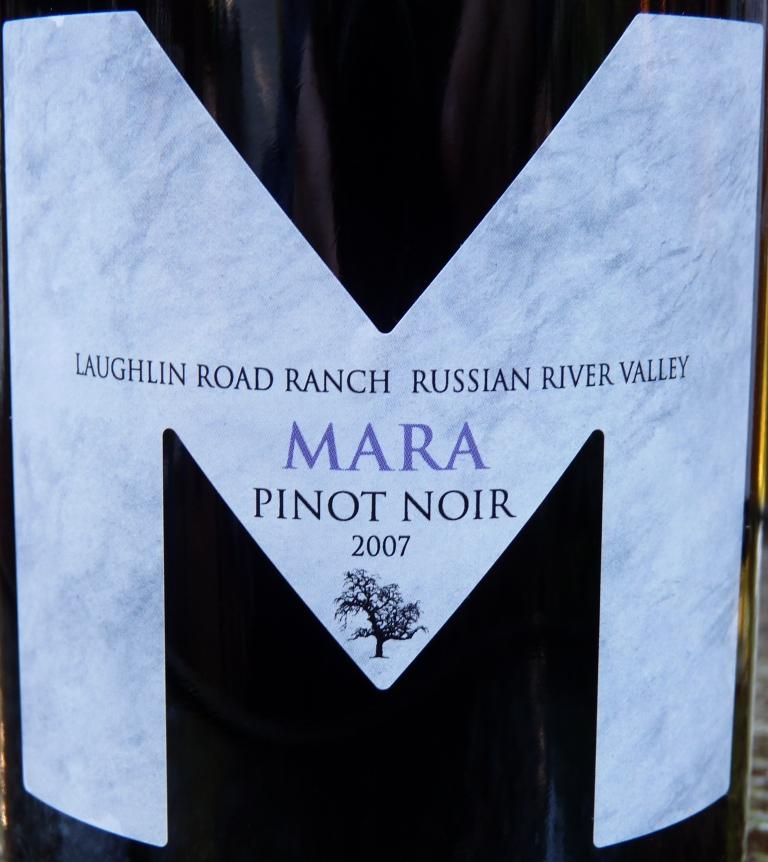
1. Mara Laughlin Road Ranch Pinot Noir 2007, Russian River Valley ($45). Incredibly balanced, silky smooth wine, very powerful and round. Alcohol content is 15.6%, and it can’t be noticed unless you read the label. Great wine now, will improve with some cellar time. Find it if you can.
There were many other wines worth mentioning, and I did my best throughout the year to cover them. The wines in this group delivered special experiences – that’s why they listed here. That’s all, folks – for this post. I will be glad to hear, however, about YOUR special wines and wine experiences from 2010. Speak up – now is the time!
The Wines To Dream Of
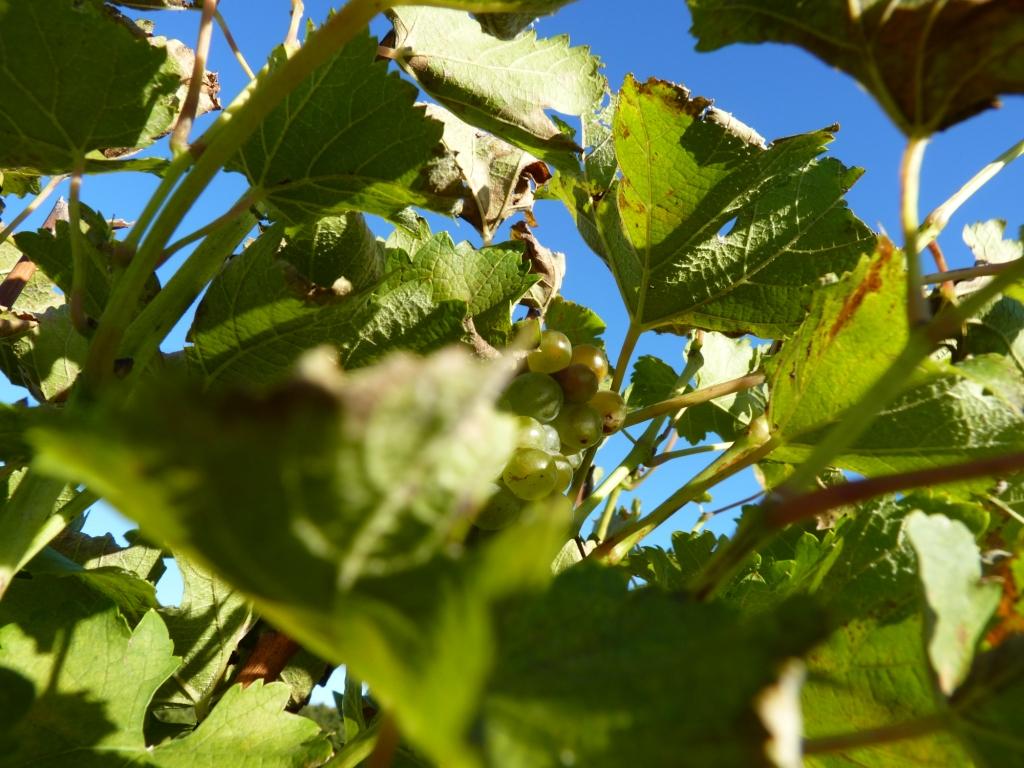 What do you think I plan to talk about? No, we are not going to talk about “best in the world wines” – we did it before, and that discussion is closed for now. In general, does it make sense to dream about some particular wine? There is such an abundance in each and every wine store, what’s that dreaming is all about? Well, first, it is a special time of the year – Holidays, Friends, New Year resolutions, new hopes and new desires – so a little dreaming is appropriate, right? Second, reality is often made out of things which were dreams before. Wine is as good of a material for the dreams as any other object – once you have an opportunity to taste, to experience the wine which YOU will deem “amazing”, it will give you a happy memory you can always come back to. And that is the great quality of the great experiences – they serve as an object of desire, and once achieved, they become a staple for the happy state of mind.
How one can come up with the list of “dream” wines? There are multiple ways to go about it, but for now, let’s just use wine ratings as a reference. More specifically, let’s use wine ratings from the major wine publications – Wine Spectator and Wine Advocate. Both use 100 points rating systems, with 100 being an absolute top rating (many other wine publications use the same 100-points scale). And if we are dreaming, let’s aim high – let only look at 100 point wines.
I can safely assume that you know perfectly well by now my approach to the wine ratings – you are The One who has final say on the wine – good or bad. However, when I look at 100 points ratings from magazines which rate tens of thousands of wines per year, I believe the 100 points represent some higher level of truth. Such ratings are not assigned left and right. If you will search on the Wine Spectator web site, you will find only 73 wines rated at 100 points – so I think this is something we can rely on. To connect the dreams with the reality, at least a little bit, I used one of the recent e-mails form Benchmark Wine Group, which listed available 100 point wines:
Chapoutier Hermitage Le Pavillon 2003 ~ WA100
Chateau d`Yquem 2001 ~ WA100, WS100
Domaine Romanee-Conti La Tache 1990 ~ WA100
Guigal Cote Rotie La Landonne 1999 ~ WA100, WS98
Guigal Cote Rotie La Landonne 2003 ~ WA100, WS98
Guigal Cote Rotie La Mouline 1983 ~ WA100
Guigal Cote Rotie La Turque 2003 ~ WA100, WS98
Jaboulet Hermitage La Chapelle 1978 ~ WA100, WS99
Jaboulet Hermitage La Chapelle 1990 ~ WA100
La Clusiere St. Emilion 2000 ~ WA100
La Mission Haut Brion 1982 ~ WA100
La Mission Haut Brion 2000 ~ WA100
Lafleur 1982 ~ WA100, WS99
Le Macchiole Messorio 2004 ~ WS100
Margaux 1990 ~ WA100, WS98, IWC98
Mouton Rothschild 1982 ~ WA100
Mouton Rothschild 1986 ~ WA100, WS99
Rieussec 2001 ~ WS100
Screaming Eagle Cabernet Sauvignon 1997 ~ WA100
Shafer Cabernet Sauvignon Hillside Select 2002 ~ WA100
Taylor Port 1992 ~ WA100
Valdicava Brunello di Montalcino Riserva Madonna del Piano 2001 ~ WS100
If you are interested in prices, you should check them out on the Benchmark Wine Group web site. Just to give you a range, the cheapest wine in this list is Rieussec at $154 and the most expensive is Domaine Romanee-Conti at $4200.
Will this wines be really amazing? Who knows? Are they worth seeking and dreaming about? You bet. Don’t know about you, but my wish list is ready! Keep on dreaming…
Tasting Series At Cost Less Wines – Part 3, Grand Tasting
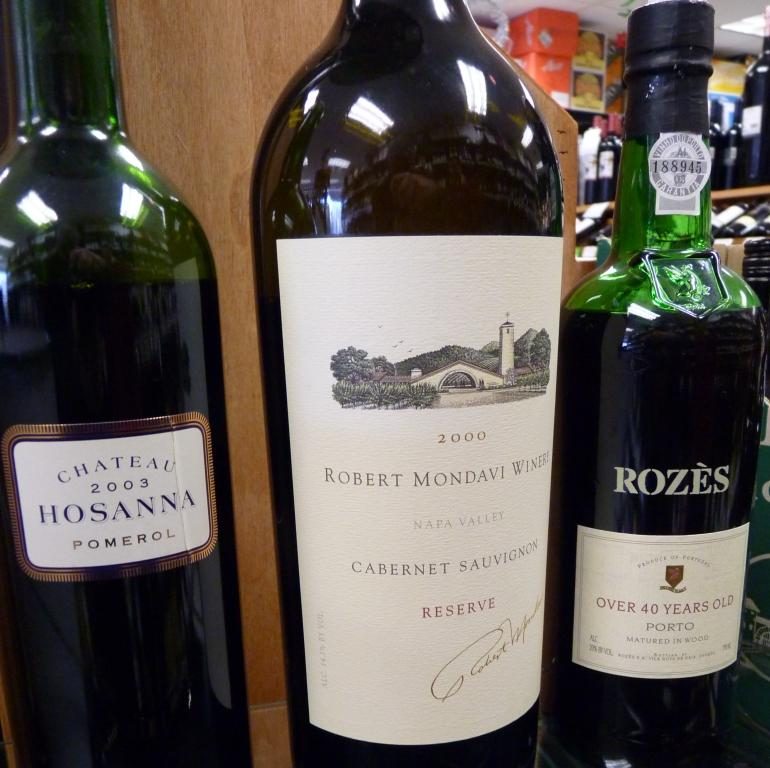 This is the third and last post in the series about tasting events at Cost Less Wines and Liquors. Usually, the word “grand” assumes something of a substantial size, right? With “only” four wines being presented at the tasting, can we really call it “grand”? Yep, judging by the quality of the wines, this event is nothing but the “grand tasting”.
There were four wines in the tasting. The first was Pommery Champagne Grand Cru 1996. It was beautiful, mature “vintage champagne”, which tasted nothing like the regular non-vintage stuff – tremendous level of complexity with nuts and fresh bread presented on the palate in a very concentrated fashion. I have to stress though that vintage champagnes are an acquired taste. My first reaction about 6 years ago was “oh, my, what happened here? People can’t drink that”. And now – yes, just bring it on…
The next wine was Chateau Hosanna 2003. I was warned by Zak (owner of Cost Less Wines) that I would taste something special – I didn’t even expect how special this wine was. This wine comes from the Pomerol region in Bordeaux, and the property is literally bordering legendary Chateau Petrus which makes some of the world’s best (and most expensive) wines. Pomerol wines are Merlot-based, and Chateau Hosanna is a blend of 70% Merlot and 30% Cabernet Franc. This wine was simply amazing. Tremendous balance of fruit, freshness, acidity and tannins, all arranged in the multiple layers with the long finish. The finish was so powerful that it came through even the next wine! This was one of the best wines I tasted in 2010, and I would give it Drinkability rating of 9.
The next wine was also not too shabby – Robert Mondavi Cabernet Sauvignon Reserve 2000, poured from the magnum (actually it was decanted). This was good clean Cabernet Sauvignon, with all classic Cabernet traits – a hint of eucalyptus and black currant, nice and clean. The only problem was – it was no match to Chateau Hosanna, which came right through at the finish (the order of wines was switched later on).
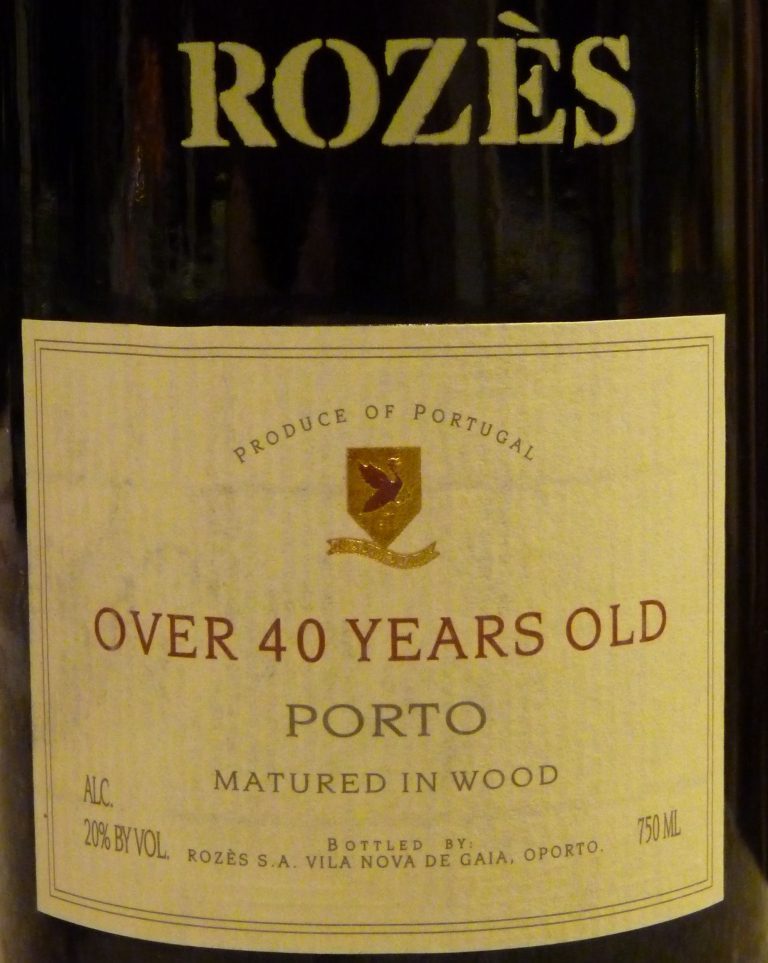 Last but not least – Rozes Over 40 Years Old Port. Generally, I can drink port wines, but it would not be something I would crave – if other choices of dessert wines would be present, like late harvest wines or Sauternes, I would gladly go with those. Anyway, this was true until now… This Rozes over 40 years old Port was unbelievable. I can’t even describe the nose – I can only tell you that it is impossible to let go of a glass. You really don’t want to drink that wine – all you want to do is smell, and smell, and smell. Tremendous. I can’t do justice to that smell by trying to describe it. Once you finally convince yourself to give it a taste, it matches your expectations from the smell. Mature, layered, with honey, nuts and spices, but not overly sweet and not overly alcoholic, very, very balanced. And finish? I can only tell you that this wine stayed in my mouth for the next 15 minutes… Drinkability – 9+. No more words are needed. Find this wine – you will not regret it.
Last thing I want to mention – all the wines represent great QPR. Vintage Champagne at $50, Mondavi Reserve Cabernet at $125, tremendous Bordeaux at $100 and 40 years old Port at $90 – these are great values for the wines of such quality and they shouldn’t be missed. And for me – great wines, great experience – makes me happy!
Tasting Series At Cost Less Wines – Part 2, The Hills of Scotland, or Glenlivet Tasting
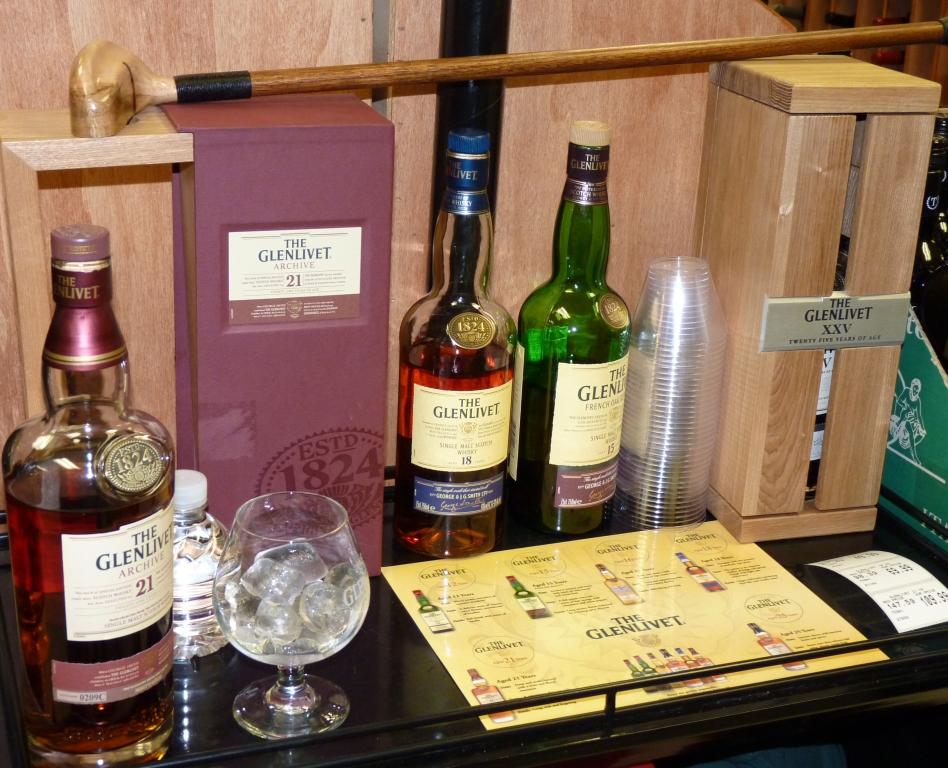 Continuing our tasting series courtesy of Cost Less Wines, we are now moving from Champagne region in France to Speyside in Scotland. As a group, Speyside scotches usually mild, with nice and round character, and not very peaty. Subject of this tasting was The Glenlivet, oldest (and legendary) legal distillery in the region (as usual, Wikipedia provides wealth of information about the distillery, and also you can take a look at the company’s web site, even though I find it no so easy to use).
Four scotches were represented at the tasting – 15, 18, 21 and 25 years old. Such a tasting is a great opportunity to explore, experience and learn. Effectively, at this tasting you had an opportunity to try a “vertical”. I understand that wine category “Vertical”, when you try wine from the same winery made in a succession of years, is not applicable to scotch. But it is amazing what every 3 years in the cask would do to the actual taste. In the event, there was nice and noticeable progression in the taste – starting from smooth and simple Glenlivet 15, gaining complexity with the 18, and being super-rich, complex and round with 21.
 To my taste, Glenlivet 21 was probably the best. It had very complex but clean taste profile (yes, it was my favorite in the tasting and it has great QPR at $110). However Glenlivet 25 was beyond complex. It had a lot of stuff going, including oily substances on the palate – or may be I simply didn’t spend enough time with it.
Does Glenlivet 25 worth $300? I think the answer is rather yes than no. At the same time, one have to really understand the virtues of taste of the fine scotch, in order to fully enjoy it. But in any case, it makes a fine present, especially for “someone who has everything”. I will be glad to try it again if I will have the opportunity, but for now – there will be more tasting events at Cost Less Wines, don’t miss it!
Tasting Series At Cost Less Wines – Part 1, Grown Up Champagne (Growers Champagne, It Is)
 Holidays are great (hmmm, that’s a deep and original thought, huh). On one side, life gets really hectic – too many things to do, and not enough time. On another side, it is a special time, and people do special things. Wine is important part of any celebration, so holiday times are rich with great wine experiences. Particularly, starting from last Thursday, there were different wine tastings at Cost Less Wines in Stamford, which will continue until the end of this week. And if you are looking for special experiences – you don’t want to miss any of them (I know, it is Monday already – but better to start late than never!).
Thursday was a special day for the Champagnes. Indisputable king of any celebration, and ten times so for the New Year – Champagne requires no introduction. There are many many other similar wines, which are called “sparkling wines” as a group – but this is not the subject of this blog post, as it was not the subject of the wine tasting. Talking about Champagne, a number of familiar names comes to mind – Moët & Chandon (makers of famous Dom Pérignon), Louis Roederer (makers of Cristal), Taittinger, Veuve Clicquot – but we will not be talking about them here.
As wine overall is getting more popular in US, year after year, more of the interesting wines are becoming available here. In regards to Champagne, there is a growing phenomenon called Growers Champagne. All the Champagne names mentioned above belong to so called Champagne Houses. Champagne Houses do not grow their own grapes – they source their grapes from the whole Champagne region, and then blend the grapes to achieve particular taste profile, specific for each individual House. When it comes to the Growers Champagne, all the grapes are by the winery, which then makes the Champagne wine – only 5% of the grapes can come from outside to be eligible for “Growers Champagnes” designation. Growers Champagnes had being around from the beginning of actual commercial Champagnes, but only in the last 5 years or so, such wines became known in the United States. Before we talk about tasting, just one last note – you can recognize Growers Champagne by initials RM, which stands for Récoltant-Manipulant, which can be found on the label. Traditional Champagnes are typically designated as NM, Négociant-Manipulant. If you want to read more on the subject – wikipedia, as usual, provides great wealth of information.
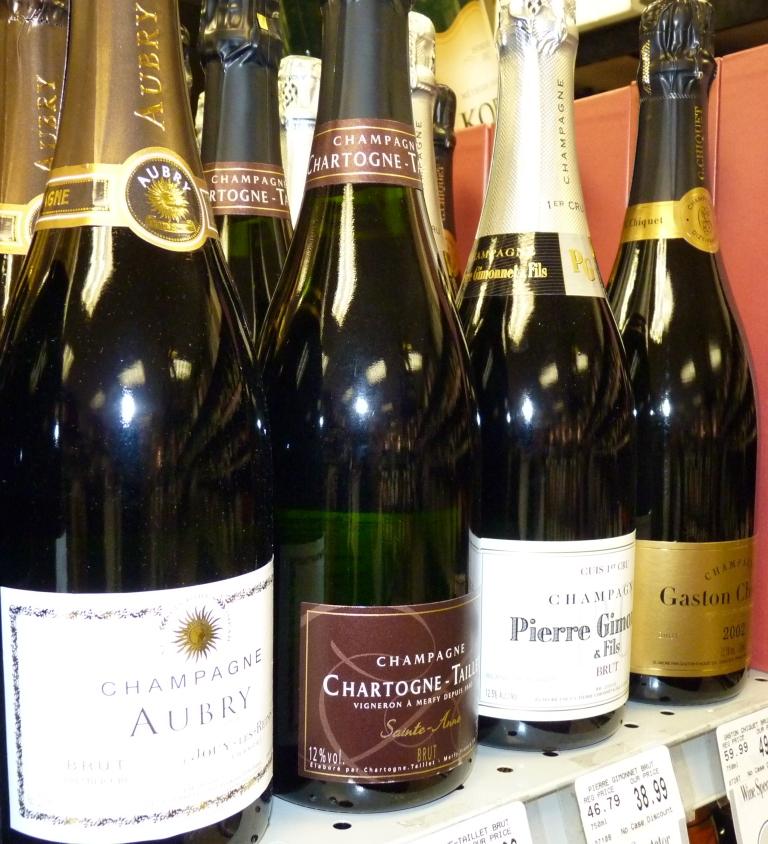
Let’s talk about the tasting. There were 4 Growers Champagnes represented in the tasting: Chateau Aubry, Chateau Chartogne – Taillet Saint-Anne, Champagne Pierre Gimonnet & Fils and Champagne  Gastone Chiquet 2002. The first one, Chateau Aubry was a bit all over the place – yes, it was sparkling wine, but I didn’t get much pleasure out of it. The next 3 delivered different experience. Chateau Chartogne – Taillet had nice yeasty nose and aromas of brioche and fresh bread. Chateau Pierre Gimonnet had nice clean nose and good refreshing acidity – totally different ffrom the previous one, it was still warmly inviting and asking to take another sip.
The best in tasting, however, was Chateau Gaston Chiquet 2002, the only vintage champagne in this tasting. Light and effervescent, medium to full body wine, showing its pedigree with aromas and taste of apples and fresh bread – definitely very nice bubbly (should we also mention great QPR at $50/bottle?).
Great wines, great experience. It would be very interesting to compare the Growers Champagnes with the other sparkling wines – I’m sure you can see the the blind tasting working its way in here. But don’t wait for me – experiment, try something new – find the bottle of Growers Champagne and tell me if it will brighten your Holidays. And just to give you a hint – we are traveling from France to Scotland with the next post…
Treble Journey Update – Advancing Into The Last Ten (#283 – #291)
 When I restarted my Wine Century Club crazy grape adventure in the May of this year, I had no idea how long will it take to get from about 200 grapes (was not so easy to get even there, trust me) to the 300 grapes, which are required to achieve Treble level.
I started documenting the journey from Doppel to the Treble level with one of the very first posts in this blog. On July 20th, I was talking about grape number 240. It is middle December now, and I’m crossing into the last ten. The last advance, from #283 to the #291 was mostly made due to the Georgian wines, where a lot of authentic grapes are used. So in no particular order, the latest group includes the following grapes:
Kisi – from very nice white wine Marani Kondoli Mtsvane Kisi 2008, Georgia
Mujuretuli – red grape used in the famous Georgian wine called Khvanchkara
Aladasturi – red grape used in another Georgian wine, Alaverdi Me and You 2002, Kakheti – nice and round wine
Tsolikauri – white grape used in Georgian wine called Tvishi (Teliani Valley Tvishi 2005) – the wine was surprisingly good, with a hint of sweetness, good fruit and acidity
Tsitska and Chinebuli – white grapes used in the Bagrationi sparking wine I wrote about in my previous post.
In addition to these Georgian grapes, two more wines added 3 grapes:
Picolit and Malvasia Istriana – used in white Italian wine Jermann Vintage Tunina 2006. This was one of the most unusual white wines I ever tried, full bodied, with the tart fruit expression and pronounced sense of place.
Roter Veltliner – white grape from Austria (wine was called Ecker Roter Veltliner 2008). I’m not sure I would be able to distinguish Roter Veltliner from Gruner Veltliner, but at the same time I never tried…
All together that brings us to the number 291. And to put the final target within the reach, more wines are waiting to be tried, which will add Coda di Volpe, Erbaluce, Portugieser, Ruche, Grolleau, Schiava and Pigato – you do the math.
So the fun journey continues, and I will make sure to report on it. As they say on the radio, stay tuned…
When Was The Last Time You Had Georgian Wine?
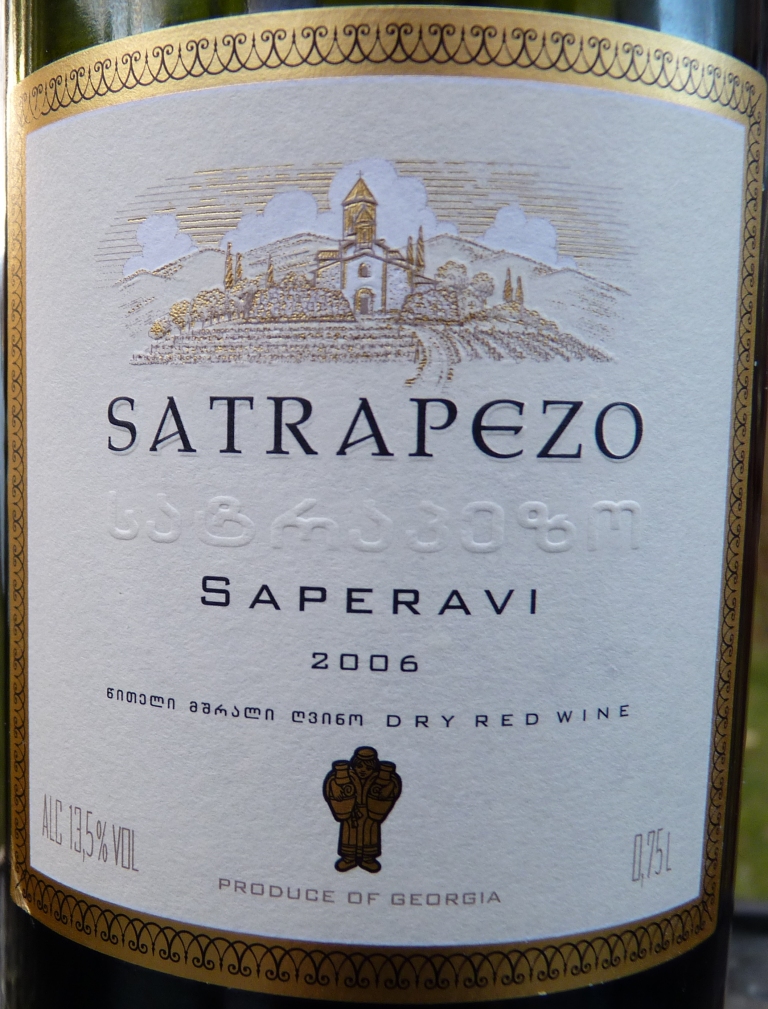 Let me repeat the question – when was the last time you had wine from Georgia? I don’t mean one of the US states down south, I mean the Georgian Republic, the country bordering Russia in South Caucasus. I would expect that for some of you the answer will be “long time ago”, and for many others – never. And this is rather expected, but now is the time to change that.
Based on many sources, Georgia is regarded a birthplace of the winemaking. It is considered that winemaking in Europe goes back 5,000 years. Winemaking in Georgia seems to have a little edge over that with start at around 7,000 years ago. While we appreciate historical references, we are drinking the wines now, so the current state of affairs (I mean, of course, winemaking) is a lot more of interest.
Georgia’s wine industry had been through some rough times, starting with Prohibition attempt in former USSR during the 1980s. After Georgia became an independent country, there was a quick turnaround – for profit, it is. A lot of bad wines were produced in Georgia, and even more false Georgian wines were produced outside of it, to take advantage of historical value recognition of the Georgian wines. Luckily, as capitalism is taking hold in Georgia for good, there is a similar change in the Georgian winemaking, with honest people coming back to make honest wines and restore the “pride of the land”.
Seeing (oops, sorry, I meant tasting) is believing. Tasting the wine called Satrapezo, made from one of the Georgian authentic grapes, Saperavi, completely changed my perception of the Georgian wines, which I was definitely avoiding for a while. This wine is produced at the winery called Marani. Marani is really focused on making great wines, and it is showing in this flagship wine. Beautiful deep garnet color, layers of concentrated fruit (old world mature style, nice and gentle) and silky smooth tannins, balanced with good acidity and a very long finish. This is the wine to enjoy,…and enjoy, …and enjoy. In terms of Drinkability, this is definitely a 9.
 Another example was (totally unexpected to me) sparkling wine called Bagrationi. Made from three authentic grapes ( yay, Treble Journey advance!), Chinebuli, Tsitska, and Mtsvane, this wine had all the classic champagne traits – yeasty nose, hint of apples and fresh bread on the palate, dry and refreshing.
There are a lot more of Georgian wines to discover and enjoy. I’m glad to add Georgia to my personal wine map – and I highly recommend for you to do the same. Go find a bottle of Georgian wine and enjoy the results of 7,000 years of winemaking history!
Just Want To Say “Hi”
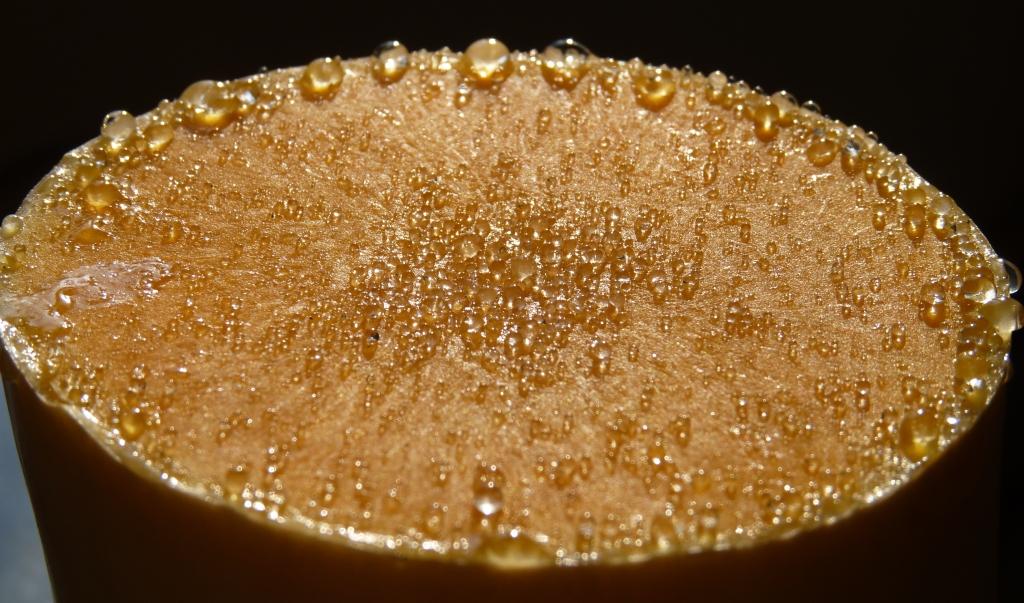
Sometimes, life just takes forceful precedence. I know what I want to write – but between business trip, my son birthday and other things, I simply don’t have time. So this is just to say “hi, I will be back with more stuff” ( whether you like it or not). And…let’s play a quick game. Below is the picture – please tell me what do you think it is. There will be no prize in the end, except that I will tell you if you are right or wrong. And yes, it is related to food. So, what is it?
Last Bottle Sign Up ($10 credit)




 Talk-A-Vino