Archive
Wednesday’s Meritage – Wine Quiz Answer, Fake Wine Again? Noooo, US is #1!, Douro Greatness

Krug Grand Cuvee Brut
Meritage time!
Let’s start with the answer to the wine quiz #102, Grape Trivia – Blends, Part 6.
For the long time, the grape trivia series was focused on the single grapes. But now we are stirring things up, so all the questions in the quiz are about blends (well, even if it is a blend of one ), as most of the wines in the world are actually blends. This time, the focus of the quiz was on bubbles. As usual, there were 5 questions in the quiz.
Here are the questions, now with the answers:
Q1: French sparkling wines produced outside of the Champagne region are generally called Crémant. Today, the Crémant wines are produced in most of the well known regions in France, each region imposing its own requirements on the winemaking techniques. For one of sparkling wines below, if it is identified as Crémant Blanc, it is required for at least 50% of the grapes to be Chardonnay. Do you know which wine has this requirement?
a. Crémant d’Alsace, b. Crémant de Bordeaux, c. Crémant de Bourgogne, d. Crémant du Jura
A1: d, Crémant du Jura – According to Crémant du Jura AOC requirements, Crémant du Jura Blanc should be made with the minimum of 50% Chardonnay grapes.
Q2: Among other reasons, complexity of sparkling wines comes from the extended time the fermented juice have to stay in contact with the yeast (it is also called aging on the lees). Sort the list of the sparkling wines below based on the minimum time required for the non-vintage wine to be aged on the lees, from the longest to the shortest:
a. Cava, b. Champagne, c. Franciacorta, d. Trento
A2: The right sequence is Franciacorta (18 month), Champagne and Trento (both 15 month), Cava (9 month)
Q3: Dom Pérignon, a benedictine monk, largely considered to be the father of Champagne, had a very significant impact on creation the Champagne as we know it. From the list below, what do you think was Dom Pérignon’s major claim to fame?
a. He created the Champagne bottle, b. He discovered the Méthode Champenoise, c. He created the riddling table, d. He mastered the art of blending to improve the taste of the resulting wine
A3: Most of the stuff surrounding Dom Pérignon is made for legends, but there is some level of consensus that he was the first person to perfect the art of blending, so the correct answer is d.
Q4: Below is the blend composition of the sparkling wine – can you name it?
Chardonnay, Chenin Blanc, Mauzac
A4: Blanquette de Limoux in Languedoc is using all three grapes. Technically, it can be also a Crémant de Limoux – again, I should’ve phrased the question better to avoid a possible double-answer. Still learning.
Q5: As tomorrow is the Mother’s Day in US, here is probably an open ended and debatable question, but: Who would you call the Mother of Champagne and why?
A5: As I said, this can be debatable, but my choice would be Barbe-Nicole Clicquot Ponsardin, also known as Madame Clicquot, who pioneered drier Champagne style and invented the riddling table, thus enabling commercial production of Champagne.
When it comes to the results, we had excellent participation and we have the winners! Gene Castellino (no web site), Jennifer Lewis (no web site) and Jeff the drunken cyclist all answered 5 questions correctly and thus they are the winners of this wine quiz round and get the prize of unlimited bragging rights! All of them also provided excellent, very detailed answers – very well done!
Now, to the interesting stuff around the vine and the web!
It is truly mind boggling to see the level of wine fraud increasing together with the popularity of the wine in the world. Dr. Vino has a number of latest and greatest updates to support this “mind-boggliness”. First of all, you can learn that Kurniawan’s lawyers are trying to appeal his “guilty” verdict based on the facts that he loved wine and his victims were rich! I can’t even comment any further here, the level of absurdity is more than I can tolerate. Then Dr. Vino brings up the article in Decanter magazine, where you can find out about fake Bordeaux being made on the offshore boats in China. Lastly, another very recent development involves The White Club, an exclusive $25K membership outfit centered around luxurious and … fake wine! Again, for all the mind-boggling details, here is your link.
United States in #1 wine consuming country in the world! There is a good chance that you already read this, as this urgent news update is coming through all the wine-related news outlets, but in any case, according to just published data for 2013, United States is now the #1 wine consuming country in the world, by total volume (not per capita). It is also interesting that consumption in US increased, while the wine consumption in the world was down 1.7% in 2013. I will let you read all the detailed numbers on your own – here is an article from Jancis Robinson web site, and here is the one from Wine Spectator.
While everybody know Portugal as The Port Producer in the world, I think Portugal is actually the rising star in the world of the regular, non-fortified wine. I’m glad to see that I’m not alone, as Matt Kramer, probably my favorite wine writer, shared his excitement about Douro wines in his feature column in Wine Spectator. I wouldn’t help anyone by trying to recite what Matt Ktramer wrote about the Douro wines, so I would highly recommend you will read his article on your own – it is definitely worth your time. But I would gladly accept any comments you might be willing to share on the subject – please don’t be shy.
And we are done here. The glass is empty – but the refill is on its way! Cheers!
Weekly Wine Quiz #102: Grape Trivia – Blends, Part 6
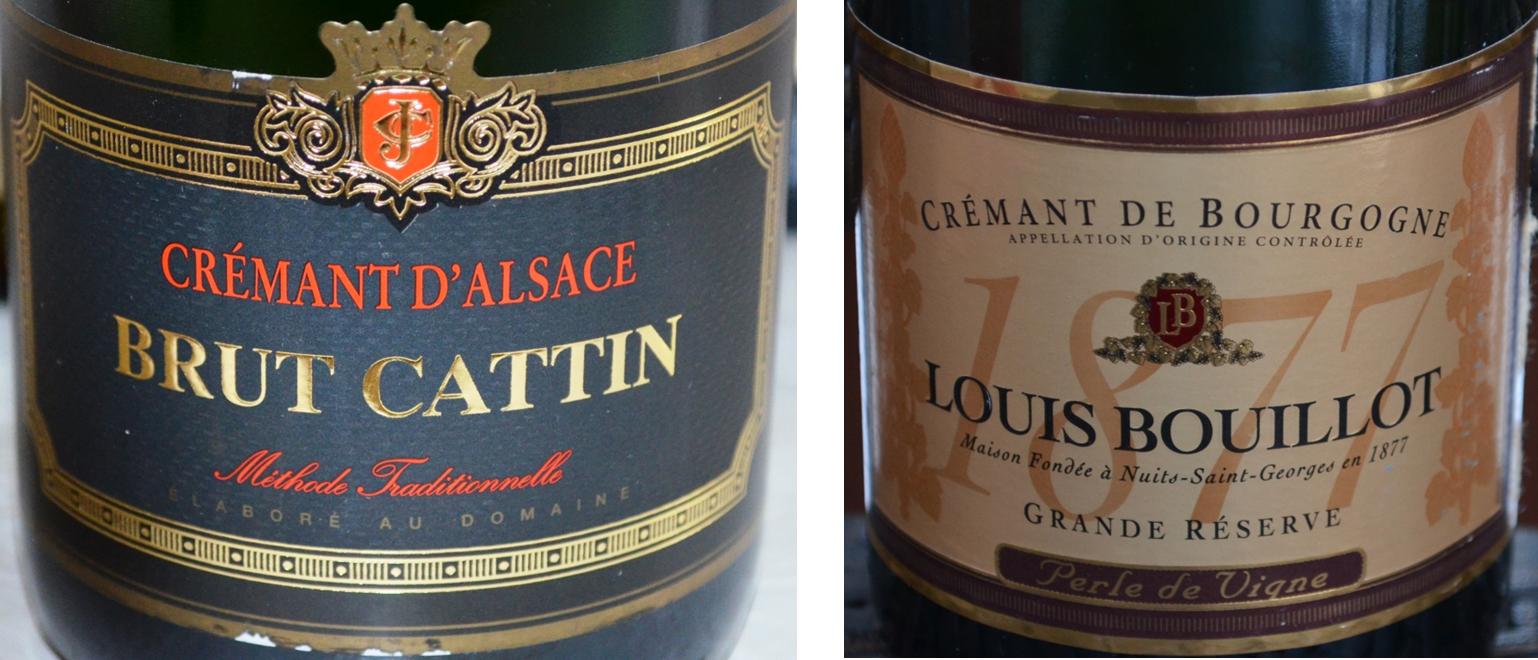 The Wine Quiz series is not meant to intimidate. The whole idea here is to have fun and learn something new. When answering the questions, it is fully encouraged to use all available sources of information, including Google or any other search engine. There are no embarrassing answers – the most embarrassing thing is not giving it a try…
Welcome to the weekend and your new wine quiz!
We are continuing our grape trivia series, focusing on the blends, even if it is a blend of 1. White, Red, Rosé, Sparkling, Still, Fortified and Dessert – all goes. Oh yes, and we will blend in some regions and even wineries as well, just to make it more fun.
Absolute majority of the wines are the blends of some sort, but there is one wine which to me is a complete standout in terms of the art of blending – I’m talking about Champagne. A typical bottle of the so called Non-Vintage Champagne is a blend of different wines from different vintages, all magically concocted together to achieve the consistent taste. As a special tribute to Champagne, I would like to focus today’s quiz only on the sparkling wines, which nowadays are produced absolutely everywhere.
And now, to the quiz!
Q1: French sparkling wines produced outside of the Champagne region are generally called Crémant. Today, the Crémant wines are produced in most of the well known regions in France, each region imposing its own requirements on the winemaking techniques. For one of sparkling wines below, if it is identified as Crémant Blanc, it is required for at least 50% of the grapes to be Chardonnay. Do you know which wine has this requirement?
a. Crémant d’Alsace
b. Crémant de Bordeaux
c. Crémant de Bourgogne
d. Crémant du Jura
Q2: Among other reasons, complexity of sparkling wines comes from the extended time the fermented juice have to stay in contact with the yeast (it is also called aging on the lees). Sort the list of the sparkling wines below based on the minimum time required for the non-vintage wine to be aged on the lees, from the longest to the shortest:
a. Cava
b. Champagne
c. Franciacorta
d. Trento
Q3: Dom Pérignon, a benedictine monk, largely considered to be the father of Champagne, had a very significant impact on creation the Champagne as we know it. From the list below, what do you think was Dom Pérignon’s major claim to fame?
a. He created the Champagne bottle
b. He discovered the Méthode Champenoise
c. He created the riddling table
d. He mastered the art of blending to improve the taste of the resulting wine
Q4: Below is the blend composition of the sparkling wine – can you name it?
Chardonnay, Chenin Blanc, Mauzac
Q5: As tomorrow is the Mother’s Day in US, here is probably an open ended and debatable question, but: Who would you call the Mother of Champagne and why?
Good luck, enjoy the quiz and your weekend! Cheers!
Sparkling New Year Experiences
My brain is limited – it can only support one obsession at a time. Generally, this blog wins, but last month I got hooked on the Doctor Who series (yes, I’m a science fiction junkie), and over the last couple of days, the Doctor Who was clearly winning over the blog writing, as I couldn’t stop watching. Taking the obsession under control, I will try to switch some attention to this beloved blog.
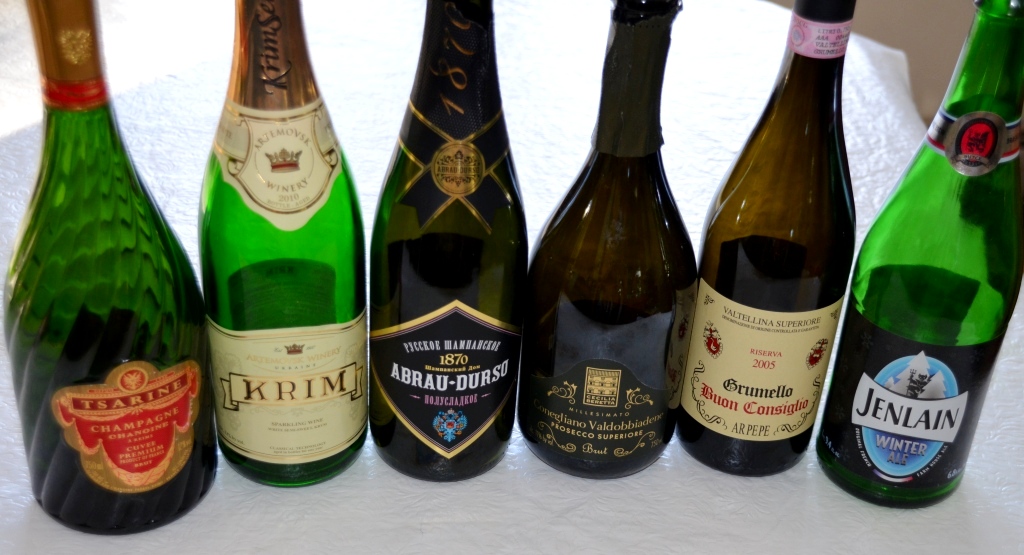 New Year’s day is a Sparkling wine time for me. It doesn’t have to be Champagne, but bubbles are indispensable part of the welcoming the New Year. And then January 1st is generally the day of bubbles – we have friends coming over for the small dinner and lots of bubbles on that first day of the New Year.
The 2014 was not an exception at all – so here are some of the Sparkling wines which added sparkle to our celebration. Oh yes, of course there were few other things to drink besides the sparkling wines.
If you look at the picture above, down on the right you will see… yes, this is beer! Somehow, I felt compelled to include it into the wine line up, as I was drinking it while we were cooking the day before the New Year. Also, when I see a French beer, there is almost a calling in my head “ahh, French beer, I must try it”. This was Brasserie Duyck Jenlain Winter Ale, a seasonal brew from France, produced using three French barley malts and three varieties of the most aromatic hops from Alsace (according to the back label). In style it was an Amber Ale, so it was round and delicate, with a spicy nose and very easy to drink, without any bite – in general Amber is one of my favorite beer styles, right next to the Porter.
Coming to the New Year’s day, we started our evening with 2012 Cecilia Beretta Brut Millesimato Prosecco Superiore Coneglian Valdobbiadene DOCG, Italy (11% ABV) – yes, I already talked about this wine before (here is the post), and I think at this point this is my most memorable Prosecco out of many I tried. It is perfectly together, balanced, elegant, structured and refreshing – and unbeatable value on top of everything. Drinkability: 8-
Then we had two non-common sparkling wines – one from Russia, and one from Ukraine. The Russian Sparkler was NV Abrau-Durso Semi-Sweet Sparkling Wine, Russia (10.5%-12.5% ABV) – fine mousse, touch of sweetness, ripe apples on the palate with a hint of peach, good acidity, overall quite elegant. Drinkability: 7+
The 2010 Artemovsk Krim Semi-Sweet Sparkling Wine, Ukraine (12% ABV, blend of Pinot Blanc, Aligote, Chardonnay and Riesling) was a notch up compare to the Abrau-Durso – perfectly refreshing bubbles, supple nose of apples with touch of yeast, just a hint of sweetness on the palate with balancing, rounding up acidity. If off-dry sparkling wine is your style (or a craving of the moment), I would highly recommend this wine. Drinkability: 8


What can be better than a nice wine label? Of course, a nice wine behind that label! This was the case with this NV Tsarine Champagne Cuvée Premium, Reims (12% ABV, 34% Chardonnay, 33% Pinot Meunier, 33% Pinot Noir). I was so impressed with the bottle and overall packaging, that I even had a wine quiz dedicated to this wine. I was a bit worrying that behind a gorgeous, royal, flashy label will be a so-so wine. Once I popped the cork and pour the wine, the worry went away in the instant. Perfect fizz, lots of energy in the glass. The nose shows everything which signifies Champagne to me – freshly baked bread, touch of yeast, a touch of an apple. On the palate, it had all of the same toasted bread, yeast and apple, coupled with clean, vibrant acidity – and lots of pleasure. Needless to say that this wine was gone in no time. Drinkability: 8
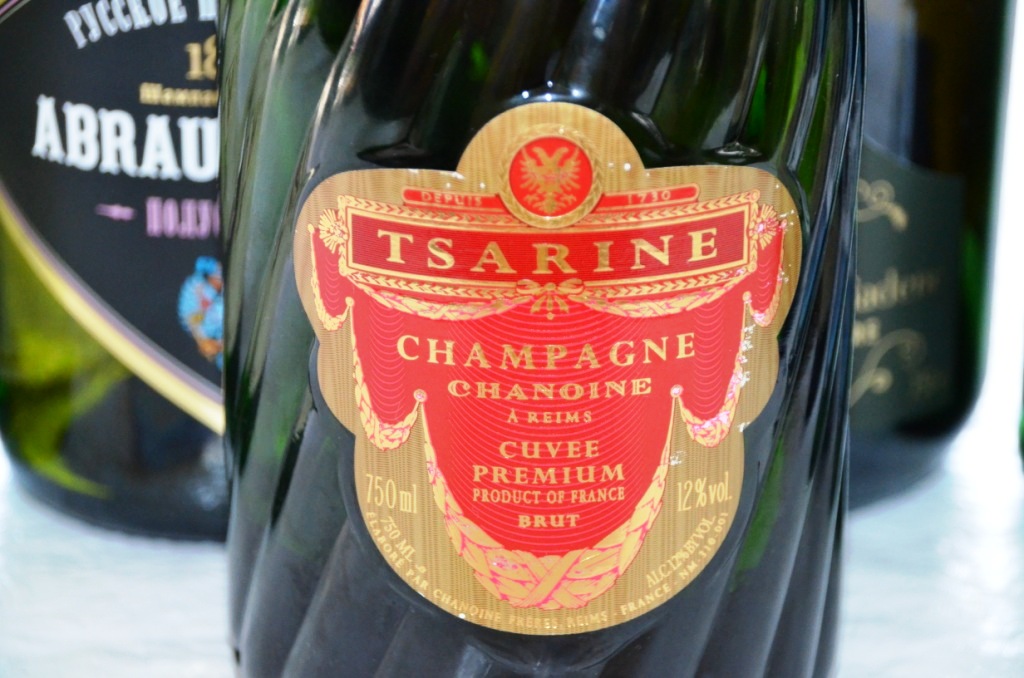
Tsarine Champagne
Our last bottle of the evening was 2005 AR Pe Pe Grumello Riserva Buon Consiglio Valtelina Superiore DOCG (13% ABV, 100% Chiavennasca, a.k.a. Nebbiolo), which Stefano generously brought over. This was an absolutely delicious rendition of Nebbiolo – brick orange hue in the glass, delicate aromas of plums and violets, with may be a whiff of cinnamon, fragrant, earthy and delicate on the palate – very un-Barolo in style, but perfectly balanced with the long finish and lots of pleasure in every drop. Drinkability: 8

Ar Pe Pe Grumello
And then, of course, there was food – I will give you just a few pictures – lots of traditional Russian style dishes – cold cuts, red caviar, salads, lots of pickled vegetables. I might share some recipes later on.


That concludes my report on our New Year’s extravaganza. Cheers!
Trader Joe’s Wines Update
 Few weeks ago, I wrote a post about noteworthy wine discoveries I made at Trader Joe’s store in California. As we visited our close friends in Boston for the Thanksgiving, I couldn’t miss the opportunity to explore the wine shelves at the nearby Trader Joe’s store, looking for great values. Once again, the mission was very successful – I can definitely recommend 3 wines out of 4 that I tried, which is an excellent outcome.
As we are now in the “holiday mood”, I’m trying to focus a bit more on the Sparkling wines of all sorts, so two out of four wines I want to present to you today are sparkling wines.
2012 Cecilia Beretta Brut Millesimato Prosecco Superiore Coneglian Valdobbiadene DOCG, Italy (11% ABV, $9.99) – I mentioned this wine already in my November “Month in Wines” update, so here are the same notes again – tiny refreshing bubbles, notes of fresh apple on the nose, round and roll-of-your-tongue on the palate with more of the fresh apple and yeast notes. Excelllent sparkling wine, and probably one of my very best in that price range. Drinkability: 8-
NV Trader Joe’s Reserve Brut Sparkling Wine, North Coast, California (12.5% ABV, $9.99, 62% Chardonnay, 26% Pinot Noir, 12% Semillon) – hint of fresh apples on the nose. Simple and clean on the palate, notes of white apples, good acidity. I would prefer a bit more substance in my glass (a bit heavier in the body and higher intensity of the bubbles), but this is definitely a very good wine for the money. Drinkability: 7+
2010 VINTJS Cabernet Sauvignon North Coast, California (13.5% ABV, $7.99) – I bought this wine based pretty much on the label alone – it looks very grand. Well, the content behind the label was not as grand as I would want it to be. Dark garnet color in the glass, dark fruit notes on the nose, hint of raspberries on the palate, medium to full body, good acidity – but no harmony, all the components where on their own. There are better choices at TJ’s at the same or lesser amount of money. Drinkability: 7-
2012 Marchigüe Carménère Reserva D.O. Colchagua Valley, Chile (13.5% ABV, $8.99) – quite honestly, I was craving Carménère for a past few month (I have none in my fridge), so when I saw this wine at the Trader Joe’s, it was an instant “yesss” decision. This is a very young wine for what it is, so if you want to enjoy it right away, I recommend decanting it – it needs to open up for at least 30 minutes to an hour. Dark ruby color in the glass. Perfect herbaceous hue on the nose – a hint of mint, so characteristic for the good Carménère. Sweet mint on the palate, cassis, a touch a eucalyptus, ripe raspberries, silky smooth texture, full body, excellent acidity and overall very balanced. This wine is definitely highly recommended. Drinkability: 8-
Here are all the wines I presented to you, now in pictures:
Note: the same wines might have different prices in the different states. The prices mentioned above are all from the Trader Joe’s store in Massachusetts.
If you tasted or will taste any of these wines, let me know if you like them! Cheers!
Re-Post: Best Hidden Secrets Of The Wine World: French Sparkling Wines
During 2011, I wrote a number of posts for the project called The Art Of Life Magazine – of course talking about my favorite subject, wine. The project closed and even the web site is down, but I still like those posts, so I decided to re-post them in this blog. Also, in that project, posts were grouped into mini-series, such as “Best Hidden Secrets” you see here – I will continue re-posting them from time to time.
Also note that the series was written for a slightly different audience – I hope none of my readers will take offense in the fact that sometimes I’m stating the obvious…
 So far we talked about a number of “secrets” of the wine world: Rioja, Second Labels, Amarone, wines of Georgia. Let’s continue our journey of discovery. This time we are going to talk about French Sparkling Wines.
Everybody knows about Champagne, a special wine for celebrations. If we think that occasion is special enough, the first thought is: we need a bottle of Champagne to celebrate. Of course producers of Champagne also know that, and respond with ever increasing prices – it is practically impossible to find the bottle of Champagne for less than $35 – and as with any other wine, there is no limit on top.
What is Champagne anyway? First of all Champagne is a place, a region in northern France – the only place in the world which can produce bottles of the sparkling beverage with the Champagne name on it. Second of all, Champagne is a sparkling wine, made in accordance with very specific winemaking rules and techniques, which are typically referred to as “Méthode Champenoise”. In that method (which legend has, was discovered by accident), the wine is fermented twice, and second fermentation takes place in the closed bottle, which leads to the wine becoming carbonated (hence the generic name “sparkling wine”). One quick note on the grapes – traditional champagne is produced from Chardonnay, Pinot Noir and Pinot Meunier, in various combinations as decided by the producer. If you want to read more, as usual Wikipedia offers great wealth of information (you can read it here).
Today sparkling wines are made all over the world, and of course none of them can be called Champagne, as the word “Champagne” on the label is protected by law. I’m sure you heard many of the names and tried many of the wines, but to give you a brief summary, Spain produces sparkling wine under the name Cava, Italy typically makes Prosecco (there are some other lightly sparkled wines, like Moscato D’Asti, but we will leave it aside for this post). Sekt is made in Germany, and most of the other countries simply use the term “Sparkling wine”, sometimes also identifying the grape, such as Sparkling Shiraz from Australia or Sparkling Malbec from Argentina.
With such a diversity and widely available offerings, why French sparkling wines are such a secret? While being the closest to the original (Champagne), they offer probably the best QPR (Quality Price Ratio), beating often California Sparkling wines and even Cava – and they taste really authentic.
 There is a substantial variety of Sparkling wines coming from France alone. Almost each and every wine producing region (Burgundy, Bordeaux, Alsace, Loire, Jura, …) produces its own versions of the sparkling wines, in most of the cases called Cremant: Cremant de Bordeaux, Cremant de Bourgogne, Cremant de Jura, Cremant de Loire and others. You can find additional information on the sparkling wines here. All of these Cremant wines are made using the same “méthode champenoise”, however, typical regional grapes can be used to make the wine.
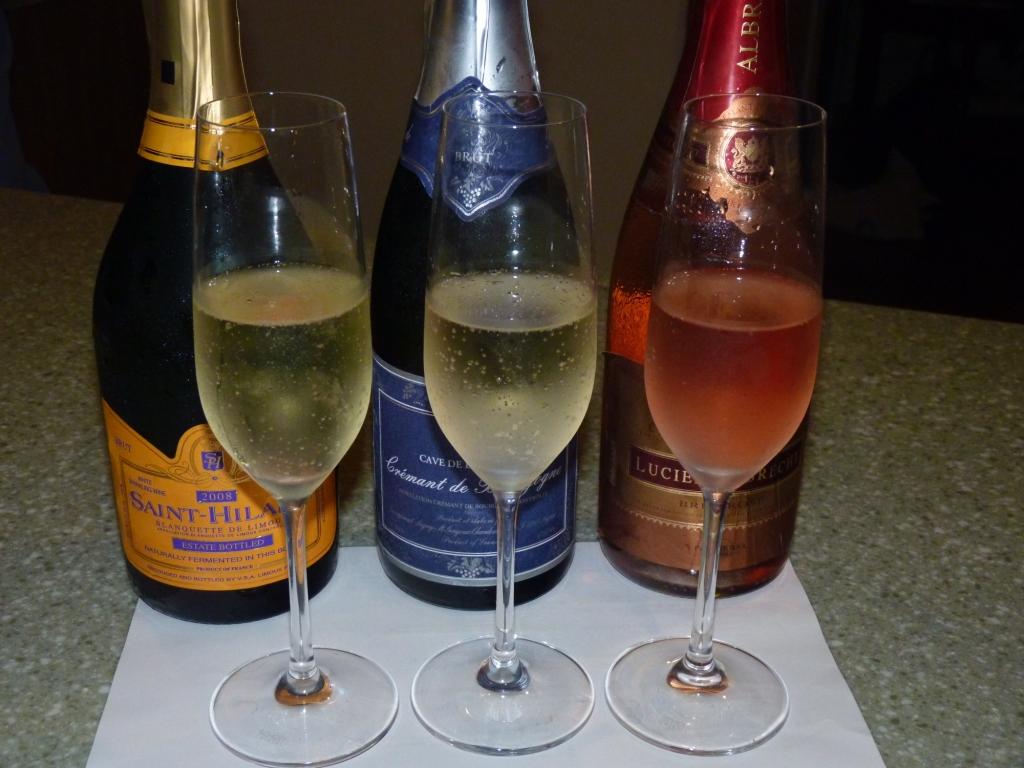
So as usual, I wanted to prove to you that the knowledge I’m sharing is worthy of a “secret” designation, which can be of course done by forcing you, me readers, to buy the wine and taste it (and then telling me that I was right). However, as this is not an easy undertaking, I took this function upon myself, and here are the results of tasting of 3 inexpensive French Sparkling wines. I got 3 French Sparkling wines – Saint-Hilaire Blanquette de Limoux Brut ($10.99), Cave de L’Aurance Cremant de Buourgogne Brut ($11.99) and Lucien Albrecht Cremant de Alsace Rose Brut ($14.99). Before we talk about tasting notes, I want to mention that the Saint-Hilaire Blanquette de Limoux claims to be the first sparkling wine ever, produced by Benedictine Monks in Saint-Hilaire abbey in 15th century ( beating Champagne by at least a hundred years) – but I guess they never put much effort into marketing, while Champagne did, so the result is obvious (however, it is better for us, consumers).
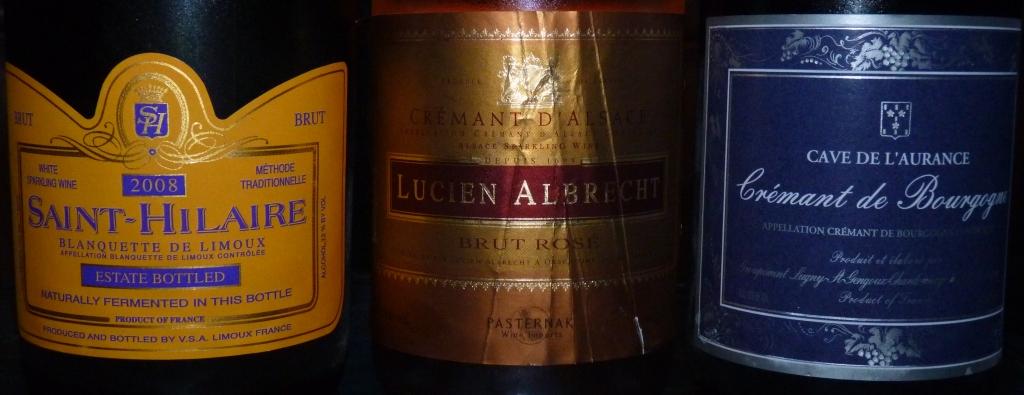 Anyway, here are the notes:
2008 Saint-Hilaire Blanquette de Limoux Brut: closest to the classic champagne. Nose of yeast and hint of fresh bread, very refreshing, good acidity, citrus notes, dry, medium to full body. Best of tasting.
Cave de L’Aurance Cremant de Bourgogne Brut: quite limited expression on the nose, but very elegant on the palate. Offers golden delicious apple and ripe white grapefruit notes, medium body.
Lucien Albrecht Cremant de Alsace Brut Rose: very complex on the nose, with some onion peel and white truffle. On the palate offers strawberries, pink grapefruit, medium body.
Now you know one more secret. No, you don’t need to trust me. I would definitely encourage you to get a bottle of your favorite Champagne. Then you need to get a bottle of Blanquette de Limoux, and compare them in the blind tasting. I have done this with the group of friends, and you can find the surprising results here. I challenge you to do it – and then leave me a comment with the result – I will be waiting.
That’s all for now, folks. For the next secret of the wine world – stay tuned. More secrets are coming…
Wine Video: My Personal Sabering Experiment
If you remember my Father’s day post, I mentioned successful experiment in Sabering of the Champagne bottle. Okay, not really a Champagne – it was Cava Rose ( a very tasty one, Marques de Gelida Cava Brut Reserva). As I promised, here is the video for you:
To tell you the truth, once you open a sparkler this way, it is hard to go back to the traditional bottle twisting…
So…yes, you can try it at home! Have fun! Cheers!
Wine Videos: Big League Sparklers Showdown
Continuing the “sparklers” theme, I want to offer you three commercials from the big league Champagne.
First, a commercial for Veuve Clicquot:
I’m not sure if the next video is really a commercial, it looks more as a tribute by Dom Perginon to Andy Warhol – but in any case it is a wine video:
And last but not least is a commercial for my all times favorite Champagne – Krug:
What the verdict is going to be? Any preferences? Cheers!
What Is In The Bubbles? – 2011 Version
Yesterday I shared with you my perspective on sparkling wine from 5 years ago. What happened in the past 5 years in the world of bubbly? Champagne is still a Champagne, as invented hundreds years ago, right? I would like to summarize the differences in two words: diversity and abundance.

Of course nobody invented Cava, Prosecco, Sekt or Cremant in the past five years – those sparkling wines had been around for hundreds of years. But never before were sparkling wines so abundantly available in United States – lots of them of a great quality and finesse, rivaling Champagne in taste and even more certainly, in price (average price of Champagne increased by about $5-$10 per bottle, depending on the brand and the actual wine store).
Diversity is another phenomenon in the world of sparkling wines – each and every category of the sparkling wines, including Champagne, has a lot more brands and styles widely available in many wine stores. Talking about Champagne, have you heard of Growers Champagne five years ago? I’m sure you did, if you are in the wine trade, but very unlikely if you are not. As we discussed before, majority of the Champagnes is produced by few big Champagne houses. For the most cases, those Champagne houses are not growing their own grapes, they are buying them from the growers. Some of the growers are also started making Champagne, which can be very distinctive and of a very good quality – I mentioned my experiences with Growers Champagnes a number of times before (you can find old posts here and here). Also increasingly available French sparkling wines made outside of Champagne appellation – they are often called Cremant and you can easily find Cremant de Alsace, Cremant de Bordeaux, Cremant de Bourgogne, Cremant de Jura, Cremant de Loire in many wine stores around you.
Going outside of France, more and more sparkling wines are made all over the world. While Italy, Spain, Germany and US where always on the bubbly’s map, during the last couple of years I was able to taste sparkling wines from Argentina, Australia, Georgia (Georgian Sparkling wine, called Bagrationi, was our favorite wine during blind tasting, beating out classic Champagne and many other – you can read about it here), South Africa, Switzerland and Uruguay. Next to this geographic diversity is number of grapes used nowadays for production of the sparkling wines. Traditional Champagne, as well as many of the Cremant wines and sparkling wines made in US and Italy, are made out of Chardonnay, Pinot Noir and Pinot Meunier – however, in addition to this short list I tried sparkling wines made out of Chasselas, Chinebuli, Gamay, Malbec, Shiraz and Vidal (here is the post). A number of sparkling wines were also made using natural and biodynamic methods – I had a number of outstanding French sparkling wines made from Gamay (here is the post). If you are interested in this particular category ( natural Sparkling wines), I would highly recommend checking PJ Wine web site, which boasts excellent selection.
No matter what you are celebrating, there is always a special bottle of sparkling wine waiting for you. There is also nothing wrong with celebrating just another day. But considering that tomorrow is a New Year, make sure you have a good supply of the bubbly – no matter where it is from or what grape it is made out of, it is guaranteed to make your moment special. Happy New Year! Cheers!
Last Bottle Sign Up ($10 credit)




 Talk-A-Vino