Archive
Magnificent Tempranillo
Let’s start with some definitions:

Of course, you know what “magnificent” means. Still, I feel compelled to start with the definition to explain my rather overzealous title. After looking at the Merriam-Webster and Google definitions for “magnificent”, I decided to go with the one from Dictionary.com, as it perfectly underscores the emotions which I tried to express with this title.
Wine is personal. Wine solicit the emotion, but it is personal – the appeal of the liquid in the glass is first and foremost for the person who is taking a sip. Two people can have a sip of exactly the same wine and have completely opposite reactions – one might love it and the other might hate it. Thus calling the wine magnificent is personal – and it is simply the expression of the emotion one had after taking a sip of that wine.
Today Tempranillo is grown around the world. You can find delicious renditions coming from Australia, Napa Valley, Oregon, Lodi. My first Tempranillo love, however, is Rioja, and this is where it still stays. A sip of La Rioja Alta, Lopez de Heredia, CVNE, or El Coto makes everything right with the world. Same as with any other wine, Rioja can’t be taken for granted – you need to know the producer. But in the hands of the right producer, Rioja becomes … magnificent. It is the wine of exceptional beauty, it is extraordinarily fine and superb, and it is noble and sublime – exactly as the definition above says.
Of course, it is not just Rioja which makes Tempranillo a star. Ribera del Duero, located a bit more down south and central, is another source of magnificent Tempranillo wines – if you had a pleasure to try the wines from Emilio Moro, Pesquera, Vega Sicilia you know what I’m talking about. Again, in the hands of the good producers, Ribera del Duero Tempranillo is every drop magnificent.
To make this conversation about magnificent Tempranillo more practical I want to offer you my notes on a few samples of Tempranillo wines I had an opportunity to enjoy recently.


CVNE (Compañía Vinícola del Norte del España) needs no introduction for the Tempranillo fans. Founded in 1879 (yes, this year is the 140th anniversary of CVNE) by two brothers, the CVNE is still run by the family, and today consists of 4 wineries – CVNE, Imperial, Vina Real, and Contino. However, those are the Rioja wineries and today CVNE is taking its 140 years of winemaking experience to the other regions. Here is an example for you – Bela from Ribera del Duero.
The grapes for Bela wine came from 185 acres Tempranillo vineyard, located at the altitude of 2,400 feet in the village of Villalba de Duero and planted in 2002. Here is the story behind the name of the wine and the picture on the label: “Bela’s label is a facsimile of an old CVNE label from the 1910’s. The stars represent each of the children of CVNE’s cofounder, Eusebio Real de Asúa. His brother Raimundo, the other co‐founder, had no descendants. Each star represents one of the children: Sofia, Áurea, and Ramón. Sofia was known as Bela. We descend from her.”
2017 Bela Ribera Del Duero (14% ABV, $18, 100% Tempranillo, 6 months in 1-year-old American and French oak barrels)
Dark garnet, almost black
Roasted meat, coffee, cedar box
Beautifully complex palate, black cherries, blackberries, eucalyptus, fresh, balanced.
8-, excellent wine, built for the long haul, will evolve.
Contino was the first single-vineyard Rioja created by CVNE and the owners of the Contino estate (which takes its history from the 16th century). 150 acres Lacerna vineyard in Rioja Alavesa is the source of grapes for the Contino line of wines. Here is the story behind the name: “The “contino” was the officer in charge of a guard corps of a hundred soldiers who protected the royal family “de contino” (continuously) from the times of the Catholic Monarchs onwards. According to the tradition, Saint Gregory, the patron saint of vineyards, passed through the lands of this same Rioja property, giving rise to the use of his figure in the logo of this winery, and to the use of his name for some of the plots now planted with vines.”
2012 Contino Rioja Reserva Rioja DOC (13.5% ABV, $45, 85% Tempranillo,10% Graciano, 5% Mazuelo and Garnacha, 2 years in used American and French oak plus 2 years in the bottle)
Dark garnet, almost black
Cherries, cigar box
Bright, uplifting dark fruit medley, clean acidity, a touch of minerality, velvety texture with well-integrated tannins, perfect balance
8+, delicious, lots of pleasure in every sip


Bodegas Beronia was founded in 1973 by a group of friends who fell in love with La Rioja while visiting on a holiday. The name Beronia is not random – here is the explanation: “name linked to the history of the land where the winery is found. In the 3rd Century BC the area known as Rioja today was inhabited by a celtic tribe called the ‘Berones’. They inhabited the towns of Tricio, Varea and Leiva, marking the limits of the Berones region, today La Rioja.”
Originally, the wines were produced literally by friends for the friends, without much thought of commercial sales. In 1982, Bodegas Beronia became a part of González Byass family, and at that point wines of Bodegas Beronia started to appear on the international markets.
Bodegas Beronia Rioja wines represent an intersection of tradition and modernity. While “traditional” and “modern” styles of Rioja can be a subject of great debate with a lot of wine consumed to prove the point, I would offer a very simplistic viewpoint. Tempranillo has a great affinity to the oak; the resulting Rioja wine is well influenced by the oak regimen. Traditionally, Rioja is matured in American oak casks. Modern style Rioja often uses French oak. Here is your style distinction – American oak versus French. Bodegas Beronia goes a step further than many. They create their own barrels, using both American and French oak elements in one barrel. Thus the wine is not defined by blending of the separately aged components, but instead, it is aging in the mixed environment.
Here are the notes for the two wines I was able to taste:
2015 Bodegas Beronia Crianza Rioja DOC (13.5% ABV, $14.99, 91% Tempranillo, 8% Graciano, 1% Mazuelo, 12 months in American and French oak barrels)
Dark garnet
Vanilla, plums, cedar box
Fresh dark berries, ripe cherries, tobacco, a touch of sapidity, medium-plus body, clean acidity, a touch of eucalyptus, medium-long finish
8-, the second day was better than the first. 8+ day 2 and 3
2013 Bodegas Beronia Rioja Reserva DOC (13.5% ABV, $19.99, 95% Tempranillo, 4% Graciano, 1% Mazuelo, 3 years in American and French oak barrels and in the bottle)
Dark garnet
Plums, cherries, tobacco
Dark fruit, tar, tobacco, cherries, a touch of cherry pit, bright acidity, firm texture, noticeable minerality, medium finish
8, excellent. Day 3 is more open.


No, we are not done yet. I have one more Rioja to discuss with you – from Bodegas LAN.
Bodegas LAN was founded in 1972. Here is another winery name which is not random: “A name – LAN – composed of the initials of the three provinces that make up the D.O.Ca. Rioja: Logroño (now La Rioja), Álava and Navarra.” Bodegas LAN owns about 170 acres vineyard called Viña Lanciano, which is subdivided into the 22 parcels, each with a unique microclimate. These 22 parcels are growing Tempranillo, Garnacha, Mazuelo, and Graciano, most of them on the 40 -60 years old vines.
Grapes for LAN Xtrème Ecológico wine come from 12.5 acres parcel of 100% organically certified Tempranillo, located at the altitude of 1,200 feet.
2015 Bodegas LAN Xtrème Ecológico Crianza Rioja DOC (14.5% ABV, $15, 100% organically-certified Tempranillo, 14 months in new French oak, 9 months in the bottle)
Dark garnet, practically black
Cherries, cedar box, eucalyptus, tobacco, open and inviting
Gorgeous, layers of dark fruit, soft but present tannins, baking spices, firm and perfectly structured, tart cherries on the finish, tannins taking over.
8+, a long haul wine, will be perfect in 10 years or longer. A total steal at a price.
Culmen is one of the top wines made by Bodegas LAN, produced only in exceptional vintages. The grapes for this wine come from 13 acres El Rincón parcel, located at the 1,500 feet altitude.
2011 Bodegas LAN Culmen Rioja Reserva DOC (13.5% ABV, $55, 88% Tempranillo, 12% Graciano, 26 months in new French oak, 20 months in the bottle)
Dark garnet with a purple hue
Red and black fruit, roasted meat, warm granite, sweet cherries, medium-plus intensity
Fresh tart succulent cherries are popping in your mouth, changing into sour cherry compote with tar, tobacco and cedar box. Delicious long finish. Lots of pleasure in every sip.
8+/9-, outstanding.
Here you go, my friends. Six delicious, or shall we say, magnificent, Tempranillo renditions. I will be happy to drink any of them again, at a moment’s notice. What do you think of Tempranillo wines? Got any favorites to share? Cheers!
Tasting Spanish Wines – Blind, Of Course
 Once again, we got together with the group of friends to play a fun game of blind wine tasting. This time the subject was Spain (in the past we had a lot of fun blind tasting Pinot Noir and Sparkling wines – you can read the posts here and here).
Why Spain? Spanish wines are getting a lot of recognition among wine lovers of all walks. On average, they deliver the best quality for the price (QPR) among most of other wine regions, and in the end end of the day they simply taste great and deliver lots of pleasure. So the theme was set, the bottles wrapped (every participant have to bring a bottle wrapped in paper bag) and opened, and the numbers are randomly assigned to the bottles.
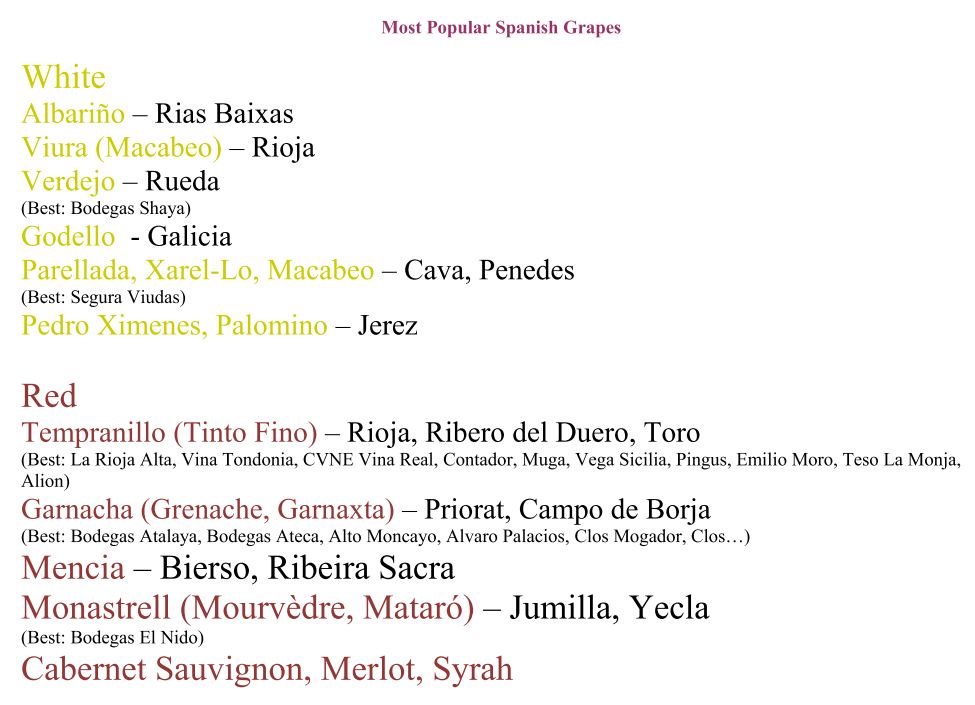
We had total of six wines, all red. The idea would be may be to identify the grape (an added bonus, of course), but mainly to see a consensus as to which wine would be the most favorite of the group – blind tasting has a great leveling effect – you are not intimidated by the price or a label, so you can stay true to your taste buds. Just to set the stage as to what are the most popular Spanish grapes, I prepared the following cheat sheet, which I’m including here in its entirety:
Off we went, so for what it worth, here are my notes as I took them during tasting – no corrections afterwards:
1 brick dust on the nose, good acidity, pepper – tempranillo
2 young wine, good fruit, open – mencia, monastrell?
3 earthy, tame fruit, age, good fruit, dark color, great acidity, pomegranate, smokiness
4 feels like it is corked, but I hope it is not. Fruit at the bottom. Final verdict – corked.
5 beautiful, most balanced, good fruit, plums- Grenache?
6 classic Rioja, cherries, acidity, best of tasting.
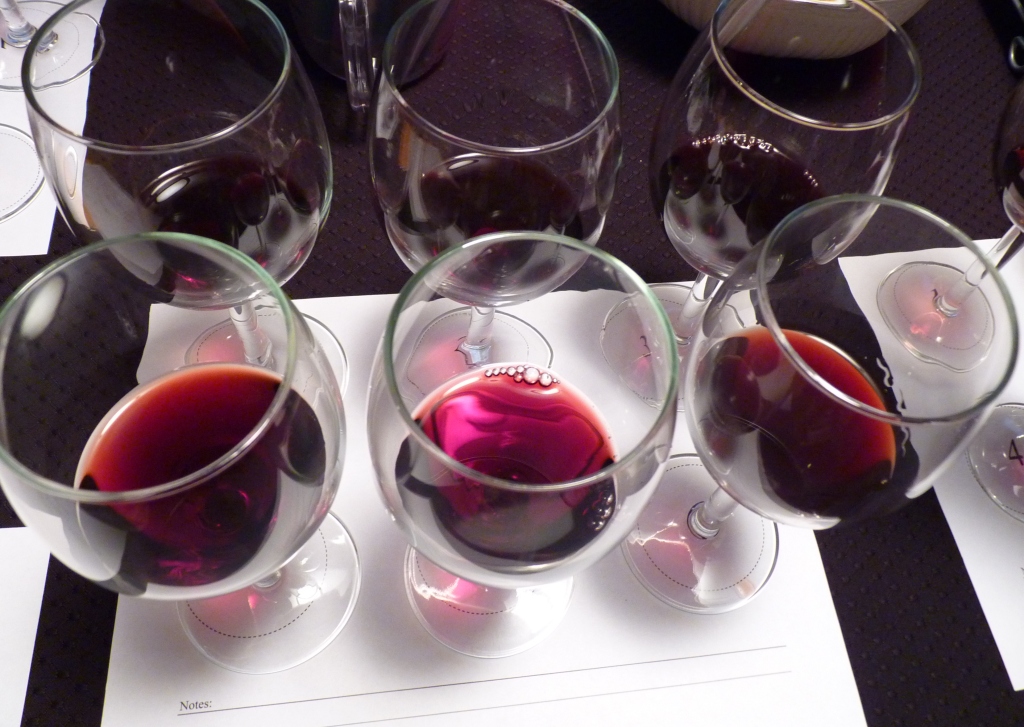
So, reading the descriptions, what do you think those wines are? This is always not an easy guess, as your mind is racing trying to pinpoint taste, texture and any other sensations you are experiencing at the moment against your mental database of the wines you tasted (that database is either resisting and says “nothing found” or goes all the way and says “it is similar to all 10 of these”).
And here are the actual wines:
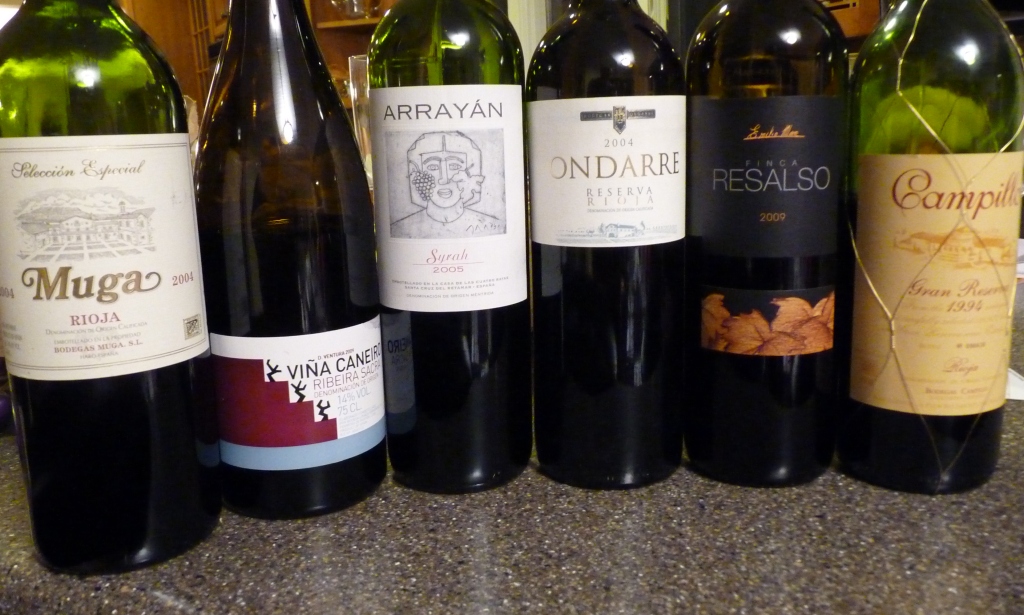
1. 2004 Bodegas Muga Rioja Selection Especiale
2. 2009 D. Ventura Vina Caneiro Ribeira Sacra DO
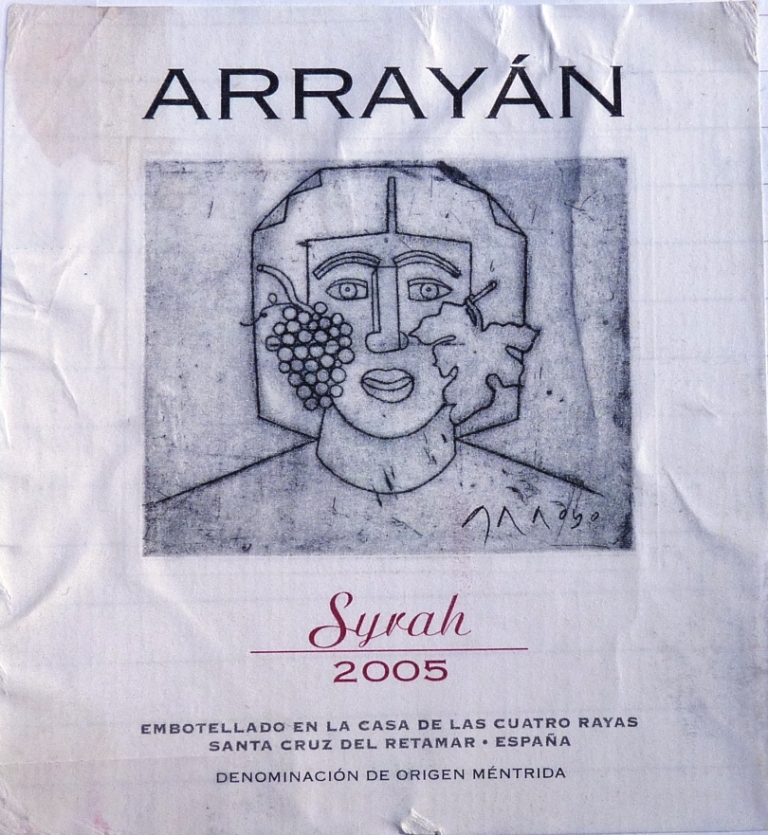
3. 2005 Arrayan Syrah, Mentrida DO
4. 2004 Bodegas Ondarre Rioja
5. 2009 Emilio Moro Finca Resalso, Ribero del Duero
6. 1994 Campillo Rioja Gran Reserva
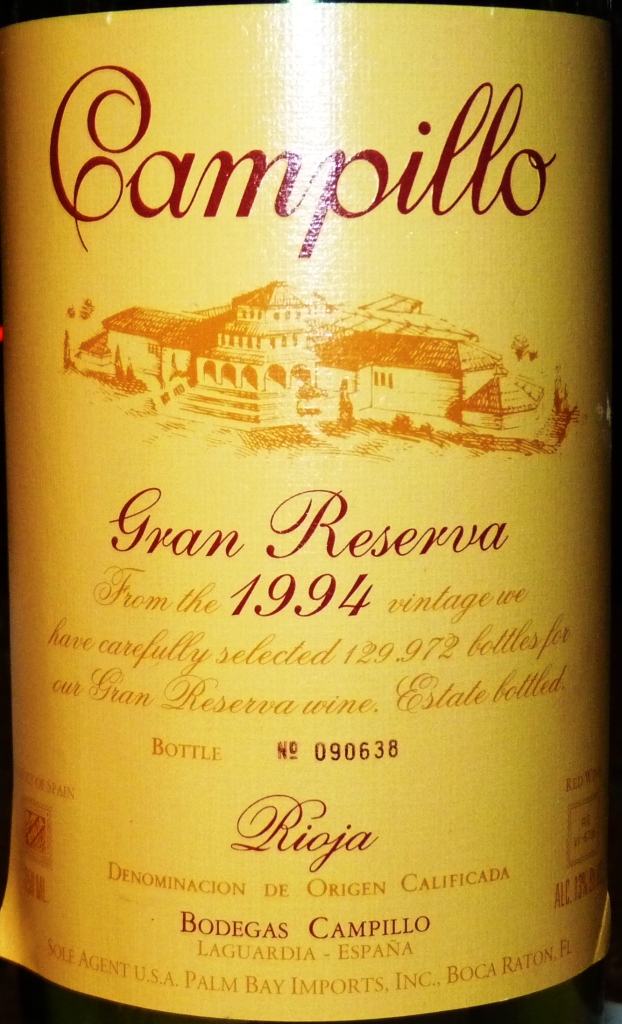 Now for the popularity vote, here is how it works. Everybody can vote for up to two wines (but don’t have to). If there will be one wine which will receive a majority of the votes, it will be declared a winner. If two bottles will receive the same number of votes, we would vote again for the one favorite out of the two.
Can you guess which wine won? If you guessed “Bodegas Campillo” (as the very least judging by the label to the left), you are correct. It won by the unanimous vote – everybody liked it. Distant second was Arrayan Syrah (half of the group voted for it). Bodegas Campillo was classic and pure Rioja, with all the clean flavors of cherries and cedar box, great acidity and very fresh, not even a hint of 17 years of age. Arrayan Syrah was probably the most unusual and unexpected wine in the group – beautiful, balanced, and very pleasant to drink. But just to give due respect to all 6 wines we tasted, all except the corked bottle were very good wines, worthy of being in the competition.
If you feel encouraged to try blind tasting on your own, I would suggest to avoid doing it for the whole country. Single region or a single grape (or a stable blend, such as GSM or Bordeaux) would work much better to showcase the range of possibilities. But other than this remark, I think blind tasting is the best way to learn about your wine preferences, to have great experience and to have fun! If you got blind tasting experiences of your own – please share them here! Cheers!
Spanish Wine Festival, In Pictures
About 10 days ago, I attended Spanish Wine Festival, organized by PJ Wine in New York. I can give you a summary of the event using only one word: Overwhelming. It is challenging to produce any kind of detailed summary, because there are literally no bad wines in such a well organized tasting event. There are some wines which will leave you indifferent, then there are some which are great, but not ready, and then there is great amount of wines where you go from “wow” to “wow, this is great” and to “wow” again. Therefore, I will simply give you a report in pictures. No, I didn’t get a picture of each and every wine I tried. All the wines shown below are personal favorites, and they are all highly recommended. And the good thing is that PJ Wine regularly carries most of them.
Well, let’s go.
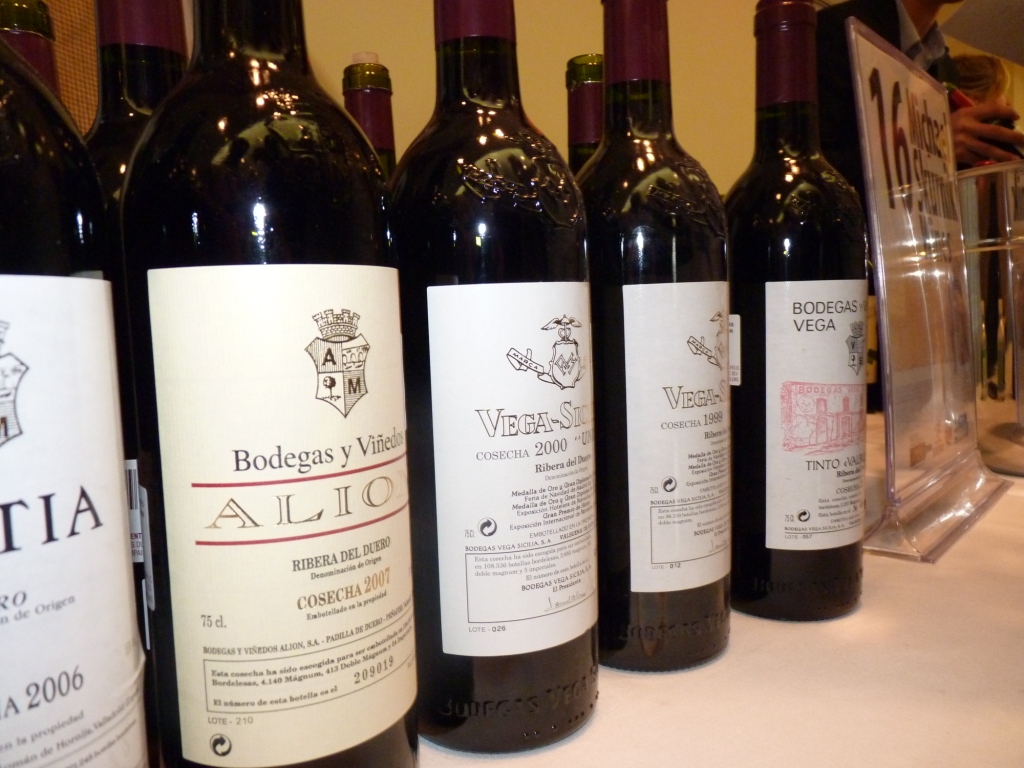
1999 Vega Sicilia Unico and 2000 Vega Sicilia Unico, from Ribera del Duero. These are the wines to be experienced – balanced and luscious:
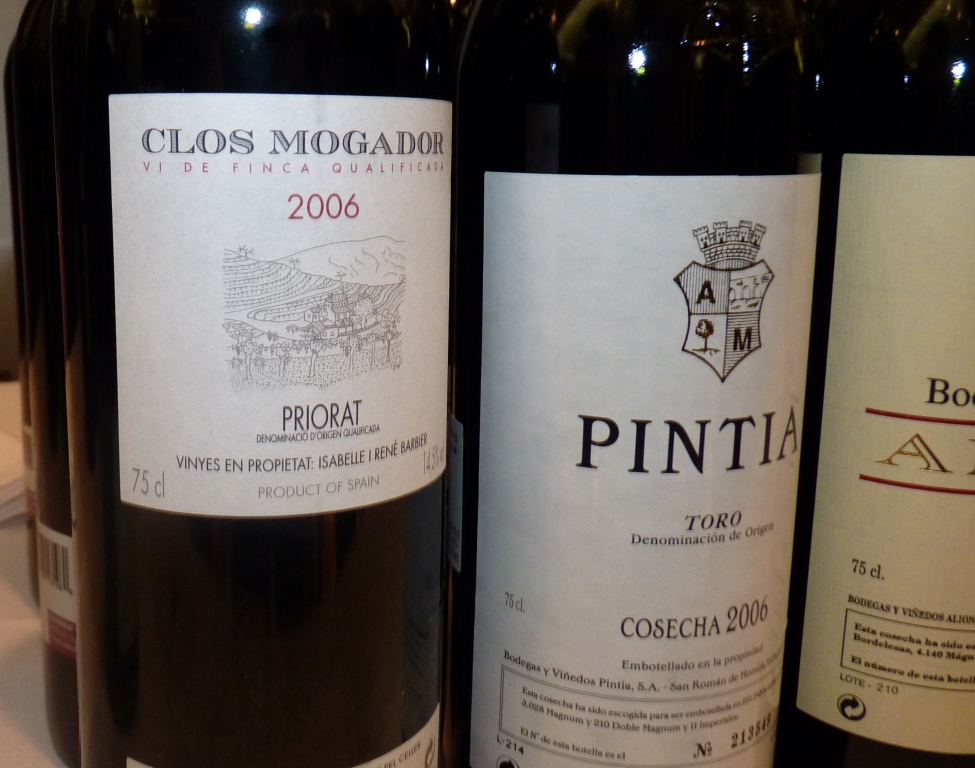
2006 Clos Mogador, Priorat – powerful and balanced:
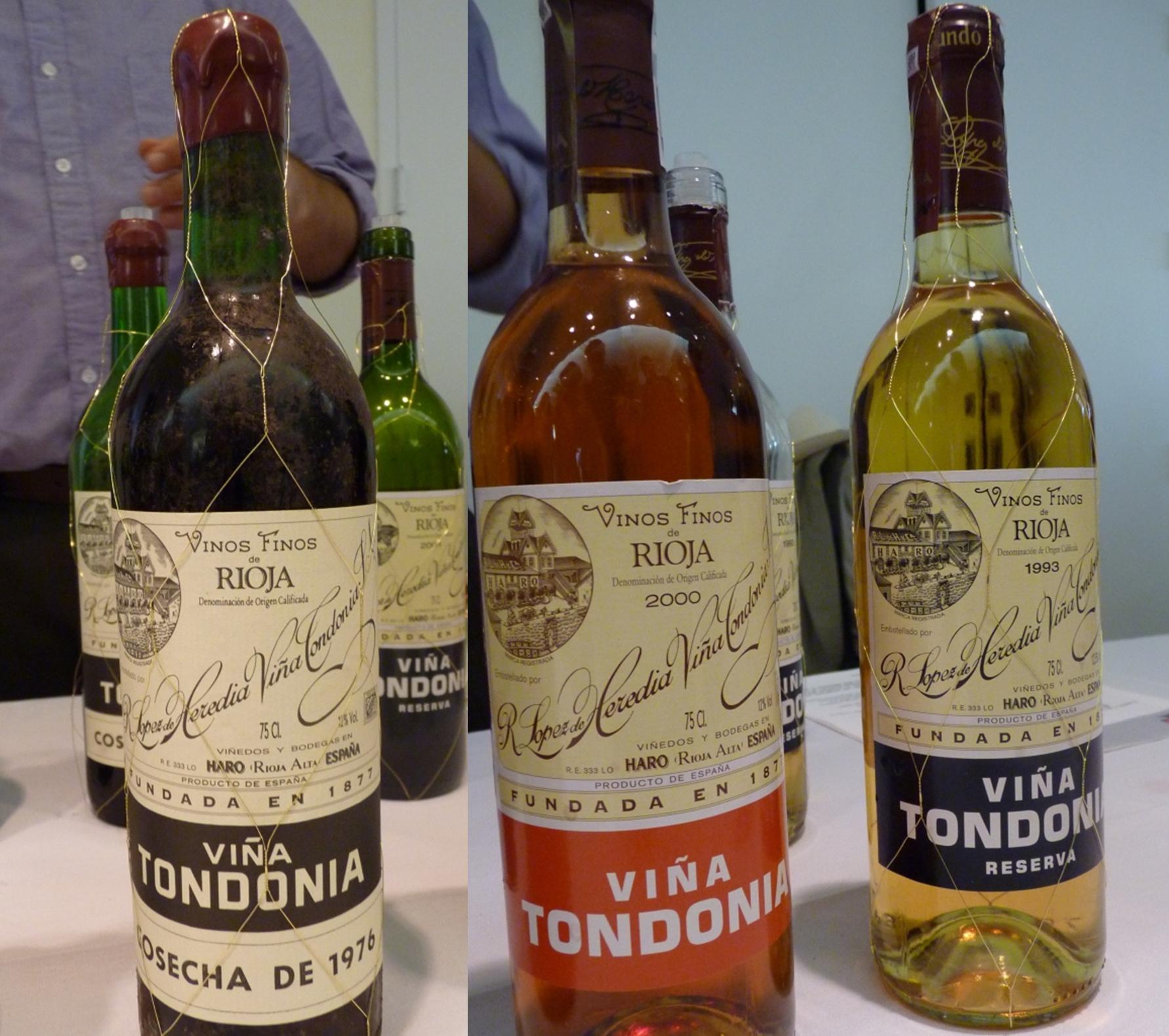
Lopez de Heredia Vino Tondonia Rioja – 1976 Gran Reserva, 2000 Rosado and 1993 Blanco: 18 years old White Rioja and 11 years old Rioja Rosado – both are fresh and vibrant. Wow! And Gran Reserva – beautiful and mature wine, which will still keep going for a while.
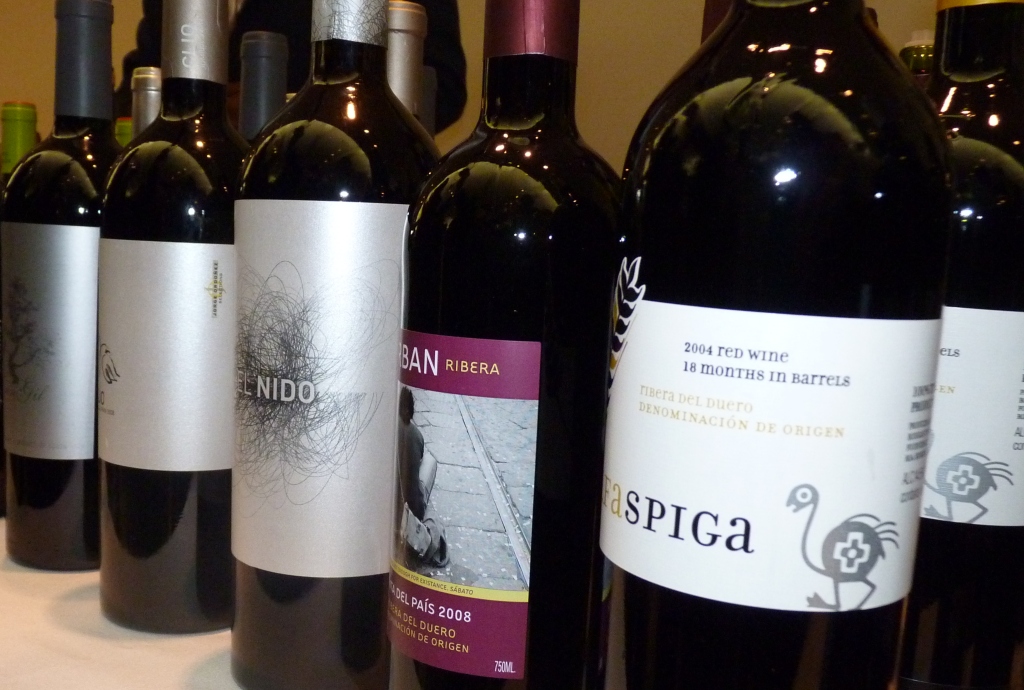
Bodegas El Nido line, including flagship 2006 El Nido – gorgeous layered and balanced, and requiring another 10 years to really blossom:
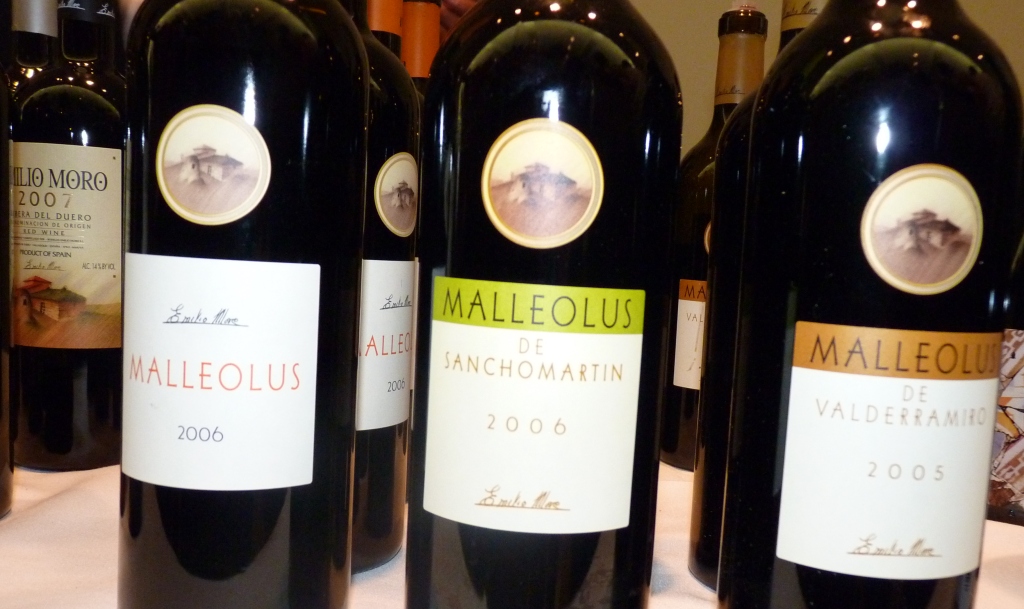
Emilio Moro Ribera del Duero, including full Malleolus line – wines of incredible balance and elegance:
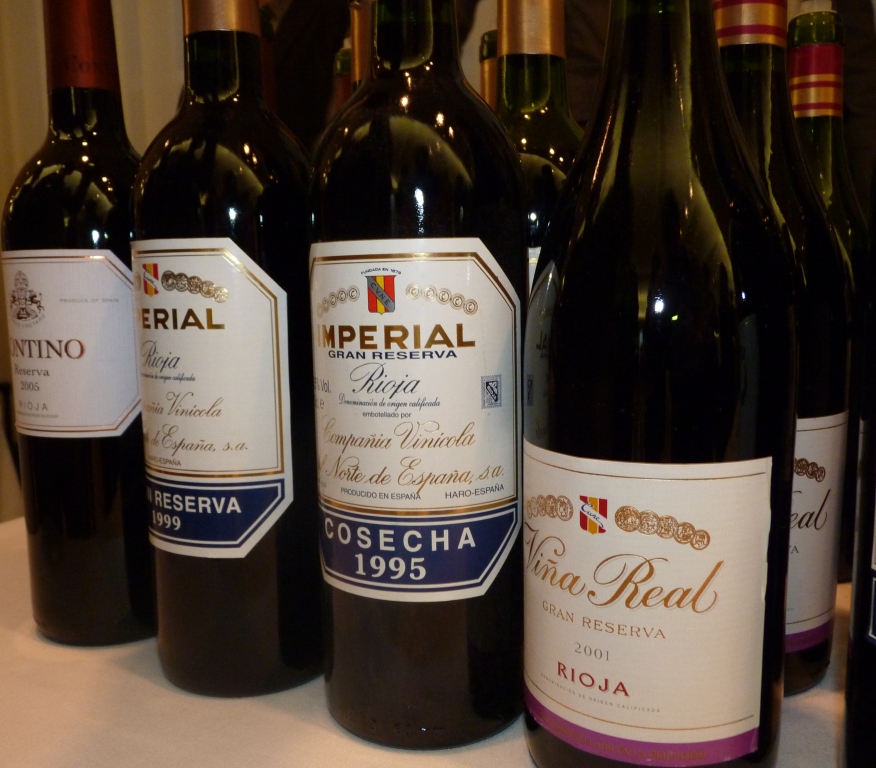
More Rioja – Rioja Imperial Gran Reserva 1995 and 1999, as well as CVNE Vina Real Gran Reserva 2001 –
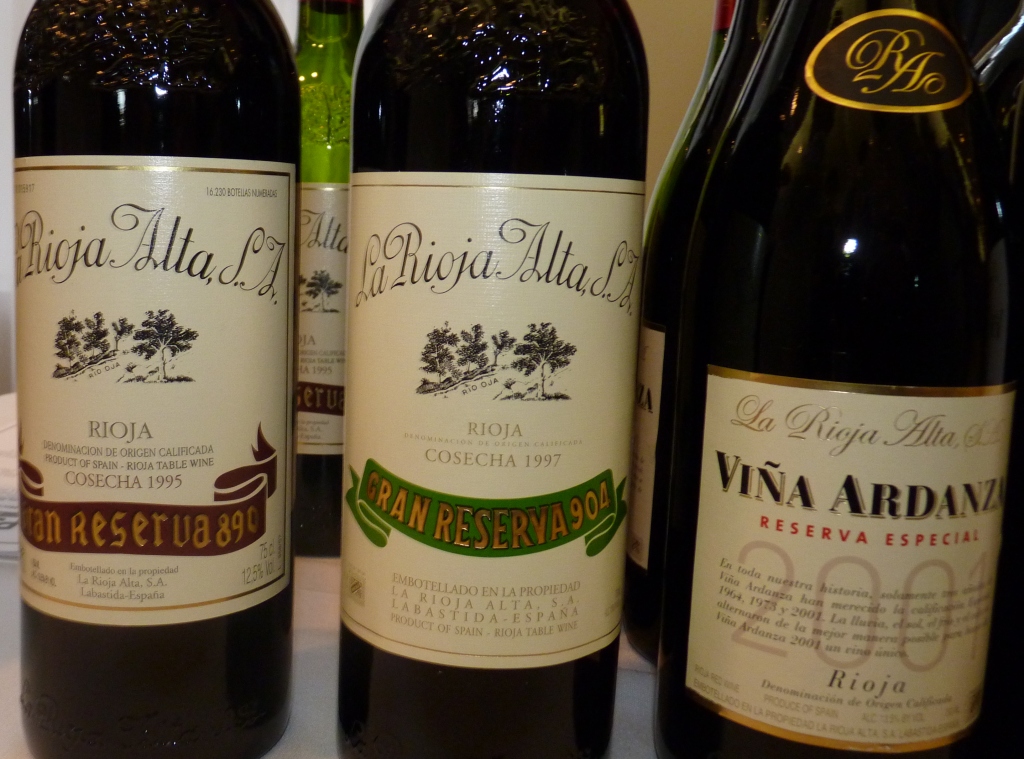
1997 La Rioja Alta Gran Reserva 904, 1995 La Rioja Alta Gran Reserva 890 and 2001 Vina Ardanza Reserva Especial – probably the best Rioja wines. Period. Classic and amazing.
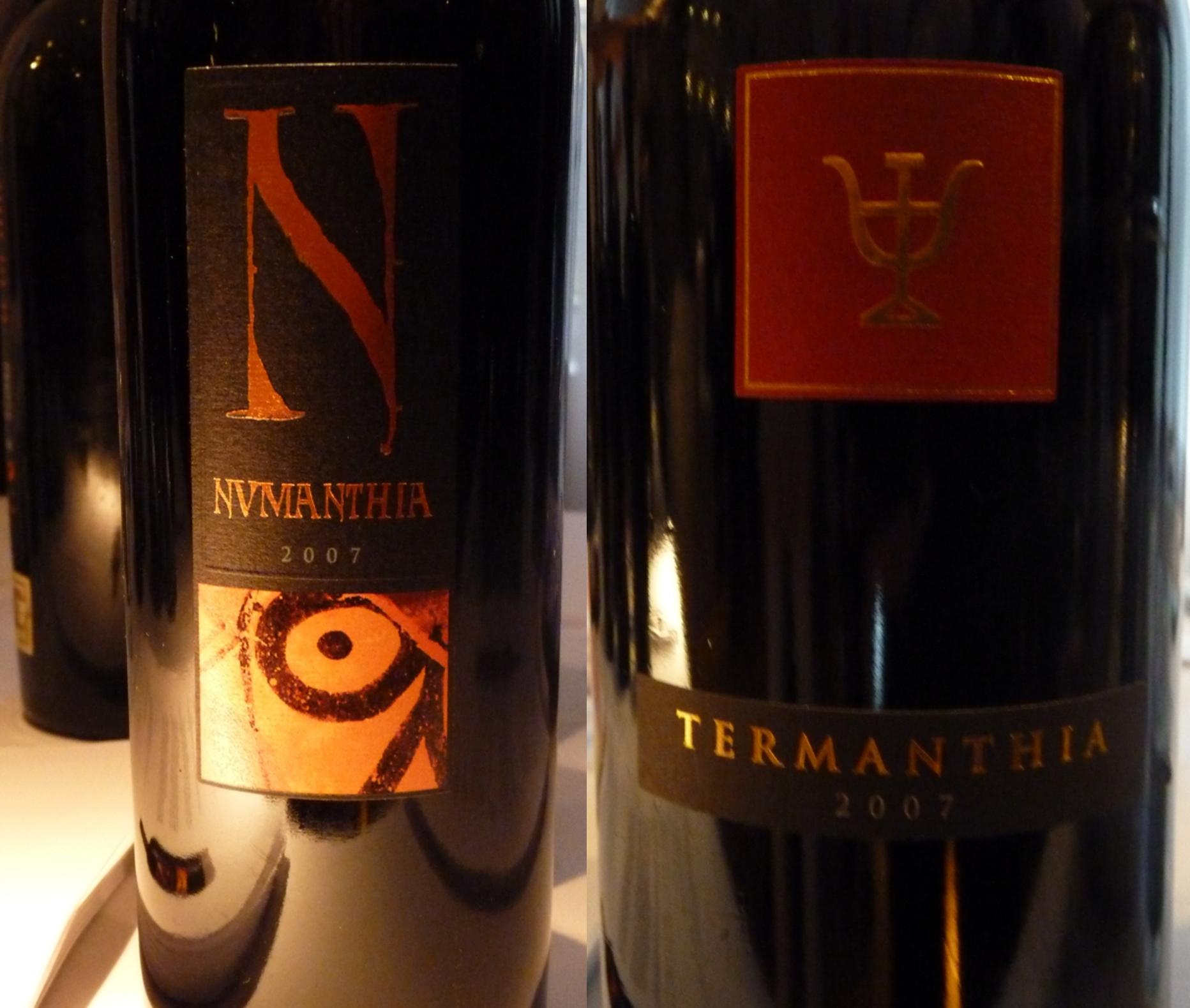
Representing Toro: 2007 Numanthia and 2007 Termanthia, silky smooth, balanced and powerful:
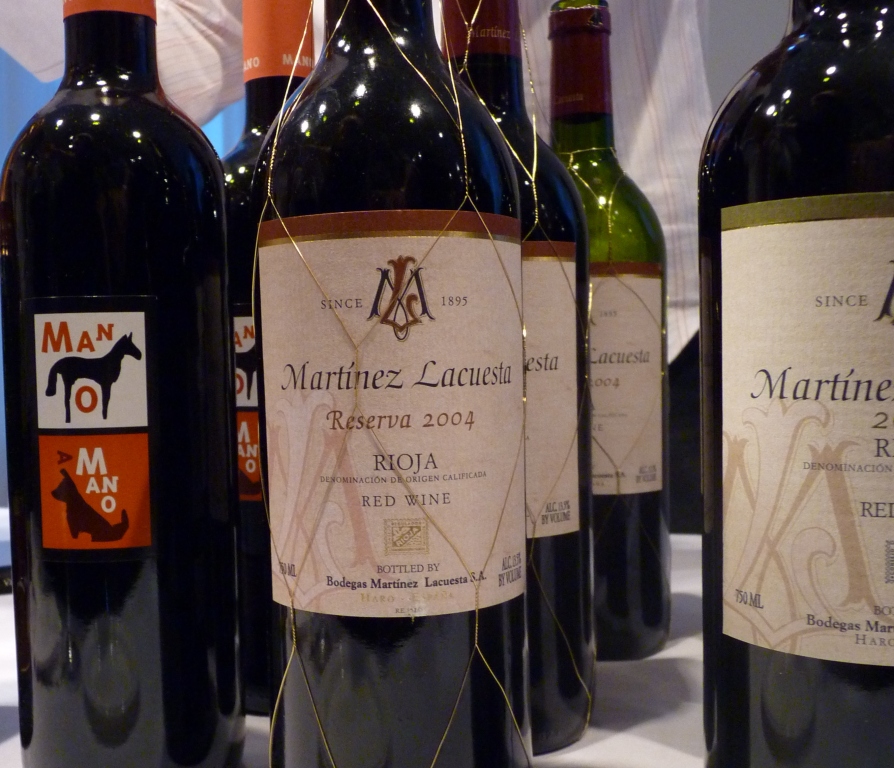
More Rioja – 2004 Martinez Lacuesta Reserva, great wine from the great year:
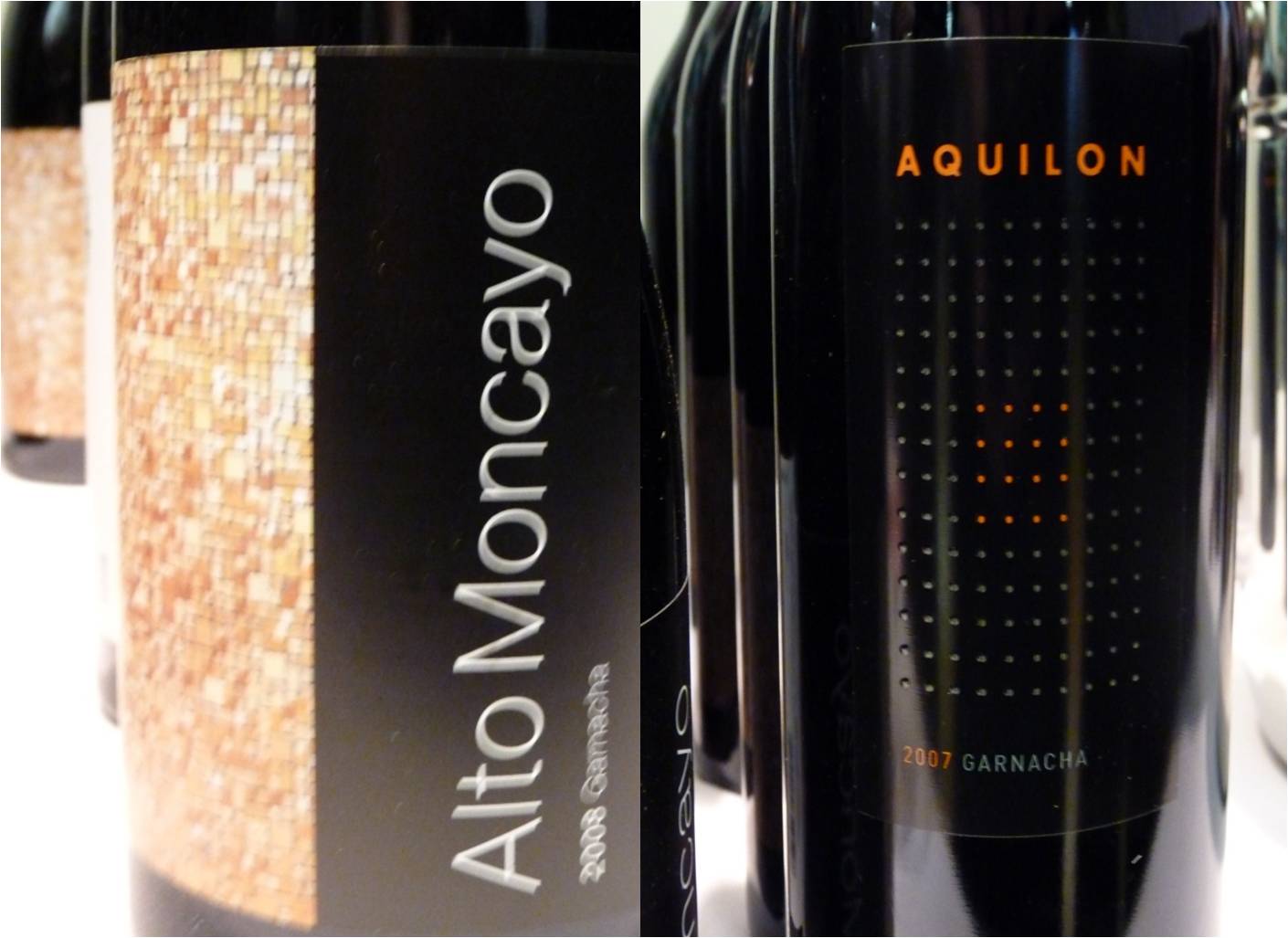
Starring Garnacha from Campo de Borja – 2008 Alto Moncayo and 2007 Aquilon – beautiful, soft and spicy:
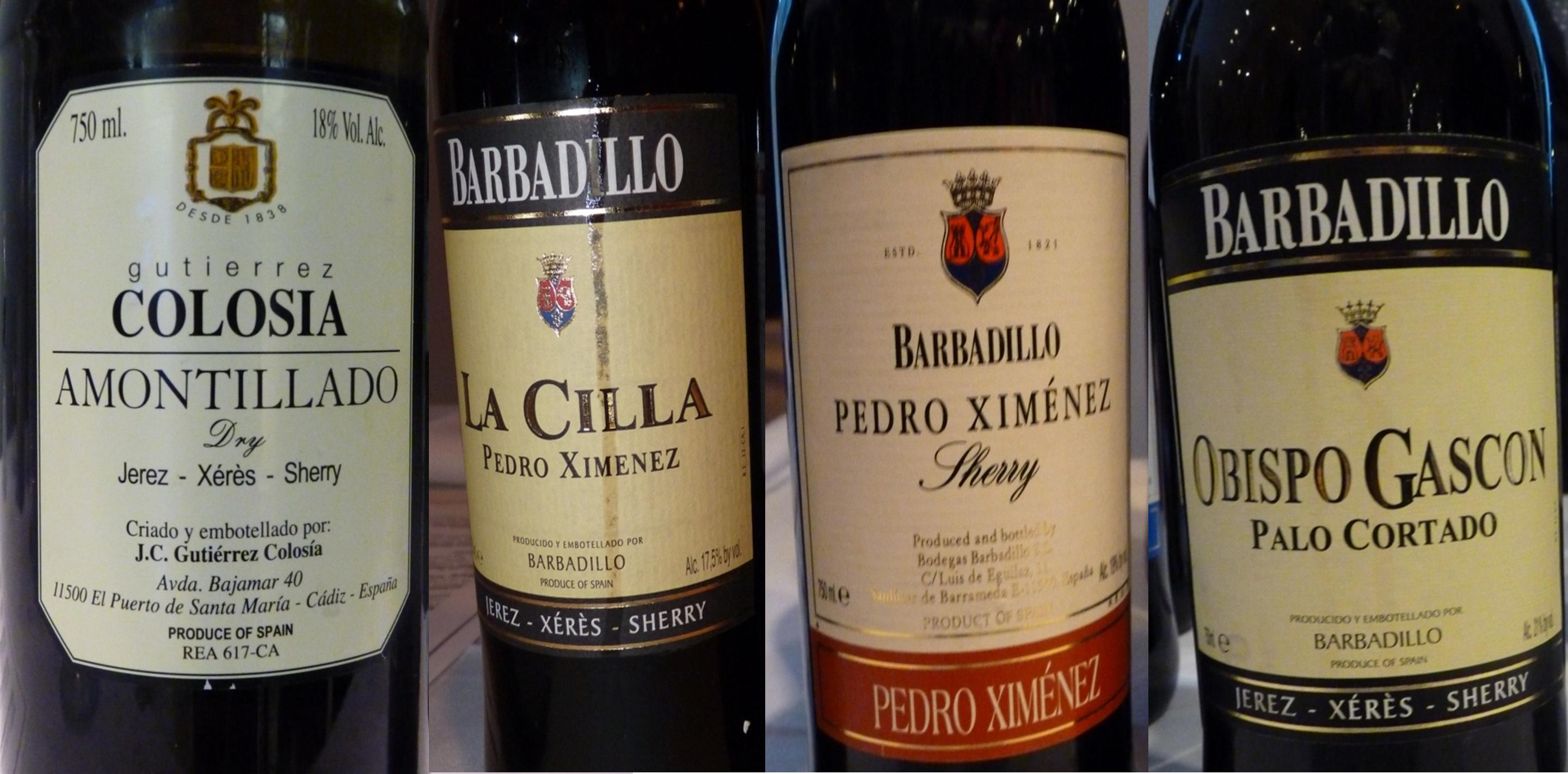
Jerez, a.k.a. Sherry is coming back – take a note of it. All Barbadillo wines were simply delicious, and Colosia Amontillado was also right in the league:
I would like to thank PJ Wine folks profusely for arranging such an amazing line up of wines for the event. And if I can make a suggestion, myself (and I’m sure, hundreds of other wine lovers) would really enjoy PJ Wine Grand Tasting event in the Fall – we can only hope that PJ Wine will be kind enough to organize one…
Last Bottle Sign Up ($10 credit)




 Talk-A-Vino