Archive
Daily Glass – Pinot Grigio To Ask For By Name
 Blind tasting is probably the most difficult part of any of the Guild of Sommeliers examinations. It is one thing to memorize the names of the hundreds of the German villages producing Riesling. It is an entirely different thing to be able to distinguish, let’s say, Cabernet Sauvignon and Merlot, and identify a possible region, vintage and even a producer.
As with anything humans do, blind tasting also has its own set of “tricks” associated with it. Some of them perfectly legitimate – for instance, Nebbiolo wines (Barolo, Barbaresco, etc) typically have red brick hue in the glass, even when young, so this is a great “giveaway” for the blind tasting. Or the fact that the tannins from the American oak are perceived more in the back of the mouth, versus the French oak, which comes in front.
But then some of the “tricks” have nothing to do with the characteristics of the wine. Here is one, a statement by the Master Somms running the exam: “we will never pour Pinot Grigio for your blind tasting”. Pretty good hint, right?
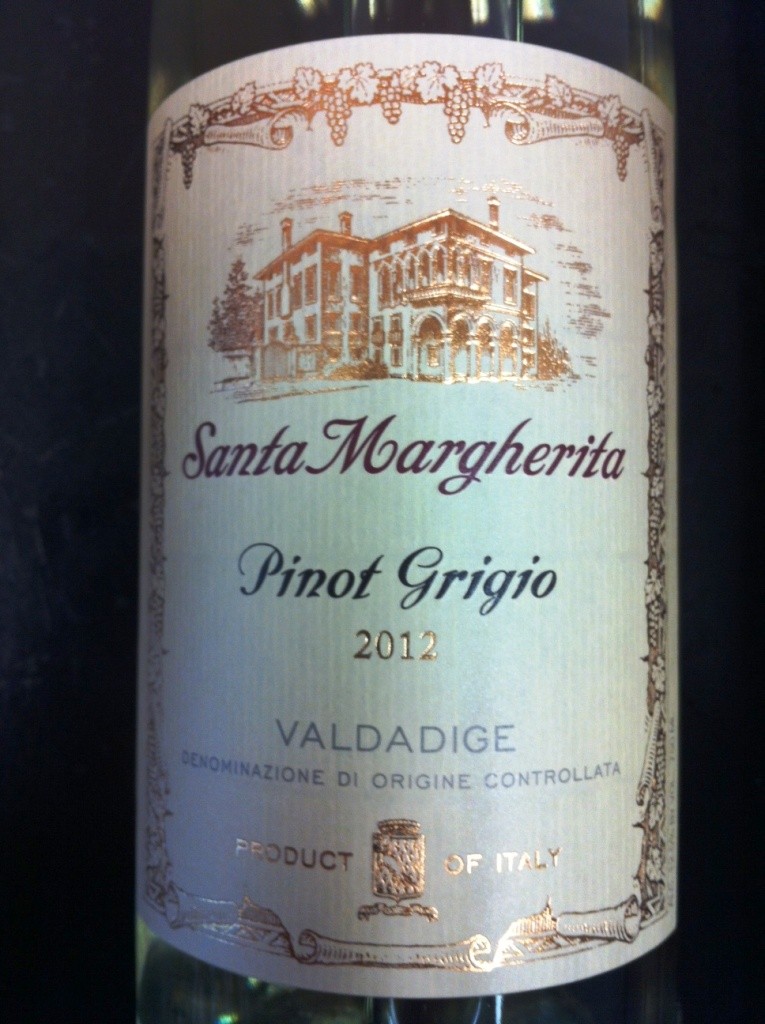
To a degree, Pinot Grigio became a victim of its own success. Santa Margherita Pinot Grigio became an overnight sensation in 1979, driving demand for the Pinot Grigio wines in the USA. That, in turn, led to the appearance of the great number of “imitations”, Italian Pinot Grigio which had no bouquet or a flavor but was very easy to drink and affordable. Fast forward on, and Italian Pinot Grigio became the “wine to ignore” for any self-respecting oenophile, next in line to White Zinfandel.
But let’s not forget that Pinot Grigio is simply an Italian name for the grape known throughout the world as Pinot Gris. As soon as one hears Pinot Gris, I’m sure Alsace comes to mind first, and then, of course, the Oregon. Alsatian Pinot Gris is extremely well respected among wine lovers, beautiful when young and amazing with some age on it. Oregon Pinot Gris is beautifully crisp, clear and flavorful, and as such, a popular choice for the wine consumers as well. So why can’t Italian Pinot Gris, err, Pinot Grigio be a well respected and delicious wine?
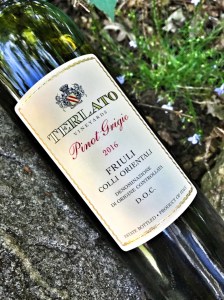
Well, it can. There are many producers who make Italian Pinot Grigio a wine worth seeking and drinking – for instance, how about Elena Walch or Livio Felluga – if you never had their Pinot Grigio, this is a mistake which you need to correct ASAP. And here is one more Pinot Grigio which you need to ask for by name – the one made by Terlato.
Terlato is a very well respected wine importer – and by the way, Tony Terlato was responsible for the overnight success of Santa Margherita, creating that Pinot Grigio phenomenon in the USA. Terlato Family also goes beyond just importing, producing the wines under their own label around the world. The wine I suggest you will look for is Terlato Vineyards Pinot Grigio from Friuli. It is very different from the mainstream – in Terlato’s own words, “First we pioneered Pinot Grigio. Now we’ve revolutionized it”.
Friuli region is nestled in the foothills of the Alps, in a close proximity to the Adriatic sea, which creates great winegrowing conditions. Add to that poor soils and hillside vineyards with 20-30 years old vines, harvested by hand in the small plots, and you’ve got an excellent foundation for making a delicious wine.
Here are my notes from the tasting of this wine:
2016 Terlato Vineyards Pinot Grigio Friuli Colli Orientali DOC (13% ABV, $22.99)
C: light golden
N: intense, minerally, touch of honeysuckle, white stone fruit and fresh brioche, very promising.
P: crisp acidity, touch of gunflint, pronounced lemon, touch of freshly cut grass, medium body softly coating the mouth. Great complexity.
V: 8/8+, wow, very impressive.
Here you are, my friends. Next time you are looking for a bottle of wine, you might want to include Pinot Grigio into your shopping list. Trust the producer, and you might uncover something new to enjoy. Cheers!
Remembering Last Summer – Fero Vineyards in Pennsylvania
 Does it make sense to write about a winery visit a year after? Well, I will leave you to ponder at that question, and will just go ahead with my post.
We have a tradition which we keep going for many years now – adults getaway. One weekend in August, we all get together for the two days of food, wines, laughter and simply enjoying each other’s company. These trips usually take place within reasonable driving distance (3 hours or less) for all people in the group (we all live in a close proximity to the New York city), and winery is always a good choice for the first stop.
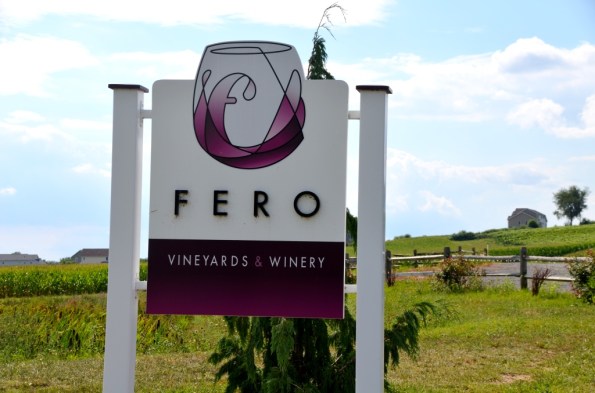
Lucky for us, oenophiles, the wine bug caught up everywhere in the US, so there is no shortage of interesting wineries to visit along the East Coast of the United States. Our choice last year was the winery in Central Pennsylvania, called Fero Vineyards and Winery. The choice was not random – one of the grapes they use in the wine production is Saperavi. This is definitely not a common choice – however, a rapidly (I think) growing trend among Eastern USA winemakers, in Finger lakes and other regions. Having been exposed to many amazing Georgian wines, where Saperavi is a king, I was very intrigued at a perspective of tasting the local rendition of such wines.
Had all the arrangements made to meet with Chuck Zaleski, a winery owner and winemaker at Fero. Chuck was taking time for this off his busy schedule, as he was participating in the town fair where he was pouring his wines.
Just curious – do you think everything is going boringly well, or do you expect a twist in this story?
So yes, the twist happened – in the form of a flat tire. About 70 miles down the road, the familiar sound appeared – anyone who had a flat tire knows what I’m talking about; if you never had one – keep it this way. Not a problem, I thought – while the spare tire is very awkwardly located in Toyota Sienna, under the cabin floor, right in a middle – at least I knew where it was. Next ten minutes of jumping around the car ended up in a grim realization – the spare tire was not there. Angry call to the dealer (luckily, it was Saturday) lead to a discovery – all wheel drive Toyota Sienna cars don’t have a spare tire as there is no space for it – instead, they are equipped with run-flats. To make long story short, after arriving with the smoldering tire to the closest dealership and waiting for about 3 hours, we were able to get on our way (of course I fully realize this was still a very lucky outcome).
As we were at least 3 hours behind the schedule, the decision had to be made – should we visit Fero (Chuck, of course, was not there) or forget it all together, just drive to our B&B and relax after such an ordeal. I’m glad the love of wine prevailed and we decided to stop by the Fero Vineyards first.
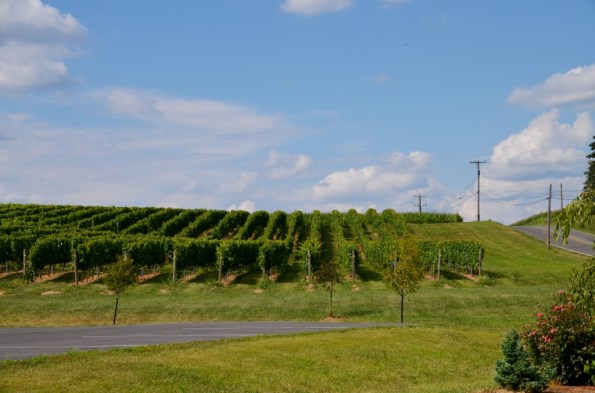 If you will look at the line up of the Fero Vineyards wines, you would find the closest match in Germany or Austria – of course with the addition of Saperavi. Despite the fact that we didn’t manage to meet with Chuck, he still took care of us, by leaving a bottle of Saperavi for us to taste, as the winery was sold out of their last vintage. We tasted through almost a complete portfolio of Fero wines, so here are the highlights for what I liked the most (as usual, there were too many wines, too little time):
2013 Fero Vineyards Grüner Veltliner Pennsylvania – dry, crisp
2013 Fero Vineyards Dry Riesling Pennsylvania – German style, nice minerality, good fruit
2013 Fero Vineyards Pint Noir Pennsylvania – dry, classic nose, crisp, very nice
2013 Fero Vineyards 1812 Lemberger Pennsylvania – crisp, crushed red fruit, pepper
2012 Fero Vineyards Pinot Gris Pennsylvania – nice, simple
2014 Fero Vineyards Pinot Noir Rosé Pennsylvania – residual sweetness, light, balanced, excellent overall
2014 Fero Vineyards Semi-dry Riesling Pennsylvania – excellent, nice touch of sweetness
Fero Vineyards Concord Pennsylvania Table Wine – yes, this is rather sweet, but if you like Concord, this was a classic, restrained and delicious
2013 Fero Vineyards Pinot Gris Pennsylvania – crisp, minerality, excellent
2013 Fero Vineyards Estate Lemberger Pennsylvania – roasted fruit, good concentration, excellent
Fero Vineyards Late Harvest Riesling Pennsylvania – nice touch of petrol, good touch of sweetness, excellent overall
2013 Fero Vineyards Saperavi Pennsylvania – excellent, nice concentration, tannins, crushed blackberries, pepper notes


I’m definitely intrigued by this Saperavi wine. Fero Saperavi has a character of its own, as you can see from my tasting notes above. I would love to taste it side by side with its Georgian counterparts, of course blind. And let’s keep in mind that Saperavi grows in the Balkans (never tasted it), Finger Lakes (also never tasted it), and probably some other places I can’t even think of. Can someone please put together an exciting blind tasting? Or this might be a great subject for the #winestudio session…
Well, I still have a few bottles of Fero wines left, including 2013 Saperavi (courtesy of Chuck, yes) – but I want to give it at least a few more years. See, this is how oenophiles build their excitement…
And we are done here. If you are looking for the great East Coast wines, Fero Vineyards must be on your short list. And who knows, may be you will be lucky enough to taste their Saperavi. Cheers!
New and Noteworthy: Two Classic Regions, Three Classic Pairs
I tend to abuse certain words in the conversation, especially when talking on the subject of wine. As you might easily guess, one of such words is “Classic”. I use this word in hope that it is the quickest way to convey my impressions about the wine. For instance, the words “Classic Red Bordeaux” or “Classic White Burgundy” would most likely paint a quick and vivd picture for the most of oenophiles to imagine how the wine actually tastes. While the wine is produced all around the world, such a broad stroke reference can be only applied to the well known and well referred to regions – saying “Classic Red Bio-Bio” (wienmaking region in Chile) or “Classic White Valais” (winemakiing region in Switzerland) would be an empty sound for majority of the wine lovers.
Looking past the regions, we can also apply the word “classic” to the grapes themselves. There are probably 15-20 grapes which can be easily referred to in this way – “classic Cabernet Sauvignon” or “Classic Sauvignon Blanc”, for example, would give you quick pointers to how the wine might taste like. Yes, “Classic Bobal” or “Classic Resi” will leave most of us with no information at all.
As this is not an epistolary exercise on the applications of the word “Classic” in the wine world, let’s get closer to the subject at hand, and talk about few wines in the practical terms. Today I want to talk about 2 classic regions and 3 classic grapes – for sure for those regions. So the classic regions are: California and Oregon. Would you agree that it is easy to refer to these two world renowned winemaking regions as “Classic”? I hope you are nodding. And for the grapes, I also hope you would share my “classic” sentiment – Pinot Noir and Chardonnay from California Napa Valley – aha, I see you smacking your lips. And Pinot Noir and Pinot Gris from Oregon – need I say more?
Talking about the wines from Oregon, the Pinot Noir is of course an uncontested king of the Pacific Northwest of the USA. Commercial Pinot Noir production in Oregon started in the 1960s, and then from the beginning of the 1990s, Pinot Noir from Oregon needed no introduction anymore. With Oregon Pinot Gris, you might argue with my “classic” designation, however, today, you will practically not find a single Oregon winery which will not produce Pinot Gris. Oregon Pinot Gris has its own, easily recognizable style and character, so in my mind, Pinot Gris wines are the “classic” element of the Oregon winemaking.
Thus let me present to you the first two of the “classic” pairs – Pinot Gris and Pinot Noir from two wineries in Oregon: Willamette Valley Vineyards and Pike Road Wines.


Willamette Valley Vineyards was established in 1983, planting Pinot Noir, Pinot Gris and Chardonnay vines where blackberries and plums were growing before. The original Estate vineyard spans 53 acres at the 500 to 750 feet in elevation. Today, Willamette Valley vineyards farms more than 250 acres of vines, including one of the oldest in Oregon, Tualatin Estate, which are all LIVE (Low Input Viticulture and Enology) certified. I had a pleasure of trying Willamette Valley Pinot Gris and Pinot Noir wines earlier in the year, so here are my notes:


2014 Willamette Valley Vineyards Pinot Gris, Willamette Valley, Oregon (12.4% ABV, SRP: $16)
C: straw pale
N: white stone fruit, touch of grass
P: hint of candied lemon, white stone fruit, nicely round, refreshing, good acidity, medium to full body
V: 7+/8-, very pleasant
2013 Willamette Valley Vineyards Pinot Noir Estate Willamette Valley, Oregon (13.7% ABV, SRP: $30, retail: ~$20)
C: beautiful Ruby
N: fragrant, fresh, cranberries with touch of cherries, sweet raspberries
P: wow, lots of fresh fruit – cranberries, raspberries, fresh, super-clean, touch herbal, great restrained finish
8+, one of the most delicious Pinot ever, perfect.
Our second Oregon winery takes its name from the Pike Road, which winds through the hills of Yamhill-Carlton AVA. This is the second winery for the Campbell family, who founded Elk Cove Vineyards in 1974. Pike Road takes advantage of 5 generations of the farming experience, including 40 years of tending the wines.
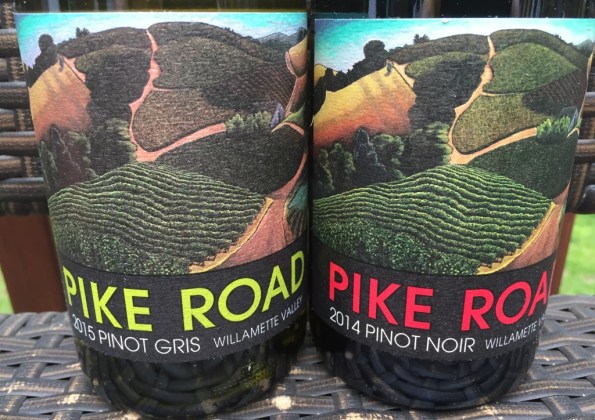


Here are my notes:
2015 Pike Road Pinot Gris Willamette Valley, Oregon (13.5% ABV, SRP: $15)
C: pale greenish color
N: tropical fruit, candied lemon, fresh, intense, inviting
P: crisp, clean, perfect fresh acidity and white stone fruit, creamy. Outstanding.
V: 8-/8, delicious white wine, perfect year around and superb during summer
2014 Pike Road Pinot Noir Willamette Valley, Oregon (13.5% ABV, SRP: $19, 10 month in French oak barrels)
C: dark Ruby
N: delicious. Touch of sweet fruit, open, inviting, raspberries, herbs, super-promising, wow
P: soft, layered, silky, spices on top of traditional smokey profile, triple-wow
V: 8+/9-, wow, totally unexpected and amazing. I know Oregon Pinot delivers, but this far exceeded my expectations. Might be the best QPR for Oregon Pinot Noir in existence. Love rustic labels too.
Our last classic pair comes from the classic of the classics, none less than Napa Valley, and it is Chardonnay and Pinot Noir from Artesa winery. Artesa winery is located in Carneros region of Napa Valley. While Artesa recently celebrated is 25th vintage, their winemaking traditions go way, way, way back – say by another [almost] 500 years. How come? Artesa winery was founded by Codorniu Raventós family from Spain, which takes its winemaking heritage 17 generations back to the 1551. Artesa sustainably farms 150 acres of vines, all Napa Green Land certified, and produces a range of wines, starting with a few sparklers and finishing with another Napa classic – Cabernet Sauvignon. Two wines which I had an opportunity to taste are the new Estate Reserve release from the winery:
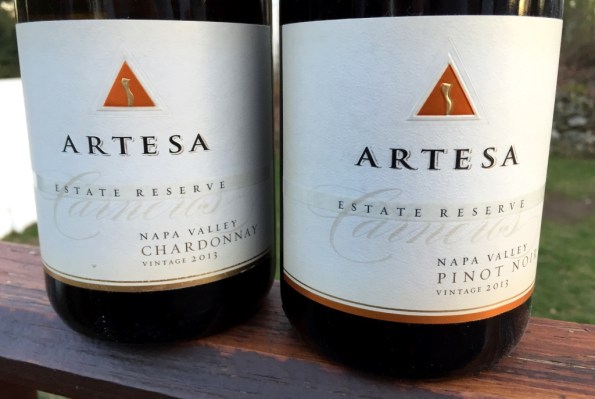
2013 Artesa Estate Reserve Chardonnay Napa Valley (13.9% ABV, SRP: $40)
C: light golden
N: touch of vanilla, hint of butter, white fruit, intense
P: touch of butter, green apples, good acidity, medium to full body, vibrant and balanced
V: 8-, a classic Chardonnay
2013 Artesa Estate Reserve Pinot Noir Napa Valley (14.4% ABV, SRP: $40)
C: dark garnet
N: warm, inviting, sweet plums
P: round, polished, present silky texture, touch of smoke, more plums, minerality, restrained
V: 8-, nice, smooth and restrained
There you have it, my friends – some new and interesting wines worth seeking. And whether they will hit the “classic” note for you – it is entirely your decision. Cheers!
One on One with the Winemaker: Luke McCollom of Left Coast Cellars, Oregon
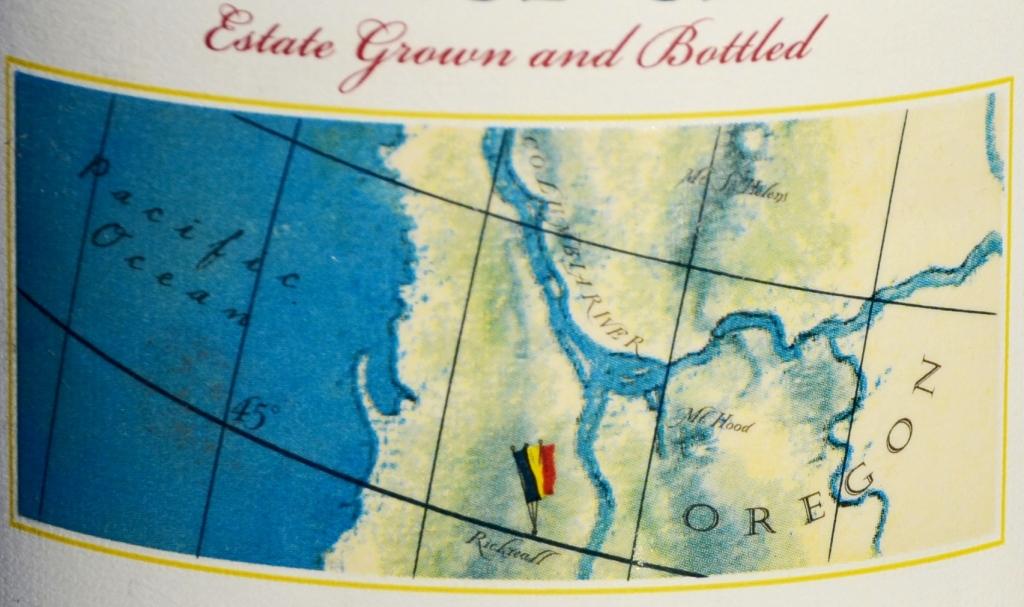 Let me tell you something – I really liked the concept of my first “one on one” post. Which means that I will try to make it into a feature and a series in this blog. And today I invite you to travel with me to the Oregon, third largest grape-producing state in the US. Our destination is Left Coast Cellars estate, home to one of the largest contiguous vineyards in Oregon, focused on sustainable viticulture and precisely focused wines. I had an opportunity to “sit down” (yes – virtually) with Luke McCollom, Founding Winemaker, Viticulturist and General Manager of the Left Coast Cellars, and ask him whole bunch of questions. I really asked lots of questions – and I got lots of great answers. I actually will have to split our conversation into two parts, just not to overwhelm you, my reader.
Without further ado, please pour yourself a glass of (Oregon, of course!) wine – here is our conversation with Luke McCollom:
Why “Left Coast Cellars”?
Well, we want to represent and paint a picture of our sense of place. The “Left Coast” can be seen on our Lewis and Clark Map rendered Labels. When you’re looking at a Map of the United States… we are on the Left Side! Also, of course… Left Coast is Family owned and 3 of the Family members running the Estate are Left Handed. When visiting Left Coast, coming from the closest Major city….The State Capitol Salem, you need to make Left Hand turns to get to the Winery. The Winery and Tasting room are both on the Left Side of the Drive. The term Left Coast not only describes our location, but our wholesome, casual style, and creative ability to artistically craft… unique, exquisite, Estate Grown handmade wines. Not to mention, the heavy “Coast” Influence brought in daily by the Van Duzer Corridor.
[TaV comment: I asked this question rather matter-of-factly, expecting the explanation about Left Coast, but it appears that there is so much more to this name]
Your logo looks very interesting. Is there a story behind it?
The “Sun” Logo is from a large Copper Sculpture which can be seen as you enter the property. The Sculpture was a gift given to Suzanne by husband Robert for an Anniversary. It is a beautiful, unique piece created by a Hawaiian artist named Abe Santoro. Santoro’s work can be seen at places like the Smithsonian. I believe Santoro is nearly 90 years old and is referred to as a Treasure of Hawaii.
For us it represents the Founders love for each other and the commitment of life partnership which led to a beautiful family, with passion for food, and wine. The logo is a symbol of the vision created together to Build an amazing Estate in The Willamette Valley. This “Circle of Life” logo also represents their commitment to Sustainability, the Earth, the Sun and the cycle of every vintage of wine.
When you started the winery in 2003 and purchased the land, were there any vines planted already or did you have to start from scratch?
When the Family purchased the property there were 25 acres of Pinot Noir. The first vintage crafted from these young Latitude 45 Vines received an 88pts. in Wine Spectator. This was very exciting because the vines where only 3 years old! Other than that, there was a large spring fed lake and most of the property was overgrown with poison oak and black berry bushes. All of the extensive gardens, landscaping, buildings, infrastructure, and design were created by the Family from scratch. Since then we have also planted another 115 acres of vineyards including 11 different types of Pinot Noir as well as some of the most extensive white wine grape plantings in Oregon.
According to the information on your web site, there are 8 distinct microclimates across your vineyards. Do your wines today already showcase the different microclimates or do you plan to expand on that in the future?
Yes, we constantly strive to showcase our different micro climates and to bottle distinct unique wines. Probably the best example of this is in the Vineyard Designate Pinot Noirs…(Right Bank Pommard, Truffle Hill Wadenswil, and Latitude 45 Dijon Bottlings). These Pinot Noirs are planted in locations best suited for their type of micro climate. Each Vineyard Designate Pinot is hand made in small, open top, French Oak Wine Vats. Each wine is made using different yeast and different dedicated barrel coopers selected to exemplify the Clone and Micro climate of each wine. For example, the Truffle Hill is a Swiss type of Pinot Noir, grown on one of our cooler sites (sort of like Switzerland) We use only Swiss Yeast in making the wine to showcase the tradition of the clonal selection and create distinct style and flavor. The Truffle Hill is aged using specific barrel cooperage which does not dominate the complex nuances of the Wadenswil Selection Pinot Noir. In the future, we would like to expand our showcasing of different soil types from the property comparing Sedimentary Soils to Our Volcanic Soils.
You grow Pinot Meunier, Syrah and Viognier – how do you use those grapes?
Pinot Meunier is used as a base in our Sparkling wines and is also made into a Field of Dreams Pinot Meunier still red wine. This year the Meunier was crafted into a sparkling Brut Rose and a couple hundred cases of still red wine. Meunier of course means “miller” in French like flour miller…because the vines are covered with white fuzz that makes them look like they were dusted with flour. Meunier is a mutation of Pinot Noir and loks like a “wild” Pinot Noir vine. The Meunier still wine sort of tastes like a wild pinot noir with it’s firm structure tannins and distinct brambly and pomegranate flavors.
Syrah and Viognier are also made into Field of Dreams Varietal wines for Wine Club and Tasting Room. The warm 2014 and 2015 vintages are good vintages for perfectly ripe Rhone Varietals in our climate. These vintages also make good quantity of these varietals for potential availability in the National Market. For 2015 Look for Left Coasts’ own Left Cote du Rotie…this is a Syrah co-fermented with up to 25% of Viognier. The Viognier has an enzyme in the skins which creates more extraction of color and flavor in the Syrah fermentation. Very Cool! Northern Rhone style wines which pair beautiful with food. We are a Pinot House, but the 45th parallel where we sit aligns exactly with Northern Rhone…this is why we grow small amounts of these varieties on the Estate. Another small celebration of Terroir, Microclimate, and Unique sense of place.
[TaV comment: this was a really a “duh” moment for me – and a clear showcase of deficiency of the virtual conversation – I forgot that many wines can be made in such a small quantities that they will be available at the winery only and never show on the web site, duh…]
to continue previous question – do you have any plans for single varietal Syrah wine?
Our first varietal vintage of Syrah was 2008…we recently opened a bottle to taste and the wine is incredible… still very youthful!
[TaV comment: “duh” moment didn’t stop with the previous question, right?]
It seems that Chardonnay is a rising star in Oregon – I see that you now offer Chardonnay wines for the past few vintages. What do you think of Oregon Chardonnays? What makes them unique? What is your chardonnay style?
Yes, we have committed some of our best land to growing Chardonnay. We have some of the largest modern plantings of Chardonnay in Oregon. The reason being, most people were ripping out Chardonnay when we were developing the vineyards, while we were planting it. We see Chardonnay as going hand in hand with Pinot Noir. Our 2005 Chardonnay was selected by the Oregon Wine Industry in 2010 as a “World Class Ageable White Wine” by our peers at the Oregon Wine Symposium.
We think this shows the potential of Chardonnay in Oregon and the potential of the Left Coast Estate. We strive to create a balanced Chardonnay with equal parts acidity, minerality, fruit, and oak. We believe we hand craft a Chardonnay which is very Oregonian in style meaning a wine which is clean, not oak dominated, will please non-chardonnay drinkers, and of course pairs well with Northwest Cuisine. For lack of description we try to craft Oregon Chardonnay as somewhere halfway between California and Burgundy. We love Oregon Chardonnay!!! and often ferment ours half in Stainless Steel Vats and Half in French Oak barrels. We believe the stainless portion of the fermentation preserves the fruit and acidty and the French Oak fermented portion provides subtle oak flavors with round mouth feel and volume. These wines are blended, married, and bottled together as one. We also have an extremely distinct Musque Clone Chardonnay that is concrete fermented and bottled for Wine Club.
I don’t know about you, but I definitely need a glass at this point, so here are two of the Left Coast Cellars wines I had an opportunity to try (as samples, courtesy of Donna White PR):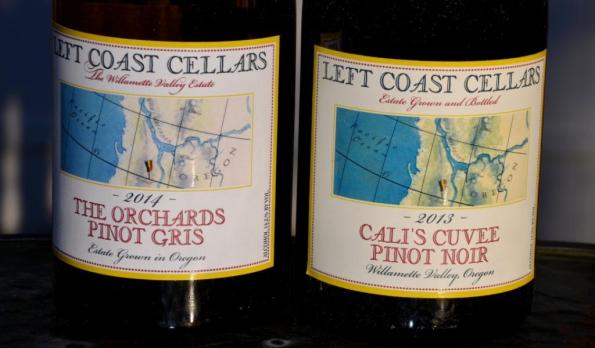
2014 Left Coast Cellars The Orchards Pinot Gris Willamette Valley, Oregon (14.2% ABV, $18)
C: straw golden
N: fresh flowers, fresh white fruit, candy, bright, exciting
P: nicely restrained of the palate, quite a contrast with the nose. Lemon zest, touch of grass, medium body with nice mid-palate weight, wine is nicely present, tart finish
V: 8-, should develop interestingly with time
2013 Left Coast Cellars Cali’s Cuvée Pinot Noir Willamette Valley, Oregon (13.5% ABV, $24)
C: garnet
N: typical Pinot Noir, sweet plum, violet, touch of licorice and vanilla
P: delicious. Sweet cherries, touch of eucalyptus, medium body, firm, touch of smoke, good acidity, good balance, very (very) long mouthwatering finish
V: 8, dangerous wine – once you start, it is very difficult to stop
That’s all I have for you for today. To be continued…
Wednesday’s Meritage – Wine Quiz Answer, How To Make Wine Into a Cult, Interesting Videos, Few Reminders and more
 Meritage Time!
First and foremost, the answer to the weekly wine quiz #67, grape trivia – Pinot Gris, a.k.a. Pinot Grigio.
In the quiz, you were supposed to answer 5 questions about Pinot Gris grape – here are the questions, now with the answers.
Q1: Name Italian Pinot Grigio wine which is considered a golden standard of Pinot Grigio in the United States (people really ask for it by name).
A1: Santa Margherita. In the 1979, a few cases of Santa Margherita were shipped to US by Billy Terlato, the wine importer. The marketing campaign in the 1980s happened to be pure genius ( I guess, I didn’t witness the campaign, but I can see the results) – the rest was history. In 2006 Santa Margherita alone sold 8.5M (that’s millions to you) bottles of Pinot Grigio worldwide, 65% in US. Mind-boggling, if you ask me… You can find some additoinal interesting information in this Imbibe.com article.
Q2: Name two famous regions in France which used to make wines out of Pinot Gris, but not anymore
A2: Both Burgundy and Champagne used to make Pinot Gris wines in the 18th century. Nowadays, both regions still grow Pinot Gris, but practically never use it for the mainstream winemaking.
Q3: When do you think Pinot Gris was first planted in Oregon?
a. 1947, b. 1966, c. 1978, d. 1990
A3: 1966. David Lett of Eyrie Vineyards planted first Pinot Gris vines in Oregon in 1966.
Q4: Wine Spectator calls wines rated in 95-100 range Classic. True or False: there are more classically rated Pinot Gris wines than Sauvignon Blanc?
A4: True. There are quite a few Pinot Gris (no Pinot Grigio, of course) with very high ratings, including 2001 Zind-Humbrecht Pinot Gris Alsace Clos Windsbuhl Sélection des Grains Nobles, which got 100 points. The highest of Sauvignon Blanc ratings belongs to 2005 Didier Dagueneau Pouilly-Fumé Pur Sang (97 points), and overall there are very few Sauvignon Blanc wines in the Classic ratings range.
Q5: During early 2000s, producers in Alsace had to change the way the Pinot Gris wines were typically labeled (you can still find the old name on the bottles from 1990s and before). Do you know what was changed and why? As an added bonus, please explain the origin of the old name.
A5: As with many grapes, the story is quite interesting. Pinot Gris originated in Burgundy, some time in 12th century. From there, it made it to Hungary, and then in 16th century it made it to Alsace, now under the name of Tokay d’Alsace. At the same time, Tokay ( Tokaj to be precise) is the name used for one of the best Hungarian wines, so in 1993 the agreement was reached in EU to phase out the use of “Tokay” in Alsace, which was completed in 2007.
I’m glad to tell you that we have the winner this time! Jeff, a.k.a. The Drunken Cyclist, nailed all 5 questions – he also did it Google-free, which deserved a special commendation – however I can only offer a double amount of the typical prize – unlimited bragging rights. Double unlimited? Not sure how that should work… but great job Jeff!
Now, to the interesting stuff around the vine and web!
First, here is an interesting story for you on how to make the wine into a cult wine. The story was published in the Drinks Business online magazine, so it is written more a trade article, but it makes an interesting reading nevertheless.
Now, I have two important reminders for you:
August 14th – Wine Blogging Wednesday event, #WBW80 – Dry Rosé. All you need to do is to write a blog post pertinent to the subject, and submit it to the host. For all the details please click here. Let’s make it a success!
August 16th – deadline for submission for the Monthly Wine Writing Challenge #2, with the theme called Trouble. You can find all the rules here. I personally have big trouble with this trouble, so I’m not sure if you will see an article from me… Oh well – I’ve seen a few submissions already, and they were worth the trouble!
Thanks to the tweet from the fellow oenophile Peter L. Zachar (@PeterZachar ), I came across an interesting series of videos about Bordeaux. Recorded by James Cluer, Master of Wine, the series is presenting some of the greatest estates in Bordeaux. Below is the first video of the series, and you can follow it from there.
And this is all I have for you for today. The glass is empty – but the refill is coming. Open something great tonight, and until the next time – cheers!
Weekly Wine Quiz #67: Grape Trivia – Pinot Gris, a.k.a. Pinot Grigio
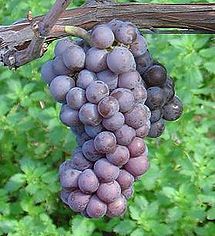
Pinot Gris cluster, as pictured in Wikipedia
Welcome to the weekend and your new wine quiz! Today’s subject is the grape called Pinot Gris, probably even better known as Pinot Grigio.
Pinot Gris is an old grape, cultivated since the middle ages in various regions in France. It had been shown based on the latest DNA research, that Pinot Gris is a very close relative of Pinot Noir. As you can see from the picture, the color of the grapes are somewhat of the grayish purple, and that what the “Gris”, or “Grigio” in the name stands for – Gray. It is almost a bit surprising that the white wine is made out of a grape with such a color of the skin.
Pinot Gris popularity in the world is steadily increasing, even surpassing Riesling and becoming third most popular grape in the world (I couldn’t find convincing numbers to this claim though). Pinot Gris was growing and producing great wines in Alsace since the 16th century, but it was Italian Pinot Grigio which created this world-wide phenomena in 1970s, propelling the grape from very local consumption in Italian restaurants to such a mass phenomena. I wonder if there is a book about geniuses of marketing who managed to create this Pinot Grigio revolution – this must be a fascinating read. Just to give you an interesting fact – Pinot Gris plantings in New Zealand increased 6.5 times (!) in 5 years from 2003 to 2008 – yeah, talk about popularity.
When it comes to the taste, it is interesting to note that there is a very substantial range of expression in the Pinot Gris wines. A lot of Italian mainstream Pinot Grigio has almost water-like consistency both in the taste and appearance (this is why many people presumably like it, and this is also why this type of wine is never served in my house – sorry for the sidetrack). But even in Italy, when you go further north to the Alto Adige region, the wines will show a lot more substance, with nice acidity and minerality. Then you got Oregon Pinot Gris, which typically have a perfect combination of white stone fruit and acidity, and going all the way back to Alsace, Pinot Gris makes luscious, opulent, full bodied white wines.
Now, let’s get to our quiz, shall we?
Q1: Name Italian Pinot Grigio wine which is considered a golden standard of Pinot Grigio in the United States (people really ask for it by name).
Q2: Name two famous regions in France which used to make wines out of Pinot Gris, but not anymore
Q3: When do you think Pinot Gris was first planted in Oregon?
a. 1947
b. 1966
c. 1978
d. 1990
Q4: Wine Spectator calls wines rated in 95-100 range Classic. True or False: there are more classically rated Pinot Gris wines than Sauvignon Blanc?
Q5: During early 2000s, producers in Alsace had to change the way the Pinot Gris wines were typically labeled (you can still find the old name on the bottles from 1990s and before). Do you know what was changed and why? As an added bonus, please explain the origin of the old name.
Have fun, enjoy your weekend and cheers!
Last Bottle Sign Up ($10 credit)




 Talk-A-Vino