Archive
Wednesday’s Meritage – An Award for Women in Food, Thanksgiving Wines, Ageing of the Napa Cabs, Screw Top versus Cork and more
Meritage Time!
Abundance is the word today. Thanksgiving, the holiday which we will celebrate tomorrow in United States, is usually associated with abundance. Lots’ of food and fun. And so is today’s Meritage issue – lots of interesting things to share. Let’s go!
First, I want to bring to your attention an opportunity for an award for the deserving women involved with food. KaTom, one of the largest restaurant supply companies in the world, wants to create a special award to recognize women involved with food, and it is asking for your help with this. If you click on this link, you will get to the KaTom web site, where in the upper right corner you will find the link for the video and a special award survey. Watch the 2-minutes video and then take a short survey – this will greatly help KaTom in their quest to create that special award.
Well, it is kind of late, but still worth a few minutes of your time – W. Blake Gray wrote a blog post which might help you to select the right wine for Thanksgiving. Instead of focusing on the particular wines, W. Blake Gray gives you an idea of the broad categories which might fit well at the Thanksgiving table.
Do you like aged wines? Which wines do you think can age well? If you think about California Cabernet Sauvignon wines as age-worthy, you might find interesting this article written by Lettie Teague for the Wall Street Journal. In the article, Lettie is exploring in depth if California Cabernet Sauvignon wines can actually age as well as many of us think they are. I definitely agree with one of the takeaways – it is hard to predict if the particular bottle of wine will age or not. But – I’m willing to take a chance. Anyway, read the article and let me know what do you think.
In the next interesting post, Jamie Goode, one of the very well known wine bloggers and writers, ponders at the [almost eternal] debate of wine enclosures – screw top versus cork. This is not a theoretical debate – Jamie actually is talking about blind tasting and comparing the same wines enclosed with cork and screw top. Based on what I see in the post, cork edges the screw top – but read the comments to see all of the outcry about spoiled, corked wines. As far as I’m concerned, I’m willing to take a risk of having a corked bottle in exchange for greatness, versus screw top which just doesn’t allow the wine to age properly – but this is not the popular opinion. Anyway, take a look for yourself.
Which country do you think is a number 1 importer of Beaujolais Nouveau wines? Prepare for the surprise, as this country is … Japan! This article from Decanter magazine is exploring the virtues of the Beaujolais Nouveau phenomenon using some numbers. Japan is the biggest importer of Beaujolais Nouveau – it imports more Beaujolais Nouveau than the next 9 countries combined. Definitely some interesting numbers, well worth your attention.
Last but definitely not the least – here is another nudge regarding the the Monthly Wine Writing Challenge #13. The theme is Serendipity, and you really have to start working on it now, if you didn’t have already. No excuses – have some turkey, have some wine, and get to it. Even if you think you can’t write the #MWWC post, believe in yourself, just sit down and write – you can do it! For all the rules and regulations, please take a look at this post.
And we are done here. The glass is empty, but the refill is on the way. Cheers!
Celebrating New Harvest – Beaujolais Nouveau 2014
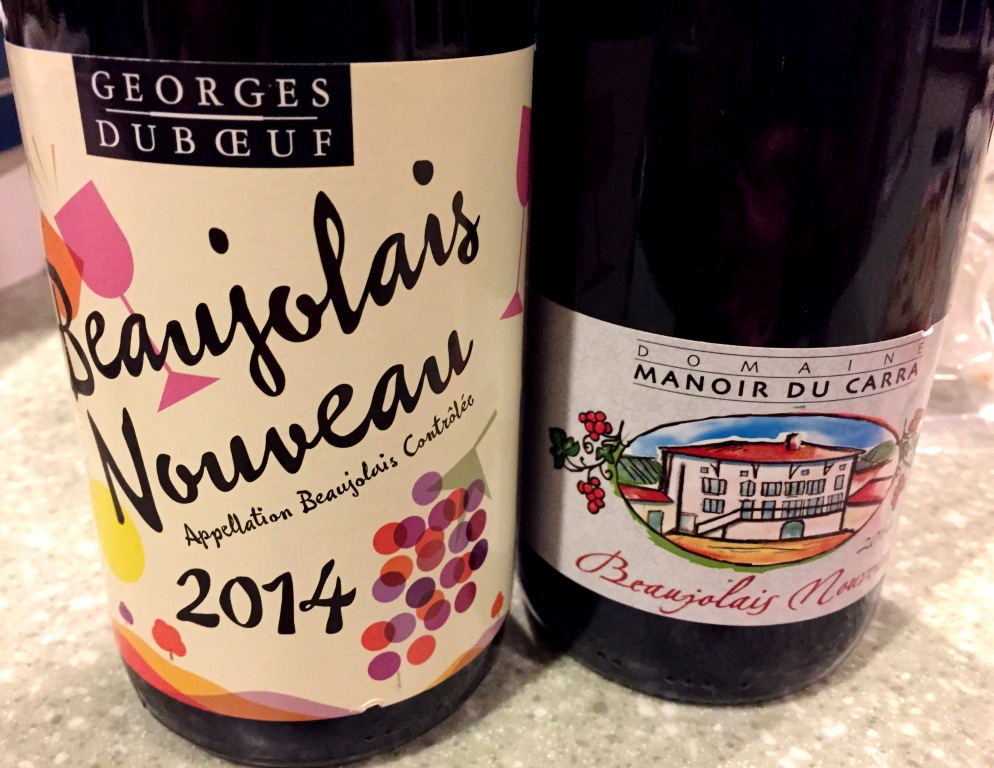 On Thursday, November 20th, all wine (and probably well beyond wine) social media outlets were filled with “Le Beaujolais Nouveau Est Arrivé” messages, pictures and videos. For more than 30 years, what was at some point a simple local celebration of the new harvest, became a big international affair. Always happening on the third Thursday in November, the wine called Beaujolais Nouveau magically appears on the shelves of the wine stores and on the restaurant tables all over the world to ring in the harvest.
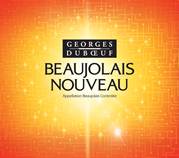
This international celebration is largely a result of the efforts of one man with the vision – Georges Duboeuf, the famous french wine négociant and producer. It was his vision and hard work which lead to the event celebrated from Paris to New York to Tokyo. At some point the Beaujolais Nouveau phenomenon became oversubscribed, leading to the glut of insipid wines saturating the market, creating a bad image associated with the whole Beaujolais Nouveau idea. But with the modern winemaking improvements, the quality of the Beaujolais Nouveau wines started to improve year after year, which brought the feeling of the celebration back over the last 5-6 years.
I had been closely following the Beaujolais Nouveau celebration ever since this blog started – here are the posts from 2010, 2011, 2012 and 2013. While working on this post, I checked my notes on the past releases of Beaujolais Nouveau, and it looks like with the exception of 2011, all the vintages were very consistent, offering good quality, very drinkable wine which gave a lot of pleasure. I know that some people dismiss Beaujolais Nouveau as a marketing gimmick and simply refuse to drink the wines – however, I wholeheartedly disagree and I believe this young celebratory wine well worth wine aficionados’ attention.


This year, I had an opportunity to try two different Beaujolais wines – 2014 Georges Duboeuf Beaujolais Nouveau (12% ABV, $9.99) and 2014 Domaine Manoir du Carra Beaujolais Nouveau (12.5% ABV, $10.99). Talking about interesting experiences, for the first time I remember drinking Beaujolais Nouveau, and definitely for the first time while writing this blog, I found two of the different bottles of wine which taste nearly identical. This was very puzzling experience, as I was looking for the different descriptors, and couldn’t find any. Okay, they were not 100% the same wines, of course – but differences were very subtle, may be in the particular fruit profile being more pronounced in one wine and not in the other, and majority of the description would stay the same. To acknowledge that, I will give you a description for both wines at the same time.
Color: Bright Garnet
Nose: Freshly crushed red fruit, lavender, unmistakable aroma of the young wine
Palate: Red fruit, cherries, tart blackberries, violet, lavender, medium body with some structure, vibrant acidity, good balance, medium finish.
Verdict: a good wine, easy to drink, fresh, should play well with the wide range of food due to the substantial acidity. Yes it will do just fine on your Thanksgiving table (will be definitely on mine). Drinkability: 7+/8- for both – really hard to decide.
Yet another Beaujolais Nouveau day becomes a history. Well, of course not so fast – the wines will be available for a while, and while they are not meant for aging, overall textural presence of the two wines I tasted suggests that these wines can last for the few years – but this is definitely not what you want to do. And than that mind boggling similarity between the two totally different wines – I don’t know what to think of it, except that may be the similar winemaking methods used, like carbonic maceration and such, lead to the similar results for the two totally unrelated wines. Perhaps this is not a very solid explanation, so I would love to hear your theory if you got one.
Did you already have the Beaujolais Nouveau 2014? If you did, what kind and what did you think of it? Cheers!
Wednesday’s Meritage – #MWWC13 Reminder, Zinfandel Day, How To Start A Blog, WS Top 100 and more
 Meritage Time!
Lots of things to share – let’s get to it! First of all – the Monthly Wine Writing Challenge #13. The theme is Serendipity, and I really hope the theme is intriguing enough to see a lot of entries in the contest! For all the rules and regulations, please take a look at this post.
Last week we celebrated Tempranillo, and yet another grape holiday is upon us. On Wednesday, November 19th, we are celebrating an iconic American grape – Zinfandel! The Cabernet Sauvignon, Pinot Noir and Syrah wines are made pretty much everywhere in the world – but Zinfandel, in its pure form, is a real representative of an American winemaking culture. It is very easy to celebrate Zinfandel – just find a bottle of your favorite Zin, open it up and say “wow”. That’s all what is required.
When it rains, it pours. Wednesday is a Zinfandel holiday, but on Thursday, November 20th, we are going to celebrate the new grape harvest! November 20th is a third Thursday of the month of November, which means … yes, Beaujolais Nouveau time! I know, Beaujolais Nouveau often gets bad rap from the wine aficionados, but to me, the wine considerably improved over the last 5-6 years, and now it is a real wine which gives you real pleasure. I’m very much looking forward to tasting the 2014 Beaujolais Nouveau. And don’t forget that this new wine is celebrated all over the world – from Paris to New York to Washington to Chicago, you can find many events celebrating new harvest and life – just use the faithful Google, it will help you find the live event if you care to attend one.
On Monday, November 17th, Wine Spectator released its annual Top 100 Wines List for 2014. 2011 Dow Vintage Point was declared the wine of the year. What is amazing to me is that my friend Zak (wine store owner), predicted this exact wine to be the wine of the year in 2013 – and now it is, only one year later – that is very impressive in my opinion. The list looks quite diverse, with entries from all over the world. One of the interesting facts is that 3 out of the Top 10 wines are from Portugal. The least expensive wine on the list is priced at $10 (Bodegas Montecillo Rioja), and the most expensive one is Ornellaia at $240. You can analyze the list in many more ways – here is the link for you. Note that you can also go through the past 25 years of the Top 100 lists using the same link.
Recently I came across a blog post which provides excellent tips for the beginner bloggers about the content, dealing with social media, promoting the blog and all other related issues. I’m sure many of my readers already know most of this, but it never hurts to go through a refresher course – there is a good chance of finding something new. And for the people who are contemplating to start their own blog, having that good of an advice might be a tipping point. Here is the link to the post. I will also make it available on my Resources page.
Do you want to know in advance when the wine holidays are taking place? Me too – and this is why I’m glad I found this calendar, which lists most of the wine holidays in a very easy to understand format – here is the link so you can see it for yourself.
Last for today is a note of the new service called CorkSharing. If you plan to visit a winery, you can use the service to book your tasting in advance – when you arrive at the winery, you can just proceed to the tasting without waiting for it in line. The list right now includes 11 countries and 166 participating locations. I think this is an interesting service, especially if you plan your winery visit in advance.
And we are done! The glass is empty – but the refill is on its way. Cheers!
Beaujolais Nouveau 2013 – Well Worth Your Attention
It that time of the year again – the festive labels are lining up in front of the wine stores to remind us that we are entering into literally a six week of non-stop celebrations – Thanksgiving, Christmas, New Year, friends, families, holiday parties. With its festive label, coming out every third Thursday in November, Beaujolais Nouveau signifies both arrival of the wines of the new harvest, and the arrival of the holidays.
Beaujolais Nouveau Arrived!
The tradition of celebration of the new harvest with the wines of Beaujolais is well more than hundred years old. It became linked to the third Thursday of November in 1985, and then little by little, became a huge marketing success. That huge success became the worst enemy of the wine, with the producers starting to make soulless, insipid wines, void of any substance – and Beaujolais Nouveau phenomenon almost died at the very end of 20th century, with people simply ignoring the wines as only a marketing ploy.
Luckily, over the last few years, the situation started to change to the better, or I would even dare to say, to the “much better”. The wine behind festive labels started to show substance and character. I think Beaujolais Nouveau offers a very unique opportunity for the wine lovers, as you can taste every new vintage of the same wine, and compare – something which is rather difficult to do with many other wines – and you can see how the wine is changes year over year.
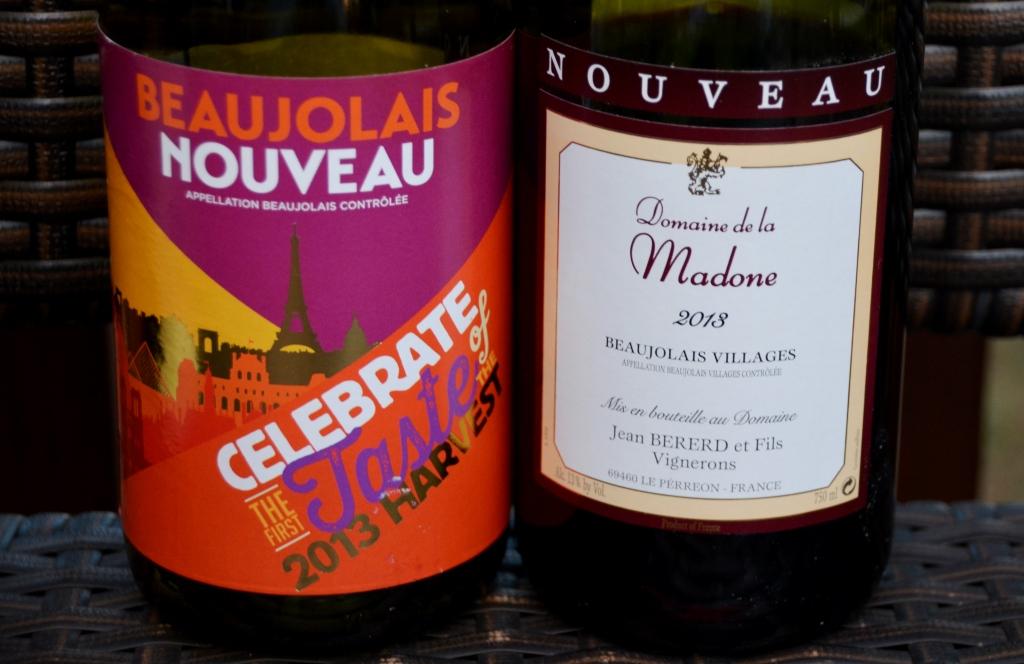
This year I had an opportunity to taste two different Beaujolais Nouveau wines – one from Georges Duboeuf, and another one from Jean Bererd & Fils, Domaine de la Madone – technically a Beaujolais Villages Nouveau, which is a different AOC designation, but for all intents and purposes it is produced in the same way as a regular Beaujolais Nouveau.
Can the wine be made better and better every year? Of course the question is way too generic to have an answer, but I can tell you that in case of Georges Duboeuf Beaujolais Nouveau, the answer is “yes”. I was quite happy with the 2012 wine, but I think this year it is even better. The 2013 Georges Duboeuf Beaujolais Nouveau (12% ABV, $10.99) showed beautiful dark purple inky color in the glass. The nose was full of bright fresh fruit – ripe cherries, succulent raspberries, some violets. The palate came in quite restraint and structured, even firm – good fruit presence of the same dark cherries and ripe raspberries, but not over the top, showing of respectfully mature, concentrated wine with good acidity and medium finish. Depending on the serving temperature, the acidity was more of less noticeable, and overall the wine showed well balanced. Definitely recommended for your Thanksgiving table, perfectly attune to the Harvest celebration. Drinkability: 8-
The 2013 Jean Bererd & Fils Domaine de la Madone Beaujolais Villages Nouveau (13% ABV, $10.99) had very similar inky purple color in the glass. On the nose, it exhibited very similar notes of dark cherries and raspberries. And yes, the palate profile was very similar, but somehow, while the wine was perfectly drinkable and enjoyable, also showing firm structure, I was unable to find the right temperature when acidity was fully in check and harmony with the rest of the wine. Still, not a bad wine by all means. Drinkability: 7
When it comes to Thanksgiving, which we are about to celebrate, my choice of wine tends to be all-American – Chardonnay, Pinot Noir, Zinfandel – but nevertheless, I love opening the celebration with the glass of Beaujolais Nouveau – that clearly sets the mood to the Holidays, which have arrived.
Did you happen to taste Georges Duboeuf or any other Beaujolais Nouveau wines? What do you think? Happy Holidays and Cheers!
Wednesday’s Meritage – Wine Quiz Answer, Wine Spectotor Top 100, Perfect Holiday Gift Solution, and more
 Meritage time!
First, let’s start with the answer for the wine quiz #82, grape trivia – Gamay.
In the quiz, you were supposed to answer 5 questions about red grape called Gamay. Here are the questions, now with the answers:
Q1: Gamay is closely associated with every third Thursday in November. Can you explain why?
A1: Beaujolais Nouveau is coming into town! While Beaujolais Nouveau was always the first wine of the harvest to be delivered to the restaurants and shops in Europe, in 1985 the phenomenon became more organized, settling on the third Thursday of November to make the new release available.
Q2: Carbonic maceration is an important method in production of wines made out of Gamay. Can you briefly explain what is carbonic maceration and how does it helps here?
A2: Carbonic maceration is a process where the grapes in a sealed tank are subjected to the flow of CO2, which start fermenting the juice inside of the whole grapes before they will be crushed. The resulting wine becomes fruity with very low presence of tannins. This process is particularly used inproduction of Beaujolais Nouveau and other Beaujolais wines. For more information, please refer to Wikipedia article.
Q3: Fill in the blanks: In Beaujolais, Fleuri is considered to produce the most ___ wine, and Moulin-à-Vent produces the most ___ wines.
A3: In Beaujolais, Fleuri is considered to produce the most feminine wine, and Moulin-à-Vent produces the most masculine wines. Feminine and Masculine are the descriptors typically used by wine professionals to describe the wines of Fleuri and Moulin-à-Vent wines.
Q4: Which one doesn’t belong and why:
a. Brouilly, b. Côte de Brouilly, c. Côte Chalonnaise, d. Juliénas, e. Régnié
A4: c. Côte Chalonnaise. The other four names are part of Cru de Beaujolais ten villages, but Côte Chalonnaise doesn’t belong there (it is an AOC in Burgundy).
Q5: True or False: Beaujolais Nouveau wines can be aged for a few years before consumption.
A5: False. The whole point of aging the wine is to wait for it to develop further in the bottle and become more enjoyable. Beaujolais Nouveau is meant to be enjoyed right away and should be consumed by May of next year – it doesn’t improve in the bottle.
So for the winners, Jeff the drunken cyclist continues his winning streak – he got correctly 5 out of 5, including the difficult question #3. Great job, Jeff – unlimited bragging rights are yours! I would like to also acknowledge Wayward Wine,Whine And Cheers For Wine and Eat with Namie who all correctly answered 4 questions out of 5. Well done!
Now, to the interesting stuff around the vine and the web!
On Monday, November 18th, Wine Spectator published their Top 100 list of Wines. Yes, I know, many dismiss the whole notion of Wine Spectator ratings and Top lists as closely associated with the advertizement dollars spent with publication. True or not, but I still have a lot of respect to Wine Spectator and definitely curios to see their “top wines” list. As Wine Spectator celebrates 25th anniversary, they whole web site is open to the public (typically it requiressubscription). I would highly recommend that you will take advantage of this opportunity and explore the site which has a great wealth of wine information. Also, here is the link to the WS Top 100 wines of 2013. I have to admit that I’m happy with Wine Spectator’s choice for the wine of the year – 2004 Cune Rioja Imperial Gran Reserva. In general, Cune Imperial makes great wines, and I think it is an excellent choice for the wine of the year.
Thinking about holiday gifts? Does your list include any wine lovers? If yes, you are in luck, but you will need to act quick. On December 2nd, WTSO will conduct a Gift Marathon (full info can be found here). As a traditional WTSO Marathon, there will be no announcements of new wines. But each wine will come gift packaged, with one bottle and two varietally correct Riedel glasses in the box. Most importantly – free shipping on each package (no minimums), and each packaged can be shipped directly to your gift recipient – this is the best part! Prices start from $44.95 per box (free shipping). I think this is a deal not to be missed, so point your browser to WTSO on December 2nd and happy hunting!
You know Wine-Searcher is a great resource for finding the wines online and comparing the prices. Are you curious what the other people looking for on the wine-searcher? Here is an interesting article, which tells you what the consumers in America are looking for. Based on the article, looks like most of the times people are looking for red Bordeaux blends – which makes sense, as there are a lot more Bordeaux blends produced nowadays. Anyway, for your own analysis and lots more data, take a look at the article.
When you make dinner, how often do you think about what wine should be opened for the food you are serving? Sometimes the pairing can be quite difficult, so I have no problems taking my food and wine separately. But when you hit the mark and the wine and food “work” together, it becomes the whole new level of experience. To help you in this process of pairing food and wine, here is the link to the web site I recently came across – I think it has a lot of good suggestions. Take a look – you might be able to pleasantly surprise yourself and your guests during your next dinner.
That’s all I have for you for today, folks. The glass is empty – but refill is on its way. Until the next time – cheers!
Wednesday’s Meritage – Wine Quiz Answer, Tempranillo Day, Beaujolais Nouveau Coming Up, The Widow Who Reinvented Champagne, and more
 Meritage time!
First, let’s start with the answer for the wine quiz #81, grape trivia – Petite Sirah.
In the quiz, you were supposed to answer 5 questions about a red grape called Petite Sirah. Here are the questions, now with the answers:
Q1: Name the grape: In California, Petite Sirah is a popular blending addition to ___?
A1: Zinfandel. You can find a small percentage of Petite Sirah (5% – 10%) in many Zinfandel bottlings
Q2: When it comes to the wines in the United States, there is an interesting similarity between the Petite Sirah and Primitivo. Can you explain?
A2: The similarity comes from the fact that both Petite Sirah and Primitivo were the part of the same request to the TTB (government organization in charge of labeling), to allow the use of Durif interchangeably with Petite Sirah, and Zinfandel with Primitivo. It is interesting to note that contrary to the information in Wikipedia, which says that both requests were never resolved, it appears that Durif is officially recognized as a synonym to Petite Sirah, while Primitivo and Zinfandel are not – you can find the complete list of the approved names through the link to the list of approved grape names in this US government document.
Q3: Which one doesn’t belong and why:
a. Arizona, b. Illinois, c. New Mexico, d. New York, e. Texas
A3: d. New York – there is no Petite Sirah wines produced in New York (at least in the meaningful quantities).
Q4: In the bad, rainy growing season conditions in California, Petite Sirah can be a savior – can you explain why and how does it help?
A4: As the Petite Sirah is mildew resistant and provides supple tannins, color, and structure, in the bad years it can be added to Cabernet Sauvignon, Merlot, and other wines to improve the quality.
Q5: What love has to do with the Petite Sirah?
A5: “P.S. I Love You” is a consortium dedicated to the promotion of Petite Sirah wines.
Talking about the results, the drunken cyclist continues his winning streak, so he gets ( again) the prize of unlimited bragging rights. Well done!
Now, to the interesting stuff around the vine and the web!
First of all, tomorrow, November 14th, is an International Tempranillo Day! Tempranillo, the noble grape of Spain and Portugal, and the rising star of Texas is a source of many wonderful long-living wines, and it is definitely the grape worth celebrating. TAPAS, the society of producers and advocates of Tempranillo, lists a number of events celebrating the grape. But you don’t even need to go anywhere to celebrate the Tempranillo – just grab a bottle, maybe of Magnificent Rioja (but really, any Tempranillo wine will do), pour, smell, sip and enjoy!
Now, the next Thursday, November 21st, is the third Thursday in November. Do you know what it means? Yes, you are right – Beaujolais Nouveau! Every third Thursday in November, the young Beaujolais wine of the same year’s vintage, called Beaujolais Nouveau, is becoming available in all the wine stores around the world. It is not just the wine – Beaujolais Nouveau also means celebration and fun. Don’t forget to get the bottle and join the festivities!
I’m sure you know that classic Champagne with the yellow label on it – Veuve Cliquot, which would literally translate into a “widow Cliquot”. But do you know the role the Barbe-Nicole Cliquot Ponsardin, the actual person behind that label, played in pretty much enabling the whole Champagne industry to exist, and for the mere mortals to be able to afford a bottle of Champagne? Barbe-Nicole’s perseverance and her invention of the riddling were some of the key elements in making Champagne into what we readily enjoy today. Here is an article for you which is definitely worth reading – it is somewhat long but very fascinating and will be well worth your time. And you might even complement the reading with the glass of Champagne in your hand – it will be very appropriate.
The last piece I want to bring to your attention is Wine Spectator’s Top 100 wines of 2013 list, gradually exposed at the rate of a few wines per day at the Wine Spectator web site. There are various contests taking place right now to predict the Wine Spectator Wine of the Year 2013, including the one which Wine Spectator runs by itself. So far the Wines #10 – #7 had been revealed, and more wines will be announced every day finishing with the Wine of the Year on Friday, November 15th. The full top 100 list will be published on Monday, November 18th. Looking at the 4 of the top 10 announced so far, I can only say that I’m a bit surprised. One of the selection criteria for the Top 10 is affordability – with the wines #10 and #9 priced at $135, and wines #8 and #7 priced at $120, I feel like I missed the memo about a substantial increase in my salary, as those prices are definitely outside of the “affordable” realm, at least in my book. Also, as “availability” is another factor, highly allocated Quilceida Creek (wine #10) makes it also an interesting choice. I plan to come back to this subject next week when the full Top 100 list will be announced – but any of your comments meanwhile will be most welcome.
That’s all I have for you for today, folks. The glass is empty – but the refill is on its way. Until the next time – cheers!
Beaujolais Nouveau 2012 – Not To Be Missed!
 Walk into the wine store on third Thursday in November, and most likely you are greeted with the abundance of wines with brightly colored labels, which were not there just a day ago. Yes, that means that Beaujolais Nouveau, the wine of new vintage, made out of grape called Gamay in Beaujolais in France, has arrived.
As with many other wine in France, Beaujolais wines have a very long history, despite the fact that officially Beaujolais AOC was established only in 1937. It was always a tradition in the region to make young fresh wine of the current vintage just to celebrate harvest. For the long time this was only a local tradition. In the 1970th, it became national phenomena in France. In the 1980th, the tradition of celebration spread out in Europe and then got to the North America – largely with the help of Georges Duboeuf, a négociant who recognized the marketing value of Beaujolais Nouveau (here is Wikipedia link if you want to read more on the subject).
Interestingly enough, the sheer marketing success of  Beaujolais Nouveau became its biggest problem, as many serious wine drinkers simply dismiss the wine as a marketing gimmick, which was definitely not something intended to happen.
This years marks 30th anniversary of Georges Duboeuf Beaujolais Nouveau celebrations, so a little bit of magic had being used to acknowledge the occasion. Each bottle of 2012 Georges Duboeuf Beaujolais Nouveau is wrapped in an Augmented Reality label, which can be used to deliver magical experience via free Georges Duboeuf Magic application available for download from iTunes (for more information use this link).
For many years by now, I’m always looking forward to trying Beaujolais Nouveau once it is released. What I remember from those past years is that the wine would show up very grapey and not very balanced. True, it is a young wine, but overall, I didn’t get much pleasure out of it. However, for the past 2-3 years, Beaujolais Nouveau had been steadily improving, showing more finesse, more substance and more balance. This year, 2012 – it simply got me to say “wow”.
2012 Georges Duboeuf Beaujolais Nouveau (ABV 12%, $8.99) had nice and inviting bright ruby color. From the moment the wine went into the glass, the aromas of fresh strawberries and raspberries literally filled the room. This is the wine which I can smell indefinitely. On the palate the wine was fresh and open, with the same strawberries and raspberries flavor profile, supplemented by good acidity. Medium body, very balanced and with medium length finish – definitely the wine to enjoy. Drinkability: 8
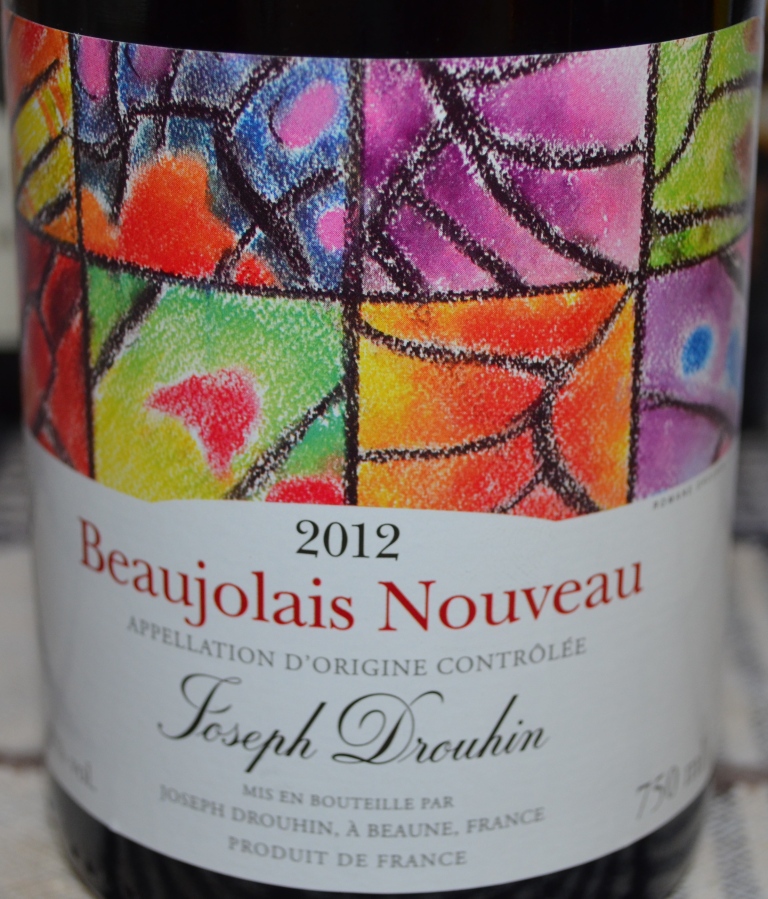 Almost as a tradition by now, I always get another bottle of Beaujolais Nouveau – for the most of the cases it is Beaujolais Nouveau made by Joseph Drouhin. This 2012 Joseph Drouhin Beaujolais Nouveau (ABV 12%, $10.99) had very similar color to Georges Duboeuf wine, may be a touch darker. The nose was less explicit with the actual fruit and somewhat grapey. On the palate this wine was a touch more dense than Georges Duboeuf, but also more closed in comparison with it. While Joseph Drouhin was a very decent wine in my opinion (Drinkability: 7), my strong preference goes to the Georges Duboeuf.
I don’t know how do you feel about Beaujolais Nouveau overall, but 2012 is definitely not to be missed. The wine is not only representing a great QPR, but it will also give you a lot of pleasure. Beaujolais Nouveau wines don’t age, and when they gone, they are gone. Don’t miss your chance to experience Beaujolais Nouveau – it’s worth it.
That’s all I wanted to share with you, folks. Until the next time – cheers!
Wednesday’s Meritage – Wine Quiz Answer, Thursday(s) Celebrations and more
 Meritage Time!
It seems that the weeks are flying – I know that I prefer them at the crawling pace, but – not much I can do, right? Okay, let’s start with the answer to the Wine Quiz #35, What is missing. The wine quiz was dedicated to Tempranillo as we will celebrate tomorrow (November 8th) an International Tempranillo Day, and it was asking to fill the gaps in the group of numbers which were related to Tempranillo.
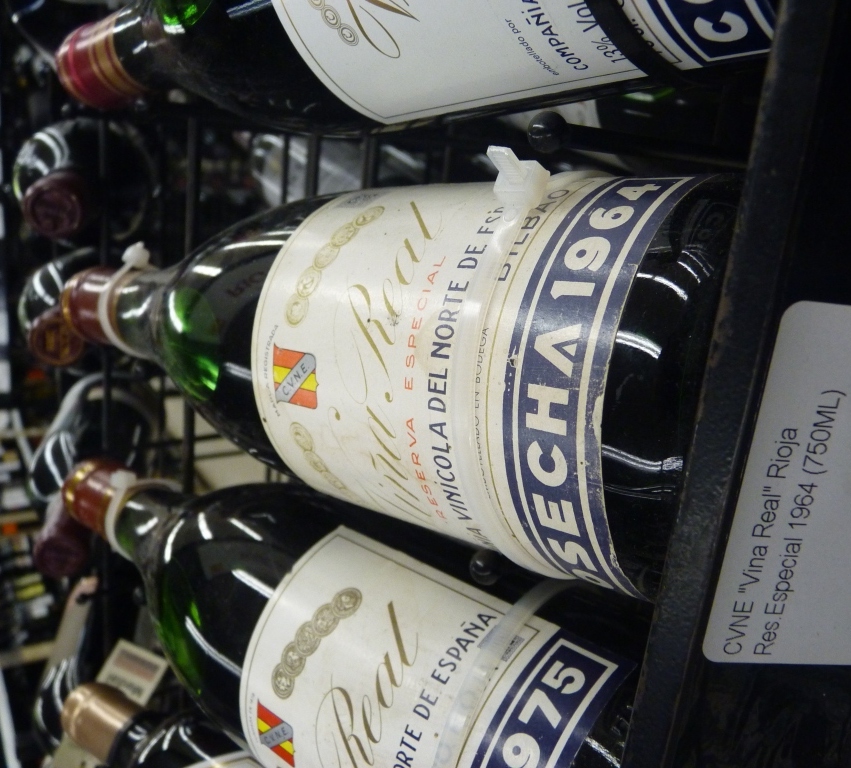
Of course it was obvious that the chain of numbers represented years. And both VinoinLove and thedrunkencyclist figured out that the years represented the best vintages of Rioja – however, they both only got one of the “best vintages” correctly. The 2001 was a great vintage, absolutely, but the vintage of the last century was 1964, not 1970. Here is the reference to the best Rioja vintages from the Vibrant Rioja web site, so you can check all the great vintages for yourself. We don’t have a winner this time, but hey, there is always a next time…
Now, I need your help with something. If you read the Meritage post from the last Wednesday, I mentioned that I’m fighting the writer’s block and trying to write a post for the wine blogging competition. So I managed to overcome the block and wrote the post (here is the link) – and if you like it, I need your vote! You can vote for it here – just scroll down to the bottom of the page and find the link to my blog there. Thank you!
Now, let’s proceed with “interesting stuff” part of the Metritage. First, the next three Thursdays, we will be celebrating different holidays – of course, they are drastically different in scale, but nevertheless, they all fall on Thursday. Tomorrow, November 8th, we are celebrating International Tempranillo Day. It is very easy to take part in the festivities – just find a bottle of Tempranillo wine (Rioja or Ribera del Duero from Spain, or may be some Texas wine?), pull the cork and enjoy (and if you really like it, write a blog post about it or tweet about it, or leave the comment in this blog).
The next Thursday, November 15th, is Beaujolais Nouveau 2012 Day. This year will actually mark 30th anniversary of the Beaujolais Nouveau celebration – you should definitely look for the festivities around you, and as usual, get a bottle of Beaujolais Nouveau (I have to say that the wine had been steadily improving its quality over the past few years) and enjoy!
And then the Thursday after that, November 22 is…what, Thanksgiving is already here? Yep, Turkey day is arriving in mere two weeks. There is always a question of wines for the Thanksgiving celebration, so here is my post from the last year – I’m sure the actual wines will be different this year, but the ideas will be the same.
Last (but may be not least) – do you think wine reviews can get you sued? Here is the post by Steve Heimoff – if anything, it is an interesting read.
That’s all for today, folks – the glass is empty. Cheers!
Wednesday’s Meritage – Wine Quiz Answer, International Tempranillo Day, Beaujolais Nouveau, Bad Wine Reviews and more
 Meritage Time – and Happy Halloween!
Let’s start our meritage post from the regular place – an answer for the last week’s Wine Quiz #34 – Hello, my name is… I would like to say that I’m quite happy with this quiz, as there was a very good participation, and there was a full range of answers, covering all available options.
And the winners are (drum roll, please) PSsquared, VinoinLove and thedrunkencyclist as they all correctly guessed that Predicament is not a wine name. Believe it or not, but the rest of the names on the list are for the real wines. I don’t have the labels to show you for all of them, but here is some information and the links.
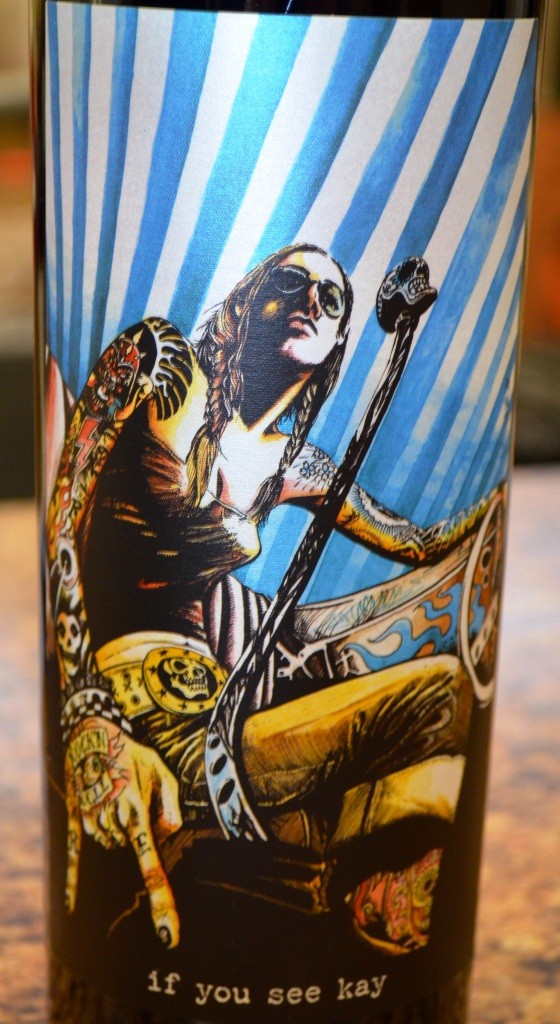
if you see kay: the wine is made by Jason Woodbridge, and yes, the name is controversial – here is one of the articles on the subject.
 No girls: an actual wine by Christophe Baron, the winemaker behind Cayuse – here is the link to the winery’s web site, and here is the link to my short post about that wine (I’m a happy owner of a few bottles from the inaugural release).
Frequency: I can’t show you the label or a good link, as 2011 Frequency Central Coast GSM is the first release of the wine. You can search for it on Wades Wines web site (I guess this is the only merchant carrying it right now).
To the rescue: an actual wine by legendary Sine Qua Non, California’s cult Rhone style winemaker. The full name of the wine is Sine Qua Non Grenache To The Rescue, and you can look for it on Wine-Searcher (don’t be shocked at the prices, and if you will get a bottle for yourself, can you get one for me too, please?).
Let’s move on to the interesting news from around the vine. First, I want to bring to your attention that November 8th is International Tempranillo Day – if you read this blog for a while, I’m sure you know that I’m very impartial to the Spanish wines, and Rioja in particular, and Tempranillo is a star there. Tempranillo is also successfully grown in many other regions of the world – Australia, California and Texas come to mind first. Find a bottle of Tempranillo and join the celebration on November 8th!
Talking about celebrations – Beaujolais Nouveau 2012 is almost here! The new harvest celebration, originated by the French wine maker and wine merchant Georges DuBoeuf, takes place on third Thursday in November, which this year will fall on November 15th. The Beaujolais Nouveau arrival is celebrated with parties and events all around the world, and celebration this year will be special, as it will be the 30th celebration of this tradition. Look for the events in your area – I’m sure you will find some interesting places to visit and celebrate in style. At the very least, make sure to pick up a bottle of that young wine and celebrate in the comfort of your home.
One of my favorite wine bloggers, W. Blake Gray, is back from vacation, so I’m offering to your attention an interesting blog post about bad wine reviews.
Last but not least, here is the post by Joe Roberts, a.k.a. 1WineDude, where he is defending usage of oak in the wines. I’m also curious what do you think about oak in your wines, so feel free to use comments section and express yourself.
That’s all for today, folks. The glass is empty. Happy (and spookingly exciting) Halloween Wine Wednesday! Cheers!
Last Bottle Sign Up ($10 credit)




 Talk-A-Vino