Let’s Talk About Breakfast Again
 As you probably expect from the title of this post, it is not going to be about wine (don’t know about you, but at 7:30 in the morning I need coffee…). So this is somewhat of a sequel post to the one about our experience at Hotel Fauchere in Milford.
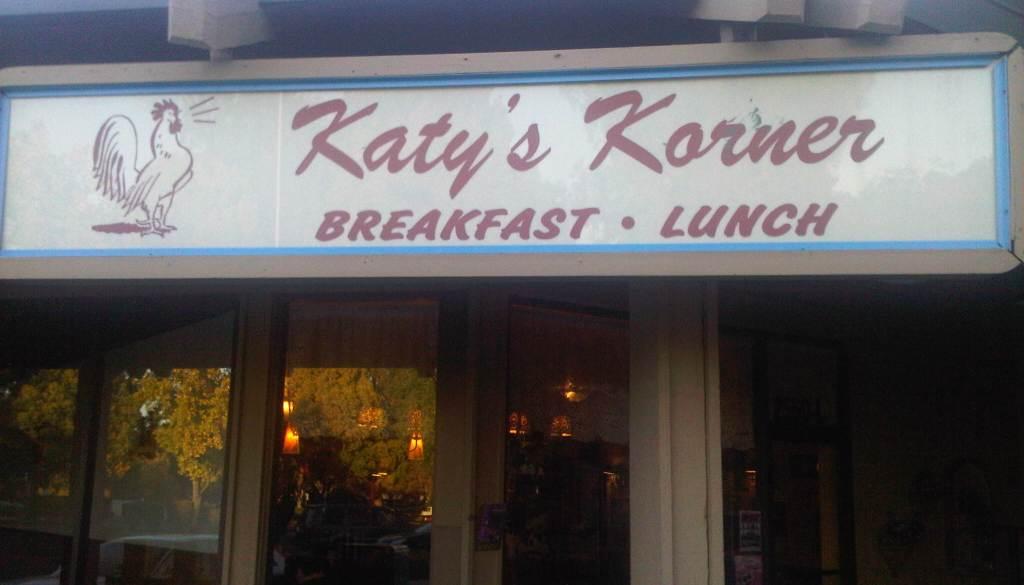
From time to time, my travel takes me to San Ramon in California. In general, California is a right place for food. But then we all have our special places, where we want to return. Katy’s Korner is my special place for breakfast, something to look forward to. Why? Great food, great service and simply the fun place to be at. It has all the great traits of American Diner, the place to come to with the family and feel like home.
My staple on the menu is Eggs Benedict. There are at least 10 versions of Eggs Benedict on the menu, so you always have options. My choice during the last visit was Sonora Eggs Benedict, which includes guacamole and Canadian bacon.
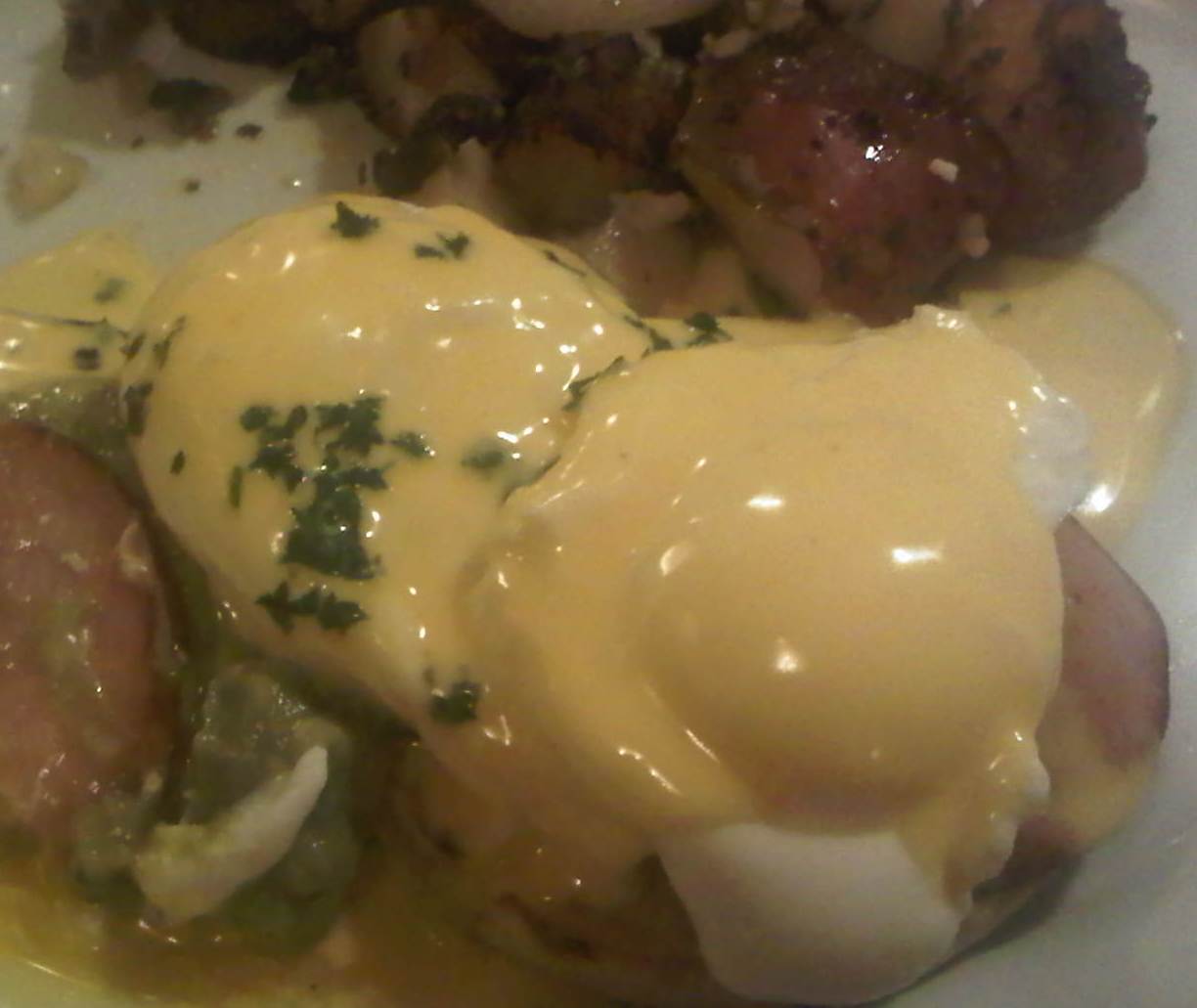 Yummy!
And then the next part of the experience is… fun! It is a great fun to be in a classic American Diner, and look around at the walls (promise to self – carry good camera around, all the time…). These are some of the things which you will see:

and this:
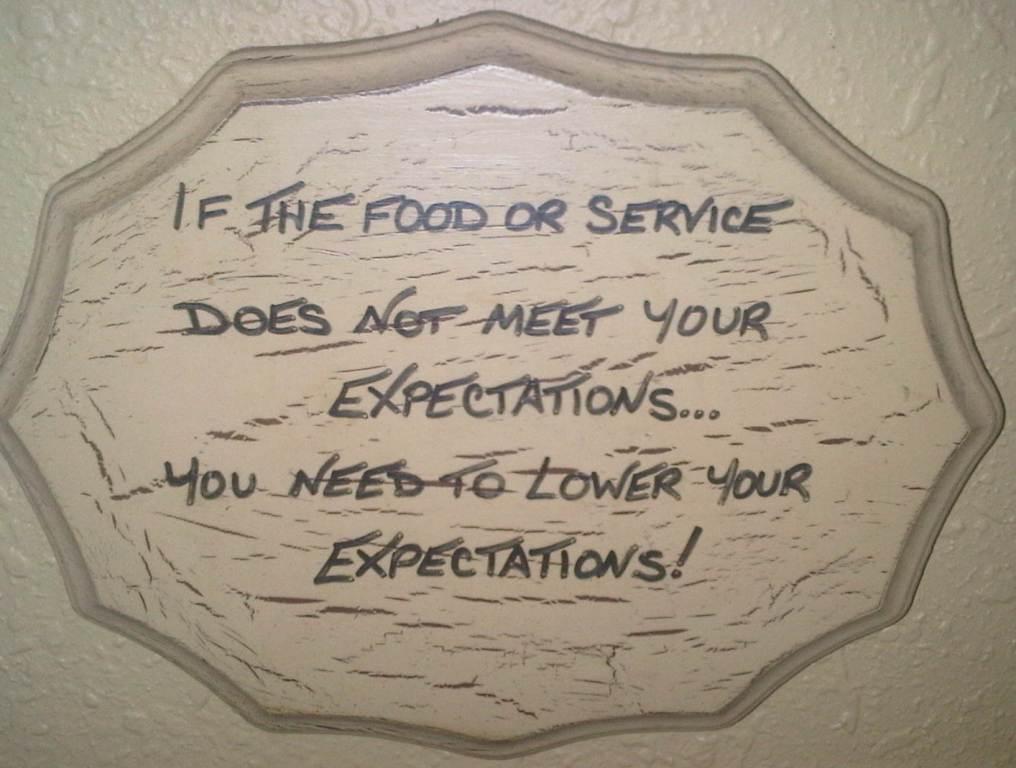
and this:
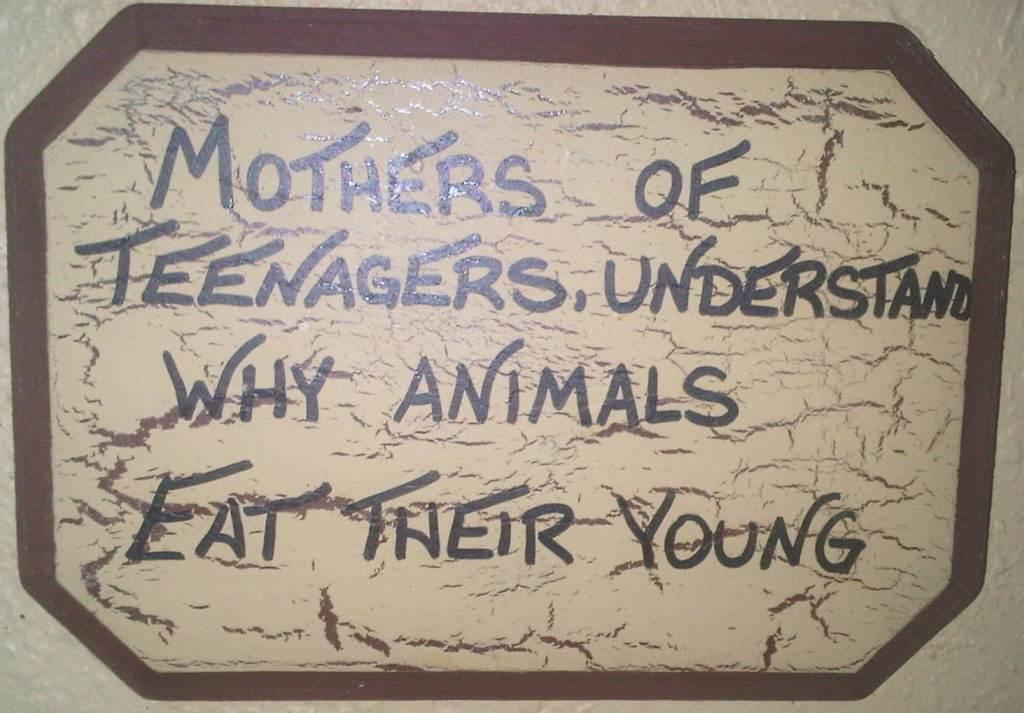
then this:

and this:
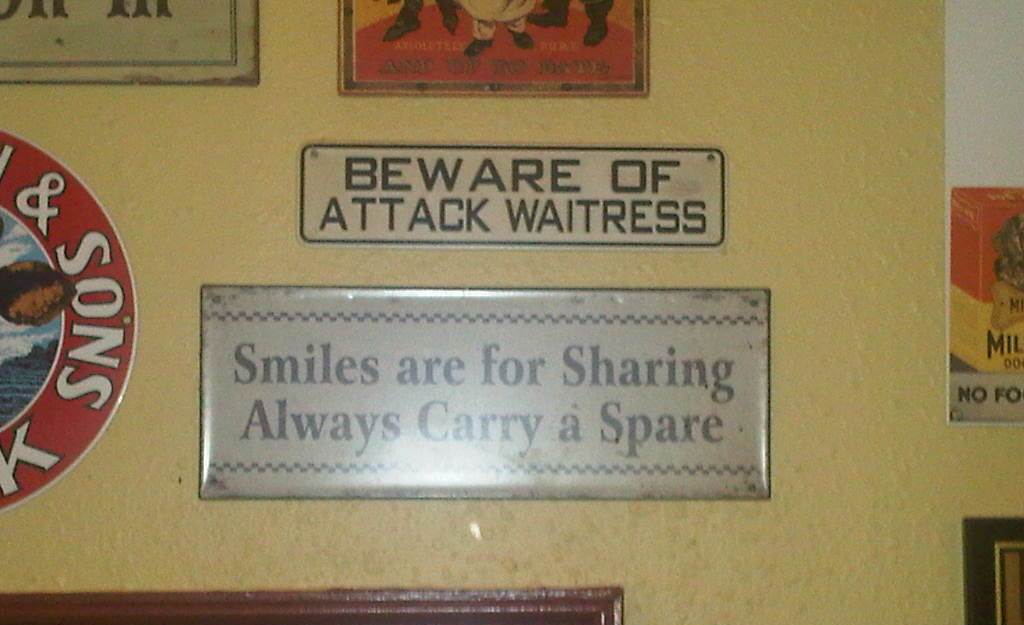
and my favorite:

All in all, if your travel will take you anywhere close to San Ramon – find this place, and – enjoy your breakfast!
Katy’s Korner
2550 San Ramon Valley Blvd # L
San Ramon, CA 94583
(925) 831-2145

Treble Journey: Sciccarellu, Barbarossa and Niellucciu, #274 – #276
 So, you can not pronounce the name of the first grape? Google doesn’t help? Don’t feel bad. The owner of the wine store in Paris, where I bough these two wines, had troubles with pronouncing “Sciccarellu”. I guess another way to write the name of the same grape is Sciacarello, or at least this is the closest on Wikipedia, but it doesn’t make it better known grape, at least for me.
As with any journey, there are ups and downs. Once you get off the well known path, you are in for the surprises, good and bad (luckily, it is wine, so the worst surprise is “here is something I don’t ever want to taste again”). When you open a wine made from obscure, maybe almost extinct grape, you really don’t know what to expect. There are cases where you really wish you never tasted that wine (did you have lately any Retsina wines from Greece?). Then there are those when you say “ok, doesn’t taste like anything, really”. Good surprises don’t come as often as one might wish. But – here we go. Two wines from Corsica, 3 new grapes for the Treble Journey, great experience and lots of pleasure – to give you a short summary.
To start with Rose, behind hardly pronounceable grape names hides an excellent wine. Domaine de Granajolo Corse Porto-Vecchio 2009 is a blend of Sciccarellu, Barbarossa and Syrah. Now, I have to tell you something very honestly. Despite the fact that I’m “practicing” an art of describing the wine taste for more than 7 years now, I still have a very difficult time to provide description in terms of individual components, and often I have equally hard time to find such detailed descriptions useful. What you taste depends on your mood, state of your mind, state of your palate and many other things, it is really personal – but this should be a subject of another post. So I prefer to talk in the terms of “full package” about this particular Rose – it has a lightness of a crispy white wine, but the substance, structure, body and weight of an elegant red wine (nice Burgundy or Pinot Noir from Central Otago comes to mind). And it definitely gives you pleasure. To me, this is perfect everyday wine, no matter if it is hot or cold outside. In the Drinkability terms this is 9- wine.
And if the Rose was great, Niellucciu 2009 from Domaine de Torraccia, also from Corse Porto-Vecchio was even better. The very first sip immediately solicited “Wow”. Earthiness and smokiness of the elegant Burgundy, spices, leather and tobacco of the classic Chateauneuf du Pape all complemented by the depth and structure of the great Barolo (after it is well decanted). Am I exaggerating? Always possible – but I’m honestly just trying to convey my personal perception. If your palate is aligned with mine (I know that is true for some of my friends), I’m sure you will also enjoy this wine immensely. In the Drinkability terms it is definitely a 9.
Now, with all this excitement, comes a sobering thought – I don’t think this wines are available in US… And if someone can prove me wrong – I will be really really really thankful…
Daily Glass: Iron Horse, Opus One and First Taste of 2009 Bordeaux
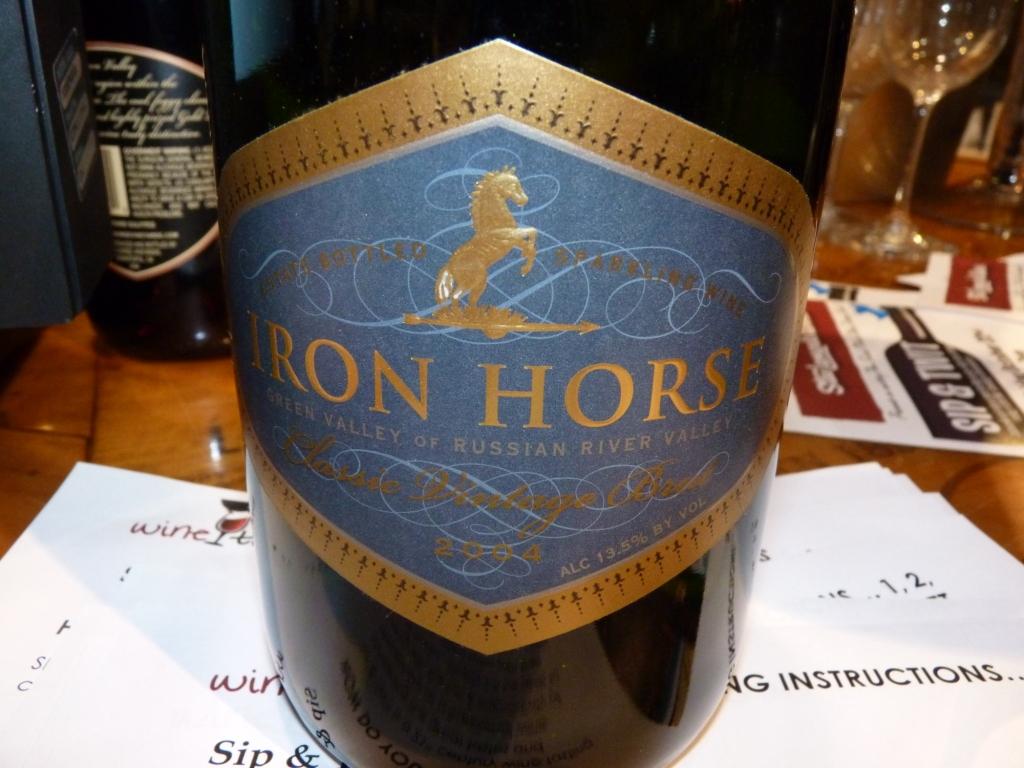 And again great folks from Stew Leonard’s Wines in Norwalk, Connecticut, helped many of us to learn and experience, and even with the new twist.
The twist was the fact that Iron Horse tasting was set as “SIP and TWIT” event – you can tweet about wines you are tasting, and as long as everybody adding #stewswines at the end of the twits, all twits can be easily found in social media channels. Besides, you can sign up for winetwits.com and become part of the information-sharing (“twitting”) network about the wines.
While this is all fun, let’s talk a bit about wines. There were 4 different wines from Iron Horse in the tasting. Sparkling Wedding Cuvee, Sparkling Brut, Pinot Noir, and unoaked Chardonnay. All four were good wines, but they didn’t stand out.
 The next wine from the same tasting definitely belongs to the “experiences” group. Opus One, the product of joint venture between Napa legend Robert Mondavi and Bordeaux superpower Baron Rothschild, this wine was created to achieve the maximum potential of Napa Valley signature grape, Cabernet Sauvignon. Opus One is quite expensive, rare and collectible, and 2007 was a great year for California’s Cabernet wines, with very high ratings across the board from all different wine publications – this two factors combined promise a great experience.
The wine had a magnificent smell of Cabernet Sauvignon, with licorice, eucalyptus and black currant on the nose, very smooth and powerful on the palate, with balanced tannins. Finish left to be desired more, somehow subsiding to the greenish, a bit underripe grape. It is a very good wine – however, in my book, the QPR is a king, as soon as we are done talking about tannins and finish. And at $149, it is absolutely not a bargain. There are so many equally well made Cabernet Sauvignon wines, at a fourth, fifth or even sixth part of the price, that it immediately changes the whole picture. It is a great experience, but not the one where you feel that you have to make the next step and actually own a bottle.
Last, but not least for this post is the first taste of 2009 Bordeaux. 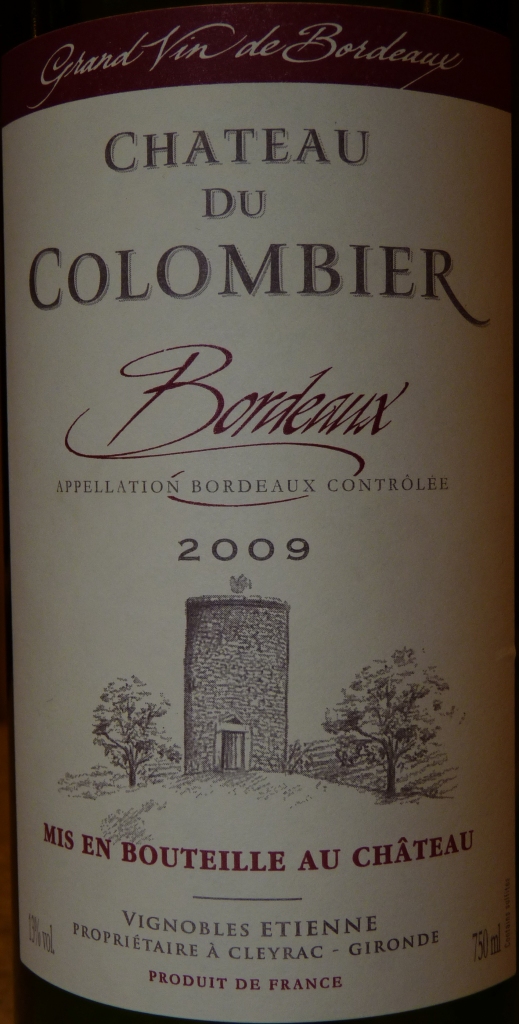 Just a regular Bordeaux, Chateau du Colombier, $11.99 at Bottle King – but from the 2009 vintage. 2009 vintage is compared to the greatest Bordeaux vintages of all times, such as 1949, 1982, 2000 and 2005. Of course, Bordeaux requires aging, from 10 to 30 years (or longer), in order to really shine. And getting aged Bordeaux is becoming impossible, as it skyrockets in price and becomes extremely scarce. But the good thing is that in a great year, even the simplest Bordeaux bottlings will deliver great value and will age very well, so you will be able to enjoy aged Bordeaux after all.
This particular wine had a very nice nose and palate of dark fruits, with good acidity and tannins. No, it was not an amazing wine – yet. This is the time to experiment. Get a few bottles of Bordeaux 2009, stash it in the far most corner of your cellar, and don’t touch it for 5-7 years. And after that – reach out, get that bottle opened – you might be on the way to discover greatness…
Honora Winery
 Guest Post by Celine Labarre
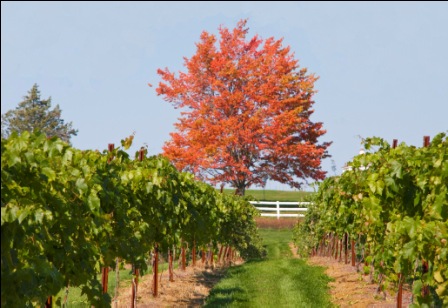
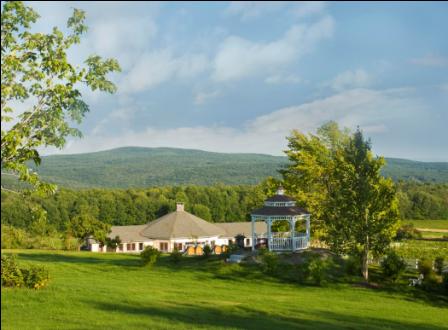
Honora vineyard and estate is located in Southern Vermont’s Green Mountains of West Halifax, only 2 ½ hours from Boston and 3 ½ hours from Manhattan and are within minutes of Mount Snow Ski Resort, Molly Stark State Park and the Harriman Reservoir.
Avigliano at Honora Winery is a very unique and unforgettable setting for your wedding, civil union, special event or corporate gathering.
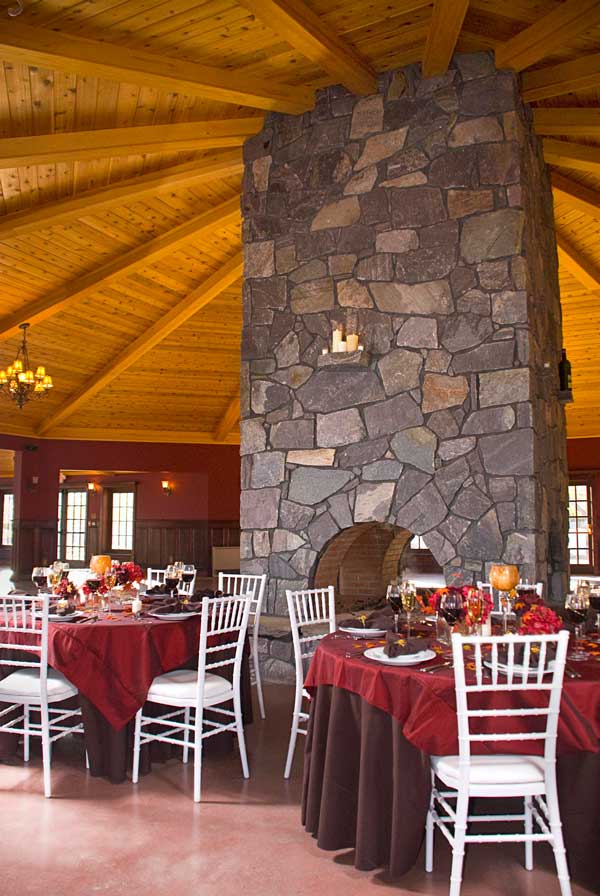
Our beautiful 6,000 square foot Napa Style event center is nestled in between two of our vineyards. The French doors that surround the building allow beautiful views from every direction. It is also complete with 2 hand crafted mahogany bars, 6 wrought iron chandeliers and to enhance the ambiance of any event there is a four-sided stone cut fireplace in the center of the space.
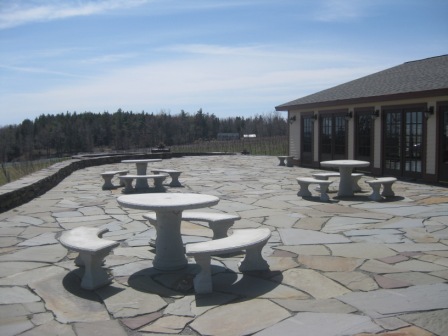
On the grounds there are 3 traditional white gazebos or a more rustic wooden arbor on a Belgium block patio that make great locations for ceremony or cocktail areas.
Our facility will be able to accommodate parties up to 200 guests between the hours of 10am and 9pm.
We at Honora Winery & Vineyard will strive to make your event extra special and memorable by providing you with an experience that is unique to your needs. Whether it is traditional, casual or black tie we will be there to surround your guests with our family hospitality … a mix of elegance and warm familiarity.
For more information about having your event at Honora please contact:
Celine Labarre at Celine@honorawinery.com
Experiences: Chef’s Tasting Dinner at Hotel Fauchere
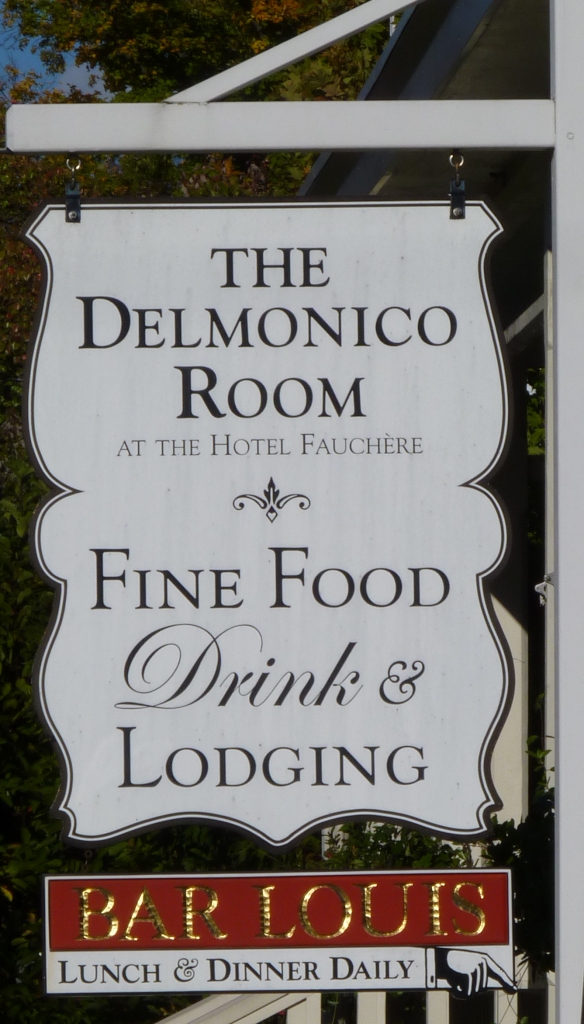 This is the last post in the series about our experiences at Hotel Fauchere in Milford, PA ( previous two posts can be found here and here). Have to warn you upfront – if you thought that there are too many photos in my posts, this one will be extreme – there are way too many pictures I want to share. Here we go…
Culmination point of our weekend getaway was chef’s tasting dinner, long anticipated and planned for. The dinner took place at The Delmonico Room at Hotel Fauchere – for historic reference behind the name and relationship with The Delmonico Room in New York, you can click here. Anticipated is fine, but what’s up with planning? Considering love of wine in the group, we decided to take upon the pairing of the tasting menu by ourselves. For the tasting and pairing experience, this was a good decision, for the service part – not so much. Not that I can really complain about service, all the plates, decanters, glasses and silverware were flying around properly, but the service was delivered in the stark contrast with “everybody smiling” (if you read my previous posts), I would say it was delivered with the stone face. There can be some objective reasons to that ( we brought our own wine, therefore I guess we questioned the level of wine service)… Anyway, let’s talk about food and wine
So we had 7 course tasting menu with two very small “single byte” dishes at the beginning and in the middle of the dinner. Menu focus was on the local, seasonal and fresh ingredients, and I think mission was accomplished quite well. We selected 7 different wines to pair with the dishes – 4 whites, 3 reds.
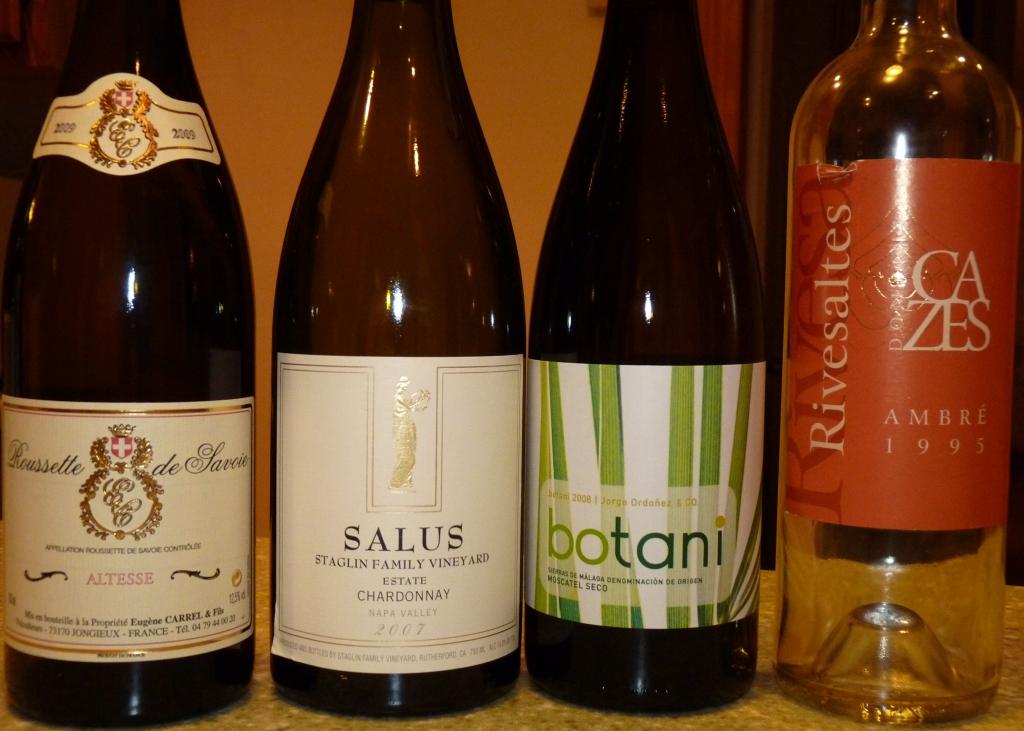 Here are the four whites:
2009 Domaine Eugene Carrel & Fils Rousette de Savoie Altesse, France
2007 Staglin Family Vineyards ‘Salus’ Estate Chardonnay, Napa Valley
2009 Jorge Ordoñez Málaga Botani Sierras de Màlaga
1995 Domain Cazes Ambré Riversaltes Languedoc-Roussillon
We made a lot of good decisions with this set – but more about it later.
And here are the three reds:
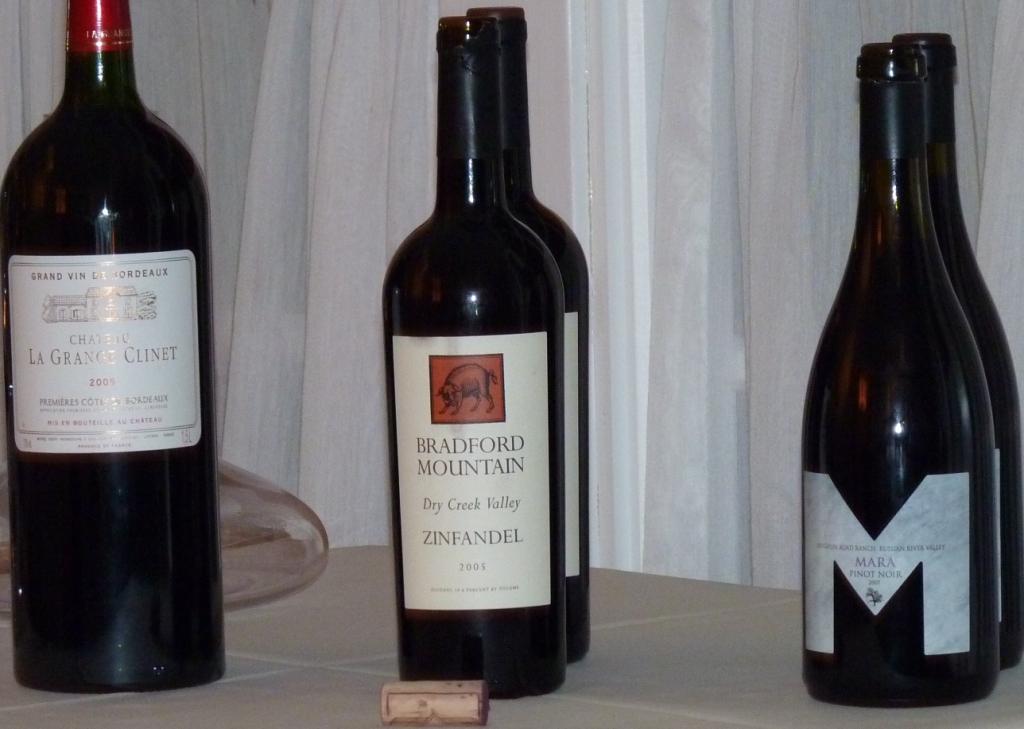
2007 Mara Pinot Noir Laughlin Road Ranch, Russian River Valley
2005 Bradford Mountain Zinfandel Dry Creek Valley
2005 Chateau La Grange Clinet Premier Cotes de Bordeaux
This was also a great selection, all worked very well with food – so lets get some details.
The first dish in tasting was Tortelloni A La Zucca (Seared Diver Scallop, Black Walnut, Sage Butter). Wine pairing – Rousette de Savoie Altesse.
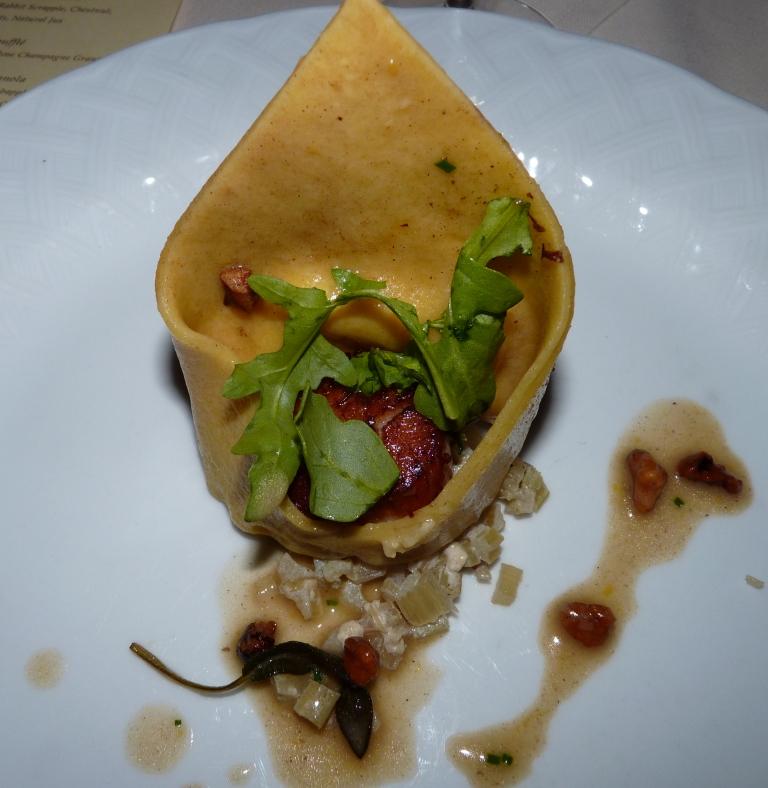 I would honestly question composition of the dish, as pumpkin tortelloni didn’t do anything to the scallop, tortelloni looked almost as a presentation piece. At the same time, wine worked very well with all of the components in the dish – apple, leeches and earthiness worked well with pumpkin filling, and wine had enough fruit and acidity to complement scallop. One important thing to mention here – with this wine I was able to make a progress in the treble journey, as Altesse is a grape from Savoie which I never tasted before. Color me happy – 273.
The next dish was Foie Gras De Canard (Porcini Mushroom, Brussles, Pear, Pomme Maxim). Wine pairing – Staglin Salus Chardonnay.
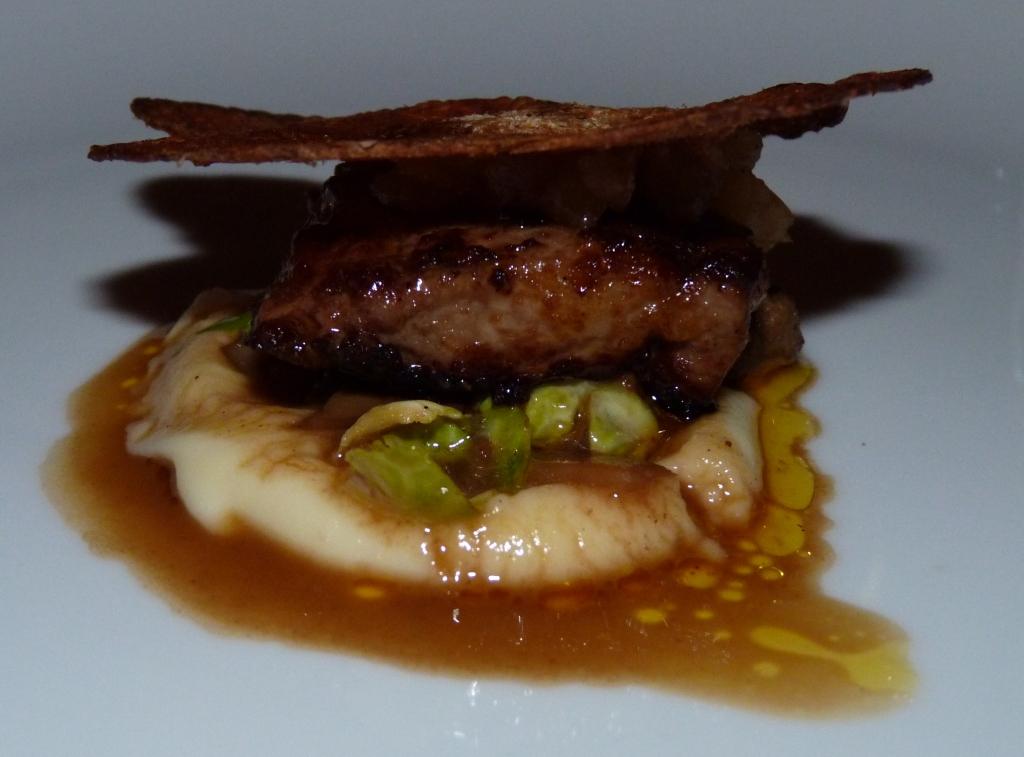 As we didn’t miss a single pairing ( pat on the shoulder), at least in my opinion, I will omit redundant [great pairing] in front of each description.
Salus is produced by Staglin Family, one of California cult wine producers from Napa Valley (Staglin Family Estate Cabernet Sauvignon 2007 just got WS 98 rating). Salus was one of the most beautiful chardonnays I tasted lately. Vanilla, butter, caramel, toasted oak and acidity of the wine worked perfectly with heavy but creamy texture of the foie gras.
Next dish was Roasted Black Sea Bass (Caramelized Sunchoke, Garden Chard, Cabernet Franc Emulsion). Wine pairing – Mara Pinot Noir.
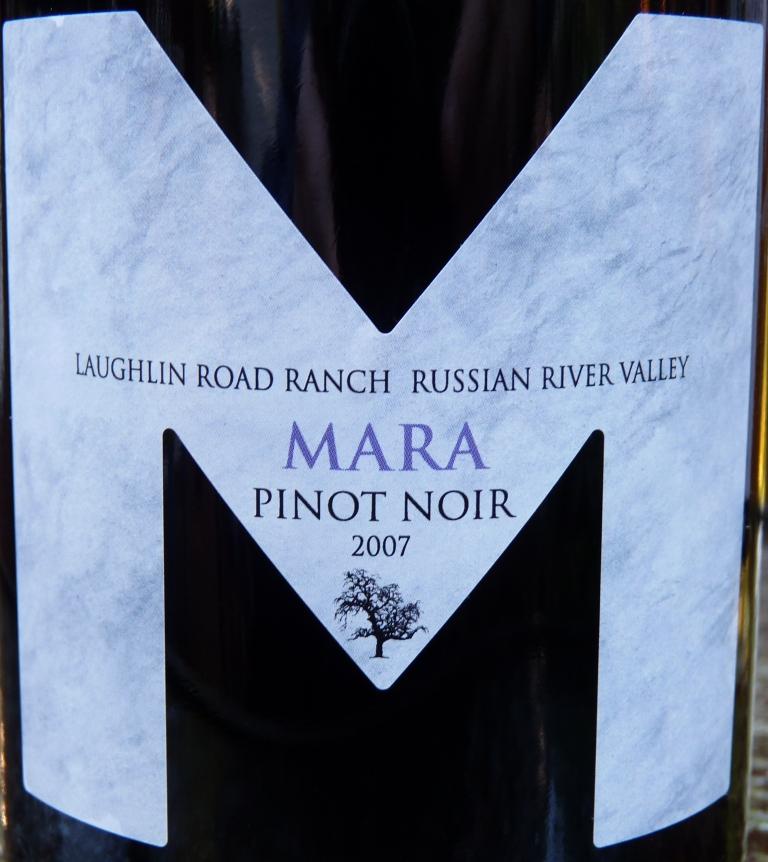 In case you wonder, there are actually two reasons why there is a wine label above instead of picture of the dish:
1. It was one of the best versions of Roasted Sea Bass I ever had. So, by the time I realized that I didn’t get a picture of the dish, it was too late.
2. And I guess it was also too late because everybody got carried away after taking a sip of Mara Pinot Noir.
Mara Pinot Noir was really a centerpiece of the tasting. “Oh my god” was major phrase at the table after the first sip of the wine. I don’t think that wine should be described in terms of color, fruit and acidity. This wine should be described in terms of opulence and decadence it cast upon the table. “Total and absolute balance” would be the right way to put it. Anyway, if you can find a bottle, you should experience it for yourself ( about 250 cases total production). In my “drinkability” ratings it is defnitely a 9+.
Next dish: Sautéed Squab (Confir Potatoes, Red Peppers, Serrano Ham). Wine pairing – Bradford Mountain Zinfandel.
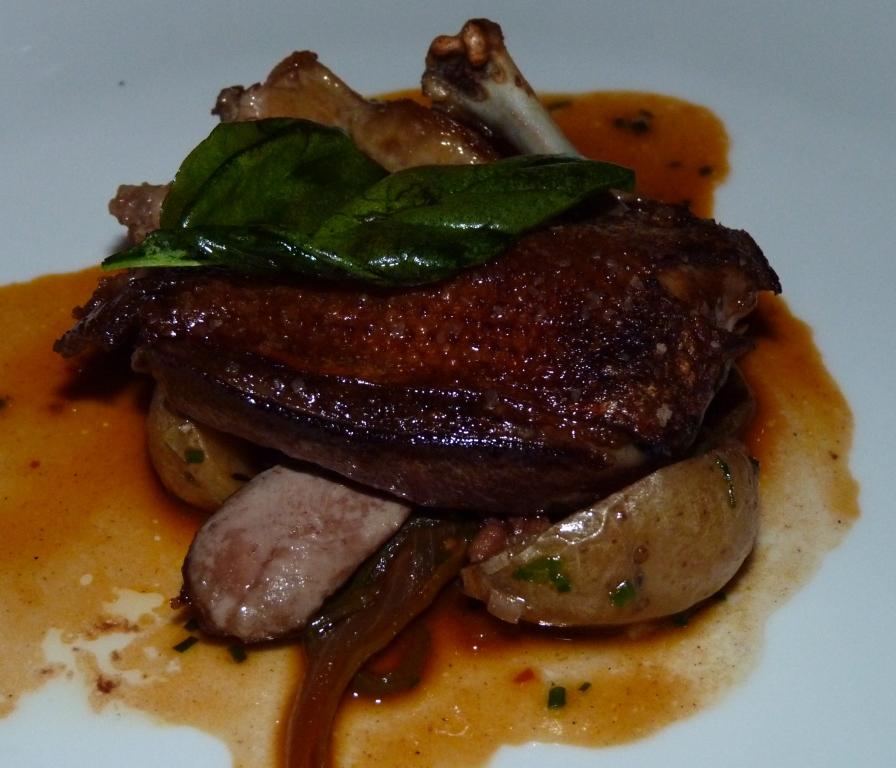
Deep earthy and gamey flavors of the dish ( tasted almost like a fried liver), were complimented well by spices and acidity of the wine. This was definitely a good combination.
Following on, major entree: Duo of Farm Raised Rabbit (Bacon Wrapped Loin, Rabbit Scrapple, Chestnut, Garden Carrots, Natural Jus). Wine pairing – Chateau La Grange Clinet Premier Cotes de Bordeaux.
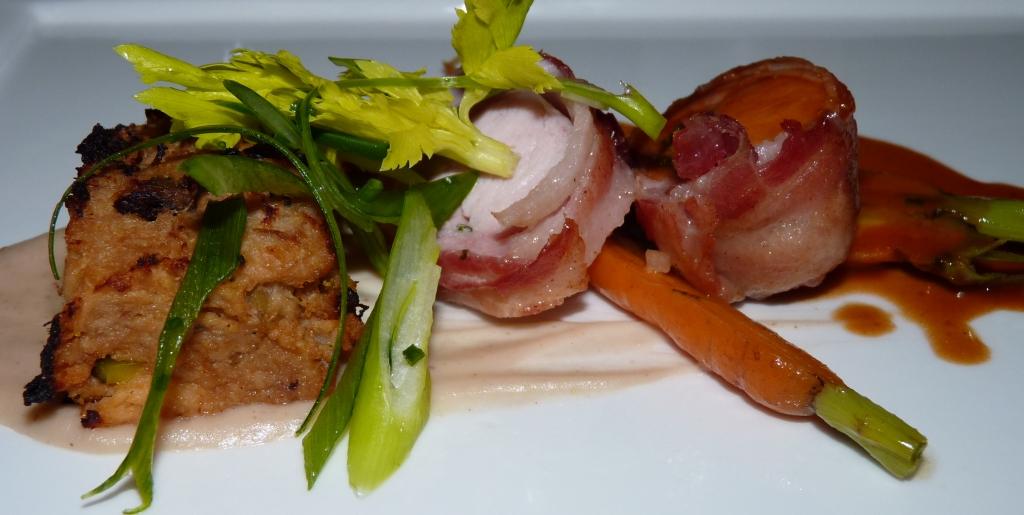 Bordeaux had being nicely decanted, so it was open enough in time for this dish being served. Coming from magnificent 2005 vintage, this wine can be drunk right now, but will improve with some time in the cellar. The wine worked well with the flavors of the dish – combination of tender, a bit gamey loin and fresh garden vegetables was well complemented by dark fruit flavors in the Bordeaux.
And now it is time for desserts: Cheese Soufflé (Pinot Noir Must, Grape Aspic, Rose Champagne Granite). Wine pairing – Botani Sierras de Màlaga.
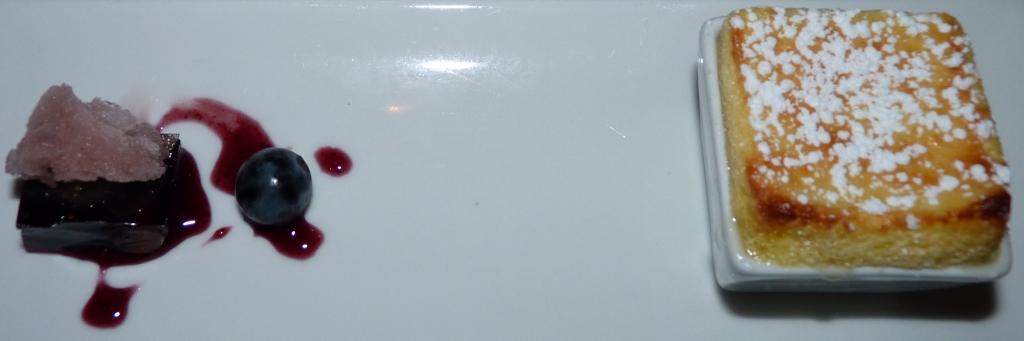 I discovered Botani Muscat at the dinner at The Capital Grille. This wine delivers incredibly bright acidity and fruit combination, every sip feels like it is full of live. That acidity was instrumental in this pairing. The wine worked quite well with both Granite and Souffle components of the dessert.
And last, but not least, one more dessert: Gala Apple and Granola (Apple Jack Caramel, Foraged Crabapple Confit, Cinnamon Gel, Pecan Brittle, Mulled Cider Ice Cream). Wine pairing: Ambré Riversaltes.
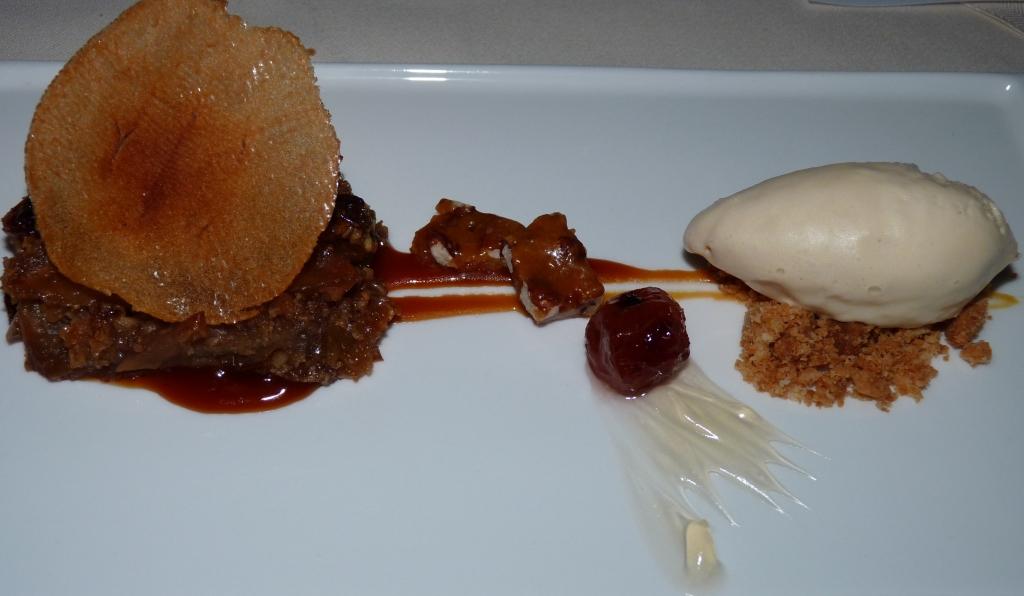 If Mara Pinot Noir was best of tasting, then this was the most interesting wine. This wine, made out of White Grenache, is made in the Solera style – it spent 7 years in the open tubs, developing delicate flavors. Ambré Riversaltes exhibited fresh and balanced flavors of toasted apple and caramel, which perfectly worked with “apple many styles” flavors of the dessert.
That’ s all, folks – it is time to conclude the report on the Hotel Fauchere experience. All in all, we had a great time, and will gladly do it again. The life journey continues…
Hotel Fauchère
401 Broad St
Milford, PA 18337
(570) 409-1212
http://www.hotelfauchere.com

Experiences: Bar Louis at Hotel Fauchere
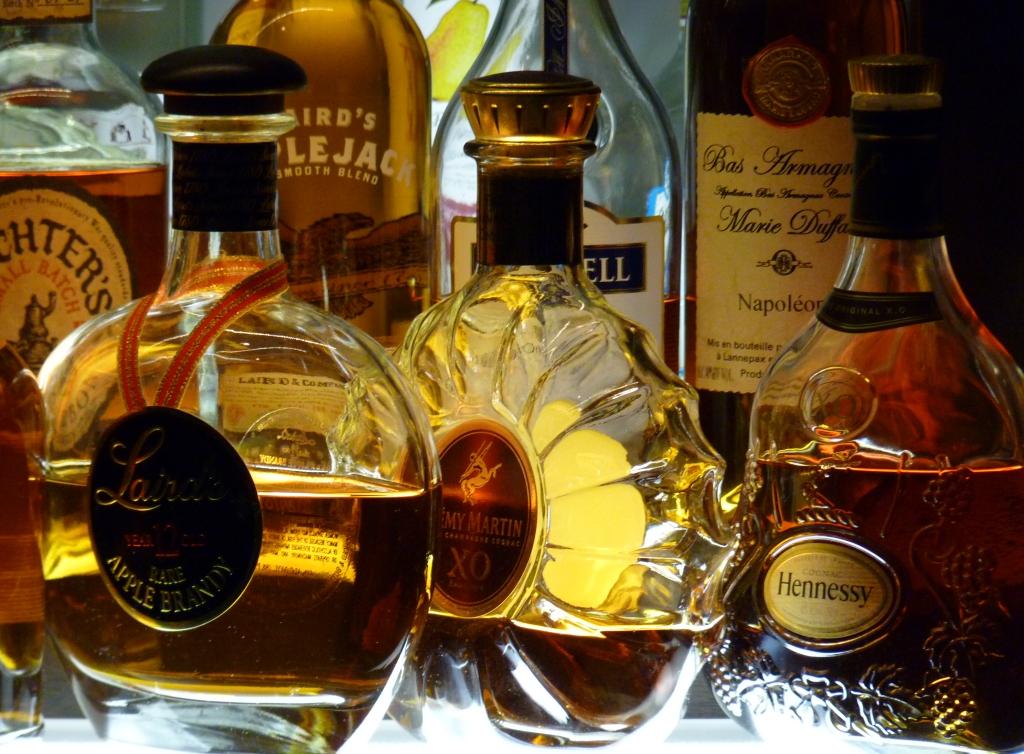 Continuing the subject of experiences at Hotel Fauchere (previous post can be found here). Can bar deliver an experience worth talking about? You bet. Experiences are personal, they are not universal. Things which are total routine for someone, can be a source of a great excitement for another person. My case is very simple – but I have to tell you a secret about myself. I’m very intimidated in the bar. I’m usually at total loss. I can never remember names of the cocktails, never mind citing the ingredients. Those which I remember by name, like Manhattan or Rusty Nails, I usually have no desire to drink. So I have to ask. And then there is a person, very intimidating one – a bartender. When I start mumbling my order, I usually get a look which says: ” such a low life shouldn’t exist”. And so I retreat saying “I guess I’m fine for now” or “what beer do you have on top”.
Luckily, experience at Bar Louis at Hotel Fauchere was totally different. The atmosphere was casual and nice. The bar itself was beautifully set and lit up, with bottles literally filled with light. The selection was good. Of course Norma Jean in Tel-Aviv has much bigger selection of scotches – but shelves and content at Bar Louis are more presentable:
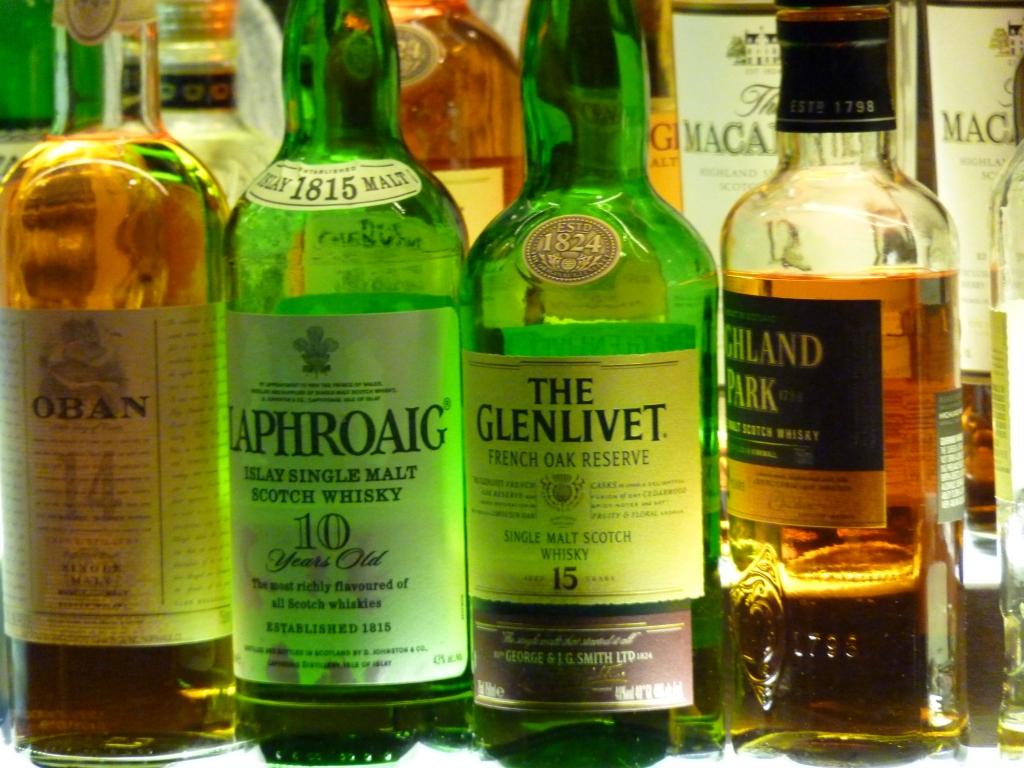
To put things in perspective, literally the he most important part of experience for me is service. Generally, I have a habit of asking people for their first name and then use it when talking with them. I was really disappointed with myself, forgetting to ask our bartender for the name. She was impeccable – knowing what she is doing, smiling and having enough patience to deal with someone who is at a complete loss in the bar (should I also mention generous pours?). Great service – nothing more, nothing less – and this is what translates into a great experience.
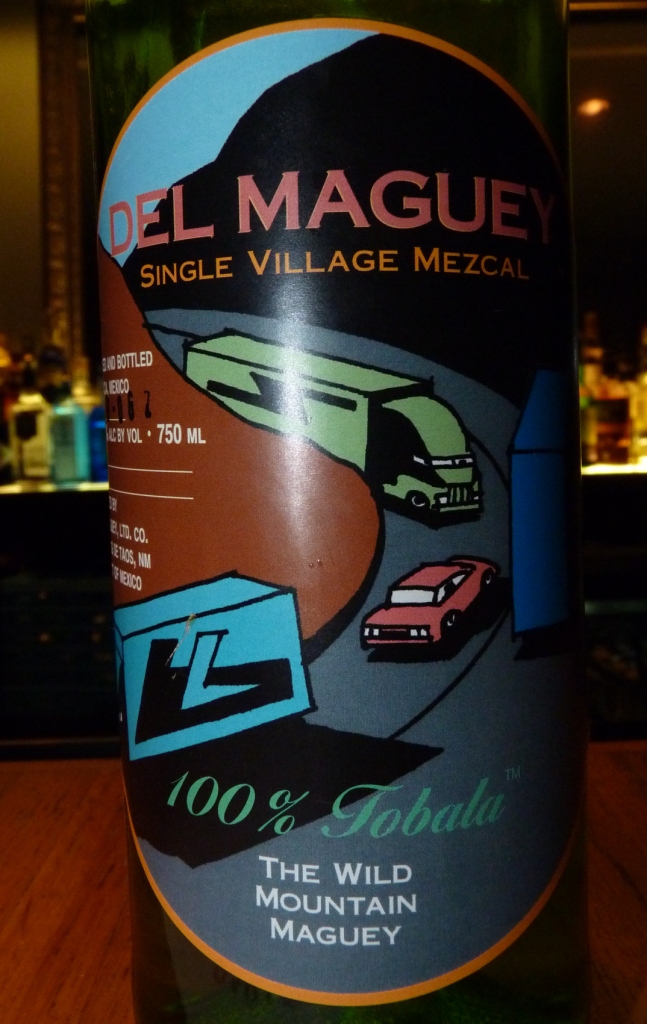
Drink menu was short but not ordinary, and drinks tasted really authentic. Then of course there were all the single malts, cognac and tequila. But my personal favorite and personal discovery was Del Maguey Single Village Mezcal. Smokey flavor, supported by some herbs and soft alcohol, this was truly unique drink. It is described as “magical” on the web site – who knows, it might be. I would love to compare it with the Kings of smokey alcohol – single malts from Islay, such as Lagavulin, Caol Ila and others – that would be one fun tasting. I highly recommend that you will get your opinion, though – which only requires finding the same bottle and tasting it… (of course, let’s compare the notes). Whether you will like it or not, I guarantee you an experience – and this is what counts.
And then the dinner time arrived – so long until the next post…
Experiences: Hotel Fauchere, Milford, PA
 This will be the first post in this blog (if I remember correctly, of course), where wine, or alcohol of any kind will not be discussed. Total surprise, right? This is talk a Vino blog after all?
Well, this post definitely will be about life and experiences. This past weekend, we went with the group of friends to the small town called Milford in Pennsylvania. The goal was to stay in the nice Hotel Fauchere, experience the special chef tasting dinner at The Delmonico Room, and to do sightseeing and enjoy beautiful fall colors of East Coast. We definitely got a complete range of experiences – enough for few blog posts, as if I will try to cram it all into one, I will lose my readers.
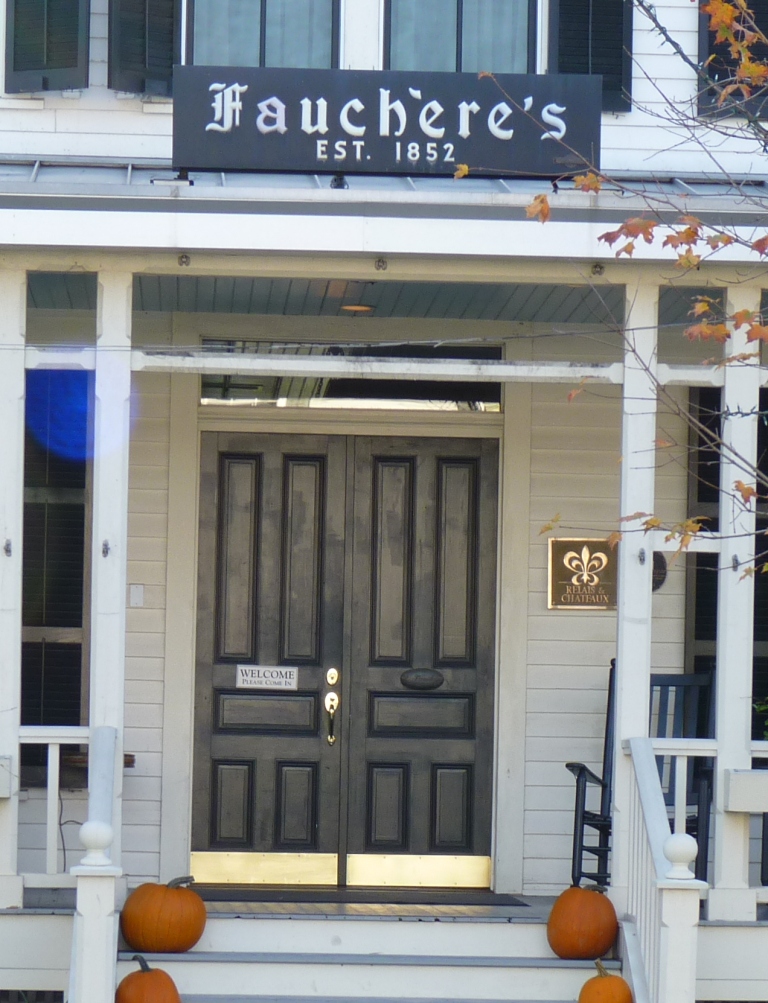 Let’s talk about those experiences, one by one. Hotel Fauchere is a beautiful boutique hotel, belonging to Relais & Châteaux group of luxury hotels. The interior is nice, at the same time, the rooms don’t stand out (for the same price, you can find amazing accommodations at many Bed and Breakfast). So where is the “experience” part you ask? It’s in the service. I’m traveling quite a bit, and yet I had not being at the place with so many genuinely smiling faces. The key words are “Genuine” and “Smiling” – it really puts the whole stay in the perspective. Service at Hotel Fauchere is definitely something to experience – attentive, accommodating, focused on YOUR needs.
What else is there to experience? Well, one is the Bar Louis, which we will talk about in a separate post, and another one is a continental breakfast.
Yes, you are not mistaken – continental breakfast. If you got a picture of corn flakes pack and tiny milk box, try to scare that thought away. We are talking about continental breakfast as Experience.
You start with the french press coffee and freshly squeezed orange juice at a beautifully appointed table.
 Next element of experience – home made vanilla yogurt and granola. It’s too bad that picture doesn’t convey the taste – and if you like the picture, you have to trust me that the taste is few levels above:
 Then comes a choice of raisin scone or lemon muffin, and it makes me a lazy photographer, but that picture I missed. And to finish, here comes a grapefruit with caramelized top:
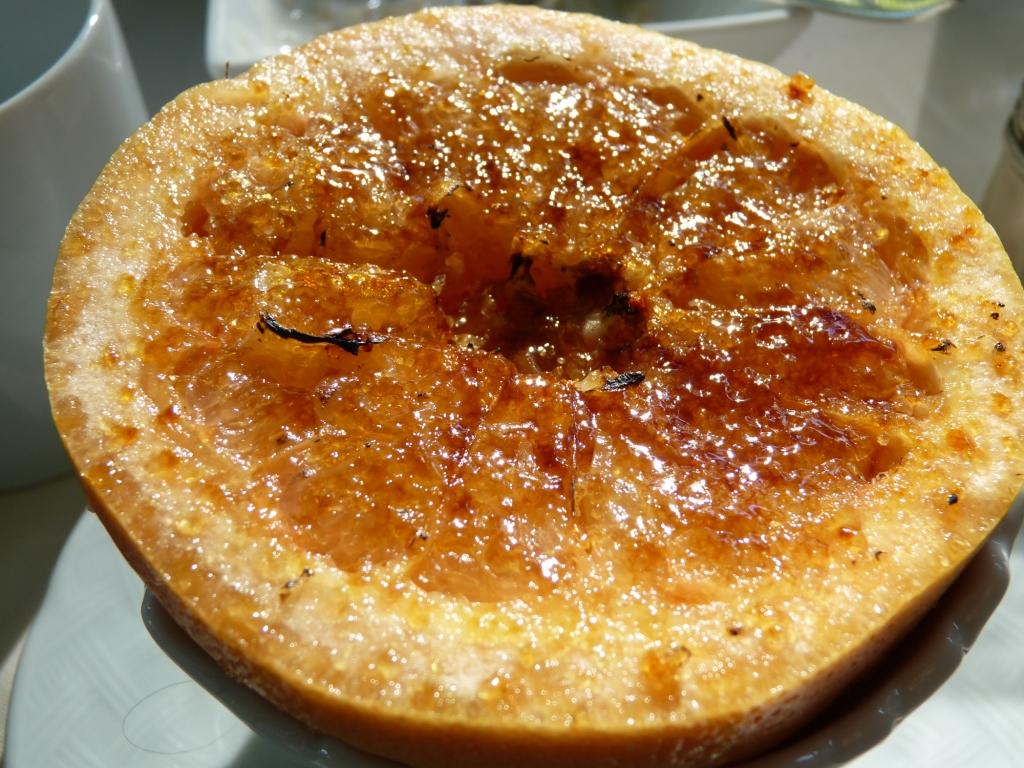
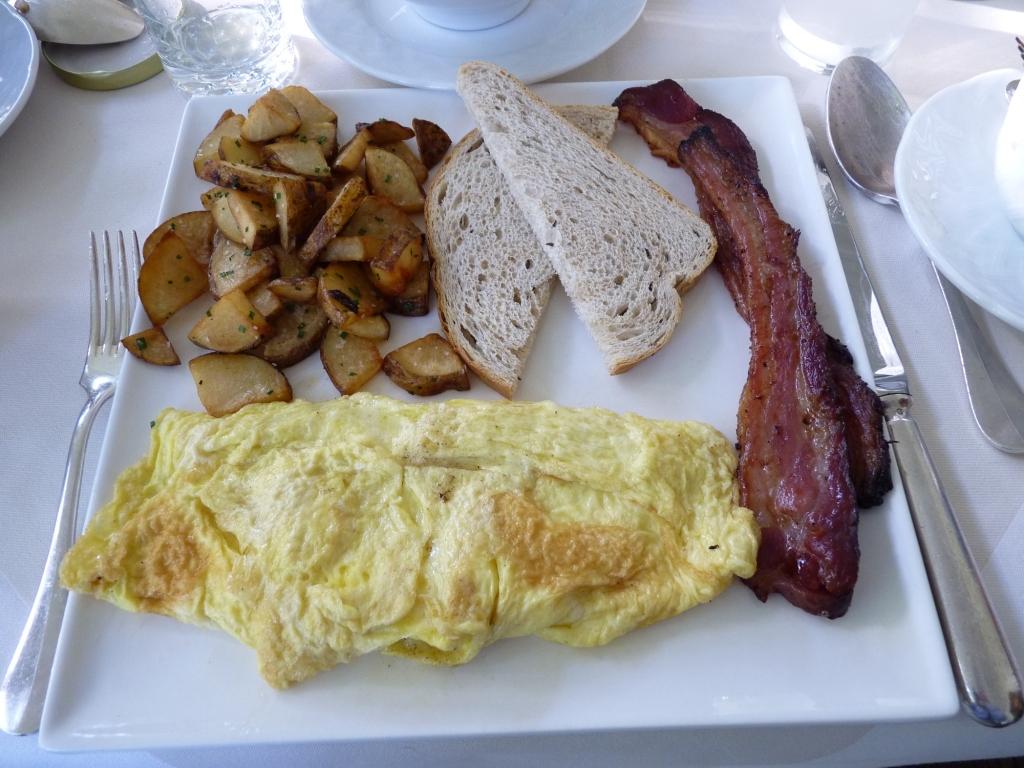
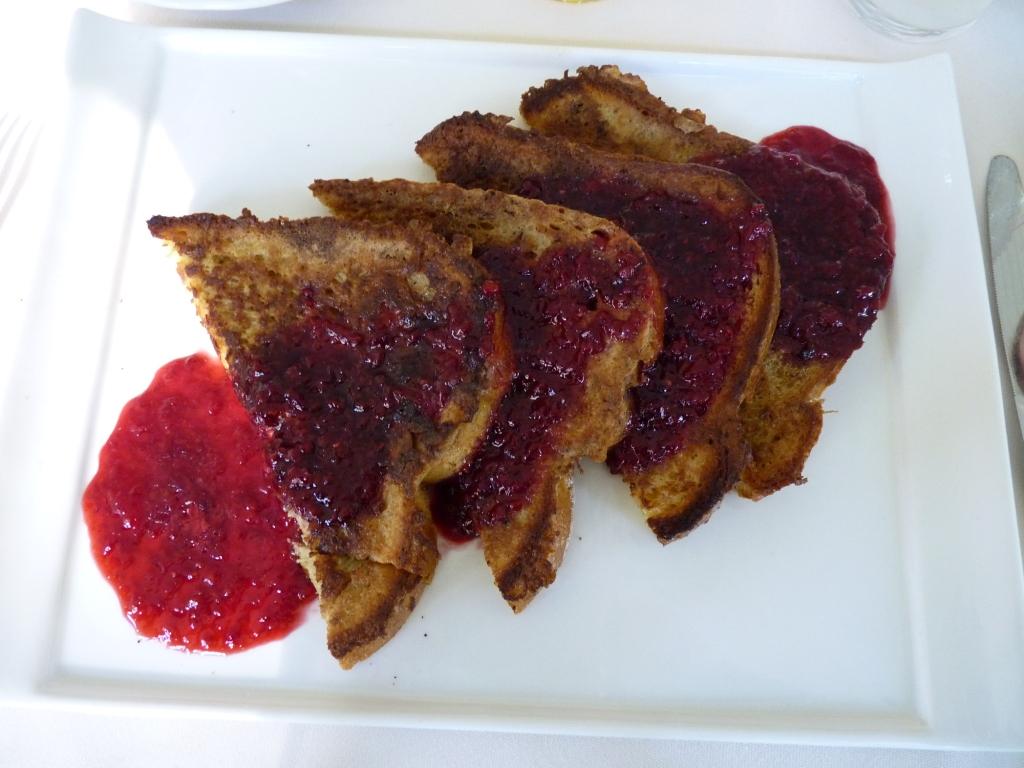
Delicious! And if you in a mood for something different than continental breakfast, you can get a traditional omelet which comes with thick sliced country style bacon (amazing, by the way)
Or a french toast:
All in all, Hotel Fauchere is something to experience – and while I will continue to report with the next post, nothing will replace the real thing. Reach out for that GPS already…
Treble Journey: Calling All Clones, Grapes #269 – #272
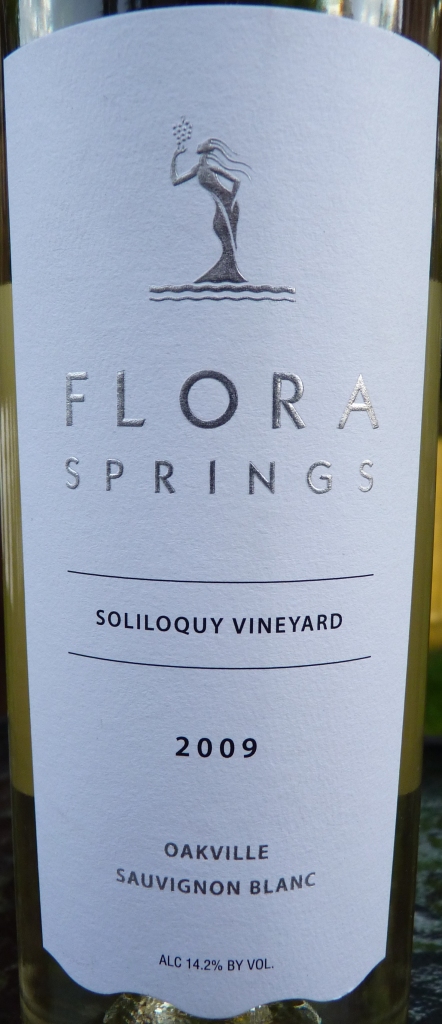 Clones are looked at somewhat skeptical when it comes to wines – simply because in some cases, the origin of the grape is not easy to establish, and then all sorts of claims can be associated with particular characteristics of the grape. Well, when you on the hunch to get to the Treble level, even the clones will help – especially if they are certified by UC Davis.
This Flora Springs Sauvignon Blanc is a blend of two clones of Sauvignon Blanc: Soliloquy Sauvignon Blanc and Sauvignon Musqué clone. It is a beautiful wine, combining finesse, the grassiness of traditional Sancerre and fruit-forward style of California wines, perfectly balanced. This is one of the very few California Sauvignon Blanc wines which I actually enjoy, as in general my preferences are on the Loire and New Zealand style Sauvignon Blanc. I will put drinkability rating on this wine as 8+, and these are the two new grapes.
Then come two more wines, which are adding two more grapes, both grapes being in the main Wine Century Club application table from the beginning. One is Petite Arvine, a grape from Switzerland, which is hard to find in the US. I got the wine directly from Switzerland with the help of my friend Patrick, and it was 2009 Valiciana Petite Arvine du Valais – simple and herbaceous, working well as an aperitif.
And the last grape for this update was Garnacha Peluda, also known as Ladoner Pelut, or Grey Grenache. And even as Wikipedia simply lists all of the clones of Grenache as one and the same grape, as we are counting clones, this is perfectly suitable grape to be counted by itself. It was a part of the blend in wine called 2007 Sexto Terra Alta from Spain – an interesting wine with some dark fruit notes showing up after the wine breathes for a while – it would be an interesting wine to try in 3-4 years.
That’s all for now – and more to follow, as the wine adventures never stop…
Long Island Wineries Trip – Great Weather, Great Wines
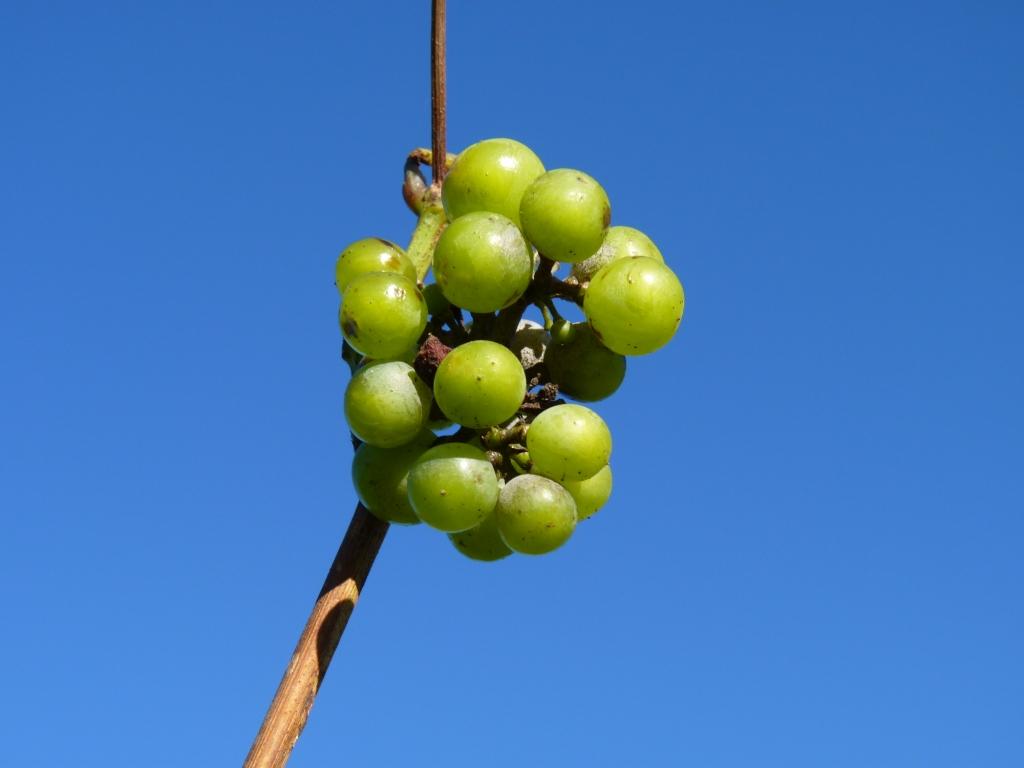 Talk about being lucky. Last year in October we had a great trip to Long Island wine country, enjoying great weather, 2 hours long lunch with good food, wine, and company. We started planning second annual Long Island Wine Country getaway about 3 months ago – we set the weekend, but who can know about the weather? This is why I’m talking about being lucky. Beautiful weather – just look at the picture of the grapes (accidental leftover after the harvest), against the beautiful blue sky… Immaculate.
And there we went. The plan was simple – visit 3 wineries, taste the wines and have lunch with the wines we like. We started with the Lenz Winery, as it was far-most in our plan. Two things were interesting about Lenz Winery – they are well known for their Sparkling wines, and Lenz Merlot was compared with Petrus, one of the best regarded and equally expensive wines in the world (here is the link if you want to read more about Chateau Petrus, Bordeaux wine from Pomerol). The 2004 Sparkling Cuvee, made from 100% Pinot Noir, was nice, yeasty and balanced. Does it worth $30/bottle? Comparing to actual Champagne – may be, comparing with good California Sparkling wines like Chandon or Mumm, or Gruet from New Mexico – probably not. As for 2002 Old Vines Merlot, the one which should be compared with Petrus – I never had Petrus, so I’m not qualified to make any comparisons. I can only state that I didn’t like that Merlot at all.
The next stop was Jamesport winery. One of the driving forces behind our choice of wineries was a post in Wall Street Journal wine blog by Jay McInerney, where he was talking about tasting great Petit Verdot and other good wines at Jamesport and Paumanok wineries. Since we were planning to have lunch at Paumanok anyway, and Jamesport was around the corner, it was easy to decide that we want to taste the same wines.
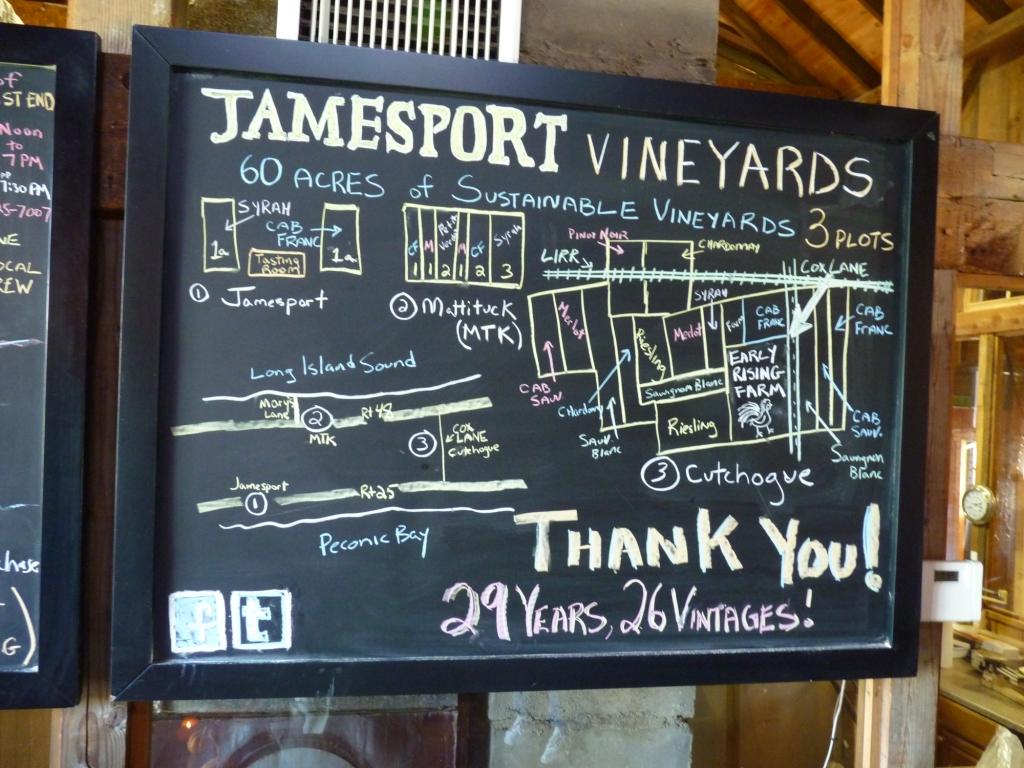
I’m glad we stopped at the Jamesport. I chose Estate Series tasting flight out of many others available, and I can tell you that it was one of the very few experiences where I liked each and every wine in the flight. Reserve Chardonnay 2007, Reserve Sauvignon Blanc 2007, Riesling 2009, Pinot Noir “Sarah’s Hill” 2007, Estate Merlot Block “E” 2005, Syrah MTK 2007 and Melange de Trois 2005 – all were very good wines. One minor disappointment was the fact that Sauvignon Blanc 2009, highly regarded in James McInerney’s article, was sold out. As we were explained, 2009 was a difficult vintage, and only 350 cases of 2009 Jamesport Sauvignon Blanc were produced, so it is not surprising that it was sold out. But then I have to mention an absolute highlight of the trip. We decided to try Petit Verdot Reserve 2007 – at $100/bottle, the tasting of this wine costs $10 for 3 oz pour, but still, looking for the experience we decided to go ahead and try it. This was one of the best $10 spent on the wine ever – luscious, multi-layered fruit, amazing balance of tannins and acidity and great mid-palate density! Considering my rating system, this was definitely a 9 – and I wish I would have a budget to put a few bottles in my cellar – this wine will evolve amazingly over the next 10-15 years.
The next stop was Paumanok winery, where we finally had our lunch.
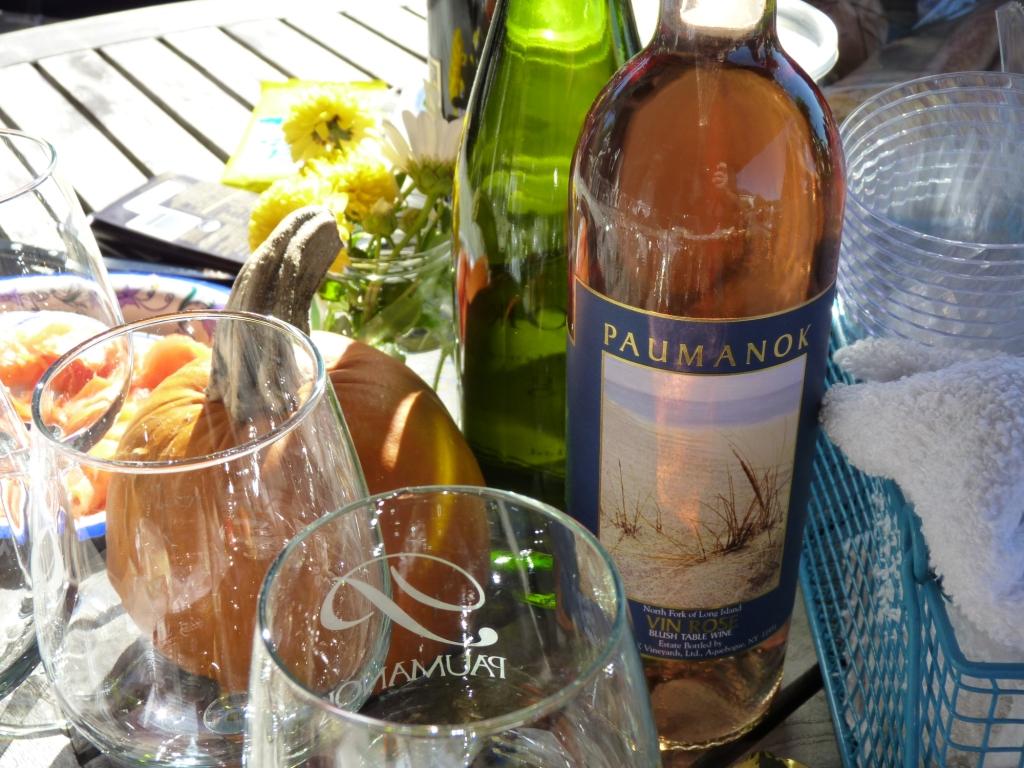
We didn’t do tasting flight there, as everybody was already quite hungry, instead, we got a bottle of Rose, and a bottle of Riesling, and  Paumanok Cabernet Franc 2007. Unfortunately, we couldn’t escape our dose of disappointment here as well, as Paumanok Petit Verdot 2007 ($60), lauded the most in Jay McInerney’s article, was sold out! At least the Cabernet Franc 2007, also highly mentioned in the article, was available ( good value at $24.50). The Cab Franc was very nice, with a refreshing tartness, layers of restrained fruits and medium body – it was simple and pleasant to drink.
The grapes are already harvested on Long Island so the new vintage will be on the way.
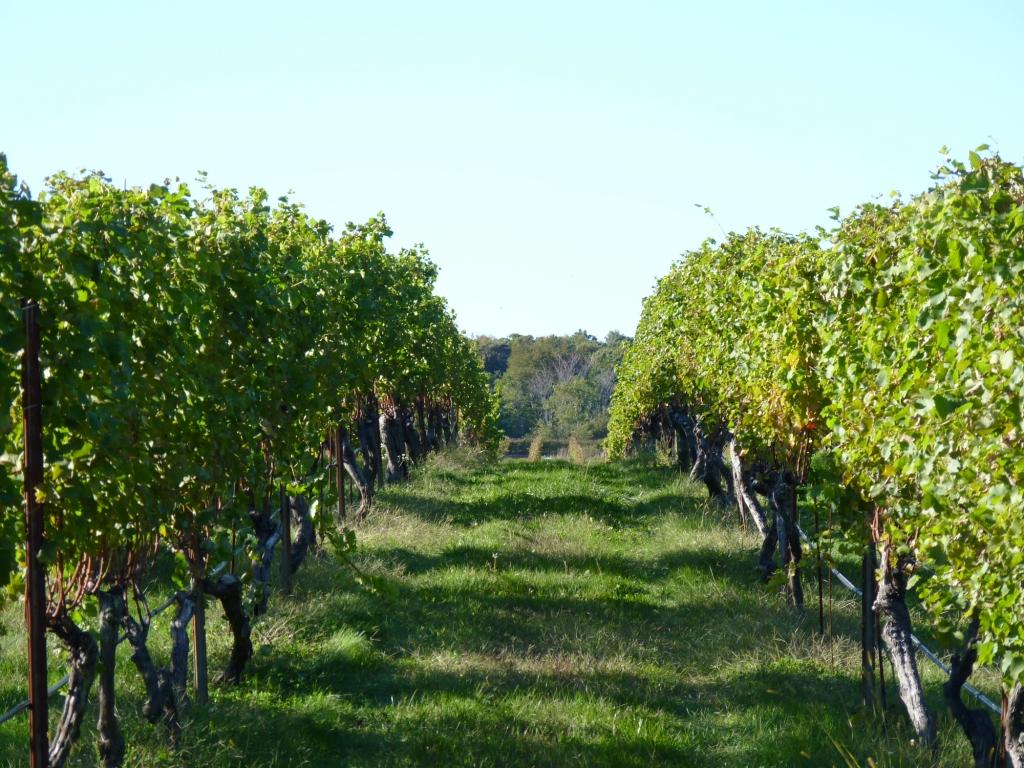
The weather is still warm so you can enjoy yourself in the Long Island Wine Country. This year, or the next year, and many years after – the wines are only getting better. Get your friends together and go out and play…
Daily Glass: Claraval, Another Dangerous Wine
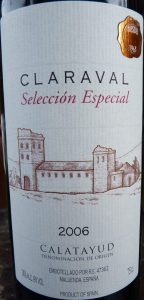 In one of the previous posts, I came up with the term “dangerous wine” – the wine which is so smooth and so good, once you start drinking it, you pretty much can’t put the glass down until the wine is all gone. Here comes the second wine from Spain which I also have to declare “dangerous”.
It is called Claraval and it is coming from the Calatayud region. This wine is a blend of four grapes – Garnacha (50%), Tempranillo (20%), Cabernet Sauvignon (20%) and Syrah (10%). The wine has sour cherries on the nose, and it opens up into a beautiful array of spices and fruit, with earthy notes coming through, all complemented by balancing acidity and tannins. If anything, this wine is reminiscent of good Southern Rhone wines (which is not surprising as it shares the same main grape, Grenache, known as Garnacha in Spain), but it definitely has its own character. Judging by the mid-palate weight and tannins, this wine will also do well in the cellar – and I was glad to see that Robert Parker think the same, giving this wine 91 rating and saying that wine will evolve all the way into 2020.
So, how much do you think such wine should cost? Nope, it is not $30, which would not be surprising at such a level of quality, it is only… $11.99, so it definitely has very high QPR. This is definitely the wine to buy by the case.
And now, it is time for the verdict (of course you already guessed it):
Drinkability: 8
What is next? The trip to Long Island wineries, which is almost a annual tradition by now – a trip to Long Island wineries in the Fall, when it is already not hot, and still very beautiful. Off we go (well, the team members have to wake up first). Report to follow…
Last Bottle Sign Up ($10 credit)




 Talk-A-Vino