Accidental Grand Tasting
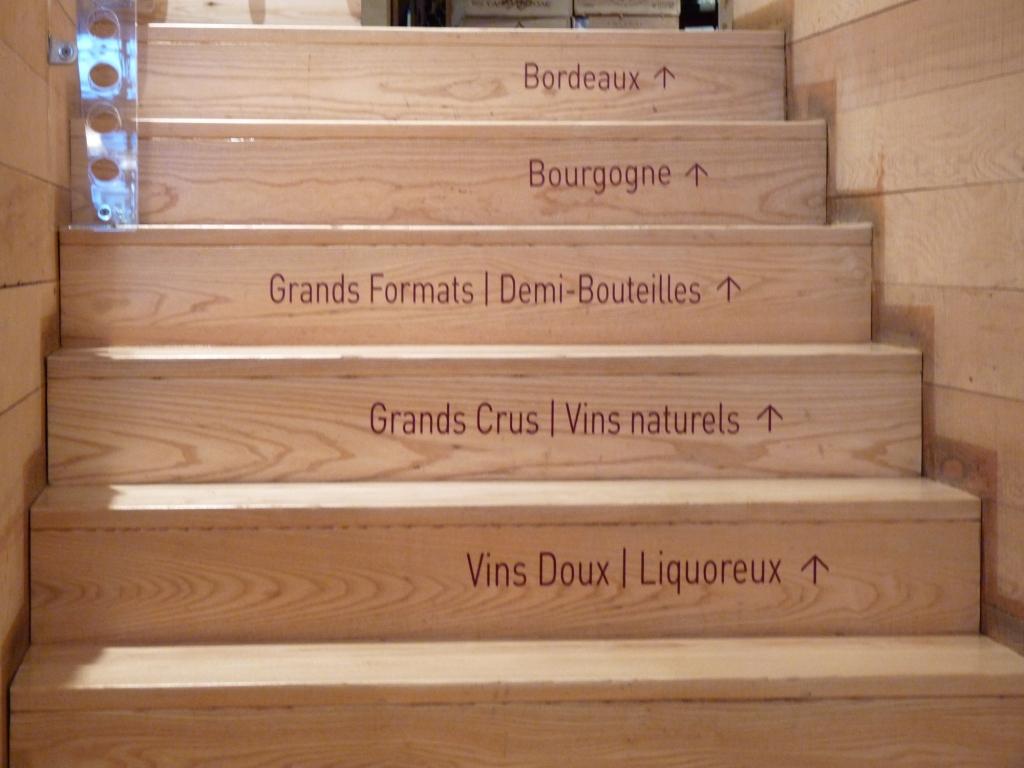 You walk on the street (ok, in Geneva). It is Tuesday, middle of the day. You see a wine store which looks appealing from outside. You walk in, start looking around and almost fall down. Well, for two reasons. For one, simply because the store is big, and contains unpredictable amount of stair-steps, some kind of stairs and so on (one pictured here is actually fine, you can at least see it clearly). Another reason – to see such a line up of Gaja and Tenuta dell’Ornellaia? Wow. Didn’t see it yet in any store in the States. But may be then at the prices which you see there, it is not that surprising after all.
So you continue browsing the store, which is called Lavinia in case you are curious, getting ready to leave, as buying anything there is not an option. Then you see a wine tasting going in a middle of the store. With big decanters, including for white wines – that gets very interesting. And then you try the wines, and you have to declare that you attended a grand tasting, because all four wines are outstanding.
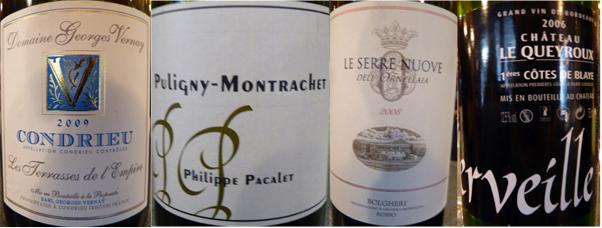
The first one, 2009 Domaine Georges Vernay Condrieu, made out of grape called Viognier, was bright, beautiful and assertive. It was “in your face” balanced – one of the most balanced wines I ever had: controlled fruit expression, full body, refreshing acidity – outstanding (Drinkability: 9). The next one, 2008 Philippe Pacalet Puligny-Montrachet, was my first taste ever of wine from Puligny-Montrachet, which considered one of the absolute best areas for white Burgundy wines (made of Chardonnay). This wine was made by Philippe Pacalet, one of the big proponents of the natural wines in France (here is a good blog post about him by Dr. Vino). This wine was totally different from the assertive Condrieu – shy and playful like a child, again with great balance, but completely different fruit profile (leeches, tropical fruits, star fruit), great acidity and asking for food. Again, Drinkability is 9.
And two reds were outstanding. 2008 dell’Ornellaia La Serre Nuove, coming from one of the best producers of Super Tuscan wines, Tenuta dell’Ornellaia in Bolghery in Italy. This wine made out of proprietary blend of red grapes, and while I had Ornellaia wines before, it was the first time for me to try La Serre Nuove – beautiful red fruit expression, full-bodied, extremely balanced – pure pleasure in the glass (Drinkability: 9-). And for the last one, 2006 Château Le Queyroux, La 8ème Merveille, Cotes de Blaye from Bordeaux in France, – I almost made a mistake of ignoring it (didn’t look appealing enough after tasting the La Serre Nuove) – I’m glad I was convinced to give it a try – big power, full body, again very assertive wine with outstanding balance of fruit, acidity and tannins ( Drinkability: 9-). In case anyone wonders about prices – all the wines were neatly squared between $60 and $100…
That’s all, folks. I’m grateful for the great experience, and I will be on a lookout for more “accidental grand tastings” – and wish you to have many “pleasant accidents” as well.
Daily Glass: Emilio Moro 2007
 I was planning for a completely different post today. And then I saw a bottle of 2007 Emilio Moro Ribera del Duero. It was not possible to resist – I loved 2006, great wine, so getting a first sip of 2007 was extremely appealing.
Power. Fruit. Layers. Tannins. More Tannins. It will be a great wine – but it needs time. When you take a first sip, the wine is literally aggressive – there is tremendous concentration of tannins. This wine supposedly was aged in French and American oak – judging from the “tannin attack” concentrated right in front of the tongue, I would think it was mostly new french oak barrels – of course, this is only my opinion, not a fact.
When the wine has such level of concentration and tannins, it creates an interesting pairing with something sweet, like jam (of course chocolate and red wine is a classic pairing). I tried this wine with Sarabeths Strawberry Peach spreadable fruit, and it was delicious. And after about three hours, this wine managed to release itself a bit from the tannins hold, and started showing some fruit – but boy, does it need time… At present, I will give it drinkability of 8.
I also want to share my … I guess, frustration, with many of the wines from 2007 vintage. There is a claim of “greatness” associated with 2007 vintage, at least in a few regions – California Cabernet and Rhone wines from 2007 defined across the board as literally “vintage of the century”. I didn’t see similar claim regarding Rioja and Ribero del Duero wines, but 2007 is still regarded as good. And I find striking similarities in the taste of 2007 California cabs, Cote du Rhone and now Ribera del Duero – they all share this initial aggressiveness, which takes hours and sometimes days to mellow out. And at the same time, I find 2006 from exact same regions to have the same power and finesse, but a lot softer and more approachable.
Well, the time will tell. For now, I just need more space in my cellar, to store those 2007s… To Patience – friend and a suitor of a wine connoisseur!
301!
 Can you guess from the title alone what this post will be all about? If you are not new to this blog, I’m sure you got it figured out, and if you didn’t spend much time here before, you can check this post, it will give you a hint. Yes, you got it right – I got to 300 different grapes, and now can officially apply for the Treble level at the Wine Century club! For anyone interested in seeing the copy of that application, you can find it here: Application_WineCentury_Treble.
This “Treble Journey” was interesting. It required complete focus: entering the wine store, you are on the mission. You are not looking for a nice bottle of reasonably priced Cabernet Sauvignon – instead, you are looking for the wine from the most obscure place (of course it is also located in the corner of the store you’ve never been to before), hoping it is made out of grape you didn’t try yet.
Reaching this 300 grapes level was big and often simply a communal effort. My friend Patrick was finding and bringing wines from Switzerland. My friend Zak, owner of Cost Less Wines and Liquors, was going after all of his suppliers asking for rare grape recommendations. I had to spend a lot of time trying to find unusual wines on the budget, sometimes bringing them from across the country or halfway from across the world (for instance, Emerald Riesling, which grows only in Israel). A lot of time went also into “grape research”, making sure that grape is unique or at least an officially recognized clone, and not just a different name for the grape already accounted for.
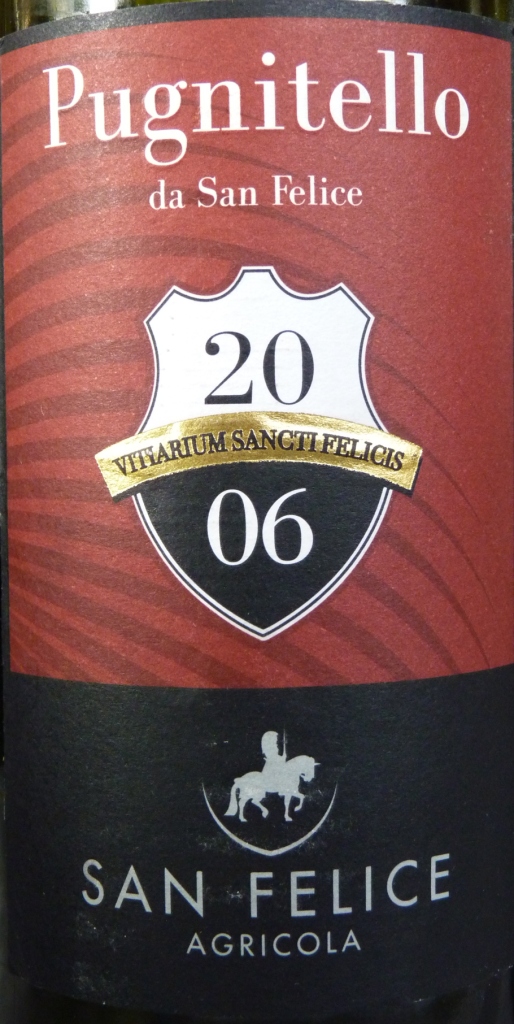
Anyway, here I am. 301. The grapes which helped to cross into the treble world were Findling (swiss clone of Muller-Thurgau), Coda di Volpe (Lacryma Christi del Vesuvio), Pigato, and Pugnitello:
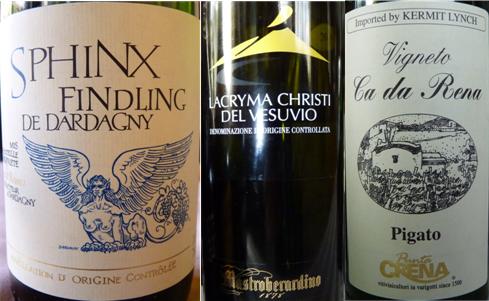
Both Findling and Lacryma Christi were nice wines (which is not always the rule when you are going after rare grapes), but the great thing was that Treble Journey finished in style, thanks to Pigato and Pugnitello wines. This 2009 Punta Crena Pigato Vigneto Ca da Rena from Liguria in Italy was one of the very best white wines I ever had – full body, great balance of fruit and acidity, with fruit taking back seat and letting polished roundness to shine – outstanding (Drinkability: 9). And 2006 San Felice Pugnitello from Tuscany was also outstanding, earthy and pungent, very balanced with a long finish (Drinkability: 9-).
Well, the Treble Journey is over. Am I done with this [tedious] process of grape discoveries? I don’t think so. The next level is called Quattro, and it requires… yep, 400 grapes! Anyone cares to join? Let’s go!
Fiesta Gastronomique
Some blog titles come in easy and naturally. Some require the painstaking effort to come up. Right after I had an idea for this post, I knew that the word “Gastronomique” will be a part of the title. The first word took some time – but based on the meaning of the word “Fiesta“, I think it fits here perfectly – please read on and tell me if you agree.
This post essentially continues the previous one about Miami Restaurants – but this time I want to talk about only one, called Sra. Martinez, which is one of the restaurants of the famed chef Michelle Bernstein. Why do I think this restaurant deserves a special post? It doesn’t provide food – it provides experience, something which will stay in one’s memory for a long time, and will be relived again and again.
To deliver “experience” in such a place as a restaurant, you need all the elements to be just right, almost perfect (yes, can be the other way around – but that doesn’t belong to this post). Service, ambiance, atmosphere, food, wine – all should play together. Even price – but the price is a subjective category when you pay for the experience, probably QPR (using popular wine terminology) is a better term. Sra. Martinez got it all – the service, the food, the wine, the ambiance (and even QPR).
Our waiter, Oscar, or OD as he called himself, was amazing – always there when you need him, always with the right explanations, always with the right advice. Sorry, I understand, I sound now a bit “overly excited” – but service of this level is a truly rare experience – unfortunately.
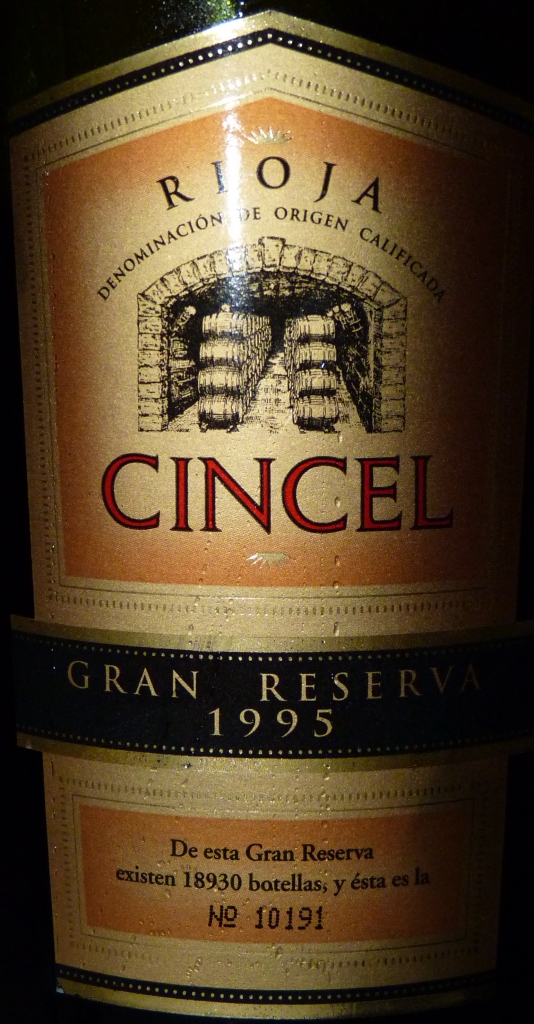 Next, of course, is wine. The wine list is very reasonable in size, with a great selection of Spanish wines – I didn’t mention yet that Sra. Martinez is a tapas restaurant – therefore having a good selection of Spanish wines is quite appropriate. We’ve chosen Rioja Cincel Gran Reserva 1995 (doesn’t seem to be even available in the US through wine-searcher). The wine was food-friendly, smooth, with good acidity and tamed fruit expression – and I don’t think it was even ready, probably needs another 10-15 years to shine. It did work quite well with many dishes we had.
For the food – and this is where Fiesta comes to mind – we failed to choose what tapas do we want. Therefore, we had no choice but to subject ourselves to the hands of the chef, in the form of the tasting menu. Boy, was that the right choice! It was a true fiesta of flavors, textures, and tastes, a true food experience. From this point on, I really need to let pictures tell the story – I only regret I was unable to capture all the dishes we had. It is also very interesting to note that if you look in the menu, you will see sea salt listed as one of the ingredients in the number of dishes – and it is truly a distinguishing ingredient that makes dishes unique. This was probably the best use of the salt I was ever able to experience. And now, almost in the order of appearance, here is what we had in our tasting menu:
Arugula Salad with thinly sliced pear, parmesan cheese, and sea salt (wow!) – no picture, but this was one of the best combinations of simplicity and amazing taste.
Bacon-wrapped dates and croquettes with fig marmalade:
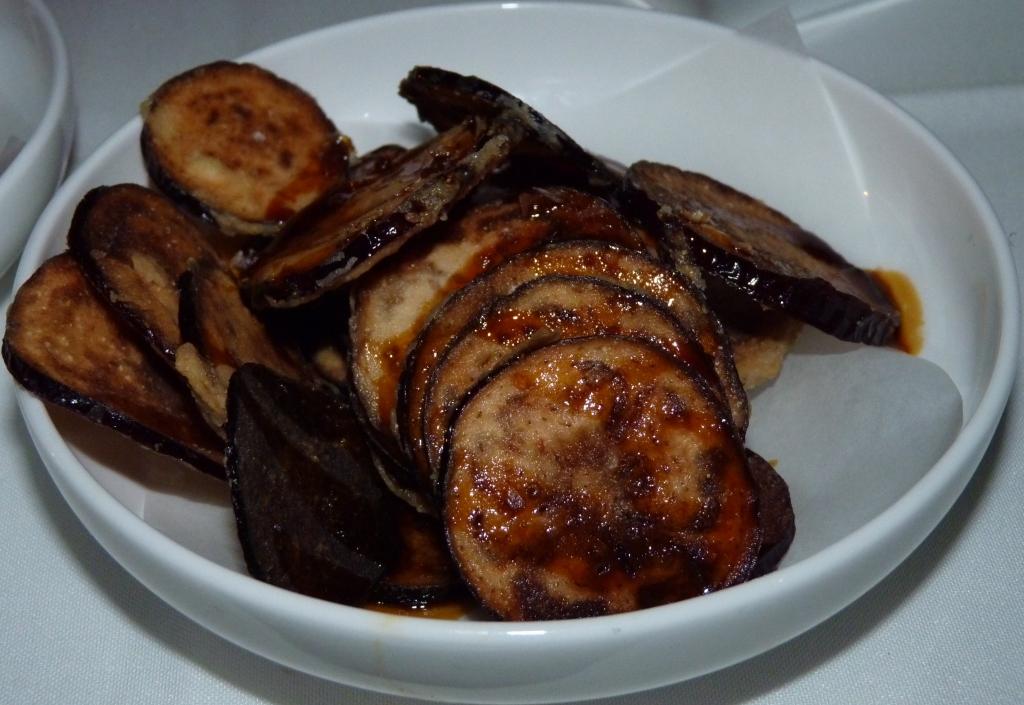
Eggplant chips with molasses and sea salt:
Crispy artichokes (wow!):

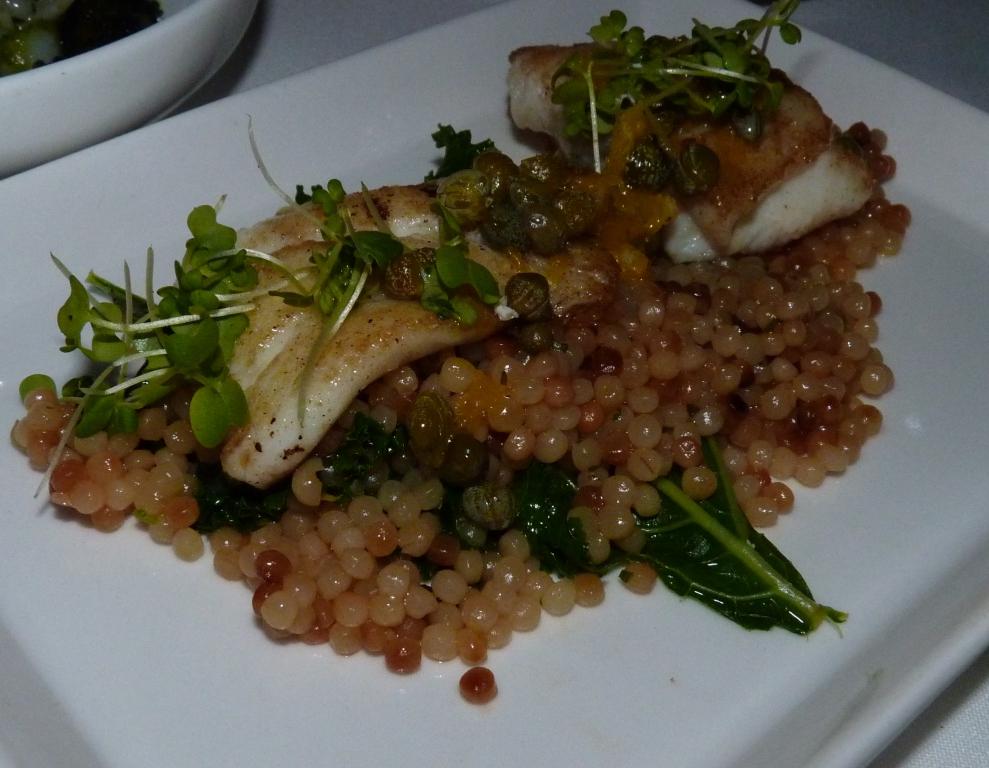
Catch of the day with israeli couscous:
Squid ink risotto ( incredible richness):

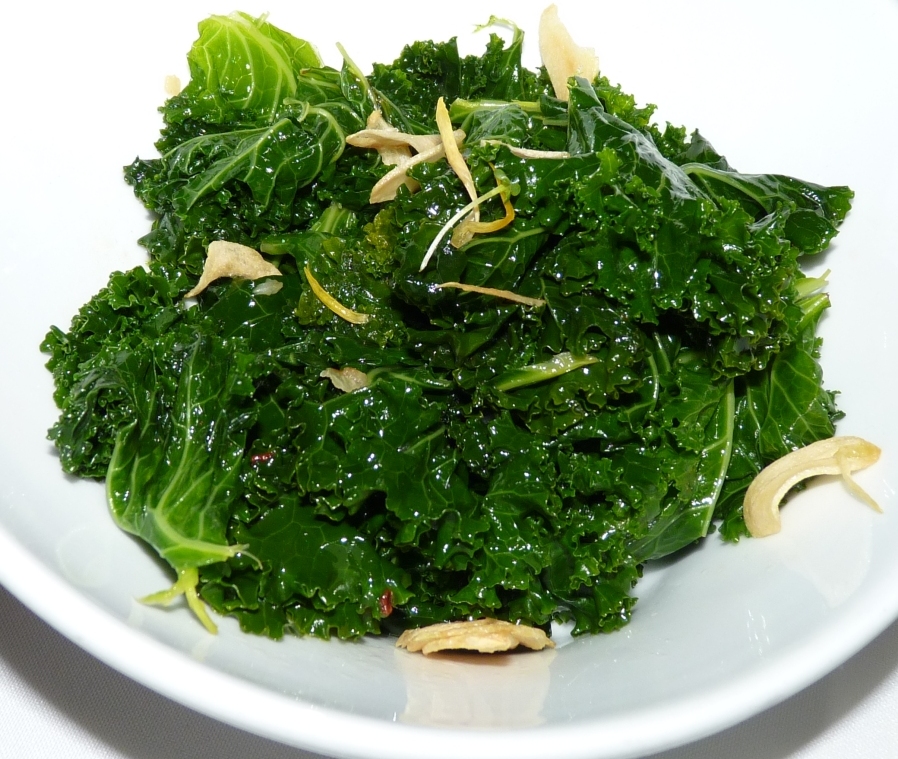
sautéed Kale with garlic:
Short Ribs ( incredible – thinly sliced and stacked, with sweet and salty sauce):
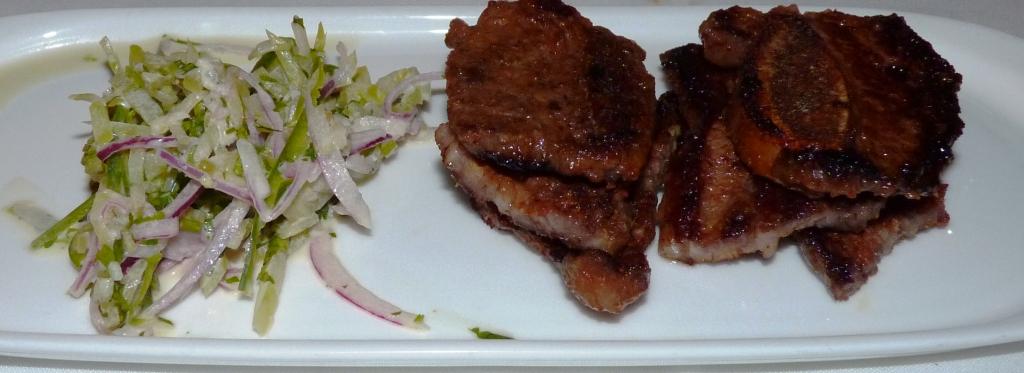
Lamb chops ( one of the best I ever had):

Garbanzo stew:

Brussels sprouts with bacon and fried egg:

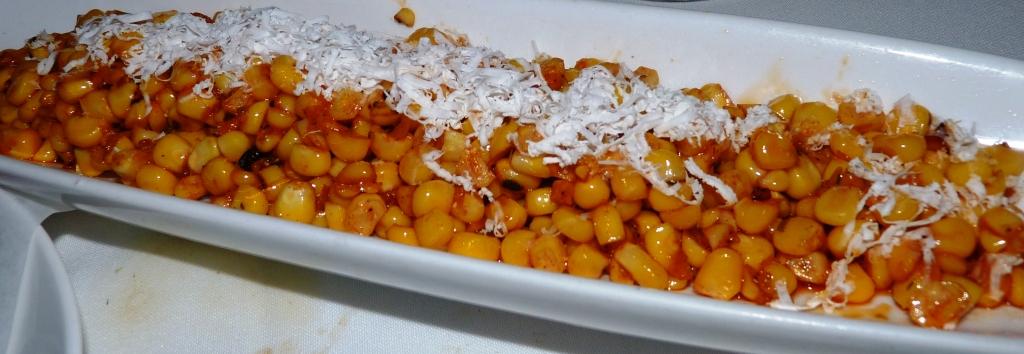
Sweet corn with smoked paprika, smoked chile, and lime – incredible again, you just can’t stop eating it:
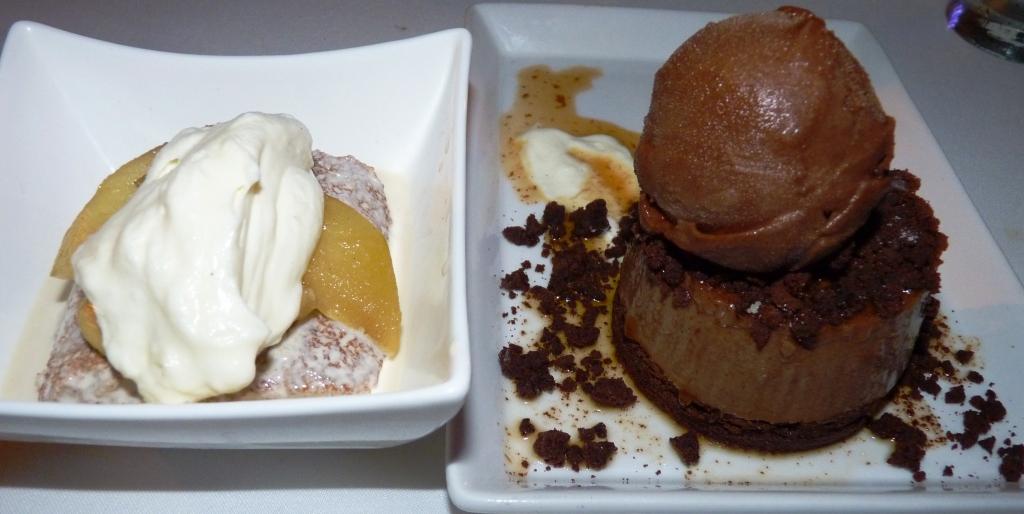
And finally… dessert! Never had chocolate flan before – wow!
The End (a.k.a. Bottom Line) – if you are in Miami, do it for yourself – visit Sra. Martinez. And if you will not think this is a fiesta, please tell me what Fiesta is…

Of Course You Know Miami Beaches, Let’s Talk About Miami Restaurants
 One of the virtues of the business travel is opportunity to try new foods. We’ve got to eat every day, don’t we – but we can go into many ways about it. One option is to stay only within familiar territory, eat at few places you already know and don’t take any risks. Another option is to explore and experience. Depending on the place I’m traveling to, I might go different routes myself – of course, when you are in Miami Beach, the “explore and experience” model sounds (and looks) very appealing.
I don’t think Miami’s food scene requires any introductions. As Miami itself if a tight blend of many different cultures, so are the restaurants in Miami. I’m not trying turn into a restaurant critic by all means, so this here is short (mostly in pictures) report on a few places I had an opportunity to visit recently – except one place, Sra. Martinez, which stood out of the crowd immensely, so it will be a subject of separate blog post.
Without further ado, here we go.
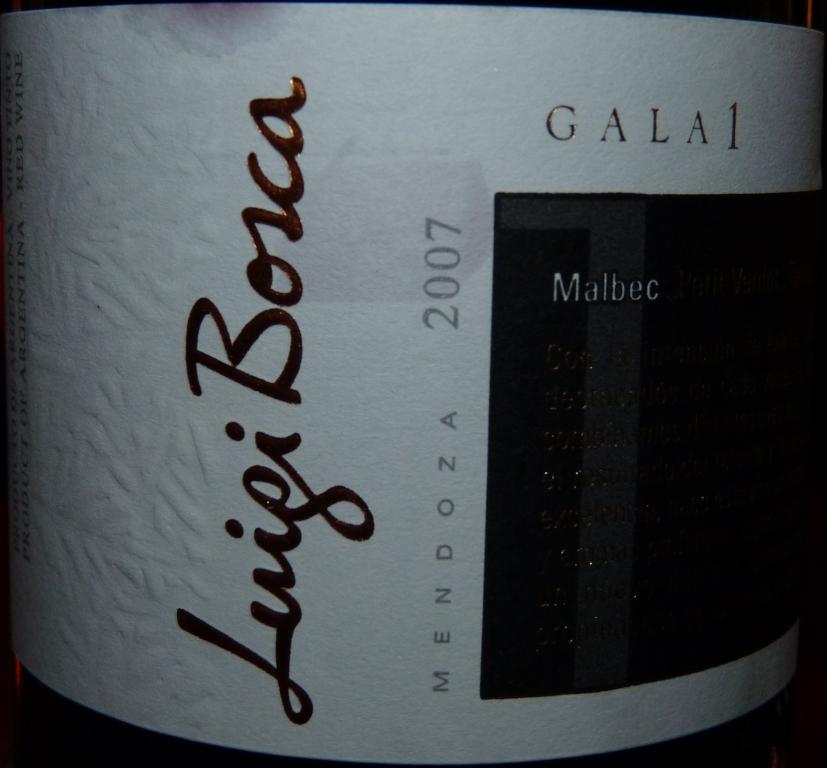 Maya Tapas and Grille restaurant, located on Lincoln Road (Lincoln Road is one of the main tourist attractions in South Miami Beach). First, we had a very good bottle of Malbec. As restaurants compete for attention on Lincoln Road, we took the advantage of “all wines half price”, so this Luigi Bosca Gala 1 (actually, Malbec blend) at $35 was definitely a bargain. Still a young wine, it had initial layer of sweetness, which freed the way to spiciness and balance as wine had time to breathe.
In the tapas restaurants, my favorite dish is of course … tapas – the best way to experience wide variety of flavors.
We ordered a number of tapas, both cold and hot, and all the food tasted very good (grouper seviche, charcuterie and chorizo are highly recommended). Below is a picture of grouper seviche:

Aura restaurant, also on Lincoln Road, is more of an Italian flare with simple menu. We mostly went there for cocktails and pizza, and both were good. Here is Long Island Iced Tea and Mojito:

Thin crust pizza (European style) with goat cheese and vegetables was very tasty (no picture though).
PAUL. You got to eat breakfast too, right? Paul is a French bakery, part of an international chain. It is fully French, starting from the menu and appetizing baguettes all over the place, to the “french style” service. Service is an interesting part of the place – it is purposefully disrespectful to the customers, kind of “I’m not here to serve you”. In my honest opinion, though, they got this “French” concept upside down – 9 times out of 10, I had an outstanding service in France, despite any language barriers. I also think it costs PAUL in terms of lost clientele, and it shows up in the reviews on Yelp. But the food is good. Baguette with butter and jam is pure pleasure, so is Eggs Benedict ( I had both smoked salmon and Canadian bacon versions) – probably the best Eggs Benedict ever, definitely the best sauce. And pressed Focaccia sandwiches were not too shabby as well.


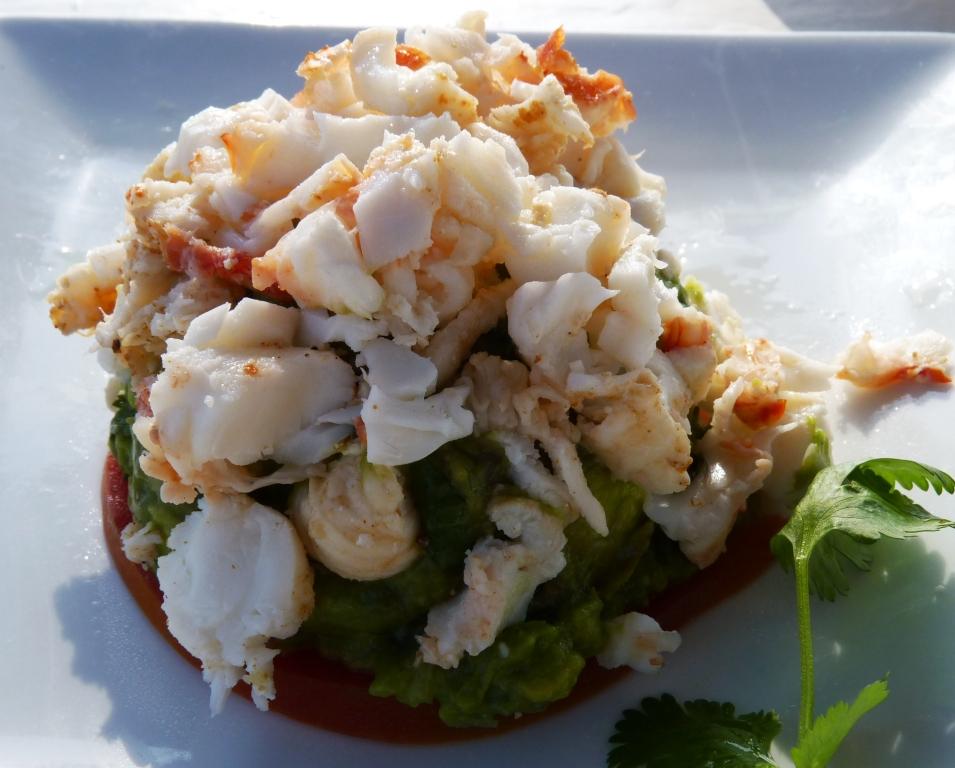
Last place to discuss in this post is Marker 88, located in a middle of Florida Keys (on island called Islamorada). This place was recommended – and it disappointed, unfortunately. The food was interesting in concept – but completely lacked soul in execution, or had simply technical mistakes, like lobster and mango guacamole having no mango – and of course guacamole completely overpowered the lobster. But the dish does look good on picture, doesn’t it:
And here is crab cake sandwich:
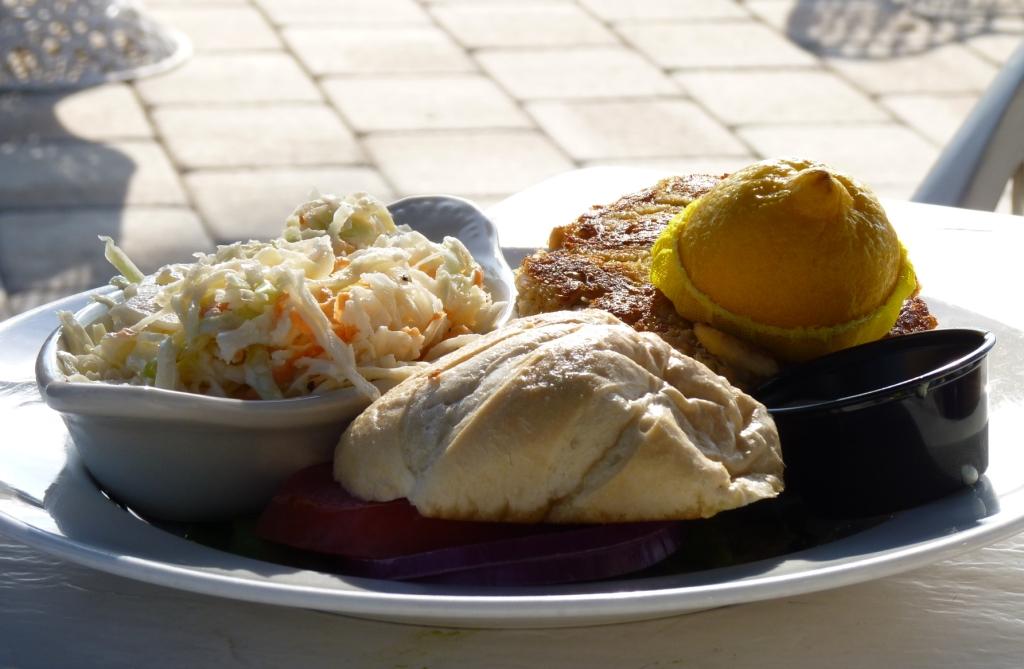
Again, looks good – but crab cake was missing any flavor… Well, may be we were out of luck with substitute chef?
To sum it up – if you are just looking for a byte to eat, I would definitely recommend all of the places we talked about here (even Marker 88 deserves second chance). However, if you are looking also for experience, please wait for the next blog post…
Wine and Valentine
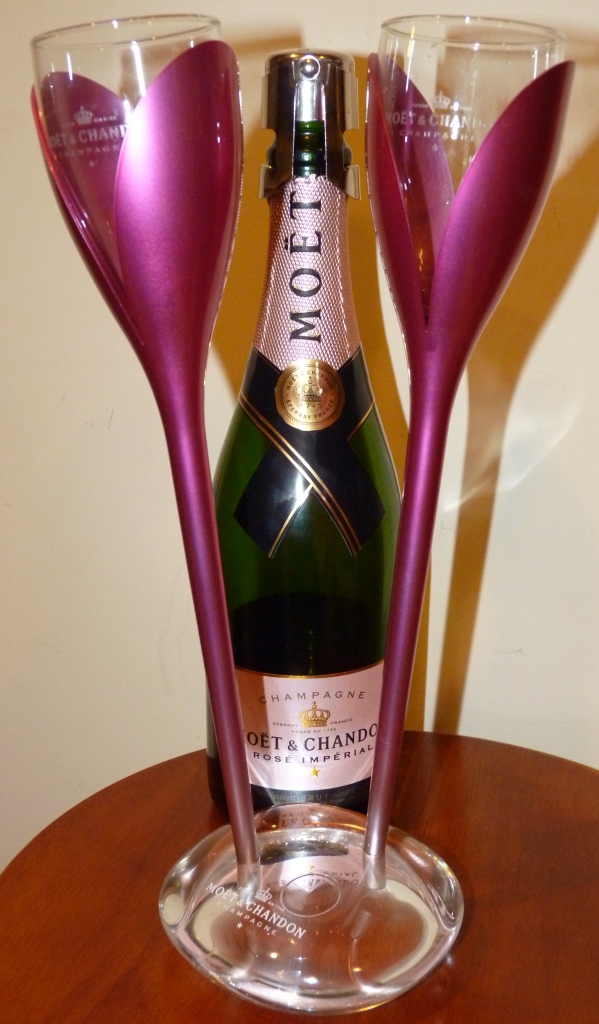 Wine and holidays… When someone drinks wine every day, is special meaning lost when the holiday comes? It does not. It only gets more interesting, and the reason is simple – it is called Expectations. On an average day, you look in the cellar, and something grabs your attention, so the decision is made on the spot – this Pinot sounds perfect tonight. When it some to the holidays, long ahead, you start planning – and anticipating. You think about how it will feel like when you will open “that bottle”. So in your mind, you open that bottle many times before the actual “bottle opening event” will take place, so your expectations are building. There lies danger – the higher your expectations are, the smaller the gap to disappointment. But if you hit it right – boy, what a great feeling!
Valentine’s Day (unfortunately, hugely commercialized by “pink-hearting” everything possible and impossible) is meant to celebrate love. Wine is an attribute of any celebration, and of course, the celebration of love is a great reason to raise a glass (wedding and champagne are almost synonyms, right?). Is there a right and wrong wine for Valentine’s Day? Of course, there is no such thing as wrong wine – whatever makes you tick is the right wine, even if it is just water. Whatever helps you feel the special moment is the right thing.
So what are my wine preferences for Valentine’s Day? First, it is Amarone – if I happened to have a good bottle, and then it is Champagne. For this Valentine’s Day, it happened to be Champagne (yes, you are correct – I didn’t have a good bottle of Amarone in the cellar). Moet & Chandon Rose Imperial, to be more precise. I had the bottle for a while ( probably 4-5 years), and based on the recent experience with Mumm, I was really looking forward to opening that bottle.
Well, remember what I said about building expectations? Yep, there lies danger. This bottle was actually less than I expected. It was drinkable, but it was not exciting. It was refreshing, it had a bit of complexity – but it was stopping short, without delivering the “umph” which that bottle of Mumm had. Well, maybe next time…I will have a good bottle of Amarone?
Now, please tell me – what wine did you experience on this special day?
Charade of the Day: What Pairs With Food, Starts With W, But Not Wine
Answer below:
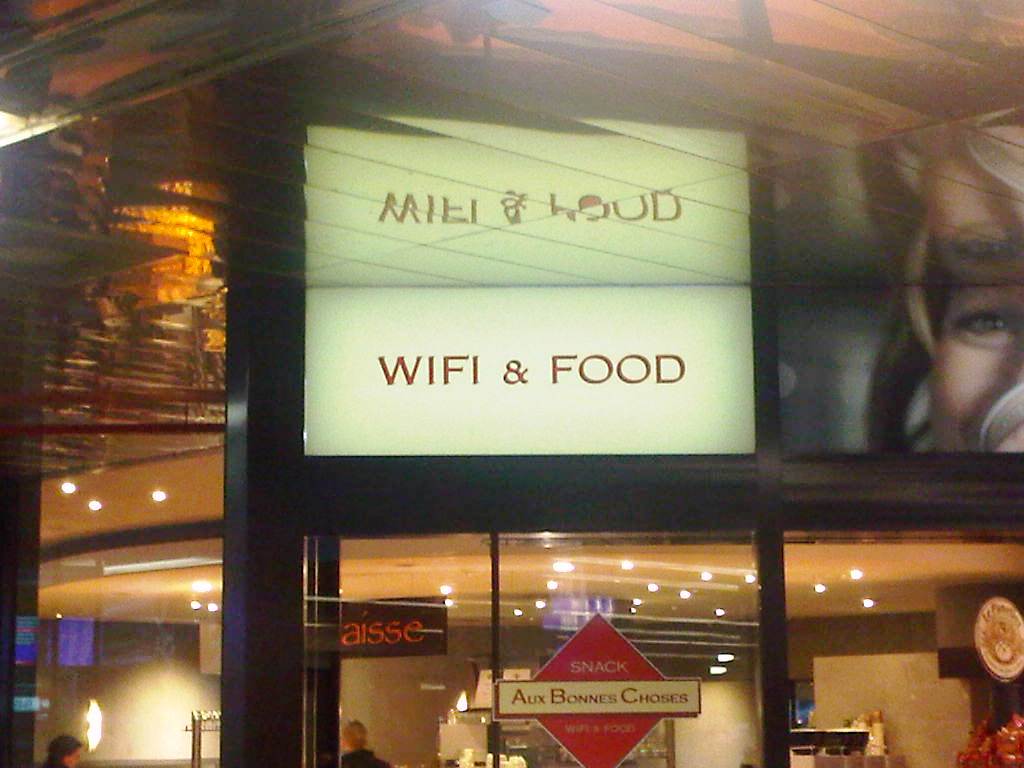
Everything is a matter of priorities…
Bordeaux Weekend, Plus Random Thoughts
 Somehow, last weekend happened to evolve around Bordeaux. First, there was “Lafite Around The World” tasting at Saltwater Grille restaurant in Stamford, featuring Lafite-Rothschild wines from around the world (don’t worry, there was no “all you can drink” Chateau Lafite). The actual French wines (2008 Chardonnay from Languedoc and 2009 Lafite Reserve Speciale Blanc and Rouge) were rather unimpressive (drinkable, but not necessarily enjoyable). Chilean Los Vascos Cabernet Sauvignon Reserve is usually a good wine, and the 2008 was no exception. Amancaya, which is a blend of Malbec and Cabernet Sauvignon from Argentina, produced jointly by Lafite-Rothschild and Nicolas Catena, was best of tasting, with silky smooth tannins and soft full-bodied fruit expression. It perfectly complemented couple of excellent appetizers served at the tasting, such as steak tartar and roast beef.
 The next Bordeaux experience was courtesy of Cost Less Wines and Liquors, which was running a Bordeaux tasting. Two of the wines in that tasting were from 2009, which is being touted as the best vintage in Bordeaux in many decades. In general, comprehending young Bordeaux wines, especially from the great years (like 2000, 2003, 2005, 2009) is not simple, as Bordeaux wines really need time in the cellar to shine. The good thing about great years in Bordeaux is that you really don’t need to look for top producers (and deep into your retirement savings to be able to afford it) – pretty much any producer will deliver a very nice and enjoyable wine. I don’t know if it is just a year, or is it a widespread change in production methods in Bordeaux, but 2009s are a lot more approachable than 2000s – and quite enjoyable already.
As we discussed before, a lot of factors influence taste. I don’t know if this is just because of the widespread notion “2009 Bordeaux are great”, but when I was drinking these 2009s, a little voice in my head was saying “just think how amazing it will be in 10-15 years…”. If you can only learn once thing from the wine world, I think that “thing” should be … patience. From harvesting the grapes at the best moment to waiting for the wine to reach optimum age to even moving very slowly while pealing a label from the bottle – patience is a friend around wine…
To give you quick roundup on the tasting, the last two wines were my favorites – 2006 Marquis de Pez, a blend of Merlot and Cabernet Franc, was austere and fruit forward at the same time, and 2009 Chateau Haut Beyzac was very round and polished already – it’s good now, just imagine it in 10 years! And a bonus “feature” of these two wines – they both are under $15.
As Bordeaux 2009 start coming on the shelves, you will have to make a hard decision – drink now or wait. Not so hard, you say? Well, I heard that while 2009 was vintage of the century, 2010 might be even better….
Treble Journey: On The Finishing Line, #293 – #297
 300. Getting closer and closer. It is amazing what dedication and focus can do – fine, yes, we learned that in school, the trick is to practice that “dedication and focus” thing.
When I restarted this crazy “grape quest” in May of 2010, I had no idea that I will be able to move from about 210 grapes to almost 300 in 7 month. But it’s actually happening – after this report, I will be 3 grapes away from 300. And those 3 additional wines (grapes) are simply waiting for its moment, quietly resting in the cellar. Looking back, yes, I had to use some clones, but in any case I was able to advance here without use of a secret weapon, the wine with 152 grape varieties in it!
Last big group of new grapes was largely based on varieties from Georgia. This latest group consists of 3 grapes from Italy, one from Hungary and one from Israel. Another interesting detail is that 4 out of 5 are part of the main application table – I really hope that main table will be complete one day!
 So the new grapes are:
Schiava – 2009 Elena Walch Schiava Alto Adige DOC, Italy – nice soft red wine, medium body, has a little gaminess.
Ruche – 2005 La Mondianese Ruche di Castagnole Monferrato DOC, Italy – Nice, gamey wine, very earthy and well balanced.
Erbaluce – 2008 La Torrazza Erbaluce di Caluso DOC, Italy – very acidic while cold, and showing some fruit when warms up, but not very distinguishable overall
Portugieser – 2008 Gere Villany Portugieser, Hungary – Again, gamey wine, very tight initially. Opened up after two days, became quite drinkable. Will beneft from a few years in the cellar.
Emerald Riesling – 2009 Teperberg Terra Emerald Riesling, Israel. It is not the fiurst time I write about Teperberg wines. This Emerald Riesling was a bit sharp on the edges and a bit dryer than you would expect from “semi-dry white wine”, but it was drinkable nevertheless.
The Treble Journey is nearing it’s finishing line. Will there be a Quattro Journey? Well, you will be the first to know…
Daily Glass: Grolleau, A Treat For The Palate
 Previously, we discussed how expectations affect the taste of wine (you can read about it here and here). Sometimes, it is probably better to have no expectations at all! You don’t get upset, and you don’t get too excited if you simply have no expectations at all and just take life events one by one as they come up – oops, let’s stop this philosophical spur, I might not dig out of that hole or get beaten up.
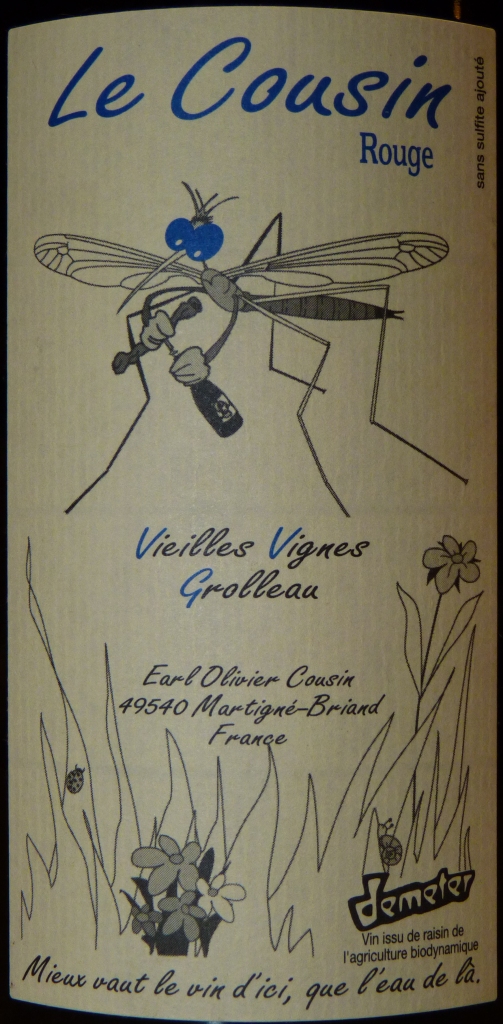
Let’s talk about wine, for which I had no expectations whatsoever. On the Treble Journey road, you come across many different wines. Some of them make you regret you ever touched the bottle, and some of them make you feel really happy you did. This wine, Le Cousin Rouge from Anjou region in France, made out of the grape called Grolleau, definitely belongs to the second category.
The reason? This wine is unique and different. Not because it is bio-dynamic wine – this is great, but not enough. It is simply different from majority of the wines I ever had, and has very unusual flavor profile. In one of the earlier posts, I called the wine I had a liquid steak ( and I said it was the most unusual). I didn’t know that the “unusual” wine will have competition – and it does, as I would like to call this Grolleau wine a liquid salami. Yes, you read it correctly. It has such a balance of acidity, earthiness and pungent feeling it leaves on the palate that I can only compare it with nice Italian salami. You don’t have to believe me – just find this bottle of wine, try it and let me know what do you think.
And of course the great thing is that I’m inching forward towards that 300 number, which gets closer and closer. I’m glad to make such discoveries along my Treble Journey – and I wish to your palate many happy experiences!
Last Bottle Sign Up ($10 credit)




 Talk-A-Vino