Rediscovering Ridge
 About five years ago, during one of my numerous trips to California, I had a little bit of free time. What do you do when you are in California, have a little bit of free time and love of wine? Of course, you go visit the winery!
A that time I decided to go visit Ridge Vineyards, located in Santa Cruz Mountains region, not far from San Jose. All I knew is that the winery is making wine called Monte Bello, which became famous after beating classic French Bordeaux during 1976 Judgement of Paris event. So I managed a steep 4 miles ride up the Monte Bello road, reached the winery, tasted 5 or 6 different wines and … didn’t like a single one of them. No, I don’t remember what exact wines and what exact vintages I tried, I just remember that none of the wines created any ”oompf”. I was disappointed and squarely put all the Ridge wines into ”I [really] don’t like it” category.
Holding that unhappy memory through the years, last year I even expressed my opinion in the comment to the twitter post by Jancis Robinson (she selected Ridge for a special wine tasting in Hong Kong), which caused some very unhappy reaction among her followers (to say “very unhappy” is a very mild understatement).
I can’t tell you why, but when this year I found out that I will be in San Jose area and I will have a bit of the free time, very first thought was ”I have to try Ridge wines again”. Four steep miles up the Monte Bello road and here I’m again. The air was beautiful, and so was the scenery – let me share a few pictures with you.
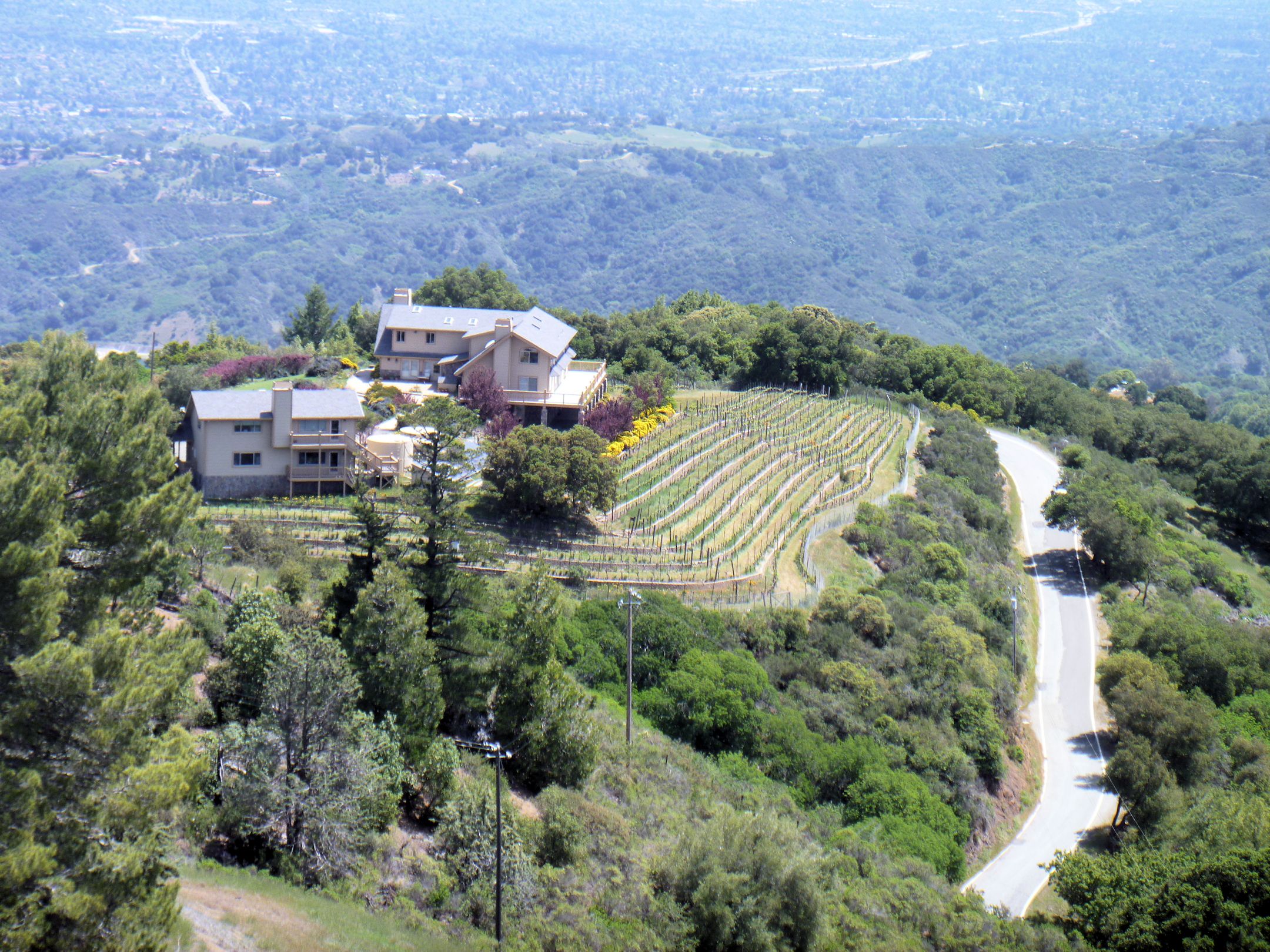
Ridge Vineyards is located near the top of Monte Bello Ridge. This is the “view from the top”:
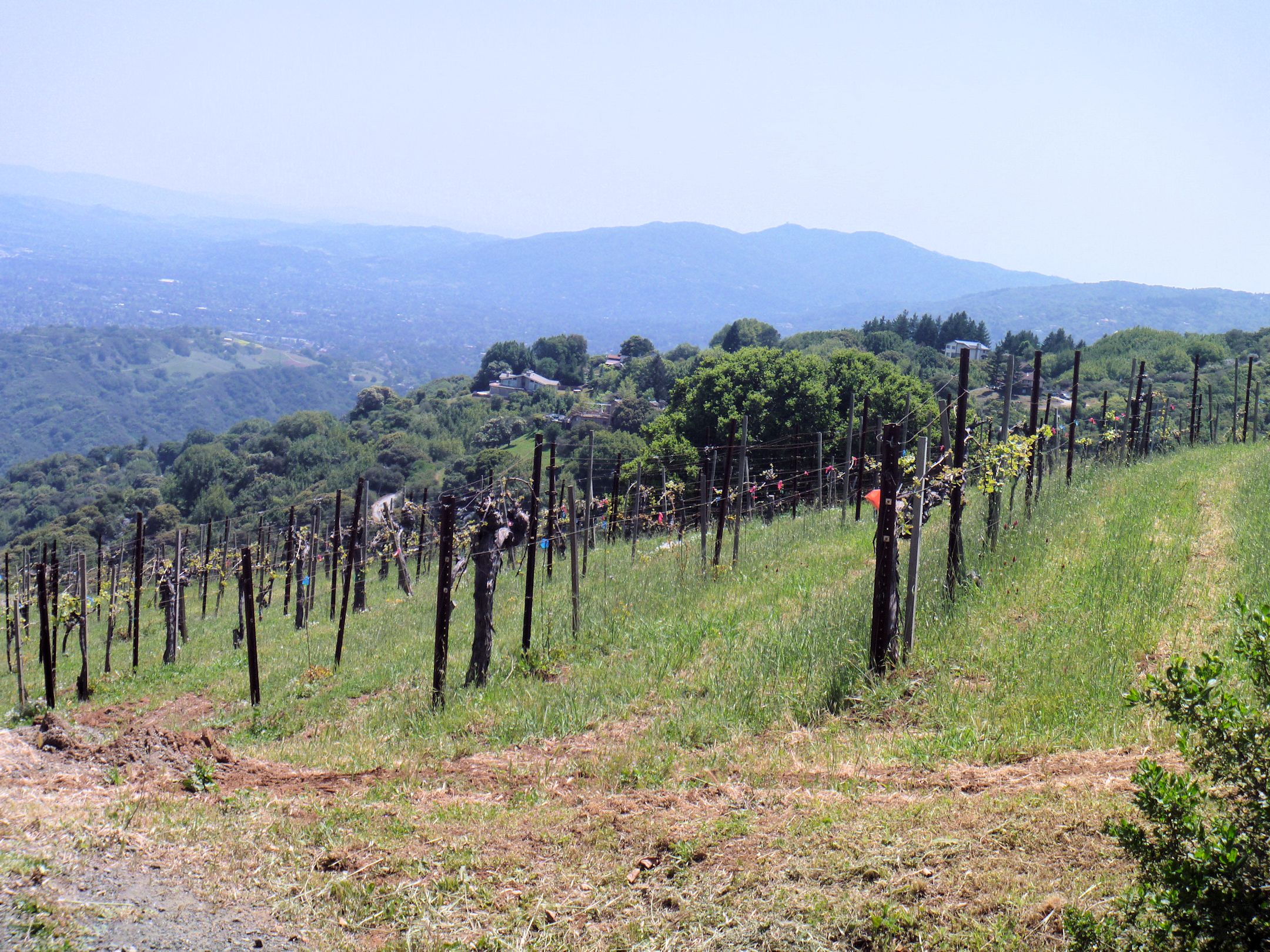
These are the vineyards at Ridge (by the way, in case you recognize the picture, it gives you an answer to the wine quiz #10, Where in California – correct answer is Santa Cruz Mountains region):
Here are some beautiful flowers for you:

Can you guess what happened now? I tried 7 different wines and … I liked loved every one of them. They all had common trait – balance and elegance, a quiet beauty, and may be most importantly, a sense of place – terroir, as French would put it. None of the wines were in-your-face, see-how-much-muscled-fruit-i-have – all of them were rather subtle, thought provoking and requiring time to reflect upon the content of your glass.
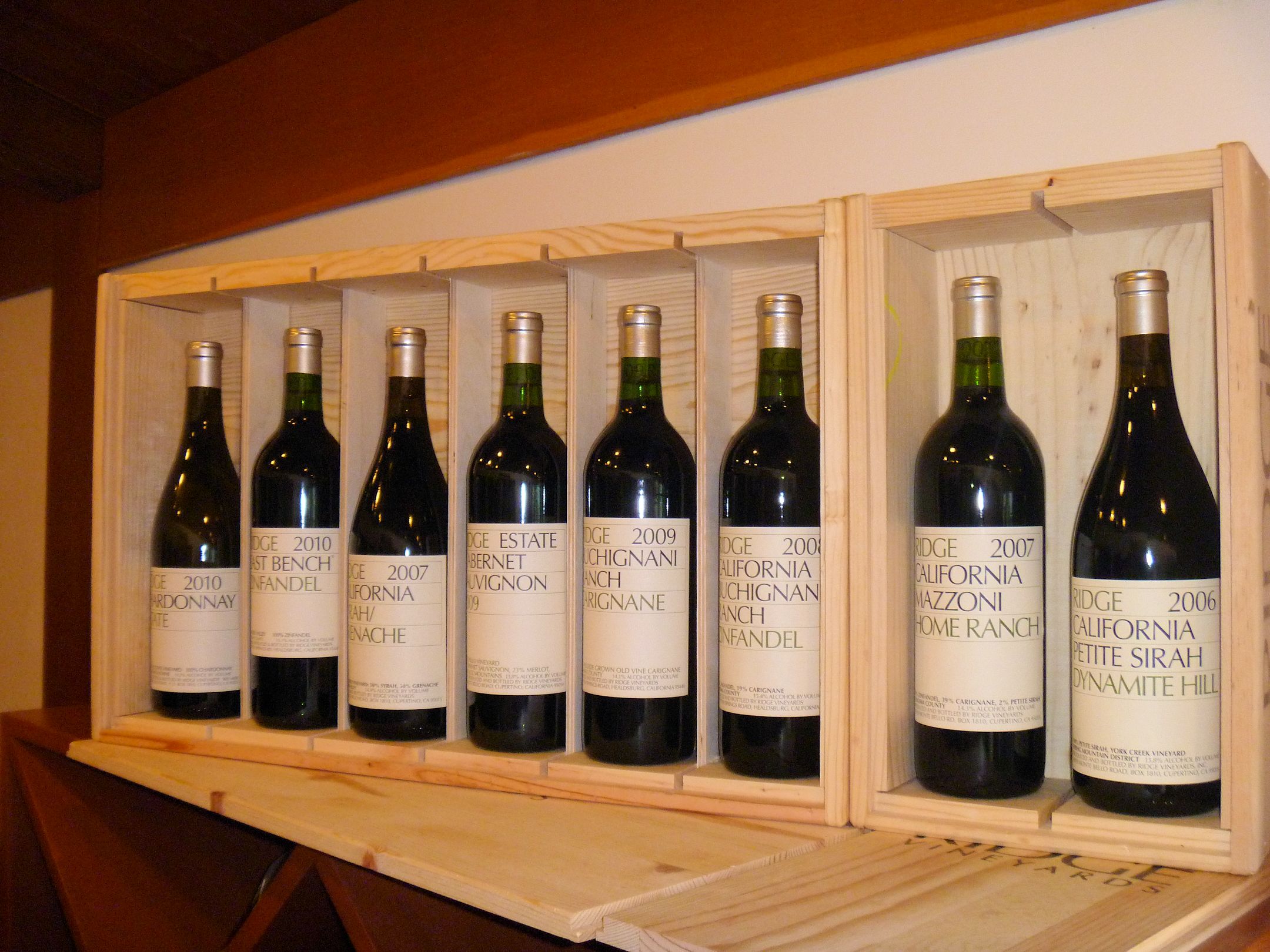
I don’t have an explanation. How come I didn’t like any wines the first time? Was that a ”leaf day”, a ”root day” or ”generally unfavorable” day? Did my palate evolved (that one I’m quite sure is true)? As you can’t enter the same river twice, I will not be able to relive that day 5 years ago and understand my reaction at that time. But I’m glad someone somehow somewhere decided that I have to go and try Ridge wines again – and discover something really beautiful.
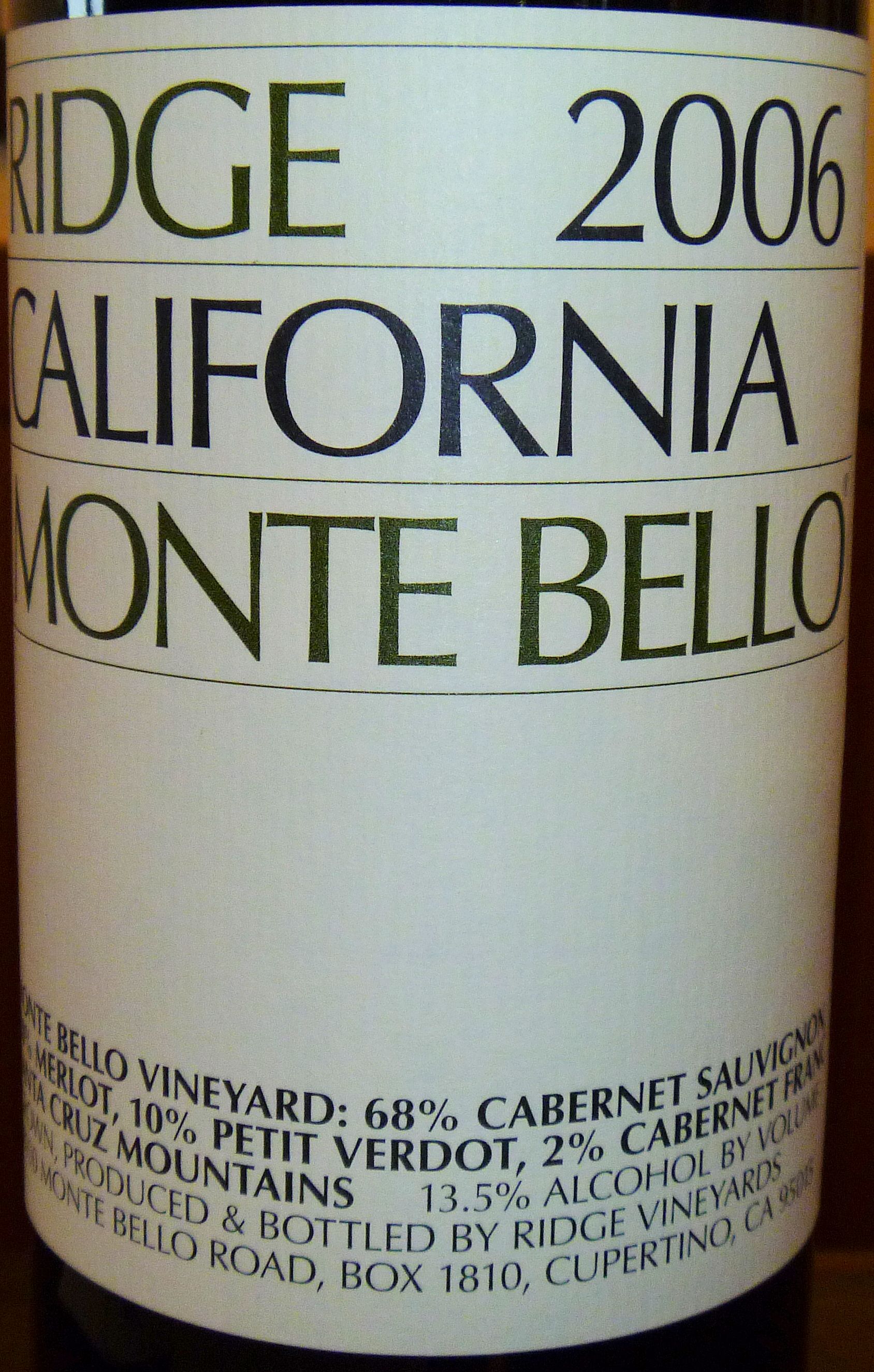 Here are the tasting notes for the wines I tried:
2010 Estate Chardonnay – A little edgy in unusual way, some herbal undertones, oak is unnoticeable, except back palate burn. Opens a bit cleaner later on, long finish with hint of lemon.
2009 East Bench Zinfandel (15.1% ABV) – dry, with some dry rub spices, nice nose of blackberries, unnoticeable alcohol level, very balanced, perfect fruit and acidity on the palate.
2007 Lytton Estate Syrah/Grenache (14.49% ABV) – nice fruit, touch of spice, hint of dry cherries, gentle tannins, good acidity. Perception of tannins increases going forwward.
2009 Estate Cabernet – Tremendous minerality on the nose, you can literally smell the earth. Very nice – hint of green, very Bordeaux-ish in style, restrained and balanced
2009 Buchignani Ranch Carignane – Tobacco and tar, nice bite of spice, nice simplicity. good tannins on the finish.
2006 Dynamite Hill Petite Sirah – Beautiful fruit right on top, dark fruit undertones, some cherries.
2006 Monte Bello – Beautiful fruit, perfect balance, very classic Cabernet Sauvignon blend, very long finish with tannins which are growing on you, hint of tobacco and earthiness on the palate. I’m glad this was the last wine I tasted, as the finish actually lasted at least for the next 20 minutes.
Yes, I was wrong before, and I don’t have any problems admitting it and getting over it – Ridge Vineyards makes great wines with the sense of place, and – better late than never – I’m very happy I made this discovery. Let’s raise the glass to the great discoveries of our lives! Cheers!
More Wine Commercials – Which One Do You Prefer Now?
Last week I asked you about your preferences between Concha y Toro Frontera and Yellow Tail commercials. Continuing the same subject, here are couple more for you to chose from. Let’s do Australia versus Chile again.
First, a commercial for another Australian wine, Yalumba:
And for Chilean, here is a commercial for Casillero del Diablo:
And this one is just for laughs…
So, what do you think now? Cheers!
Must Try Wines, with Updates and Explanations
 After publishing the first post about Must Try Wines, I had an extended dialog with @PeterZachar on Twitter, where Peter provided good suggestions as to more ”must try wines” to be added to the list. Then I thought about whole rationale of ”must try”, ”must do”, ”must see”, ”must experience”, and I believe it makes sense to talk about it first.
When it comes to ”must experience” in the wine world, I believe there are few deciding factors to get a given wine into that category. First one probably is a price. In the end of the day, this is how first known ”must try” classification came about – famous Bordeaux 1855 classification was made out solely on the price of the wines sold by various Chateaux. Of course price is just a consequence, an artificial showing of other, more fundamental factors, such as quality, reputation, demand and availability – but it is easy for us, humans to comprehend numbers, so the price serves as an aggregate measure instead of quantifying all other fundamentals independently. Looking at Chateau Petrus, Screaming Eagle or Seppeltsfield Port, each one faring at about $2500+ a bottle, it is easy to say ”if ever possible, I really really want to try it”.
Next factor is a reputation of the wine. Reputation in general is hard to assess, right? Well, when it comes to the wine world, one side of reputation also happened to be quantified for us – in the form of the infamous wine ratings. All over the wine blogosphere you can find beating and bantering of the various point rating systems – however, whether good or bad, consumers like to have some simple numerical indication of one ”thing” being better than another ”thing”. No, I’m not planning to divert into the 100-points scale discussion – what I’m alluding to is the fact that it is very easy to include wines rated 100 points into the ”must experience” category. Probably 98 to a 100 points will do just fine, as I can bet I would never be able to tell the difference between 98 and 99 rated wines, so 98 to a 100 is a good range. Should all 100 points rated wines be included into ”must try” list? I don’t think so, simply because you have to draw a line somewhere.
Another side of reputation shows up in the form of someone’s opinion – not a single person, but rather as a collective opinion. If the wine receives multiple [substantial] praises from multiple people, it is probably worth considering for the ”must try” subject – however, all these praises will most likely become reflected in the price, and almost certainly will affect one more ”must have” deciding factor – availability.
What do we usually want the most? That’s right – something we cannot have. In the industrial world, if we run out of something, we can make more of it. It doesn’t work the same way in the wine world. Deeply engrained in the concept of terroir, the most sought after wines are produced from the very specific vineyards – yes, you can plant more vineyards, but they will not bear the same fruit and you will not be able to produce the same wine. Therefore, you can’t address the increased demand by just making more – and your wine becomes less available (and its reputation most likely is increasing). The next step is for the wine to be sold only through the mailing lists thus injecting some sanity into that supply and demand equation. And in many cases price of wine goes up, completing the full connection between our three key ”must have” factors – price, reputation and availability.
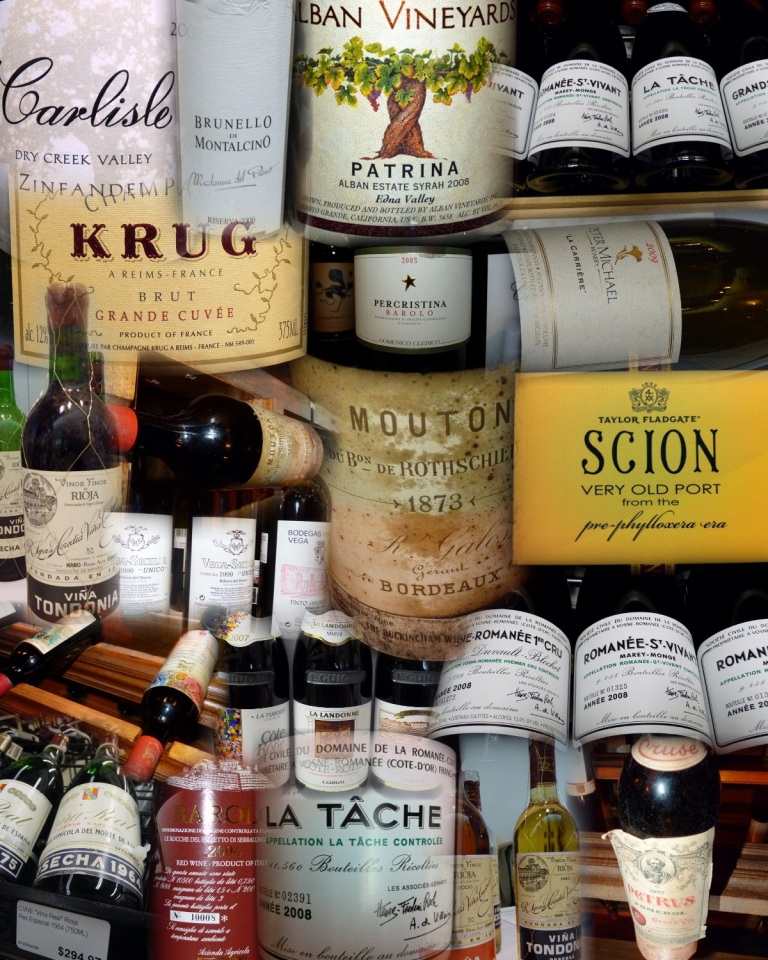
I hope I gave you enough insight into my logic. To come up with the additions to the original ”must try” list, I did two things. First of all, I used the exact recommendations from Peter. Second approach was based on using the Wine Spectator online and searching for the wines with 98 to 100 ratings in particular regions and countries – then looking at the prices and styles to decide if I would be interested in experiencing that wine. The result can be found in the updated table which is available as a standalone page on this site (please click this link).
Few more comments, if I may. For most of the wines from France, actual vintage is not essential – all these wines show remarkable consistency in good years and in bad years. Also for Bordeaux, Burgundy and Sauternes the actual ”must try” wine is a flagship which usually goes under the same as the winery itself. Same is true for California ”cults” outside of Rhone Rangers. For all other wines, the exact wine is listed. Also for Port, Madeira and Spanish wines the exact vintage is listed and important.
I just want to repeat the same disclaimer as last time – this list is a personal reflection – feel free to criticize it or make it yours and change it. I’m sure there are plenty worthwhile wines which can be added to this list – this is why I’m sharing it with you. Yes, you are welcome.
Let’s raise the glass for the best experiences of our lives! Cheers!
Weekly Wine Quiz #10 – Where [In California] Am I?
It looks like you had no problems with Wine Quiz #9, Which grape is not synonym to Tempranillo , correctly identifying Tinto Cao as the grape on its own. Also judging from the small number of responses, I have to assume that this was not a very exciting question.
For today’s quiz, I decided to ask for your help (again) to identify where in the world am I. I’m actually in California, but where exactly in California (which AVA) is a question. Just in case it can help you, here is the link to list of all California AVAs.
So, what do you think – please also share your thoughts in the comments:
Good luck and cheers!
Which One Would You Prefer?
While researching information for the new post, I came across these two videos. Both are representing best selling wines in US or may be even in the world. One of the them is for Yellow Tail wine from Australia, and the second one is for Frontera by Concha y Toro from Chile. Based on the videos, which wine would you prefer?
Here is Yellow Tail video:
And here is Frontera by Concha y Toro:
So, tell me – based on these commercials, which one would you prefer? I have my preferences, but I’m not telling until you do…
Weekly Wine Quiz #9 – What Is In The Name?
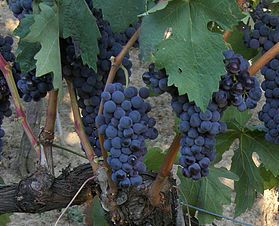 For today’s wine quiz, let’s talk about grapes, or more precisely, about the grape names. Just to make sure wine consumers are sufficiently confused, one and the same grape is called something completely different in various regions around the world. For instance, the grape which we know as Pinot Noir, is also known as Pinot Nero in Italy, Pinot Franc in the eastern-European countries, Spätburgunder in Germany and Blauburgunder in Austria.
Tempranillo is a grape which is used in production of many wonderful wines all over the world. It is particularly popular in Spain, where it is used to produce magnificent Rioja and Ribera del Duero wines, as well as in Portugal and many other countries. Tempranillo also has one the largest numbers of synonyms compare to the majority of other grapes, which makes it a good subject for today’s quiz.
Below you can see a number of grape names which are synonyms with Tempranillo – all except one. Can you identify which one is it?
Have fun! Cheers!
The Answer For The Wine Quiz #8, plus Another [Tricky] Mini Quiz
 The subject of the wine quiz #8 was “Do you know your AVAs“, and it seems that most of you have a pretty good knowledge of them. The list in the quiz contained mostly Napa Valley AVAs, with the exception of one – the correct answer was “Knight Valley”, as it is an AVA in Sonoma. Well done, team. To kick it up a notch, questions about AOCs, AOPs, DOs, DOCGs, IGTs and WOs are forthcoming in the near future.
Now, for the mini-quiz which you will need to answer in the comments, I have a question for you. Have you heard of the expression “Whistle while you work“? Do you know where it is coming from and what is the relation of that saying to the wine world? Please comment with your answer.
Happy Wine Tuesday! Cheers!
Weekly Wine Quiz #8 – Do You Know Your AVAs?
Saturday has come, so is the time for our weekly wine quiz. Before we get to the quiz itself, just a little update – based on the “popular demand” (okay, I don’t know if it was popular, but I got couple of requests), the answers for the weekly wine quiz will be provided in a few days after the quiz was published (probably Tuesday or Wednesday of the following week). And if that doesn’t make everyone happy – we can change it again.
Now, the subject of today’s quiz is something which is called AVA – American Viticultural Area, which is similar to the french concept of AOC. AVA designates the certain region as having unique terroir and unique grape growing and wine production requirements. If you remember an example with circles from Singles Night Out blog post, all AVAs are enclosed into one another – California includes Central Coast, Mendocino, Napa Valley, Sonoma Valley and more, all of which are AVAs in their own right. And then there are more smaller AVAs definied within a bigger one, such as Howell Mountain, Diamond Mountain and Yountville all being sub-regions of Napa valley.
Now, for the task at hand, below is a list of “smaller” AVAs. They all belong to one and the same bigger AVA, except one. And the question is: which one doesn’t belong?
Enjoy your weekend! Cheers!
Seductive Barossa
Today is Wednesday, right? Well, yes, of course, it is already Thursday for half of the world, but at least here, on US East coast, it is still Wednesday. And it is not only #WineWednesday as celebrated all over the Twettersphere, it is also a Wine Blogging Wednesday #76, a.k.a #wbw76, with the theme Barossa Boomerang. In other words, it is all about wines coming from Barossa Valley region in South Australia.
Winemaking history in Australia goes back more than 200 years, of course with ups and downs. From 1990s, Australian wine imports were growing very steadily, with Australia literally becoming a number one wine importer to US around 2005-2006. Australian Yellow Tail was the most popular wine on the shelves of US wine stores. And then…it all went down. The glut of inexpensive but at the same time absolutely indistinguishable wines was one of the reasons for that demise. Of course there were more reasons than that, but this is not the subject of today’s post – however, if you want to read more, here is a very good post by Jancis Robinson. As of late, Australian wines are slowly working its ways up the ladder, but it will take time and dedication to regain the lost positions.
So the theme of today’s Wine Blogging Wednesday should help exactly with that – there are many great wines produced in Australia, and this #wbw76 certainly helps to bring attention to the Australian wines. Barossa wines are somewhat of an easy subject, as there are lots of wines produced in the Barossa Valley, so finding the bottle to open is definitely not an issue. Would the subject be Victoria or Great Perth, it would make the task of finding the appropriate wine a lot more difficult. Outside of sheer availability, another great fact about Barossa region is that it is a home to some of the best and most famous wineries in Australia, such as Penfolds, Henschke, Seppeltsfield and others.
Okay, enough fluff, let’s talk about the wine. When the theme of #wbw76 was announced, I pretty much new only one thing about the wine I’m going to select – it will be a Shiraz. Which one exactly – I had lots of ideas in mind, until two days ago, when I saw 2008 Fetish Playmates Barossa Valley wine on sale at local Bottle King for $8.99. Considering the price and the fact that label looked very inviting, the decision was made rather easily.
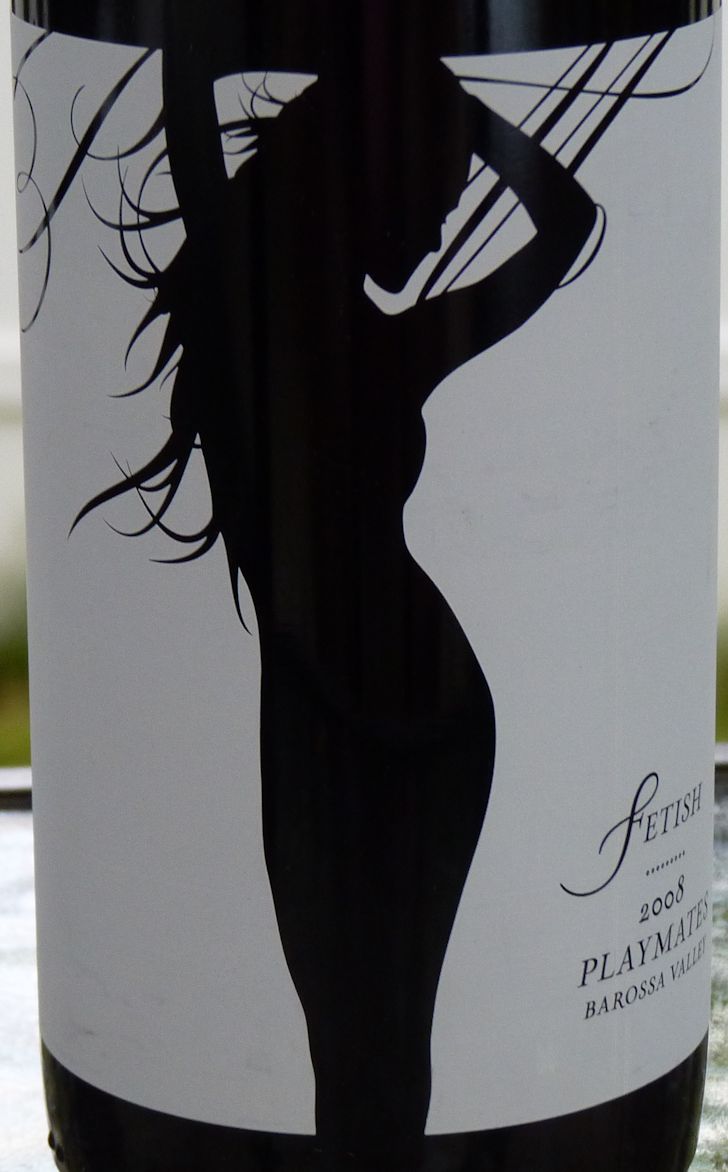
Here are my tasting notes, in quasi-real time: Dark chocolate and blackberries on the nose, slight hint of vanilla. Very round on the palate, showing lighter than expected just by the smell. Touch of spice and wine disappears on the palate, leaving it coated with tannins. Lots of tannins. This wine needs time to allow fruit to develop to support the nose experience on the palate. Very easy to drink… and then this wine grows on you – seductive, escaping and effervescent – if you can say that about red wine. Before you understand what happened, you are looking at the empty bottle – you still want more… but it’s gone.
If you care for a bit of technical detail, this wine is a blend of 80% Shiraz, 10% Grenache and 10% Mataro, ABV 14.5%. Drinkability: 8.
There you have it, folks – great seductive Barossa Shiraz for the Wine Blogging Wednesday. How was your #wbw76 experience? Cheers!
And The Answer For The Wine Quiz #7 Is…
I was told today that waiting for a whole week to get an answer for the wine quiz is unacceptable. So I have to comply with this request (okay, it was more than one request) and start providing answers sooner. Here comes an answer for the Wine Quiz #7 – Where in the world am I.
Yes, I understand that the question could’ve being a bit unfair, but nevertheless – this is California. To be more precise, this is Temecula Valley, almost a Southern-most appellation (AVA) in California, and the picture was taken from Leonesse Cellars property.
We will continue the subject of appellations, or AVAs (American Viticultural Area) in the next wine quiz – just making sure you will be ready…
Cheers!
Last Bottle Sign Up ($10 credit)




 Talk-A-Vino