Archive
One on One with the Winemaker: Luke McCollom of Left Coast Cellars, Oregon
 Let me tell you something – I really liked the concept of my first “one on one” post. Which means that I will try to make it into a feature and a series in this blog. And today I invite you to travel with me to the Oregon, third largest grape-producing state in the US. Our destination is Left Coast Cellars estate, home to one of the largest contiguous vineyards in Oregon, focused on sustainable viticulture and precisely focused wines. I had an opportunity to “sit down” (yes – virtually) with Luke McCollom, Founding Winemaker, Viticulturist and General Manager of the Left Coast Cellars, and ask him whole bunch of questions. I really asked lots of questions – and I got lots of great answers. I actually will have to split our conversation into two parts, just not to overwhelm you, my reader.
Without further ado, please pour yourself a glass of (Oregon, of course!) wine – here is our conversation with Luke McCollom:
Why “Left Coast Cellars”?
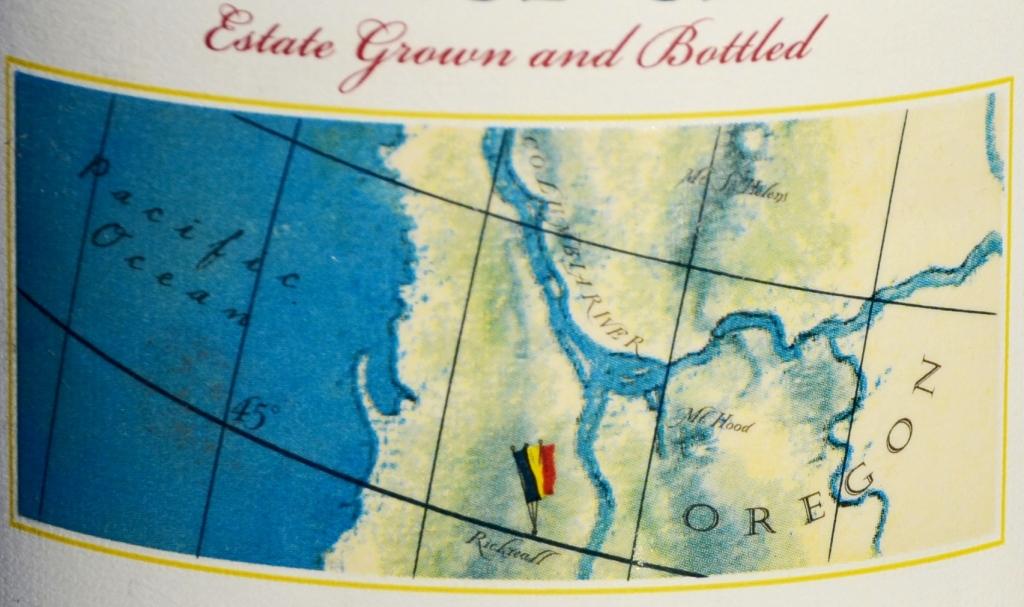
Well, we want to represent and paint a picture of our sense of place. The “Left Coast” can be seen on our Lewis and Clark Map rendered Labels. When you’re looking at a Map of the United States… we are on the Left Side! Also, of course… Left Coast is Family owned and 3 of the Family members running the Estate are Left Handed. When visiting Left Coast, coming from the closest Major city….The State Capitol Salem, you need to make Left Hand turns to get to the Winery. The Winery and Tasting room are both on the Left Side of the Drive. The term Left Coast not only describes our location, but our wholesome, casual style, and creative ability to artistically craft… unique, exquisite, Estate Grown handmade wines. Not to mention, the heavy “Coast” Influence brought in daily by the Van Duzer Corridor.
[TaV comment: I asked this question rather matter-of-factly, expecting the explanation about Left Coast, but it appears that there is so much more to this name]
Your logo looks very interesting. Is there a story behind it?
The “Sun” Logo is from a large Copper Sculpture which can be seen as you enter the property. The Sculpture was a gift given to Suzanne by husband Robert for an Anniversary. It is a beautiful, unique piece created by a Hawaiian artist named Abe Santoro. Santoro’s work can be seen at places like the Smithsonian. I believe Santoro is nearly 90 years old and is referred to as a Treasure of Hawaii.
For us it represents the Founders love for each other and the commitment of life partnership which led to a beautiful family, with passion for food, and wine. The logo is a symbol of the vision created together to Build an amazing Estate in The Willamette Valley. This “Circle of Life” logo also represents their commitment to Sustainability, the Earth, the Sun and the cycle of every vintage of wine.
When you started the winery in 2003 and purchased the land, were there any vines planted already or did you have to start from scratch?
When the Family purchased the property there were 25 acres of Pinot Noir. The first vintage crafted from these young Latitude 45 Vines received an 88pts. in Wine Spectator. This was very exciting because the vines where only 3 years old! Other than that, there was a large spring fed lake and most of the property was overgrown with poison oak and black berry bushes. All of the extensive gardens, landscaping, buildings, infrastructure, and design were created by the Family from scratch. Since then we have also planted another 115 acres of vineyards including 11 different types of Pinot Noir as well as some of the most extensive white wine grape plantings in Oregon.
According to the information on your web site, there are 8 distinct microclimates across your vineyards. Do your wines today already showcase the different microclimates or do you plan to expand on that in the future?
Yes, we constantly strive to showcase our different micro climates and to bottle distinct unique wines. Probably the best example of this is in the Vineyard Designate Pinot Noirs…(Right Bank Pommard, Truffle Hill Wadenswil, and Latitude 45 Dijon Bottlings). These Pinot Noirs are planted in locations best suited for their type of micro climate. Each Vineyard Designate Pinot is hand made in small, open top, French Oak Wine Vats. Each wine is made using different yeast and different dedicated barrel coopers selected to exemplify the Clone and Micro climate of each wine. For example, the Truffle Hill is a Swiss type of Pinot Noir, grown on one of our cooler sites (sort of like Switzerland) We use only Swiss Yeast in making the wine to showcase the tradition of the clonal selection and create distinct style and flavor. The Truffle Hill is aged using specific barrel cooperage which does not dominate the complex nuances of the Wadenswil Selection Pinot Noir. In the future, we would like to expand our showcasing of different soil types from the property comparing Sedimentary Soils to Our Volcanic Soils.
You grow Pinot Meunier, Syrah and Viognier – how do you use those grapes?
Pinot Meunier is used as a base in our Sparkling wines and is also made into a Field of Dreams Pinot Meunier still red wine. This year the Meunier was crafted into a sparkling Brut Rose and a couple hundred cases of still red wine. Meunier of course means “miller” in French like flour miller…because the vines are covered with white fuzz that makes them look like they were dusted with flour. Meunier is a mutation of Pinot Noir and loks like a “wild” Pinot Noir vine. The Meunier still wine sort of tastes like a wild pinot noir with it’s firm structure tannins and distinct brambly and pomegranate flavors.
Syrah and Viognier are also made into Field of Dreams Varietal wines for Wine Club and Tasting Room. The warm 2014 and 2015 vintages are good vintages for perfectly ripe Rhone Varietals in our climate. These vintages also make good quantity of these varietals for potential availability in the National Market. For 2015 Look for Left Coasts’ own Left Cote du Rotie…this is a Syrah co-fermented with up to 25% of Viognier. The Viognier has an enzyme in the skins which creates more extraction of color and flavor in the Syrah fermentation. Very Cool! Northern Rhone style wines which pair beautiful with food. We are a Pinot House, but the 45th parallel where we sit aligns exactly with Northern Rhone…this is why we grow small amounts of these varieties on the Estate. Another small celebration of Terroir, Microclimate, and Unique sense of place.
[TaV comment: this was a really a “duh” moment for me – and a clear showcase of deficiency of the virtual conversation – I forgot that many wines can be made in such a small quantities that they will be available at the winery only and never show on the web site, duh…]
to continue previous question – do you have any plans for single varietal Syrah wine?
Our first varietal vintage of Syrah was 2008…we recently opened a bottle to taste and the wine is incredible… still very youthful!
[TaV comment: “duh” moment didn’t stop with the previous question, right?]
It seems that Chardonnay is a rising star in Oregon – I see that you now offer Chardonnay wines for the past few vintages. What do you think of Oregon Chardonnays? What makes them unique? What is your chardonnay style?
Yes, we have committed some of our best land to growing Chardonnay. We have some of the largest modern plantings of Chardonnay in Oregon. The reason being, most people were ripping out Chardonnay when we were developing the vineyards, while we were planting it. We see Chardonnay as going hand in hand with Pinot Noir. Our 2005 Chardonnay was selected by the Oregon Wine Industry in 2010 as a “World Class Ageable White Wine” by our peers at the Oregon Wine Symposium.
We think this shows the potential of Chardonnay in Oregon and the potential of the Left Coast Estate. We strive to create a balanced Chardonnay with equal parts acidity, minerality, fruit, and oak. We believe we hand craft a Chardonnay which is very Oregonian in style meaning a wine which is clean, not oak dominated, will please non-chardonnay drinkers, and of course pairs well with Northwest Cuisine. For lack of description we try to craft Oregon Chardonnay as somewhere halfway between California and Burgundy. We love Oregon Chardonnay!!! and often ferment ours half in Stainless Steel Vats and Half in French Oak barrels. We believe the stainless portion of the fermentation preserves the fruit and acidty and the French Oak fermented portion provides subtle oak flavors with round mouth feel and volume. These wines are blended, married, and bottled together as one. We also have an extremely distinct Musque Clone Chardonnay that is concrete fermented and bottled for Wine Club.
I don’t know about you, but I definitely need a glass at this point, so here are two of the Left Coast Cellars wines I had an opportunity to try (as samples, courtesy of Donna White PR):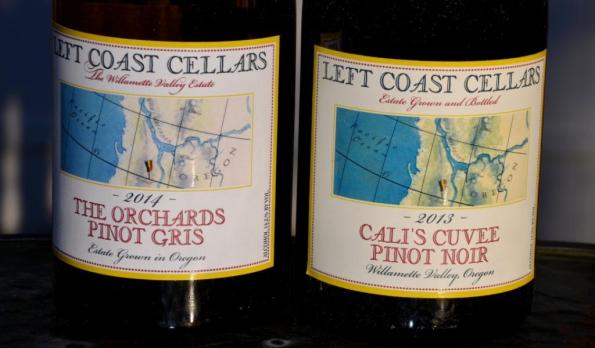
2014 Left Coast Cellars The Orchards Pinot Gris Willamette Valley, Oregon (14.2% ABV, $18)
C: straw golden
N: fresh flowers, fresh white fruit, candy, bright, exciting
P: nicely restrained of the palate, quite a contrast with the nose. Lemon zest, touch of grass, medium body with nice mid-palate weight, wine is nicely present, tart finish
V: 8-, should develop interestingly with time
2013 Left Coast Cellars Cali’s Cuvée Pinot Noir Willamette Valley, Oregon (13.5% ABV, $24)
C: garnet
N: typical Pinot Noir, sweet plum, violet, touch of licorice and vanilla
P: delicious. Sweet cherries, touch of eucalyptus, medium body, firm, touch of smoke, good acidity, good balance, very (very) long mouthwatering finish
V: 8, dangerous wine – once you start, it is very difficult to stop
That’s all I have for you for today. To be continued…
J Wrigley #WineChat – Continuing Oregon Pinot Noir Deep Immersion
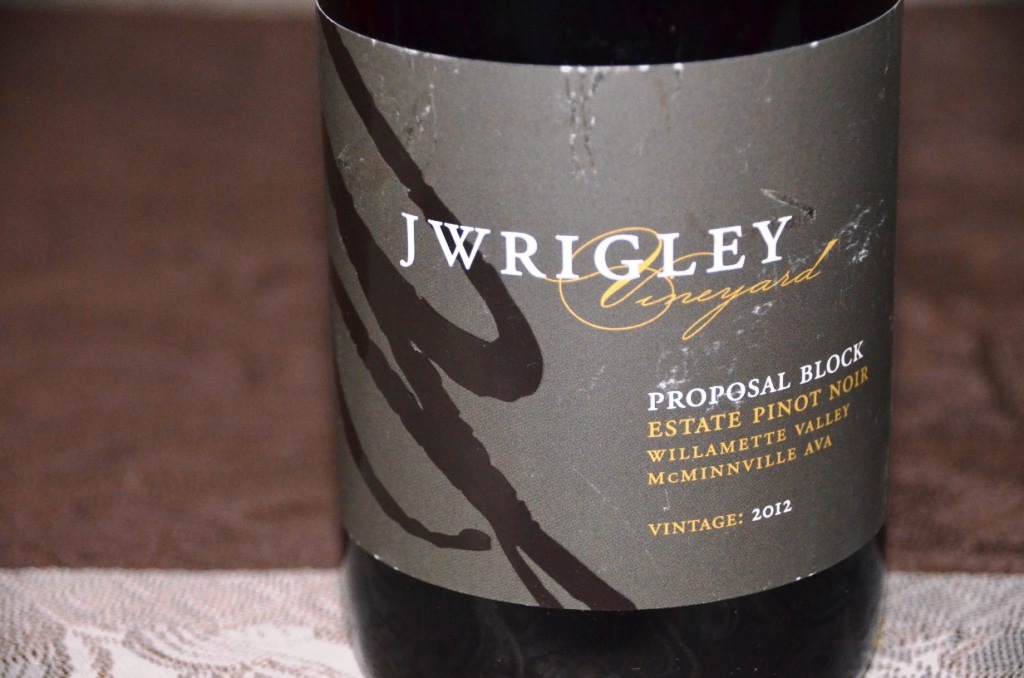 Last Wednesday, April 23, the virtual tasting room opened its #winechat doors to discuss for the third time in the row the endless subject of Oregon Pinot Noir. Presiding over in the hot seat was John Wrigley, the grape grower and winemaker at the J Wrigley Estate in McMinnville AVA in Oregon.
Let me start from the conclusion and tell you what I learned. The terroir, the soil, the elevation, and the winemaker are all matter. Duh, you wanna say? Well, yes, this sounds very pedestrian for the oenophile, like teaching an alphabet to the fifth-grader. However, when you drink the wine made with the soul, when you drink a thought-provoking wine, and when you also get a chance to discuss that thought-provoking wine with the someone who actually made it, and the group of like-minded people, the concept of soil and terroir stops being abstract, and rather becomes something you can…put in your mouth and taste!
We learned a lot during this #winechat. Once again we heard about the peavine soils, which make vines work really hard. We also heard about volcanic rocks and marine sediment soils. You can learn about the soils too – here is the link to the very interesting article about J Wrigley wines, which also includes the video of John Wrigley talking … dirt (not as a matter of speech, but as a substance).
We learned about something called Van Duzer effect. Ever heard of it? A narrow stretch of open land, called Van Duzer corridor, connects Willamette valley to the ocean. Every evening, the cold ocean air runs through that open space to cool off everything in the valley, especially all the grapes growing on elevations. The temperature drop can be in the range of 20°-30°, making grapes to ripen slowly, to retain acidity and concentrate sugars, which in turn means … better wines for us! Here is an article where you can read about Van Duzer effect in far more details.
We also learned about very interesting experiment, called the Cube Project. 3 wineries, 3 winemakers, 9 wines. 3 wineries – Anne Amie from Oregon, Bouchaine from Carneros and Lincourt from Sta. Rita Hills, each took their best Pinot Noir plots, capable of producing at least 6 tons of grapes each, and divided it into 3 equal parcels. Each winemaker had an opportunity to make wines from all three parcels, thus producing 9 different wines. When the wines were tasted by the group of professionals, it was concluded that winemaker style prevails over the terroir – the wines from different plots made by the same winemakers tasted closer than the wines made within the same parcels. I would really love to try all those wines by myself, or at least learn more about how the tasting was conducted – were the wines tasted blind, how many people tasted the wines and the number of other factors would all matter to me. But – as I can’t report first hand, here is a link to the article which explains the experiment in lots of details.
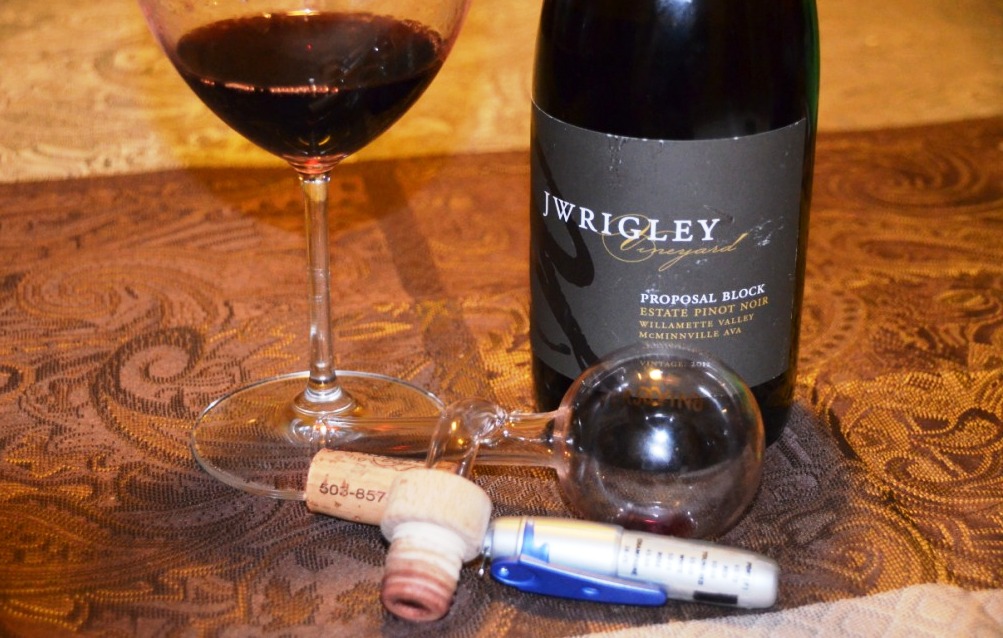
J Wrigley Pinot Noir and tools of the trade
Yes, we learned a lot, but how was the wine, you are probably wondering? This time around, I didn’t play with the temperature, I only measured it once – it was at 22.3°C/72°F. I played a bit with rapid decanting using VersoVino. This 2012 J Wrigley Estate Pinot Noir Proposal Block McMinnville AVA (14% ABV, aged 10 Month in French oak, 250 cases produced. $45 SRP) was very supportive of our conversation. Oh, by the way, can you guess where the name “Proposal Block” comes from? There is a good chance that you guessed it – this was the very first Pinot Noir planted vineyard at the estate, where John Wrigley proposed to his wife (wine and romantics – unbeatable!).
Now, here are some notes regarding the wine:
Color: Garnet
Nose: Fresh, ripe raspberries, floral notes, chocolate, mocha. Smokiness showed up later on.
Palate: Soft, round, good acidity. nice earhiness, dark fruit, very balanced. After a while, smokiness showed up in the back, and the the roasted notes.
Verdict: powerful and balanced Pinot Noir. Will drink well by itself, and can be well paired with food. For the full enjoyment, about one hour decanting is recommended. Will also age well for the next 10-12 years (or may be more, my crystal ball is broken, so I can’t be more precise). Drinkability: 8-
That conclude my report about J Wrigley #winechat and it also concludes the overall Oregon Pinot Noir series – definitely was learning, fun and entertaining experience for me. Don’t be shy – you should really try the #winechat for yourself (every Wednesday, at 9 PM Eastern/6PM Pacific) . Until then – cheers!
Meet the Winemaker: One on One With Morgon and Pouilly-Fuissé Vintners
Talking to the people who make magic is always an experience (yes, I’m comparing winemaking to the magic). I met the winemakers a number of times, but for the most of the cases, they were “in between” of some other important tasks (like harvest, for instance), so the idea of inundating them with questions never crossed my mind.
This time around it was a different experience – the winemakers where actually there to talk to me (feel special and scared at the same time), so I could (and rather was supposed to) to ask a lot of questions.
I met with two winemaking couples – Robert and Jeanine Béranger from Pouilly-Fuissé and Nicole and Pierre Descombes-Savoye from Morgon, both closely working with Georges Duboeuf, the famous French negociant, whose portfolio consists of about 400 different wines, mostly from Beaujolais (I met Georges and Frank Duboeuf a few years back, here is my post talking about it).
So I had an opportunity to ask the questions and then to taste the wines (each family produces only one wine!). Here are my questions with the answers (side note: really despise myself for thinking for the past 10-12 years “must learn French, must learn French” – and really not doing anything about it… The interview was done with the help of Heloise Pepin, brand ambassador for Georges Duboeuf wines).
Of course we started with the white wine, so my questions were directed first at Robert and Jeanine Béranger, whose family produces Domaine Béranger Pouilly-Fuissé wine for more than 200 years. The Domaine Béranger includes about 12 acres of Chardonnay, the only grape used in production of Pouilly-Fuissé wines. The vines at the domaine on average are 55 years old. All the harvesting is done by hand (you typically want to preserve clusters when harvesting the Chardonnay, this is why hand is the best instrument to use). Those 12 acres are split into 32 (!) different parcels, which are vinified separately and blended for the final release. Total production at the Domaine is about 26,000 bottles a year.
For what it worth, here are the questions I asked, together with the answers.
Q: What was most favorite vintage of your wines?
A: 1983 and 2003. 2003 was particularly interesting, as it was a very difficult vintage, and making of the wine was very challenging. 1976 was the exceptional year for the white wines.
Q: What was the oldest wine from your vineyards which you ever tasted?
A: 1969.
Q: For how long your wines can age?
A: In the exceptional vintage, the wines can easily age for 30 years, but generally they age well for about 15 years.
Q: When you are not drinking Pouilly-Fuissé wine, what are the other wines you like to drink?
A: Meursault, Chablis, New Zealand Sauvignon Blanc.

Next we tasted the wine, and here are my tasting notes.
2011 Emile Beranger Pouilly-Fuissé AOC (13% ABV, retail at about $26, 10% of the wine aged in 5 different types of oak barrels, then 14 month in the bottle before release) – pale yellow color in the glass. Hint of apples on the nose. On the palate there is a touch of butter, plump and creamy feeling. The wine is very round, roll-of-your-tongue, perfect acidity and perfect balance. A beautiful wine. Drinkability: 8+
Time to talk about the red wine, Domaine Jean Ernest Descombes from Morgon, so I directed my questions at Nicole and Pierre Descombes-Savoye. Domaine’s property includes 30 acres of the vineyards, all planted with Gamay grape, with three quarters of the vines been more than 50 years old. On average, the yearly production is 100,000 bottles. The grapes are harvested by hand to preserve the full clusters.
Here are some of my questions, along the same lines as the questions above.
Q. What was your favorite vintage of your wine?
A. 1973, as this was the year when our son was born.
Q. And how was that 1973 wine?
A. The wines were opened recently at the big party, and they were put against the 1973 Vosne-Romanée in the format of the blind tasting. Most of the guests at the party preferred the 1973 Morgon over the 1973 Vosne-Romanée. It is also interesting to note that as Gamay wine is aging, the freshness of Gamay grape is evolving into the complexity of Pinot Noir, so the results of the tasting are not surprising.
Q. For how long Morgon wines can last?
A. In the good vintage, the wines can easily last for 40 years or even longer.
Q. What do you drink when you are not drinking your own wine?
A. Burgundy and Bordeaux, especially the Saint-Émilion had been the favorite as of late. But we also like California wine.
Q: How would you compare the 2011 vintage with 2009?
A: Well, the vintage such as 2009, simply can’t happen again ( I’m sure mother nature has its own view on that), it was simply exceptional – and it is literally impossible to beat the 2009 vintage. But 2011 was a good year, and the wines from 2011 will easily last for 10-12 years or longer.
 And then it was the time to taste the wine.
2011 Domaine Jean Ernest Descombes Morgon AOC (12.9% ABV, aged for 6-8 month in cement tanks, $16.99 suggested retail) had bright ruby color in the glass. On the nose, the aroma of raspberries and cherries. Perfectly fresh on the palate, with more raspberry notes, clean, simple, with invigorating acidity and good balance. Drinkability: 8-
And that concludes my first sit down interview with the winemakers. It was fun, and I hope to be able to do more in the future. Cheers!
Last Bottle Sign Up ($10 credit)




 Talk-A-Vino