Archive
Serious Fun With Wines
In case you are wondering about the “serious fun” versus “not so serious fun”, somehow this title just got stuck in my head when I thought about this post, and I decided not to fight that. Also, when you have Gaja, Ornellaia, Turley, Bertani and whole bunch of other interesting wines, I think “serious fun” is a good way to put it. And to stress even further how serious the fun was, I’m even using different style of pictures for this post instead of usual “just label” style (and yes, you are right, I also use an opportunity to play with my new camera).
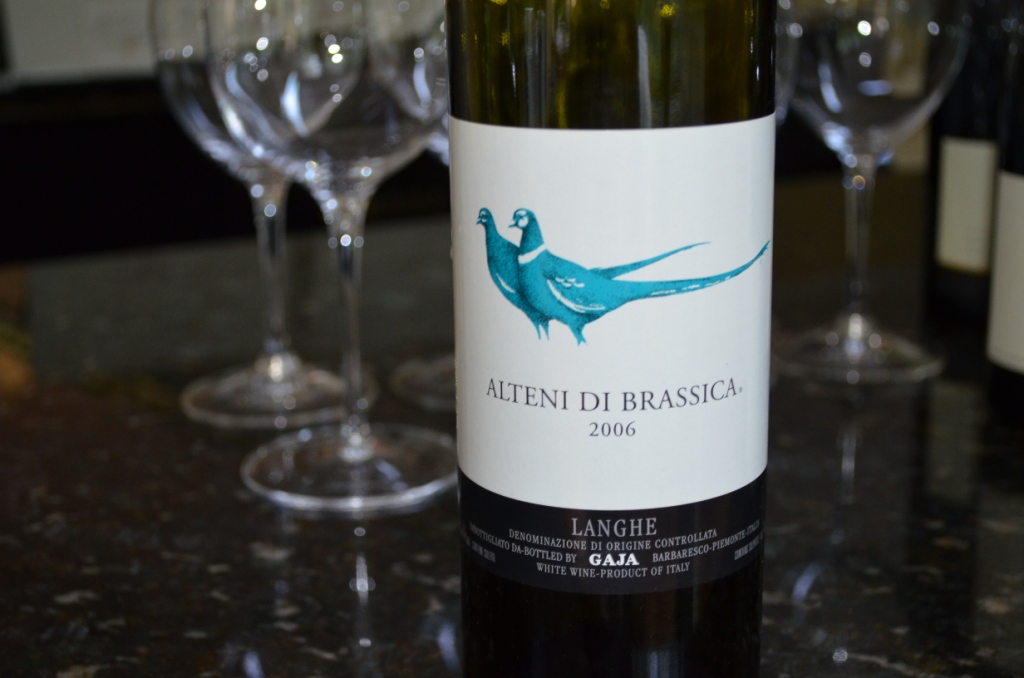
What is your first thought when you see the name like Gaja on the wine list? I don’t know about you, but in majority of the cases I would expect to see a red wine there. Yes, I can think of Gaja Chardonnay, and only because it typically looks at least as an affordable possibility on the wine list, as opposed to the Gaja red wines, which are not. So the wine we had was a white wine made out of …(wait for it)…Sauvignon Blanc!
2006 Gaja Alteni di Brassica Langhe DOC, Italy was a total surprise. Mineral nose, with wet stone, smoke and heavy grass. Touch of white fruit on the palate, more stone, touch of lemon, perfectly balanced. Finish lasted for 3 minutes, if not longer! Very beautiful wine. Drinkability: 9
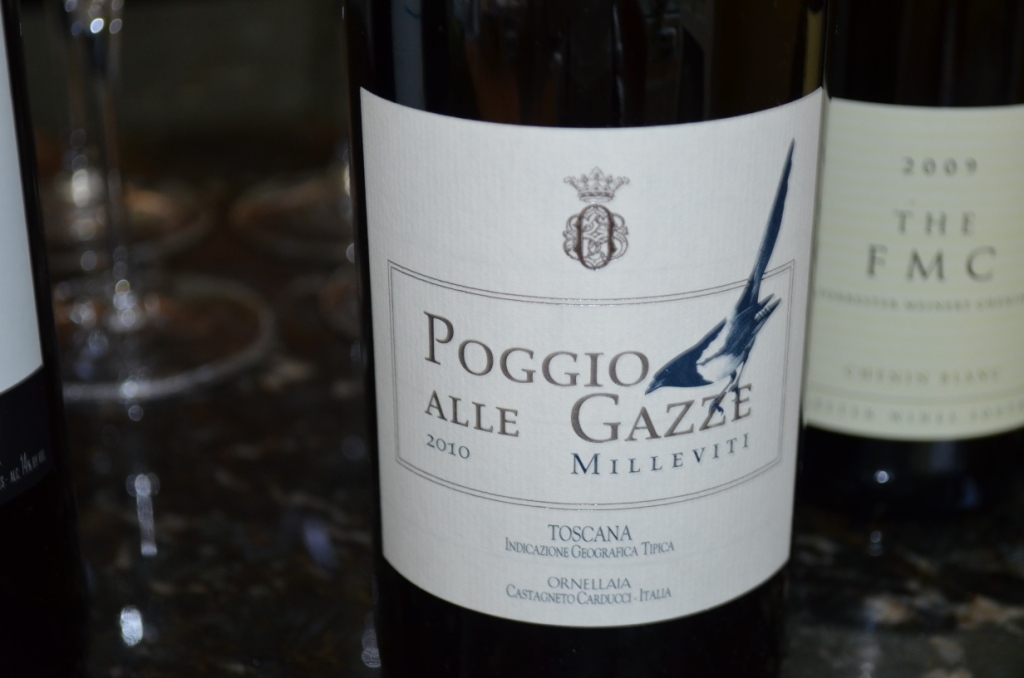
The next wine we had was also coming from a very respectful Italian producer, Tenuta dell’Ornellaia. And the wine was…yes, white again! The grape? Yep, Sauvignon Blanc. 2010 Poggio alle Gazze dell’Ornellaia, Toscana IGT was simply delicious, with perfumed nose of lychees and white apple. Palate was exhibiting nuts and ripe apple. Very long finish with some tropical fruit notes coming in later on. Bright, round, amazing! Drinkability: 9
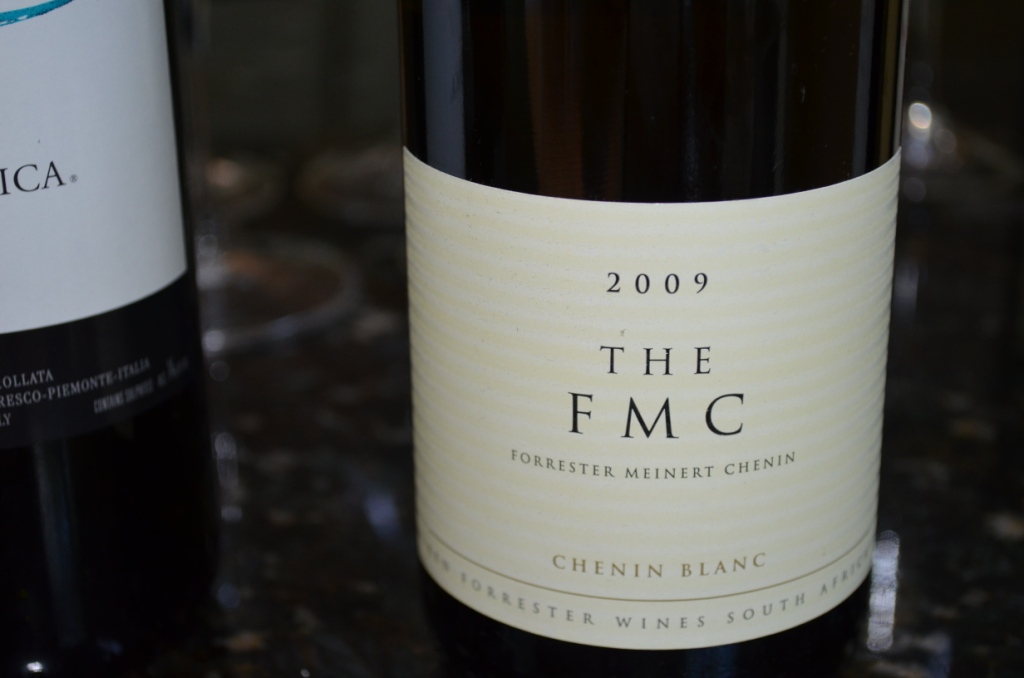
We continued our “whites’ extravaganza” with 2009 Ken Forrester The FMC ( (Forrester Meinert Chenin), South Africa. This wine was made out of the Chenin Blanc grape. While Chenin Blanc is one of the signature white French grapes from Loire, it also makes great wines around the world. It does particularly well in South Africa, where it is also known under the name Steen. This particular The FMC wine is a single vineyard flagship wine of Ken Forrester, one of the oldest producers in South Africa. This wine had a beautiful nose very similar to a typical chardonnay – nutty with some acidity, bright yellow color, very round. Drinkability: 8+

Done with whites. Before switching to the reds, we had a different, very unusual wine – as you can judge from the color above, this wine is not called “Orange” for nothing. Orange wine is one of the latest trends, where skin of the white grapes is left in the contact with juice during maceration. This imparts a nice deep yellow/orange color, hence the name, orange wine. This wine also was not some fly by night experimental plonk. 2008 Marani Satrapezo 10 kvevri, Georgia (100% Rkatsiteli grape, all coming from specific block of the Kondoli vineyard) was made in a traditional Georgian style with maceration for 20-25 days in historical clay vessel called Kvevri.
The wine had beautiful orange color. On the nose it had aromas of a bright fresh apricot. Palate was dry, full bodied, vegetative with enough brightness, touch of apricot but no sweetness whatsoever. After three hours in decanter the wine softened considerably – this wine definitely would benefit from a few years in the cellar. Drinkability: 8
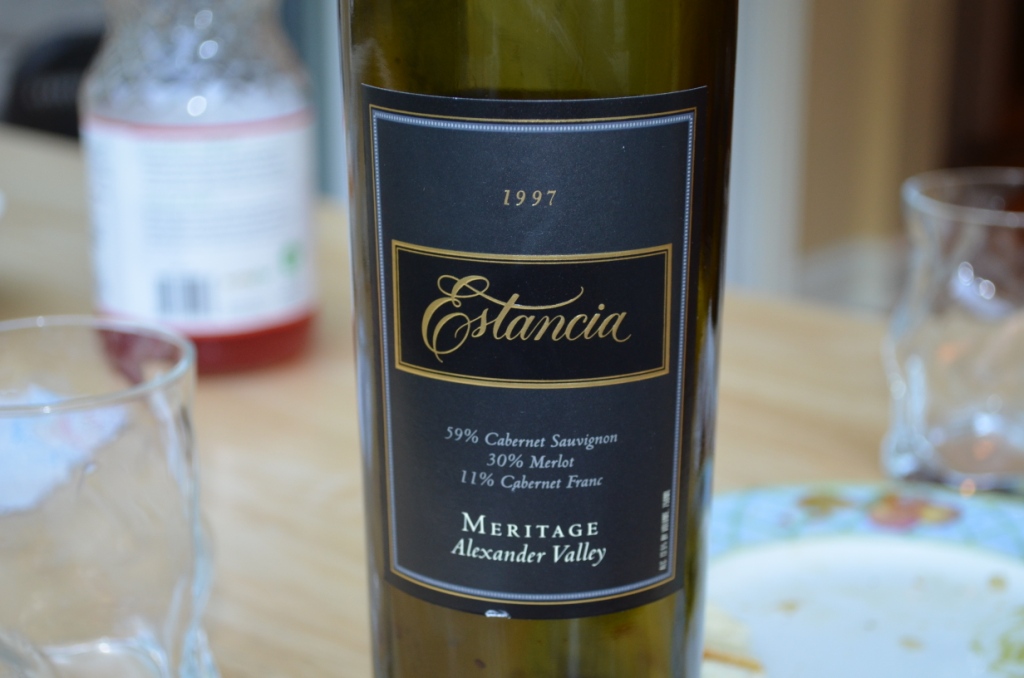 Okay, we are finally switching to reds – with it’s own set of surprises. We started from 1997 Estancia Meritage Alexander Valley (Cabernet Sauvignon/Merlot/Cabernet Franc blend). The wine had perfect color – dark, concentrated ruby red. Eucalyptus, wet stone, dust and raspberries on the nose. Bright red and black fruit on the palate with cassis, eucalyptus and licorice – perfect balance, nice, soft tannins. Drinkability: 8+
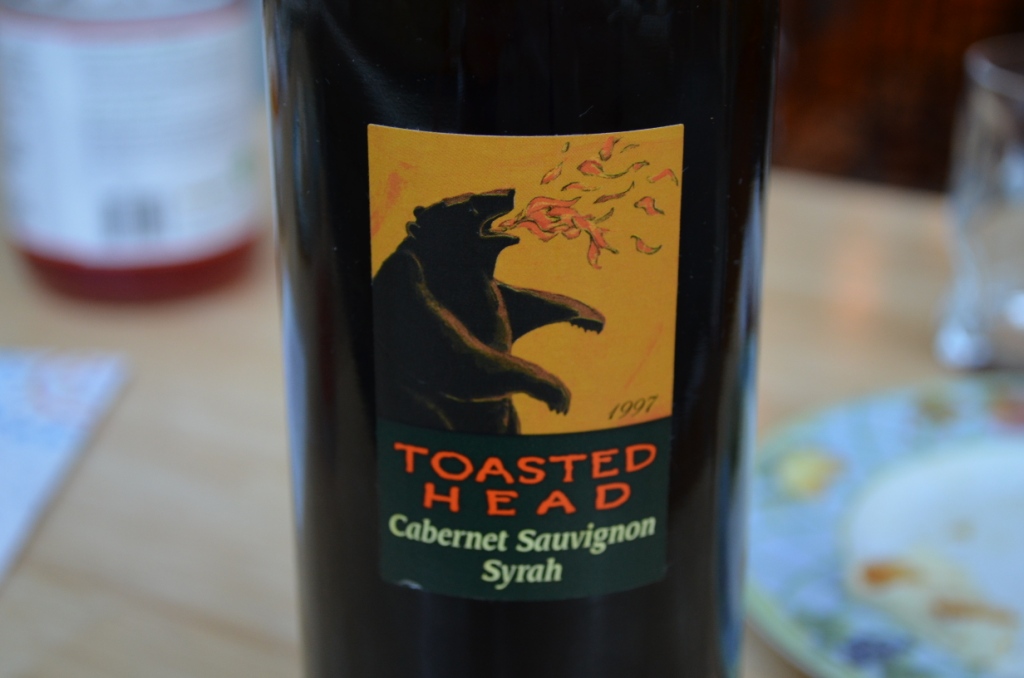 This was probably the biggest surprise of the evening – 1997 Toasted Head Cabernet Sauvignon Syrah California. Generally, Toasted Head makes simple everyday wines – which you generally are not going to age. This wine was simply lost in the cellar, and we opened it to taste but with the full readiness to dump it. To our astonishment (too strong of a word, but – why not), the wine had perfect acidity, bright youthful color, good black fruit, soft tannins and a touch of cassis. Drinkability: 8
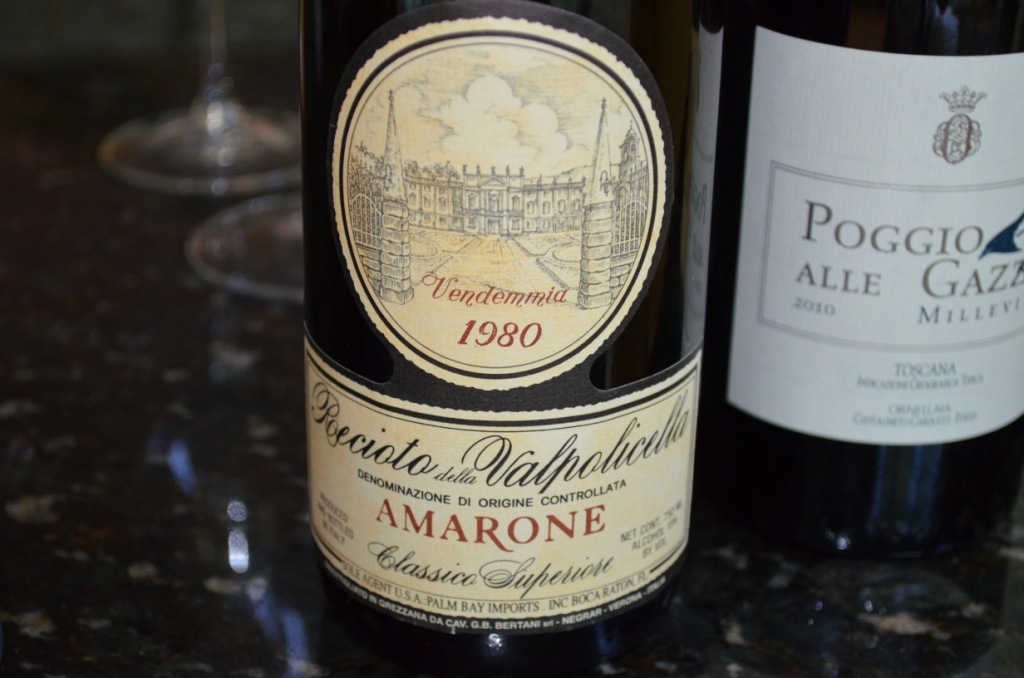
The next wine was Giribaldi Cento Uve – but this will be a subject of a separate post, so I will skip my tasting notes for that wine. And the next wine was the one … we killed – it sounds way too strong, I know – but please read on. Amarone are typically big enough wines, so we decided to decant this wine – without even tasting it first (but the nose was perfect!). This was a [big] mistake. After 3 hours in decanter, the wine became barely drinkable. Another 30 minutes later, the fruit came back, both on the palate and the nose, only to disappear shortly after. Note to self – be careful with decanting. Considering this experience, I will not give this wine any rating – it simply wouldn’t be fair.
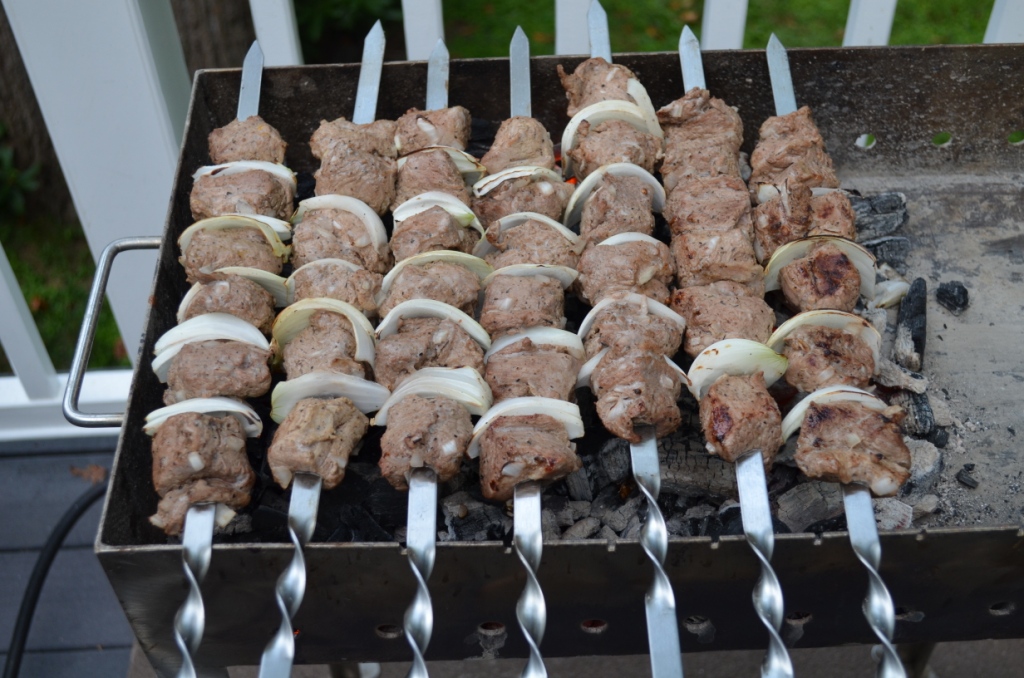
As you might expect, we didn’t just drink – we had a lot of good food as well. Just to give you an example, here is lamb kabob in the process of making:
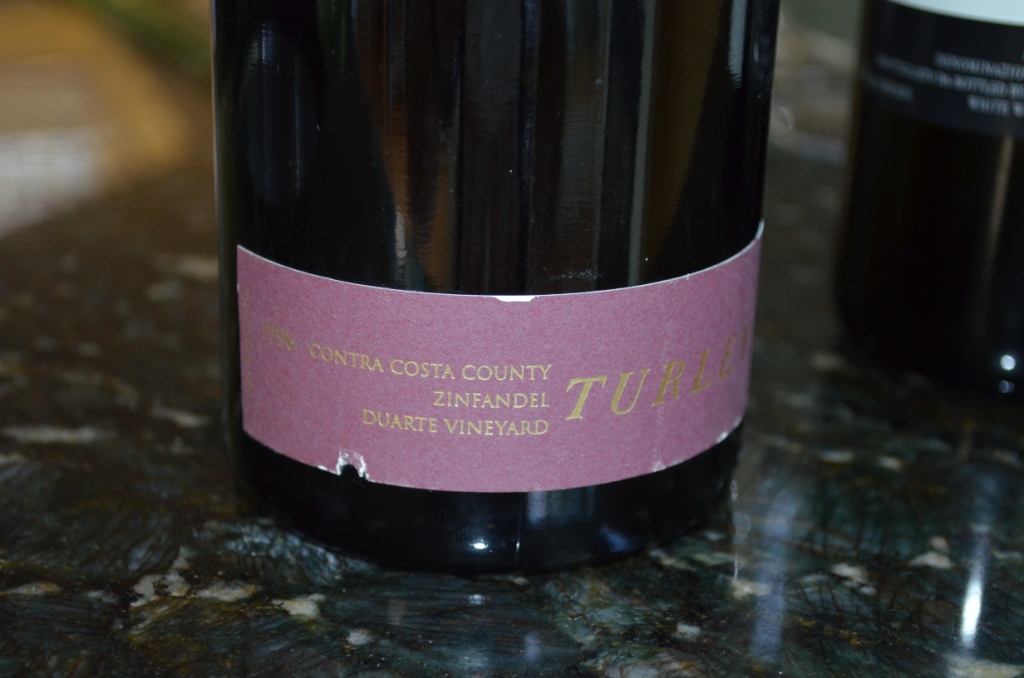
To complement the lamb, we had 1996 Turley Duarte Zinfandel – nice fruit, raspberries on the nose and the palate, hint of jammy fruit later on, plus some eucalyptus. Very good overall balance for the wine at 15.4% ABV. Drinkability: 8-
And then of course there was a dessert – Clafoutis (no further comments, just look at the picture):
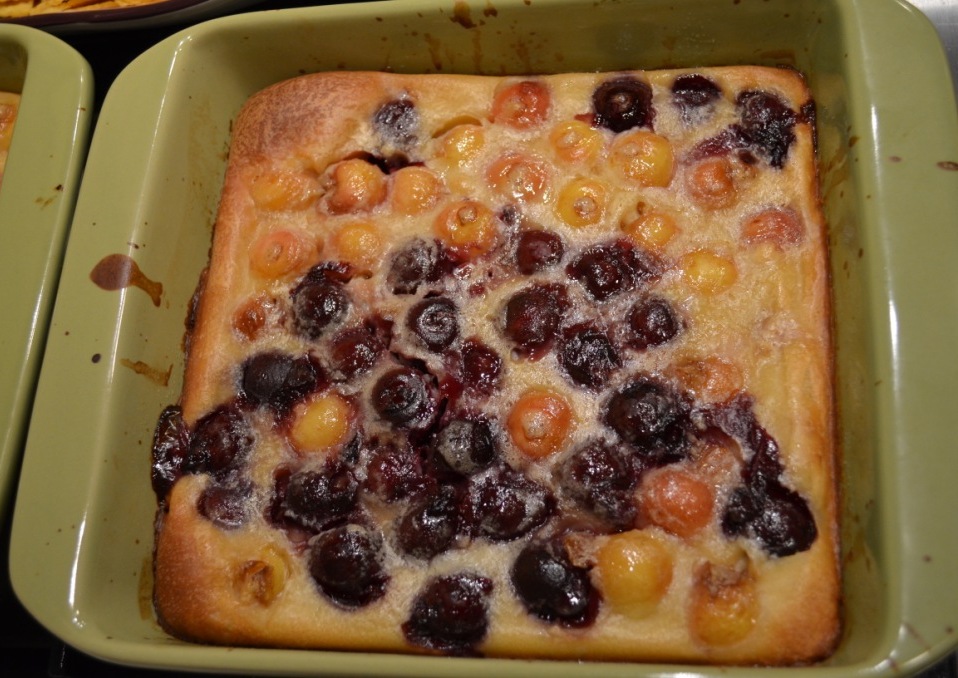
This was definitely a great experience. Pretty rare case when all the wines worked very well and were absolutely delightful – if I can only re-taste that Amarone… Well, may be one day. Wishing you great wine experiences! Cheers!
Crus of Beaujolais, Year 2011 – Part 2
I like sequels, Well, in the movies – sometimes, not so much. But when it comes to the writing, whatever you forgot to say in the first part, you can say in the second, and feel good about it, claiming that this was the intent from the get go.
What I didn’t mention in the first post about great tasting of Georges Duboeuf 2011 Beaujolais portfolio is that red Beaujolais make one of the best red wines for summer – they are typically light in alcohol (if you noticed, 13% ABV was the most for all wines mentioned in the first post), and they also taste the best when they are slightly chilled. Considering how hot this summer is across pretty much the whole US territory, I hope this will help you to find a good red wine for the hot day, because sometimes it just have to be red.
In the first post, I described a self-guided part of tasting. That tasting was followed by the lunch, both of which (tasting and the lunch) taking place at db Bistro Modern, one of the restaurants of the famous chef Daniel Boulud.
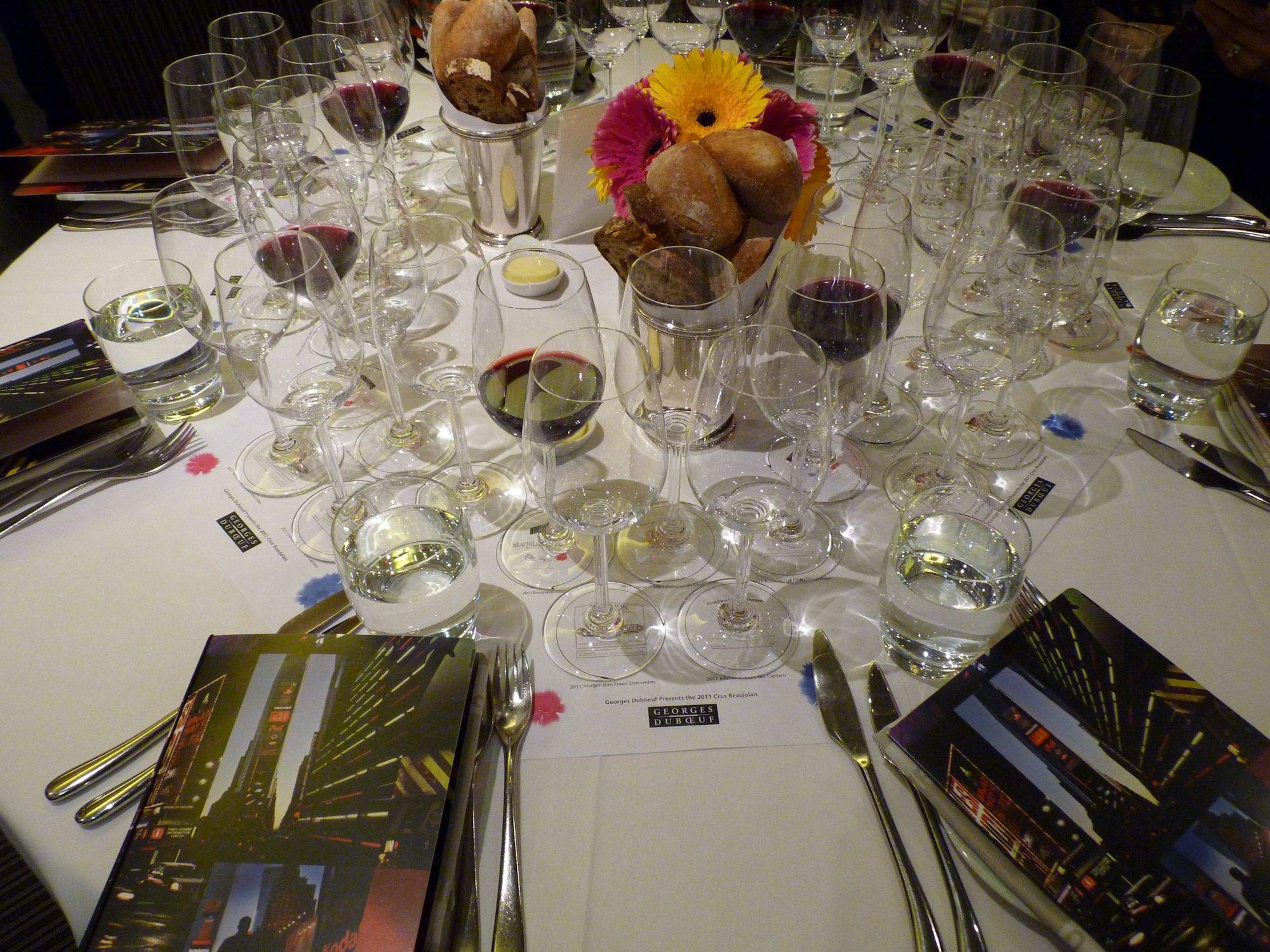
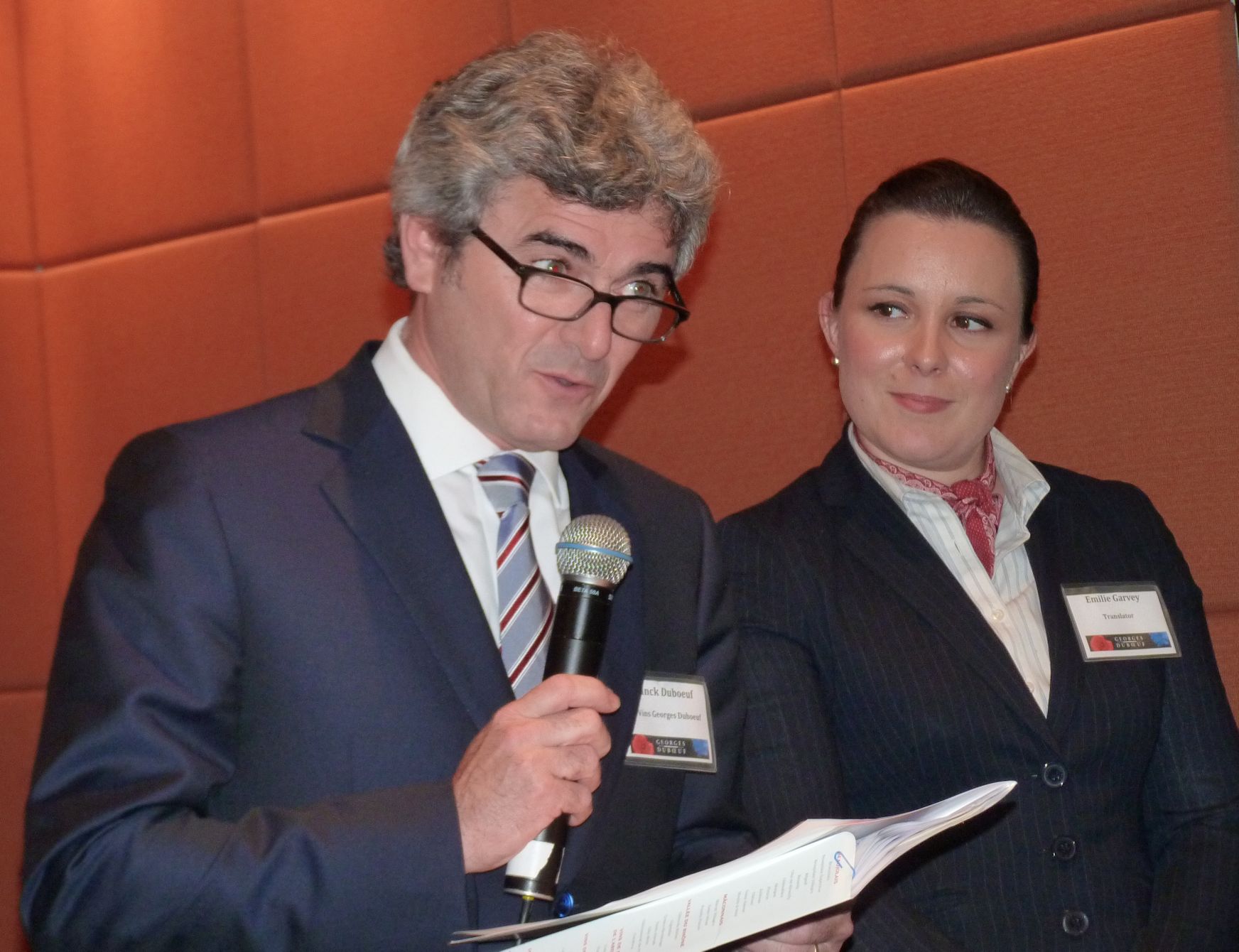
Georges Duboeuf opened the event with presentation of 2011 vintage. Here is my best effort transcript of what he said (remember, I’m not a professional journalist, I’m only pretending): “2011 was a great year. Budding started in April, then flowering started in June, and then harvest started August 22nd and lasted for two weeks. Some areas experienced periods of drought. Overall, grapes reached very good level of ripeness. 2005 and 2009 (considered best in a very long time) were good, but 2011 might be even a little bit better than 2009. Throughout the vintage, there are lots of black cherry and earthy notes.”

After Georges Duboeuf’s presentation, the first dish was served – “Legumes du Marche” – Young Garden Vegetables, Fromage Blanc Dressing, Lavender Honey Vinaigarette.
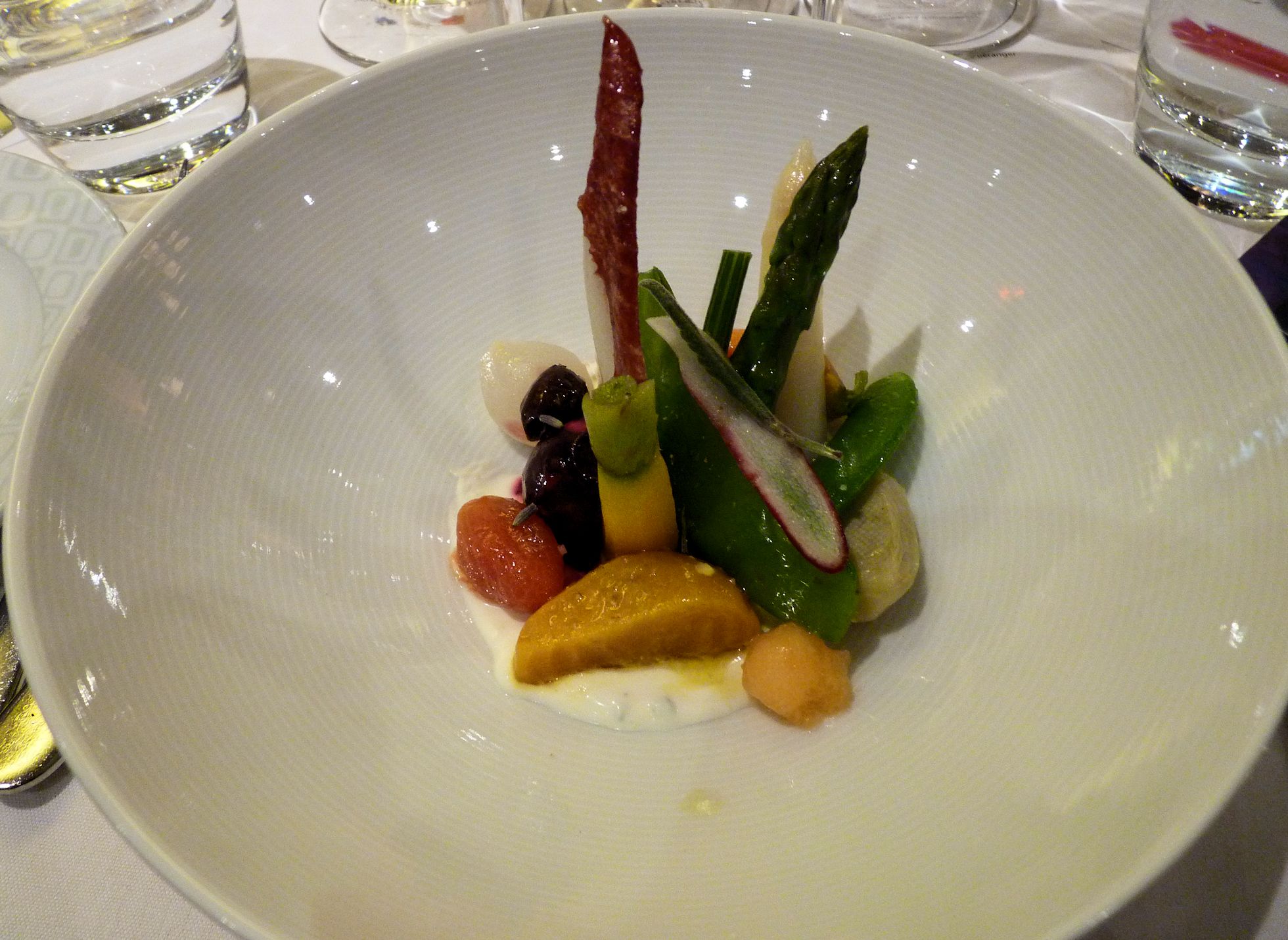
This dish was paired with 2011 Georges Duboeuf Beaujolais-Villages, and it worked together very well by wine complementing soft and earthy flavors of the vegetables.
Next, Frank Duboeuf presented two white wines, Macon-Villages and Pouilly-Fuisse (please see detailed note below). He said that 2011 was equally good year for both whites and the reds, which is a very rare situation. I didn’t take the detailed notes though, as I was preoccupied with parallel discussion at the table and delicious pairing of wine and food ( bad journalism : ( )
White wines were served with the next course, Seafood Risotto – Black Sea Bass, Scallops, Squids, Cockles, Fennel, Tomato Confit “Fumet” Emulsion.

Pouilly-Fuisse worked perfectly well with risotto, which was a unique experience for me. Creaminess of risotto cancelled out some sharpness of the chardonnay, creating next level of experience.
For the next course, Georges Duboeuf presented two red wines, Morgon and Julienas. He described Morgon as having “violet, cassis, kirsch on the nose, same flavors on the palate. A lot of structure. This wine will age very well”. Regarding Julienas, he said that “it is a very special wine, it has great personality. 2011 was a lot like 2009. This particular wine had the biggest success over the last 5-6 years. It was very critical to expand the vineyard (by 4 acres) for the success of this wine. This is a very noble wine with great aging potential. The wine was bottled a week before, right before the event”.
These two reds accompanied the last course of the meal – Duo of Beef – Braised Short Ribs, Beef Tenderloin, Spring Vegetables, Sauce Bordelaise.
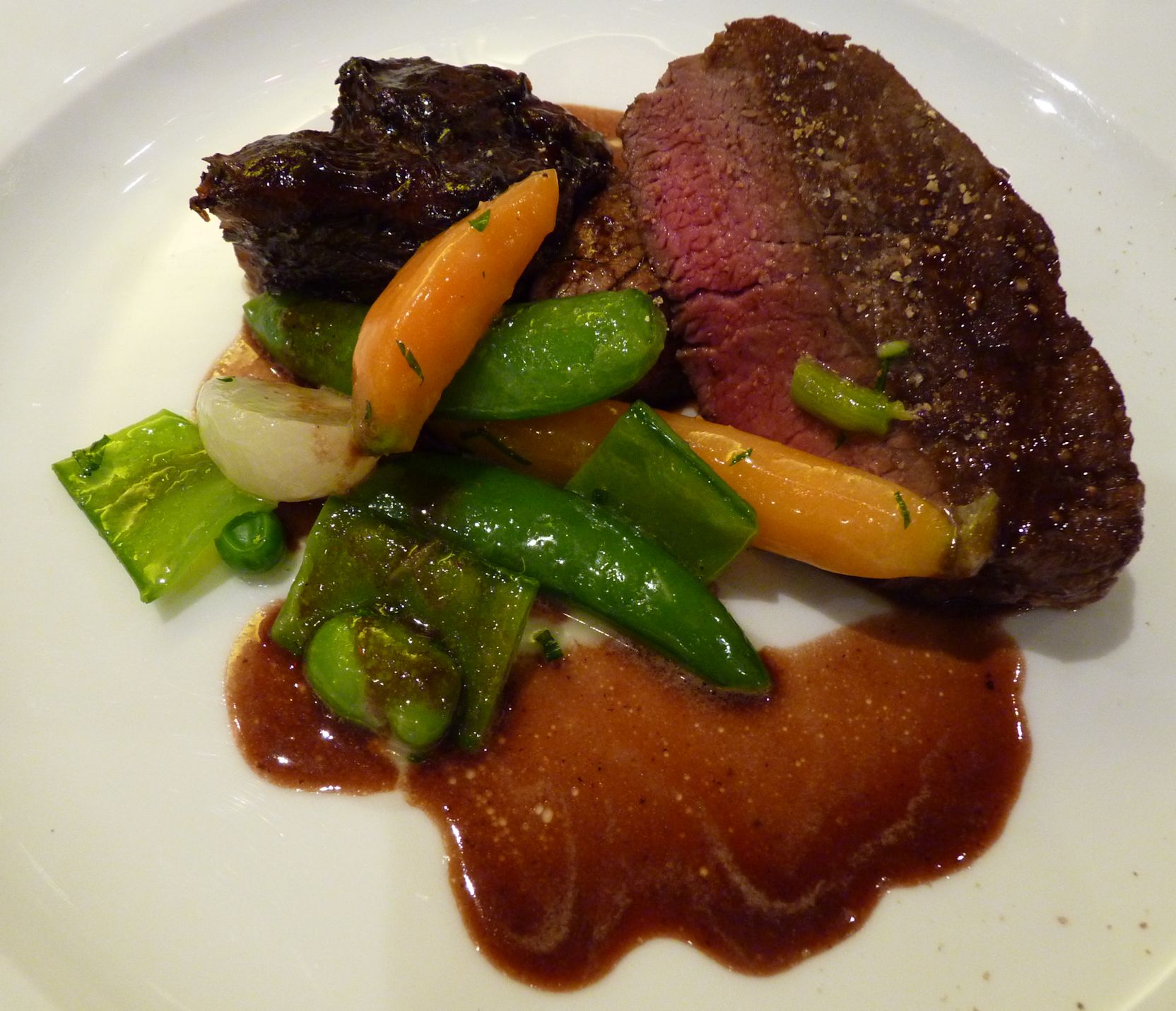
I have to tell that while both food and wine were delicious in its own right, they didn’t work together, so the pairing was not successful by not elevating the whole meal to the next level. But I also have to admit that both food and wine really didn’t bother each other too much – they were really two absolutely parallel experiences without a merge or a collision (which is often the case when wine and food don’t work together).
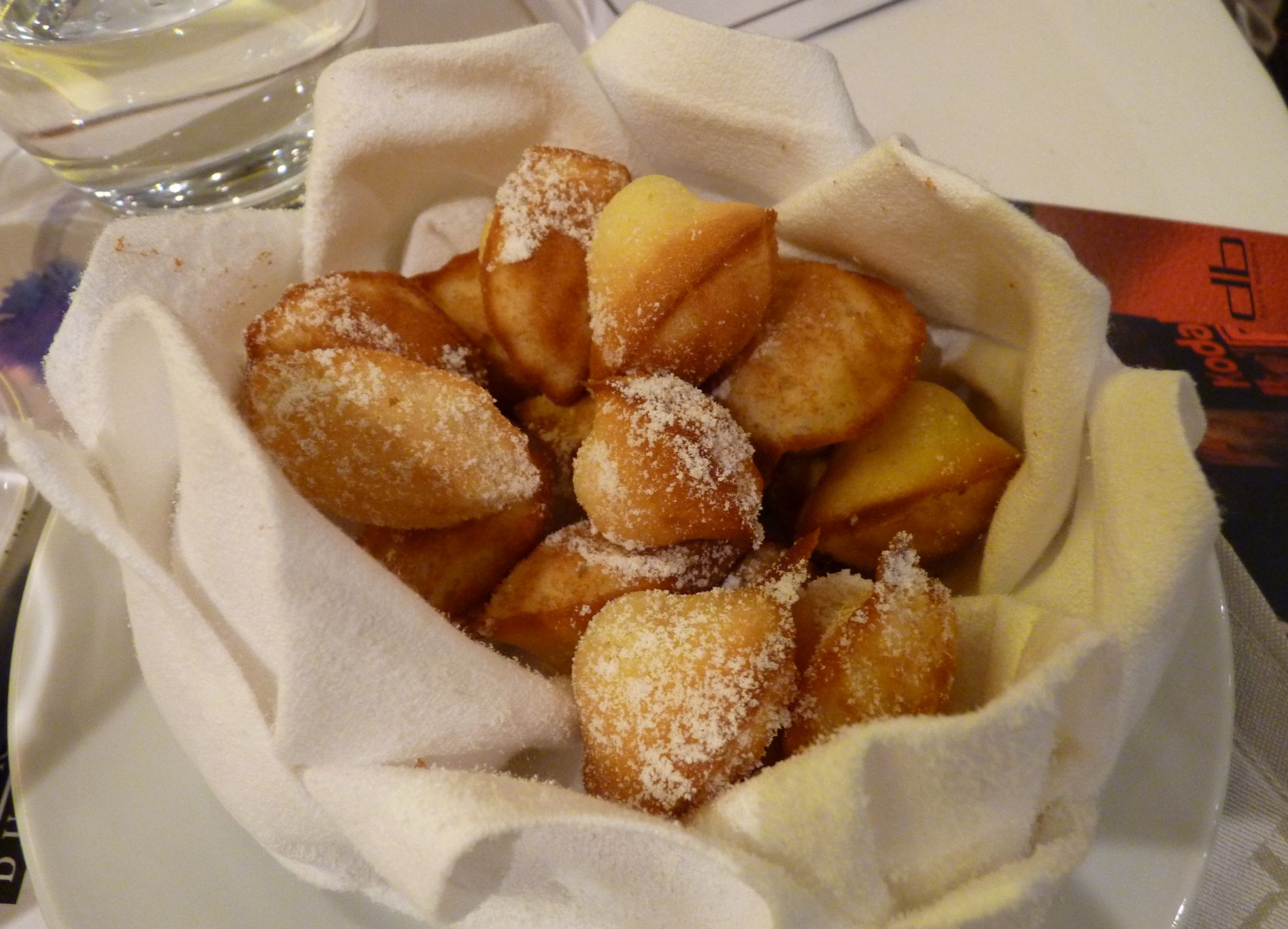
And then…there was a dessert, which was delicious and not paired with any wines (I also have no idea how this little cookies should be called, but it was very hard to stop eating them).
Here are the detailed notes for the wines:
2011 Georges Duboeuf Macon-Villages Domaine Les Chenevieres, Maconnaise, France (100% Chardonnay, SRP: $13.99, 12.5% ABV, 5000 cases produced) – Very nice, hint of hazelnut and citrus on the nose, good fruit, good balance, good acidity, hint of white apples, touch of vanilla and touch of oak on the palate. (Drinkability: 7+)
2011 Georges Duboeuf Pouilly-Fuisse Domaine Beranger, Maconnaise, France (100% Chardonnay, SRP: $17.99, 13% ABV, 3500 cases produced, 1200 imported) – this wine comes from the best area, the actual town of Pouilly-Fuisse. This wine had more pronounced chardonnay qualities than the previous wine – vanilla, touch of citrus and oak notes, excellent balance. (Drinkability: 8- )
2011 Georges Duboeuf Beaujolais-Villages, Beaujolais, France (100% Gamay, SRP: $9.99, 12.5% ABV) – very nice, good balance, a little tartness on the palate, but good overall. (Drinkability: 7)
2011 Georges Duboeuf Morgon, Domaine Jean Descombes, Beaujolais, France (100% Gamay, SRP: $15.99, 13% ABV) – good acidity, fresh fruit, light, soft, a bit too grapey to be great – but should improve with time. (Drinkability: 7)
2011 Georges Duboeuf Julienas Chateau des Capitans, Beaujolais, France (100% Gamay, SRP: $18.99, 14% ABV) – excellent depth, good power, good body, excellent balance. (Drinkability: 8)
All in all, it was one great event, both in the information and experience. Summer is still on, my friends – go find a bottle of Beaujolais to kick it off after a long day. And make an extra effort to find one of Georges Duboeuf wines – it will well worth it. Cheers!
Crus of Beaujolais, Year 2011
(this self-rant doesn’t belong to this blog post, but I have to let it out of the system. I don’t understand how this works – this post was supposed to be out more than a month ago – the event was great, and the content was very clear in my head – nevertheless, it took soooo long to actually write it. Sometimes, the road from the head to the paper medium is all so twisty, not straight at all. The things are not what they appear… But I think we can proceed now.)
 When you hear the word “Beaujolais”, what is the first thing which comes to mind? Beaujolais Noveau? Yes, me too. At the same time, Beaujolais is a large wine producing region, in area much bigger than Burgundy which it is technically considered to be a part of. And of course there is a lot more wine produced in the Beaujolais region than just a Beaujolais Noveau, a celebratory wine of a new vintage.
At the beginning of June, I was lucky enough to be invited for the tasting of the 2011 portfolio of wines of Georges Deboeuf. Georges Deboeuf is one of the largest and well-known wine merchants in France. He is credited with literally single-handily creating the Beaujolais Noveau phenomenon and often is called the “King of Beaujolais”. I also think that his success with Beaujolais Noveau, both wine and celebration of the new vintage with pleasant but very simple grapey wine, appearing in the stores all over the world always on the third Thursday in November, is also an enemy of serious Beaujolais wines, which can be absolutely fantastic – but this can be a subject for a whole different post, so let’s talk about the portfolio tasting of 2011 Georges Duboeuf Beaujolais wines.
 No, wait. Before we talk about the wines presented in the tasting, let’s take a quick look at Beaujolais wine region. Beaujolais region is located to the south of Burgundy. Red wines constitute absolute majority of wine production in Beaujolais, and Gamay is pretty much the only grape used in the production of that red wine (with small plantings of Pinot Noir been phased out little by little). White wines are produced from Chardonnay with Aligote been also allowed, but overall production of white wines is miniscule. Three levels of wines are produced in Beaujolais – Beaujolais, which allows usage of the grapes from the whole appellation – these wine should generally be avoided; Beaujolais-Villages, which are better quality wines, and so called Cru wines (top level). There are 10 Crus in Beaujolais – Brouilly, Côte de Brouilly, Chénas, Chiroubles, Fleurie, Juliénas, Morgon, Moulin-à-Vent, Régnié and Saint-Amour. In general, Beaujolais wines are considered simple and easy (and thus work well with wide variety of food), and also have lesser aging potential than, for instance, the wines of neighboring Burgundy (however aging is usually defined by the talent of winemaker more than anything else). Now that you know all the theory of the Beaujolais wines, let’s talk about tasting.
The tasting was organized by CRT/Tanaka and I would like to thank Caroline Helper (@ForgetBurgundy) for invitation. The tasting took place at DB Bistro Moderne in Manhattan, and it was split into two parts – self-guided tasting of 12 different newly released wines from Georges Duboeuf portfolio (some wines on the list were denoted as barrel samples, as they were just bottled a week before the event), following by organized lunch. Little bites of food were served during the self-guided tasting, and I had an opportunity to try a famous Daniel Burger (with foie gras inside!) – and it was absolutely delicious.
Here I will share with you my notes from the self-guided tasting – description of the lunch, where both Georges and Frank Duboeuf presented their wines, will make up a separate post (ahh, I hope it will not take me another month to write it!). Of course I can’t leave you with just notes, so you will also see some pictures.
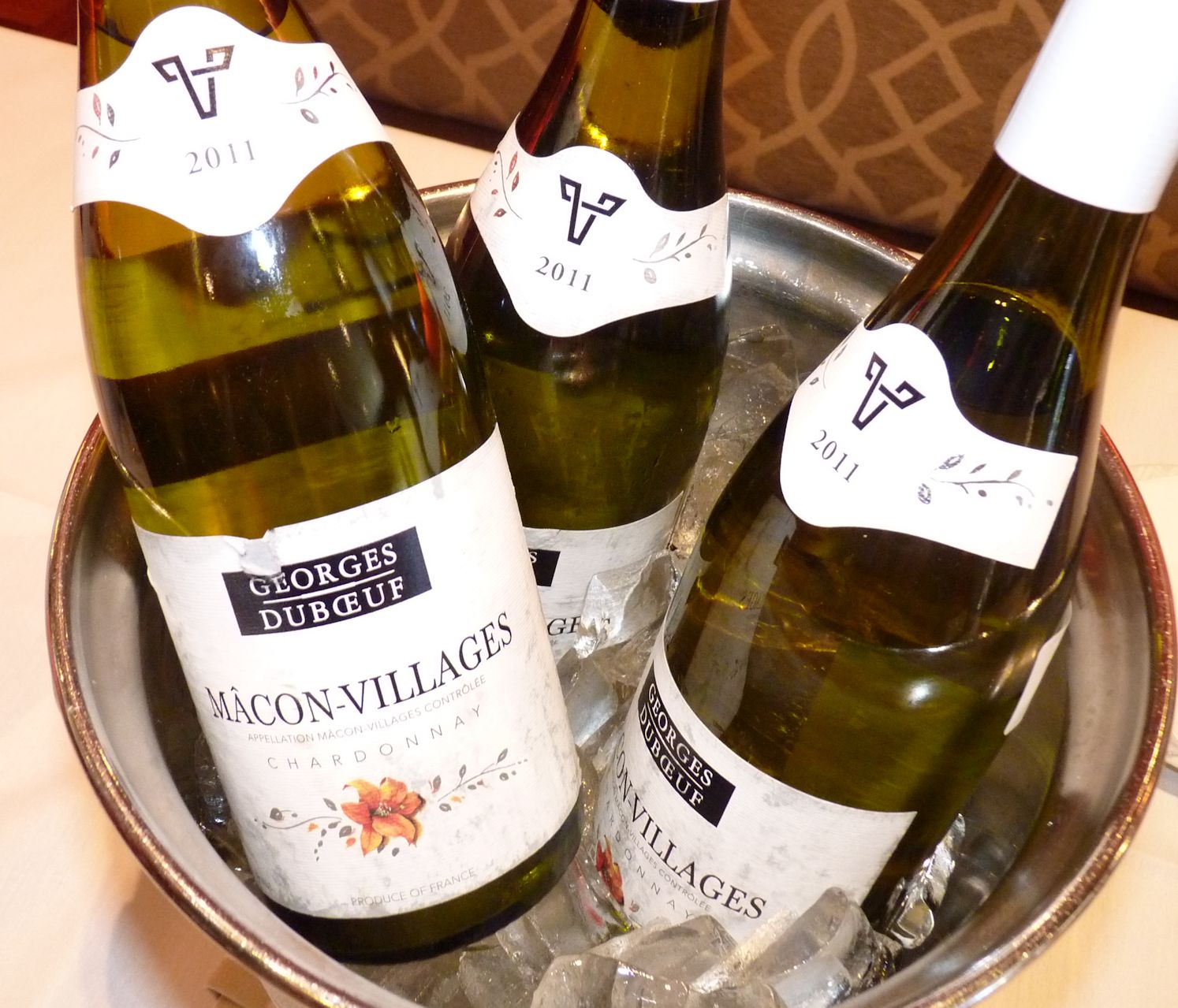
2010 Georges Duboeuf Macon-Villages, Maconnaise, France (100% Chardonnay, SRP: $12.99, 13% ABV) – Crisp acidity, interestingly nutty nose, hint of green apple, very mineral on the palate, with hint of limestone (Drinkability: 7)
2011 Georges Duboeuf Pouilly-Fuisse, Maconnais, France (100% Chardonnay, SRP: $19.99, 13% ABV) – green notes on the nose, lime zest, light, effervescent and crisp on the palate, with a hint of tropical fruit, very refreshing (Drinkability: 8- )
2011 Georges Duboeuf Beaujolais-Villages, Beaujolais, France (100% Gamay, SRP: $9.99, 12.5% ABV) – Fresh fruit nose, very tannic, more fruit and tannins on the palate, with tannins literally reaching Barolo levels. Needs time and may be different temperature (Drinkability: 6 at the moment, but this wine needs to be reassessed)
2011 Georges Duboeuf Chiroubles, Beaujolais, France (100% Gamay, SRP: $13.99, 13% ABV) – plums, acidity out of balance, tamed red fruit on the nose, tannins on the second taste (Drinkability: 6+)
2011 Georges Duboeuf Brouilly, Beaujolais, France (100% Gamay, SRP: $14.99, 13% ABV) – tart cherries on the nose and palate, more balance than the previous wine, but still lacking a bit (Drinkability: 7- )
2011 Georges Duboeuf Brouilly Chateau de Nervers, Beaujolais, France (100% Gamay, SRP: $15.99, 12.5% ABV) – closed, not balanced, all over the place – fruit, acidity, tannins are not harmonious (Drinkability: 6+)
2011 Georges Duboeuf Morgon, Beaujolais, France (100% Gamay, SRP: $14.99, 13% ABV) – very nice nose with open fruit, too dry on the palate, very tannic, needs more fruit (Drinkability: 7- )
2011 Georges Duboeuf Fleurie, Beaujolais, France (100% Gamay, SRP: $15.99, 13% ABV) – good fruit, ghood acidity, reasonably balanced (Drinkability: 7)

2011 Georges Duboeuf Fleurie Domaine des Quatre Vents Beaujolais, France (100% Gamay, SRP: $18.99, 13% ABV) – very nice! Round fruit on the nose and the palate, very good balance (Drinkability: 8- )
2011 Georges Duboeuf Julienas, Beaujolais, France (100% Gamay, SRP: $14.99, 13% ABV) – pleasant nose, good acidity, but fruit is closed (Drinkability: 7)
2011 Georges Duboeuf Moulin-a-Vent, Beaujolais, France (100% Gamay, SRP: $15.99, 13% ABV)- fresh fruit on the nose, lacks substance on the palate, needs more power – this wine is red like white (Drinkability: 7)
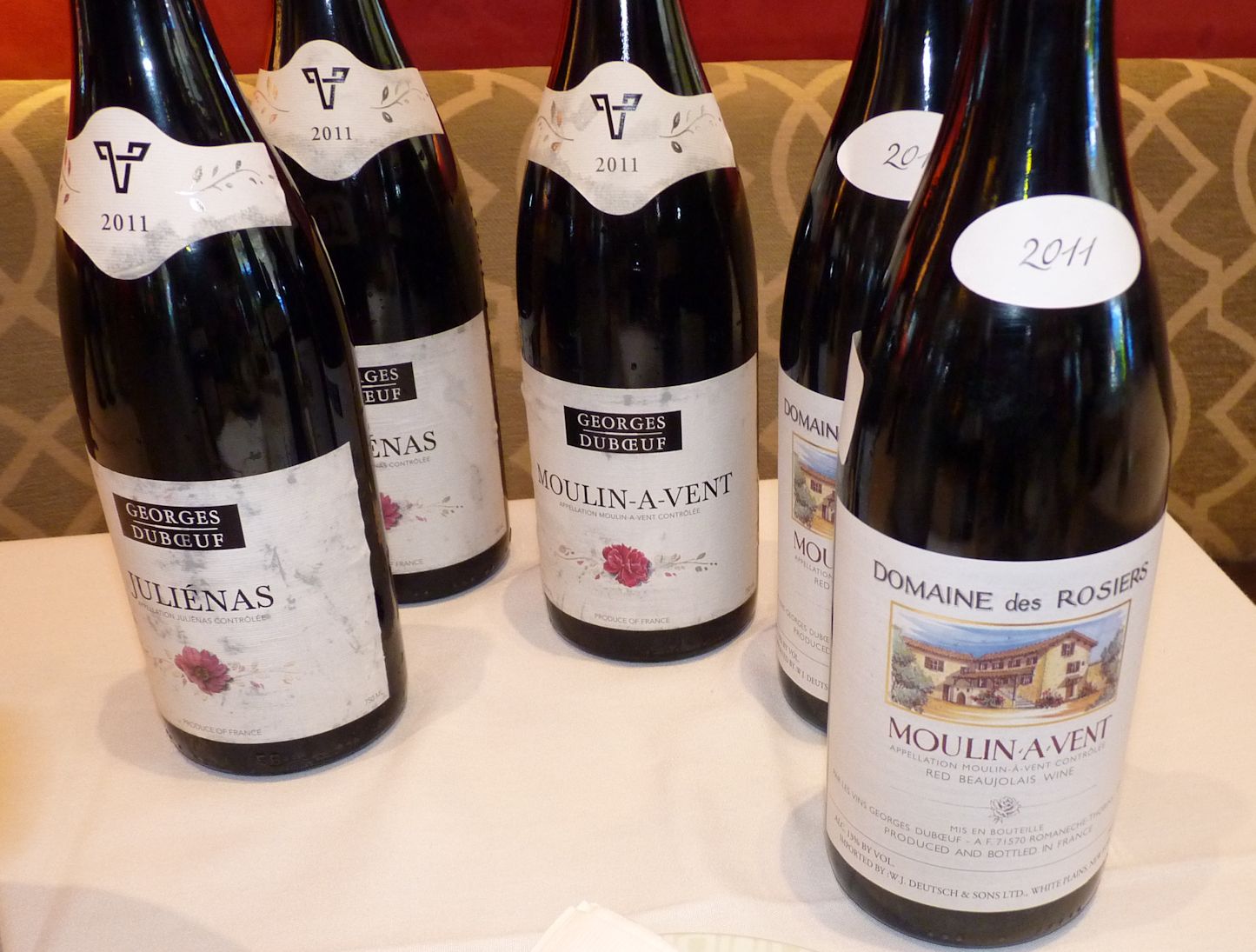
2011 Georges Duboeuf Moulin-a-Vent Domaine des Rosiers, Beaujolais, France (100% Gamay, SRP: $17.99, 13% ABV) – very nice, beautiful color, good fruit on the nose, hint of minerality and spices, good red fruit, plums and raspberries on the palate. Best of tasting. (Drinkability: 8- )
In the end of the day, all the wines were showing very well, and if you think about QPR, all the wines were great values. Make no mistake – some of these wines are in a very limited production (especially all the Domaine-denoted wines), so you will need to make an effort to find them. But – it worth the reward!
That’s all for my first part of the report, folks. Until the next time – cheers!
Wine Tasting Experience – Home Run!
 What home run has to do with the wine tasting? Not much, of course, except when you try four random wines and they all taste great, somehow it seems that “home run” is a good way to adequately describe your experience.
I think nowadays Saturday wine tasting is pretty much a norm for majority of the wine stores. If I have time, I usually stop by the wine tasting at Cost Less Wines in Stamford. There are typically four wines open, and out of the four I would find one or two which I really like. This last Saturday’s tasting was different, as I actually liked all four, and they literally were one better than another.
There were two wines from Argentina and two from Chile (both wineries are owned by Trinchero Family Estates out of California). Interestingly enough, all four wines were priced at $13.99. Here are the notes:
2010 Carmen Gran Reserva Chardonnay Casablanca Valley, Chile – Perfect acidity, very much similar to Chablis – great balance, nice green apple flavor, touch of oak and very long and mouthwatering finish. Drinkability: 8-
2010 Doña Paula Estate Torrontés Cafayate Valley, Salta, Argentina – Extremely perfumed nose – you literally think that you are smelling a nice English or French soap. Of course it is a bad idea to compare wine and soap, but actual smell is highly invigorating, and I use the comparison here in a positive way – rose petals with touch of lavender on the nose. Light and delicate on the palate, however bringing very explicit orange flavors. Very balanced with good acidity. Drinkability: 8-.
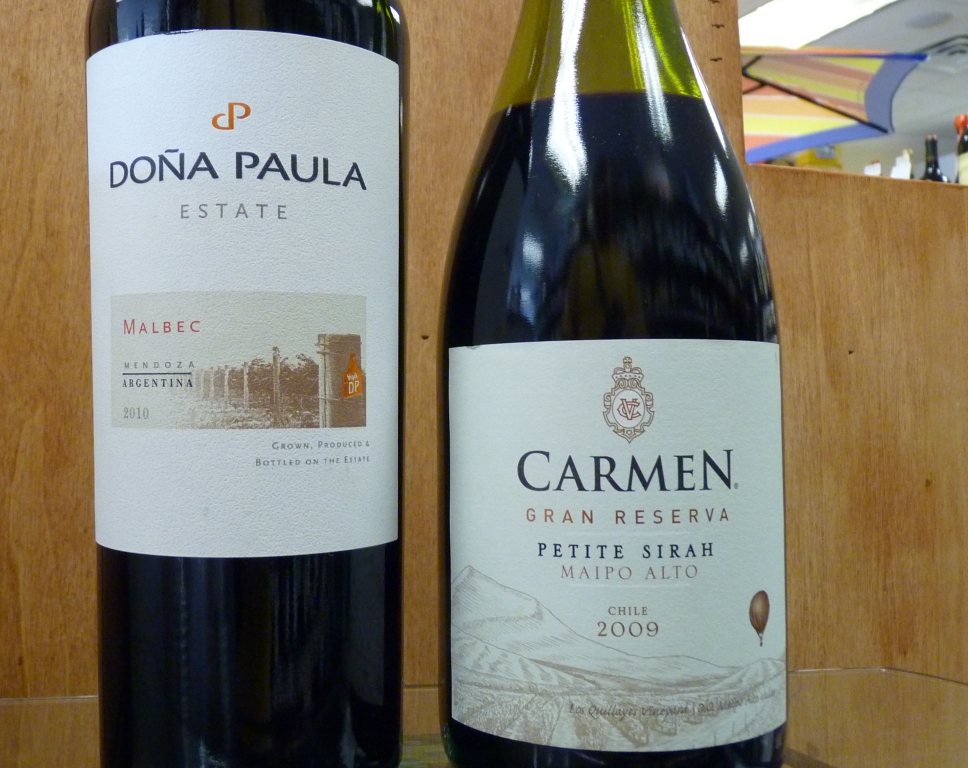 2010 Doña Paula Estate Malbec, Mendoza, Argentina – it seems that lately I have a tendency of single -word wine reviews. Round! (how is that for the review?). Perfect balance of fruit, tannins and acidity, soft tones of the dark fruit with enough underpinning in the oak flavors. Drinkability: 8.
2009 Carmen Gran Reserva Petite Sirah Maipo Alto, Chile – I don’t know about you, but it was my first encounter with Chilean Petite Sirah. Dark fruit, plums and sour cherries on the palate, full bodied and powerful, very balanced, good acidity. Drinkability: 8.
Don’t miss wine tastings in the stores – whether you will like the wine or not, you will learn something new.
For more home run wine tastings – cheers!
Rediscovering Ridge
 About five years ago, during one of my numerous trips to California, I had a little bit of free time. What do you do when you are in California, have a little bit of free time and love of wine? Of course, you go visit the winery!
A that time I decided to go visit Ridge Vineyards, located in Santa Cruz Mountains region, not far from San Jose. All I knew is that the winery is making wine called Monte Bello, which became famous after beating classic French Bordeaux during 1976 Judgement of Paris event. So I managed a steep 4 miles ride up the Monte Bello road, reached the winery, tasted 5 or 6 different wines and … didn’t like a single one of them. No, I don’t remember what exact wines and what exact vintages I tried, I just remember that none of the wines created any ”oompf”. I was disappointed and squarely put all the Ridge wines into ”I [really] don’t like it” category.
Holding that unhappy memory through the years, last year I even expressed my opinion in the comment to the twitter post by Jancis Robinson (she selected Ridge for a special wine tasting in Hong Kong), which caused some very unhappy reaction among her followers (to say “very unhappy” is a very mild understatement).
I can’t tell you why, but when this year I found out that I will be in San Jose area and I will have a bit of the free time, very first thought was ”I have to try Ridge wines again”. Four steep miles up the Monte Bello road and here I’m again. The air was beautiful, and so was the scenery – let me share a few pictures with you.
Ridge Vineyards is located near the top of Monte Bello Ridge. This is the “view from the top”:
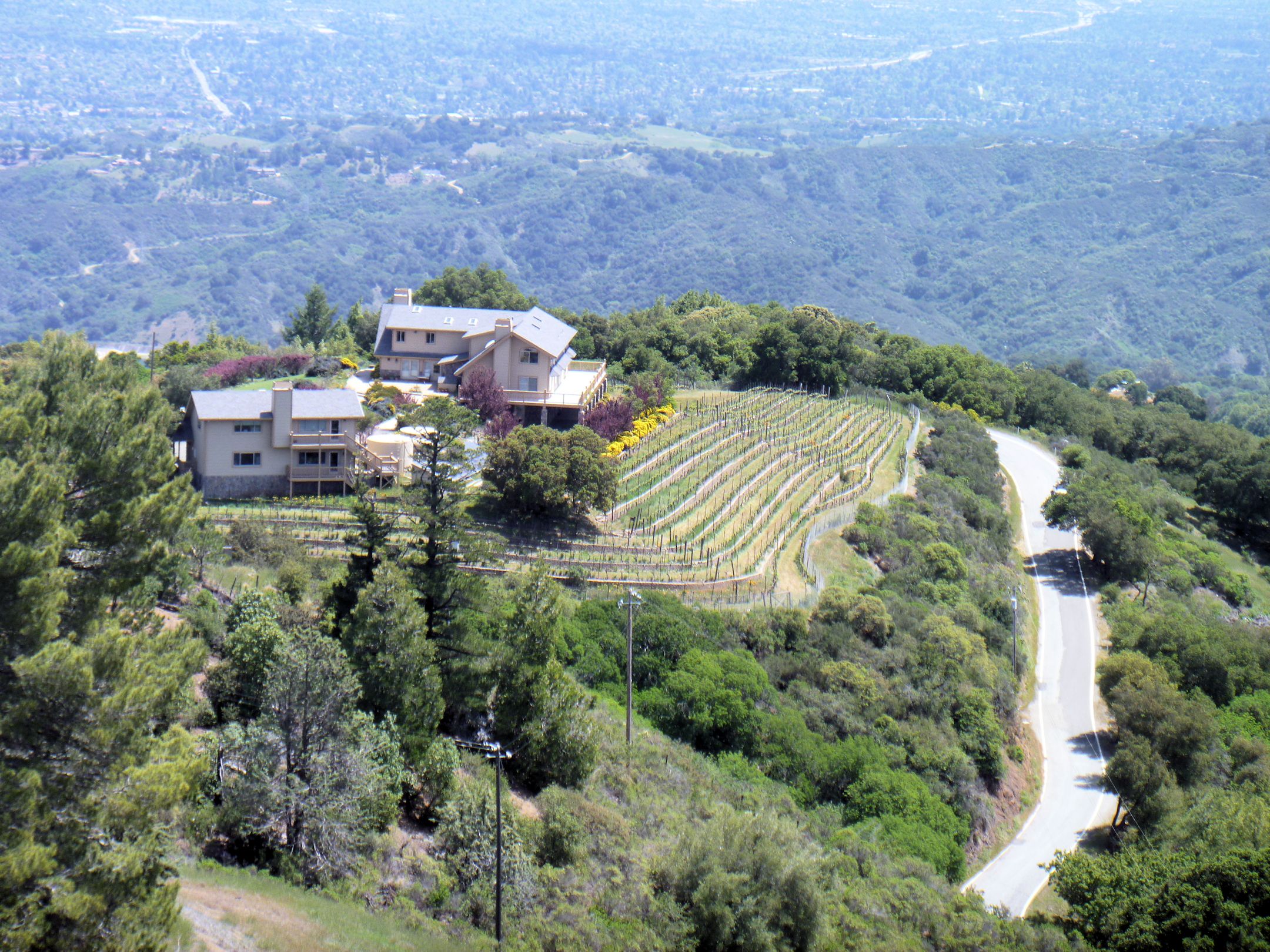
These are the vineyards at Ridge (by the way, in case you recognize the picture, it gives you an answer to the wine quiz #10, Where in California – correct answer is Santa Cruz Mountains region):
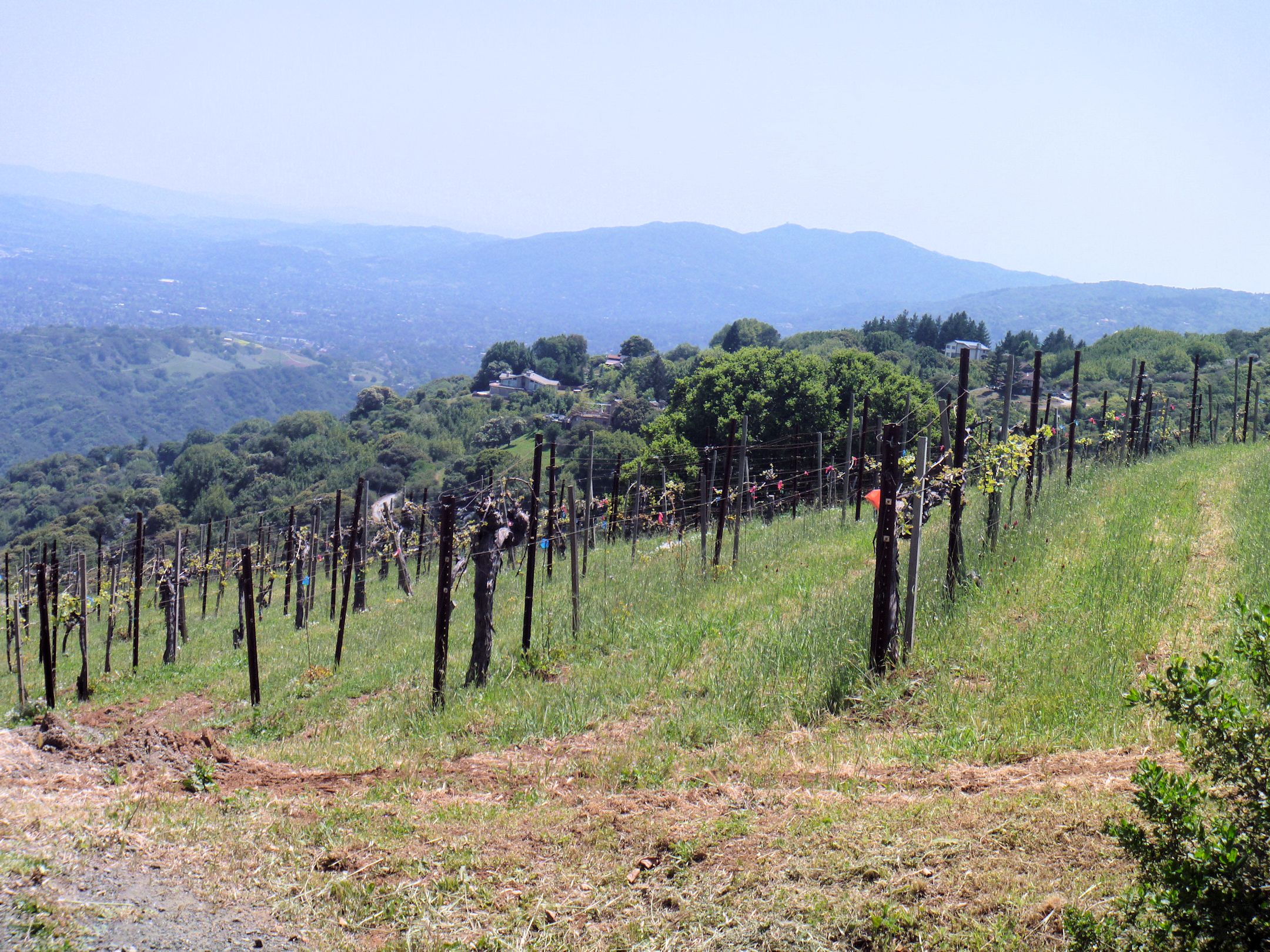
Here are some beautiful flowers for you:

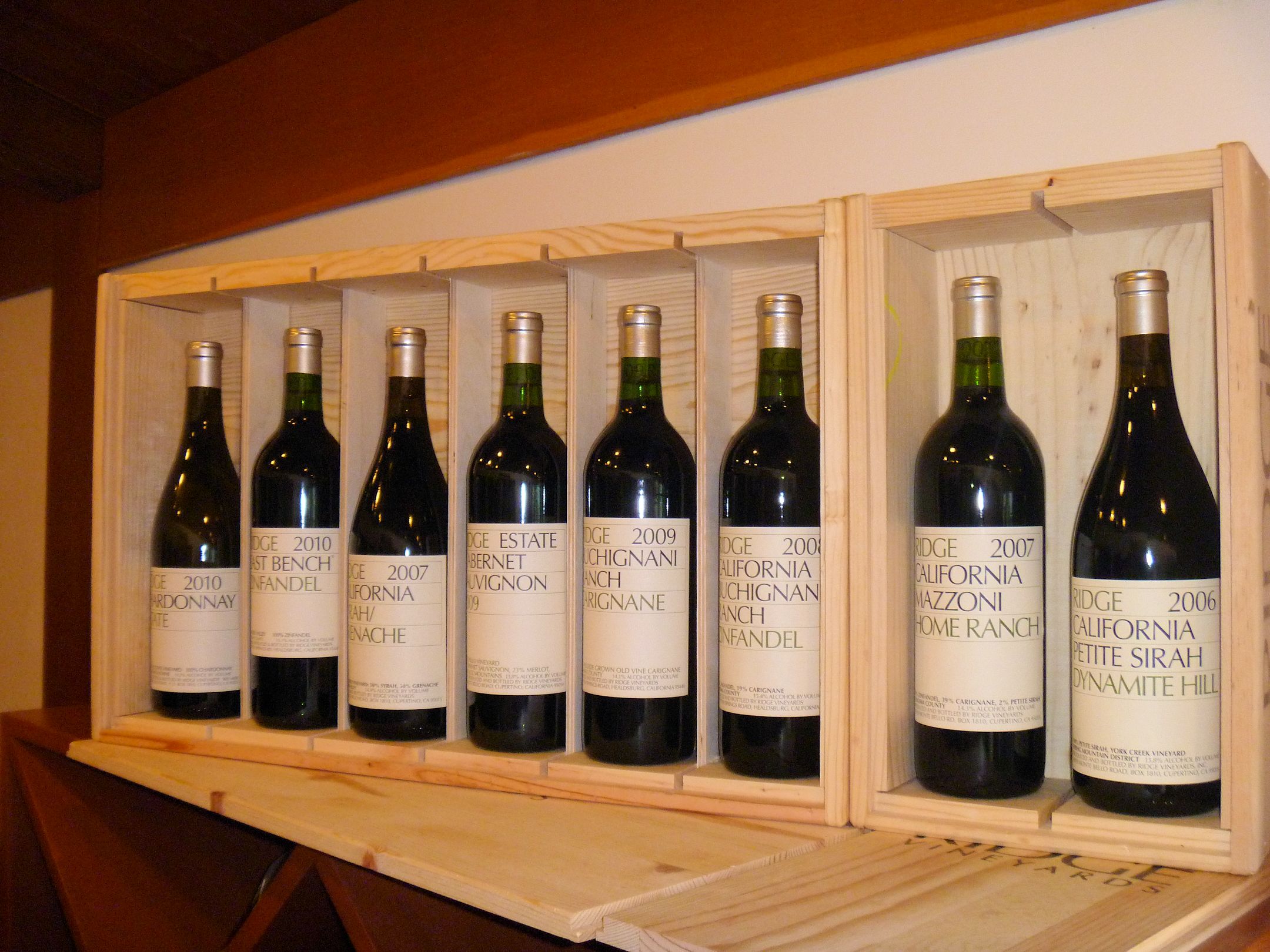
Can you guess what happened now? I tried 7 different wines and … I liked loved every one of them. They all had common trait – balance and elegance, a quiet beauty, and may be most importantly, a sense of place – terroir, as French would put it. None of the wines were in-your-face, see-how-much-muscled-fruit-i-have – all of them were rather subtle, thought provoking and requiring time to reflect upon the content of your glass.
I don’t have an explanation. How come I didn’t like any wines the first time? Was that a ”leaf day”, a ”root day” or ”generally unfavorable” day? Did my palate evolved (that one I’m quite sure is true)? As you can’t enter the same river twice, I will not be able to relive that day 5 years ago and understand my reaction at that time. But I’m glad someone somehow somewhere decided that I have to go and try Ridge wines again – and discover something really beautiful.
 Here are the tasting notes for the wines I tried:
2010 Estate Chardonnay – A little edgy in unusual way, some herbal undertones, oak is unnoticeable, except back palate burn. Opens a bit cleaner later on, long finish with hint of lemon.
2009 East Bench Zinfandel (15.1% ABV) – dry, with some dry rub spices, nice nose of blackberries, unnoticeable alcohol level, very balanced, perfect fruit and acidity on the palate.
2007 Lytton Estate Syrah/Grenache (14.49% ABV) – nice fruit, touch of spice, hint of dry cherries, gentle tannins, good acidity. Perception of tannins increases going forwward.
2009 Estate Cabernet – Tremendous minerality on the nose, you can literally smell the earth. Very nice – hint of green, very Bordeaux-ish in style, restrained and balanced
2009 Buchignani Ranch Carignane – Tobacco and tar, nice bite of spice, nice simplicity. good tannins on the finish.
2006 Dynamite Hill Petite Sirah – Beautiful fruit right on top, dark fruit undertones, some cherries.
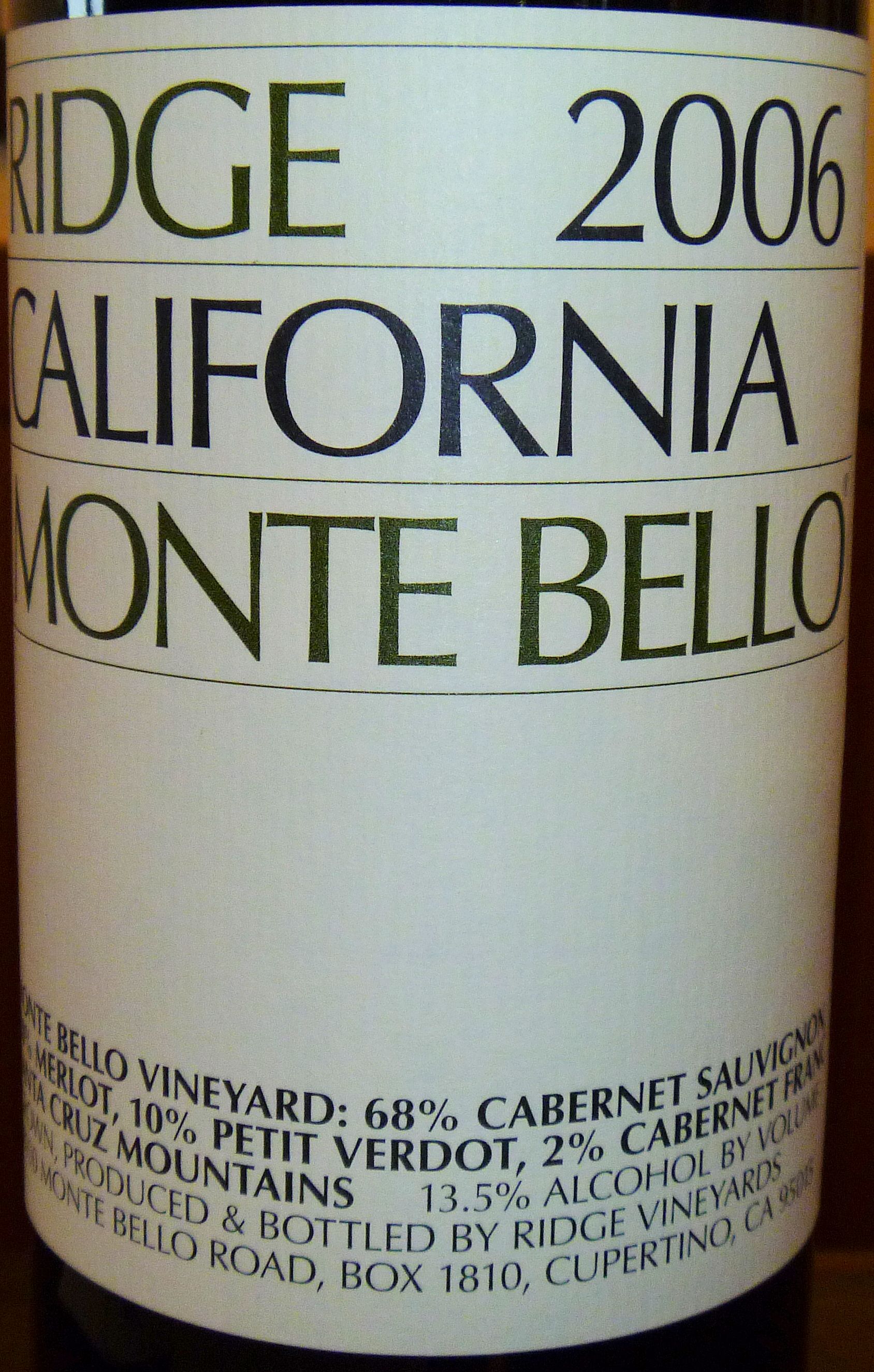
2006 Monte Bello – Beautiful fruit, perfect balance, very classic Cabernet Sauvignon blend, very long finish with tannins which are growing on you, hint of tobacco and earthiness on the palate. I’m glad this was the last wine I tasted, as the finish actually lasted at least for the next 20 minutes.
Yes, I was wrong before, and I don’t have any problems admitting it and getting over it – Ridge Vineyards makes great wines with the sense of place, and – better late than never – I’m very happy I made this discovery. Let’s raise the glass to the great discoveries of our lives! Cheers!
Dozen of Personal Favorites From Michael Skurnik Portfolio Wine Tasting
 Thousand bottles of wine (this is not a mere matter of speech, but- more or less an exact count, give or take a hundred bottles). 4 hours. Come up with the list of 12 most favorite wines. What do you think about a task like that?
Whether you think it is easy or hard, this was my experience at the Michael Skurnik 25th Anniversary wine portfolio tasting few weeks ago in New York (selecting 10 wines was not the goal, of course, but tasting many great wines was).
”Overwhelming” would be an under-representation of the experience. Sip, swish for a second, think for a second, spit. Take a mental note, or may be a quick mark in the book. Move on to the next wine, then to the next table. Get through the crowd with your glass. Repeat until your palate is completely locked down by the amount of fresh tannins. Have a sip of fruity white to unlock and refresh. Continue and repeat until fully exhausted. Leave happy.
Above is a quintessence of the experience. Below, I would like to give you mostly a photo report with some comments on the most memorable wines. The list is not prioritized at all – if anything, it may be coming out in the order we tasted the wines. Here we go.
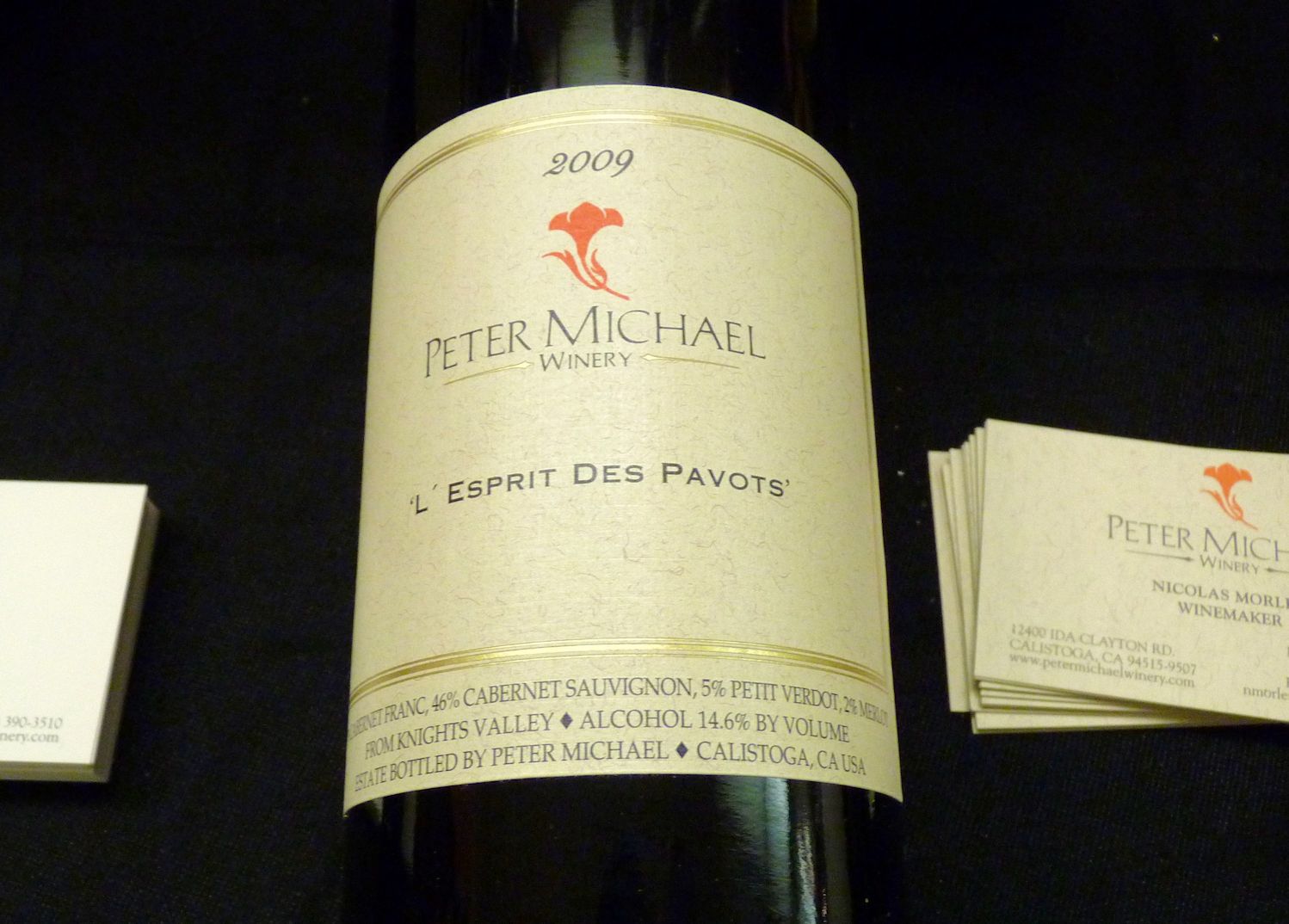
2009 Peter Michael ‘L’Esprit des Pavots’ – clean, gorgeous, elegant, balanced, approachable – this is Bordeaux-style red which you can drink now or cellar for next 20-30 years:
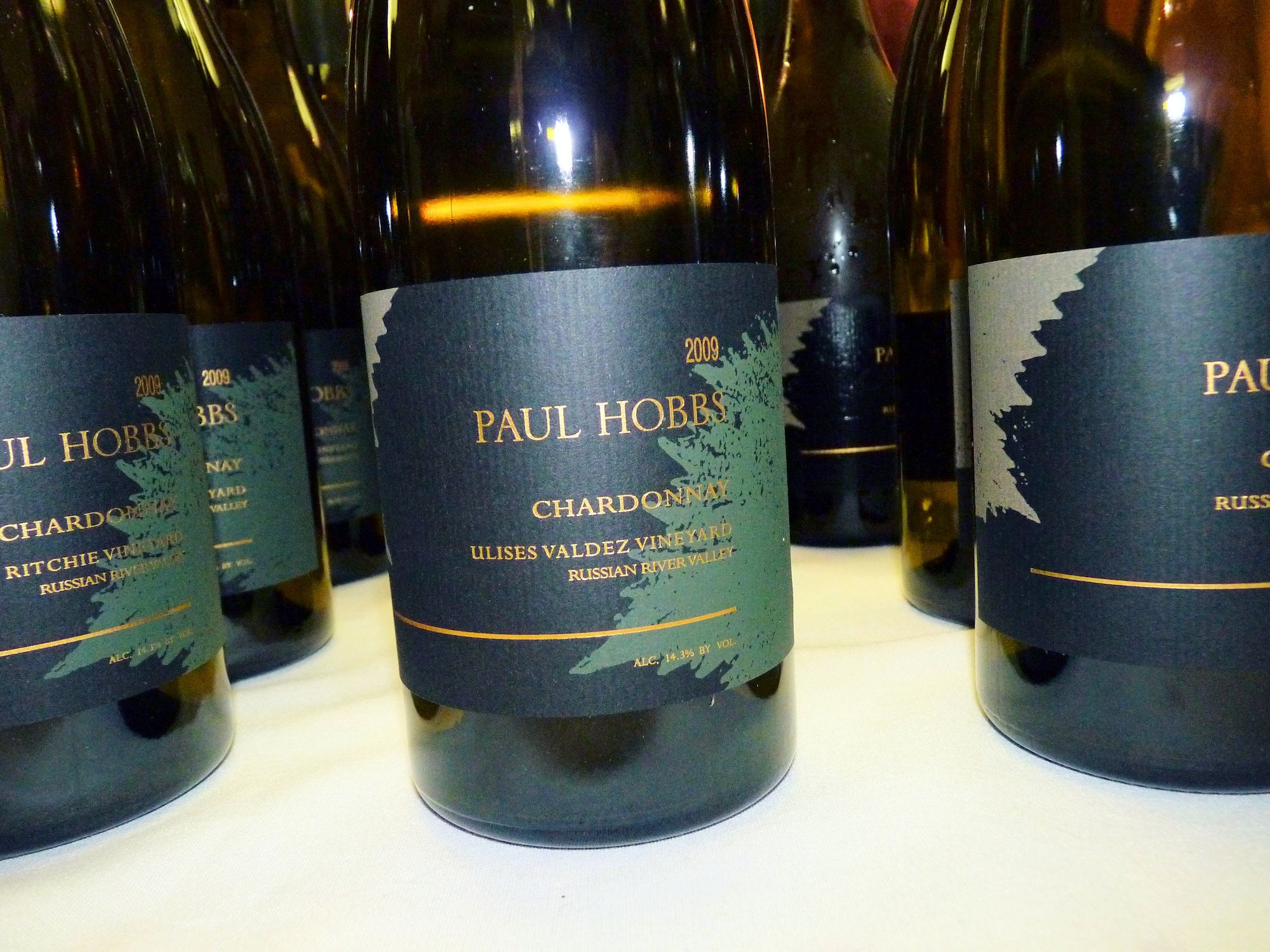
2009 Paul Hobbs Winery Chardonnay, ‘Ulises Valdez Vineyard’ – best non-French Chardonnay I tasted. Elegance and perfection of balance – acidity, hint of vanilla, hint of butter, hint of tasted oak – all in a perfect medley:
2009 Martinelli Syrah ‘Vellutini Ranch’ – full-bodied, luscious and well balanced, with nice dark fruit and spices. Outstanding Syrah:

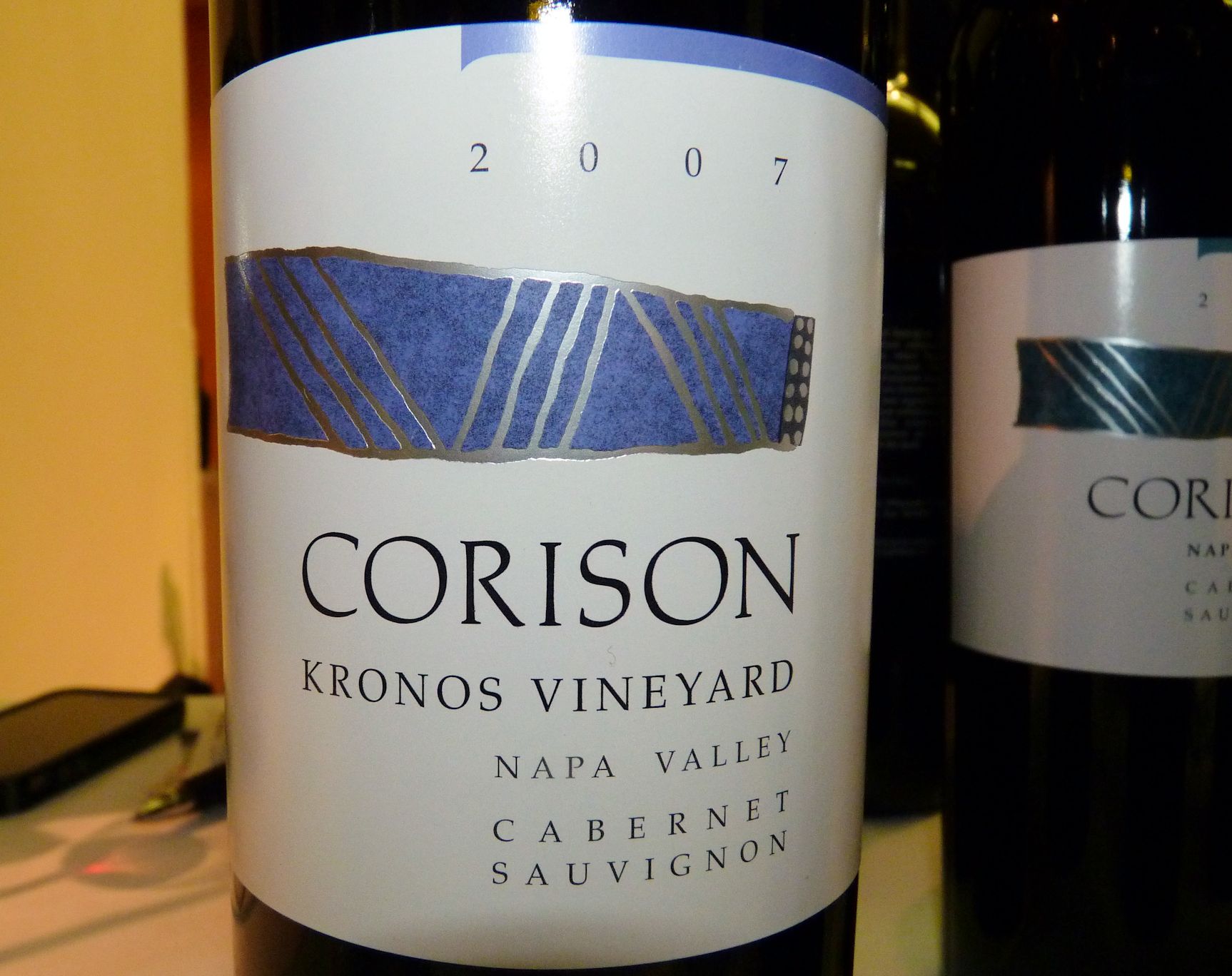
2007 Corison Cabernet Sauvignon ‘Kronos’ – I was really looking forward to trying this wine after Joe Roberts, a.k.a. @1WineDude, called it “Black Panther” in his review. I’m not sure I personally met the panther, I rather discovered a mystery. This wine is impossible to understand in the format of the standard trade wine tasting. It says “let’s dance a little longer, shall we”? When you take a sip of this wine, it is asking you to think – there is no flavor attack, no particular taste element standing out – instead, there is a perfectly balanced, thought-provoking, mysteriously delicious substance. This wine needs double time – time in the cellar, and time in your mouth – then you might stand a chance of solving the mystery:
2009 Domaine Newman Mazis-Chambertin – exemplary Pinot Noir, Pinot Noir by the book – whatever way you want to call it, this was one of the most elegant Pinot Noir at the tasting – perfect balance of earthiness, fruit, acidity and power:

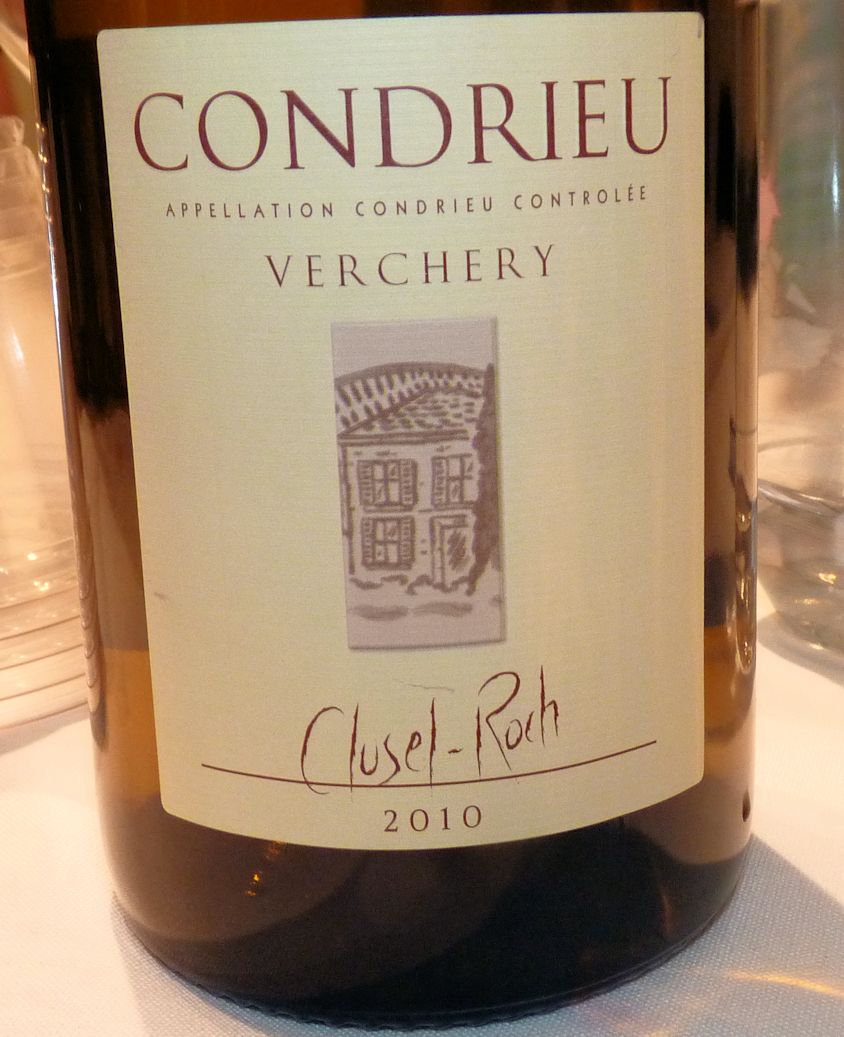
2010 Clusel-Roch Condrieu – beautiful full-bodied white, powerful and structured – great example of Viognier from the most classic Viognier Appellation:
2010 Domaine Saint Prefert Châteauneuf-du-Pape Blanc ‘Cuvée Speciale Vieilles Clairettes’ – fresh, elegant, beautiful white fruit, perfect acidity – definitely one of the best white wines in the tasting. Unfortunately, equally rare and hard to get:
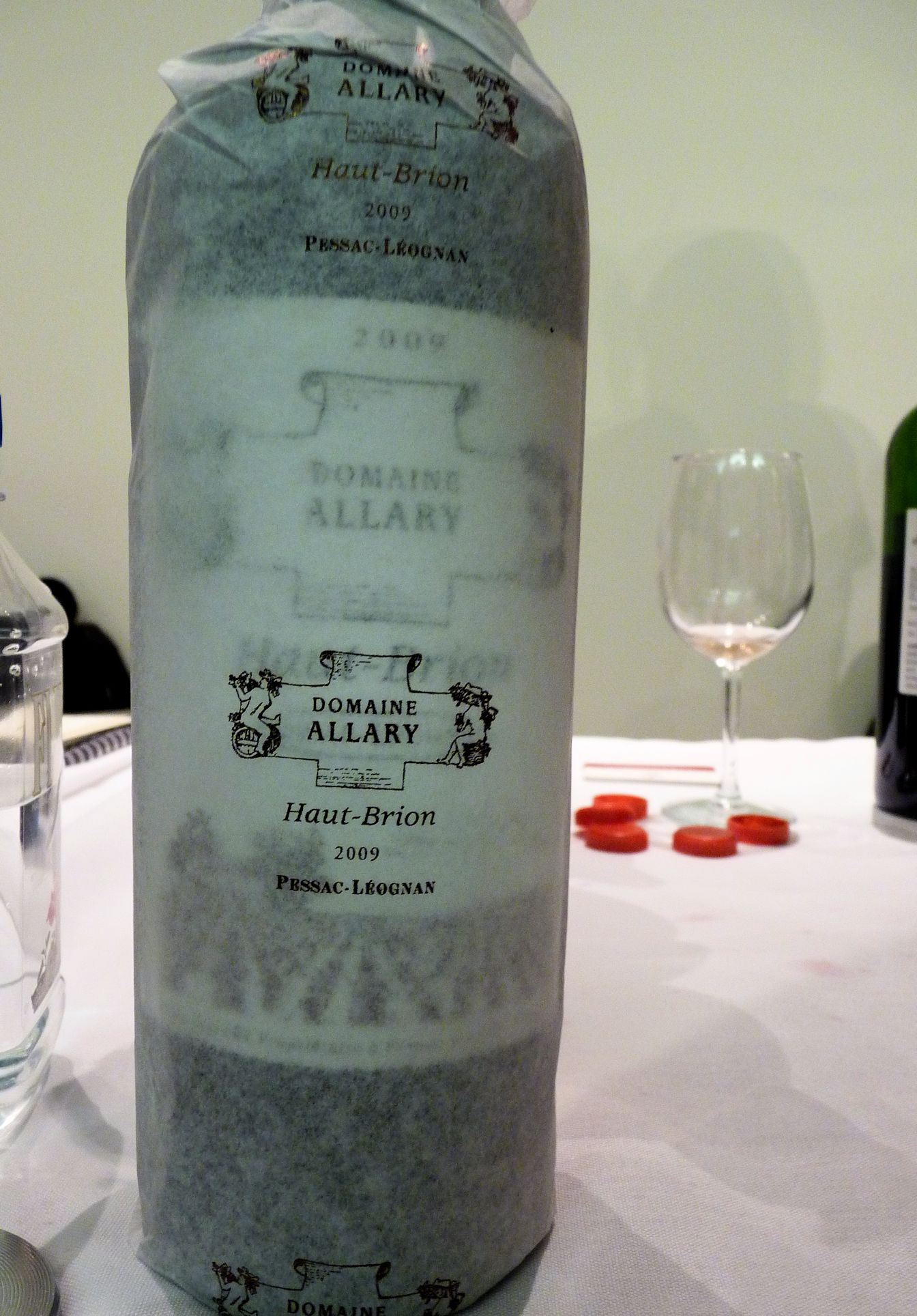
2009 Domaine Allary Haut-Brion Pessac-Léognan – classic Bordeaux from classic vintage. Perfect wine – you can drink it now, or wait for 30 years – the choice is yours:
2010 Boyer-Martenot Meursault 1er, ‘Perrières’ – absolute elegance ( yes, if you think that I’m abusing the word “elegant”, I agree with you, but I can’t find a better word to express my thoughts about these wines, so bear with me, please) – outstanding Chardonnay, great balance of white fruit, acidity, earthiness and tannins:

2011 Domaine du Moulin Méthode Gaillacoise – personal sparkler favorite at the tasting – bright, fresh, full-bodied, with apple and toasted bread perfectly showing on the nose and on the palate. Lots of pleasure:

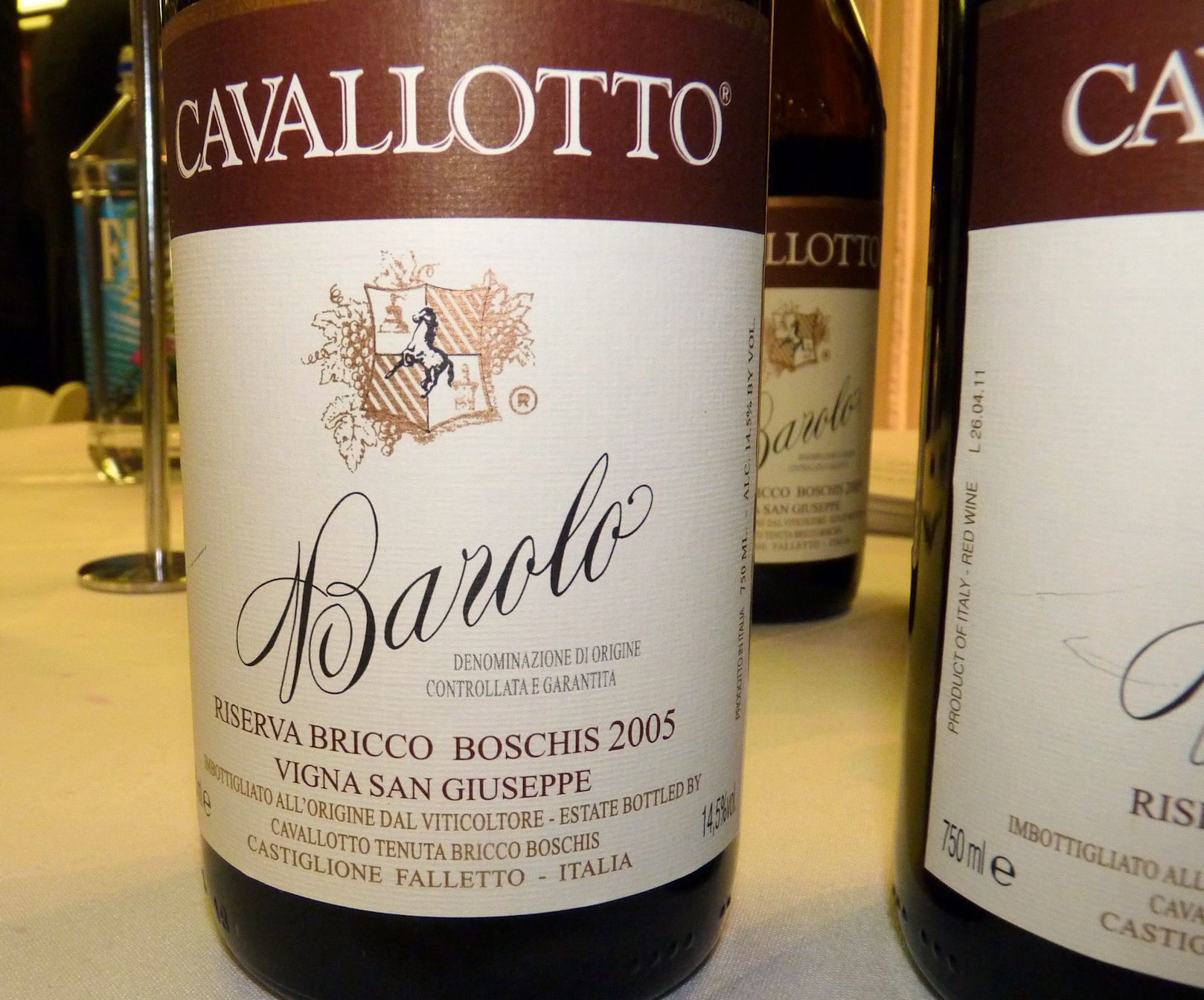
2005 Cavallotto Fratelli Barolo Riserva, ‘San Giuseppe’ – trying Barolos at the such tastings is always fun – you need to build your impressions quickly, before tannins will completely numb your palate. This wine had enough power to get through everything else I tasted before and deliver plums and dark cherries and outstanding balance of spices which make Barolo a King of the Wines. Truly an outstanding wine:
2007 Hendry Vineyards Cabernet Sauvignon and 2007 Hendry Vineyards Red Wine (Meritage Blend) – one of my biggest surprises in the tasting. I never heard of Hendry name before – they mostly had being known as a grape growers for all other prestigious winemakers. But then at some point they started making wines, and I can tell you – it was very hard to pick only one favorite out of the outstanding lineup of wines. This is why you see two red mentioned here – both are very elegant, balanced and varietally correct (and reasonably priced!):

This concludes our journey through the great tasting of Michael Skurnik wines – there were hundreds of other wines worth mentioning, but – sometimes I have to sleep too, right? Thanks for reading and cheers!
Taste Expectations, Or Notes From The Blind Tasting
 If you had been drinking wine for a while, I would expect that you have developed certain taste expectations. As you drink the wines from the different regions, you find that the wines from the same geographic locality made from the same grapes would have somewhat of a similar taste and style (yes, of course, I just described what is properly called Terroir without using the word itself). At some point, the associations between the origin of the wine and its expected taste become engrained in your mind. Looking at the bottle of New Zealand Sauvignon Blanc, you are expecting to find bright acidity and citrus flavor profile even without opening the bottle. Looking at the bottle of California Cabernet Sauvignon you are expecting to find a good amount of fruit with some explicit black currant notes and a probably good amount of tannins – note that I’m really trying to generalize here, but you got the point.
This is the way the wine was for a very long time. However, when you taste modern wines, do you have a feeling that your expectations are no longer valid and don’t match reality any longer? I have had this experience many times lately, when Amarone didn’t taste like anything expected (you can find my rant of pain here), or when unoaked Chardonnay tastes rather like Pinot Grigio – and there are many more examples of “taste confusion”.
Recently, I had another case of “broken” taste expectations – this time it was somewhat sanctioned, as we did a double (almost) blind tasting. The theme was set a bit ambitiously, as France and Italy. The “ambitious” part is coming from the fact that these two countries on their own have such a variety of wine production that it makes it literally impossible to recognize the grape or at least the style of wine (either one of those countries would provide a plentiful selection for a double-blind tasting on its own). Anyway, with the main goal of having fun with the wines, we actually had a great time.
We blind tasted 5 wines, which happened to be 4 reds and one white. For what it is worth, here are my notes as we were moving along:
#1 – Very nice, a bit too sweet. I think Italy, Super Tuscan/Barbera/Dolcetto
#2 – earthy, nice, little green bell peppers, roasted notes? Bordeaux?
#3 – France, nice bright fruit, good sweetness, not enough acidity? No idea about the grape.
#4 – interesting, lots of fruit, very nice – no idea.
#5 – great, round, good fruit – no idea.
While I understand that these a rather limited wine descriptions, would you try to guess what was what? Well, you can see the answers below in the picture (wines are set in the order we tasted them, left to right):
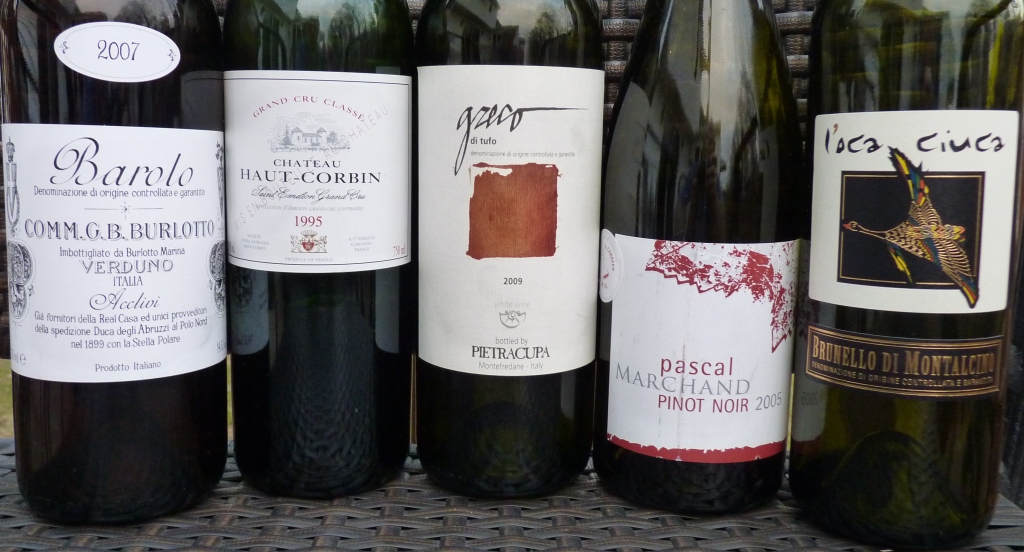
Here is an actual list: 2007 Comm. G. B. Burlotto Barolo Verduno; 1995, Chateau Haut-Corbin Saint-Emillion Grand Cru; 2009 Petracupa Greco di Tufo; 2005 Pascal Marchand Pinot Noir and L’oca Ciuca Brunello di Montalcino DOCG – now compare that with my guesses above…
In case you are curious – of course, we voted for the favorite – Brunello (#5) was a clear winner, with Greco de Tufo (#3) trailing it closely behind (one point difference).
Where is the case of broken taste expectations? Fruit forward, bright and loaded wine with well-masked tannins and almost non-existing earthiness, bright purple in color – 2007 Barolo? I’m very far from a Barolo expert, but this doesn’t match my expectations of Barolo, albeit well decanted. Even winning Brunello was quite uncharacteristic, lacking earthiness and tartness, the traditional Brunello bite. I can’t comment on Greco do Tufo (it was actually quite nice), and the only varietally correct wine was 1995 Bordeaux. Am I making too big of a deal from varietal correctness and taste expectations here? It depends. On their own, both Barolo and Brunello were good wines, but if I would order either one in the restaurant with the goal of pairing it with food, that could’ve been quite disappointing…
Okay, I can’t leave you with this sad impression of disappointment – it was not that bad at all. Also, we had a great cast of supporting wines, even with some pleasant surprises.

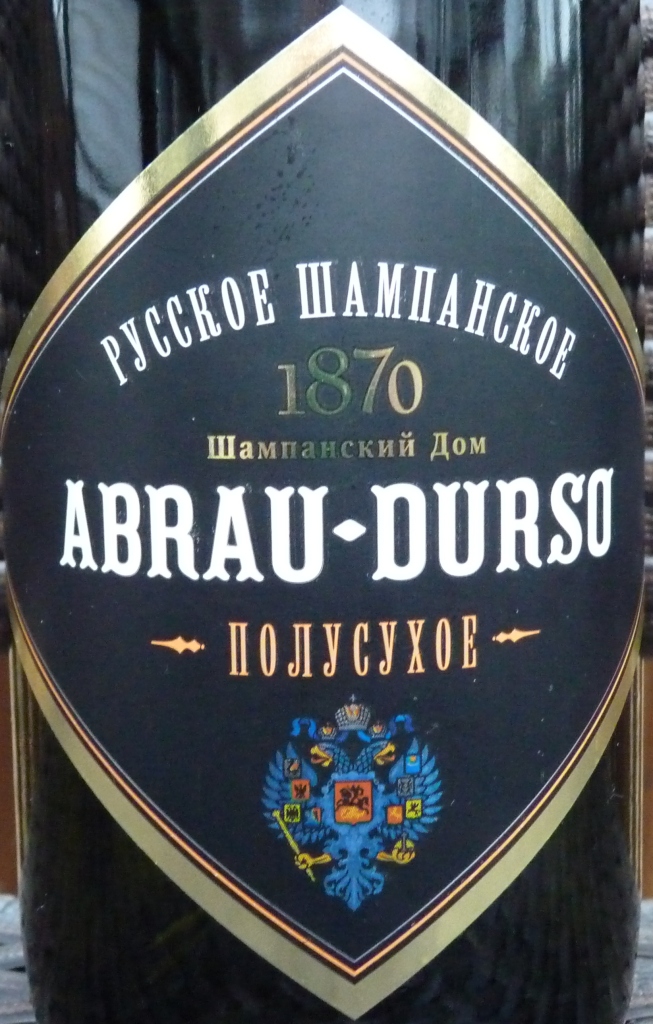
First, two sparkling wines. Chevalier de Grenelle Cuvee Reserve Saumur AOC, a blend of 90% Chenin Blanc with 10% Chardonnay was a very good, full-bodied sparkling wine, with good notes of apple and toasted oak. In addition to good wine, this was also a very special bottle – a magnum with the metal imprinted label. The second sparkling wine was even more unusual – Abrau-Durso Semi-Dry – a sparkling wine from Russia, made by the reincarnated famous producer of sparkling wines for the Russian Tzar (the original company was created in 1870). This wine had just a hint (a whiff) of sweetness, lightly toasted apple and nutmeg on the palate. Very refreshing and delicate. I suggest you will find a bottle and try it for yourself – there is a good chance you might like it.
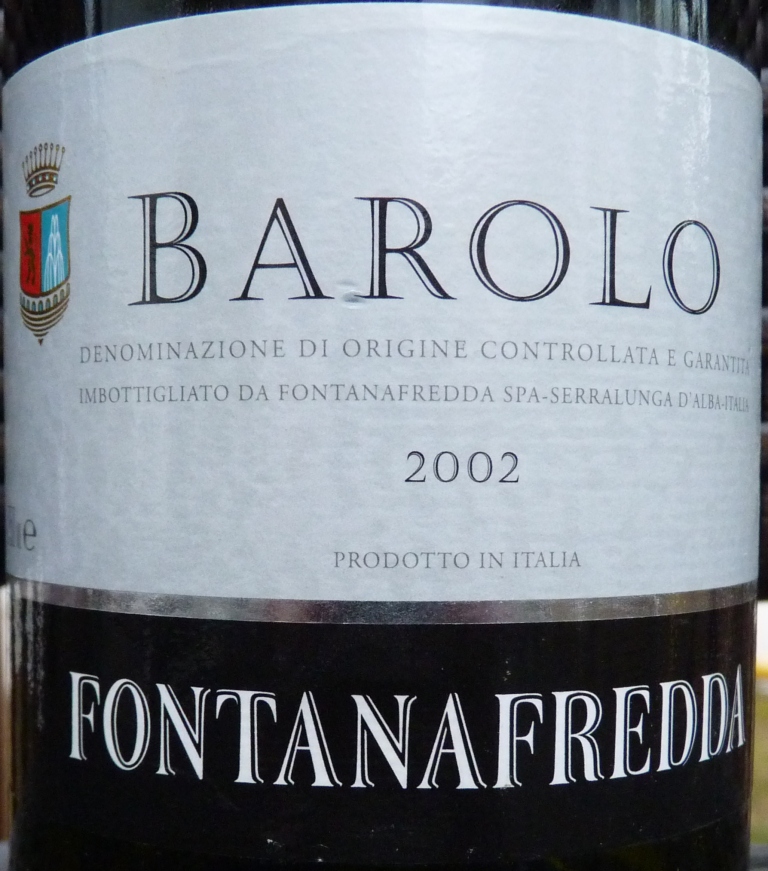 And for the last surprise – 2002 Fontanafredda Barolo DOCG. Why surprising? If you will look at the Wine Spectator’s Vintage Chart, you will see that 2002 was regarded as a very bad year for Barolo, with a rating of 72 and recommendation of wines being past prime. I decanted this bottle at some time in the late morning, and by the early evening, when we actually drank it, it opened up very nicely – while it was lacking powerful tannins, otherwise, it was quite enjoyable wine, very balanced with quite a bit of finesse.
Play with your wine, get friends together and do the blind tasting – I guarantee you will learn something new about your palate, your wine preferences, and maybe even your friends!
Cheers!
Tishbi Winery Experience – Wine, And Lots More
 Continuing the “Israeli Experiences” series, I want to talk about a great experience at Tishbi Winery.
While the Tishbi family had been in the “grapes business” since 1882, the actual Tishbi Winery was founded in 1984 in the foothills of Carmel mountain in the area called Zichron Yaacov. in addition to the vineyards in the Zichron Yaacov area, Tishbi also owns vineyards in the North and South areas of Israel.
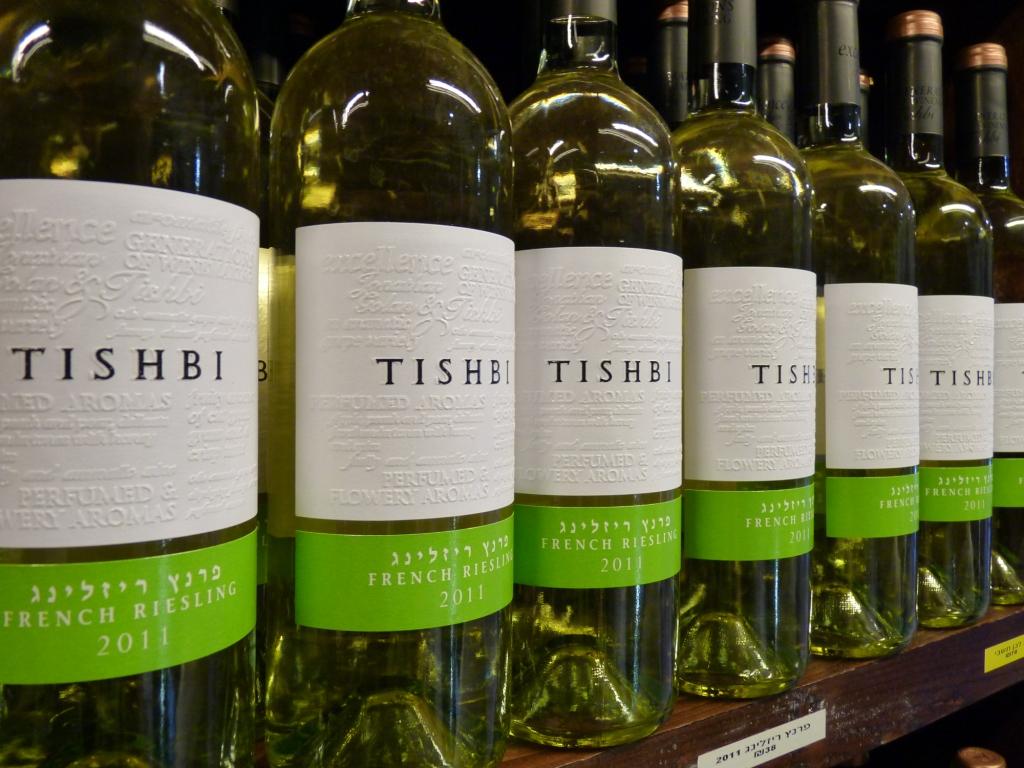
First, we had to walk around the Visitors Center (which is brand new and modern looking), as there was a huge group (about 100 people we were told) participating in the tasting. Very nice modern facility, spacious and airy. Of course, the first thing we saw was wine:
Riesling (as you can see, it is called “French Riesling” to distinguish from Emerald Riesling which is another Riesling variety growing only in Israel):
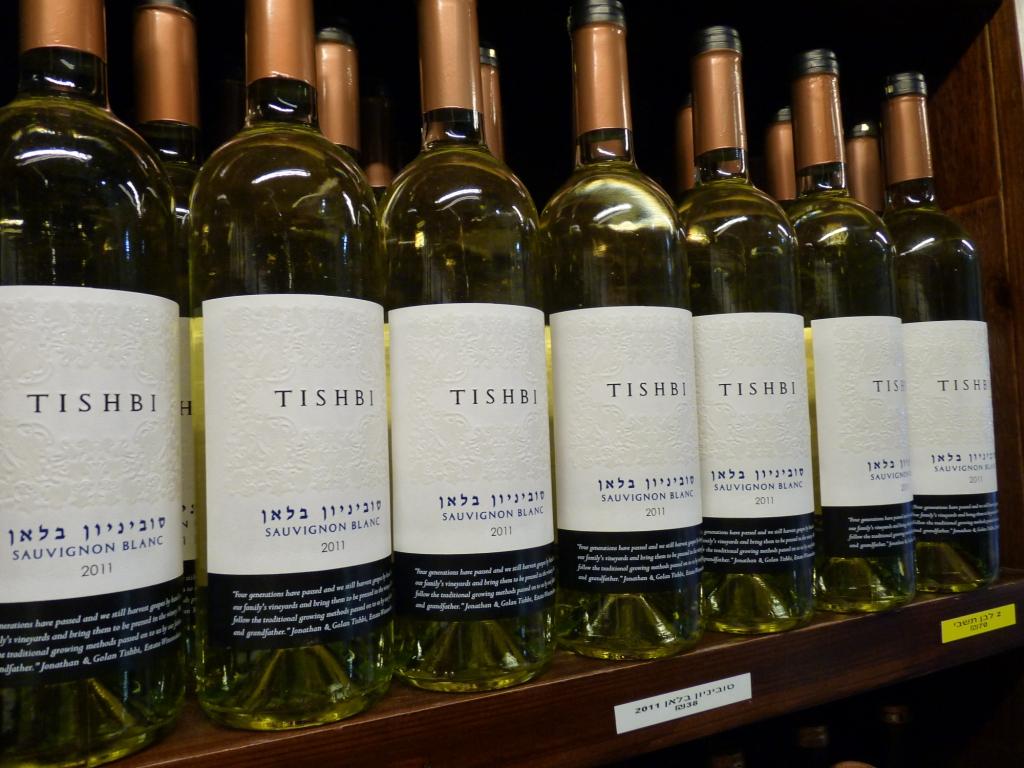
Sauvignon Blanc:
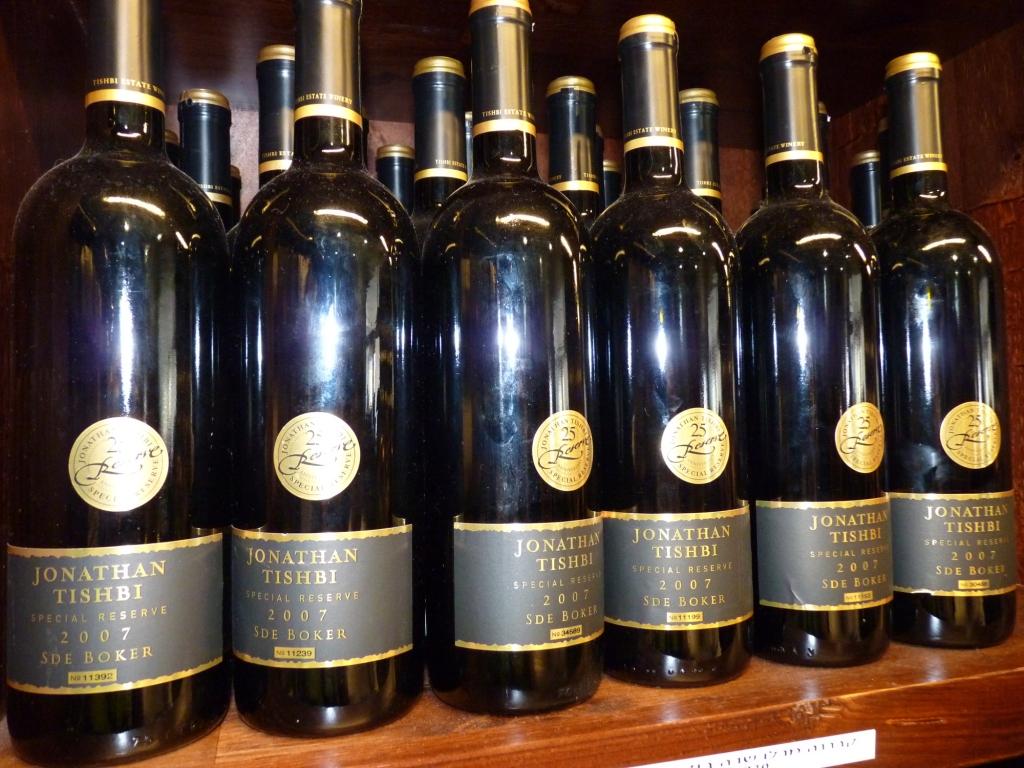
Jonathan Tishbi Special Reserve ( this wine is a blend of Cabernet Sauvignon, Merlot, and Cabernet Franc and it comes from Sde Boker vineyard located in Negev Desert):
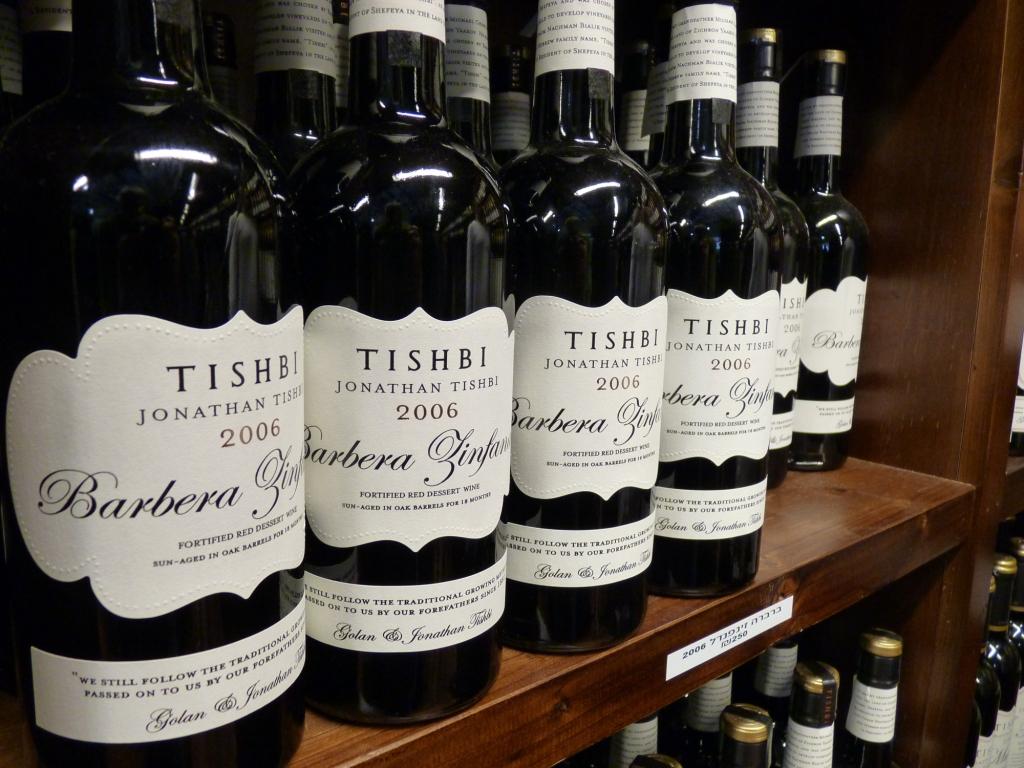
Barbera/ Zinfandel (!) Port (very interesting to see Zinfandel grape somewhere outside of the US):
The next thing we noticed after all the wines was … chocolate! Not just random chocolate bar as a condiment – the shelves full of Valrhona Chocolate. It appears that Tishbi recently became one of the biggest distributors of the Valrhona chocolate in Israel. As part of the tasting, you can experience a special pairing of various “single cru” Valrhona chocolates with Tishbi’s wines.
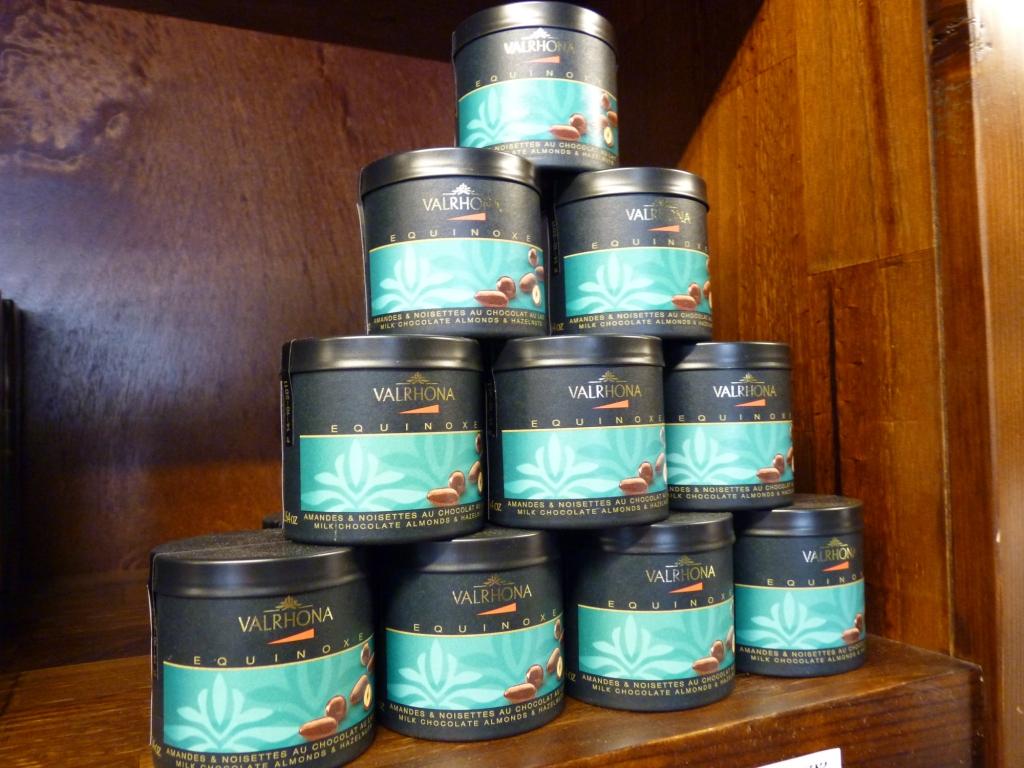
Finally, we managed to escape the Visitors Center and found out that we can have a tasting in the cafe next door, which we did. Here are some of the note for the wines we tasted:
 We started with 2011 Tishbi Gewurztraminer, which was very nice, clean and simple, without strong bite which Gewurztraminer often has. 2008 Tishbi Special Reserve Chardonnay had a good body, good white fruit expression with a hint of vanilla, but it was a bit too sweet to my taste.
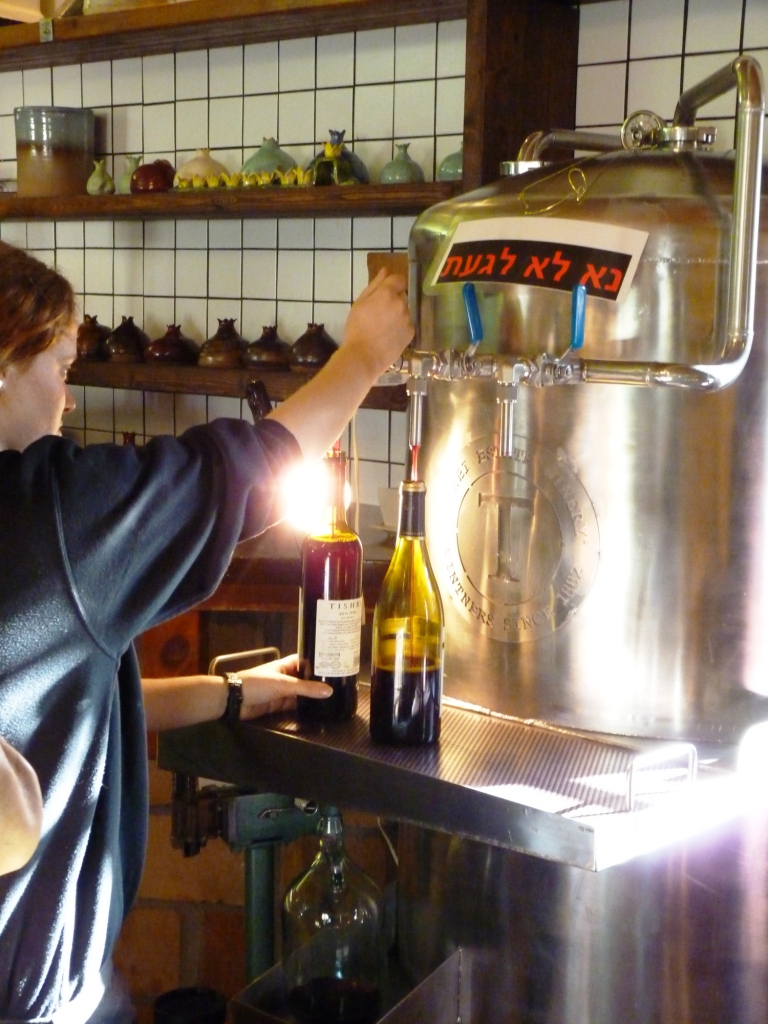
Those were the only white wines we tried, and then we switched to red. The first red was very surprising to me – 2011 Tishbi Cabernet Syrah. What is so surprising in the Cabernet? Well, note the year – it is last year’s harvest, and this Cabernet Sauvignon didn’t spend any time in the oak barrel! Moreover, it was poured from the stainless steel tank, which was located right there in the cafe. You can bring your own bottle and get it filled with this Cabernet Syrah blend for about $5 – this is the real deal, move over two buck chuck. I also would like to note that this was a very good wine – clean, with good fruit expression and perfect acidity. After that we tried a number of Tishbi Estate wines from 2007 vintage. 2007 Tishbi Estate Cabernet Sauvignon had a beautiful classic nose, but was a bit too sweet on the palate. As an added bonus I need to mention that it had Ruby Cabernet grape as part of the blend – which is a new grape for my grapes count, so I’m advancing to 361 now. 2007 Tishbi Estate Merlot was simply perfect – a great balance of all the components. 2007 Tishbi Estate Syrah was also very good, with pepper notes on the palate, full body, good concentration of tannins. 2007 Tishbi Estate Petite Sirah had good dense fruit and full body, coupled with the perfect acidity.
Last but not least we tried 2006 Tishbi Barbera Zinfandel Port wine. This wine spends a year and a half in the oak barrels before it is released. The wine was excellent, with good fruit and perfect balance, not overly sweet – and it also paired very nicely with the Valrhona chocolate (which is somewhat expected from the port). By the way, below you can see the process of pouring of that 2011 Cabernet Syrah:
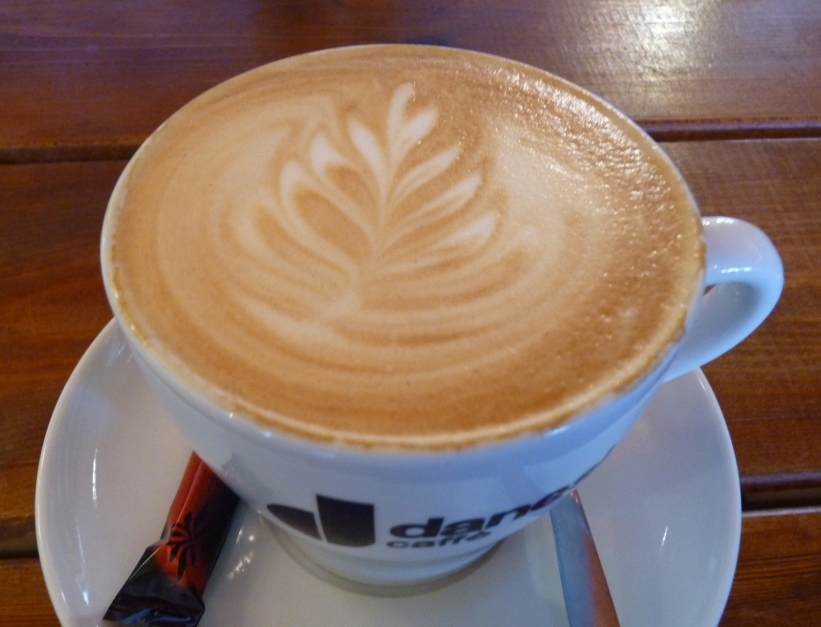
At this point we took a little break, and had the nearly perfect cup of cappuccino:
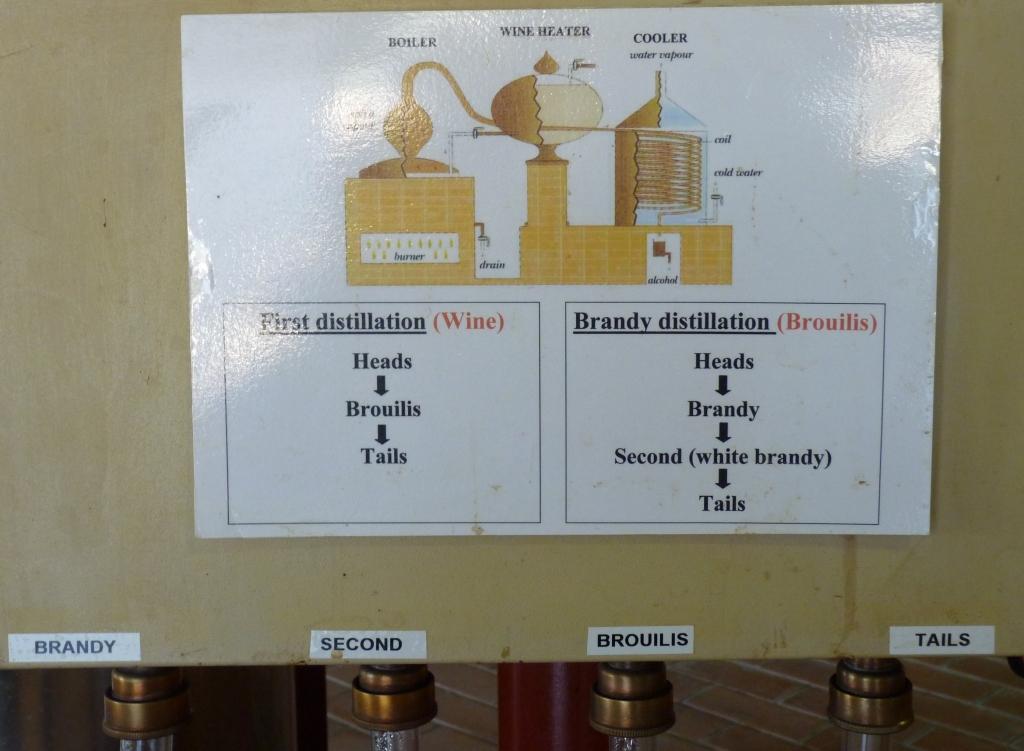
When we went back to the Visitors Center, we noticed something we overlooked before – a full distillery! Located right there in the Visitors Center, there is a still pot which is used to produce Tishbi Brandy:
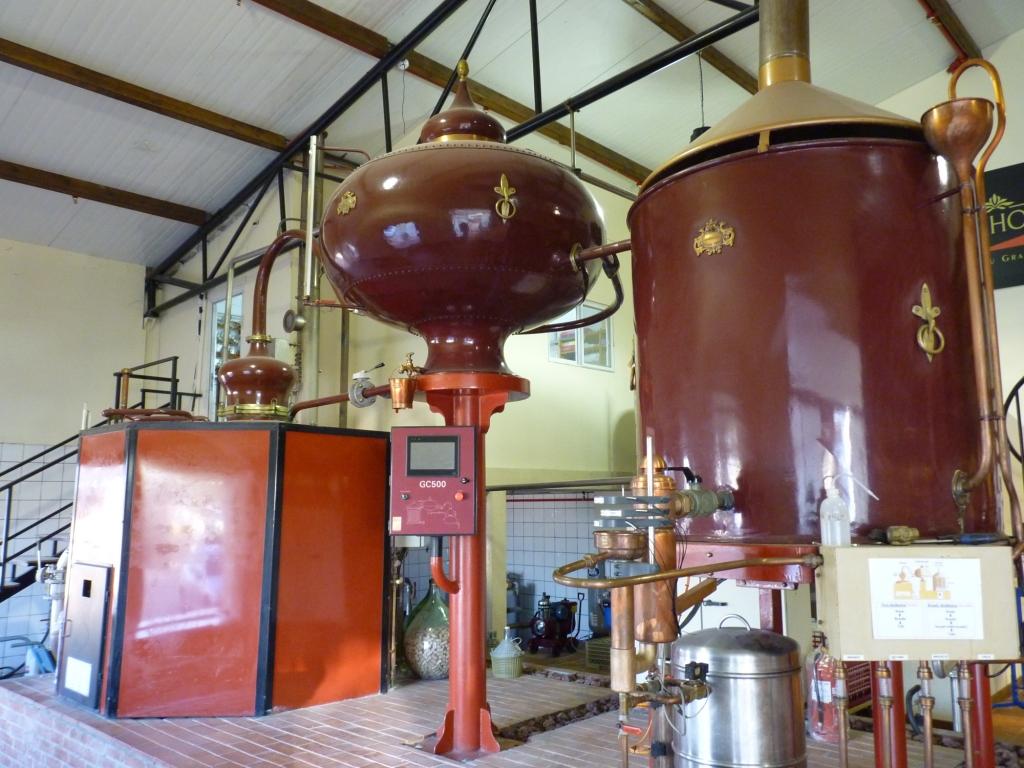
And here is an illustration which explains the distillation process:
Here is the end result of the distillation – Tishbi 16 years old Brandy:
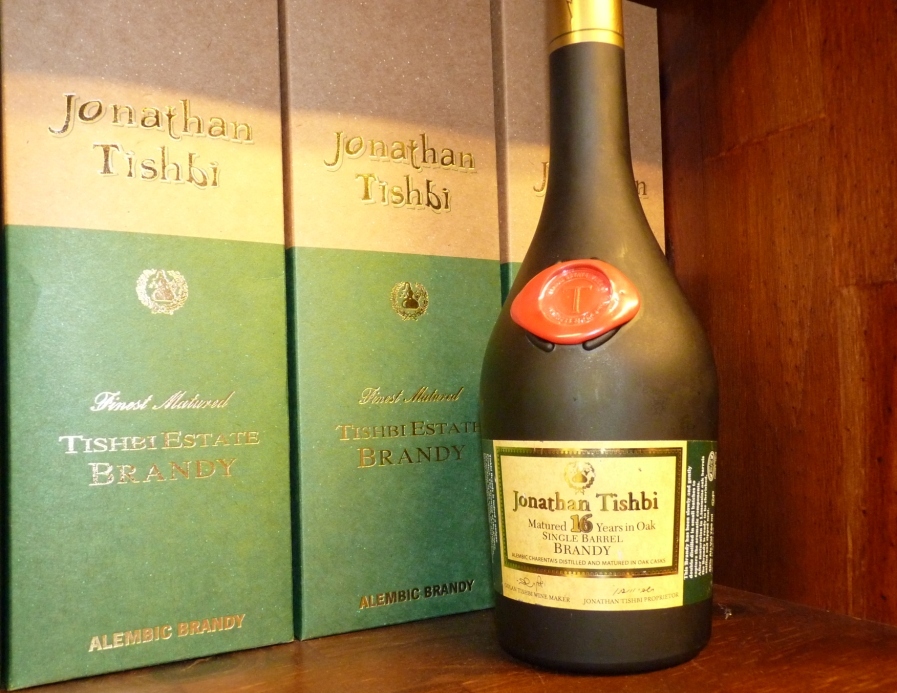
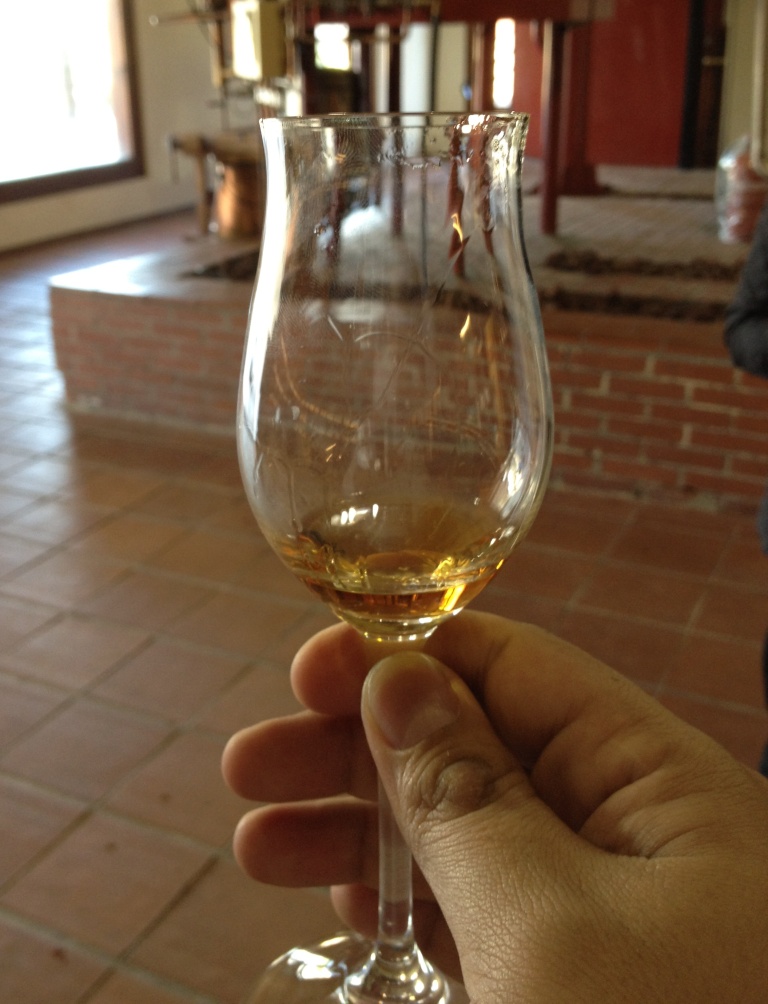
We were lucky, as we were also able to try that 16 years old brandy (typically you can try it only if you buy a bottle – considering that it costs about $450 for the bottle, you can imagine that I wouldn’t be trying that Brandy otherwise). I can’t help but to comment that I think the price is a bit high (okay, way too high).
All in all, we had a great time at Tishbi – if you are visiting Israel, it is well worth a trip. Otherwise, you can find Tishbi wines in the stores in the US, and I would definitely recommend them. That concludes my report, folks – cheers!
Wine and Time at Franklin Street Works (and some Hyper-Decanting too)
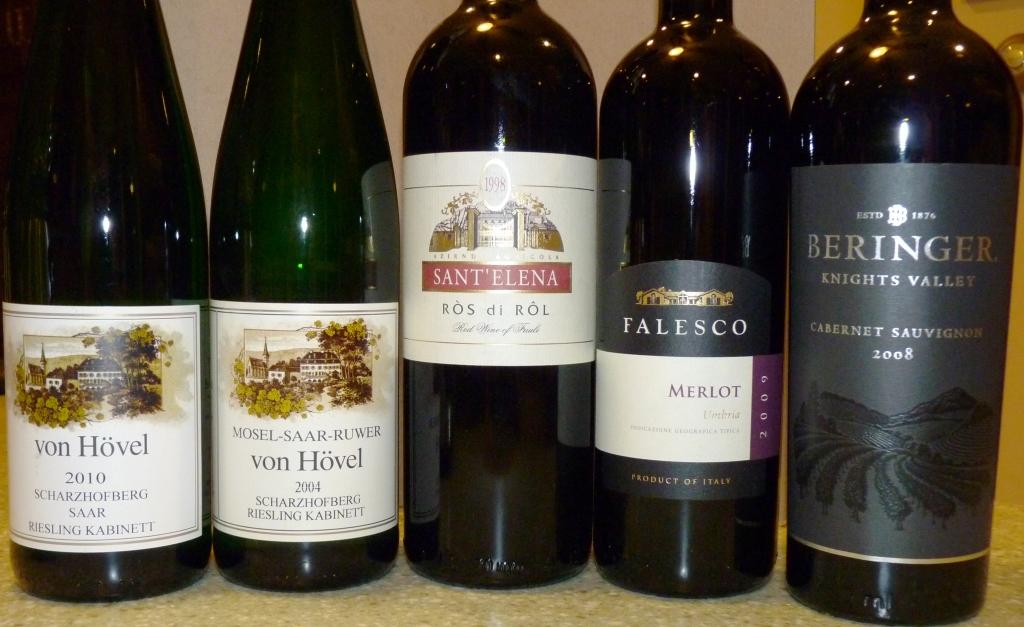 Yesterday we got together at Franklin Street Works in Stamford, CT to talk about wine, time and the relationship between the two (some thoughts on the subject had being posted to this blog before). As you can imagine, we not only talked, we also tried some wines, and even conducted some [not necessarily scientific] experiments.
Here are the wines which were presented in the tasting:
- 2010 von Hövel Riesling Kabinett Scharzhofberg
- 2004 von Hövel Riesling Kabinett Scharzhofberg
- 1998 Azienda Agricola Sant’Elena Ros di Rol Merlot, Friuli
- 2009 Falesco Merlot, Umbria
- 2008 Beringer Cabernet Sauvignon Knights Valley
- 2008 Beringer Cabernet Sauvignon Knights Valley (hyper-decanted!)
First, by pairing together 2010 and 2004 Riesling, we wanted to see the direct effect of aging in the same wine. Despite being called Kabinett, 2010 was rather on the sweet side (I would probably define it as Spatlese) – it was nice and round, and good acidity helped to show up quite fresh. 2010 was people’s favorite, as you might imagine – however, I really liked 2004. One reason is the contrast between the nose and the palate. On the nose it was literally “what the … is this” sensation – probably spoiled cabbage comes to mind first. But then the palate was very balanced, nicely dry and mature, with still a good showing of fruit and excellent acidity.
The Italian wines were good, but not necessarily what I wanted – 1998 Ros di Rol was closed up, dry and somewhat tannic, and 2009 Falesco was bright and fruity, but overall they didn’t play together at all (should look for different comparison tasting pairing).
The last part – Hyper-Decanting – worked out very interestingly (Hyper-Decanting is not my term – please see the origin of Hyper-Decanting here).
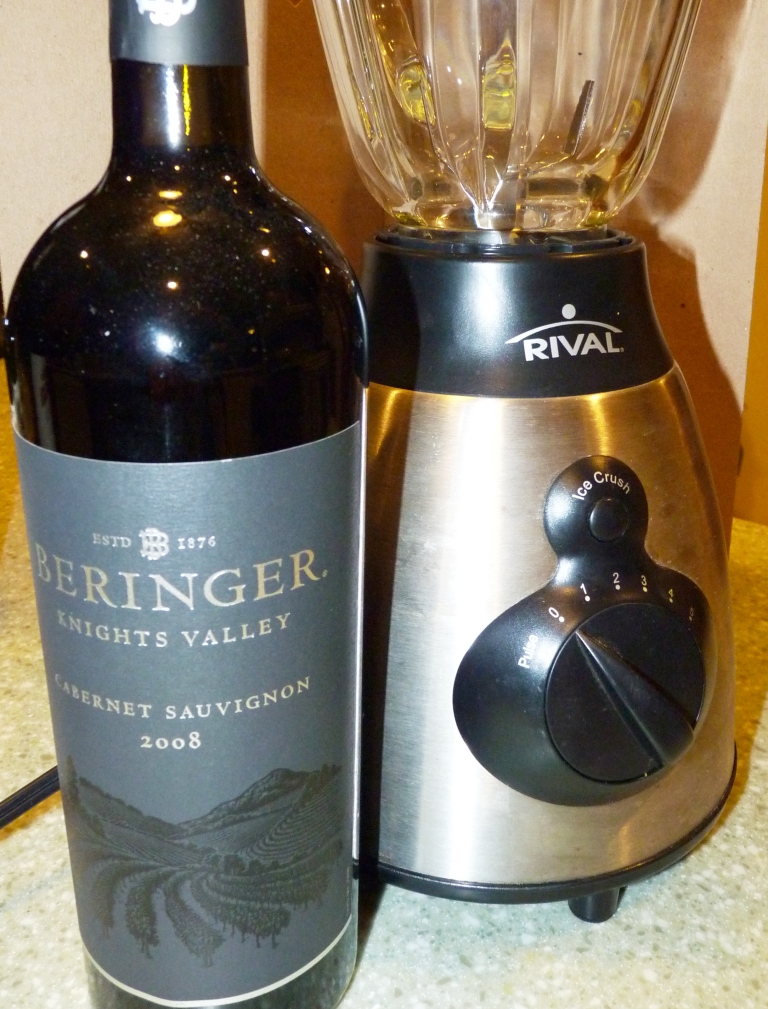
The 2008 Beringer Cabernet by itself showed up in a very classic way – some black currant jammed fruit on the nose, nice bite and nice green notes on the palate. After hyper-decanting ( about 1 minute in the blender), the wine changed dramatically, losing all its sharp edges and becoming soft and mellow.
Would I recommend hyper-decanting as a new way of fast-aging the wines? Probably not. Would I treat a classic Bordeaux this way? Most likely not, unless this is the last bottle left to entertain a party. Is this something you should try for yourself at home? Yes. It is simple, safe and easy, and you probably own the blender anyway, so there is no expense on your part. Will I try it again – yes, but again only as an experiment.
If any of the people reading this post attended the event – please comment, I want to know your opinion! And for everybody else – find the time to open the oldest bottle in your cellar soon, to honor 8000 years of wine and time relationship. Cheers!
Wine and Time
 Of course time had being here forever, always moving, and always in one direction (someone, please prove me wrong!). Wine had being around for about 8,000 years, first appearing in the ancient Georgia (no, not the one down south, but the one from the Caucus region, on another continent). Wine is one of the few products literally not changed for such a long time in its form and its production methods – sans reverse osmosis machines, electrical presses and micro-oxygenation boxes. Considering such a long history, you can imagine that relationship between wine and time is very complex, and you would be right.
First, time is a necessary part and an attribute of the wine making process. For the vast majority of wines, if you read winery’s description of the wine, you will see something like “aged for so many month in …”. Sometimes the wine is aged in stainless steel tanks. Sometimes the wine is aged in clay vessels (very popular in Georgia now, the vessels are called Kvevri and produce very distinct wines). Lots of red wines are aged in oak barrels – American oak, French oak, Hungarian Oak, new oak, old oak – variations are endless. For many wines, duration and the type of the aging is a sole decision of winemaker (no pressure, but this decision will greatly affect quality and the taste of wine, and will define success and failure for it). For some of the wines, aging in a specific type of barrels is mandatory before the wine can be released – Rioja Gran Reserva should be aged for a minimum of 2 years in oak barrel and 3 years in the bottle to be officially designated as Rioja Gran Reserva. Barolo must be aged for 3 years, at least two of them in the oak barrel, and Barolo Riserva should be aged at least for 5 years. During the aging process, the wine is changing. Oak imparts very specific flavor, which we, humans, tend to like. Oak aging also acts as a preservative and helps wines to live long life.
Once all the aging is complete (in the tanks, barrels and bottles – whatever the aging was), wine is released – and this is when the second phase of the wine and time relationship kicks in.
This second phase is as tricky, if not trickier, as the first. Have you heard the phrase “needs time” in relation to the particular bottle of wine? If you will look at the wine reviews in Wine Spectator or any other publication which provides wine reviews, you would often see one of the phrases “Drink now”, “Best 2014-2020”, “Best after 2013” – these are the suggestions for how long the wine should be kept in the cellar before it should be consumed.
Why is that? What with all this aging? Why not open the bottle right away and just drink the wine? What was discovered at some point (don’t ask me when, but it was long time ago) is that wine actually changes its taste as it spends time in the bottle (the aging). And it doesn’t just change the taste arbitrarily, it tastes better. Young wines are often sharp, or somewhat single-toned in their taste – you might get pronounced acidity, or only sweetness, or lots of white apples – but only white apples. During aging, trace amounts of air are making its way into he bottle, and they lead to the wine changing its taste, improving to the better in majority of the cases – it becomes complex, bite softens up, bright and diverse fruit tones compensate for the pronounced acidity and the wine brings a lot more pleasure compare to the young wines. Mature wines deliver more pleasure – this is the whole philosophy behind wine aging.
Simple and easy, right? Well, this is were everything becomes complicated and confusing – as not all the wines should be aged (do not try to age Beaujolais Noveau, please) and also it is very tricky to make sure you would drink the wine at its peak – as whatever comes up, goes down in mother nature. This is where time transforms from the friend to the foe – and as a foe, it is merciless. After reaching maturity and staying there for a while, the wines are typically starting their decline in the taste (wine loses fruit, become very acidic, may be oxidized – and it stops delivering pleasure). Different wines made in the different styles will have different peak times and different lifespans. Some of the Jerez, Madeira and similar wines can go on literally for the hundreds of years. Good Rioja, Barolo or Bordeaux can be perfectly aged for 50 years or longer. Simple Cote du Rhone might only last for 3-5 years, same would be true for many of the Chardonnay wines. There is not crystal ball telling you precisely how long the wine will last and when will it taste the best – human trial and error is the best way to find that out. Of course there are many factors which might help you to decide whether to age the wine and if yes, for how long – the winery, the winemaker, the region’s wine style, success of the vintage and many others – but in the end of the day you would need to do the work (err, I meant the wine drinking) as the wine ages to find out when it tastes best to you.
So, does it worth to age wines if you don’t know what will happen to them in the end? For anyone who is into wines, and who had an opportunity to try a mature wine, the wine which reached its optimum taste, I’m sure this is a no-brainer question – yes, of course, and please, please give me more.
How one can experience aged wines? You got a few options. First, you can age it in your own cellar. Second, you can buy aged wines, either in a good wine store, such as Cost Less Wines in Stamford or Benchmark Wine Company. Note that you have to buy aged wines only from the trusted source – not aging the wines in the right conditions will simply ruin them, so you have to trust your source. Third option is to attend a wine tasting, such as PJ Wine Grand Tasting, where you can taste really amazing wines. However, you don’t have to wait of the Grand tasting, which takes place only once a year. If you live in a close proximity to Stamford, CT, you can attend a wine tasting at the Franklin Street Works gallery on Thursday, January 19th at 5:30 pm (here is the link for RSVP). The event is free and open to all. Here are the wines which will be presented in the tasting (the list might change at any time):
2003 Riesling, Mosel Saar River, Germany
1998 Merlot, Italy
2009 Stag’s Leap Hands of Time, Napa Valley
2009 Stag’s Leap Hands of Time, hyper-decanted using Nathan Myhrvold’s methodology.
So you should come and experience the relationship between time and wine for yourself – there is a good chance that you will even enjoy it! Cheers!
Last Bottle Sign Up ($10 credit)




 Talk-A-Vino