Archive
Weekly Wine Quiz #58: Grape Trivia – Syrah

Shiraz grapes. Source: Wikipedia
Welcome to the weekend! To start your weekend right, it is the time for our traditional grape and vine exercise.
We are continuing the grape trivia, and today’s subject is … Syrah, or as they call it in Australia, Shiraz.
Syrah is a red grape with thick black skin, capable of producing full-bodied, big and powerful wines. Primary aromas associated with Syrah are usually of blackberry and black pepper, but as the wine ages, it shows a number of very diverse flavors, such as leather, tobacco, chocolate and more. Syrah is known under the name of Shiraz in Australia and South Africa. France, United States (California, Washington, Oregon) and Australia are typically considered to be the source of the best in the world Syrah wines, but Spain, Italy, Chile and Argentina are all producing very interesting Syrah wines as well.
Now, let’s move on to the quiz. As before, the quiz consists of 5 questions, and the answers will be provided next Wednesday.
Q1: Where is Shiraz?
Q2: Which white grape often plays a role of blending companion for Shiraz?
Q3: One of the appellations below can be removed from the list – can you tell which one and why? For the answer to count, “why” explanation is required
A. Cornas
B. Côte-Rôtie
C. Crozes-Hermitage
D. Hermitage
E. Saint-Joseph
Q4: About 100 years ago, Syrah was a popular addition to the wines of one well known region – now this practice is totally illegal by the appellation rules. Do you know what region was that?
Q5: Where do you think are the oldest in the world continuously producing Syrah vineyards are located? Can you guess the approximate age of the vines?
Enjoy your weekend, good luck and cheers!
Wednesday’s Meritage – Wine Quiz Answer, Chardonnay Day, Wine Appellation Earth?, Best Blogging Tips and more
Meritage Time!
 First and foremost, let’s start with the answer to the wine quiz #57, Grape Trivia – Grenache. Below are the questions, now with the answers:
Q1: Name two grapes which are traditional blending partners of Grenache
A1: Yes, we are talking the famous GSM blends, and the blending partners of Grenache are Syrah (Shiraz in Australia) and Mourvèdre (known as Monastrell in Spain and often called Mataro in Australia).
Q2: Below is the list of countries which use Grenache in the winemaking. Sort the list by the area of Grenache plantings, from the highest acreage to the lowest:
A. Australia, B. France, C. Italy, D. Spain, E. United States
A2: The correct answer is France, Spain, Italy, US, Australia (so it will be BDCEA). The culprit here was Italy, in my opinion, there Grenache is known as Cannonau – I didn’t expect that Italy grows so much of it… Here is my source of data – an article at Wine Folly’s web site.
Q3: One winery in US is often credited with spearheading the success of Grenache in US. Can you name that winery?
A3: Tablas Creek winery in California – they imported Grenache cuttings from France to the US in 1990, and it was the beginning of great Grenache wines in US. Here is an excellent article about Grenache on Tablas Creek’s web site.
Q4: A few centuries ago, Grenache was a popular blending addition in one of the regions in France, until it became illegal by the AOC rules. Do you know what region was that?
A4: Actually, it was Burgundy, where addition of Grenache was popular way to add body to otherwise finicky Pinot Noir wines. Of course it is illegal practice for the long time.
Q5: Same as for the number of other grapes, Grenache exists in three different grape variations – Grenache Noir, Grenache Blanc and Grenache Gris. There is one wine where it is absolutely legal to use all three grapes as the part of the blend. Can you name that wine?
A5: Châteauneuf-du-Pape! Well, I should’ve post the question as “type of wine” – but in any case, Châteauneuf-du-Pape (CdP for short) AOC rules allow inclusion of all three different Grenache grapes into the same wine. I always thought that CdP allows 13 grapes to be blended together in production of CdP wines, but it appears that the rules has recently changed, and now there are 18 grapes which are all allowed for use as winemaker desires.
And the winner is…(drum roll)… The Drunken Cyclist with five correct answers! He is definitely on the winning streak for a while and once again he gets unlimited bragging rights. I want also to acknowledge The Winegetter, Red Wine Diva and Eat With Namie who all got 3 out of 5 questions right – definitely a commendable effort.
Now, to the interesting stuff around the web vine – boy, there is plenty to share!
First, sorry for the late notice, but tomorrow is 4th annual Chardonnay Day! Well, Chardonnay is not such a hard wine to get, right? You still got time to make sure you will celebrate in style, whatever your style is – Burgundy, Chablis, Big California, California-pretending-to-be-Chablis, I-am-unoaked-and-almost-like-Pinot-Grigio-chose-me – anyway, any kind of Chardonnay goes. And if you want to officially assert your participation, here is a link to the event page where you can officially join the ranks of Chardonnay aficionados.
Next, I want to bring to your attention an interesting post by Mike Veseth of The Wine Economist fame. The post is titled Is This the Beginning of Juice Box Wine? and it is talking about true globalization of wine in terms of production – one of the new wines from Barefoot called Impression and it is produced from the juice sourced from all over the world, so the wine doesn’t state any appellation on the label. What do you think of such approach to winemaking? Will this be a fluke, or will we see more of the wines from appellation Earth?
As you know, I’m a big fun of Stéphane Gabart’s blog, My French Heaven. I find his food pictures as some of the most incredible I ever come across, in the blogs or on Pinterest. Now Stéphane was very kind to write a blog post called “20 tips for stunning food photography“, which definitely worth your attention if you want to master your food picture taking skills. Also, as this is not the first time I refer to some of the “best tips and practices”, I decided to create a dedicated page for the Best Blogging Tips, where I will be collecting all the references like this one. If you have any suggestions as to what should be included in that “Best Blogging Tips” collection, please let me know – I hope to make it into a very useful resource for all.
Next subject is … beer! Yes, even in the wine blog there is a place for a beer. When you hear about the beer called Nuclear Tactical Penguin – is that the beer you would want to try? Well, okay, I don’t know about you, but I’m definitely interested. But turns out that this beer is practically impossible to get in US, so the best thing one can do is to enjoy it vicariously. This is what I did when I read this post at Wayward Wine blog. Outside of just great description of the beer, you can also learn about Frozen Beer category and how those beers are made – I think this reading will be well worth the time. Also, while looking for another beer from BrewDog company, this one called Sink the Bismark, I came across the list of 10 most expensive beers in the world! Now I want to try BrewDog’s The End Of History (55% ABV and still a beer!), but considering that it costs $765 for 330 ml, I will need a sponsor… anyone?
And last, but not the least subject for today – Wine Blog Awards finalists are finally announced. No, I didn’t make it to the list of finalists (sigh). But I would like to congratulate Jeff a.k.a. The Drunken Cyclist as he got into the finals in the Best Writing category. Anyway, this week is the public voting week, so you can cast your vote for the best blog here.
That’s all I have for you for today, folks. The glass is empty – but more wine is coming. Cheers!
Weekly Wine Quiz #57 – Grape Trivia: Grenache, a.k.a Garnacha

Grenache Noir picture from Wikipedia
And we are continuing the Grape Trivia series – today’s focus is the red grape called Grenache (also known as Garnacha and Garnaxta in Spain).
Grenache is one of the most planted red grape in the world. It is a late ripening variety, which typically produces spicy, juicy, berry-flavored wines with high alcohol content. In the number of regions, such as Priorat in Spain, Châteauneuf-du-Pape in France or California and Washington in US, Grenache produces outstanding single-varietal wines, but more often than not it is used as a blending companion, adding juicy component and structure.
And now, to the quiz!
Q1: Name two grapes which are traditional blending partners of Grenache
Q2: Below is the list of countries which use Grenache in the winemaking. Sort the list by the area of Grenache plantings, from the highest acreage to the lowest:
A. Australia
B. France
C. Italy
D. Spain
E. United States
Q3: One winery in US is often credited with spearheading the success of Grenache in US. Can you name that winery?
Q4: A few centuries ago, Grenache was a popular blending addition in one of the regions in France, until it became illegal by the AOC rules. Do you know what region was that?
Q5: Same as for the number of other grapes, Grenache exists in three different grape variations – Grenache Noir, Grenache Blanc and Grenache Gris. There is one wine where it is absolutely legal to use all three grapes as the part of the blend. Can you name that wine?
Enjoy your weekend, have fun and good luck! Cheers!
Wednesday’s Meritage – Wine Quiz Answer, World Sherry Day, How To Start You Wine Book Project, Wine Blog Awards?
It is Meritage Time, and Meritage posts are back!
Let’s start from the answer to the wine quiz #56, What is it? In the quiz, you had a picture of wine-related object, and you were supposed to identify what is it and how it should be used. Here is the picture which was presented to you:

And here is the answer, in the form of another picture:
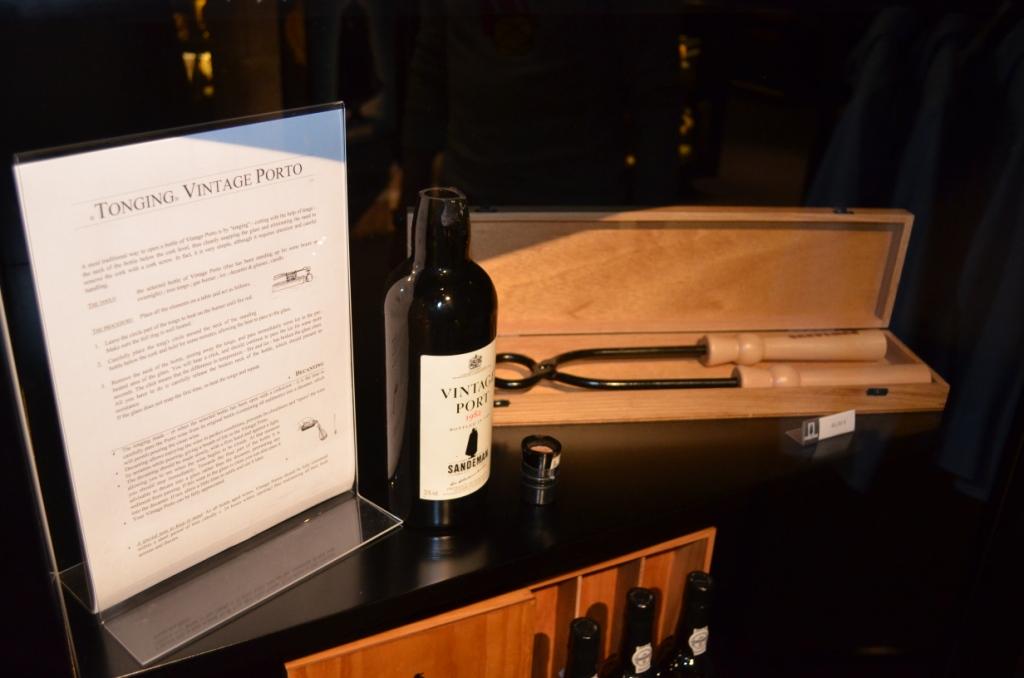
Port Tongs Display at Sandeman
The object is called port tongs, and they are used to open a bottle of vintage port or any old wine without fighting with the cork. The way to use it is this: you heat up the tongs until red hot, put it around the neck of the bottle underneath of the cork, hold it for some time, then remove and use cube of ice to go around the heated up circle – the glass cracks cleanly and can be removed now.
I really wanted to have such a device, ever since I read the post about old Rioja wines in PJ Wine blog – and now I do. I’m not sure how often or even when am I going to use this device, but – now I can if I want to (freedom is everything, right?)
I’m glad to say that we have two winners – both waywardwine and thedrunkencyclist correctly identified Port tongs in the picture, and the drunkencyclist provided perfect description for how port tonging is done. Congratulations to our winners – both of them get unlimited bragging rights.
Now, to the interesting stuff around the web. First, the World Sherry Day will start on Monday. This is going to be one long day, as it starts on May 20th and lasts through May 26th, but hey, that means that you can drink more sherry during one day. Find the place near you to celebrate, or just grab a bottle and indulge on the beverage which might be easily hundreds years old, and still affordable at the same time. If you need a crash course in Sherry, here is the link to one of my posts (I also plan to talk about sherry in more details at some point in the near future).
Dreaming of writing the wine book, you think you got something to say and you think you can convince people to share your vision? Then take a look at this post by Wink Lorch, where she is talking about her successful fundraising project on Kickstarter for her Jura wine book.
Last interesting note for you – if you remember, a while ago, many of us, wine bloggers, asked for your nomination for the Wine Blog Awards 2013 – and many of us got nominations, for which we profusely thank you, our readers. The interesting part is that the week of May 10 – 17 was designated as voting week for the public, after jury selects 5 finalist blogs for each category – here is the link to the rules for you. Today is May 15th, and it doesn’t look like finalist blogs had been selected and that public can vote on them. Oh well…
That’s all I have for you for today, folks. The glass is empty. Until the next time – cheers!
Weekly Wine Quiz #56: What Is It?
It is Saturday, and wine quizzes are back at Talk-A-Vino!
I will continue the grape series with the next quiz (we already covered 3 grapes, so there are only about 200-300 left), but for today, I want to play one of my most favorite games – the one with the picture, you know?
Below is the picture which is very relevant to the wine world – do you know what it is, what it is for and how to use it?
Good luck, enjoy your weekend and don’t forget that Mother’s Day is tomorrow. Cheers!
Wednesday Meritage – Wine Quiz Answer, Bordeaux 2012, Bottle Variations, Dishcrawl and more
Meritage time!
Let’s start with the answer for Wine Quiz #55, Grape Trivia: Pinot Noir. In the quiz you were supposed to answer five questions about Pinot Noir grape – here are the questions with the answers:
Q1: Can you explain the source and meaning of the grape’s name “Pinot Noir”?
A: Pinot Noir literally translates as “black pine”, due to the grape cluster’s resemblance of the pine cone.
Q2: True or False: Burgundy has the biggest plantings of Pinot Noir in France?
A: False – Champagne has much bigger area planted with Pinot Noir
Q3: Match the wine/producer with its country/region:
| A. Mt. Difficulty | 1. Burgundy |
| B. Evening Land | 2. New Zealand |
| C. Fleury | 3. Champagne |
| D. Hamilton Russell | 4. Oregon |
| E. Clos de Tart | 5. South Africa |
A: A2, B4, C3, D5, E1
Q4: Which major wine-producing country is literally unknown as a Pinot Noir producer?
A: Spain. There are literally no Pinot Noir wines coming out of Spain
Q5: From 1990 to 2010, annual Pinot Noir harvest in California increased approximately:
a. 2 times, b. 3 times, c. 5 times, d. 7 times, e. 9 times
A: According to the information you can find here, production of Pinot Noir went from 32,000 tons in 1990 to 147,732 in 2010 – thus correct answer is C, about 5 times.
Looking at the answers, it seems that everybody had no issues answering first 3 questions, but the last two proved to be more difficult. Nevertheless, we have 2 winners – armchairsommelier and vinoinlove both answered all questions correctly, so they get unlimited bragging rights. Jeff at thedrunkencyclist gets honorable mention with 4 correct Google free answers, as well as RedWineDiva also with 4 correct answers. Well done!
By the way, what do you think the theme of the next quiz will be? I’m going along the lines of major grapes, so what do you think is next?
Now, to the interesting stuff around the grapevine. Let’s start from Bordeaux 2012, or En Primeur 2012 event which recently took place in Bordeaux. This event takes place in the Spring of each year in Bordeaux, and this is the time when Bordeaux wines of previous year are offered for the future sales, and prices for those future sales are set. En Primeur 2012 was different from most of the prior years’ events – first, because Chateau Latour, one of the five famous First Growth producers, stopped participating in this events (from now on, they will only sell their wines when they are actually ready to drink, not the futures). Second interesting element – China’s appetite for Bordeaux is getting smaller, and now prices need to be corrected. Anyway, here is a summary by Jancis Robinson, offering her insight after attending the En Primeur 2012.
Now, I want to bring to your attention an interesting article about… bottle variations. No, I’m not talking about imperfections of the glass – I’m talking about the actual content, the wine, being different from bottle to the bottle. Here is the link – I think it is a very interesting reading.
Do you like beer? Yes, of course it is okay to like beer even if you are a wine lover. So if you like beer, here is an interesting site for you – BrewGene. It is both a web site and an app, which will allow you to find information on the beer, see what the others think about it, get recommendations for similar beers and more – I think this is pretty cool, so check it out.
Last but not least, a couple of food events – sorry, they are really only local events, but I want to mention them in any case. Dishcrawl, which I mentioned in my previous Meritage post, just announced a new event on June 11th, which will be taking place in Old Greenwich, Connecticut. As of the time of this writing, there were still 17 tickets available – if you are local in the area, or plan to visit around June 11th date – don’t miss out. Here is the link to the web site for you.
Another food related event is Taste of Westport, which will take place on May 2nd from 6 pm to 9 pm. Here is the link with lots of information about the event, all coming from OmNomCT blog which is a priceless source of information about all things food and drink in CT – if you live in Connecticut or in a close proximity, and you are not following this blog, you have to correct this mistake immediately.
And that’s about all I have for you, folks. The glass is empty. Until the next time – cheers!
Weekly Wine Quiz #55 – Grape Trivia: Pinot Noir
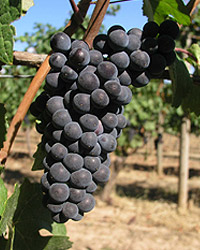
Image source: Wikipedia
And the time has come for the new wine quiz. Continuing with our Grape Trivia theme, the new quiz is about Pinot Noir.
Pinot Noir. The grape behind some of the most expensive and thought after wines in the world. Almost never blended with other grapes. A major weapon in the hands of ABC oenophiles (Anything But Cabernet). At the same time, one of the most finicky, difficult to deal with grapes. To produce great wines, Pinot Noir requires ideal growing conditions. It is genetically unstable, and can easily mutate in the vineyard, producing grapes which look nothing like their parents. It can also “throw a fit” during fermentation and take the process out of control. But – all of it worth the “goodness in the bottle”, so today there is no shortage of great Pinot Noir wines coming in from all over the world.
Pinot Noir is one of the oldest known Vitis Vinifera grapes, specifically grown to be used in winemaking, with historical references going all the way back to the 4th century in Burgundy, France. Today Pinot Noir is growing literally in every winemaking country in the world, with the wines taking on wide range of expressions depending on the location’s climate and soil. Taste profile of Pinot Noir often includes lighter red fruits and berries – cranberries, strawberries, tart cherries, with hint of smokiness and mushrooms (earthiness).
Now, to the quiz!
Q1: Can you explain the source and meaning of the grape’s name “Pinot Noir”?
Q2: True or False: Burgundy has the biggest plantings of Pinot Noir in France?
Q3: Match the wine/producer with its country/region:
| A. Mt. Difficulty | 1. Burgundy |
| B. Evening Land | 2. New Zealand |
| C. Fleury | 3. Champagne |
| D. Hamilton Russell | 4. Oregon |
| E. Clos de Tart | 5. South Africa |
Q4: Which major wine-producing country is literally unknown as a Pinot Noir producer?
Q5: From 1990 to 2010, annual Pinot Noir harvest in California increased approximately:
a. 2 times
b. 3 times
c. 5 times
d. 7 times
e. 9 times
Have fun, good luck and enjoy your weekend. Cheers!
Wednesday’s Meritage – Wine Quiz Asnwer, Balance in Wine, Malbec Day, Food Happenings and more
Meritage time!
Boy, is the glass full today… I got a lot of stuff to share, hopefully your glass is big enough.
First things first – here is the answer for the wine quiz #54, Grapes trivia – Merlot. In this quiz you were supposed to answer five questions related to the Merlot grape:
Q1: Merlot was named after a: A. town, B. person, C. bird, D. song
A: C, bird. The name “Merlot” comes after French “Merle”, which means “young blackbird” – the play is on the similarity of the color of Merlot grape and the bird.
Q2: Name the movie where Merlot was dissed on uncountable number of occasions
A: Sideways
Q3: One of the grapes from the list below was assumed to be a Merlot – but it was not. Do you know which grape was mistaken for the Merlot? Bonus question – name the country where confusion took place: A. Mourvèdre, B. Carignan, C. Carménère, D. Cinsault
A: C, Carménère – for a while, some of the wines produced in Chile were thought to be made out of Merlot – until 1990s, when genetic studies were conducted and concluded that the grape thought to be Merlot actually was Carménère.
Q4: Some place, some time ago, Merlot successfully crossed (by accident) with Cabernet grape, and formed a new grape which produces pretty unique wines. Can you name that grape?
A: Caberlot – a very unique grape growing in Tuscany, a cross of Cabernet Franc and Merlot. Wine is called Il Caberlot and produced by Il Carnasciale, only in magnum bottlings
Q5: Chateau Petrus in Pomerol, France makes some of the very best (and most expensive) wines in the world, and those wines are 100% Merlot. Then there is another 100% Merlot wine, made in another country, which is considered a successful competition to Petrus and done very well against it in a number of blind tastings. Can you name that wine?
A: This was definitely a controversial question, where more than one answer was expected. The wine I had in mind was legendary Masseto, a super Tuscan produced by Tenuta Dell’Ornellaia, but Tua Rita Redigaffe and Le Macchiole Messorio (also Super Tuscan wines) are equally qualified – all three made out of 100% Merlot and can give Petrus good run for the money.
Thus EatwithNamie becomes our champion, as she correctly answered all five questions, but thedrunkencyclist gets honorable mention with 4 correct answers out of 5. Great job and enjoy your unlimited bragging rights!
Now, to the interesting stuff around the net!
As you know, I’m a little REALLY obsessed with the concept of balance in wine, where all the taste components – acidity, tannins, fruit, alcohol – are in full harmony, and none of them stands out more than another. I remember once reading an article about “harmony points” in taste of the wine, and then for the long time I couldn’t find it again. So finally I spent time and found a lot of interesting reading materials evolving around the concept of “balance”. Here are two articles (first link and second link) regarding the reverse osmosis process which allows you to achieve precise alcohol content in wine, which seems to be completely changing the perception of balance – as an example, exact same wine tastes completely different at 13.5%, 14.1% and 14.5% alcohol. I think these articles are worth reading. On related subject, here is a link to the article from the Wine Spectator, talking about balance in wine – be sure to read through the comments section, there is a lot of interesting polemics among professionals and not.
Today is 3rd annual World Malbec day! Did you have your glass of Malbec yet? If you did not, don’t worry, you can still celebrate in style. Here is the link to the Malbec celebration events around the globe.
Now, a few words about food. First, here is an interesting article about five foods which can rev things up in the bedroom, coming from the Eat and Sip in the City blog. One out those five foods sounds a bit surprising to me – but read the post first, I wonder what you would think.
I also want to bring to your attention a series of events called Dishcrawl – you can buy a ticket for a certain date and time, which allows you to take a “tasting tour” of a group of restaurants located in close proximity to each other. You don’t know what restaurants you are going to until 48 hours prior to the event, so there is an interesting surprise element here. Tickets are reasonably priced – here is an example of the event in Greenwich, CT, which is unfortunately sold out – but you will get the idea.
And one more food-related note. The Capital Grille, one of my favorite restaurant chains, is starting their Spring $18 three course lunch – I took the advantage of these events in the prior years, and it definitely worth your attention.
That is all I have for you for today. The glass is empty. Until the next time – cheers!
Weekly Wine Quiz #54 – Grapes Trivia: Merlot
 Here comes our next quiz in the Grape Trivia series. Today’s subject – Merlot.
Merlot is one of the most popular grapes in the world, used both for blending and single-varietal wines. Merlot has thin dark blue colored skin, and its taste profile typically includes plums, blackberries, chocolate and tobacco notes. As it is often compared with Cabernet Sauvignon, one of its most popular blending companions, Merlot ripens earlier than Cabernet Sauvignon, has higher sugar content and lesser level of tannins. While France has the biggest plantings of Merlot in the world, Merlot is universally grown in literally every wine producing country – great Merlot wines are produced in Australia, New Zealand, Italy, California, Washington, Long Island, Spain, Chile, Argentina and many other places.
Done with basic facts – let’s proceed with our quiz now, shall we?
Q1: Merlot was named after a:
A. town
B. person
C. bird
D. song
Q2: Name the movie where Merlot was dissed on uncountable number of occasions
Q3: One of the grapes from the list below was assumed to be a Merlot – but it was not. Do you know which grape was mistaken for the Merlot? Bonus question – name the country where confusion took place.
A. Mourvèdre
B. Carignan
C. Carménère
D. Cinsault
Q4: Some place, some time ago, Merlot successfully crossed (by accident) with Cabernet grape, and formed a new grape which produces pretty unique wines. Can you name that grape?
Q5: Chateau Petrus in Pomerol, France makes some of the very best (and most expensive) wines in the world, and those wines are 100% Merlot. Then there is another 100% Merlot wine, made in another country, which is considered a successful competition to Petrus and done very well against it in a number of blind tastings. Can you name that wine?
Have fun, good luck and enjoy your weekend! Cheers!
Wednesday’s Meritage – Wine Quiz Answer, Wine Aging, Wine of 50 States, Food Photography and more
Meritage Time!
Let’s start with the answer for the wine quiz #53, grape trivia: Cabernet Sauvignon. This was the first in the new series of quizzes I hope to continue for a while – for the next few weeks, I plan to run questions around popular grapes. This time the subject was Cabernet Sauvignon, and here are the questions with the answers:
Q1: Which two grapes are the parents of Cabernet Sauvignon? A: For the long time prevailing theory was that Cabernet Sauvignon had some ancient roots – until DNA research showed that Cabernet Sauvignon originated in 17th century in France and it is a cross of Cabernet Franc and Sauvignon Blanc.
Q2: The world’s oldest Cabernet Sauvignon vines are located in (name winery and/or vineyard for extra credit):
A. Bordeaux
B. Chile
C. California
D. Australia – correct answer. Kalimna Vineyard Block 42 at Penfolds has 140 years old Cabernet Sauvignon vines.
E. Georgia
Q3: True or False: Since 2000, plantings of Cabernet Sauvignon increased in Bordeaux? A: False. Since 2000, Cabernet Sauvignon plantings had been decreasing and Merlot plantings increasing as Merlot is ripening about 15 days earlier than Cabernet Sauvignon and thus easier to use in the blends.
Q4: The second largest in the world plantings (by area) of Cabernet Sauvignon grapes are located in:
A. Australia
B. California
C. Chile
D. Hungary
E. Moldova – quite unexpectedly (for me, at least), this is the correct answer.
F. South Africa
Q5: Absolute majority of Bordeaux wines are blends. Name four grapes which are traditional blending companions of Cabernet Sauvignon in Bordeaux
A: Merlot, Cabernet Franc, Petit Verdot and Malbec are four major blending companions of Cabernet Sauvignon in Bordeaux.
There were many good answers this week, and we have three winners – The Drunken Cyclist, Red Wine Diva and Armchairsommelier all correctly answered all five questions, plus the Armchairsommelier also correctly identified the oldest Cabernet Sauvignon Vineyard. They get the traditional prize of unlimited bragging rights. Well done!
And now, to the interesting stuff around the net. Lets start from the subject of wine aging. Few days ago I shared my thoughts on the subject of wine aging – and then I noticed an article by Steve Heimoff talking about wine critic’s approach to recommending wines for aging (or not). Quite frankly, I don’t think I found any revelations in that article, but it sheds some light on the reason behind “drink after 2056” recommendations.
It is no secret that wine is made in all 50 states in US (it’s actually being like that for about ten years by now – I used to ask this question as part of fun trivia during my wine tastings) – but when Jancis Robinson is talking about it, it means that we actually went over the hump – here is her article in Financial Times where she is talking about new reality of wine making and wine consumption in United States.
I don’t know how many of you are familiar with El Bulli – the famous restaurant in Spain by world renowned chef Ferran Adria, a father and mother of molecular gastronomy. Visiting El Bulli was my dream for many many years, which is not going to materialize, as restaurant closed a few years ago. In one of the the Meritage issues last year I mentioned that wine list from El Bulli was available online (140 pages of wine goodness – if you are interested in taking a pick, my post still has a link to it) – now, as Bloomberg reports, El Bulli cellar was auctioned in Hong Kong for the total of $8.8M. The money raised will be used for the purposes of El Bulli foundation.
I was somewhat late writing this post today (ideally, I want Meritage posts to come out in the morning, but – oh well…) – and I’m glad I did, as I came across a wonderful post by Stefano Crosio about Food Photography. A Food Photography Primer is a great and very generous post which gives you step by step details on how to take amazing food pictures. And talking about that subject of food pictures, I need to share with you a healthy dose of the food porn form the blog I always drool over – My French Heaven. Warning – DO NOT click this link if you are hungry – please don’t, as I can’t be responsible for the consequences.
Okay, I’m sure you did click on that link, so my work is done here. The glass is empty. Refill is coming. Until the next time – cheers!
Last Bottle Sign Up ($10 credit)




 Talk-A-Vino