Archive
Guest Post: 7 Sustainability Trends in the Wine Industry
Today, I would like to offer to your attention a guest post by Julia Nikolaus, a content strategist for an LA-based company. She enjoys working with food and drink brands along with pet clients. In her free time, Julia likes to bake new recipes, take dance classes, and spend time outdoors.

Image Source: https://unsplash.com/photos/vGQ49l9I4EE
With climate change and environmental issues steadily increasing, sustainable wine production takes on even greater significance today.
Wine created with future generations in mind ensures the industry’s viability and a healthier planet, community, and business. In this blog post, we will explore how adopting eco-friendly practices from grape to bottle can lead to innovation, cost savings, and new opportunities while making consumers feel better about their choices. So, without further ado, here are seven trends leading us to a greener wine industry.
#1 – Organic and Biodynamic Farming
Organic and biodynamic farming, an agricultural approach steadily gaining popularity, emphasizes natural and sustainable practices. It involves using organic methods such as composting and avoiding pesticides while employing soil supplements prepared according to a biodynamic certification process. This method follows a planting calendar and includes homeopathic fertilizers and crop rotation.
In recent years, there has been a significant increase in the demand for organic and biodynamic farming methods. As a result, wineries now offer certified organic and biodynamic wines that benefit from enhanced soil health, reduced environmental impact, and assurance of all-natural productivity.
However, due to the intricate and comprehensive certification procedure, these benefits come with challenges that wineries must navigate carefully to label their product biodynamic. Examples of organic and biodynamic wineries include Quivira Vineyards, Kings Estate, Cakebread Cellars, and Left Coast Cellars just outside Salem, Oregon.
#2 – Regenerative Agriculture
Regenerative agriculture is a holistic approach grounded in the interconnectedness of farming systems and the environment. Historically, indigenous communities practiced these methods before modern industrial agriculture ever existed.
At the heart of this farming methodology lies an unwavering focus on soil health, the progenitor of resilient, nutritionally-dense crops that thrive in a sustainable and vibrant ecological system.
Some practical methods incorporated by regenerative vineyards such as Wilson Creek Winery and Robert Hall Wineries use sheep to fertilize instead of chemicals, chickens to eliminate pests, and cover crops to bolster soil fertility and prevent erosion.
Carbon sequestration, or reducing the amount of carbon dioxide released into the atmosphere during farming, can now be attained by wineries using holistic methodologies. As a result, regenerative agriculture has the potential to endure into the future and continue to be an instrumental agent in addressing and curbing the climatic impact while protecting the biodiversity found in nature.
#3 – Climate Change Mitigation
Climate change mitigation deals directly with the causes rather than the consequences of greenhouse gas emissions. The wine industry is no exception to these effects, as increasing temperatures and erratic weather patterns continue to affect grape quality and hinder the industry’s growth potential.
Wineries are taking action to combat greenhouse gas by implementing renewable energy sources, optimizing irrigation practices, and minimizing transportation emissions. Carbon offsetting, and certification programs like Carbon Trust and LIVE Certified, can also play an essential role in reducing the wine industry’s carbon footprint.
By adopting these mitigation measures and proactively striving to meet certification requirements, the wine sector can actively contribute to combating climate change and ensuring a more prosperous future for the industry.
#4 – Water Conservation
Water conservation, the practice of using water efficiently to reduce unnecessary usage, is crucial in the wine industry due to droughts and climate change. Wineries face water scarcity and quality challenges, requiring proactive, sustainable irrigation strategies for grape cultivation and wine production.
Effective techniques include drip irrigation for precise water application, rainwater harvesting to store and utilize natural resources, and wastewater treatment to recycle and reuse processed water.
Emphasizing these methods is vital for the sustainability of winemaking, ensuring our continued enjoyment of wines while responsibly managing valuable water resources.

Image Source: https://unsplash.com/photos/UbGYPMbMYP8
#5 – Waste Reduction
Waste reduction in the wine industry is at the top of the list throughout the production process, given its potential impact on the environment and overall sustainability. Various types and sources of waste associated with winemaking include packaging, chemicals, and byproducts generated during wine production.
By addressing these waste concerns, the wine industry can achieve significant benefits such as cost savings, resource efficiency, and a circular economy, thus contributing to a more environmentally-friendly production process.
There are several waste reduction strategies that wine industries can implement, which include reuse, recycling, and upcycling. For example, waste materials like grape pomace, a byproduct of winemaking, can be upcycled into valuable products such as bioenergy or food supplements. And packaging materials such as eco-friendly, reusable wine shipping boxes and inserts are easy to recycle to help wineries meet company initiatives.
#6 – Biodiversity and Ecosystem Services
The health and productivity of vineyards rely heavily on biodiversity and ecosystem services.
Biodiversity within vineyards encompasses the range of genetic, species, and ecosystem-level diversity among animals, plants, and microorganisms. Ecosystem services like pollination, decomposition, water purification, erosion and flood control, carbon storage, and climate regulation contribute to a flourishing and robust vineyard environment.
A diverse ecosystem is essential for sustaining robust vineyard health and productivity. However, threats to biodiversity, such as monoculture, invasive species, and habitat loss, disrupt ecosystem services and negatively impact vineyard health. For instance, monoculture practices can diminish natural habitats for beneficial organisms, thus reducing pollination services and pest control.
In the pursuit to preserve vineyard biodiversity and ecosystems, several initiatives focus on promoting sustainable practices. A few of those are soil health enhancements, conserving soil moisture, and attracting beneficial insects by planting cover crops.
In addition, setting up hedgerows support pollinators and pest controllers’ habitats. And agroforestry systems encourage diverse land use patterns, supporting multiple species of floras and faunas.
#7 – Social Responsibility
In the wine industry, social responsibility programs focus on promoting moderate consumption, environmental conservation and protection, and engagement with communities and social policy organizations to ensure the safety and well-being of employees and consumers.
Addressing ethical and social challenges such as labor rights, health and safety, and community engagement is crucial to a sustainable wine industry. Opportunities for social responsibility include adopting fair trade practices, embracing diversity and inclusion, and supporting philanthropic endeavors.
A few examples of social responsibility initiatives include employee training, local sourcing of materials, and organizing charity events for the community. Ultimately, the wine industry’s commitment to social responsibility demonstrates its dedication to ethical business practices and positive societal contributions.
Wrapping Up
In conclusion, the wine industry is experiencing a transformation through sustainability trends such as organic and biodynamic farming, regenerative agriculture, climate change mitigation, water conservation, waste reduction, biodiversity & ecosystem services, and social responsibility.
Wineries, consumers, and policymakers must embrace these practices and collaborate to chart a sustainable future. Let’s all raise a glass and commit to supporting a greener, more responsible wine industry for future generations.
Chilean Sauvignon Blanc – The Adulthood
This post was supposed to be written last year… And then I almost made it in time for the Sauvignon Blanc day which was celebrated two days ago, on May 6th. Well, it is definitely a “better late than never” post, so for what it worth, let’s dive into it…
Today, friends, we are going to talk about Sauvignon Blanc.
If I would just “shoot from the hip”, Sauvignon Blanc doesn’t stand up as a grape with tremendous clout. Yes, it is one of the three major white wine grapes, along with Chardonnay and Riesling. And yet if there were a grape popularity contest, I would guess the championship would be decided between Cabernet Sauvignon and Chardonnay. Of course, Pinot and Syrah would-be contenders, but I still think the former two are really at the top of wine lovers’ minds.
But let’s take a closer look at Sauvignon Blanc. There is hardly a wine region in the world where Sauvignon Blanc is not growing – no point in recounting them, Sauvignon Blanc is successfully growing everywhere. Sauvignon Blanc makes sparkling, still, and dessert/late harvest wines. It shines solo everywhere, and I’m not talking about “usual suspects” – Sancerre, New Zealand, Chile, California – but I’m talking about some of the world’s best producers. Screaming Eagle, the “cult of the cults” producer in Napa Valley makes Sauvignon Blanc which is more allocated than their Cabernet Sauvignon. Gaja Alteni di Brassica and Poggio alle Gazze dell’Ornellaia, two of the 100% Sauvignon Blancs from Italy – I hope these names need no introduction. Let’s not forget the “Y” dry wine produced by Sauternes legend, Chateau d’Yquem. And then of course, there are countless blends… Sauvignon Blanc is everywhere.
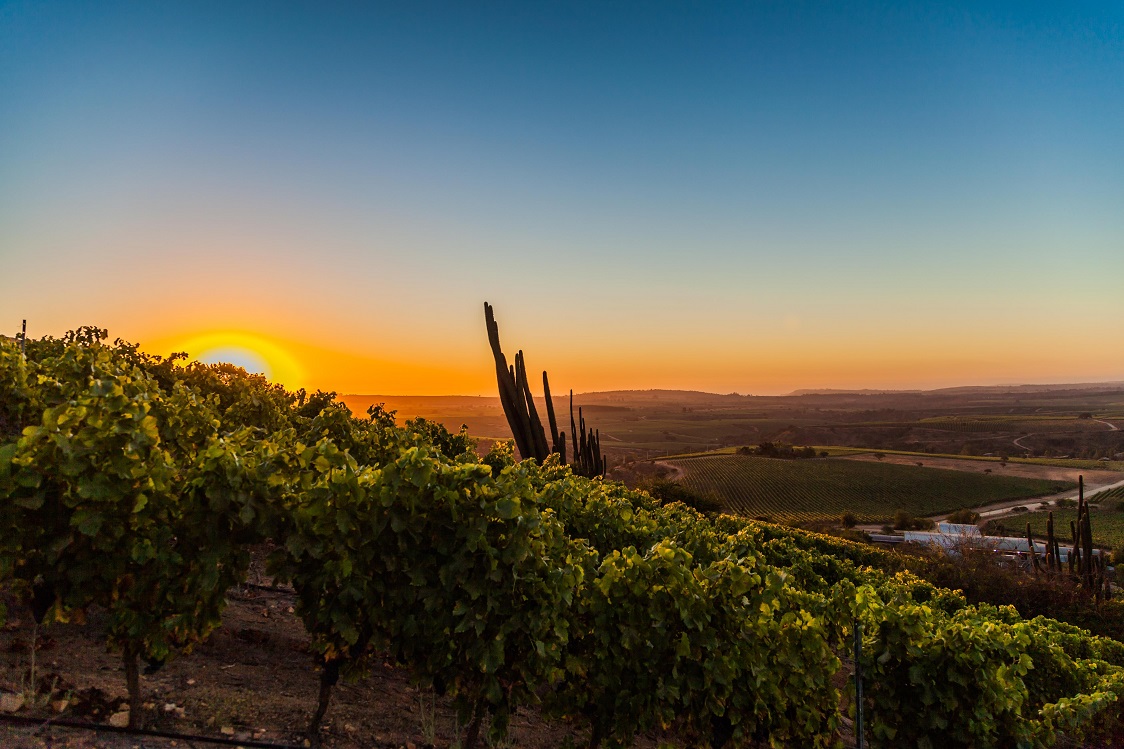
Garces Silva vineyard at sunset credit Jody Hortons
Never mind the blends – let’s talk about pure Sauvignon Blanc wines. In my opinion, there are 4 main distinct styles of Sauvignon Blanc – as there are 4 main production regions that we already mentioned – Sancerre, New Zealand, Chile, and California (Napa Valley primarily). Maybe I should say “there used to be” 4 main styles… In the old days, Sancerre could be identified by aromas of cat pee and freshly cut grass. New Zealand Sauvignon Blanc had a currant profile with currant leaves showing very well. It was popular to refer to the main component of the New Zealand Sauvignon Blanc profile as Gooseberry – I remember wine critics angrily saying that 90% of those who use the descriptor never tasted gooseberry in their lives. Chilean Sauvignon Blanc was similar to New Zealand, only shifting more towards grapefruit and a bit more sweetness in the profile. All three (Sancerre, New Zealand, and Chile) have changed today. And only Napa Valley style has not changed since the moment I tasted Napa Sauvignon Blanc for the first time – freshly cut grass is weaved together with bright but not sweet fruit – it is succulent, it is seductive, it is “in-your-face-beautiful-and-not-ashamed-of-it” – but we will have to talk about Napa Sauvignon Blanc some other day.
For a long time, New Zeland Sauvignon Blancs were consistent, with only Cloudy Bay standing apart from the rest, in a very delicious way. Then New Zealand decided to look for a new Sauvignon Blanc identity at some point, and I had an opportunity to taste this “new identity” at a tasting 8 years ago – it was an interesting experience, please read my notes if you are interested. I don’t know if the Chilean wine industry is closely following New Zealand, or if is this just a common trait of growing up, but this brings us to today’s subject – Chilean Sauvignon Blanc wines.
Compared to the Cabernet Sauvignon, the Chilean staple, Sauvignon Blanc is a very young grape. The first plantings of the Cabernet Sauvignon in Chile go back to the middle of the 19th century. The story of Sauvignon Blanc in Chile only started in the late 1970s. In 1978, there was a total of 8,154 acres of Sauvignon Blanc in Chile, accounting for 3.1% of all grape plantings (land under vine), mostly concentrated in Maule Valley. In the 1980s, new plantings of Sauvignon Blanc started to appear in the coastal regions of Casablanca, as well as Coquimbo, Valparaíso and O’Higgins. Coastal areas offered cooler weather, which brings herbal, citrussy expression with cut-through acidity in Sauvignon Blanc, contrasting with the areas with a continental climate, known to bring those grapefruit/tropical fruit notes I mentioned before as an old signature of Chilean Sauvignon Blanc.

Ventisquero vineyard. Source: Viña Ventisquero
Going beyond just new cooler coastal areas, winemakers also started paying attention to the inherent grape qualities, by choosing to experiment with different clones. Of course, it is only fair to assume that clonal selection is not just Pinot Noir or Chardonnay prerogative – nevertheless, until I started working on this article, I had no idea that Sauvignon Blanc clones are even a thing. Turns out that Davis Clone (#1) is known to impart citrusy qualities, Sancerre Clone (#242) is more herbal and fruity, and then there are other popular French clones #107, #241, and #317.
Today, Sauvignon Blanc is the second most planted grape variety in Chile with 37,614 acres under vine in 2019, accounting for 40% of all white grapes plantings. Sauvignon Blanc is the second most widely produced wine in Chile, with 13% of all the Chilean wine production volume (based on 2021 data). The majority of the Sauvignon Blanc plantings are now located in the coastal regions. Chilean Sauvignon Blanc has definitely grown up and it is ready to conquer the world.
To make the encounter with modern Chilean Sauvignon Blanc wines more practical, I had an opportunity to taste 8 Sauvignon Blanc wines, all coming from different producers and representing a number of regions. Here are my notes:

2021 Montes Sauvignon Blanc Limited Selection Leyda Valley DO (13.5% ABV, $15) – Montes is a very interesting winery in general – I had an opportunity to speak with the winemaker, and to learn more about the winery, you might want to read part 1 and part 2 of our conversation. Sauvignon Blanc grapes used in this wine, clones 1 and 242, were harvested from the vineyard located about 9 miles away from the Pacific Ocean on the western slopes of the Cordillera de la Costa mountain range.
Greenish pale
Inviting nose of fresh berries, grass, cassis leaves, some tropical fruit undertones, Napa SB-like presentation
Fresh, vibrant, tart, lean, lemon, a distant hint of freshly cut grass – truly refreshing on a hot day. Delicious.
8+, superb. Nicely complements creamy goat cheese.
2020 Casas del Bosque La Cantera Sauvignon Blanc Las Dichas Casablanca (13% ABV, $18) – Casas del Bosque is one of my favorite Chilean producers, I had a number of their wines on different occasions. The grape for this wine came from the vineyard located about 10 miles away from the Pacific Ocean, located on the mountain slopes.
Greenish pale
Freshly cut grass, green herbs, medium+ intensity, cassis leaves
Clean, light, good acidity, herbaceous profile, a touch of freshly cut grass. Lean.
8, excellent wine.
2021 Viña Koyle Costa La Flor Sauvignon Blanc San Antonio Leyda (12.5% ABV, $18, organic grapes) – Viña Koyle is one of the well-known Chilean organic wine producers – I had an opportunity to try some of their wines last year while working on the Chilean wines sustainability story last year. The grapes for this wine, clones 1 and 242, came from the vineyard located 5 miles away from the Pacific Ocean. The wine was aged for 4 months on the lees to soften the sharp acidity – as you can see in my notes below, cut-through acidity was still acutely present.
Light golden
Very restrained, distant hint of peach and guava
High acidity, a touch of freshly cut grass which quickly dissipated just leaving a tart finish.
8-, will be interesting with seafood.
2020 Viña Garcés Silva Amayna Sauvignon Blanc Leyda Valley DO (14% ABV, $25) – the grapes were harvested at the vineyard located 8.5 miles from the Pacific Ocean. The wine was aged for 6 months on fine lees.
Greenish pale
A hint of freshly cut grass
Tropical fruit profile with a hint of sweetness and a touch of grass
8-, nice
2020 Matetic EQ Coastal Valle Hermoso Casablanca DO (13.5% ABV, $20) – grapes for this wine came from the biodynamic vineyard in the Rosario Valley in Casablanca, just 3.5 miles away from the ocean.
Straw pale
Steely undertones, a distant hint of gunflint, a touch of lemon
Whitestone fruit, herbs, a touch of cassis leaves, finish is round and gorgeous with a whiff of freshly cut grass. Reminiscent of the Italian renditions of Sauvignon Blanc such as Ornellaia and similar.
8+/9-
2019 Viña Ventisquero Grey Glacier Sauvignon Blanc Atacama Valley (13% ABV, $25) – yet another winery I’m well familiar with. Curious fact – founded in 1998, Viña Ventisquero is turning 25 this year. The vineyard where the grapes for this wine came from is located 15 miles away from the ocean and in the middle of the Atacama desert, taking full advantage of the poor soils. The wine was aged in foudres to enhance its texture and improve aging capabilities.
Greenish pale
A hint of gunflint, earthy undertones, Dias tang hint of lemon
A hint of gunflint, crisp, clean, refreshing, clean acidity on the finish, nice textural presence with some salinity – should be a great oyster chaser.
8/8+, excellent
2021 Viña Tabali Talinay Sauvignon Blanc Valle de Limarí DO (13% ABV, $24) – the vineyard, called Talinay, eponymous with the mountain ridge where it is planted, is located 7 miles away from the ocean.
Greenish white
Minerally-driven nose, limestone, lemon, medium+ intensity
Crisp, fresh, lemon, minerality, a tiny hint of fresh cut grass which comes and goes.
8, this wine is asking for food. I want oysters… works well with Boursin cheese
2020 Viña Morandé Sauvignon Blanc Gran Reserva Casablanca Valley DO (13.5% ABV, $20, 12 months aged in oak foudres and concrete eggs) – Pablo Morandé was a Casablanca Valley pioneer, who started planting Sauvignon Blanc in the 1990s. Grapes for this wine came from Belén vineyard is in the Lo Ovalle region, 14 miles away from the ocean.
Straw pale
Fresh-cut grass with herbal undertones and minerality, sapidity (almost “meaty” smell if it makes any sense)
Clean, crisp palate, freshly cut grass, lemon, crisp acidic finish.
8, elegant and balanced.
Here you are, my friends. Beautiful, minerality-driven, world-class wines, with their own unique and delicious expressions. As you can tell from my notes, the tasting was 8 out of 8 success, which is generally not given.
I don’t know what is your take on Chilean Sauvignon Blanc and when did you taste it last time – it is definitely worth revisiting. and get ready to be pleasantly surprised.
Chilean Wines: Sustainability is a Long Game
 Sustainability is a journey.
Sustainability is a lifestyle.
Sustainability is a long game.
Have you ever dieted in your life? Did you achieve the intended results (let’s say, lose 20 pounds)? Did you go back where you started shortly after you stopped the diet? Of course, you already heard this a million times and you know what I’m going to say – diets don’t work. You need to change your lifestyle if you want those lost pounds to never come back, because the diet is a hack, and as such, it can give you only a quick and non-lasting, non-sustainable result.
Sustainability is a lifestyle.
When I think of sustainability my first thought goes to the vineyard. How vineyard integrates into the environment, how vineyard, land, soil, and everything around can happily co-exist now and in the future. My second obvious thought goes to the winery operation – sustainable energy use, recycling, waste reduction.
In 2011, the Chilean wine industry defined its Sustainability Code, a voluntary certification system aimed to improve sustainable practices in the wine companies in Chile. In 2011, it all started in the vineyard. Today, the Sustainability Code for the Chilean Wine Industry (SCWI) represents a colorful flower, consisting of 4 areas, and featuring 351 individual requirements:
- Viticulture (98 individual requirements /Green)
- Vinification, Bottling, and facility operations (65 individual requirements /Red)
- Social (118 individual requirements /Orange)
- Wine Tourism (70 individual requirements /Purple) — new category added in 2020
In the ten years since its inception, SCWI has been adopted by all the country’s leading wine producers and accounts for 80% of Chile’s bottled wine exports. Wines from certified producers come from 123,550 acres of vineyards, out of 485,000 acres of total vineyard space in Chile, so roughly 25%.
The certification is done by the accredited international bodies (ECOCERT from France, NSF from the USA, and SGS from Switzerland, a few more should be added soon), and it is an ongoing process, as re-certification has to be done every two years. Certification has a substantial cost, so Vinos de Chile has a special program in place to help small and medium producers to achieve certification. To date, 80 wineries achieved full certification – if you will look at the list, you will see a lot of familiar names. Some, such as Casa Lapostole, one of the most famous Chilean wineries, use its own set of sustainability rules.


I had an opportunity last year to taste a number of wines from the certified sustainable Chilean wineries. Let’s talk about them.
Viñedos Emiliana (now known as Emiliana Organic Vineyards) was founded in 1986. However it is interesting that if you will check the history section on Emiliana’s website, the time count starts from 1998 – this is when Emiliana began its journey to convert into a sustainable, organic, and biodynamic winery. In 2001, Emiliana became 1st winery in Chile, and 7th in the world to obtain ISO 14001 certification in environmental management. Two years later, Emiliana produced its first organic wines (Coyam was one of them). In 2006, the winery obtained its Demeter certification and produced its first biodynamic wine, 2003 Gê. Moving forward, Emiliana obtained multiple certifications in social responsibility, fair trade, carbon neutrality, and more. As a fun fact, with 2,760 acres in size, Emiliana is the largest biodynamic, sustainable, and organic vineyard in the world.
The wine I tasted for this post was 2018 Coyam. Back in 2015, the 2011 Coyam was my wine of the year. The 2018 Coyam was good, but really needed lots of time to open up.
2018 Emeliana Coyam Colchagua Valley DO (14.4% ABV, $35, 42% Syrah, 39% Carmenere, 6% Cabernet Sauvignon, 5% Garnacha, 3% Malbec, 3% Carignan, 1% Tempranillo, 1% Mourvedre, organic vineyards, vegan)
Dark garnet
Bell pepper, cherries, cassis
Beautiful, cassis, mint, medium-plus body, good balance, good acidity
8, these are the 3rd day notes, this wine needs time.
Viu Manent‘s history began in 1935, when Catalonian immigrant Miguel Viu-García and his two sons founded Bodegas Viu, bottling and selling their own wines. In 1966, Miguel Viu-Manent, one of the sons, acquired an estate in Colchagua Valley which also included 375 acres of vineyards, planted with pre-phylloxera vines. In 1993, Viu Manent became the first Chilean winery to produce, bottle, and label Malbec under its name. In 2001, as a tribute to the founder, Miguel Viu-Manent, Viu Manent produced its single-block Malbec from approximately 100 years old vines. In 2003, the winery started producing its Secreto de Viu Manent line of wines. In 2007, Viu Manent joined the environmental biodiversity program run in Chile by the University Austral of Chile’s Ecology & Biodiversity Institute. In 2018, 3 solar panel energy plants were put into production at the winery and in the vineyards. The winery also participates in wastewater and solid waste management programs and other environmentally-friendly initiatives.
2019 Viu Manent Secreto Malbec Valle de Colchagua (13.5% ABV, $15, Malbec 85%, 15% “Secret”)
Dark garnet, almost black
Raspberries, blackberries, cigar box
Fresh raspberries on the palate, fresh, open, good minerality, a bit astringent on the finish even on the second day. Needs time.
7+ On the second day
8- on the third day
Viña Maquis, an estate located between two rivers, the Tinguiririca River and the Chimbarongo Creek, traces its roots to the 18th century when Jesuit priests were producing noble wines on the property. In the 19th century, the property belonged to the two Chilean presidents who even hosted cabinet meetings at that location. In 1916, the property was acquired by the Hurtado family with the goal of producing fine wines. Viña Maquis was one of the first wineries to obtain sustainability certification. They use in the vineyard energy recovery system based on geothermal heat pump technology for which the winery won the 2013 Innovation Prize for energy saving and carbon footprint reduction awarded by the British-Chilean Chamber of Commerce. They also use biological corridors which host beneficial insects, birds, and animals, and more than 2,600 sheep help control the weeds and fertilize the vineyards.
2018 Viña Maquis Cabernet Franc Gran Reserva Colchagua Valley (14% ABV, $24, 90% Cabernet Franc, 7% Carménère, 3% Petit Verdot)
Dark garnet
Cassis, cassis leaves, a touch of bell pepper
Cassis, blackberries, good acidity, fresh, crisp, medium body.
7+/8-


Concha y Toro is one of the oldest wineries in Chile, founded in 1883 by Melchor Concha y Toro with a dream of producing the best wines. He brought in vines from the Bordeaux and built the winery with all the best equipment at a time. As Concha y Toro was transitioning from a family business to a corporation, 50 years later the wine export started, the Netherlands being a first international destination. In 1987, Concha y Toro released the first vintage of its iconic Cabernet Sauvignon, Don Melchor, named in the honor of the founder. In 2020, James Suckling awarded 2018 Don Melchor a perfect 100 score.
In 2021, Concha y Toro received B Corporation Certification, which recognizes companies around the world that meet the highest standards of environmental management, governance, and social performance. This B Corporation certification included metrics such as 100% drip irrigation, 97% of waste reused/ recycled, 24% reduction of waste over 2018, 83% of energy coming from renewable sources. Concha y Toro also works with the scientific community and Wines of Chile to develop a measurable roadmap for carbon footprint reduction.
2019 Concha y Toro Cabernet Sauvignon Serie Riberas Gran Riserva DO Marchigue (13.5% ABV, $17, 94.5% Cabernet Sauvignon, 3% Carmenere, 2.5% Syrah)
Dark garnet, practically black
Summer meadows, a touch of cassis, hint of mint
Open, fresh with happily gripping tannins (French oak), firm structure, fresh fruit, needs time
8-, will be great with the steak.
8+ second/ third day – wine became more integrated, polished, layered, perfect balance, pleasure in every sip.
In 1885, Francisco Undurraga imported vines from France and Germany and founded the Viña Undurraga winery. In 1903, Viña Undurraga became the first Chilean winery to export its wines to the USA. In 1942, under the management of Pedro Undurraga Fernández, the winery becomes a pioneer in exporting Chilean wines, reaching more than 60 countries. In 2006, the Los Lingues far was acquired, giving a start to Viña Koyle, which in 2009 started the transition to Demeter-certified biodynamic viticulture.
2019 Viña Koyle Carmenere Gran Reserva Alto Colchagua (13.5% ABV, $17, 85% Carmenere, 9% Tempranillo, 6% Petit Verdot)
Dark garnet, practically black
Cassis, a hint of underbrush, fresh dark fruit, inviting
Fresh berries, dark chocolate, a hint of sweet tobacco, round, succulent, excellent t balance, medium-long finish
8, excellent
In 1874, the winemaker Don Franciso de Rojas founded the winery in Maipo Valley which he called Viña de Rojas. In 1876, one of his wines received Silver Medal at a competition in Philadelphia in the USA. Now here is the rare happenstance with the transition of the name from Viña de Rojas to Viña Tarapacá. In 1892, the winery was acquired by Don Antonio Zavala and it became Viña Zavala. After the divorce, the winery became alimony assigned to his wife, who renamed the winery Viña Tarapacá ex Zavala to express her gratitude to her divorce lawyer Don Arturo Alessandri who had a nickname “The Lion of Tarapacá”. In 1992, the winery was acquired by the holding company with a focus on international expansion. In the same year, the winery acquired El Rosario Estate, 6,500 acres parcel, out of which 1530 acres are planted with vines, right in the heart of Maipo Valley. In 2008, Viña Tarapacá became a part of VSPT Group, the second-largest exporter of Chilean wines.
The winery holds a large number of environmental and sustainability certifications, and in 2016 it also became the Chilean winery to build a hydroelectric plant, capable of supplying 60% of all winery’s energy needs.
2018 Viña Tarapacá Red Wine Blend Gran Reserva Maipo Valley (14% ABV, $20, 31% Cabernet Franc, 26% Syrah, 22% Carmenere, 11% Merlot, 10% Cabernet Sauvignon, organic wine)
Dark garnet, almost black
Delicious nose of mint, currant, a touch of sweet basil and thyme
Ripe berries, firm structure, gripping tannins, a touch of cherries and black pepper, good acidity, excellent balance.
8+, delicious, but will be amazing in 10-15 years.
Here you go, my friends. Chilean wineries take sustainability seriously and show the world how it should be done. And they also support it with delicious wines. Sustainability is a lifestyle.
Last Bottle Sign Up ($10 credit)




 Talk-A-Vino