Archive
Christmas at Newport Mansions
New England has no shortage of beautiful places, full of history and character. One of such beautiful places is the town of Newport in Rhode Island. For as long as I live in Connecticut, Newport is always a “goto” place to visit, at least once a year. While Newport’s history generally aligned with the one of New England, with first inhabitants appearing there in early 1600, it shot up to prominence in the late 1800s, when the town became The Destination for the summer residences for all of the wealthiest families in the USA (you can read about history of Newport here).
While those summer residences were called “cottages”, they are typically known today as Newport Mansions. Just to give you a frame of reference – the biggest “cottage” in Newport, The Breakers, has 125K sq. ft. of total space, out of which about 62.5K sq. ft. are livable – yep, that’s one summer cottage. Each mansion is built in its own, unique style – the architecture, the features, everything was done in the unique fashion with lots of attention to the details.
We always visited Newport during spring, summer or early fall, exploring mansions, walking along the coastline and enjoying delicious fresh seafood. All along those many visits, I always saw the ads for Christmas at Newport Mansions, but somehow, the plans never worked out to go and see it – until this year.
We were planning to visit our friend in California, leaving before Chrismas and coming back shortly before the New Year. But my wife couldn’t take the time off, so we decided to split the vacation into two parts, and first spend a few days in Newport, to finally see the Christmas decorations.
Similar to the visit to Copenhagen earlier this year, the weather didn’t cooperate – almost freezing rain on the way to Newport, and then the rain for the whole Saturday. Well, that didn’t stop us from getting tons of pleasure from the stunningly beautiful mansions. We visited The Breakers, Rosecliff and Marble House – out of these three, The Breakers and Marble House were specially decorated for Christmas; Rosecliff didn’t have any special decorations but was hosting an exhibit of the works of the Pierre Cardin, which was an interesting addition to our program.
From here on, let me simply inundate you with the pictures of beautiful Christmas at the Newport Mansions. And yes, put it on your bucket list – you will not regret it.
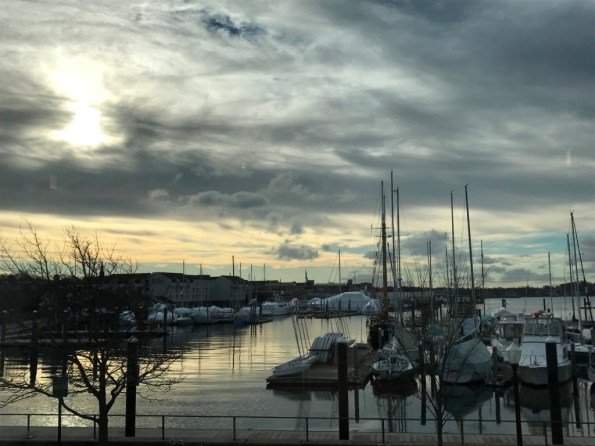
Our Saturday morning view:

The Breakers fully compensated for this:
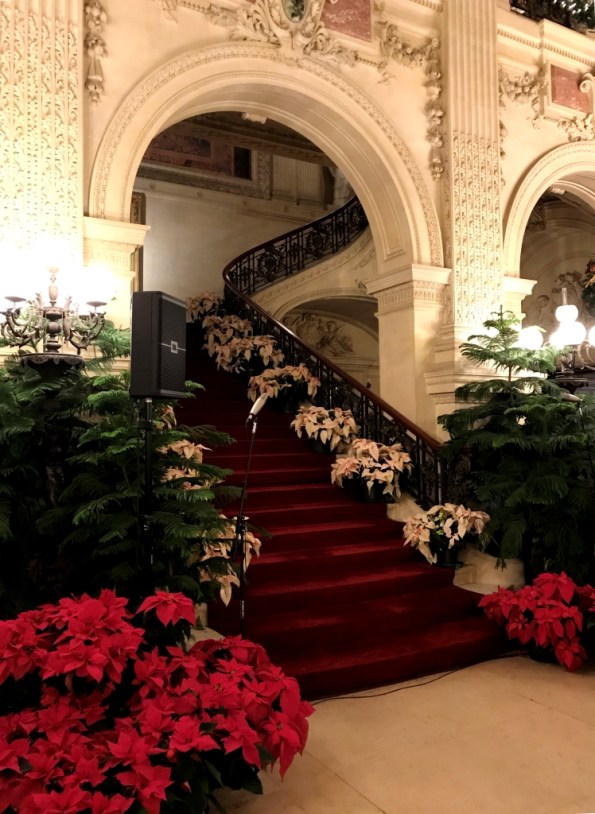
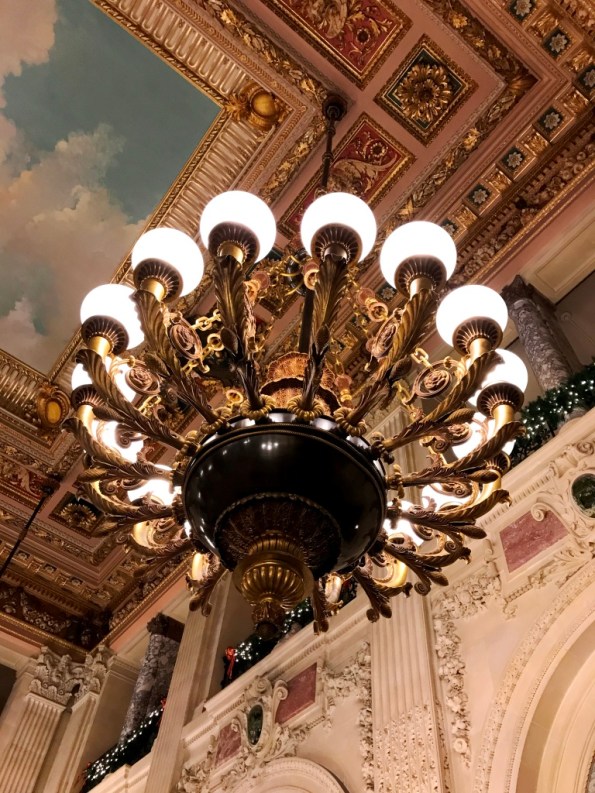


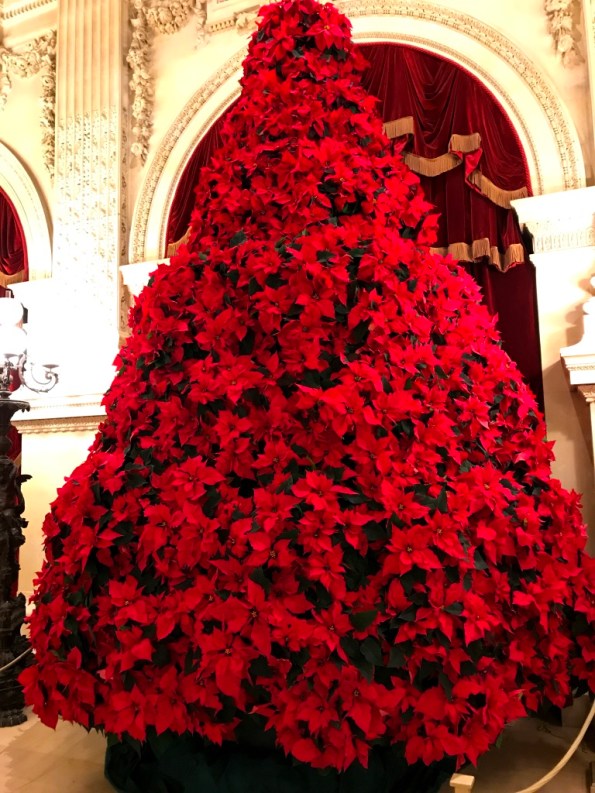
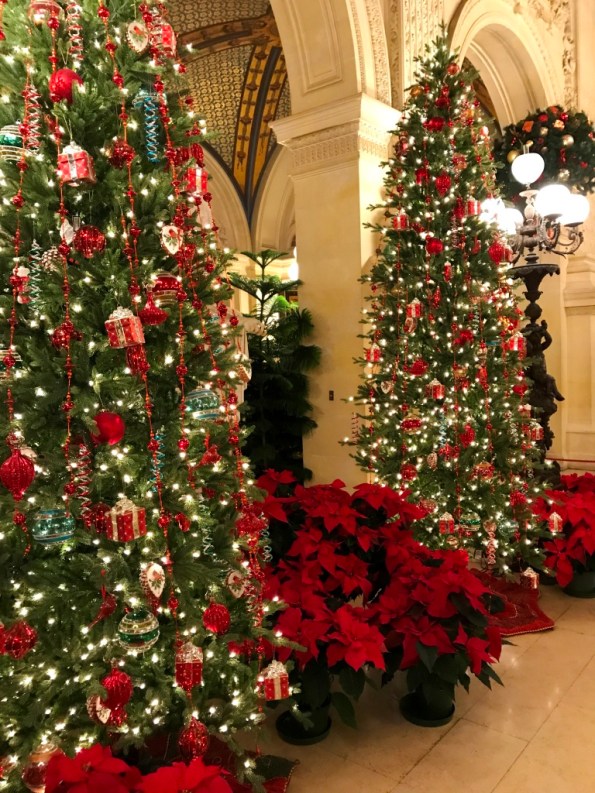



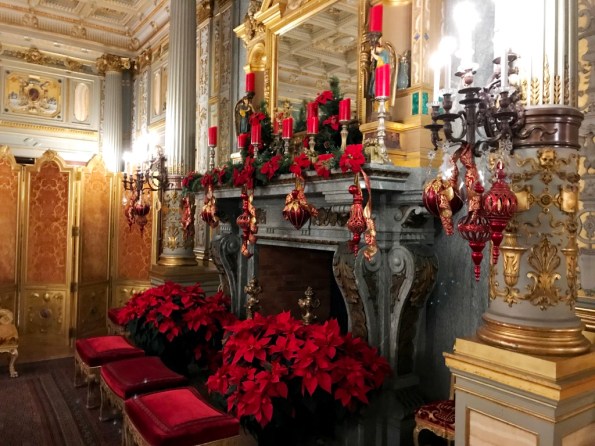


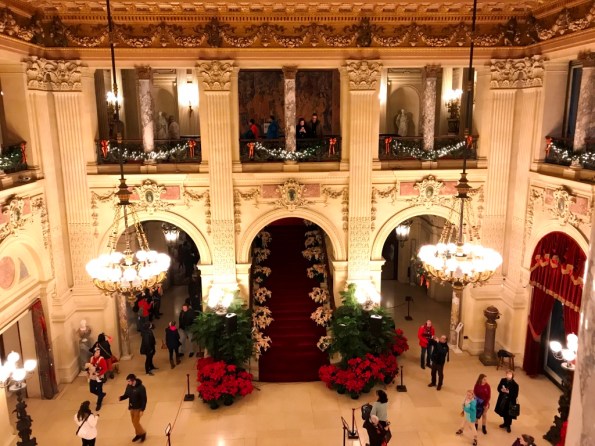
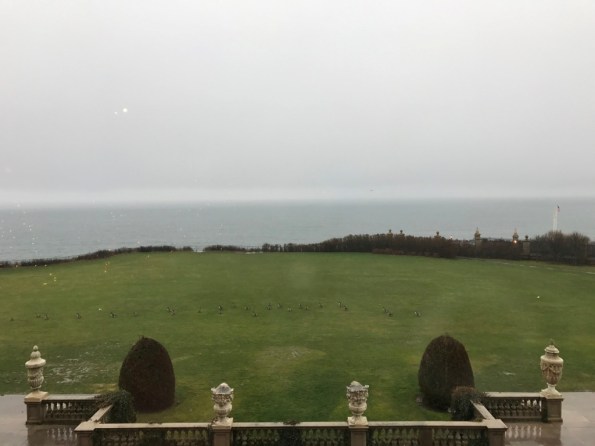
The view from the window at The Breakers, usually magnificent, was rather gloomy:

But still, the decor was there:
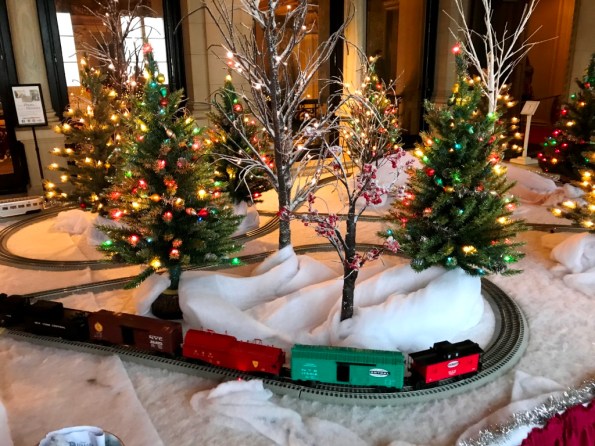
The Breakers were the home for Cornelius Vanderbilt, railroad magnate – of course a little train exhibit is the most appropriate – and fun!
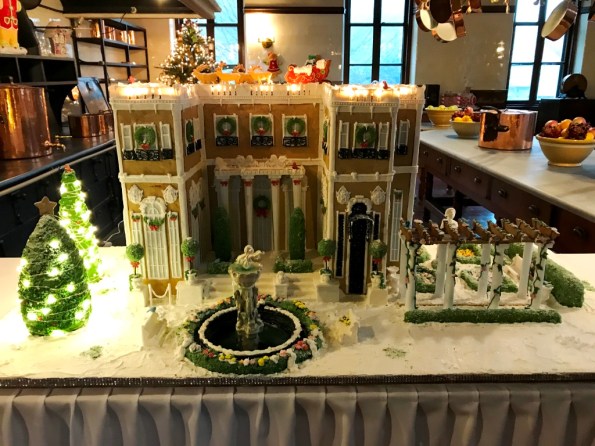
Rosecliff – in the cake

The Breakers – cake version
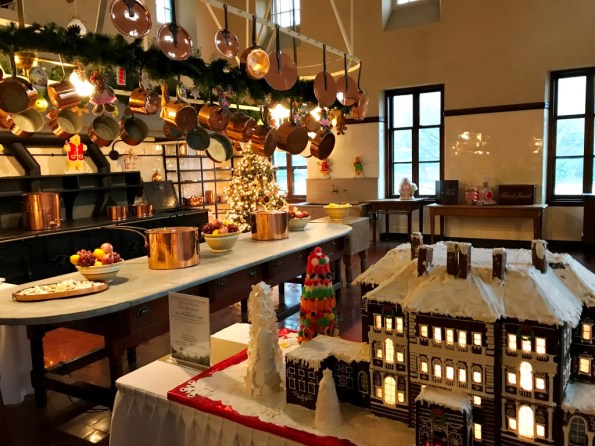


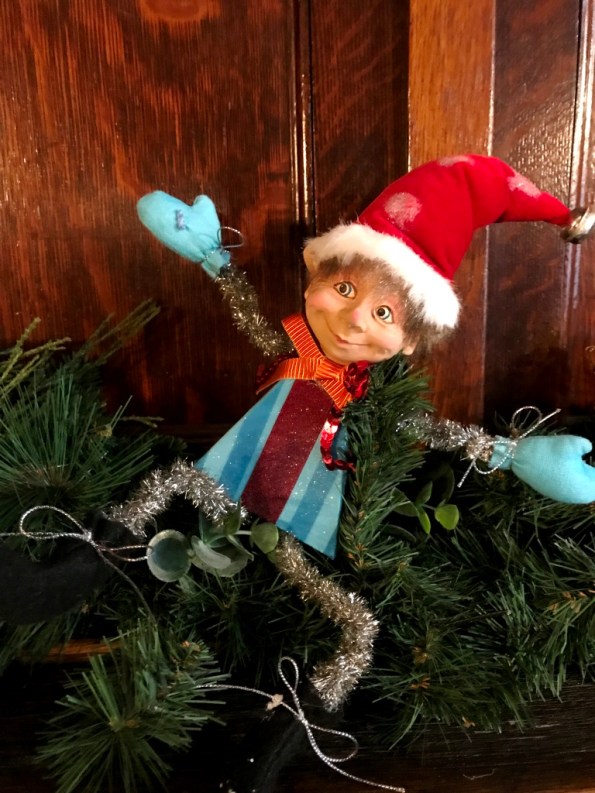
Next, the Rosecliff:


The biggest dancing floor in all of Newport Mansions

 And Pierre Cardin’s Exhibit:
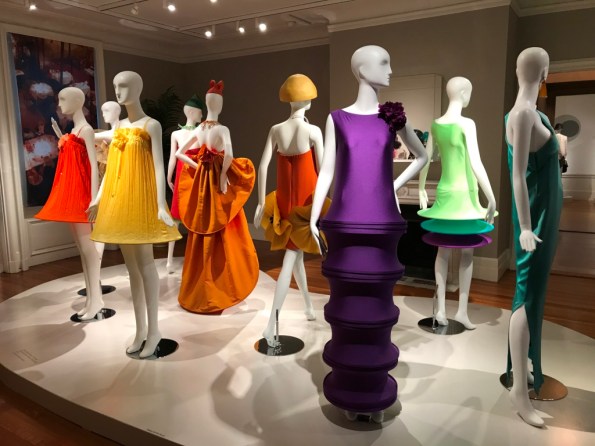
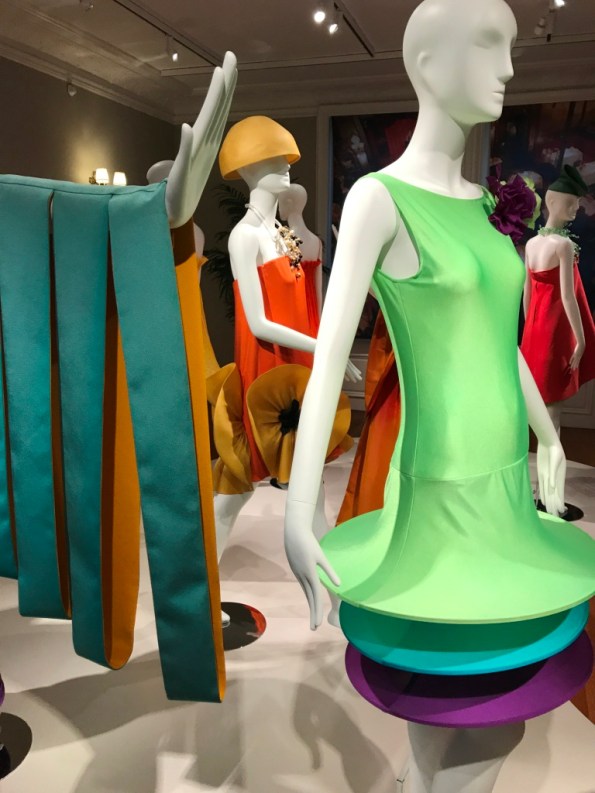
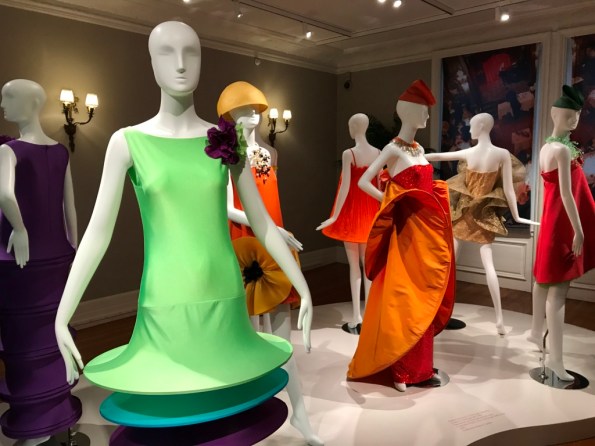
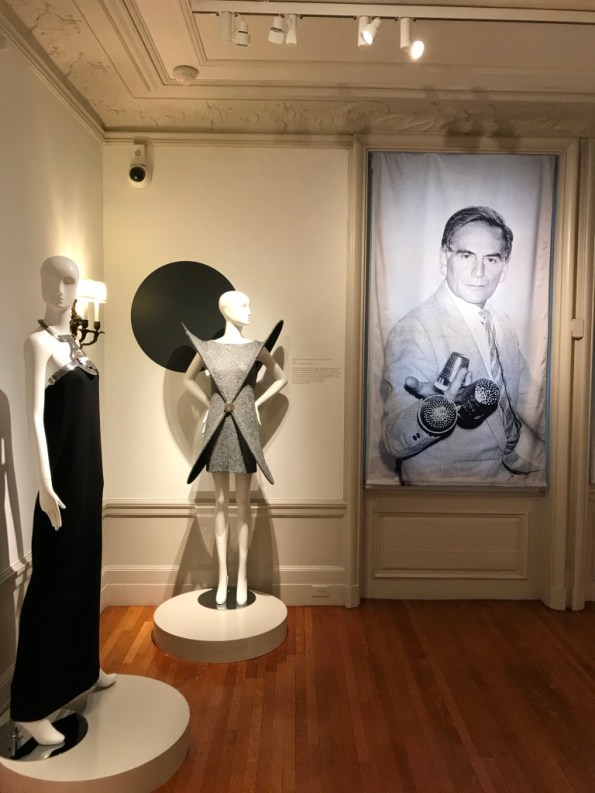
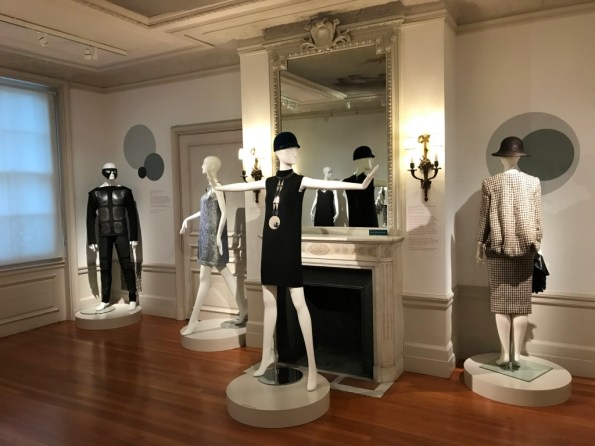
Sunday morning looked a lot better:
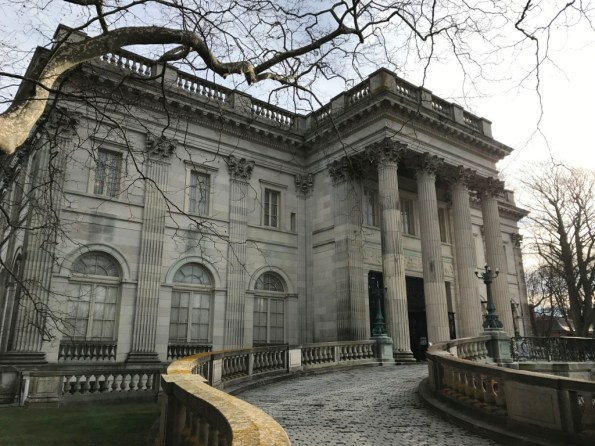
Visit to the Marble house provided a beautiful ending to the trip:
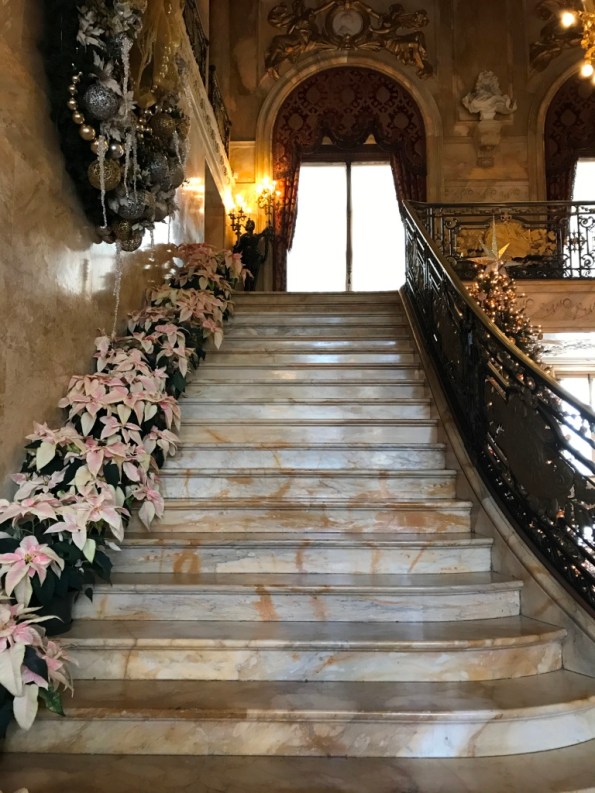
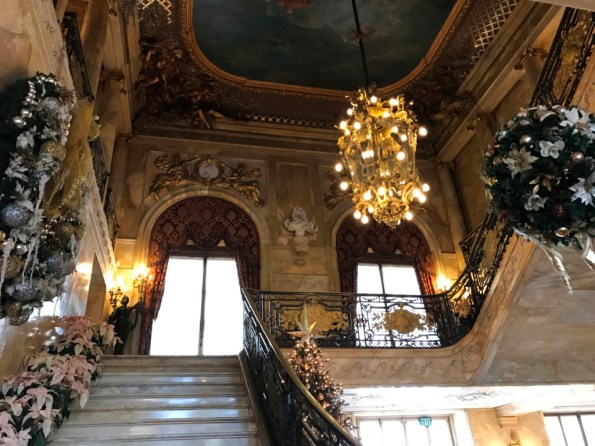
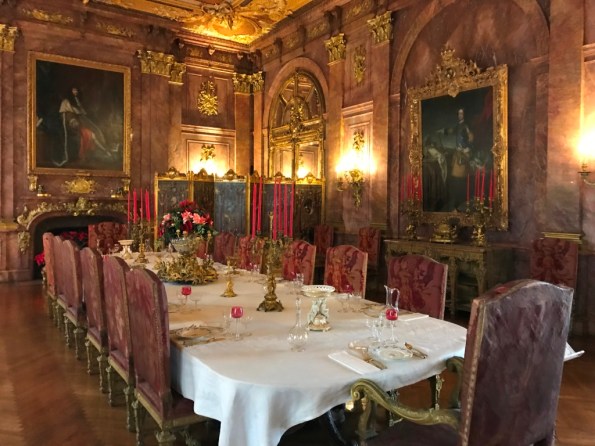
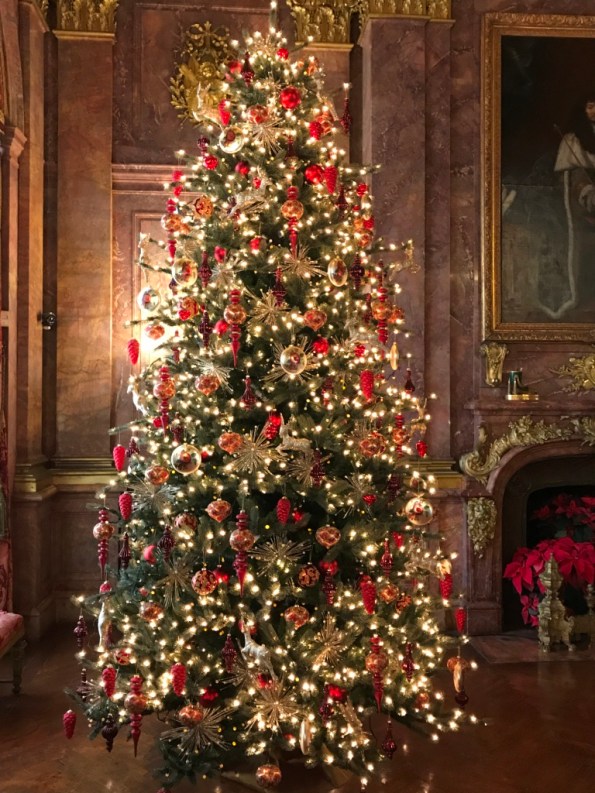
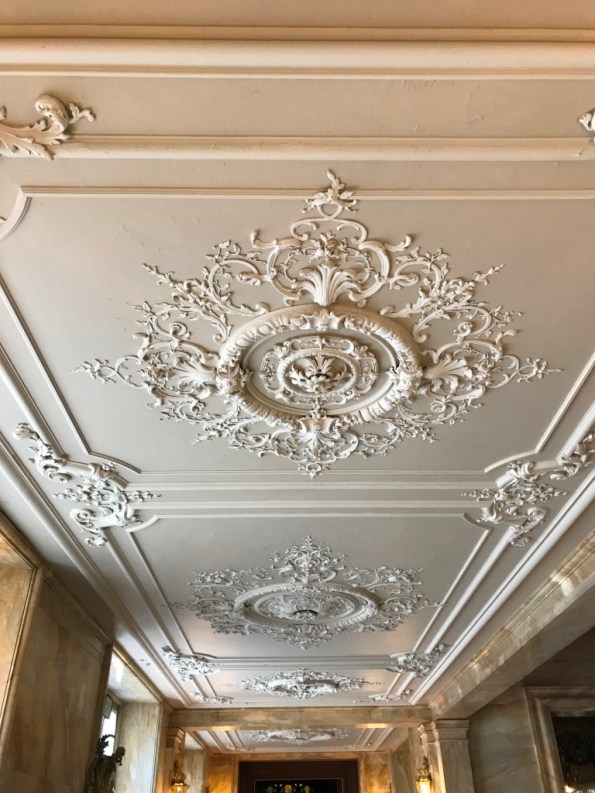
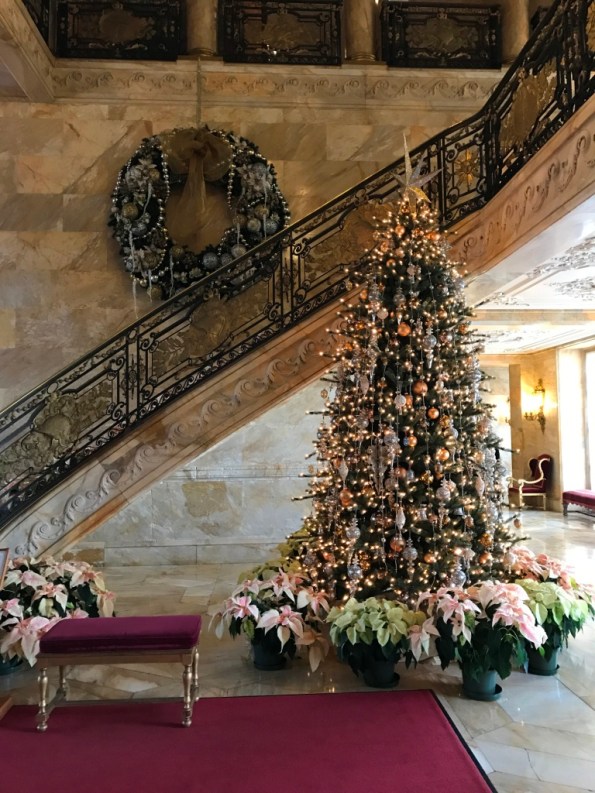
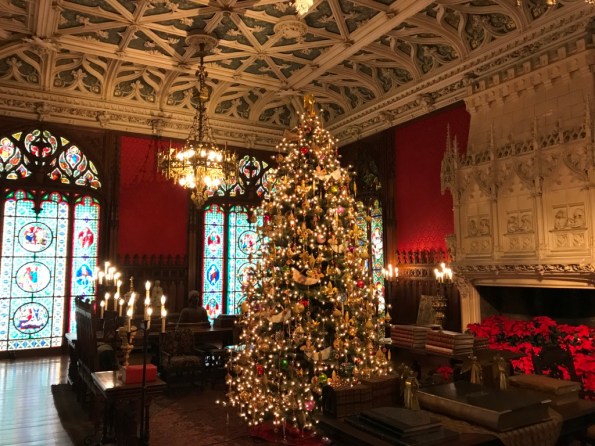
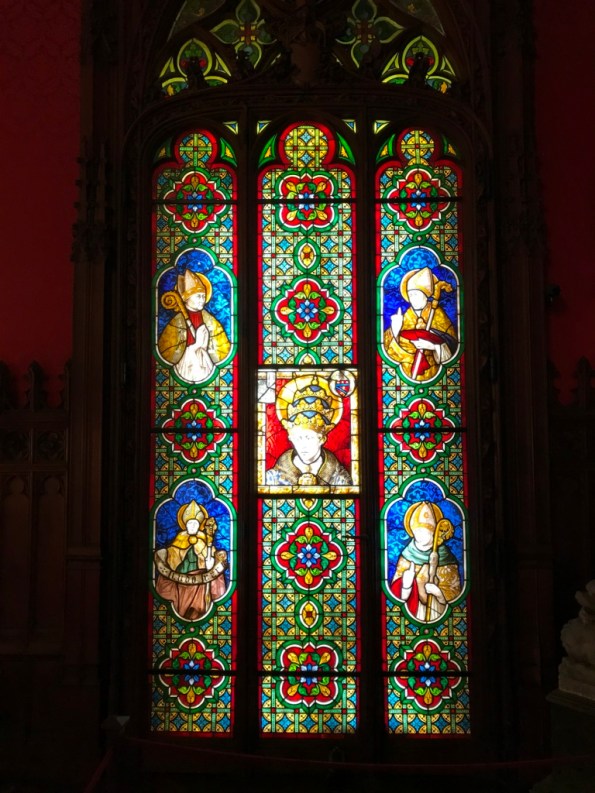
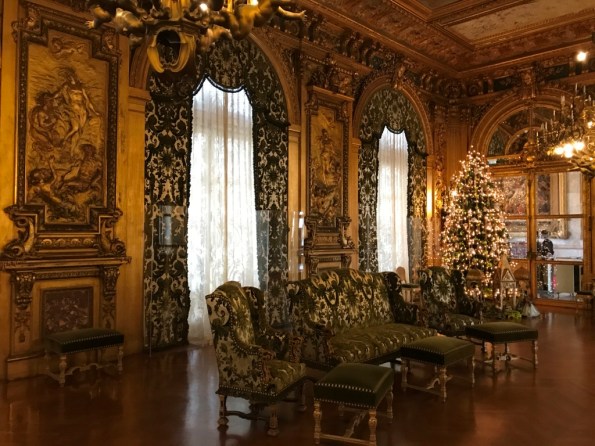
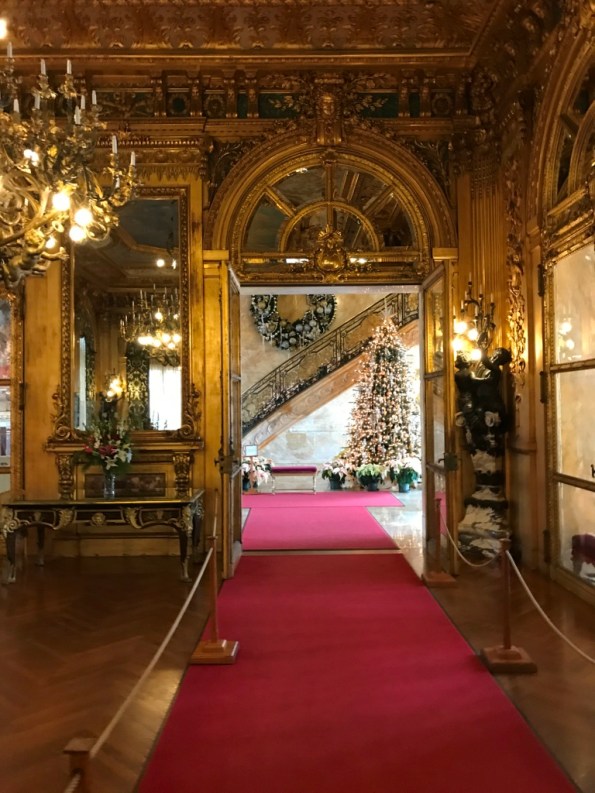
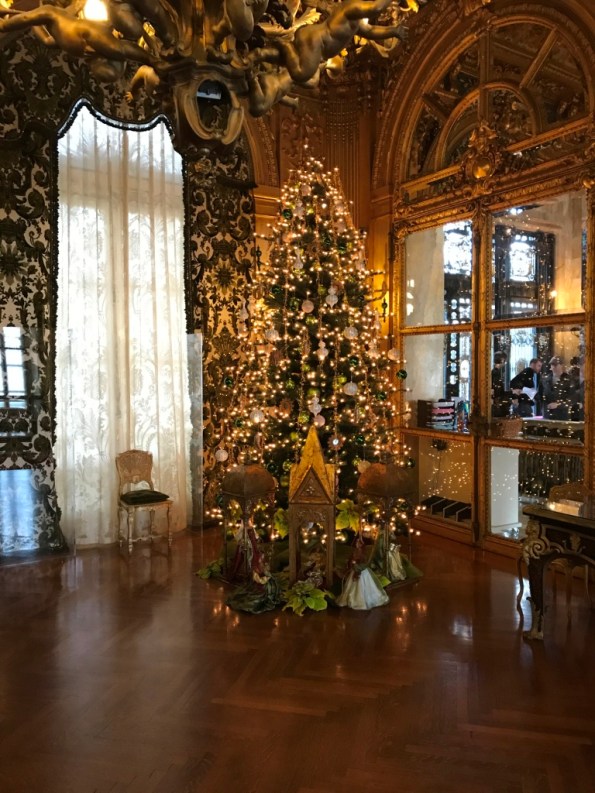
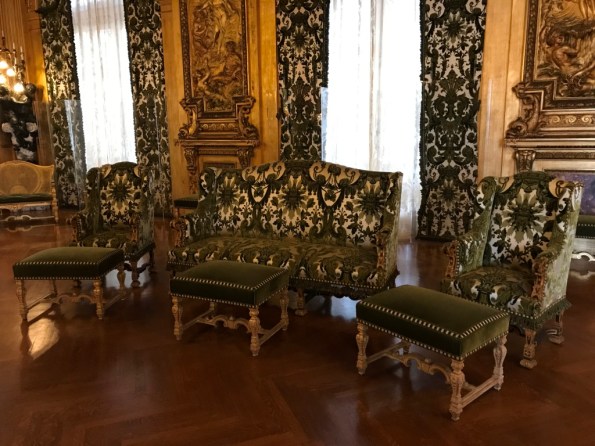
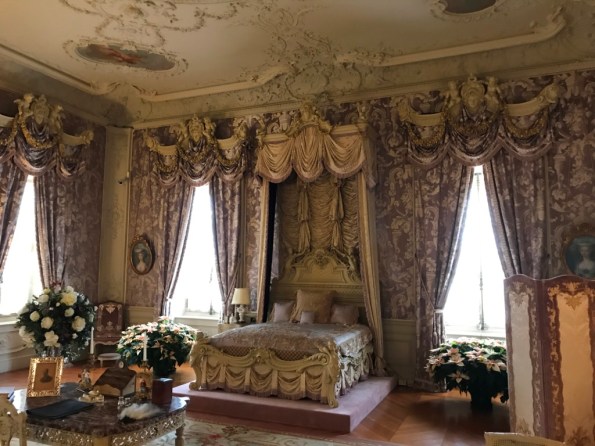
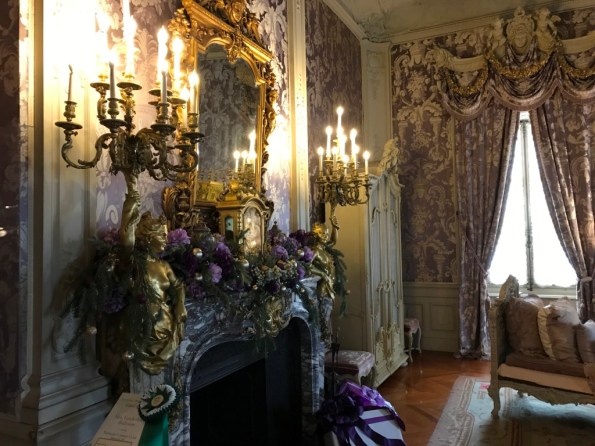
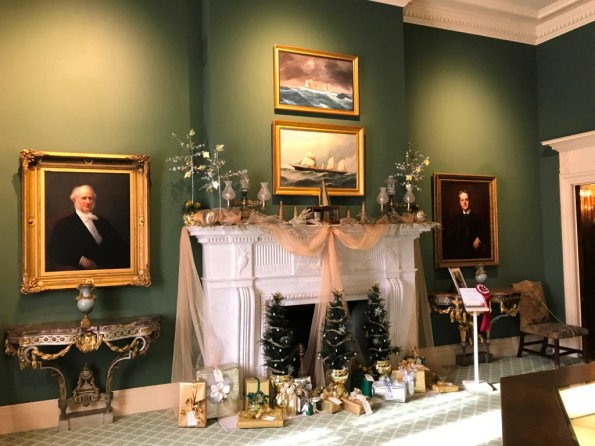
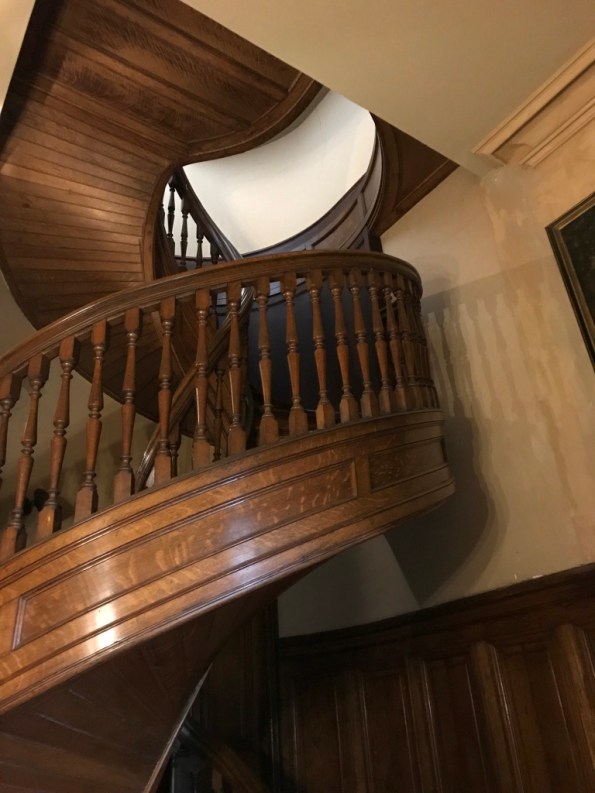
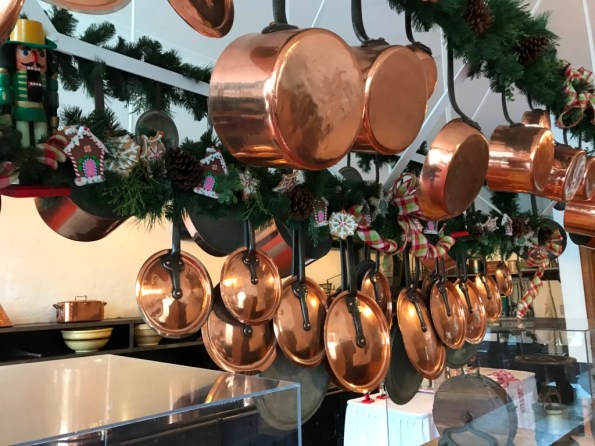
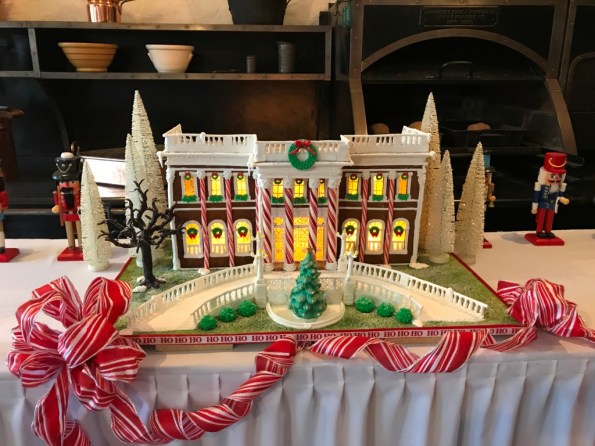
Marble House, Cake edition
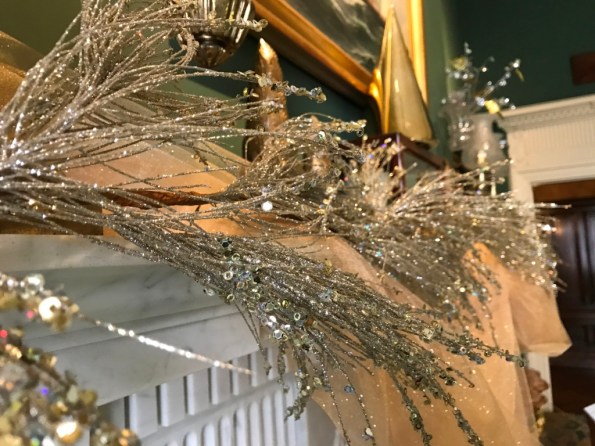
That’s all I have for you, my friends. Merry Christmas!
And Winter Gracefully Arrived
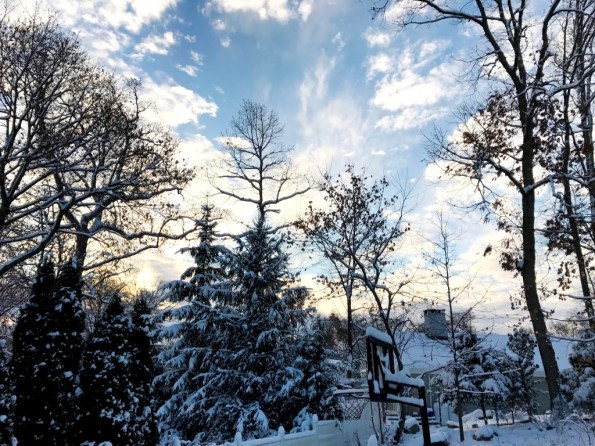
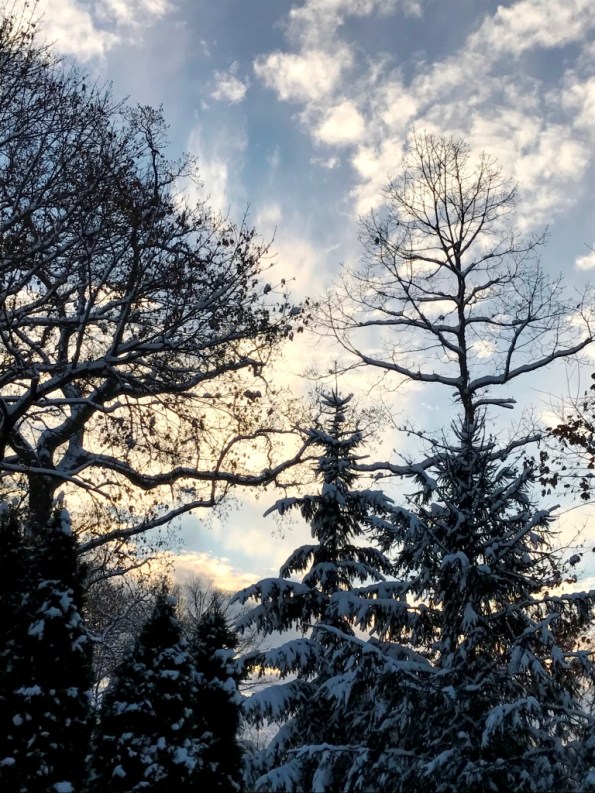
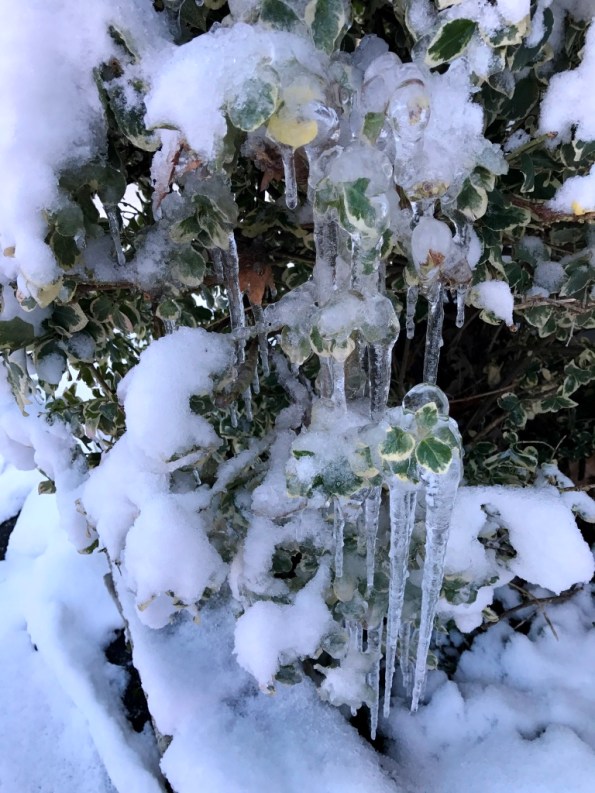
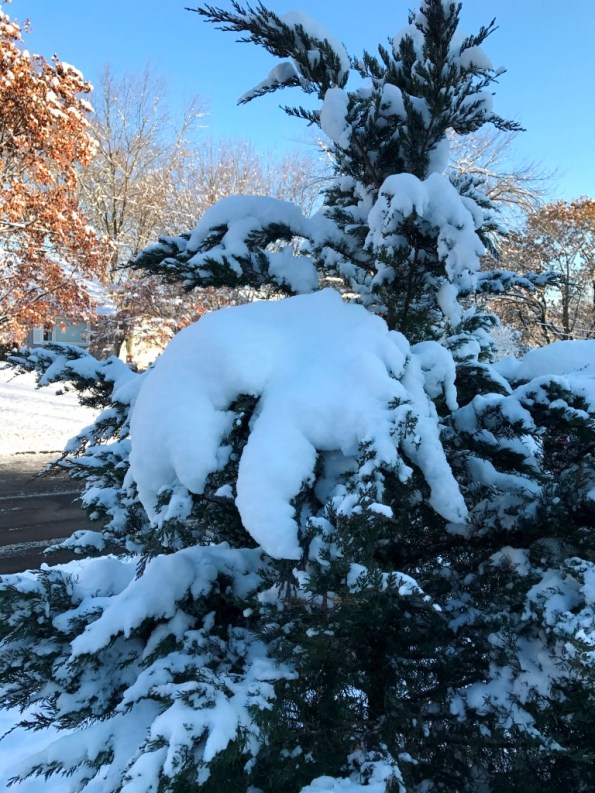
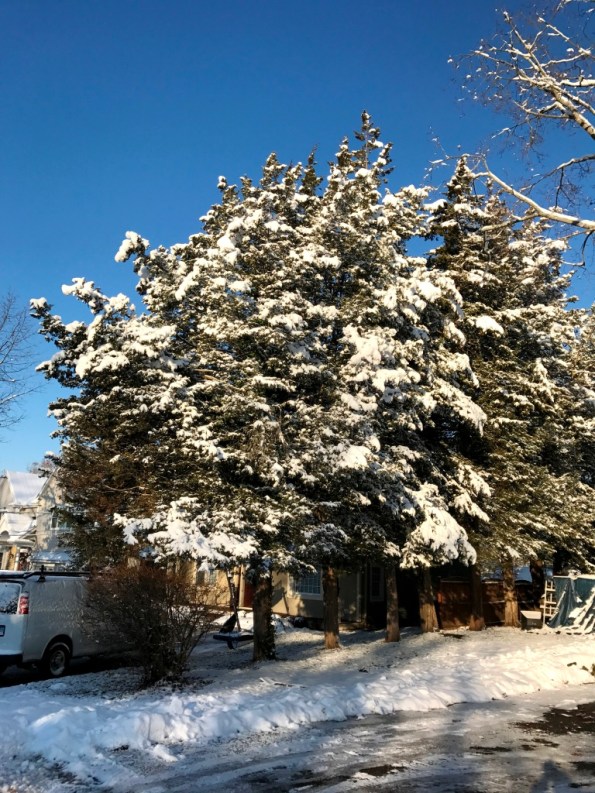
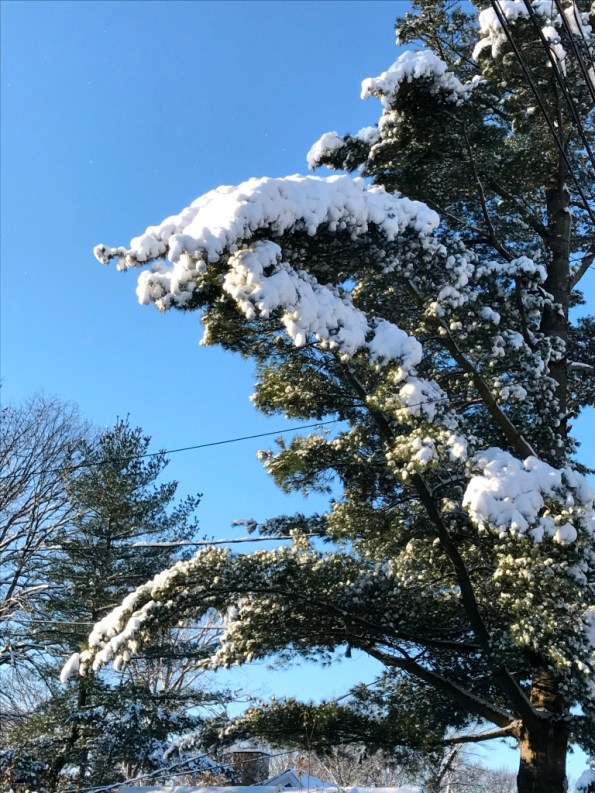
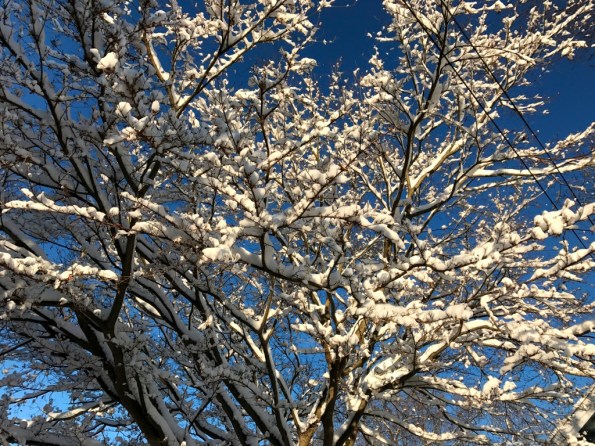
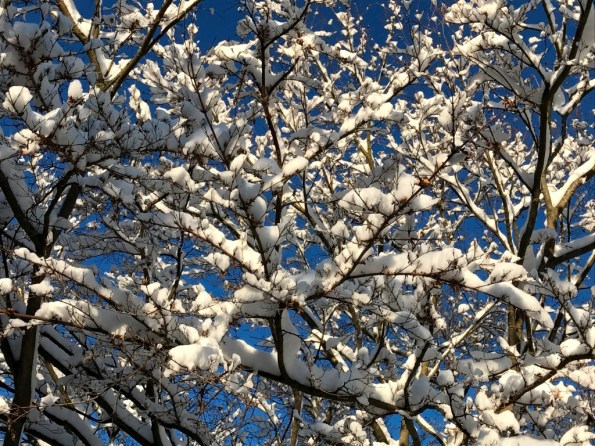
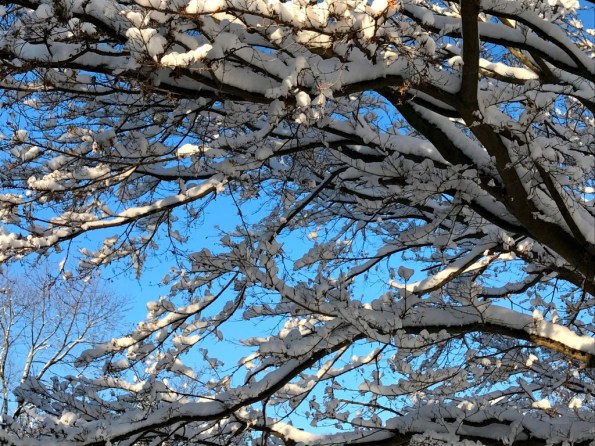
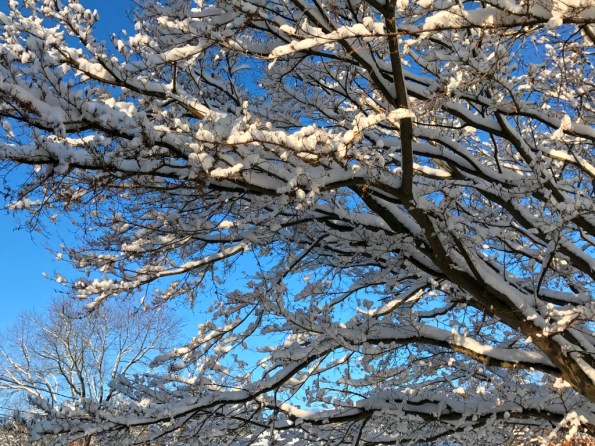
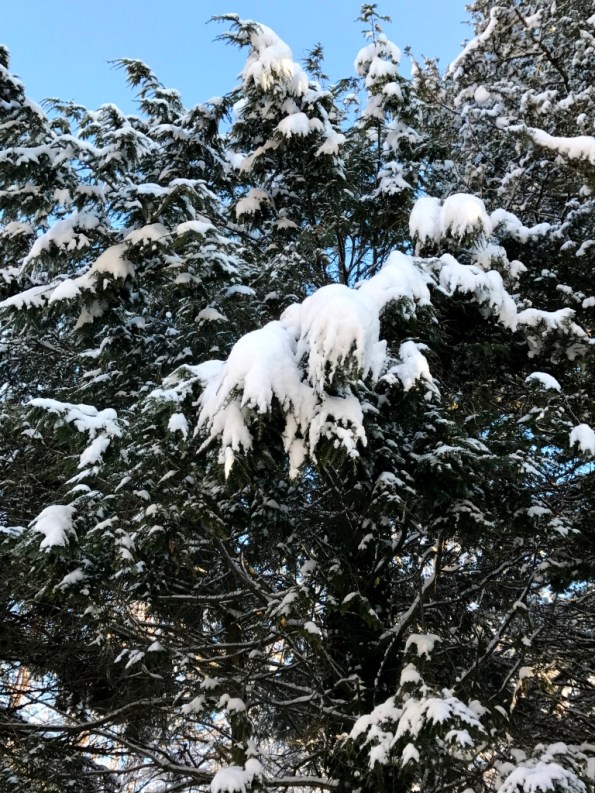
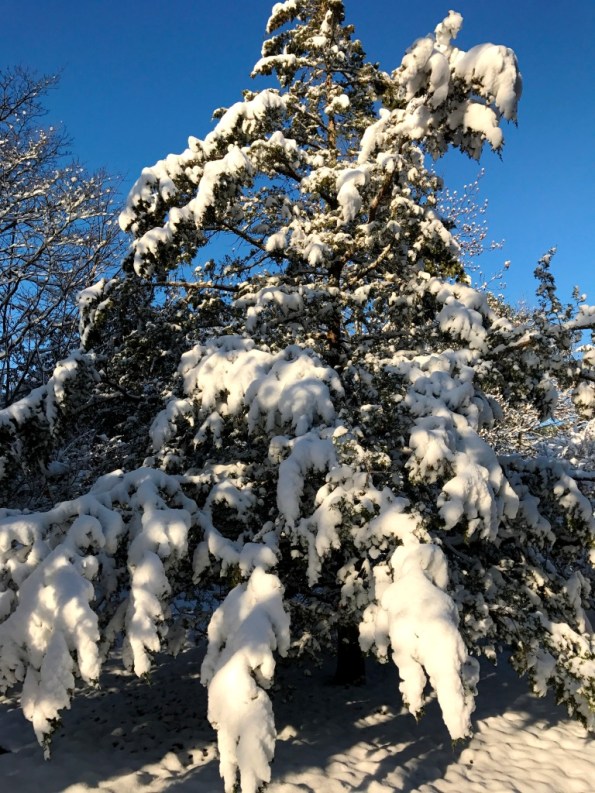
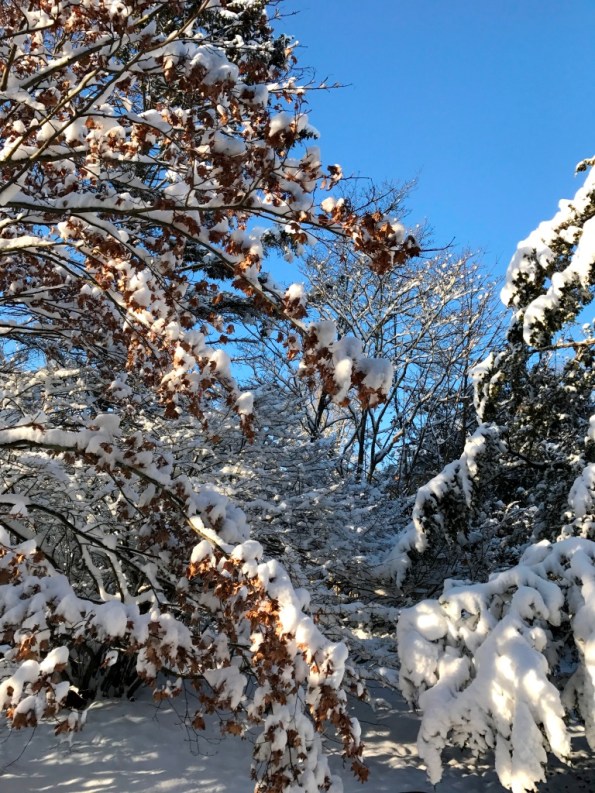
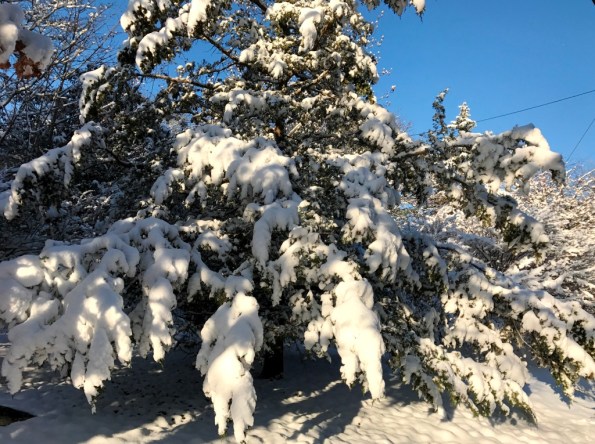
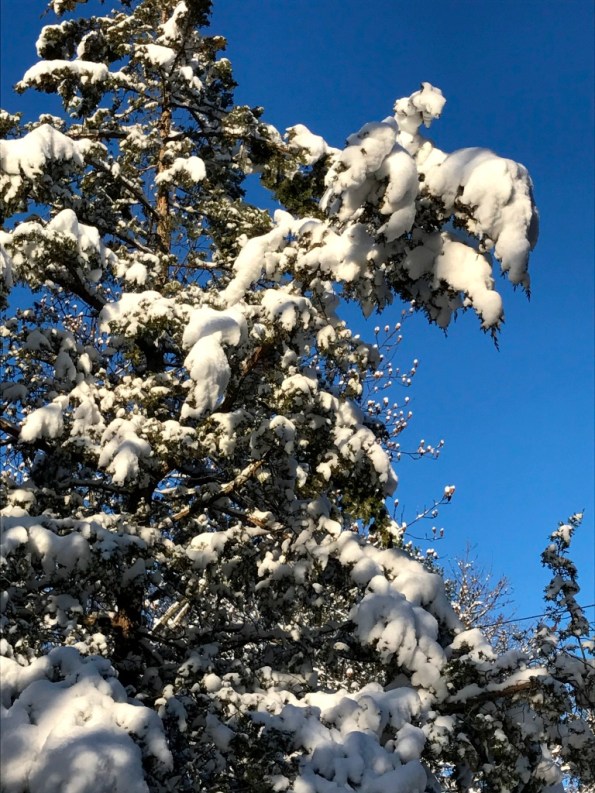
The winter arrived in Connecticut, and arrived in a very graceful way – the snow was coming down on Saturday – not too hard, just right. We probably got about 6 inches, and that snowy Saturday followed by a beautiful, sunny Sunday, with the beauty of the first snow, crisp, fresh, white. No work commute was affected, no schools closed – the very graceful arrival of the winter.
What you see here are a few pictures, from my walk around the neighborhood, all captured with the trusted iPhone. Enjoy!


Evening With Friends
I confessed it many times, and I’m glad to do it again – one of my most favorite parts of blogging, and essentially the most important one, is people. Interacting with people is the most prized element of any published blog post; meeting fellow bloggers and finding new friends is a huge cherry on top. I don’t know if the wine has any special qualities, but I have a great personal experience with meeting fellow bloggers face to face for the first time and feeling like I knew them for my whole life.
When I got an email from Jim, an author of JvbUncorked blog, offering to get together a few weeks ago, I knew I had to make it work. When I arrived 20 minutes late to Aldo Sohm Wine Bar in midtown in New York, Jim, Lori (a blogger and the winemaker behind Dracaena Wines) and Lori’s friend, Donna, were already there.
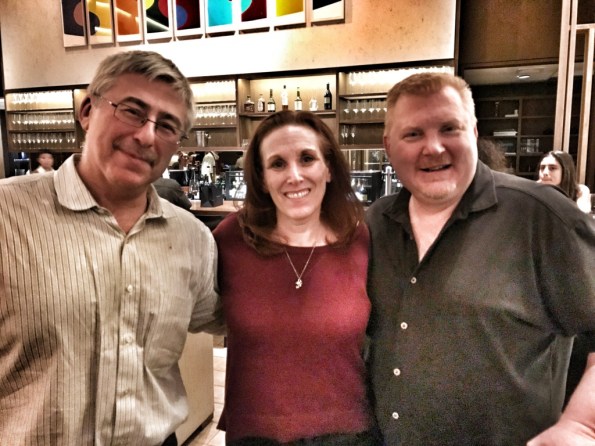 More often than not, when I know what restaurant I’m going to, I like to check the wine list in advance. Aldo Sohm Wine Bar was opened by Aldo Sohm, the Chef Sommelier at Le Bernardine, a world-famous dining destination in New York City. Aldo Sohm is also known for winning numerous Sommelier competitions and was crowned multiple times as “Best Sommelier in Austria”, as well as “Best Sommelier in America” and “Best Sommelier in the World 2008” – you can imagine that the wine list put together by such a wine Pro requires some homework. I don’t know about you but I love and always do my homework, especially if it is connected to wine at least in some way.
In addition a to the substantial wine list, we had another interesting challenge – Donna liked mostly white wines with the nice buttery component to them – but, she was willing to try new wines, which was very helpful, but – the challenge was on.


Being late by 20 minutes had one lucky consequence – the first wine was already chosen and about to be poured by the time I situated myself at the table. We started with 2013 Kuentz-Bas Riesling Cuvée Tradition Alsace ($40) – and it was outstanding. Perfectly bright and intense on the nose, with a whiff of honey and apricot; on the palate, it was live and vibrant, crisp and playful, continuing honey and apricot flavors, supported by clean acidity. An outstanding wine and a great value at a restaurant wine list at $40. Bonus – we got “thumbs up” from Donna – you know how we, wine geeks, feel when someone says about your recommendation “ahh, I like this wine” – the top of the world feeling. Well, kind of, anyway.
As we were pondering at the next wine, it was really hard to decide, especially trying to make everybody happy again. While we were looking at Italian options, feeling “yeah, might be, but really, yeah?”, I took the advantage of my list studying and suggested to try a California Chardonnay. Not just something random, but a very particular Chardonnay – 2012 Sandhi Chardonnay Santa Barbara ($80). Earlier in the year, I had my first experience of Sandhi wines with Sandhi Pinot Noir. Sandhi winery was founded by Rajat Parr, a world-renowned sommelier, a partner at Sandhi winery and one of the founders of IPOB (In Pursuit Of Balance) movement for dialed-down, balanced California wines. The Sandhi Pinot Noir was incredible, which made me really curious about the Chardonnay – and it didn’t disappoint. This 2012 Sandhi Chardonnay had generous, intense, open nose with apples and vanilla, and on the palate, this wine was simply a riot – I experienced similar Chardonnay wines only a few times, mostly from Burgundy, when they get incredible intensity and brightness of golden delicious apples, vanilla and honey, supported by just a hint of butter and clear, vibrant acidity. This was truly a treat. And – yay – we got “thumbs up” from Donna again. Two out of two!


It was the time to move to the reds. While previously looking at the list, I noticed a 2001 Santenay for $77 at the end of the Burgundy section, right after 2001 DRC Romanée St. Vivant for $2650 (need an expense account, anyone got one we can share?). At first I thought there might be a mistake either with the price or a vintage in the online copy (had such experience numerous times), but no – the same Santenay was there on the wine list at the restaurant, for the same $77, so it was not very difficult to convince my partners in crime to go for this wine.
2001 Paul Chapelle 1er Cru Gravière Santenay ($77) was earthy, dry and pretty closed on the nose despite quick decanting. It took the wine a while to start showing some dark fruit, with earthy, minerally notes prevailing at the beginning. I think it took the wine about 45 minutes to give us some dark fruit notes and become a bit brighter. This 16 years old wine still has a lot of life left in it, and it is definitely a food friendly wine. By the way, do you care to guess of Donna liked this wine? Yes, you got that right – no, she didn’t. 2–1.
As our evening was progressing, we got a pleasure of meeting Aldo Sohm in person – he came to our table and introduced himself, so we were able to chat with him for about 10 minutes about all the fun geeky stuff oenophiles enjoy so much – how uneasy it is to find good wines at the good prices, especially when it comes to the Burgundy, with the combination of terrible weather and Burgundy’s love on the upswing around the world. Talking to Aldo was definitely one of the highlights of the evening.
It was getting somewhat late, but the challenge was still in front of us – we managed to score with the white wines for Donna to enjoy, but we had to find the proper red. After going back and force we settled on 2007 La Rioja Alta Viña Ardanza Rioja Reserva ($75). La Rioja Alta doesn’t need much introduction to the wine lovers – one of the very best producers in Rioja, making delicious wine year after year. Of course, this wine was still a baby, but within the reasonable price range, we thought that it would have the best fruit representation, which, again, we were hoping would win Donna’s vote. The wine was every bit as expected – nose of cigar box and vanilla, dense cherries, vanilla and eucalyptus on the palate, touch of sweet oak, full body, noticeable, but well integrated tannins. This was an excellent wine, but … Nope, we didn’t win this one. 2–2. But one super-fun evening.
It was late, and it was the time to go home. But I really hope we are going to do it again. And again. And again. To all the friends – cheers!
Obscure: Oenophile’s Pleasure
Today, class, we will be talking about things obscure. Yes, things obscure, but not in the whole entire world, of course, but in the world of wine.
In your opinion, if we use the word “obscure” in conjunction with the word “wine”, would that be a good thing or a bad thing? For starters, let’s think about the meaning of the word itself. Here is how New Oxford American Dictionary defines “obscure”:
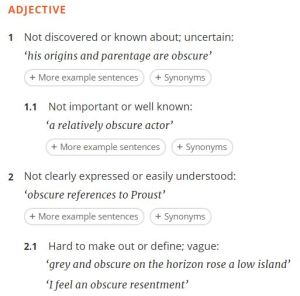
Well, yes, we could’ve done without the dictionary, as the word is simple enough – but dictionaries exist for something, so why not use one.
Now that we are clear on the meaning, let’s go back to our original question: “obscure + wine” – is it good or bad?
Reading wine’s description, have you ever come across the words “obscure grapes”? I’m not talking about the stuff you read on the back label, as there you will rather find the words “indigenous grapes”, “traditional grapes”, or maybe, “local grapes”. But if are reading blogs, or any of the “peer reviews”, I’m sure you’ve encountered the “obscure grapes”. I get it – “obscure” often implies that we got something to hide in a bad way – but not in this case. Referring to the definition we just saw, “obscure” here simply means “not discovered or known about”. Need examples? How about Trepat, Bobal, Gros Manseng, Khikhvi – heard of those grapes?
 My favorite part is that obscure often translates into pleasure – lots of pleasure for the oenophile. Unlike most of the other food and drinks humans consume, wine taste is largely perceived. We have expectations for how Cabernet Sauvignon or Chardonnay should taste, and when we don’t find that taste while drinking one of the “well known” wines, we often get disappointed. But when presented with the “obscure bottle”, all those preconceived notions are largely thrown out of the window, and we take wine for what it actually is – which gives us a great chance to enjoy something we wouldn’t otherwise.
It is not only wine drinkers who get more pleasure from the obscure grapes – when using those little-known grapes, winemakers are also not bound by any “customer expectations”, which gives them more freedom to express themselves. From the personal experience, I found that more often than not, I truly enjoy those obscure wines, and quite honestly, I like hunting down those unknown wines and grapes because of the pure mystery in the glass.
By the same token, lesser known wine regions (read: obscure) have the same advantage for both oenophiles and winemakers. What do you expect when you see Czech Republic, Georgian Republic, Mallorca or Valle d’Aosta written on the bottle? Most likely, you wouldn’t know what to expect, and thus you would take the wine for what it is. However, when you drink Napa Valley Cabernet Sauvignon or Spanish Rioja, you have a set of expectations in your head, and you always are ready to say “ahh, this doesn’t taste anything like Napa Cab”. Presented with the Czech Pinot Noir or Chinese Cabernet Sauvignon, you have no choice but to try it and decide whether you like it or not. Same as in the case of the obscure grapes, winemakers get an opportunity to freely create without the need to comply with a given set of expectations.
What we need to keep in mind though that the concept of “obscure” is very personal. For someone who lives in the Republic of Georgia, Georgian wines are very far from obscure. For someone who grew up in Conca de Barberà region in Catalonia in Spain, Trepat might be a perfectly familiar grape. But looking at the big picture, all of us, wine lovers, have our own, personal obscure territories – and this is where we might discover great pleasure. What makes it even more interesting is that the more we learn about the wine world, the more we understand how still little we know. And so we can keep on that road, shedding the light on obscure and making it (if we are lucky) dear and familiar, one discovery at a time.
I wish you all, oenophiles, lots of pleasant encounters with obscure sides of the wine world – as this is where the pleasure is hiding. Cheers!
This post is an entry for the 27th Monthly Wine Writing Challenge (#MWWC30), with the theme of “Obscure”. Previous themes in the order of appearance were: Transportation, Trouble, Possession, Oops, Feast, Mystery, Devotion, Luck, Fear, Value, Friend, Local, Serendipity, Tradition, Success, Finish, Epiphany, Crisis, Choice, Variety, Pairing, Second Chance, New, Pleasure, Travel, Solitude, Bubbles, Smile, Winestory
For the Love of Chowder – 2016 Edition
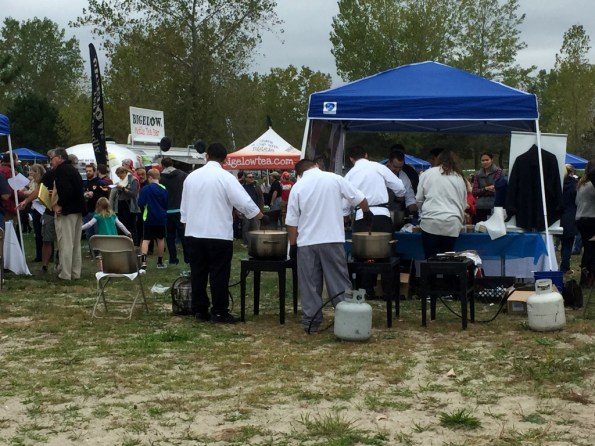
Last Sunday I had a pleasure of attending the New England Chowdafest 2016 event at Sherwood Island Park in Westport, Connecticut. The weather forecast was really “meh”, and we had an event to attend in the evening, but remembering a successful 2015 experience, I was determined – the weather will not stop me from sampling 40 delicious chowders (and lots more), no way.
While the weather was not great, it was not terrible either – grey sky but no rain was good enough to walk around for 2 hours trying all the different chowders, soups and lots more (ice cream, cheese, or Bigelow teas). Similar to the last year, all attendees were given a spoon, a ballot with the names of all participating restaurants and asked to rate what they taste on the scale from 7 to 10.5 (0.5 increments). Juggling soup cups, pencils and the charts was somewhat challenging, but it didn’t stop anyone from voting.
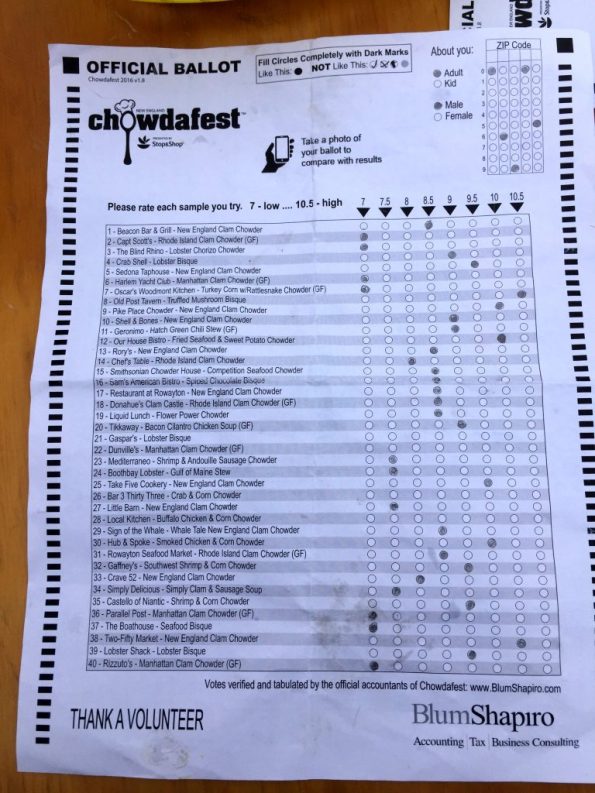
This year I was a bit smarter and remembered to take a decent picture of the ballot before I placed it in the box – have to say that someone else thought of it before me, as this course of action was suggested on the ballot itself (“take a picture before depositing this ballot in the box”) so people would be able to compare their own vote with the official results.
Few fun facts about the event (taken from the summary event sent out by organizers). During 4 hours of the event:
- Over 2,000 gallons of chowder, soup and bisque were sampled (I believe it would translate to more than 100,000 samples given)
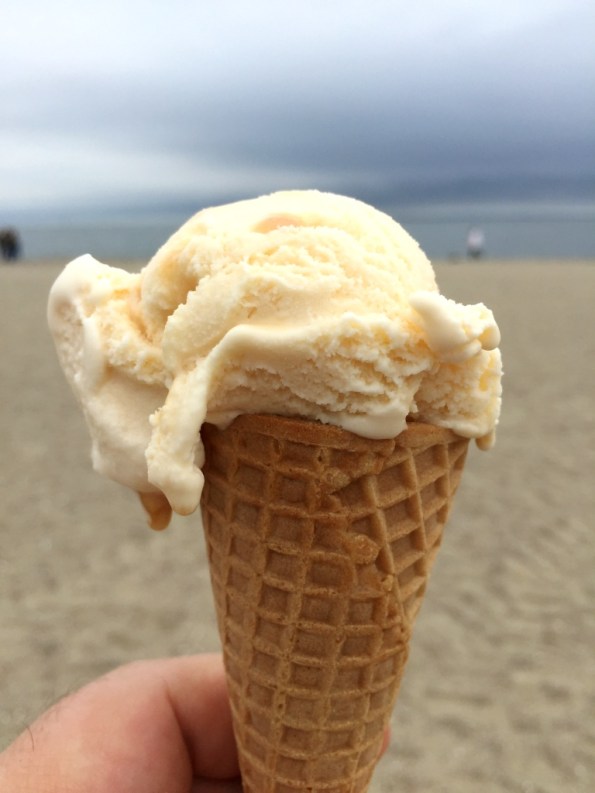
- Over 3,000 ice cream cones were scooped by The Farmer’s Cow and almost 30 gallons of their farm fresh chocolate and whole milk was sampled
All these numbers easily translate into the main takeaway – lots of fun at the event.
Obviously, I didn’t try to write down tasting notes, just taste, rate and move on to the next. To give you an idea about happenings at the event, let me share you with you the results of the competition, as well as the picture report from the event. In the pictures, you will see my ballot so you can compare my votes with the official results. There were a number of very tasty chowders, but to be entirely honest, my favorite soup was the cream of mushroom with black truffles – the only soup I gave the 10.5 rating. I also have to mention a number of different chowders presented by the Stop’n’Shop, local supermarket chain – as the sponsors, they couldn’t compete, but their soups were simply delicious, I’m sure they would do great if they would actually enter the competition.
Same as the last year, Pike’s Place out of Seattle, Washington won in the category of New England Clam Chowder. Was it really the best chowder? I don’t think so, I think people were simply intimidated by the huge medal display put out by Pike’s Place. Their chowder was good – but put out for the blind taste, I don’t think it would do equally well. Anyway, New England restaurants should prepare better for the next competition which is already announced for October 1, 2017.
Here are the results:
Classic New England Clam Chowder:
1st: Pike Place Chowder – Seattle WA
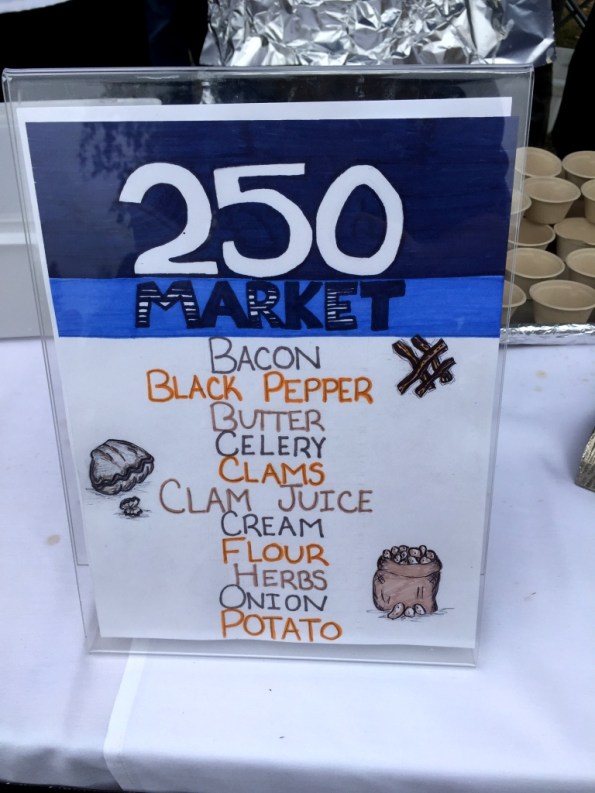
2nd: 250 Market – Portsmouth NH
3rd; Take Five Cookery – Hartford CT
Traditional Clam Chowder:
1st: Donahue’s Clam Castle (Rhode Island) – Madison CT
2nd: Dunville’s (Manhattan) – Westport CT
3rd: TIE!
Chef’s Table (Rhode Island) – Fairfield CT
Parallel Post (Manhattan) – Trumbull CT
Creative Chowder:
1st: Our House Bistro – Winooski VT
2nd: Gaffney’s – Saratoga Springs NY
3rd: Smithsonian Cafe & Chowder House – North Hampton MA
Soup/Bisque:
1st: Crab Shell – Stamford CT
2nd: Old Post Tavern – Fairfield CT
3rd: Sam’s American Bistro – Stamford CT
Congratulations to all the winners!
Now I will leave you with pictures (lots of them!) from the event. And next year, make sure to add it to your busy schedule – the event will be definitely worth your time. Cheers!

One side of the ballot served as a directory

And another side was an actual ballot with instructions – empty at the moment
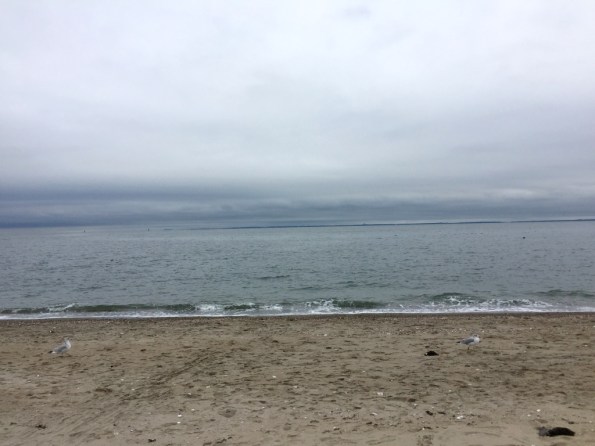
This would give you an idea of the weather – no sun, but still nice

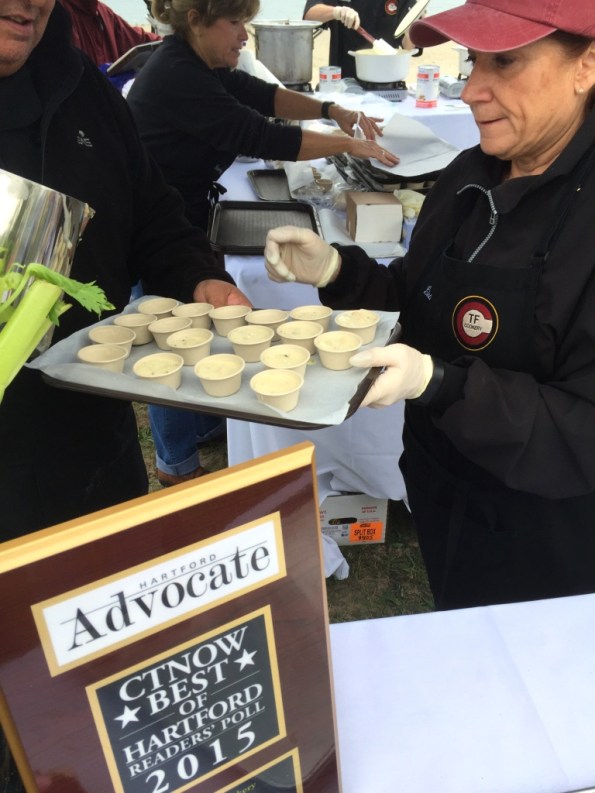
Tasting cups with are getting ready to be carried around (most times, you had to wait in line, but few participants provided this extra touch
Love the way some of the stands were decorated:
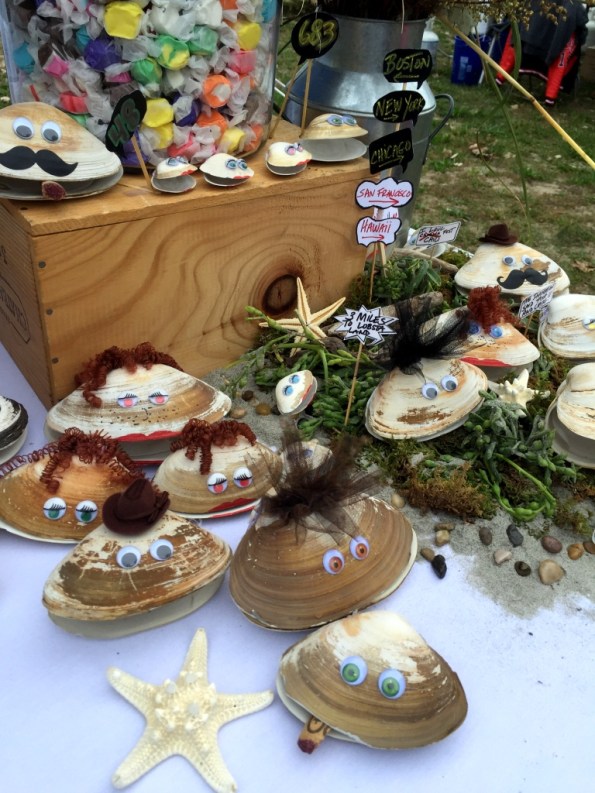
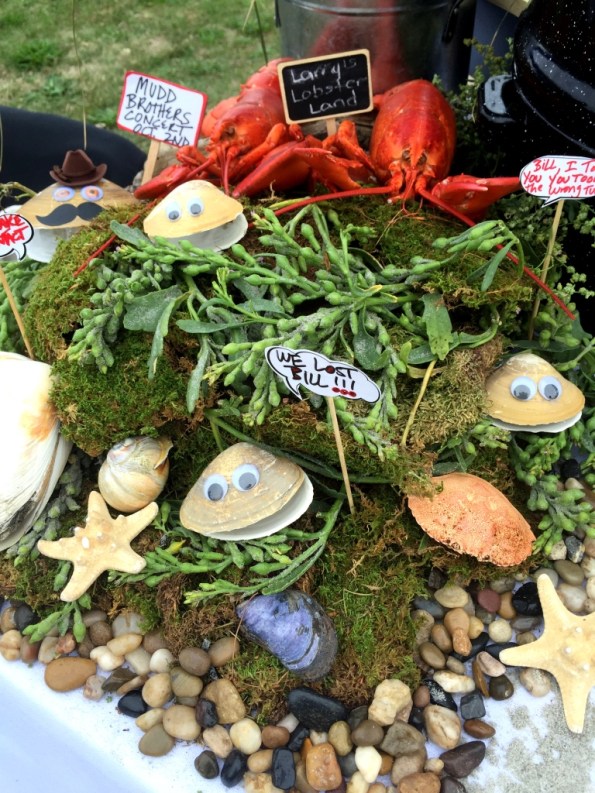
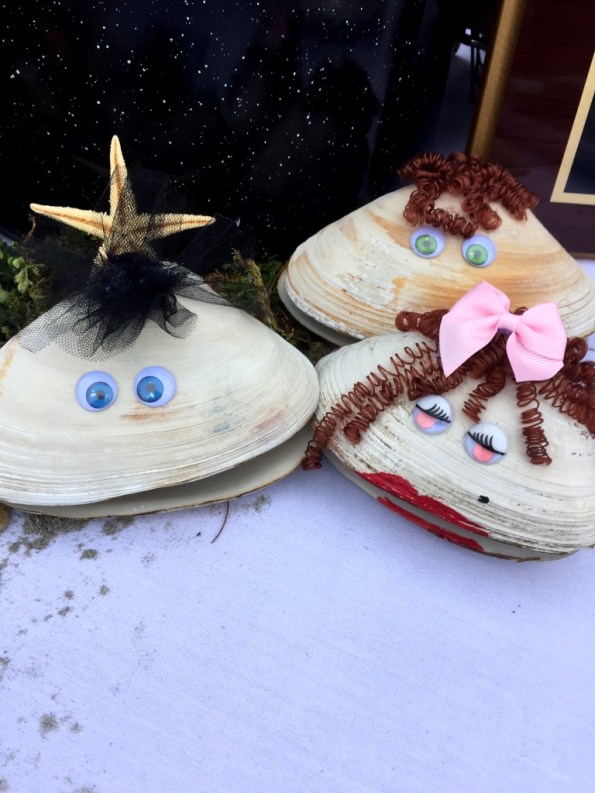
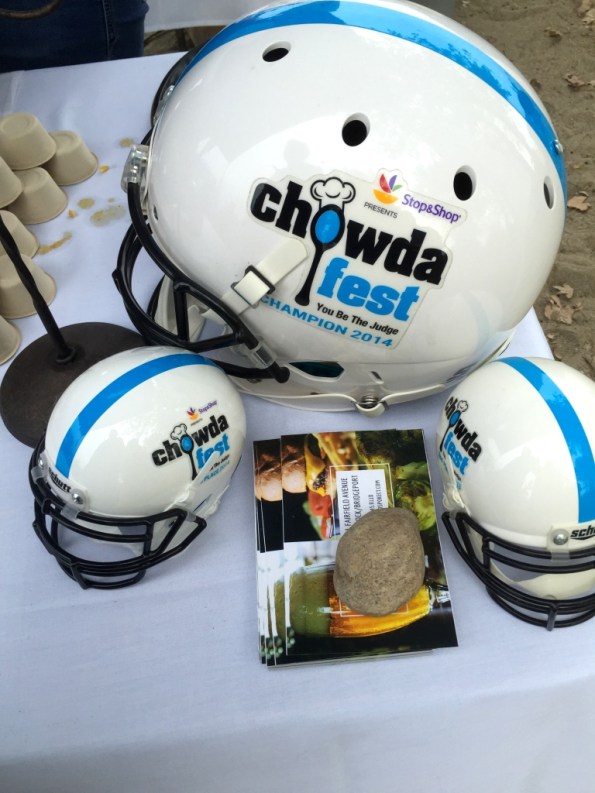
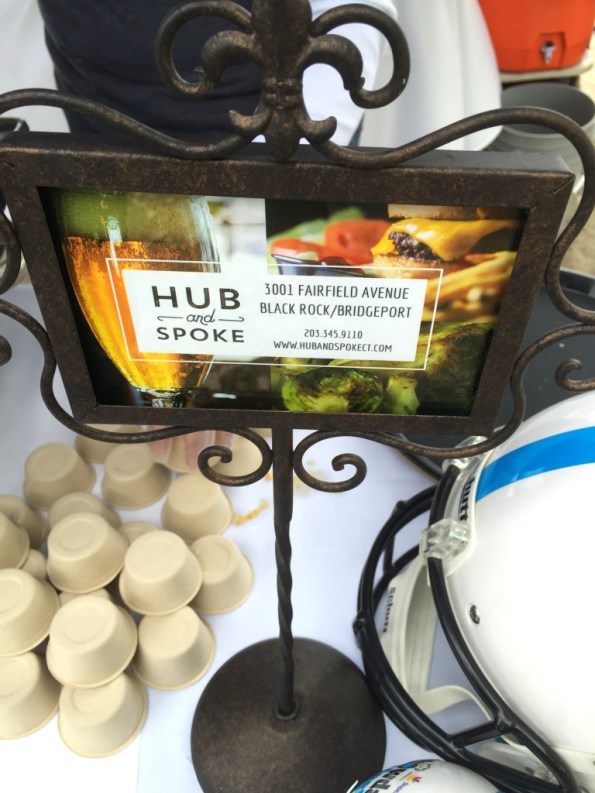

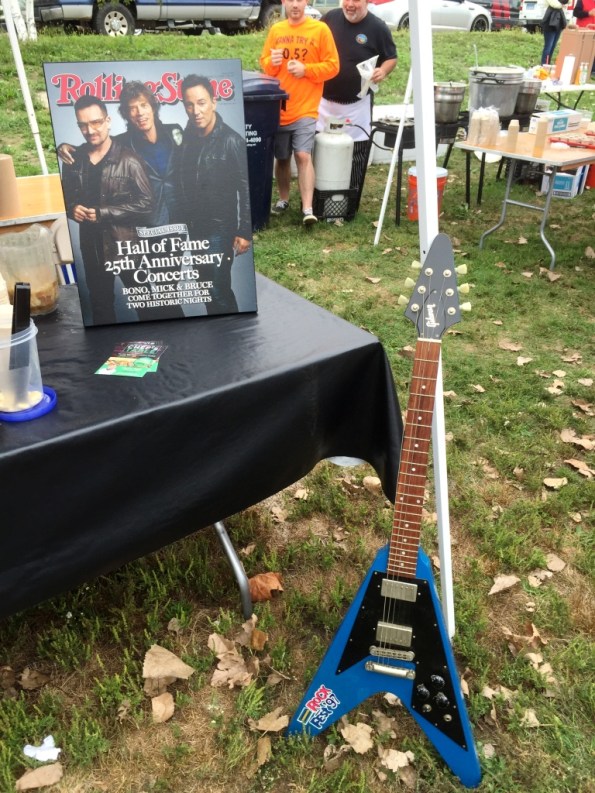
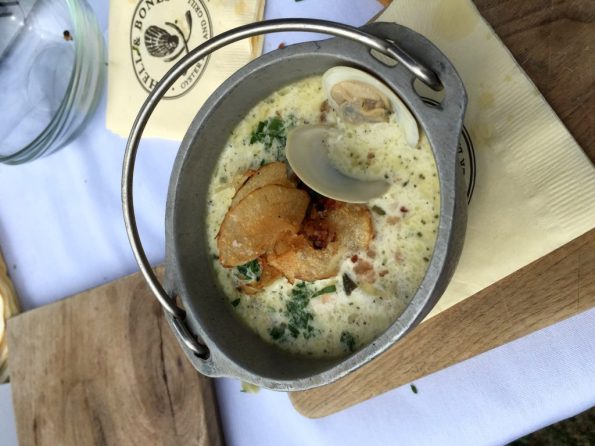
Even with the tasting cups, some of the presentations were clearly a standout:
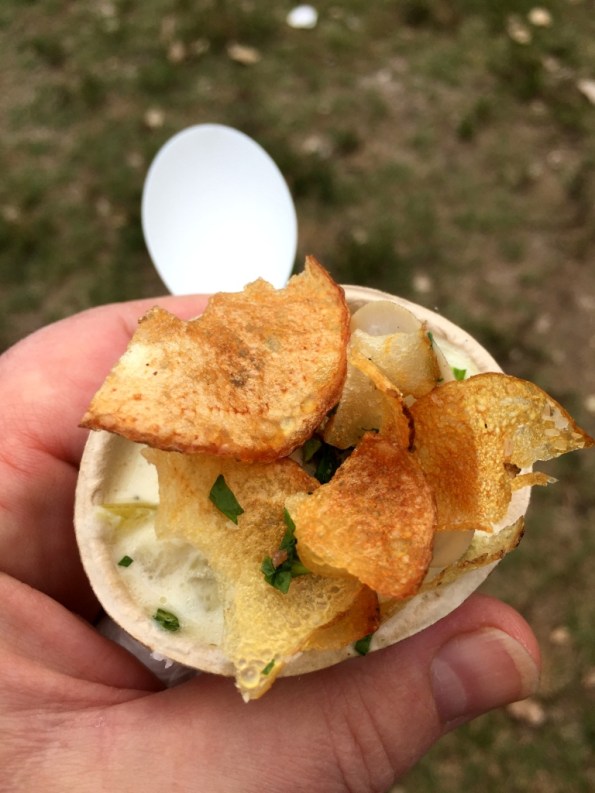
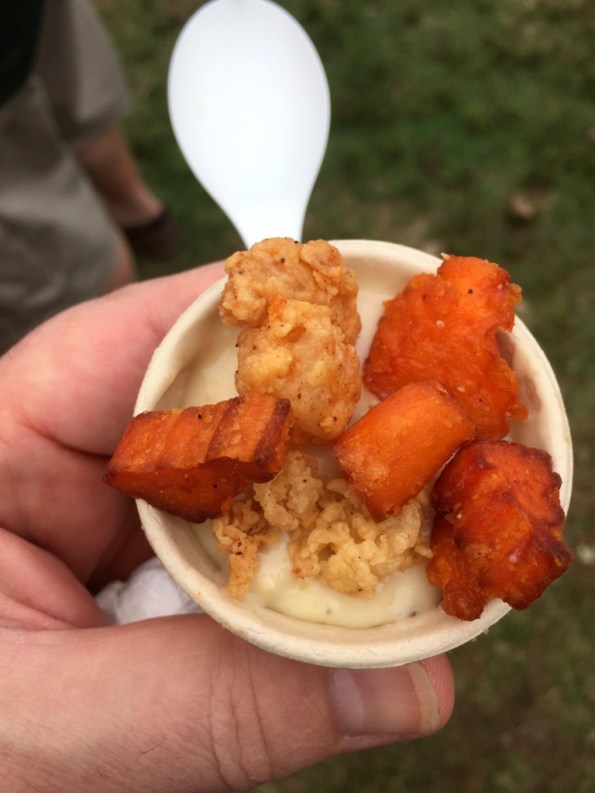
This was the top creative chowder winner from Our House Bistro in Vermont – delicious!

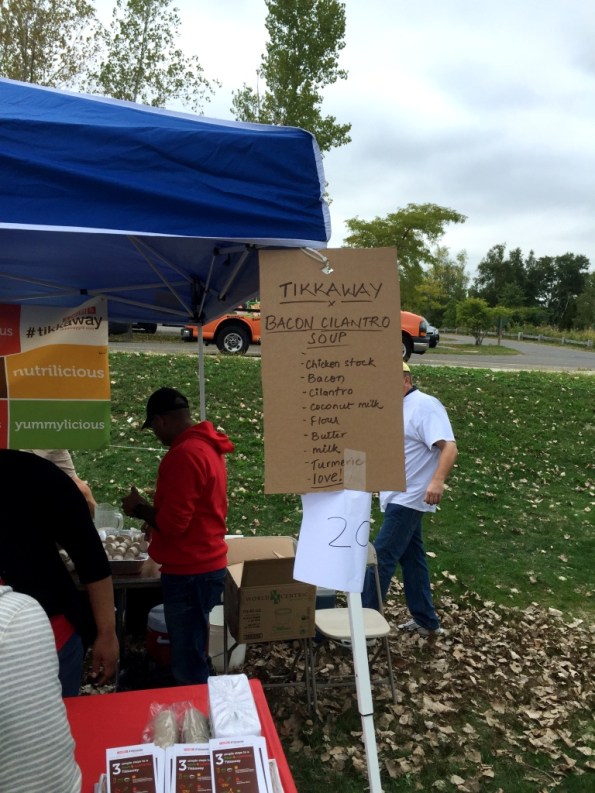
Lots of restaurants offered their recipes/ingredient lists right there:
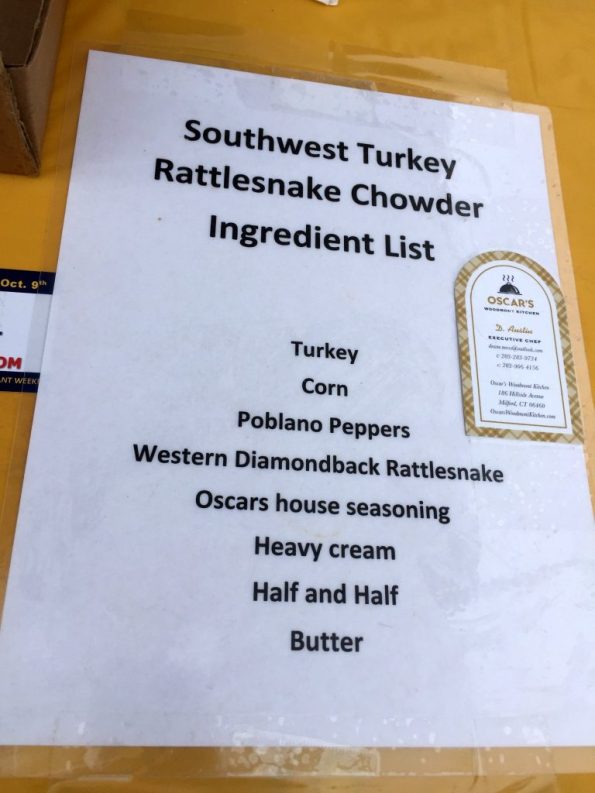
The recipe was very intriguing, but in my tasting cups was literally only liquid, no rattlesnake, no turkey – they really have to try better next time
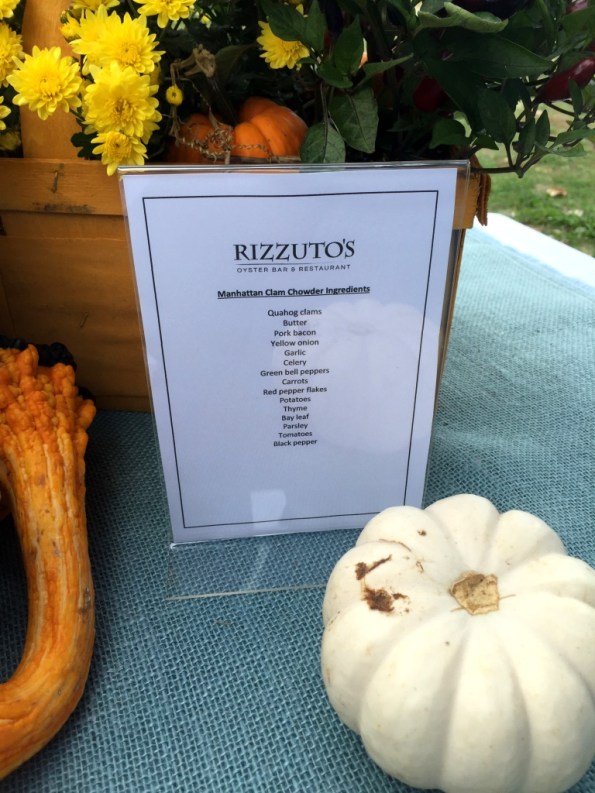
 Not only their showders won, but their stand desings were a standout –
Our House Bistro from Vermont:
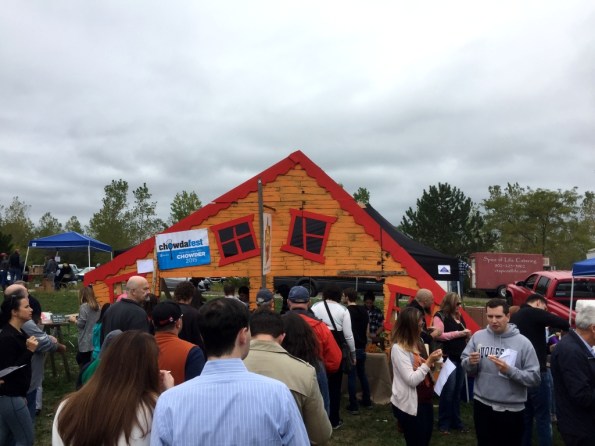
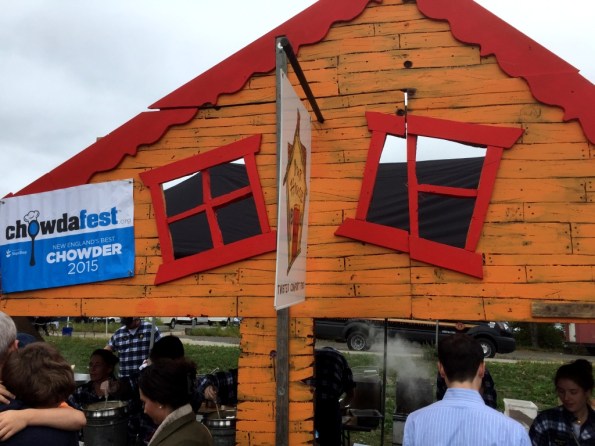
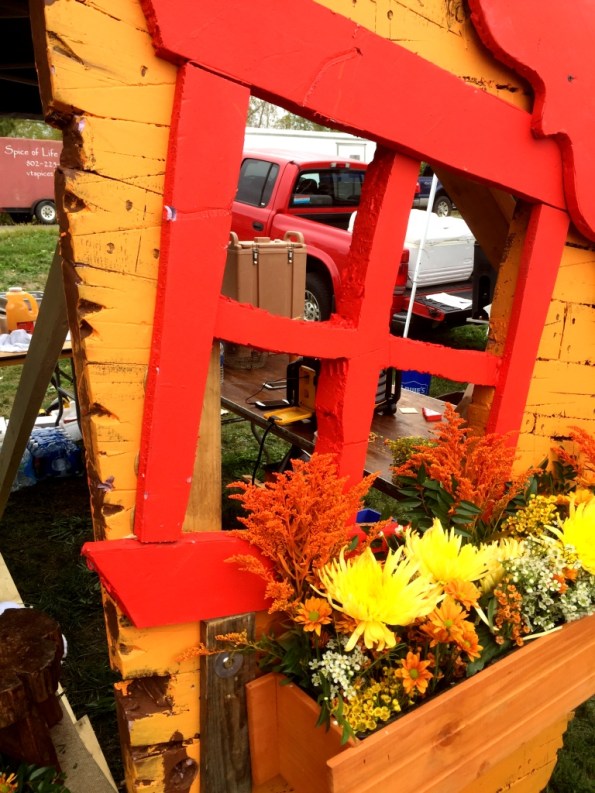 and Pike’s Place from Seattle, Washington:
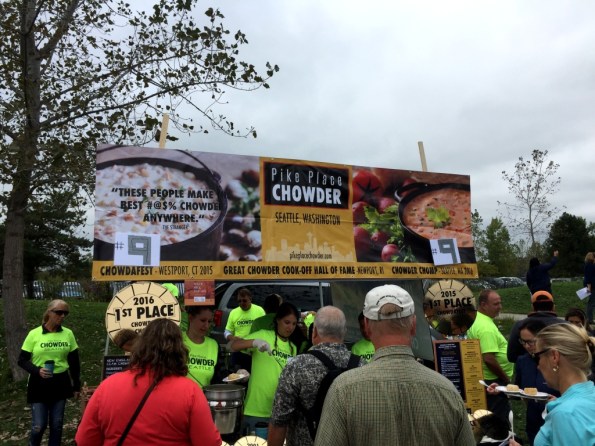

See what I mean by intimidation? When people see this array of medals, can they not vote for them?
Yes, there was more than just chowder there:
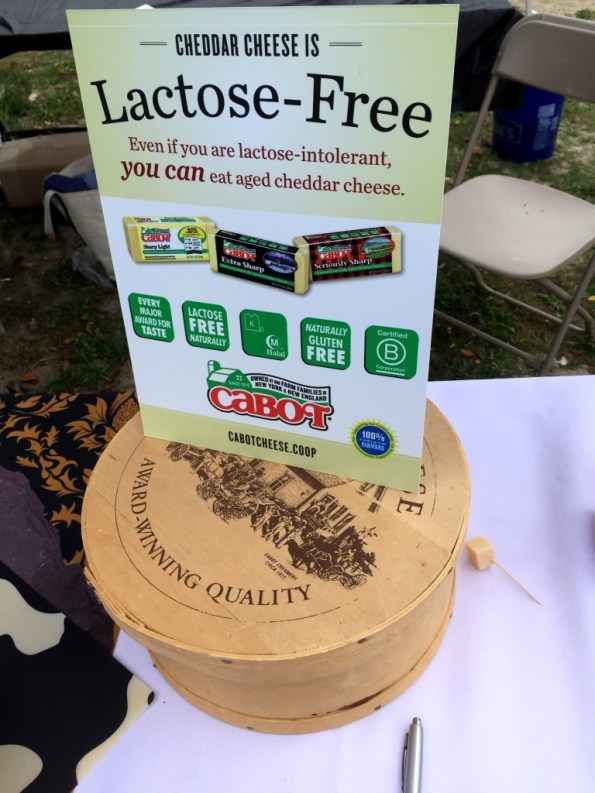
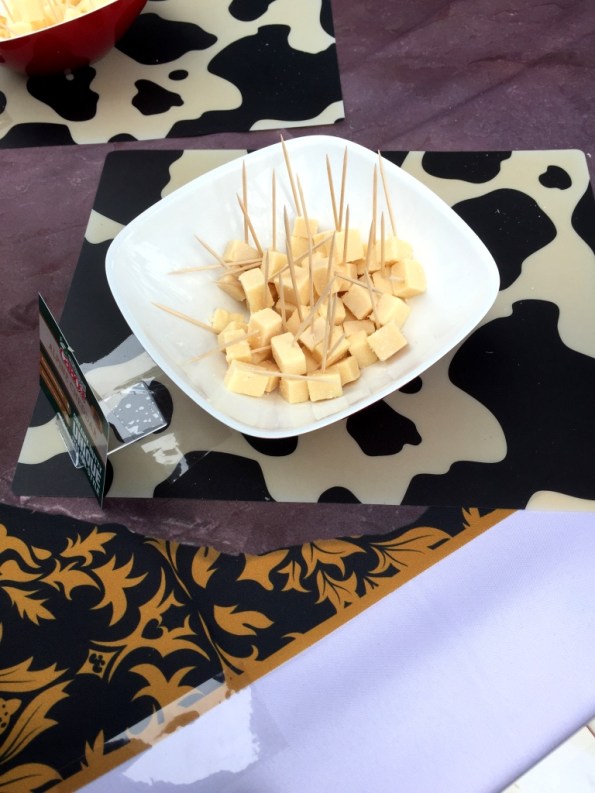
 I’m done with my barrage of pictures – almost. Here is the ballot with my vote:
 Make sure to mark October 1st, 2017 in your calendars as a fun day. Enjoy your chowder!
Color of the Bubbles – Mine Were White, Grey and Black
 More than 3 years ago, an interesting tradition was born in the world of wine blogging (a brainchild of The Drunken Cyclist, with the help of the supporting cast of characters) – the Monthly Wine Writing Challenge. Every month or so, wine bloggers en mass subject themselves to the masochistic practice of taking a random word and creating a soulful connection from that word to the beloved world of wine – all of it on a tight deadline.
Writing a post for the Monthly Wine Writing Challenge (MWWC for short), I always want to put out a regular post, and then at the end, simply state “and by the way, this was written for the MWWC, ha”- just to show how easy it was. Of course, this practically never happens – like today, with the theme of our epistolary exercise been “Bubbles“, and my writing taking place during the very last hour (sigh).
When oenophile hears the word “bubbles”, the first reaction it triggers is “Champagne!”. It gives us such a pleasure to write about the world of “Sparklers” – the ingenuity of Dom Perignon, the resourcefulness of Widow Cliquot, the battles of I-was-the-first-to-make-my-wine-sparkle.
There are many other connections of the bubbles to the world of wines – think about bubbles you see on the surface of the juice during fermentation – those are some bubbles! Or think about simple, tiny bubbles of oxygen, making it through the cork and allowing the wines to age gently and gracefully – these bubbles are critical. And then there are maybe bubble issues for the wine collectors? Will that price of DRC or Petrus ever come down?
Yes, I will take my own, different course, and will not write about Champagne or Sparkling wines. For sure.
Do you believe me? Who said “no”? How did you guess?
Banal or not, but I have a good reason to write about sparkling wines – Prosecco, to be more precise. A few weeks ago, I was offered to review some Prosecco wines. At first, my reaction was “I’ll pass”. But reading the email more carefully, my interest piqued. I always thought of Prosecco wines made from 100% of grape called Glera (yes, there are few exceptions, like Bisol, but just a few). These three Prosecco wines were all blended – Processo DOC rules allow up to 15% of other grapes in the blend – and the blends were all unusual, so the intrigued brain said “why not”?
As we are talking about Prosecco, I need to share some fun facts with you – who doesn’t like statistics, right?
French Sparkling wine and then Champagne had been around for a bit less than 500 years. Prosecco’s history is only a bit longer than 100 years, and only in 1989 (27 years ago!) Prosecco made it for real outside of the Italy (here is the link to my post about it, in case you are interested in history). However, according to Nielsen report, Prosecco sales in US in 2015 grew by 36% (Champagne – 8%). In 2015, Italy produced its largest Prosecco crop ever with 467 million bottles – that is triple of only 7 years ago; out of this amount, 48 million bottles were exported to the US – and still US is only #3 importer of Prosecco behind UK and Germany.
Moving right along, let me decipher a cryptic title of this post for you (not that you cared much, right?).
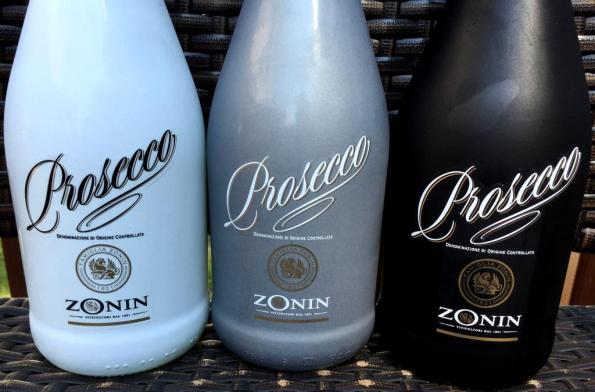
Zonin family got into the wine business in 1821, almost 200 years ago. Now in the 7th generation, the family manages about 5,000 acres of vineyards, mostly in Italy. Zonin had been making Prosecco for the very long time, but considering the ever growing interest, they decided to offer a new line of Prosecco wines, called “Dress Code”, suitable for different mood and a company. The “Dress Code” colors include white, grey and black, so you can wear a different color every day. Of course, these are only colors of the bottles, nobody added squid ink to the wines… yet? Hmmm, note to self…
Here are the notes for the wines I tasted:
Zonin Prosecco White Edition Prosecco DOC (11% ABV, SRP $16.90, 91% Glera and 9% Pinot Bianco cuvée): simple overall. On the nose, touch of white fruit. Good creaminess on the palate, touch of white fruit, very restrained, good acidity, but again, overall is a very muted expression. 7/7+, Decent everyday glass of bubbly.
Zonin Prosecco Grey Edition Prosecco DOC (11% ABV, SRP $16.90, 87% Glera and 13% Pinot Grigio cuvée): white stone fruit on the nose, white flowers. Palate: light, creamy, effervescent, refreshing, distant hint of sweetness, round, good acidity. 8-, nice upgrade from the “white”.
Zonin Prosecco Black Edition Prosecco DOC (11% ABV, SRP $16.90, 90% Glera and 10% Pinot Noir cuvée): promising touch of fruit with lemon and rocky minerality on the nose. Perfect acidity, elegance, finesse on the palate, touch of white stone fruit, lime and noticeable nutmeg. Most elegant out of three, a “little black dress” if you will. 8/8+, one of the most elegant Prosecco I ever had.
So, what color are your bubbles? My favorite was black. Cheers!
This post is an entry for the 27th Monthly Wine Writing Challenge (#MWWC27), with the theme of “Bubbles”. Previous themes in the order of appearance were: Transportation, Trouble, Possession, Oops, Feast, Mystery, Devotion, Luck, Fear, Value, Friend, Local, Serendipity, Tradition, Success, Finish, Epiphany, Crisis, Choice, Variety, Pairing, Second Chance, New, Pleasure, Travel, Solitude
Solitude: In Quest for Unattainable?
Solitude. An interesting word, isn’t it? Is it something good or is it something bad? Let’s see what the dictionaries think of solitude:
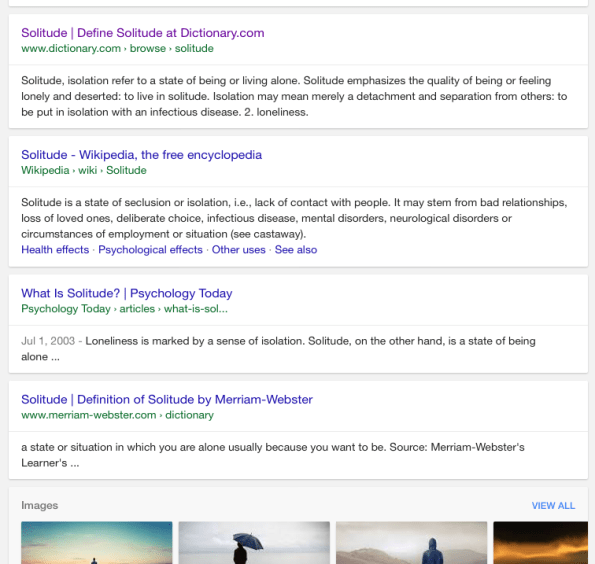
If we think of solitude as a feeling of isolation, this clearly doesn’t sound good. We, humans, are social creatures. We want to connect, communicate, love, laugh, interact. Feeling isolated is really opposite to feeling connected and engaged, so let’s leave it as that – feeling isolated is not what we want, so this is not the solitude we want to talk about.
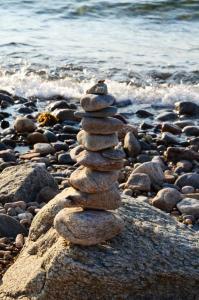 Let’s then talk about solitude as the “state in which you are alone usually because you want to be“. Every once in a while, our connected sensors become overloaded. Too many things to do, too many tasks to finish. The new things which must be done arrive without any regard to the things which we are still doing. We are going somewhere all the time, without even understanding the direction, or what is even worse, without understanding of why we are going there.
Solitude is our way out. Have you ever been up in the mountains, where there are no other sounds outside of gentle murmur of leaves and muted whisper of wind? How does it feel? Or may be instead of the mountains, you prefer to stand by the ocean, listening to the dreamy sounds of the slowly pulsating waves? With every wave gently crawling up the sand line, the tension becomes less, the mind becomes clearer, and our energy replenished.
The challenge is that unless we are a lucky few, most of us can’t just magically happen to be by the ocean or up in the mountains when we need it the most. And to take things further to the dark side, most of us now live in the constant state of over-socializing. Think about all the tweets we have to respond to, facebook statuses and instagrams to like, snapchats and periscopes to watch. If we thought we were overloaded before, how can we describe our state now? The state of solitude, which we need for our own well-being, is more ephemeral than ever before. Yes, it is literally unattainable.
While we are talking about life, this is a wine blog after all. Tell me the truth – you knew that I will turn it all to the wine, didn’t you?
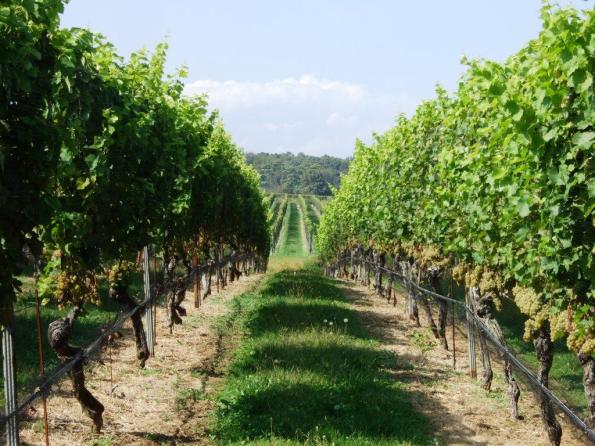
How does the wine relates to the solitude, you ask? To begin with, think about the wine while it is being made. We are seeking solitude by the ocean or up in the mountains – but have you ever stood between the rows vines on a quiet day, without talking or looking at your phone? Did you feel relaxed and restored just by standing there? 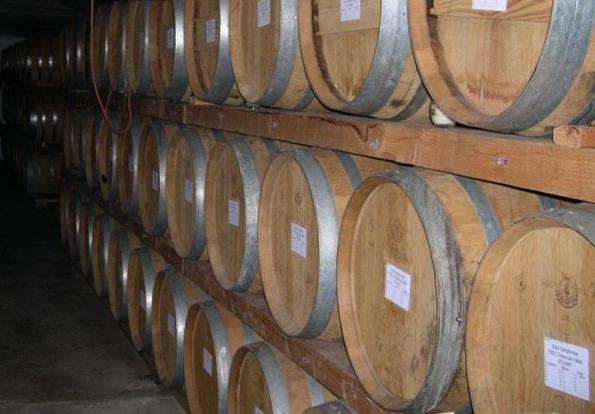
Or have you ever stood in the middle of the dimly lit cellar, breathing the wine smell and admiring the silence, thinking about the wines, quietly and patiently laying there? The wines spend month and month in that perfect solitude, left to themselves, to age and mature, before they will see you again.
And then there is may be the best and easiest moment of solitude any wine lover can experience at any time. Yes, wine is meant to be shared, and it is wonderful when you are in the company of the people who share you passion. But think about that moment when you take a sip of wine, and for that exact moment, the world stops, it doesn’t go anywhere, it becomes quiet. You are left one on one with that wine. You ponder at it. You reflect. You are one on one with yourself, in your moment of solitude, brought to you by that sip of wine.
I remember being in the Rioja seminar, and listening to our guide talk about his experience sharing the bottle of 80 years old Rioja (from 1922) with the group of friends (also wine professionals). He said that they poured the wine and had a sip, and the table was quiet for the next 5 minutes. Nobody wanted to say anything. Everybody were transposed. And they were in their moment of solitude.
Let me leave you with that. Have you ever found your moment of solitude in the glass of wine? I hope you did, and if not – don’t worry, it will come. Just give it time.
This post is an entry for the 26th Monthly Wine Writing Challenge (#MWWC26), with the theme of “Solitude”. Previous themes in the order of appearance were: Transportation, Trouble, Possession, Oops, Feast, Mystery, Devotion, Luck, Fear, Value, Friend, Local, Serendipity, Tradition, Success, Finish, Epiphany, Crisis, Choice, Variety, Pairing, Second Chance, New, Pleasure, Travel
Heartbroken…
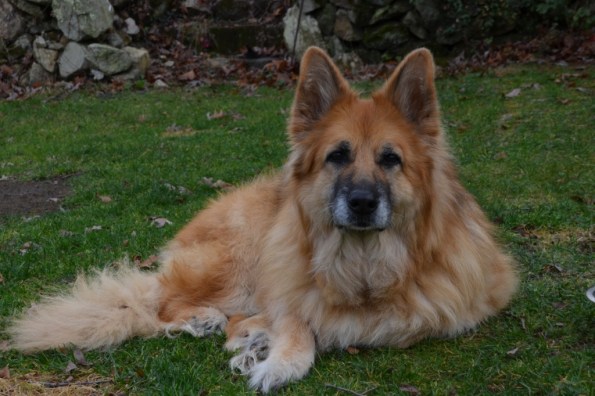
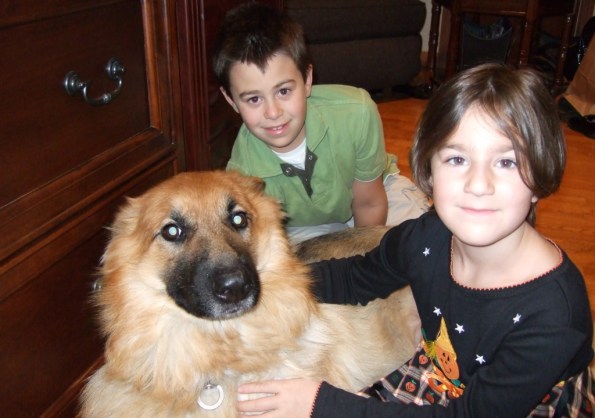
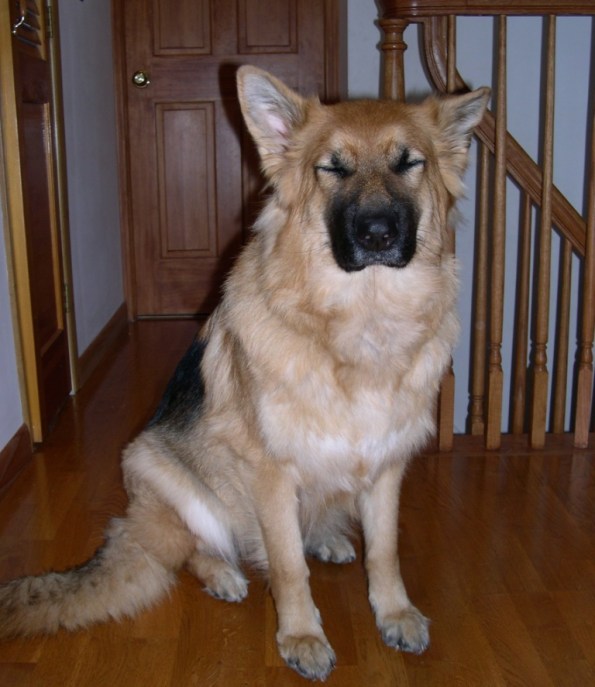
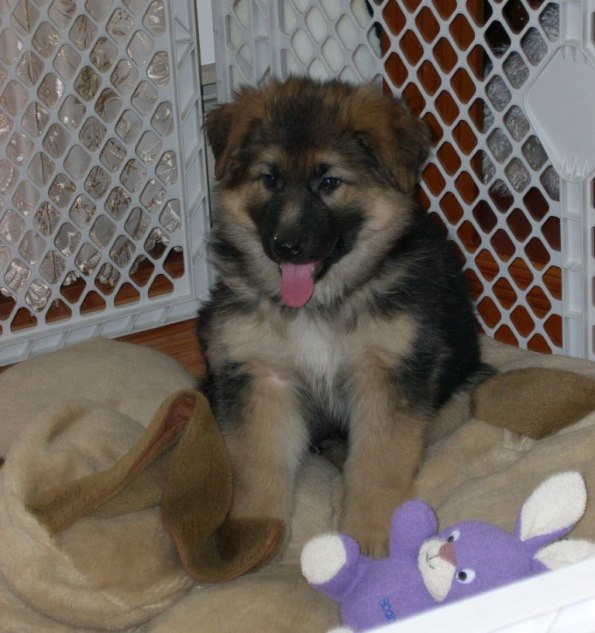
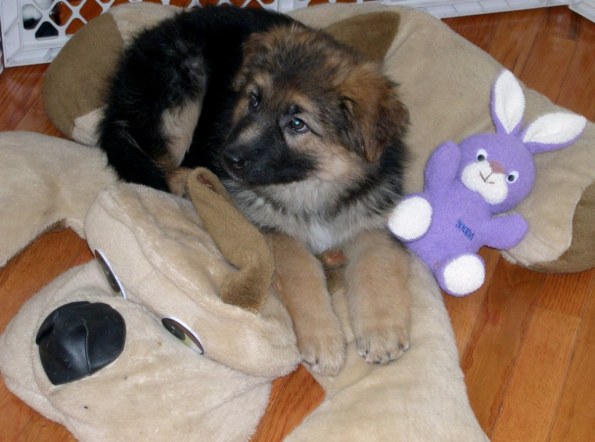
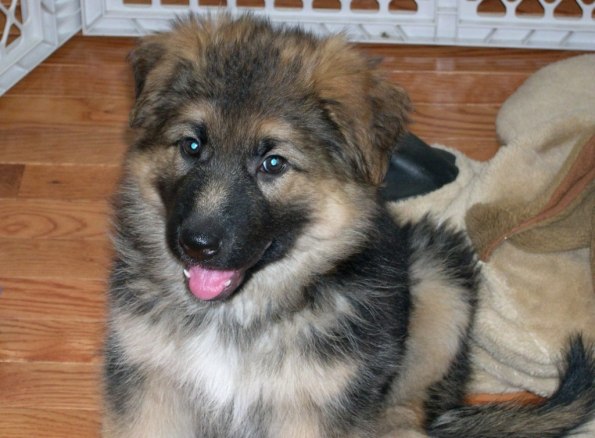
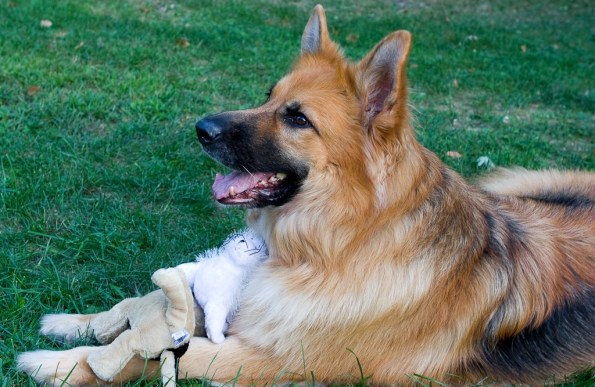
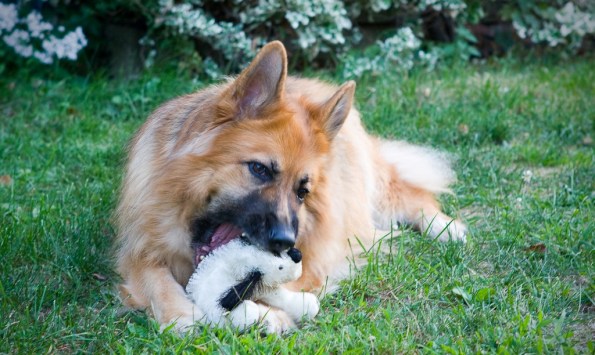
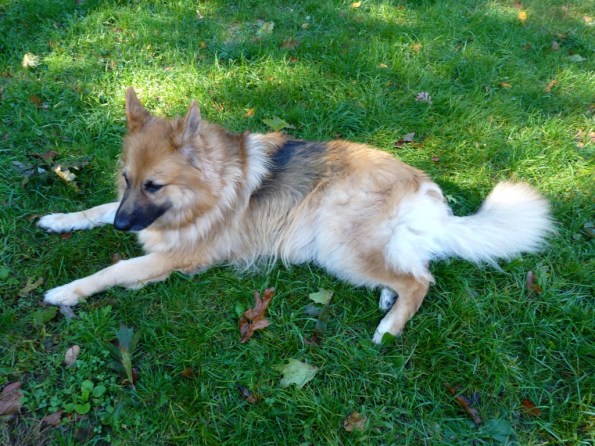
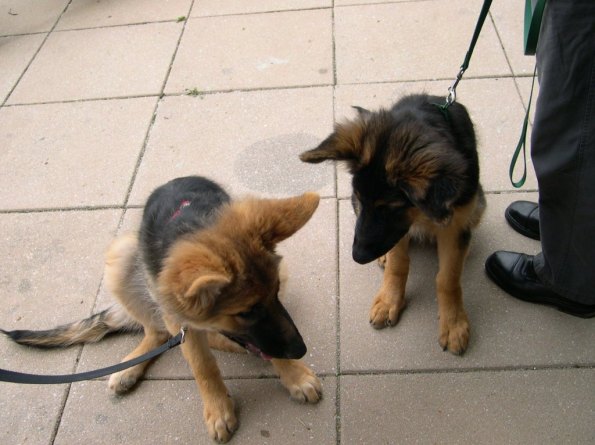
The house is quiet and feels empty. Eleven and a half years ago, a little bundle of joy became indelible part of our lives. She grew up quickly to become a stunning, magnificent dog, the one which would turn heads; more importantly, she became simply a part of our family, someone who brought lots of joy to all – to us, to our friends and to the friends of our friends.
About two years ago, she started walking a bit strange, and developed a fear of staircases. Our vet suggested that it can be degenerative myelopathy – the spinal disease which can be diagnosed, but can’t be cured and has no medication of any kind. . Unfortunately, the doctor was right, and while we did our best to keep her with us, we lost this battle and our beloved Verda left to look down on us from the rainbow bridge.
Nothing will replace her soft ears and heavy paws, but she will stay forever in our memories and our hearts.
Hug each other a little closer today. And every day.











OTBN 2016: Two Spanish Jewels, And What The Others Opened
 I don’t like making decisions. Here, I said it. Not around the wines for sure. But I have a justification for this indecisiveness – and I’m sure many oenophiles will attest to the same. You see, I like to drink aged wines. Despite popular notion from many wine professionals that people don’t understand what is good for them and should drink their wines young (here is the latest piece from Steve Heimoff on the subject), I still like my wines with a little age on them. Heck no, I actually like them well aged. But most wines in my cellar are in the single quantities (yes, that means One bottle) – therefore, if I open it, I will not be able to find out if it will improve with age. As you can imagine, this can lead to many, many “indecisive moments”.
So for the people like myself, Open That Bottle Night was invented. I will not go again into the history of the OTBN – I already wrote about it extensively here. But the event itself really makes you to take decisions and “just do it”.
Yes, the decision making is frustrating. But once decision is made, frustration is out and anticipation and excitement are in. It would be so interesting to understand how the mind (subconscious?) arrives at a decision where there are lots of possibilities, all promising similarly happy outcome (in the end of the day, no matter what bottle you will open, as long as it is not spoiled, you will still be happy – with a 99% chance). Someone really have to study how the oenophile’s mind works. So in this mysterious way, all of a sudden the decision came to open two of the Spanish wines I had for a little while. To be absolutely honest – first I decided on those two wines, then I started figuring out what was making them special – and these wines are special.
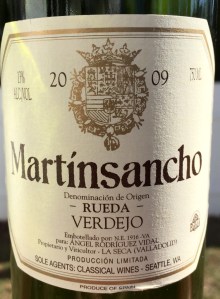 How special? Both wines were made by pioneers, and they represent true passion and vision which makes winemaking so unique. The first wine was called Martinsancho, made out of the grape called Verdejo in Rueda, Spain. Martinsancho is the name of the vineyard in Rueda, where Verdejo had been planted since 17th century. But you see, in the mid 1970s, the whole size of the vineyard was only 1 acre, and it was pretty much the last of Verdejo left in Spain, due to natural (phylloxera) and man made (political, economic) causes. Angel Rodriguez had a passion, vision and tenacity to preserve that vineyard, replant the original cuttings on the 25 acres, and literally single-handedly restart Verdejo production in Rueda. Angel Rodriguez’s hard work was even honored by the King of Spain Juan Carlos.
How was the wine? One word – delicious. One of the very best Spanish white wines I ever had. Here are the notes:
2009 Ángel Rodrígues Martinsancho Verdejo Rueda DO (13% ABV, $17, 100% Verdejo)
C: light golden, very pretty
N: restrained, touch of grass, minerality, almonds
P: great deal of finesse, it is smooth, silky, good acidity, medium to full body, elegant
V: 8+, great world class wine
Our second started with this view once the top foil was removed:
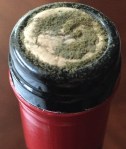 From my experience, this doesn’t mean the wine is spoiled (at least so far it never happened), but it still makes you uneasy – there are no substitutes in this game. This was the only hiccup though, the wine itself was unaffected.
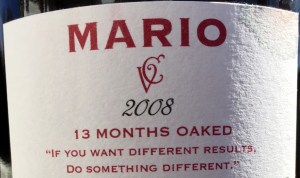
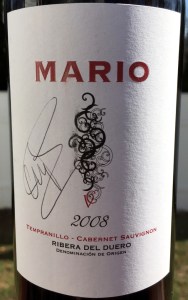 Similar to the first wine, this one was also a product of a passion, a dream. Clara Concejo Mir inherited the vineyard from her grandfather Mario. Located at the high altitude of 7,750 feet, this is first vineyard in teh Ribera del Duero region; the vineyard is also adjacent to the vineyards of legendary Vega Sicilia. While Tempranillo is a king in Ribera del Duero (often called Tinto Fino), Clara also had a vision to add Cabernet Sauvignon to her wine which she called Mario (yes, in honor of her grandfather). She also had perseverance to lobby the regulatory body of Ribera del Duero to allow officially put Cabernet Sauvignon on the label of the Ribera del Duero wine. The rest of this can be subsided to a moan which you will produce upon taking a sip of this wine.
2008 Vegaclara Mario Ribera Del Duero DO (13.5% ABV, $25, 77% Tempranillo, 23% Cabernet Sauvignon, 13 month in oak – 33% French, 33% American, 33% Hungarian)
C: dark garnet
N: fresh berries, touch of barnyard, eucalyptus, black currant
P: yum! (is that a good descriptor?) silky smooth, polished, great depth and concentration, black currant, dusty mouthfeel, flawless, perfect balance
V: 9, a wine of an outstanding finesse
Now that I told you about wonderful wines and passion we experienced, I want to give you a glimpse into what the others were drinking. First of all, I was very happy to see an increased number of posts about OTBN all over the social media – or as at least it seemed as an increased number of posts to me. And then over the course of the week I inundated lots of people on Twitter, keep asking them what are they going to drink (and making sure they will remember about OTBN) – I hope it didn’t cost me any followers, but oh well, it is a good cause. So below is a small collection of tweets plus some blogs posts about the OTBN wines, in no particular order:
https://twitter.com/FWHedonist/status/703811785808179200
Wine Raconteur wrote about the wines he will not be opening for OTBN:
https://thewineraconteur.wordpress.com/2016/02/27/open-that-bottle-night-2/
Margot Davies: (by the way, I would really love to try that wine)
https://twitter.com/gatherandgraze/status/702622651668262912
These are the snippets of conversations I had about #OTBN – I’m sure I missed some too. So what did you end up opening for OTBN and did you like your choice after the cork was pulled out? I would love to know – you know where the comments section is.
Before we part, I want to remind you that actually you have the power to make any night an Open That Bottle Night – no need to wait a year to open That Bottle. Just do it! Cheers!
Open That Bottle Night 2016: What Wine Are You Going To Open?
Open That Bottle Night (OTBN for short) is an [international] phenomena created by Dorothy Gaiter and John Brecher, the writers of the hugely popular “Tastings” wine column in Wall Street Journal for more than 10 years. Once inundated with the questions “what is the right time to open this [special] bottle”, they designated last Saturday of February as the day when oenophiles should really pull the plug cork on that bottle which was stored until the “special day” would arrive. Only most of the oenophiles have a problem deciding if today is already special, or not special enough.
With the idea to encourage oenophiles to finally reach for That Bottle, Dorothy and John invented OTBN back in 1999. From there on, the OTBN was steadily increasing in popularity not only in the US, but around the world, with people getting together for the special OTBN parties and dinners, and restaurants offering discounts and special menus.
Last November, I had a pleasure of meeting Dorothy and John at the Piper-Heidsieck Vin Clairs tasting in New York, which I attended together with Jeff, better known as The Drunken Cyclist. As part of conversation with Dorothy we also touched on the subject of OTBN. To my surprise, I got an email from her two weeks ago asking for my thoughts on selecting the wine for upcoming OTBN, which will take place this coming Saturday, February 27th. I gave her somewhat of a mumbling answer, which was included into her OTBN 2016 post in the Grape Collective Magazine, together with the similar input from Jeff.
Let me tell you why you and every other oenophile should take part in OTBN and open That Bottle now. Two reasons:
- Wine might not be any good
- You might not be any good
I’m not trying to be overly dramatic or use scare tactics of any sort. This is simply what is called “life”.
Think about that prized wine bottle. May be you brought it from your honeymoon trip or anniversary trip, great cruise or an amazing vacation in the vineyards. Since it made it to your house, was it ideally stored? Was it Barolo, Bordeaux or Chablis, which can age great without much regard to the producer or a vintage? Or was it delicious Rosé from Provence, sumptuous red Cotes du Rhone or a playful Vouvray? Chances are, even in ideal conditions, those wines will not last for too long. The whole idea behind those “special” wines is that they are connected to our emotions and memories, and when we drink them we get to re-live the joyous moment of the past – but you do want the wine to match the taste as you remember – and if it doesn’t, well…
The second issue is also a problem. Take a look at Jeff’s post about meeting Dorothy and OTBN, and take a look at the source of his second possible choice of the OTBN wine, the ’85 Inglenook – he got it from someone who could no longer drink wine due to the medical reasons – and that person was devastated about it, as any of us would under his circumstances. Your health can change, your palate can change – do you really want to risk the joy of having a great glass of wine by not been able to find the “ideal moment”?
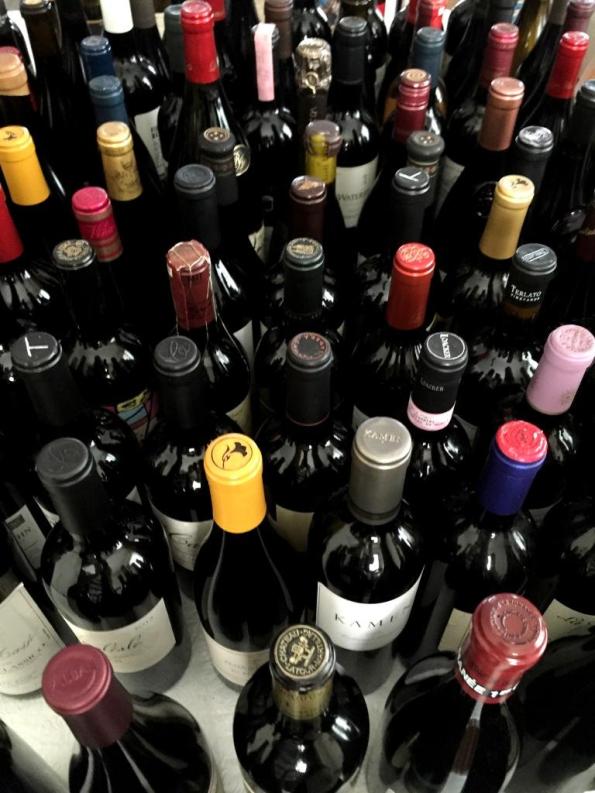
Still undecided? Think about it this way. Opening of That Bottle for the OTBN is a win-win, it always is. First, you get to drink the wine you always wanted to drink. Second, with opening of the bottle you are actually not losing anything – on contrary, you are gaining a great experience. If the wine is good, you are transported to the past, you get to re-live “the moment” once again – and create a new memory for the future. If the wine is not good, or not as you recall – you still create a new memory, and you can move on to your next “special bottle” (pleeease, don’t tell me you had one and only one, okay?).
Don’t know if I succeeded in convincing you, or if you even needed to be convinced, but I hope you will decide and open that special bottle, no matter what makes it special. And then I also hope that you will leave me a comment and tell me what you are planning to open or what you had for OTBN, as I’m dying to know.
As for me, still need to make up my mind – there are lots of choices, so I’m sure it will be a last minute decision, but rest assured that the special bottle will be open – and I promise to tell you all about it. Enjoy the OTBN, and don’t overthink it – just do it! Cheers!
Last Bottle Sign Up ($10 credit)




 Talk-A-Vino