Archive
Wines, Wines, Wines – Part 2
As promised, here is the second part of the Wines, Wines, Wines post. In the first part, we talked about great Riesling and Gewurzrtraminer wines, with some extra value wines and Prosecco. Let’s continue our “memorable wine extravaganza” with a couple of Chardonnays.
Chardonnay
It is so interesting how things work in life. You might walk past say, a picture, every day, and never notice it. And then all of a sudden you say “what is it? Was it always here, or is it something new??”, and people around you look at you like you have two heads or something. Where am I going with this? Give me a minute, I will make my point.
Couple of month ago I got a bottle of Chardonnay, accompanied by the words “try it, it is pretty good”. I’m a sucker for good Chardonnay (yeah, true, you can substitute “Chardonnay” with any other varietal – I’m just a sucker for any good wine, but this can be a subject for a different post). But this Chardonnay was from New Zealand. And New Zealand in by book is the land of Sauvignon Blanc and Pinot Noir – but not really a Chardonnay. So I finally got the bottle opened and … wow.

Seresin Chardonnay
2008 Seresin Chardonnay Reserve Marlboro New Zealand (13.5% ABV, 11 month in oak). The symbol of the hand on the label has a deep meaning. Quoting few words from Seresin Estate web site, “The hand is a symbol of strength, gateway to the heart, tiller of the soil, the mark of the artisan, and embodies the philosophy of Seresin Estate”. Here are my tasting notes for this wine: Outstanding, classic. Perfect nose of vanilla and white apples, just right. Very balanced fruit on the palate – hint of butter, vanilla, oak, good acidity – one of the most balanced Chardonnays ever. Drinkability: 8+
Oh yes, you are still waiting for me to connect to the opening sentence about passing by and not seeing things around for the long time, right? As of very recently, as I walked in the New Zealand isle in the store, I noticed all of a sudden that almost every producer now features Chardonnay in addition to Sauvignon Blanc and Pinot Noir. When did it happen, how long this was the case with New Zealand Chardonnays – I don’t have any idea, but based on this experience, I definitely want to try more.
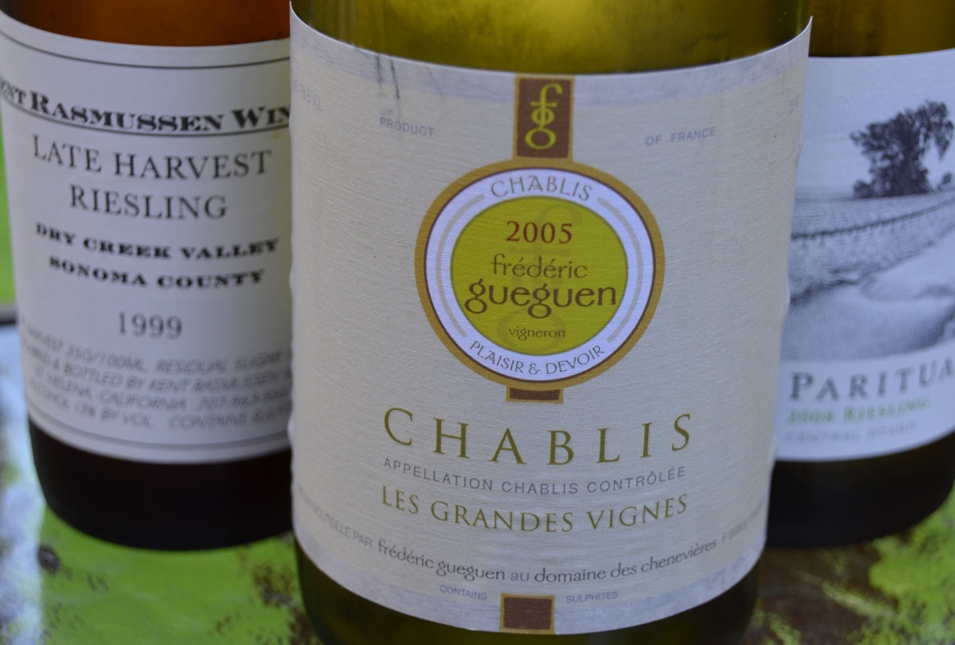
Frédéric Gueguen Chablis
2005 Frédéric Gueguen Chablis Les Grandes Vignes (13% ABV) – I don’t have a lot of experience with Chablis overall. I had a few bottles of Chablis here and there, but never was really impressed with it (I never had Chablis of a Grand Cru or even Premier Cru level). I don’t know what possessed me to get this wine from the Benchmark Wine Company, I guess it was in the right price range ( under $20), and somehow caught my attention. Then I read somewhere, that Chablis requires on average about 10 years of age in the bottle to really start transforming and going past the initial “steely acidity” flavor profile to get to the next level. And then I tried this Frédéric Gueguen wine – wow. Here are my tasting notes: some darker yellow color, but not quite golden yet. Amazing nose, reminiscent of Côte-Rôtie – almost a touch of sulfur (think freshly burnt matches), or even more of a smell of a hot piece of granite on a summer day, a “roasted rock”. Side note: pardon my naive definition here – I recently learned that professionals call it a “gunflint” – but I will not use this term as it doesn’t lead to any associations for me. Perfect complexity on the palate – white fruit, vanilla. Lots and lots of minerality. Full bodied and very balanced, excellent wine overall. Drinkability: 8+
Pinot Noir
And we are moving along to the Pinot Noir wines – both of the wines below were excellent:

Siduri Pinot Noir
2011 Siduri Pinot Noir Sonoma County (13.1% ABV) – perfectly clean California Pinot – good smokey nose, with a touch of red fruit aromas. Light cherries on the palate, hint of earthiness, medium body, perfect acidity, very clean and balanced. Drinkability: 8-
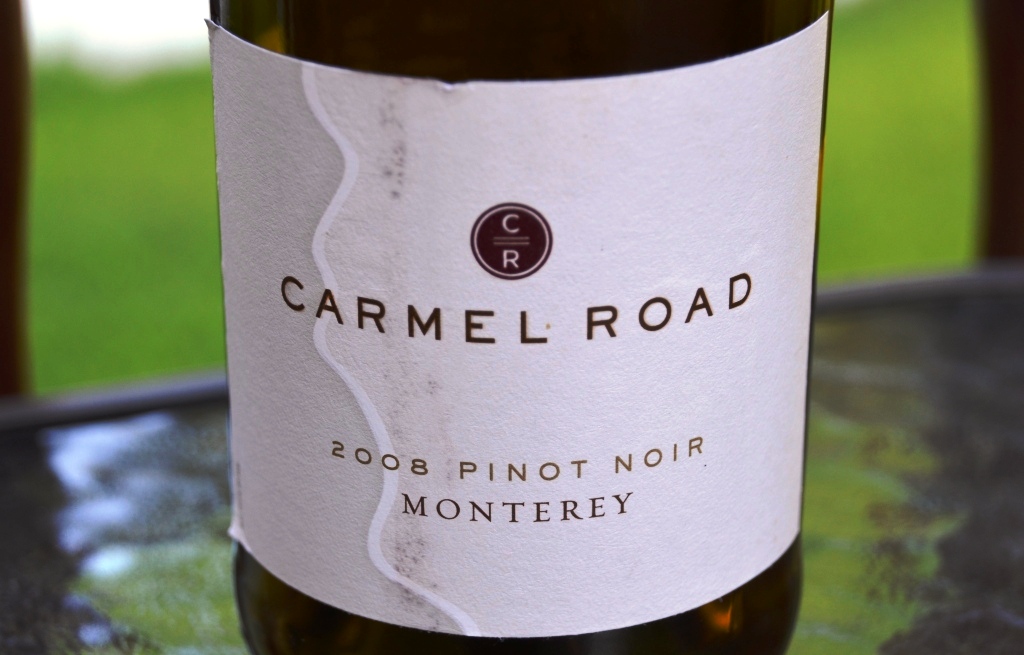
Carmel Road Pinot Noir
2008 Carmel Road Pinot Noir Monterey (14.0% ABV) – outstanding. Bright ruby color in the glass, raspberries and hint of smokiness on the nose. Raspberries, cranberries and cherries on the palate. Medium to full body. Excellent acidity, overall perfectly balanced. Drinkability: 8+
Cabernet Franc
I have only one wine for you here, but it was mind blowing.
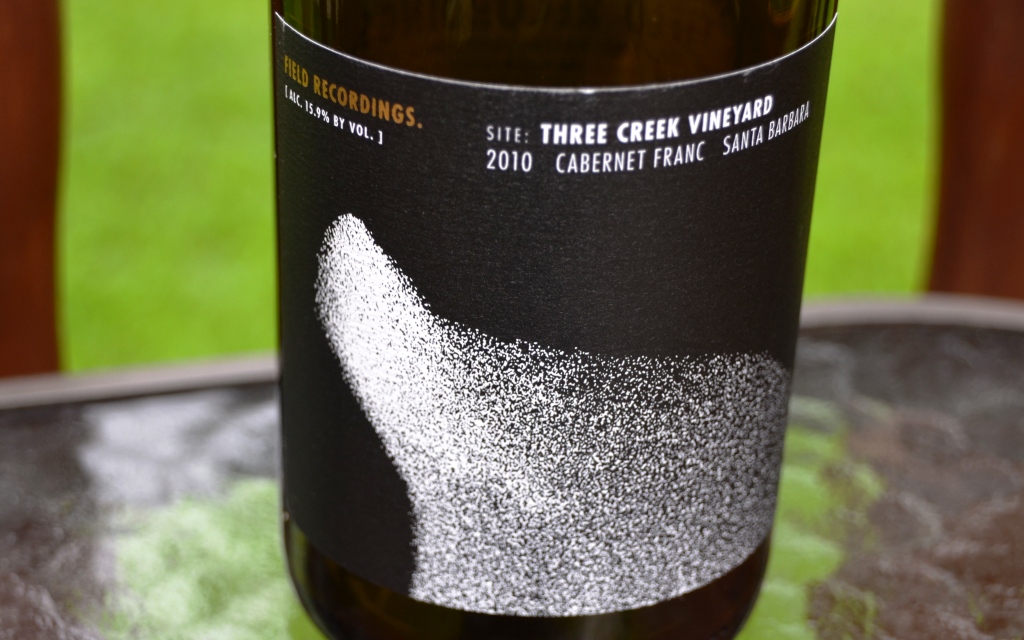
Field Recordings Cabernet Franc
2010 Field Recordings Three Creek Vineyard Cabernet Franc Santa Barbara (15.9% ABV, 90% Cabernet Franc, 10% Malbec, 18 month in French oak) – spectacular. If you read this blog on the regular basis, you know that I’m very impartial to the wines of Field Recordings – but this is not my fault, it is Andrew Jones’ fault ( Andrew Jones is the winemaker behind Field Recordings). This wine had beautiful garnet color in the glass. The nose was clean and open, withhint of black currant and other red fruit. The palate is stunning with black currant, cherries, touch of black pepper, dark chocolate, perfect acidity, soft and supple tannins, all in the format of full-bodied wine. Perfect balance of fruit, acidity, tannins and alcohol – which is pretty amazing at 15.9% ABV. Drinkability: 9
Last, but not least – Syrah
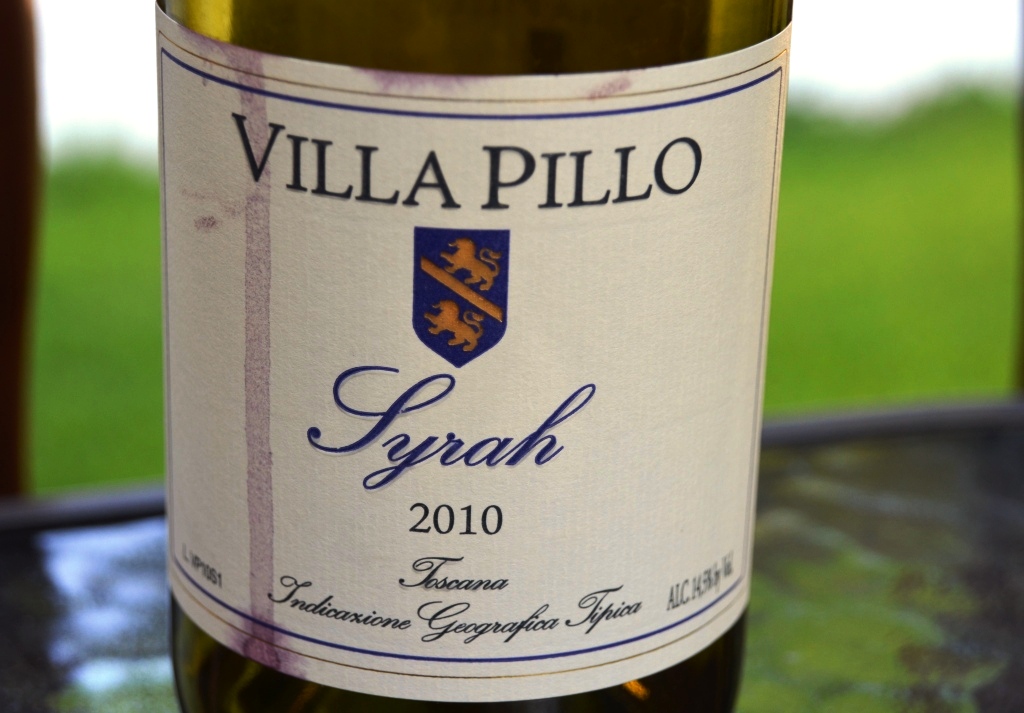
Villa Pillo Syrah
Appearance of the large amount of Italian Syrah wines is also somewhat of a revelation, similar to the one I mentioned at the beginning of this post. All of a sudden I start noticing that there are more Italian Syrah wines showing in the wine stores, and people are just talking more about them, in the blogs and otherwise.
2010 Villa Pillo Syrah Toscana IGT (14.5% ABV) – we got this wine when we visited Millbrook Winery in New York (this will be a subject of a separate post), as they are importing this and a number of other wines from Italy. Tasting notes: Dark garnet color in the glass. Nose of dark fruit and dark chocolate. Outstanding on the palate – hint of pepper, cherries, plums and raspberries, more dark chocolate. Full bodied, with the velvety texture weaved over firm structure. Drinkability: 8
Whew, we are done here! Enjoy the rest of your weekend and cheers!
Wednesday’s Meritage – Wine Quiz Answer, Ageing of California Cabs, Is 0.05 an answer?, and more
Meritage time!
As usual, we are starting with the answer to the wine quiz #58, Grape Trivia – Syrah. In the quiz, you were supposed to answer 5 questions about Syrah, a.k.a. Shiraz.
Q1: Where is Shiraz?
A1: Shiraz is a town in Iran (previously Persia) where supposedly Syrah was originated.
Q2: Which white grape often plays a role of blending companion for Shiraz?
A2: Viognier is often added to both Syrah (Côte-Rôtie) and Shiraz. In many cases you can see Shiraz Viognier written on the labels of Australian wines.
Q3: One of the appellations below can be removed from the list – can you tell which one and why? For the answer to count, “why” explanation is required
A. Cornas, B. Côte-Rôtie, C. Crozes-Hermitage, D. Hermitage, E. Saint-Joseph
A3: Cornas. While Syrah is the only red grape allowed to be used in all of the appellations above, all appellations except Cornas also allow addition of white grapes (Viognier or Marsanne and Roussanne) to the final wine.
Q4: About 100 years ago, Syrah was a popular addition to the wines of one well known region – now this practice is totally illegal by the appellation rules. Do you know what region was that?
A4: Bordeaux. Syrah was a popular addition to Bordeaux wine, providing the structure and flesh. Of course the practice is illegal according to Bordeaux AOC rules, but it is still quite popular in the other regions, such as Australia, where you can often find Cabernet Sauvignon Shiraz wines.
Q5: Where do you think are the oldest in the world continuously producing Syrah vineyards are located? Can you guess the approximate age of the vines?
A5: Australia. It is very difficult to figure out who was first and who was not, as in the wine world, there are always multiple claims to the “first” and “oldest” bragging rights. Based on the information I came across in this forum discussion, the oldest Shiraz vines had being planted in 1846 in the Jacobs Creek area, and Schild Estate is producing the wine called Moorooroo Shiraz from those old vines.
And the winners are… The Drunken Cyclist (I think for 5 times in the row!). He got all 5 questions correctly – great job, Jeff! Very close right behind him (with 4.5 out of 5 points – very close in the area for Shiraz, but named a different country – is Barbie from Blindly Guessing Grapes. If you are not familiar with her blog – check it out, she is constantly challenging herself to taste and learn about different grapes, definitely worth your attention. Honorable mention goes to Red Wine Diva, who correctly answered 3 out of 5 questions. Great job all, enjoy your bragging rights!
And now, to the interesting stuff around the vines and the web!
First I want to mention an interesting post by Steve Heimoff, where he is talking about change in perception of what ageable California Cabernet Sauvignon is, from 1970s to today. Steve’s point is that back in the 70s, to be considered age-worthy, Cabernet was supposed to taste bad on the release – where this is definitely not the point now. Read it for yourself, and as usual, don’t forget to read through the comments section, as it contains a lot of interesting information.
Next subject is currently widely discussed in many alcohol-related blogs – NTSB (National Transportation Safety Board) recently came up with recommendation to lower allowed alcohol blood limit to 0.05 (down from 0.08 which is currently the limit). Both Steve Heimoff and W. Blake Gray wrote blog posts about it, which you can read here and here, advocating the idea that just lowering of the alcohol blood level will not be the solution for DUI-related accidents. They both covered the subject quite well, so I’m not going to repeat all of their arguments – but I recommend that you will read their posts, as in the end of the day, this relates to all of us and our ability to have a glass of wine with the meal in the restaurant.
There is also something else I want you to think about here. My friend Emil sent me a very interesting link tot he blog post titled “Survivorship Bias“. The post is very (very!) long and has nothing to do with wine – it is however a very (very!) worthwhile reading. This post is talking about the fact that when we analyze the problem, we tend to focus on successful outcome only, and we forget to carefully look on all the failed results and dead-end paths (it is impossible to give you a good summary in one sentence, you will be better off reading the post). The connection here? I believe that most of drunk-driving accidents were caused by the people whose blood alcohol level was far exceeding 0.08, forget 0.05. Majority of the people involved into DUI accidents never thought of what the allowed blood alcohol level is – 0.08, 0.05 or whatever, so lowering the limit will only allow to collect more fines and get in the way of more people’s lives – but it is not going to address the problem itself and reduce the number of drunk-driving related accidents. By no means I advocate or promote drunk-driving, this is definitely a serious problem which needs to be solved – but in order to solve this problem, it should be analyzed properly first, and this is what I believe this 0.05 recommendation is lacking.
And this is all I have for you for today. I think you are looking at lots of interesting reading, and if you want to discuss any of this “news”, this is what the comments section is for.
The glass is empty – but refill is on the way. Until the next time – cheers!
Weekly Wine Quiz #58: Grape Trivia – Syrah

Shiraz grapes. Source: Wikipedia
Welcome to the weekend! To start your weekend right, it is the time for our traditional grape and vine exercise.
We are continuing the grape trivia, and today’s subject is … Syrah, or as they call it in Australia, Shiraz.
Syrah is a red grape with thick black skin, capable of producing full-bodied, big and powerful wines. Primary aromas associated with Syrah are usually of blackberry and black pepper, but as the wine ages, it shows a number of very diverse flavors, such as leather, tobacco, chocolate and more. Syrah is known under the name of Shiraz in Australia and South Africa. France, United States (California, Washington, Oregon) and Australia are typically considered to be the source of the best in the world Syrah wines, but Spain, Italy, Chile and Argentina are all producing very interesting Syrah wines as well.
Now, let’s move on to the quiz. As before, the quiz consists of 5 questions, and the answers will be provided next Wednesday.
Q1: Where is Shiraz?
Q2: Which white grape often plays a role of blending companion for Shiraz?
Q3: One of the appellations below can be removed from the list – can you tell which one and why? For the answer to count, “why” explanation is required
A. Cornas
B. Côte-Rôtie
C. Crozes-Hermitage
D. Hermitage
E. Saint-Joseph
Q4: About 100 years ago, Syrah was a popular addition to the wines of one well known region – now this practice is totally illegal by the appellation rules. Do you know what region was that?
Q5: Where do you think are the oldest in the world continuously producing Syrah vineyards are located? Can you guess the approximate age of the vines?
Enjoy your weekend, good luck and cheers!
Special Tasting Report: Trione Winery
A few month ago I got an email from Trione winery offering me a gift. Not just any gift – wine. Free wine. Words “free” and “wine” put together sound almost magical for the anyone who drinks wine daily (I refuse to take the calculator out – don’t ask). But the word “free” in the email usually means danger. After careful consideration, and actually looking at the winery web site, I decided that it was not a scam or phishing attempt, so I answered that I would be happy to get a free wine. The only caveat in the follow up response was that they can only ship wine to the limited number of states. Connecticut not included (of course). But New York was. And so my friend Emil became a recipient for the wine.
When Emil called me that he got the wine, he mentioned that the box looks very small. Well, okay – it is what it is – free wine, whatever the package is. And then some time later, the package made it to my house. A small black box, probably half of the shoebox in size. But there was actually wine inside. And this is how it looked like:
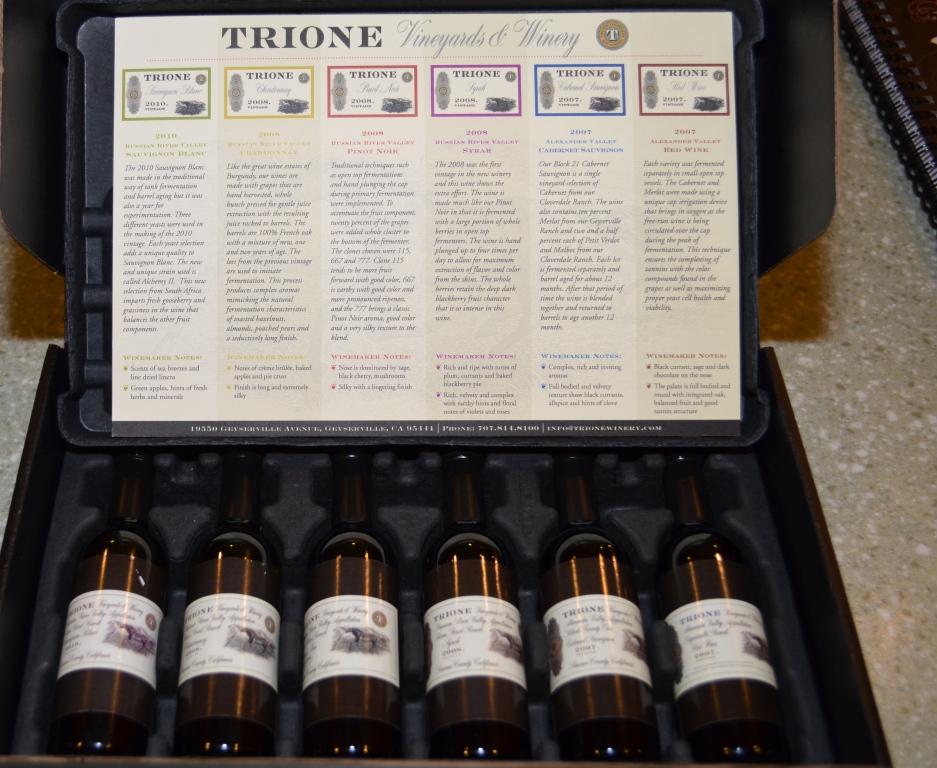
Trione Winery, which I never heard of before, is a new venture of Trione family who was growing grapes in Sonoma for 35 years. Here is what you can read on the front page of their web site:
“For over three decades, the Trione family has raised premium grapes that have been the foundation of many award-winning wines. Now we bring our grapes to you in wines bottled under our own label, Trione Vineyards & Winery. It is the culmination of our family’s long commitment to Sonoma County.”
Here are few more views for you (just trying to build up the anticipation here):


Another interesting detail – it appears that this tasting set consisting of the tiny bottles is actually a concept called Tasting Room. While web site provide literally no information, the card enclosed with the package explained the concept:
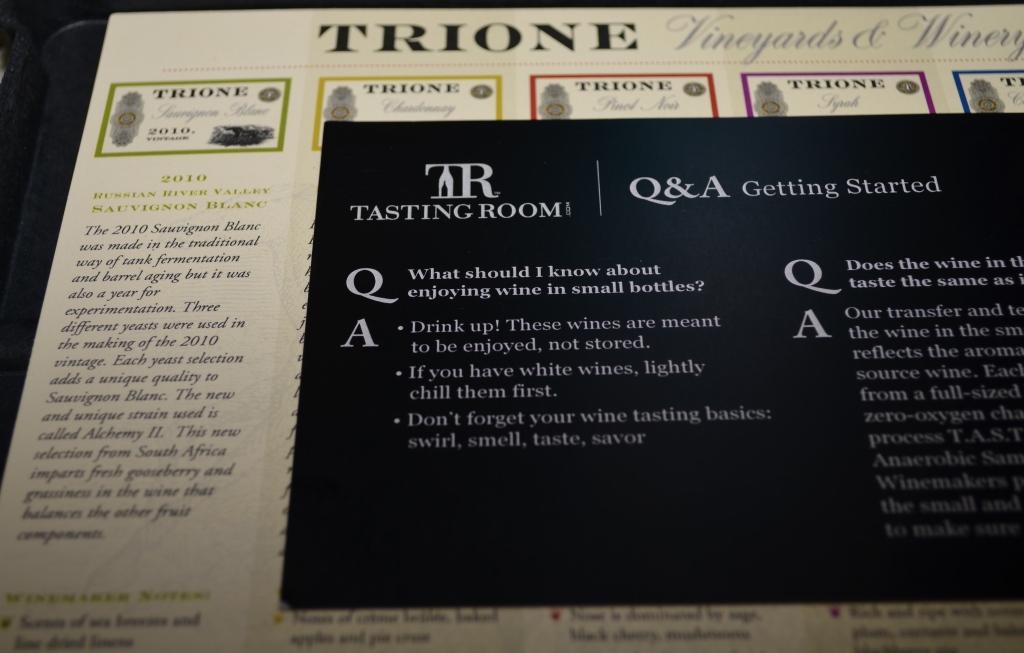
The wines are bottled in the small bottles using special technology which preserves all specifics of the wine, so it is exact same wine which will go into the regular bottles. The only exception – the wine in small bottles is not intended for aging (as you can imagine), so as the card says – drink up!
And with this, let me share my tasting notes. Well, not only mine – in majority of the cases we drink wine together with my wife, especially when we are looking at the interesting and unusual experience – so I’m including her tasting notes too.
2010 Trione Russian River Valley Sauvignon Blanc (14% ABV) – “Pear Grove” my wife said. Some fresh grass on the nose with a bit of grapefruit, but mostly earthy and herbaceous, Earthy and herbaceous on the palate as well, lots of residual acidity, but not “in-your-face”. Food friendly. Interesting. Drinkability: 7+
2010 Trione Russian River Valley Chardonnay(14.3% ABV) – nice butter on the nose, vanilla. Nose is very promising, but palate is not good, very acidic, no fruit, kind of flat. I’m sure it needs time or at least different serving temperature, therefore it is not rated.
2008 Trione Russian River Valley Pinot Noir (14.2% ABV) – Nice nose of dark fruit, tobacco, touch of roasted meat flavor. Nice palate of dark fruit, raspberries, plums, tobacco, pencil and sage undertones. Good palate, good balance. Very good overall. Drinkability: 8-
2008 Trione Russian River Valley Syrah (14.8% ABV) – Wow color – very dark, intense, almost black. My wife’s notes were “oh, this is good” , “great potential”, “very promising” (disclaimer – my wife loves Syrah, probably her favorite wines). Dark roasted fruit, silky smooth, perfect balance, perfect acidity, cherries, earthy notes. Definitely very promising. Very good overall. Drinkability: 8-
2007 Trione Alexander Valley Cabernet Sauvignon (14.5% ABV) – absolutely beautiful nose – perfectly classic, with mint and blackcurrant – textbook flavors. Coffee showed up later on the nose. Wife’s notes: “overpowering , but very yummy”. Big, powerful, silky smooth, noticeable tannins – but excellent balance. Touch over-extracted on the palate, but only in terms of power, not sweetness. Needs time. Drinkability: 8
2007 Trione Alexander Valley Red Wine (14.5% ABV) – Dark chocolate, coffee, blackberries on the palate, nice complexity. Beautiful, round and open fruit. Needs time. Drinkability: 8-
As you can see, it was a very enjoyable experience (it’s too bad that the bottles were that small) – next time you see Trione wine in the store, don’t just stand there, grab a bottle…
That concludes my special tasting report, folks. Until the next time (hopefully someone will send me good and free wine soon) – cheers!
Disclaimer: the wine was provided by Trione Vineyards and Winery free of charge. All opinions are my own.
Re-post: Affordable Luxuries of the Wine World: Crozes-Hermitage versus Hermitage
During 2011 I wrote a number of posts for the project called The Art Of Life Magazine – of course talking about my favorite subject, wine. The project closed and even web site is down, but as I still like the posts I wrote, I decided to re-post them in this blog. Also, in that project, posts were grouped into mini-series, such as “Affordable Luxuries” you see here – I will continue re-posting them from time to time.
Also note that the series was written for a slightly different audience – I hope none of my readers will take offense in the fact that sometimes I’m stating the obvious…
 Let’s once again put aside the “secrets” series (we’ve explored a lot just recently – South Africa, Georgia, Amarone…), and let’s take a look at the “affordable luxuries” of the wine world. I have to admit that I’m not absolutely sure that “affordable luxuries” is such a great name for the series (of course it will be more than one post), so if you will come up with the better name, please let me know!
And to make it clear, here is what I want to talk about. Let’s start from analogy using cars as an example. There are a number of cars which commonly referred to as “luxury”. Looking at Japanese cars, we have Lexus, Acura and Infinity as main luxury brands in US. These three brands listed above are off-shoots of Toyota, Honda and Nissan respectively. Now, talking about “affordable luxuries”, you can buy Toyota Camry instead of Lexus ES, and spend about $10,000 less. Similarly, you can buy Toyota Avalon instead of Lexus GS, and again spend about $10,000 less. Will you know you are driving Toyota instead of a Lexus? Of course you will. Will it bother you all the time? Chances are, it will not – as one of the main traits, reliability, is shared between both brands, in a long run you will most likely be happy with your choice and all the money you saved.
Taking this analogy to the wine world (we are done talking about cars), we can find lots of similar situations – and this is what we will be talking about in this series. When it comes to wine, some of the “affordable luxuries” will be based on the similarities of the “place”, and some of them might be based on the similarities of the “style”. To illustrate “place”-based comparison, we can look for instance, at Chateau Petrus. One of the most coveted wineries in Pomerol area in Bordeaux, France makes Merlot-based wine, which typically costs about $3000 per bottle, of course if you can get one. Alternatively, you can look, for instance, at Chateau Hosanna (Number 5 in my Top Dozen wines of 2010), which borders Chateau Petrus property in Pomerol. Chateau Hosanna is also made of out of Merlot (remember, from the neighboring vineyard) and retails for about $100. Is it going to taste the same – I’m sure it will not (while I loved Chateau Hosanna, I didn’t have a chance to try Chateau Petrus yet). Does it make sense to spend 30-fold to drink Chateau Petrus and not Chateau Hosanna? Unless you live in China, or otherwise financially set for life, I believe it does not.
For the “style” comparison, we can look at the wines made from the same grape, but in the different places, like late harvest wines and BA or TBA Rieslings and/or Sauternes. There are many different “affordable luxuries” for us to explore and enjoy the differences and similarities – so let’s start.
I don’t know if you heard of Hermitage – it is one of the most famous appellations in Northern Rhone area in France. The wines had being produced there since the 10th century, and in 17th-18th centuries, Hermitage wines had being a favorite of Russian Tsar. Hermitage wines are produced from the Syrah grape (small addition of white grapes Marsanne and Roussane is allowed), and known to age extremely well, lasting 50 years or even longer.
If we will look at some basic facts (here is the link), Hermitage is a tiny area of 345 acres, producing less than 800,000 bottles a year of mostly red wines. It is almost impossible to buy Hermitage wines for under $70.
Hermitage appellation is essentially surrounded from all sides by another appellation called Crozes-Hermitage, which uses exact same grape combinations (Syrah + possibly Marsanne and Roussane) and essentially has the same type of soil and very similar climate. Interestingly enough, Crozes-Hermitage appellation is about 10 times bigger (3200 acres), and produces about 10 times more wine (8 million bottles per year). If you want to see more basic facts, you can use this link. Crozes-Hermitage wine prices usually start at about $12 and go up from there.
So here is our pair for comparison – similar soil and climate, the same grapes – does it make sense to spend 5 times more on a bottle of Hermitage than on a bottle of Crozes-Hermitage? Let our palates be the judge. Let’s compare 2004 M. Chapoutier La Sizeranne Hermitage with 1992 Paul Jaboulet Domaine de Thalabert Crozes-Hermitage. Both wines are made by very reputable producers (M. Chapoutier and Paul Jaboulet), which is a good start.
Looking at 2004 La Sizeranne Hermitage, the wine appears very dense and concentrated on the palate, with very clear expression of black pepper profile of Syrah grape, with lots of dark red fruit (but the wine is not fruit forward at all). The wine also shows very good balance of tannins and acidity. It needs time to really shine – it would probably taste much better in 10 years or so. You can buy this wine for about $90.
 1992 Domaine de Thalabert Crozes-Hermitage already has some good age on it, and it showed outstanding in the tasting. Very playful, soft with lots of good fruit and refreshing acidity. This wine will probably continue aging well for another 5 years or so, but it is perfectly enjoyable right now. I was able to get it for $20 now, not ten years ago – but it is not easy to find it.
So, what can we conclude from this? Of course tasting just two bottles can’t be really used as a solid basis for comparison, but I would gladly drink that Crozes-Hermitage now, instead of waiting for Hermitage to mature, especially considering that you can get 4 bottles instead of one. Does it mean that Hermitage doesn’t worth the price? I wouldn’t squarely put it like this – probably the next experiment will need to include Hermitage and Crozes-Hermitage from the same year – then we will be in a better shape to conclude on something.
But – it is time to conclude this post, and if I can make a recommendation, go find the bottle of either wine, and be the judge yourself – and please don’t forget to share your thoughts. Cheers!
Re-post: Best Hidden Secrets of The Wine World: Wines of South Africa
During 2011 I wrote a number of posts for the project called The Art Of Life Magazine – of course talking about my favorite subject, wine. The project closed, but I still like the posts I wrote, so I decided to re-post them in this blog. Also, in that project, posts were grouped into mini-series, such as “Best Hidden Secrets” you see here – I will continue re-posting them from time to time.
Also note that the series was written for a slightly different audience – I hope none of my readers will take offense in the fact that sometimes I’m stating the obvious…
 Continuing the subject of “secrets” of the wine world (you might remember our past conversations about Rioja, Second Labels, Georgian Wines and more), let’s talk about wines of South Africa. If you are asking why South African wines should be considered a “hidden secrets”, please read below.
As one would rightfully expect, history of South African wines is tightly intertwined with history of South Africa as a country. Winemaking in South Africa started in 17th century, and for the long time, South Africa was making dessert wines, some of them still famous, like Constantia. Most of the wines were exported into United Kingdom. Similar to the most of the winemaking world, South Africa experienced Phylloxera epidemic in the 19th century, and lots of vines had to be replanted. The 20th century was marked by the political issues – as apartheid was a bad problem for the South Africa, the institute of wine regulations by KWV also became a limitation for the wine industry. Combination of the KWV restrictions with boycott of the South African goods, including wines, as a means to fight apartheid regime, lead to South African wines staying largely non-existent for the wine lovers around the world. With collapse of apartheid the situation changed, and then KWV monopoly was also broken, which lead to the great advances in the South African wine making. If you want to read more about the history of
A number of different grapes are used in winemaking in South Africa. First we need to mention Chenin Blanc, which is still one the major white grapes used in wine production (it is also known locally under the name of Steen). Similar to the Loire valley, where Chenin Blanc is shining, it makes whole range of wines in South Africa, starting from very dry and acidic, and going all the way up to the dessert wines. Next we need to mentioned Pinotage, which is unique grape, produced and cultivated only in South Africa. Pinotage is a cross between Cinsault and Pinot Noir grapes, and has a number of strange characteristics, such as being reminiscent of liquefied rusty nails in the glass. Then whole bunch of international varietals are also planted (amount of those plantings is increasing), and it includes Chardonnay, Cabernet Sauvignon, Shiraz and many others.
 So why are we placing South African wines into the “secrets” category? Once you will try [good] wines from South Africa, chances are you will be blown away. It is important to note that South African wines are new world wines masquerading as an old world – which makes blind tasting with South African wines very challenging.
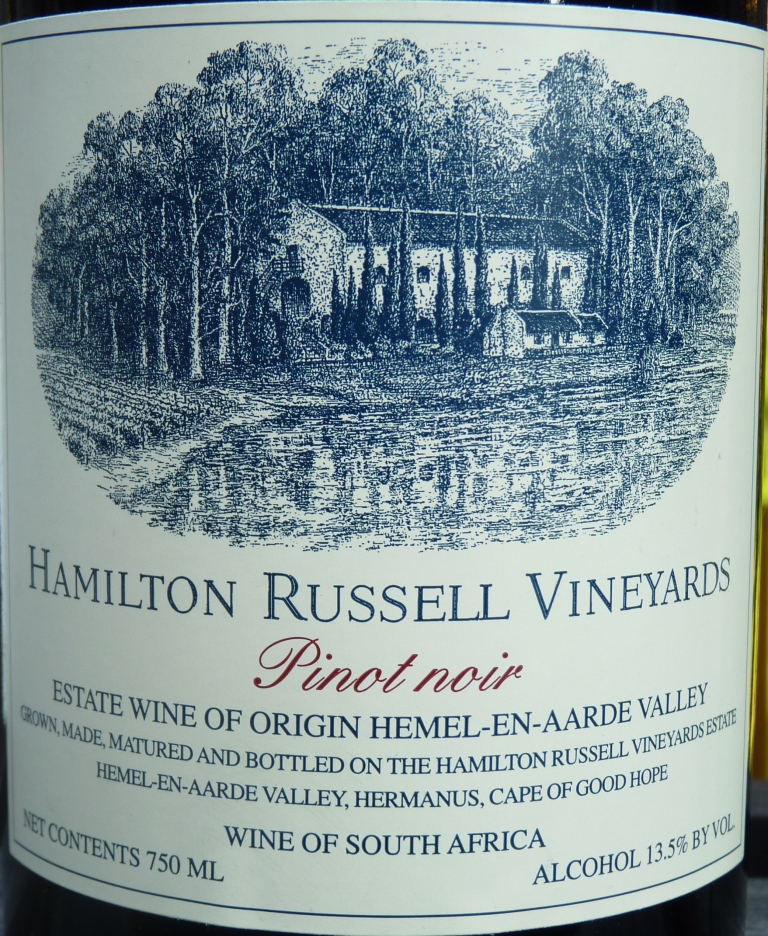
As our tradition goes, let’s open a bottle or two, and let’s talk about the wines. First, 2008 Hamilton Russell Pinot Noir. This wine is simply amazing – very restrained and polished, with beautiful restrained fruit, lots of smokiness and earthiness on the palate. This wine shows off as a classic Burgundy, and only when you look at the label you experience almost a shock – this wine is from South Africa, last place one would expect to produce classy Burgundy (you can read about our blind tasting experience here).
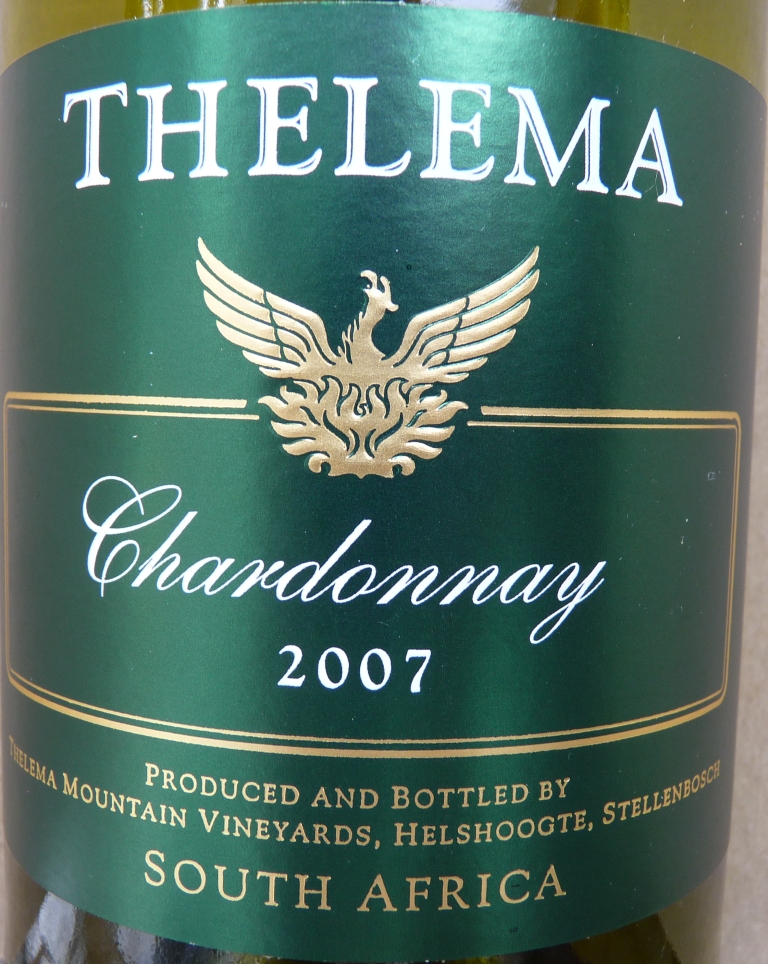
Then comes 2007 Thelema Chardonnay, again, very reminiscent of beloved White Burgundy – restrained, with balanced fruit, hint of butter and vanilla on the palate and good tannins – very elegant.
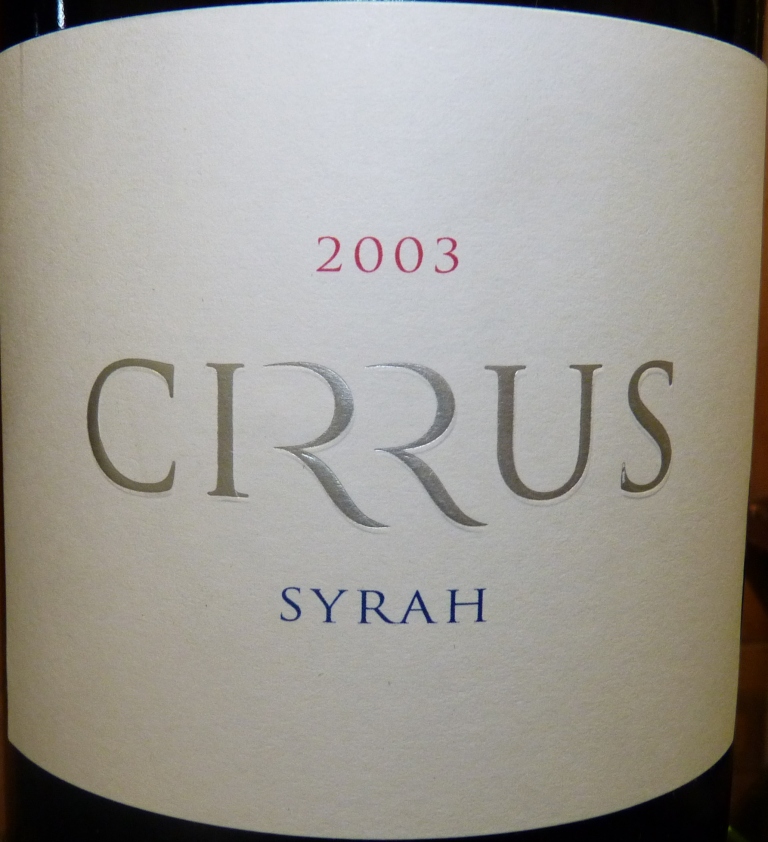 Last I would like to mention 2003 Cirrus wine – a predominantly Shiraz ( 96%) with addition of small amount of Viognier (4%). On the palate, this wine mostly represents liquid smoke, but it really comes alive in a glass, with excellent tannins, toned down fruit and perfect acidity, well balanced.
I don’t know if I manage to convince you in the “secrets” status of South African wines. But if you will think about it, either way you have to find a bottle of South African wine – to either agree or disagree with me. Look for the one we talked about here – and judge it for yourself. Cheers!
Color Me Happy
Why? Very simply, in one word – Anticipation. Anticipation is a big part of enjoying the wine. I can’t speak for everyone, but for me anticipation starts when the bottle is in my hands. Before I can actually hold that bottle, it is just a dream – I can dream of drinking DRC or Screaming Eagle one day, but this will only be a dream, a big “theory”. Once I hold the bottle, the dream is over – in a good sense, as this is when anticipation starts. This is “IT” – now it is practically possible, not theoretically, so now you can start planning that special moment – even if it will take place 10 years from now, but you know that barred all unforeseen circumstances, you will experience that bottle.

Case in point – 2008 Alban Patrina Estate Syrah Edna Valley. Why? Alban was one of the very first wineries in California which started producing “Rhone-style” reds (and I really like Rhone wines). Alban wines are almost impossible to get (it’s being already more than two years since I registered for the waiting list to get on the mailing list) and they are very highly regarded by all those who was able to try them. So now, thanks to the Wade’s Wines, I’m a happy owner of the wine I was dreaming about.
Hello, anticipation. Yes, color me happy! Cheers!
Tasting Spanish Wines – Blind, Of Course
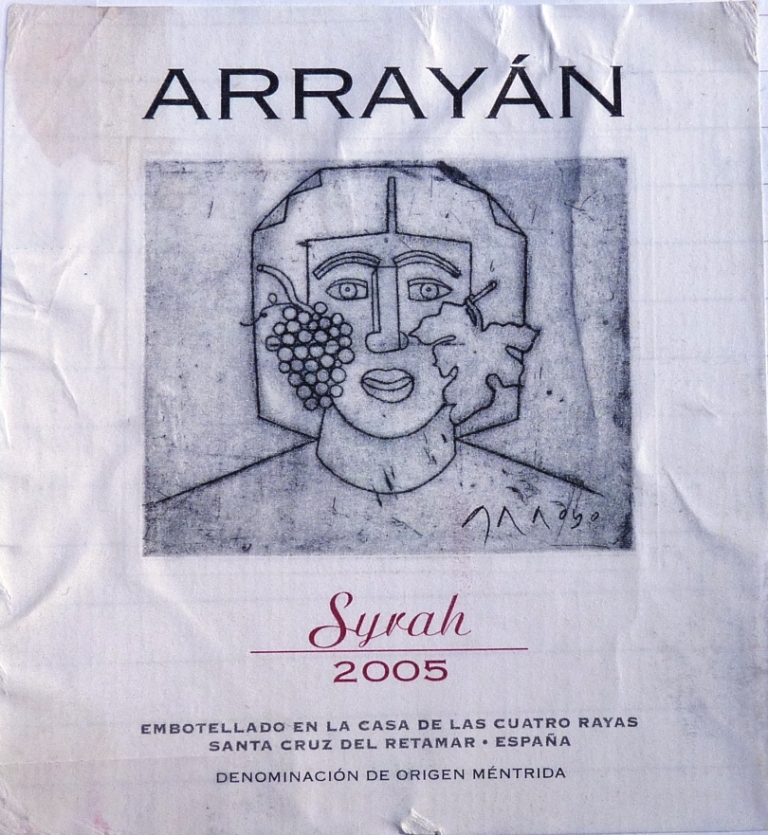 Once again, we got together with the group of friends to play a fun game of blind wine tasting. This time the subject was Spain (in the past we had a lot of fun blind tasting Pinot Noir and Sparkling wines – you can read the posts here and here).
Why Spain? Spanish wines are getting a lot of recognition among wine lovers of all walks. On average, they deliver the best quality for the price (QPR) among most of other wine regions, and in the end end of the day they simply taste great and deliver lots of pleasure. So the theme was set, the bottles wrapped (every participant have to bring a bottle wrapped in paper bag) and opened, and the numbers are randomly assigned to the bottles.
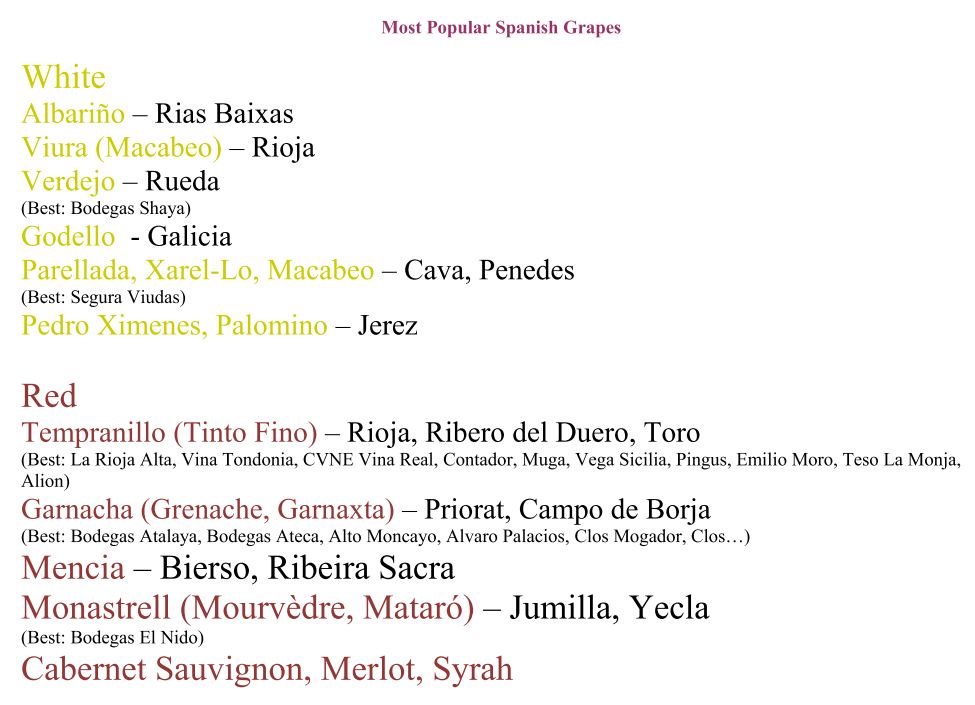
We had total of six wines, all red. The idea would be may be to identify the grape (an added bonus, of course), but mainly to see a consensus as to which wine would be the most favorite of the group – blind tasting has a great leveling effect – you are not intimidated by the price or a label, so you can stay true to your taste buds. Just to set the stage as to what are the most popular Spanish grapes, I prepared the following cheat sheet, which I’m including here in its entirety:
Off we went, so for what it worth, here are my notes as I took them during tasting – no corrections afterwards:
1 brick dust on the nose, good acidity, pepper – tempranillo
2 young wine, good fruit, open – mencia, monastrell?
3 earthy, tame fruit, age, good fruit, dark color, great acidity, pomegranate, smokiness
4 feels like it is corked, but I hope it is not. Fruit at the bottom. Final verdict – corked.
5 beautiful, most balanced, good fruit, plums- Grenache?
6 classic Rioja, cherries, acidity, best of tasting.
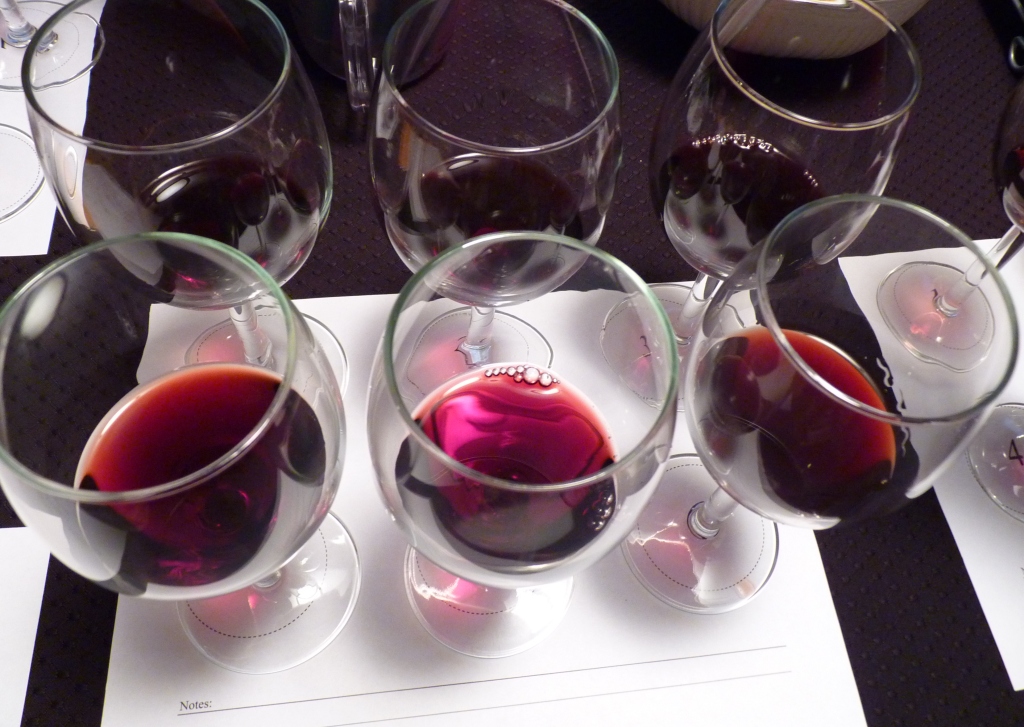
So, reading the descriptions, what do you think those wines are? This is always not an easy guess, as your mind is racing trying to pinpoint taste, texture and any other sensations you are experiencing at the moment against your mental database of the wines you tasted (that database is either resisting and says “nothing found” or goes all the way and says “it is similar to all 10 of these”).
And here are the actual wines:
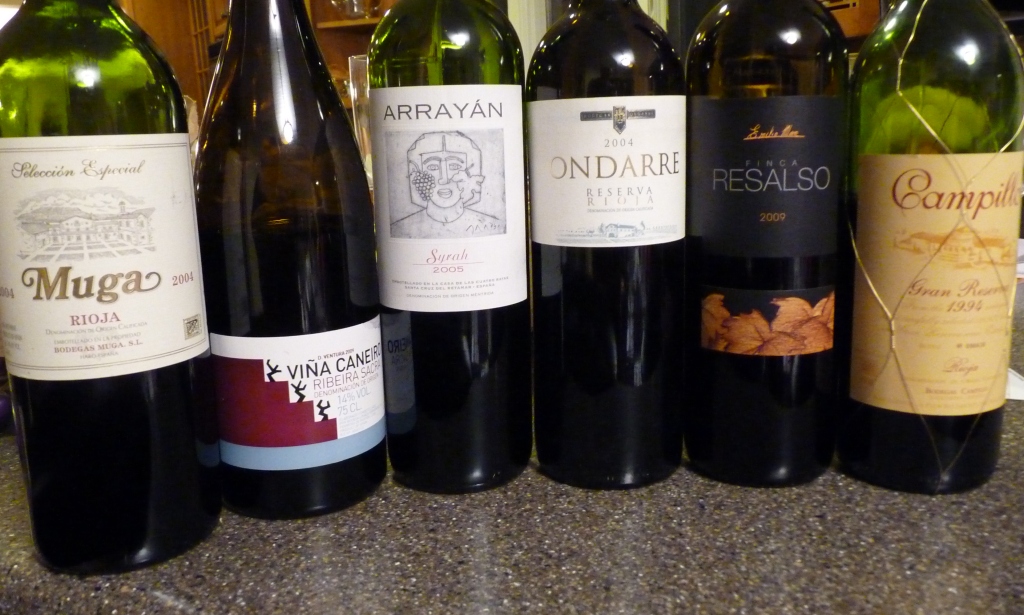
1. 2004 Bodegas Muga Rioja Selection Especiale
2. 2009 D. Ventura Vina Caneiro Ribeira Sacra DO
3. 2005 Arrayan Syrah, Mentrida DO
4. 2004 Bodegas Ondarre Rioja
5. 2009 Emilio Moro Finca Resalso, Ribero del Duero
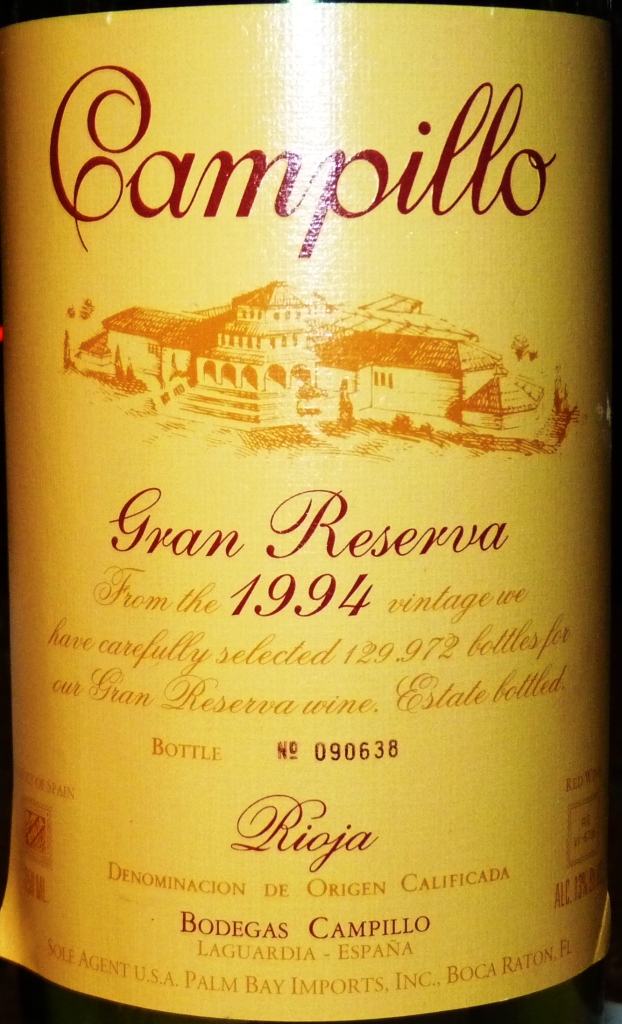
6. 1994 Campillo Rioja Gran Reserva
 Now for the popularity vote, here is how it works. Everybody can vote for up to two wines (but don’t have to). If there will be one wine which will receive a majority of the votes, it will be declared a winner. If two bottles will receive the same number of votes, we would vote again for the one favorite out of the two.
Can you guess which wine won? If you guessed “Bodegas Campillo” (as the very least judging by the label to the left), you are correct. It won by the unanimous vote – everybody liked it. Distant second was Arrayan Syrah (half of the group voted for it). Bodegas Campillo was classic and pure Rioja, with all the clean flavors of cherries and cedar box, great acidity and very fresh, not even a hint of 17 years of age. Arrayan Syrah was probably the most unusual and unexpected wine in the group – beautiful, balanced, and very pleasant to drink. But just to give due respect to all 6 wines we tasted, all except the corked bottle were very good wines, worthy of being in the competition.
If you feel encouraged to try blind tasting on your own, I would suggest to avoid doing it for the whole country. Single region or a single grape (or a stable blend, such as GSM or Bordeaux) would work much better to showcase the range of possibilities. But other than this remark, I think blind tasting is the best way to learn about your wine preferences, to have great experience and to have fun! If you got blind tasting experiences of your own – please share them here! Cheers!
Wine, Aged Beautifully
 Let’s talk about aging. No, that’s not what you think – not people aging and not the world problems with the aging populations. Let’s talk about the aging of the wine. By the way, it appears that second time in the row I’m taking upon the popular subject – in the previous post we were comparing the wine glasses (post can be found here), and now the wine aging.
With all due respect (based on this phrase, my friend Kfir would tell you right away that I’m about to blast something), I completely disagree with the majority of the popular opinion on the subject of wine aging. Open a wine book, read a wine blog, or ask a question on Quora, and for the most part, you will get an answer that 95% of the wines are not supposed to be aged and should be consumed within a year or two from the release date.
Based on my personal experience, I disagree with this viewpoint. I can’t put a percentage or a quantity on it, but I believe that well in excess of half of the wines produced in the world (not by the volume, but by the variety of the actual wines) can age very well for 5 to 10 years – and “age well” means “to improve with age”. My biggest problem with the aging of the wines is … space. If you want to drink aged wine, you either need a lot of space, or you need [typically] lots of money, as most of the aged wines increase in price. If you have a cool and dark area with constant humidity, you can buy wines as they are released. store them and enjoy them later as they evolve and mature. Otherwise, you need to have money and a reputable source of the aged wines (improper storage conditions will ruin any wine in no time). Once you solved your space problem, the rest is easy.
How easy is that? How can we know if that bottle of wine will age well – read: improve with age? There are way too many factors affecting the aging of the wine, and being able to predict age-worthiness of the wine (age-worthiness means that wine will evolve and taste better in the future) is more art than science. As an example, Matt Kramer, one of my favorite wine writers identifies age-worthy wines using characteristic of the mouth-feel, a mid-palate weight of the wine in the mouth. Here is my take on the subject. First, yes, of course, some of the wines are meant to be aged – for instance, Beaujolais Noveau is released in November and should be consumed by May of next year. Outside of the wines which are designated by winemakers as “do not age”, the majority has some aging potential. I believe the biggest dependency here is on the winemaker and what she or he wants to achieve with particular wine – if wine is well made, there is a good chance that it will also age well.
Some wines are helped by their “DNA” – under which I mean from what grape and where in the world the wine is made (of course good/bad year matters too). California Cabernet Sauvignon expected to [typically] reach maturity at around 13 years. Bordeaux easily ages for 30-50 years. Syrah-based wines, whether from Australia or France, can live for 50 years. Many 50-years old Riojas are fresh and vibrant as being just made. But “DNA” alone is not enough – wine should be well made in order to age well.
If you are still reading this post, I guess you might be tired by now by this prolonged escapade into the wine aging, and you might be wondering why, why is all that wine aging might be important? Well, I can’t answer this question. At least not before you will find the wine with a little age on it, which will blow you away. Yes, it is an acquired taste. But once you will actually acquire that “mature wine” taste, this is what you are going to crave, I guarantee you.
 Let me share some recent and exciting discoveries. Let’s start with 1995 Flora Springs Chardonnay Napa Valley. This wine is made out of 100% Chardonnay. While the nose was not very expressive, the level of complexity of this wine is unimaginable. Yes, considering dark golden color, this wine might well be past prime, and without that “acquired taste” for the aged white wine, you might be even upset after the first sip. This wine was exhibiting notes of vanilla which almost moved up to some sort of the almond paste, still showing some acidity. Next are savory notes, almost to the level of saltiness, which was increasing the complexity even further. The wine was in a very stable shape as it tasted the same on the second day as well. Will this wine evolve further? Who knows – but I would be very happy to taste this wine again in five or maybe ten years. Drinkability: 8
The next wine is 1992 Domaine de Thalabert Crozes-Hermitage from France. Crozes-Hermitage wines are made primarily out of Syrah, typically with a very small addition of Marsanne and Rousanne grapes. As we mentioned before, Syrah wines age quite well, and this was an excellent example of the well-aged Syrah wine. This wine was very playful and soft, with lots of red fruit on the nose and on the palate, very good acidity and a good level of tannins. This wine probably will continue evolving for the next five to ten years, and again I will be glad to help you share the bottle later on – if you will have one. Drinkability: 8-
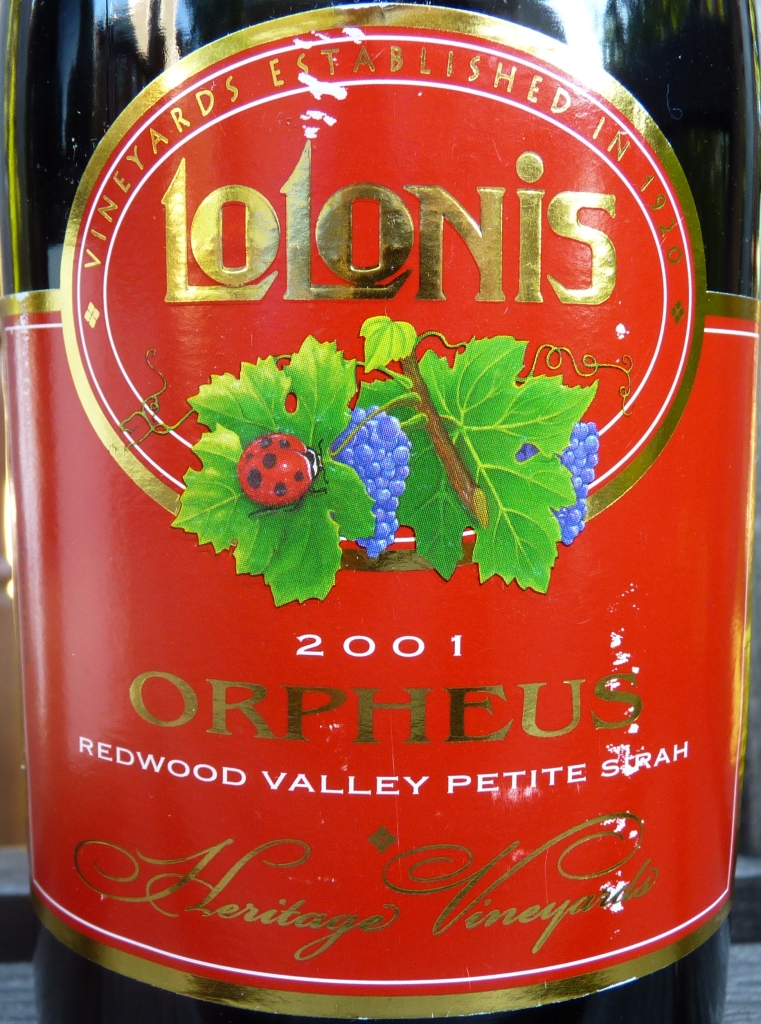 Going back to California, 2001 Lolonis Petite Sirah Redwood Valley. In short – outstanding. This 10 years old wine was completely fresh and beautiful. It is made from organically grown Petite Sirah grape. The wine showed perfect dark fruit, good acidity, full body, excellent tannins, and perfect overall balance. This wine might be evolving for the next 10-20 years – again, the trick will be to find it.
Drinkability: 8+.
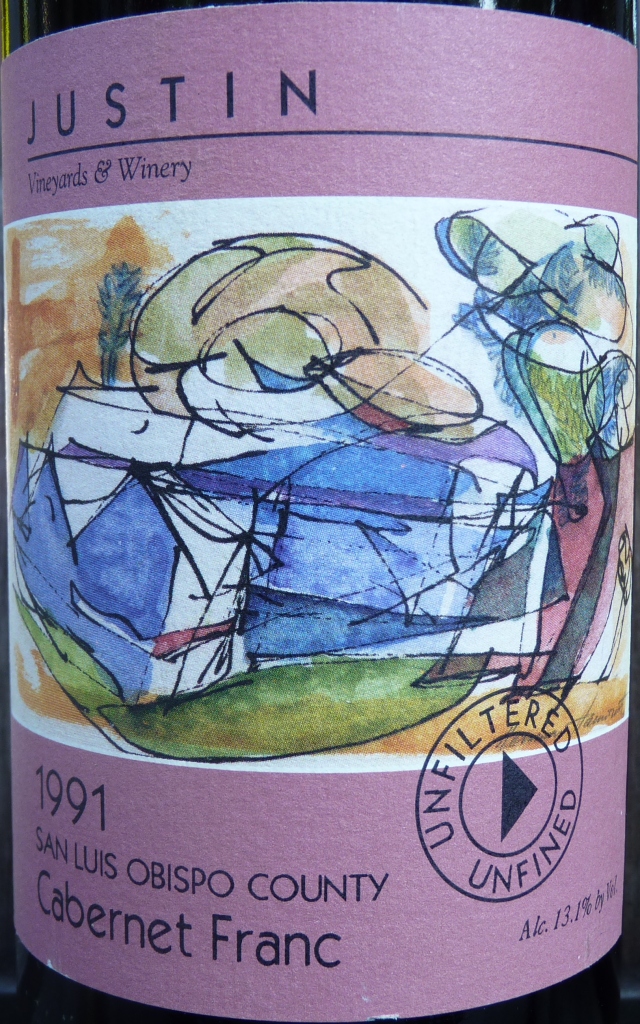
Last, but not least, 1991 Justin Cabernet Franc, San Luis Obispo County. This was the “wow” wine, that exact mind-blowing one. First, while I like Cabernet Franc wines, I had no idea they can age so well. I can literally guarantee that in the blind tasting format, very very few people would be able to guess the age of this wine. Deep garnet color, not a hint of age (no brownish overtones at all). Perfect fresh fruit, soft and luscious, a perfect balance of tannins and acidity. This wine was the oldest in the tasting, and it was definitely the best of tasting. Considering how good it was now, I can’t even guess how much time it has left – but I would be very glad to find a few more bottles to be “wowed” again in the future. Drinkability: 9-
One note before we conclude – this was a rare case of someone doing all the hard work, and me enjoying the results – I got all wines from Benchmark Wine Company and each one of them had been less than $20.
Don’t know if you got the desire to seek well-aged wines – I hope you will one day. For now, I can only wish upon myself, my family, all my friends and all of you, my readers, to age as beautifully as this Justin Cabernet Franc does. Cheers!
Last Bottle Sign Up ($10 credit)




 Talk-A-Vino