Archive
Weekly Wine Quiz #59: Grape Trivia – Zinfandel
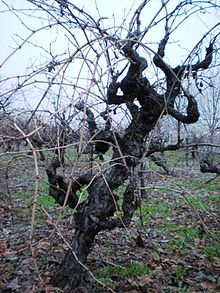
Traditional gnarly look of old Zinfandel vines. Picture from Wikipedia.
And the new weekend is upon us, together with the wine quiz.
We are continuing the grape trivia, and we are continuing exploring the red grapes (let me know if you think it is the time to switch to the whites). Today’s subject is Zinfandel, an American star.
Zinfandel is the black-skinned grape, known as an early ripening variety and capable of accumulating very high levels of sugar – this is one of the reasons why you can often see Zinfandel wines with alcohol by volume levels easily exceeding 15%.
Story of Zinfandel is one of the most fascinating ones compare to many other grapes you can think of – considering the amount of genetic research which went into establishing the origins of Zinfandel, the amount of attention this grape received is pretty mind boggling. After many years of back and force, it is now established that Zinfandel and Primitivo (an Italian grape from Apulia) are two individual clones of Croatian grape called Crljenak Kaštelanski. As The Drunken Cyclist, a regular winner of these quizzes, pointed out in his own quiz a while back, both Zinfandel and Primitivo are considered independent varieties and should be listed as separate varieties on the wine labels of the wines in US.
Another interesting part of the Zinfandel story is that actual powerful and seductive Zinfandel red wines as we know them now, almost became extinct at some point due to the success of sweet and insipid Pink Zinfandel wines (but please pay some respect – Pink Zinfandel still accounts for almost 10% of wine sales in US).
And now, to the quiz! As the subject is very narrow (Zinfandel is not growing all over the world), enlisting Google as your helper is totally fine (not that it was not with any of my quizzes before) – but this is up to you, of course. In any case, even if you can only answer a few questions – please do!
Q1: It was established recently that Zinfandel existed in Croatia under a different name, at least from the 15th century. Do you know what was that name?
Q2: While Zinfandel typically listed on the label, very often some other grapes are added to the blend. Name one grape which can be considered a traditional blending partner of Zinfandel
Q3: White Zinfandel was discovered by accident. Can you explain how that happen, and possibly use the proper winemaking term for the “accident”
Q4: Two California winemakers are largely credited with putting red Zinfandel wines on the wine map. Can you name them?
Q5: Most of the well known Zinfandel producers still make other wines from the different grapes. But there is one winery in California ( at least that I know of), which make nothing but Zinfandel wines. Can you name that winery?
Good luck, enjoy your weekend and cheers!
Wednesday’s Meritage – Wine Quiz Answer, Ageing of California Cabs, Is 0.05 an answer?, and more
Meritage time!
As usual, we are starting with the answer to the wine quiz #58, Grape Trivia – Syrah. In the quiz, you were supposed to answer 5 questions about Syrah, a.k.a. Shiraz.
Q1: Where is Shiraz?
A1: Shiraz is a town in Iran (previously Persia) where supposedly Syrah was originated.
Q2: Which white grape often plays a role of blending companion for Shiraz?
A2: Viognier is often added to both Syrah (Côte-Rôtie) and Shiraz. In many cases you can see Shiraz Viognier written on the labels of Australian wines.
Q3: One of the appellations below can be removed from the list – can you tell which one and why? For the answer to count, “why” explanation is required
A. Cornas, B. Côte-Rôtie, C. Crozes-Hermitage, D. Hermitage, E. Saint-Joseph
A3: Cornas. While Syrah is the only red grape allowed to be used in all of the appellations above, all appellations except Cornas also allow addition of white grapes (Viognier or Marsanne and Roussanne) to the final wine.
Q4: About 100 years ago, Syrah was a popular addition to the wines of one well known region – now this practice is totally illegal by the appellation rules. Do you know what region was that?
A4: Bordeaux. Syrah was a popular addition to Bordeaux wine, providing the structure and flesh. Of course the practice is illegal according to Bordeaux AOC rules, but it is still quite popular in the other regions, such as Australia, where you can often find Cabernet Sauvignon Shiraz wines.
Q5: Where do you think are the oldest in the world continuously producing Syrah vineyards are located? Can you guess the approximate age of the vines?
A5: Australia. It is very difficult to figure out who was first and who was not, as in the wine world, there are always multiple claims to the “first” and “oldest” bragging rights. Based on the information I came across in this forum discussion, the oldest Shiraz vines had being planted in 1846 in the Jacobs Creek area, and Schild Estate is producing the wine called Moorooroo Shiraz from those old vines.
And the winners are… The Drunken Cyclist (I think for 5 times in the row!). He got all 5 questions correctly – great job, Jeff! Very close right behind him (with 4.5 out of 5 points – very close in the area for Shiraz, but named a different country – is Barbie from Blindly Guessing Grapes. If you are not familiar with her blog – check it out, she is constantly challenging herself to taste and learn about different grapes, definitely worth your attention. Honorable mention goes to Red Wine Diva, who correctly answered 3 out of 5 questions. Great job all, enjoy your bragging rights!
And now, to the interesting stuff around the vines and the web!
First I want to mention an interesting post by Steve Heimoff, where he is talking about change in perception of what ageable California Cabernet Sauvignon is, from 1970s to today. Steve’s point is that back in the 70s, to be considered age-worthy, Cabernet was supposed to taste bad on the release – where this is definitely not the point now. Read it for yourself, and as usual, don’t forget to read through the comments section, as it contains a lot of interesting information.
Next subject is currently widely discussed in many alcohol-related blogs – NTSB (National Transportation Safety Board) recently came up with recommendation to lower allowed alcohol blood limit to 0.05 (down from 0.08 which is currently the limit). Both Steve Heimoff and W. Blake Gray wrote blog posts about it, which you can read here and here, advocating the idea that just lowering of the alcohol blood level will not be the solution for DUI-related accidents. They both covered the subject quite well, so I’m not going to repeat all of their arguments – but I recommend that you will read their posts, as in the end of the day, this relates to all of us and our ability to have a glass of wine with the meal in the restaurant.
There is also something else I want you to think about here. My friend Emil sent me a very interesting link tot he blog post titled “Survivorship Bias“. The post is very (very!) long and has nothing to do with wine – it is however a very (very!) worthwhile reading. This post is talking about the fact that when we analyze the problem, we tend to focus on successful outcome only, and we forget to carefully look on all the failed results and dead-end paths (it is impossible to give you a good summary in one sentence, you will be better off reading the post). The connection here? I believe that most of drunk-driving accidents were caused by the people whose blood alcohol level was far exceeding 0.08, forget 0.05. Majority of the people involved into DUI accidents never thought of what the allowed blood alcohol level is – 0.08, 0.05 or whatever, so lowering the limit will only allow to collect more fines and get in the way of more people’s lives – but it is not going to address the problem itself and reduce the number of drunk-driving related accidents. By no means I advocate or promote drunk-driving, this is definitely a serious problem which needs to be solved – but in order to solve this problem, it should be analyzed properly first, and this is what I believe this 0.05 recommendation is lacking.
And this is all I have for you for today. I think you are looking at lots of interesting reading, and if you want to discuss any of this “news”, this is what the comments section is for.
The glass is empty – but refill is on the way. Until the next time – cheers!
Weekly Wine Quiz #58: Grape Trivia – Syrah

Shiraz grapes. Source: Wikipedia
Welcome to the weekend! To start your weekend right, it is the time for our traditional grape and vine exercise.
We are continuing the grape trivia, and today’s subject is … Syrah, or as they call it in Australia, Shiraz.
Syrah is a red grape with thick black skin, capable of producing full-bodied, big and powerful wines. Primary aromas associated with Syrah are usually of blackberry and black pepper, but as the wine ages, it shows a number of very diverse flavors, such as leather, tobacco, chocolate and more. Syrah is known under the name of Shiraz in Australia and South Africa. France, United States (California, Washington, Oregon) and Australia are typically considered to be the source of the best in the world Syrah wines, but Spain, Italy, Chile and Argentina are all producing very interesting Syrah wines as well.
Now, let’s move on to the quiz. As before, the quiz consists of 5 questions, and the answers will be provided next Wednesday.
Q1: Where is Shiraz?
Q2: Which white grape often plays a role of blending companion for Shiraz?
Q3: One of the appellations below can be removed from the list – can you tell which one and why? For the answer to count, “why” explanation is required
A. Cornas
B. Côte-Rôtie
C. Crozes-Hermitage
D. Hermitage
E. Saint-Joseph
Q4: About 100 years ago, Syrah was a popular addition to the wines of one well known region – now this practice is totally illegal by the appellation rules. Do you know what region was that?
Q5: Where do you think are the oldest in the world continuously producing Syrah vineyards are located? Can you guess the approximate age of the vines?
Enjoy your weekend, good luck and cheers!
Wednesday’s Meritage – Wine Quiz Answer, Chardonnay Day, Wine Appellation Earth?, Best Blogging Tips and more
Meritage Time!
 First and foremost, let’s start with the answer to the wine quiz #57, Grape Trivia – Grenache. Below are the questions, now with the answers:
Q1: Name two grapes which are traditional blending partners of Grenache
A1: Yes, we are talking the famous GSM blends, and the blending partners of Grenache are Syrah (Shiraz in Australia) and Mourvèdre (known as Monastrell in Spain and often called Mataro in Australia).
Q2: Below is the list of countries which use Grenache in the winemaking. Sort the list by the area of Grenache plantings, from the highest acreage to the lowest:
A. Australia, B. France, C. Italy, D. Spain, E. United States
A2: The correct answer is France, Spain, Italy, US, Australia (so it will be BDCEA). The culprit here was Italy, in my opinion, there Grenache is known as Cannonau – I didn’t expect that Italy grows so much of it… Here is my source of data – an article at Wine Folly’s web site.
Q3: One winery in US is often credited with spearheading the success of Grenache in US. Can you name that winery?
A3: Tablas Creek winery in California – they imported Grenache cuttings from France to the US in 1990, and it was the beginning of great Grenache wines in US. Here is an excellent article about Grenache on Tablas Creek’s web site.
Q4: A few centuries ago, Grenache was a popular blending addition in one of the regions in France, until it became illegal by the AOC rules. Do you know what region was that?
A4: Actually, it was Burgundy, where addition of Grenache was popular way to add body to otherwise finicky Pinot Noir wines. Of course it is illegal practice for the long time.
Q5: Same as for the number of other grapes, Grenache exists in three different grape variations – Grenache Noir, Grenache Blanc and Grenache Gris. There is one wine where it is absolutely legal to use all three grapes as the part of the blend. Can you name that wine?
A5: Châteauneuf-du-Pape! Well, I should’ve post the question as “type of wine” – but in any case, Châteauneuf-du-Pape (CdP for short) AOC rules allow inclusion of all three different Grenache grapes into the same wine. I always thought that CdP allows 13 grapes to be blended together in production of CdP wines, but it appears that the rules has recently changed, and now there are 18 grapes which are all allowed for use as winemaker desires.
And the winner is…(drum roll)… The Drunken Cyclist with five correct answers! He is definitely on the winning streak for a while and once again he gets unlimited bragging rights. I want also to acknowledge The Winegetter, Red Wine Diva and Eat With Namie who all got 3 out of 5 questions right – definitely a commendable effort.
Now, to the interesting stuff around the web vine – boy, there is plenty to share!
First, sorry for the late notice, but tomorrow is 4th annual Chardonnay Day! Well, Chardonnay is not such a hard wine to get, right? You still got time to make sure you will celebrate in style, whatever your style is – Burgundy, Chablis, Big California, California-pretending-to-be-Chablis, I-am-unoaked-and-almost-like-Pinot-Grigio-chose-me – anyway, any kind of Chardonnay goes. And if you want to officially assert your participation, here is a link to the event page where you can officially join the ranks of Chardonnay aficionados.
Next, I want to bring to your attention an interesting post by Mike Veseth of The Wine Economist fame. The post is titled Is This the Beginning of Juice Box Wine? and it is talking about true globalization of wine in terms of production – one of the new wines from Barefoot called Impression and it is produced from the juice sourced from all over the world, so the wine doesn’t state any appellation on the label. What do you think of such approach to winemaking? Will this be a fluke, or will we see more of the wines from appellation Earth?
As you know, I’m a big fun of Stéphane Gabart’s blog, My French Heaven. I find his food pictures as some of the most incredible I ever come across, in the blogs or on Pinterest. Now Stéphane was very kind to write a blog post called “20 tips for stunning food photography“, which definitely worth your attention if you want to master your food picture taking skills. Also, as this is not the first time I refer to some of the “best tips and practices”, I decided to create a dedicated page for the Best Blogging Tips, where I will be collecting all the references like this one. If you have any suggestions as to what should be included in that “Best Blogging Tips” collection, please let me know – I hope to make it into a very useful resource for all.
Next subject is … beer! Yes, even in the wine blog there is a place for a beer. When you hear about the beer called Nuclear Tactical Penguin – is that the beer you would want to try? Well, okay, I don’t know about you, but I’m definitely interested. But turns out that this beer is practically impossible to get in US, so the best thing one can do is to enjoy it vicariously. This is what I did when I read this post at Wayward Wine blog. Outside of just great description of the beer, you can also learn about Frozen Beer category and how those beers are made – I think this reading will be well worth the time. Also, while looking for another beer from BrewDog company, this one called Sink the Bismark, I came across the list of 10 most expensive beers in the world! Now I want to try BrewDog’s The End Of History (55% ABV and still a beer!), but considering that it costs $765 for 330 ml, I will need a sponsor… anyone?
And last, but not the least subject for today – Wine Blog Awards finalists are finally announced. No, I didn’t make it to the list of finalists (sigh). But I would like to congratulate Jeff a.k.a. The Drunken Cyclist as he got into the finals in the Best Writing category. Anyway, this week is the public voting week, so you can cast your vote for the best blog here.
That’s all I have for you for today, folks. The glass is empty – but more wine is coming. Cheers!
Weekly Wine Quiz #57 – Grape Trivia: Grenache, a.k.a Garnacha

Grenache Noir picture from Wikipedia
And we are continuing the Grape Trivia series – today’s focus is the red grape called Grenache (also known as Garnacha and Garnaxta in Spain).
Grenache is one of the most planted red grape in the world. It is a late ripening variety, which typically produces spicy, juicy, berry-flavored wines with high alcohol content. In the number of regions, such as Priorat in Spain, Châteauneuf-du-Pape in France or California and Washington in US, Grenache produces outstanding single-varietal wines, but more often than not it is used as a blending companion, adding juicy component and structure.
And now, to the quiz!
Q1: Name two grapes which are traditional blending partners of Grenache
Q2: Below is the list of countries which use Grenache in the winemaking. Sort the list by the area of Grenache plantings, from the highest acreage to the lowest:
A. Australia
B. France
C. Italy
D. Spain
E. United States
Q3: One winery in US is often credited with spearheading the success of Grenache in US. Can you name that winery?
Q4: A few centuries ago, Grenache was a popular blending addition in one of the regions in France, until it became illegal by the AOC rules. Do you know what region was that?
Q5: Same as for the number of other grapes, Grenache exists in three different grape variations – Grenache Noir, Grenache Blanc and Grenache Gris. There is one wine where it is absolutely legal to use all three grapes as the part of the blend. Can you name that wine?
Enjoy your weekend, have fun and good luck! Cheers!
Wednesday Meritage – Wine Quiz Answer, Bordeaux 2012, Bottle Variations, Dishcrawl and more
Meritage time!
Let’s start with the answer for Wine Quiz #55, Grape Trivia: Pinot Noir. In the quiz you were supposed to answer five questions about Pinot Noir grape – here are the questions with the answers:
Q1: Can you explain the source and meaning of the grape’s name “Pinot Noir”?
A: Pinot Noir literally translates as “black pine”, due to the grape cluster’s resemblance of the pine cone.
Q2: True or False: Burgundy has the biggest plantings of Pinot Noir in France?
A: False – Champagne has much bigger area planted with Pinot Noir
Q3: Match the wine/producer with its country/region:
| A. Mt. Difficulty | 1. Burgundy |
| B. Evening Land | 2. New Zealand |
| C. Fleury | 3. Champagne |
| D. Hamilton Russell | 4. Oregon |
| E. Clos de Tart | 5. South Africa |
A: A2, B4, C3, D5, E1
Q4: Which major wine-producing country is literally unknown as a Pinot Noir producer?
A: Spain. There are literally no Pinot Noir wines coming out of Spain
Q5: From 1990 to 2010, annual Pinot Noir harvest in California increased approximately:
a. 2 times, b. 3 times, c. 5 times, d. 7 times, e. 9 times
A: According to the information you can find here, production of Pinot Noir went from 32,000 tons in 1990 to 147,732 in 2010 – thus correct answer is C, about 5 times.
Looking at the answers, it seems that everybody had no issues answering first 3 questions, but the last two proved to be more difficult. Nevertheless, we have 2 winners – armchairsommelier and vinoinlove both answered all questions correctly, so they get unlimited bragging rights. Jeff at thedrunkencyclist gets honorable mention with 4 correct Google free answers, as well as RedWineDiva also with 4 correct answers. Well done!
By the way, what do you think the theme of the next quiz will be? I’m going along the lines of major grapes, so what do you think is next?
Now, to the interesting stuff around the grapevine. Let’s start from Bordeaux 2012, or En Primeur 2012 event which recently took place in Bordeaux. This event takes place in the Spring of each year in Bordeaux, and this is the time when Bordeaux wines of previous year are offered for the future sales, and prices for those future sales are set. En Primeur 2012 was different from most of the prior years’ events – first, because Chateau Latour, one of the five famous First Growth producers, stopped participating in this events (from now on, they will only sell their wines when they are actually ready to drink, not the futures). Second interesting element – China’s appetite for Bordeaux is getting smaller, and now prices need to be corrected. Anyway, here is a summary by Jancis Robinson, offering her insight after attending the En Primeur 2012.
Now, I want to bring to your attention an interesting article about… bottle variations. No, I’m not talking about imperfections of the glass – I’m talking about the actual content, the wine, being different from bottle to the bottle. Here is the link – I think it is a very interesting reading.
Do you like beer? Yes, of course it is okay to like beer even if you are a wine lover. So if you like beer, here is an interesting site for you – BrewGene. It is both a web site and an app, which will allow you to find information on the beer, see what the others think about it, get recommendations for similar beers and more – I think this is pretty cool, so check it out.
Last but not least, a couple of food events – sorry, they are really only local events, but I want to mention them in any case. Dishcrawl, which I mentioned in my previous Meritage post, just announced a new event on June 11th, which will be taking place in Old Greenwich, Connecticut. As of the time of this writing, there were still 17 tickets available – if you are local in the area, or plan to visit around June 11th date – don’t miss out. Here is the link to the web site for you.
Another food related event is Taste of Westport, which will take place on May 2nd from 6 pm to 9 pm. Here is the link with lots of information about the event, all coming from OmNomCT blog which is a priceless source of information about all things food and drink in CT – if you live in Connecticut or in a close proximity, and you are not following this blog, you have to correct this mistake immediately.
And that’s about all I have for you, folks. The glass is empty. Until the next time – cheers!
Wine. That. Transforms.
If you followed this blog for a while, you know that I have a tendency to get excited around wines. May be “overly excited” is even better way to put it. Especially when I come across the wines which wow. Like this time.


Field Recordings wines are no strangers in this blog (2010 Fiction by Field Recordings was my 2011 wine of the year). Produced by Andrew Jones, grape-grower-turned-wine-maker, these wines are his personal accounts of people and places – every label on his wines will tell you where exactly the grapes came from, and who grew them – you can see an example above. And his wines have tremendous personality associated with them. What these wines do the best – they don’t leave you indifferent. Like this 2010 Field Recordings Petite Sirah Crockett Hill Vineyard Santa Ynez Valley (15.9% ABV, $22).
The very first smell of this wine just takes you away. Away from the day that passed. Away from all the little things which (of course you knew it), in essence, are not important at all. It is clean. It is powerful, It is beautiful. You can imagine any happy picture you want – the smell will support and carry it. Yes, it is pure fruit forward California wine – but it presents itself in such a bright and uplifting fashion, that this might be the way to spell “happiness” with wine.
The wine appears almost black in the glass. It is dense, it is concentrated, it is powerful. Blueberries, blueberry jam and blueberry pie all together – but without sweetness, all in very balanced, round form. You can have food with this wine – but what you really want is just this wine by itself. From the smell, the happiness continues in the glass.
Then your glass becomes empty. But you sit there, still smiling. Still carried away. To the happy place.
Is this an overly emotional account? You bet. But I invite you to find this wine and experience happy journey in the glass. Of course your personal happy wine might be different. I hope you will discover it. And I will drink to that. Cheers!
Weekly Wine Quiz #55 – Grape Trivia: Pinot Noir
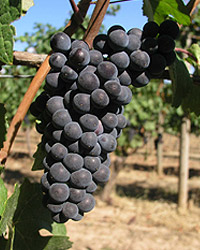
Image source: Wikipedia
And the time has come for the new wine quiz. Continuing with our Grape Trivia theme, the new quiz is about Pinot Noir.
Pinot Noir. The grape behind some of the most expensive and thought after wines in the world. Almost never blended with other grapes. A major weapon in the hands of ABC oenophiles (Anything But Cabernet). At the same time, one of the most finicky, difficult to deal with grapes. To produce great wines, Pinot Noir requires ideal growing conditions. It is genetically unstable, and can easily mutate in the vineyard, producing grapes which look nothing like their parents. It can also “throw a fit” during fermentation and take the process out of control. But – all of it worth the “goodness in the bottle”, so today there is no shortage of great Pinot Noir wines coming in from all over the world.
Pinot Noir is one of the oldest known Vitis Vinifera grapes, specifically grown to be used in winemaking, with historical references going all the way back to the 4th century in Burgundy, France. Today Pinot Noir is growing literally in every winemaking country in the world, with the wines taking on wide range of expressions depending on the location’s climate and soil. Taste profile of Pinot Noir often includes lighter red fruits and berries – cranberries, strawberries, tart cherries, with hint of smokiness and mushrooms (earthiness).
Now, to the quiz!
Q1: Can you explain the source and meaning of the grape’s name “Pinot Noir”?
Q2: True or False: Burgundy has the biggest plantings of Pinot Noir in France?
Q3: Match the wine/producer with its country/region:
| A. Mt. Difficulty | 1. Burgundy |
| B. Evening Land | 2. New Zealand |
| C. Fleury | 3. Champagne |
| D. Hamilton Russell | 4. Oregon |
| E. Clos de Tart | 5. South Africa |
Q4: Which major wine-producing country is literally unknown as a Pinot Noir producer?
Q5: From 1990 to 2010, annual Pinot Noir harvest in California increased approximately:
a. 2 times
b. 3 times
c. 5 times
d. 7 times
e. 9 times
Have fun, good luck and enjoy your weekend. Cheers!
Daily Glass: Wine Happenings – Georgian Wines, New French Discoveries, Australia Grand Experience and more
Every week (or almost every week) I think that I should start writing a summary post similar to what Jeff at therunkenccyclist does so well – once a week he produces a summary of the wines he had during the past week (here is an example of his recent post), which I think is a great way to round up your experiences.
My “Daily Glass” designation was supposed to be [almost] a daily summary for me, but as you know, things don’t always work in life as we think they should. Nevertheless, the week which is ending today was very “wine eventful” hence I’m sharing those wine happenings with you.
Let me start from 2005 Domaine Lafage El Maset Cotes du Roussillon. I got it at Last Bottle Wines during their last “madness” sale. At $8, you really have nothing to lose, right? Wine arrived about 3 weeks ago, looking good – inviting label, heavy bottle, good punt at the bottom – overall looks quite solid. Before opened the bottle, I went to look for information online – and I didn’t find much except a number of notes on Cellar Tracker, all looking very peculiar. Looks like people had very sporadic luck with this wine, with only one bottle out of three being drinkable, and another claim of one out of 10 (!).
First thing I didn’t like when opened the bottle was the cork. You see, I love real corks (yes, I had my share of corked wines – but this is not the subject of this post). I’m completely okay with screwtops – I would be surprised to see a screwtop on the bottle of DRC, but in general, I get it – and it makes it easier to open a bottle, especially when you travel. But the type of corks I have a problem with are plastic and synthetic corks. They are hard to pull out, and just look very artificial – they just don’t belong to the wine world, in my opinion. Besides, somehow I think that they have the worst impact on aging ability of the wine .


This wine was closed with red plastic cork ( you can see it in the picture). Okay, moving along. It is 8 years old wine, how about pop and pour? Pour, swirl, sip – ouch! The feeling of biting into a freshly cut tree brunch. Bitterrrr! My wife had her taste, put the glass down, and politely said “I think it should breath a little first”. Okay, got a decanter, pour half of the bottle in. By the way, the interesting fact is that after that first bitter sip, the wine stayed in my mouth with a very long and rather pleasant (!) finish – probably for the next 10+ minutes. Two and the half hours later… I wish I can tell you the wine magically transformed – no, it became only somewhat better. Dark fruit appeared, tannins became mellower, but the wine was not together – there was no harmony there.
We finished the bottle next day, and it still didn’t improve much more – may be it needed more time? I’m not sure, but I have one more bottle, which I plan to give a little time – will see what will happen. But I also have to tell you that I had one of the most surprising pairings with this wine – as you can guess from the picture, this wine paired excellently (I’m serious) with … cherry preserve! They were literally meant for each other – take a spoon of cherry preserve, sip of this wine – perfect! I never thought of wine and preserve together before – may be I should try it more often? This wine will stay unrated for now, as it is very hard to put a handle on this experience.
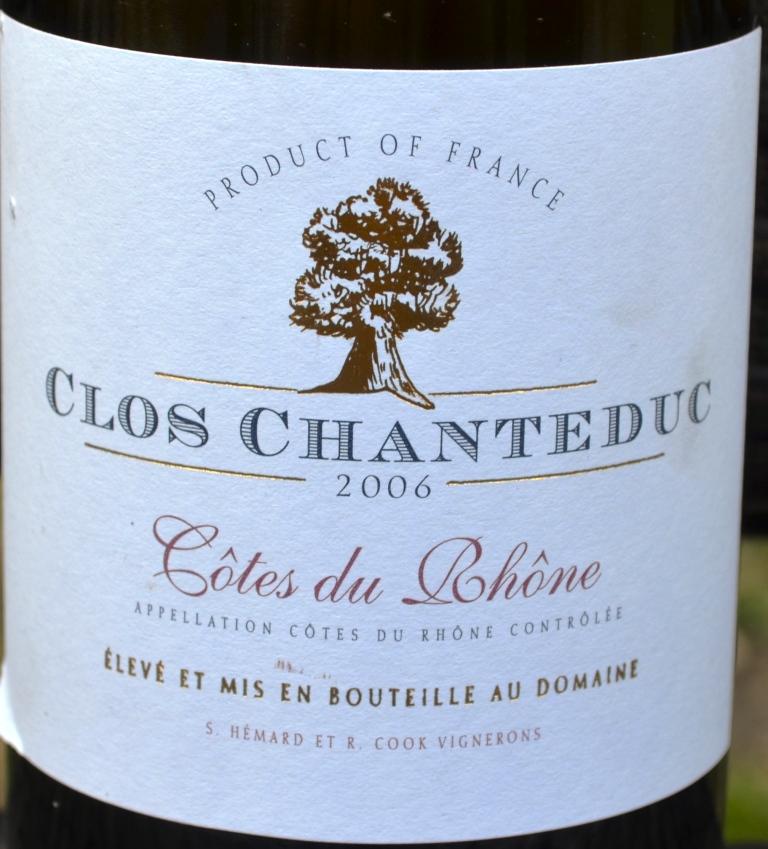 Next wine was also sourced from the Last Bottles – 2006 Clos Chanteduc Cotes Du Rhone. I was unable to find good information on this 2006 vintage, current available vintage of this wine is 2010, but I would assume that the composition stayed about the same, so it should be Grenache/Syrah blend (2/3 Grenache, 1/3 Syrah), a classic Rhone blend. The wine is associated with Patricia Wells, a well known chef living in France. While looking for information about this wine, I found an interesting post about 2009 version in the blog called Wayward Wine – here is a link for you, it is a good reading. Getting back to this 2006 wine, it was rather a typical Cote du Rhone – soft, supple, good mid-palate of plums and cherries – but may be too soft and too supple, it was missing a wow factor. Drinkability: 7.
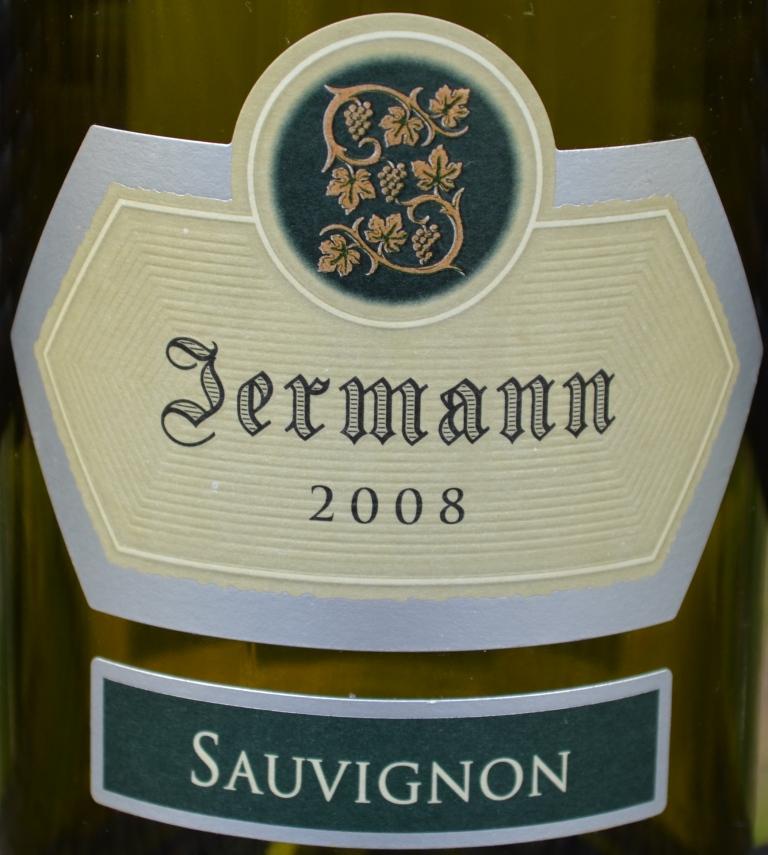 The next wine I want to mention is 2008 Jermann Sauvignon Blanc Venezia Giulia IGT. Jermann is one of my all time favorite Italian producers – I don’t think I tasted any wines I didn’t like from Jermann. This Sauvignon Blanc was closed with screwtop, and the wine is 5 years old – but it came out clean and round on the palate, with perfect amount of white fruit, some herbal notes, perfect minerality and acidity – very enjoyable by itself and with the food. Drinkability: 8-
Now, let’s get to the subject of this post and talk about Georgian and new French wines I discovered. Last Friday I stopped at the tasting at Fairway Market in Stamford, where Michael from importing company called Corus was presenting new Georgina wines. There were four wines included in the tasting, three of them definitely standouts.


2012 Marani Mtsavane is made out of 100% of indigenous Mtsvane grape – very dry, more reminiscent of Muscadet than anything else, with cutting acidity. Will be perfectly refreshing wine for the summer day, also will be very appropriate every time you will decide to serve oysters. Drinkability: 7+
2005 Wine Man Mukuzani – this wine is made out of 100% Saperavi grapes, also grown in one single place – village of Mukuzani. This wine is made by David Maisuradze, who makes amazing wines – here is my post mentioning couple of his wines I tasted before. When I took a first sip, my first thought was about dramatic difference this wine had with the 2005 El Maset I just had a few days ago (both wines are from 2005) – silky smooth, perfect dark fruit, cherries, blackberries, round tannins and balancing acidity – overall, a wine of perfect harmony. Drinkability: 8
2009 Wine Man Kinzmarauli – Kindzmarauli is one of the most famous Georgian wines. Because it was so famous before, you can’t even imagine the amount of fake insipid concoction which arrived to US about 10-15 years ago, knowing that Russian ex-patriots will buy anything under that name. When people realized that they had been doped, the wine lost its appeal and now have to slowly work up its reputation. Kindzmarauli is also made out of 100% Saperavi grapes, but it is semi-sweet. The fake Kindzmarauli wines had nothing but the sugar in them. When you taste this 2009 Kindzmarauli, you actually first get the perfect dry grape underpinning, and then the residual sweetness comes in. Excellent wine to serve with cheese – I think it might even beat Port when served next to Stilton. Drinkability: 8-
Now, for my French discovery – it might not be a discovery for you, but it is a new line of wines which are just being imported to Connecticut. The wines are made by Domaine Laroque in the area called Cité de Carcassonne, a part of Langueoc-Rossillion (Cité de Carcassonne has a status of IGP).


2012 Domaine Laroque Sauvignon Blanc Cite de Carcassonne – in a blind tasting, I would definitely say that this is a restrained version of New Zealand Sauvignon Blanc. Perfectly bright, with hint of grapefruit and lemon zest, refreshing, uplifting – make sure you have enough on hand for your summer entertainment – or you will deal with some upset guests. Drinkability: 8-
2012 Domaine Laroque Rose de Cabernet Cite de Carcassonne – nice, clean Rose, good amount of strawberries, good acidity. Drinkability: 7
2011 Domaine Laroque Cabernet Franc Cite de Carcassonne – this was a “wow” wine. Cabernet Franc is one of my favorite single-grape wines, which are so hard to find. This is two notches up most of the Loire stuff – I guess it is much closer to the best of Bordeaux and Calidornia – prefect dense red fruit, good minerality and herbs, firm structure, supple tannins and overall very balanced. This is what I call a “dangerous wine” – once you start drinking it, it is almost impossible to stop. Drinkability: 8
Are you tired of me yet? Okay, good – I have two more wines to tell you about.
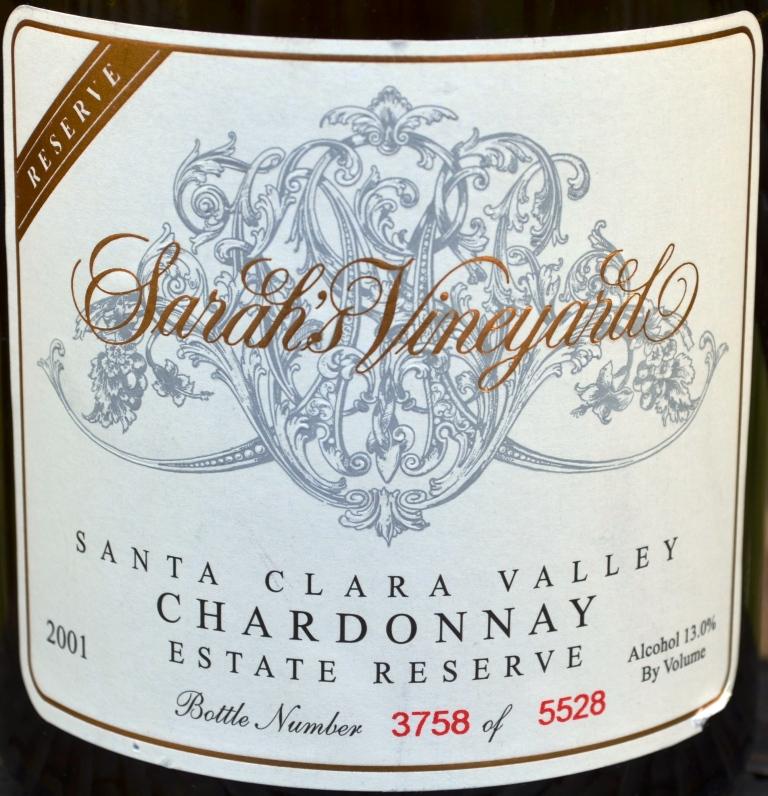 2001 Sarah’s Vineyard Chardonnay Estate Reserve Santa Clara Valley – I got it as Bin Ends in Massachusetts last year. The unfortunate part – this wine was past prime. Well, it was more like a nice sherry – dark yellow color, nicely oxidized. I was able to finish the bottle, but this was not an amazing experience by all means. Mostly you could taste almonds, and that was about all you could find on the palate. I will not rate this wine as it would be simply not fair.
Last, but not least at all – an amazing Aussie experience.
1999 Grant Burge Shadrach Cabernet Sauvignon South Australia – from the very first smell, the expectation was that a “wow” wine is ahead. Perfect dark fruit on the nose, a whiff of chocolate. And the very first sip confirmed that “wow” – blackberries, cherries and cassis, dark chocolate, cocoa, eucalyptus, touch of roasted flavors, perfectly firm and structured. Pronounced acidity, supporting tannins – all perfectly balanced. This was an outstanding glass of wine (it was my one and only bottle, sigh). By the way, you should read an interesting story behind the name of this wine – I don’t want to retype it, hence the picture of the back label below.Drinkability: 8+


That’s all I have for you for today. What was your best wine experience of the week? Have a great week ahead and cheers!
Weekly Wine Quiz #54 – Grapes Trivia: Merlot
 Here comes our next quiz in the Grape Trivia series. Today’s subject – Merlot.
Merlot is one of the most popular grapes in the world, used both for blending and single-varietal wines. Merlot has thin dark blue colored skin, and its taste profile typically includes plums, blackberries, chocolate and tobacco notes. As it is often compared with Cabernet Sauvignon, one of its most popular blending companions, Merlot ripens earlier than Cabernet Sauvignon, has higher sugar content and lesser level of tannins. While France has the biggest plantings of Merlot in the world, Merlot is universally grown in literally every wine producing country – great Merlot wines are produced in Australia, New Zealand, Italy, California, Washington, Long Island, Spain, Chile, Argentina and many other places.
Done with basic facts – let’s proceed with our quiz now, shall we?
Q1: Merlot was named after a:
A. town
B. person
C. bird
D. song
Q2: Name the movie where Merlot was dissed on uncountable number of occasions
Q3: One of the grapes from the list below was assumed to be a Merlot – but it was not. Do you know which grape was mistaken for the Merlot? Bonus question – name the country where confusion took place.
A. Mourvèdre
B. Carignan
C. Carménère
D. Cinsault
Q4: Some place, some time ago, Merlot successfully crossed (by accident) with Cabernet grape, and formed a new grape which produces pretty unique wines. Can you name that grape?
Q5: Chateau Petrus in Pomerol, France makes some of the very best (and most expensive) wines in the world, and those wines are 100% Merlot. Then there is another 100% Merlot wine, made in another country, which is considered a successful competition to Petrus and done very well against it in a number of blind tastings. Can you name that wine?
Have fun, good luck and enjoy your weekend! Cheers!
Last Bottle Sign Up ($10 credit)




 Talk-A-Vino