Archive
Tasting Wines of Sierra Cantabria and Teso La Monja
 As you know by now, PJ Wine is one of my favorite wine stores (you can find some of my impressions here). It is not just due to the great selection of wines, with Rioja being a superstar. It is also based on the fact that PJ Wine is a great source of education and experience (double-winner – education is free most of the time). Store runs great seminar program, where (if you are fast enough to get on the list) you can experience many great wines of the world.
Few weeks ago, I was lucky enough to be able to get into the seminar about wines of Sierra Cantabria and Teso La Monja (the event was sold out in a matter of hours). Both Sierra Cantabria and Teso La Monja wines are produced by Eguren family (you can find complete information here), and of course you already figured out that both are produced in Spain.
Sierra Cantabria wines come from Rioja. In addition to producing full line up of traditional Rioja wines ( Crianza/Reserva/Gran Reserva), of course made out of Tempranillo ( for more information about Rioja wines you can click here), Sierra Cantabria also produced the series called Collection Privada, with each wine being made only in exceptional years. Currently, it includes wines made in 1996 ( first ever vintage for Sierra Cantabria), 1999 and 2000. Tasting the Collection Privada wines, the first one from 1996 was very nice, with good bouquet of spices, acidic and bright. There were only 300 cases produced in 1996, so this wine is not easy to find. While 1996 was drinking well already, both 1999 and 2000 were simply not ready and needed more time in the cellar. These wines are produced from 55-60 years old vines, and made with the focus on quality, not quantity.
 Second group of wines presented at the seminar were also made by the same Eguren family, but come from another region in Spain called Toro. Teso la Monja is the latest project for the winemaker Marcos Eguren. Toro wines are made out of the grape called Tinta de Toro. If you would look in Wikipedia, you would see that Toro is designated as another name for Tempranillo. In reality, it is actually a clone of the Tempranillo grape, which has it’s own characteristics and is different from Tempranillo itself – same as famous Brunello, made out of Sangiovese Grosso grapes, tastes totally different from regular Sangiovese-based wines, Chianti.
Three wines from Teso la Monja had being represented in the tasting. First was 2007 Teso La Monja Almirez Toro – the wine had nice balance and lots of dark fruit – blackberries, black currant and spicy oak. Next wine was 2007 Teso la Monja Victorino Toro – beautiful, round with plums and blackberries, showing nice minerality. This wine is produced from 65+ year old vines and aged for about 18 month in oak.
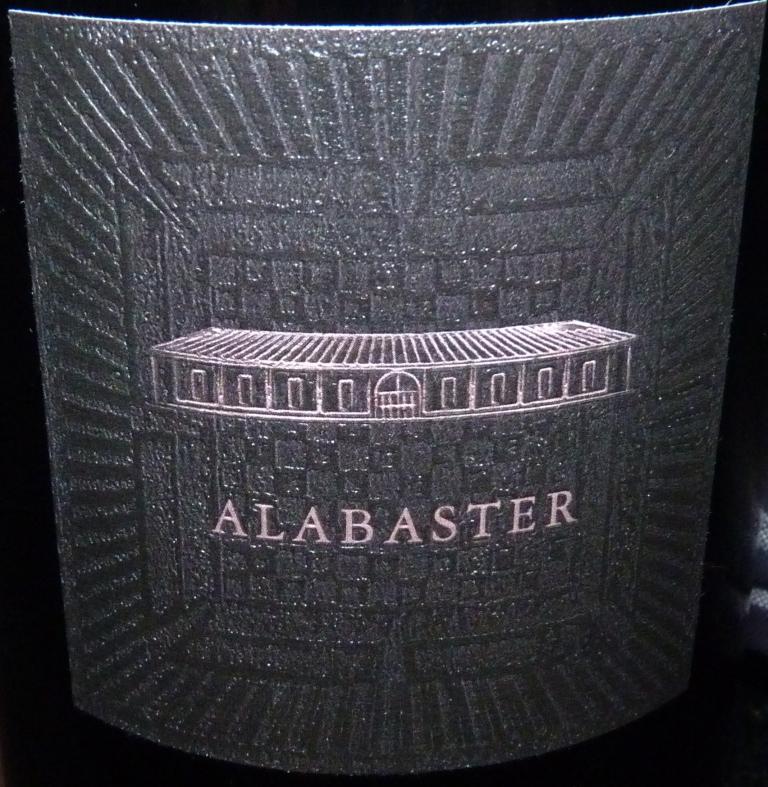
Last but not least in the tasting was 2007 Teso la Monja Alabaster Toro. This wine was simply outstanding. Very dense, very big , with lots of fruit and in the need of time. Just to give you an example of care which goes into the making of this wine – the grapes are de-stemmed by hand, and then pressed with the feet. This wine definitely needs time before it will show off in its true beauty. The only challenge with this wine is related to the fact that at $156, it is not a bargain, and essentially QPR is becoming more of an issue, at least for me. Of course, if we will compare Alabaster with El Nido or Vega Sicilia wines, QPR might be on par – nevertheless, I think some time is needed before Alabaster has enough recognition to demand such a price.
All in all, it was a great experience with 6 exciting wines and lots of information – and I can’t thank folks from PJ Wine enough for continuing bringing great events to the wine lovers. And while on the subject of great experience, I can’t help to note that PJ Wine is organizing Spanish Wine Festival, which will take place on Friday, June 17th at 6 PM in Metropolitan Pavilion, 123 West 18th Street in New York City (please click here for more information). This event is not free, but for $99.99 I think it constitutes a great value – you will be able to experience wines of Vega Sicilia (keep in mind that typical bottle of Vega Sicilia costs in excess of $400, plus, it is very difficult to find), El Nido, La Rioja Alta, Clos Mogador and hundreds of others. The Festival will also include food from many good places in New York. I believe Spanish Wine Festival is a great value and shouldn’t be missed.
And as this was the post about Spanish wines, I think we need to finish it appropriately: Salud!
About Coffee, Plus Some Updates
Why coffee? 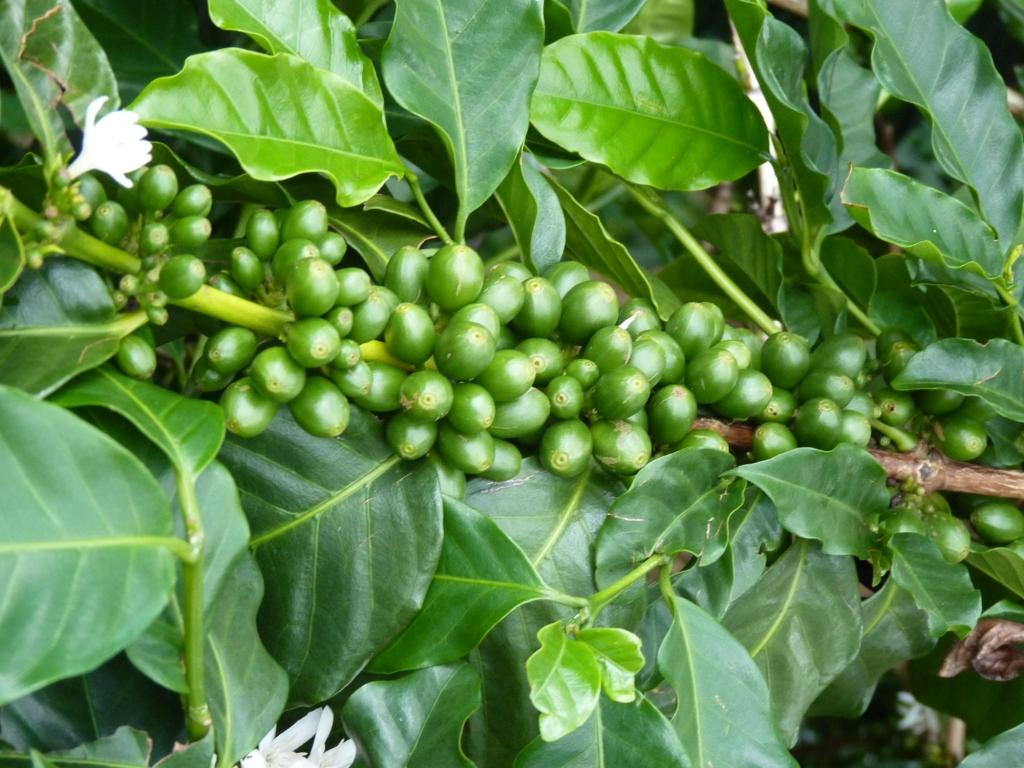 First, this is the answer to the last “What is it” post – it is actually Kona coffee berries (picture taken at Greenwell Farms in Kona, Hawaii). The reason to chose that picture was simple – I was fascinated by a number of similarities in coffee production and wine making – in both cases I’m talking about very good coffee ( Kona is one of the best coffee types in the world) and very good wines. Coffee berries are picked by hand, and also they are picked selectively – only individual ripe berries are taken from the bunch, and the rest is left to ripen. Coffee beans have their skin removed (sounds familiar?), and then they are left to dry under the sun (same as the grapes used for production of Amarone, one of my favorite wines). Once the coffee beans are dried and cleaned, they are left to rest for at least a month or two, before they will be roasted – and this is the step which is enforced by the years of experience and tradition, and nobody asks for explanations – this have to be done just because it has to be done. Again, the same element of mystery and tradition as in production of a good wine. And last, but not least – complexities of the final beverage. Good coffee, similar to the good wine, has layered complexity and brings a lot of pleasure. Anyway, I will look for more obvious picture for the next “what is it ” game.
Now, let’s talk about updates. First, the Treble certificate from the Wine Century Club has finally arrived! Not that I want to brag, but let me share the picture with you:
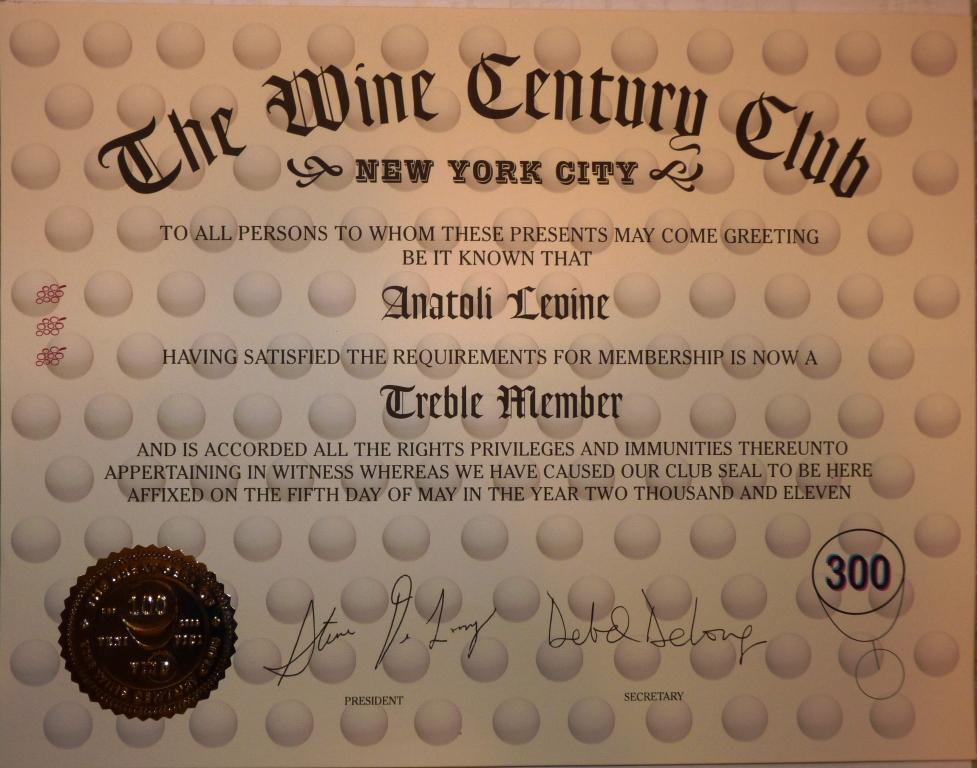
‘nuf said – getting to the Quattro level will not be too easy, so don’t expect to see a picture of another certificate any time soon.
Lastly, I’m continuing writing posts for The Art of Life Magazine. Last two posts were in “Forgotten Vines” series, talking about Jerez (Sherry) and Madeira, both wines are hard to find, but worth seeking – you can find posts here and here.
That’s all for now, folks. Cheers!
Expectations…


Three Strikes and … In!
 Very interesting wine ordering experience during the last dinner at The Capital Grille in Paramus, New Jersey. The Capital Grille restaurant itself needs no introduction, of course – whether you like steak or not, every visit there is a dining experience (you can find my previous excited post here). I have to also acknowledge that part of our great experience during this visit was our waiter, Andre – his service was absolutely impeccable.
Ok, so let’s talk about ordering wine. Wine List at the Capital Grille is quite extensive, plus I’m very particular when it comes to wine ( who would’ve thought?) – and one of the things I’m always looking for for is QPR – I want to find the bottle which will taste good, and will have reasonable cost (have a real problem with paying triple-retail in a restaurant). So after 10 minutes of intense reading I finally decided on Ladera Napa Valley Cabernet Sauvignon 2006 – I like the wine very much (you can find one of the previous posts here), besides, at $58 it is less than double retail – makes me very happy. So I ask for the bottle of Ladera 2006, Andre comes back in a few minutes to inform us that they out of Ladera 2006. He start offering 2007 Cabernets – and of course, 2007 Napa valley Cabernets are lauded all over wine press, however, my experience with 2007s is less than stellar – a lot of them simply not ready yet (do I dare to say that they might be just not?). So I refuse his advice, and ask for Central Otago Pinot Noir, Amisfield 2006 – it is outside of QPR comfort zone at $69, but at least I know it is a good wine. Andrea comes back to inform us that they are out of that wine as well. No problems, I was almost ready for that (a bit surprising – two out), so my next choice was Ernesto Catena Locura 2006 blend from Argentina – I didn’t have that before, but at about $55 it was an interesting wine to try. Well, time to ask questions. Do you think we got that wine?
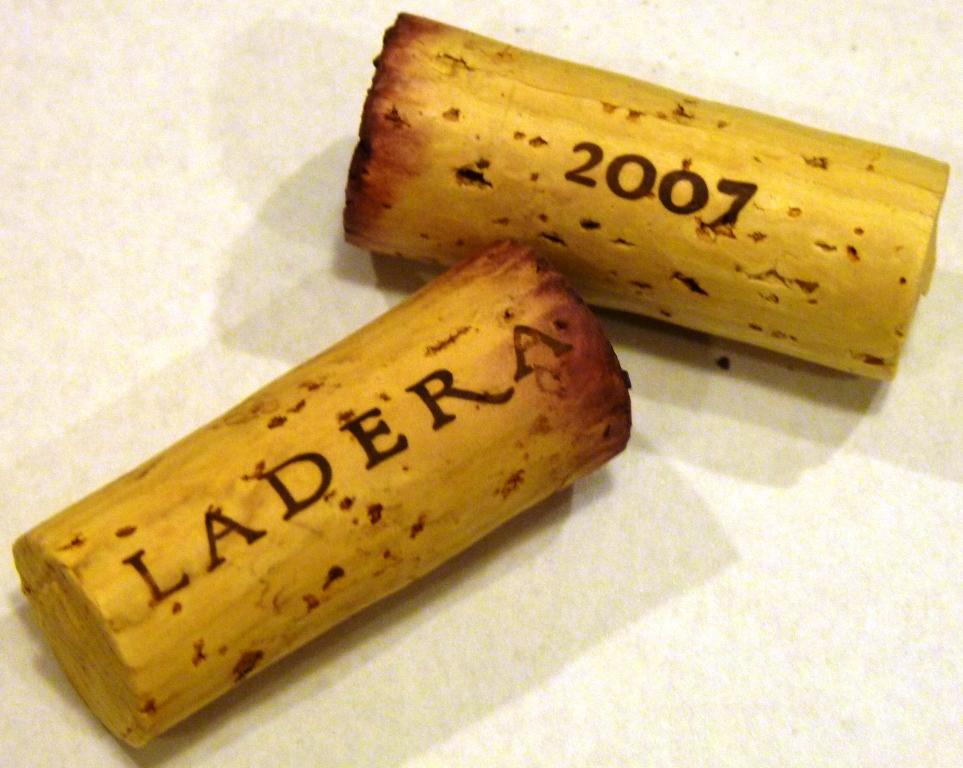 This time Andrea didn’t even show up. Instead, we were approached by the Sommelier (unfortunately we didn’t catch her name) with the bottle of Ladera 2007 in her hand. So we manage to ask for 3 wines from the wine list, which were not available! Of course it happens that the restaurant doesn’t have the wine you ask for, but 3 of them? Wow, we were impressed with our wine picking ability.
Anyway, after Sommelier assured us that she tried that Ladera 2007 and liked it very much, and moreover, if we don’t like the wine we can send it back – we decided to give a try. Oh boy, that happened to be a very good decision, as the wine was beautiful. Soft layered black and red fruit, just right amount of silky tannins, all perfectly balanced with acidity – that was a perfect wine for our dinner, and I would highly recommend this wine to anyone – it is ready to drink now, but as they say, the California Cabernet need about 13 years to shine – it will be interesting to put a few bottles in the cellar and enjoy them later.
So I’m glad to say that this story has a happy end (sometimes restaurant experience can be quite different). Also, if I can give you an advice, for the actual happy ending of the dinner (meaning: desert), try the Cheesecake – it is literally the heaven on earth, and I have to commend Andre for his recommendation – it is the best desert in the house. Until the next time – wishing you all great restaurant experience. Cheers!
Great [Accidental] Experience: Chateau Leoville Poyferre
 I recently mentioned that I started to write a series of posts for The Art Of Life Magazine. Currently, the series is covering Best Hidden Secrets of the Wine World, and last post was dedicated to the second labels. As the whole notion of the second labels was originated in France, of course my intent was to talk about one of the “second label” wines from Bordeaux.
I decided to go with Chateau Leoville Las Cases Clos Du Marquis, which is a second label of Chateau Leoville Las Cases Grand Vin de Leoville. 2005 was available ( and it was a great year), and I ordered (online) the Clos du Marquis for about $50 – of course I would be glad to go with second label of Chateau Latour, but that would ring about $500, which was definitely not budgeted for this exercise.
So I got the wine, it was the right year, and it was Chateau Leoville, so I tasted it for the post. Then I started working on the post, and of course I wanted to mention both first and the second label. This time I used the full name of the wine, Chateau Leoville Poyferre, and when I failed to find it as a second label, I finally understood that something is off! Well, it was a rare case of “off” to my benefit. Actually Chateau Leoville Poyferre which I got instead of Clos De Marquis is a first label (second label for this wine is called Château Moulin Riche), never mind the fact that it costs twice as much as Clos De Marquis was. I ended up getting another, real second label wine for The Art Of life Post, as talking about this wine would not help the goal of the article (La Croix de Beaucaillou was also not bad, as you can read for yourself in that post).
As everything in life has two sides, tasting this wine was also good and bad. The good part was in the fact that this wine, 2005 Chateau Leoville Poyferre from Saint Julien in Medoc, was outstanding. To describe it in the few words, it is muscles and power in a perfect balance. Perfect balance of dark fruit, spices, eucalyptus, tannins and acidity, however all in need of time. This wine needs another 10-12 years to really shine. Don’t get me wrong – it is perfectly enjoyable now – but it begs you to give it time to evolve. I would put drinkability to 9.
Where is the bad part, you ask? The bad part is that at $100 a bottle, it was truly an accidental experience – this is outside of my wine budget, so I will have to hope for another lucky mistake (yeah, fat chance). Oh well, I’m glad I had this experience and I was able to share it with you. Until the next time – cheers!
Tasting The Art of Douglas Laing
 These plastic glasses don’t look much like anything, right? Well, overall aesthetics might not be much anything, but the content is a king as we usually say. These glasses contain 10 different scotches from Douglas Laing, an independent bottler and blender of premium malt scotch whiskies.
Until yesterday, I never heard of Douglas Laing (so don’t feel bad if you didn’t know about them either). It appears that since 1948 they had being in the business of creating their own custom whisky blends, and from 1998 started releasing single malts, to the great pleasure of whisky connoisseurs all over the world.
The group of scotches I had a pleasure tasting (thanks to my friend Zak), included some of the familiar names, like Macallan… come to think of it, this was the only familiar name. It was also very interesting to see very odd ages on many of the scotches. Typically the line you would see for the mainstream brands would be 10, 12, 15, 18 and 25, with the rare addition of 14 and 16. In the list below, you will see some very odd ages like 9, 11 and 20 – but this is something you can do, having amazing supply of good stuff such as Douglas Laing does.
Here is what I tasted with the brief notes (10 scotches in 10 minutes – this is too fast to be able to really reflect on the experience):
Blair Athol 11, Speyside – too tight, not showing much of anything
Benriach 18, Speyside – very nice, acidic, with some wood tones, no sweetness at all
Fettercairn 9, Highlands – nice big bouquet
Braeval 19, Speyside – nice and round, pleasant sweet notes
Craigellacchie 14, Speyside – smooth, with beautiful smokiness and great bouquet. My absolute favorite in the tasting.
Macallan 20, Speyside – this was smooth, but a bit flat.
Macallan 33, Speyside – nice, round, open, with hint of tobacco and tar in the back, very complex. Definitely another one of my favorites, but at around $400 per bottle, I don’t expect to see it in my collection any time soon.
Douglas XO – very soft and too simple, almost too sweet.
Clan Denny Speyside – this is a blend of Macallan, Glenrothes, Glen Grant, Mortlach, Longmorn and other Speyside scotches. Has lots of balanced sweetness. Taking Macallan 33 out of the equation, these was my second favorite (or third with Macallan, of course).
Clan Denny Islay – a blend of Ardbeg, Bowmore, Bunnahabhain, Caol Ila and other Islay scotches. Outstanding, very complex, with hint of smokiness. Also one of my favorites.
I also would like to mention that while I was searching for some information on the scotches, I came across site called Malt Madness, which I think is amazing – anything you need to know about Scotch, this would be a good place to start.
All three of my favorites ( Craigellachie, Clan Denny Islay and Clan Denny Speyside) are expected to appear soon on the shelves of Cost Less Wines and Liquors – if you like scotch, I’m sure you will be as happy as I am. Cheers!
Dangers of Wine Drinking
Nope. It is not what you think. I’m not going to talk about hangovers. I’m not going to talk about alcoholism, not going to talk about fights and any kind of other stupid things you can do when “under influence”. Wine for me associated with life and experiences in that life, and that what I want to talk about.
To be even more precise, consider this post to be simply of a venting nature, as I had my expectations broken. Friday night we had a small get together, and so for that occasion I had a pleasure of thinking about bottle of wine which I want to open. How about Bordeaux? No, I don’t have anything which is the right age. Barolo or Brunello? We are getting together after work, not enough time for the those to breathe. Hmmm, how about California Cabernet? Sounds good, ok. And…yes, I know, 2003 Neyers Napa Valley Cabernet Sauvignon – perfect! That wine it is outstanding, and I’m very happy with my decision. Mind you, the decision process takes place the day before. So the expectations are building. There is anticipation of opening of the special bottle, and it is a happy thought.
And then the special moment comes. The bottle is open. Those of you who already know what I’m going to say, raise your hand. It is corked. It is kind of corked on the mild side, if this makes sense, and you can drink it, but it doesn’t taste right at all. The pleasure is gone. Expectations not fulfilled, and while you are sipping the wine you keep looking for the right taste, hoping your taste buds deceived you on the first sip. This is not the post asking to stop using real corks and switch to screwtops – I’m not convinced that screwtops are right for wine, as they interfere with normal process of aging wine in the bottle. I’m simply talking about experiences and expectations, and how quickly your expectations can fall apart – and instead of elevating the mood, can put you down.
Anyway, this is my rant for today. I still have more of the Neyers bottles left, so I hope the next one will taste as expected – but this time I will be looking for a good surprise, rather than fulfilling the expectations. I’m sure you got the story of your own – and will be glad if you can share it.
Fiesta Gastronomique
Some blog titles come in easy and naturally. Some require the painstaking effort to come up. Right after I had an idea for this post, I knew that the word “Gastronomique” will be a part of the title. The first word took some time – but based on the meaning of the word “Fiesta“, I think it fits here perfectly – please read on and tell me if you agree.
This post essentially continues the previous one about Miami Restaurants – but this time I want to talk about only one, called Sra. Martinez, which is one of the restaurants of the famed chef Michelle Bernstein. Why do I think this restaurant deserves a special post? It doesn’t provide food – it provides experience, something which will stay in one’s memory for a long time, and will be relived again and again.
To deliver “experience” in such a place as a restaurant, you need all the elements to be just right, almost perfect (yes, can be the other way around – but that doesn’t belong to this post). Service, ambiance, atmosphere, food, wine – all should play together. Even price – but the price is a subjective category when you pay for the experience, probably QPR (using popular wine terminology) is a better term. Sra. Martinez got it all – the service, the food, the wine, the ambiance (and even QPR).
Our waiter, Oscar, or OD as he called himself, was amazing – always there when you need him, always with the right explanations, always with the right advice. Sorry, I understand, I sound now a bit “overly excited” – but service of this level is a truly rare experience – unfortunately.
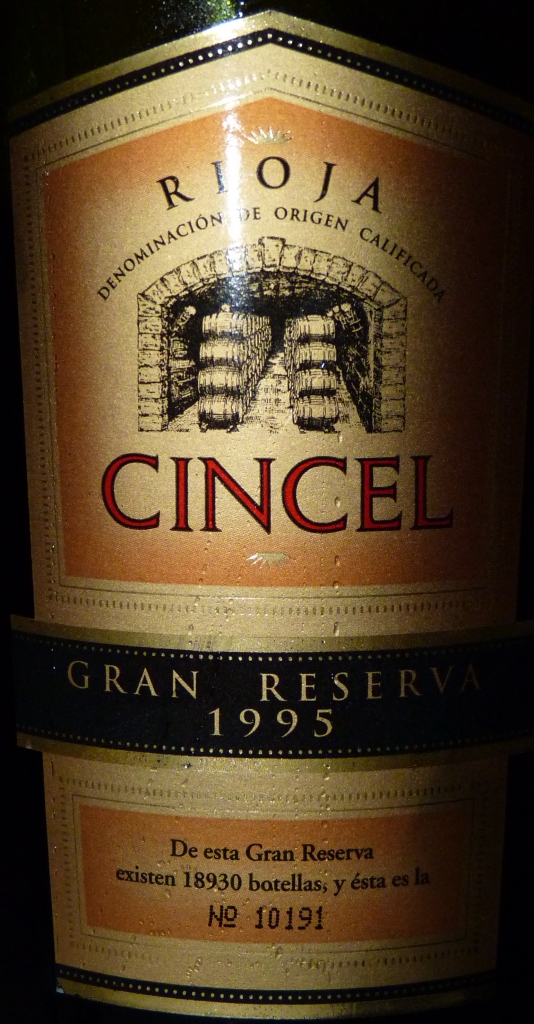 Next, of course, is wine. The wine list is very reasonable in size, with a great selection of Spanish wines – I didn’t mention yet that Sra. Martinez is a tapas restaurant – therefore having a good selection of Spanish wines is quite appropriate. We’ve chosen Rioja Cincel Gran Reserva 1995 (doesn’t seem to be even available in the US through wine-searcher). The wine was food-friendly, smooth, with good acidity and tamed fruit expression – and I don’t think it was even ready, probably needs another 10-15 years to shine. It did work quite well with many dishes we had.
For the food – and this is where Fiesta comes to mind – we failed to choose what tapas do we want. Therefore, we had no choice but to subject ourselves to the hands of the chef, in the form of the tasting menu. Boy, was that the right choice! It was a true fiesta of flavors, textures, and tastes, a true food experience. From this point on, I really need to let pictures tell the story – I only regret I was unable to capture all the dishes we had. It is also very interesting to note that if you look in the menu, you will see sea salt listed as one of the ingredients in the number of dishes – and it is truly a distinguishing ingredient that makes dishes unique. This was probably the best use of the salt I was ever able to experience. And now, almost in the order of appearance, here is what we had in our tasting menu:
Arugula Salad with thinly sliced pear, parmesan cheese, and sea salt (wow!) – no picture, but this was one of the best combinations of simplicity and amazing taste.
Bacon-wrapped dates and croquettes with fig marmalade:
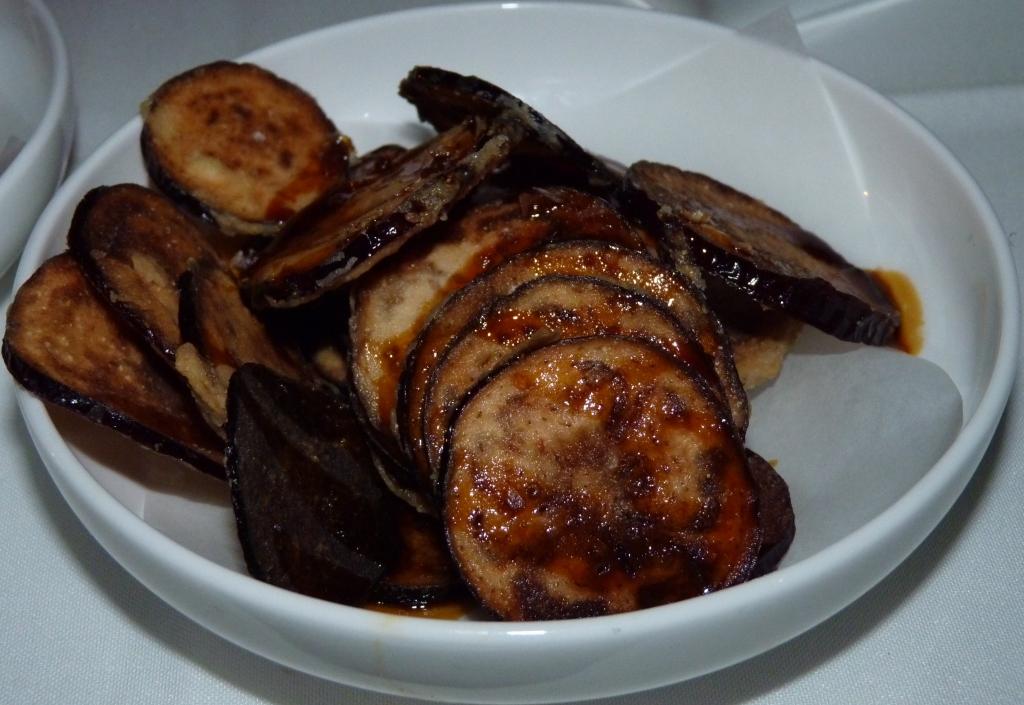
Eggplant chips with molasses and sea salt:
Crispy artichokes (wow!):

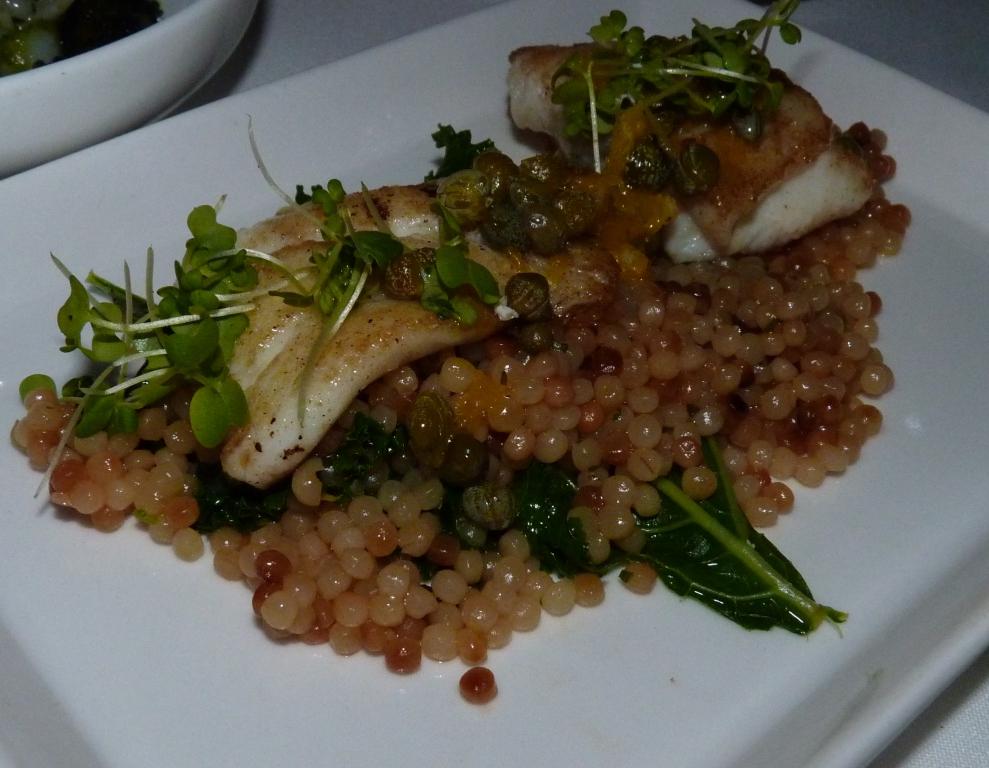
Catch of the day with israeli couscous:
Squid ink risotto ( incredible richness):

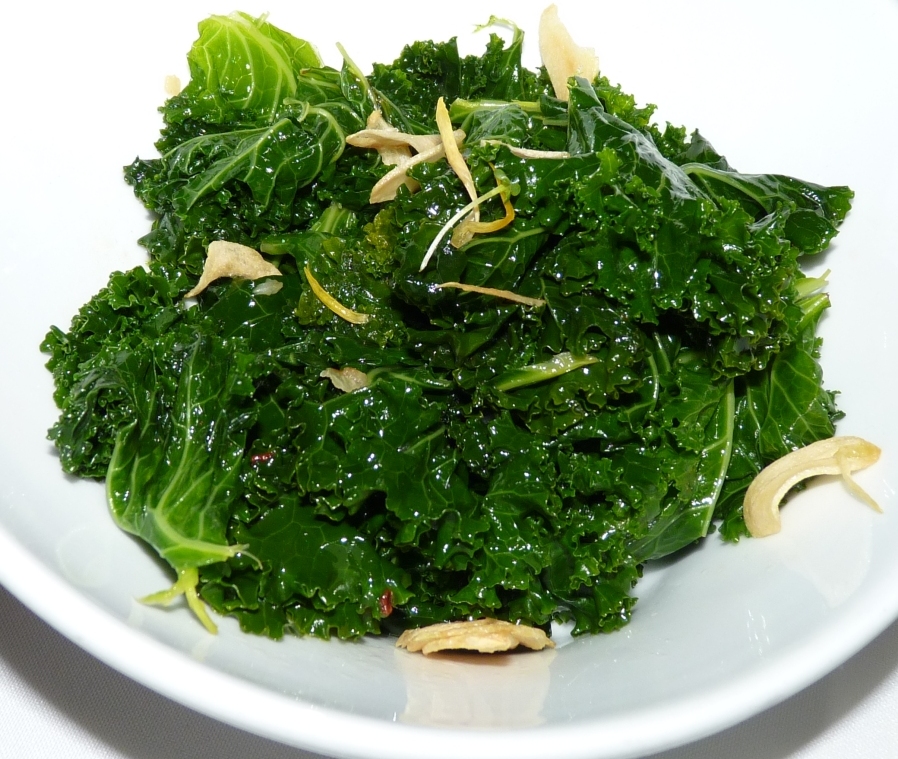
sautéed Kale with garlic:
Short Ribs ( incredible – thinly sliced and stacked, with sweet and salty sauce):
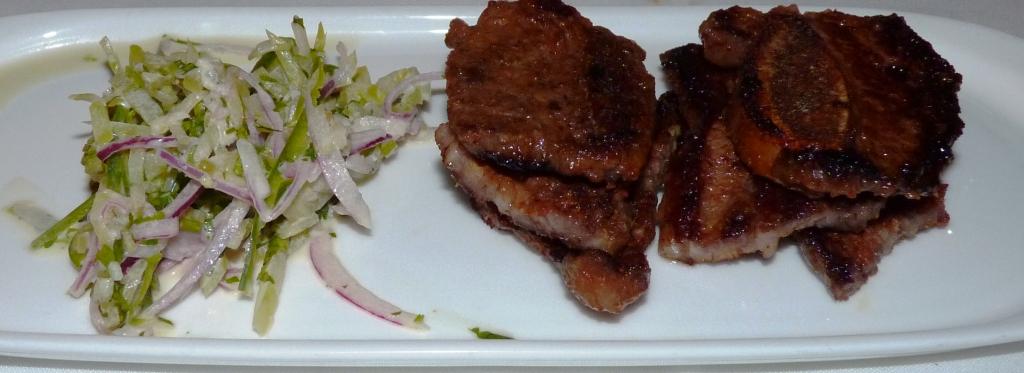
Lamb chops ( one of the best I ever had):

Garbanzo stew:

Brussels sprouts with bacon and fried egg:

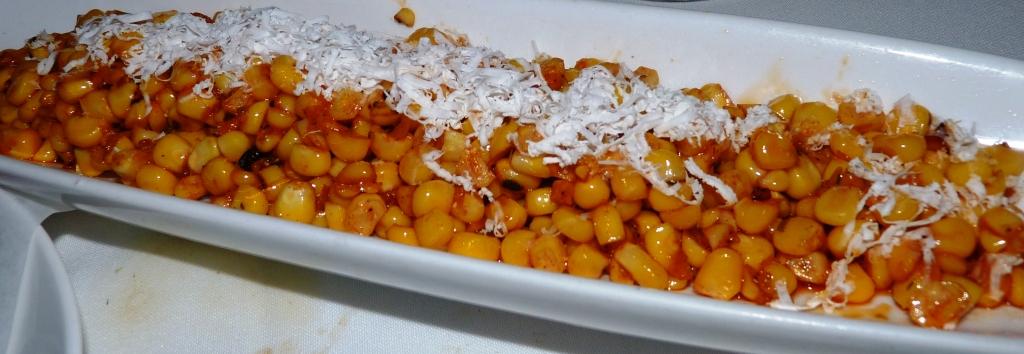
Sweet corn with smoked paprika, smoked chile, and lime – incredible again, you just can’t stop eating it:
And finally… dessert! Never had chocolate flan before – wow!
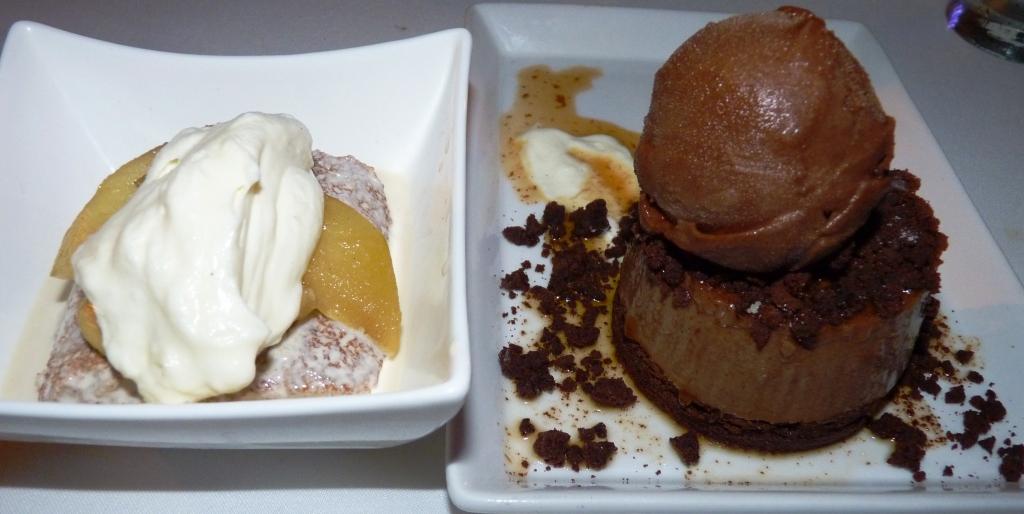
The End (a.k.a. Bottom Line) – if you are in Miami, do it for yourself – visit Sra. Martinez. And if you will not think this is a fiesta, please tell me what Fiesta is…

Of Course You Know Miami Beaches, Let’s Talk About Miami Restaurants
 One of the virtues of the business travel is opportunity to try new foods. We’ve got to eat every day, don’t we – but we can go into many ways about it. One option is to stay only within familiar territory, eat at few places you already know and don’t take any risks. Another option is to explore and experience. Depending on the place I’m traveling to, I might go different routes myself – of course, when you are in Miami Beach, the “explore and experience” model sounds (and looks) very appealing.
I don’t think Miami’s food scene requires any introductions. As Miami itself if a tight blend of many different cultures, so are the restaurants in Miami. I’m not trying turn into a restaurant critic by all means, so this here is short (mostly in pictures) report on a few places I had an opportunity to visit recently – except one place, Sra. Martinez, which stood out of the crowd immensely, so it will be a subject of separate blog post.
Without further ado, here we go.
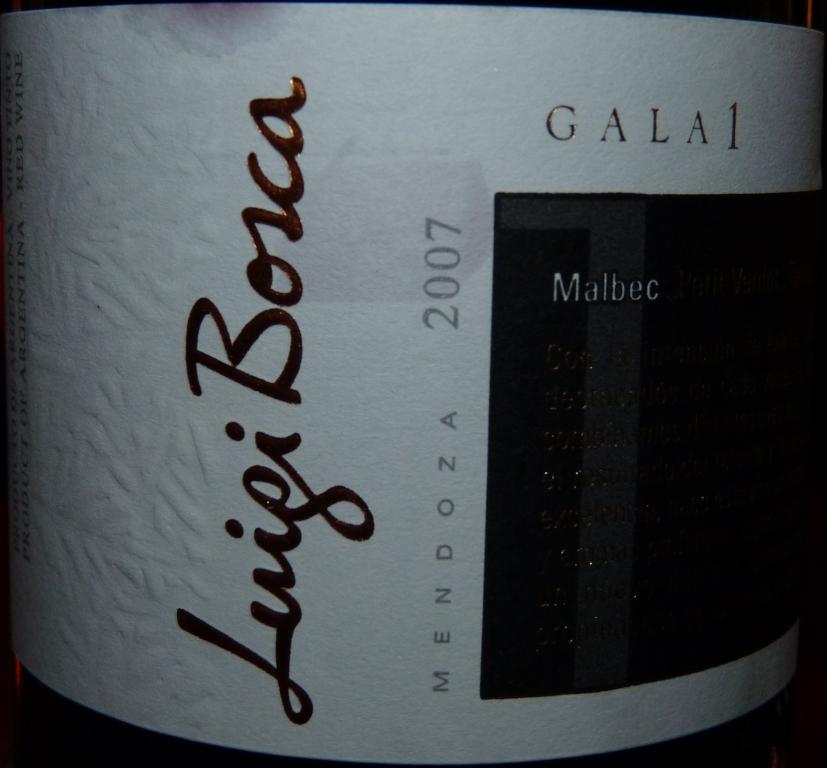 Maya Tapas and Grille restaurant, located on Lincoln Road (Lincoln Road is one of the main tourist attractions in South Miami Beach). First, we had a very good bottle of Malbec. As restaurants compete for attention on Lincoln Road, we took the advantage of “all wines half price”, so this Luigi Bosca Gala 1 (actually, Malbec blend) at $35 was definitely a bargain. Still a young wine, it had initial layer of sweetness, which freed the way to spiciness and balance as wine had time to breathe.
In the tapas restaurants, my favorite dish is of course … tapas – the best way to experience wide variety of flavors.
We ordered a number of tapas, both cold and hot, and all the food tasted very good (grouper seviche, charcuterie and chorizo are highly recommended). Below is a picture of grouper seviche:

Aura restaurant, also on Lincoln Road, is more of an Italian flare with simple menu. We mostly went there for cocktails and pizza, and both were good. Here is Long Island Iced Tea and Mojito:

Thin crust pizza (European style) with goat cheese and vegetables was very tasty (no picture though).
PAUL. You got to eat breakfast too, right? Paul is a French bakery, part of an international chain. It is fully French, starting from the menu and appetizing baguettes all over the place, to the “french style” service. Service is an interesting part of the place – it is purposefully disrespectful to the customers, kind of “I’m not here to serve you”. In my honest opinion, though, they got this “French” concept upside down – 9 times out of 10, I had an outstanding service in France, despite any language barriers. I also think it costs PAUL in terms of lost clientele, and it shows up in the reviews on Yelp. But the food is good. Baguette with butter and jam is pure pleasure, so is Eggs Benedict ( I had both smoked salmon and Canadian bacon versions) – probably the best Eggs Benedict ever, definitely the best sauce. And pressed Focaccia sandwiches were not too shabby as well.


Last place to discuss in this post is Marker 88, located in a middle of Florida Keys (on island called Islamorada). This place was recommended – and it disappointed, unfortunately. The food was interesting in concept – but completely lacked soul in execution, or had simply technical mistakes, like lobster and mango guacamole having no mango – and of course guacamole completely overpowered the lobster. But the dish does look good on picture, doesn’t it:
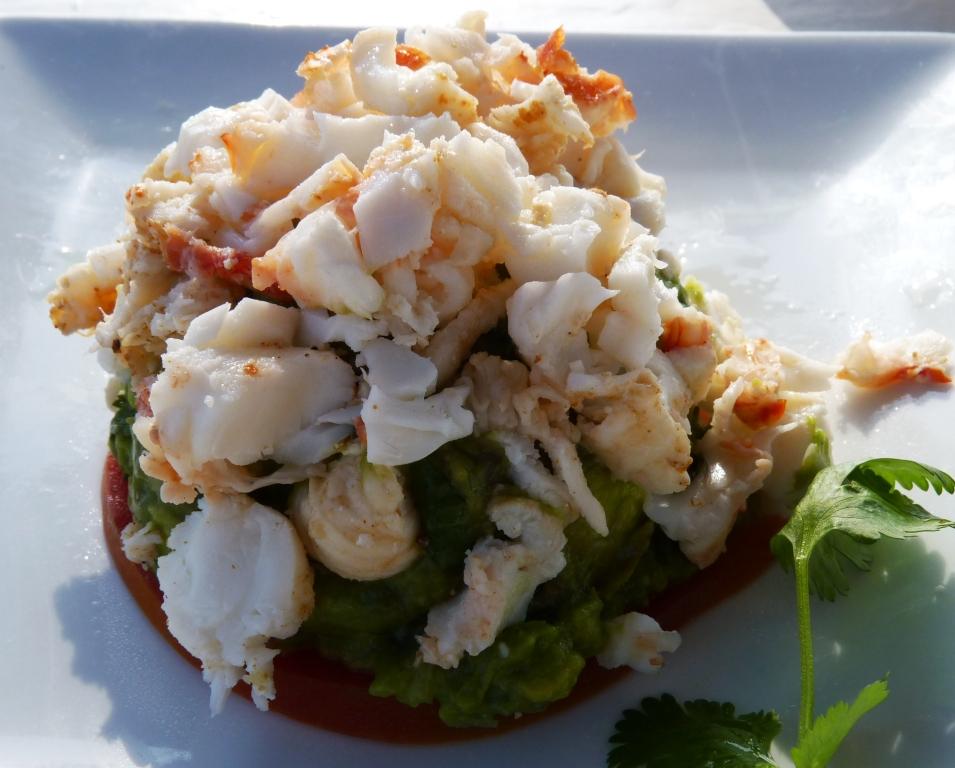
And here is crab cake sandwich:
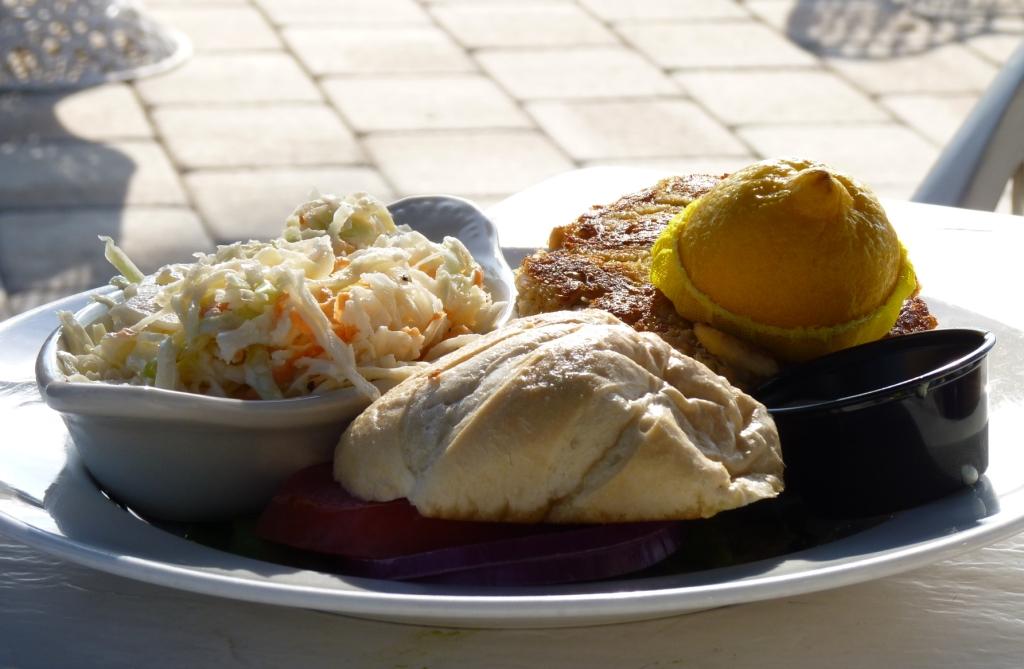
Again, looks good – but crab cake was missing any flavor… Well, may be we were out of luck with substitute chef?
To sum it up – if you are just looking for a byte to eat, I would definitely recommend all of the places we talked about here (even Marker 88 deserves second chance). However, if you are looking also for experience, please wait for the next blog post…
Wine and Valentine
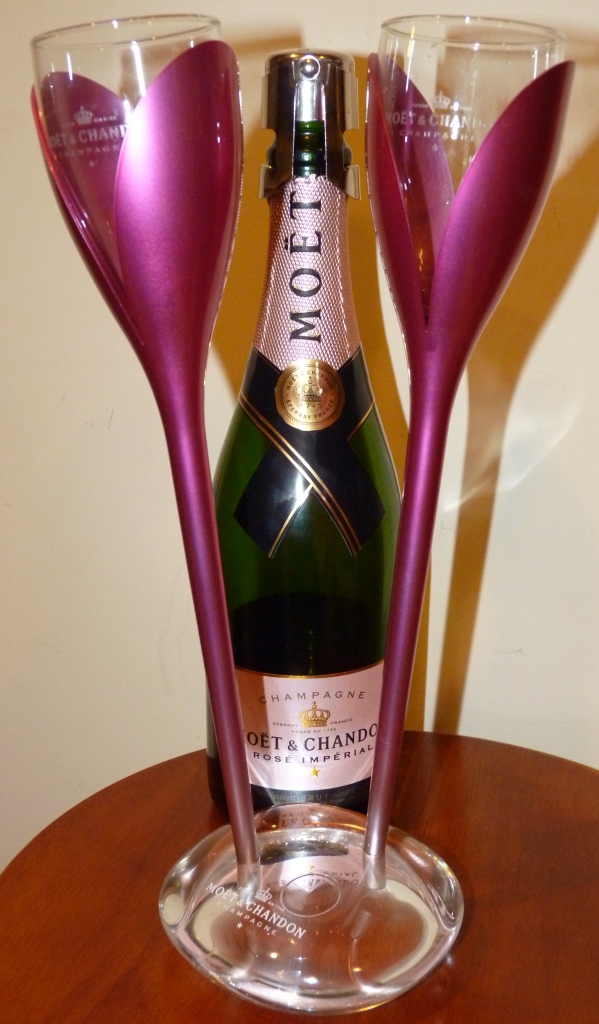 Wine and holidays… When someone drinks wine every day, is special meaning lost when the holiday comes? It does not. It only gets more interesting, and the reason is simple – it is called Expectations. On an average day, you look in the cellar, and something grabs your attention, so the decision is made on the spot – this Pinot sounds perfect tonight. When it some to the holidays, long ahead, you start planning – and anticipating. You think about how it will feel like when you will open “that bottle”. So in your mind, you open that bottle many times before the actual “bottle opening event” will take place, so your expectations are building. There lies danger – the higher your expectations are, the smaller the gap to disappointment. But if you hit it right – boy, what a great feeling!
Valentine’s Day (unfortunately, hugely commercialized by “pink-hearting” everything possible and impossible) is meant to celebrate love. Wine is an attribute of any celebration, and of course, the celebration of love is a great reason to raise a glass (wedding and champagne are almost synonyms, right?). Is there a right and wrong wine for Valentine’s Day? Of course, there is no such thing as wrong wine – whatever makes you tick is the right wine, even if it is just water. Whatever helps you feel the special moment is the right thing.
So what are my wine preferences for Valentine’s Day? First, it is Amarone – if I happened to have a good bottle, and then it is Champagne. For this Valentine’s Day, it happened to be Champagne (yes, you are correct – I didn’t have a good bottle of Amarone in the cellar). Moet & Chandon Rose Imperial, to be more precise. I had the bottle for a while ( probably 4-5 years), and based on the recent experience with Mumm, I was really looking forward to opening that bottle.
Well, remember what I said about building expectations? Yep, there lies danger. This bottle was actually less than I expected. It was drinkable, but it was not exciting. It was refreshing, it had a bit of complexity – but it was stopping short, without delivering the “umph” which that bottle of Mumm had. Well, maybe next time…I will have a good bottle of Amarone?
Now, please tell me – what wine did you experience on this special day?
Last Bottle Sign Up ($10 credit)




 Talk-A-Vino