Archive
Five Essential Traits of the Oenophile
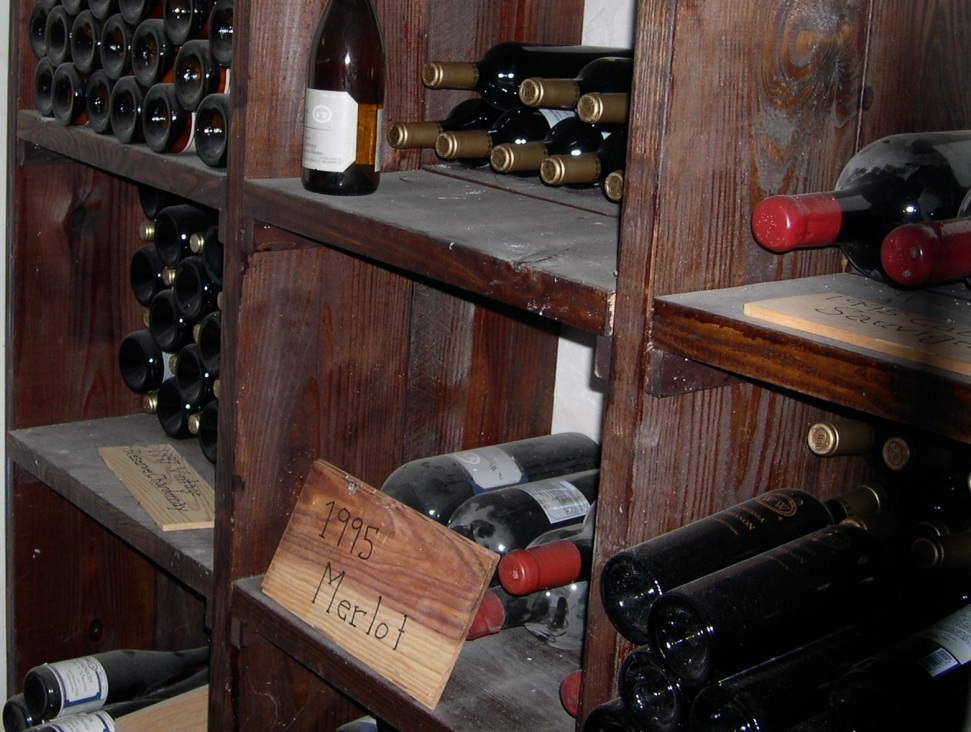 Do you think all the wine lovers have something in common? Let’s take a look at some of the qualities which I believe, any oenophile possesses.
- Patience: I think this is single most important quality of the oenophile – one have to be able to wait. Mostly we are buying young wines, when they are released. If you want to truly enjoy the wine, you want to drink it when it is at its peak – which in turn means that you have to put that wine aside and wait for it to reach its best form. For example, it is considered that California Cabernets need about 13 years to reach their peak of maturity – can I rest my case? Patience has another virtue. Before you can start waiting for the wine to reach its peak, you have to get that wine. Have you heard of the mailing lists? This is how you get many great wines – Cayuse, Alban, Harlan, Bryant Family and many hundreds of others – are available only through the mailing lists. What’s a big deal about the mailing list (sounds so routine, right?) -not much, just keep in mind, that there is a list to get onto the mailing list…
- Passion: Have you ever talked to oenophile about the wine? The eyes would lit up, and information will be flowing – grapes, growing season, winemaker, the rain and the heat, the taste, the emotion, the experience. Wine is a form of art – and the same way as poetry, music, paintings, photography, architecture – it solicits emotion and passion.
- Quick decision-making: when opportunity presents itself, oenophile have to be able to decide on the fly. Is this the wine I want? Is that a good year? Is that a good price? Sometimes, all this information should be processed within split seconds – if you ever tried to get a great true bargain at WTSO.com, you would understand. Spend a bit longer figuring out if that was a good vintage – and it is not relevant anymore, as the wine is gone.
- Good memory: In the simplest form, it supports previous quality – quick decision making. You need to remember good years and bad years (for instance, Bordeaux 2000 and 2005 were amazing, and 2002 is better be avoided), you have to remember the exact name of the wine (Peter Michael makes four Chardonnay wines designated as “Estate Vineyard, Knights Valley, Sonoma County” and distinguished only by name like “Belle Côte” or “Ma Belle-Fille” – you better remember which one did you liked more yesterday at the party). But good memory goes further than remembering only simple words or numbers – how about remembering the taste of your favorite wines? I believe oenophiles will be able to describe the taste of the wine they had 10 or 20 years ago – if it was memorable enough.
- Desire to share: We want to share our joy, we want to share our experiences, we want to share our best wines – with the people who will appreciate it. I don’t mean to sound snobby – but oenophiles often start from trying to convince the whole world that this particular wine is a pure joy – and the beer drinking part of the world might not see it like that (love the beer myself – there is nothing here against beer drinkers, they just prefer different beverage). Then oenophiles start to understand that they better share their experiences with like-minded people. But – once you strike the cord, everything is open and available. Soliciting “wow” from someone who just had a sip of what you deem one of the best wines on Earth (or at least in your cellar) – priceless.
How far off do you think I am? If you acclaim yourself as a wine lover (aficionado, connoisseur) – do you associate with any of these traits?
Please comment, and – Cheers!
As One Year Is Winding Down, Another Year Begins
 Year 2011 is ending very shortly – how was it?
I’m very happy with t he wines I had an opportunity to experience in 2011 (please forgive me, but the term “wine” is used here in all-inclusive way – it also includes Scotch and other tasty alcohol) . There were lots of great wines – I already gave you my “top dozen“, but there were probably another 30-40 wines equally qualified to be included in the “top” list – like these gems from Margaux, great Spanish wines and many others.
Am I happy with the content of the blog? I think some of it was good, and some was just okay (honestly, don’t know if I did something bad – you tell me). I really want you, my readers, to be the judge of it. Was here anything which you really liked? Can you share that with me?
What I’m not happy with is the level of interaction. I know many of you actually read the posts, can you also tell me what do you think? “Great, Cool, Crap, BS, nonsense” – I would gladly take feedback, and consequently, dialog, in any form. Pleeeease?
I also wanted to give you a summary in the numbers ( posts, readers and so on) – but you know what – let’s forget the numbers, not so important. Ahh, only one quick update – on the grape count. Over the past few weeks, I added another 5, so the total count now stands at 360. Here are the new grapes:
Saint George – 2009 Skouras Red saint George Cabernet sauvignon, Peloponese, Greece
Savagnin – 2008 Benedicte & Stephane Tissot Selection Arbois, Jura, France
Noah – Renault Noah, New Jersey
Mouhtaro – 2009 Muses Estates Mouhtaro, Thivakos, Greece
Pais – 2009 Cuvee Del Maule, Chile
And now let’s spin our crystal ball – what is ahead of us, in 2012? One thing for sure – there will be lots of great wines. Wines are becoming better all over the world, and they are becoming more interesting. There will be more amazing natural wines, wines which don’t taste like anything else you tasted before. There will be more sparkling wines, there will be more rose wines, even in the winter.
As for anything else – I will continue to write about my experiences with wine, food and life. And if I can have one New Year wish, only one – I would love to see more comments.
That’s all, folks, for 2011. Make sure your favorite bubbly is chilled, your favorite food is on the table, and your friends are surrounding you. I wish you lots of luck, lots of love, lots of happiness, lots of health, and lots of amazing experiences. Happy 2012! Cheers!
Fears of the Oenophile
 If you are drinking wine only in the restaurant (and only because you have to) or twice a year at the parties, you can safely skip this post. For those of you enjoying the wines on more occasions (and without any occasion too) – please read on and tell me what do you think is real and what is the result of my inflamed imagination.
Would you think that there should be any fears associate with wine? That the fear is lurking around those shiny bottles? Actually, if you think about it, I believe there are quite a few. Let’s take a closer look.
1. “Spoiled wine” – I think this is the mildest of all – except when this is the last bottle of your favorite wine or a special bottle you proudly brought to someone’s house. Many different things can constitute spoiled wine – wine can be corked (musty, wet basement smell and painfully sharp taste with the similar musty flavor profile), or oxidized, or vinegary in taste. In general, it is considered that about 8% of all wine is corked – this is a very sad number if that hits you. Discovering that the wine is spoiled is an unpleasant surprise – but in many cases the problem can be easily addressed (get another bottle from the cellar or you tell your wine steward in the restaurant that the wine is spoiled, and you would typically get a new bottle of wine).
2. “is this wine ready to drink, or should it wait for a little longer?” Many wines improve with age. If you ever read wine reviews by Wine Spectator, Wine Advocate and the likes, you probably noticed phrases like “Drink Now”, “Best before 2015” or “Best 2015 to 2024” – these are wine critics’ recommendations for the particular wines to be at their pick, to be the most enjoyable. But most of the wines we buy (definitely the most of the wines I buy) don’t have any critics recommendations associated with them. So when is the right moment to get the most pleasure from the bottle? There are some general rules, like “California Cabernet reach their pick at about 13 years of age”, but in the end of the day you would need to have a good understanding of the wine regions and particular producers to reduce this fear factor.
3. “is this occasion special enough for this bottle?” Pairing the wine with the occasion can be very tricky and fearful. You are reaching out for that special bottle of Latour, but what if one of your guests will decide to add a little coke to her glass as the wine is too dry for her? Will this group of beer drinkers appreciate the 1964 Rioja Alta which you were planning to open just for this great occasion? Whether you like it or not but you have to address this fear by knowing the preference of your guests and then resolving that you will be happy with your wine selection no matter what.
4. “is this bottle special enough for this occasion?” This is almost the same as the previous one, but with a slightly different angle. Vey often, we are waiting for a “special occasion” to open that special bottle. Every time we don’t know if the occasion is special enough. We keep waiting, and waiting, and waiting, fearing that the right occasion still didn’t come. We definitely don’t want to end up like the main character of the movie “Sideways”, who had his 1961 Cheval Blanc with the hamburger at a fast food place, drinking the magnificent wine from the Styrofoam cup. If anyone remembers “Tastings” column in the Wall Street Journal written by Dorothy Gaiter and John Brecher (the column which I dearly miss), they created an event called OTBN (Open That Bottle Night), where they were encouraging all the wine lovers to reach out for that special bottle and open it on a designated date. I think this is the best solution to address the “special bottle” fear – we need to create special moments for our special bottles, and then everything will magically fall in place.
5. “will I enjoy this bottle as much as I did last time?” I think this is my personal biggest fear associated with wine. Sometimes, I get carried away by the glass of wine – it creates amazing memory of the fiery of taste, it comes through as truly exceptional experience. Once this happens, the next time I’m reaching for the same bottle of wine, the first question in my mind is: “what if it doesn’t taste that great”? What if something was wrong with me last time – special occasion, special surrounding, special atmosphere? What if this wine will not be as magical as last time – did something happened to the bottle or something happened to me, and if it is something which happened to me, then when? The previous time or now? There are all sorts of emotions involved here, and sometimes this specific fear is keeping me away from that special bottle of wine. The best antidote of course is trying the wine, and discovering it to be as good as the last time – that is the special moment of joy, I guess, for any oenophile (works for me for sure).
So, is there anything here you can attest to, or is it all caused by too much free time on my hands? Let me know you thoughts.
And as this is the time of the Holidays, Happy Holidays and Cheers!
Experiencing Texas Wines
I’ve heard [good things] about Texas wines before, but despite being in Texas countless number of times, I never had an opportunity to drink local wines. Thanks to Vino Volo, great wines are available on the go (this is not the first time I’m writing about Vino Volo – previous posts can be found here and here).
This time I was at San Antonio International airport, and I had enough time before the flight to taste some wines. As you know, I would never refuse an opportunity to try new wines, so when I saw “Taste of Texas” flight being available, the decision was very simple.
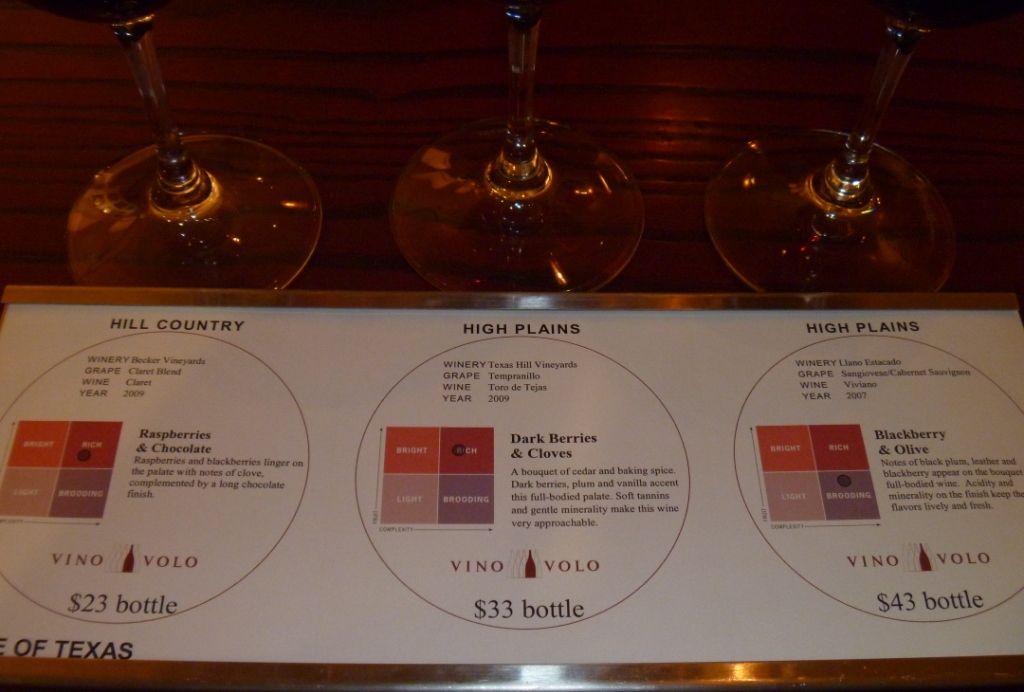
The flight consisted of three red wines, and all three were very good! The first wine was 2009 Becker Vineyards Claret, Hill County. The wine had nice nose with dark fruit, plums and blackberries, good acidity, rustic, with good tannins. The wine was very Bordeaux in style, but without characteristic bell peppers and greenness ( Drinkability: 7+).
Next wine was 2009 Texas Hill Vineyards Toro de Tejas, High Plains (100% Tempanillo) – the wine had smoke, dark fruit, hint of dark chocolate, very dense. This wine very well complemented chorizo and chickpeas chilli. Best of tasting (Drinkability – 8-).
Last wine in the flight was 2007 Llano Estacado Viviano, High Plains (Sangiovese/Cabernet Sauvignon blend). The wine had nose of green olives, and it was very nice on the palate, with hint of chocolate, soft tannins and good balance. Drinkability – 7+.
Overall , all three wines were well done, easy and pleasant to drink – my only regret (actually, two) would be that these wines are not available in Connecticut and also that even in the Texas restaurants, the emphasis is on California, and Texas wines are simply overlooked – definitely a mistake.
That’s all for now, folks. In the next blog post, we will explore the subject of wine fears – cheers!
Should You Really Drink Really Cheap Wines?
 My friend Emil forwarded me a copy of an article in the Slate magazine from November 2nd called “Drink Cheap Wine“, where the author explains his rationale behind the suggestion that everybody should drink really cheap wine. As someone who doesn’t have an unlimited budget and constantly looking for the QPR in wine, the subject stroke a cord, so I thought – how about we will discuss this with my readers?
Should we all start drinking only cheap [the cheapest?] wines? May be, but let’s take a look first at the reasons we drink wine.
Why do we drink wine? If the answer is “to get drunk”, we can stop right here, as there is no need to continue the discussion – at any price wine is too expensive for this purpose (switch to industrial alcohol, I think it should be a cheaper option).
Next reason can be – because it is a habit, a custom. I would dare to say that this is probably the main reason for Europeans to consume wine – this is part of the culture, this is how people there had being born and raised – wine is something which should accompany the food. Period. I’m not saying that people in Europe are not enjoying wine by itself – all I’m saying that they look at it differently. By the way, quite on contrary to what is stated in the article, I would sincerely doubt cheap wine in Europe is worse than in US – cheap wine and wine produced by cooperatives had being around for hundreds and hundreds of years, and it was produced to be consumed with food, so I expect it to have much higher acidity than any cheap US wine, which will be mostly sweet – and I will take acidity in wine over sweetness at any time.
Reason number three to drink wine is to get pleasure – as good bottle of wine is really an art! This is my main reason to drink wine – I like phenomenal range of variations of taste you can reflect upon – this is what makes wine so magical for me. Now, as soon as we look at the wine from this angle, while the cost is still very important, it is a whole different perspective – if cheap wine doesn’t give me pleasure, should I really drink it? Of course not, as still it will be a waste of money – it is better to drink water in such a case (yes, yes, all opinions expressed here are my own).
I perfectly understand what he author is saying about blind tasting and inability of the average consumer to distinguish between the cheap and non-cheap wines. However, if you will taste 10 wines (in the same blind tasting, of course), I would definitely expect that some of them you will like more, and some of them you will like less. Actually, if you like them all the same, or if you don’t like any of them at all, may be you should stick with the cheap wine. Otherwise, if you will find out that your favorite wine in the tasting costs $15, and the one you didn’t like was $3, what are you supposed to do? That is correct – you have to make a decision which will be suitable for you. If we agree that finding pleasure is one of the main ideas behind drinking wine, you simply have to make a decision based on your budget and your preferences – but you shouldn’t drink cheap wine!
So, what do you think? Should we all switch to the cheap wines and force ourselves to be happy with them? Or should we look for wines with the good QPRs which give us pleasure?
Comment now – it is your turn to speak. Cheers!
Eggs Benedict And Bits of Wisdom
This is a sequel to the last year’s post about Katy’s Korner, our favorite breakfast place in San Ramon, California. Eggs Benedict is a staple, of course, and this time I had Eggs Benedict Santa Fe, which has spicy sauce and avocado:

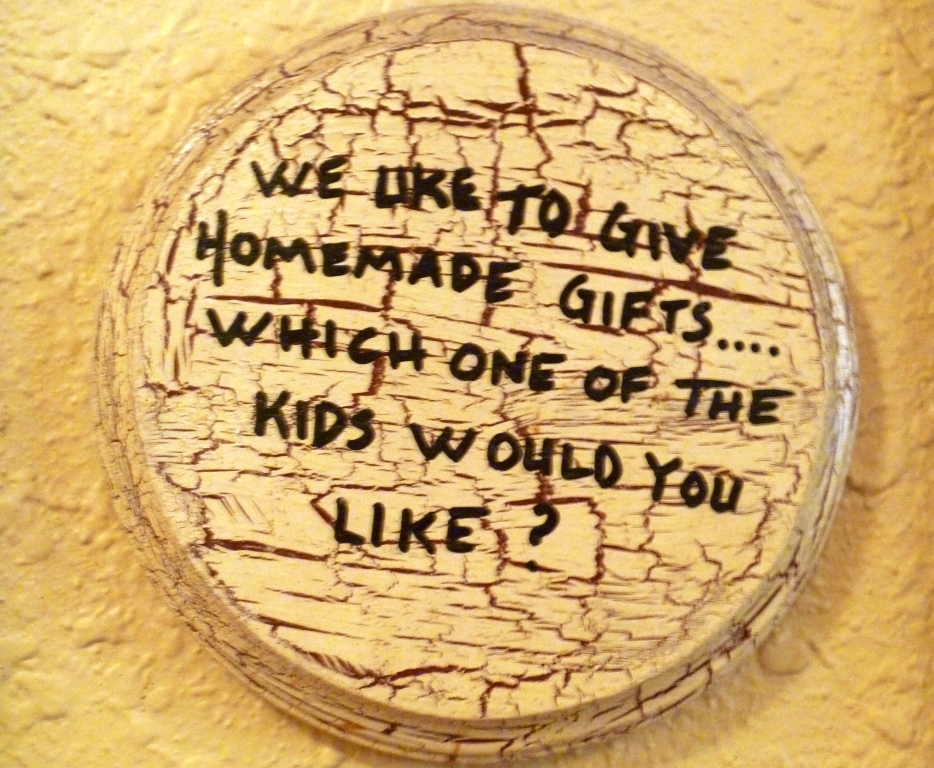
While the food is great, I love the surroundings there, all the bits of history and wisdom, which cover all the walls and tables. Same as last year, I took a number of pictures – interestingly enough, I managed to avoid duplicates with the last year! Here they are, for your viewing and educational pleasure:
And more:
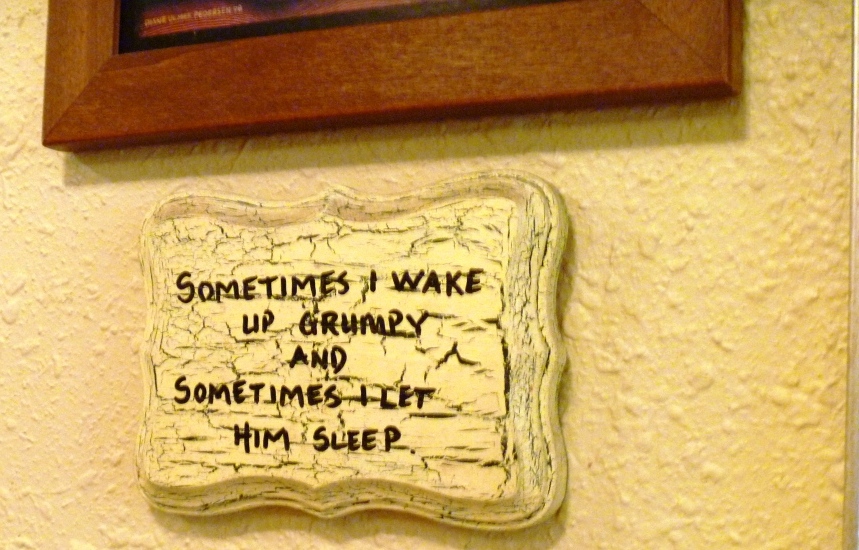
and more:

And more:
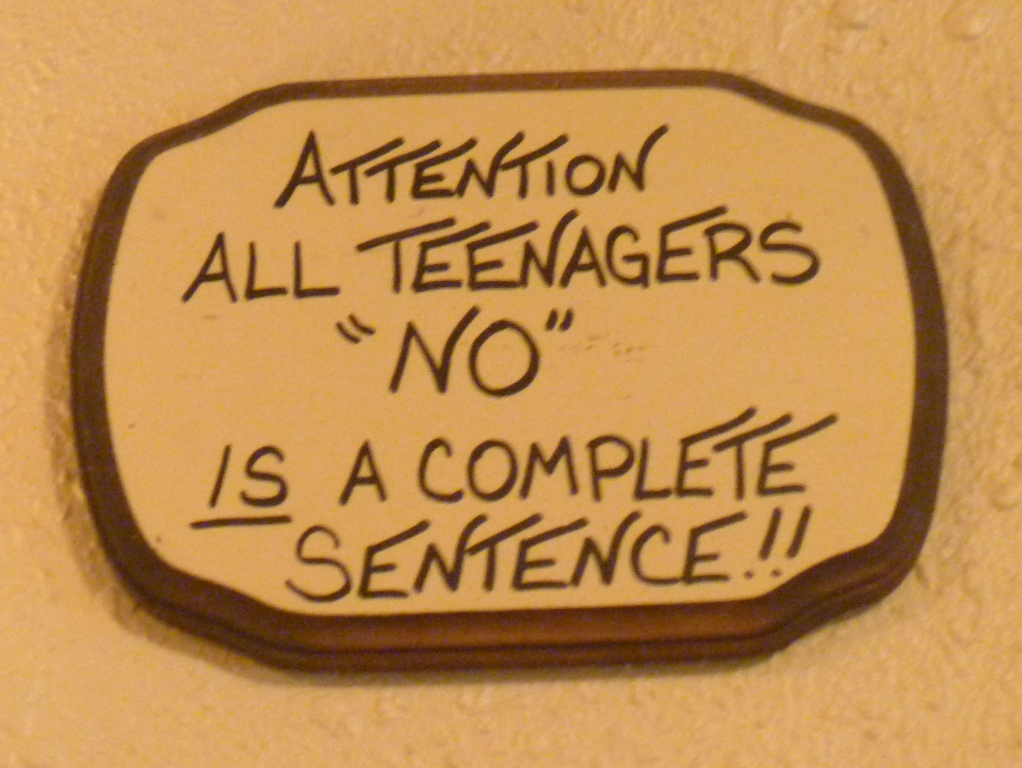
And more:
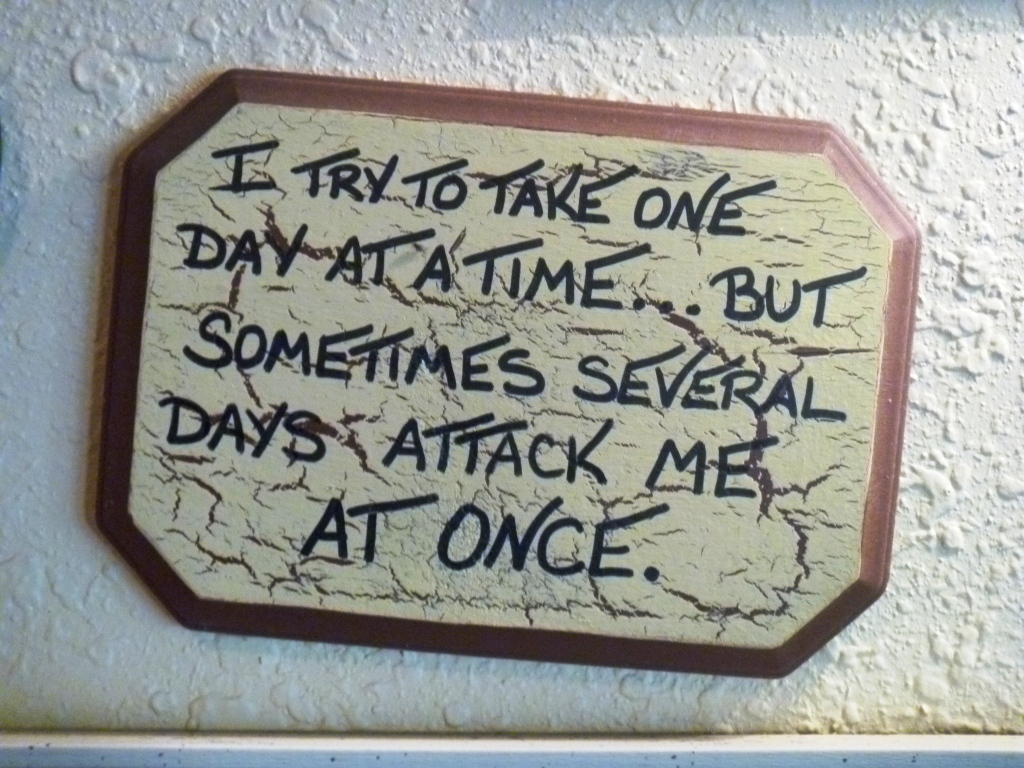
And my favorite:

Which one is your favorite?
Cheers!
Katy’s Korner
2550 San Ramon Valley Blvd # L
San Ramon, CA 94583
(925) 831-2145

In Case You Wanted To Attend PJ Wine Grand Tasting But Still Undecided
here is something which might help you decide – you can save $10 of the ticket price if you will use discount code Talk-A-Vino, courtesy of PJ Wine (they happened to like my post and kindly offered a discount to Talk-A-Vino readers). If you are ready to buy your tickets, you can click here.
Enjoy! Cheers!
Food with Wine, Or Wine with Wine?
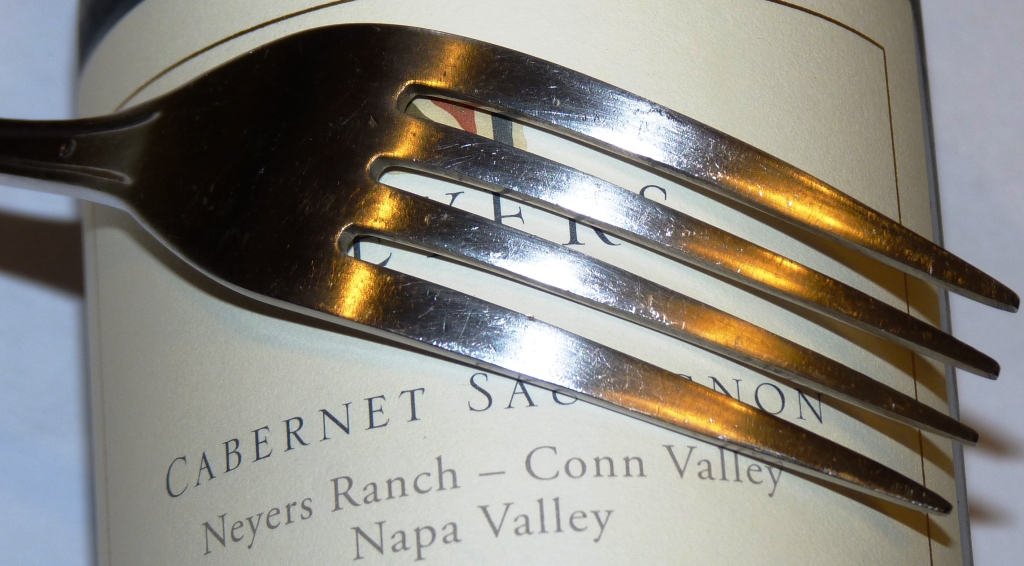 A recent blog post on bottlenotes called “Eat your wine” readily attracted my attention (what does it mean, Eat your wine? The wine is not liquid anymore?). It appears the post is actually not about wine and not about food – it is simply about creativity and imagination, put to a good use.
After the Cabernet Sauvignon grapes are pressed, the skins and seeds are kept together with the grape juice through the process of fermentation (much of the color and taste of wine comes from the contact of juice with the skins and seeds). Once fermentation is complete, the young wine (juice) is separated from the skins and seeds mass which is called pomace. Typically, pomace is either discarded or converted into fertilizer. It turns out that it can be used for something else. Particularly, it can be dried and then … milled into the flour!
Such Cabernet flour contains lots of minerals and vitamins, and it is also rich in anti-oxidants and reservatrol. But – while medical benefits are important, it simply produces delicious baked goods (or so this is what the people say). Enters CIA-trained Pastry Chef Rachel Klemek from Blackmarket Bakery who makes Cabernet flour into brownies, brittles and pasta (!). All of the baked goods, as well as Cabernet flour are available online for purchase online through Marché Noir Foods.
Uff, it sounds like advertizement, and I didn’t mean it. Now, the real question is – when you eat Cabernet pasta, literally made from Cabernet grapes which had been already fermented, is that considered eating or drinking? Another question is – if you have a glass of wine with your Cabernet pasta, is that food with wine or wine with wine?
Oh well, I don’t know about you, but I have to try it. Note to self – get some Cabernet flour (or, at least, some Cabernet pasta) and start cooking! Cheers!
Experiencing Wines of Canada
 Coming back to the memories of “ahh-so-distant-by-now” our Canada vacation (it’s been almost a month!), I need to share my wine experiences with you. You might remember two earlier posts (you can find them here and here), which I prefer to refer to as “picture reports”, which gave you the visual expression of the food and some of the wines in Canada. However, we had an opportunity to spend some time in one of the Canadian wine countries, surrounding the small town of Niagara-on-the-Lake – and it was an eye-opening experience for me.
Until this trip, my idea of Canadian wines was very simple – Icewine. I knew for a while that Canada makes some really famous Icewines, which compete with German and Austrian Icewines. Outside of Icewine, my only reference were wines of the Finger Lakes region in upstate New York (general direction of Canada). While I wouldn’t claim that I visited a mass amount of wineries in Finger Lakes, in a few places we visited the only drinkable wines were Rieslings, and all the red wines were plain bad. Therefore, these were my expectations for Canadian wines.
I decided to start from the winery with the name at least I heard of – Inniskillin, and of course, the only wine I knew “of fame” there was an Icewine. As a side note, I want to mention that the winery had a playroom for kids – which is a very important factor in letting adults enjoy wine tasting, even during family vacation. The first wine we tried was 2010 Two Vineyard Riesling – very clean, good tropical fruit expression, all paired with beautiful acidity, a nice finish. This was a great start of the tasting. The next wine completely blew me away – the 2009 Legacy Series Pinot Gris. First, I didn’t expect Pinot Gris to be produced in Canada. But is not the main factor. Very complex, with explicit minerality and spicy bouquet on the palate, this wine still puts a smile on my face when I think about it.
 After having a great start with the whites, my level of expectations increased for the reds – and rightfully so. 2009 Montague Estate Vineyard Pinot Noir was very nice, varietally correct with a precise expression of smokiness and red fruit. Again, I would never expect to find a Pinot Noir of such clarity at a winery located so high up North – but I did. 2009 Shiraz Cabernet had perfect acidity, good minerality, just the right balance of dark fruit. 2009 Cabernet Franc was simply my favorite red wine – perfect, very balanced, with clearly expressed green peppers and explicit minerality (you might think that I’m abusing the term – but minerality was one of the key characteristics of all the Inniskillin wines we tasted, so I can’t help myself but to call it out).

As you might expect, sweet wines were next. We are not talking about some arbitrary late harvest wines – we are talking about Icewines, which have the highest sugar concentration out of all sweet wines, as the grapes are ripening on the vines until the frost reaches –8°C (about 17F) – then the grapes are harvested while being frozen and pressed right away – which yields a tiny amount of super-concentrated grape juice – this is why the wines are called Icewine (also such a low yield explains the high price of the Icewines). First, we tried the 2010 Sparkling Vidal Icewine, which was very light and delicate. 2007 Cabernet Franc Icewine was a real star though. I have to mention that Inniskillin was the first winery to produce Icewine from the red grape. Also, Inniskillin worked together with Riedel, the leading wine glass maker in the world, to produce a specially shaped Icewine glass that enhances the aromatics of the Icewine.

Going back to Cabernet France Icewine, it was incredible, one of the best ever dessert wines I ever tried. Why am I saying that? Balance. Ultimate Balance was the first and foremost characteristic of this wine. Beautiful balance, perfect lingering acidity, and literally unnoticeable sweetness – great wine. All in all, it was an outstanding lineup of wines at Inniskillin, I can’t recommend highly enough each and every wine I tried.
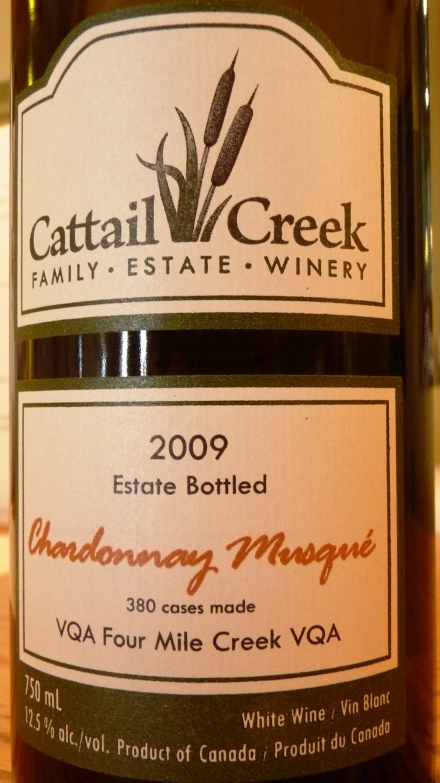 Next stop we made at the Cattail Creek Family Estate winery. One of the reasons to pick that particular winery was the fact that they have a few wines with the grapes I didn’t have before, like Chardonnay Musque, or different Riesling clones. I’m glad we stopped by, as we found more great tasting wines, plus most of the wines are made in very small quantities, so many are available only at the winery itself. First, we tried 2008 Catastrophe White, which was perfectly refreshing, with good acidity and a good amount of white fruit. Then we tried 2009 Catastrophe Red, which had very good balance, nice red and black fruit expression, soft and pleasant. It is interesting to note that Catastrophe wine series labels depict real cats who lived at the winery. Last but not least was the 2009 Chardonnay Musque – very nice, with good acidity, good reflection of what Chardonnay is, good subtle tropical fruit expression, more as a hint. This was yet another great experience.
Our last stop was Chateau des Charmes. This winery had the most impressive building of all:

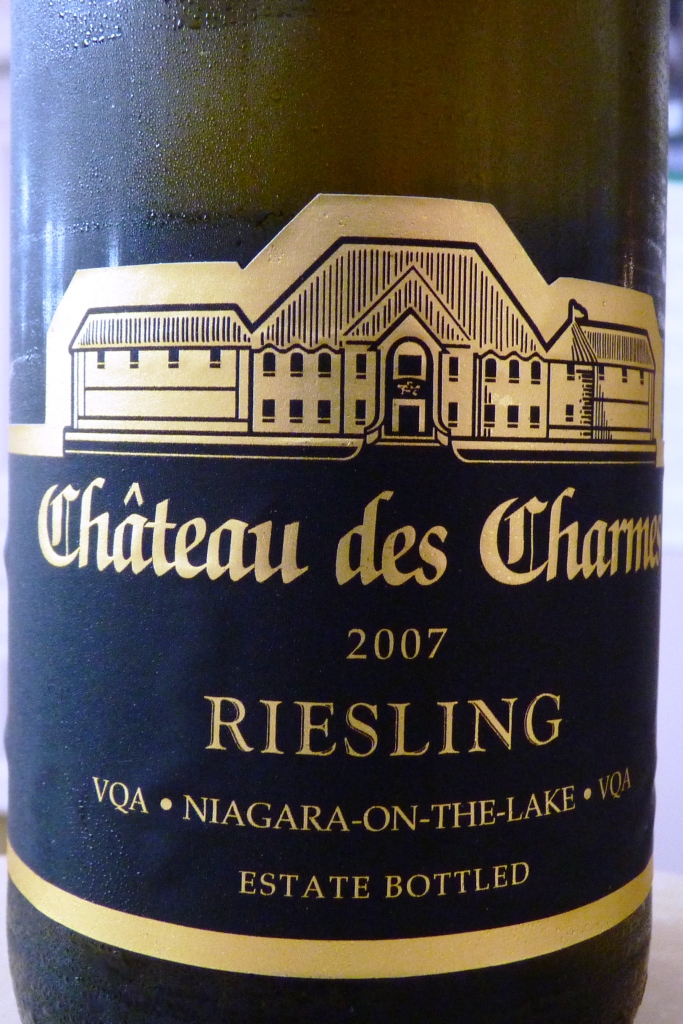 The wines here were also very impressive. We started with 2007 ‘Old Vines’ Riesling (I wanted to experience “old vines” Riesling) – and to my complete surprise, this Riesling had a Petrol nose! I was always under the impression that Petrol nose is a property of only German Rieslings – and here we go, Riesling from Canada with full classic German Riesling expression. In addition to the Petrol nose, it also had very good fruit, medium body and perfect balancing acidity. Next were more of the very impressive Pinot Noirs. 2007 Pinot Noir had a beautiful nose, and lots of tannins on the palate – it was unusually muscular for the Pinot Noir, probably in need of a few years to open up, but still, it was very good. 2007 ‘Old Vines’ Pinot Noir was also very big and powerful, with a clean smoky nose, but also needing time as the previous wine.
 Last but not least was 2008 Gamay Noir ‘Droit’, which happened to be a clone of Gamay and therefore it accounted for an additional grape for my “counting grapes” project. This wine had a very unusual herbaceous nose, and was nice and light on the palate – definitely a food-friendly wine.
That concludes the Canadian wine story, as we didn’t have time to visit more places. But even based on this experience, if before I knew of only Icewines from Canada, now all the Canadian wines are squarely on the “to find and drink” list for me – and I highly recommend that you will make an effort to find them and try them as well. The challenge is – I didn’t see that many Canadian wines on the shelves of the wine stores here in Connecticut. Oh well, hopefully, we can change that. Cheers!
Searching For The Perfect Amarone
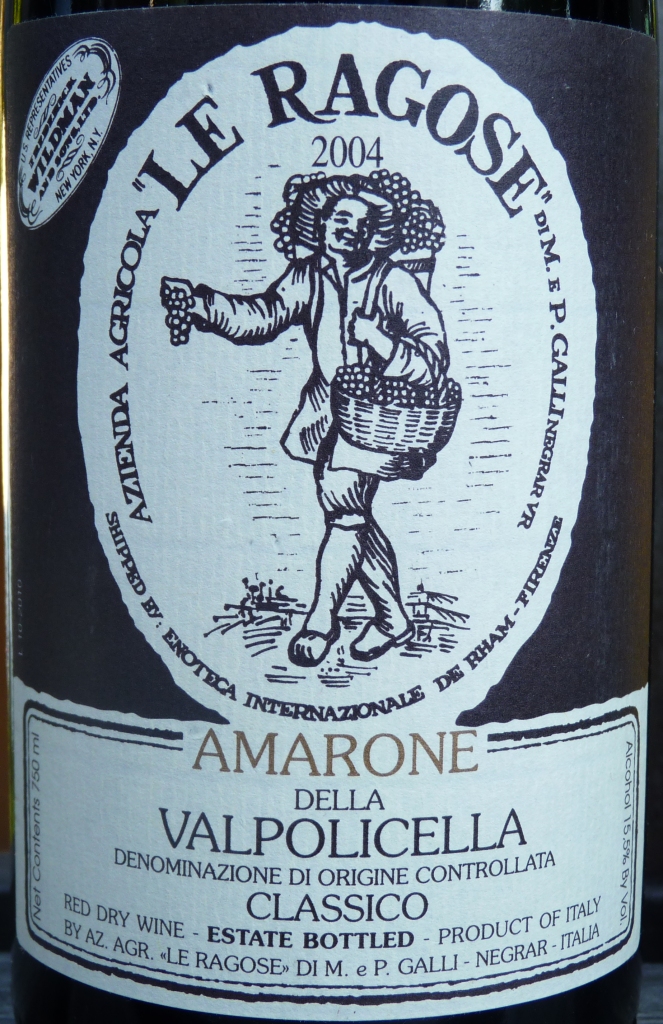
Le Ragose Amarone Della Valpolicella 2004
Let me confess: I have a wine weakness. This weakness is called Amarone. Ever since I tried Amarone for the first time, which happened in 2004 when I was taking Windows on the World Wine School classes, I kept searching for the same experience. Amarone wine which we tried during the class was absolutely amazing – it had a sweet rich nose of raisins, and powerful dry body of muscular wine. Once you experience something like that, you want to do it again and again. The only small issue left – finding that perfect bottle.
Problem is – Amarone is not a cheap wine. Of course it is not super-expensive, like first growth Bordeaux, but at about $60 per bottle, it is way outside of my daily wine budget. That complicates the search, as at such price point Amarone really becomes a “special occasion wine”.
Number of different Amarone later, you can guess that I still had high respect for that wine, as I designated it as one of the “best kept secrets of the wine world” in the post written for The Art of Life Magazine (you can find this pots here). For that blog post, I tried three different wines from Vaona Pegrandi – starting from Valpolicella Ripasso, a “poor man’s Amarone”, and then two of the actual Amarone wines – all good, but not what I was looking for. That forced me to dig out the notebook from that Windows on the World wine school classes, and find out that Amarone I felt in love with was 1997 Le Ragose Amarone della Valpolicella Classico.
Shortly after, with help of my friend Zak, I was holding the bottle of Le Ragose Amarone in my hands. Other than the fact that this bottle was from 2004 vintage, everything looked exactly the same. Except one little detail – 1997 version had 14% alcohol, 2004 – 15.5%. Finally I got to open the bottle. Swirl, sniff – practically nothing. More of the swirl and sniff – still not much. May be a hint of sweetness, but absolutely none of the jammy raisins and dried fruit, which were stuck in my memory forever from that 2004 tasting. On the palate, the wine had more of the dark fruit and may be hint of a fruit jam, but alcohol was not integrated and not balanced, hitting you after the initial taste was subsiding. Nothing changed on the second day – same limited nose, and same unbalanced wine on the palate.
I don’t know what happened with Amarone during those 7 years (interestingly enough, in 2004 I tasted wine from 1997, and in 2011 it was the wine from 2004, so both times the wine was 7 years old). Actually, it doesn’t matter what happened – I want the old Amarone back. The new one has no soul, it is simply one of many unbalanced wines, high in alcohol.
Well, I will keep searching – being an eternal optimist, I will keep looking for that perfect Amarone. True, I might be running simply after the memories which can not be brought back – but hey, at the very least, I will keep trying – new wines, it is. And if you experienced that amazing Amarone wine – any suggestions will be greatly appreciated. I might even share that special bottle with you! Cheers!
Last Bottle Sign Up ($10 credit)





