Archive
Valentine’s Day 2025 – Reflecting on Wines
In my previous post, I complained about frustration with choosing the right wine for the right moment. That post ended with a picture of the wines I selected for Valentine’s Day 2025 – and now I want to talk about those wines.
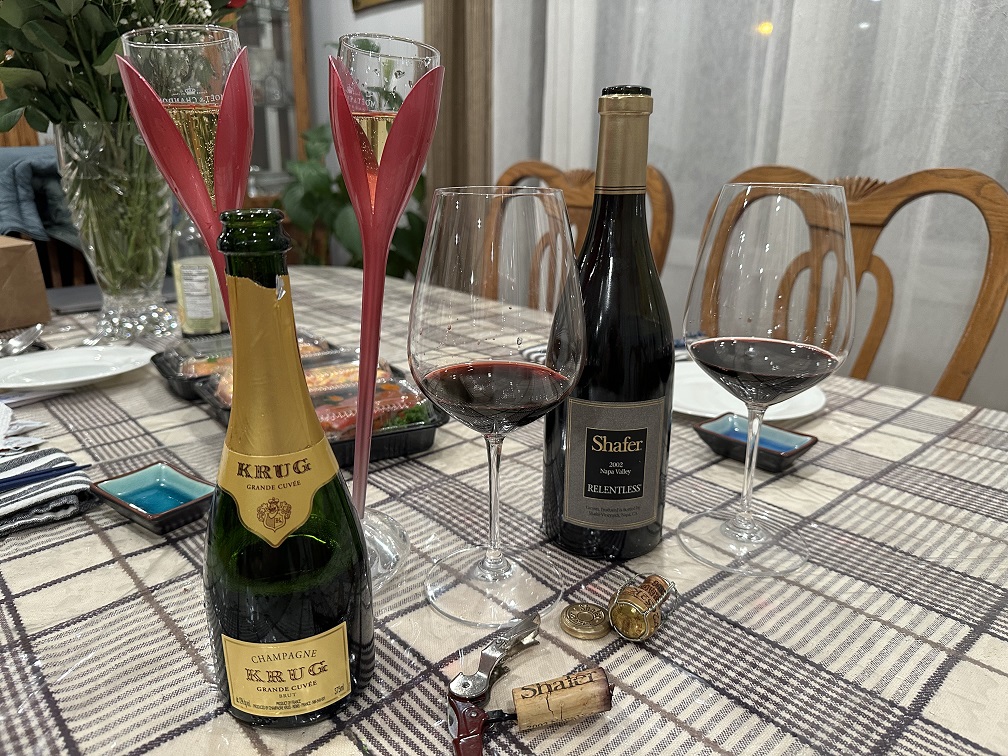
Following my own advice, our first wine was sparkling. Not just any sparkling – it was Champagne. And not just any Champagne – it was Krug.
I don’t want to sound elitist, but the only way to put is this: those who know, know Krug.
For the wine lovers en masse, the epitome of champagne is Dom Perignon. Maybe also Crystal on a good day. Krug definitely is lesser known, but for those who know, Krug is a cult, a religion, the only Champagne one can drink.
I joined that cult after experiencing Krug vintage and non-vintage wines during the PJ Wine Grand tasting in New York in 2010. Krug was an absolute revelation, I have never tasted anything like that ever before.
Then a few years later, in 2012, I came across an article by Alice Feiring, talking about changes in winemaking at Krug in 2003 which she said resulted in more or less the “end of Krug”. I referred to her article in my post, but unfortunately, the original article can’t be found so I can’t share any more details. I only remember tasting Krug at the trade tasting in the same year or maybe the year after, and thinking “well, it is not as good as I remembered it“.
Trade tasting is not always the best place to fully understand the wine, so Krug remained high on my “wines I want” list. Then a few years back, I got this half-bottle of Krug as a present for the new year, and this year I decided that Valentine’s Day is a perfect reason to open that bottle.
After struggling a bit with the cork, I managed to get the wine into our flutes (I know, I know – but it is a holiday, okay?). Smelling and tasting it left both me and my wife underwhelmed. Crisp and acidic for sure, but that’s what literally every other Champagne has, and Krug should really give you more. A few more sips and I closed the bottle, and back into the fridge it went.
Not so long ago, I read an article from a champagne pro, and he suggested that Champagne, similar to any other still wine, can and usually improves after opening. It can be placed into the fridge and enjoyed slowly over the next few days, and many of the Champagnes simply taste better the next day.
Why is this important? When I poured what was left of Krug into the glass the next day (okay, it was a regular glass), that was a totally different wine. Rich, layered, with toasted bread and apples. This was the real deal and it was delicious. I can’t tell you if it tasted like the one I was blown away by in 2010, but it was definitely an excellent Champagne. I guess there is an interesting lesson here for future encounters with Champagne, and not only with Krug.


After Krug’s image was somewhat restored in my eyes, I decided to learn more about the wine. Nowadays every bottle of Krug comes with its own unique code. When you go to the Krug website and type in the code, you get the most detailed information about the wine you can wish for – here are a few excerpts related to my bottle:
“Krug Grande Cuvée 170ème Édition
Composed around the harvest of 2014, Krug Grande Cuvée 170ème Édition is a blend of 195 wines from 12 different years. The youngest is from the year 2014 and the oldest dates back to 1998.
In all, reserve wines from the House’s extensive library made up 45% of the final blend, bringing the breadth and roundness so essential to each Édition of Krug Grande Cuvée.
The final composition of this champagne is 51% Pinot Noir, 38% Chardonnay and 11% Meunier.
Time in the cellar:
This half-bottle spent around 7 years in Krug’s cellars developing its generosity and elegance, receiving its cork in Autumn 2020.”
According to Julie Cavil, Krug Cellar Master:
“In this blend, the dynamic Pinot Noirs of 2014 came from a wide range of plots throughout the Champagne region, while fruity and full-bodied Chardonnays were selected from plots in the Montagne de Reims, Sézannais and Côte des Blancs. The Meuniers from the Vallée de la Marne Rive Gauche were particularly bright, with magnificent fruit expression from plots in Leuvrigny. To complement the wines of the year, we selected reserve Pinot Noirs from plots in the Montagne de Reims Sud renowned for their structure, including an Ambonnay from 2005. Reserve Chardonnays from plot’s wines from Avize and Mesnil-sur-Oger over a wide spectrum of years have a nice share of voice in this blend, while reserve plot’s wines of Meuniers add freshness, intensity and chiselled structure.”
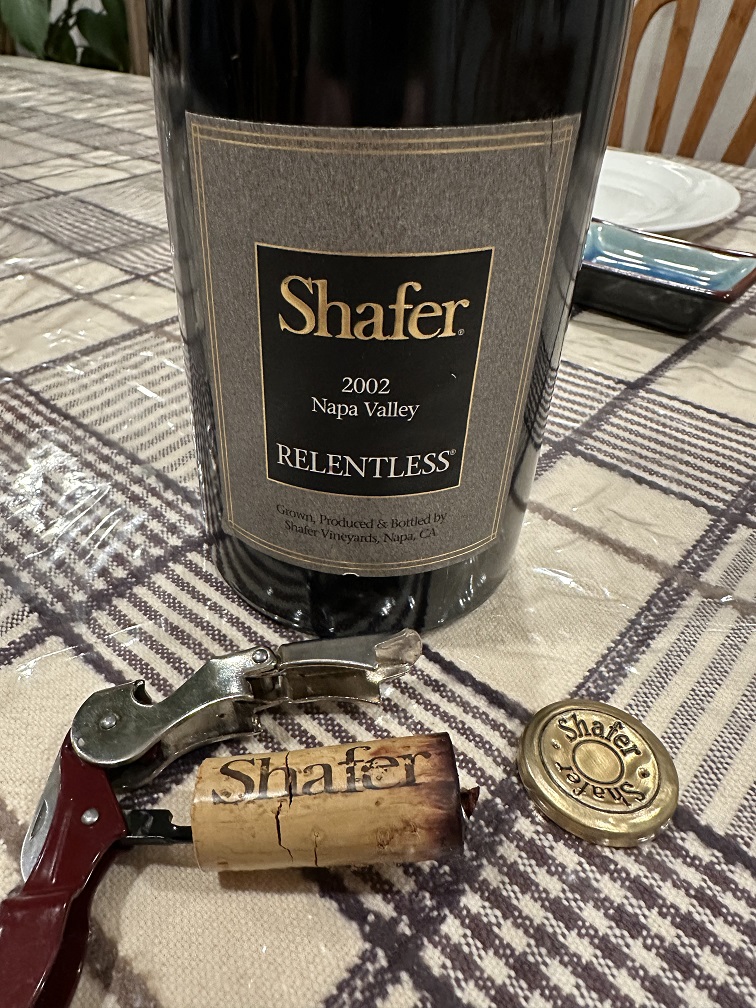
And then there was 2002 Shafer Relentless Napa Valley (14.5% ABV, 80% Syrah, 20% Petite Sirah). I tasted this wine a few times before at the trade tastings, but never had an opportunity to really spend some time with it.
Shafer needs no introductions to California wine lovers, with its fame closely associated with the flagship wine, Shafer Hillside Select Cabernet Sauvignon. Shafer Relentless is not as well known, but this Syrah blend has been around for more than two decades, named in honor of Shafer’s [relentless] winemaker, Elias Fernandez.
We didn’t decant the wine – it would probably help a bit, but I just didn’t want to deal with it. At first, the wine was tight, with well-noticeable tannins and an interplay of tar and cherries, with the addition of pepper. After some time in the glass and opened bottle, the tar subsided, leaving delicious peppery cherries to be admired around a layered but firm core. This 23 years old wine showed beautifully and it was a real treat.
Now the last piece – food. We stopped going out to the restaurants on Valentine’s Day a long time ago – the experience just not worth it. We were craving sushi for some reason, so that is what completed our Valentine’s Day dinner – here you can see some creative rolls from an Asian restaurant not too far from our house.


There you are my friends – our V-day reflections. How was your celebration? Any special wine experiences? Do tell! And until the next time – cheers!
Grape For The Future, Wine For Today
Source: Wikipedia
Have you heard of the grape called Marselan?
If you have – great, pat yourself on the back as you are ahead of many wine lovers.
If you have not – even better, as we are going to fix it right now.
Some grapes have been around seemingly forever (the winemaking is getting older and older with every new discovery – I just learned today that based on the latest research, the wines were made around 11,000 years ago – quite an age), and it is impossible to tell when particular grapes were born. For others, the history is much more definite, as those grapes have been bred with a purpose, and thus their “birthday” is well known.
Marselan is one such grape. It was bred by Professor Paul Truel in 1961. Marselan is a cross of Cabernet Sauvignon and Grenache, and it was bred to be heat-resistant and disease-resistant. While having those desired qualities, Marselan had small-sized berries, which was not a great trait in the 1960s – the desired grape was supposed to have a high yield, thus Marselan ended up on a shelf. As the climate was changing and the temperatures were rising, the need for heat-resistant and disease-resistant grapes became more apparent, and Marselan was brought back to life, entering an official INRA grape registry in France in 1990.
Marselan was bred by Professor Truel in Languedoc near the French coastal town of Marseillan which gave Marselan its name. Marselan is a blue-skinned late-ripening variety, producing large clusters of small berries, leading to a high skin to juice ratio in the winemaking. Marselan prefers dry soil and hot climate, and it has strong disease resistance to botrytis bunch rot, powdery mildew, and other grape malaises. While born in France, Marselan found its great fame in China, where it might be considered a “signature” grape according to Decanter magazine.
Marselan is best known as a blending grape. Nevertheless, varietal Marselan wines started being produced in Languedoc in 2002. Today, about 70 wineries in Languedoc produce varietal Marselan wines. In 2019, Marselan was one of four new red grapes authorized for use in the production of Bordeaux wines. In Bordeaux, Marselan can make up to 10% of Bordeaux Superior and Bordeaux AOC blends, though it cannot be listed on labels. In addition to France and China, Marselan today is growing in Spain, Switzerland, California, Brazil, Uruguay, Israel and other places.
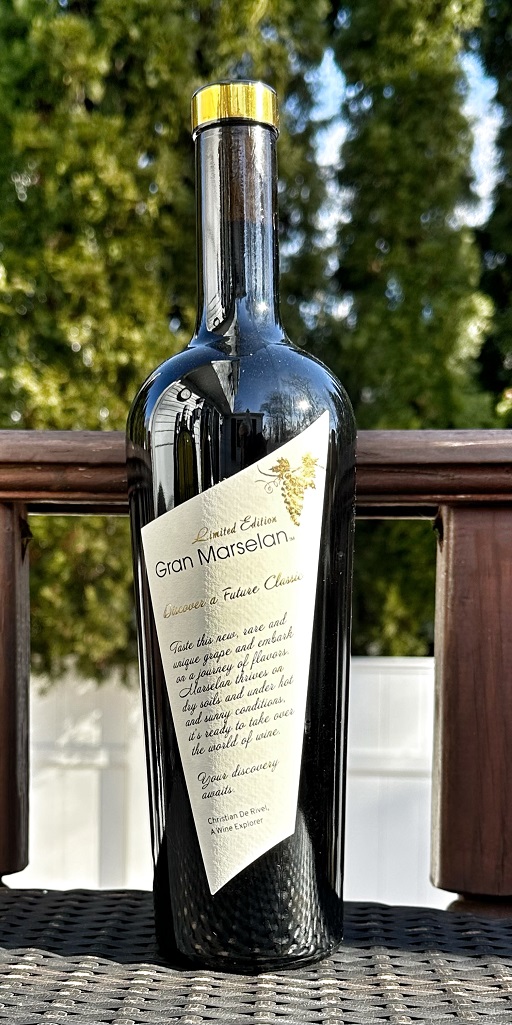
Okay, the formal introduction is over, let’s move on to the fun part – tasting probably the best of the best wine Marselan has to offer – NV Gran Marselan Cuvée du Centenaire Vin de France (14.5% ABV, $169, 100% Marselan, 15 months in 2-years old French oak barrels, 1,716 bottles produced).
This wine had been produced by EdenGrapes with the grapes coming from two best and oldest (40+ year old vines) blocks of Marselan vineyards in Languedoc, discovered after an extensive search. The wine was released in 2024 to celebrate the 100th birthday of Paul Truel, creator of Marselan, who was born in 1924, hence the Cuvée du Centenaire designation.
While speaking with Christian de Rivel, the producer of Gran Marselan, he suggested that it would be very important to decant the wine for anywhere between 2 and 5 hours to let it shine. Well, you never need to ask the wine geek twice to play with his wine.
Long decant? Ha! I got you!
There are many ways to decant the wine. I don’t want to go too far on the tangent here, so I will just give you a “short brief”, and hopefully a more in-depth decanting rundown later in another post. I prepared a few decanting instruments I have at my disposal – a classic decanter, a couple of aerators – VersoVino and Venturi, and even a super-decanting tool, or rather a “hyper-decanting” tool, the blender.
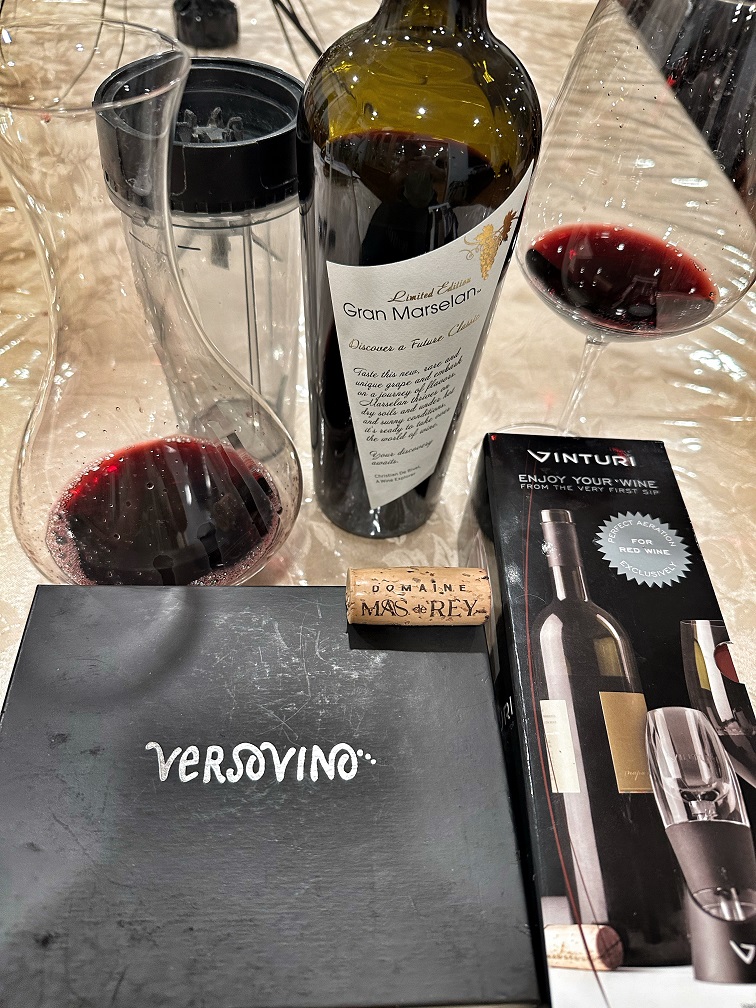
Wine Geek’s Mise an Place
Even if decanting is suggested, to decant or not to decant is a personal choice. I had to taste the wine to decide what I would like to do in terms of decanting, so first I just poured some wine into the glass:
Upon opening
Beautiful color, bright garnet
Nose of wild raspberries and wild blueberries, superb, earthy undertones
Beautiful palate of wild berries, well integrated velvety tannins, firm structure, good acidity, excellent balance 8+/9-, delicious overall and dangerous.
Based on tasting the wine “as is”, hyper-decanting was ruled out – the wine was perfectly drinkable from the get-go, no need for extreme measures. But I had to try the tools nevertheless:
VersoVino
Nose a bit more pronounced and open, adding tart cherries to the aromatics
Palate is a bit smoother, tannins become silkier, overall wine is more polished. I really didn’t expect that. Wow. 9-
Venturi
High intensity nose, now more Cabernet-like profile, a touch of eucalyptus
Excellent palate expression – it doesn’t have cassis, but instead offers gobs of dark fruit, good acidity, more of a chewy structure. After Venturi, the wine actually begs for a steak. It shows bigger. But it is now more in Grenache territory, with dark chocolate undertones. 8+
I definitely like the effect of VersoVino more. The wine is softer and more elegant with VersoVino compared to Venturi.
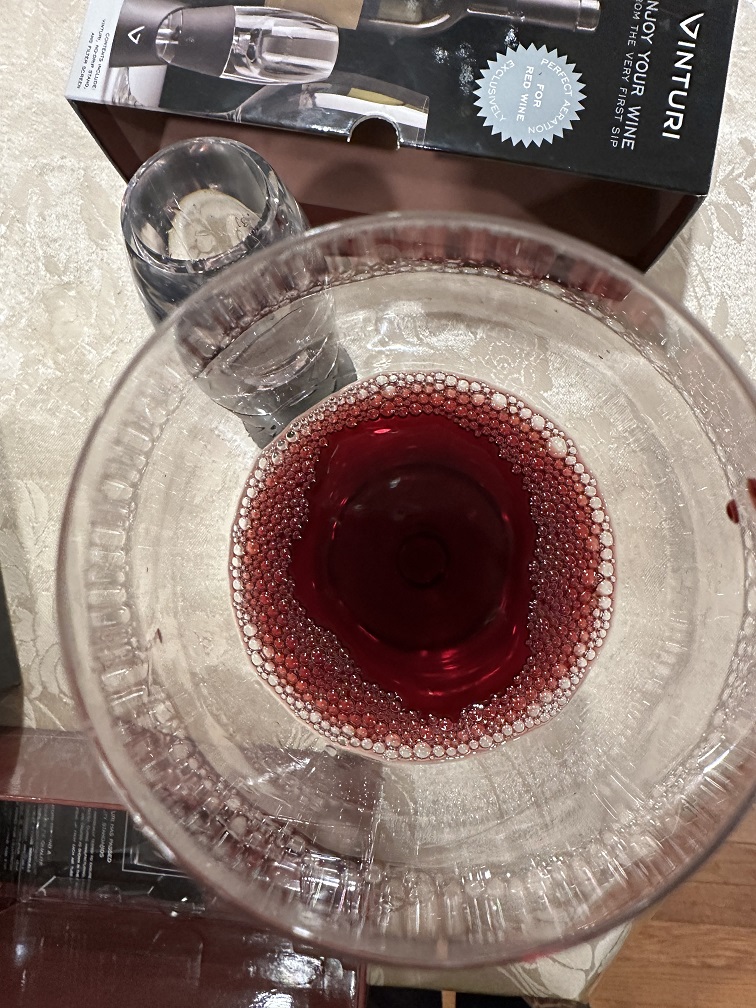
Bubbles – an effect of Venturi
Now we wait.
1 hour control point from decanter
Nose changed, now offering some sapidity undertones, became lean and powerful. Now nose promises big, “serious” wine
Delicious bouquet on the palate. Dark fruit, elegant, balanced, tart cherries woven over the firm structure. Elegant, delicious. 9-
2 hours later
Tart nose, earthy undertones, cherries
Lots of tart cherries on the palate, different representation, firm, tight, lots of energy, now gripping tannins which cut finish somewhat short. Wine is evolving. 8
4.5 hours later
Fresh berries returned on the nose with some earthy undertones
On the palate, the wine is tight with some brushy tannins, good clean dark fruit finish. The wine would perfectly complement steak, but for sipping I would prefer one of the earlier versions. 8
Second day
Still pretty much tastes like the wine after a few hours of decanting.
So what did I learn after tasting the Gran Marselan, besides the fact that I really didn’t need to decant it more than for an hour? The conclusion is easy. The grape has great future potential. But you don’t need to wait for the future – you can simply enjoy the wine right now. Also, I know what you are thinking – this Gran Marselan is expensive. While I can’t argue with that, if you are ever willing to spend $170 on a bottle of a special wine then this wine is well worth your consideration. I know of many California Cabernet Sauvignons in the same price range which will deliver much less pleasure, so this wine is definitely worth it. Maybe one day we will be able to compare the notes? Until that time – cheers!
An Evening of Pure Pleasure
Do you know what makes an oenophile’s heart melt and pound, what fills it with joy? Hearing their friends say after you pour the wine into their glasses
“Oh my god, this is so good!”
This brings a double pleasure – it is not only you now getting the pleasure from the aroma and the bouquet – but your friends also enjoying it as much as you do. Wine is meant for sharing, and this makes sharing so much more enjoyable…
Wine can never be taken for granted. Let’s remember that the wine continues changing even after bottling – each time we open the bottle, we find the content of the bottle in its unique state. Yes, we can hope that if you open all 12 bottles from the case at the same time, all wines will taste the same – but it is still a game of probabilities, with opportunities for the “bottle variation” to be increasingly more noticeable as the wine ages. And I’m not even talking about potential wine faults…
Next, there are expectations. Expectations are a big deal for the oenophile. Just one look at the bottle and an oenophile forms expectations – bottle appearance, place, producer, type of wine, vintage – everything is taken into account, and we know what to expect. It is the most joyous moment when the liquid in the glass meets expectations – and the most daunting when it does not (let’s not get to the corner case of Two Bucks Chuck, please). But there is more to the expectations in wine. One of the biggest challenges with wine expectations lies in the fact that it doesn’t matter how much you like the wine and how well your great expectations are met – everyone’s palate is different. It is hard learning to be okay with the fact that while you enjoy the wine immensely, your friend doesn’t care for it. It doesn’t make the wine bad. It doesn’t mean that you are wrong or did anything wrong. It simply means that taste is personal, you just need to learn to accept this simple fact of life – and not get upset.
You might wonder why I am talking about all this wine geek mumbo jumbo, why is that important? Simple. No matter how familiar you are with the wine you are pouring, or how many times you have had the wine from the same vintage and producer, when the wine reaches the glass, it is always the moment of revelation. Double that (triple? quadruple?) when you are poring wine for your friends. And even if you think that wine is perfectly perfect, you can never assume your friends will think the same. Wine can never be taken for granted.
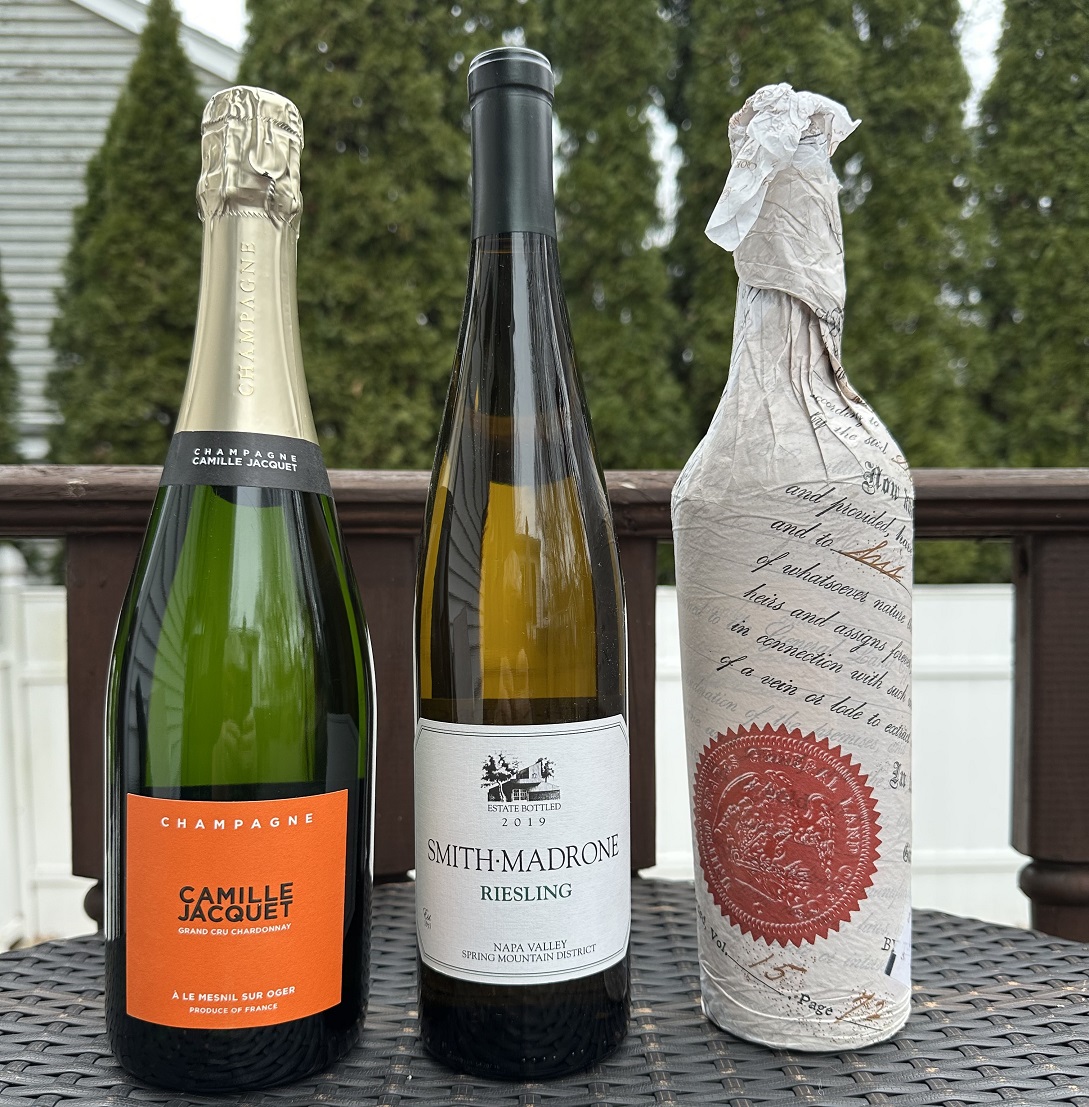 I guess I got lucky. At last weekend’s evening with our dear friends, I managed to hit a double “trifecta” :). Three delicious wines out of three, and my friends loved all three to the “oh my god, this is so good!” moment.
First wine – NV Champagne Camille Jacquet Brut Grand Cru Chardonnay A Le Mesnil-sur-Oger (12% ABV). I do not know the producer, but I had high expectations for this wine possibly for a silly reason. A small village Le Mesnil-sur-Oger is well known for the quality of its Chardonnay vineyards and a home to some of the best (if not the best ) Blanc de Blancs Champagnes in the world – Salon le Mesnil and Krug Clos du Mesnil. Knowing that Camille Jacquet Champagne comes from basically the same vineyard gave me high hopes (silly, as I said) for this Champagne. And my high expectations were perfectly met. Beautiful nose of toasted bread with a touch of apple, impeccably crisp, fresh and precise on the palate. The acidity was fully in check with the complexity of the toasted, baked goods on the palate, leading to an impeccable (yes, I know I already used that word) balance. “Oh my god, this is so good!” said my friends, and the wine disappeared in a jiffy.
Next, two beautiful wines from one of my favorite producers ever. Over the years, I wrote about Smith-Madrone wines extensively. Cooks’s Flat had been one of the Talk-a-Vino Top 10 Wines of the Year 2019 top wines (that year, I had 3 #1 wines, tell me about my inability to make decisions), and Smith-Madrone Cabernet Sauvignon was #3 on the Talk-a-Vino Top 23 of 2023. So I was very happy that I got the samples of Riesling and Cook’s Flat and was able to share both wines with my friends (I will also taste a nice vertical of Smith-Madrone Riesling, it will take a central stage on these pages soon).
Smith-Madrone Riesling is one of my favorite Rieslings in the world – it is one of the 3 if you are interested – Grosset Polish Hill Claire Valley Australia, Smith-Madrone from Napa Valley, and Brooks Ara from Oregon. This 2019 Smith-Madrone Riesling Spring Mountain District Napa Valley (13.3# ABV) was spectacular. First, it offered a tremendous pop of petrol on the nose – and nothing makes my Riesling lover’s heart happier than these petrol aromatics, coupled with a whiff of honeysuckle. On the palate, it was fresh, energetic, with a wide range of citrus flavors readily present, from Meyer lemon to oranges and mandarines, supported by clean acidity and a perfectly cleansing acidic finish. Delicious, and the second “oh my god, this is so good!” wine.


Finally, the 2018 Smith-Madrone Cook’s Flat Reserve Spring Mountain District Napa Valley (14.2% ABV, 87% Cabernet Sauvignon, 13% Cabernet Franc, 20 months in new French Oak). This wine is designated as “Reserve” and this is not random – it represents the best of the best Smith-Madrone makes, using the best plots, best grapes, and produced only in the best years. This wine also has a historical connection to the parcel of land where Smith-Madrone vineyards where replanted in 1972 – the tissue wrapping the Cook’s Flat bottle is a copy of a land grant document, signed by the President of the United States. Here is the description from the Smith-Madrone website:
“Cook’s Flat Reserve is a proprietary name for a wine that is the culmination of our 50 years of growing grapes and making wine in the mountains of the Spring Mountain District. The name refers to George Cook, the first owner of the property. ‘Cook’s Flat’ was the local oldtimers’ name for the eight-acre plateau-like vineyard block which was replanted in 1972.
The packaging expresses the property’s history and an uncompromising attention to detail. Each bottle is numbered and only around one thousand bottles are produced in each vintage. Each bottle is wrapped in tissue which has been printed with a multi-colored copy of the U.S. Land Office Patent which granted ownership to George Cook and was signed by President Chester Arthur on December 5, 1885. We proudly display the original at the winery.”
What I love about Smith-Madrone wines is textbook precision. So far literally everything I tasted from the winery had this textbook precision of flavor – Riesling is unmistakably Riesling, Chardonnay is unmistakably Chardonnay, Cabernet Sauvignon is unmistakably Cabernet Sauvignon.
This 2018 Cook’s Flat, a blend of Cabernet Sauvignon and Cabernet Franc, was also unmistakably a Cabernet. A core of black currant, a.k.a. cassis, and eucalyptus, supported by sweet tobacco and sweet oak, with a whiff of the bell pepper (love it). On the palate, the textbook flavors continued with succulent cassis, eucalyptus, a touch of mint and bell peppers, firm structure, perfectly integrated and perfectly present tannins, impeccable balance. Just a pure joy. “Oh my god, this is so good!” wine again disappeared in no time, with the last drops almost squeezed out of the bottle.
Here you are, my friends. An evening of pure pleasure – and a happy oenophile who managed to make his friends “oh my god, this is so good!” happy.
I have more happy stories to tell – stay tuned…
A Journey of a Thousand Grapes
“A journey of a thousand miles begins with a single step”.
True that.
But sometimes, we have no idea about the journey. We just take a step without putting much thought into it. It is only later on, while looking back, we realize that those were not just some random steps. The journey is going on.
I don’t remember how I learned about The Wine Century Club almost 20 years ago. I guess someone mentioned that it might be something I might be interested in considering my love for wine.
The idea of The Wine Century Club is simple. Take an Excel table with the names of the grapes. Checkmark the grapes you tasted either by themselves or as a part of the blend. Once you checked 100 grapes (century), submit your application and become an official member of The Wine Century Club. And don’t lie – if you do, your palate will be cursed forever.
The table had something around 200 grapes in it, and marking 100 grapes in it was somewhat easy. I submitted my application in June of 2008 and received my certificate in a few months. Mission accomplished. Journey completed.
Ha!
By the time I received my membership certificate, the club evolved to add another level of membership – Doppel, requiring one to try 200 grapes. Okay, then, I can walk a little further, fine. Back to the Excel and wine sleuthing. By the time I submitted my doppel application, the club already had a Treble level (300 grapes). Back to the glass I go.
When I started the Talk-a-Vino blog around June/July of 2010, I was in the middle of the Treble journey, which I started documenting in the blog. One of the first blog posts was on the subject of Trebble journey, just trying to explain what is that I’m talking about.
300 grapes is a lot, right. Okay, finally, the mission is completed for real. Ohhh… Maybe not. Quattro. Pentavini. Hexavin (are you serious, people? Who can try 600 grapes????).
When I reached 500 grapes, I wrote a very happy post and started slowly moving toward the 600, knowing with absolute certainty that this would be it. 600 is very formidable, and yes, I heard that some people are moving toward 700, but there was not even an official designation for that status.
9 years after the 500 submission I finally reached the end of the journey – two days ago I submitted my Hexavin application. While looking for the submission rules that I somewhat forgotten since the last time, I looked at the membership page. Guess what I saw on the membership page…
700 (Heptavin), 800 (Otobis), 900 (Novem) and 1,000 (Millenary) varieties
How about that “end of the journey”, huh? Yep. A journey of thousand miles grapes is going to continue…
Don’t get me wrong. I’m not complaining. Neither I’m bragging. I’m simply documenting my journey on these pages – whether you also want to become a grape geek is entirely up to you. But if, by any chance, you do, then I might be able to help you in that journey.
Few things had been happening recently making this geeky rare grape inquisitive journey a little easier. First, the world is a little smaller now compared to 20 years ago. No, this is not an utter nonsense 🙂 give me a moment to explain. Of course, there are lots more people living in this world – but that is irrelevant to our subject. If you can’t find the wine with specific grapes in your country, you can order it online and not pay a fortune for the delivery. When I ordered Williamson and Magor tea from the UK to be delivered to the US about 25 years ago, about 2 pounds of tea cost $60, and shipping was another $60. Last year I ordered 2 bottles of wine from Malta, and shipping was close to $30. The wines from around the world are more accessible now.
The second, and more important factor, is two-fold, but it is all about grapes. All around the world, ancient grapes are actively brought back to life, some resurrected literally from the last vine left. New grapes are bred to be more disease-resistant or faring better with climate change. And the grape geek’s journey becomes a little easier and faster.
Just for fun of it, here are some of my latest additions to the rare grapes list with a few notes:


Folle Noire (red) – 2020 Château de Bellet Rouge Bellet AOP
Braquet (red) – 2020 Château de Bellet Rouge Bellet AOP
Vlahiko (red) – 2022 Glinavos Paleokerisio Ioannina IGP – very interesting orange lightly fizzed wine. This wine is a blend of Vlahiko and Debina (white) – I don’t mention Debina here as I had it before, but if you will find this wine, you might get two new grapes in this bottle.
Cabernet Cortis (red) – 2022 Petit Sauvage Rouge Vin de France – this wine was unique and interesting – you can learn more here.
Negoska (red) – 2019 Domain Tatsis Xynomavro – Negoska Young Vines Macedonia Greece
Orpicchio (white) – 2020 Dianella Orpicchio Toscana IGT – picked up this grape at the Three Bicchiery event earlier this year.
Amur (red) – 2017 Dr. Konstantin Frank Amur Finger Lakes – Unique grape, well suitable for cold weather.


A few grapes from the Balkans and Moldova – all wines are tasty and really inexpensive – if you want to find them, check The Liquor Barn:
Zupljanka (white) – Vrsacki Vinogradi Banatski Riesling Serbia
Kreazer (white) – Vrsacki Vinogradi Banatski Riesling Serbia
Žilavka (white) – 2019 Tikveš Žilavka Dry White Wine Macedonia
Băbească neagră (red) – 2018 Cricova Rară Neagră Moldova
Lidia (red) – NV Cricova Rose Semisweet Wine Lidia Moldova – it is called semi-sweet, but the wine has only a hint of sweetness. If you are a fun of Izabella grape, you really should try this one…
The next 5 grapes are from Hungary – please read more about the wines here:
Csókaszőlő (red) – 2022 Bussay Pince Csörnyeföldi Csókaszőlő Zala Hungary
Jakab Kadarka (red) – 2021/2022 Bóka Birtok Jakab Kadarka Tolna Hungary
Borsementa (white) – 2023 Turay Családi Pincészet Borsementa Hungary
Fekete Muskotály (red) – 2022 Szentezi Prince Fekete Muskotály Hungary
Turán (red) – 2020 Nyolcas és Fia Borház Turán
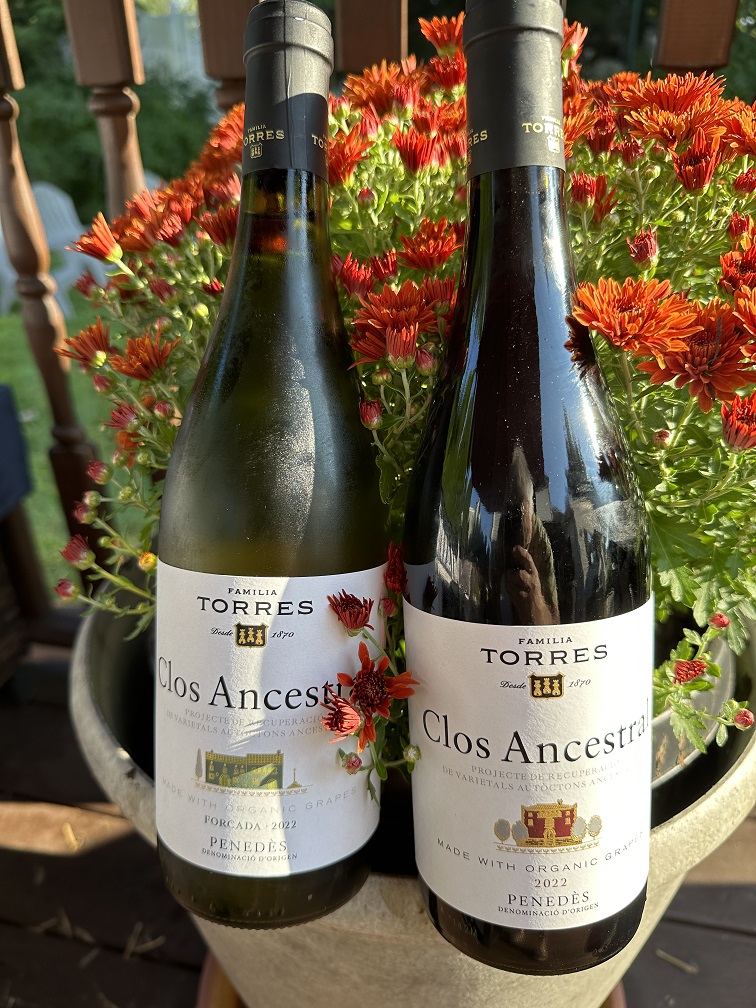 Now Spain comes into the play: as you can tell from the names of the wines, Clos Ancestral, these Spanish wines are celebrating resurrected ancient grapes, all courtesy of one of the largest wine producers in the world:
Forcada (white) – 2022 Familia Torres Clos Ancestral Forcada Penedès DO
Moneu (red) – 2022 Familia Torres Clos Ancestral Red Penedès DO


And here are two more interesting wines from France, not to be outdone:
Mourvedre Blanc (white) – 2021 UNAU Percheron 184 Mourvedre Blanc Vin de France
There is an interesting story behind the name of the wine: “UNAU is named after the female horse at the Fons-Sanatis estate – she is from the Percheron breed. 184 is the size in centimeters of the horse’s withers. Unau is 13 years old. The bottle is from the southwest of France – the cork from Roussillon and the labels are made of vine-plant leaves and stems. There is no use of foil in our packaging – we believe the container should be as environmentally conscious as the content.”
Souvignier Gris (white) – 2023 Petit Sauvage Blanc Vin de France
Also not showing here is one of my latest “strategic” discoveries. There are a few wines in this world produced from many – really many grapes. One such wine is Giribaldi Barolo Cento Uve, made from 152 grapes. Another wine is Vino Della Pace Cantina Produttori Cormòns Vino Blanco, produced from a whopping 855 varieties – while a fun reference, this wine can’t be used to advance your grape count. And then my latest discovery, the wine I had a pleasure tasting this year, Ramos Pinto Urtega from Portugal, produced from 63 grapes (there will be a separate post dedicated to this wine). So yes, there are some shortcuts you can make in this grape journey. And yet a thousand still sounds like an impossible goal.
The journey of a thousand miles begins with a single step. The journey continues one single step after another.
I’m fully enjoying my journey. Wanna come along?
Pleasures of Obscure and Difficulties to Express it in Words
German Pinot Noirs are hard to find in the US.
This story is not about Geman Pinot Noir, but the quest for one played a major role here.
I follow a group of wine-os on Twitter X who are swearing by Pinot Noir from Germany, particularly from Ahr, being the best Pinot Noir in the world, easily rivaling Burgundies in quality. Naturally, my interest was piqued and I started looking for the Pinot Noir from Ahr in the US. The problem is that Ahr is a tiny appellation to begin with, and given the popularity of Ahr Pinot Noir in Europe, this was not an easy task. I found Ahr Pinot Noir on Wine.com and confirmed with the group that it was a good producer. The wine itself was $56 or so, adding shipping and tax was making it even more expensive. Now, American Express credit card often has special offers for variety of merchants, Wine.com often being one of such merchants. I think the deal I registered for was $20 off a $100 purchase – considering that Wine.com shipping for 1 bottle is the same as for 3 (I think it is $20), it was a no-brainer – I just had to find a few bottles to reach $100 and get the discount.
At first, I was looking at some of the familiar wines to add to that Ahr Pinot, but then it dawned on me that I might look for wines to add to my rare grapes collection, which is exactly what I did. In the picture below, you see an end result – a Pinot Noir from Ahr and two wines made from the grapes I have not tried yet.
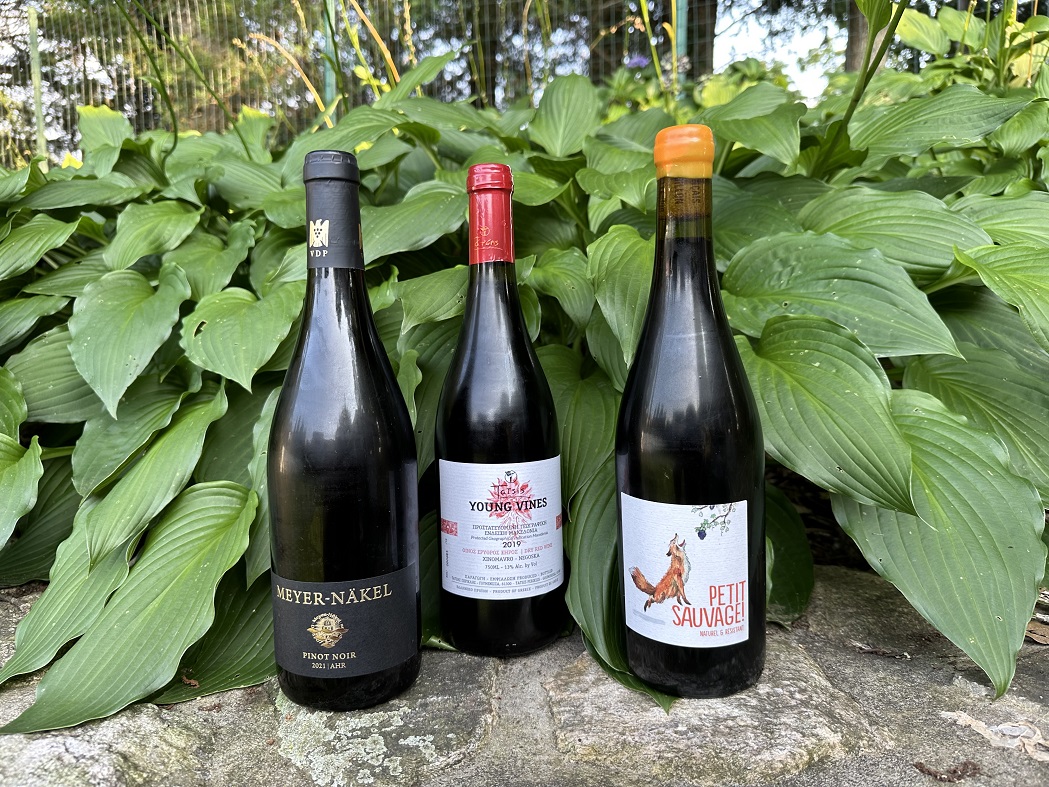
As you might know, I have been a grape geek for a long time, ever since I was bitten by The Wine Century Club bug (probably close to 20 years by now). I’m always happy to taste the wines made from unknown grapes, whether I will be delighted or terrified – it is all a good experience. Also trying a wine made from an unknown grape is extra fun as you can always approach such a wine with an open mind having no references (read: constraints) of any kind.
The 2022 Petit Sauvage Rouge Vin de France (13% ABV) was made from the grape called Cabernet Cortis which I have never had before. Cabernet Cortis is a hybrid grape, created in 1982 in Germany by crossing Cabernet Sauvignon and Solaris, another hybrid grape (last year I tasted the wine made from Solaris in Sweden). The grape was developed to be better adapted to climate change as well as to be disease-resistant.
The wine was uniquely delicious. Some of the uniqueness I need to attribute to the fact that I was unable to describe the perceived qualities of this wine in English. Yes, you heard that right. My mother tongue is Russian, and while Russian is really not the language of wine, one of the Russian words was the best for describing this wine – терпкий (terpkii). The word describes both taste and textural sensation. To give you an idea of the best textural association, I have a strange question for you – have you ever licked velvet with your tongue? I’m serious. Have you ever seen a TV episode where Gary Vaynerchuk explains wine descriptors to Conan O’Brian and forces him to chew on a wet sock? Something like that, only without socks. So if you would ever try to lick a piece of velvet (make sure it is clean if you do), this would be the closest you would get to that descriptor.
I tried translating it using Google Translate, and the best I can get is “tart” – here are a few more options from the Russian-English dictionary: терпкий — tart, harsh, acerbic, acerb, acidy. None of these would do. As a wine descriptor, tart generally means acidic, and devoid of fruit. And this doesn’t describe the textural and taste sensation I experienced when tasting that wine. Tannins probably would work best, especially those called “velvety tannins”, but I’m still not convinced that this is the best way to describe the taste of this Cabernet Cortis wine. All in all, the wine was delicious, a little bit racy and gamey, but this was perfectly integrated into an overall taste profile. And I would gladly drink this wine again if I had a chance.
Well, the only way we can solve this is for you to find this wine, taste it, and explain to me how little I know about wine – I promise to listen, and will be happy to expand my wine vocabulary.
By the way, speaking about tart – the second wine, 2019 Domain Tatsis Xynomavro – Negoska Young Vines Macedonia Greece, made out of Negoska grape, was actually tart, it was tart beyond belief, and basically, not drinkable. It didn’t improve even after a few days. You do have to kiss a lot of frogs in life… But it’s okay, a part of the process.
Here you are, my friends. There are lots more of the rare grapes I need to report on, so stay tuned…
Travel Diaries: Cote d’Azur, Pink Sunsets and Rare Grapes
Cote d’Azur.
French Riviera.
One of the most coveted vacation destinations in the world. I didn’t know that, but according to Wikipedia, “Riviera is an Italian word that originates from the ancient Ligurian territory of Italy, wedged between the Var and Magra rivers. Côte d’Azur is originally a nickname given by France to the County of Nice after its annexation in 1860, because the climate was similar to that of the north of Italy, even in winter, with “a sky as blue as its sea”.” I know it is summer, but here is my illustration of the point above:


An evening in Antibes
Over the past 10 years, I had to travel to Nice a good number of times, and always for business. As a business traveler, I always held a grudge against these trips to the South of France – I don’t like Nice airport, it is one of the most uncomfortable ones, and I had my share of bad experiences in Nice. But the last trip was admittedly better perceived – I stayed at a brand new Marriott property, Moxy in Sophia-Antipolis, which was very nice. And we spent most of our free evenings in Antibes, which is a beautiful small town – still with lots of tourists, but overall incomparable to the crowds of Nice itself.
As you already know, I’m here to inundate you with pictures. As we visited Antibes (and Nice once) only in the evening, the majority of the pictures are related to the sunset. Here you go:


It is not only the sunsets that provided a source of enjoyment during our walks. Thought-provoking, creative statues by Nicolas Lavarenne were another great entertaining element of the Antibes boardwalk – I have to say that I really enjoyed them. Here are a few of the highlights:


Here are more of the sunset pictures:


And now my most favorite, the one I promised you in the title of this post – pink sunset:

Before we part, a few words about the wine. I had a few of the decent wines during the week, some local, some not. 2023 Estandon Brise Marine Blanc Méditerranée IGP (Clairette, Ugni Blanc) and 2023 Estandon Brise Marine Rosé Méditerranée IGP (Cinsault, Grenache, Syrah) were both on point, crisp, refreshing and light. 2020 Caves de Rauzan Mascottes Olga Cabernet Sauvignon Merlot Bordeaux AOC (13.5% ABV) was also very good, on par with the excellent 2020 vintage, and overall very generous and supple.


My personal highlight was the 2020 Château de Bellet Rouge Bellet AOP (14.5% ABV, 35% Folle Noire, 25% Braquet, 40% Grenache). This was a super-local wine, with the vineyards and winery located in the Nice area. The wine had a nice core of dark fruit, a hint of my beloved barnyard and a silky-smooth texture. Not only the wine was delicious, but it also added two new rare grapes to my collection, inching closer to the coveted Hexavin goal.
That’s all I have for you today. Hope you enjoyed looking at the pictures as much as I had fun taking them.
Low Calories, Low Alcohol Wines – Second Encounter
About a year ago, I tried for the first time the wine deliberately produced to be in the “low calorie, low alcohol” category – you can find the story here. You might want to refer to that article as I made an effort there to explain how calories are calculated in wine, which I’m not planning to repeat today.
Back in April, I was offered to taste two of the low-calorie, low-alcohol wines – and this is where the story started. To put things in perspective – the “low calories, low alcohol” Pinot Noir I tasted a year ago had 124 calories per standard glass – versus 154 calories in the glass of full-bodied Cabernet Sauvignon – with 30 calories difference, you make your own conclusions. To be clear, I relegate the “low calories” sentiment to pure marketing – therefore when I got an email with an offer to review two low-calorie wines, my first inclination was to respectfully decline. Also, the wine labels in the picture had a clear message depicted with the standout letters LO CA – I attributed CA to California which was also kind of a letdown as I prefer Californian wines to be unmanipulated.
After skimming (sic!) through the email I wrote back a reply (tirade, rather) explaining how I would only write about wines if I like them, and I wouldn’t write about them if I don’t like them – of course, this was obvious, but nevertheless, I decided for some reason to stress it and then agreed to try the wines.
A few days later I got the wines and then it was time to taste them. I took pictures of the bottles and studied the labels of the wines I was about to open. The wines are from California, so it is given that the white wine is Chardonnay, and the red should be Cabernet Sauvignon… Malbec? Why does it say Malbec? Malbec from California? What an unusual choice for the low-calorie wine!
oohhh…
Why does it say “Argentina” on the label?
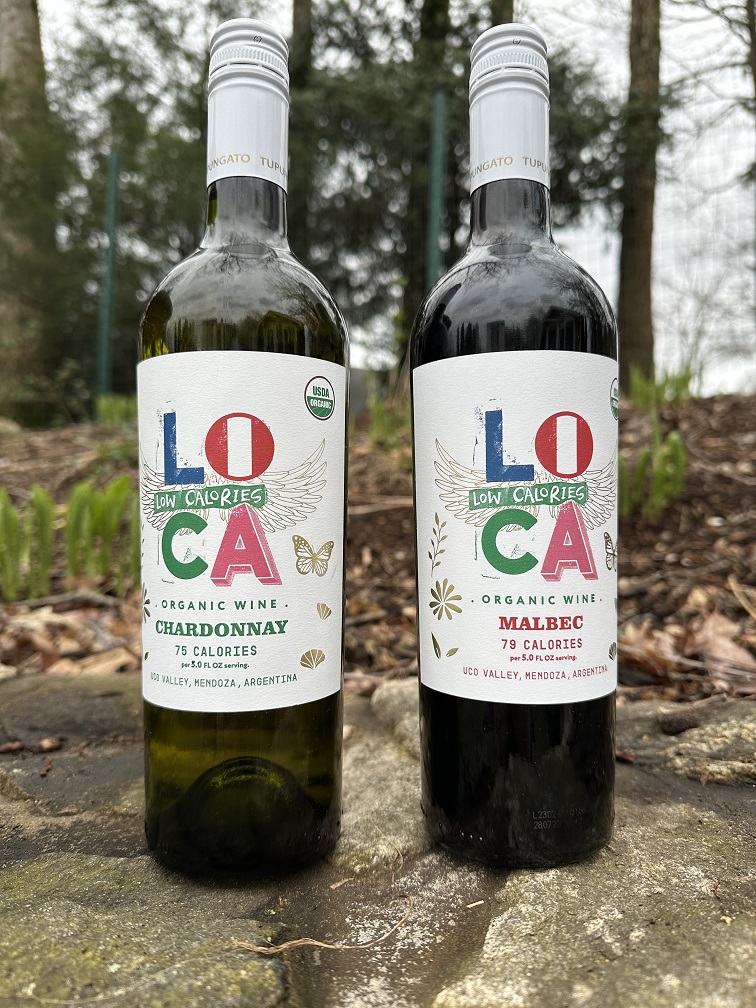
Ah, the wines are from Argentina! LO CA simply stands for LOw CAlories, that CA has nothing to do with California (also “loca” means “crazy” in Spanish, but this is probably unrelated?). And the wines are produced not by some unknown little winery but by Domaine Bousquet, possibly the best organic wine producer from Argentina and one of my favorite producers overall as so far I haven’t had a bottle of wine from Domaine Bousquet that I didn’t like. And now I feel embarrassed.
Remember I told you that I skimmed through the email instead of actually reading it (horrible habit, I know)? If would carefully read the email this embarrassing situation would’ve been avoided, as I would just gladly accept the wines from Domaine Bousquet – I quickly rushed to write an apologetic email explaining my error in judgment.
From here on I was a lot more encouraged to taste the wines, and now was really looking forward to the first sip.
In almost 35 years of its existence (while vacationing in Argentina, Frenchman Jean Bousquet purchased 1,000 acres of arid desert in Gualtallary Valley in Uco Valley in 1990, the beginning), the folks at Domaine Bousquet accomplished truly a lot – a lot more than thousands and thousands of other wineries accomplished in their lifetime. Domaine Bousquet produces 4 million liters (the equivalent of 5.3 million bottles) of wine 95% of which is exported to 50 countries. More importantly, the winery started practicing organic viticulture in 1997, and today it is USDA-certified organic, Ecocert-approved, and Regenerative Organic Certified™. To make sure you can fully appreciate it, there are only 21 regenerative organic certified wineries in the world at the moment of this writing and Domaine Bousquet was the first winery in Argentina to obtain this certification.
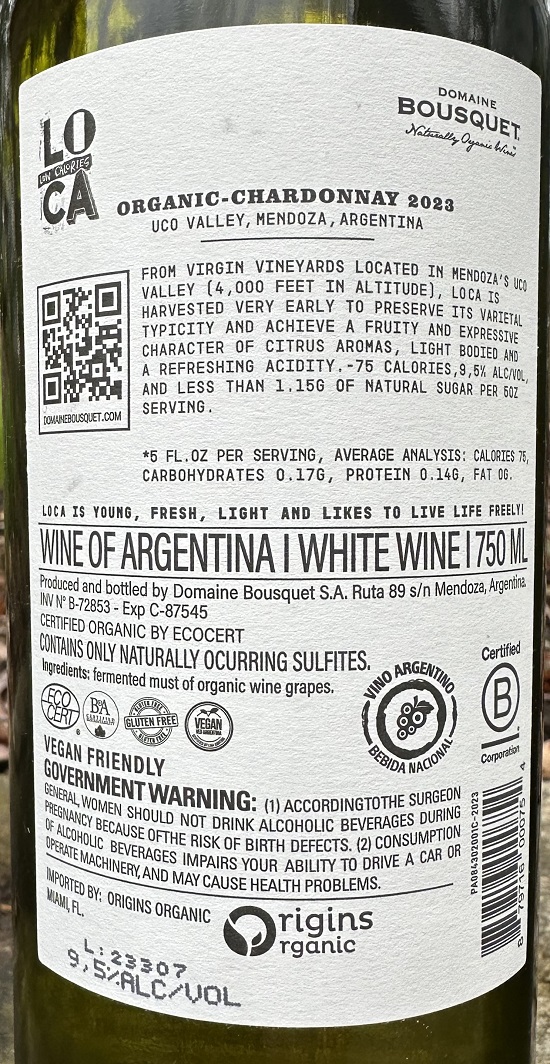 How do you make your wines low calorie, low alcohol without any manipulation? I didn’t think of it, but as I started working on this post I had to read a bit about the wines I was tasting, and it appears that it is easy 😀you just harvest early.
Here is the information from the winery notes for these two wines:
“Grapes were harvested in the early summer, between late January and early February, about two months earlier than for standard bottlings. To guarantee optimum quality, different parcels were picked at different times. The grapes were then fermented in stainless steel tanks for 12-17 days. Bottling followed shortly after to ensure peak freshness, preserve its varietal typicity, and achieve a fruity and expressive character.”
Now, the culmination point – my impressions after tasting the wines.
2023 Domaine Bouquet LO CA USDA Organic Chardonnay Uco Valley (9.5% ABV, $14, Residual Sugar: 1,21; Acidity / PH: 7.72/3.21; 75 Calories):
This was an interesting experience. The nose was muted, and on the palate, there was still not much except the acidity. The wine had nothing but the acidity. Dont’ get me wrong – it was drinkable, but it was truly competing with Muscadet for the title of “Best oyster wine”. I would be more receptive to this wine if the label wouldn’t say Chardonnay, but instead simply said “white wine”, as I have certain varietal expectations for Chardonnay wines. Over the next few days, the wine continued to be drinkable and complexity increased a bit, but still the acidity was the key element.
Verdict: Food wine. I would love it with oysters, and I’m sure you would too. You can probably have a glass on its own on a hot summer day, but better have the food ready.
2023 Domaine Bouquet LO CA USDA Organic Malbec Uco Valley (9.5% ABV, $14, Residual Sugar: 1,21; Acidity / PH: 5.62/3.62; 79 Calories)
This wine was even more interesting than the Chardonnay. Beautiful ruby color. Nose of the fresh, just harvested wild berries, delightful. The palate offered the same berry medley, fresh wild berries all the way but without structural support, and of course acidity driven. This wine reminded me of how Beaujolais Nouveau was 10 years ago, just fresh berries and nothing else. The wine lasted for a few days, gaining a bit more complexity (a welcomed development). I wouldn’t say it is my wine, but if you are looking for a refreshing wine for a hot summer day, this might do it. And I only realized now, when I’m writing this, that I should’ve chilled the wine and it probably would make it more interesting.
Verdict: It is drinkable, and if you are really looking to cut some calories, this might be the wine you need – just don’t overdo it, because an extra glass with low calories will instantly negate all your “low-calorie” achievements. Serve chilled.
Here you go, my friends. Two organic wines, low calorie, low alcohol – perfect to serve at your next summer party. Just have the food ready.
Travel Diaries: Europe 2024: Paris
And now it is the time for pictures – lots and lots of pictures – from our European adventure 2024, starting from our first stop – Paris.

Paris needs no introduction – an eternal city of love, a source of inspiration for all things art, a coveted destination for millions every year.
So what did we do in Paris? First, I have to mention the hotel where we were staying. Whenever possible, I’m the Marriott guy. During this trip, I used a serious number of points to pay for our stays in Paris and Rome. In Paris, we stayed at the Marriott Ambassador Opera Hotel, and I have to say that this was one of the best hotel experiences ever. Spacious rooms, the whole hotel appointed with pictures of the fragments of the sheet music, elements of ballet and dance. Just beautiful. The concierge lounge on the top floor offered great views of the city, excellent food, lots of comfortable sitting. If you are planning a trip to Paris and can figure out the way to stay there, this is an excellent hotel.
Our sightseeing included all of the usual suspects – Père Lachaise cemetery (we went there in the morning – an interesting way to start your day, but definitely worth a walk through); Louvre (no we didn’t try going inside while having only 2 full days in Paris); Montmartre with an insane amount of people – I wanted to walk around to see the painters, but it was physically impossible to get through the crowd – well, at least we saw the basilica.


We also managed to visit the Rodin Museum and Gardens on the first day (Thursday), and again we had to work our way through a significant crowd – but at least walking through the gardens was quite pleasant.


Eiffel Tower (I’m guessing freshly painted for the Olympics but I might be wrong) was, of course, an important destination – we walked around and also took a cruise to see the sunset and the Eiffel Tower brightly lit at night. A short stroll through Champs-Élysées through the scaffolding of some construction for the Olympic Games completed the experience. In the evening, we took a cruise on the Seine – just a cruise without dinner (I had a dinner cruise last year, and it was not worth it in my opinion), and I captured some beautiful sunset moments.


The next day we went to Versailles, but before we talk about it I need to lament about Paris Metro. On one hand, I believe the Paris subway is literally one of the best in the world, for sure for the tourists. At each track, there is a full list of all the stations for a given direction – as long as you know the name of the station of your destination, you have no problems orienting yourself. However, everything has two sides. To enter the subway station, you need to use a ticket which is a tiny piece of paper with a magnetic strip. Even if you buy a day pass, it still comes in the same format. Now, if this little piece of paper gets anywhere near your phone, it gets doomed. And it is doomed in a funny way – you can’t enter the station, but when you ask an agent to check it, they run it through their machine and tell you that there are no issues. I ended up storing all the tickets in my wallet and this was the only way to get those tickets to last throughout the day.
Now, Versailles. I bought timed tickets with an audio guide a few months before the trip (we had only one day available for the visit, so I couldn’t take any chances), so we had no problems getting in.


Honestly, I was reasonably unimpressed with the palace (feel free to ostracize me, but the palace was very similar to the Newport mansions). However, the gardens were absolutely beautiful – except literally none of the fountains were working, so it definitely took away from the experience.


Just to touch on food and wine – we visited a few restaurants, but didn’t have any standout experiences, so below is just a quick summary as it simply feels wrong to talk about France and not to include any pictures of the food.


Then it was Sunday, and time to go to Orly airport…
Travel Diaries: Europe 2024
The European family trip was fully planned – Paris, Milan, Tuscany, Rome. Hotels and airline tickets were booked, and only train tickets remained to be put in place. This will be a great trip. July 2020 was shaping up to be a great time.
Yes, you read it correctly. July 2020. The month that never happened. along a few years. But the desire to have the family trip to Europe never went away. The original idea behind the trip was to celebrate two important events in the youngest kids’ lives – graduation from university and high school. 4 years later, that was the time to celebrate another university graduation – and as Covid became history, we could get back to planning the European trip again.

Everything in life has its silver lining, sometimes we just can’t see it. With our trip, there were a few advantages. First, the trip was moved to May instead of July. I’m sure both Paris and Rome are beautiful in July, but July is a very hot month for both cities. Going in May saved us from the heat torture. The second advantage was that my original plan (Paris-Milan-Tuscany-Rome) over the 10-day period would create way too much stress. Going directly from Paris to Tuscany evened out the whole experience, making it more relaxing.
So what is this all about? I’m writing this post while sitting on the plane flying back from Rome. We had a great trip – we saw a lot, ate a lot of tasty food, drank delicious wines, and were able to relax at the same time. I want to share this experience with you including a few of the good learning points in the hope of simply helping and encouraging someone to take that trip you’ve always wanted to take and feel good about it. Here I plan to share some general thoughts about the trip – the things we either did right or learned. Then I will inundate you with lots and lots of pictures and details about food and wine in the subsequent posts.
Few of rationales behind this trip planning. The kids (grown-up, yes, but still) had never been to France and Italy. They have never experienced European trains. My wife and I have never been to Tuscany. These were important points that I wanted to cover in my trip planning.
We started our trip in Paris, where we spent 3 nights. Then we flew from Paris (Orly, nice and easy) to Florence on Sunday morning, using one of the budget European airlines, Vueling. Got to Florence, got our rental car, and drove about 1.5 hours down south to stay at the agro farm for four nights. After that we drove back to Florence, but now to the train station, and took a high-speed train from Florence to Rome. Three nights in Rome and back to where we started, New York.
While in Tuscany, we visited Siena, where we had a walking tour with the guide. Same in Rome – we had guided tours of the Vatican, the Colosseum, and a bit of Rome itself.
In retrospect, the whole schedule and trip logistics turned out quite well, allowing us enough time for sightseeing and relaxation. Here are a few learning points and suggestions based on our experience.
Plan ahead
I started the planning at least 9 months out. Of course, not everything can or needs to be done so far in advance, but if you want to have specific flights (schedule/stops/airline), and specific hotels, do start as early as you your made the decision to go. Double that effort if you plan to use award points and miles.
Book your tours to the popular attractions online/as early as possible
I don’t know about you, but lines are one of my most hated things – and you should’ve seen the line going round and around the Vatican with all the people who want to see it – this was one long line. So timed tickets are the way to go, whenever they are available. Here are the links for booking the timed tickets (these are the current links at the time of this writing – I can’t guarantee you they will not change.)
Booking a timed tour of the Vatican (60 days in advance)
Booking a timed tour of the Colosseum (30 days in advance)
Use tour guides!
I know, the tour guides cost money. But they also help you to create deeper, longer-lasting memories, and they make your “walking around” interesting and worthwhile. I also believe that it is best to get references for the tour guides, as I’m sure they are not all the same. Both of our tour guides in Siena and in Rome were incredible and if you are interested, I will be happy to facilitate the connection.
Remember, people live there
This might sound banal and “duh”, but remember, while you are a tourist, not everyone is around you – especially when it comes to the cities. You will be competing for the same attractions and especially, the restaurants, with the people who actually live in those “tourist attractions”, so when you are out and about Friday night or Saturday, so are the locals. Plan accordingly.
Reserve ahead
I already suggested that you should reserve your attraction tickets as early as possible. But you have to also do the same with the restaurants. Of course, you will always find a place to eat. But if there are any specific restaurants you want to try, start making reservations 30 days in advance, and possibly even earlier. Trust someone who’s spent lots and lots of time trying to find a reservation at one of the recommended restaurants about 3 weeks before our trip – with literally no availability in sight.
Trains in Europe are not what they used to be
Sure, it is my age talking, but about 20 years ago, you could rely on the schedule of the trains in Europe to be rock solid. Now, there are strikes, and your trains can be delayed or canceled, the same as airline flights. When we came to the Florence train station, my heart literally sank – two of the earlier trains to Rome were delayed by 100 and 70 minutes and I heard the word “strike” over in the announcement. At that moment, I regretted not driving directly to Rome from the place where we stayed instead of going in the opposite direction just because I wanted to provide a European train experience to the kids. We got lucky and our train was delayed by only 5 minutes, but keep the possibility of a strike in mind.
Don’t overextend
I can’t speak for Europeans who often have 6 weeks of vacation. When your typical vacation is only 7 to 10 days, obviously you try to do as much as possible, see as much as possible, and experience as much as possible. But converting your vacation into a race is a mistake. Accept that you will not see everything you want at once. Allow for a slow time. Let life happen around you without hurrying it up. Spending 4 lazy days in Tuscany after 3 full days in Paris and before fully embracing Rome worked absolutely the best and in my opinion, made a very good vacation into a great one.


Lastly, keep in mind that planning is great but you also need a little bit of luck. We were lucky with the weather (not too hot, not too cold, and not a day of rain), we were lucky with our flights, we were lucky with our train ride. Just remember that things might happen, whether you want that or not.
That’s the end of my uninvited advice. Now, get ready to be inundated by lots of pictures and tidbits of our travel escapades.
Beautiful Lights, 2023 Edition
While I don’t celebrate Christmas, I still love the lights. I grew up celebrating the arrival of the New Year, and while this was borrowed from the Christmas traditions, there was always a tree for the New Year, ornaments, and lights.
It might be just me, but it seems that the holiday light displays are becoming more widespread, for sure when made as attractions. Or maybe it was always around and I just never took my time to notice them – but I definitely do now.
Newport Rhode Island is one of our favorite travel destinations in general, and particularly during Christmas. We visited Newport back in 2017 to see Christmas decorations, and thinking about that visit, I couldn’t believe that that visit took place 6 years ago. This year, we also decided to visit the Sparkling Lights display which was shown in the evening at the Breakers. As you can imagine, I have a bunch of pictures to share with you. But before we visit Newport, I would like to mention my hometown – Stamford, Connecticut.
Stamford always has some beautifully decorated houses we loved to visit over the years. But this year, we had a “notch up” experience. Driving back from our local supermarket, my wife said “hey, wait, I want you to turn around”. When I asked why, she said that she saw a glimpse of a nicely decorated house on a parallel street, and we should go see it. When we got there 2 minutes later, the view greatly exceeded my expectations – might be the best Christmas lights display I ever saw at a private house – and the best part was that we could park the car and just walk around the decorations. So let me start my inundating display with these pictures:






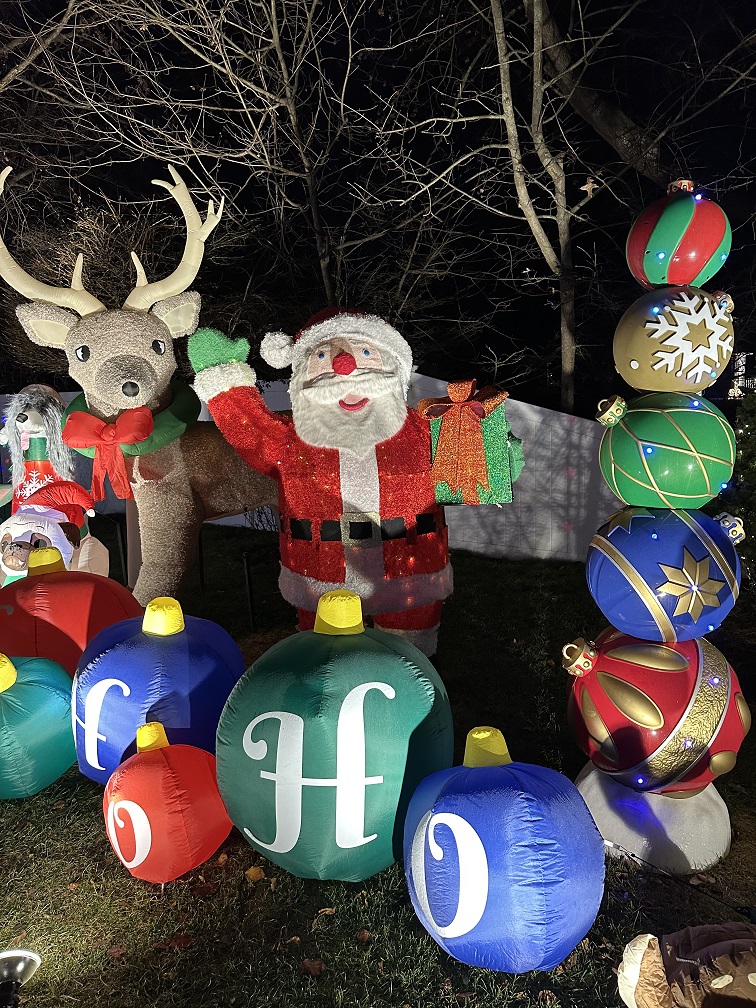



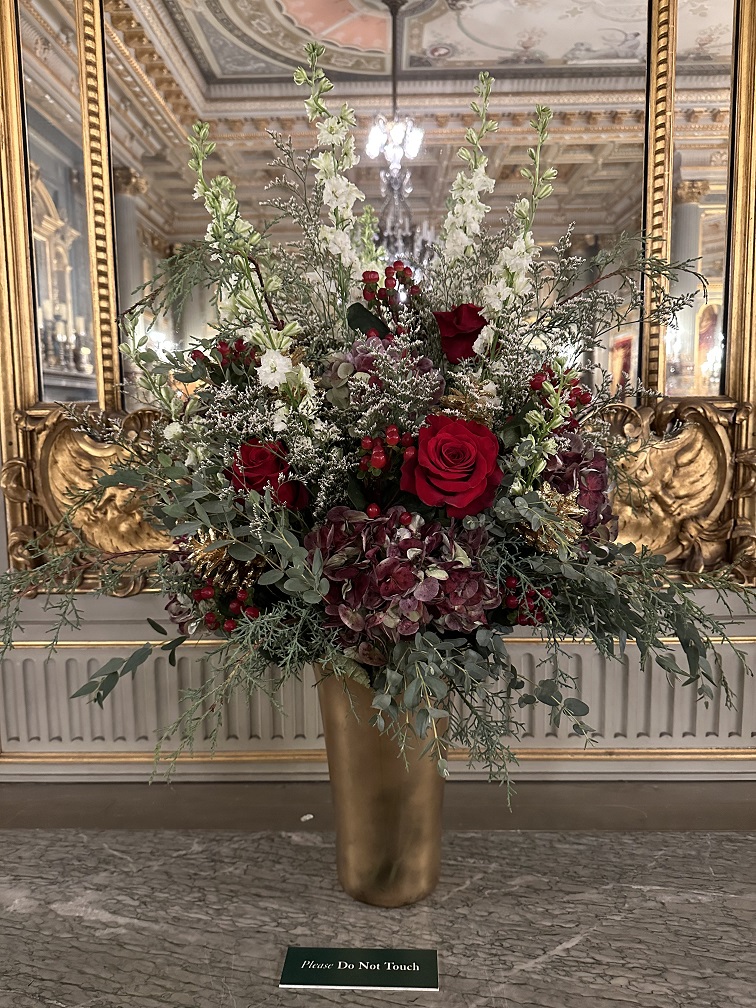
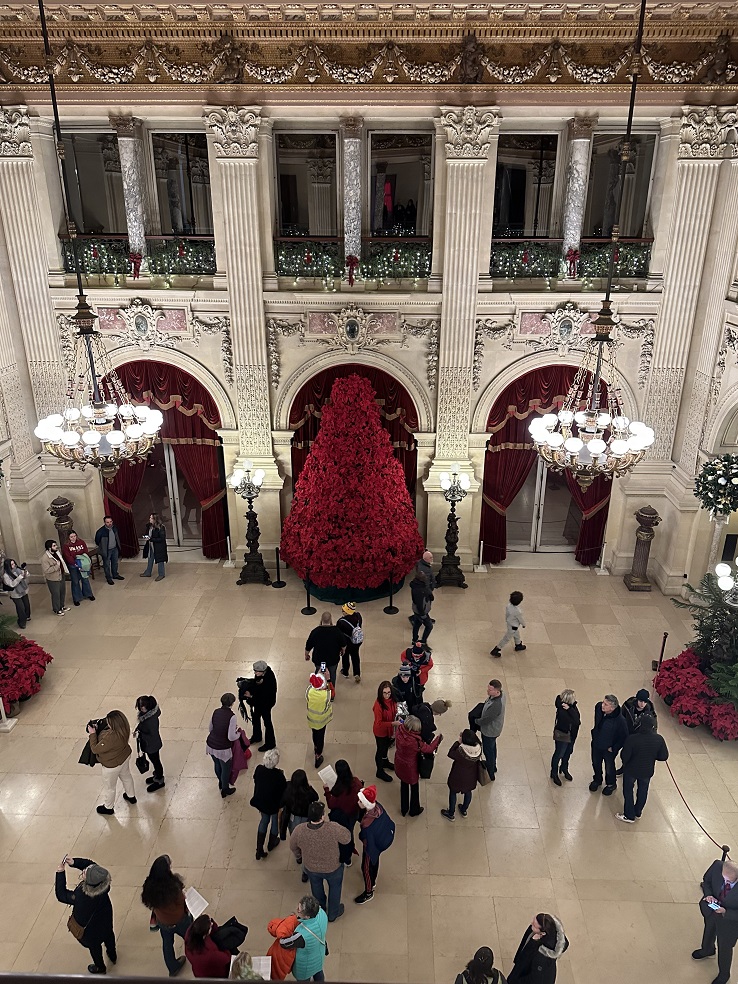
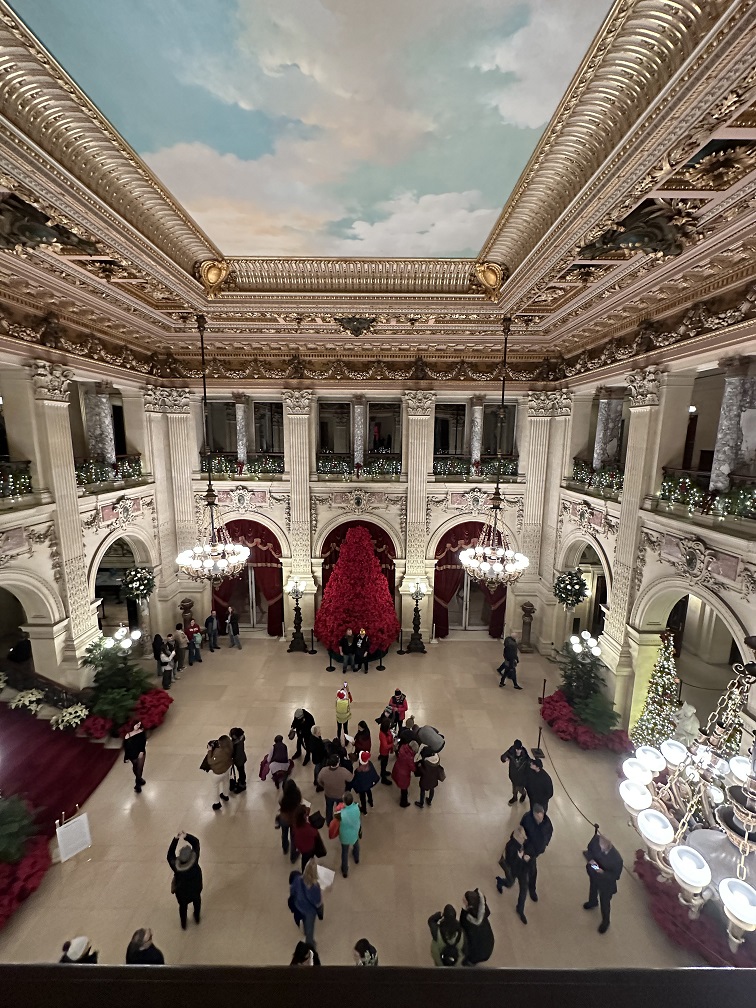
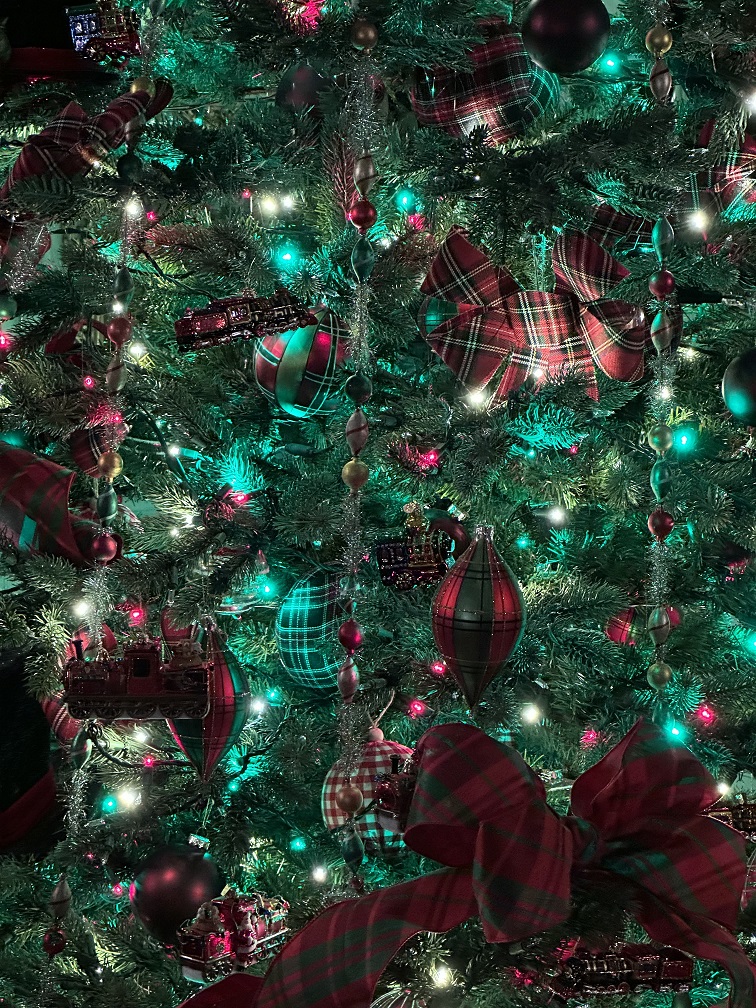
And now, here are the pictures from the Breakers, the Sparkling Lights display:
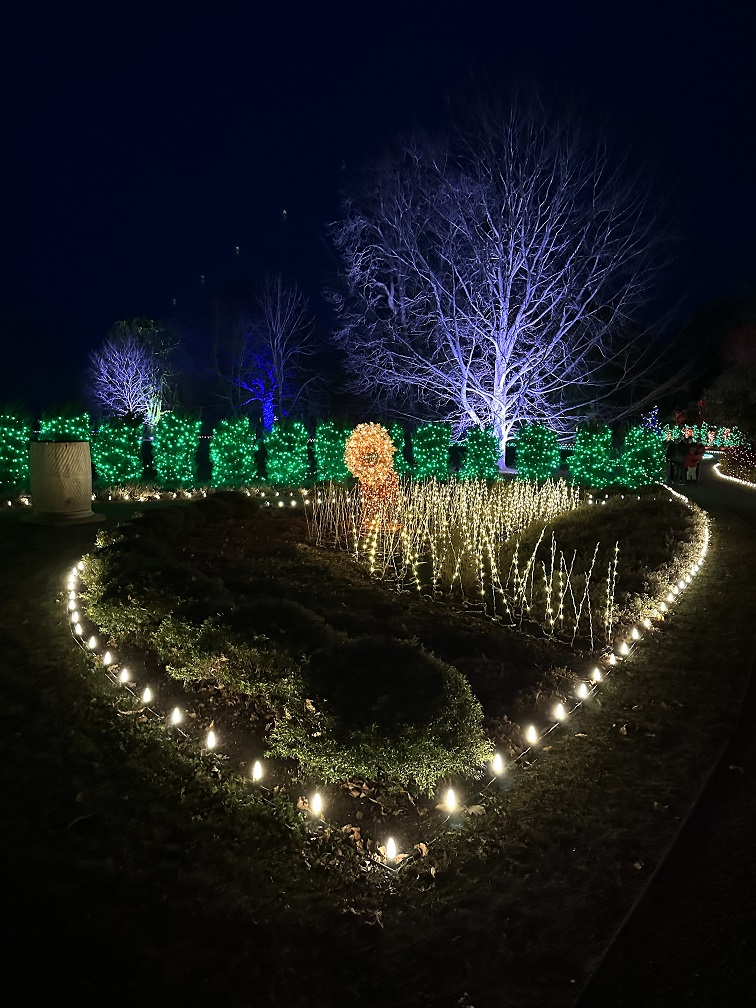


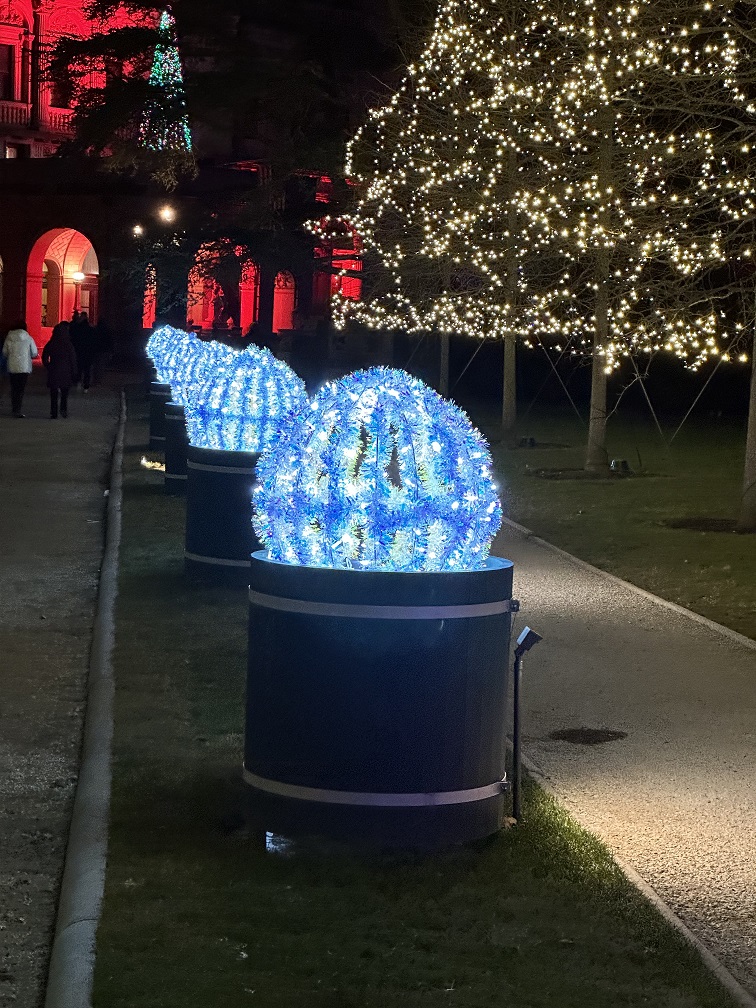

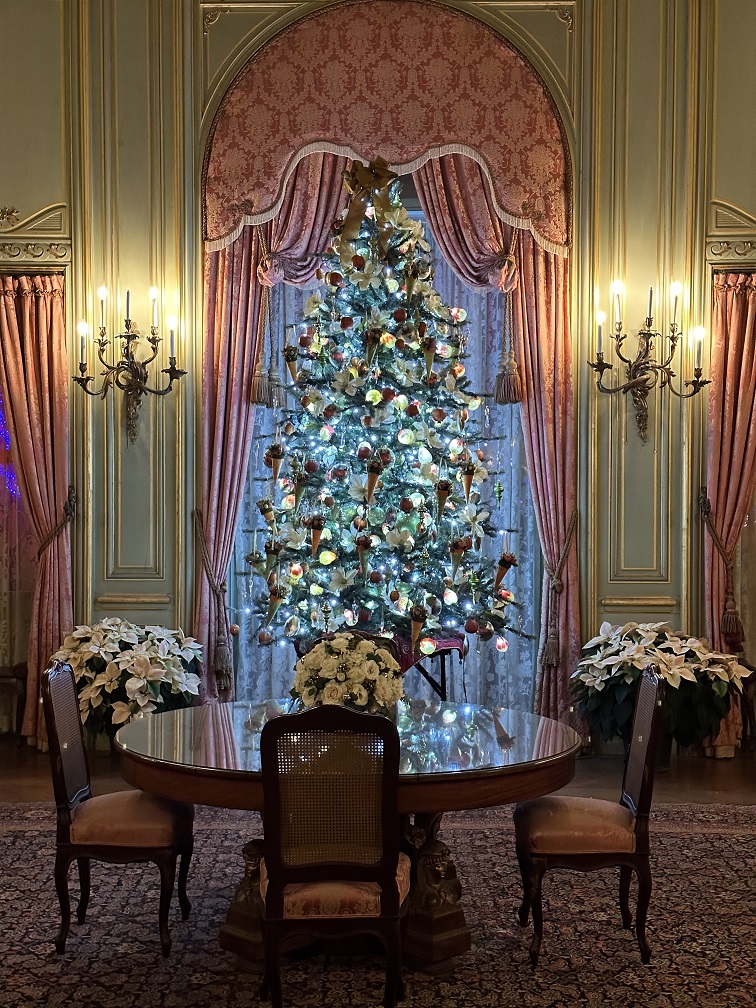
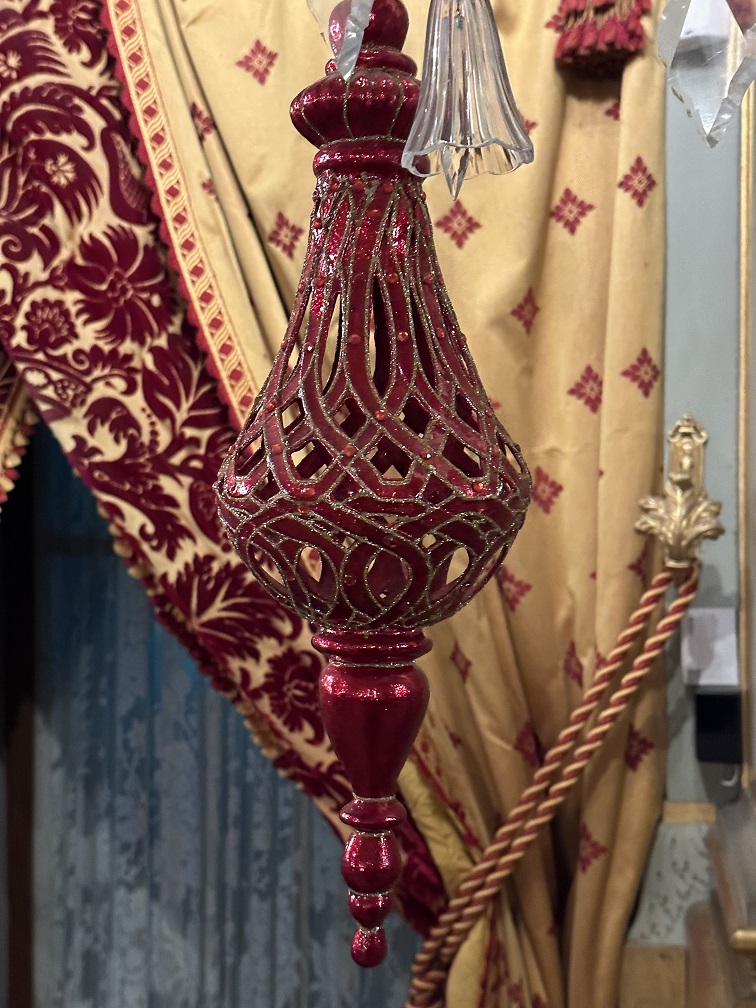


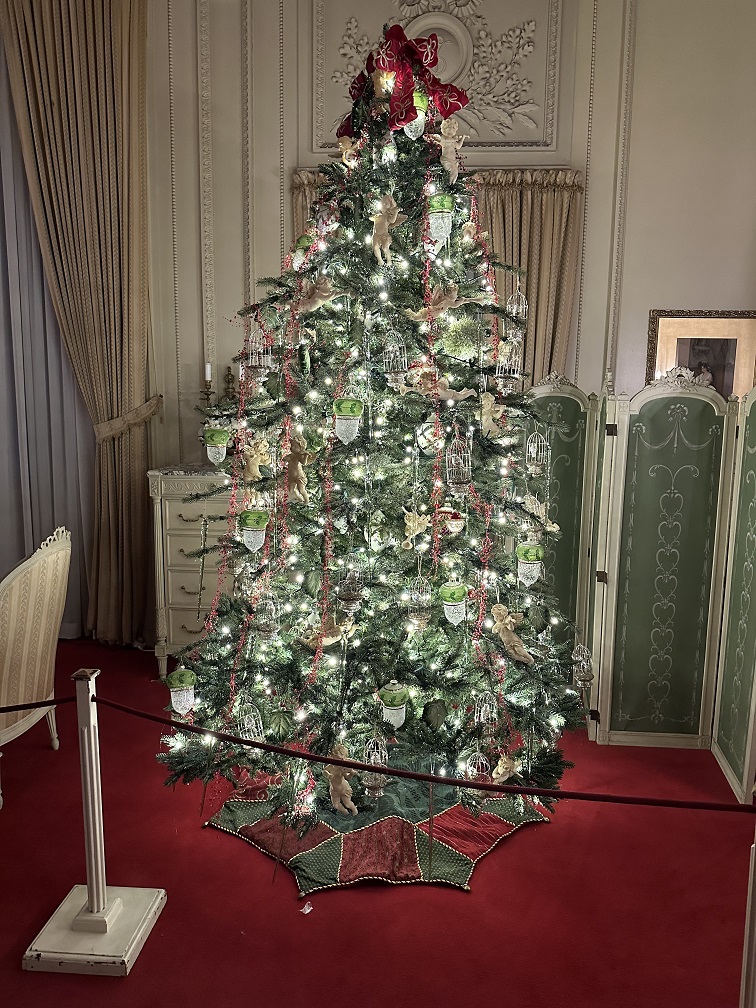
Here are a few pictures from the Elms:
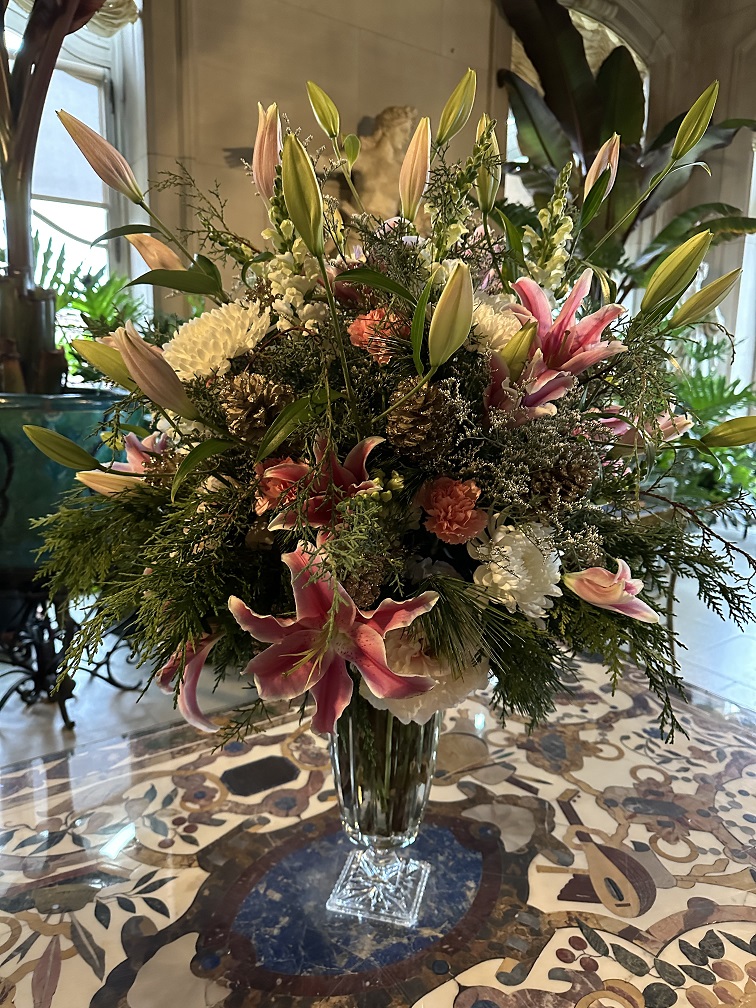
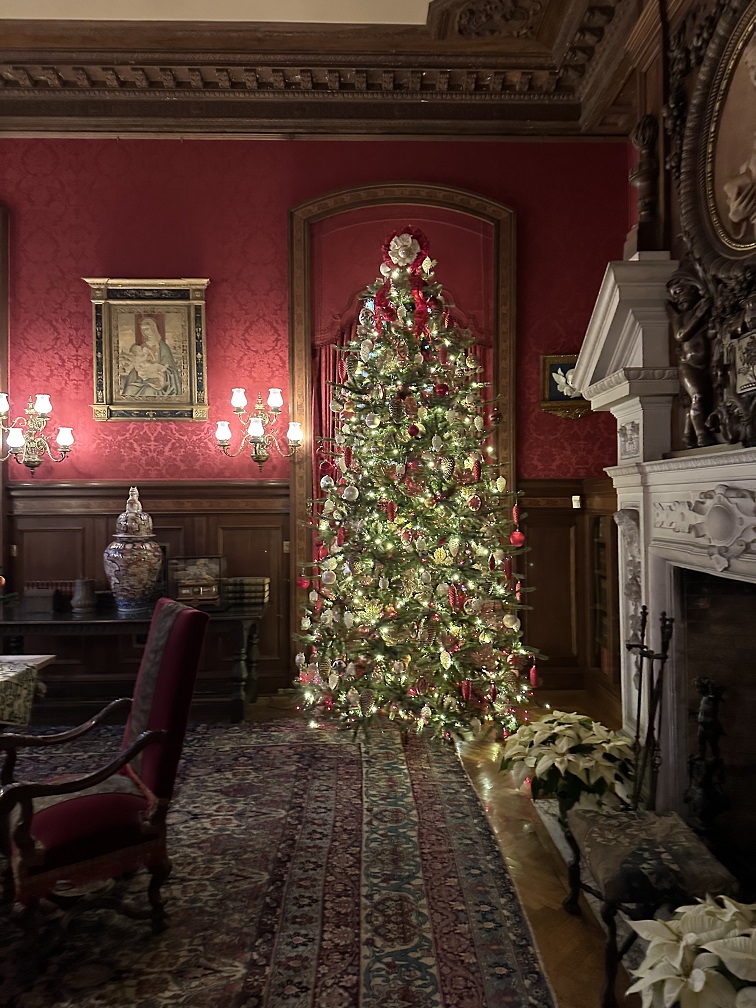
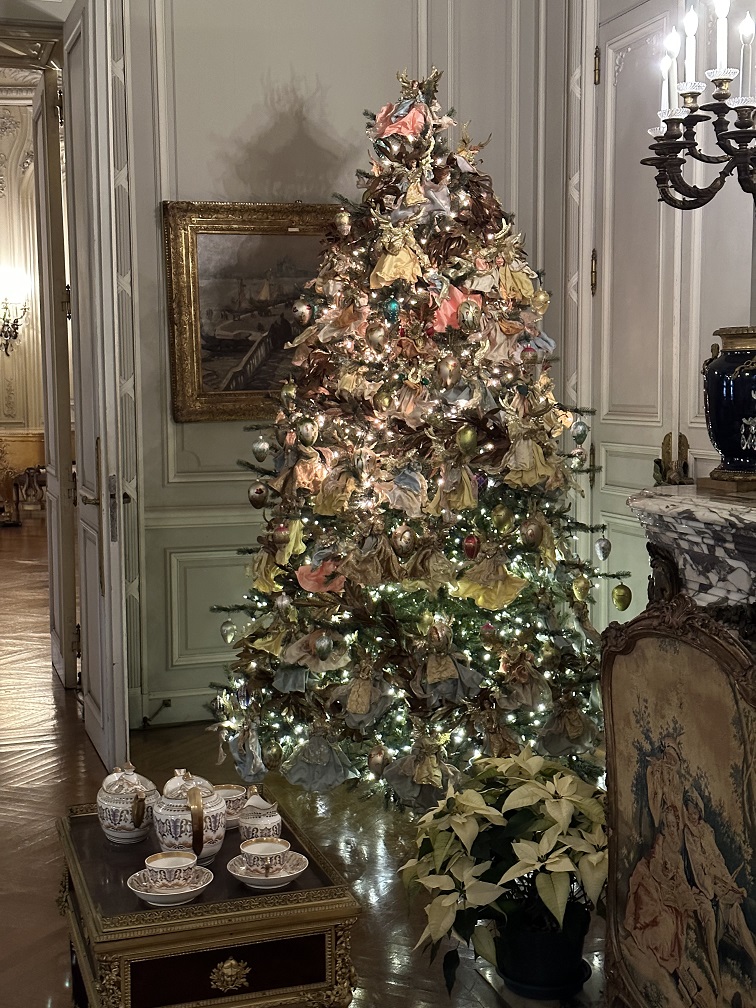
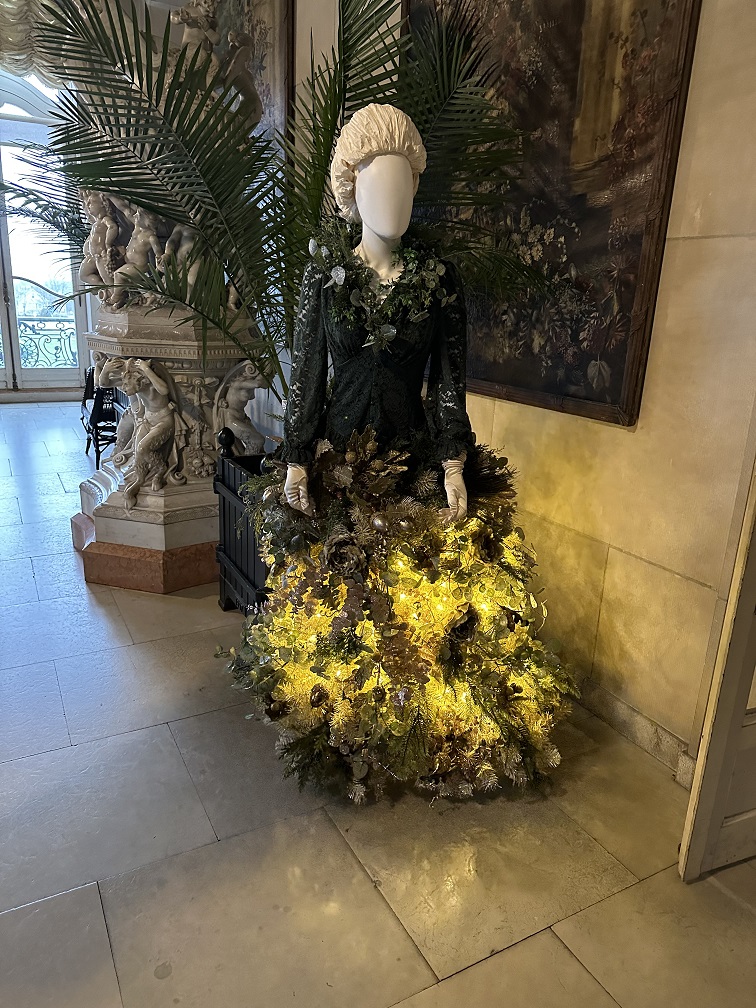
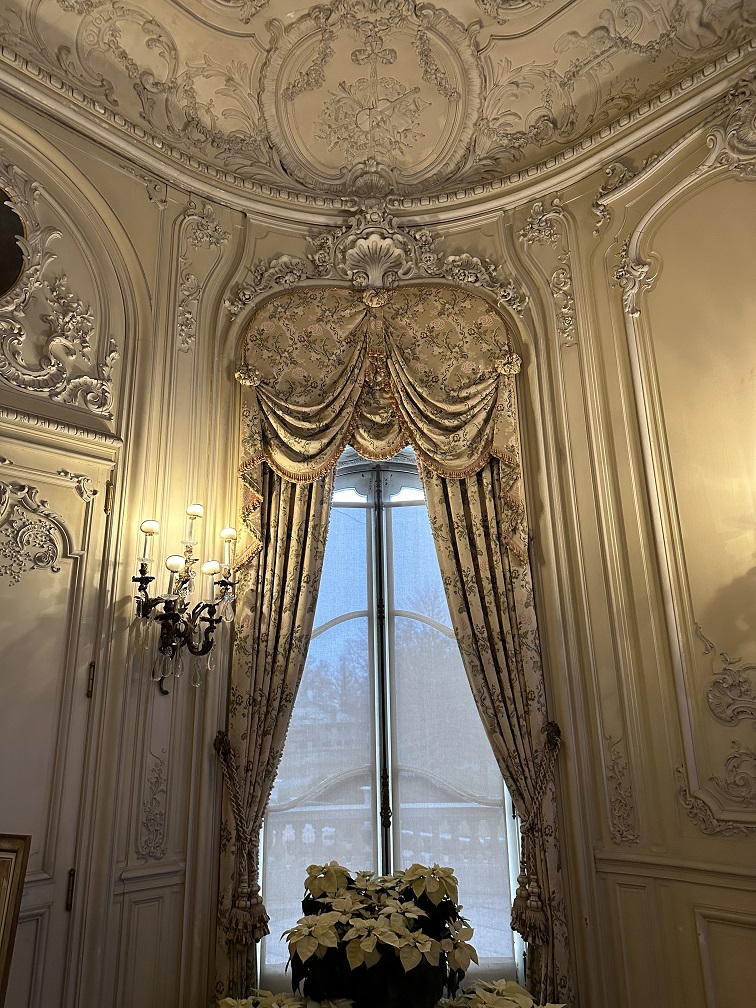
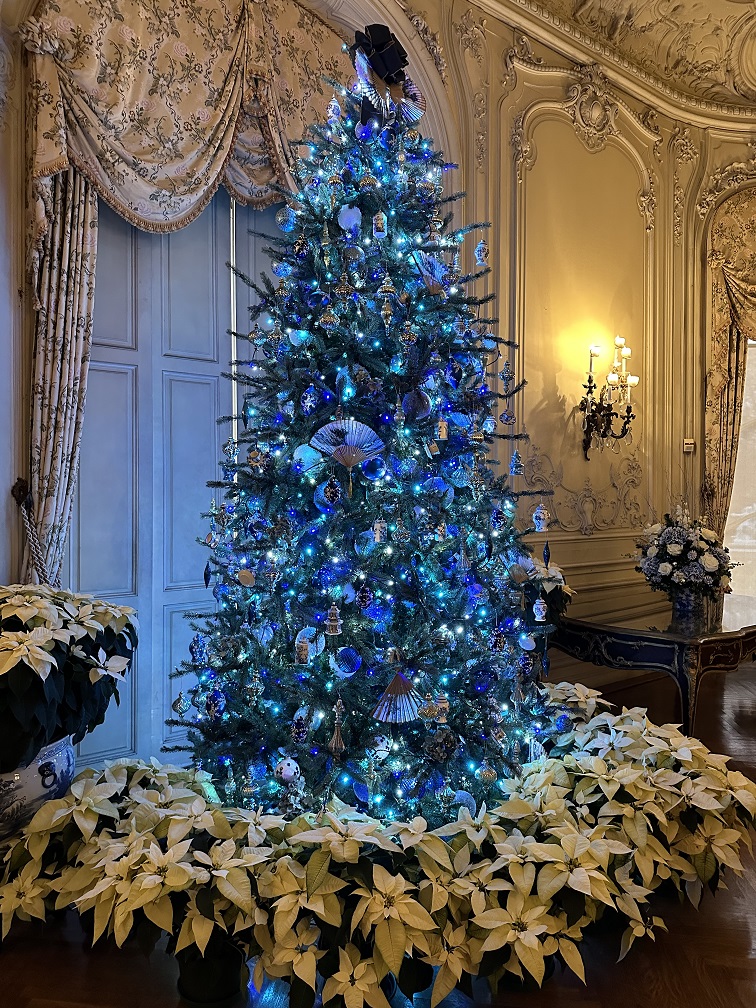
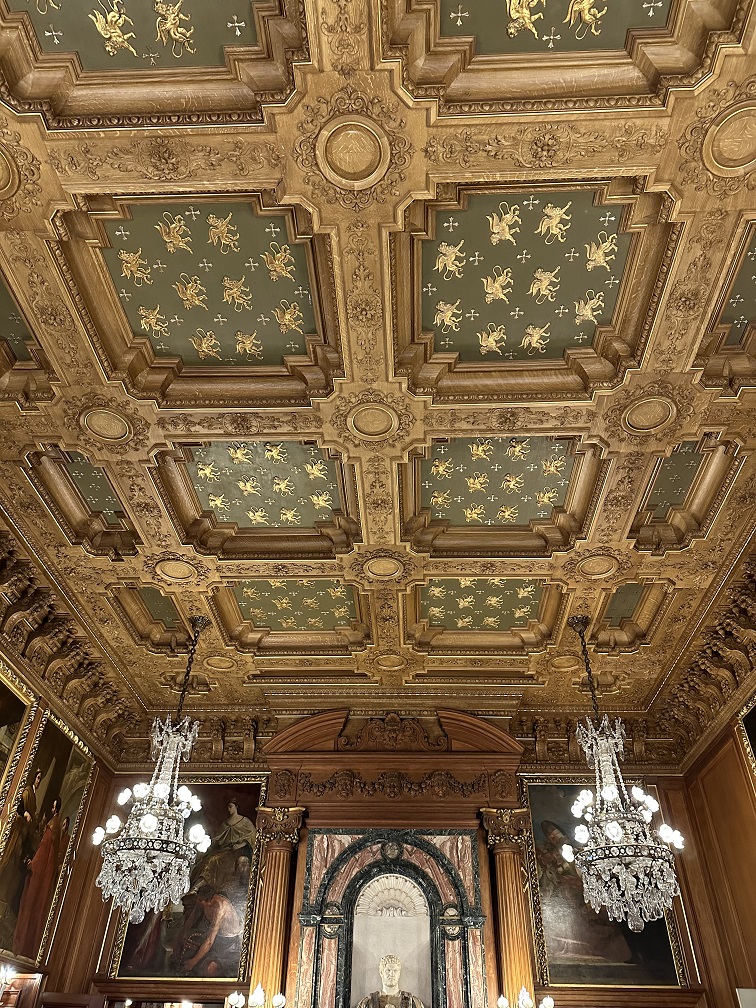
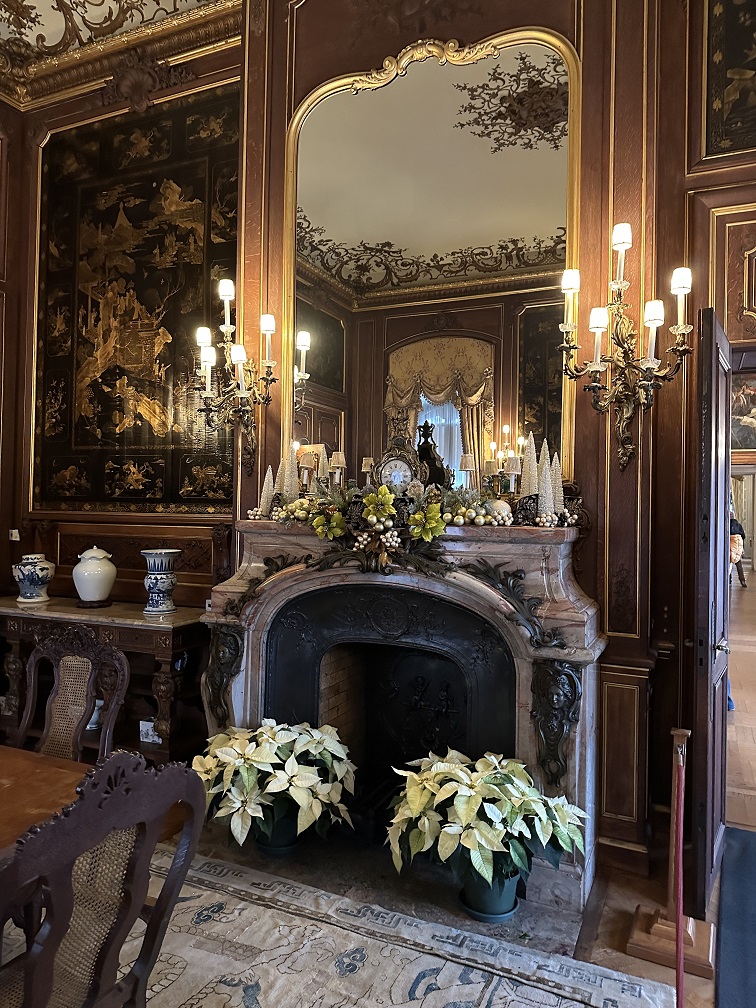
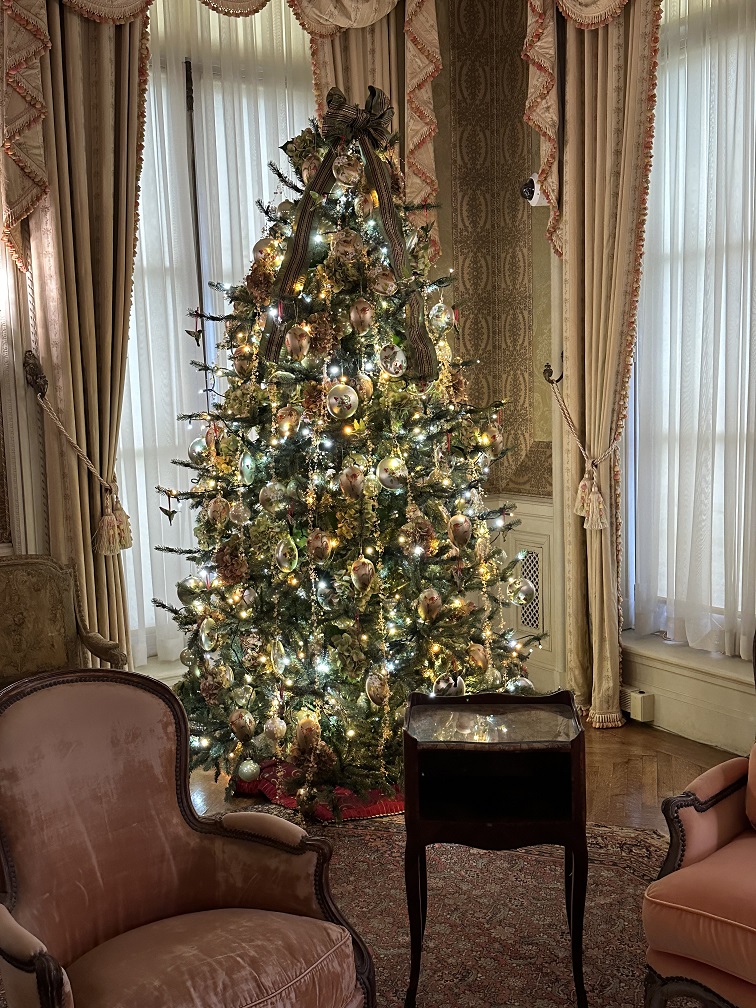

And probably my favorite of the whole Newport trip – the Marble House:
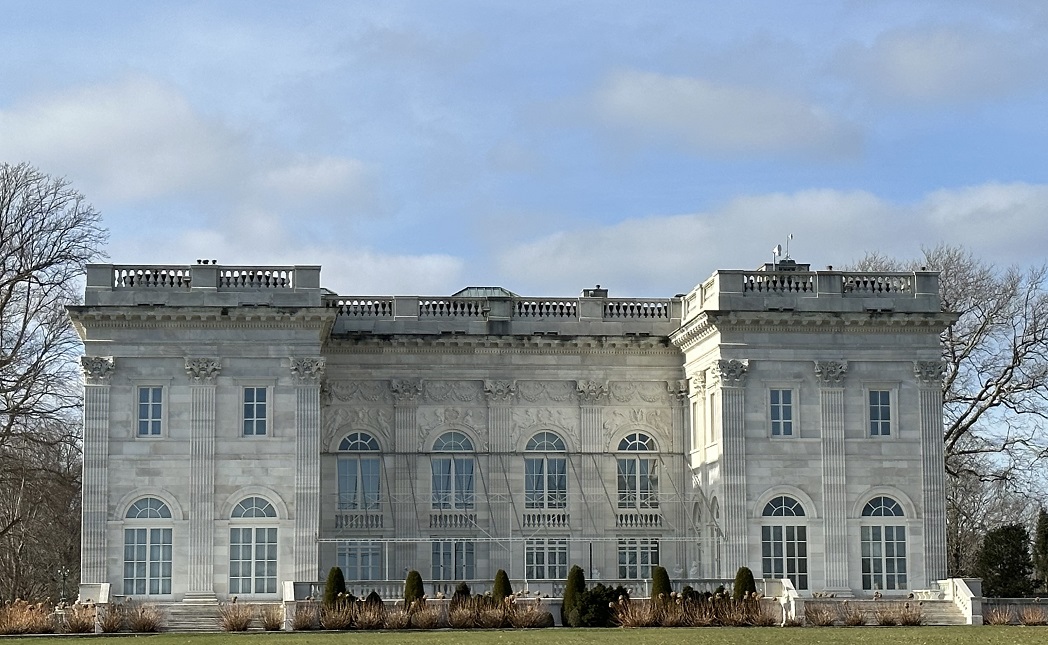
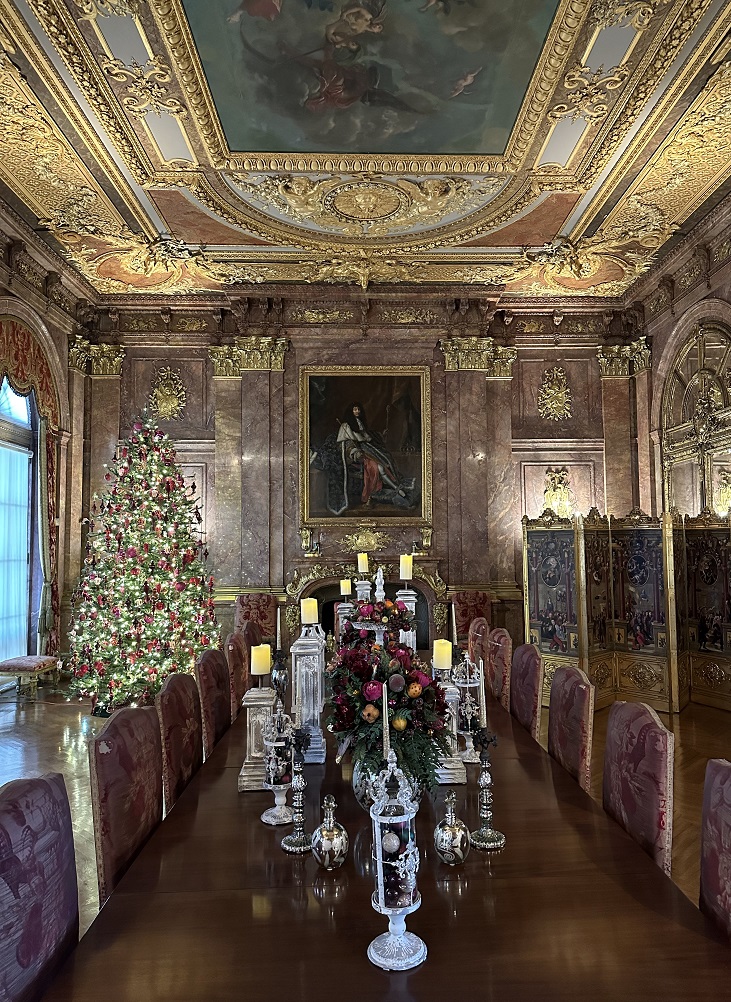

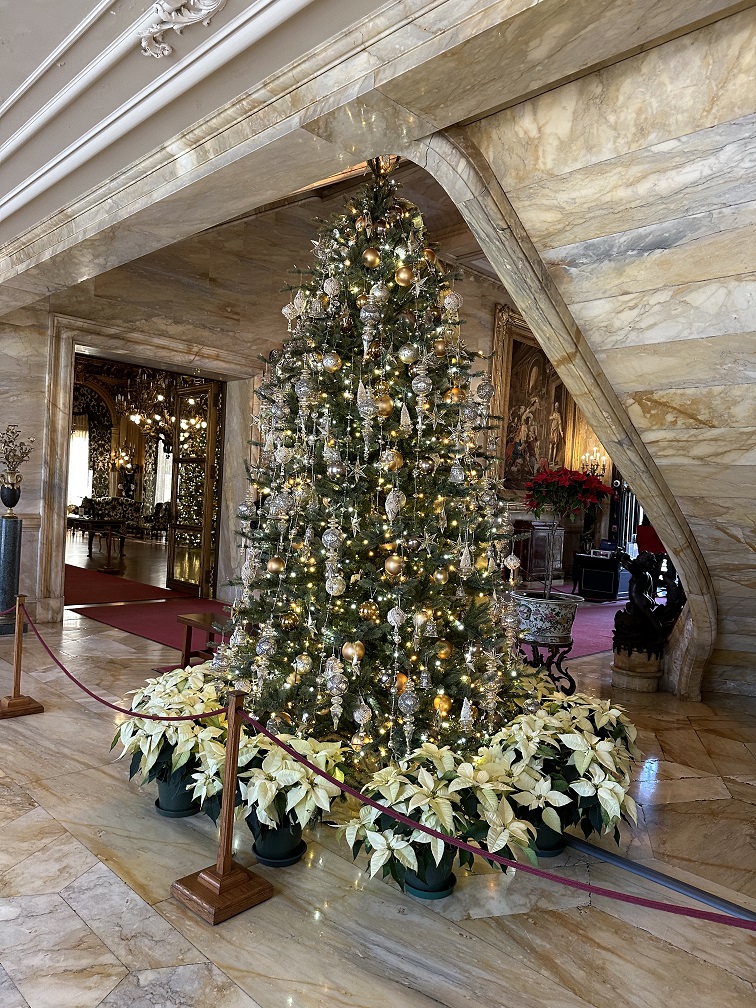
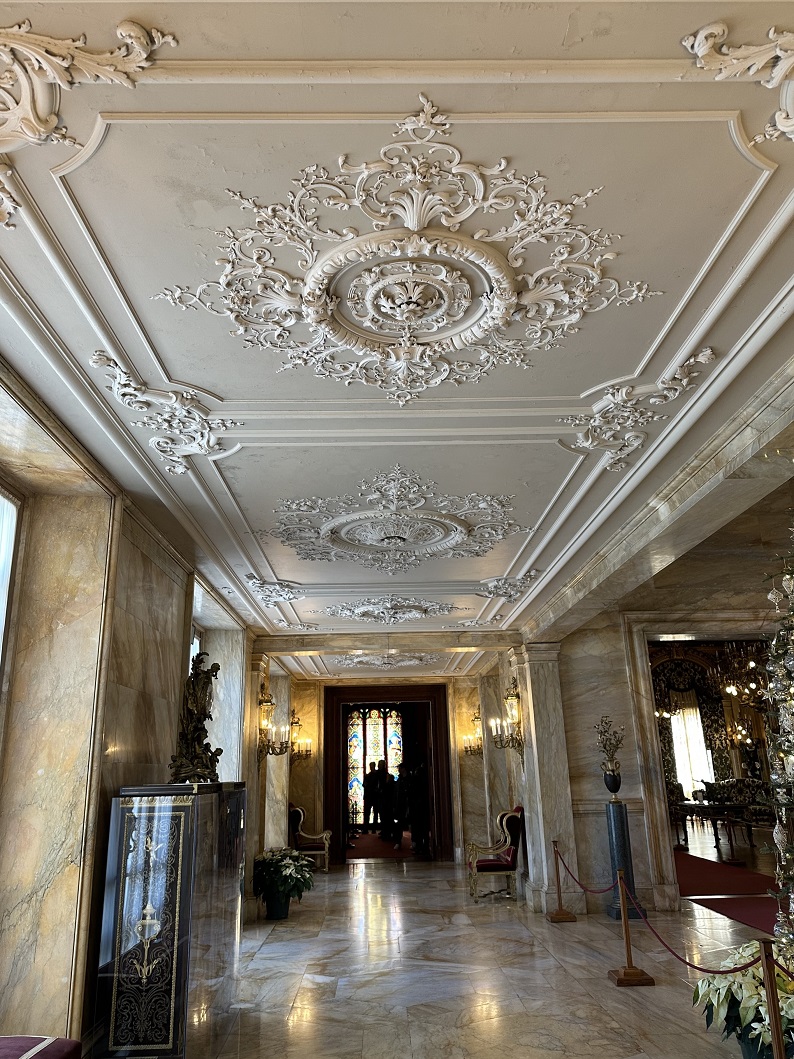
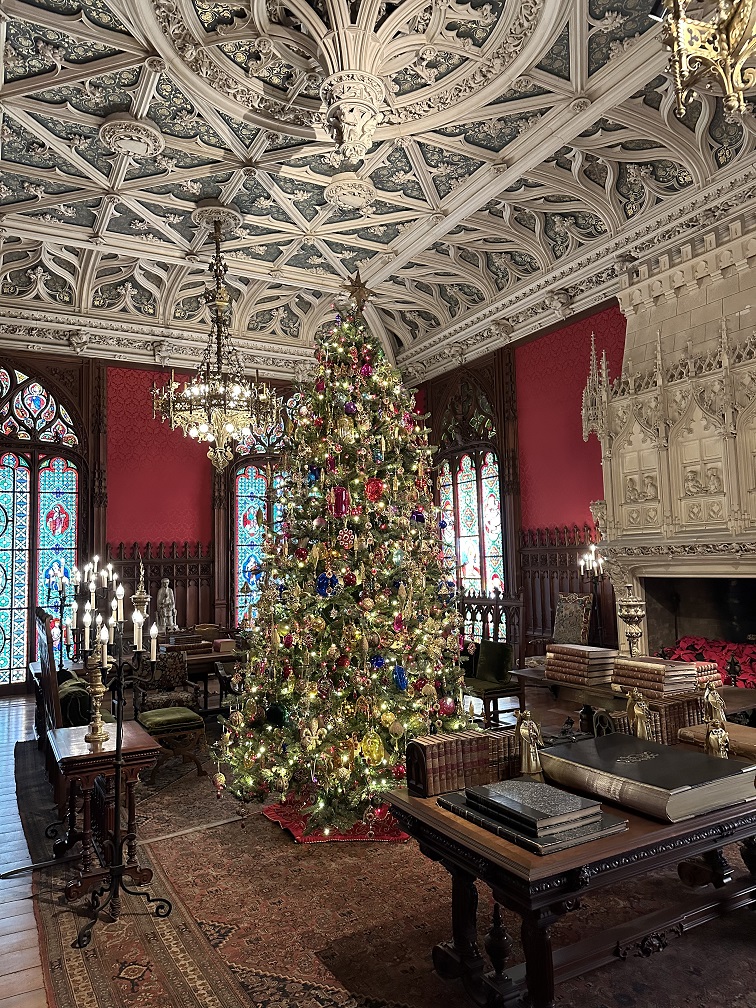

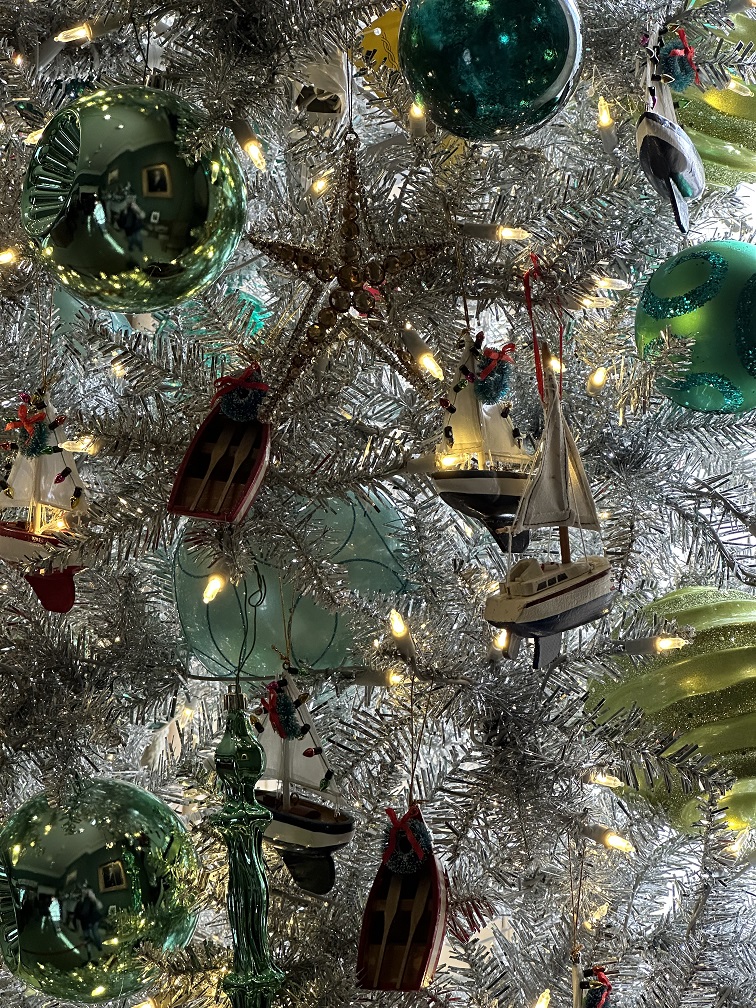
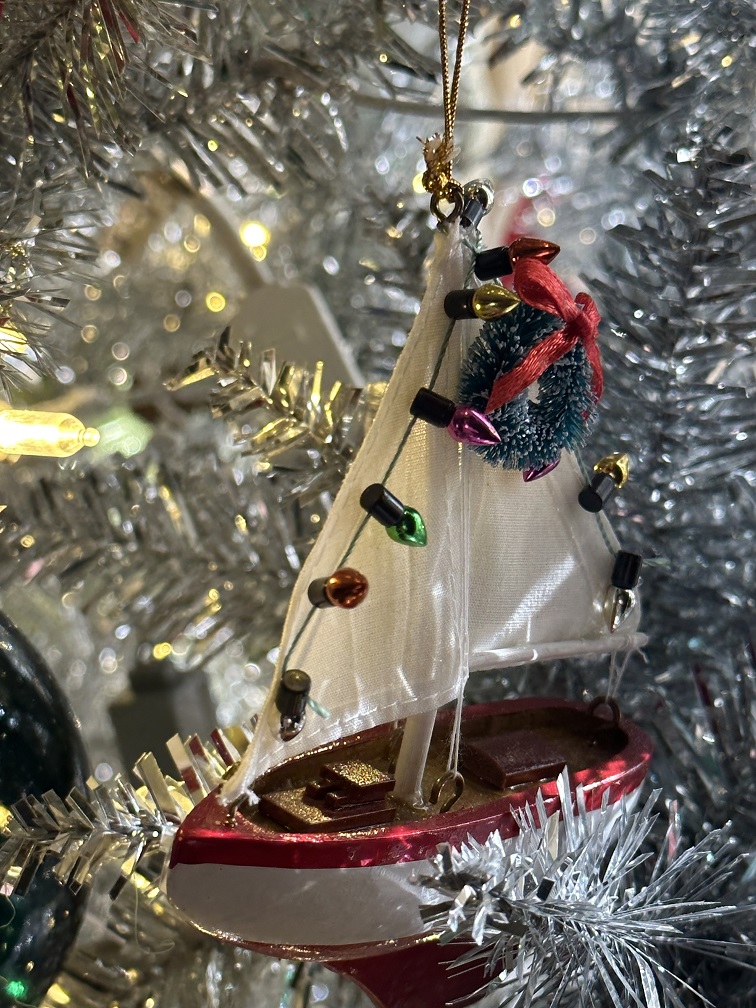
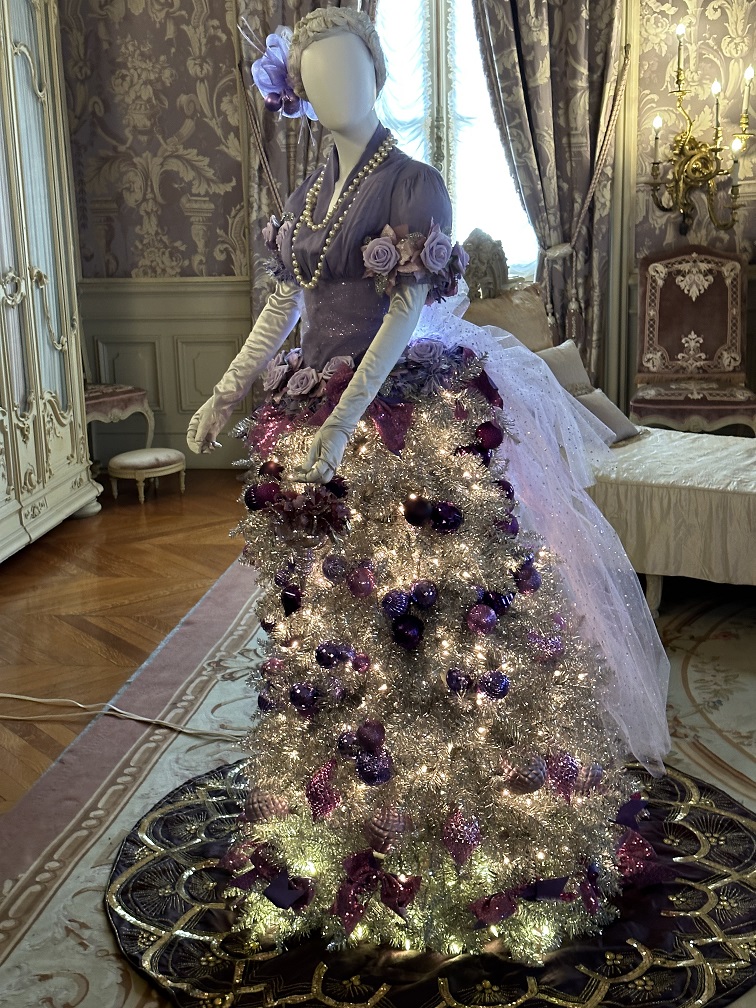
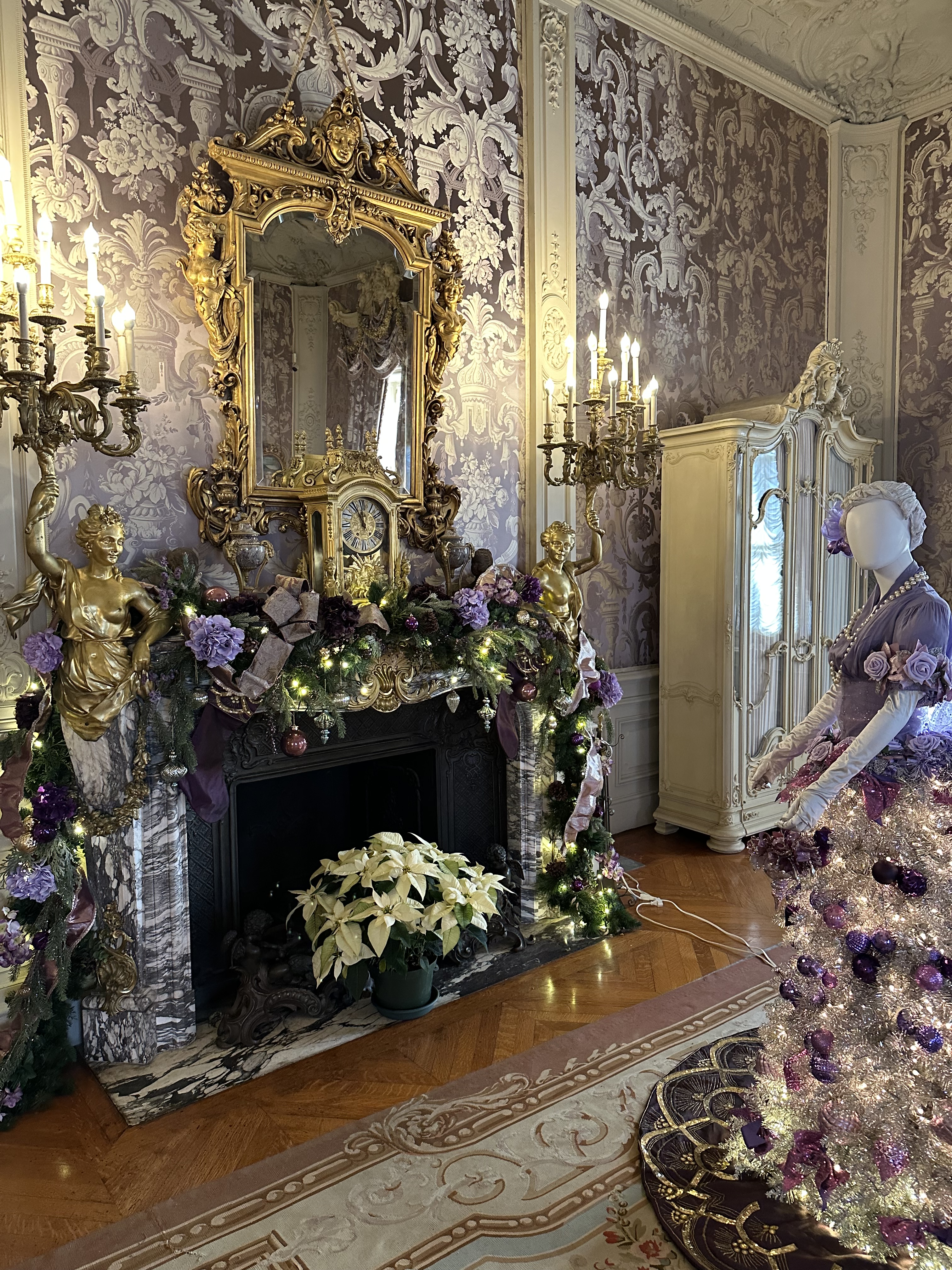
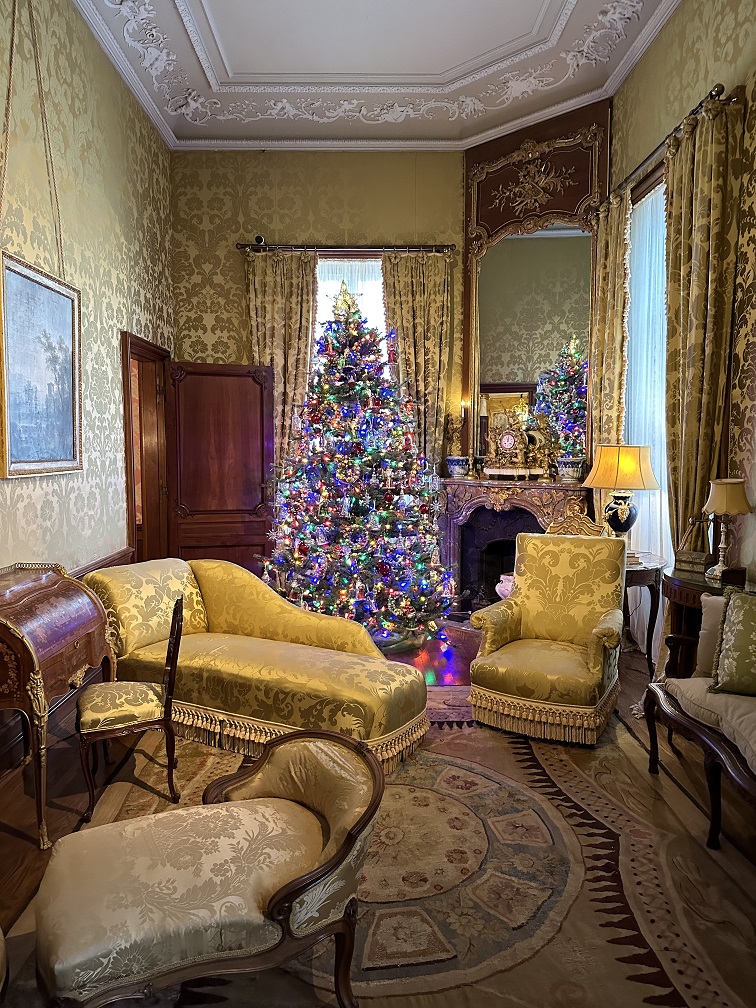
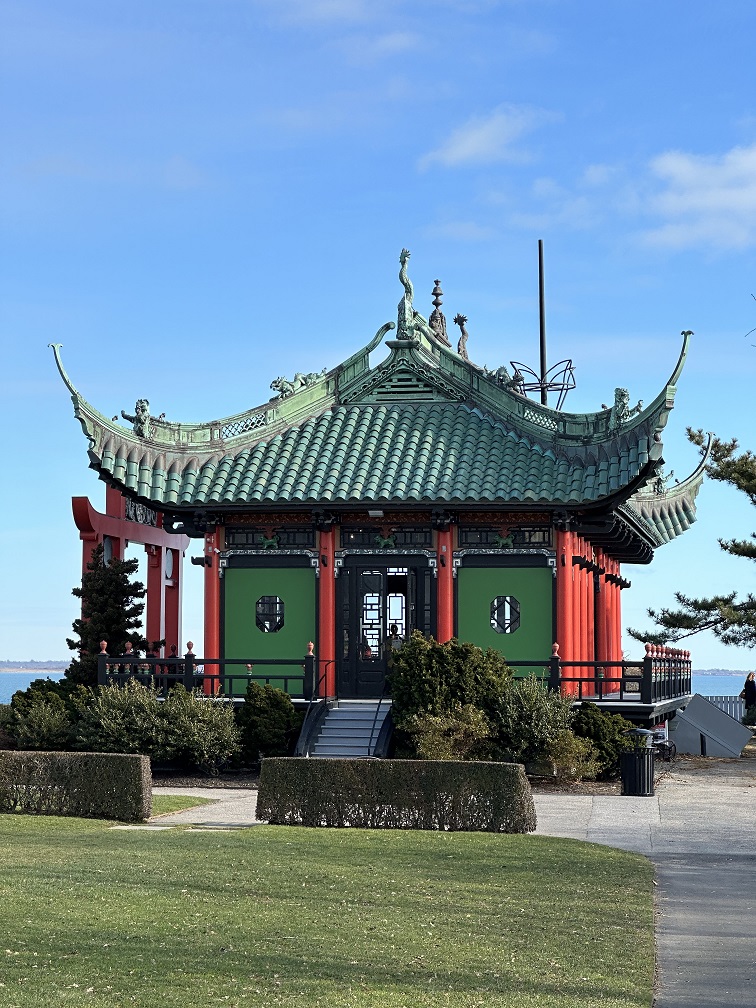
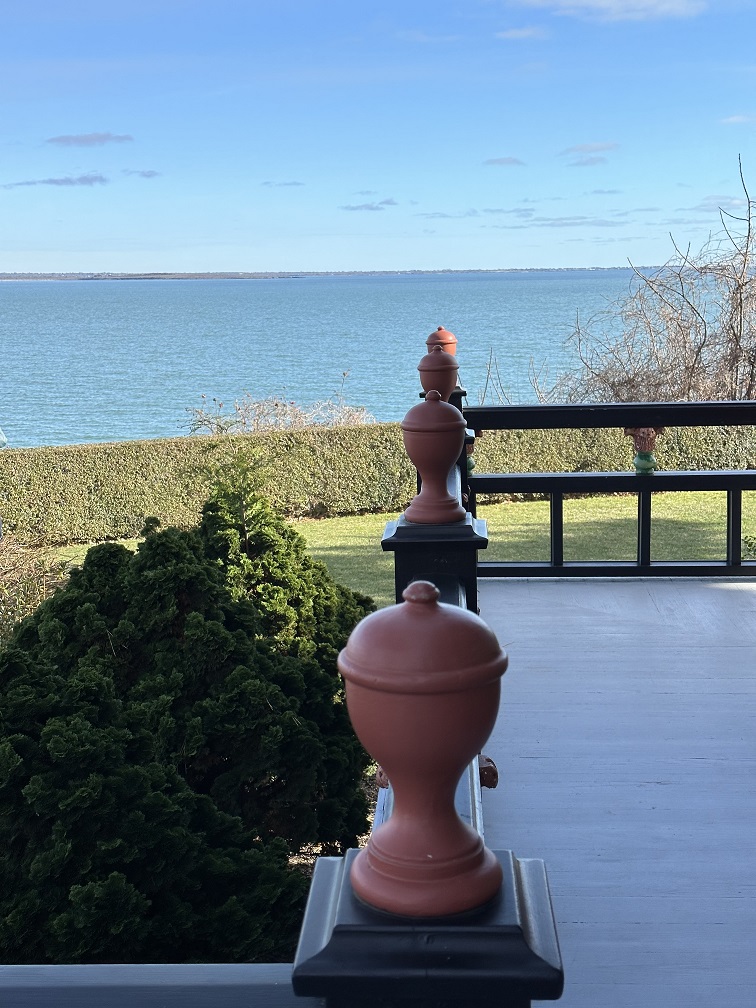
Hope you enjoyed!
Last Bottle Sign Up ($10 credit)





