Archive
Paintball, Halloween and Writer’s Block
If you are trying to figure out the connection between paintball, Halloween and writer’s block – don’t, there are none. I’m experiencing a writer’s block as I’m trying to create a competition entry about the Tuscan wines (if you remember, I mentioned that competition in the Wednesday’s Meritage last week). I passionately despise (yeah, see, I’m doing pretty well avoiding the heavy word “hate”) the fact that I can’t write a post about Tuscany, one of the most diverse winemaking regions in the world, so I decided ( as many times before) to share a few pictures with you, while I’m pounding myself on the head trying to get the block out.
First, here are a few pictures from the friendly game of paintball which we played on Sunday (right before the arrival of the dear f…ing Sandy). My team lost all the games, but that is not important – we had lots of fun.
Our guns:

And here is me, first in the front:

and back (after the last “free style” round) – yes, it was painful, in case you are wondering:

Then after dear f…ing Sandy departed, we found ourselves super lucky ( knock on wood as many times as possible, still going), as our street didn’t lose power, so we managed to carve pumpkins and celebrate Halloween:
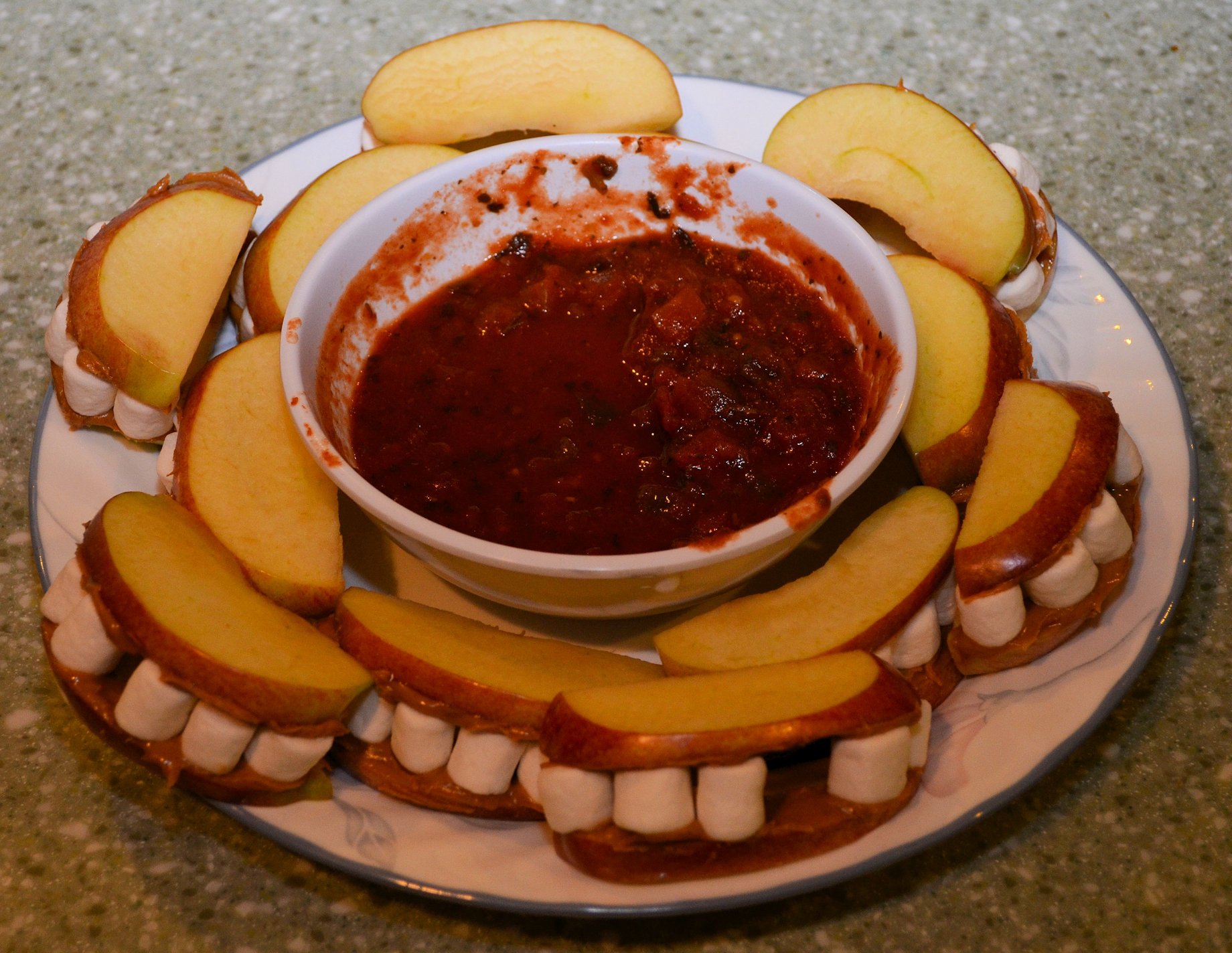
The Halloween dish (clearly influenced by the post from A Detailed House):
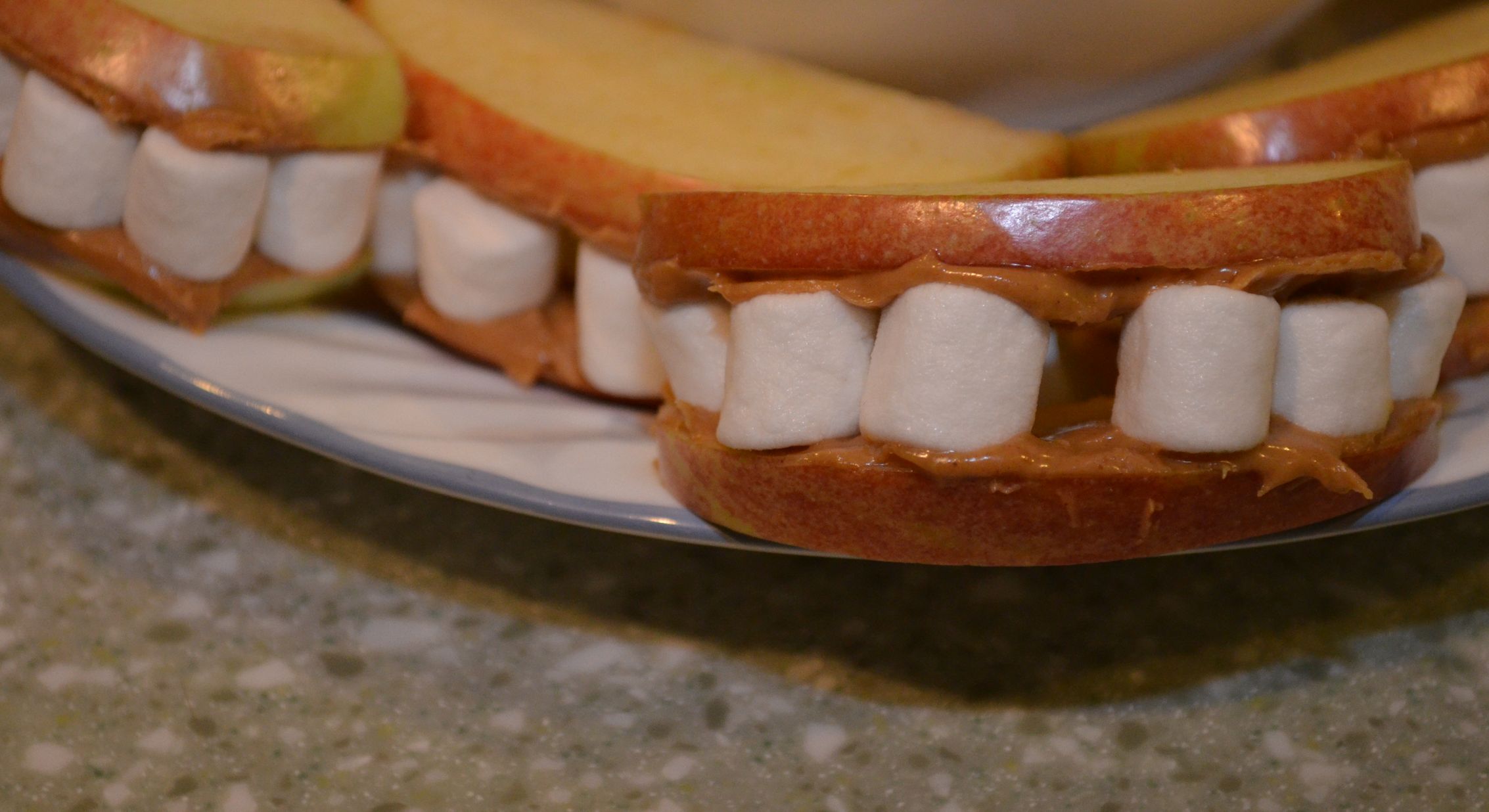
zoom-in:
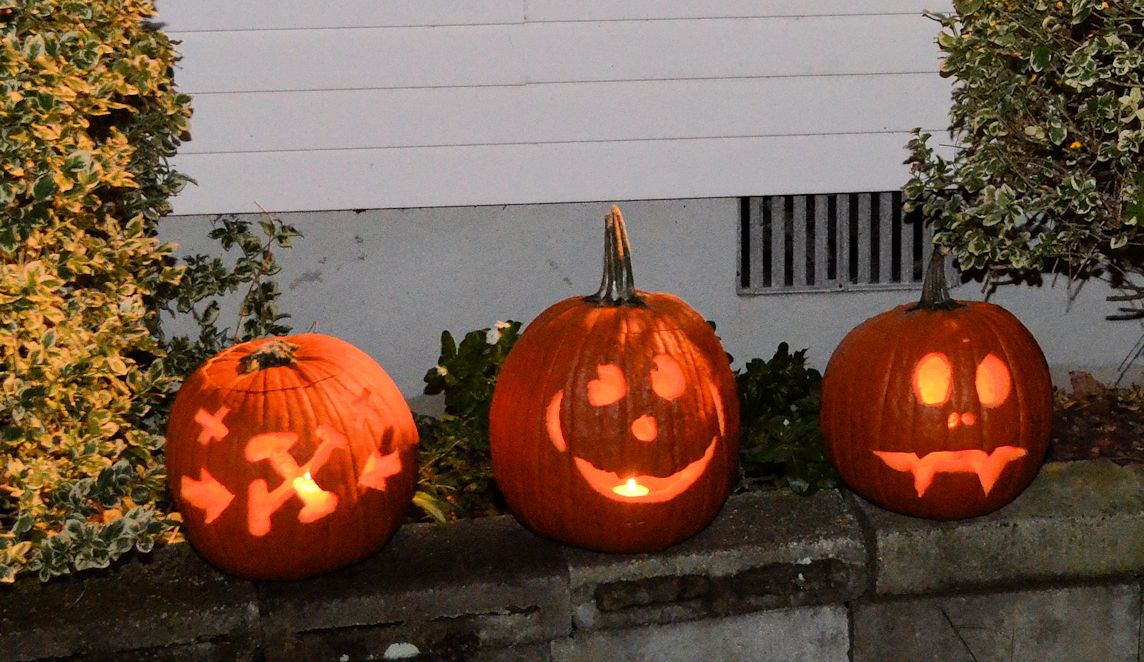
And the pumpkins (kids had lots of fun):
May you never encounter writer’s block – and never experience the wrath of hurricane, even if it’s called by a cutesy name, such as Sandy.
That’s all for now, folks. I’m back pounding on that block. Cheers!
I Love Surprises
Do you like surprises? Yeah, I see you saying “that depends” – ahh, as we grow up, the life is teaching us to be cautiously optimistic when we hear the word “surprise” – from unadulterated “Yay, surprise!!!”, thanks to the gentle pressure of the life lessons it becomes “hmmm, surprise???”.
Anyway, this post is about good surprises, so you can already sigh with relief. Let me get to it. Today I saw an e-mail from a friend which briefly mentioned “blind tasting”. Okay, as the whole e-mail was about something else, I ignored that “blind tasting” part. Then, when I heard the entrance door opening and closing, I figured that my friend had arrived. By the time I got downstairs to the kitchen, I was greeted with this:

Yes, call me slow, but only now I realized that the “blind tasting” part was related to me and that the bottle is actually waiting for me.
Okay, so double blind tasting – I’ve done that before, it was fun, so yes, let’s do it again. The cork is out, wine goes into the glass. Perfect fresh ruby color, bright and inviting. Fresh, very fresh raspberries on the nose, some hint of sweetness – based on the initial assessment, the wine appears to be young and gives an expectation of being somewhat lighter on the palate. Also, the nose has that touch of green (really a touch) and earthiness. My friend is impatiently pacing back and force – “what can you say, what can you say” she rather demands.
Okay, I think it is a young wine, 2 to 3 years of age. Also, based on the nose and appearance, my guess is that it is one of he local wines – Connecticut, Pennsylvania, New York Hudson Valley – my thought is that it is one of the indigenous varieties, like Chambourcin or Marital Foch.
She seems to be satisfied with my assessment, and we are moving on. On the palate, the wine shows some cherries and raspberries, and somewhat unusual (for me) tannins, in a very front of the mouth (I believe the wine spent time in oak, but I’m curious what type of oak it was exactly. Then the wine finishes with the hint of cinnamon and nutmeg. The wine is perfectly drinkable by itself, but should also nicely complement some charcuterie and lighter cheeses. All in all, it is a nice bottle of wine in my opinion, and I would put Drinkability at 7.
So now I’m allowed to remove the foil, and this is what I find:
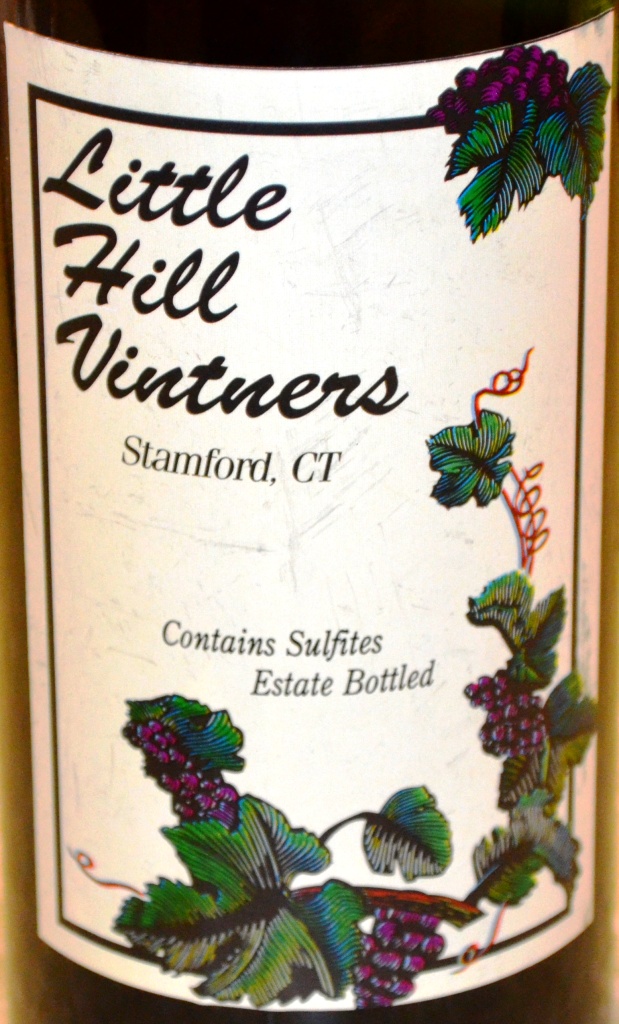
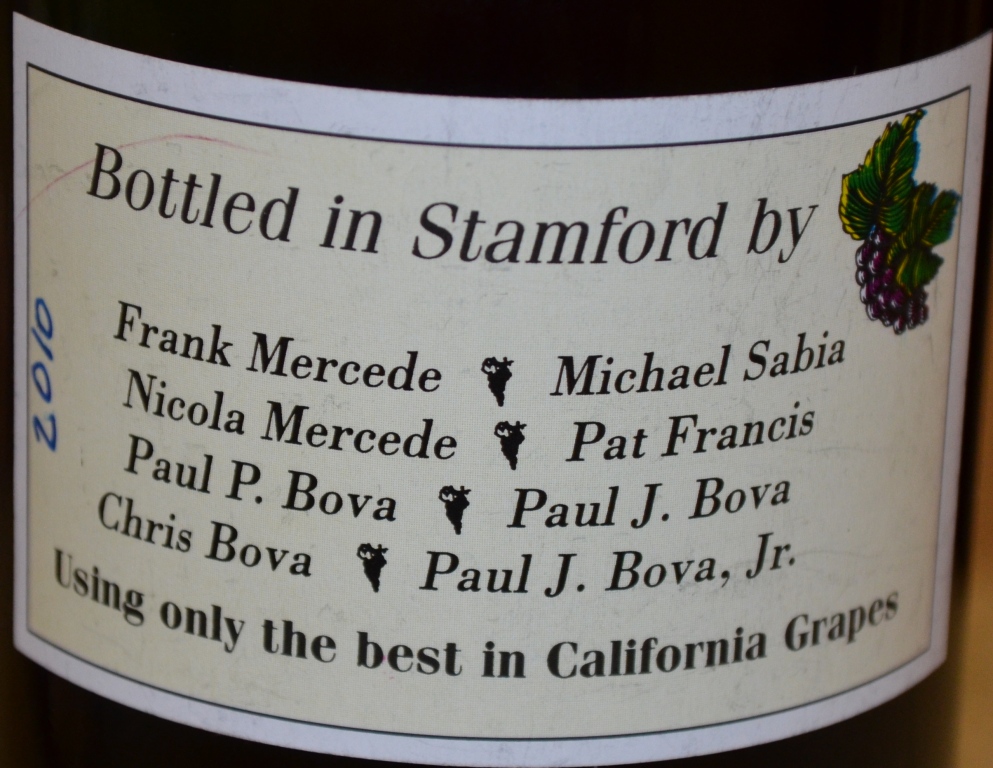
As the back label says “made from the best California grapes”, I’m clearly out of luck with my varietal guess. But at least I got the place (totally by accident, but – WOW – the wine is from my home town, Stamford!!), and the age – it is 2010 vintage, so I’m right there with my 2-3 years old guess.
There you have it – as I mentioned many times in this blog, blind tastings are fun! I’m definitely impressed with the fact that the wine of this level can be produced by the amateur winemakers, but hey – everybody got to start somewhere!
Wishing you all great wine experiences! Cheers!
Sharing Sunshine And Beauty: Fall in New England
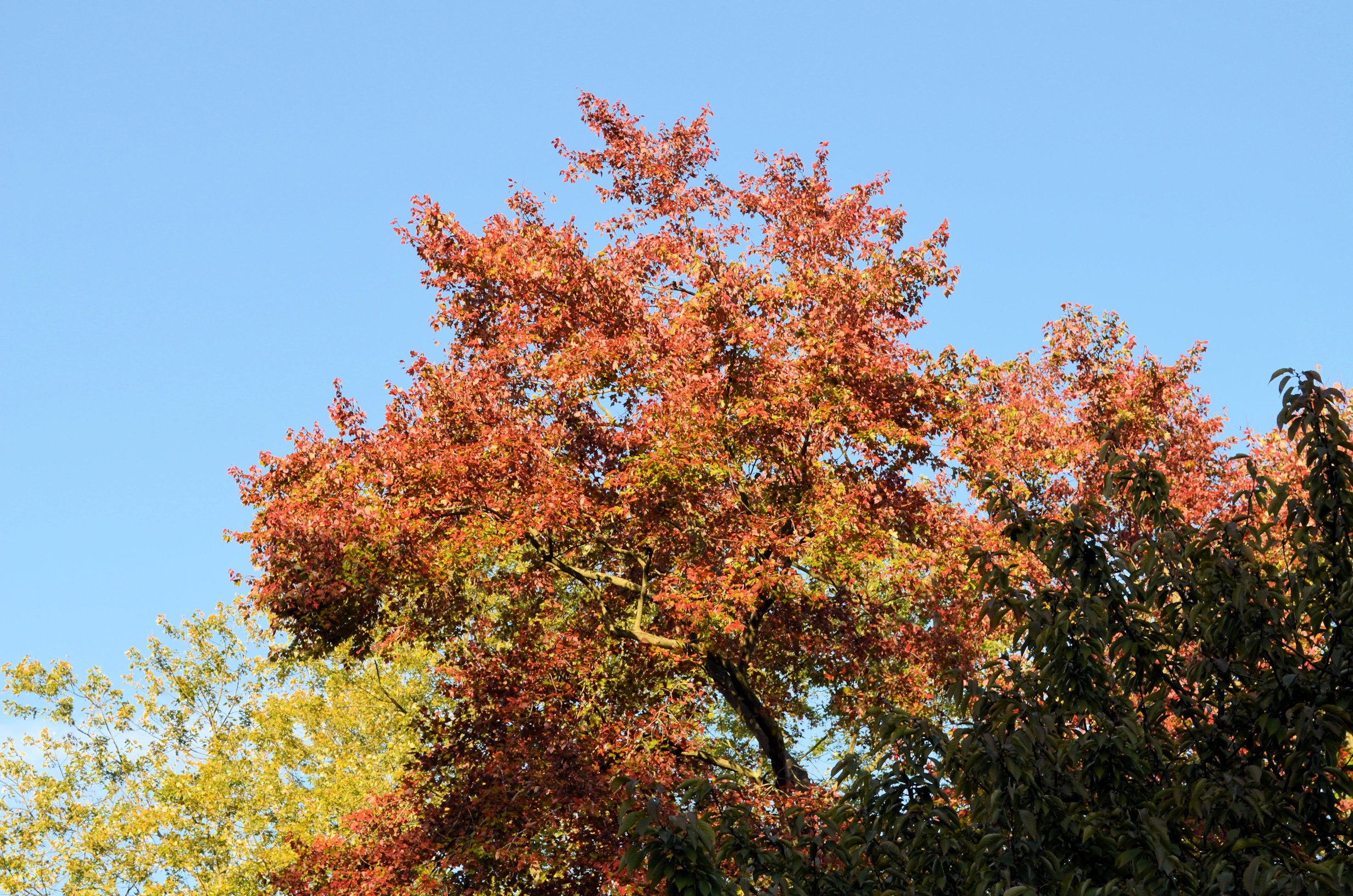
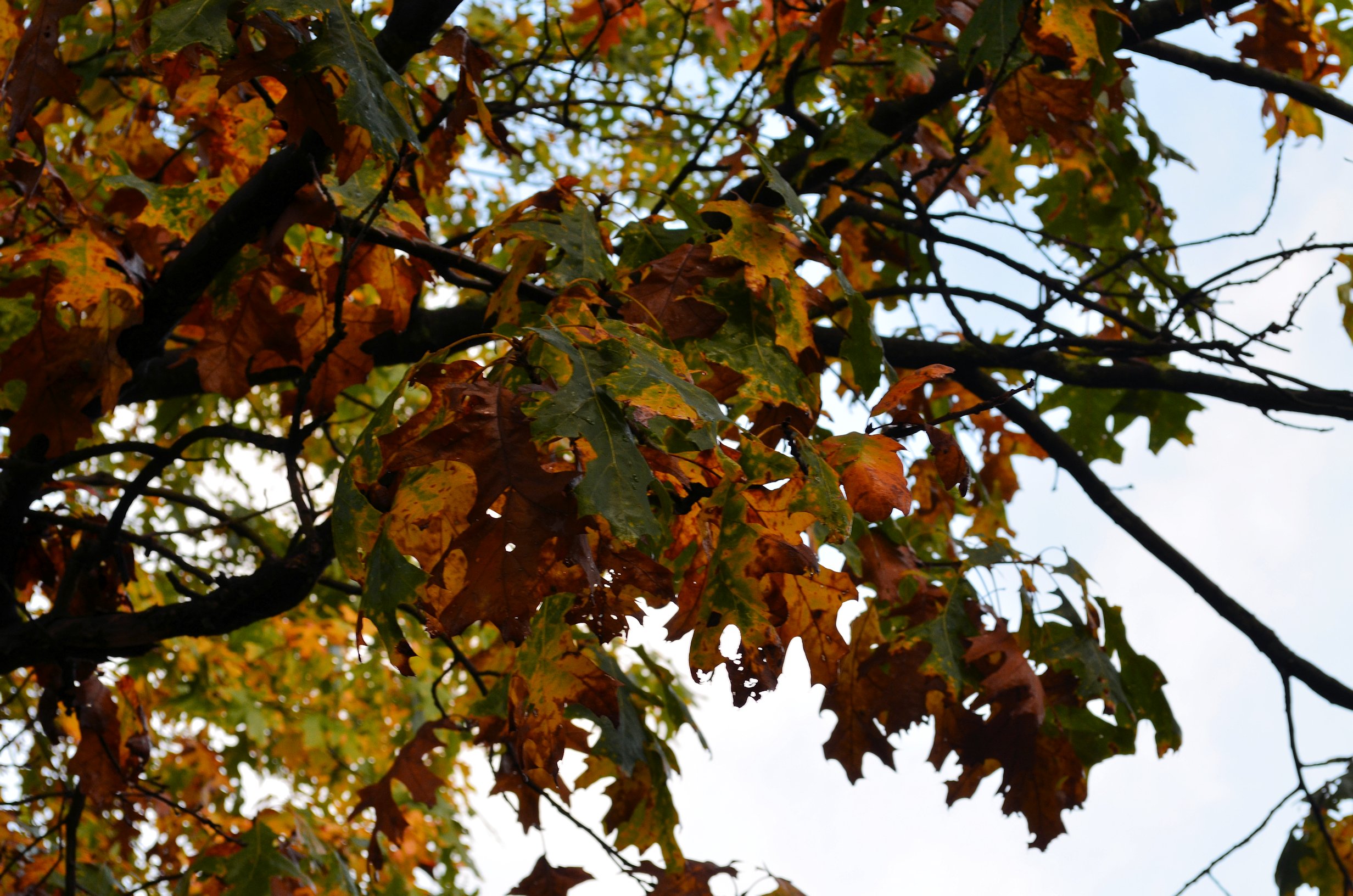
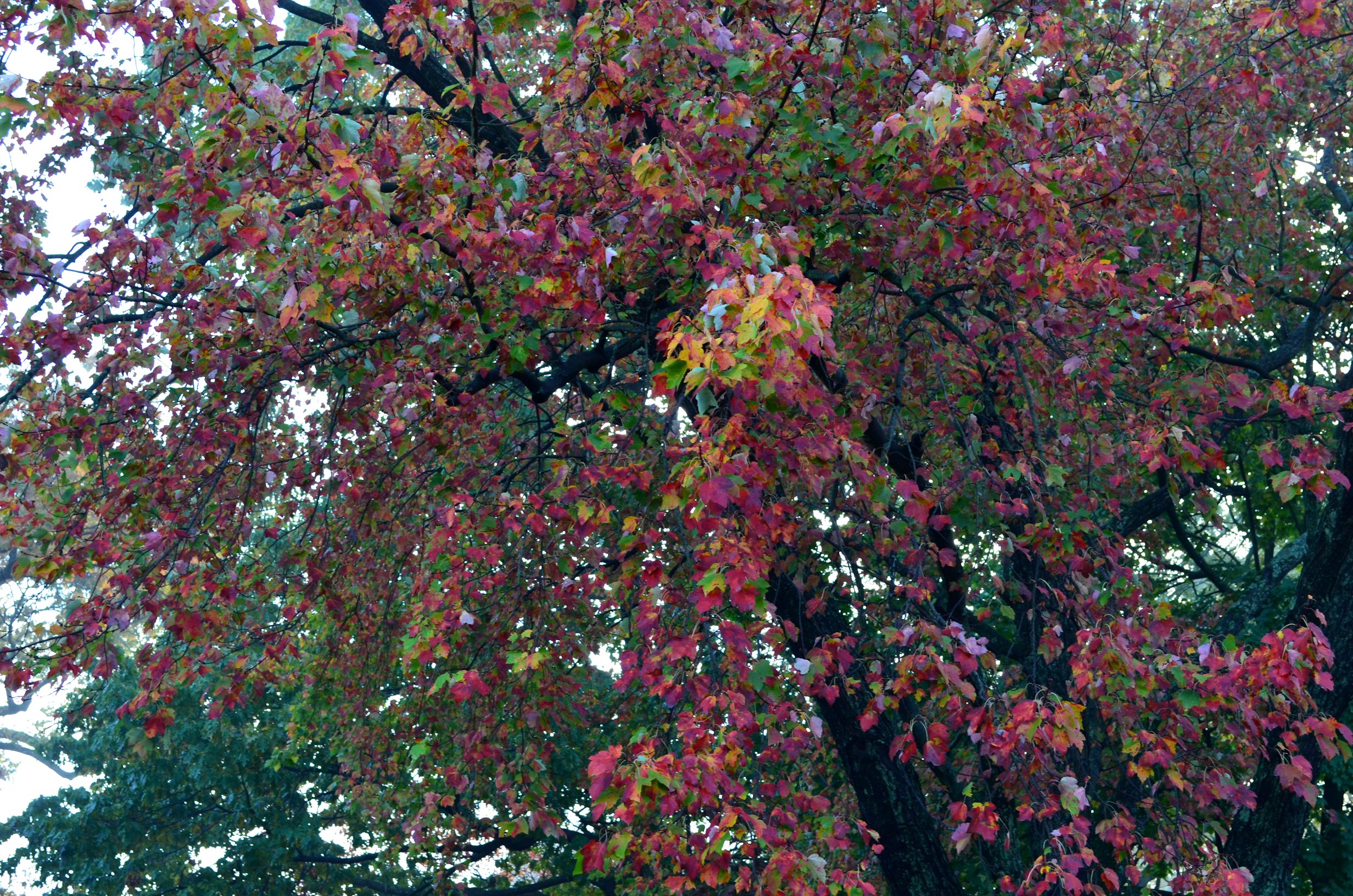
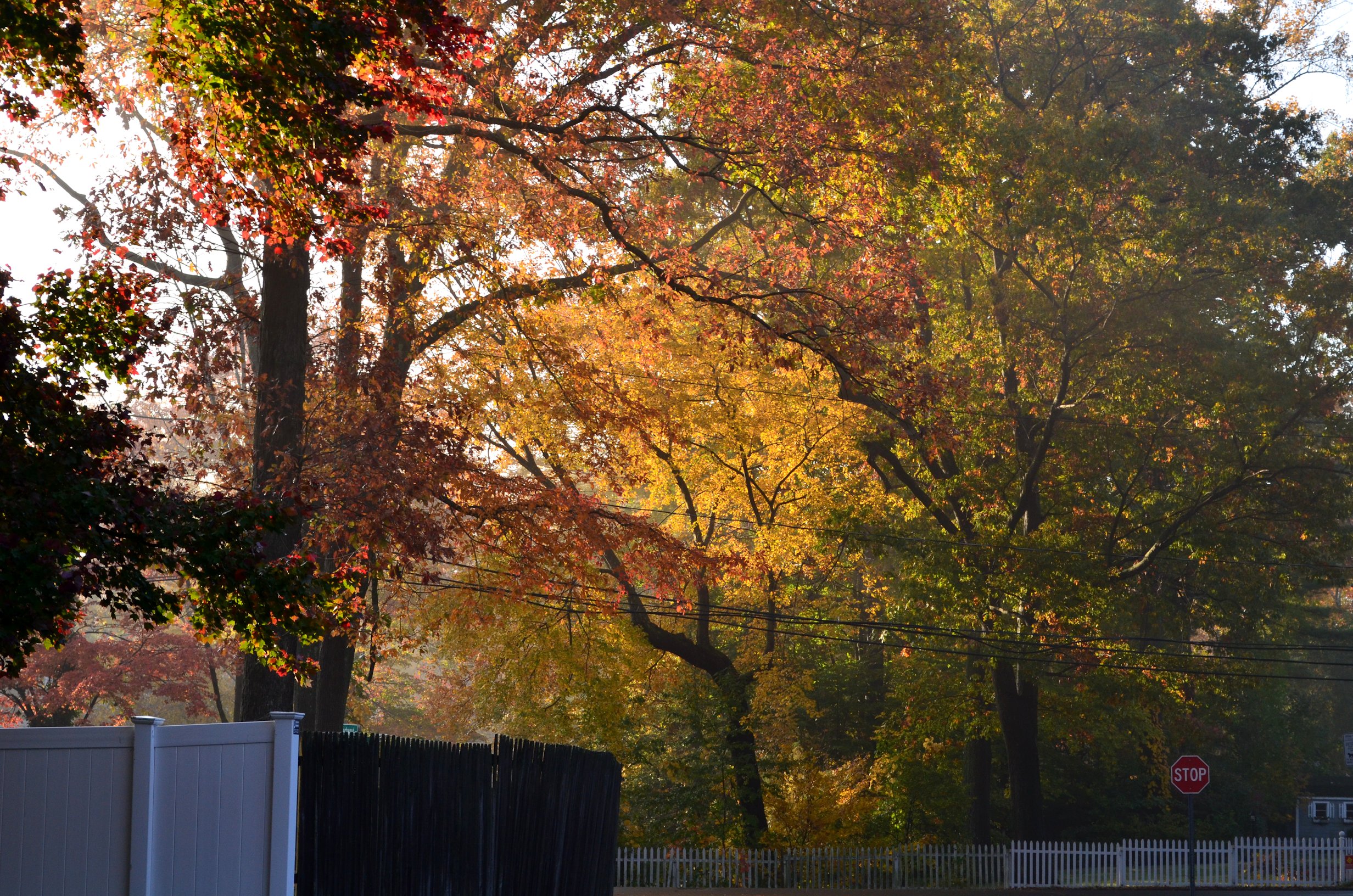
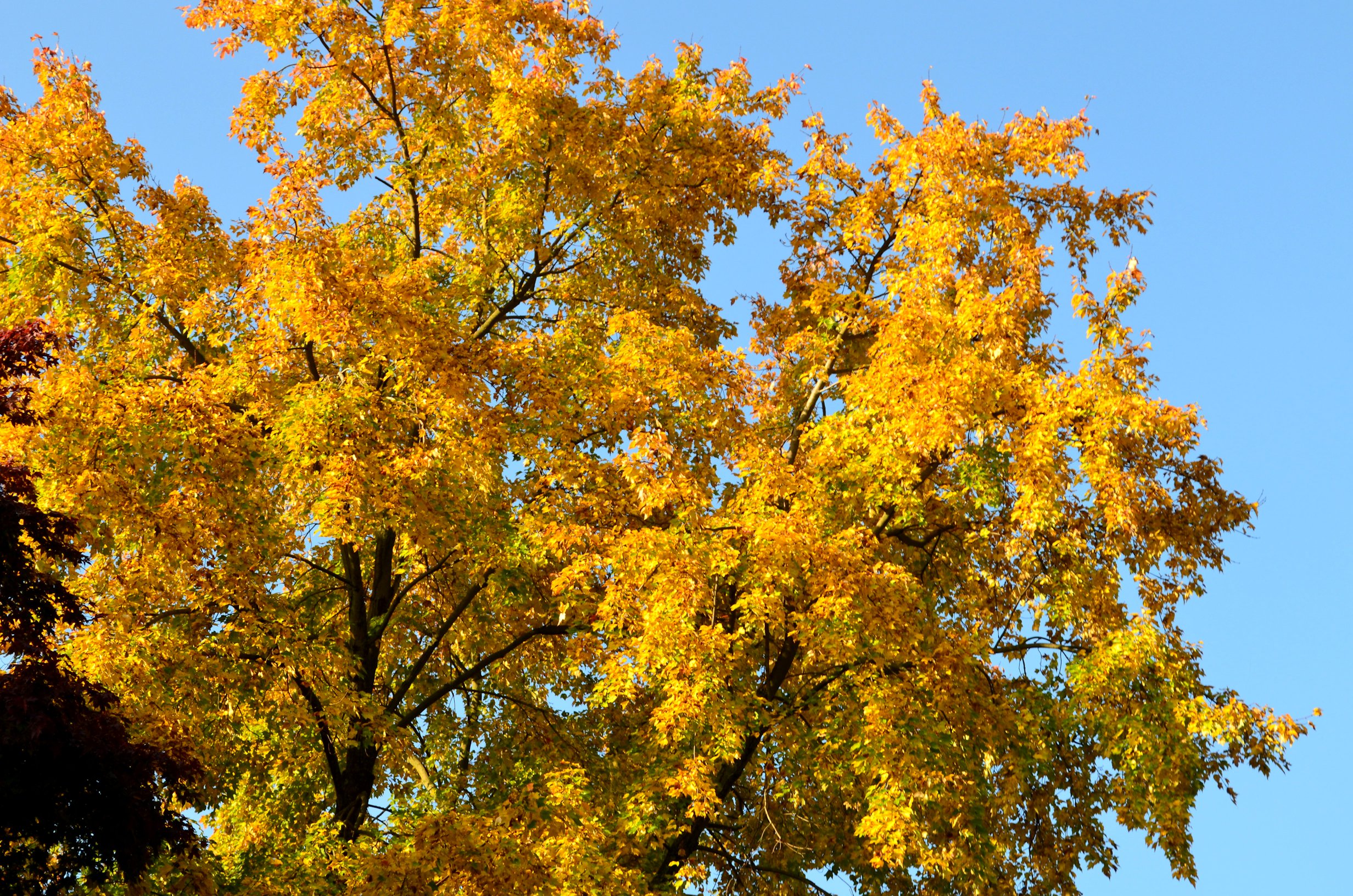
We had been blessed with such a magnificent weather today that I couldn’t help a strong urge to share that feeling with you. Fall (I guess the word Autumn will be more appropriate for my European readers) is a very special time in New England. People plan special sightseeing tours and getaways to immerse into this spectacular fiery of colors.
For those of us fortunate to live here, in one of the north-eastern states which comprise New England (Connecticut, Massachusetts, Maine, New Hampshire, Rhode Island and Vermont), such an immersion comes easy – it is enough to step outside and walk around the street, and all the beauty will surround you.
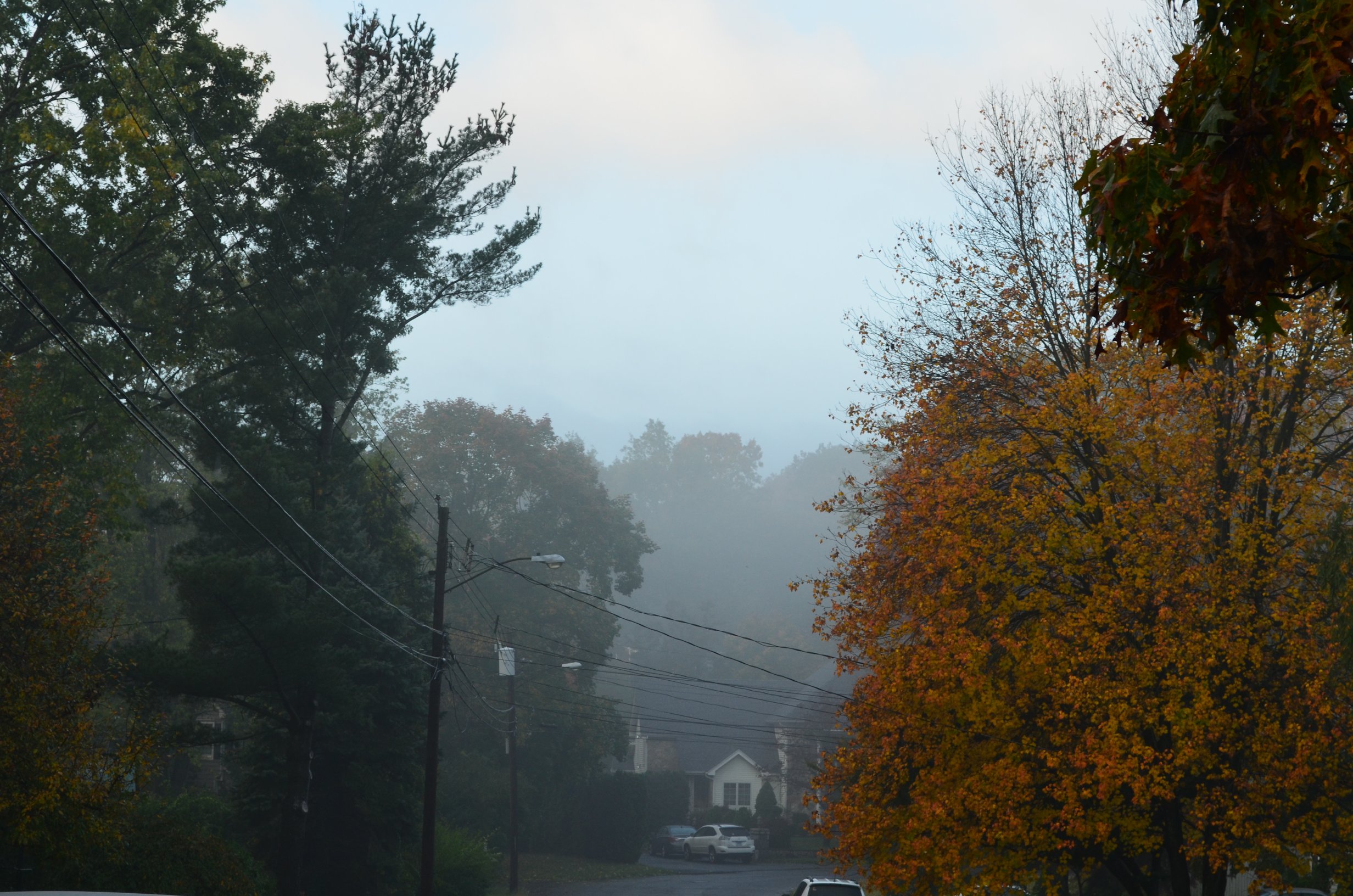
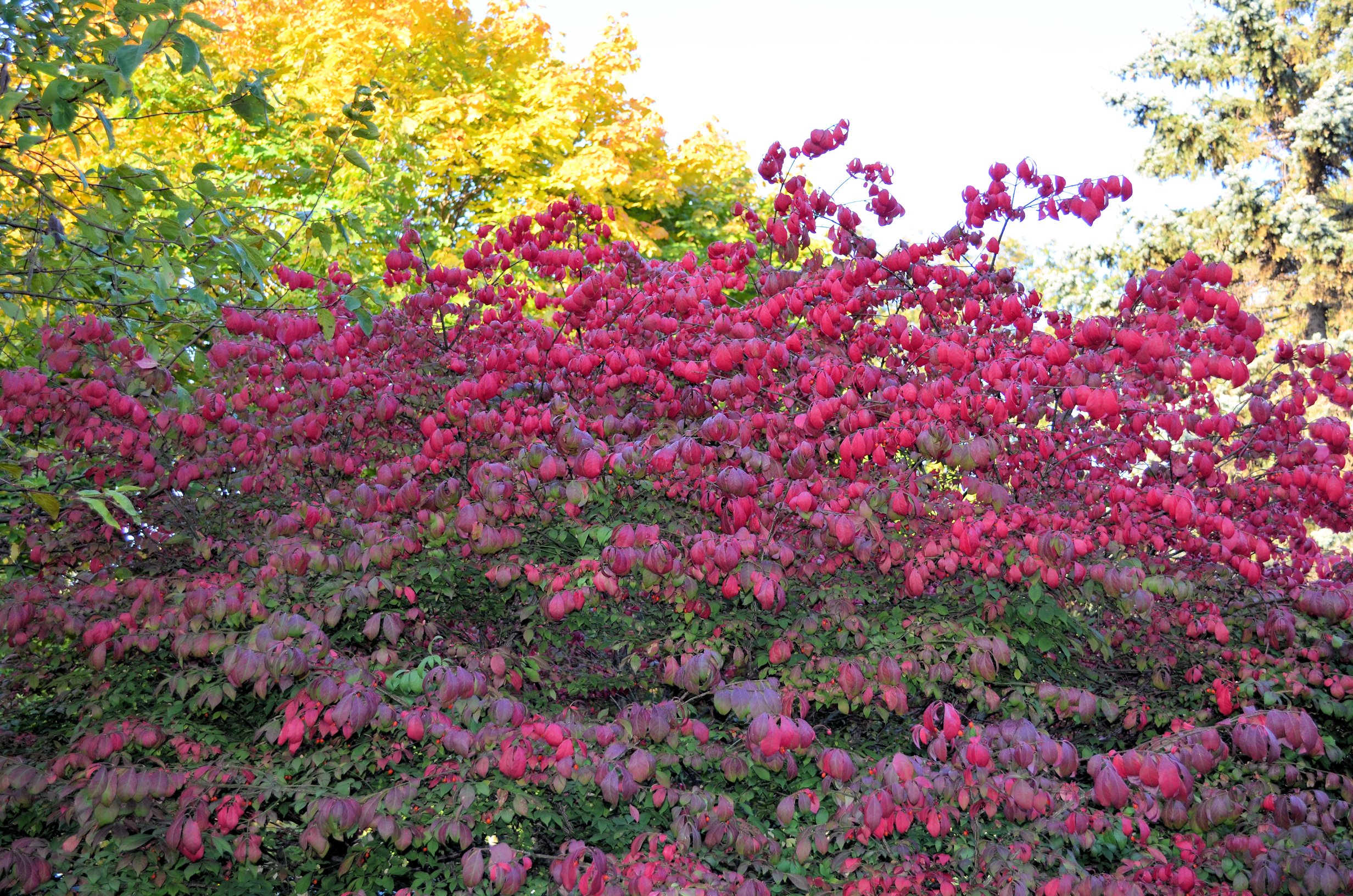
This year the colors had been beautiful (last year, unfortunately, the trees went from green to empty), so let me share with you a walk around my street. And before you will scroll down the pictures (by the way, my daughter helped me to take some of those), let me mention the wine. You know, you can pair wine and weather, right? So the beauty of this weather is that both white and red wines will pair equally well with it. It is the Fall, so you know that red wines are appropriate, but it is so sunny and beautiful that you want to get a little sunshine in your glass too.
Enough words – enjoy New England Fall colors!










Re-Post: Best Hidden Secrets Of The Wine World: Rioja
During 2011 I wrote a number of posts for the project called The Art Of Life Magazine – of course talking about my favorite subject, wine. The project closed, but I still like the posts I wrote, so I decided to re-post them in this blog. Also, in that project, posts were grouped into mini-series, such as “Best Hidden Secrets” you see here – I will continue re-posting them from time to time.
Also note that the series was written for a slightly different audience – I hope none of my readers will take offense in the fact that sometimes I’m stating the obvious…
 “Let me tell you a secret” – how many stories started from this sentence? Adventures, journeys, discoveries, friendships and feuds, love and hate – secrets can be beginning of many things.
Secrets have special place in our lives. Secret is a hope. Hope, anticipation and promise of unique experience. Humans always hope to find secrets – of health, wealth, attraction, eternal life. When you know a secret, you feel good – you possess something which nobody else does. Or at least nobody from the people you know. And this is when it becomes difficult. We are social creatures, and we want to share. When we share a secret, we feel special, we feel high above, as we share something which a moment ago was unique and exclusively ours. Then we regret we shared – ahh, that moment of weakness. And yes, you are right, there are evil secrets, those which bring death and destruction – but nothing like that belongs to this blog.
Okay, fine, I hear you. This is not a philosophical blog – this is the blog about wine and experience. But – the preamble was necessary, as we will continue from here on. Secrets (sometimes referred to as “know-how”) are everywhere, and world of wine is no exception. Are they really such a secrety secrets? Of course they are not, and you don’t need a special clearance to learn them. However, secrets are personable, and if secrets I plan to share will only make you yawn, please make sure to tell me so.
So what can be so secret about something which is available in abundance literally everywhere? Of course it would be nice to discover a secret of buying a bottle of Chateau Petrus for $100 instead of $3,500, but this is something which I don’t know myself (hey, if by any chance you do, can you PLEASE share that special knowledge with the rest of us?).
So my secrets will be about wines which will give you a lot of pleasure without the need to refinance the house. And they will be about the wines you probably never heard of. I promise you will learn some secrets, and I’m certain you are not going to regret.
Bored, tired, lost my chain of thoughts and need a drink? And even if you like it so far, it might still be a time for a drink. Get your bottle opener and reach out for that Spanish wine called Rioja. Why Rioja? Rioja is a well known wine from Spain – what makes it a “secret”? I truly believe that Rioja is under-appreciated by the wine lovers, despite two very essential characteristics: value and ability to age. Let’s start from aging: Rioja will rival best Bordeaux and Burgundies in its ability to age. Just to give you an example, I recently had an opportunity to try 1964 Monte Real Rioja Gran Reserva (the wine was exactly 45 years old when I had it) – and the wine was still youthful, with bright fruit, very round and polished, and was not over the peak at all. Now, talking about value: how much do you think this 1964 Rioja costs today? Before we get to the numbers, you need to take into consideration that 1964 was one of the most exceptional years for Rioja in the past century. Essentially, best Riojas had being produced in 1964, 1973 and 2001. So if you would take a parallel with great Bordeaux of 1982, a bottle of wine from that vintage would easily cost you thousands of dollars. Yet that 1964 Monte Real Gran Reserva can be bought today for $220 (if you are in US, you can find it at PJ Wine store in New York) – this is an outstanding QPR (quality price ratio).
Rioja wines are typically aged in the oak barrels, and then still can be aged in the bottle before they are released. You can see all that information on the label of Rioja wine. If the wine just called Rioja, it means that it was aged in oak less than a year. If the wine is called Rioja Crianza, it means that it had being aged for two years total – 1 year in the oak, and another year in the bottle. Rioja Reserva had being aged for a minimum of 3 years – 1 in the oak, 2 in the bottle. And the Rioja Gran Reserva is aged for a minimum of two years in oak and 3 years in bottle. Also, Reserva and Gran Reserva is produced only in good years, not always. Why all the classification? Let’s take a look at couple of Rioja wines readily available today.
First, 2001 La Rioja Alta Vina Ardanza Reserva Especial. Just to make things more complicated, here is additional designation of Rioja wines – Reserva Especial. “Good” thing is, you are not going to find too many wines like that, because Reserva Especial is assigned only in the best of the best years – again, repeating from above – 1964, 1973 and 2001. La Rioja Alta is a very good producer with wide variety of great Rioja wines, and one can make a few blog posts talking just specifically about them. This 2001 Reserva Especial is outstanding – when you take a sip, it becomes a fiesta of flavor in your mouth – cherries, plums, cigar box, chocolate notes, all bright but not overpowering at all, with silky smooth tannins and long finish. This is the great wine, and will continue to evolve for many years to come. The price of the pleasure – $29.95!
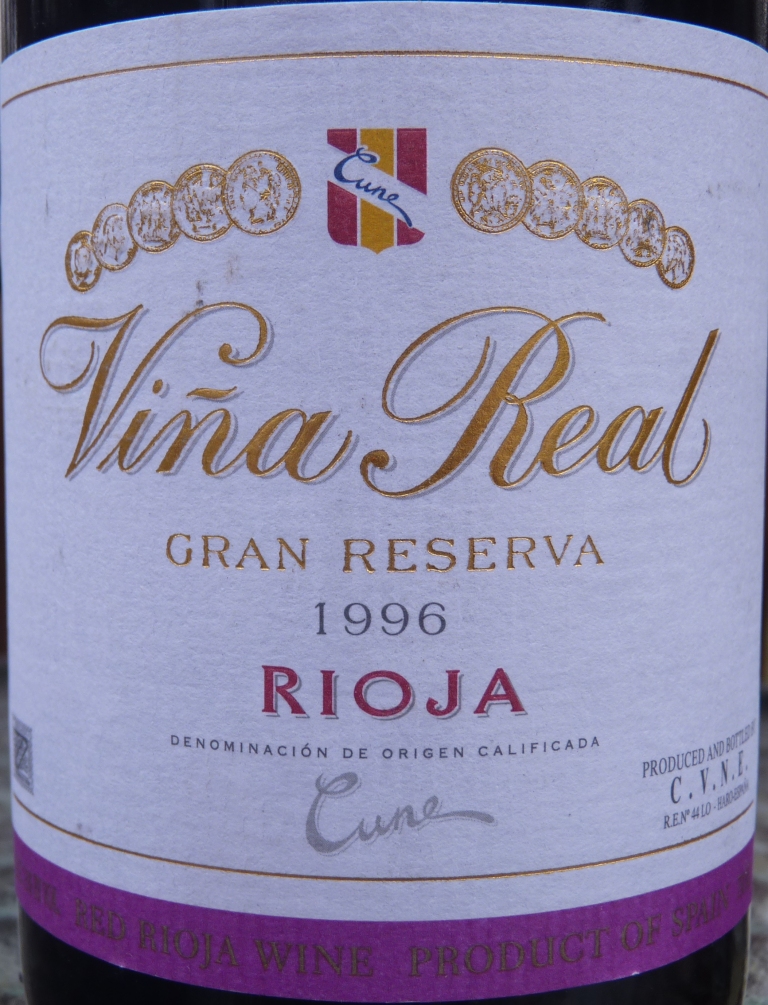 Here is another example – 1996 CVNE “Vina Real” Rioja Gran Reserva. This is Gran Reserva in all meanings – while this wine is 15 years old, it needs time like great Barolo to be enjoyed fully. In the first half an hour of breathing, only tannins opened up to the point of completely puckering the mouth, and the fruit appeared after another half an hour of time. After an hour and a half of breathing, this became a nice and gentle wine with the cherry and eucalyptus notes. Great wine, again at a great price – $31.99! Considering that this is a Gran Reserva, comparable Bordeaux or Burgundy wine would cost probably ten-fold, if not more.
I did my best to share the great secret of Rioja – don’t know if I managed to convince you, but I hope at least you feel encouraged to give Rioja a try. I truly believe you will not be disappointed. In any case, there are many more secrets we are going to share – rare grapes, little known wine regions, and many other wine pleasures to be discovered along the way. Cheers!
Big Time at the Big Winery: Visiting Chateau Ste. Michelle
As you know, wine is my hobby – I don’t belong to the “wine trade”, but as a wine aficionado (oenophile and occasional snob), I’m an eternal student of wine (luckily, the world of wine happily offers eternal learning opportunities). How do you learn about wine? There are many ways, but tasting the wines and talking to the people who make them is probably one of the best – I just had a great learning experience which I want to share with you.
Chateau Ste. Michelle is located in the State of Washington, about 30 miles north of Seattle. While visiting Seattle not long ago, I realized that I have enough time before my flight back to the east coast to visit the winery and (yay!) try some wines.
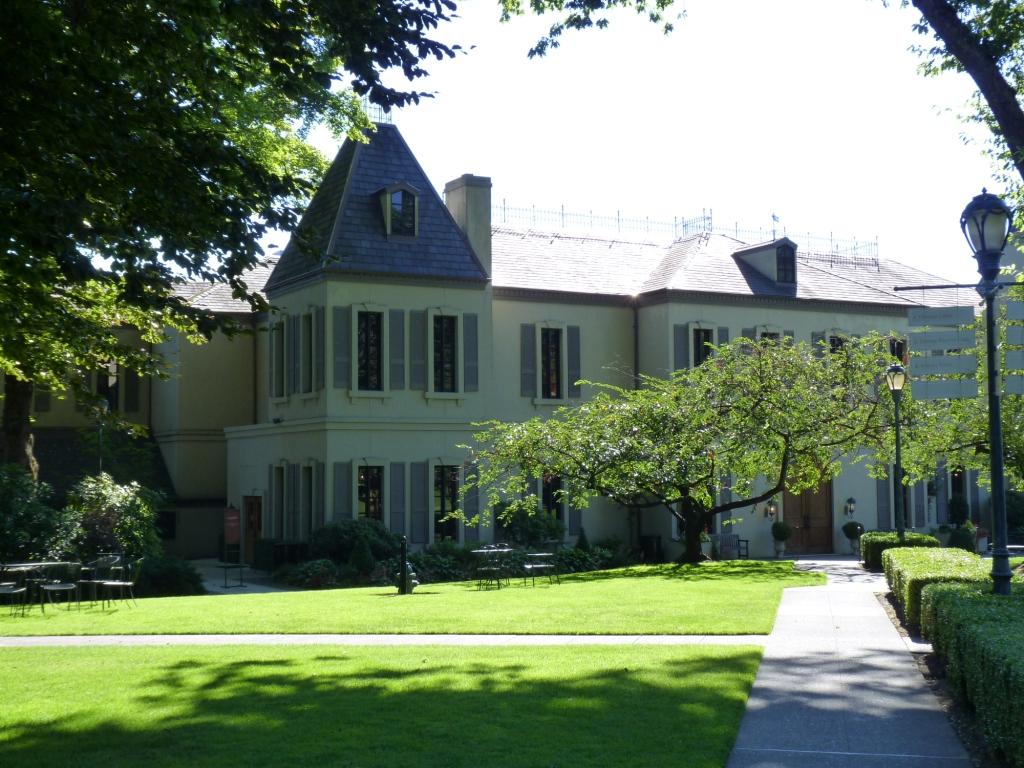
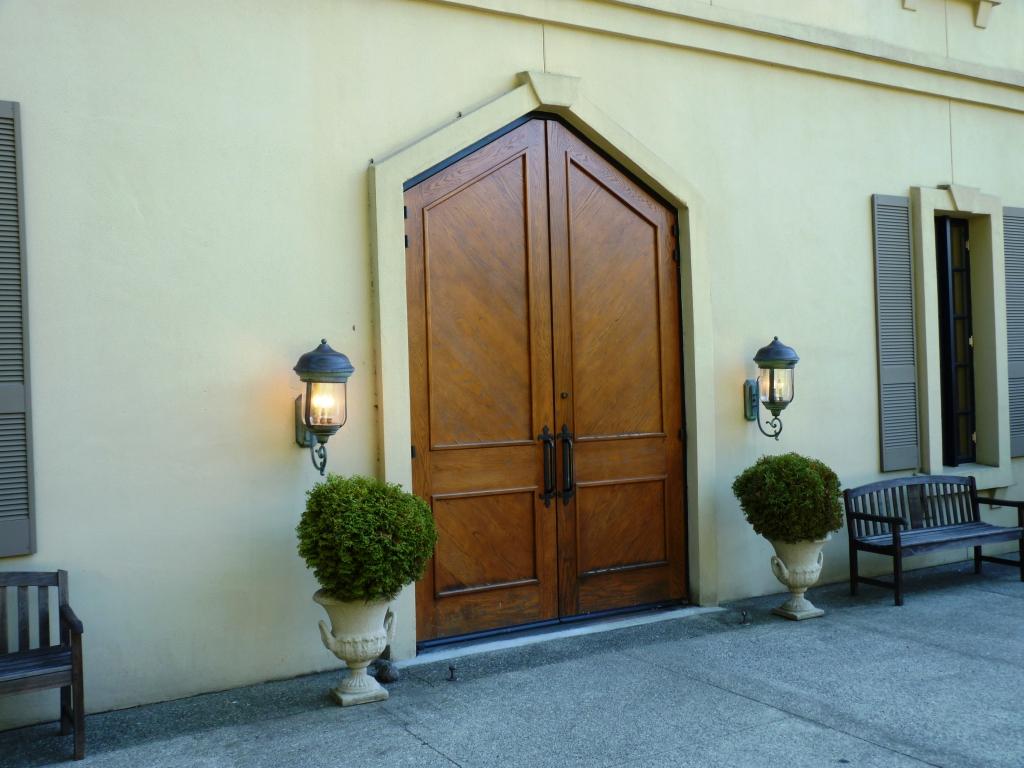
The place looked pretty impressive as I drove in – I visited quite a few wineries over the years and Chateau Ste. Michelle probably was the biggest one I have ever been to. Took me a while even to realize that the big door was there with the purpose and not just a part of the old mansion. Here are a few pictures from you so you will get the idea:
 Here is the door I was contemplating to touch:
From here on, this will be pretty much a picture report with some tasting notes, of course.
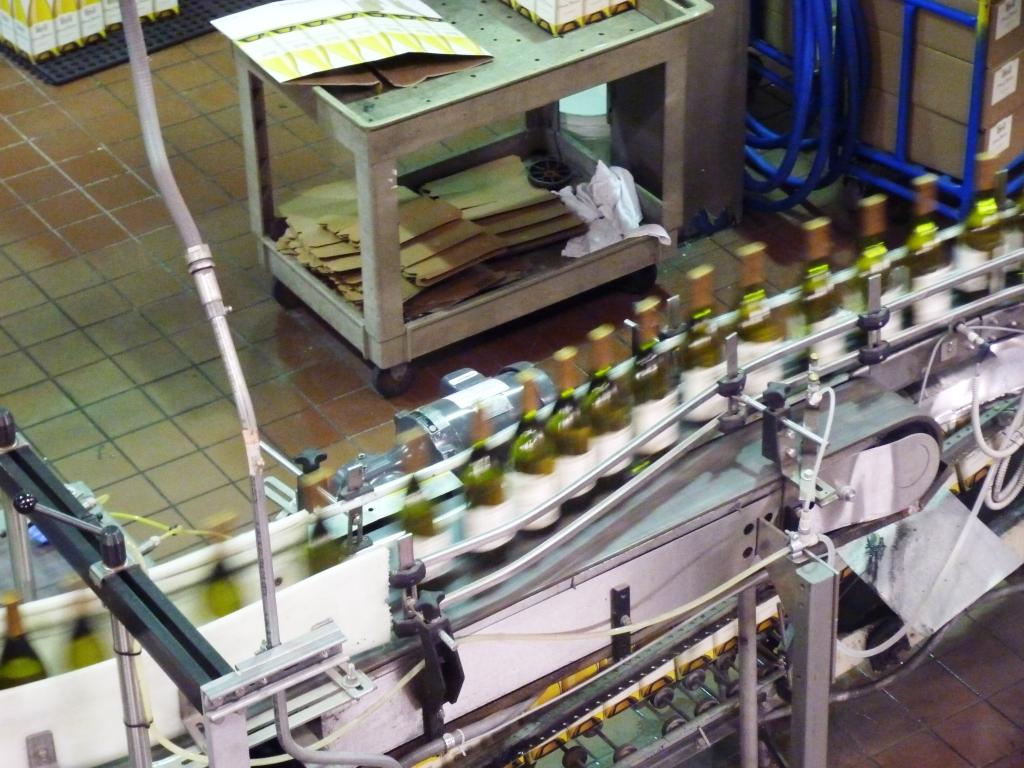
By the way, just to give you an idea of the size of this winery – look at this conveyor belt – there are between 7,000 and 9,000 cases (!) of white wine made there per day (!):
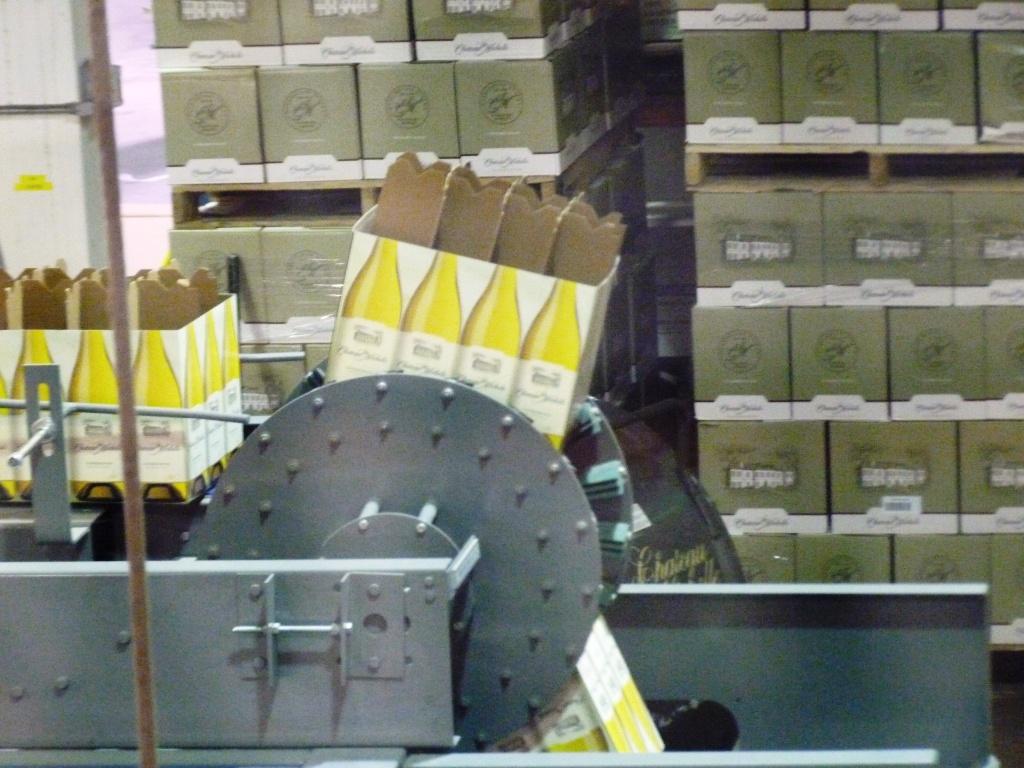
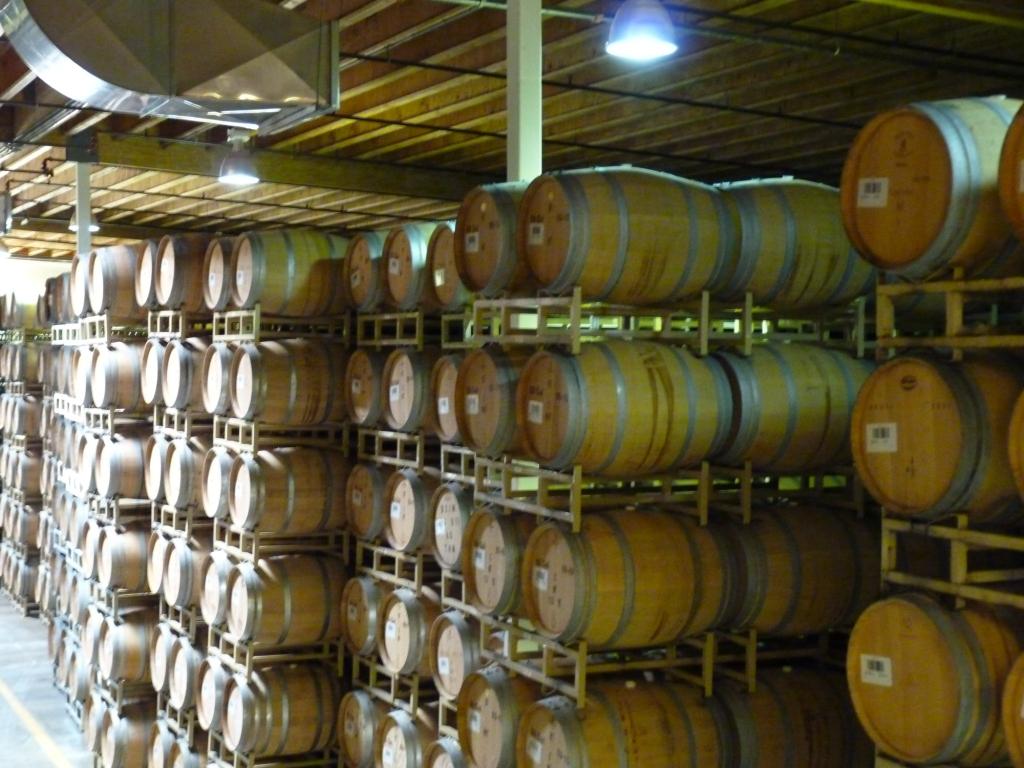
And those barrels? They all hold white wine, and there are 28,000 barrels in that room (!). And the smell alone in that room – ahh, you really should experience it for yourself – the magnificent Chardonnay aromas filling up the air – you really can enjoy this smell countless amount of time.
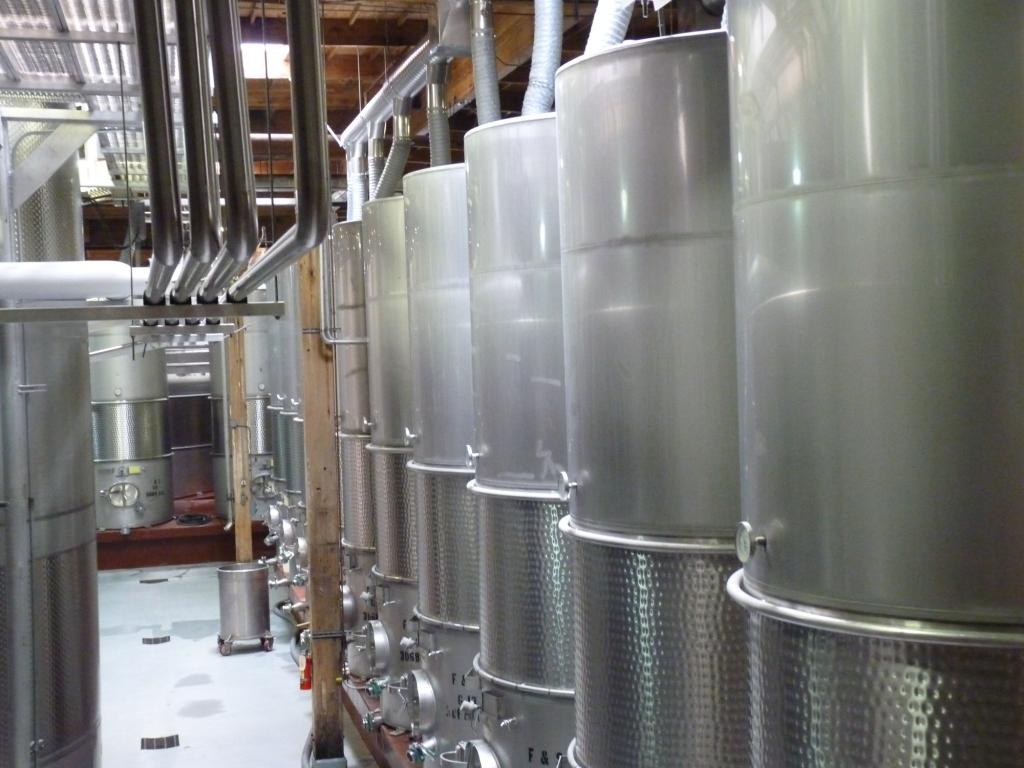
Wait, here are the tanks first:
And now, the barrels (no, you can’t see all 28,000 in this picture):
Now, let’s talk about the wine – no more “supporting pictures”.
The tasting was conducted in the library room, where I was surrounded by the wines I really (REALLY!!!) wanted to try – but I had to only look at them… Here are some of the wines I didn’t try:
1977 Cabernet Sauvignon:

Then I didn’t try this 1993 Meritage:
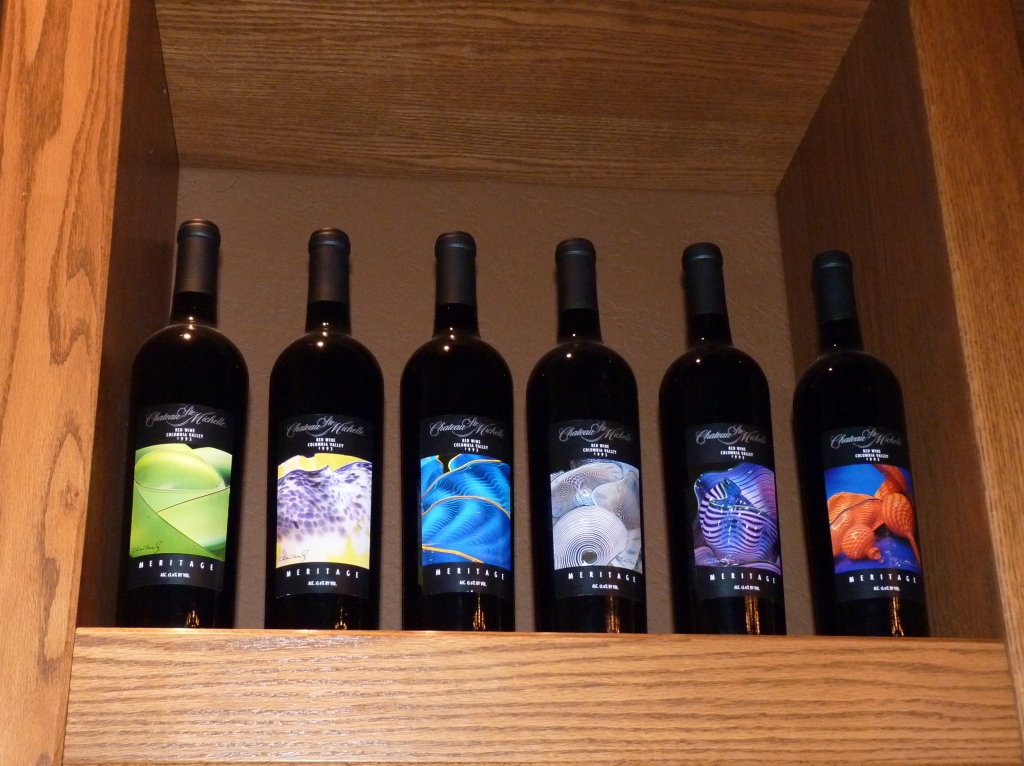
1994 Meritage? Nope, still nothing…
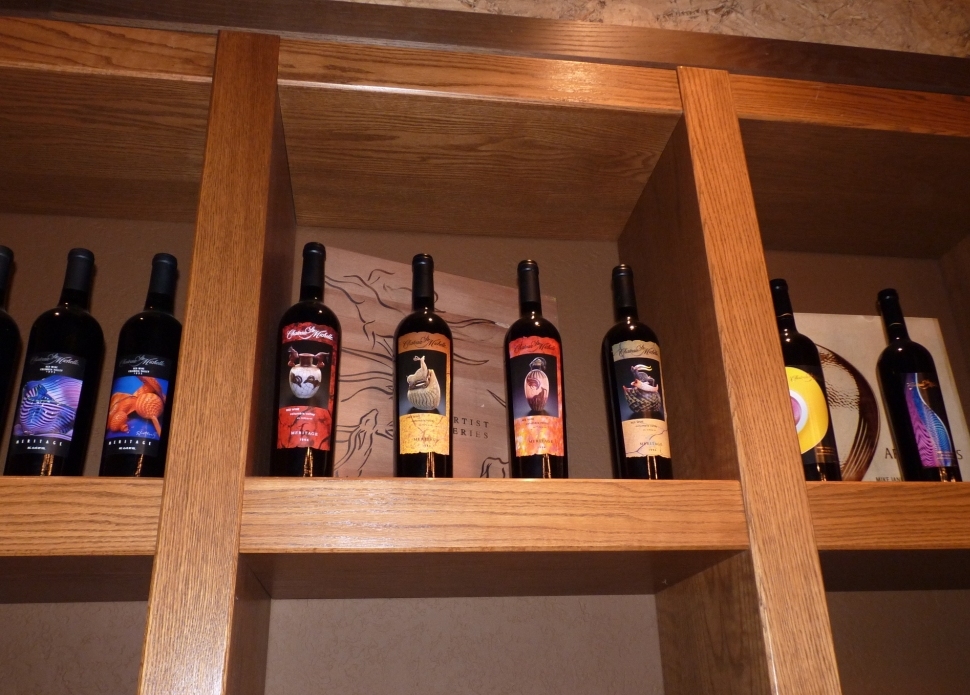
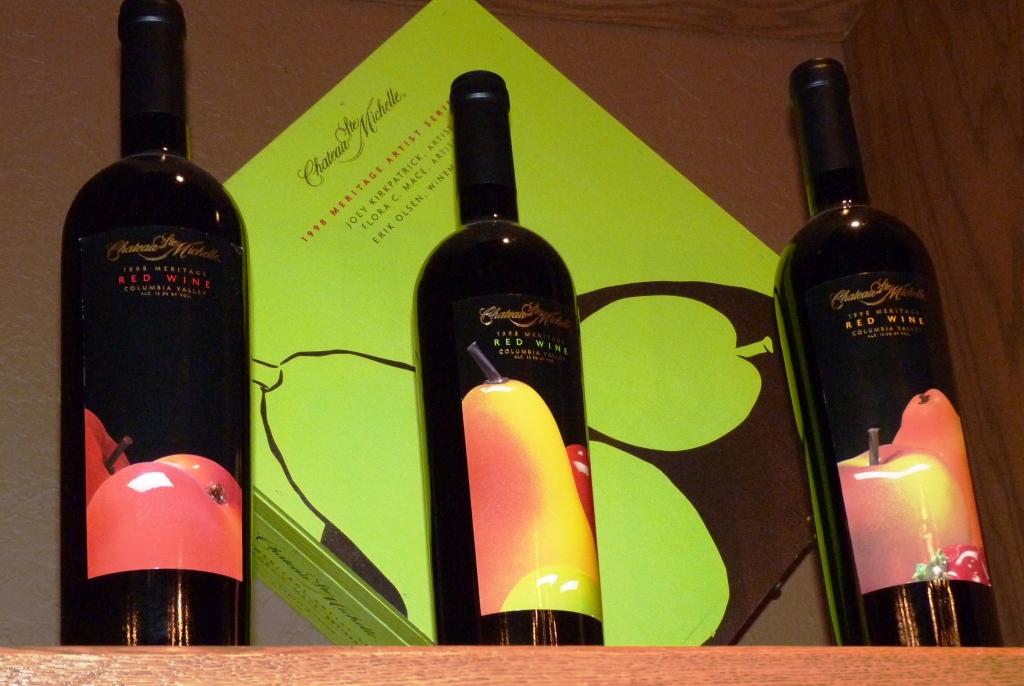
And I didn’t try this 1998 Meritage:
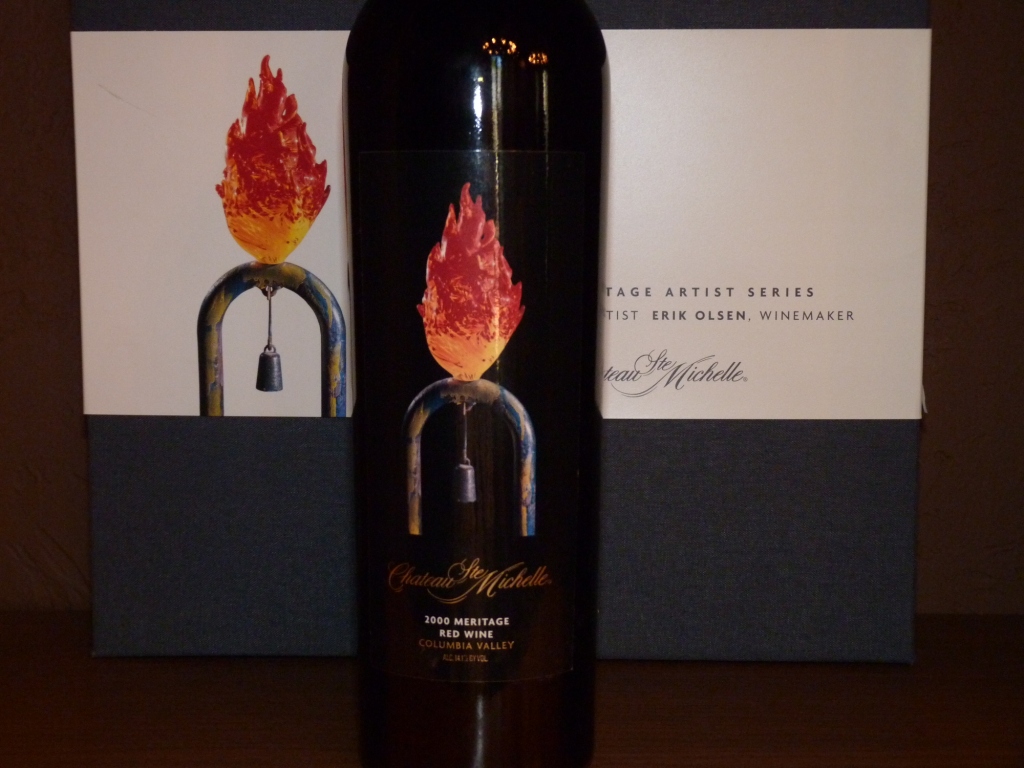
Another wine I missed on, 2000 Meritage:
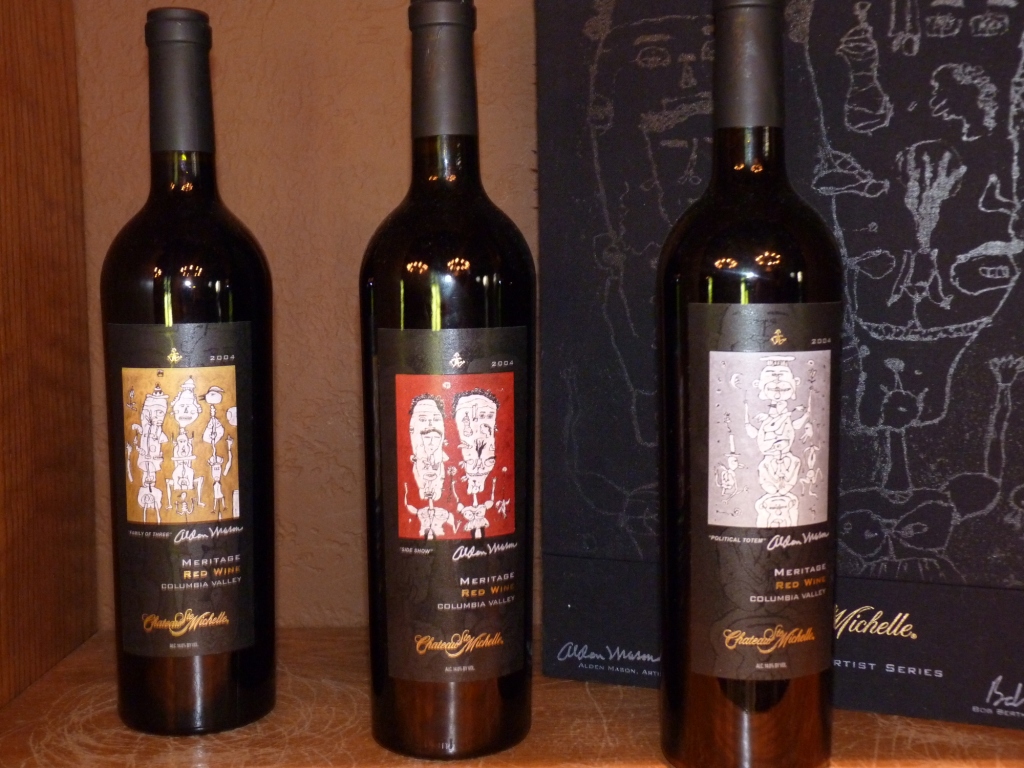
2004 Meritage? I could touch…the bottle, that’s all:
Okay, that’s it. Yes, I just wanted to share some pictures with you, so it would mean that I didn’t take those pictures for nothing.
And now, let’s talk about wines I actually tasted.
The tasting started with Domaine Ste. Michelle Cuvee Brut NV. As a confession of the wine snob (wow! need to patent that – should be a great name for a series of posts) I have to admit that I always passed that sparkler in the wine stores. I will not make this mistake anymore! Perfectly balanced, with the nice notes of green apple, and fresh, clean, high note acidity (and the price of $11 or so), this can be your perfect everyday bottle of sparkling wine.
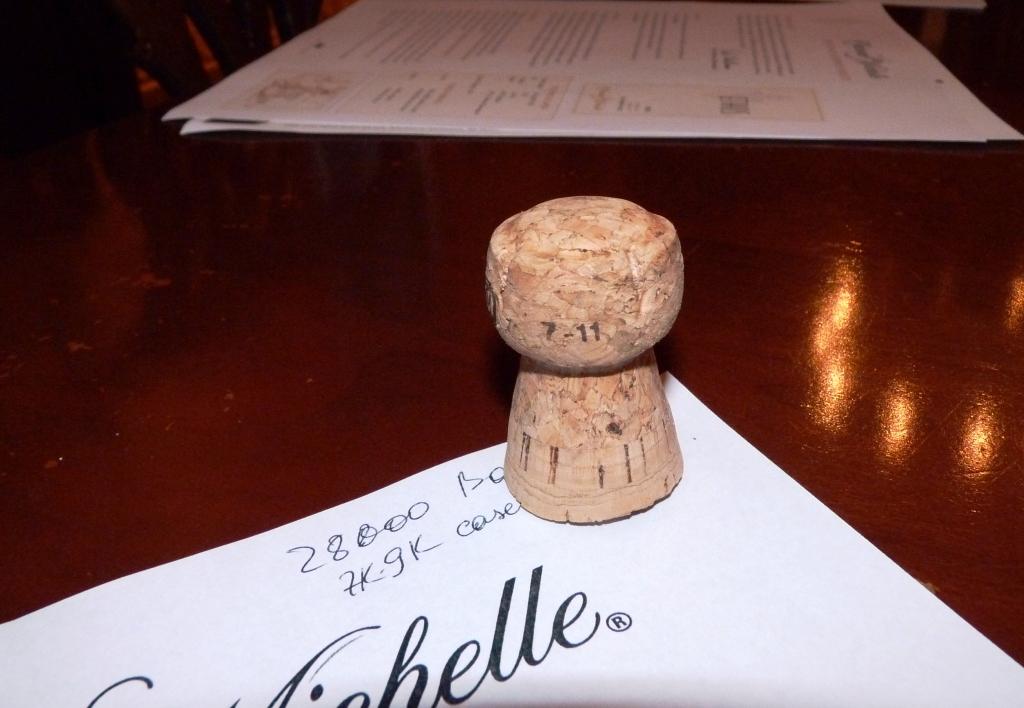
On a related note, I would like to also give you a mini-quiz (the answer will be at the bottom of the post) – below is a picture of the cork – what do you think those numbers mean and why are they there?
Next, we moved to the 2009 Canoe Ridge Chardonnay – it had a touch of butter and toasted oak on the nose, but was somewhat green on the palate – I was hoping for a bit more round profile on the palate.
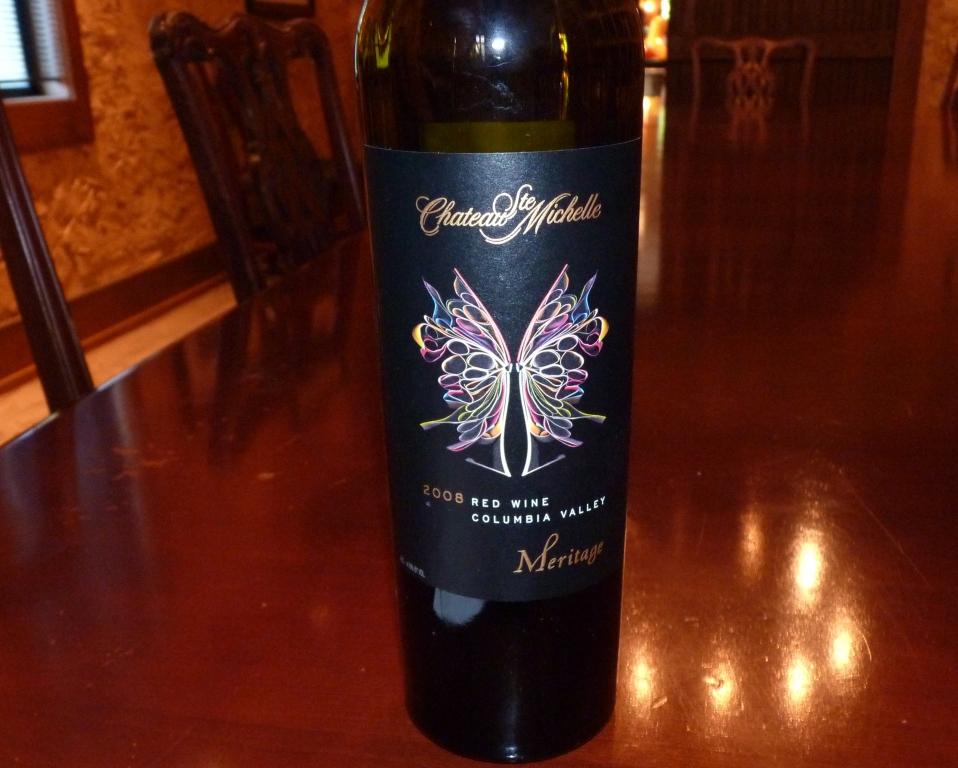
Next wine was the 2008 Artist Series Meritage – 51% Cabernet Sauvignon, 36% Merlot, 6% Cabernet Franc, 6% Malbec and 1% Petit Verdot – this was actually the first year for the whole period of Meritage production when all 5 classic Bordeaux varieties had been used. The wine was beautiful, perfectly balanced and reminiscent of a classic Bordeaux.
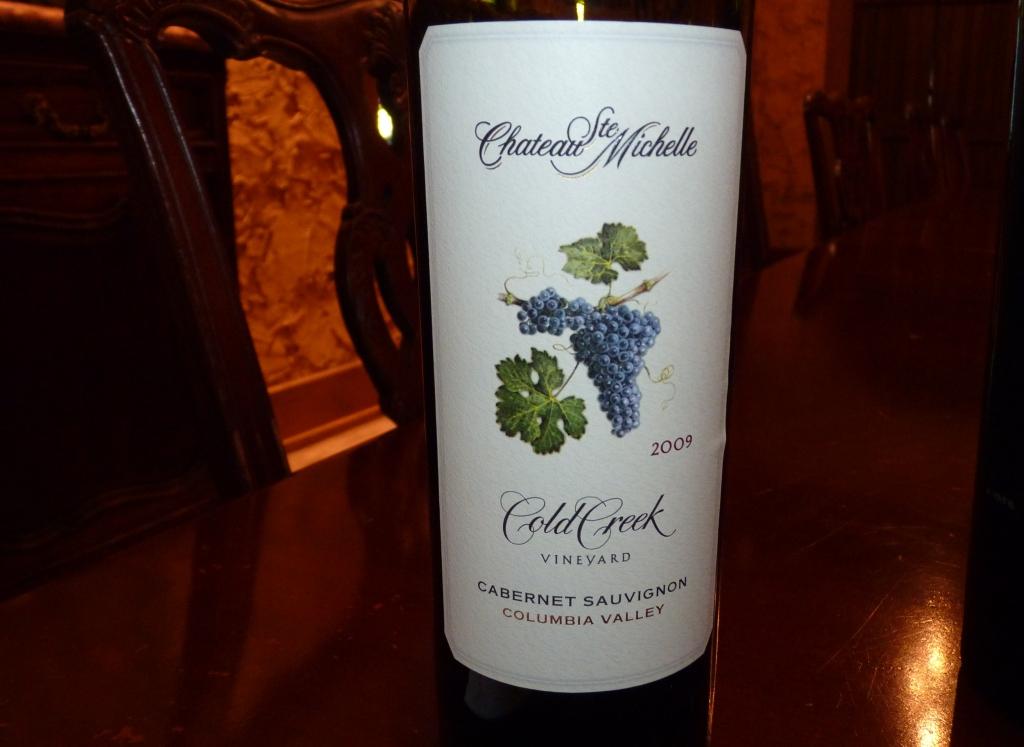
2009 Cold Creek Cabernet Sauvignon – single-vineyard Cabernet was perfectly clean with eucalyptus and earthy notes, soft fruit, and a long finish. As Renee ( my host) explained, this wine is usually not really welcomed by guests from California, as it shows much less exuberance compare to the traditional California Cab.
However, Washington Merlot, such as 2009 Ethos Reserve Merlot is fully redeeming the softness of Cabernet – this wine has broad shoulders, very big, powerful, with blueberries and blueberry jam, tobacco and dark chocolate notes – very impressive wine.
Last in that line of the tasting was 2006 Late Harvest Chenin Blanc, single vineyards from Horse Heaven Hills, RS 17.8% – this wine was perfectly balanced, with notes of honey and apricots, and clean, fresh acidity – very nice.
Do you think we are done? Nope. There are a few more wines to report: 2008 Stone Tree Vineyard Syrah Wahluke Slope was soft and supple, with a touch of spice:

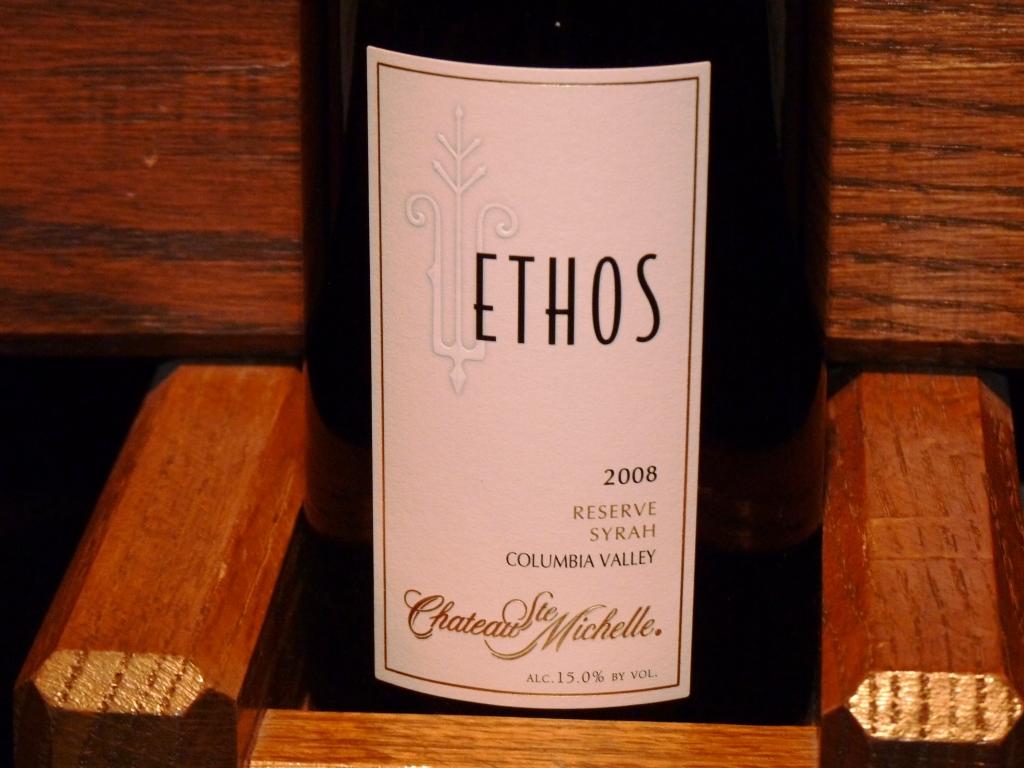
And then there was 2008 Ethos Reserve Syrah, which I have to simply call Best of Tasting – it was a “wow” wine, perfect BBQ wine with the nose of smokey roast, perfect power, balance and beauty:
And… We are not done yet! Then I had an opportunity to try Col Solare wines, which are a product of the partnership between Chateau Ste. Michelle and Tuscany’s Marchesi Antinori. The winery is situated on the Red Mountain in Washington, a part of Columbia Valley appellation, and the vineyards and the whole winery are resembling sun rays – you can see it for yourself in this picture on the website.
The wines are done in the true Super Tuscan style, powerful but reserved. I had an opportunity to try 2006, 2007, and 2008, and as a common point, I can only say – these wines need more time…
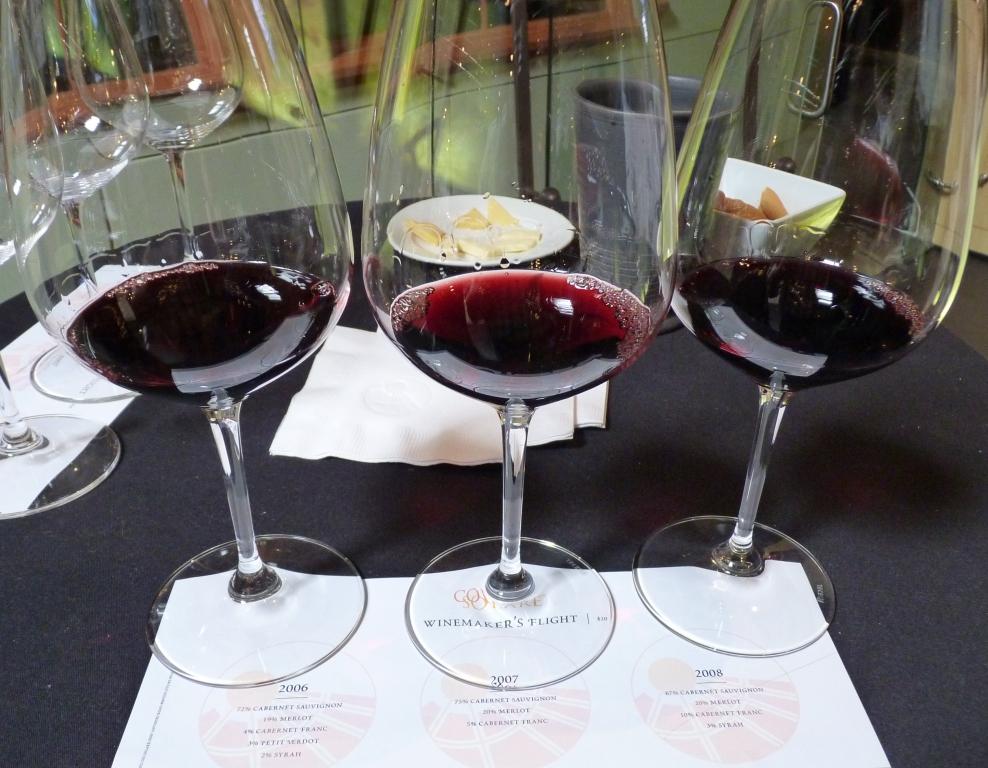 Dense and a touch chewy, with nice dark fruit, cherries and plums, earthy notes and good acidity, very balanced. These wines are not easy to find, but worth seeking.
And for me – here is something again which I didn’t try:

Okay, your photo-torture is done. I’m taking complaints in the comment section. And I’m pretty much done with my report. Ahh, yes, almost forgot – that mini-quiz… Did you figure out those numbers on the cork? Of course, you did, it is a production date. But I managed to surprise even my host Renee, who didn’t know about that date being printed on the cork (I even surprised myself as I never saw it before and only read about it) – the importance of this information is that with this date, you can know how long ago that non-vintage sparkling wine was produced. And I don’t know if you tasted an NV sparkler that was laying around for 5-6 years – it tastes very different from the freshly made version. And with the date on the cork – now you know.
Now I’m done with this post for sure. Find the bottle of Chateau Ste Michelle wine and have a glass – if you managed to read up to this point, you definitely deserve it. And if you are visiting Seattle – well, now you know what you shouldn’t miss. Cheers!
Five Traps of Oenophile
Boy, did this post took a long time… I don’t even know why – I knew what I wanted to write – but no, it still took forever. Anyway, it is finally out, yay!
 If you think about it, oenophiles have not only common traits (here is my take on them) – they also have common traps. Are there actually only five traps there, tripping over and under those who loses their caution? It depends on how you will count them, but I would think that these five are the most common ones. Let’s talk about those traps, and then you can tell me of you ever fell for any of them.
1. $100 is a new $10. How many of you out there started your love of wine with Yellow Tail or Frontera, for $5.99 or so? That wine was great, and the idea that you can buy a bottle of wine for more than $10 was completely foreign. What? $19.99? That must be for special occasions only, I can’t believe people spend that kind of money on the wine. See, I’m very happy here with my Frontera Cabernet.
Little by little this situation changes. Why this $6.99 Bordeaux tastes like you are chewing on the tree branch? This is Bordeaux, right? So it is supposed to be the best wine in the world? As you keep reading books and magazines, talking and listening to other people, and most importantly, trying wines which cost a little more and maybe a little more on top, you start hitting the ”aha” moment from time to time. More wines, more reading, more conversations, more experiences at the wineries and wine tastings, more appreciation for the wine and all the labor and passion which goes into creation of a great bottle of wine, and you start letting yourself to push your limit of ”appropriate and acceptable” a bit higher, and then may be some. Before you know it, what was unfathomable to you ($100 for a bottle of wine? What am I, crazy?) becomes … hmmm, let me think about it. No, I’m not describing a birth process of a wine snob (let me digress for a second – “wine snob” has both good and bad meaning, I’m referring to the bad one here) – I think as casual wine drinker becomes an oenophile, the entire outlook on fairness and rationale of the wine prices is changing, thus eventually leading to $100 becoming a new $10 (or may be even worse than that).
2. No cellar is ever big enough. No matter what size of your cellar is, it eventually becomes full – and you run out of space for the … wait for it… new bottles, right! And this is in the lucky case when you have an actual cellar (so you can probably squeeze in a little more). When you don’t have a cellar, the boxes start piling up all over the place, which … yeah, creates problems. You start opening the bottles just so you will get space for … new bottles. You wish that your friends will come over, so you can open more bottles and … create space for new bottles. Then some of your collection ends up at, let’s say, Benchmark Wine Company, and you get a lot of space in your cellar, so … you can fill it up again.
3. Buying of the wine becomes an obsession. We all buy things. Food, clothes, gadgets. Don’t know if someone can be obsessed with food (talking about buying, not actually eating) – may be, but let’s skip it. Let’s say someone is obsessed with gadgets. Very nice – so that someone will camp out by the store and wait for the whole night for the doors to open to be among first 10 blissful owners of iPhone 15. Some hundreds of dollars, and your obsession is satisfied for the next two years, until the iPhone 18 will come out.
When it comes to the wine obsession, situation is quite different. With the wine, oenophile is constantly afraid to miss something – miss on a big scale, miss irreparably and then regret. Ahh, 2007 was a great vintage in California, so I have to make sure I have enough 2007 in my cellar, because the time to buy is now. What if I will never see this wine again? 2009 was a great year, and this is a great producer – I have to get at least a few bottles of this wine. And that one. Ohh, and what if tomorrow this wine will disappear from the store? So there are only 200 cases of this wine made, and it has such a high rating, and, ahh – this price is incredible – should I get 3 or 4? Yes, yes, I know – I will get 5 and drink one now, but I will still have 4 left for the future, right? I can go on and on, but I think you got the picture.
4. There is never a right time to open that bottle. When it comes to deciding on which bottle to open, boy, does that creates a tsunami of thoughts? So I only have two of those bottles left… Should I open it today? But I think this wine is still evolving… May be I should wait for another year? But what if it will be past prime next year – that would be such a pity, this should be really great bottle of wine. Okay, okay – I will open it in a month, when Michael will come over – hmmm, but I think he really likes Pinot, and this is a Cab… Okay, no, I can’t decide. Let’s put it back. Do I still have any of that Chianti left which I got last week for $9.99? Yeah, I’m tired of this Chianti, but at least I will not destroy my precious bottle before its time… Again, I think this is pretty clear (tell me you never had an occurrence of this one, go ahead, lie to the world).
5. One becomes susceptible to the charm of clever and trusted wine marketing. What is the big deal, right? That what marketing is for – to make us buy something. Problem is that unless you are obsessed with something, most of the marketing generates “hmmm, this is interesting” reaction. Once we are talking about obsession, the reaction to the clever marketing is “I have to have it”. I can tell you that probably 8 times out of 10, I want to buy the wine described in the e-mails from PJ Wine (here is a link to the sample e-mail for you – judge for yourself). The need to pay for shipping really becomes a sobering factor here. Same story with the e-mails from Benchmark Wine Company – luckily (hope you sense the sarcasm), most of their offerings are priced out of the reach. A lot of e-mails from Wine Til Sold Out lead to the similar “I gotta have it” syndrome – I know people who unsubscribed from WTSO e-mails, just to avoid that permanent temptation.
I think I warned you enough – do you still want to be an oenophile (or a wine snob – in a good sense, of course)? If you are still reading this, there is a good chance that you already are – then I hope I armed you with something useful in a fight for preservation of the family money and free space in your house. If not – I hope I got at least a chuckle out of you. Last, but not least – I want to know what do you think! This is what comments section is for… Cheers!
Thank You, The Capital Grille!
 Huge wine selection, also see the discounts on spirits.
 This is not the first time I’m writing a happy post about one of my favorite restaurants, The Capital Grille – here are the links to the previous two posts, from 2010 and from 2011. This post will not be an exception – we had a great time [again].
Everybody in the family like steaks (okay, the oldest used to love steak – now she is trying to become a vegetarian) – but most of the time we make it at home. However, in August, we have a happy occasion, our wedding anniversary, which gives us a good reason to go to a restaurant – but this is not the only reason to visit Capital Grille. Two more reasons: Generous Pour program and Stamford Restaurant Week. I guess we are simply lucky, as The Capital Grille runs their special wine program, called Generous Pour, from July until the beginning of September – for $25, you can taste 9 different wines, specially selected by the Master Sommelier George Milotes. And The Capital Grille usually participates in Stamford Restaurant week, which typically runs for two weeks before the Labor Day- at participating restaurants, you can have a full dinner for about $30 per person! Do I need to give you any more reasons? I thought so.
As I usually do with the restaurant posts, I will give you mostly pictures and then of course all of my notes on the wines, which were quite good overall.
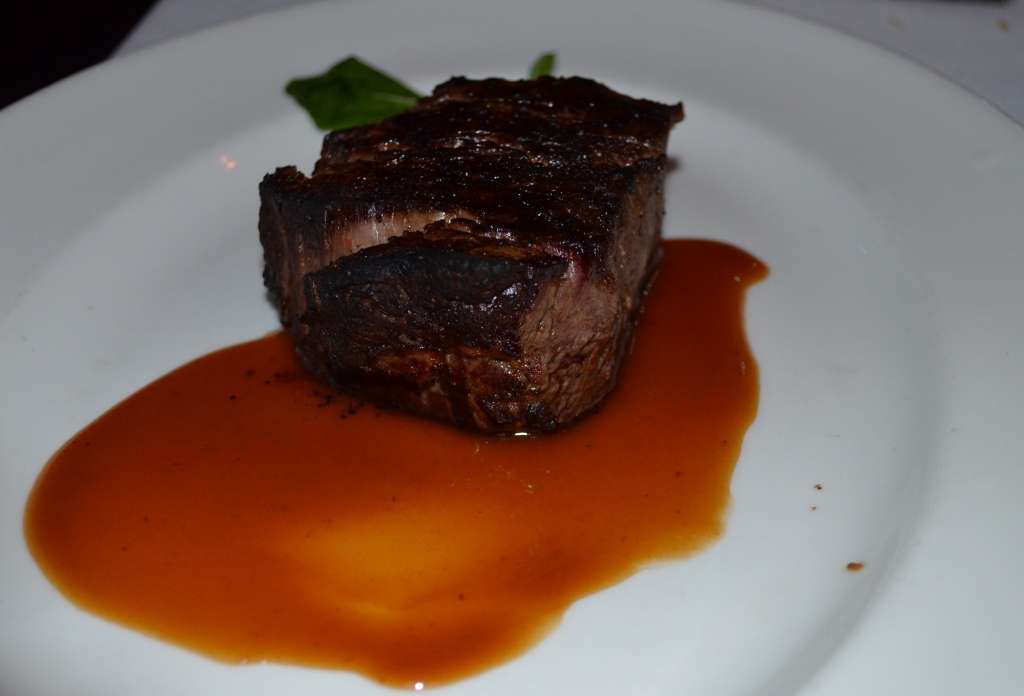
We had calamari as our shared appetizer (one of the kids’ favorite foods) – I don’t have a picture for you, but they were delicious. Then for the main course, we had 3 different kinds of steak. Kids opted for Fillet Mignon:
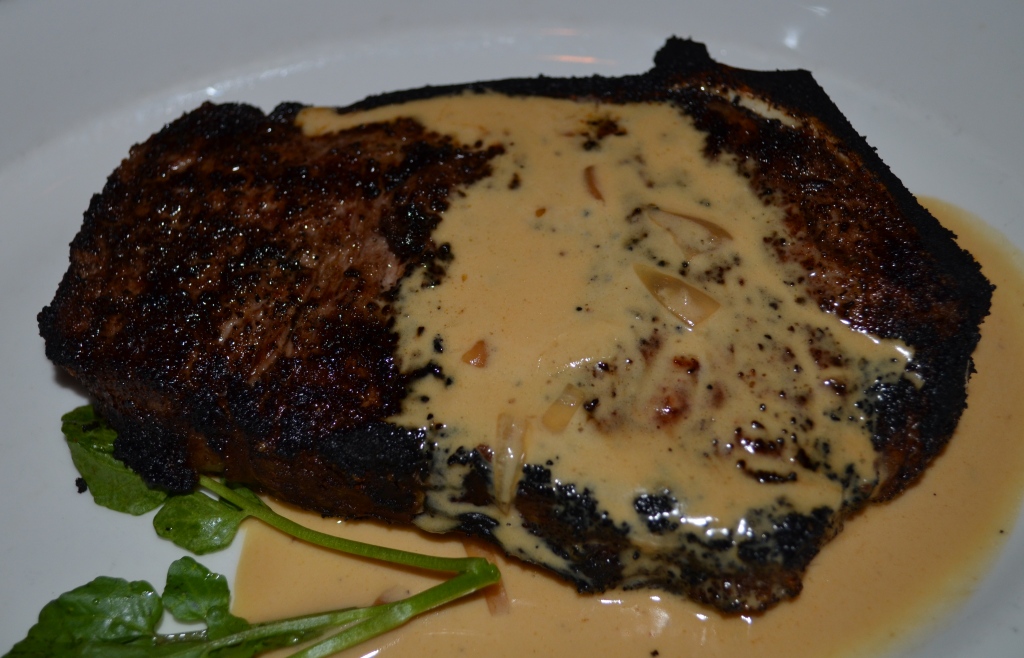
I had Kona-rubbed sirloin strip:
And my wife went for Tornedos – a cut of beef I can never remember, so here is the link for you if you need to know exactly what it is:
 All the steaks were masterfully prepared and came also with the tasty sides, like creamy spinach, garlicky mashed potatoes and wild mushrooms – as empty plates look extremely unappetizing in the pictures, I will spare you that sight, but believe me the plates were clean.
Let’s talk about the wines now, and we will finish your [drooling?] session with the dessert.
The wine program was presented exactly in the order below, and wine was always available throughout the entire course – I should mention that we had great service.
Here are my notes on the nine wines we had:
NV Lunetta Sparkling Rose, Trentino, Italy – very nice, crisp, tiny fizz, strawberries, hint of cranberries, good acidity. Refreshing. Drinkability: 7+
2009 Gary Ferrel Chardonnay, Carneros – Beautiful, touch of sweetness, butter and vanilla on the nose, same on the palate with additional hint of peach. Very balanced. Perfectly complemented spicy calamari. Drinkability: 8+
2008/09 Simčič Rebula, Roriska Brda, Slovenia – Earth and lemon on the nose, literally not a touch of fruit. Beautiful and hard to describe on the palate, very pronounced “just ripe” strawberries (more of a wild strawberries). Perfect acidity, touch of salt and savory undertones. Drinkability: 8-
2009 Chateau du Pin, Bordeaux, France – Limited fruit expression on the nose. Nice cherries, soft, good acidity on the palate, tannins unnoticeable (should have more). This wine didn’t exhibit a sense of place – not the Bordeaux wine I would expect. Interestingly enough, it didn’t work with steak – probably due to lack of tannins. This wine was drinkable, but not memorable at all. My least favorite in the entire lineup. Drinkability: 7
2007 Villa Mt Eden Pinot Noir Reserve, Russian River Valley – Amazing. Pinot Noir at the next level. Nose of a Pinot, with earthiness, smokiness, spices, cedar box. More of the same on the palate with the addition of ripe dark plums. In a blind tasting, I could possibly confuse this wine with the Rioja. Worked perfectly with the steak. Best of tasting. Drinkability: 9-
2007 Conn Creek Anthology Napa Valley – Beautiful classic Cabernet Sauvignon – cassis, eucalyptus, touch of blueberries, soft tannins. Perfectly drinkable now, but will improve with time. Drinkability: 8
2008 Ferrari-Carano Mountain Reserve, Alexander Valley – Nice progression from the previous wine. If Anthology was a delicate Cab, this wine was in-your-face California Cabernet. Blueberry jam on the nose (but no alcohol burn!), very fruit forward – in a good sense. Beautifully balanced, dark fruit on the palate, dark chocolate and herbs. Drinkability: 8+
2009 Falesco Assini Rosso, Umbria – Beautiful toned down read wine, black cherries, perfect acidity, noticeable profile of herbs and spices, very complex. Drinkability: 8
2006 Kanu Kia Ora Chenin Blanc, Stellenbosch, South Africa – Light and effervescent, without overpowering sweetness. Apricot pit and apricot notes, very good acidity. Paired very well with cheesecake. Drinkability: 7+
And now – the dessert! In general, I’m somewhat indifferent to the cheesecake – yes, it is nice, but it would be one of my last choices in the restaurant. Except the Cheesecake in The Capital Grille – if you never had one, go to The Capital Grille near you, skip the steak and just order the cheesecake – it will be a divine experience. Okay, fine, don’t skip the steak, because it is really good – but whatever you do, leave some room for cheesecake. As they usually say, picture worth a thousand words:
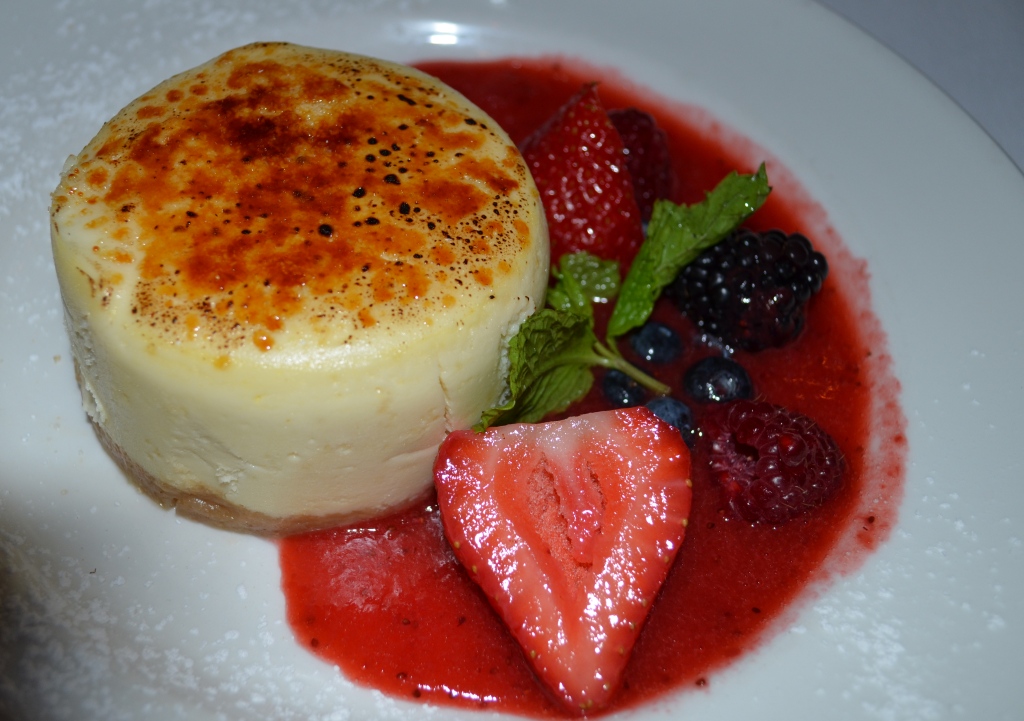
That’s all I have for you, folks – sorry you had to live vicariously through this post, but you really shouldn’t – here is a link to The Capital Grille web site, find one near you. Cheers!

Waterstone Cabernet Sauvignon Experience, And A Few Words About Food
 If I’m not mistaken, last week was literally the first week in Connecticut when evenings became enjoyable – which also meant that we could have a family dinner outside!
Dinner outside is one of the little pleasures of suburban life, when you can get to enjoy the food twice. Not that cooking the food on the stove is not enjoyable – but somehow, doing it outside on the open fire creates the whole separate feeling. And then the whole process of having food outdoors also brings different level of pleasure – I don’t know about you, but whenever possible, in a restaurant I ask for the table outside, to be able to enjoy both food and the weather, and here I don’t even need to ask anyone to get the table outside!
Yes, I will get to the Waterstone cab in a second (after all, that should be the subject of the post, right?) – but let me talk about the food for a moment. Our local Fairway had jumbo shrimp and fillet Mignon on sale, so the menu was a no-brainer. Of course you have to have something green on the grill, so I think asparagus is one of the best greens you can grill:
 I have a feeling that the recipes’ page is coming up in this blog – little by little, I learned to make a few dishes consistently well, so I think sharing the recipes makes sense (but let me sleep on it). One important thing about my recipes – more often than not, I don’t use the exact measure. I can’t tell you to use a quarter of teaspoon of salt, a half of it or the whole one – I just rely on a “gut feeling” for “enough or not”. For the asparagus, I use a dash of salt, black pepper, granulated garlic, olive oil and a splash of balsamic – mix it all together and let it “marinate” for 30 minutes or so. And then of course the key part is not to overcook the asparagus, so it will retain the crunch. I typically have a grill at 400°F and put the asparagus down for 1 minute, turn around, and keep it for another minute – and it is done.
I made shrimp on a skewer. You need to clean the shrimp, and marinate it for 30 minutes to an hour in the fridge (don’t marinate for too long, or it will become a mush). For the marinade ( considering I had 1 pound of shrimp) I used about 1/4 of a cup of olive oil, 4 -5 minced garlic cloves, juice of one lemon ( you can add wine vinegar also, if you want) and a couple of Penzey spices – I used Cajun and Lemon Pepper. About 2 minutes on each side at the same 400°F grill, and … voila:
 This shrimp was probably one of the best I ever had ( and made) – I also think kids were in the violent agreement with me – no shrimp survived the evening.
And the steak – everybody can make steak on the grill, so there is not much to talk about – here is the picture for you:

Quite honestly, I should’ve used more salt – but this you probably can’t tell it from the picture. I rehabilitated myself the next day by generously using Montreal seasoning mix, but I don’t this is important in the context of this blog.
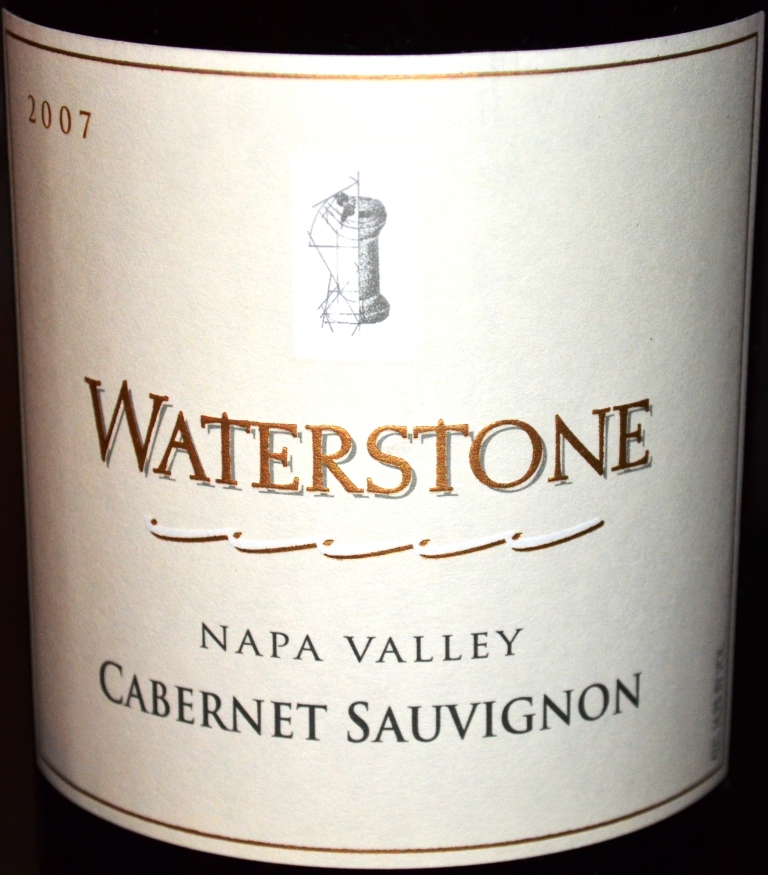 And then, of course, there was wine. First I read about Waterstone Cabernet Sauvignon in the e-mail from the Benchmark Wine Company, where it was listed as one of the “stuff favorites”. Further checking on internet seemed to be hinting at connection between Harlan Estate, producer of one of the absolute top (“cult” is the word) California wines and Waterstone Cabernet Sauvignon – the rumor which Jancis Robinson unequivocally dismisses.
Whether the rumor is true or not is not that essential – Benchmark’s recommendation along with unpretentious label was enough to build my expectations (okay, I’m lying about the rumor – of course I want this wine to be made out of Harlan’s juice, at about 1/30 of a price of the bottle of Harlan Estate). Interestingly enough, if you will read about the Waterstone Winery, which was established in 2000, it doesn’t own any vineyards, which means that grapes should be sourced from the other vineyards, so the whole idea of wine being made out of Harlan juice, entirely or at least partially, is not that impossible. Anyway, with all those expectations, I was still taking my time, until Zak (owner of Cost Less Wines) told be that he only has about 10 bottles left, so … (he took a pause after “so”) I realized that the time has come.
As you can see from the picture below, I approached entire matter of experiencing the Waterstone very seriously, using my “special occasions only” Cabernet set from Reidel (we have enough glasses for the regular use, and those Reidel glasses don’t last long):
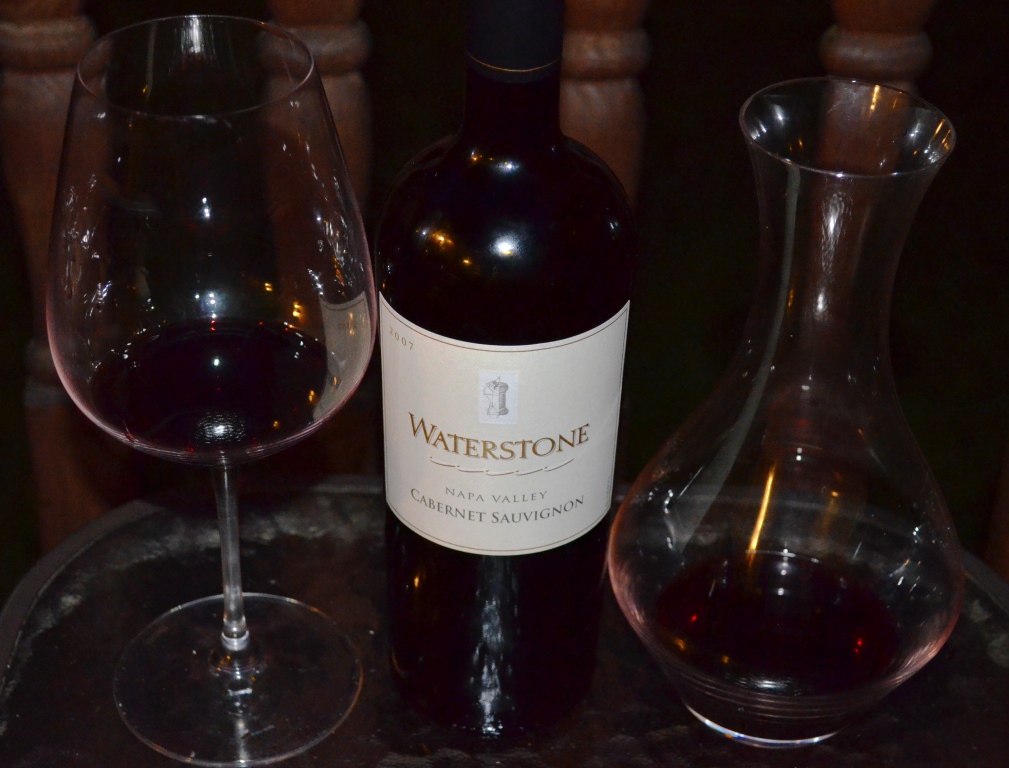
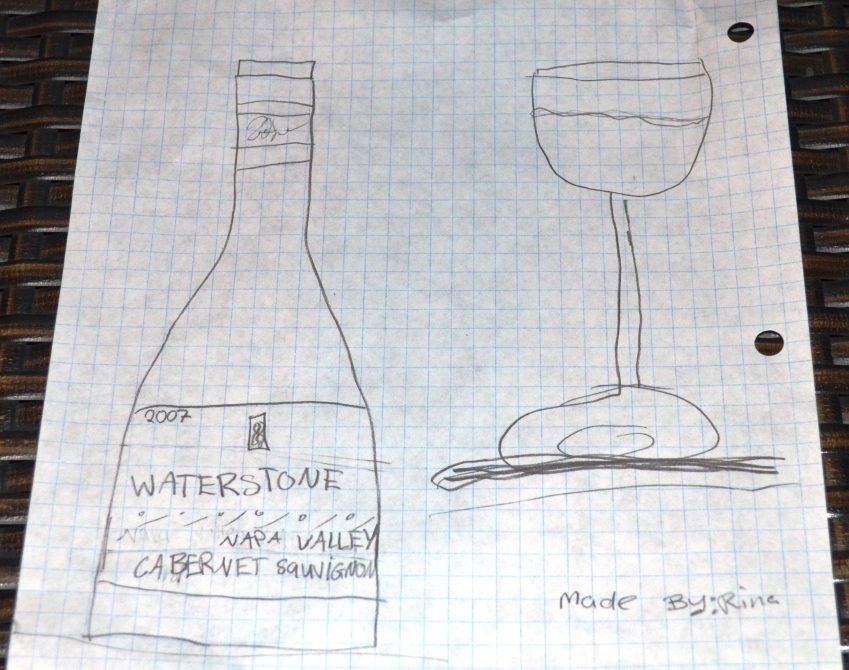
Every time I use these special Reidel glasses, the first smell sensation I get is the one of a wet dog – I guess I don’t know how to use them properly… That smell has nothing to do with the wine, and it disappears after a few sips, but it sure gets in the way of your first impression. Well, let’s talk about the wine. This 2007 Waterstone Cabernet Sauvignon Napa Valley (14.5% ABV, $27.99) has 80% Cabernet Sauvignon, 16% Merlot, 3% Cabernet France and 1% Petite Verdot, and it was aged in french oak barrels for 22 months. The wine had a perfect nose of blueberries. Not blueberry pie or blueberry jam, but a clean, perfect, balanced nose of fresh berries. This was followed by nice dark fruit on the palate, luscious and round, with some eucalyptus and touch of licorice, excellent balance of tannins, acidity and fruit. Drinkability: 9-. It is interesting to note that the wine was a bit all over the place on the second day, and I had nothing for the third day ( while I expect that it probably would taste better). Here is an artistic rendering of the event by my daughter:
 There you have it, folks. I think this is the wine to buy by the case, if you can find it, of course. If you tasted this wine, I will be glad to compare notes. If you didn’t taste it yet, try to find it – and then I will be glad to compare notes. Cheers!
P.S. you can also consider this post as an early contribution for #CabernetDay which is coming up on Thursday, August 30th.
Impromptu Reflection On My Favorite Subject – Amarone
 This blog post was not planned for today – nope, had totally different ideas in mind. And then the comment arrived on one of my older posts (click here to see it). And the comment was more of a question, which definitely stroke a chord – someone was looking for that perfect Amarone moment, exactly the same way as I was trying to replicate mine…
Yes, I responded to the comment, but I couldn’t miss the opportunity to reflect on the magic of Amarone – and practical impossibility of re-creating that magic “at will”. That full-bodied, perfectly dry but rich, voluptuous and perfectly balanced (you will have to forgive my use of double-perfect wording) which I experienced only once (I’m talking again about 1997 Le Ragose Amarone) – was almost never replicated in any of the wines I had. The only two which come close were 2001 Masi Mazzano Amarone Classico, and believe it or not, 2000 Carlisle Dry Creek Valley Zinfandel. I have one wine on my “must try” list – Giuseppe Quintarelli Amarone – which must be magical based on what the others are saying, but this wine would really require a [very] generous sponsor…
Out of curiosity, I decided to check on the classic Amarone at the Wine Spectator web site – there are only 11 Amarone which have “classic” rating (95-100 points) throughout all the years:
| Wine | Vintage | Score |
Release Price | |
|---|---|---|---|---|
| Michele Castellani Amarone della Valpolicella Classico Cinque Stelle | 2005 | 96 | $105 | |
| Romano Dal Forno Amarone della Valpolicella | 2004 | 96 | $NA | |
| Lorenzo Begali Amarone della Valpolicella Classico Monte Ca’ Bianca | 1997 | 95 | $NA | |
| Lorenzo Begali Amarone della Valpolicella Classico Monte Ca’ Bianca | 2004 | 95 | $70 | |
| Michele Castellani Amarone della Valpolicella Classico Cinque Stelle | 2003 | 95 | $64 | |
| Michele Castellani Amarone della Valpolicella Classico Cinque Stelle | 2007 | 95 | $75 | |
| Romano Dal Forno Amarone della Valpolicella | 1998 | 95 | $480 | |
| Romano Dal Forno Amarone della Valpolicella | 1997 | 95 | $370 | |
| Romano Dal Forno Amarone della Valpolicella | 2003 | 95 | $425 | |
| Masi Amarone della Valpolicella Classico Mazzano | 1999 | 95 | $120 | |
| Masi Amarone della Valpolicella Classico | 1988 | 95 | $NA |
As you can see, Wine Spectator is not much of a help…
Have you ever experienced the magic of Amarone? Do you have a favorite? Let me know! Cheers!
Traif! Small Place, Big Experience
 Do you ever wonder how could we live without modern technology? For instance, how did we go about finding the good places to eat? Looking in Zagat? Calling a friend? Reaping and storing newspaper reviews and pages from the magazines, only to be never be able to recall where did we put them and what was the name of the restaurant? Despite being a techie, I can’t stop being amazed at what you can do today with such a “simple” tool as Google.
Couple of weeks back, we planned a weekend with friends in Brooklyn. Of course visiting the restaurant is a great form of entertainment, and as we do it pretty rarely with my wife, I really want to make sure that every visit would be a great experience. How can I do that? Two words: Google and Bloggers. You can use Google to get piles of relevant information. And then you can use Bloggers’ “labor of love”, their posts, in order to extract jewels from those piles.
Let’s go back to my restaurant search. Google faithfully produced a whole bunch of references when asked for the Brooklyn restaurant recommendations. One of the references attracted my attention – it was for the blog called Becoming Brooklyn, where I found the post with 5 recommended restaurants. Quick scroll through the relevant links and the decision was made – we are going to try the restaurant called Traif. Why? First, the menu looked interesting, and prices appeared to be reasonable. And the second reason? The restaurant offered chef’s tasting menu, priced extremely reasonably at $40 per person.
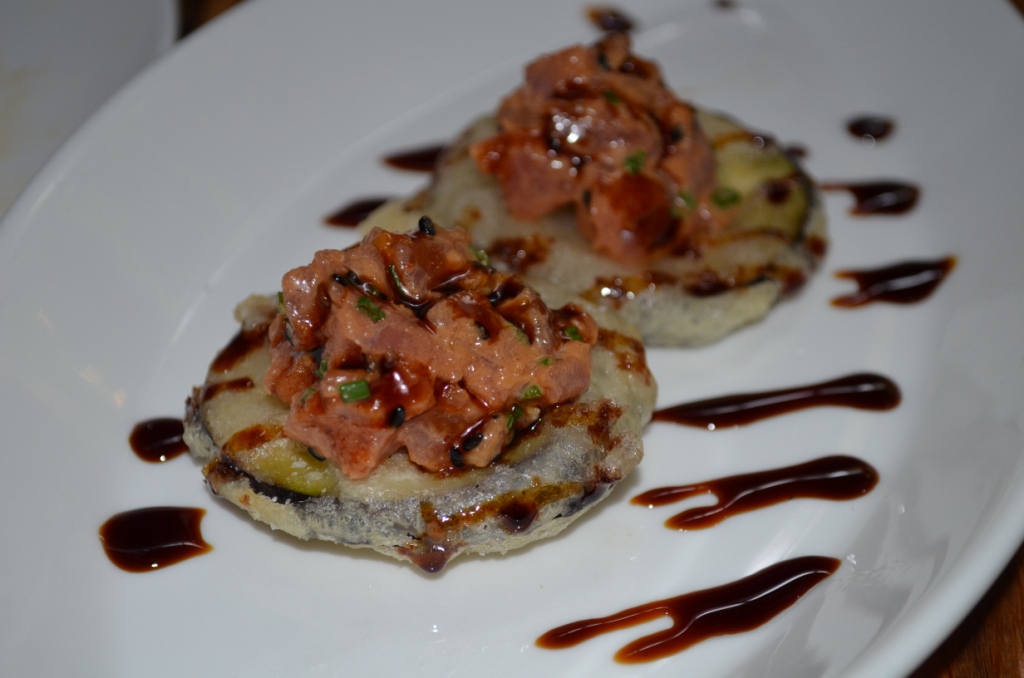
I love chef’s tasting menus. It gives you an experience instead of just a meal – and this is something which I would definitely prefer at any time. And so when we visited Traif this past weekend, chef’s tasting menu was our choice. To give you an idea of how was it, I need only one word – WOW! Taste, texture, presentation – everything was perfect. There was not a single dish we didn’t like. Every little morsel was absolutely delicious – this was really an Experience. The only way I can share it with you is through the pictures – I think they came out reasonably okay (just so you know, I’m rarely satisfied with the quality of my pictures) and you will get a feel for that experience. Of course the best thing you can do is to go and experience it for yourself, but meanwhile – here are the pictures.
Not shown – Gazpacho (sorry, I was slow at the beginning)
Butterfish Carpaccio with peach slices:

Not shown – blistered shishito peppers, canteloup, marconas, feta, mint, orange (sorry, people were too hungry! And I was slow again…)
dayboat scallops, creamy corn

spicy, bigeye tuna, tempura japanese eggplant, kecap manis:
crispy soft shell crabs, crushed avocado, pineapple sambal, red papaya:

seared foie, fingerlings, ham chips, sunny egg, maple, hot sauce:

sautéed veal sweetbreads, asparagus, bacon, snap peas, shiitakes:

strawberry-cinnamon glazed baby back pork ribs:

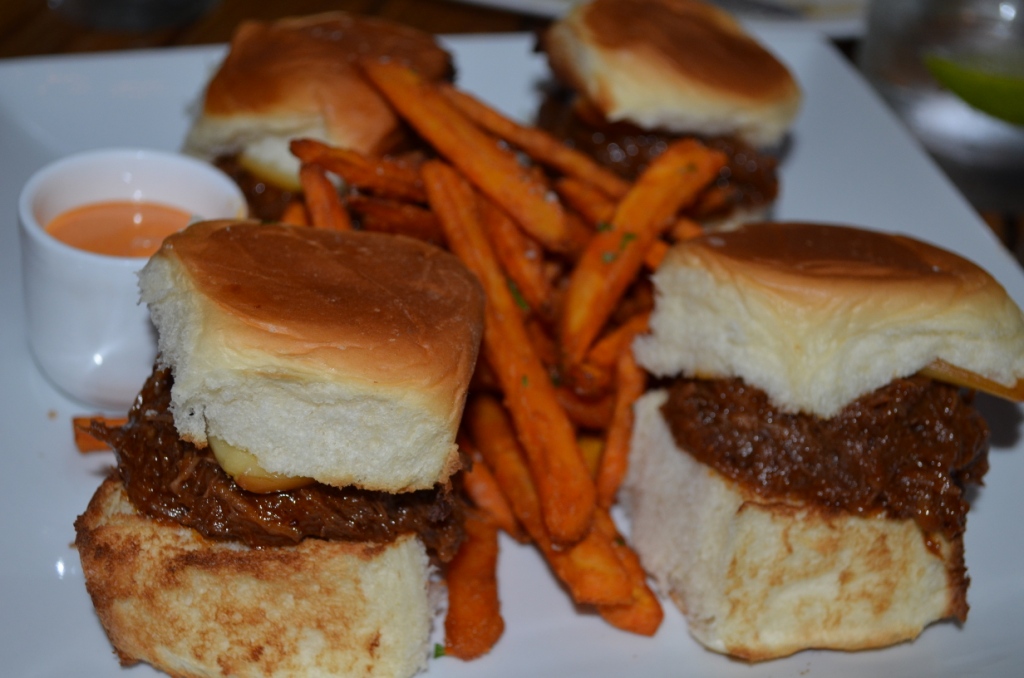
bbq, braised short rib sliders, sweet potato fries, smoked paprika aioli:
And for the dessert:
momʼs key lime pie, graham crust, pineapple:

bacon doughnuts, dulche de leche , coffee ice cream:

not shown – watermelon squares with molasses
I hope you liked my photo report, and I hope you are convinced that you need to experience Traif for yourself – believe me, you will not regret!
In case you wonder where is my favorite subject, wine, in this story – everybody were in the mood for cocktail or a beer, so I just had a glass of red Portuguese wine which was simple enough to not interfere with most of the dishes. But I have to note that wine list looked pretty good, diverse and reasonably priced.
Adding to the words of Iron Chef judges: Thank you Traif for the wonderful meal experience! Cheers!
Traif
229 S 4th St
Brooklyn, NY 11211
(347) 844-9578

Last Bottle Sign Up ($10 credit)





