Archive
Daily Glass: Value Wines Project – Portugal, Italy and Oregon
 Here is another Value Wines project update. We had French, Portuguese and Italian wines covered in the project. Today’s update is bringing in a new region – Oregon.
So far I would say that the outcome of the project is very encouraging – a lot of good, very drinkable wines from all regions mentioned above, all priced very well. The wine from Oregon, 2009 Primarius Pinot Noir, however, I would have to call the biggest surprise of the project. Why so? It is not surprising that we can find good and inexpensive wines coming from Portugal, for instance – wine region is grossly ignored and underrated ( this is changing, though), so the winemakers have to price their wines accordingly. Oregon wines, on another side, are well known worldwide as a source of the Pinot Noirs, rivaling those of Burgundy – and so far my experience with any Oregon Pinot Noir under $15 had been largely negative (wimpy and diluted wines).
All in all, Primarius Pinot Noir ($11.99) was very good wine – smokiness and finesse of the classic Pinot Noir, layered and restrained fruit and very good balance – I think this is a great wine for the price (and even in general). I will put Drinkability at 7+.
 Next wine comes from Italy – 2009 Tedeschi Valpolicella Classico ($10.98), and it has both good and bad sides. For the bad side – the wine never came together in a glass. It tasted as all the taste elements – fruitiness, acidity, tannins and alcohol were pulling in the different directions. The wine is drinkable, but not really enjoyable – by itself. I would guess this is a food wine – paired together with some homemade marinara sauce over fresh pasta, it should taste ( and fare) quite differently. For now, I will put Drinkability at 6+. For the good side, I’m adding 3 new grapes with this wine – Rossignola, Negrara and Dindarella, so the total count increases to 312.
Three more wines from Portugal – 2009 Caves Vale do Rodo, Douro DOC ($6.98), 2003 Primavera Douro DOC Reserva ($6.98) and 2007 Monte Da Cal Vinho Regional Alentejano ($6.47). All three are very nice and simple wines, easy to drink and pleasant – and great value for the money. I will put Drinkability at 7 for all three.
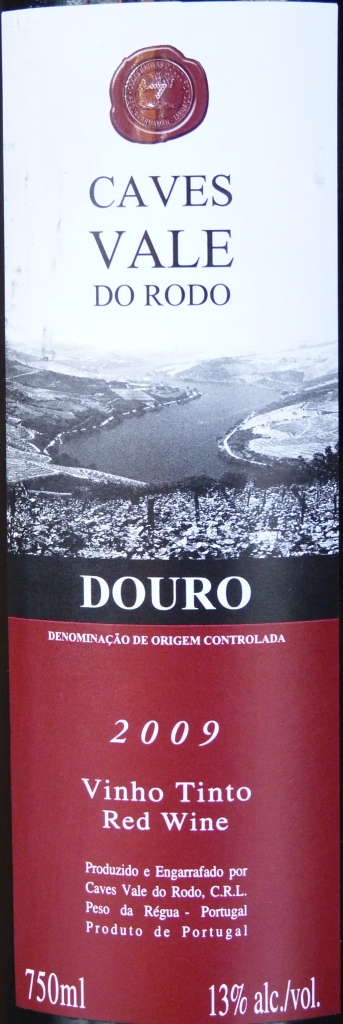
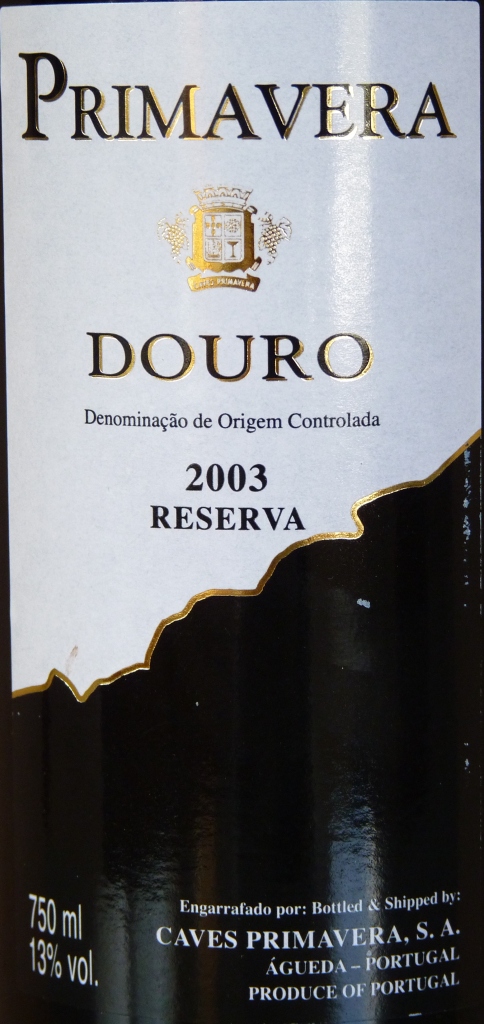
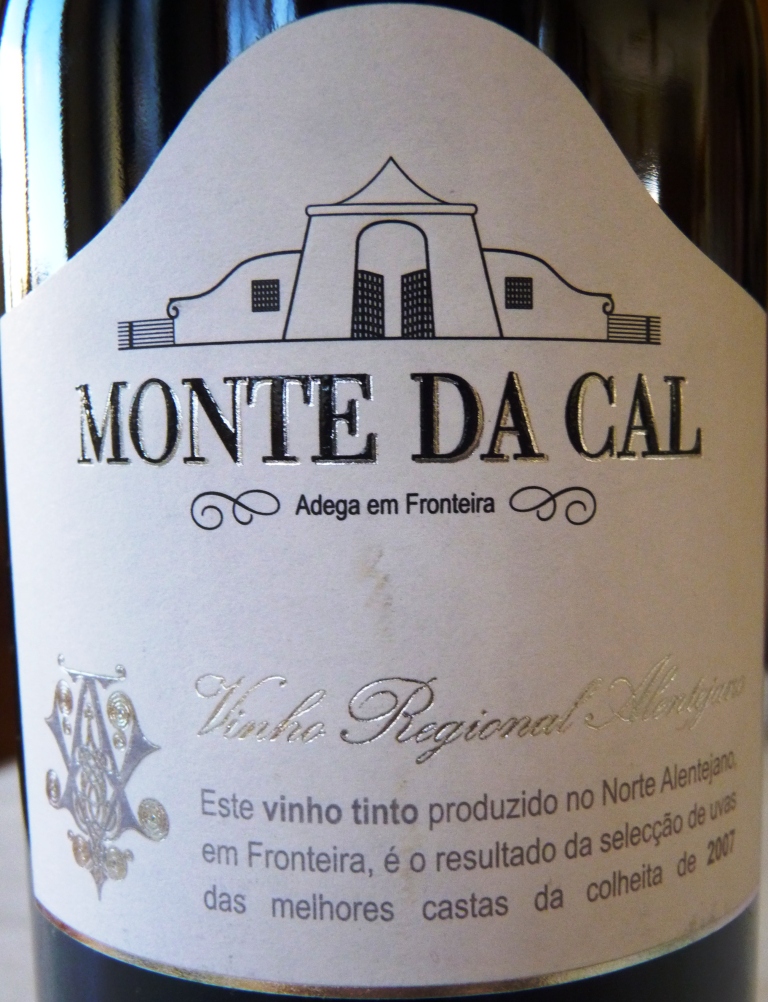
This concludes Value Wines project update for today. Few more wines are left to try in the current batch – as usual, the report will be coming soon.
Daily Glass: Value Wines Project – Portugal Wins Over Italy
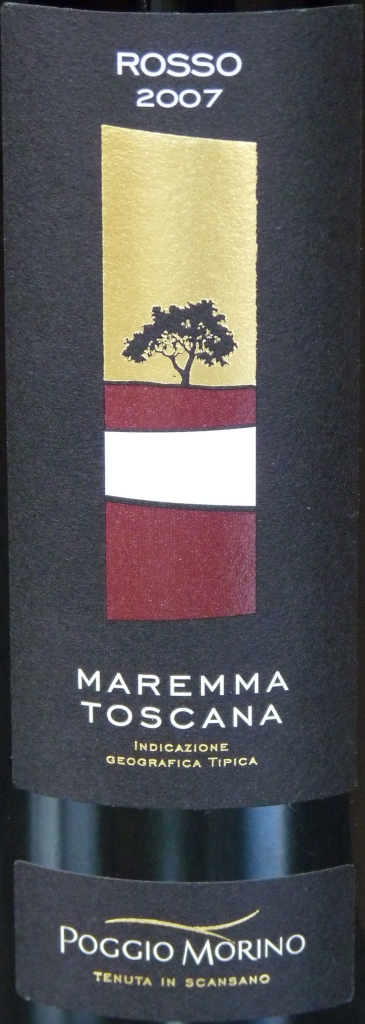 Here are the next two wines in the Value Wines project. First is the wine from Italy, 2007 Poggio Morino Rosso Maremma Toscana IGT ($9.98). When talking about wines of Tuscany, first wine which comes to mind is typically a Chianti, which is made mostly from the grape called Sangiovese. However, starting in the 70s, most prominent (and expensive) wines in Tuscany are so called super-tuscan wines, which are made from Cabernet Sauvignon, Merlot, Syrah and other “non-typical” for Tuscany grapes (which produce truly amazing wines).
This particular Poggio Morino Rosso is a blend of 40% Syrah, 30% Sangiovese, and equal parts of Alicante, Cabernet Sauvignon and Merlot. The wine has nice ruby color, nice nose with the hint of earthiness, medium body. It can work well as everyday wine, and as many Italian wines it would go better with the food. As it didn’t exhibit any particular “umph”, Dinkability is 7.
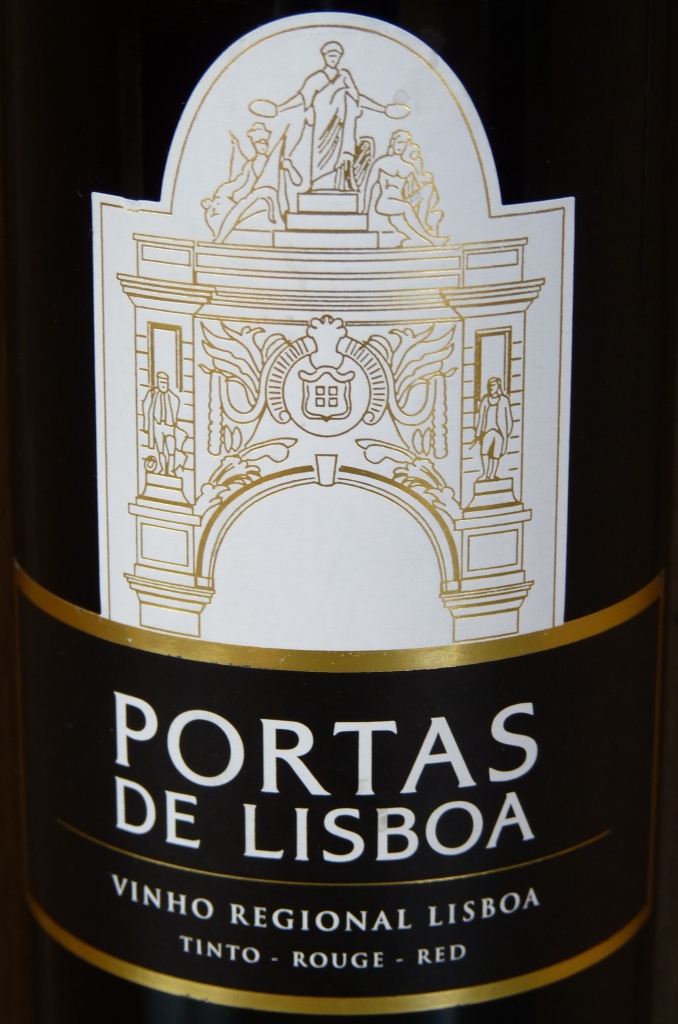 Second wine is coming from Portugal, from the region called Lisboa, and it is 2008 Casa Santos Lima Portas de Lisboa ($6.98). This wine is a blend of Castelao, Touriga Nacional (main grape in production of Port), and Syrah. This wine showed very nice nose of crushed red fruit, and on the palate… on the palate it was playful, living substance. Very good acidity, soft but noticeable tannins, good amount of red fruit, spices and tobacco. From the spices, the most pronounced was cloves, which was then leaving the way for leather and hint of white pepper. This wine deserves Drinkability of 8-, and this is the wine to get by the case.
So far our value wines project is trending upwards in the tasting profile , which makes me happy. I hope the trend will continue!
Daily Glass: Grolleau, A Treat For The Palate
 Previously, we discussed how expectations affect the taste of wine (you can read about it here and here). Sometimes, it is probably better to have no expectations at all! You don’t get upset, and you don’t get too excited if you simply have no expectations at all and just take life events one by one as they come up – oops, let’s stop this philosophical spur, I might not dig out of that hole or get beaten up.
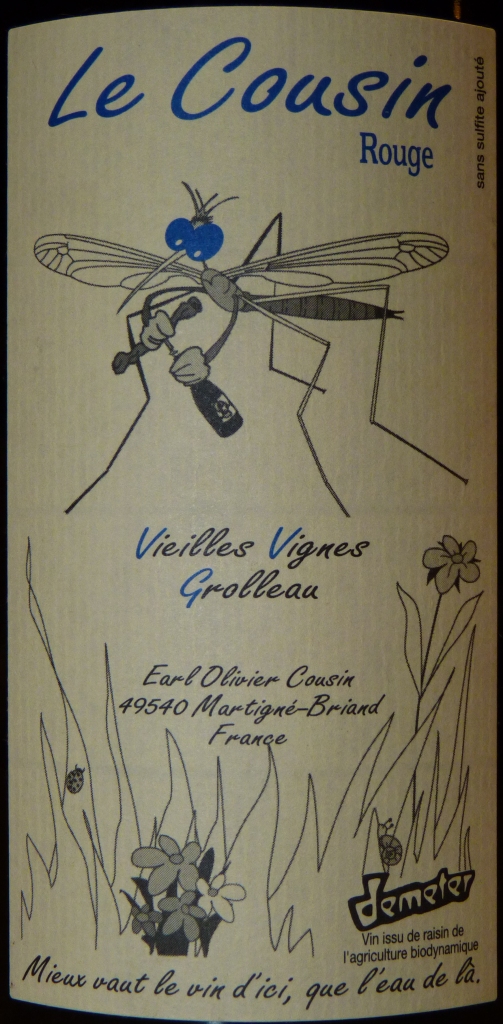
Let’s talk about wine, for which I had no expectations whatsoever. On the Treble Journey road, you come across many different wines. Some of them make you regret you ever touched the bottle, and some of them make you feel really happy you did. This wine, Le Cousin Rouge from Anjou region in France, made out of the grape called Grolleau, definitely belongs to the second category.
The reason? This wine is unique and different. Not because it is bio-dynamic wine – this is great, but not enough. It is simply different from majority of the wines I ever had, and has very unusual flavor profile. In one of the earlier posts, I called the wine I had a liquid steak ( and I said it was the most unusual). I didn’t know that the “unusual” wine will have competition – and it does, as I would like to call this Grolleau wine a liquid salami. Yes, you read it correctly. It has such a balance of acidity, earthiness and pungent feeling it leaves on the palate that I can only compare it with nice Italian salami. You don’t have to believe me – just find this bottle of wine, try it and let me know what do you think.
And of course the great thing is that I’m inching forward towards that 300 number, which gets closer and closer. I’m glad to make such discoveries along my Treble Journey – and I wish to your palate many happy experiences!
When Was The Last Time You Had Georgian Wine?
 Let me repeat the question – when was the last time you had wine from Georgia? I don’t mean one of the US states down south, I mean the Georgian Republic, the country bordering Russia in South Caucasus. I would expect that for some of you the answer will be “long time ago”, and for many others – never. And this is rather expected, but now is the time to change that.
Based on many sources, Georgia is regarded a birthplace of the winemaking. It is considered that winemaking in Europe goes back 5,000 years. Winemaking in Georgia seems to have a little edge over that with start at around 7,000 years ago. While we appreciate historical references, we are drinking the wines now, so the current state of affairs (I mean, of course, winemaking) is a lot more of interest.
Georgia’s wine industry had been through some rough times, starting with Prohibition attempt in former USSR during the 1980s. After Georgia became an independent country, there was a quick turnaround – for profit, it is. A lot of bad wines were produced in Georgia, and even more false Georgian wines were produced outside of it, to take advantage of historical value recognition of the Georgian wines. Luckily, as capitalism is taking hold in Georgia for good, there is a similar change in the Georgian winemaking, with honest people coming back to make honest wines and restore the “pride of the land”.
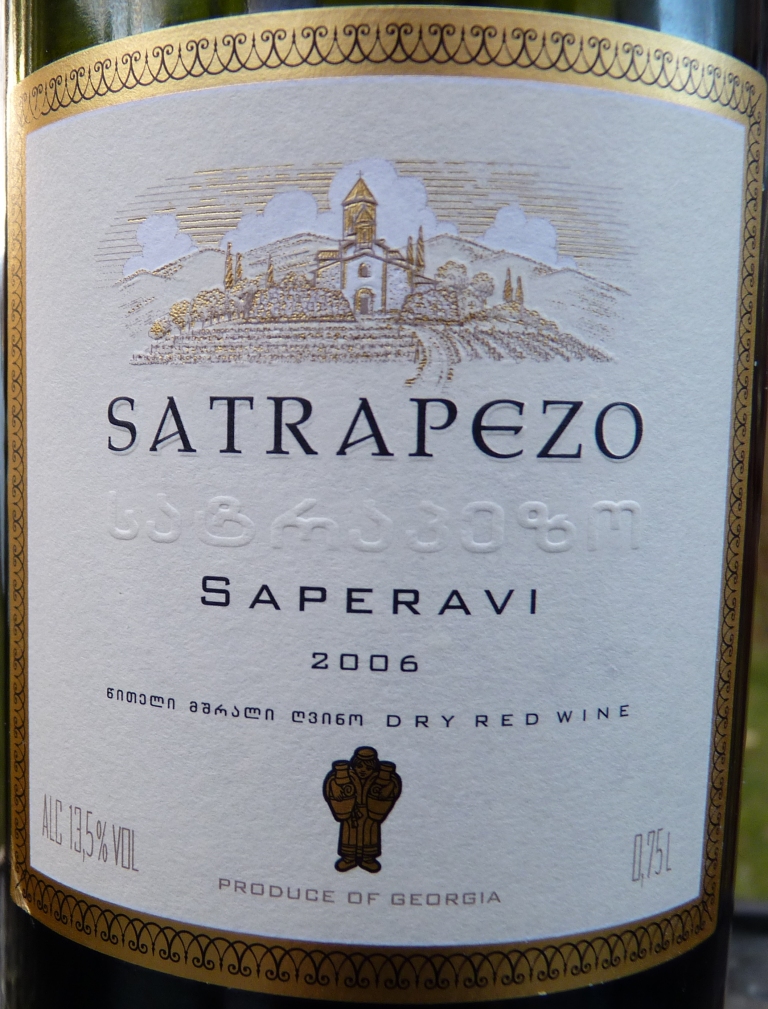
Seeing (oops, sorry, I meant tasting) is believing. Tasting the wine called Satrapezo, made from one of the Georgian authentic grapes, Saperavi, completely changed my perception of the Georgian wines, which I was definitely avoiding for a while. This wine is produced at the winery called Marani. Marani is really focused on making great wines, and it is showing in this flagship wine. Beautiful deep garnet color, layers of concentrated fruit (old world mature style, nice and gentle) and silky smooth tannins, balanced with good acidity and a very long finish. This is the wine to enjoy,…and enjoy, …and enjoy. In terms of Drinkability, this is definitely a 9.
 Another example was (totally unexpected to me) sparkling wine called Bagrationi. Made from three authentic grapes ( yay, Treble Journey advance!), Chinebuli, Tsitska, and Mtsvane, this wine had all the classic champagne traits – yeasty nose, hint of apples and fresh bread on the palate, dry and refreshing.
There are a lot more of Georgian wines to discover and enjoy. I’m glad to add Georgia to my personal wine map – and I highly recommend for you to do the same. Go find a bottle of Georgian wine and enjoy the results of 7,000 years of winemaking history!
Daily Glass: Iron Horse, Opus One and First Taste of 2009 Bordeaux
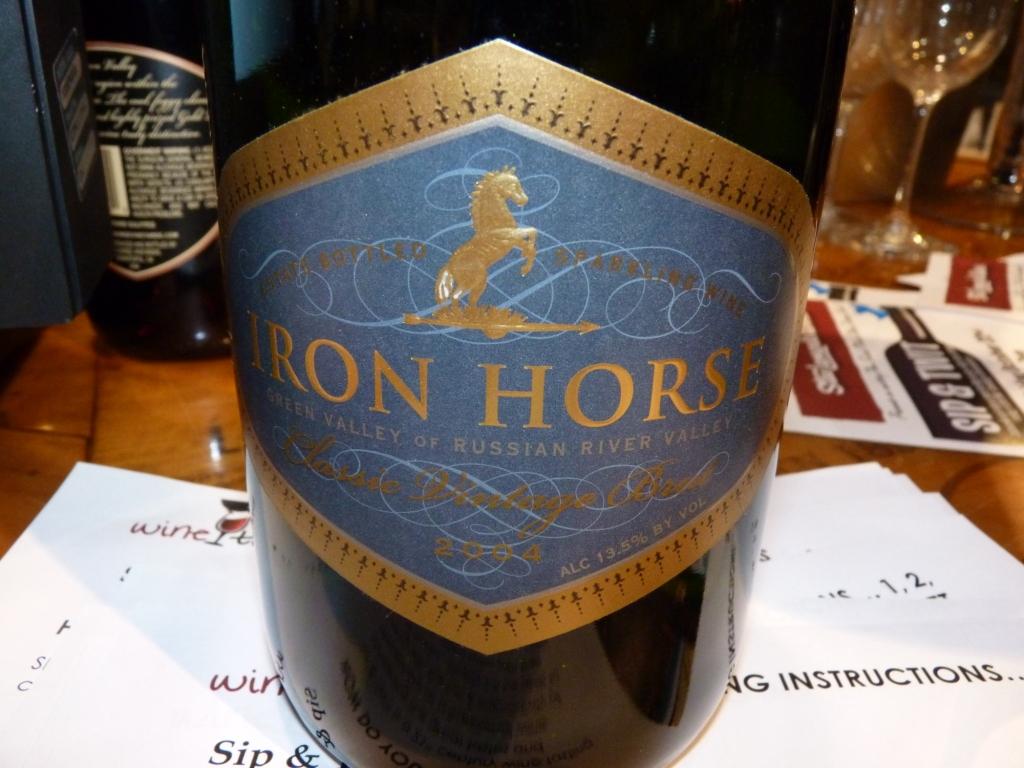 And again great folks from Stew Leonard’s Wines in Norwalk, Connecticut, helped many of us to learn and experience, and even with the new twist.
The twist was the fact that Iron Horse tasting was set as “SIP and TWIT” event – you can tweet about wines you are tasting, and as long as everybody adding #stewswines at the end of the twits, all twits can be easily found in social media channels. Besides, you can sign up for winetwits.com and become part of the information-sharing (“twitting”) network about the wines.
While this is all fun, let’s talk a bit about wines. There were 4 different wines from Iron Horse in the tasting. Sparkling Wedding Cuvee, Sparkling Brut, Pinot Noir, and unoaked Chardonnay. All four were good wines, but they didn’t stand out.
 The next wine from the same tasting definitely belongs to the “experiences” group. Opus One, the product of joint venture between Napa legend Robert Mondavi and Bordeaux superpower Baron Rothschild, this wine was created to achieve the maximum potential of Napa Valley signature grape, Cabernet Sauvignon. Opus One is quite expensive, rare and collectible, and 2007 was a great year for California’s Cabernet wines, with very high ratings across the board from all different wine publications – this two factors combined promise a great experience.
The wine had a magnificent smell of Cabernet Sauvignon, with licorice, eucalyptus and black currant on the nose, very smooth and powerful on the palate, with balanced tannins. Finish left to be desired more, somehow subsiding to the greenish, a bit underripe grape. It is a very good wine – however, in my book, the QPR is a king, as soon as we are done talking about tannins and finish. And at $149, it is absolutely not a bargain. There are so many equally well made Cabernet Sauvignon wines, at a fourth, fifth or even sixth part of the price, that it immediately changes the whole picture. It is a great experience, but not the one where you feel that you have to make the next step and actually own a bottle.
Last, but not least for this post is the first taste of 2009 Bordeaux. 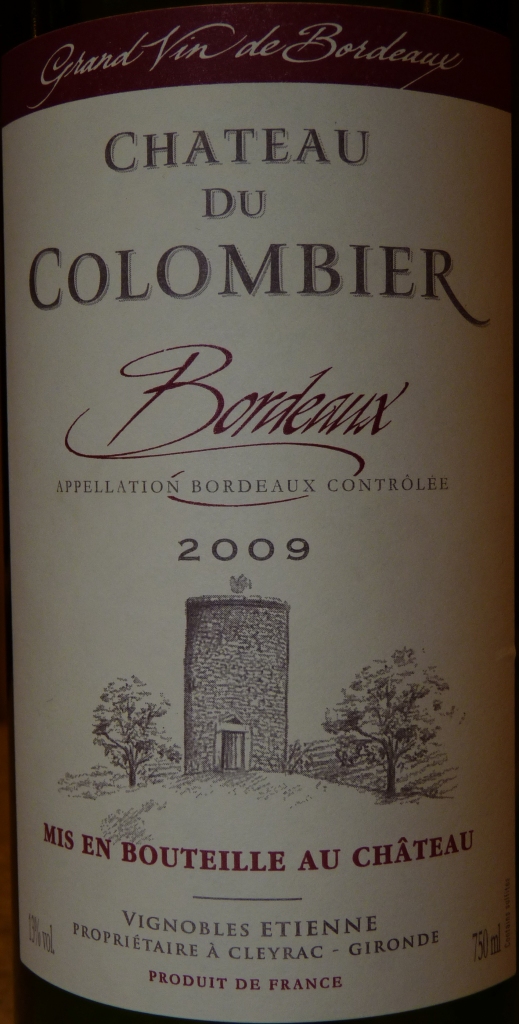 Just a regular Bordeaux, Chateau du Colombier, $11.99 at Bottle King – but from the 2009 vintage. 2009 vintage is compared to the greatest Bordeaux vintages of all times, such as 1949, 1982, 2000 and 2005. Of course, Bordeaux requires aging, from 10 to 30 years (or longer), in order to really shine. And getting aged Bordeaux is becoming impossible, as it skyrockets in price and becomes extremely scarce. But the good thing is that in a great year, even the simplest Bordeaux bottlings will deliver great value and will age very well, so you will be able to enjoy aged Bordeaux after all.
This particular wine had a very nice nose and palate of dark fruits, with good acidity and tannins. No, it was not an amazing wine – yet. This is the time to experiment. Get a few bottles of Bordeaux 2009, stash it in the far most corner of your cellar, and don’t touch it for 5-7 years. And after that – reach out, get that bottle opened – you might be on the way to discover greatness…
Daily Glass: Claraval, Another Dangerous Wine
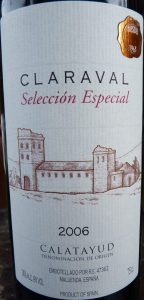 In one of the previous posts, I came up with the term “dangerous wine” – the wine which is so smooth and so good, once you start drinking it, you pretty much can’t put the glass down until the wine is all gone. Here comes the second wine from Spain which I also have to declare “dangerous”.
It is called Claraval and it is coming from the Calatayud region. This wine is a blend of four grapes – Garnacha (50%), Tempranillo (20%), Cabernet Sauvignon (20%) and Syrah (10%). The wine has sour cherries on the nose, and it opens up into a beautiful array of spices and fruit, with earthy notes coming through, all complemented by balancing acidity and tannins. If anything, this wine is reminiscent of good Southern Rhone wines (which is not surprising as it shares the same main grape, Grenache, known as Garnacha in Spain), but it definitely has its own character. Judging by the mid-palate weight and tannins, this wine will also do well in the cellar – and I was glad to see that Robert Parker think the same, giving this wine 91 rating and saying that wine will evolve all the way into 2020.
So, how much do you think such wine should cost? Nope, it is not $30, which would not be surprising at such a level of quality, it is only… $11.99, so it definitely has very high QPR. This is definitely the wine to buy by the case.
And now, it is time for the verdict (of course you already guessed it):
Drinkability: 8
What is next? The trip to Long Island wineries, which is almost a annual tradition by now – a trip to Long Island wineries in the Fall, when it is already not hot, and still very beautiful. Off we go (well, the team members have to wake up first). Report to follow…
Daily Glass: Great Red, Interesting White and Amusing Pairings
Let me start with a little disclaimer. When I use the word “interesting” in conjunction with food, typically it’s a bad sign. I use that word really to say “well, yes, it is probably not that bad… but I don’t like it!”. The reason I need the disclaimer is that this is how I would describe white wine called Conundrum – interesting. 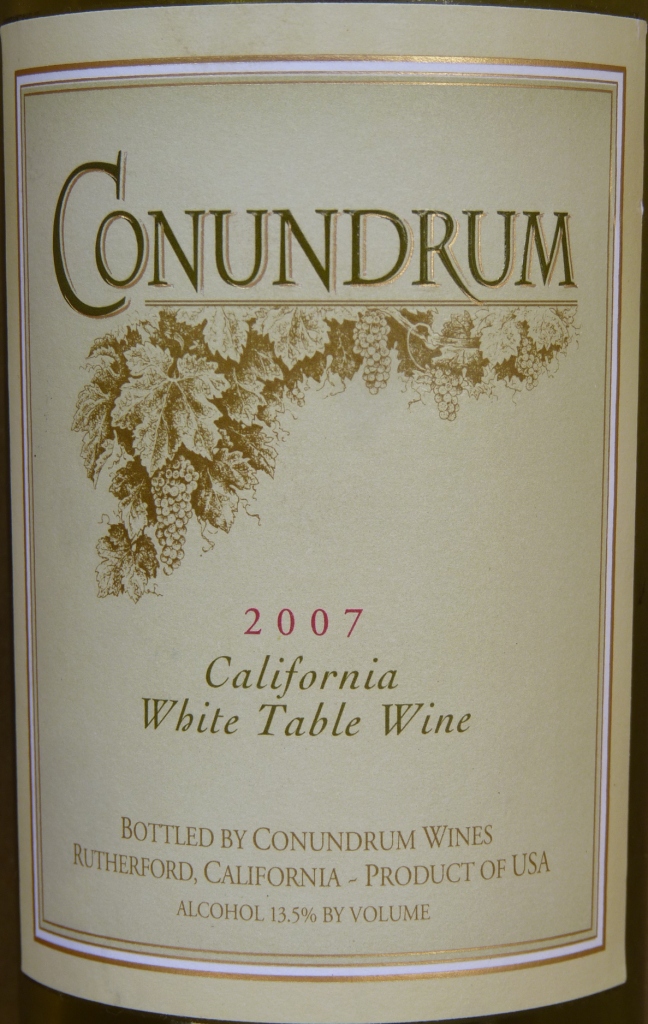 The wine is made our of 5 different grapes, all grown in California, with the different proportions every year. The grapes are Sauvignon Blanc, Semillon, Chardonnay, Muscat Canelli and Viognier, all blended together of course. So the bottle we had over the weekend was from 2007, had being rated 88 by Wine Spectator in the May 2009 issue. The wine is extremely aromatic, with fresh flowers, honey, white peaches and pear on the nose. But my challenge was that all those great aromatics on the nose where not integrated with the rest of the flavors on the palate, so the wine was not balanced – and hence the “interesting” disclaimer comes to play. This is the second time I fail to fall in love with this wine ( feel kind of bad, as wine gets a lot of great reviews) – but the great thing about wine is real unpredictability – every year is a different year! As I do have a bottle of 2008, I will definitely make another attempt, but for now, the verdict for 2007 is…
Drinkability: 7-
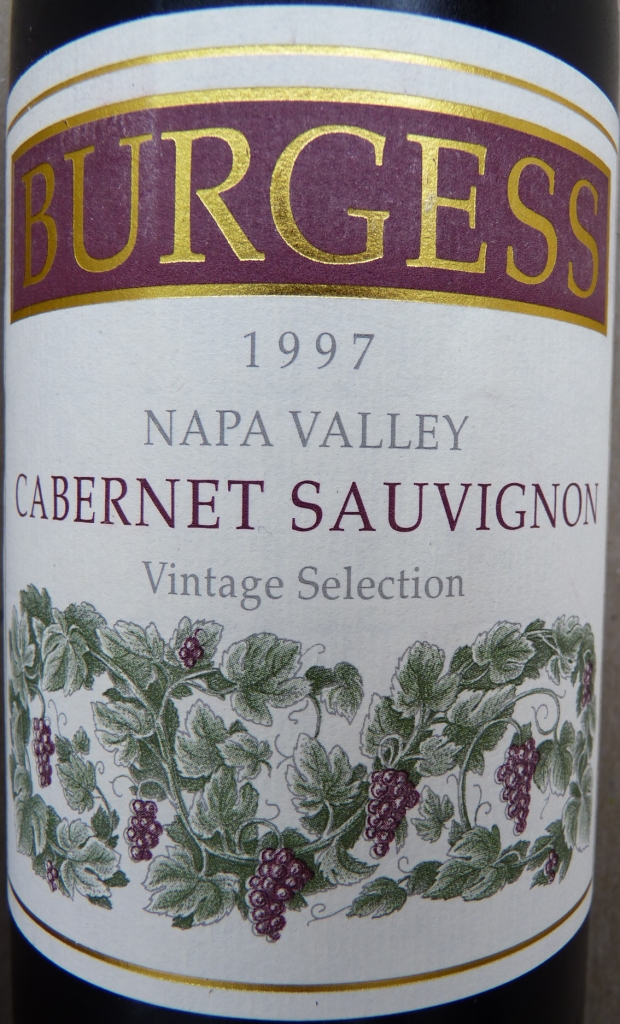 Now, let’s talk about different experience. Burgess Cellars had being making wines in California since 1972. One thing which I find very interesting (ok, just to be very careful – here “interesting” is a good thing ), is a Library program, started ion 1980, where the wines would age at the winery before being released to the market. So this weekend we had a chance to try Burgess Cellars Cabernet Sauvignon Vintage Selection 1997, which was recently released (and I have to thank Wine Till Sold Out for an opportunity to get it at a great price, $24.99). As I’m referring to Wine Spectator ratings in this post, this wine had a rating of 90. Also, if anyone is curious, this wine consists of 80% Cabernet Sauvignon, 11% Cab Franc and 9%Merlot. Now, in the terms of my “pleasure”-centered ratings, this was a great wine – it had a layered complexity with dark fruit, such as black currant and blackberries, hint of earthiness, eucalyptus and cedar, all supplemented by fresh acidity and round tannins. The wine is ready to drink now, but will continue to evolve for another 5-7 years, and I’m looking forward to that experience.
Drinkability: 8
Now, talking about amusing pairings – of course chocolate and red wine is a classic combination, what’s so amusing, right? Take a piece of a good dark chocolate, glass of Cab or Syrah, and you practically 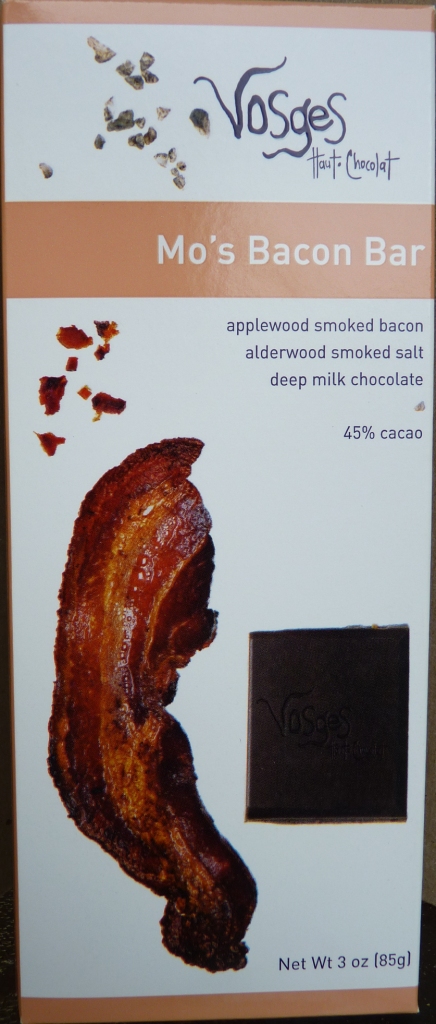 guaranteed a good time (I have to note that I usually fail to identify with Port and chocolate, which is also considered classic, but doesn’t work for me). Now, if your chocolate is called Mo’s Bacon Bar made by Vosges Chocolate, the story get’s more interesting – can you dream of such combination on your own? May be not? Mo’s Bacon Bar is a milk chocolate (45% cocoa) with addition of tiny pieces of applewood smoked bacon and applewood smoked salt – and it effectively tastes like that, each and every element is noticeable and surprisingly well integrated together. So this chocolate is fine by itself, now what about wine pairing? It actually did work quite well with the Burgess Cab! I would think that the reason for the tasty pairing is in the ability of Cab to work well with the steak, so it was cutting through the fatty component of the bacon and bringing in fresh acidity to the total combination. In the interest of full report, we also tried the same chocolate with nice LBV Port ( Quinta do Infantado LBV 2000), and the pairing didn’t work all that well – but there is always next time…
So here is your call for action for today: be amused, try something new – and make sure to share your experience!
Daily Glass Meets Treble Journey: Norton, The Real American Grape, or #245
As I mentioned in my previous post, grape called Norton was on my “to try” list for the long time ( ever since I started with The Wine Century club). 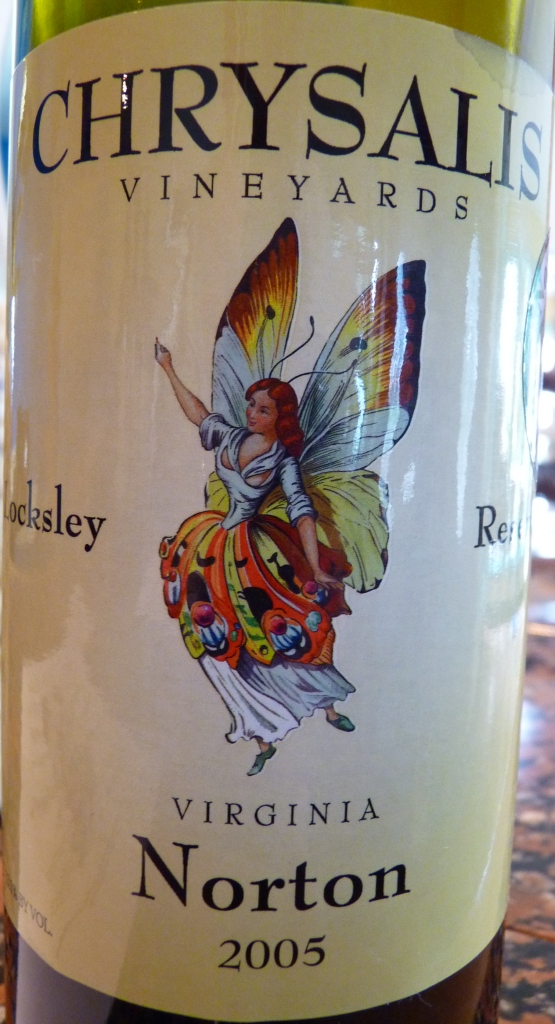 Finally, during my visit to Chrysalis Vineyards, I got an opportunity to try it in the different versions (Estate 2005, Estate 2006, Locksley Reserve 2005 and Sarah’s Patio Red, a semi-sweet wine). As I also shared the bottle with friends, I decided that it would be appropriate to share this post between daily glass and treble journey.
Talking about whole line of Norton wines I happened to try during the tasting, they were all good wines, or to use the previously given definitions, they were all “pleasant” wines. Not to say that I’m very judgmental, but this would not be my average experience of visiting the wineries. So I’m happy to repeat that I was pleasantly surprised. Now, looking at all those Norton wines, I have to say that while Norton Locksley Reserve 2005 is designated “best” by the winery (if price, $35, is any indicator), and excluding Sarah’s Patio Red, as semi-sweet wine to me is a “special occasion” wine, my favorite was Norton Estate 2005 ($19).
This Norton Estate 2005 wine was very round and supple, with good amount of red fruit, like blackberries, and hint of spicy cedar notes. Soft tannins, fruit and acidity are well balanced, and finish is lingering for a very long time.
Drinkability: 8-
My only wish at this point is that the rest of the 55 grapes I still need to get through in my Treble journey would be as good as the grape #245 – Norton, The Real American Grape.
Daily Glass: Is There Such Thing As Dangerous Wine, or Carchelo
So, what do you think – is there a such thing as dangerous wines? Let’s leave all the issues of addiction outside of this conversation, as this is not worth debating – addictions are bad, no matter what the subject is, so let’s leave it at that. So let’s start again – when would you call the wine “dangerous”?
First, of course, there are all the forms of the wine faults – wine can be corked ( smells like musty basement, not pleasant to drink at all, because no flavor left), wine can be oxidized (again, no flavor left), wine can be “cooked” ( this is usually the result of of prolonged exposure to the heat, like transporting the wine for a day or two in the trunk of a car during hot summer), and so on. If you actually interested in learning more about wine faults, here is very good Wiki article.
Then the wine can be simply not made well. This is the case when you try the wine and you just want to spit, and then you declare a bottle “not good even for cooking”. Not sure if this is the case of “dangerous” we are looking for, but this is definitely the case of wine we don’t want to drink.
And now, let me explain what I call a “dangerous” wine. To me, dangerous wine is the one you can not put down. You take a sip, you say “wow”, you take another sip, your glass is empty, and then in a while you don’t understand what happened with the bottle? Where this all go? Did I spill half a bottle? Is my dog walks suspiciously – but, hey, she couldn’t reach that bottle, right? So what just happened here??? Yep, the wine was so 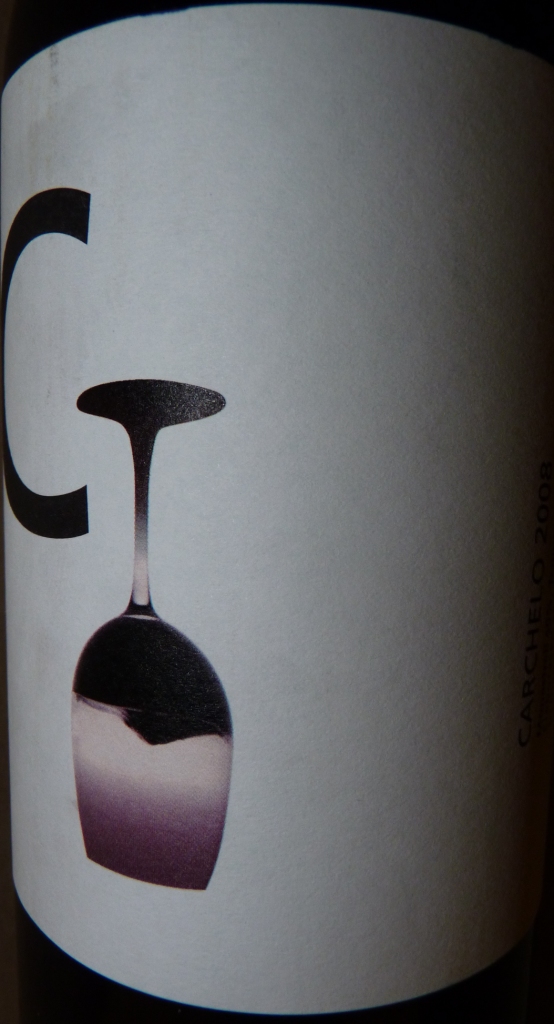 smooth, so round, so it went down so easily that now you completely astonished – but it’s all gone… This is what I call dangerous :).
Recently, I was lucky to come across such a dangerous wine, thanks to my friend Zak from Cost Less Wines and Liquors in Stamford – this is the wine called Carchelo:
Carchelo 2008, Bodegas Carchelo, Jumilla, Spain
This wine comes from the Jumilla region in Spain, and it is a blend of Monastrell, Tempranillo and Cabernet Sauvignon. The wine has very deep purple color, beautiful nose of dark fruit, plums, sweet cherries and blackberries, silky smooth tannins and good acidity, so all together comes in a “dangerously” balanced package. Final verdict:
Drinkability: 8
Try is today, and tell me if how dangerous it was for you!
Daily Glass: Finding Pleasure, or Haut Charmes Sauternes
I already touched on the subject of the “best wine” in my previous post, which can be defined as “the one you like the most”. Continuing the subject, I would also like to refer to the great teacher, author and wine guru Kevin Zraly, who taught tens of thousands of people (myself included) to understand and appreciate wine in his Windows on the World Wine School. In the words of Kevin Zraly, the best wine is the one which gives you pleas ure. As simple as that. Why do I bring it up? Because today I want to talk about wine called Sauternes. Sauternes is a white dessert wine which comes from Sauternes region in Bordeaux in France and typically made out of Semillon, Sauvignon Blanc and Muscadelle grapes in various proportions. And if you ever tasted any of the Sauternes (and if you didn’t – please do it as soon as possible), you would agree, that this is one of the few wines which can be consistently associated with pleasure, which is also proven by the fact that Chateau d’Yquem (one of the very best, Grand producers in Sauternes) wines received a perfect score of 100 points (absolute max) from Wine Spectator literally more often that any other rated wine ( you can check for yourself at Wine Spectator web site).
Enters Haut Charmes 2007, Sauternes, France.
As with any wines from any regions,of course not all of Sauternes are created equal, and there are always ups and downs. Luckily, Haut Charmes 2007 belongs to the “up” side. This wine comes beautifully clean on the nose and palate, with white fruits like peaches, and honey being prominent in the taste, all complemented with very good minerality and acidity. The wine presents itself in a very ethereal fashion, and doesn’t leave sweet residue on the palate, which many of its cousins would do, finishing with desire to reach for the glass again and again and again. I have to also mention that rumor has it that it is declassified d’Yquem – you can find this information in a number of places on Internet, but not at the Chateau d’Yquem official web site, so we have to take it as is. With or without any relationship to the actual d’Yquem, this wine is 10-fold less expensive that the actual d’Yquem – assuming you can find it ( in one of the near future posts, I will write about wine stores I shop at, so you will learn about the right places for that). And talking about rating:
Drinkability: 8+
Make an effort – find it and try it, and then let’s talk about wine and pleasure!
Last Bottle Sign Up ($10 credit)




 Talk-A-Vino