Archive
Oversold and Underappreciated Premise of Wine Pairing
 This post is an entry for the 21st Monthly Wine Writing Challenge (#MWWC21), with the theme of “Pairing”. Previous themes in the order of appearance were: Transportation, Trouble, Possession, Oops, Feast, Mystery, Devotion, Luck, Fear, Value, Friend, Local, Serendipity, Tradition, Success, Finish, Epiphany, Crisis, Choice, Variety.
Let’s start from the mini quiz – is food and wine pairing an art or a science? Or is it neither and the question makes no sense?
I’m sure you can successfully argue both sides, as they do in debate competitions. Technically, cooking process is based on science – heat conduction, protein’s reaction to heat and cold, combining acid and alkaline – we can go on and on, of course the scientific approach to the food and then the pairing can be argued very well. But one and the same dish can be flawlessly composed from the scientific point of view – think about a steak which is perfectly cooked with a beautiful crust – but missing on all the seasoning and having either none or way too much salt – it would require an artistry and magic of the Chef to make it a wow food experience. So may be food and wine pairing is an art after all?
I don’t have an answer, and I don’t believe it is even important. The problem is that in many cases, that “food and wine pairing”, which is typically sought out and praised, is not possible, not universal and even not needed.
Yes, there are rules for the pairing of wine and food. Contrast, complement, balance of the body of the wine with the perception of the “weight” of the food, tannins and fat and so on. The rules work well when you create a tasting menu and pair each dish individually with the very specific wine, based on practical trial and error. However, once you try to extend your recommendation to say “try this stew with some Syrah wine”, that begs only one question – really? And overbearing Shiraz from Australia, or earthy, spicy and tremendously restrained Côte-Rôtie or espresso loaded Syrah from Santa Ynez Valley – which one?
Here is another example, simply a personal one. At a restaurant, my first food preference is seafood – scallops, bouillabaisse, fish – anything. My wife typically prefers meat, and so do many of our friends. Going by the standard rules (white with fish etc.), we are either stuck with water or have to order wine by the glass, and ordering wine by the glass is typically not something I enjoy doing – very often, “by the glass” list is short, boring and grossly overpriced. So instead of trying to pair wine with the food (don’t get me wrong – I like the “spot-on” pairing as much as any other foodie and oenophile), I prefer to pair the wine with the moment – a good bottle of wine which doesn’t match the food is still a lot better than crappy wine which would denigrate the experience.
Still not convinced? Think about a simple situation – old friends are coming for a visit, and you know that these friends like wine. Yes, I’m sure you will give some thought to the food, however, there is a good chance that you will comb your cellar over and over again in a search of the wines to create the meaningful wine program for the evening, even if the whole dinner would consist of one dish. You will spend time and time again thinking about your friends and trying to come up with a perfect, special, moment-appropriate and moment-enhancing wines.
Wine is an emotional connector. Wine elevates our experiences, making them a lot more memorable. You might have problem remembering what dish you had at a restaurant, but if the bottle of wine made you say “wow” on the first sip, there is a good chance that the special moment will stay in your memory, thanks to that special pairing which took place.
We pair wine with moments, and we pair wine with the people, for good and bad of it. If Aunt Mary comes for a visit, who enjoys a glass of Chardonnay with a cube of ice in it, is it really the time to break out Peter Michael or Gaja Rossj Bass? A Bogle Chardonnay would pair perfectly with Aunt Mary (not that there is anything wrong with Bogle – it is just perfectly priced for such occasions). However, if you know that your friend Jeff will stop by, who you know as a Pinot Noir aficionado, all the best Pinot Noir in your cellar will all of a sudden enter into a “chose me, I’m better” competition. And if none of them will win, the Pinot Noir at near by store will enter the fray. And keep in mind, all of this will be happening whether you will be serving steak, salmon or cheese and crackers…
Yes, when food is well paired with wine, it is really a special experience. But food and wine pairing which doesn’t work is really not the end of the world, it is still just a nuisance – and a learning experience, if you will. When the wine pairs well with the moments and the people, that’s when the memories are created, and that, as MasterCard likes to teach us, is priceless. Let’s drink to lots of special moments in our lives. Cheers!
Of Wine And Balance
 When assessing the wine, there are many characteristics which are important. The color, the intensity and the type of the aromas on the nose, the bouquet, body and flavors on the palate, the finish. When I’m saying “important”, I don’t mean it in the form of the fancy review with “uberflowers”, “dimpleberries” and “aromas of the 5 days old steak”. All the characteristics are important for the wine drinker thyself, as they help to enhance the pleasure drinking of the wine.
One of the most important wine characteristics for me is balance. Well, I’m sure not only for me, otherwise the organizations such as IPOB (In Pursuit Of Balance) wouldn’t even exist. Of course as everything else around wine, the concept of the balance is highly personable – or is it? What makes the wines balanced? What does it even mean when we say that “the wine is balanced”? This is the big question, and I don’t mean to ponder at it at a great depth, as this is a purposefully a short post. But nevertheless, let’s just take a quick stub at it, shall we?
In my own definition, the wine is balanced when all the taste components are, well, in balance. Okay, don’t beat me up – we can replace the word “balance” with the word “harmony”. In a typical glass of a red wine, you will find acidity, fruit and tannins (which is mostly a perceived tactile sensation in the form of drying feeling in your mouth). You will also often find other flavors such as barnyard, toasted oak or burning matches, which are typically imparted by the vineyard’s soil and/or a winemaking process, choice of yeast, type of aging and so on. But – in the balanced wine, nothing should stand out – you don’t want to taste only fruit, only tannins or only acidity – you want all the components to be in harmony, you want them to be complementing each other, enhancing the pleasure you derive from drinking of the wine.
And then you got an alcohol. On one side, I should’ve listed the alcohol above, as one of the components of the taste – alcohol often can be associated with the perceived “weight” of the wine in your mouth, which we usually call a “body”. Alcohol can be also related to the so called “structure”. But the reason I want to single out an alcohol is because way too often, we tend to use it to set our expectations of the balance we will find in the glass of wine, as this is the only objective, measured descriptor listed on the bottle. You might not taste the “raspberries and chocolate” as the back label was promising, but if it says that the wine has 14.5% “Alcohol by Volume” (ABV), this would be usually very close to the truth. Of course there is a correlation in the perceived balance and the alcohol in the wine – if you taste alcohol in direct form when you drink wine, it will render the wine sharp, bitter and clearly, unbalanced. But – and this is a big but – can we actually use the ABV as an indicator of balance, or is it more complicated than that?
When IPOB started, this was their premise – search for the wines with lower alcohol content (don’t know if it still is). Typical ABV in the old days was 13.9% (there were also tax implications of crossing that border). So should we automatically assume that any wine which boasts 14.5% ABV will not be balanced? I do have a problem with such approach. I had the wines at the 13.5% ABV, which were devoid of balance – including one from the very reputable Napa producer who will remain unnamed. And then there is Loring Pinot Noir, where ABV is dancing right under 15% (at 14.7% to 14.9%). Pushing envelope even further, you got Turley and Carlisle Zinfandels, where ABV is squarely stationed between 15% and 16% (occasionally exceeding even that level). Have you tasted Loring, Turley or Carlisle wines? How did you find them? To me, these wines are absolutely spectacular, with balance been a cornerstone of pleasure.
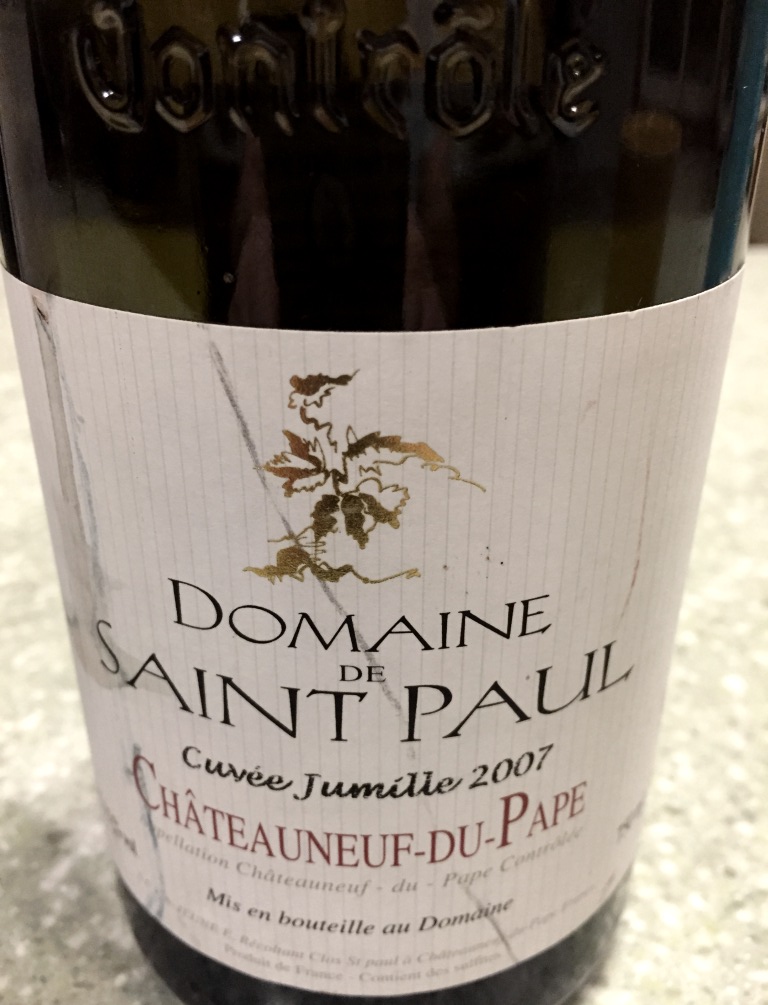
What prompted this post was the wine I had yesterday – 2007 Domaine de Saint Paul Cuvée Jumille Chateauneuf-du-Pape (95% Grenache, 5% Muscardin), which was absolutely delicious, and perfectly balanced, with round, smokey, chocolatey profile. The wine also had a touch of an interesting sweetness on the finish, which prompted me to look carefully at the label – and then my eyes stopped at 15% ABV, with the first thought was “this is amazing – I don’t find even a hint of the alcohol”. Judging by this ABV number alone, the “alcohol burn” would be well expected.
Yes, the notion of the balance is personal. Still – what makes the wine balanced? Can we say that some types of grapes, such as Grenache or Zinfandel, for instance, are better suited to harmoniously envelope higher alcohol levels? Is it all just in the craft, skill, mastery and magic of the winemaker? I don’t have the answers, I only have questions – but I promise to keep on digging. Cheers!
Liquid Pleasures Beyond Wine: Scotch Whisky
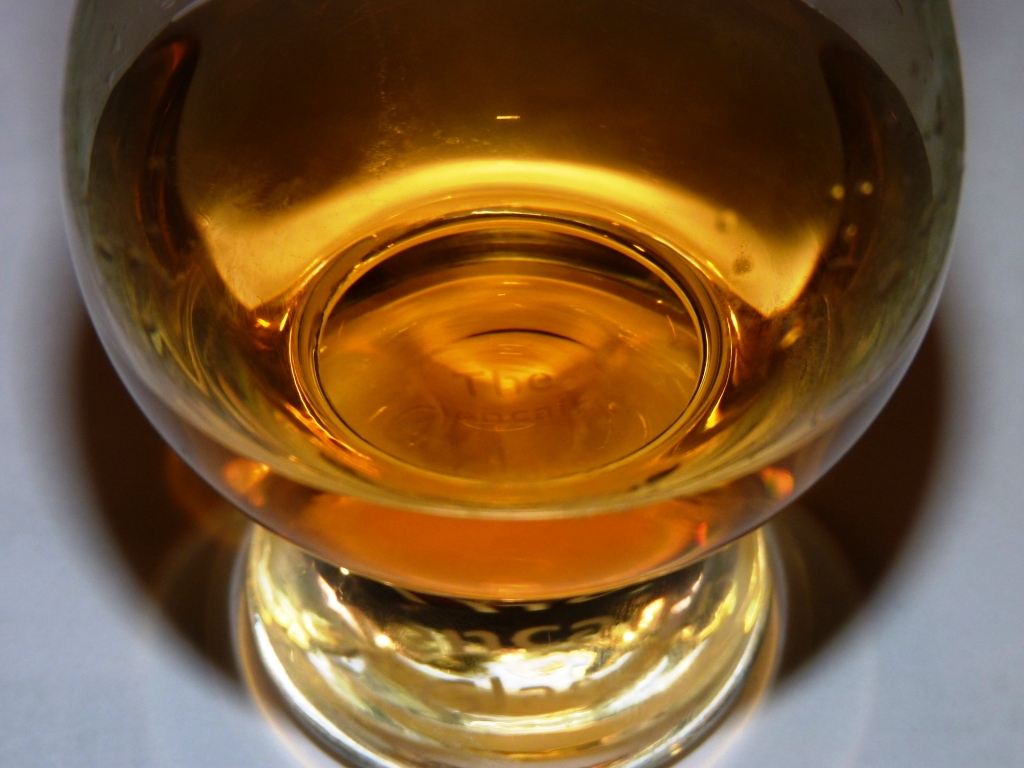 During 2011 I wrote a number of posts for the project called The Art Of Life Magazine – of course talking about my favorite subject, wine. The project was closed and even the web site is down, but as I still like the posts I wrote, I decided to re-post them in this blog. Also, in that project, posts were grouped into the mini-series, such as “Best Hidden Secrets” and “Forgotten Vines”. The post I’m offering to you today was from the mini-series called “Liquid Pleasures Beyond Wine”, and the subject of this post is Scotch Whisky.
Also note that the series was written for a slightly different audience – I hope none of my readers will take offense in the fact that sometimes I’m stating the obvious…
Moving from grapes to grains (last week’s subject – Brandy), now is the time to talk about literally my favorite spirit: Scotch Whisky, or simply Scotch for a shorter name. Scotch is a part of a broader category of spirits which are called Whiskey, which is a distilled alcoholic beverage made from the fermented grains. While Whiskey can be produced anywhere in the world, Scotch Whisky can be produced … yep, only in Scotland (by the way, note the spelling difference – Whisky versus Whiskey, and make no mistake using the right spelling when talking about Scotch – it is Whisky).
First mentions of the Scotch Whisky (will just refer to it as Scotch from here on) go all the way back to the end of the 15th century, so this alcoholic beverage has quite a bit of heritage and knew very turbulent times in its half a millennia history. Scotch can be made from different grains such as barley, wheat and so on, but many particularly famous Scotches are made from malted barley, and typically are called “malt”. And then if you ever paid attention to Scotch, I’m sure you heard of a “single malt” – that is a Whisky which is made out of malted barley at a single distillery. So just to emphasize – “single” here refers to a single distillery, and an opposite of single would be “blended”, in case Scotch from two or more distilleries is blended together. By the way – don’t be afraid of the blended Scotch – a lot of them are on par with the best single malts.
Making of the malted Scotch starts from the barley, which is steeped with water for some time to start germination process – during this process, complex starches will be broken down and converted into sugar. Next step is drying of the barley, which is typically done in the pit, using heated air. The heat is coming from burning of the peat (fossil fuel), which imparts the smoky flavor on the grains; later on the smoke becomes the part of the flavor profile of the final product – the intensity of the smoke varies greatly among different areas and different producers. Dried grains are coarsely ground and will be steeped with the hot water and will become a sugary liquid.
Next step is cooling off and then start of the fermentation process, which technically results in the beer with 7%-8% alcohol. From here on, the liquid goes through the first and second distillation process, which will get the level of alcohol anywhere between 40% and 94%, and then it is put in the oak barrels to age. The minimum age for Scotch is 3 years, but if we are talking about single malts, majority of them would age for 10 or 12 years (12 years seems to be a very popular demarcation line for introductory level Scotch from a lot of producers), and from there it can continue aging until it reaches 18-19 years (anything in between also goes). 25 and 30 years also seem to be a popular option, and 40-50 years old are not so rare – but keep in mind that the age of the Scotch will be appropriately reflected in the price (you expected that, right?).


Before Scotch is bottled, the decision is made regarding the strength of the alcohol in the final product. Sometimes it can be released at so called “cask strength”, which can be anywhere from 50% to 60% ABV or even higher. But more often than not, it is diluted with water to get to 43% – 46% of alcohol in the final beverage. One important note – unlike wine, Scotch doesn’t age in the bottle – however, once it is opened, again unlike wine, it doesn’t spoil and can be kept indefinitely in the bottle, just don’t forget to put the cork back every time you pour a glass.
With the same process used across the board (fermentation of the malted barley and [typically] double distillation), and the “fruit” (err, grain) being effectively the same (barley) versus many hundreds of different grapes used in the winemaking, would you expect that all the Scotch of the same age will taste the same? Well, it truly does not. What makes Scotches taste different? First of all, it is water, which is different in every Scotch-producing region. Then it is the type and intensity of peat smoke used for drying of the germinated grains. Of course the number of distillations matters, but more importantly it is the type or types of casks used for aging (some Scotches undergo aging in a few different types of casks before they are bottled) and the time of aging. Lastly, it is the type of filtering (or no filtering at all) which will also affect the taste of the final product. Oh yes, and a little bit of magic.
There are five official areas where Scotch is produced – Lowland, Highland, Speyside, Campbeltown (never tasted anything from this area) and Islay. There are also a number of small islands which produce Scotch in a very distinct styles (like Skye, Orkney and others), but they are technically considered the part of the Highland region. Each distillery produces Scotch in its own unique style, but there can be some general similarities between scotches. If we paint flavor profile for the different regions, using very wide brushstrokes, we can say that Scotches from Highlands are typically very balanced and round, with good balance of acidity, flavor and spiciness. Lowlands flavor expression is usually toned down, and Speyside are very delicate and nuanced – Orkney scotches (Scappa) are similar to Speyside in their expressions, but probably add a touch more body. Islay and Skye produce very powerful and assertive scotches, exhibiting tremendous amount of peat (read: smoke); those who like them (me!) find them very pleasant.
When you are looking at the bottle of Scotch, you would typically be able understand if this is a single malt or not, how old it is (10, 12, 14, 15 and so on years), or the year when it was distilled and when it was put in a bottle, as well as the type of finish – Madeira, Jerez, Port and many others types of barrels this scotch was matured in. Of course alcohol content, cask strength or not and type of filtering would also be typically denoted on the bottle. Well, as a popular trend, that exact age statement can be nowhere to be found on the bottle nowadays – but this should be a subject for a separate post…
There are hundreds and hundreds of distilleries making great single malt and blended Scotches. If you want to learn about all of the distilleries, you can start from Wikipedia link, or Malt Madness web site. At the same time, I would be glad to share the list of some of my single malt favorites: Ardbeg Alligator (Islay), Cardhu 12 (Speyside), Lagavulin 16 (Islay), Laphroaig 16 (Islay), Glenfiddich 15 (Speyside), Scappa 14 and 16 (Orkney), Talisker 10 (Skye). Of course the world is not limited by the single malts only. When it comes to blended whisky, there are a number of Whiskies which I can recommend – Johnnie Walker (Black, Gold, Blue), Chivas Regal 12 and 18, Monkey Shoulder, Compass Box, Blue Hanger, Black Bottle – and many others.
I hope I was able to share my passion for the Scotch Whisky – but I’m curious to hear what do you think about Scotch? Also, just so you know, in our next post we will insert only one letter ‘e” into the word Whisky, to discover to whole huge world of Whiskey. Until then – happy dramming!
Cheers!
Coming Up This Saturday: #OTBN – Open That Bottle Night
 Just a quick reminder to all the wine friends, oenophiles, aspiring sommeliers and all the other folks who find wine to be an indispensable part of their lives – OTBN is here, so get your thinking hat on and go visit your cellar (those without a cellar can settle for the visit to the good wine store).
Open That Bottle Night, usually abbreviated as OTBN, is a movement created by Dorothy J. Gaiter and John Brecher, writers of the Wall Street Journal’s Tastings column. In the year 2000, they declared last Saturday in February to be a special night for the wine lovers – it should be the night when that special, cherished, admired, preserved, treasured bottle gets right on the table – and gets opened. The wine needs to be enjoyed – as the life is unpredictable, we should really create those special moments in the “now”, instead of waiting for them for the eternity.
Since its invention, OTBN became an international phenomenon, celebrated all over the world. This upcoming Saturday, February 28, 2015, is the last Saturday of February – so it is the time to get that special bottle ready and open. I don’t think you need any special instructions, but in case you feel like you need someone to tell you what to do, here is the link to the Wall Street Journal article which will give you the detailed instructions on how to enjoy OTBN.
I know you are hoarding more than one special bottle – it is the time to put at least one of them to the good use. If you care to share what you will be opening, this what the comment section is for. Open That Bottle! Cheers!
Are You Ready For The Reality TV Wine Drama? It Is Coming, And May The Best Bottle Win!
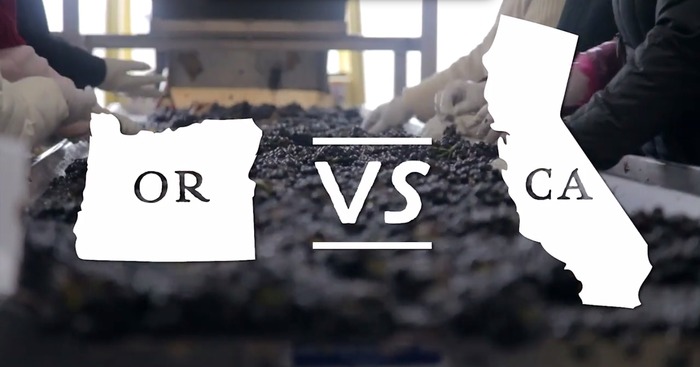 Do you like wine? (Argh, with an opening question like that in the wine blog, I probably lost half of my readers on the spot) When you look at the shiny wine bottle in the store with an artfully (or not) designed label, do you know about – better yet, can you vividly imagine – all the hard work which went into making sure that bottle will get to you and [hopefully] will also taste good? Soon, you will get a chance to get to know it first hand and almost experience it – with the help of the big TV. No, I’m not talking about the new Sideways or SOMM – I’m talking about the real winemaking drama taking place in the format of the Reality TV.
10 aspiring winemakers, two teams, two great wine regions. Lots of vineyard and winery chores. Clash of characters. And pain of elimination. Until only two contestants are left to make their best bottle of wine. Then celebrity judges will put an end to it and decide who gets the $100K and opportunity to bottle one vintage under the Best Bottle label. That’s all there is to it. Intrigued? Want to learn more? Great, as I was intrigued too and wanted to learn more when I heard about Best Bottle Reality TV competition series and its kickstarter campaign.
In an effort to learn more, I got an opportunity to interview Scott Krauger, the executive producer of the Best Bottle series – and I would like to share with you our conversation. Oh yes, before we get to the interview, here is the Best Bottle trailer, for you to get an idea of what to expect from the series:
And here is our Q&A:
How did you start your love affair with wine?
In 1993 I was brought on board to help develop the estate vineyard at Archery Summit Winery in Oregon. My mentors Bernard Lacroute and Gary Andrus taught me about the love of wine, showed me how wine is crafted and the terroir. I was exposed to people who had a deep love for wine-making, and through their art and style, learned to craft exceptional wine.
How the idea for Best Bottle was born?
Three years ago I was producing a documentary called Heart of the Vine which highlighted the terroir, Mother Nature, and the vineyard people who craft the wines. I wanted to show how wineries and winemakers express a wine’s location and vintage.
Why California versus Oregon?
First, this show is all about Community (yes, with a capital ‘C’)! Thus the region vs. region. My mentor, Gary Andrus, gave me a huge shot early in my career when he hired me. Gary taught me so much and Community was at the top of the list. So, Best bottle is a celebration of wine regions and those individuals who delicately craft amazing wines for the world to enjoy. Future seasons are planned to expand into a global competition by shooting future seasons in New Zealand, Australia, France, Germany, Spain, and so on.
What was the selection process to select 10 “aspiring winemaker” contestants?
It really goes to the most entertaining characters with great back drop stories. They have an appreciation and love for making wine. They are artisans, aspiring or established wine makers. This show is used to showcase their skill and art on a world stage.
What makes you think that looking at the winery chores will be attractive enough for the viewers to make it a successful TV program?
With more than 20+ years of experience in the wine industry, it really comes down to the characters we cast for the show. We have exciting episodes planned for 14 seasons. The show takes the contestant and viewers through the wine-making process…”behind the scenes”. We are also demonstrating what happens out in the vineyard and the sale side as well. This all done in an exciting competition/challenge and elimination format.
Will the show be available on YouTube, or would it be a live TV-only program? Where on TV?
We have partnered with Mance Media, our World Wide Distribution agent. They will show case and take this show to VOD and foreign markets. They are already working on establishing the domestic broadcaster and global distribution into other television markets. We’ll also have YouTube clips and other video content highlighting not only the show but supporting aspects…i.e. Interviews and additional content from tasting events at food and wine shows all over the United States.
When the first episode will be coming out?
As you know, the wine industry is dependent on the seasons. Right now we are looking at Harvest of 2014 in the northern hemisphere or Harvest 2015 in the southern.
Do you think this show will be as successful as the movie Sideways? Do you expect your show to change the dynamics of the wine consumer market, as Sideways did for Pinot Noir versus Merlot?
That’s the million dollar question and I’d love to say, “Hell yes!” I do think the show will really showcase the thousands of vineyard and winery workers, who are often the unsung heroes. Everyone remembers the winery owner, but do they even think about the men and women who harvest and process the grapes? Or the many who spend hours blending and tasting to get just the right blend? Best Bottle will open people’s eyes, minds and hearts to the entire Community (there’s that word again).
Can you tell us what wineries will be involved in California and Oregon?
Not yet. That’s still super secret Hollywood stuff. We can say we have commitments for locations, support, and participants.
* * *
Here are some additional links and information for you:
Site: WineBestBotte.com
Kickstarter: https://www.kickstarter.com/projects/595310313/best-bottle-show-for-wine-enthusiasts-and-reality
Producers: Scott Krauger, Rob Richards, Matthew Wilson, Annie Tonsiengsom, Matthew Mancinelli
Media contact: Kari Fredheim Karig@geminidigitalfilms.com
Please understand that Best Bottle series needs your support – visit the Kickstarter project page to learn about sponsorship options and use the opportunity to help to create first ever reality TV wine drama. Cheers!
Taste Of Wine – Engineering Approach
This was one of my early blog posts – almost 4 years ago, I was blogging only for about 4 month, and had probably 1.5 readers (okay, fine, may be 1.7). This is one of my most favorite blog posts in this blog, which I think is still very relevant. Therefore, as I’m incredibly behind my publishing plans, I would like to share it with you on this rainy [in Connecticut] Thursday – and of course I would love to hear your comments. Cheers!
Daily Glass: Wine, Beautiful and Different
Have you ever caught yourself using the same expression over and over again, to the point of being annoyed with oneself, but not been able to do anything about it? One of my expressions, pretty much a single word, is “beautiful”. Yes, of course I mean it in the wine context. The best case scenarios include the first “wow” once your nose encounters the aroma exuding from the glass, connecting to the “wow, this is beautiful” after the first sip, when aroma and bouquet altogether transform into a beautiful (oops, sorry), memorable experience. Yes, I know, reading the wine reviews consisting of “wow, this is beautiful” notes is somewhat pointless, and if it draws your ire, feel free to take it out in the comments section below – but I have to say it when it happens.
The wine I’m talking about today was exactly like that. I got this bottle from a friend back in October. The wine is made by his father in Sicily – a small family production, for all I understand. One consequence is the fact that there is no information available on internet – and the bottle doesn’t have a back label, so I can only share my impressions. But – it was a beautiful wine.

The color of this 2012 Contrada Santa Croce Casteltermini Sicilia Cuvée Artisanale Chardonnay Grillot (13.5% ABV) was intense yellow with an orange hue – I don’t think the wine was aged in oak, but it was definitely fermented on the lees, and probably was aged on the lees for a good few month, to have such an intense color. It was also showing a bit cloudy in the glass – I can assume it was unfiltered.
And then there was was the nose. You know, that aroma which you can commonly pick up on many wines from Sicily – the volcanic soils, the touch of sun and minerals, inviting and promising, with hint of lemon zest. And then the palate. Totally unique. Starting from light, dry, almost effervescent midpalate feel. Then showing mature fruit, apricot and apricot pit, finishing with mouthwatering acidity, prickling sides of the tongue with fresh lemon notes. One sip inviting another. Until the wine is gone, and you are left with the memory.
Let’s drink for the beautiful wines and people making them. Cheers!
Beautiful Snow and Beautiful Wine
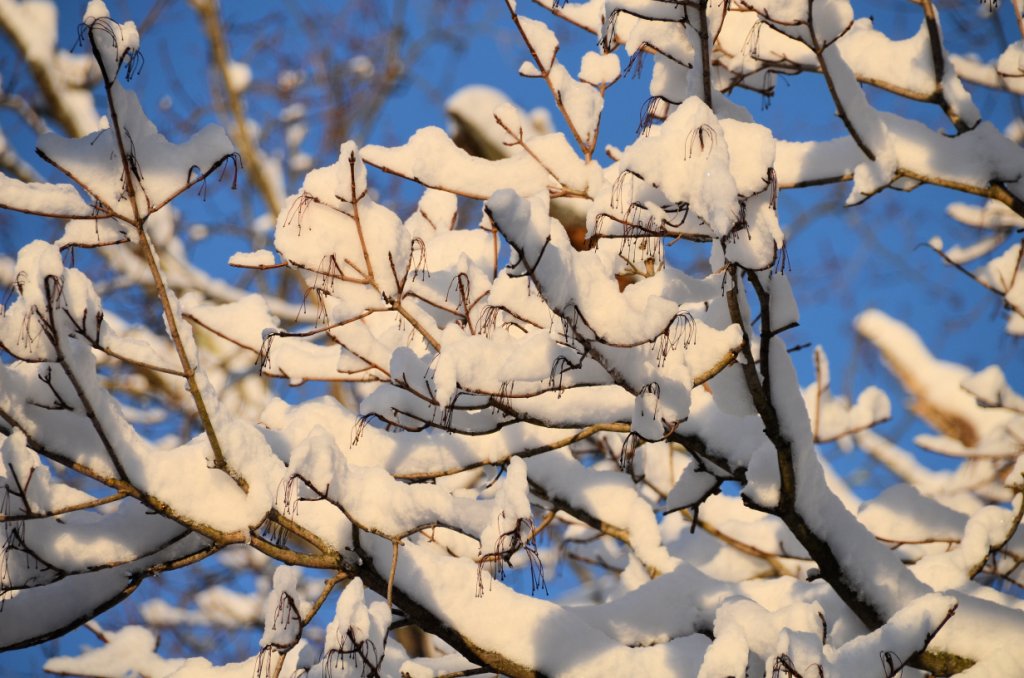
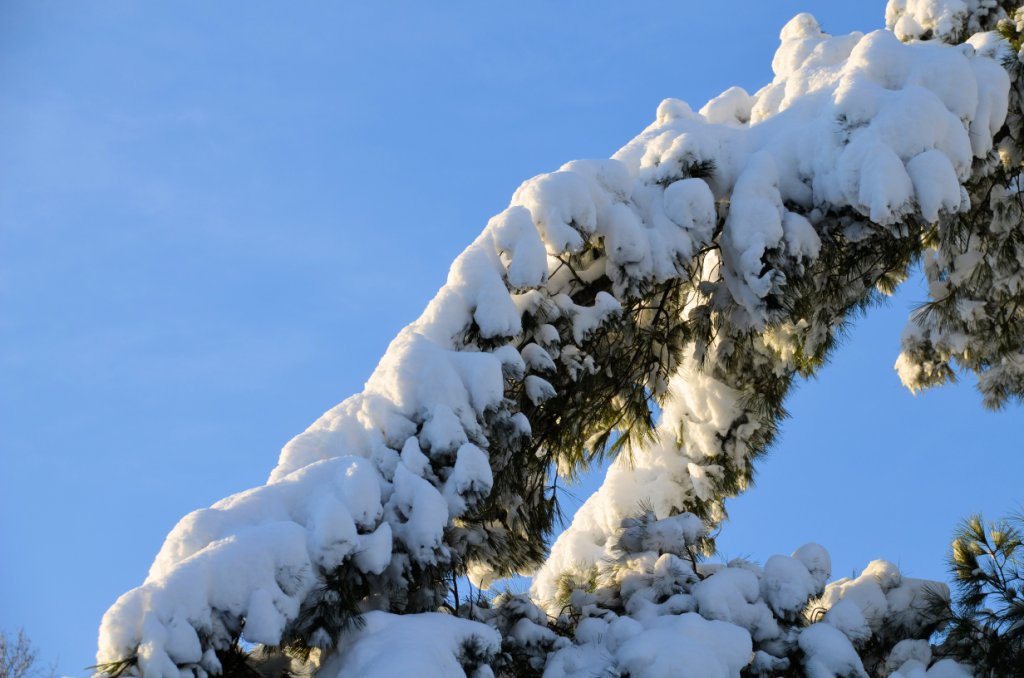
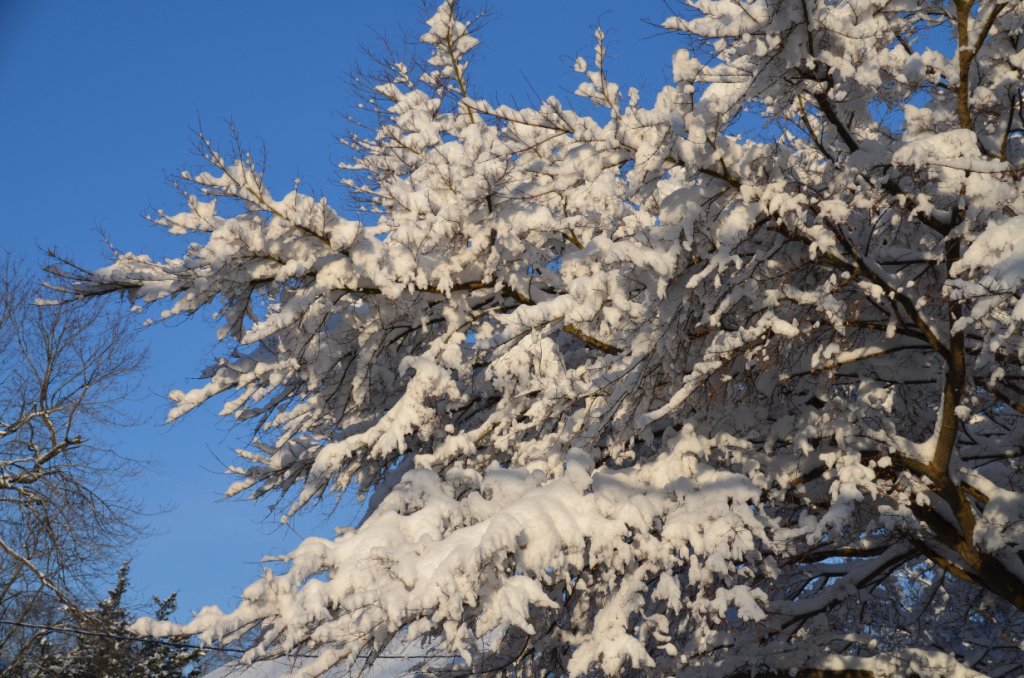
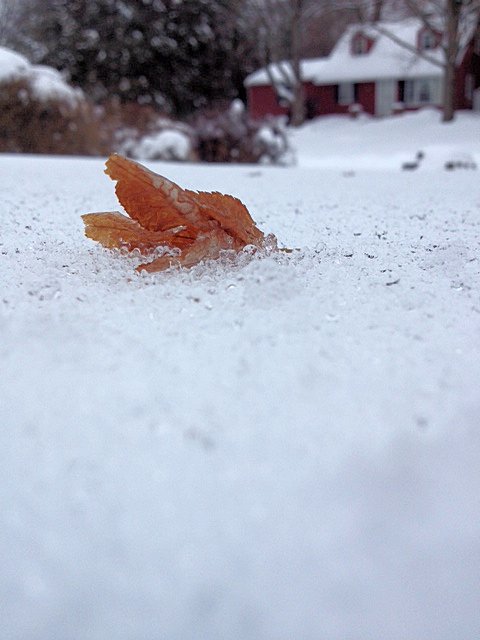
There was a lot of snow here in CT over the last week. Most of the snow is still here, and considering the forecast, will be lingering around for a while. Yes, the snow is nuisance and inconvenience, it is tough to shovel, and a lot of it became ice at this point. But when sun comes out, it really becomes a thing of beauty. This snow had also a very interesting characteristic – well, may be it is me who didn’t see it before, but this snow is really glowing blue, especially as you dig in and look at it. So for what it worth, here are some pictures, snapped literally just around the house. Plus, I also included a few pictures which my daughter made with her iPhone – it is pretty amazing what that little device can do. And if you will scroll all the way down, I will also talk a bit about the wine. Here we go:


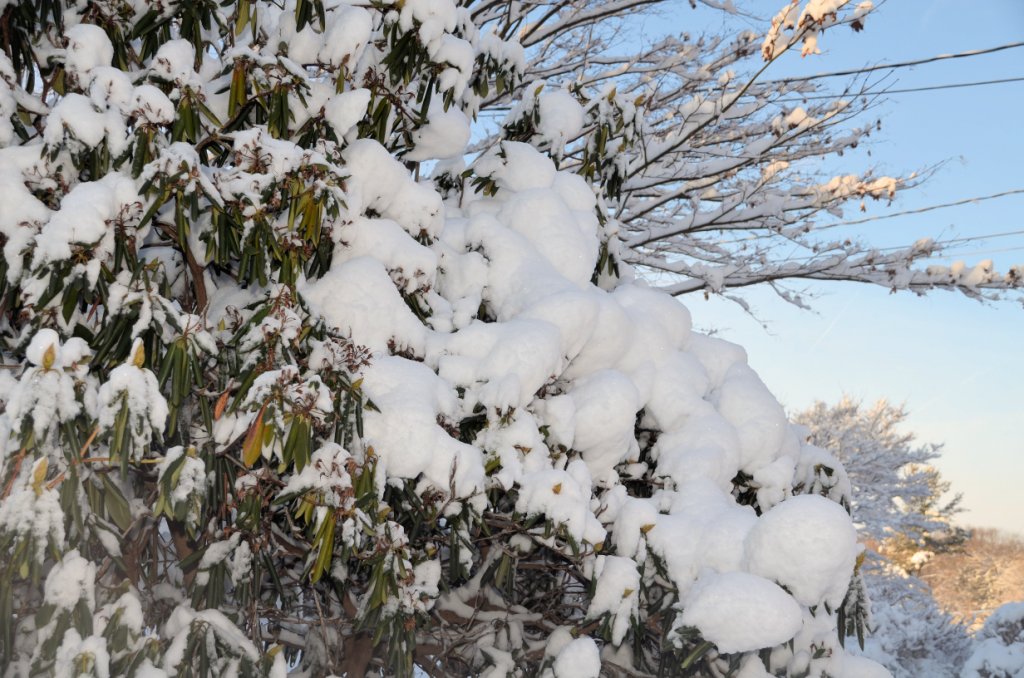



This is one of my favorites

That snow and that sky…
 What makes snow so beautiful?
 iPhone picture by Rina – the leaf
 The same, only black and white

And a bit of perspective

More perspective
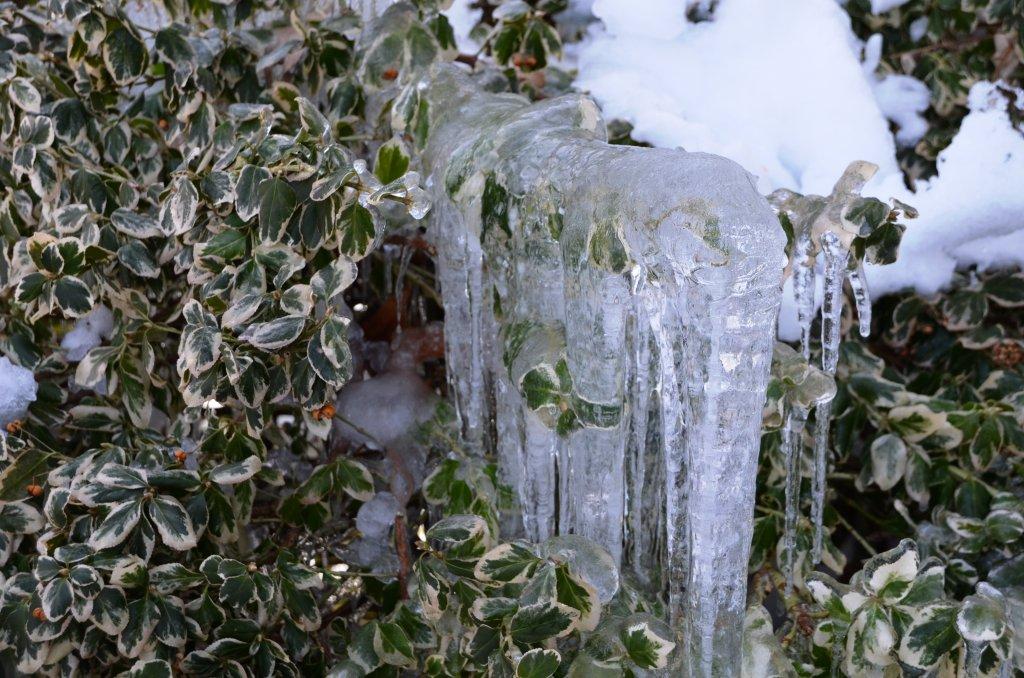
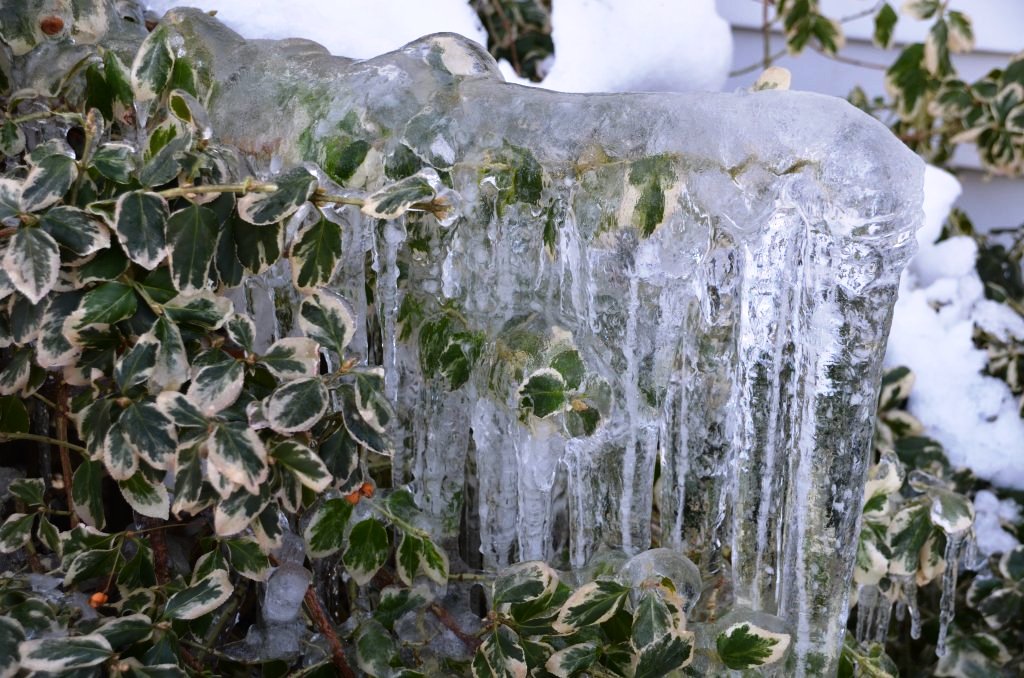
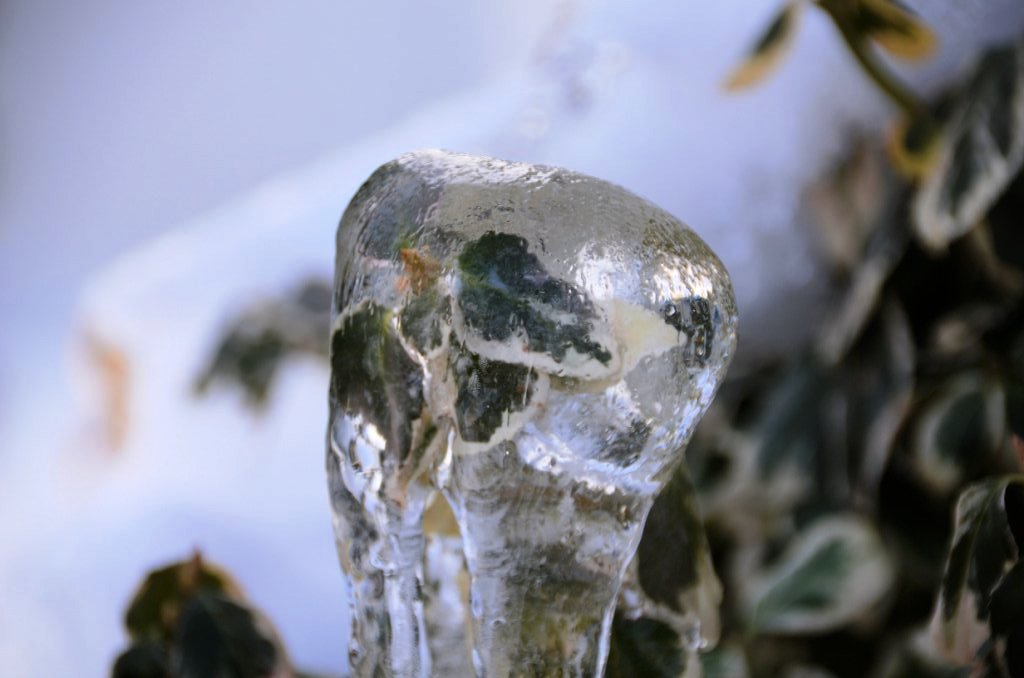
A frozen beauty
Yes, the snow was beautiful, but it got in the way. The snow on Wednesday was bad enough to affect the trains, so I had to miss the Basilicata winemakers dinner in the city, which I was really looking for. So I decided to compensate for that by opening the bottle of new vintage of one of my favorite wines – Fiction by Field Recordings. I’m sure some of you know at this point that I’m very particular to the Field Recordings wines in general, but Fiction is so unique, it is one of my all times most memorable wines ( and it was my Wine of the Year in 2011) – here is the blog post about my first experience with 2010 Fiction.
The 2012 Fiction by Field Recordings Red Wine Paso Robles (14.9% ABV, 40% Zinfandel, 13% Tempranillo, 12% Petite Sirah, 11% Touriga Nacional, 10% Mourvedre, 8% Grenache, 6% Cinsault) didn’t disappoint. The spectacular nose of fresh meadows – this is the wine which you can’t put down – one smell requires another, and another, and another. The aromatics of this wine absolutely spectacular – I don’t know how that works, but I can’t put the glass down. The palate is very playful, with lots of fresh fruit, raspberries, blueberries, cherries – everything is in one beautiful medley, supported by clean acidity and perfectly balanced. The 14.9% ABV are absolutely unnoticeable – this is the wine of the pure harmony. Drinkability: 8+
That is all I have for you for my report on snow and the wine. Stay warm and drink good wine. Cheers!
Henri’s Reserve – The Art Of Boutique Champagne
Did you know that every last Friday in October now has a designated “wine holiday”? Yep, and not just any wine holiday – it is actually a Global Champagne Day (Champagne and Friday perfectly go together, don’t they?) My “problem” (may all of our problems be so hard) of choosing the bottle of Champagne to open to celebrate Global Champagne Day last Friday was taken care of by invitation I got from Henri’s Reserve – to come and celebrate Champagne Day in style at Southport Galleries in Connecticut.


Henri’s Reserve is a boutique Champagne purveyor, primarily focusing on the small, artisanal Champagne producers. Most of the common Champagne people buy in the stores come from so called Champagne Houses, such as Moët & Chandon, Bollinger, Louis Roederer, Veuve Cliquot and many others. For the most part, Champagne houses buy the grapes from the grape growers, and make (blend) their wines to have a persistent, chateau-specific taste. At the same time, a number of grape growers (there are about 19,000 of them in Champagne) also produce their own wines. Until recently, those wines were literally impossible to find outside of France – but over the last 5-7 years, the situation changed and so called Growers Champagne became more available in US and other countries.
You might ask what is so special about Growers Champagne? While Champagne houses are mostly focused on blending to achieve their house-specific taste, growers are a lot more terroir-driven. Growers know their best vineyards and best parcels inside those vineyards, and that knowledge translates into unique wines with the sense of place – often at a lot more affordable price than the wine coming from the big houses. To give you one example, one of my favorite Champagnes from this tasting, Egly-Ouriet Grand Cru, comes form the village of Ambonnay. One of the most exclusive Champagne houses in the world, Krug, also produces the wine from the vineyards in the Ambonnay village. That Krug wine, called Clos de Ambonnay, would set you back at around $2700 per bottle (probably the most expensive Champagne on the market). While I’m not comparing Egly-Ouriet Champagne with Krug (never tasted Clos de Ambonnay), it costs almost 40 times less that that bottle of Krug, and at around $70, it is really an excellent Champagne.
Getting back to Henri’s Reserve – they actually make the Growers Champagnes available to the average wine consumer. If you look at Henri’s Reserve web site, you will find a lot of useful information about Champagne in general, pairing of Champagne with the food, how to open the Champagne bottle, entertaining with Champagne and a lot more. What is most important, though, is that you will be able to buy some of those excellent growers Champagnes.
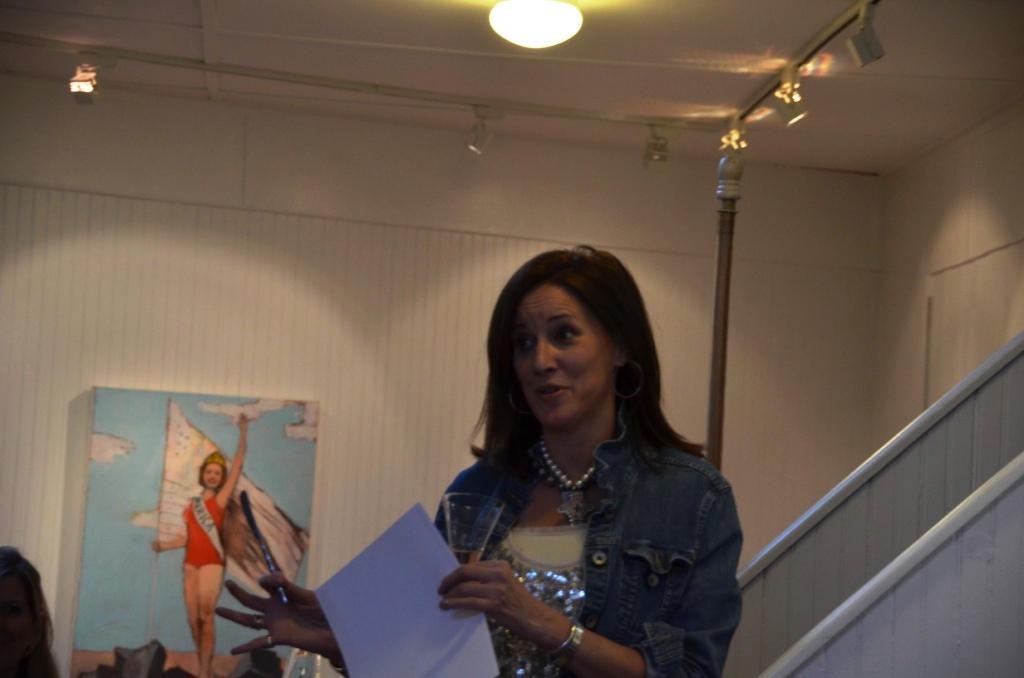
Ruth Frantz of Henri’s Reserve addressing the audience
Now, let’s talk about our Global Champagne Day celebration. We had an opportunity to try 9 different Grower Champagnes. I didn’t focus on taking the detailed notes, as I was very busy mingling, so below is the list of the wines we tried with my brief notes. Don’t worry, it will be easy to figure out if I had any favorites.
NV Guiborat Fils Grand Cru Blanc de Blancs, Cramant (100% Chardonnay) – clean crisp acidity, a bit of brioche on the nose. Very good. Drinkability: 7+
NV Jacques Lassaigne Banc de Blancs Le Vignes de Mongueux (100% Chardonnay) – also perfectly clean and crisp, touch of yeast on the nose. Very good. Drinkability: 7+
2006 Guiborat Fils Grand Cru Blanc de Blancs, Cramant (100% Chardonnay) – has all the traits of vintage Champagne – brioche, toasted bread, apples, touch of yeast – but very delicately balanced, not over the top. Very good. Drinkability: 7+
NV Egly-Ouriet Brut Tradition Grand Cru, Ambonay (70% Pinot Noir, 30% Chardonnay) – a beautiful wine. Touch of yeast on the nose, crisp acidity and noticeable fruit notes on the palate – not in the terms of sweetness, but just more pronounced white fruit sensation than it would be in the typical Champagne. Outstanding. Drinkability: 8+
NV H. Blin Brut, Vincelles (80% Pinot Meunier, 20% Chardonnay) – perfect acidity with somewhat of a medium body, nice mid-palate weight, very round. Excellent. Drinkability: 8-
NV Pierre Gimonnet & Fils 1er Cru Brut Blanc de Blancs Sélection Belles Anneés (100% Charodnnay) – very nice nose of brioche and touch of apple, same on the palate with some interesting mineral undertones. Very good. Drinkability: 8-
2002 H. Blin Blin’s Brut Edition Limitée Millésimé (40% Pinot Meunier, 30% Pinot Noir, 30% Chardonnay) – this wine was the last one in the tasting, and it didn’t reach the optimal serving temperature, unfortunately (was too warm).
NV H. Billiot Grand Cru Brut Rosé, Ambonnay (80% Pinot Meunier, 20% Chardonnay) – crisp, clean, may be a bit too acidic for Rosé. Or may be it was too cold (can Champagne be too cold?). Drinkability: 7
NV Jean Laurent Blanc de Noirs, Celles-sur–Ource (100% Pinot Noir) – very nice, medium body, interesting complexity. Very good. Drinkability: 7+
I have a confession to make. I’m not a Champagne guy. I appreciate a glass of a good bubbly, whether it is Champagne, or Prosecco, or Cava – but Sparkling wine is not my usual daily wine. Having said that, you know what happened after this tasting? I was craving Champagne! I resolve not to wait until the next Global Champagne Day to satisfy that craving – and you might expect to see more sparkles in this blog. Thank you, Henri’s Reserve, for the great time! Cheers!
Last Bottle Sign Up ($10 credit)




 Talk-A-Vino