Archive
While In Texas …
August was an eventful month – two trips back to back, something I didn’t experience in the past 18 months.
After a trip to Oregon to attend the Wine Media Conference and visit some of the wineries in Willamette Valley, I spent two days at home and got on the plane again, this time to attend a work event in San Antonio in Texas. This was a short but quite intense 4 days trip, so I really didn’t plan to look specifically for any local wines as I like doing during any of my trips. Until I walked into the Riverwalk Wine and Spirits.
You see, I was only looking for sparkling water, as this is what I prefer to drink, so buying wine was not a part of the plan (who am I kidding). But being in Texas, I had to look at the shelf with the local wines – located, as one would expect, in the far corner of the store. What do you think happened next? Of course… I love Marsanne and Roussanne wines, and the bottles were simply looking at me saying “yeah, we know you want us…”. I grabbed the bottle of Becker Claret to keep the whites company, and we happily left together.
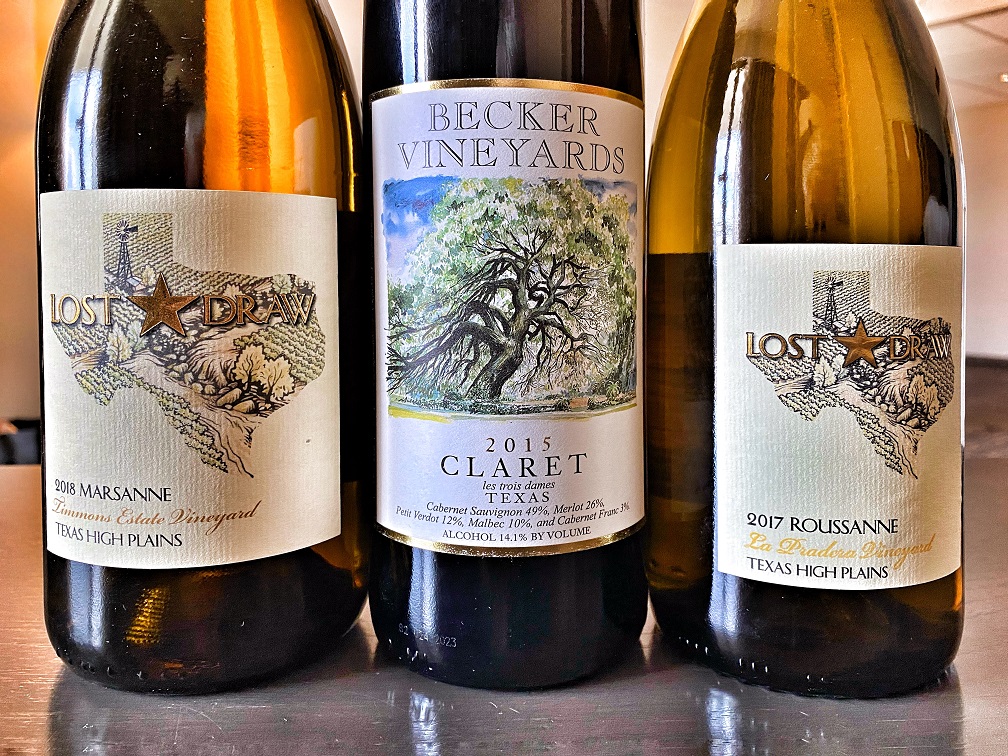
I’m familiar with Becker wines, had them a few times before – they also have quite memorable labels. But I don’t believe I ever tasted any wines from Lost Draw Cellars, so let’s talk about them first.
Lost Draw Cellars traces its origin to 1936 as a family business. The grapes were planted on the Lost Draw Vineyard site in 2005, and in 2012, Lost Draw Cellars bottled its first vintage. Today, Lost Draw Cellars produces a wide range of wines, focusing primarily on the Mediterranean varieties growing on the number of vineyards in Texas High Planes AVA – Viognier, Marsanne, Roussanne, Sangiovese, Tempranillo, and many others.
The two white wines I tried were, in a word, excellent.
2017 Lost Draw Cellars Roussanne La Pradera Vineyard Texas High Plains (13.2% ABV, $14.99)
Golden color
A touch of tropical fruit and gunflint, herbal notes
Fresh, round, lemon notes, complex, great acidity, good balance, good minerality
8, I would drink this wine any day
2018 Lost Draw Cellars Marsanne Timmons Estate Vineyard Texas High Plains (13.2% ABV, $14.99)
Light Golden
Butter, vanilla, nose reminiscent of Chardonnay
Vanilla, pronounced honey note, round, plump, creamy, good acidity, good balance
8+, superb.
The story of Becker Vineyards started when the Becker family decided to look for the log cabin to make it into a country getaway. They found their perfect cabin in 1990, along with 46 acres of land. Owning the vineyard was a long-time dream, so the first vines were planted in 1992, following by the first harvest in 1995. That humble beginning today became a 100,000 cases operation with numerous honors and accolades – for example, Becker wines were served at the White House on 7 different occasions.
I have to honestly say that I was very happy with my choice of red wine at the store – after the first sip, it was hard to wipe the smile off my face:
2015 Becker Vineyards Claret Les Trois Dames Texas (14.1% ABV, $14.99, 49% Cabernet Sauvignon, 26% Merlot, 12% Petite Verdot, 10% Malbec, 3% Cabernet Franc)
Garnet
Coffee, mocha, cassis, bell pepper
Cassis, bell pepper, eucalyptus, good acidity, soft tannins, perfect balance
9-, spectacular. Just pure pleasure in every sip. The wine is at its peak and it is an absolutely delicious rendition of classic French claret.
This was my second time tasting Becker Claret – the first time I had it in 2011 at Vino Volo at the airport. It was a 2009 vintage, thus I was tasting 2 years old wine. This time, it was a 6-year-old wine, and it definitely shined to its fullest.
That is my short story of finding delicious wines in Texas (at a great price too). Texas Hill County was one of the suggested locations for the next Wine Media Conference 2022 – for once, I would be absolutely ecstatic if that would be an actual choice – I would just need to bring a few of the wine suitcases with me…
We are done talking about wine, but there is something else I want to share with you. While in San Antonio, I stayed at Marriott Riverwalk hotel, in a room with a beautiful city view. Yes, it means pictures – I want to share with you that city view, taken at different times – together with a few flowers.




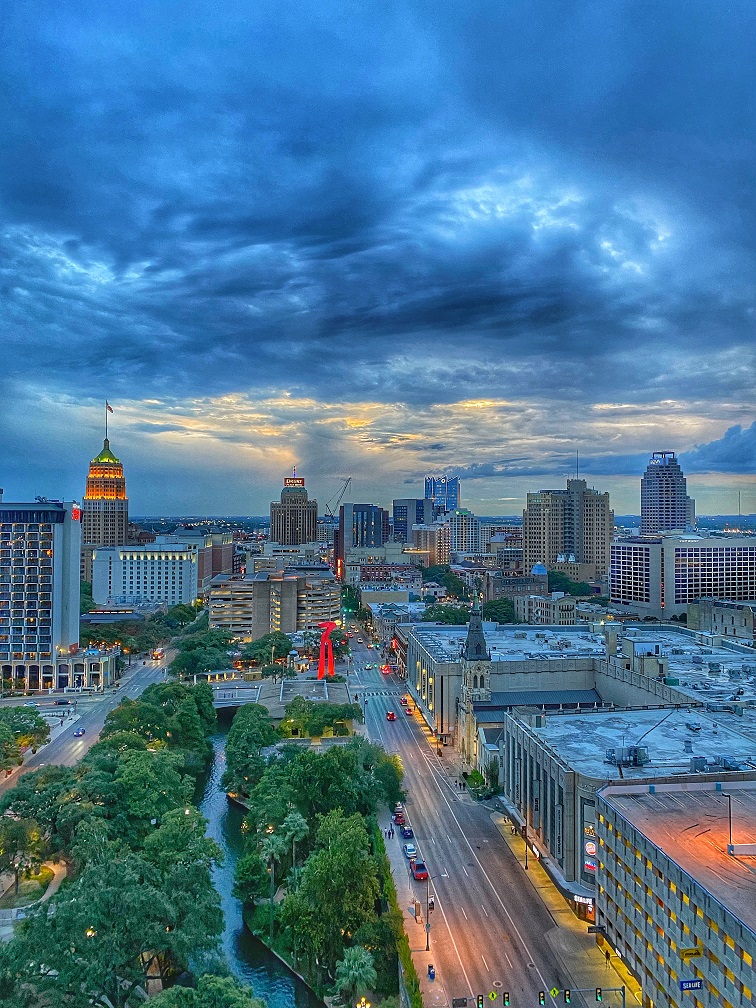
 And now we are done. If you will be visiting Texas, make sure to drink Texan wines – you don’t even need to thank me.
WMC21: Day 2 Highlights
We started the 2nd day of WMC21 with the breakout sessions, no keynotes. There were two sessions run in parallel, so you had to choose the topic which would be more of interest to you.
My first session, The Art of Storytelling for the Wine Industry, was presented by Jill Barth, a seasonal wine writer who writes for Forbes, Wine Enthusiast, Decanter, and other wine publications. Jill also won multiple awards (best wine blog 2016, Millessima wine and food pairing award, etc). Jill had a lot of good advice on how to build your story, what would make it a good story, how to pitch your story to the editors, and more.
Next, I listened to Scott Fish from 32 Digital, who was talking about taking your Instagram account to the next level. There were a lot of good information presented in the session – what are the best and worst times to post (it appears that Sunday is one of the worst days for the posts), how many tags to use, the optimal number of pictures in the gallery and so on. There were also some interesting tools recommendations, such as Answer To Public – a service that allows finding the most popular searches at the moment for a given keyword(s), all presented in an interesting format. You can see an example below of the search results for the keywords “red wine”.


You can definitely play with the tool, however, note that with the free search, you get a limited number of searches per IP address per day (I think 3 or 4), so play wisely.
Another interesting tool I learned about was Geolmgr which allows you to geotag your photos to a specific geographic location.
The next session, Digital Marketing for Wine Media, was presented by Mike Wangbickler, wine blogger, long-time WMC attendee, and owner of Balzac Communications agency. Mike started with some hard questions to the audience, such as “why do you have a wine blog” – it appears that literally no one had a wine blog to make money. Then Mike went on to talk about a plethora of tools available today to the bloggers in terms of SEO, content management, optimizing your delivery to your customer audience, and lots more.
After lunch, we had an excellent panel on Oregon sparkling wine. Before the session started we had an opportunity to taste three of the Oregon sparkling wines from the wineries participating in the panel. One of the wines was delicious sparkling Tannat from Troon Vineyards which we tasted on the first day. My other favorite was the 2017 Willamette Valley Vineyards Brut Sparkling Wine, which had all the classic Champagne traits – a touch of toasted bread on the nose, crisp, tight, and elegant on the palate.


The panel discussion was joined by Craig Camp, Troon Vineyard, Christine Clair, Willamette Valley Vineyards, Jessica Thomas, Sweet Cheeks Winery, and moderated by L.M. Archer.
It was a good discussion, starting with the history of sparkling wine in Oregon, and going through all the aspects of sparkling wine production. What was particularly interesting for me is a different approach to selecting the grapes for the sparkling wine. Willamette Valley Vineyards found out that one of the Chardonnay clones in the specific vineyard doesn’t perform well enough to be vinified into the still Chardonnay, but it happened to be well suited for the sparkling wine which requires much lesser ripeness. At the same time, the Sweet Cheek Winery harvests grapes for their sparkling wines from the same vineyard used for the still wine, but in the earlier pass, leaving the grapes for the still wines to ripen further.
Our next session was a wine discovery session where we had a choice of learning about Italian wines of Marche or Abruzzo – my choice was Marche, and we will talk about it in a separate post.
And then there were Lightning Talks. Lightning talks is an interesting concept. These are the sessions presented by fellow bloggers and wine writers. Each presenter submits a presentation with any number of slides, however, the slides change automatically and should be presented in exactly 5 minutes. This is the amount of time given to everyone – either you are done or not, but your time slot will stop exactly at 300 seconds. All the presenters did an excellent job – Gwendolyn Alley talked about being a cellar rat, Jeff Burrows spoke about starting your own blogging group, Brianne Cohen spoke about the virtual tasting business she started in 2020. My favorite talk though was the one presented by Steve Noel, who spoke about creative wine descriptors – I couldn’t stop laughing the whole 5 minutes while Steve was talking. While it will not be the same as Steve’s live presentation, he graciously allowed me to include his presentation in my post – you can find it here.
Our last session of the day, and essentially, the conference, was Wine Live Social for the red wines, which I already covered in this post.
Customary, the conference ends with the announcement of the next year’s location. Unfortunately, Zephyr folks, organizers of the conference, didn’t have a chance to work on securing the next location, as they had to operate with minimal staff, so the location will be announced later.
This was the end of the official conference, but you can probably imagine that we couldn’t let it go so easily, so after dinner, many of the attendees reconvened in the lobby to … yes, you guessed it – drink more wine and talk. There were lots of wines, but one particularly interesting for me was the 2009 Ranchita Canyon Vineyard Old Vine Cabernet Pfeffer – Cabernet Pfeffer is the grape I never tried before, and I recently saw it mentioned by someone, so it was definitely interesting to try. Not sure when this bottle was opened, so the wine was not super-enjoyable, but hey, I get to increase my grape count.
When I went to my room at around 2 am, there was still plenty of wine left, as you can see below. When I came out for breakfast the next morning, the foyer had no traces of wine bloggers partying all night.


There you are, my friends – if you missed the conference, I hope this gives you some idea as to what was going on there, and I hope next year it will be at the place and time good enough for all of us to get together.
I’m done with my report from the conference, but not with Oregon wines. I spent the next 4 days visiting wineries with Carl Giavanti, so as they say, watch this space…
WMC21: Live Wine Social
One of my favorite sessions at the Wine Media Conference is what was known in prior years as speed tasting – 10 wines, 5 minutes per wine for the winemakers to present and for attendees to comprehend and share their opinion on social media.
For WMC2021, a unique event in itself, the format was changed – winemakers were not going around the room with their wines – instead, the wines were placed on every table in advance, and winemakers had 5 minutes each to present their wines. And we only tasted 5 wines per session instead of 10. Not a very different format, but having winemakers not moving around the room all the time kind of reduced the level of energy this event always possessed – which might explain the new name – Live Wine Social.
We had two sessions – White and Rosé on Day 1, and Red on Day 2. With 5 wines in each session, it doesn’t make sense to report on the event in two separate posts, hence one post covering all 10 wines.
Day 1, White and Rosé:
Wine #1: 2019 Longevity Pinot Grigio Livermore Valley – this was an interesting wine, but it didn’t appeal to me – however, I heard other bloggers liking it very much.
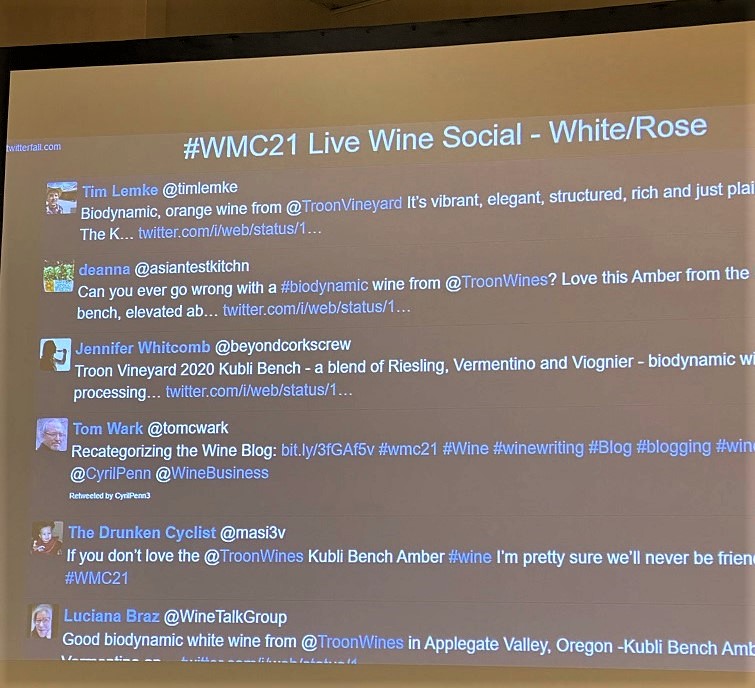
Wine #2: 2020 Troon Vineyards Kubli Bench Amber – a wine with restrained aromatics and tangy orange notes on the palate. One of my favorites in the tasting.
Wine #3: 2019 Benton-Lane First Class Chardonnay Willamette Valley – this was a nicely restrained rendition of the famous grape, very well done.
Wine #4: 2019 Brooks Ara Riesling Willamette Valley – my perennial favorite – this wine never ceases to amaze and delight.
Wine #5: 2020 Rodney Strong Rosé of Pinot Noir – well-balanced California Rosé rendition, simple and tasty.
During the event, a live display was showing all the tweets relevant to the WMC2021 – here is one example for you:
And now Day 2, for the reds:
Red wine #1: 2019 Troon Vineyard Siskiyou Syrah Applegate Valley – we couldn’t start with better wine than Troon Syrah. Purity of expression is nothing short of the mind bogging, beautiful cold weather Syrah rendition. One of my absolute favorite wines of the conference and the trip overall.
Red wine #2: 2018 Benton-Lane Pinot Noir Willamette Valley – interesting wine in need of time to open.
Red wine #3: 2017 Pfeiffer Pinot Noir Willamette Valley – another Pinot Noir which didn’t resonate with me.
Red wine #4: 2017 Brooks Rastaban Pinot Noir Eola-Amity Hills – great aromatics, delicious wine on the palate.
Red wine #5: 2018 Knotty Vines Cabernet Sauvignon California – a part of the new line of wines from Rodney Strong – Knotty Vines. It doesn’t have the extensive concentration one comes to expect from California Cabernet Sauvignon, but it also doesn’t have a price tag associated with that type of wine. Without any regard to the price, this is simple, tasty, delicious, varietally correct, and perfectly drinkable from the moment you open the bottle, which is never an easy fit, especially when it comes to Cabernet Sauvignon.
That concludes the Live Wine Social report from the Wine Media Conference 2021. Cheers!
WMC21: Day 1 Highlights
Wine Media Conference 2021 was distinctly different from all of the previous years. The conference started in 2008 in Sonoma, so this was the 13th annual conference bringing together a bunch of people who love talking about wine – for passion and for business. 2021 was a special year, having everyone battle through the 2020 pandemic, so quite expectedly, the attendance and conference program took a toll – but I sincerely believe that those of us who attended for their love of wine definitely got at least their money worth, and lots more, as you can’t put a price tag on the camaraderie of the wine people.

View from Valley River Inn
This is the second time the conference took place in Oregon. In 2012, it was hosted in Portland with most of the attention focused on the Northern Willamette Valley. 2021 conference took place in Eugene, a town about 120 miles down south from Portland and home to the University of Oregon, hosted at the Valley River Inn. While the previous Oregon conference focused on the wines of Northern Oregon, going down south allowed everyone to explore the lesser-known wineries of the South Willamette Valley and even much further beyond.


Before we get to talk about Day 1, we have to talk about Day 0. First, there was an opening reception and walk-around tasting. There were a few interesting wines – particularly, I want to mention two of the California wines. 2018 Cuda Ridge Petit Verdot Livermore Valley was a perfect example of 100% Petit Verdot, with the concentrated power of the dark fruit, supported by well-integrated tannins. Then there were Knotty Vines – a new line of wines from Rodney Strong, made to be playful and accessible. I tasted 2018 Knotty Vines Chardonnay California which was simple and elegant, having all the Chardonnay traits (vanilla, green apple, a touch of butter), neatly packaged together. At $15, it is your perfect everyday wine. 2018 Knotty Vines Cabernet Sauvignon California was a great example of a well-made California Cabernet Sauvignon suitable for any budget – perfectly noticeable cassis on the nose and the palate, easy to drink, and delightful wine.
Now, for the most important part of the Day 0 – parties. There were at least two of such parties taking place. The first one was at the house of Neal Benson and Alyse Stone who live in Eugene and run the service called Winery Wanderings. Alyse and Neal graciously invited what seems to be a whole conference to their backyard and everyone was able to find a spot. There were lots of wines, lots of hugs, and conversations. While there were lots and lots of bottles opened and consumed, my unlikely favorite was 1971 Fontanafredda Barolo, brought by Jeff Burrows – the wine still had enough fruit left, and the palate gently evolved toward dried fruit – lightweight, but very pleasant.


The second afterparty was kindly hosted by Rodney Strong. Not only we had an opportunity to taste many of the Rodney Strong single vineyard Cabernet Sauvignon wines (Rockaway, Alexander Crown, Brothers – all delicious), as well as Davis Bynum Pinot Noir, pure and classic, we also had a large selection of Voodoo Doughnuts, a local (Portland) crave and a cult. While Cabs and Pinot were excellent, my favorite wine of that evening was the 2018 Rodney Strong Chardonnay Reserve Russian River Valley, which was perfectly bright with vanilla and apple tones on the nose, and a hint of vanilla and butter on the palate. While doughnuts looked great, I really didn’t get the excitement and the cult status of these Voodoo doughnuts – they didn’t offer any special taste or flavor – but of course, they are fun to look at.
Day 1 started with the keynote from Cyrill Penn, the editor of Wine Business Monthly magazine, who primarily talked about the history of his publication and how it morphed over the years.
My favorite session of the Day 1 was delivered by Austin Beeman who works for the wine distribution company and runs a few of the wine blogs. Particularly, Austin was talking about the great difficulties wine shipping and logistics are facing right now and will continue having the issues for a while. I plan to interview Austin to discuss all of these in greater depth.
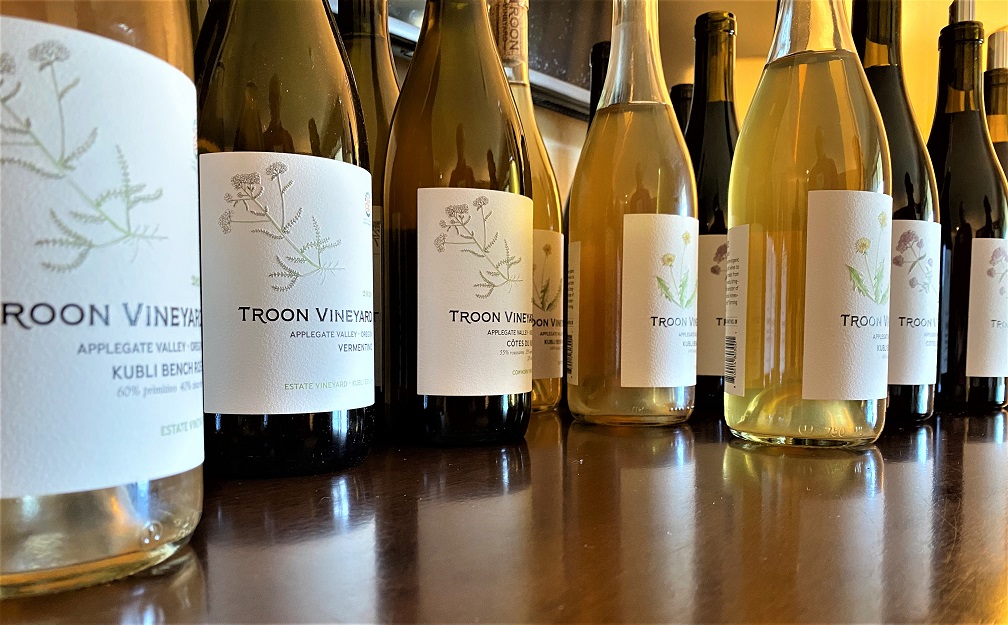


The next highlight was the tasting of the wines of the Troon Vineyard. Troon Vineyard is located in Southern Oregon, in Applegate Valley, and if there is one wine Troon doesn’t make it would be a Pinot Noir. But is not a major differentiator. Troon Vineyard is not only a certified biodynamic winery, but it is the second winery in the world to hold Regenerative Organic certification, which is a serious achievement in itself. I always loved Troon wines, and tasting them was always a major highlight of the WMC events, as Craig Camp, GM of Troon Vineyard, was always a big supporter of the conference, and he always brought a large assortment of Troon wines. And despite the fact that Troon wines were always pure and delicious, this year they manage to deliver even more.
Troon brought 3 sparkling wines, all made as Pet Nat (single fermentation in the bottle). While all 3 were delicious, my personal favorite was 2020 Troon Vineyard Kubli Bench Pet tanNat Applegate Valley, made out of 100% Tannat. Beautiful and clean cut-through acidity made this wine an ultimate refresher – and made me crave oysters right on the spot. My other two favorites were 2019 Troon Vineyard Estate Syrah Applegate Valley and 2019 Troon Vineyard Siskiyou Estate Syrah Applegate Valley, two beautiful expressions of the cold climate Syrah, clean, elegant, smell-forever Syrah wines with a perfect black pepper finish – best Syrah I’ve tasted in a long time.
In the afternoon, we had a good session on the wines of newly minted delle Venezie DOC from Italy, followed by the Wine Social Live tasting of white and Rosé, which was an adjusted version of the traditional speed tasting. Both sessions were very good and I plan to cover them in the later posts.
It is traditional to have winery excursions on the evening of Day 1. Out of the two options, I went with the tour of urban wineries in downtown Eugene. Before we went around the town, we gathered at the newly opened Gordon Hotel – it opened in late 2020, so I have to definitely tip my hat to the courage of the people behind this modern, ultra-contemporary hotel and the whole affiliated Market street complex.


A few of the highlights of the walk-around tasting were 2016 King Estate Brut Cuvée Willamette Valley, delicious sparkling wine with a toasty nose, and refreshing and crisp palate, and 2019 Iris Vineyards House Call Red Blend Rogue Valley, a round and delightful concoction made out of Cab Franc (50%), Merlot and Malbec.
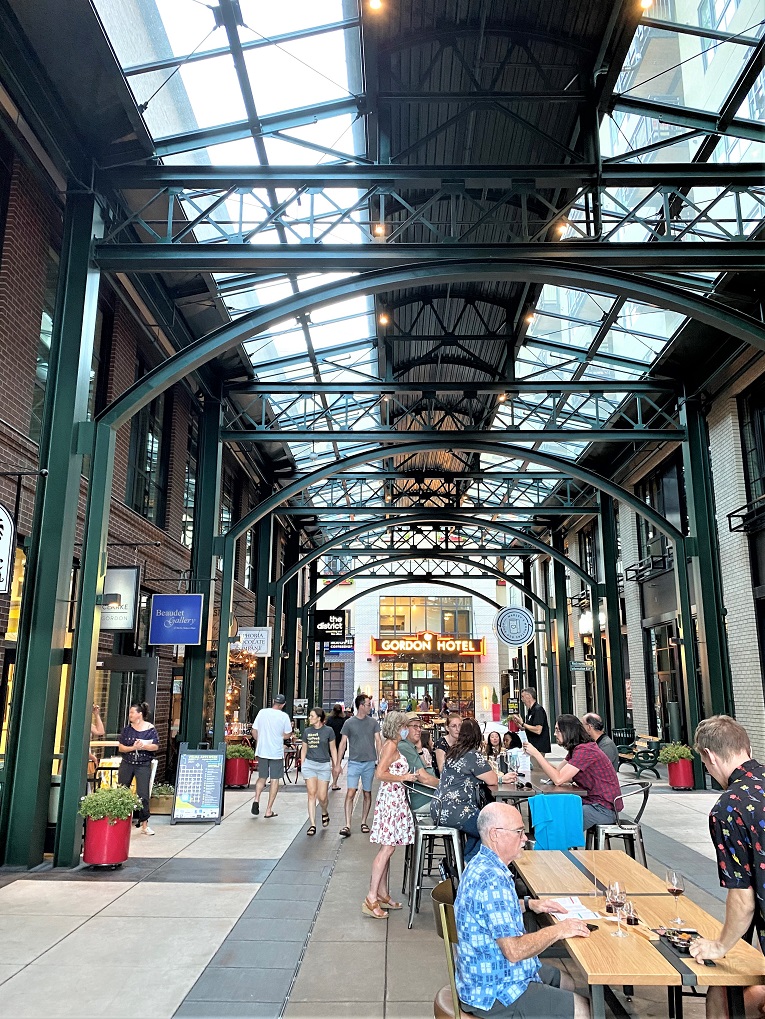
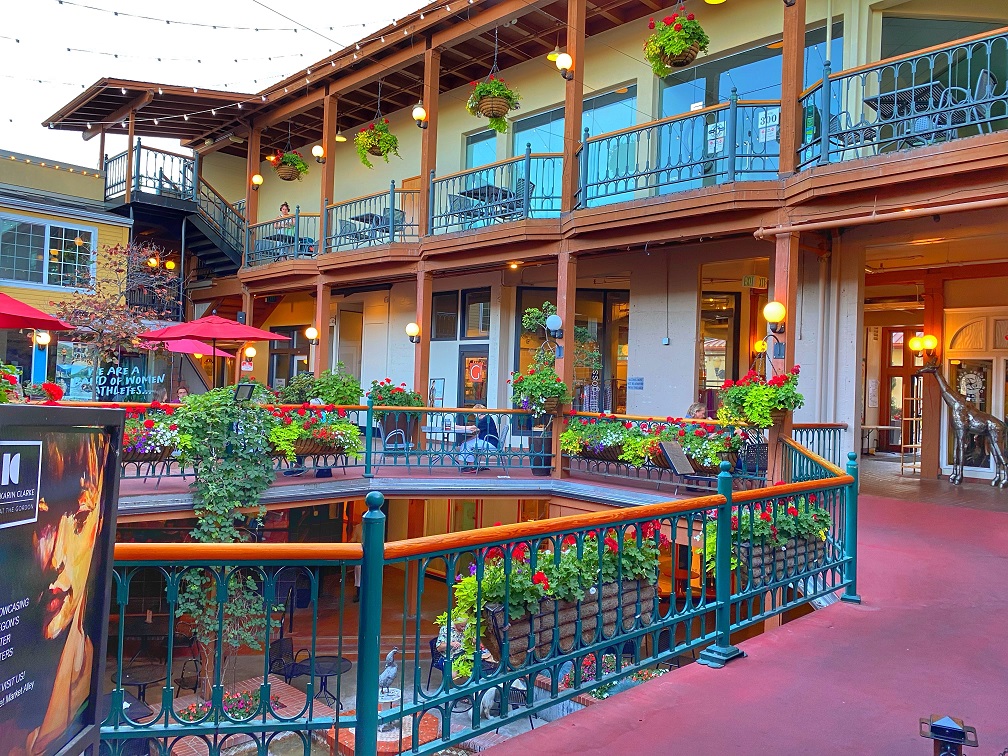
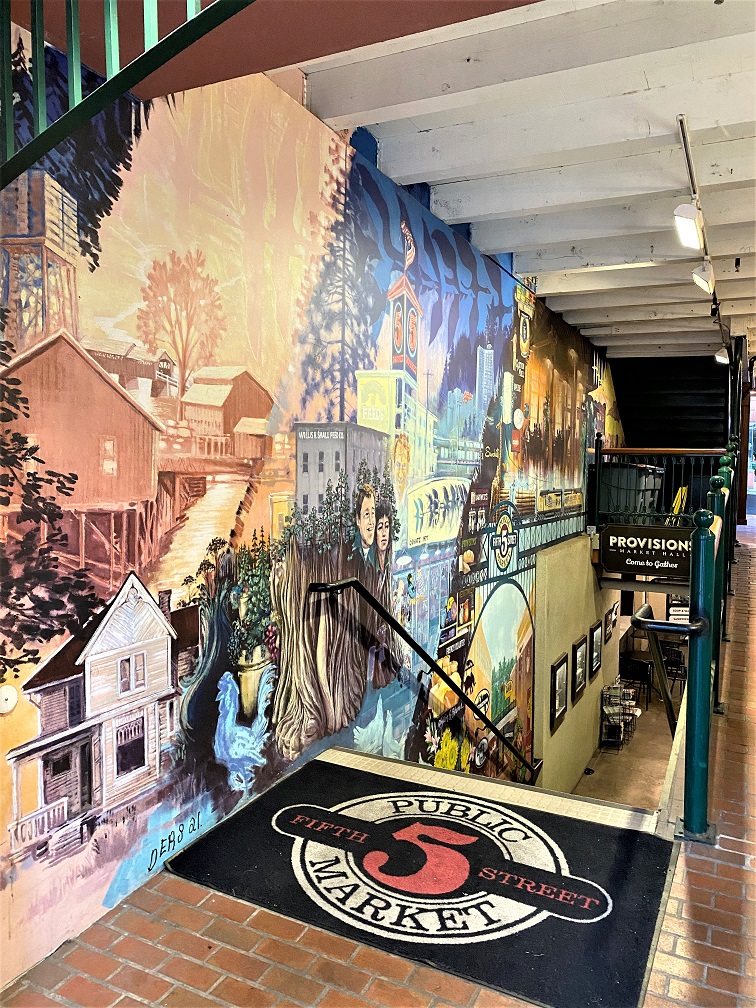
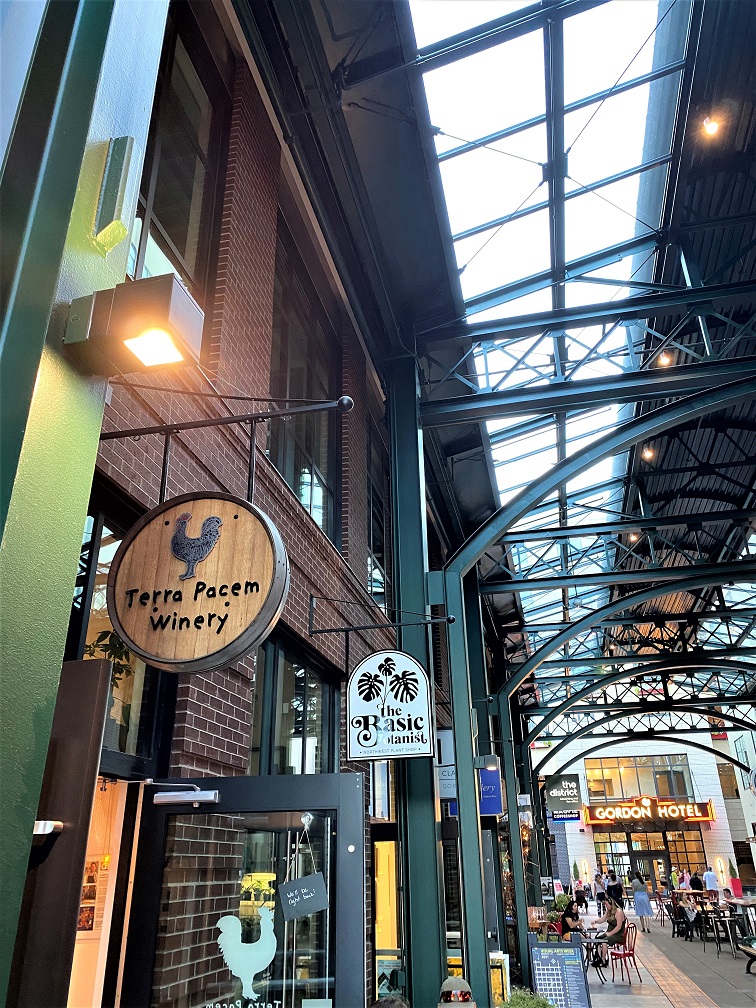
Walking out of the Gordon Hotel we quickly stumbled upon the winery called Terra Pacem, which in translation from Latin means “Peaceful Earth”. Terra Pacem is not just an average urban winery – it is a winery with a great social mission. The winery employs adults with intellectual and developmental disabilities and provides community, training, and employment for them. And I’m happy to say that Terra Pacem can boast not only about the great mission but also about delicious, very well made wines. We had “3 out of 3” success with our selection.


NV Terra Pacem Brut had a beautiful toasted nose, with similar toasted notes on the palate, crisp and refreshing, how you would want your sparkling wine to be. 2018 Terra Pacem Cabernet Franc Columbia Valley was concocted to be a perfect Old World example of Cabernet Franc wine – just enough of the bell pepper on the nose to know that it is there, with bell pepper and cassis on the palate, lean and delightful.
I was tasting the wines with Jeff Burrows, and we were both concerned if we would like the 2018 Terra Pacem Tempranillo Rogue Valley, as for both of us, Tempranillo means Rioja, and I’m very particular about the Rioja’s I like. The wine didn’t disappoint – fresh berries on the nose, same round berries with a hint of the cedar box notes – in a blind tasting, I would happily take it for a Vina Real Crianza, so this was one delightful wine.
And that concludes my report. If you are still with me – thank you, as I feel quite exhausted just by writing it. Until the next time – cheers!
Oregon Wine Reflections – On The Way To The Wine Media Conference 2021
 I like flying. And it is not only the excitement of travel, arriving at the new place, meeting new people, having new experiences. The plane itself, the cabin, offers one of the rare sanctuaries, an opportunity to do some undisturbed work and reflect. Yes, the economy plane seat is not the most relaxing accommodation in the world, but if I chose to do something useful (oh so many times I ended up binge-watching movies instead of doing anything productive), comfort is not the most important thing.
Right now I’m on the small plane, connecting from Denver, Colorado to Eugene, Oregon – the location of the Wine Media Conference (previously know as Wine Bloggers Conference) 2021, WMC21 for short. It could’ve been equally called WMC20, as you can imagine that WMC 2020 never took place, but hey, at least we are getting together in 2021.
This will be my 5th WMC (I started in 2014, skipped 2015, and attended 2016, 2017, and 2018), and I’m really excited to visit Oregon for that.
As I was thinking about the location, I also tried to recall how did I discover Oregonian wines – you know, wine solicit the emotion, makes you dig into your memory.
I have no way of tracing it back to the exact year, but I believe the very first Oregonian wine which made me say “wow” was Archery Summit Pinot Noir, and I would think it happened 15–16 years ago. I probably had some wines from Oregon before and after which were just “meh”, but Archery Summit was definitely a pivotal wine. I think the next super-impressive Oregon wine was the Evening Land Pinot Noir, followed by Ken Wright (I was blown away by the massive power that wine was packing), followed by some of the high-end Adelsheim Pinot Noir wines when I wished for an expense account. And let me not forget Antica Terra, with absolutely spectacular Pinot Noir and Pinot Noir Rosé wines (among many others).
This was ancient history. The modern history (ha!) of my Oregonian wine embrace is closely associated with Carl Giavanti, the winery publicist out of Portland, Oregon. We met with Carl at WBC14 and maintained contact from thereon. At some point, I started doing winemaker interviews in the blog, and Carl asked if I would be interested to create a series of interviews of the Oregonian winemakers – this is how the Stories of Passion and Pinot series was born 5 years ago. Working on those interviews afforded me to discover amazing wines – and amazing passion behind them. Vidon, Lenné, Youngberg Hill, Ghost Hill Cellars, Le Cadeau, Alloro, Iris, Utopia, Bell’s Up – each one had a unique story and unique wines. As part of the series I also interviewed Ken Wright, and I always remember that when I asked him how Oregon Pinot Noir compares to Burgundy, he said that for the long time, Oregon sees Burgundy in the rearview mirror, having found its own unique style.
While Pinot Noir is a king of Oregon, it is not the only wine produced here. Riesling, Chardonnay, Pinot Gris, Tempranillo, Tannat, Vermentino, and many others also call Oregon home, and if you ever had wines from, for example, Troon Vineyards, you would know how good those wines can be.
Yes, color me excited – I finally get to meet the people and visit the wineries I’m already so [virtually] familiar with – and now it will be real.
Wine Media Conference 2021 – here we go!
Made With Organic Grapes: Domaine Bousquet
Today we will be talking about two subjects we already discussed in the past. The first subject is the wines made from organic grapes. Organic grapes are becoming more and more available, and winemakers around the world are more eager to use organic grapes in winemaking, especially as wine consumers happily embrace the trend.
The second subject is the wines of Domaine Bousquet in Argentina. Last time we talked about unpretentious and delicious Domaine Bousquet bubbles, sparkling wines well suitable for every day. Today we want to continue that conversation and talk about few more wines.
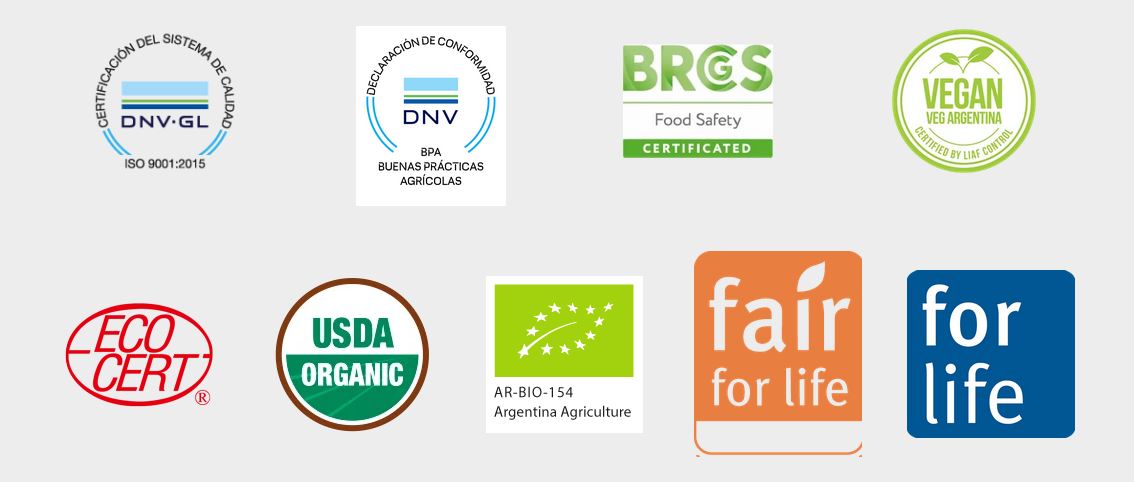
The organic viticulture is fair and square a centerpiece of Domaine Bousquet winemaking. The picture below perfectly summarizes it – these are all the certifications that the domain already has:
Source: Domaine Bousquet website
Organic viticulture is only a stepping stone for Domaine Bousquet – the goal is to convert to biodynamic farming in 2021/2022, which is not an easy task, considering the sheer size of Domaine Bousquet’s vineyards (more than 500 acres) and the fact that biodynamic viticulture is 30% more labor-intense compared with traditional methods, and 15% more intense than sustainable. But once you get on this road, there is no turning back.
Organic/sustainable/biodynamic is an important part, but still only a part of the story. The terroir is essential, and it is a classic combination of the soil and climate which contributes to the quality of the Domaine Bousquet wines. Many of the Domain Bousquet vineyards are located in the Gualtallary region of Uco Valley, at an altitude of about 4,200 feet. The high altitude by itself doesn’t guarantee the quality of the wines, but it helps. Domaine’s vineyards are located on the patches of sandy soils, which are great for the vines as they limit the spread of the disease, provide good drainage and force the vines to work hard to get to the water.
Gaultallary offers a desert-like climate, with constant winds blowing for the Andes, and less than 8 inches of rain being total precipitation for the year. In such conditions, it is important that Domaine Bousquet vineyards are located in areas with access to the ground water – not everybody in the Gaultallary is that lucky. And then there are Zonda winds (Zonda in local dialect means “The Witch’s Wind”, which are showing up in the spring, and they are dry (relative humidity of 0), strong, and unpredictable – but they help to reduce the crop size and concentrate the flavor.
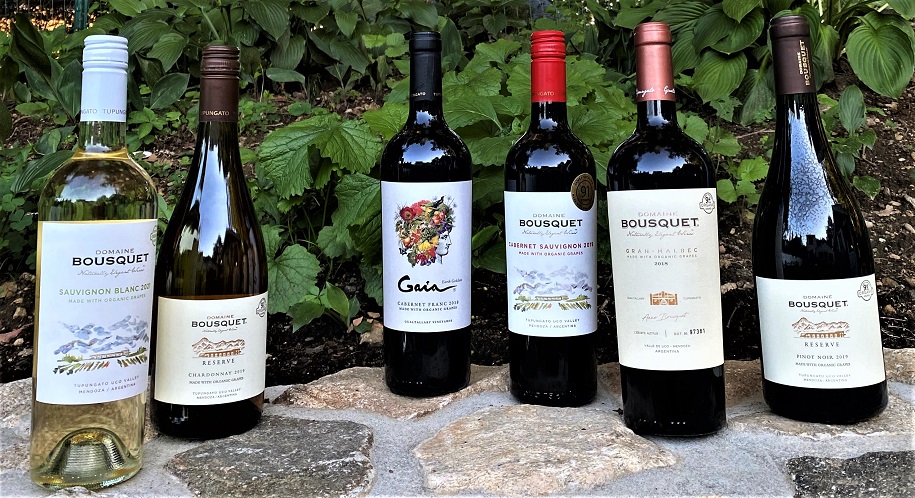
Domaine Bousquet produces about 10 different lines of wines. I was able to taste wine belonging to the 4 different lines (samples). Below are my notes.
First, 2 wines from the Premium selection:


2021 Domaine Bousquet Sauvignon Blanc Tupungato Uco Valley (12.5% ABV, $13)
Straw pale
Ultimately inviting nose, a touch of fresh grass, lemon, uplifting intensity.
Crisp, clean, lemony, grassy, tart, fresh, pure delight.
8+, perfect, delicious.
2019 Domaine Bousquet Cabernet Sauvignon Tupungato Uco Valley Mendoza (14% ABV, $13, no oak – unusual)
Dark Ruby
A touch of bell pepper, dark berries, medium-plus intensity
Bell pepper, eucalyptus, mint, blackberries, good acidity, fresh, good energy, good balance
8-/8, easy to drink. And I have to say that unoaked Cabernet Sauvignon is mind-boggling.
Next were two wines form the Reserve line:


2019 Domaine Bousquet Chardonnay Reserve Tupungato Uco Valley (14.5% ABV, $18)
Straw pale
Vanilla, a hint of butter, inviting, generous
Crisp, vibrant, a touch of butter and vanilla, tightly weaves around the citrus core. Excellent balance, delicious.
8+, superb. If this wine can age, it might be amazing, if this bright acidity will evolve into the honey note as it works with the best Chardonnays.
2019 Domaine Bousquet Pinot Noir Reserve Tupungato Uco Valley (14.5% ABV, $18, 6-8 months in French oak)
Dark ruby
Not very expressive, a hint of tart cherries
Tart cherries, bright acidity, crisp, tart
7/7+, not my wine, but should be okay as food wine or for those who like austere, bone-dry wines.
Next was the wine from the Gaia line – the wines dedicated to the goddess of Earth, Gaia, sporting a very attractive label. This is the second time I was able to taste the wine from the Gaia line – the first was Gaia Rosé, which was excellent. 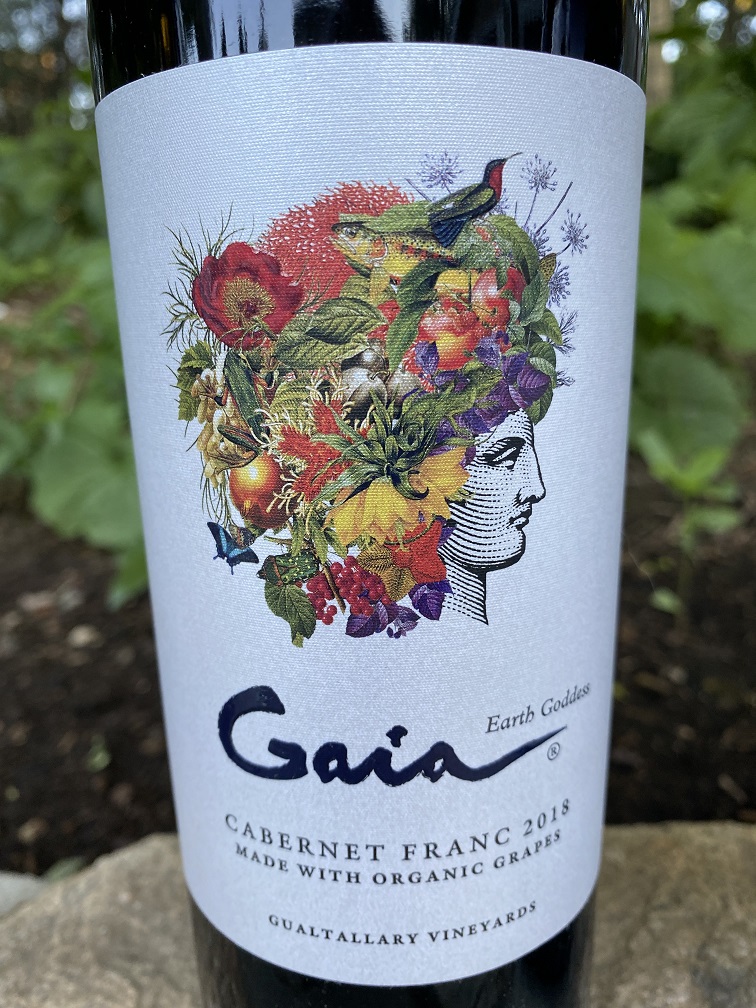
2019 Domaine Bousquet Gaia Cabernet Franc Gualtallary Vineyards (15% ABV, $20, 8-10 months in French oak)
Dark garnet
A touch of barnyard, earthy notes, dark berries
Dark fruit, explicit minerality, a distant hint of bell pepper, mint, dense, good structure
8-, not the most striking Cab Franc, but interesting on its own
And the last one for today – the wine from the Gran series:
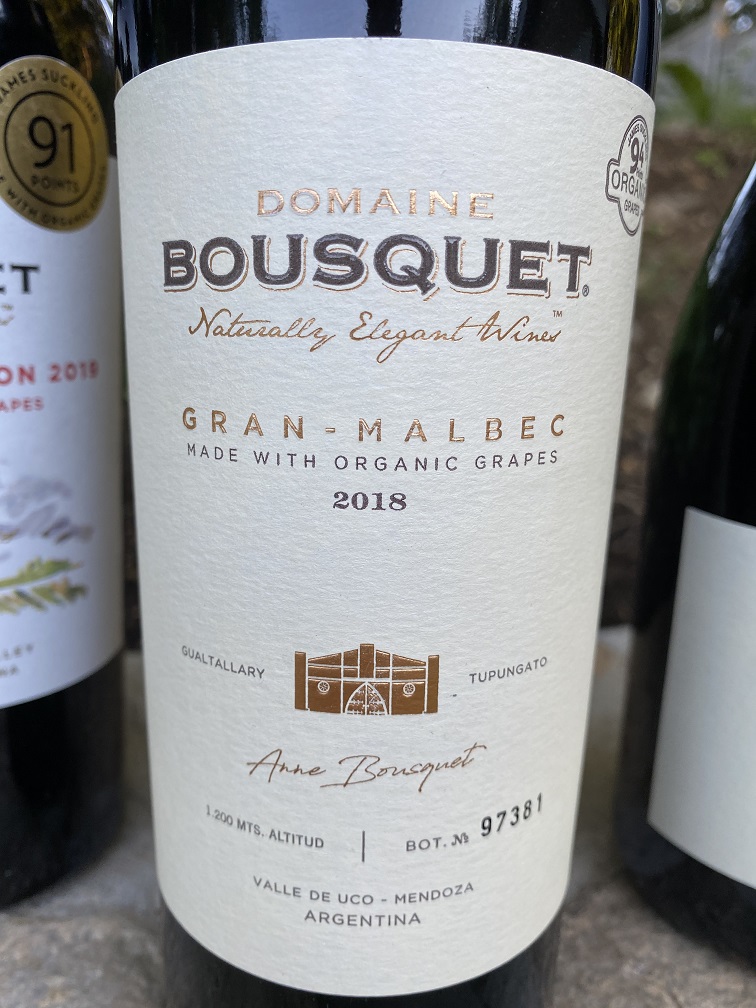
2018 Domaine Bousquet Gran-Malbec Valley de Uco (14.5% ABV, $25, 85% Malbec, 5% Cabernet Sauvignon, 5% Merlot, 5% Syrah, 10 months in French oak)
Dark garnet, almost black with purple hues
Dark fruit, eucalyptus, cassis, intense, powerful
Beautiful fruit on the palate, firm structure, big, brooding, perfectly balanced
8+, outstanding
Here you are, my friends – more organic wines you can choose from. As an added bonus, with Domaine Bousquet, you don’t have to break the bank to enjoy delicious organic wines any time you want. Cheers!
Last Bottle Sign Up ($10 credit)




 Talk-A-Vino