Archive
Thanksgiving Day Experiences – 2020 Edition
 2020. What a year.
Thanksgiving is my favorite holiday, as it revolves around family, food, wine, and friends. Close friends, who are more a family. Friends we celebrated Thanksgiving together with for the past 29 years. And 2020 managed to put a damper on that too, among a vast array of destruction this year will leave behind. Thanksgiving 2020 was about immediate family, food, and wine.
But even in 2020, the proverbial silver lining can be found. This probably was the most relaxing Thanksgiving ever. The menu was dramatically reduced – the family of 4 doesn’t need much of the elaborate appetizers and a vast array of side dishes, so cooking was mostly stress-free. Mostly, however, is a keyword here, as the cooking of the turkey became an unintended study of the operations of our oven.
I’ve cooked the turkey using most of the possible ways over the years, with the exception of deep-frying – roasted, roasted in the bag, turducken, deboned and roasted, smoked (smoked was the house favorite for the past 3 years). I’m also a big fan of slow cooking when you cook low and slow for a long time, so we decided that this was the way to go this year. Turkey was all buttered up with cavity stuffed with aromatics (garlic, lemon, celery, herbs), and the turkey went into the oven at around midnight at 200°F. Or at least I thought that it was 200°F. In the morning, the thigh registered only 152°F (you really need 185°F there) – this is when we decided to check the temperature in the oven using the same meat thermometer, and found out that it was at least 20 degrees lower, barely reaching 180°F, which greatly extends cooking time. We spent the next 6-7 hours playing with that temperature until we finally reached the desired doneness. 40 minutes at 450°F uncovered rendered a beautiful bird with crispy skin. So as long as you trust your oven, slow cooking is the way to go. Added benefit – the best ever turkey gravy, made from the drippings (here is the link to the recipe in case you need one).


The rest of the food prep caused no heartburn, everything came out quite well. We did the same stuffing for the second year in a row. While the recipe is very simple (but it takes time), the result is simply a delightful dish loved by everyone. One more standout was Nantucket Cranberry Pie, which is incredibly simple to make but yet again, the result is superb.
What didn’t work well at all (every occasion needs a flap, right?) was my attempt to recreate childhood memories. I ordered black caviar from Costco (yes, guilty as charged), which came pre-packaged with Creme Fraiche and tiny blinis (a dollar-coin-sized Russian pancakes). First, the caviar itself was just so-so, both in texture and in the taste. But following the instructions and serving it with blinis was a complete disaster, as those dry nibbles resembling poorly made English muffins were, in a word, disguising, both in the taste and texture, especially the texture. Talk about disappointments… But as I said, this was the only flap.
And then there were wines. Over the years, I developed an “All-American” approach to my Thanksgiving wine selection. 2020 was not an exception, and I decided to open definitely more than we could drink, but still have fun with the wines.


Two out of four wines came as part of the mystery pack from Last Bottles which were offered during Thanksgiving. I always missed that deal, but this year I managed to grab the 12 bottles for $144, which made it a great deal. So far I tried 5 bottles out of those 12, and they were all excellent, so the white and Rosé were coming from that set. Vinum Cab Franc was a sample that I received as a preparation for the upcoming #CabFrancDay celebration. I also managed to get cellar-aged Cayuse as part of this year’s offering (directly from Cayuse), so I decided that it might make the Thanksgiving celebration quite special. And yes, it did…
For what it worth, here are my wine notes:
2017 Casino Mine Ranch Vermentino Shenandoah Valley (14.1% ABV)
Light golden
Honeysuckle, white flowers, inviting
Delicious. Whitestone fruit and tropical fruit, a touch of honey undertones, Gewurz-like spiciness, good acidity, good balance.
Should play well with food (pre-dinner notes)
8-, it was good with food
2018 Azur Rosé Napa Valley (12.5% ABV)
Gold with a copper hue
Similar to the previous wine, honeysuckle, ripe strawberries
Good acidity, strawberries all the way, fresh, vibrant, full of energy. Excellent.
8-/8, tremendous acidity on the second day. Worked well with food.
2016 Vinum Cellars The Scrapper Cabernet Franc El Dorado (15.18% ABV, $35, 26 months in 2 year French Oak)
Dark garnet
Red and black fruit, a touch of black currant
Black currant, dark chocolate, sweet cherries
8, good balance, well-made wine.
2011 Cayuse Syrah En Cerise Vineyard Walla Walla Valley (13.9% ABV)
Dark garnet, almost black
Liquid rocks, a touch of barnyard, iodine, can’t stop smelling
Liquid rock, tart cherries, tar, pepper, iodine, firm structure, layers and layers of flavor. Wow.
9-/9. Surprising pairing – worked amazingly well with Nantucket cranberry pie. Worked well with turkey as well.
As you can tell, the wine program was a complete success – and I definitely can’t complain about spending the holidays with just the closest family
That’s my Thanksgiving story. Hope you had fun too!
Wine Quiz #129 – Beaujolais Nouveau Edition
 The Wine Quiz series is not meant to intimidate. The whole idea here is to have fun and learn something new. When answering the questions, it is fully encouraged to use all available sources of information, including Google or any other search engine. There are no embarrassing answers – the most embarrassing thing is not giving it a try…
Welcome to your new wine quiz!
Let’s start with the answers to the last quiz #128. In that quiz, you had three sets of items, and for each set, you had to figure out what that set was representing, and which item (or items) didn’t belong. Here are the questions, now with the answers:
Question 1:
Adelaide Hills
Blackwood Valley
Currency Creek
Eden Valley
Hunter
King Valley
Waitaki Valley
Answer: This is a list of Australian wine regions. The item which doesn’t belong is the last one, Waitaki Valley, as this region is located in neighboring New Zealand.
Question 2:
Anjou
Chinon
Jasnières
Orléans
Reuilly
Rully
Saumur
Answer: Most of the items on this list are the wine regions in Loire Valley, except Rully, which is located in Burgundy.
Question 3:
Cayuse
Clos Erasmus
No Girls
Penfolds
Pingus
Vega Sicilia
Answer: This was probably the most difficult one. This is the list of famous producers, which all make wines out of Tempranillo grapes, except Clos Erasmus, a famed Spanish producer in Priorat, which doesn’t make wines out of the Tempranillo.
We didn’t have a lot of players, except Lynn who answered the second question correctly and definitely deserves an honorable mention.
Last Thursday, November 19th, was the third Thursday in November, and thus it was the day to celebrate a brand new Beaujolais Nouveau 2020 release. In honor of that celebration, I have a very simple quiz for you, all about the simple wine, Beaujolais Nouveau:
Question 1: True or False: Beaujolais Nouveau wines can age
Question 2: The ideal serving temperature for Beaujolais Nouveau is
- 46°F to 50°F (8°C to 10°C)
- 50°F to 54°F (10°C to 12°C)
- 54°F to 57°F (12°C to 14°C)
- 57°F to 61°F (14°C to 16°C)
Question 3: True or False: During the first half of the 20th century, Beaujolais Nouveau was released and celebrated in December instead of November.
Question 4: True or False: Nouveau wines (the wines of new harvest) are produced only in the Beaujolais region in France, and not anywhere else in the world.
Good luck, enjoy the quiz and the rest of your weekend! Cheers!
The New Sotheby’s Wine Encyclopedia – A Must Have For A Winelover
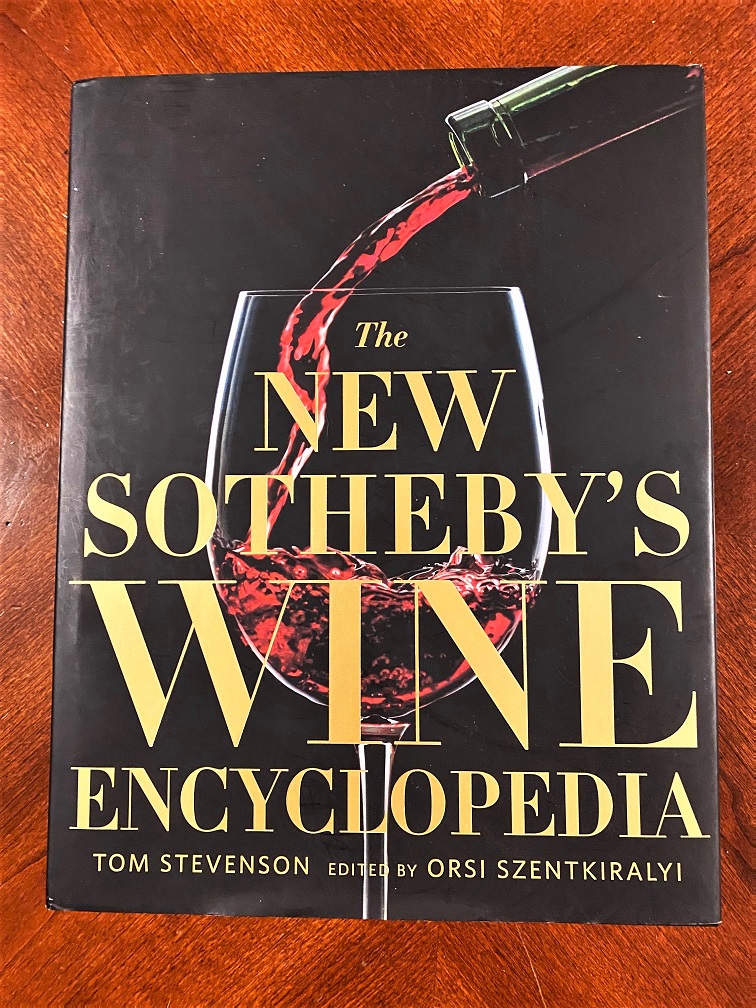 Do you like wine books?
Better question: do you read wine books?
Wine book is the next best “wine thing” after the wine itself – assuming you drink wine for pleasure, and not for the effects of alcohol. Reading the wine book gives you the pleasure of learning about your favorite subject, it is available to you any time you want it, and you don’t have to limit your consumption. There is also an ultimate pleasure of nesting in the favorite chair with a book in your hands, and turning off all the annoyances of the world at least for some time.
Only who reads the books today, right?
We live in the times when Google knows all the answers, or at least it pretends that it does, so we can search, find, read, and instantly forget whatever information we obtained. Depending on your luck, that information might be totally wrong or irrelevant, but that can be a subject for the whole other conversation. But when we reach out to Google, we think that we are saving time and doing ourselves a favor by simplifying our lives – all of it instead of opening the book and actually reading to learn and understand. But oh, who has time to read. Hey, google…
Today I want to bring your attention to the book which you don’t have to read. Yep, you heard me right. You don’t really have to read it. But you must have it. Makes no sense? Oh yes, it does.
You want to have “The New Sotheby’s Wine Encyclopedia” by Tom Stevenson edited by Orsi Szentkiralyi because this is not some general book, this is an encyclopedia. An encyclopedia is a tool. You use it when you need an answer to a question. You use it when you want to deepen your knowledge of a particular subject, be it history of winemaking, wines of Fitou AOC, differences between Cordon de Royat and Geneva Double Curtain vine training systems, or what to do if your wine smells like burnt rubber.
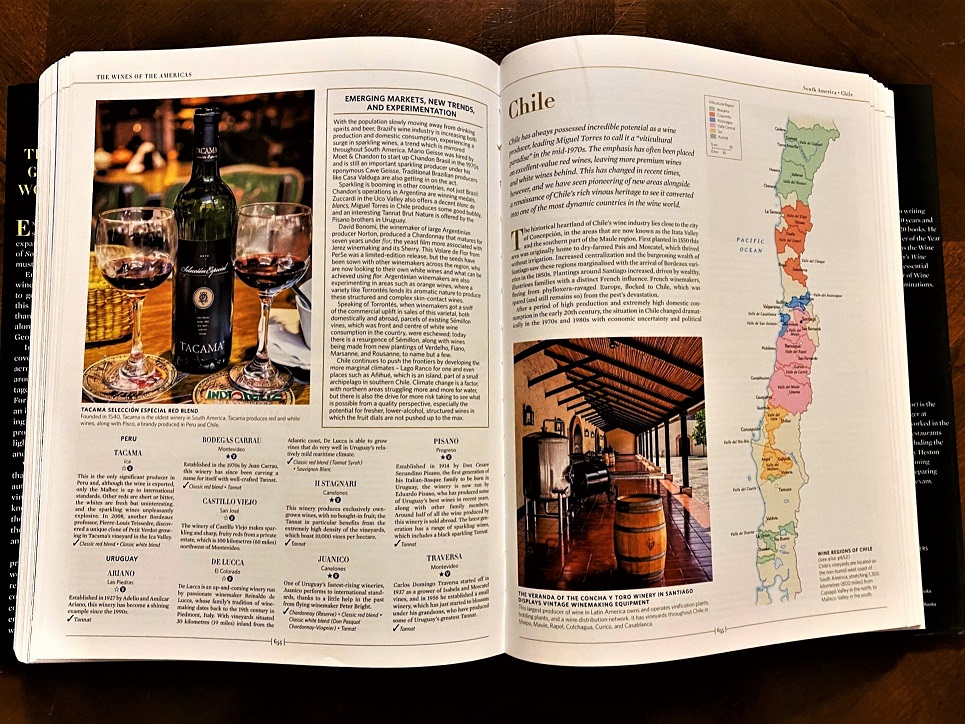
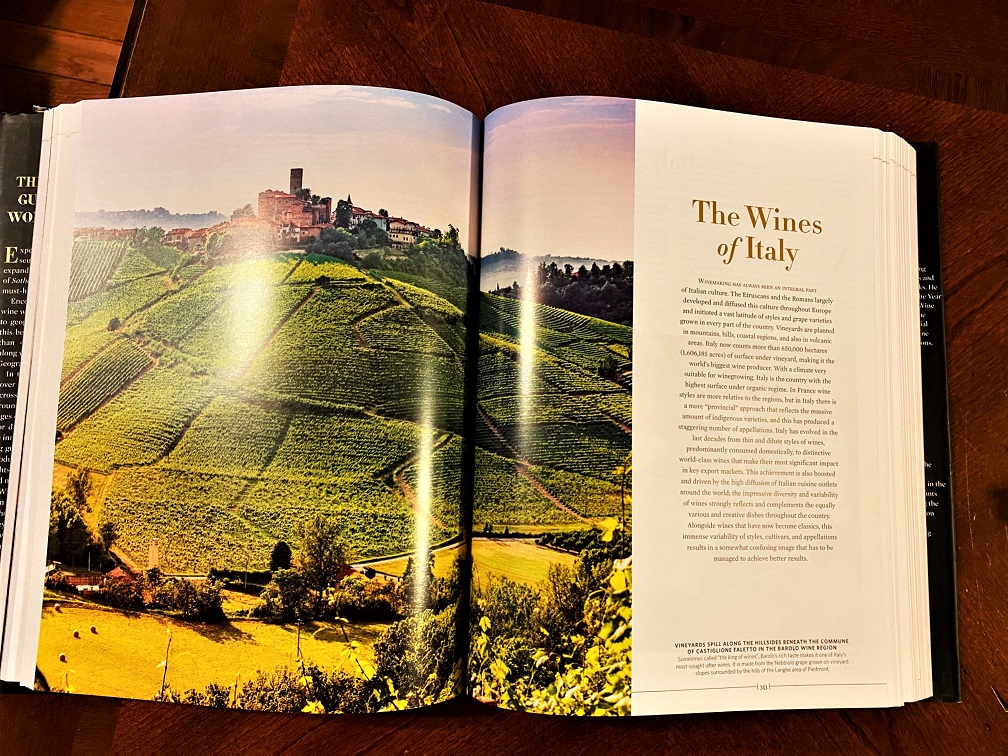
This is not a pocket-size book, but this is what makes it great. 800 beautifully illustrated pages (the book is published by the National Geographic, so great imagery is rather expected). This is a sixth edition of the book, containing more than 400 photographs, 120 National Geographic maps, and there is hardly a wine subject or a wine region that escapes the attention of the author.
It was interesting for me to see is a difference in the coverage of the different wine regions – to illustrate what I mean, see the picture below:

If you will look at clips from left to right, the first and the biggest set of pages is covering France, the next small section is dedicated to Italy, the next, even tinier, is Spain, and the last a bigger one is wines of the United States. But really, no wine region is left uncovered, even including such exotic winemaking destinations as China, India, and Japan.
My favorite part might be the last section of the book, called Micropedia. This section is a collection of wine terms and abbreviations. Yes, you can find many of these terms with the help of Google, but it might not be that easy. For example, the very first term explained in the Micropedia is ABC. If you search for “wine ABC” online, the first page which will come up will most likely be dedicated to the ABC wine store (it was for me, at least) – while the ABC used in the wine speak typically means Anything But Chardonnay or Anything But Cabernet. So if you want to know what ABC stands for, or agrafe, rondelle, or uvaggio for that matter, The New Sotheby’s Wine Encyclopedia will save you lots of time and effort (don’t take my word for it, go search for those terms).
Whether you want to learn about appellation you never heard of, the history of winemaking, or see the map of wine regions in Slovenia, this is the book which you will find the most helpful, no matter what your question is. You can find this book on Amazon and Barnes & Noble, and you can thank me later for the advice. I’m off to read about Madeira. Cheers!
The New Sotheby’s Wine Encyclopedia was provided to me as a sample, free of charge. Opinions are my own.
Hey French – Drink Italian
 I mean no disrespect.
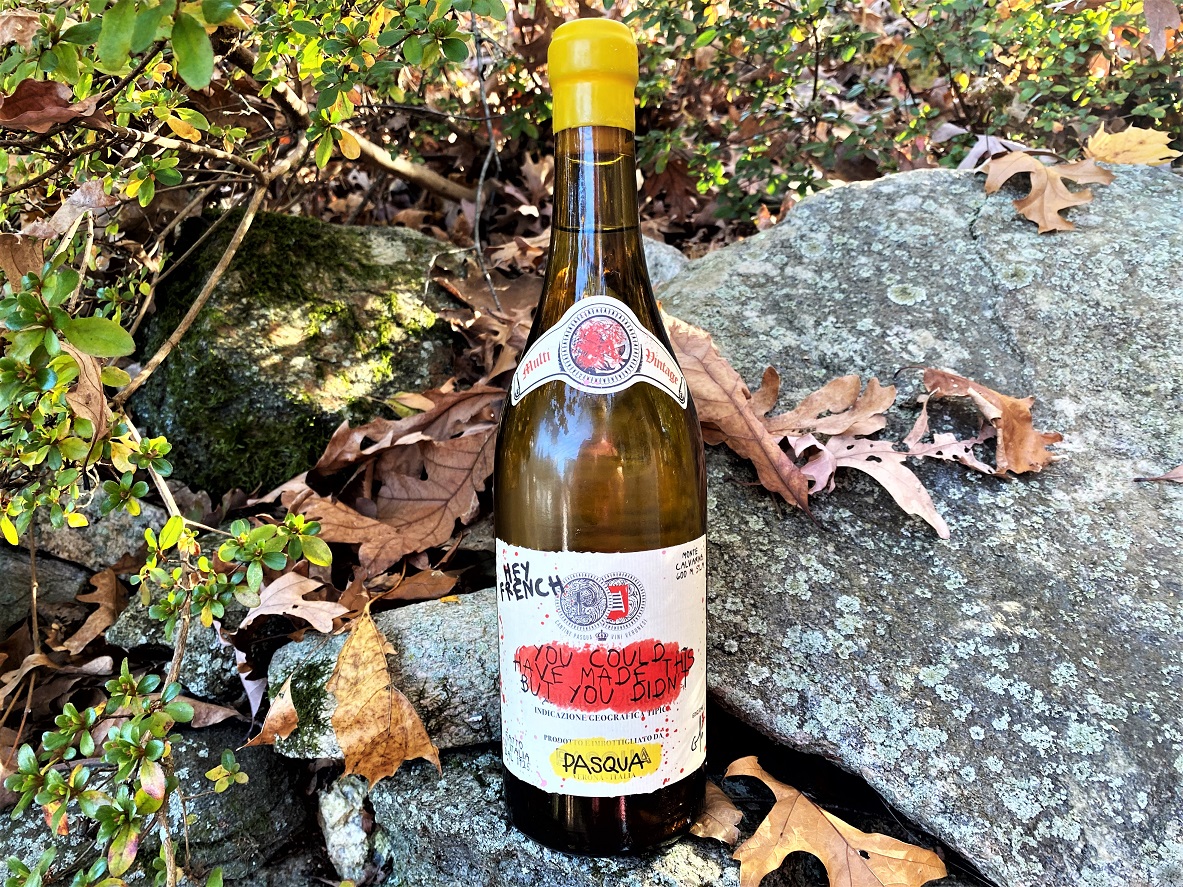
The title of this post is only suggesting that you should drink Italian wine. A particular Italian wine. And it doesn’t mean that French people should drink Italian wine – even though they will not regret if they will. Everybody can (should?) drink this Italian wine – Hey French.
The Pasqua brothers started Pasqua Vigneti e Cantine winery almost 100 years ago, in 1925 near the town of Verona in Northern Italy. Now with the family’s third generation at the helm, the winery continues and advances its traditions. I came across Pasqua wines for the first time almost 10 years ago – I found Pasqua Amarone at Trader Joe’s in Boston, and it was as good as Amarone under $20 can be. Then I discovered (also at Trader Joe’s) PassimentoSentimento, a tribute to the most famous Italians from Verona – Romeo & Juliet. At the beginning of this year, 2020, I had the pleasure of tasting Pasqua Famiglia Amarone at the Gambero Rosso event in New York. And then I was offered to try a sample of the latest addition to the Pasqua portfolio – maybe even a winner of the longest wine name contest – Hey French. You Could Have Made This Wine But You Didn’t.
This wine is definitely unique. To begin with, the wine is identified as “multi-vintage”, which is not a typical term in the wine world. The standard term is non-vintage, it is typically applied to Champagne and some other sparkling wines. And of course, a typical Champagne is a blend of multiple still wines from multiple vintages – however, it is rare to find a non-vintage still red or white wine. Hey French is deliberately identified as multi-vintage and it takes its inspiration from Champagne (hence Hey French in the wine’s name). The wine is made out of the grapes coming from the 4 best vintages of the decade – 2013, 2015, 2016, 2017, from one of the best vineyards in the area, Monte Calvarina, and 3 grapes – primarily Garganega (the grape used for the production of Soave Classico), with the addition of Pinot Bianco and Sauvignon Blanc. A total of 18 wines were used to produce Hey French Edizione 1.
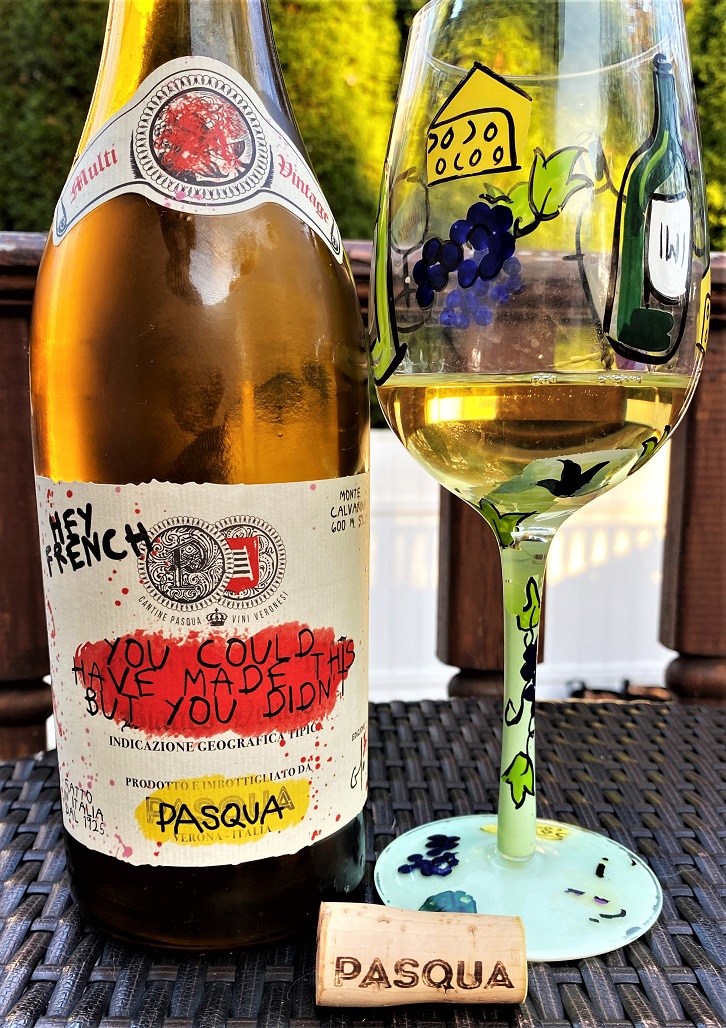
How was the wine? In a word, delicious.
Multi-vintage Pasqua Hey French You Could Have Made This Wine But You Didn’t Edizione 1 Veneto Bianco IGP (13.5% ABV, $40, blend of best 4 vintages of last decade)
Intense gold
Vanilla, apples, plums, Chardonnay-like
Fresh, lip-smacking, precise, clean acidity, whitestone fruit, granny smith apples, a hint of nutmeg, a hint of butter, round, plump, herbs, perfectly dry, delicious.
8/8+, superb.
Based on my experience with Pasqua wines so far, the company is accustomed to making bold moves (drinkable Amarone under $20 at Trader Joe’s clearly is a good indicator). This multi-vintage wine should also be categorized as such – $40 still wine without vintage designation with a playful label (designed by the celebrity Cuban-French artist CB Hoyo) might not be an easy sell. Once you try this wine, which is an absolutely solid, world-class wine, you would be happy to drink it again and again, but you know how preconceived notions work with wine…
The bottom line is simple – find this wine and try it. Additionally, offer it to your friends to taste blind, and then watch for the surprise on their faces once you reveal the wine – life’s little pleasures. Cheers!
Wine Quiz #128 – Which One Doesn’t Belong
The Wine Quiz series is not meant to intimidate. The whole idea here is to have fun and learn something new. When answering the questions, it is fully encouraged to use all available sources of information, including Google or any other search engine. There are no embarrassing answers – the most embarrassing thing is not giving it a try…
Welcome to the weekend and your new wine quiz!
Our last quiz was about pairings. Pairing is a very important concept around wine, so you were presented with a few of the lists of paired objects, and you had to identify proper pairings. Here are questions, now with the answers:
Question 1: Here is the list of countries and wines which are famous and unique, often made for thousands of years in their respective countries. Can you pair these countries with their wines?
| 1. France | A. Egri Bikaver |
| 2. Georgia | B. Kindzmarauli |
| 3. Greece | C. Malaga |
| 4. Hungary | D. Retsina |
| 5. Italy | E. Vin Jaune |
| 6. Spain | F. Vin Santo |
Answer: France – Vin Jaune, Georgia – Kindzamarauli, Greece – Retsina, Hungary – Egri Bikaver, Italy – Vin Santo, Spain – Malaga.
Question 2: Celebrity wines had been all the rage lately, with more and more celebrities getting into the ownership of the vineyards, wineries, and wine labels. Here is a short list of wines and celebrities behind them – can you create the right pairings here?
| 1. Brad Pitt | A. Avaline |
| 2. Cameron Diaz | B. Armand de Brignac |
| 3. Jay-Z | C. Hampton Water |
| 4. Jon Bon Jovi | D. Maison No 9 |
| 5. Post Malone | E. Studio Rosé |
Answer: Brad Pitt – Studio Rosé, Caneron Diaz – Avaline, Jay-Z – Armand de Brignac, Jon Bon Jovi – Hampton Water, Post Malone – Maison No 9.
Question 3: Many wines today represent blends, a combination of different grapes in different proportions. Some of those mixes and proportions are strictly regulated by the appellation laws – for example, Brunello di Montalcino can only be made from 100% Sangiovese Grosso. Some of the rules are rather well-established practices, such as the use of Petite Verdot in the Bordeaux blends, for color and power. Below is the list of main and supporting grapes – you need to pair them properly and also name the wine or an appellation where such grapes are combined together – again, either by the appellation rules or by common practices.
| Main grape | Secondary grape |
| 1. Montepulciano | A. Grenache |
| 2. Sangiovese | B. Sagrantino |
| 3. Syrah | C. Sangiovese |
| 4. Tempranillo | D. Petitte Sirah |
| 5. Zinfandel | E. Viognier |
Answer: Montepulciano – Sangiovese (Rosso Conero wines in Marche, Italy), Sangiovese – Sagrantino (Montefalco Rosso wines in Umbria), Syrah – Viognier (Côte-Rôtie, France), Tempranillo – Grenache (Rioja, Spain), Zinfandel – Petite Sirah (Turley, Carlisle, and other Zinfandel producers often do that).
Sadly, nobody attempted to answer this quiz, so once again I have to keep all the lavish prizes to myself.
Today we are going to play game of “which one doesn’t belong”. Below are lists of names – for each question, you need to figure out what is common between those names, and then find one item which shouldn’t be on that list. Here we go:
Question 1:
Adelaide Hills
Blackwood Valley
Currency Creek
Eden Valley
Hunter
King Valley
Waitaki Valley
Question 2:
Anjou
Chinon
Jasnières
Orléans
Reuilly
Rully
Saumur
Question 3:
Cayuse
Clos Erasmus
No Girls
Penfolds
Pingus
Vega Sicilia
Good luck, enjoy the quiz and your weekend! Cheers!
Wednesday’s Meritage #150
Meritage Time!
In the last issue of Meritage (#149) we talked about Italian police uncovering the crime ring focused on the production of the fake Sassicaia. While essential in its own right, this should be designated as a child’s play comparing with what’s coming. This week the wine press was overflowing with the news that the most famous wine fraudster of modern time, Rudy Kurniawan, is about to be released from jail. This article on wine-searcher is full of predictions for Kurniwan spreading his wings after deportation and doing again what he does best – making fake wine. I guess we will see, but the lovers of the first-growth and DRC should probably take notice.
Tre Bicchieri Gambero Rosso tasting in New York is one of my favorite wine events to attend – this year, it was the last grand wine tasting I managed to attend before covid took the world under its blanket. I don’t think we will have an opportunity to taste the Tre Bicchieri 2021 winners next year, but at least we can read about them in the Tre Bicchieri magazine. I can give you a few of the interesting stats – for example, 46,000 wines were tasted, 467 wines were awarded Tre Bicchieri, and 1,800 wines received Due Bicchieri Rossi award. You can also read about 12 special awards such as Bubbles Of The Year which went to 2011 OP Pinot Nero Dosaggio Zero Farfalla Cave Privée Ballabio, or Meditation Wine Of The Year which went to 1976 Vernaccia Di Oristano Antico Gregori – Contini. Don’t know about you, but I would loooooove to taste Meditation wine of the year…
When it comes to wine, is 20 years a long period of time or not? Of course, it depends. In today’s world, everything is changing fast, and while particular wine in the bottle might only barely start its aging after 20 years, the same 20 years bring a lot of change to the world of wine and wine culture at large. This article by Richard Hemming MW published at JancisRobinson.com looks into some of the changes in wine production, wine consumption, and more.
You know what time of the year this is, right? Yes, the holidays are coming! While the holidays are great, they also bring with them uneasy questions – presents. Presents are difficult and finding some suggestions always helps. If you have a wine lover in your life (and you probably do if you are reading this), here is one list I can recommend to flip through – you might find some good ideas there.
Last but not least – another grape holiday is almost upon us. On Monday, November 9th, we will be celebrating Tempranillo! Tempranillo is one of my absolute favorites, whether in its Rioja, Ribera del Duero, or Toro rendition – but Tempranillo today is one of the most planted and most popular grapes in the world, so you can look for it well beyond Spain. California, Washington, Oregon, Texas, Australia all produce delicious Tempranillo wines. Get your favorite bottle ready and make sure to share your Tempranillo experiences with the world on November 9th.
That’s all I have for you today. The glass is empty, but the refill is on the way. Cheers!
Jerez – A Tasty Treat and Halloween Candy Solution
 Yes, I know. Halloween is history now, so why am I even mentioning it?
Because I know that those Halloween candies are still lurking around, and will be for a while. And Halloween candy is not something which would make you crave the wine. But it doesn’t have to be that way. There are wines out there which will help you get rid of the candies – with pleasure. What am I suggesting? Let’s talk about Sherry, also known as Jerez.
Jerez wines (officially known as Jerez-Xérès-Sherry) take its name from the town Jerez de la Frontera in Andalusia, Spain, with the grapes coming from the vineyards surrounding the town. Jerez is one of the oldest winemaking regions in Europe, tracing its roots to more than 3,000 years back. Sherry is a fortified wine, and it came to being around the 8th century when the distillation process was invented. As a fortified wine Sherry can be compared to Port, however, the major difference is that Port is typically fortified in the middle of the fermentation process, to preserve the sugars in the wine, where Sherry wines are typically fully fermented, and then fortified, so with the exception of the particular style of Pedro Ximénez, most of the Sherries are dry wines.
There are many styles of Sherry wines, offering various levels of dryness, complexity, and oxidative qualities. Sherry wines are often also produced using the solera method, where the wines of the different vintages or constantly combined and resulting wines might represent a blend of hundred of vintages. The world of Sherry is quite complex, so if you want to read about all the different styles, this Wikipedia article contains a lot of good information.
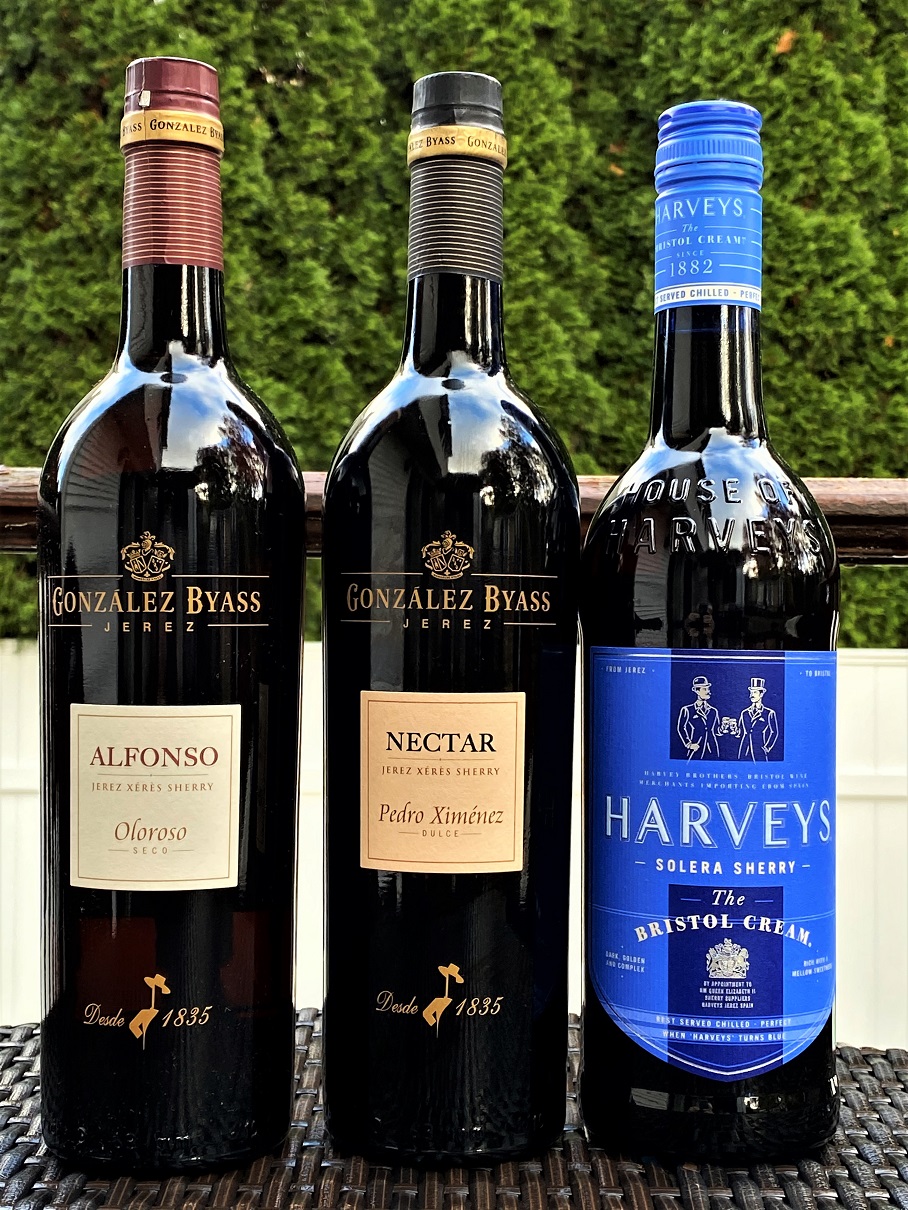
González Byass started in 1835 in Jerez de la Frontera, in the heart of the Sherry country. Now in the 5th and 6th generation, González Byass is one of the major sherry producers, combining a number of Sherry brands under one umbrella. I had three sherries from González Byass to play with the candies – let me tell you how did it go.

First, the dry wine – Gonzalez Byass Alfonso Jerez Oloroso Seco. As it is a dry wine, it expectedly didn’t work too well with most of the candies, but I found some options:
Gonzalez Byass Alfonso Jerez Oloroso Seco (18% ABV, $25, Palomino 100%, aged for 8 years in solera)
Light amber color
Hazelnuts, sapidity, herbs
Hazelnuts, clean acidity, Rosemary, beautifully complex
Worked best with Payday because of explicit saltiness – not really with Reese’s or KitKat

The bottle on the right is directly from the wine fridge and it is ready to drink – the Harveys letters are blue
I recently wrote about Harveys – after years of personal neglect, this became a gateway wine for me to warm up again to the world of Jerez. As Harveys is quite sweet but not super-sweet, it provided the best pairing option for the majority of candies.
Harveys The Bristol Cream (17.5% ABV, $20, 80% Palomino, 20% Pedro Ximénez, a blend of 7 yo Fino, Oloroso, PX and Amontillado Soleras)
Dark amber color
Light herbaceous nose, a touch of dried fruit
Dried fruit on the palate, good acidity, refreshing
Nice with Reese’s, works well with KitKat, excellent with Payday
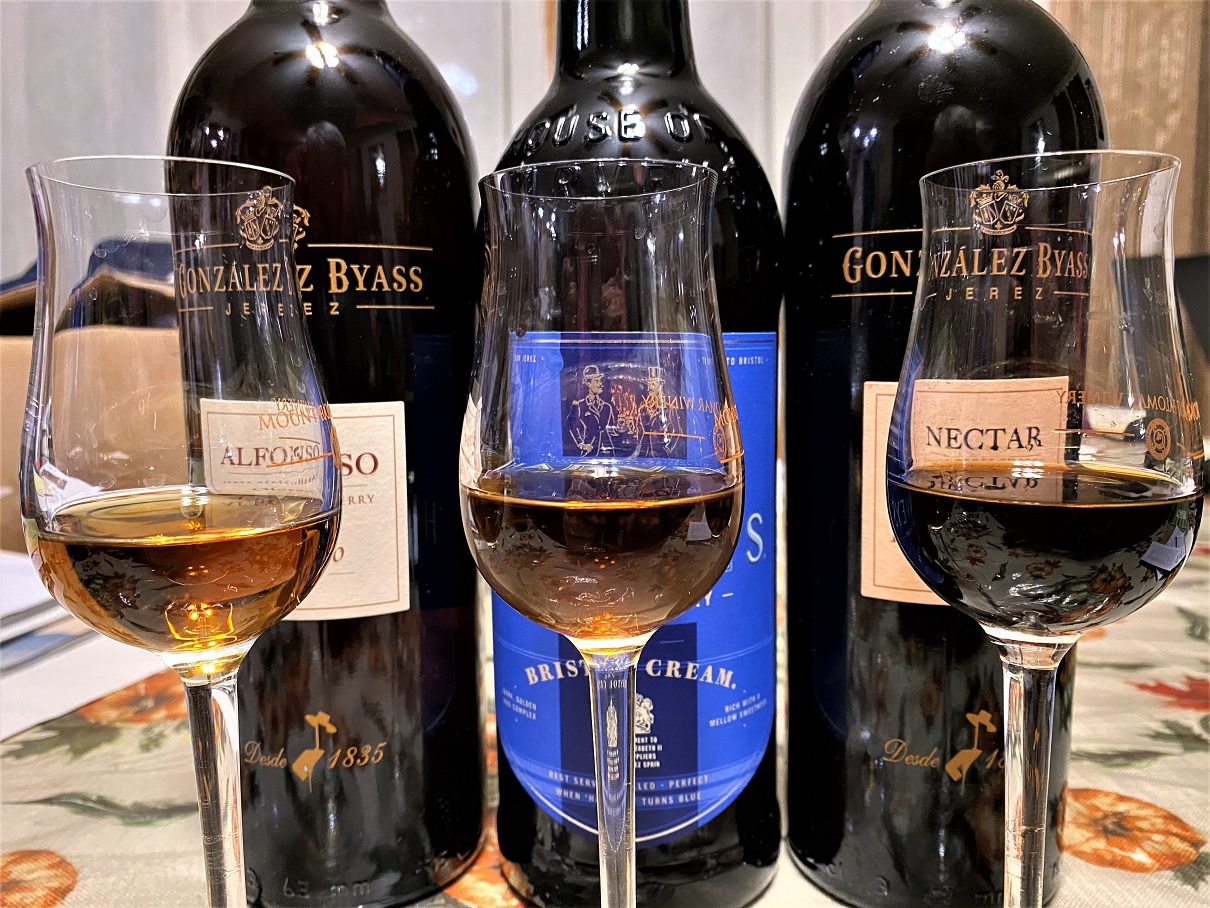
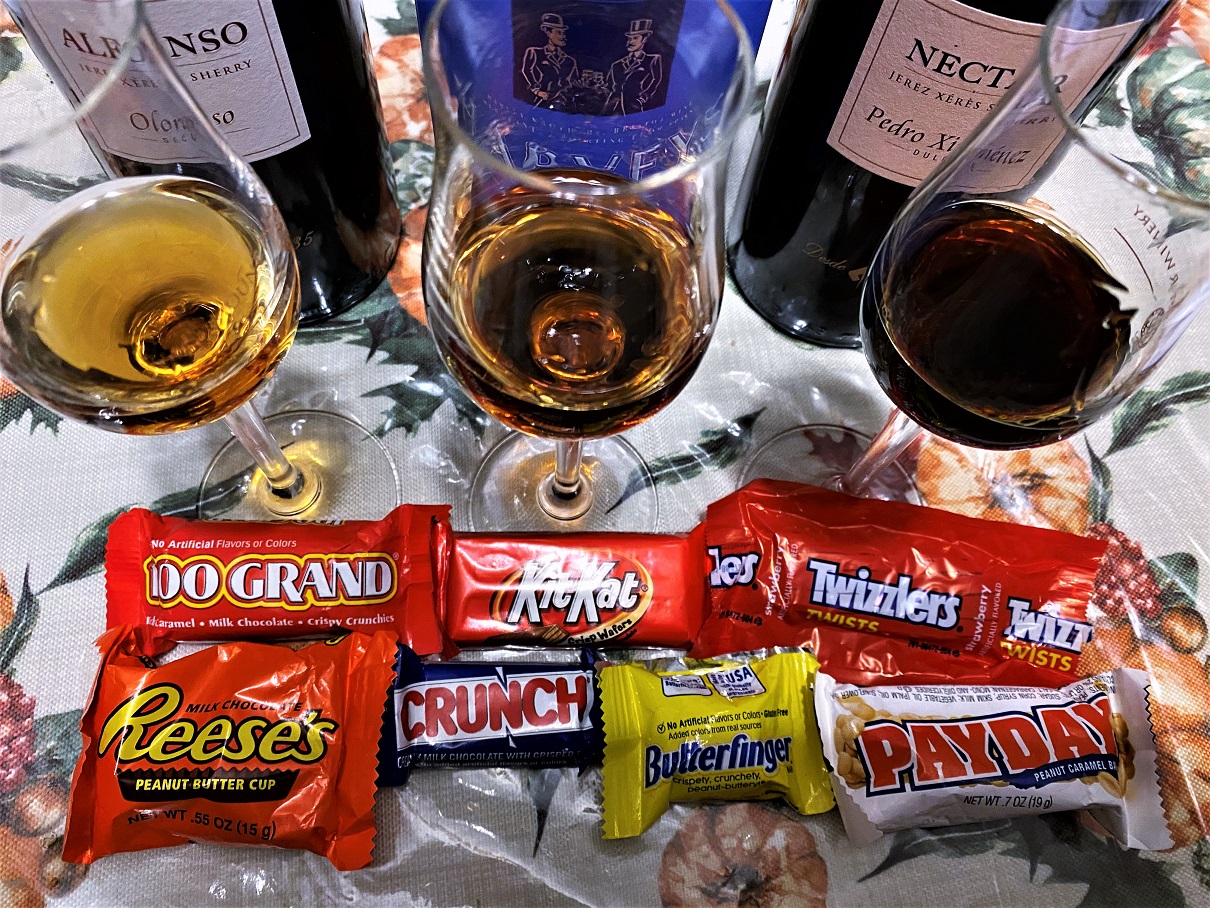
Nectar is seriously sweet wine (residual sugar of 370 grams per liter), but it is nevertheless very balance and delivers tremendous pleasure. The Pedro Ximénez (usually abbreviated as PX) is one of my most favorite dessert wines in general. The Pedro Ximénez grapes are dried on the mats for 2 weeks before pressing, losing 40% of liquid and becoming practically raisins – this explains the depth of color you can see in the picture above.
Gonzalez Byass Nectar Pedro Ximénez Dulce (15% ABV, 25%, 100% Pedro Ximénez, aged for about 8 years in solera)
Very dark amber color, almost black
Dried figs, dates, inviting.
Dried figs all the way, delicious, clean acidity on the finish, perfect balance
Great with KitKat, complements
Excellent with Reese’s, okay with Payday, Butterfinger – not so much
There you are, my friends. Don’t sweat the Halloween candies – pair them with a good Sherry. Or you know what – you can actually dump the candy – Sherry should be enough to keep you happy. Cheers!
Last Bottle Sign Up ($10 credit)




 Talk-A-Vino