Archive
Re-post: Forgotten Vines: Madeira
During 2011 I wrote a number of posts for the project called The Art Of Life Magazine – of course talking about my favorite subject, wine. The project closed and even web site is down, but as I still like the posts I wrote, so I decided to re-post them in this blog. Also, in that project, posts were grouped into mini-series, such as “Forgotten Vines” you see here – I will continue re-posting them from time to time.
Also note that the series was written for a slightly different audience – I hope none of my readers will take offense in the fact that sometimes I’m stating the obvious…
 Our first post in the Forgotten Vines series was dedicated to Jerez, a not-so-easy-to-find-but-worth-looking-for fortified wine from Spain. Continuing the series, let’s move a little bit to Spain’s west side neighbor, Portugal.
Talking about Portugal’s place on the wine map, what wine comes to mind first? Yes, of course it is Port. And while Port is single most famous Portugal wine, it is not the Port we want to talk about here (don’t worry, Port is squarely positioned in the line of “must-have” experiences, and we will talk about it later). We need to move a bit more down the map in the south-west direction, about 1000 km (600 mi) to the island of Madeira.
Madeira wine takes its name from the name of Madeira Island. History of Madeira, which started at around 15th century, is full of accidental discoveries, glory, overcoming of the hardship, raise and fall, and even love – if you are interested in the full story, you should take a look at Madeira Wine web site. In the 15th / 16th centuries, Madeira wine was created and transported in the barrels through the ocean to the far places such as India and China. It was found ( by accident, of course), that long ocean voyage improves the taste of wine compare to the original one which went into the barrel. After many trial and error experiments, it became apparent that prolonged exposure to the warm weather is the culprit, and then the method of heating the wine up to the 60C (140F) was invented. The process of heating up the wine is called Estufagem, and it is done after the wine is fermented in the oak barrels, same as any other wine – again, you can find more details online – you can find less colorful but more technical details on Wikipedia (click here). Just to give you a few more details from Madeira’s history, trade embargoes led to further improving Madeira by adding brandy spirits in order to preserve the wine. Barrels of Madeira left for prolonged time under the rain lead to development of the new style of Madeira wine, called Rainwater.
In the 18th century, Madeira was one of the most popular wines in the world, especially in England and United States. Madeira was used to toast United States Declaration of Independence, and was highly regarded as a drink of distinction. Unfortunately, first mildew and then phylloxera epidemic delivered way too powerful one-two punch, which Madeira wine industry was unable to overcome. Madeira subsided to nearly a cooking wine level, and was staying like that for the long time. Luckily, overall uptake on the wine industry throughout the world helps to revive Madeira industry, and now it is becoming possible to find a great drinking Madeira even in US – and you will see why. And I have to note that one of the great qualities of Madeira is in the fact that unlike practically any other wine, once you open a bottle of Madeira, it will stay the same more or less indefinitely, due to both Estufagem method and fortification with the spirit.
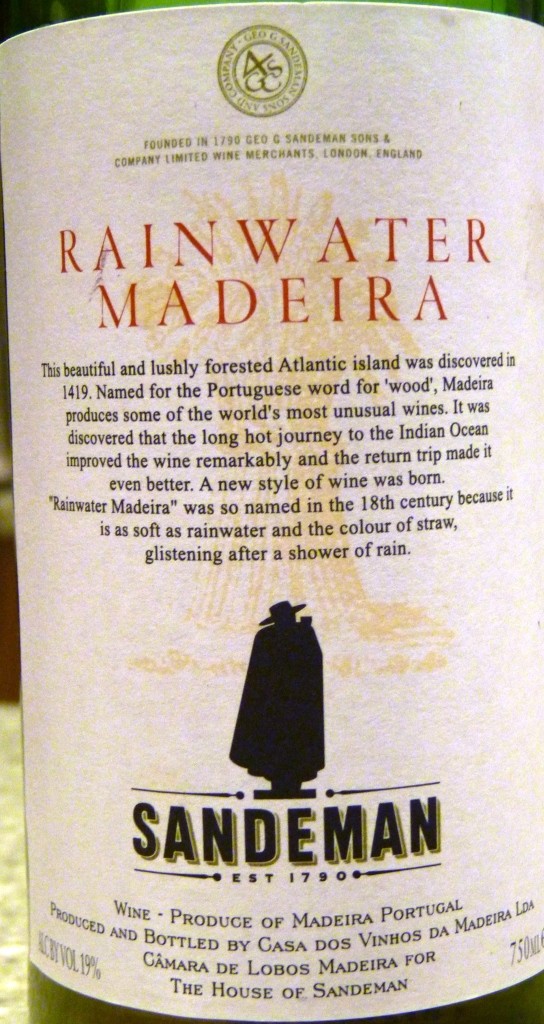
As we say here, time to open a bottle. Madeira comes in many different versions, from completely dry to the sweet. The Rainwater Madeira is somewhat of a simpler style, but still very enjoyable. This Sandeman Rainwater Madeira is deep and heavy on the nose, with hint of aged cheese and sweetness (overripe apple sweetness). On the palate, it shows the same concentration of the sweet notes, which is not really supported by acidity, so the wine comes somewhat unbalanced – however, as a desert wine to have with sharp cheese (like blue cheese, for instance), it will create a heavenly combination.
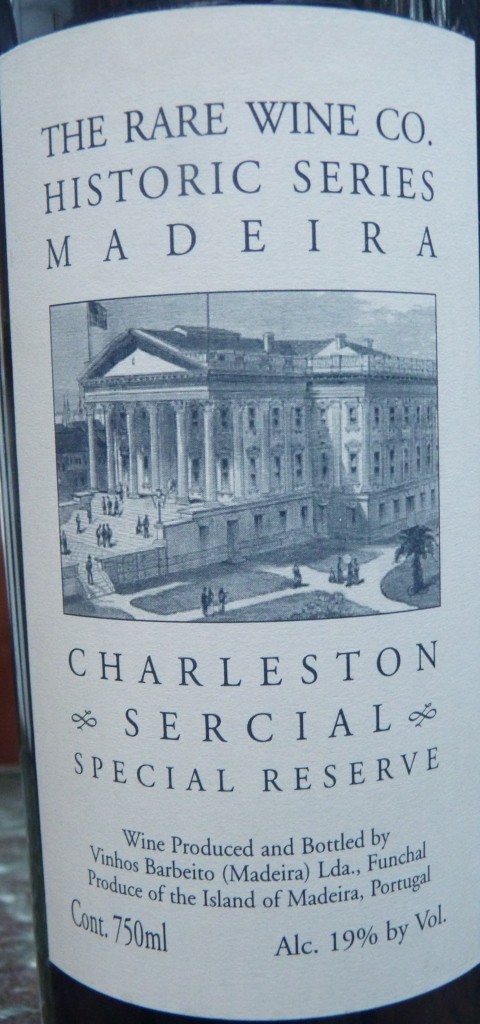 The next wine, Charleston Special Reserve Sercial is few levels up the previous wine. It comes as incredibly complex on the nose – nutty, with hint of sweetness and herbs, lots of herbs. Beautifully balanced on the palate with acidity and sweet delicate flavors of apple blending together perfectly. This Madeira has very long finish and can be used equally well before, during and after dinner – just take your pick. Definitely worth seeking.
Well, it is a great time to be a wine lover – abundance of experiences just grows daily. Now that you are empowered with the knowledge of Jerez and Madeira, it is time for personal encounter – find the bottle and enjoy it tonight!
Forgotten Vines: Jerez, a.k.a Sherry
During 2011 I wrote a number of posts for the project called The Art Of Life Magazine – of course talking about my favorite subject, wine. The project closed and even web site is down, but as I still like the posts I wrote, so I decided to re-post them in this blog. Also, in that project, posts were grouped into mini-series, such as “Forgotten Vines” you see here – I will continue re-posting them from time to time.
Also, note that the series was written for a slightly different audience – I hope none of my readers will take offense in the fact that sometimes I’m stating the obvious…
 I hope by now you learned a lot of secrets of the wine world – from great Rioja to second labels, French Sparkling wines, and wines of Languedoc. While there are still lots of secrets to discover, let’s take a break and change the subject a little bit. After all, we are on the hunt for unique experiences, aren’t we? What do you say if we will look for something which is hard to find? Would that be unique enough? Keep in mind, we are still talking about wines, not UFOs.
What will make a wine “hard to find”? Limited production would be one of the major factors – if there are only 100 cases made, and wine is good, of course, it will be hard to find (needless to say it will be also appropriately reflected in the price). Putting limited availability and cult factors aside, what if we simply forgot that some kind of wine exists, would it be then “hard to find”? Of course, it would. And believe it or not, with all the glut of wines coming into the world daily, there are still wines which are almost forgotten, which now became quite rare and “hard to find”. Let’s name the names: I’m talking about wines which had their glory days in the 16th through 19th centuries, and these wines are Jerez (also known as Sherry), Madeira and Marsala (yes, of course, you know Chicken Marsala dish, but Marsala was there first, before someone decided to cook chicken in it). Let’s explore those “forgotten vines”, as they are really worth it – but you will be the judge.
Is there something common between those wines except that they are forgotten? Yes, they are all fortified wines (to complete the list of fortified wines we need to add here Port – but Port will be a subject of a separate discussion), which means that they all had an addition of pure alcohol which acted as a preservative and affected the way the wine will be aging. Fortification also allowed the wines to be transported over long distances in the barrels, keeping them fresh.
Now, let’s extend the pleasure. Let’s talk about these wines one by one. And for no particular reason, let’s start with Jerez. Jerez wines come from Spain, and of course, the name is linked to the name of the place – a town called Jerez de la Frontera. The history of the wine goes all the way back to the beginning of the past millennia, with glory years spanning from 16th to the end of 19th century – an epidemic of phylloxera, a grapevine louse, devastated the region in 1894, and Jerez wines never made it all the way back. If you are interested in learning more about the history of the region, you can take a look at Wikipedia pages.
Jerez ( which is also often called Sherry) is produced mainly from the grapes called Palomino Fino and Pedro Ximenes, and it can be made in a variety of styles from very light to dark and heavy. There are a few interesting notes about making the Jerez. First, as we mentioned before, the wine is fortified with the addition of the brandy. As brandy added after the wine is fermented, typically Jerez is a dry wine – sweet versions are produced by blending in some sweet wines. Once brandy is added, Jerez goes through the aging process, which is called the Solera method. In this process, the wine is aging in the system of the barrels, where the youngest wine goes into the first barrel; however, when the new wine is added, some of the wine which was already aged for a while is moved to the next barrel. Such a process can continue for many decades, so the resulting wine obtains a tremendous level of complexity. Depending on the level of alcohol in the wine, a thin layer of yeast called Flor can develop in the barrels, protecting the wine from oxygen and allowing it to mellow out and obtain a very low level of acidity.
Enough talkin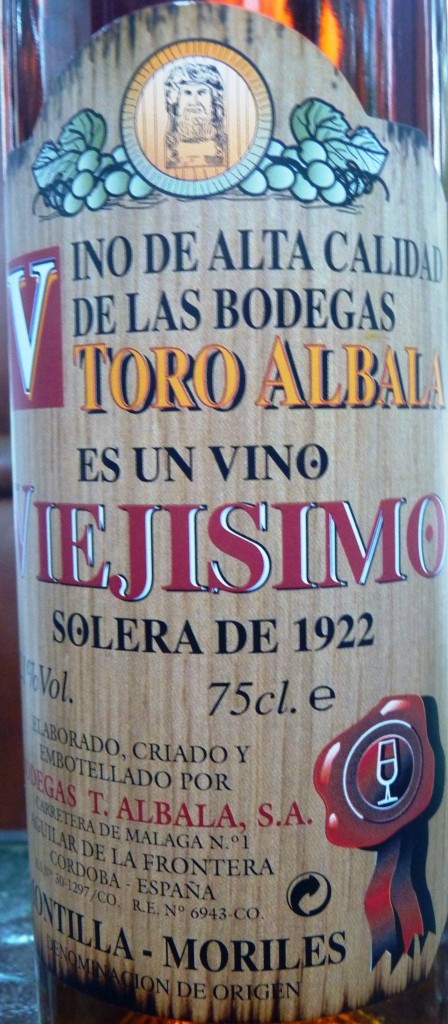 g – time to open a bottle. Let’s start with Don Gonzalo Oloroso VOS Jerez. This wine had been aged for at least 20 years (this is what VOS means). Very complex nose of nuts and caramel. Salty and gamey on the palate, with a hint of applewood smoke and again great complexity. This wine would perfectly complement the cheese and cured meats, but it is very pleasant to sip by itself.
The next wine, Bodegas Toro Albalo VieJisimo Solera de 1922 comes from a region called Montilla-Morales, which is neighboring Jerez and also can produce wines of Jerez style. Are you paying attention? 1922! It is not every day you can drink the wine which is almost 90 years old, and not go broke after the first sip (this wine costs less than $40/bottle). It is even better when such a wine gives you great pleasure. This wine shows an exceptional nose of immense complexity and pronounced herbs, such as oregano and sage. Similar saltiness on the palate as the previous wine, with excellent acidity, very balanced and complex at the same time, and very dry.
I hope I told you enough to make you want to try Jerez – you should definitely do it, and I’m sure you will not regret. And if you will be blown away – please let the rest of us know – as we would want the same. Cheers!
Rioja for the Stars, Or Don’t Miss The Oscars on Sunday!
And the Best Picture Award goes to … what, do you really think I know? Even if I do, I’m not telling… But – I know what you should be sipping while watching all the glitz and glamor – Rioja!
Why Rioja? May be because this is one of my all time most favorite wines? Okay, yeah, never mind. Then may be because Rioja is ready for the big Oscar celebration?
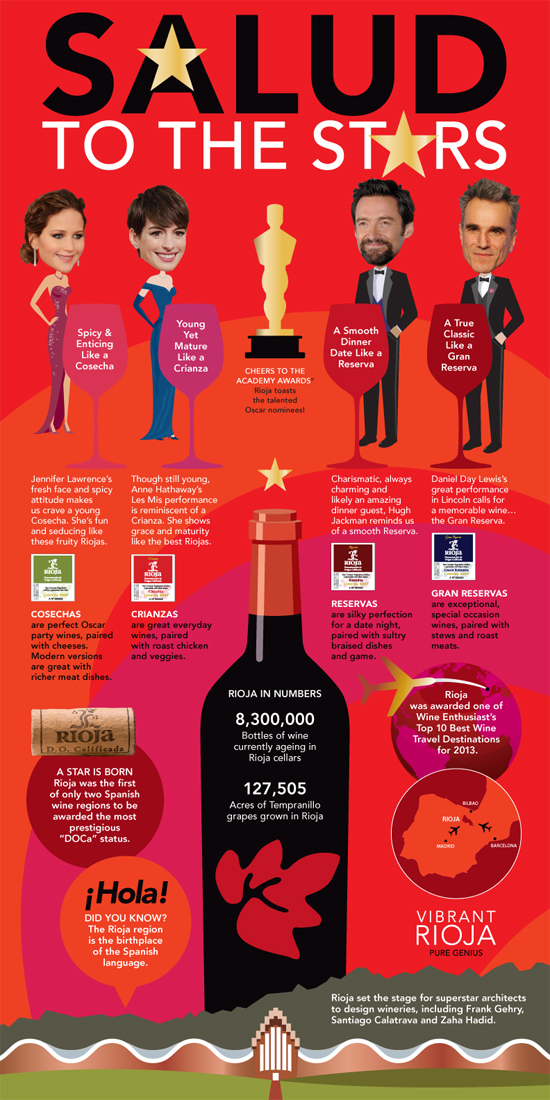
Yep, here is tons of information about Rioja and your favorite actors – all courtesy of Vibrant Rioja!
You can also mark your winners in advance and play the game of “Told you so!” later on with your friends:

Here is the link if you want to download an actual PDF file.
So, what are you going to open? I heard that 1996 Lopez de Heredia Viña Tondonia White Reserva should be able to help you to get through the opening ceremony, and 2001 La Rioja Alta Vina Ardanza Reserva Especial will pair perfectly with the “Best Movie” award, but then again, it is your choice.
No matter what you will end up doing, I hope you got my point – Rioja is always appropriate, no matter what the occasion. Open the bottle and enjoy! Cheers!
Re-post: Best Hidden Secrets Of The Wine World: Wines of Languedoc
During 2011 I wrote a number of posts for the project called The Art Of Life Magazine – of course talking about my favorite subject, wine. The project closed and even web site is down, but as I still like the posts I wrote, so I decided to re-post them in this blog. Also, in that project, posts were grouped into mini-series, such as “Best Hidden Secrets” you see here – I will continue re-posting them from time to time.
Also note that the series was written for a slightly different audience – I hope none of my readers will take offense in the fact that sometimes I’m stating the obvious…
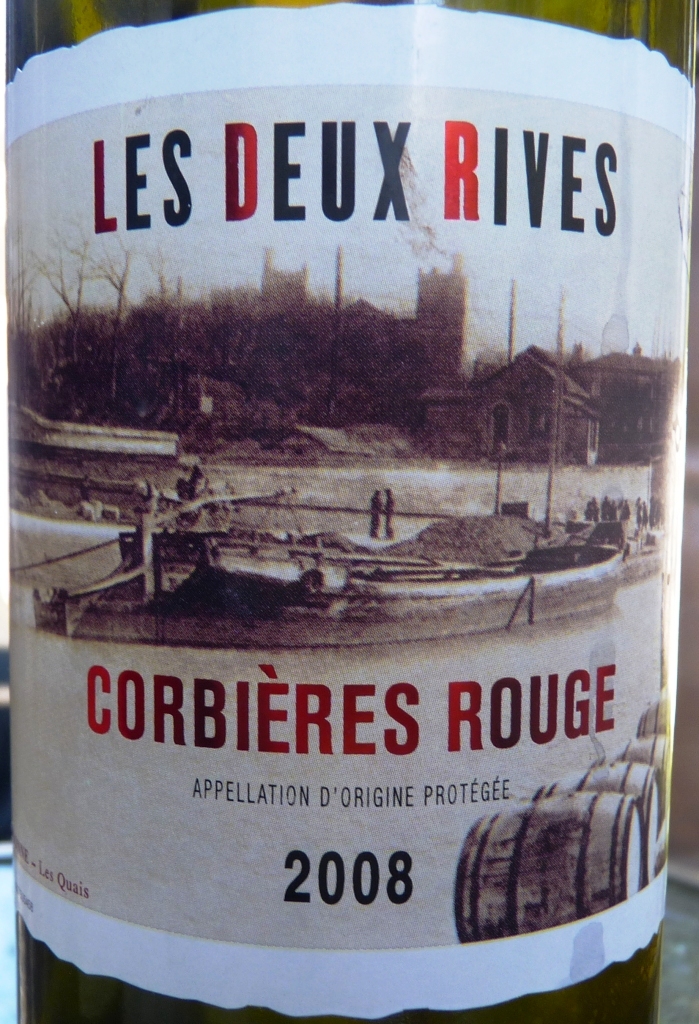 Continuing our “Best Secrets” series, we are going to … France again. However, we are going all the way down south, to the region called Languedoc-Roussillon (in most of the cases it is simply call Languedoc).
Why France again, and moreover, what is so special about Languedoc? First, don’t worry, we are just getting started in our “experiences” journey, we will be going all over the world, I promise. Now, to answer the question “why Languedoc”, let me simply give you some facts. Languedoc-Roussillon is single biggest wine making region in the world! It also produces one third of all the wines made in France. I think this is not bad for the beginning.
One of the great things about Languedoc wines is that while many other regions in France are strictly limited in the grape varieties used in the winemaking in that particular region, Languedoc is not. All white wines from Burgundy are made out of Chardonnay, and all the reds are from Pinot Noir. Red Bordeaux are predominantly made out of Cabernet Sauvignon and Merlot grapes – yes, with the addition of some other grapes, but in any case you will not find any wine which proudly specifies Bordeaux on the label and made out of Pinot Noir or Syrah. Languedoc is different – a lot more grapes can be used in the wine production throughout the region. Red wines can be made out of Cabernet Sauvignon, Merlot, Syrah, Grenache, Mourvedre, Cinsault and Carignan, whites can be made out of Chardonnay, Sauvignon Blanc, Chenin Blanc, Marsanne, Roussanne, Viognier, plus many other red and white grapes can be used in the wine production (for more information about the region, you can always look into Wiki page).
If you are surprised that you didn’t know about Languedoc wines before – don’t be, I’m sure you had Languedoc wines unknowingly. How come? A lot of it is in the labels. Have you seen “Vin de Pays d’Oc” on the labels of wine you were drinking? “Vin d Pays” literally means “Country wines” – level of quality which is one step above “vin de table” table wines, but less than level of AOC wines. But if Vin de Pays can be used with many wines, when you see “d’Oc” added to that it squarely points to Languedoc (last two letters of the region’s name) – if you think about it, I’m sure you had those wines before. There are other well known appellations within Languedoc, such as Corbieres, Minervois and St. Chinian, plus a number of other lesser known appellations. I want to point out that we already discussed one of the Languedoc wines in this “secrets” series of posts when we talked about French Sparkling Wines. That Blanquette de Limoux is produced in the Limoux appellation which is part of the Languedoc region (by the way, if you still didn’t give that Blanquette de Limoux a try, you should do it quickly!).
So what is so “secret” about Languedoc wines? Languedoc is one of the most dynamic wine making regions in France – new appellations created, rules are changing. Languedoc winemakers have more freedom to create, and they are making more and more of the high quality age-worthy wines. And because those wines are not as well known to the public as many others, they happen to represent a great value. Let me give you few examples.
 Let’s start with white: 2009 Domaine de L’Olivier Chardonnay Pays d’Oc. If you like Chardonnay, this is the wine to try. Very nice and very clean, great fruit expression – tropical fruits, touch of grapefruit, all with balancing and refreshing acidity and barely noticeable tannins. Great wine which delivers a lot of pleasure. To put things even in a better prospective I would like to note that retail price of this wine is about US $10 – you would have to get to the $30-$40 price range for Burgundy or California to achieve the same level of experience.
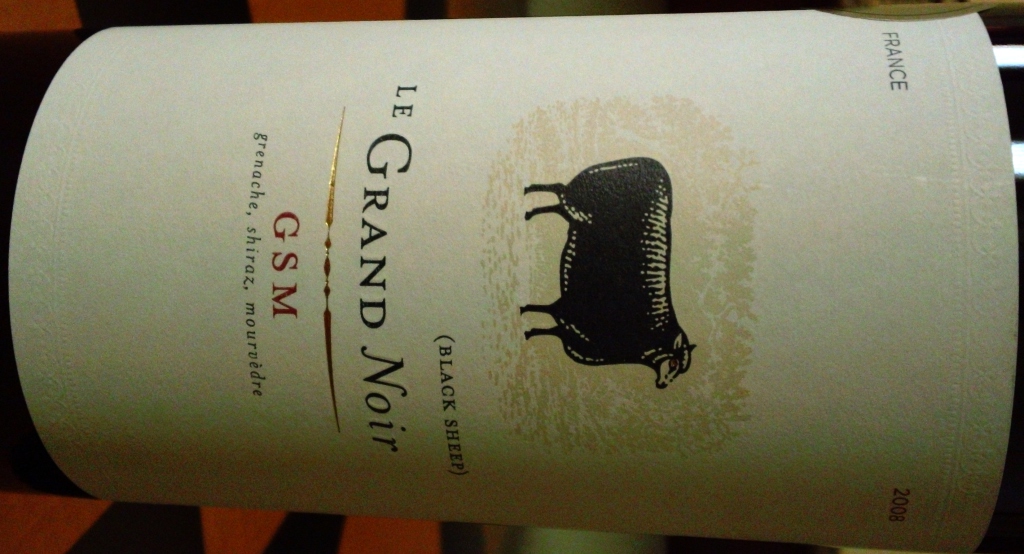 Another example – 2008 Black Sheep Le Grand Noir GSM blend from Minervois. As label suggests, this wine is made out of Grenache, Shiraz and Mourvedre grapes (which is a classic combination of the Rhone grapes). Again with the price tag of about US$10, this is a great deal. Very soft and gently layered fruit, soft tannins are present, but unobtrusive. Good acidity complements this wine well, delivering nice and pleasant experience. Again, considering the price, this is the wine to look for.
Now that you learned yet another secret, it is time to put that knowledge to the practical use. Did you have Rioja wine yet, or may be tried some second label? Now you know about Languedoc wines, so “to do” list just got longer. Go find the bottle and experience this wine tonight – and let me know if your experience was worth reading this article. And just to tell you about what’s ahead, the next time we will talk about something else – will take a break in the secrets series. For now I can only tell you that this “something else” is quite rare and almost forgotten – and I will tell you more the next time we meet…
Vinitaly and Slow Wine Tastings – Part 3, Wine, And More Wine
 In the first two posts I gave you some interesting stats and shared our experience with wine seminars at Vinitaly. Now, it is time to actually talk about wines.
Those of you who follow this blog for the while know by now that I mostly talk about wines with the pictures, adding a few words here and there, mostly of a very “excited” nature. If you are looking for the detailed report, I can give you two great references – blog posts by Stefano and John M. Fodera, both covering wines and wineries very extensively.
I have to thank Stefano again, as if it would not be for him, I would be pointlessly wondering from a table to a table, and surely would miss some of the gems. Stefano had a plan, and I gladly followed.
Again, if you are looking for systematic representation of wines, based on the regions and styles, [please refer to the two blog posts I mentioned above. I will just share my personal highlights. Oh, and one side note. It is so happened that I’m writing this last post about Vinitaly after attending another Italian wine event, Gambero Rosso’s Tri Bicchiery. While in general I had no complaints about organization of Vinitaly event, now I can also say that it was organized incomparably better that the Tri Bicchiery event – expect to hear my rant with the Tri Bicchiery post.
Enough words. Here are mostly pictures, with some comments, in the order of the regions appearing in the show guide.
Piedmont

Damilano Barolo
Damilano presented two outstanding Barolos – 2008 Damilano Barolo Lecinquevigne was beautiful, round and easy to drink. 2008 Damilano Barolo Cannubi was exactly what classic Barolo is – powerful, dense, mouth-puckering, but very enjoyable at the same time.
G.D. Vajra presented 2008 G.D Vajra Barolo Bricco Delle Viole, very delicate wine for the Barolo style overall. The wine underwent a 40 days maceration (quite long) and was bottled in the summer of 2012.
Two beautiful wines from Elvio Cogno:
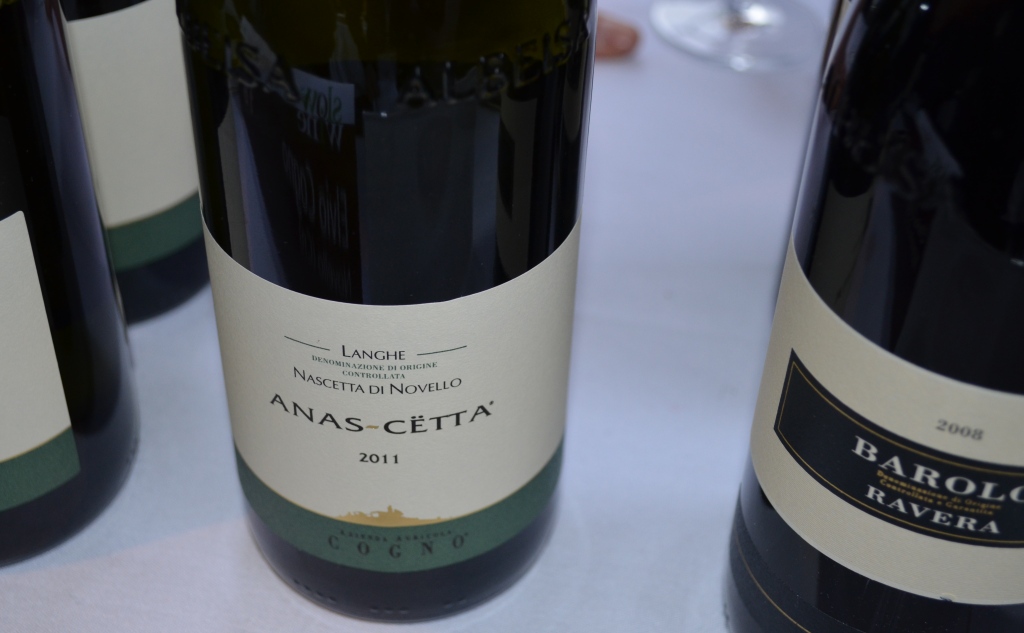
Elvio Cogno Nascetta
2011 Elvio Cogno Langhe Nascetta Anas-Cetta – bright white fruit on the nose, same on the palate, very balanced and refreshing.
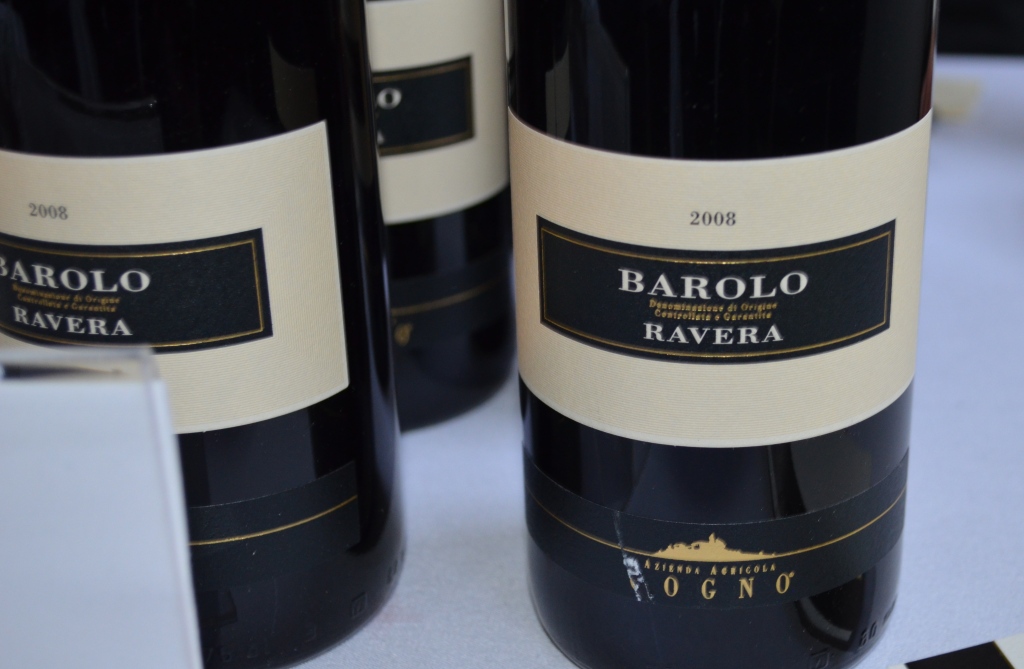
Elvio Cogno Barolo Ravera
2008 Elvio Cogno Barolo Ravera – so far it seems that 2008 vintage of Barolo is great across the board and the wines are very approachable from the beginning – perfect taste profile of Barolo (plums, minerality, earthiness) with the shot of tannins in the finish.
Liguria
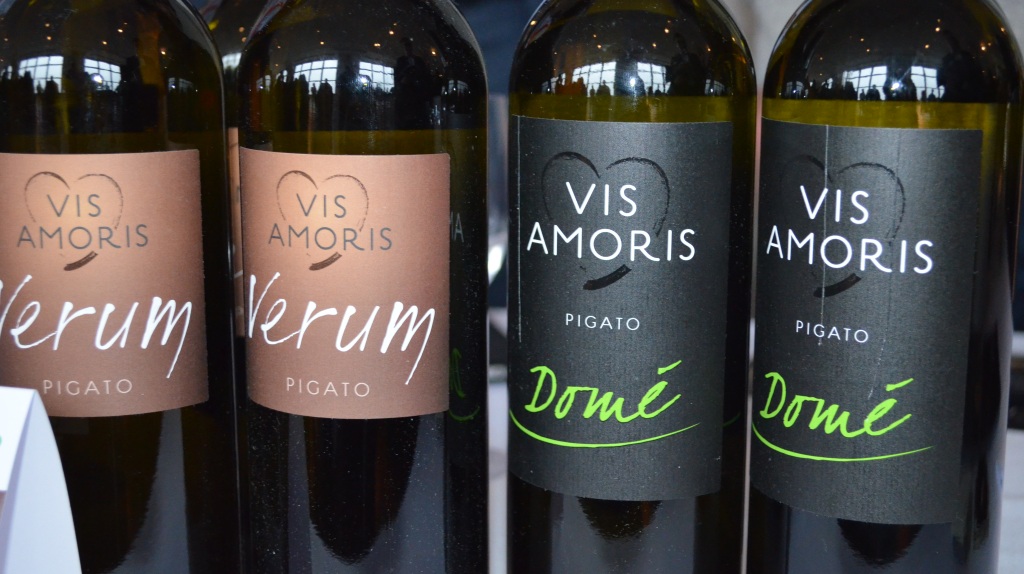
VisAmoris
I can’t tell you which of the two wines from Vis Amoris I liked more. 2011 Vis Amoris Rivera Ligure di Ponente Pigato Dome – beautiful, toned down fruit, soft and opulent, more in style of Rhone whites, very refreshing and balanced. 2011 Vis Amoris Rivera Ligure di Ponente Pigato Verum was a touch bigger and brighter, showing very soft tannins without being fermented in oak. Truly two wonderful white wines.
Lombardia

Ar PePe Nebbiolo
Two excellent Nebbiolo-based wines from Ar.Pe.Pe – 2001 Ar Pe Pe Valtellina Superopre Sassella Rocce Rosse Riserva and 2005 Ar Pe Pe Valtellina Superopre Sassella Ultimi Raggi. The 2001 Riserva was one of the most delicate expressions of Nebbiolo I ever tasted, but it was perfectly balanced and very enjoyable.
Veneto
Veneto = Amarone – okay, never mind, this is just my personal biased statement, Veneto is actually a home to many great wines outside of Amarone. But – once you taste Trabucchi wines, Amarone will be on your mind.

Trabucchi Valpolicella
While Trabucchi had only 2 wines listed in the book, they brought a substantial line of wines to the tasting. 2003 Trabucchi “Terre del Cereolo” Valpolicella Superiore DOC was probably the best Valpolicella I ever tasted – round, supple dark fruit expression, dark chocolate undertones, very balanced. 2007 Trabucchi d’Illasi Terra di San Colombano Valpolicella Superiore DOC, was very comparable, concentrated, round and again very balanced.

Trabucchi Amarone
While 2004 Trabucchi Amarone della Valpolicella DOC and 2006 Trabucchi d’Illasi Amarone Della Valpolicella were very good, 2004 Trabucchi d’Illasi Amarone Della Valpolicella Cent’Anni was spectacular. Perfectly balanced, without any “over the top” fruit, showing dry fruit flavors on the nose, and showing full bodied, balanced and very polished wine on the palate. Definitely a highlight of the event.
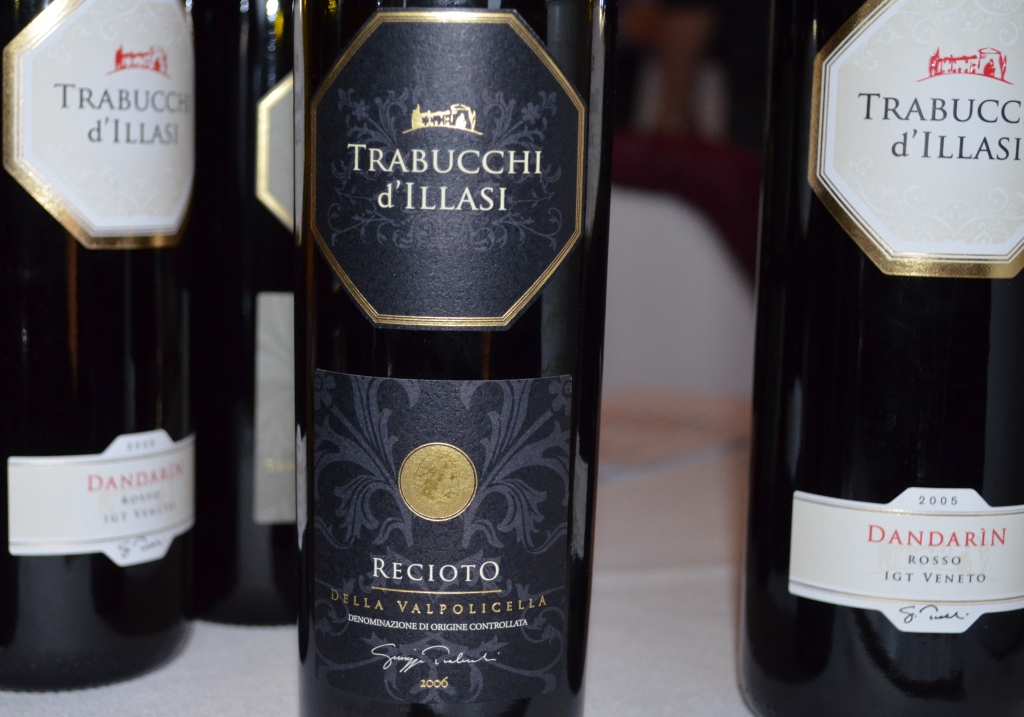
Trabucchi Recioto and Dandarin
2005 Trabucchi d’Illasi Dandarin Rosso Veneto IGT was quite unusual – a blend of traditional Valpolicella varieties Corvina, Corvinone and Rondinella, with 30% of Teroldego and Syrah – slightly different flavor profile compare to Amarone, but quite powerful and expressive. One of the true gems of the day was 2006 Trabucchi d’Illasi Recioto Della Valpolicella – grapes for this wine were dried for 6 month ( typical length of Appasimento process for Amarone wines is 110 – 120 days, i.e. up to 4 month). Tremendous concentration of the dried fruit ( figs, raisins), supported but vibrant acidity – you have to try this wine to believe it!
Before we leave Veneto, a quick stop in Soave, at Pieropan winery:
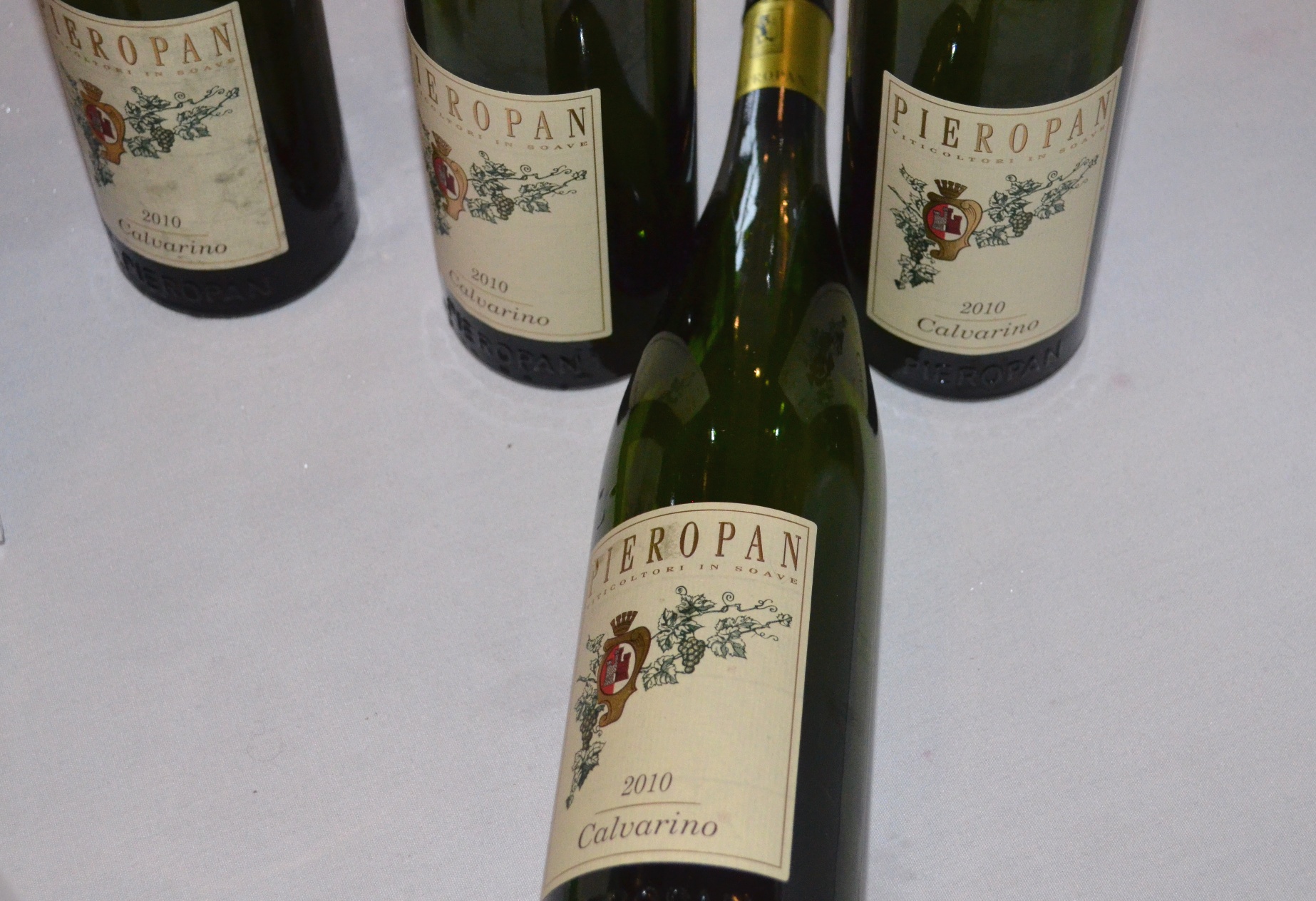
Pieropan Calvarino
2010 Leonido Pieropan Soave Classico Calvarino is a single vineyard blend of Garganega and Trebbiano – showing excellent minerality both on the nose and the palate, very round and refreshing.

Pieropan La Rocca
2010 Leonido Pieropan Soave Classico La Rocca is another single vineyard wine, 100% Garganega, showing more restrained fruit than the previous wine, as well as a touch of butter on the palate. Definitely a very nice wine.
Friuli Venezia Giulia
Le Vigne Di Zamo
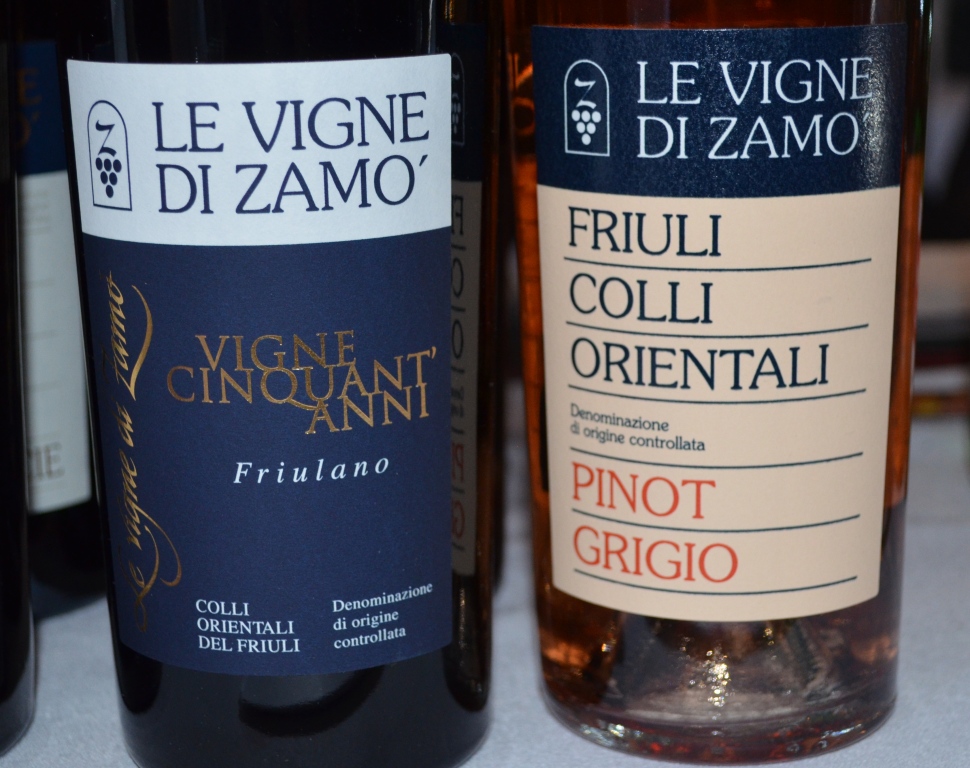
Two beautiful wines from Le Vigne di Zamo in Friuli. 2010 Le Vigne di Zamo Colli Orientali del Friuli Friulano Vigne Cinquant’Anni ( that was one long name) had perfect nose of raisins, and supple, round white fruit on the palate, medium body and balancing acidity. 2011 Le Vigne di Zamo Colli Orientali del Friuli Pinot Grigio was one of the best Pinot Grigio wines I tasted in a while ( yes, I don’t drink too many of them), with good fruit and touch of minerality.
Toscana
Caberlot trilogy
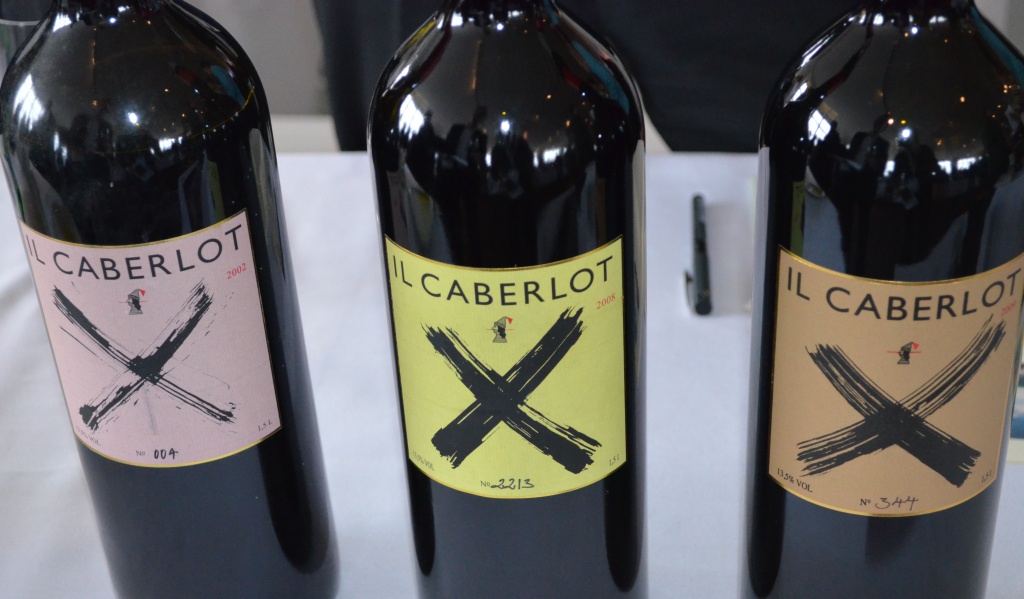
Podere Il Carnasciale makes only about 3,200 bottles a year, all in the magnum size. All made out of the grape called Caberlot, which is an officially recognized hybrid of Cabernet Franc and Merlot. All Magnums. And all magnificent. We tasted 2009, 2008 and 2004 vintages of Podere Il Carnasciale Caberlot – both 2009 and 2008 were somewhat similar, showing perfect trait of Cabernet Franc green profile with fresh raspberries. And 2002 was whole another story:

Caberlot 2002
Take a look at the number at the bottom of the label – we were drinking the bottle number 4! Tobacco, pepper, dark fruit and perfect complexity – a Wow wine without any doubts. I wish the wines would be a bit more affordable… May be someone wants to get me a present?
Umbria
Tabarrini Montefaloc Sagrantino
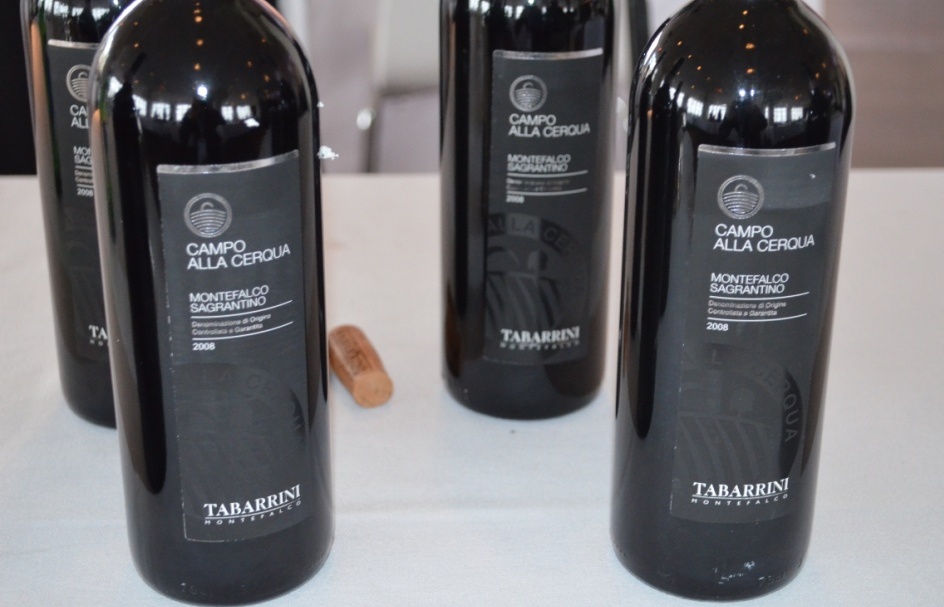
We tasted two great wines from Tabarrini (yes, I know, I’m abusing “great” and “beautiful” in this post – but hey, these are the highlights – if I don’t think the wine was great, I’m not going to bother you with the detail…). 2010 Tabarrini Adarmando is made out of Trebbiano Spoletino, which is very different from the Trebbiano di Soave – Trebbiano Spoletino grows in the huge vines and it is a very late ripening variety (beginning of November). The wine had perfect acidity and bright fruit, somewhat of a citrus profile – very enjoyable. Next we tried 2008 Tabarrini Sagrantino di Montefalco Campo Alla Cerqua – perfect power, dark fruit, very balanced.
Marche
Villa Bucci
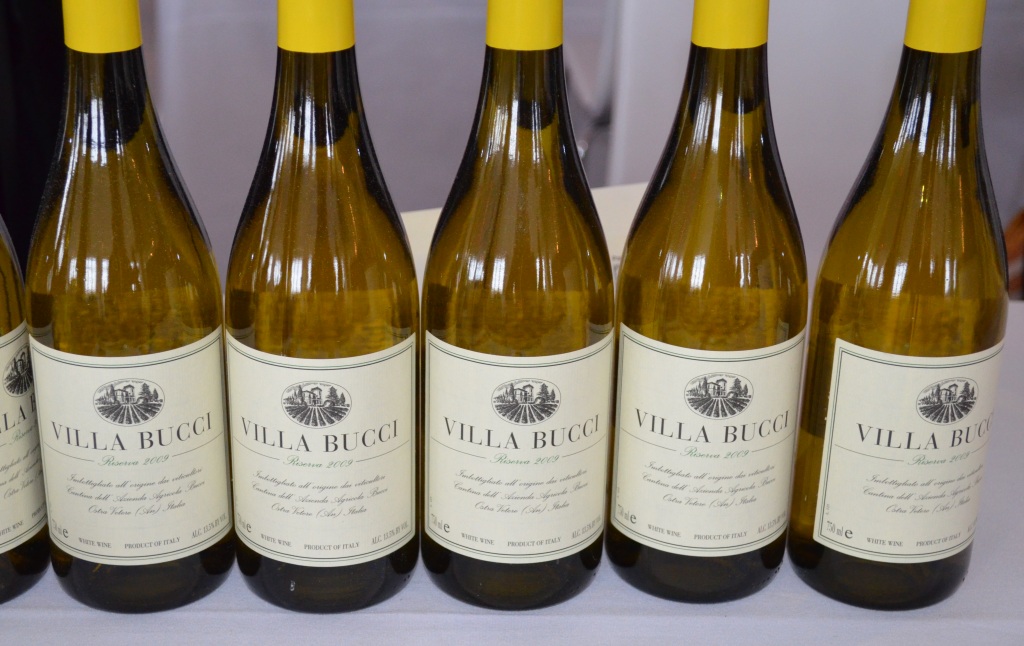
There were quite a few very good wines coming from Marche. 2010 Marotti Campi Lacrima di Morro D’Alba Superiore Orginolo was excellent, very open and food frendly ( or shall we say, food-craving), with very subtle warm fruit nuances. 2009 Villa Bucci Verdicchio dei Lastelli di Jesi Classico Riserva had perfect fruit on the nose and it was very light and refreshing. 2009 Villa Bucci Verdicchio dei Lastelli di Jesi Superiore had very good depth and clear fruit expression. Both Villa Bucci wines are expected to age very well.
Lazio
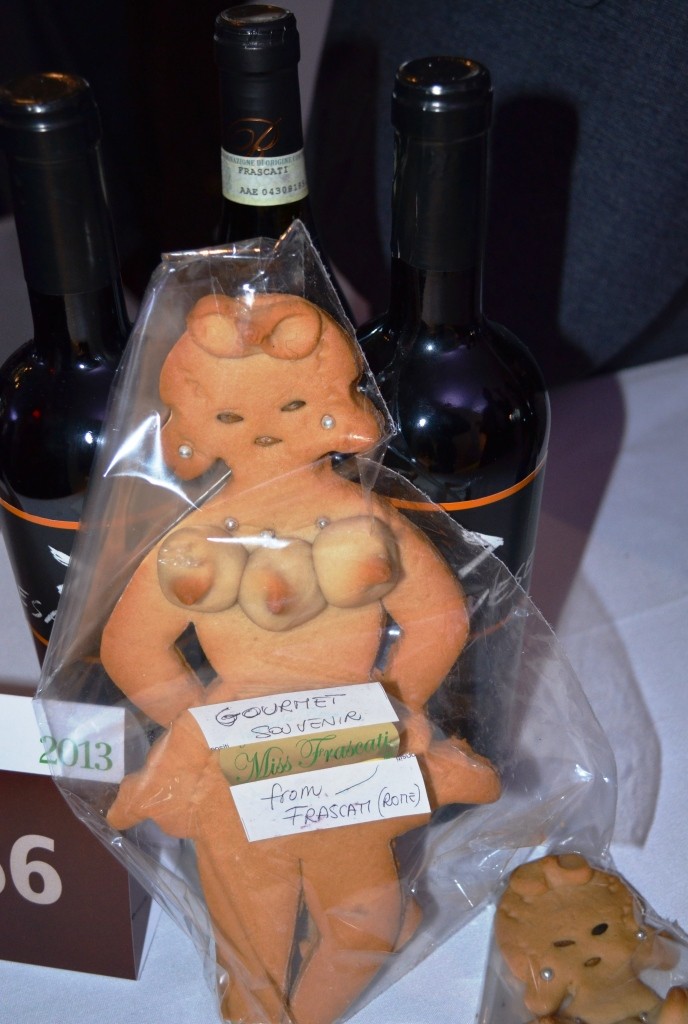
Frascati Girl
First, we found a very friendly girl.
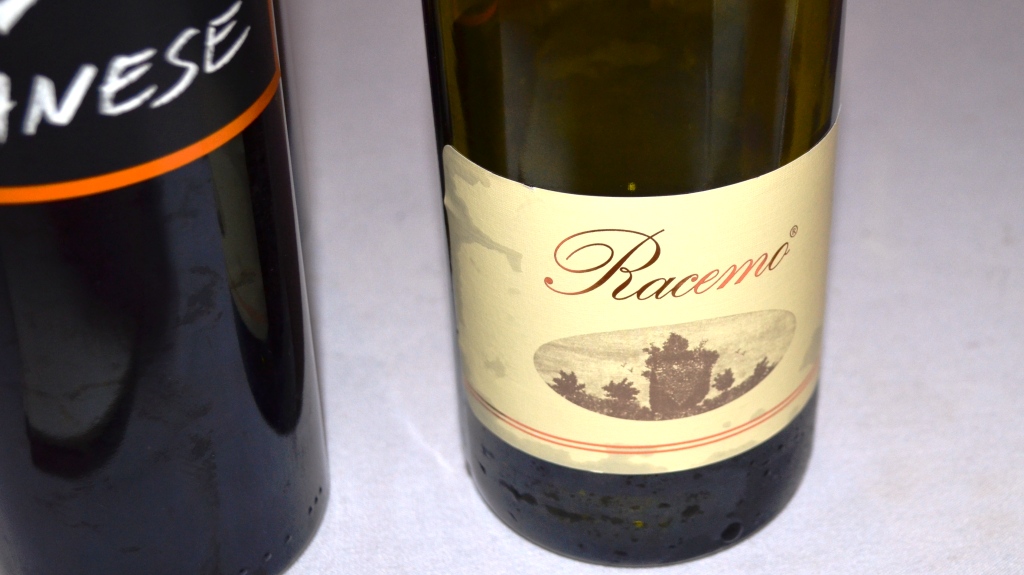
Frascati Racemo
Then we found an excellent white wine 2011 L’Olivella Frascati Superiore Racemo. This wine is a blend of malvasia puntinata, malvasia del Lazio, malvasia di Candia, tgrebbiano and bellone – the wine was very round, with excellent acidity and white fruit.
Abruzzo
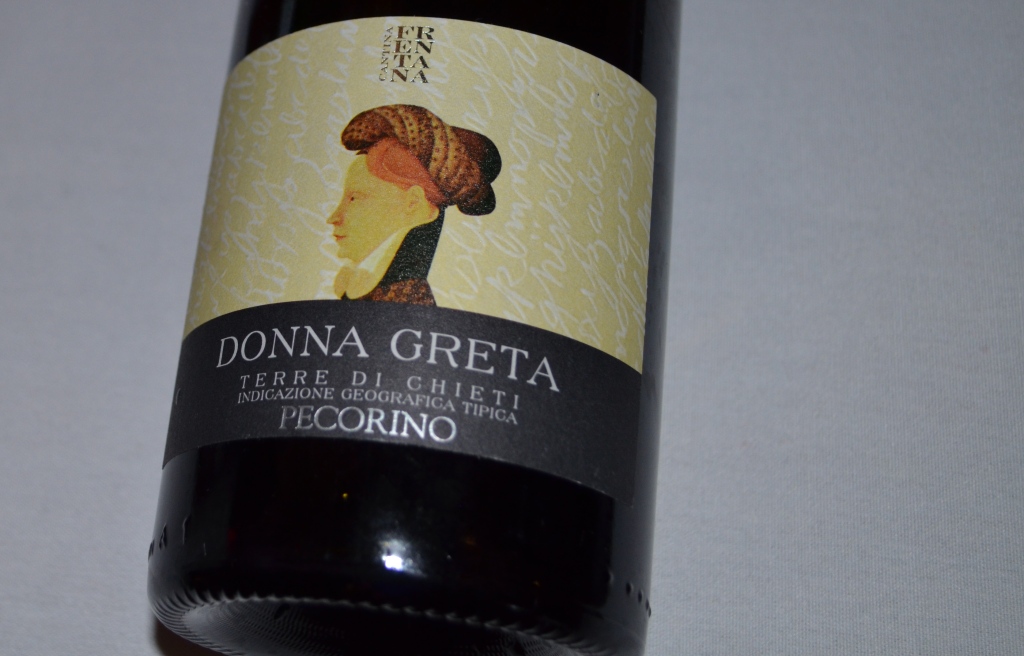
Donna Greto Pecorino
2010 Cantina Frentana Pecorino Donna Greta is 100% Pecorino. Very long maceration ( 8 month) allows to achieve a very nice complexity. White fruit, touch of minerality, good balance.
Sicilia

Planeta wines
Last, but not least for this post – Planeta from Sicilia, one of the best Italian producers overall. 2010 Planeta Cerasuolo di Vittoria Classico Dorilli – beautiful nose, fresh fruit, strawberries on the nose and the palate. 2011 Planeta La Segreta had very nice nose of dark fruit, and perfect dark fruit expression on the palate. 2008 Planeta Santa Cecilia was soft and approachable, with nice soft fruit.
Aren’t you tired yet to look at all these pictures and enjoy all those wines vicariously? There were lots more of excellent wines presented at the event – but we have to call it a post. That’s all I have for my Vinitaly and Slow Wine report, hope you got the idea of what was happening at the event. The next event post I will be writing about Gambero Rosso, and I believe it will be even more difficult that this one. Until that time – cheers!
National ‘Drink Wine’ Day
As you might know, I’m following blog called Foodimentary for quite some time – it is fascinating to see all those food holidays celebrated literally every day.
It appears that today’s celebration is very close to near and dear subject of this very blog, hence the re-post.
Happy Drink Wine Day, everyone. Cheers!
Even in the Wine Blog There is a Place for a Little Beer
While all the wine lovers agree (feel free to smack me if you disagree) that we are currently living through the wine revolution, where more and better wines are available from and in more place around the world, the same sentiment applies to the beer lovers. More and better and different beers are available to the beer aficionados throughout the world, coming from everywhere in the world. There are many liquor stores advertising the fact that they have multiple thousands of different beers in stock – no questions that the beer revolution is here.
Two weeks ago I had an opportunity to catch a glimpse of that beer revolution myself – my friend Zak had to taste a bunch of new beers for his Cost Less Wines store, and I happened to be around at the same time (lucky occasion). We tasted through a dozen of beers, one literally better than the other – and below you will find pictures and my notes. Here is also a disclaimer – while I can describe the wine in words to some degree, I can’t describe beer – at all. So below are mostly pictures, with some minimal words – but I will at least tell you whether I liked the beer or not.

Our full line of beers for tasting
I will give you my notes to match the pictures – but no, we didn’t taste the beers in that order – sweet ginger beer at the beginning of tasting is a bit much… I also made an effort to give you links for additional information for every beer. Here we go:

Full Sail Nut Brown Ale, Full Sail Brewing, Hood River, Oregon – excellent, very round, smooth.
Pandora’s Bock, Breckenridge Brewery, Colorado – beautiful color in the glass, touch of caramel on the palate.
Crabbie’s Original Alcoholic Ginger Beer, Crabbie’s, Scotland – ginger candy, very soft, smooth, refreshing, pretty much a ginger ale with alcohol.
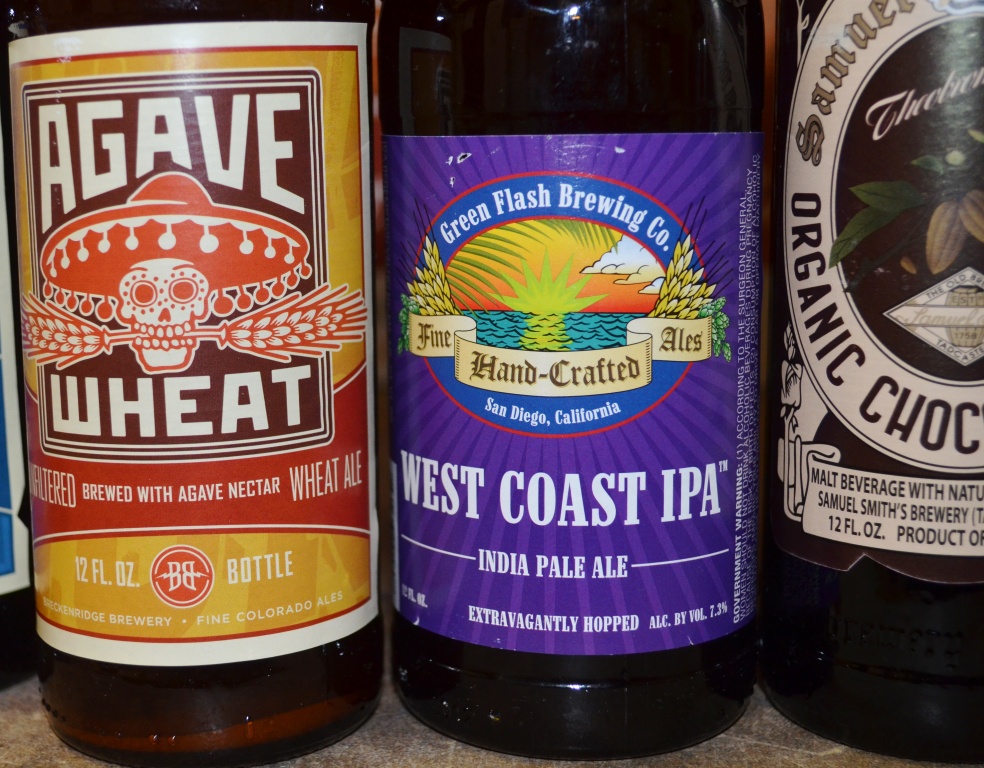
Agave Wheat, Breckenridge Brewery, Colorado – sweet, light, similar to Belgium beer, refreshing, touch nutty.
West Coast IPA™ India Pale Ale, Green Flash Brewery, San Diego, CA – (99 out of 100 points by RateBeer) hoppy, touch bitter at the end, very round.

Samuel Smith’s Organic Chocolate Stout, Samuel Smith Old Brewery, Tadcaster, England – there was four of us, four guys tasting this beer – you should’ve heard a simultaneous foodgasm (moan, scream, whatever) coming from all four guys! This was a pure chocolate on the nose, and liquid chocolate on the palate. I don’t know why this is called beer – this is just something else. Perfect!
Russian Imperial Stout, Otter Creek Brewing, Middlebury, Vermont – in the glass, looks like motor oil. On the palate – this is coffee, not beer! A wow beer ( if you like coffee)!

Session Premium Lager, Full Sail Brewing, Hood River, Oregon – excellent beer – light, refreshing, wheat style
Session Black Lager, Full Sail Brewing, Hood River, Oregon– tobacco on the nose, light, hint of coffee and chocolate on the palate. One of the lightest lagers I ever had, excellent.

Bengali Tiger, Sixpoint Brewery, Brooklyn, New York – very perfumy, with orange and spices on the palate. Very elegant.
The Crisp, Sixpoint Brewery, Brooklyn, New York – excellent beer. A touch of citrus, light, creamy.
Sweet Action, Sixpoint Brewery, Brooklyn, New York – touch of sweetness, simple, orange zest, hint of anise at the finish.
3Beans, Sixpoint Brewery, Brooklyn, New York – Perfectly delicate coffee drink. Just wow.
That’s all I have for you for today. This was a great tasting, with many wow beers, but what is even better, there was not a single dull beer in the group, which is very impressive. Welcome to the beer revolution. Cheers!
Vinitaly and Slow Wine Tastings – Part 2, Wine Seminars
This is the second post about my experience at Vinitaly and Slow Wine 2013 in New York. In the first post I only gave you some interesting stats. Now, it is time to actually talk about wines.
Attending big wine tasting is great, wine is everywhere, and lots of it – at the same time, it is also very challenging. You can’t really assess wine methodically, it is more of a “swirl (carefully), sniff, sip, suck air, spit” – in case you wonder, “swallow” is typically not the part of the process, otherwise your tasting will be very, very short. After “spit” goes “write a word, may be two or three”, and move on, either to next wine or to the next table. No, of course I’m not complaining, just explaining that as usual for this type of my “tasting posts” there will be lots of pictures, and a few words.
We – oh yes, let me explain “we” – I spent all of the time at the event with Stefano of Flora’s Table fame (by the way, Stefano also just started the new blog called Clicks & Corks – be sure to check it out). Stefano is a wealth of knowledge and a pleasure to be around – if it would not be for him, I’m sure I would miss out on a number of gems at this tasting.
Now, let’s start again . We spent most of the time in the Slow Wine section of the event, with the exception of two wine Master Classes and a few wineries in the actual Vinitaly section. Let me start from the seminars, and then we will talk about other wines (probably in yet another post).
The first Master Class was a vertical tasting of Nino Negri ‘5 Stelle’ Sfursat di Valtellina DOCG, a wine made out of Nebbiolo grape. Both Stefano and myself took care of pre-registering for this seminar (when I came to register, I got one of the last 3 seats). No matter. In addition to registration, program also mentioned that Master Classes are first come first serve events. So, do you think our registration helped us? Yep, you got it – not really. When we arrived about 15 minutes before the starting time, we were told that the room is full and there are no spaces left. Well, based on the fact that we had registered, we ignored the guy who was trying to stop us from getting inside of the room. But the room was full. No seats. And it is not that you need just seat – you also need a place for 6 glasses in front of you. I was witnessing a futile attempt of one of the organizers to remove two people who were sitting down and had no tickets. Nope, that was not happening. So when one wants to taste wine, this is what the one wants, right? Luckily for us, the place had very wide window seals. Stand by the window, get 6 glasses, ask for the wines to be poured. Actually, I have to say that service staff was super nice and super accommodating – we all got tasting placemats and we all got wine. Here are few pictures:


Just look at this bottle… Unfortunately, the wine was oxidized. But the bottle was way too cool.
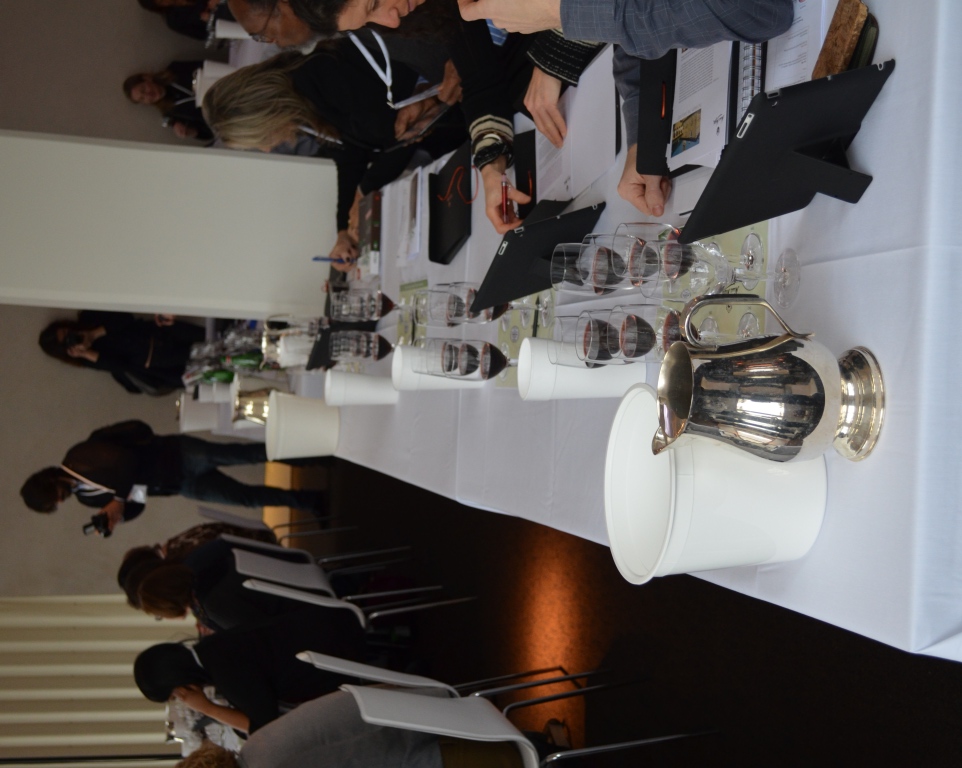
No tickets, but hey, who need tickets when it is first come first serve…
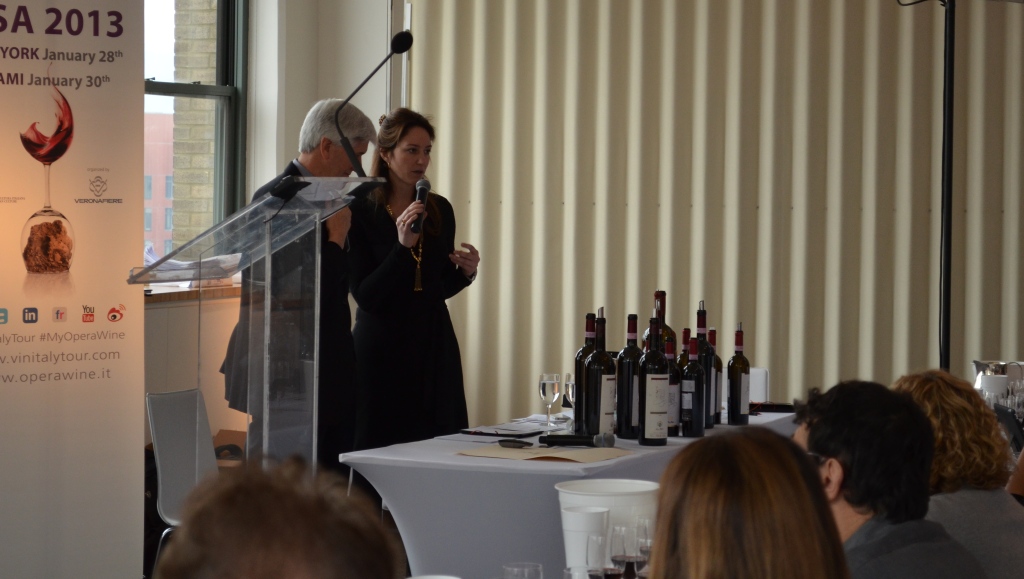
Casimiro Maule, Oenologist at Nino Negri, presents the wines. In 2007, he was awarded the title of “Winemaker of the Year” by Gambero Rosso
Nino Negri winery started in 1897 in the Valtellina region of Lombardy, in the area of Alps close to the Switzerland. This location makes harvesting of the grapes very difficult – actually, a helicopter is used nowadays to transport crates with grapes from the vineyard to the winery – here is a short video in case you want to see how the harvest looks like:
Nino Negri estate makes many different wines out of Nebbiolo grape. The wines we tasted, ‘5 Stelle’ Sfursat, are only made in the best years, and they are done in the style similar to Amarone. After grapes are harvested, they are dried outside for 100 days before they are pressed. During these 100 days, grapes are sorted a few times, and all the grapes which don’t cut it are used to produce some other wines. After 100 days of drying the grapes are pressed with subsequent long maceration, and then aged for 18 month in new French oak barriques and 6 month in the bottle. Note that all these wines are not for the faint at heart – they boast 15% – 16% ABV.

Just look at the beautiful color
Here are the notes for the wines we tasted, in the order we proceeded:
2009 – Prunes, brick dust on the nose, pretty green on the palate, very light for Nebbiolo, good minerality, short finish. Better on the second try, but too watery. Probably needs time.
2007 – According to the winemaker, 2007 was a great year. But – this bottle was oxidized. Some prunes on the palate, tasted more like a dry sherry than a normal wine.
2004 – this year had low yield, and drying season was very difficult. But the wine had nice power, good minerality, good tannins, long finish.
2002 – Prunes on the nose, with some raisins, soft, round, dark roasted fruit on the palate, tobacco, savory herbaceous notes, great balance, overall very nice.
2001 – Perfect beauty! Supple, round, with only a hint of dried fruits on the nose, perfectly balanced, really a outstanding wine. Hell with the rest of the tasting – need a full glass of this one to enjoy. Best of tasting.
1997 – This wine was as good as 2001 – more herbaceous notes than fruit, but perfectly elegant. Dried fruit on the nose (more than the previous wine), graphite and tobacco notes on the palate. Great complexity, balance and elegance. Borderline better than 2001 ( wait, didn’t I just called 2001 “best of tasting” – yeah, I always have trouble with making up my mind…)
All in all, tasting through the vertical of Nino Negri ‘5 Stelle’ Sfursat wines was a special experience and I’m grateful to organizers for making it happen – the beauty of the wines overweight the logistical challenges.
At the end of the day, we attended another seminar, this one dedicated to the wines made on Volcanic soils of Italy. We were preregistered, at this point knew what to expect, ready for a fight and this time got the seats.
If you look at the map below (maps were provided as part of the seminar):

Map of Italy’s Volcanic Wines
there are many volcanoes all over Italy, including even some of the active ones, like Etna in Sicily. Volcanic environments are uniquely different for all the things growing, vines included, and this whole “volcanic wines” project is dedicated to researching the effect of the volcanic soils on the resulting wines. It is also interesting to note that at this point, the whole project is only dedicated to white wines ( and I was hoping to taste some reds).
All together, we tasted 9 white wines:
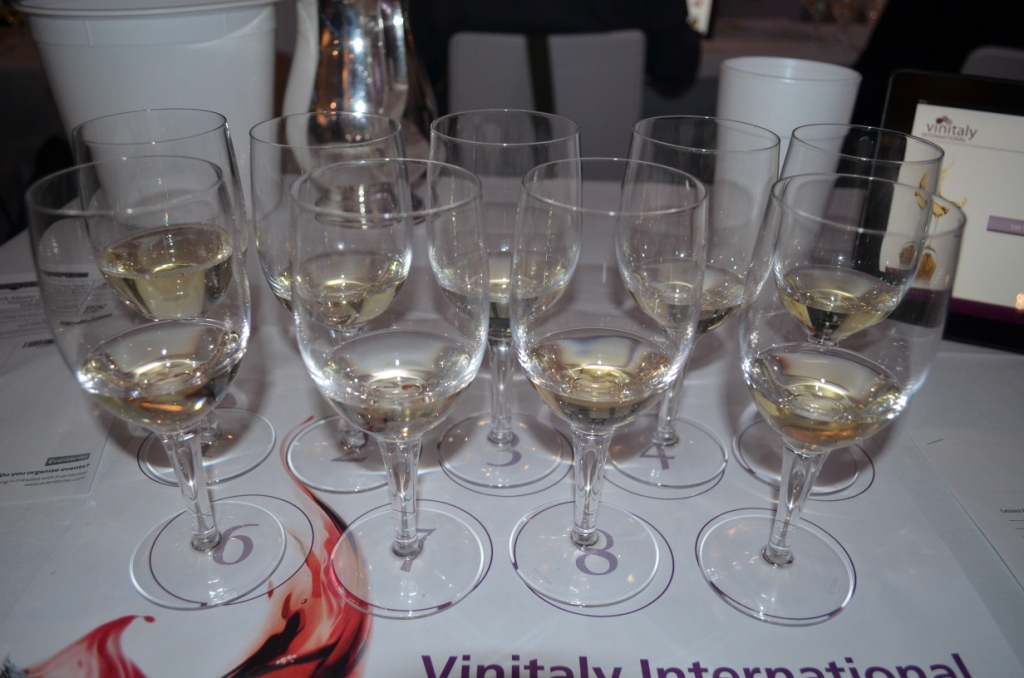
Overall, I wouldn’t say that I was super impressed with the wines. Some wines were better than the others, but there were no OMG moments. Here are the notes for my favorites:
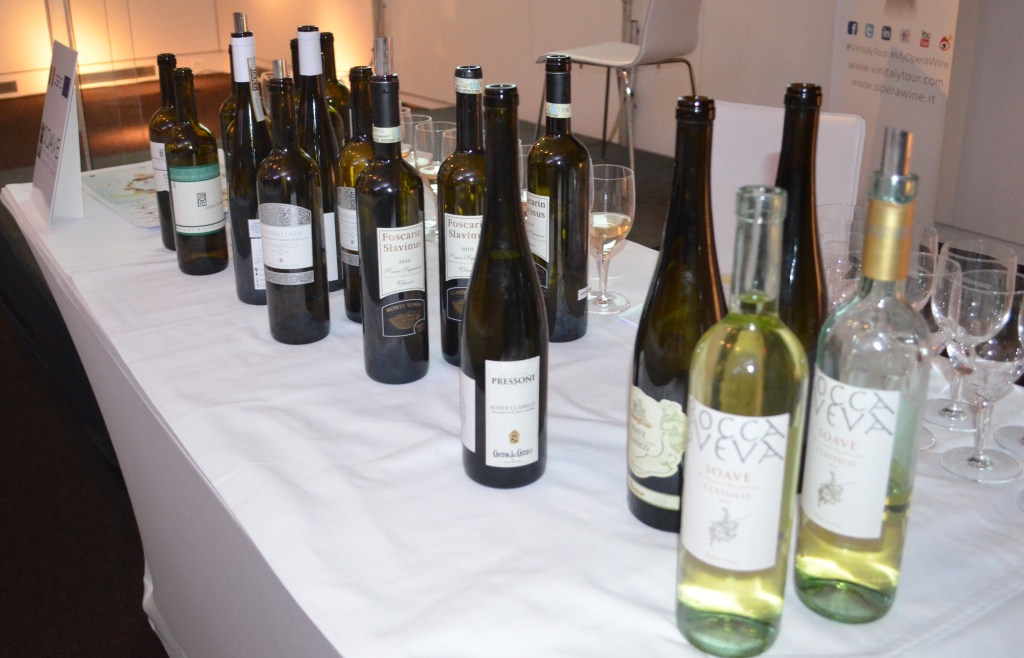
Azienda Marcato – Lessini Durello Metodo Classico 36 Mesi NV – this was the only sparkling wine in the tasting, and it was outstanding. A blend of 85% Durello, 10% Chardonnay, 5% Pinot Nero, 12% ABV. Apple and toasted bread on the nose, nice minerality, smell of granite. Perfect minerality on the palate, very dry. Excellent.
2011 Cantina del Castello – DOC Soave Classico “Pressoni” – a blend of 80% Garganega, 20% Trebbiano di Soave, 13.5% ABV. Nice nose of lemon, green apple, good acidity. White apple and pear on the palate, good acidity, nice lemony aftertaste.
2011 Barone di Villagrande – Etna Bianco Superiore – 100% Carricante. Nice nose with minerality and some saltiness, very dry on the palate with pineapple aftertaste.
That concludes the part 2 of the Vinitaly experience. In the part 3, I will (finally) tell you about the wonderful wines we experienced at the event. Cheers!
Re-post: Affordable Luxuries of the Wine World: Sweet Wines
During 2011 I wrote a number of posts for the project called The Art Of Life Magazine – of course talking about my favorite subject, wine. The project closed and even web site is down, but as I still like the posts I wrote, I decided to re-post them in this blog. Also, in that project, posts were grouped into mini-series, such as “Affordable Luxuries” you see here – I will continue re-posting them from time to time.
Also note that the series was written for a slightly different audience – I hope none of my readers will take offense in the fact that sometimes I’m stating the obvious. Ahh, and I think this post is very appropriate today, as we celebrate Valentine’s Day – Happy Valentine’s Day to all!
 We are continuing our “affordable luxuries” series. In the previous posts we were comparing Hermitage and Crozes-Hermitage wines, as well as Grenache and Garnacha. Today we will talk about sweet wines.
First, let’s make sure we are all on the same page. We will be talking about real wines, made out of grapes, with soul and heart – this excludes white zinfandel, as well as blueberry, peach and coconut concoctions from further consideration. Second, I deliberately avoid using the word “dessert” wines, as that creates and expectations that we will be talking about wines which should be served only after a meal – where sweet wines are just the wines which have a lot of sweetness in the taste – but they are balanced and interesting enough to be actually served at any time during the meal or by themselves. I remember how Kevin Zraly, famous American wine educator, described his dining experience in Sauternes, area in France making some of the best in the world sweet wines: while he was expecting Sauternes to be served only with desserts, quite on contrary, they were served as aperitif, with an appetizer and entrée course, and then, of course, with dessert.
If you look at the sweet wines in general, you will find wide variety of styles, with differences a lot more pronounced than, for instance, between classic Burgundy and fruit forward California Zinfandel. It would make it a fun project to classify the sweet wines of the world (hmmm, note to self), however, it would never fit in the format of the entertaining blog post, so let’s defer this for some other time, and let’s just lay down some basic facts.
Essentially, sweet wines can be made from absolutely any grape used in the wine making. There are some grape varieties, like Muscat, which are known to develop very high sugar levels and thus used more often in production of the sweet wines. Nevertheless, grapes are always harvested when they contain enough sugar to be made into the wine of particular style, whether it is Rioja, or Burgundy, or California Cabernet Sauvignon or anything else. Once grapes are harvested, they undergo a process of fermentation – that’s when sugars are converted by the yeast into the alcohol.
What makes wine to taste sweet is the amount of sugar left in the wine after fermentation is complete (it is called “residual sugar”). So in a very simplistic way, when we make sweet wine, we want grapes to have as much sugar as possible – which can be achieved by late harvesting the grapes, or by drying grapes under the sun, almost making them into raisins before the fermentation (this process is called passito), or by letting grapes to shrivel on the vine as the result of noble rot, or by letting grapes freeze on the vine and then making wine out of the frozen grapes. Whew, so much information in a single sentence! If you want to actually learn more about the same in a slow down form, take a look at the Wikipedia article on the sweet wines.
In order to retain sugar in the wine, we need to stop fermentation before all the sugar is converted into alcohol. There are two ways to do so. One is by adding pure alcohol, which kills all the leftover yeast and therefore fermentation stops. This is how Port wines are made, for instance. Another way to stop fermentation is by lowering the temperature of the liquid, which will technically achieve the same result as adding the alcohol (yeast stops converting sugars into alcohol), and then filtering the yeast out. This is how Riesling wines are made, for instance. There will be of course a difference in the amount of alcohol in the resulting wines – Ports typically have 19%, and Rieslings typically are ranging from 7% to 12%.
Now, after all this technical details, we are supposed to be talking about affordable luxuries, right? We learn to like (and crave) sugar from the moment we are born, so it is very easy to like sweet wines. But – it is not maple syrup we are talking about – it is a wine after all. The idea of a great wine is that it gives us pleasure – and pleasure of wine is dependent on the balance, whatever the balance would mean to you. Therefore, sweet wines are not been an exception at all – we want them to be balanced, same as any other wine we enjoy drinking. You want the balance of sweetness, acidity, fruit, minerality and alcohol – in other words, you want sweet wines to have sense of place and being well made.
Same as for any other wines, you will find sweet wines at full range of prices. Legendary Chateau d’Yquem from Sauternes will get you anywhere from $600 to $2000 per bottle, depending on the year and availability. At the same time, you can enjoy Haut Charmes Sauternes (Number 12 on my 2010 Top Dozen wines list) for $17. You can find Ruby Port for about $10 ( not necessarily very enjoyable), going to Rozes over 40 years old Port for about $100 (amazing, Number 2 on my 2010 Top Dozen) and then to the Taylor Fladgate Scion 155 years old (dream) at $3000 per bottle – if you can find it, of course.
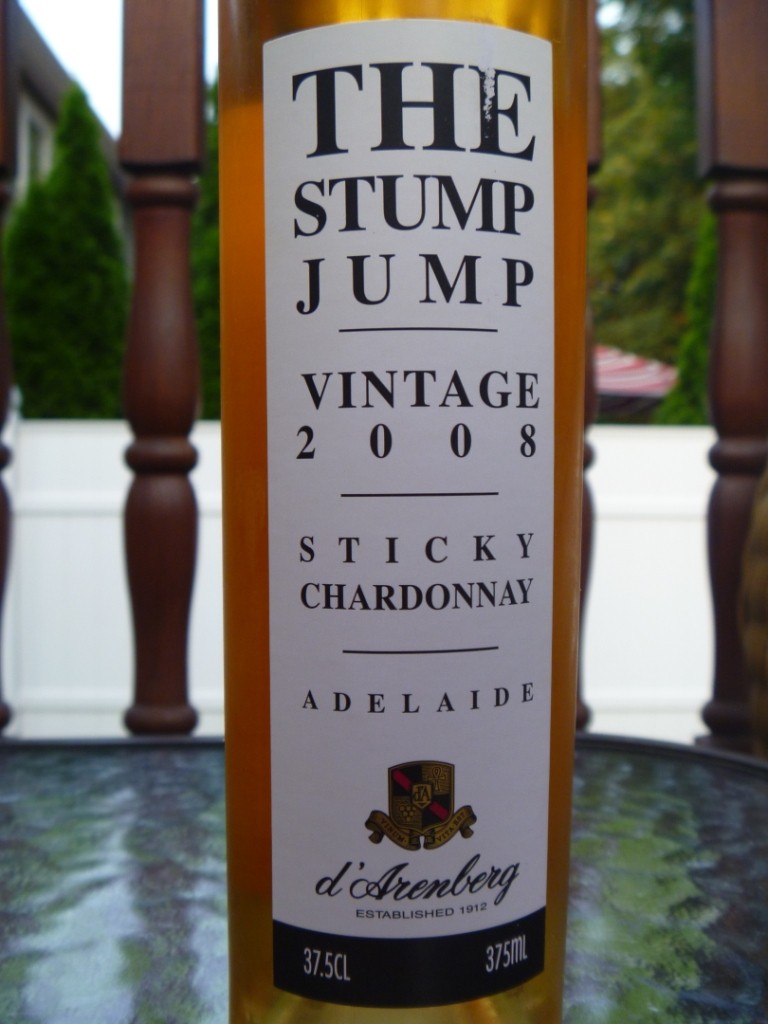 So for this post, let’s compare 2008 d’Arenberg Stump Jump Sticky Chardonnay from Australia (about $10 for 375 ml bottle) with 2006 Dr. Loosen Riesling BA ($20 for 187 ml bottle, so it is 4 times more expensive).
This sticky Chardonnay is a very nice wine, showing lots of peach, ripe apple and honey notes on the palate, with good acidity. When you try this wine by itself, the perception is “very good” – you just need to forgive some rough edges, a little sharpness on the palate.
So one would be technically quite happy with this Dessert wine – at least until he or she will have a chance to try the Dr. Loosen Beerenauslese Riesling. Light and beautiful, effervescent, with exposed minerality, smooth and balanced, with clean acidity and light sweetness. Very easy to drink and without any heavy aftertaste (as some sweet white wines can do). While d’Arenberg Sticky Chardonnay is quite drinkable, Dr. Loosen Riesling is definitely few notches above in terms of delivering pleasure.
Well, it is time to conclude. I hope you got a few ideas to explore – and don’t be afraid to experiment and look for your own personal wine pleasures – the reward is well worth it. Cheers!
Wednesday’s Meritage – Wine Quiz Answer, OTBN, WTSO Marathon and more
 Meritage Time!
Let’s start from the answer for the Wine Quiz #47, Frost and Grapes. The quiz was about Icewines, and you had to answer four questions in that quiz:
1. Briefly explain what Icewines are, including required conditions for harvesting of the grapes.
2. Which country is the biggest producer of the Icewine? As a bonus question, narrow it down to the specific region in that country.
3. Name two most popular white grape varieties for production of the Icewine.
4. Name the winery which pioneered Icewines made from the red grapes. Name that grape as well.
I’m happy to report that Wine and History, VinoInLove and The Winegetter all correctly answered first three questions (quick recap: Icewine is made out of the grapes which freeze on the vine and temperature reaching -7C or -8C depending on the region; leading Icewine world producing region is Canada, and then Ontario produces about 70% of Icewine in Canada ; Riesling and Vidal are two of the most popular white grape varietals used for Icewine).
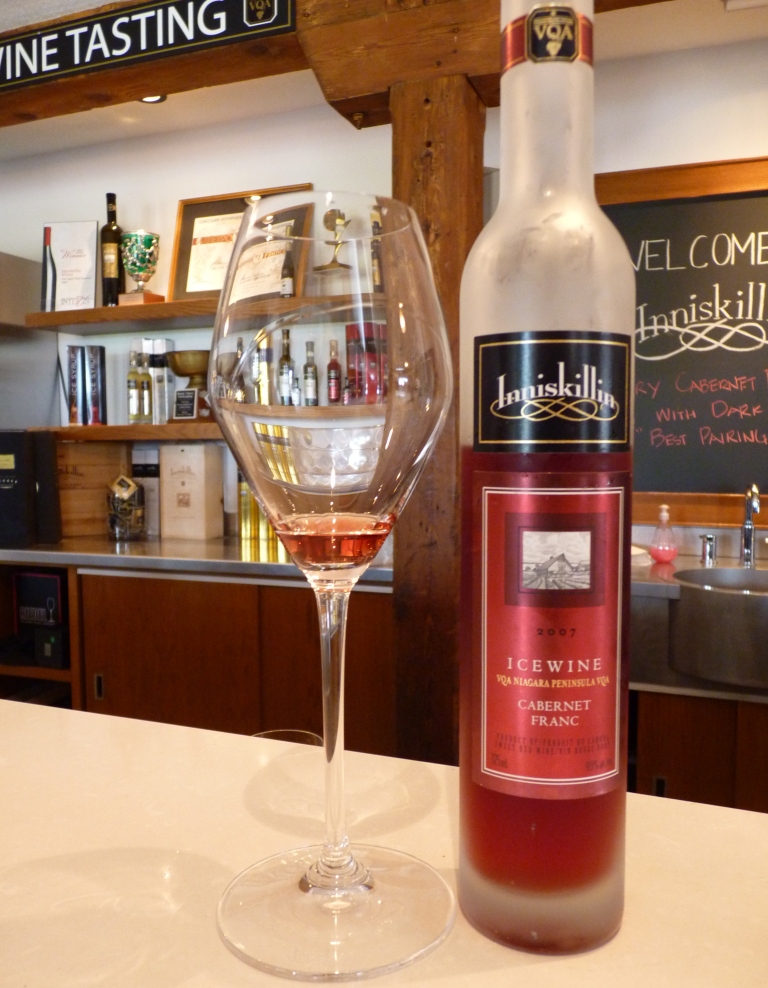
With question #4, I dug myself a hole I promised not to get into many times before – all the questions about “pioneers” and “firsts” have lots of competing claims and no conclusive and confident assessments from the trustworthy sources. Thus the pioneering portion of the question will be left outside of assessing results of this quiz, and we will only take the grape variety, which is Cabernet Franc. Just as a side note, based on my search, the pioneering winery is either Pelee Island or Inniskillin – you can find 2002 Inniskillin Cabernet Franc Icewine still available for purchase via Wine-Searcher, and 2002 Pelee Island Cabernet Franc won gold medal at one of the wine competitions in France according to the article on Wines Of Canada website.
And it means that both Wine and History and VinoInLove are the winners of the Wine Quiz #47 and they get unlimited bragging rights as a prize.
Now, to the news! First and foremost, OTBN is coming up very soon. Who knows what OTBN stands for, please raise your hands! Duh, I can’t see your hands. Okay, never mind. OTBN stands for “Open That Bottle Night”, and it is a special event created by Dorothy Gaiter and John Brecher, a couple who wrote Wall Street Journal’s Tastings column for 12 years ( their column was my main reason to subscribe to The Journal – ever since they stopped writing it at the end of 2009, it never was the same). They started the OTBN events in the year 2000 with the purpose of giving people the reason to open that special bottle they had being holding onto. OTBN always takes place at the last Saturday in February. Thus this year OTBN will be falling on Saturday, February 23rd – and here is a great article from the Palate Press, talking about John and Dottie’s love story of 40 years and OTBN still going strong. Whatever your plans are for the February 23rd, don’t forget to open that special bottle, and either leave a comment or write your own blog post about that special experience.
Now, value wine lovers, rejoice, and make room in your cellars (whatever you call “the cellar”) – WTSO Cheapskate Wednesday will be taking place on February 20th – get ready to go a bit crazy, if you want to put your hands on the good stuff. During last Cheapskate event WTSO sold 90+ different wines, in the total quantity of more than 72,000 bottles during the 18 hours – some of the wines only lasted one minute or so. Here are couple of most important points, taken from WTSO announcement:
- Cheapskate Wednesday will run from 6am to midnight Eastern Time.
- We will be posting offers every 15 minutes (or sooner if an item sells out).
- Every item will be priced from $7.99 to $18.99
- The only method of notification for EVERY item will be Twitter
Set your alarm clock and practice your mouse and keyboard skills, you will need them. Also make sure you have all the ordering information (including CC number) on file with WTSO – I didn’t, and I lost a few interesting wines while I was typing in my information.
And now for the “local news” – I will be on vacation next week! Which means that:
- there will be no weekly wine quiz for the next two Saturdays
- I will miss the Cheapskate Marathon
- I will miss the OTBN event – so I will have to do my personal OTBN at one of the upcoming Saturdays
- I (most likely) will not be able to reply to your comments and comment on your posts
- But you will probably still see some posts from me, considering that scheduling will work well in WordPress
That’s all I have for you for today. The glass is empty. Until the next time – cheers!
Last Bottle Sign Up ($10 credit)




 Talk-A-Vino