Archive
Weekly Wine Quiz #68: Grape Trivia – Chenin Blanc
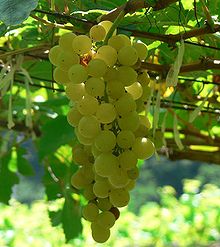
Chenin Blanc grapes, as pictured in Wikipedia
Welcome to the weekend and your new wine quiz!
Today we are continuing our grape trivia with the next white grape – Chenin Blanc. Chenin Blanc is one of the oldest known grapes in the world, with the first mentions tracing back to 9th century in Loire in France. In about 17th century it made it to South Africa, where it became one of the most popular grapes, and it continued spreading around the world. In France, it is mostly growing in the Loire valley, with probably the best wines coming from Anjou and Vouvray regions.
According to wine expert Jancis Robinson, Chenin Blanc is probably one of the most versatile white grapes in the world. It has very high level of natural acidity, and also capable of accumulating very high level of sugars, making it equally suitable for production Sparkling wines and luscious dessert wines. At the time, Chenin Blanc requires a lot of attention in the vineyard, as it has a tendency to overgrow. If harvested too early, its high level of acidity makes the resulting wines simply insipid, and if it overgrows, the resulting wine tends to lose it character making dull and uninteresting wines.
Traditionally, the best Chenin Blanc wines were made in France, with off-dry Vouvray being probably some of the very best examples (if you ever experienced a “wow” Vouvray wine, raise you hand – I personally have, and at about $15/bottle, it doesn’t require you to break the bank). Overall, as winemaking techniques improve all over the world, there are more and more interesting Chenin Blanc wines coming from South Africa, California, Washington, Texas and many other places.
And now, to the quiz!
Q1: True or false: South Africa grows (area -wise) twice as much Chenin Blanc as France
Q2: Do you know how Chenin Blanc is typically called in South Africa?
Q3: Based on DNA research, Chenin Blanc might be a parent of:
a. Pinot Blanc
b. Sauvignon Blanc
c. Marsanne
d. Ugni Blanc (Trebbiano)
Q4: Wine Spectator calls wines rated in 95-100 range Classic (the highest and the most prestigious category). True or False: there are no Chenin Blanc wines with Classic rating.
Q5: One of my all time favorite Chenin Blanc wines is made by the company called Field Recordings in California. It is a single-vineyard wine, coming from the vineyard which has the same name as one of the blockbuster movies of the 90s. Do you know how this vineyard is called?
Side note: Google is your friend. It is impossible to know everything, and when you research, you learn…
Good luck, have fun and cheers!
Weekly Wine Quiz #67: Grape Trivia – Pinot Gris, a.k.a. Pinot Grigio
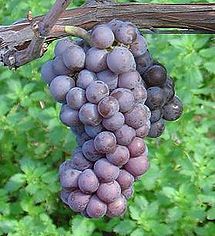
Pinot Gris cluster, as pictured in Wikipedia
Welcome to the weekend and your new wine quiz! Today’s subject is the grape called Pinot Gris, probably even better known as Pinot Grigio.
Pinot Gris is an old grape, cultivated since the middle ages in various regions in France. It had been shown based on the latest DNA research, that Pinot Gris is a very close relative of Pinot Noir. As you can see from the picture, the color of the grapes are somewhat of the grayish purple, and that what the “Gris”, or “Grigio” in the name stands for – Gray. It is almost a bit surprising that the white wine is made out of a grape with such a color of the skin.
Pinot Gris popularity in the world is steadily increasing, even surpassing Riesling and becoming third most popular grape in the world (I couldn’t find convincing numbers to this claim though). Pinot Gris was growing and producing great wines in Alsace since the 16th century, but it was Italian Pinot Grigio which created this world-wide phenomena in 1970s, propelling the grape from very local consumption in Italian restaurants to such a mass phenomena. I wonder if there is a book about geniuses of marketing who managed to create this Pinot Grigio revolution – this must be a fascinating read. Just to give you an interesting fact – Pinot Gris plantings in New Zealand increased 6.5 times (!) in 5 years from 2003 to 2008 – yeah, talk about popularity.
When it comes to the taste, it is interesting to note that there is a very substantial range of expression in the Pinot Gris wines. A lot of Italian mainstream Pinot Grigio has almost water-like consistency both in the taste and appearance (this is why many people presumably like it, and this is also why this type of wine is never served in my house – sorry for the sidetrack). But even in Italy, when you go further north to the Alto Adige region, the wines will show a lot more substance, with nice acidity and minerality. Then you got Oregon Pinot Gris, which typically have a perfect combination of white stone fruit and acidity, and going all the way back to Alsace, Pinot Gris makes luscious, opulent, full bodied white wines.
Now, let’s get to our quiz, shall we?
Q1: Name Italian Pinot Grigio wine which is considered a golden standard of Pinot Grigio in the United States (people really ask for it by name).
Q2: Name two famous regions in France which used to make wines out of Pinot Gris, but not anymore
Q3: When do you think Pinot Gris was first planted in Oregon?
a. 1947
b. 1966
c. 1978
d. 1990
Q4: Wine Spectator calls wines rated in 95-100 range Classic. True or False: there are more classically rated Pinot Gris wines than Sauvignon Blanc?
Q5: During early 2000s, producers in Alsace had to change the way the Pinot Gris wines were typically labeled (you can still find the old name on the bottles from 1990s and before). Do you know what was changed and why? As an added bonus, please explain the origin of the old name.
Have fun, enjoy your weekend and cheers!
Weekly Wine Quiz #66: Grape Trivia – Chardonnay
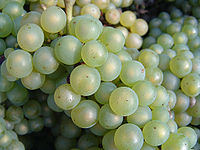
Chardonnay grapes after harvest, as presented in Wikipedia
Welcome to the weekend!
Here we are, continuing our wine quizzes now with the (dare I say it) most famous white grape – Chardonnay!
Seriously, is there another grape which receives equal amount of attention? Not as a fad, but as a constant center of attention all the time, with new winemakers offering their own personal take on the grape, coming from all over the world, competing for supremacy with producers who boast hundreds and hundreds years of “prior experience”? Is there a winemaking country in the world *not* making wine out of Chardonnay – I doubt so…
Origins of Chardonnay go all the way back to the 12th century, starting (of course, where else) in France in Burgundy region. Today, Chardonnay is one of the most planted grapes in the world with 400,000 acres planted worldwide (and about quarter of that in California alone). Part of such a wide success of the Chardonnay can be attributed to the fact that Chardonnay is very adaptable, and can be successfully grown in various conditions, including climate and soils. Additionally, Chardonnay is very “malleable” in the hands of the winemaker and can be used in variety of styles both with and without oak, and successfully ranging in the expression from sparkling to light and acidic white wines, going all the way to the heavy, big and monumental wines and then continuing on to the dessert wines (Australian “sticky”s come to mind). As you can imagine, such a popularity with the wine makers leads to the overproduction of boring and indiscreet wines, which generates periodic consumer backlash and creation of the self-proclaimed ABC clubs (Anything But Chardonnay). Nevertheless, anyone who had ever experienced great Chardonnay – coming from France, California, Chile, Australia, New Zealand, Italy, Hungary and many other places, will always come back for more.
Now, to the quiz!
Q1: Name the producer of the most expensive Chardonnay wine in the world. As an added bonus, please also provide the name of the wine.
Q2: Chablis used to be the bustling Chardonnay producer in France, supplying most of the wine in Paris and beyond, until it came to the severe decline during the beginning to the middle of the 20th century. Do you know what was one of the biggest factors which led to that decline?
Q3: Name 3 main flavor descriptors of the *big* California Chardonnay
Q4: Judgement of Paris of 1976 was instrumental in bringing California Chardonnay onto the world-class wine map. Do you know which California winery we need to thank for that?
Q5: As with many other grapes, various clones had being developed for Chardonnay, to adapt better for the particular region and/or resulting wine style – for example, there is a number of so called Dijon clones of Chardonnay, which can be used by anyone wishing to produce a classic Burgundy style wine. One of the clones was developed in California in the middle of 20th century, and it is still a very popular choice among many California Chardonnay producers to the date. Can you name that clone?
Good luck, have fun, enjoy your weekend and cheers!
Weekly Wine Quiz #65: Grape Trivia – Sauvignon Blanc

Sauvignon Blanc grapes, as presented in Wikipedia
Welcome to the weekend!
We are continuing our white grapes explorations with this new wine quiz. In the spotlight – Sauvignon Blanc.
Sauvignon Blanc is definitely one of the major white grapes in the world. Literally every wine-producing country is making wines out of the Sauvignon Blanc – France, New Zealand, Chile, California, Italy and many others produce wine in variety of style – from unoaked, light, perfectly summery wines to the barrel-aged, round wines with lots of substance and going all the way to some of the best in the world dessert wines.
Sauvignon Blanc originated in Bordeaux, and spread out around the world in the 19th and mostly in the 20th century. The interesting fact is that while Sauvignon Blanc universally retains its acidity and some fresh cut grass notes, the resulting wines are definitely unique based on the region where the wine is made. French Sauvignon Blanc boast fresh cut grass and acidity, both Chile and New Zealand have lemon/lime/grapefruit as cornerstone of their flavor profile. Sauvignon Blanc wines in US typically show those fresh cut grass notes, but have a lot more fruit all around. Italy at the same time is taking Sauvignon Blanc to the totally new level of expression which have to be experienced. All in all, Sauvignon Blanc produces wines worthy every bit of attention.
Now, to the quiz!
Q1: Name the characteristic smell of (usually French) Sauvignon Blanc wine (hint – it is not the fresh cut grass)
Q2: Name [probably] the most famous wine in the world which contains Sauvignon Blanc as part of the blend.
Q3: Which one doesn’t belong and why?
a. Graves
b. Pouilly Fuisse
c. Pouilly Fumé
d. Sancerre
e. Touraine
Q4: One person played a crucial role in making Sauvignon Blanc one of the major California white wines. Can you name that person?
Q5: Below is the list of great Sauvignon Blanc wines and equally great producers. Do you know which producer made which wine?
| 1. Alteni di Brassica | a. Mara |
| 2. Poggio alle Gazze | b. Peter Michael |
| 3. White Grass | c. Campo di Sasso |
| 4. L Apres Midi | d. Ornellaia |
| 5. Mount Nelson | e. Gaja |
Good luck, have a great weekend and cheers!
Weekly Wine Quiz #64: Grape Trivia – Riesling
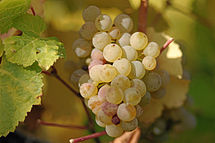
Ripe Riesling Grapes, as captured in Wikipedia
Welcome to the weekend and your new wine quiz!
And the moment you’ve being waiting for is here – as promised, we are switching to the white grapes! For the next 10 or so quizzes, we will be talking about white grapes. And we are starting with nothing less than the Riesling!
Riesling is one of the major white grapes (that “major” list typically includes Riesling, Sauvignon Blanc and Chardonnay) with long and somewhat turbulent history. The first official mentions of Riesling appear 1400s in Germany and then Alsace. From there, Riesling had been growing in popularity for the long time, about 100-120 years ago even surpassing red Bordeaux wines both in price and demand. Unfortunately, with prolonged wars and also subsequent Germany’s focus on quantity instead of quality in the middle of 20th century, Riesling lost its leadership position and currently is engaged in the uphill battle to regain its old popularity.
Overall, Riesling is considered to be very terroir-driven (similar to Pinot Noir), which you can easily see just by trying, for instance, German, Australian and Alsatian Rieslings side by side – you might perceive them as completely unrelated wines. Substantial acidity makes Riesling very food friendly (it is one of the most versatile white wines) and also allows it to age for a very long time – even 100 years would not be unheard of. Riesling is quite popular world-wide, growing in pretty much all major wine producing countries and slowly but steadily increasing both in terms of production and acreage.
Let’s get to our quiz, shall we?
Q1: Riesling is a very popular grape in US and Canada, growing in many regions. Considering the plantings of the Riesling in the regions, can you sort the list below from the biggest area plantings to the smallest?
a. California
b. New York
c. Ontario, Canada
d. State of Washington
Q2: Have you heard the term “noble rot”, which is often associated with certain types of Riesling? Can you explain what this term means and to which Riesling wines it is typically applicable (at least in Germany)?
Q3: Riesling is known for sometimes developing a specific aroma which has typically nothing to do with the wine – but it is not a fault. Do you know what aroma is that?
Q4: Name one major(!) wine producing country which doesn’t produce any Riesling wines.
Q5: If you look at the bottle of German Riesling, you will typically see the word such as Kabinett or Spatlese written on the label. Such words typically indicate the level of sweetness you should expect from wine – even though this is not a precise definition, as these words only indicate sugar amount in the freshly pressed grape juice – the level of sugar in the resulting wine can be quite different depending on the way the fermentation is done. Can you sort the following list of these key indicators from the lowest sugar content to the highest?
a. Auslese
b. Berenauslese
c. Eiswein
d. Kabinett
e. Spatlese
f. Trockenberenauslese
Good luck, enjoy and have a great weekend! Cheers!
Weekly Wine Quiz #62: Wine Trivia – Nebbiolo
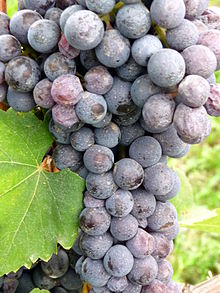
Nebbiolo grapes, picture from Wikipedia
Welcome to the weekend! Your new wine quiz has arrived.
Today our subject is the Italian grape called Nebbiolo – a power grape of Piedmont, solely responsible for some of the world’s best wines, Barolo and Barbareso.
As I’m working on this series of quizzes, I’m of course learning a lot myself. It was very interesting for me to realize, that unlike any other major red grape we talked about so far, Nebbiolo is pretty much confined to the 6 or so areas in Italy, where it makes wonderful wines – its world-wide spread is non existent, not even in the form of clones, like Zinfandel. And this is all despite the fact that Nebbiolo is quite an old grape, with first mentions going all the way back to the 13th century.
Nebbiolo is a very tricky grape to work with. It has the longest ripening cycle out of many grapes – buds early, ripens very late, prone both to mutation (there are about 40 known clones) and grape diseases. But – the resulting wines, like Barolo and Barbaresco, clearly worth the trouble, with wonderful aromatics, power and concentration. Also the ageing potential of the Nebbiolo wines is almost unlimited.
Now, to the quiz!
Q1: Explain the meaning of the name “Nebbiolo”
Q2: In one of the regions outside Piedmont, the wines are produced from Nebbiolo grapes in the style of Amarone – with grapes drying on the straw mats before they are pressed. Can you name that region?
Q3: True or False: Blending is not allowed for any of the wines produced from Nebbiolo grape in Piedmont region.
Q4: White grape used to be such a traditional blending partner for Nebbiolo that it was sometimes called White Barolo. Do you know the name of this grape?
Q5: In the blind tasting setting, the wines made out of Nebbiolo can be very distinguishable even before you take a first sip. Do you know what is this distinct feature of Nebbiolo wines?
Good luck, enjoy your weekend and cheers!
Wednesday’s Meritage – Wine Quiz Answer, WTSO Cheapskate Wednesday in Progress, How To Taste Wine and more
Meritage Time!
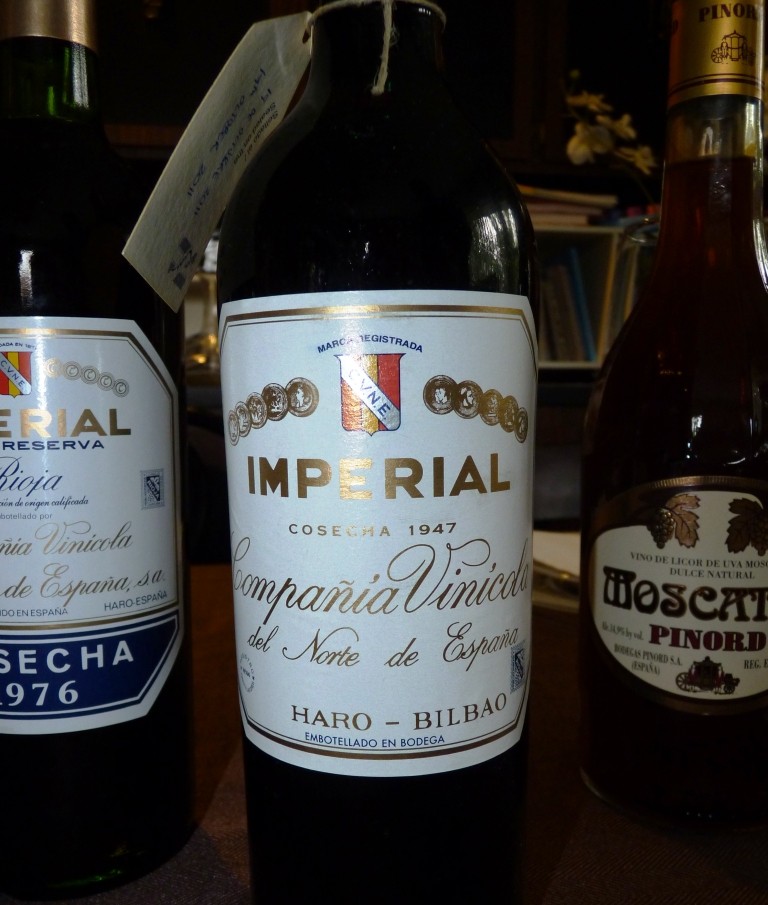 Let’s start with the answer to the wine quiz #61, grape trivia – Tempranillo. In the quiz, you were supposed to answer 5 questions about Tempranillo, the noble Spanish grape. Here are the questions with the answers:
Q1: What is the meaning of the name Tempranillo?
A1: Name Tempranillo comes from Spanish word temprano, which means “early”. Tempranillo typically ripens two weeks earlier compare to many other grapes.
Q2: Name 3 grapes, traditional blending partners of Tempranillo
A2: Traditionally, in Rioja wines, Tempranillo is blended with Mazuello, Grenache and Graciano.
Q3: What is common between Bodegas Muga, La Rioja Alta, Lopez de Heredia and Vina Real outside of the fact that all four are very famous Rioja producers and of course make wines out of Tempranillo?
A3: This was definitely a difficult question. What this four wonderful Rioja producers have in common is … location. All for wineries are located within walking distance from each other around old train station in Haro.
Q4: Tempranillo is used in production of the wine outside of Spain, which is at least equally famous to Rioja. Do you know what wine is that?
A4: Port. Tempranillo is known in Portugal under the name of Tinta Roriz, and it is one of the essential grapes in Port production.
Q5: Name two producers of Tempranillo wines – one is the most famous and another one is probably the most expensive.
A5: Another pretty difficult question. Vega Sicilia is definitely the most famous producer of Tempranillo wines with their flagship wine called Unico. And while it is quite expensive at $500+ per bottle, Dominio de Pingus makes probably the most expensive Tempranillo wines. Both wineries are located in Ribera del Duero region.
Based on the low participation in this quiz I can only say – people, you have to drink more Spanish wines (see, I’m only using bold font instead of capitalizing = screaming)! Especially from Rioja and Ribera del Duero. Anyway, as I said, at least two questions were quite difficult. We don’t have clear winner today, with Emil ( he doesn’t have a blog) coming the closest with about 3.5 points, so he definitely gets an honorable mention.
And now to the interesting stuff around vine and web!
First – don’t miss the WTSO Cheapskate Wednesday which is taking place today, June 19th. Yes, it is not super convenient to keep WTSO open in the browser and hit refresh all the time, but you have very few alternatives to that. You can also follow WTSO on Twitter – the only medium where new wine information is updated in real time. Make sure you have all your correct information on file with WTSO – shipping address and the credit card – otherwise you are risking to miss on the wine you want while you will be filling up the details (being there, done that). I posted many times before about WTSO events – if you are interesting in taking the look at the past sales, use this link.
Next, I want to bring to your attention an interesting article by Master Sommelier Tim Gaiser, called “How to taste wine”. I’m sure that many of you tried at various occasion to figure out what exactly is in your glass – it is a fun challenge to take random glass of wine, look, sniff, swirl, sip – and confidently say “Shiraz, Barossa, Penfolds, 1998 or 1999” and then find out that you’ve been right, or may be it was actually an Argentinian Malbec. Using techniques offered as part of any serious wine education (Master Sommeliers, WSET, Master of Wine, etc.) can actually increase your chances of being right. This article explains in good detail the approach to the blind tasting taken by Master Sommeliers.
If you are a Pinot Noir aficionado, this article might be for you. Written by Jay McInerney for Wall Street Journal, it is dedicated to David Hirsch of Hirsch Vineyards, one of the pioneers of Sonoma cool climate Pinot Noir.
Last but not least, here is an interesting blog post by W. Blake Gray, where he is talking about the study regarding cork taint. According to that study, 10% of the people actually prefer corked wines! For the first 10 minutes after I read it, I had mostly expletives roaming through my head – then I was able to compose myself and leave a [decent] comment. Yeah, well, no further comments – read it for yourself…
That’s all I have for you for today – the glass is empty! Refill is coming, and until the next time – cheers!
Weekly Wine Quiz #61: Grape Trivia – Tempranillo
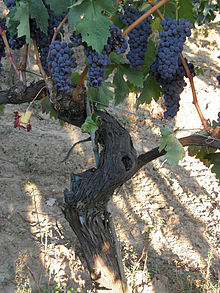
Tempranillo grapes as captured in Wikipedia
Welcome to the weekend! Here is your new wine quiz you’ve been waiting for so hard (yeah, okay, I know I’m pushing it, but may be at least a bit?)
And yes, we are continuing the grape trivia subject – by the way, if you are tired of it, do tell me – I will come up with something else. Just to let you know, we have two more red grapes to go through, and then we will switch to the whites for may be 8 different white grapes – then will see where we will end up.
Today’s subject is – Tempranillo! Just saying the word Tempranillo makes me very excited, as Rioja, one of the most well-known wines made out of Tempranillo grapes, are some of my all time favorites.
Tempranillo is indigenous grape originating in Spain, with more than 2000 years of history. It is black, thick-skinned grape, capable of surviving temperature swings of Mediterranean climate, with very hot days and cool nights. Tempranillo grapes are naturally low in acid and sugar content, so they often rely on blending partners to complement on both. Flavor profile of Tempranillo typically includes berries, leather (so famous in Rioja wines) and tobacco. Most famous Tempranillo wines come from Spain, from Rioja and Ribera del Duero regions, but Tempranillo is successfullygrowing in many other regions, including Portugal, California, Texas (up and coming star), South Africa, Australia and others.
And now, to the quiz!
Q1: What is the meaning of the name Tempranillo?
Q2: Name 3 grapes, traditional blending partners of Tempranillo
Q3: What is common between Bodegas Muga, La Rioja Alta, Lopez de Heredia and Vina Real outside of the fact that all four are very famous Rioja producers and of course make wines out of Tempranillo?
Q4: Tempranillo is used in production of the wine outside of Spain, which is at least equally famous to Rioja. Do you know what wine is that?
Q5: Name two producers of Tempranillo wines – one is the most famous and another one is probably the most expensive.
Enjoy the weekend and good luck with the quiz. And don’t forget to celebrate Dad tomorrow – Father’s Day, yay! Cheers!
Weekly Wine Quiz #60: Grape Trivia – Sangiovese

Sangiovese grapes close up from Wikipedia
Welcome to the weekend! Yep, it is the time for the new wine knowledge test.
We are continuing our Grape Trivia series, and today we will talk about Sangiovese – one of the most famous Italian grapes. Sangiovese is typically associated with Chianti, but in reality, Sangiovese is one of the most planted grapes all over Italy. One of the interesting issues is that Sangiovese, similarly to Pinot Noir, is very clone-prone, so it is known in different places under different names, such as Sangiovese Grosso, Prugnolo Gentile or Calabrese, to take a few.
Sangiovese is black skinned grape with cherry-dominant, earthy and savory profile. Sangiovese is capable of a wide range of expressions, starting from simple food friendly wines from Chianti to the oak-loaded monsters requiring long ageing and long decanting, coming from different regions in Tuscany and beyond. Absolute majority of Sangiovese plantings are located in Italy, but the grape is also slowly becoming popular in the other regions such as United States or Argentina.
Now, to the quiz! I thought that Zinfandel was not a simple quiz to compose, but then I realized that it is even more difficult to create an interesting quiz all around Sangiovese. For what it worth, 5 questions are below.
Q1: Grape, blending partner mostly of the past, typically leading to Sangiovese wines becoming dull and unexciting.
Q2: What is Fiasco, and how is it related to the Chianti wines?
Q3: On some of the bottles of Chianti, you could see an image of the black rooster. What is the meaning of it?
Q4: Tuscany no doubts is the major source of Sangiovese wines. Can you name 4 sub-regions in Tuscany, producing great wines with Sangiovese as the main variety?
Q5: Name 3 leading regions in United States producing Sangiovese wines. For an extra bonus, add your favorite producer(s).
Have a great weekend, have fun and cheers!
Weekly Wine Quiz #59: Grape Trivia – Zinfandel
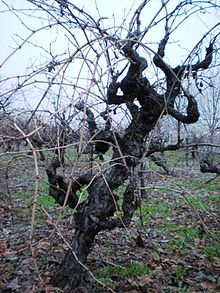
Traditional gnarly look of old Zinfandel vines. Picture from Wikipedia.
And the new weekend is upon us, together with the wine quiz.
We are continuing the grape trivia, and we are continuing exploring the red grapes (let me know if you think it is the time to switch to the whites). Today’s subject is Zinfandel, an American star.
Zinfandel is the black-skinned grape, known as an early ripening variety and capable of accumulating very high levels of sugar – this is one of the reasons why you can often see Zinfandel wines with alcohol by volume levels easily exceeding 15%.
Story of Zinfandel is one of the most fascinating ones compare to many other grapes you can think of – considering the amount of genetic research which went into establishing the origins of Zinfandel, the amount of attention this grape received is pretty mind boggling. After many years of back and force, it is now established that Zinfandel and Primitivo (an Italian grape from Apulia) are two individual clones of Croatian grape called Crljenak Kaštelanski. As The Drunken Cyclist, a regular winner of these quizzes, pointed out in his own quiz a while back, both Zinfandel and Primitivo are considered independent varieties and should be listed as separate varieties on the wine labels of the wines in US.
Another interesting part of the Zinfandel story is that actual powerful and seductive Zinfandel red wines as we know them now, almost became extinct at some point due to the success of sweet and insipid Pink Zinfandel wines (but please pay some respect – Pink Zinfandel still accounts for almost 10% of wine sales in US).
And now, to the quiz! As the subject is very narrow (Zinfandel is not growing all over the world), enlisting Google as your helper is totally fine (not that it was not with any of my quizzes before) – but this is up to you, of course. In any case, even if you can only answer a few questions – please do!
Q1: It was established recently that Zinfandel existed in Croatia under a different name, at least from the 15th century. Do you know what was that name?
Q2: While Zinfandel typically listed on the label, very often some other grapes are added to the blend. Name one grape which can be considered a traditional blending partner of Zinfandel
Q3: White Zinfandel was discovered by accident. Can you explain how that happen, and possibly use the proper winemaking term for the “accident”
Q4: Two California winemakers are largely credited with putting red Zinfandel wines on the wine map. Can you name them?
Q5: Most of the well known Zinfandel producers still make other wines from the different grapes. But there is one winery in California ( at least that I know of), which make nothing but Zinfandel wines. Can you name that winery?
Good luck, enjoy your weekend and cheers!
Last Bottle Sign Up ($10 credit)




 Talk-A-Vino