Archive
Deceptive Simplicity: Masciarelli Linea Classica
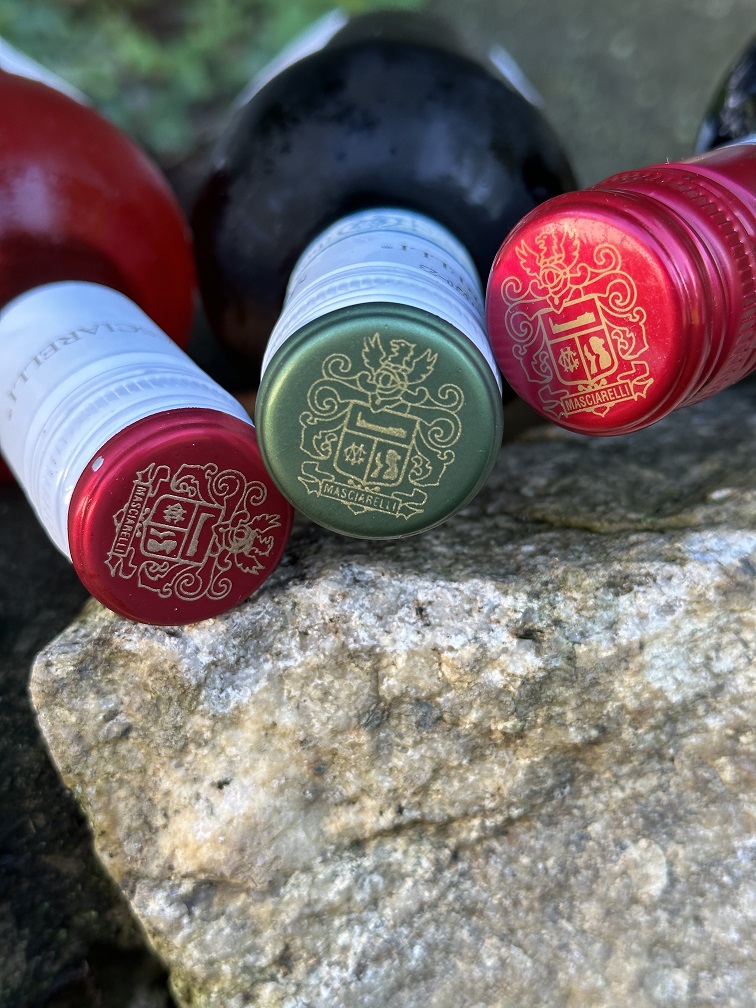 Simple is an interesting word to use around food and wine – there is a lot of dependency on the context.
I love simple recipes – one of my favorite recipes for sauteed eggplant has only 5 ingredients in it, takes 30 minutes to make and the result is consistently delicious. Air-fried salmon bites take less than a minute to prep, consist of only salmon and seasoning, and again, are consistently delicious. Near East couscous takes 5 minutes to make – and it is a perfect side dish every time it is made. When it comes to food, “simple” usually is a good word.
Calling the wine simple requires clarifications, it requires real context. “Simple wine” often means inexpensive, and this is a good thing – as long as the wine tastes good, as long as wine gives you pleasure “simple/inexpensive” is a good word (nobody likes “inexpensive” but crappy). Simple can apply to the label and overall packaging. The wine can also taste simple, and here the truth is in the eye of the beholder – many people prefer simpler-tasting wines so they will not interfere with the food. But if someone is craving complex, thought-provoking, multi-layered wine, “simple” is the last descriptor that someone will be happy about. “Simple wine” has a meaning only in the context.
The interesting part of a “simple wine” designation is that once we call the wine simple based on price and appearance, we make assumptions about the taste. Once we say “simple wine”, we are intuned to take it all the way – assuming that this simply looking wine will be also simply tasting wine.
Can simple packaging and a reasonable price hide the wine of a much grander standing than it appears to be? In other words, can simplicity be deceiving? Of course. Let me present my case to you – a classic lineup (Linea Classica) of wines from Tenuta Agricola Masciarelli in Abruzzo Italy.
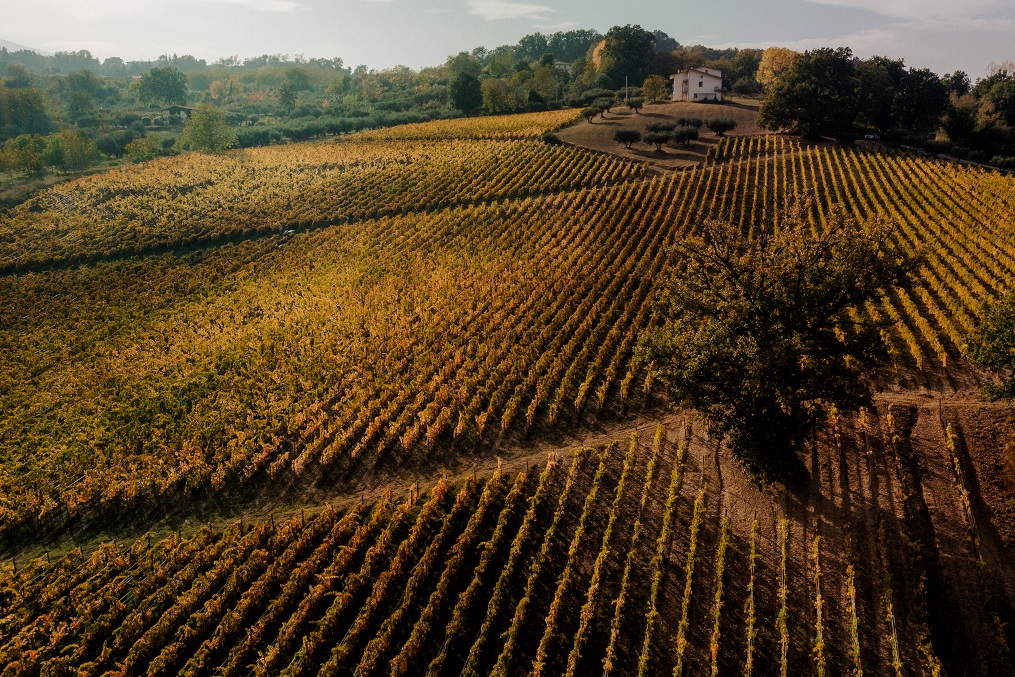
Masciarelli Vineyards. Source: Tenuta Agricola masciarelli
Gianni Masciarelli produced his first vintage of red, white, and Rosé in 1981 from the 5 acres vineyard owned by his grandfather and located near the family house in San Martino in the province of Chieti in Abruzzo. Abruzzo region, located east of Rome along the Adriatic coast is best known for its – here it comes again – simple white and red wines, produced, respectively, from Trebbiano and Montepulciano. From the very beginning, Gianno was convinced that Abruzzo was capable of producing world-class wines. He worked very hard not only in his own winery but pushing forward the whole region. Gianny was the first to introduce a French Guyot training system for the vines and French oak barrels for aging the Montepulciano and Trebbiano wines. By the way, while Trebbiano is a popular white grape that grows all over Italy, Trebbiano Abruzzese is a local ancient Trebbiano clone that is growing only in Abruzzo. Trebbiano Abruzzese has lower yields and produces wines that can age.
Today, Tenuta Agricola Masciarelli is run by Giovanni’s wife, Marina Cvetić, together with their eldest daughter, Miriam Lee Masciarelli. Tenuta Masciarelli is the only winery that owns vineyards in all four provinces in Abruzzo (Chieti, Pescara, Teramo, l’Aquila). The vineyards span 740 acres (300 hectares) and consist of 60 non-adjacent parcels. Masciarelli produces 7 different lines of wines, 4 out of which are exported to the USA. The winery produces about 2.2 million bottles of wine every year that gets exported to 55 countries.
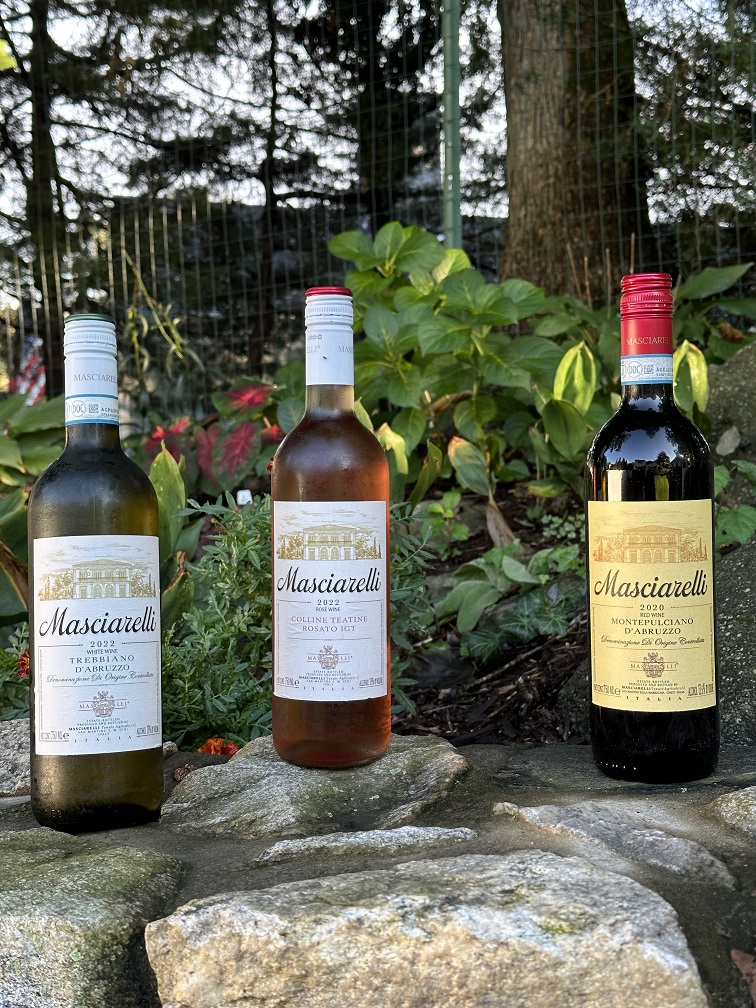 Here are my notes for the Linea Classica wines I had an opportunity to try:
2022 Masciarelli Trebbiano di Abruzzo DOC (13% ABV, $15)
Light golden
Tropical fruit, peach, minerality, medium intensity, inviting
Crisp, fresh, lemon notes, tart minerality, medium long refreshing finish, cleansing acidity, very nice
8-/8
2022 Masciarelli Colline Teatine Rosato IGT (13% ABV, $14)
Beautiful salmon pink
Fresh strawberries on the nose
Strawberries, brilliant fresh strawberries, cranberries, perfect acidity, good mouthfeel presence, crisp and clean finish. Excellent.
8
2020 Masciarelli Montepulciano di Abruzzo DOC (13.5% ABV, $15)
Dark garnet
Earthy, restrained, hint of cherries
Dark tart cherries, succulent, a touch of tobacco, dark, earthy, minerality, good acidity, good balance, medium to full body.
8, excellent
All three wines are unoaked and … yes… simple. At least in their presentation and pricing. But here is the interesting part. You can’t treat them as “simple wines”. Despite being unoaked, all three wines improved on the next day. And the next day. And even the next day. Truth be told, after I just opened and tried the Montepulciano, I was simply upset – the wine was not drinkable. For sure for my palate – green and tart. It became better the next day. And it really blossomed on the third day. In total, I enjoyed this screwtop-capped wine over the 6 days – pouring a glass, twisting the cap back, and leaving it on until the next day on the counter. And the wine kept getting better and better. This is a testament to the quality of this simple wine. And this simple wine can definitely age and it will become better with age. All for under $15.
Simplicity can be deceiving. Don’t take my word for it – try Masciarelli Linea Classica for yourself and let’s compare the notes. Cheers!
Patches of Goodness – Introducing Ferzo
In Italian, Ferzo is a patch of fabric that is stitched together with others to create a sail. Let’s sail together into the world of wine.
Wine lovers are some of the happiest people in the world.
Don’t jump to any conclusions – the happiness starts before the bottle is open, not after the wine is consumed.
How I mean it? Let me explain.
I personally believe that travel is one of the best things people can do as a pastime. You get to experience a different culture, people, food, and lots more. Travel typically requires planning – money, time off work, finding someone to sit with your three dogs, water plants, feed goldfish … you get the picture. A successful trip requires one’s full, undivided involvement, from start to finish – and then it usually ends with happy memories.
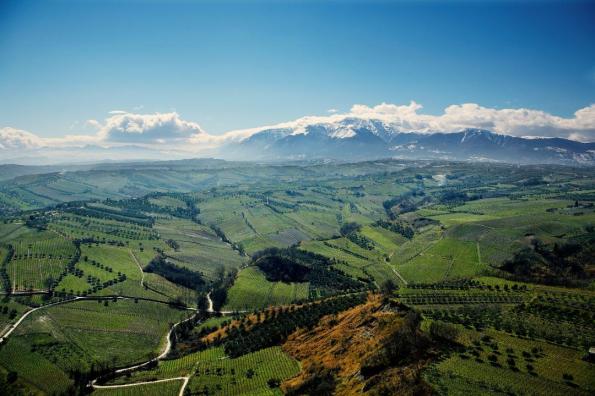
Wine lovers, on another hand, have it easy. It is enough to take a bottle of wine in your hands, and you are instantly transported. Your trip starts with the first look at the label, and then it is only limited by your imagination. The more you learn about the world of wine, the easier such travel becomes. You can instantly immerse into the culture, imagine visiting the vineyard, talking to the people, sitting in the tiny cafe with a glass of wine, just observing life as it happens. Sounds good? Can I take you on a trip right now, right at this moment? Of course, I know you are ready. I’m inviting you to visit Italy, the region called Abruzzo.
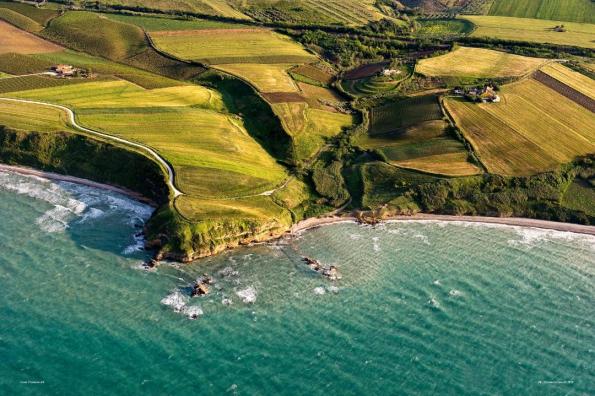
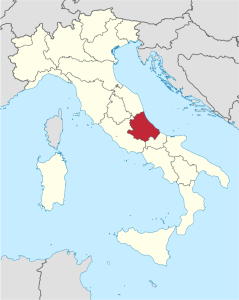 Abruzzo is a region in Central Italy, located along the Adriatic Sea coast. The territory of Abruzzo is about half of the size of the US state of New Jersey. However, the region boasts the biggest number of forests and parks compared to any other region in Italy, and thus sometimes it is referred to as “the lungs of Italy”.
There is nothing unique about winemaking in Abruzzo – it is only about a few thousand years old, on par with the rest of Italy. Well, jokes aside, the Abruzzo region is enclosed in the Apennines mountains, which historically provided natural defenses to the people living in the region – as well as ideal conditions for the winemaking.
Abruzzo wines became known internationally in the 17th century, largely thanks to the Spanish writer, Miguel de Cervantes, who praised the high quality of the region’s white wine, Trebbiano d’Abruzzo – however, today Abruzzo is first and foremost known for its red wine, Montepulciano di Abruzzo, produced from the grape called Montepulciano (try not to confuse it with the wine made in the Montepulciano village in Tuscany, which is made out of Sangiovese).
The wine is made is all four provinces of Abruzzo, however, the province of Chieti has the highest production of the four. While Montepulciano is a “king” of Abruzzo, the white grapes always played an essential role in the region. Today, the focus is shifting past the traditional Trebbiano towards until recently forgotten varieties, such as Pecorino, Passerina, and others.
Codice Citra is the largest winegrowing community in Abruzzo, uniting 3,000 winegrowing families from 9 different communes (wineries), collectively farming 15,000 acres of vineyards. Formed in 1973, Codice Citra had been making wines from the autochthonous varieties – Montepulciano, Trebbiano, Pecorino, Passerina and Cococciola.
With bottling capacity of 20,000 bottles per hour, you can imagine that Codice Citra produces quite a bit of wine. But this is not what we are talking about here. When you make wine year after year, you learn what works and what doesn’t. Little by little, you can identify the parcels of the vineyards, the patches, which produce different, maybe better grapes, year after year. And at some point, you decide – this patch is something special, maybe it deserves to be bottled on its own?


And that’s how Ferzo was born. Single grape wines, made from the plots with the vines of at least 20 years of age, representing the best Abruzzo has to offer – Montepulciano, Pecorino, Passerina and Cococciola. I had an opportunity to taste the line of Ferzo wines, graciously provided as samples by Donna White, and I was utterly impressed with the quality and the amount of pleasure each wine had to offer. Here are the notes:
Hold The Pizza – I Just Want The Wine: Masciarelli Villa Gemma
At the age of 20, Gianni Masciarelli was helping with the harvest in Champagne. At the age of 26, in 1981, he started making his own wines in the Italian region called Abruzzo. 1984 was the first release of the Villa Gemma Rosso wine, truly a different take on the Montepulciano wines.
Montepulciano is the main grape of Abruzzo (not to be confused with Montepulciano in Tuscany, which is the name of the village where the wines are made from Sangiovese grape). Late in the 20th century, Montepulciano d’Abruzzo became one of the most exported Italian wines – it was dry, it was simple, it was quaffable and, of course, good for pizza.
Gianni Masciarelli had his own, pioneer view on how the Montepulciano wines should be made. He introduced the Guyot training system for the vines in Abruzzo. He was the first to start using French oak barrels in the production of Montepulciano d’Abruzzo and Trebbiano d’Abruzzo, showing the world that Montepulciano can go way beyond just a “pizza wine” qualities. Today, Masciarelli estates are run by Marina Cvetic Masciarelli, late wife of Gianni Masciarelli; the vineyards spawn 350 acres and produce about 1.1M bottles of wine across 5 different lines.
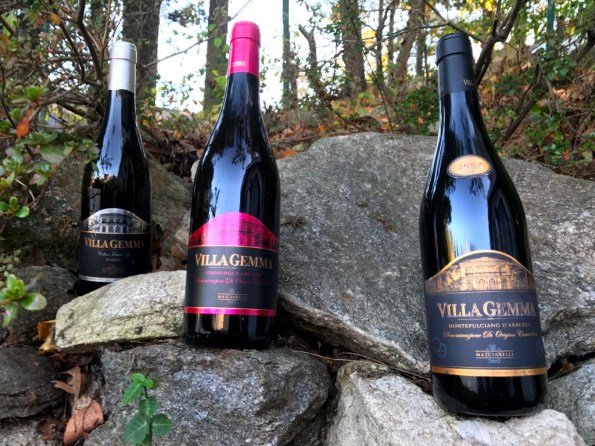
Recently, I had an opportunity to taste a few of the wines from the Villa Gemma line, and here are my notes:
2016 Masciarelli Villa Gemma Blanco Colline Teatine IGT (13% ABV, $17.99, 80% Trebbiano d’Abruzzo, 15% Cococciola, 5% Chardonnay)
C: light golden
N: a touch of fresh grass, a hint of white stone fruit, a hint of gunflint, medium intensity
P: crisp, refreshing, crunchy, touch of lemon, slightly underripe peaches, very clean, medium finish
V: 8-, craving food, excellent overall. Trebbiano d’Abruzzo and Cococciola also extended my grape hunting collection
2016 Masciarelli Villa Gemma Cerasuolo D’Abruzzo DOC (13.5% ABV, $14.99, 100% Montepulciano)
C: intense, ripe strawberry pink
N: pure strawberries, fresh, succulent strawberries
P: fresh, tart, restrained, lightweight, clean strawberry profile, good overall balance
V: 8, simply delightful. An excellent Rosé for any time of the year
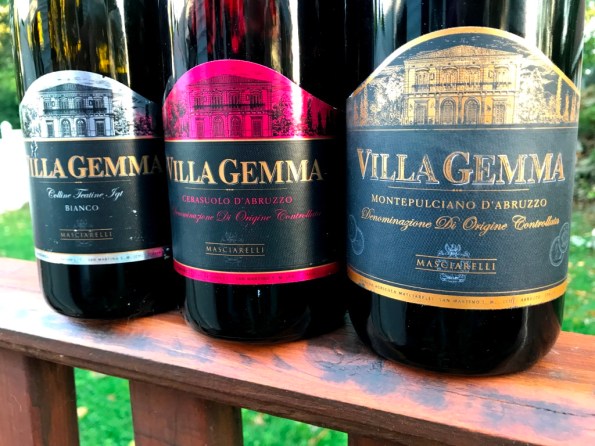
2007 Masciarelli Villa Gemma Montepulciano D’Abruzzo DOC (14.5% ABV, $89.99, 100% Montepulciano, aged 18-24 months in oak barriques, total 36 months))
C: Dark garnet
N: fresh cherries, anis, mint, blackberries
P: soft, generous, round, fresh acidity, touch of leather, cherries and cherry pit, generous tannins on the finish.
V: 8, excellent wine, unmistakably Italian, supremely delicious.
These wines were absolutely delicious in their own right. I seriously don’t know about pizza – you can probably pair anything with pizza, from two buck chuck to the Screaming Eagle and Petrus – but you really don’t have to. These three wines from Masciarelli Villa Gemma would perfectly complement any dinner – appetizers, salads, and mains – these wines pack a serious amount of pleasure. Don’t take my word for it – try them for yourself. The pizza is entirely optional. Cheers!
Do You Prefer Montepulciano or Montepulciano?
Nope, no typo in that title. And no, I’m not losing it. Not yet anyway.
Yes, the title is purposefully misleading. But within a reason – and I’m not looking to gain any unjust benefit from the confusion.
As most of you know, Montepulciano happened to be the name of the indigenous Italian grape, popular in central regions of Abruzzo and Marche. Montepulciano is also the name of the small medieval town, right in the heart of Tuscany, where the grape called Sangiovese is a king. The wine produced around the town of Montepulciano, which dates back to the 14th century, is called Vino Nobile di Montepulciano, and to be called Vino Nobile the wine should contain at least 70% of Sangiovese grapes. What is also worth mentioning that Vino Nobile di Montepulciano was the very first DOCG (Denominazione di Origine Controllata e Garantita) in Italy, awarded in 1984 – the emphasis here is on Garantita, denoting highest quality Italian wines.
A picture worth thousand words, so here is an infographic which nicely lines up all the confusing Montepulciano:
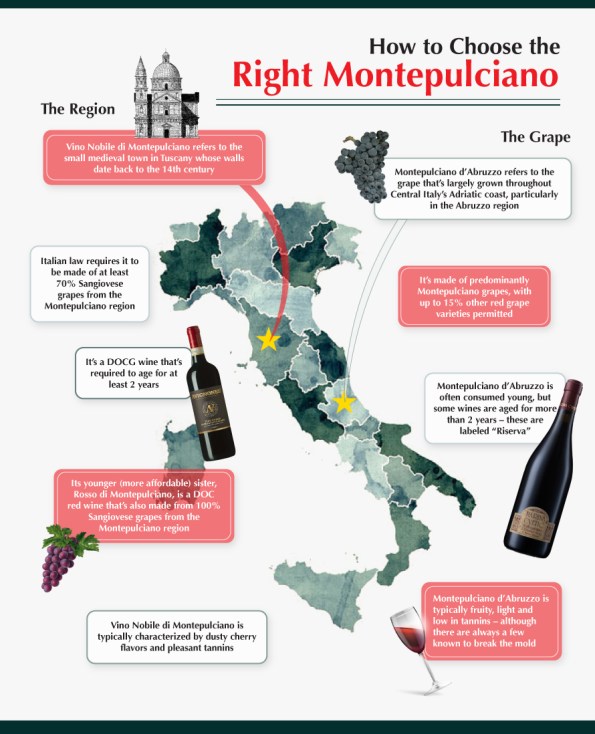
Infographic courtesy of Mosiah Culver
Now, let’s go back to the main question, only let’s ask it in a less controversial way – do you prefer Montepulciano or Vino Nobile di Montepulciano wine? The answer to such a question requires some wine drinking, so let’s fight it off with maybe some of the very best examples of both – Masciarelli Marina Cvetić Montepulciano d’Abruzzo and Avignonesi Vino Nobile di Montepulciano.
Masciarelli Tenute Agricole was established in 1978 by Gianni Masciarelli in San Martino, Chieti Abruzzo. In 1989, Giovanni married Marina Cvetic, who took over winemaking duties. Today Marina overseeing about 750 acres of estate vineyards, producing about 2.5 million bottles a year – of course, not only Montepulciano d’Abruzzo, but many different wines – you can find more information here.
The wine we are tasting today, Masciarelli Marina Cvetić Montepulciano d’Abruzzo Riserva, is a flagship wine, which won numerous accolades from the critics around the world, and it is definitely a beautiful example of how good Montepulciano wine can be.
Avignonesi estate was founded in 1974, and the Avignonesi family was instrumental in helping the regions to obtain DOCG status and promote Vino Nobile wines worldwide. From 2009, the estate, which comprise today 495 acres of vineyards in Montepulciano and Cortona appellations and produces about 750,000 bottles per year, is owned by Virginie Saverys. She works tirelessly to convert the estate to organic and biodynamic winemaking, and Avignonesi is expecting to get its organic certification in 2016. You can learn more about the estate and its wines here.
The wine we are drinking today is Avignonesi Vino Nobile di Montepulciano, which goes way beyond the requirements of the DOCG and made from 100% Sangiovese sourced from 8 best vineyards of the Avignonesi estate. If you will look at the suggested price ($29), in conjunction with the quality, this wine would easily beat many of its famous Brunello neighbors. Many critics also concur, as the wine repeatedly gets high scores and makes to the various “Top” lists.


Here are my notes for these two wines:
2011 Masciarelli Marina Cvetić Montepulciano d’Abruzzo Riserva (14% ABV, $28, 100% Montepulciano, 12/18months in oak barriques, 100% new)
C: dark garnet
N: cherries, tar, roasted meat, undertones of sage
P: sweet cherries, perfume, open, layered, clean, good balance, very approachable and ready to drink from the get go
V: 8/8+, sexy, luscious and delicious
2013 Avignonesi Vino Nobile di Montepulciano DOCG (14% ABV, $29, 100% Sangiovese, 12 months French barriques, 6 months large Slavonian oak casks, 6+ months in the bottle)
C: brilliant ruby
N: herbs, sage, hint of black fruit, restrained
P: sweet and tart cherries, earthy, leather, touch of cherry pits, touch of tannins, good balance. Very long finish with fruit dominating.
V: 8. surprisingly ready to drink (unlike some Vino Nobile which I had before). Classic Italian wine all around, with finesse.
As you can tell, I really liked both wines, probably hedging a bit more towards Montepulciano d’Abruzzo – these are very well made wines, different and excellent in its own right – and by the way, both would perfectly brighten up your holidays :).
What do you think? Which Montepulciano would you prefer, not only from these two wines but in general? Cheers!
Last Bottle Sign Up ($10 credit)




 Talk-A-Vino