Archive
Restaurant Files: Unbound Creativity at Killer B in Norwalk, Connecticut
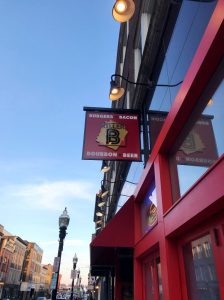 If you don’t love bacon, burgers, beer and bourbon, this post is not for you. If you love bacon, burgers, beer and bourbon, but you are hungry – I can’t say this post is not for you, but I highly suggest you will go eat before continuing reading. For the rest of you, folks, let’s have some bacon, burgers, beer and bourbon fun!
More often than not, it is easy to categorize a restaurant. “Fine dining” would easily invoke an image of the white tablecloth with perfectly arranged plates and silverware, and the waitstaff enamored with the bowties. “Burger joint” would bring you an image of maybe the ketchup bottles and simple wooden tables and chairs, and, of course, lots of burgers on the menu. “Bistro” would probably not have a strong mental image associated with the category, but it means “easy and fun place”, for sure to me.
When it comes to Killer B in Norwalk, Connecticut, it is not easy to place it into a specific category. Okay, for sure this is not fine dining establishment, it is not snuffed up like that, and you will definitely feel that when the check will arrive. But it is not a burger joint either – I feel we need a new category – maybe a “burger bistro”, just to signify that Killer B is simply a place where creativity is unbound. And by the way, the “B” actually stands for “bacon, burgers, beer and bourbon”.


Talking about creative, let’s start with the drinks. Killer B offers a number of interesting cocktails. But maybe “interesting” is just not the right word. Two of the cocktails on the list get smoked right in front of your eyes – right at the table. A small glass box arrives together with your cocktail, the pipe with aromatic chips is lit, and the smoke fills up the box. And you are witnessing all the magic.


I tried a few cocktails – Bourbon Mule (knob creek rye, lime juice, ginger beer) was tasty, not too sweet and with the good balance. Bite The Bulleit (Bulleit bourbon, house made ghost pepper honey, lime juice, orange juice, muddled jalapeños, topped with red bull, maple smoked right at your table) was very good, but not as spicy as I would expect, seeing the “ghost pepper” to be a part of the ingredients. But the smoke was there, so the cocktail was definitely a treat. Smokin’ B (Jim Beam black bourbon, bittermilk smoked honey sour aromatic bitters, strained over an ice sphere, garnished with a toasted orange slice, smoked right at your table) was, well, smokey, and yes, tasty too, nicely balanced and very cool to look at.
Then the Bacon Flight (flavors: bourbon, butterscotch, fire, honey, orange) arrived, and this is when I realize how the real adult candy should taste like. Thick cut, perfectly crispy, and with tons of flavor – this bacon disappeared in the blink of an eye. Seriously, that bacon was simply something else – if you would have an opportunity, bacon at Killer B is a must experience.


What arrived next was simply amazing – Lazy Man Lobster Mac (3 lbs of lobster, Monterey jack, cheddar, served in a lobster shell) – can’t be described using any words other than “super-creative” – and whole lobster shell, filled with mac and cheese and lobster – just wow.


Time for a salad, right? First, we had the Wedge Salad (boston lettuce, diced tomatoes, red onions, bleu cheese crumbles, creamy bleu cheese dressing and signature bacon), fresh and crunchy. The Cheeseburger Salad (mixed greens, burger, tomato, onion, pickles, American cheese, creamy bacon bourbon dressing) – was one of one of the “wow” moments for me – how many times you really wanted the burger but not the bun? Here it is – a salad which tastes like fully composed burger (lettuce, tomatoes, pickles), but without the bun! Another simple, but the wildly creative dish, if you ask me.


We continued with Volcano Potatoes (bacon-wrapped baked potato, onion, sriracha, honey, oozing melted cheese) – very tasty and again, creative – just look at the color of that dish. Beer Cheese & Bacon Nachos (house made potato chips, beer cheese, bacon, salsa fresca, black olives, sour cream) were simply dangerous – nobody could stop eating this dish until the last tiny morsel disappeared! Bacon-wrapped Fried Mozz (fried bacon wrapped mozzarella, bourbon bacon sauce) was another delicious concoction – who can say no to bacon and melted cheese?


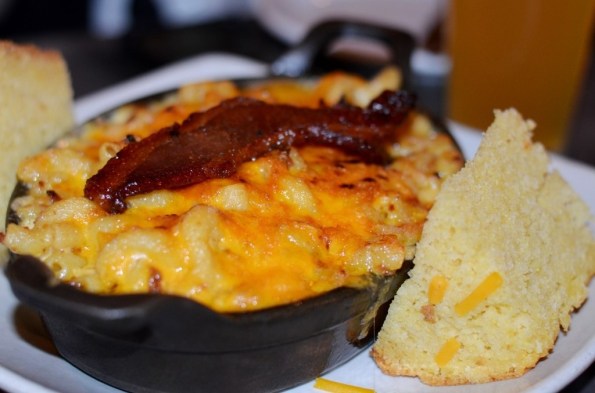
Then we had Bacon Cast Iron Mac and Cheese (candied bourbon bacon, bacon, more bacon) which I’m not sure I can properly represent (I mean how good it was), so let me explain it to you this way. I brought the leftovers of this dish home. My daughter loves mac and cheese (who doesn’t?), but she doesn’t like bacon. As the leftovers didn’t have any visual bacon presence, I decided not to tell her and see her reaction. She starts eating, she is clearly happy, then she turns her head to me and says “it has bacon, right?”. “Yep” was my short answer. She continues “it’s soooo good!”. So yep, that’s how good this mac and cheese was.
Now, we finally arrived at the burgers! We had an opportunity to try 3 different burgers, each with its own unique presentation and its own taste profile.
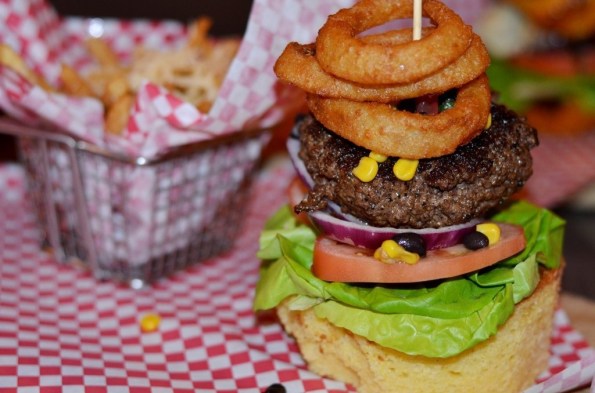
Killer B (double-decker pork patty & beef patty seasoned with bourbon & Guinness bourbon candied bacon, LTOP, bourbon bacon mayo, between two bacon grilled cheese sandwiches) was a bit scary to look at – so it definitely accomplished its purpose of bringing a “wow” to the table. But beyond the looks, each component was tasty, by itself and together. The Stinger (jalapeño patty, pepper jack, lettuce, chipotle mayo, jalapeños, sriracha, spicy bacon, chili flake bun) was not too spicy, but what I really enjoyed is the fact that you could taste jalapeño everywhere – so if you like jalapeño, this would be unbeatable. Country Style (open faced, Lettuce Tomato, BBQ sauce, black bean corn salsa, onion rings, corn bread) was also unique, sporting some of the very best onion rings I ever had – crispy and crunchy, overall – an excellent burger.


 Now, I have two questions for you (hoping you are still reading). First, do you think we left without trying the dessert? Second, do you think our dessert didn’t contain any bacon?
No and No!
Our first dessert was Coconut Peanut Butter & Double Trouble Milkshake, which was outstanding, fun to look at, tasty and perfect for sharing. And then (drumroll, please) we had Fried Oreo Cookies with … bacon! Yep, inside of each little roll of goodness, yes, there it was, a bacon. Clear, wild standout – a great finish to the great experience.


There you have it, my friends. I hope you successfully survived this bacon and burger juggernaut, and maybe I even made you crave some. If you are ever in a proximity of Killer B (I use “proximity” loosely here – when you crave something, distance shortens greatly), don’t miss your chance for an unforgettable bacon, burger, beer and bourbon experience. Cheers!
Killer B
80 Washington Street
Norwalk, CT 06854
Ph: 203.853.2326
http://www.killerbsono.com

Liquid Pleasures Beyond Wine: Whiskey Around The World
During 2011 I wrote a number of posts for the project called The Art Of Life Magazine – of course talking about my favorite subject, wine. The project was closed and even the web site is down, but as I still like the posts I wrote, I decided to re-post them in this blog. Also, in that project, posts were grouped into the mini-series, such as “Best Hidden Secrets” and “Forgotten Vines”. The post I’m offering to you today was from the mini-series called “Liquid Pleasures Beyond Wine”, and the subject of this post is Whiskey. Well, it is almost an original – I had to make a few small edits.
Also note that the series was written for a slightly different audience – I hope none of my readers will take offense in the fact that sometimes I’m stating the obvious…
In the previous post about Whiskey, we focused solely on Scotch, a malt Whisky produced in Scotland. The whole world of Whiskey (see, we are even changing the spelling from whisky to whiskey to accommodate the change) is much larger, with various kinds of whiskey coming the from different places all over the globe.
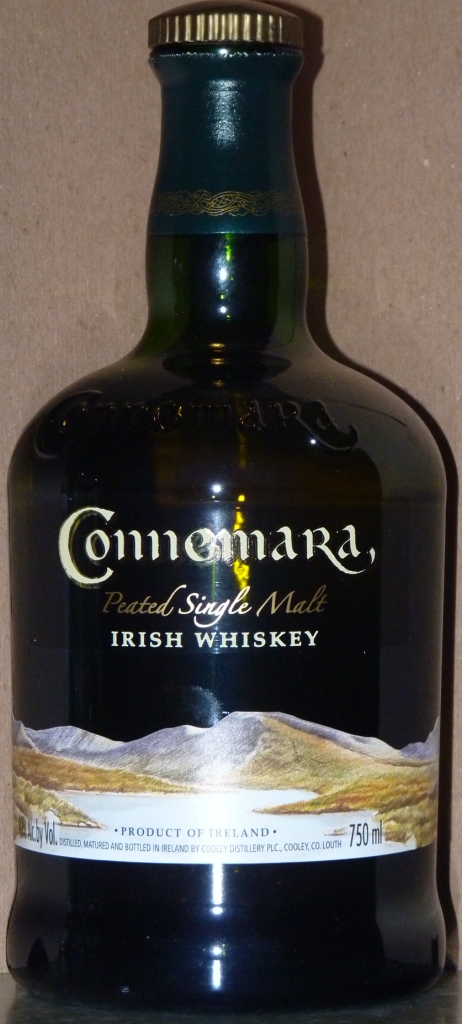 Let’s take a look at those places. We can and should start from Ireland – a close neighbor of the Scotland. Despite the “geographical closeness”, Irish Whiskeys are typically very different in style from the Scotch – to be more precise, they are much lighter. There are a few factors which define the lighter taste of the Irish Whiskeys. First, they are usually triple-distilled, versus double distillation process used in production of the Scotch. The next factor is reduced use of a peat smoke (actually, it is practically not used with some exceptions, such as Connemara, which is nicely peated). Lastly, many Irish whiskeys are made from the mix of grains as opposed to the malted barley used in Scotch production, which also leads to the lighter tasting final product.
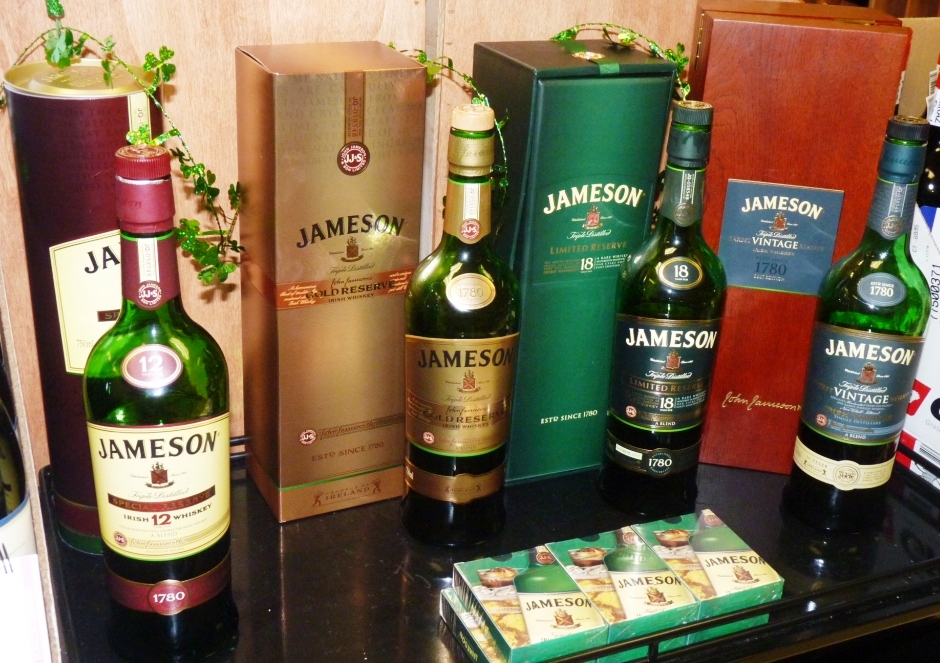 Irish Whiskeys are probably the oldest distilled spirit produced in Europe – at least based on information in Wikipedia, with the first notices going back to the 12th century. While there are only four acting distilleries in Ireland, one of those four, Old Bushmills Distillery claims to be the oldest officially recognized distillery in the world, tracing its history to 1608 (hence the name of one of their Whiskies, 1608). Each one of the four distilleries produces a substantial number of different lines of whiskey, so there is a good variety of the Irish Whiskeys available in the stores today. Some of the best known examples of Irish Whiskey include Jameson, Bushmills, 1608, Tullamore Dew – but of course there are lots more.
Let’s move to the United States, where a number of different whiskeys had being made for centuries. Some of the most popular kinds include Bourbon, a whiskey made out of the corn mash (mash should contain at least 51% of corn), and Rye Whiskey, which is, of course, made out of rye. As any other whiskey, American whiskey undergo a process of fermentation of the mash, distillation (usually single), and oak barrel aging. Sometimes a special filtration process is used in order to remove impurities and have softer tasting final product. Jack Daniels is probably one of the most famous examples of Bourbon, along with many others:


Some of the examples of the Rye whiskies include Old Rip Van Winkle, Whistle Pig and many others:
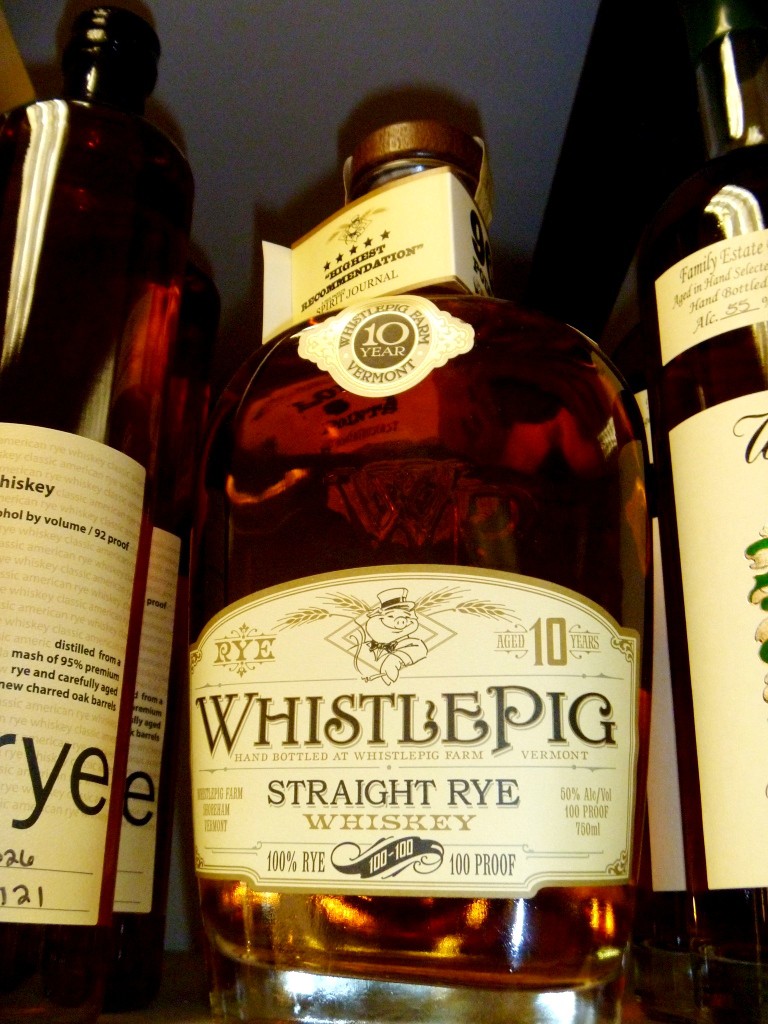
History of Bourbon and Rye Whiskey accounts for a few hundred years and includes interesting chapters such as Prohibition (you can read more about different kinds of American Whiskey here). What I have to mention is that today we are literally are living through the Whiskey revolution in the US – in addition to all the “traditionalists” in Tennessee and Kentucky, amazing Rye, Bourbon and Malts are produced in New York, Oregon, Texas, Utah, North Carolina, Colorado – and these are only some of those I’m aware of, I’m sure there are lots of others. It will make it for a very long post if I will start naming all those Whiskeys, so let me just give you a few examples in the pictures:
In addition to US, a number of other countries should be mentioned here as the world-class Whiskey producers (I would be curious to know if you would be able to guess what those are, so pause your reading for a moment). To answer my own trivia question, here are some of them – Japan, Taiwan and India (surprised?).
In all of those countries, blended and single malt whiskeys are made in the best tradition of Scotch Whisky. Whiskeys from those countries are quite rare and hard to find, but definitely worth seeking. One of the most famous Japanese Whiskeys is called Yamazaki and it is made as 12 and 18 years old single malts, using copper pot stills very similar to those used in Scotland. Another Japanese whiskey which is somewhat available in US is Hibiki, which is a blended 12 years old (there is also Hibiki 18, but it is even harder to find). Both Yamazaki, Hibiki and many others are owned by Suntory, a Japanese conglomerate.


Then there is Amrut, which produces whiskey in India, again using the Scotch methodology – with very good results. Amrut produces a number of single malt and blended whiskeys – for more information and tasting notes you can read this blog post.
With this we are finishing our exploration of the world of Whiskeys – and remember that paper exercise can not replace an actual experience which a good whiskey can bring. If you never had whiskey before, you need to resolve to try it now. For those who already knows the beauty of the Whiskey spirit – pour some of your favorite in the glass and cheers!
Weekly Wine Quiz #18: Wine and Independence Day
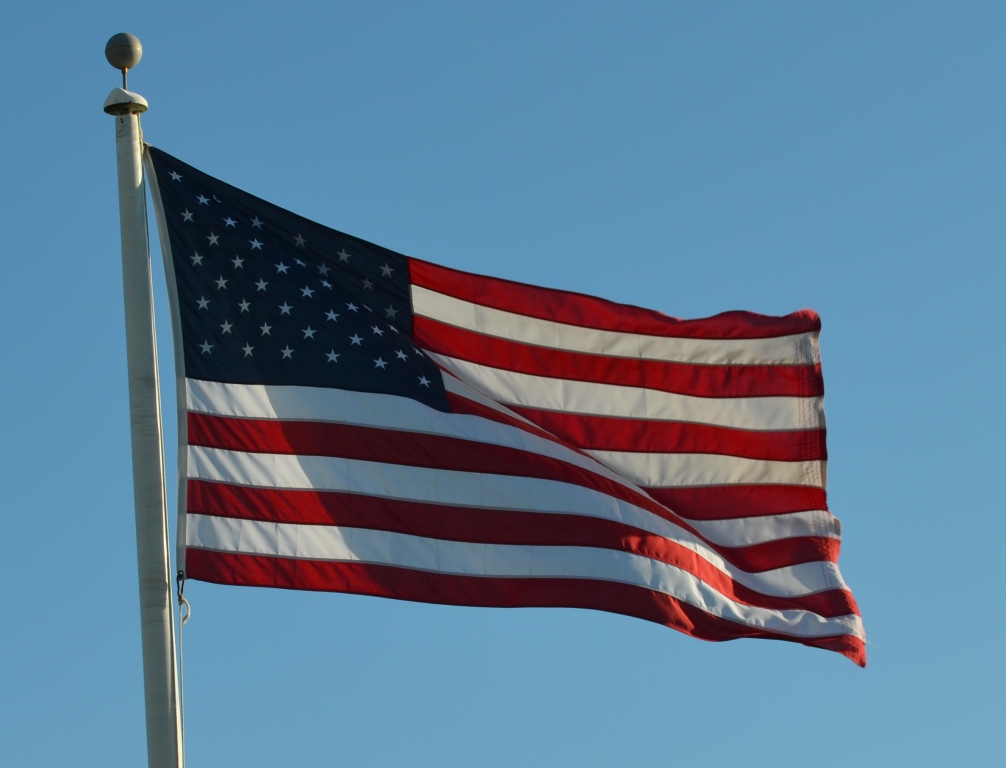 While last week’s quiz was definitely influenced by the hot weather, I want to still have one more quiz related to the history of wines, just to finish my imagined series. It also will be very appropriate, as in a few days we will be celebrating Independence Day here in US.
Imagine it is July 4th, 1776. Declaration of Independence is presented and voted for at the meeting of Continental Congress representing 13 colonies, signifying independence from the Great Britain. The room is cheering, and the glasses are poured for celebratory drink. Do you know what exactly was poured in those glasses?
Have fun! Cheers!
Weekly Wine Quiz #15 – Most Historically Significant Spirit?
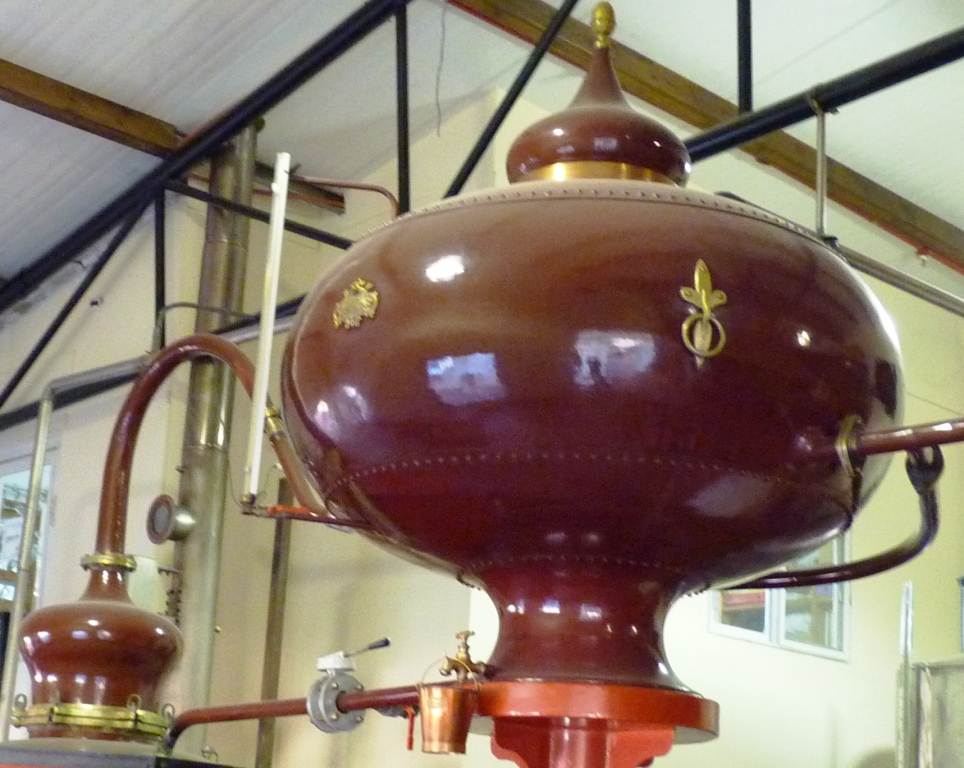 We are continuing the historical angle here, but stepping aside from the softer world of wine into the brave and powerful world of strong spirit (yeah, I know you can read it in different ways) – I’m talking about so called hard liquors.
Hard liquors came about some time in 14th – 15th centuries, when the alchemists of all walks were perfecting distillation process in their search for the ways to turn everything into a gold (or maybe they were searching for eternal life elixir?). It was quickly discovered that the hard liquors have a great range of effects on humans, from giving them pleasure to making them completely crazy and even killing them. During the course of history, hard liquors played wide variety of roles, from being an object of trade, a currency, to the object of desire and status symbol (Louis XIII, anyone?).
Each spirit has it’s own rich and unique history, full of all the human drama, discovery, excitement, love, hate and everything else which constitutes life (it is not for nothing French call some of their liquors Eau de Vie, a Water of Life). And of course each spirit affected hundreds of millions of lives throughout its course of history. However, there is one hard liquor which can be singled out for its role in the history of western civilization, where it was even an essential part of the slavery trade (the whole process was called “slavery triangle”), and its status was dramatically affected by the American Revolution. Do you know what spirit it is?
Have a fun filled weekend! Cheers!
Last Bottle Sign Up ($10 credit)




 Talk-A-Vino