Archive
Guest Post: Why You Need to Drink Wines From Victoria, Australia, and Where to Try Them
Today I want to offer you a guest post by Lucia Guadagnuolo who is a tour host and blogger for Wine Compass. When she’s not traveling or indulging in the fried delights of Southern Italian cooking, Lucia enjoys discovering the ever-changing food and wine scene in her hometown of Melbourne, Australia. She’s also recently completed the WSET Level 3 Award in Wines.
Becoming well regarded in the wine world for its cool climate expressions, you’d be forgiven for thinking otherwise of an Australian wine region. Warm sunny beaches and rugged Australian outback is what we’re used to seeing, and big bold Shiraz is probably what you’re used to drinking. While this might be true for the majority of Australia’s wine producing regions, Victoria, which is located in the South-East of the continent, experiences quite a cool to moderate climate. This, of course, is due to its latitudinal position, but also the cooling breeze from the Southern Ocean. So what does all this mean for those of us interested in exploring more of the wines from Australia? It means subtle, but varied expressions of Pinot Noir and Chardonnay. The two most planted varieties in the region, in both Yarra Valley and Mornington Peninsula, where most plantings of these varieties are found.
Australia has somewhat of a more relaxed approach to winemaking than some of the more traditional, old world countries. This means winemakers have the freedom to experiment and create wines from many different varieties that rival those of France, Italy and Spain combined. This same creative nature and desire for something different extends to the cellar door experience. Smaller boutique wineries, producing premium wines, are offering an intimate experience for visitors. You’ll often find the winemakers themselves pouring you a tasting, and giving you first-hand knowledge about the wine in your glass. It really doesn’t get much better than that!
So now you know why you should be drinking wines from Victoria, let’s find out the best places to try them…

Yileena Park – Yarra Valley
Carved into a hillside at the base of the Christmas Hills in the Yarra Valley, Yileena Park offers a unique and homely cellar door experience. They make premium wines that really highlight the great quality fruit being grown in the region today. Most of the wines at Yileena Park are aged for a minimum of four years before release, the reserve range is aged for 6 years, and the reserve Cabernet Sauvignon aged for 8 years before it’s available at the cellar door for purchase and tasting.
While you enjoy your wine, you get to experience endless views of the Steels Creek mountain range and devour a platter of smoked olives, cheeses, nuts and olive oil – all produced using the very barrels that their wines are matured in. Owners Bob and Diane are also always on hand to chat about the current vintage, and those gone by.

Pimpernel Vineyards – Yarra Valley
This quiet little cellar door in the heart of the Yarra Valley, is making a lot of noise in the wine industry, undoubtedly producing some of the best premium wines in Victoria. If you love your Pinot Noir, then you’ll be spoiled for choice with a significant range available and open for tasting. You can even compare different Pinot clones and the different winemaking techniques used to produce wines from each one. They also produce some outstanding Chardonnay, Chenin Blanc, Viognier, Syrah, and Shiraz, as well as some amazing blends.

Quealy Winemakers – Mornington Peninsula
A true testament to the Australian spirit of doing things a little bit differently, Quealy Winemakers on the Mornington Peninsula have set the standards in the region for growing unique varieties. The first to plant Pinot Grigio in the region and sell Friulano commercially, they have a range not often seen on the Peninsula. Pioneer winemaker Kathleen Quealy is often on hand at the cellar door to give you an insight into their winemaking techniques, and is always willing to give guests a private tour of the winery. Also, one of the few producers using terracotta amphora to mature their wines, which you’ll be lucky enough to sneak a peak at when you stop by for a tasting.

Ocean Eight – Mornington Peninsula
Set on a beautifully manicured garden landscape, this winery and cellar door really is picture perfect. In fact, the only thing better than the surrounds, are the wines. Not for sale anywhere else in the world outside of this very cellar door, you absolutely must visit Ocean Eight when on the Mornington Peninsula. Their premium range includes Pinot Noir, Chardonnay and Pinot Gris. Not a huge offering, but what they do, they do extremely well. Enjoy a tasting in their underground cellar, you won’t regret it.
Wine Compass are the Victorian wine country specialists and offer private guided tours of both the Yarra Valley and Mornington Peninsula, with bespoke itineraries specifically tailored to you.
Samples Galore – Holiday Edition
 Over the last few months, I had an opportunity to try a number of wines. What I didn’t do in timely fashion, however, is to share the tasting notes with you – and this needs to be corrected, which I’m doing with this post.
While I call this post a “holiday edition”, this is strictly due to the fact that this post is coming out during the most festive time of the year. It might be too late to use any of these wines for the gift giving, but you know what – these wines will be perfect for any day, whether it is cold or warm outside, and whether you need a gift or just want to reward yourself (yep, you always deserve an award for just being you).
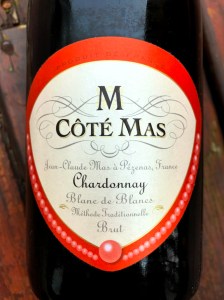
Let’s start with the sparkling wine – I have one to bring to your attention today. This wine comes from the master of “affordable luxury” Paul Mas (I wrote about his wines a few times in the past – you can find those posts here). This Blanc de Blancs from Languedoc is made out of Chardonnay using the traditional method, and it perfectly on par with Paul Mas sparklers I tasted before:
NV Côté Mas Chardonnay Blanc de Blancs Méthode Traditionelle Vin de France (12% ABV, $15.99, 100% Chardonnay)
N: Pleasant nose with touch of yeast and fresh apples
P: Restrained palate, good acidity, clean, touch Of yeast, hint of Granny Smith apples.
V: 7+


Let’s continue with a few of the white wines. First, one of my perennial favorites – Hanna Sauvignon Blanc. I tasted prior vintages of Hanna Sauvignon Blanc, and this is one of my most favorite styles of California Sauvignon Blanc – grassy, fresh and clean:
2015 Hanna Sauvignon Blanc Russian River Valley Sonoma County (13.2% ABV, $20)
C: straw pale
N: intense, fresh-cut grass, touch of lemon, fresh meadows, you can smell this wine forever.
P: nicely restrained, same grassy notes, touch of black currant (distant hint), perfect balance, refreshing
V: 8+
The next white wine comes from the very creative producer in Oregon – Left Coast Cellars, which also not a stranger to this blog – I had a pleasure of speaking (virtually) with Luke McCollom, winemaker for Left Coast Cellars and taste some of the previous vintages of their wines (here are the links to the two-part interview – Part 1 and Part 2). You can’t go wrong with Oregon Pinot Gris – today this is literally a “classic”:
2015 Left Coast Cellars The Orchards Pinot Gris Willamette Valley (13.7% ABV, $18)
C: Straw pale color
Touch of honeysuckle on the nose once warmed up, White stone fruit initially
Closed up while cold, white ripe fruit once warmed up, good balance, medium body, medium-long finish.
V: 7+
Last but not least is Les Dauphins Côté du Rhône. Rhone whites are fun wines, often very dry in the early years, and “ripening up” as they age. This was unquestionably a young wine which most likely would improve with age:
2013 Les Dauphins Côtes du Rhône Réserve Blanc (12.5% ABV, $11, 65% Grenache, 15% Marsanne, 10% Clairette, 10% Viognier)
C: Light golden
N: touch of honey, white stone fruit
P: white stone fruit, herbs, good acidity, quite astringent
V: 7+, will hold well with and without food
Now, time for the reds. The reds today represent a diverse group, from Australia to Italy to the USA. At the beginning of November, I participated in the #winechat with Michael Twelftree, winemaker for Tow Hands Wines out of Australia. We had an opportunity to taste and discuss three wines from Two Hands – two classic Shiraz wines from Barossa and McLaren Vale regions, and a Cabernet Sauvignon:
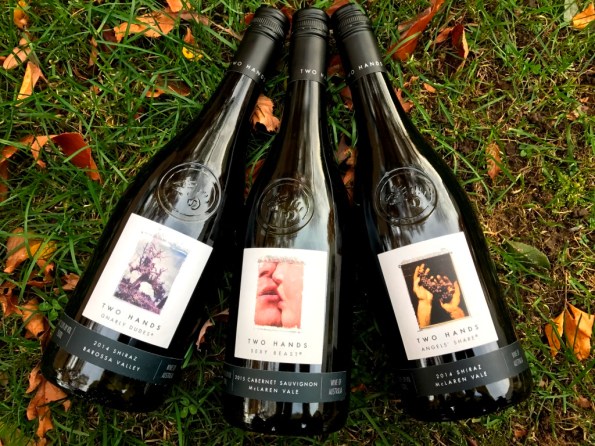 2014 Two Hands Gnarly Dudes Shiraz Barossa Valley (13.5% ABV, $36)
C: Dark garnet, almost black
N: espresso, roasted meat, licorice, blackberries
P: spice, plums, big concentration, touch of salinity, smooth texture, velvety and dusty
V: 8-, good rendition of Shiraz. The wine completely reversed on the Day 2, closed up.
2014 Two Hands Angel’s Share Shiraz McLaren Vale ($14.5% ABV, $36)
C: Dark garnet, almost black
N: intense, powdery, eucalyptus, mocca, licorice, tobacco
P: peppery finish, round, restrained, excellent acidity, bright and crispy red fruit
V: 7+, probably needs time
2015 Two Hands Sexy Beast Cabernet Sauvignon Mclaren Vale (13.8% ABV, $36)
C: Dark garnet, almost black
N: touch of cassis, closed
P: smooth, round, nice cassis backbone, mint, restrained
V: 7/7+, too young, needs time to rest and evolve
Two Italian wines were probably my favorite in this group – Cecchi Chianti and Alta Mora from Sicily:


2014 Cecchi Chianti Classico DOCG (13% ABV, $22, 90% Sangiovese, 10% other grapes)
C: Garnet
N: dark red fruit, dark chocolate, touch of smoke, roasted notes
P: fresh, vibrant, good acidity, touch of pepper, hint of tobacco, crashed raspberries, firm structure
V 8-/8, very enjoyable from get go, will evolve
2014 Cusumano Alta Mora Etna Rosso DOC (14% ABV, $24, 100% Nerello Mascalese)
C: dark garnet
N: playful, open, cherries, mocca,
P: bright, mouthwatering acidity, tart cherries without too much astringency, pronounced minerality, medium body, dry finish
V: 8-
And to finish off, here are two classic grapes – Merlot and Pinot Noir:


2014 Markham Merlot Napa Valley (14.2% ABV, $26, 86% Merlot, 12% Cabernet Sauvignon, 2% Petite Sirah)
C: garnet
N: touch of cassis, mint, alcohol presence is noticeable, dark chocolate
P: round, soft, clean acidity, touch of cassis, underripe raspberries, alcohol and tannins show a bit on their own, peppery finish
V: 7/7+, needs more time? second day definitely showed to wine as more coherent (7+), but it would benefit from more time
2014 Left Coast Cellars Cali’s Cuvée Pinot Noir Willamette Valley (13.5% ABV, $24)
C: Dark garnet
N: Mocca, sage, roasted notes, touch of mushrooms, savory undertones
P: Fresh raspberries, mint, herbs, touch of roasted meat, fresh acidity, mouthwatering finish, medium body, easy to drink
V: 8-, easy to drink, pleasant
We are done here. Have you had any of these wines? What do you think of them? Cheers!
Wednesday’s Meritage – Wine Quiz Answer, #MWWC5 Theme, Not Really [Wine Shortage], Australian Wine and more
 Meritage time!
First, let’s start with the answer for the wine quiz #80, grape trivia – Mourvèdre.
In the quiz, you were supposed to answer 5 questions about white grape called Mourvèdre. Here are the questions, now with the answers:
Q1: Name two grapes, most famous blending partners of Mourvèdre.
A1: Grenache and Syrah. GSM is the best known blend with M standing for Mourvèdre. The G stands for Grenache, and S is for Syrah (Shiraz).
Q2: Wine Spectator calls wines rated in 95-100 range Classic (the highest and the most prestigious category). True or False: there are no Mourvèdre-based wines rated in the Classic category
A2: False. A number of Domain Tempier wines from Bandol have 96 rating from the Wine Spectator.
Q3: Fill in the gaps: The oldest, continuously producing Mourvèdre vine is located at ___ Vineyard in ___, and it is about ___ years old.
A3: My answer: The oldest, continuously producing Mourvèdre vine is located at Hewitson Old Garden Vineyard in Barossa, Australia, and it is about 160 years old – here is my source of info. Of course I understand the “the oldest” claims are tough to prove – I’m sure few other producers claim the same. But the age (160) and general location (Barossa, Australia) seems to be generally correct.
Q4: Explain potential origins for all three names of the grape – Mourvèdre, Mataró and Monastrell
A4: Let me actually quote my answer directly from this source: Mourvèdre “first became established in Cataluña where it took on the names Mourvèdre (after Muviedro, the Moorish name for the city of Sagunto, near Valencia) and Mataró (after Mataró in Cataluña). In Cataluña the grape was grown by monasteries, leading to the name Monastrell (from the Latin monasteriellu) in that region”.
Q5: True or False: France plantings of Mourvèdre far exceed the plantings in Spain (no tricks here – Mourvèdre and Monastrell are used interchangeably, you have to assume it is the same grape).
A5: False. Plantings of Mourvèdre in Spain are about 6 times of the plantings in France.
So today we have a grand winner, the drunken cyclist, who answered all 5 questions correctly. We also have a winner, the winegetter, who answered all 5 questions mostly correctly, with the slight discrepancy on the question 3 – but nevertheless, they both get the grand prize of unlimited bragging rights. I also want to acknowledge my blogging friend Patty P’s 2013 photo project who was answering the questions for the first time – she answered the first question correctly, and I really like her take on the question #4. Great job!
Now, to the interesting stuff around the vine and the web!
I have a few interesting things for you. First, congratulations to the winner of Monthly Wine Writing Challenge #4, Anthony Davies, who writes the blog Confessions of a Wine Geek. Anthony just announced a theme for #MWWC5, which is Feast (very timely, considering Thanksgiving in the US, where it is all mostly one giant feast). Here is the link to the blog post with all the rules.
Now, I’m sure you read or heard somewhere about impending wine shortage. As the wine is ever increasing in popularity and demand all over the world, you would imagine that the report from the good source, showing for how many millions of cases demand exceeds the supply, will be picked up all over the news. And it was. Only the thing is that the numbers are numbers – question is what you do with those numbers. So in case you panicked (or were just amused), I have a very good article for you to read – it is written by W. Blake Gray, and it explains in good detail that no, you don’t need to stock up on wineand you will still find the good bottle to drink at the price you will be willing to pay.
Next post I want to bring to your attention is about Australian wines. It is a pity that selection of the Australian wines in the wine stores is not anything it used to be, as Australia makes a lot of great wines. This article, written by Mike Veseth at The Wine Economist, is talking about the work Australian winemakers are doing to restore the image of the Australian wines and squarely put them back to the wine stores and the cellars around the world.
Last but not least for today is an interesting open letter written by Alder Yarrow of Vinography to the United Kingdom. Turns out that association of Wine and Spirits Wholesalers of America is offering its help to the good people of UK, suggesting that they know how to protect public from the dangers of unregulated wine market (oh, horrors, free commerce!), which seems to be of concern to the people in UK. In case you don’t know, it is the US wholesalers who you have to thank for monopolistic pricing and draconian shipping laws in many of the states, and overall inability of wine consumers to get the wines they want. So Alder’s open letter to the United Kingdom is definitely worth reading, it is hilarious – here is the link where you can find it.
That’s all I have for you for today, folks. The glass is empty – but refill is on its way. Until the next time – cheers!
Last Bottle Sign Up ($10 credit)




 Talk-A-Vino