Lucky or Grateful?
 The Monthly Wine Writing Challenge, or MWWC for short, had been ongoing for a while – and one would think that all the aspiring writers mastered the basics by now and can handle any challenge word with increasing ease. Yet every time I write a post for the MWWC, I hope that the next one will come easier – and it doesn’t happen. This post, with the subject of “luck”, was probably the hardest of all, and I’m trying to finish it in the last 20 minutes before the clock passes the midnight mark. This might be more of a rant than just a regular post, but you will be the judge of it…
Lets forget the wine for a minute and just talk about the concept of luck. If you are looking for one abused, misused and misinterpreted idea, this might it. Just think about all the monikers – “this is your lucky day”, “lucky penny”, “my lucky shirt/socks/rubber duckie”, “luck of the draw”, “lucky moment”, “lucky to be alive”, “lucky star”. Yes, we use them casually and often, albeit I would argue we don’t really think or imply the actual meaning of the word “luck”. Outside finding a $5 bill in the parking lot (may be a good luck for you, bad luck for the person who dropped it), the luck is usually comes to those who puts a lot of effort to get it. Is successful business created by sheer luck, or by sweat, sometimes blood, and lack of the sleep? Is successful marriage the result of luck, or the hard work of both spouses? Are the happy and healthy kids the result of luck, or the result of parents daily work and sacrifices? Yes, luck exists, of course, but its impact on the daily life of the vast majority of people, shall we say, is slightly exaggerated?
Now, let’s look at the wine world. We need to divide it into two parts – there are those who get to make the wines, and those who get to consume them. So talking about those who have to farm the land, grow the grapes, harvest them and then go through all the step from harvest until bottling (never mind selling), how much luck are they expected to get? The only lucky break they can get is the great weather. Great weather makes things a bit easier – but, this is where winemaker’s luck starts and ends – the rest is passion, sweat, tears and hard work. Lots of things can go wrong during all the stages of winemaking, and luck will not help to fix them – but knowledge, experience and tenacity will.
Let’s come to the other side of the table – the consumers. Now, this is where the role of luck is hard to pinpoint. You get the bottle of wine which generally costs $70 for only $25 at WTSO – is that luck? May be, but what if this wine is not your style and you don’t like it – but you got 4 of those bottles just to get a free shipping – is that still the lucky situation, or may be not so much anymore? You built the wine cellar, you got the wine and kept the bottle for 10 or 20 years, now you opened it and tastes great – is that luck? You tell me, as I’m not sure if that should be called a lucky accident, or is it really the result of the great winemaking and your labor of love as an oenophile.
I’m really not sure how often we should feel lucky, and if “lucky” is even the correct word – I think “grateful” is far better word to use. Yes, we should be grateful to the winemakers for all their hard work, as they created the wine which lasts, the wine which can move us emotionally. We should be grateful to our families, which allow us to spend money, time and efforts on this passion, and tolerate us literally go nuts because of the few drops of some strange liquid in our glass which we consider better than the nectar of Gods. Before we even get to enjoy that glass of wine, we should be grateful for our overall lifestyle, which allows for the things so insignificant in the grand schema of things, as glass of wine, to play such an important role in our lives (go explain the importance of wine to the billions which only dream about the glass of clean water). So lucky or grateful? I think the luck is something we try to keep to ourselves, and by being grateful we actually give it back.
So lets drink for being grateful for all the luck we have in our lives, and may it always be with us. Cheers!
Weekly Wine Quiz #95: Grape Trivia – Tannat
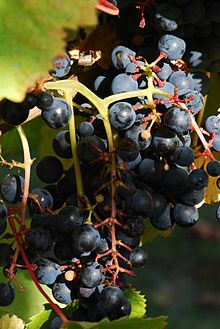
Tannat Grapes. Source: Wikipedia
The Wine Quiz series is not meant to intimidate. The whole idea here is to have fun and learn something new. When answering the questions, it is fully encouraged to use all available sources of information, including Google or any other search engine. There are no embarrassing answers – the most embarrassing thing is not giving it a try…
Welcome to the weekend and your new wine quiz!
We are continuing our grape trivia series, with the focus still on the red grapes, and today’s subject is Tannat.
It is interesting how different the grape stories are. Some grapes, like Bonarda/Charbono, have very convoluted history with changing names and uncertain origins. Some grapes, like Tempranillo, have a page-long list of synonyms, different names they are known under in the different parts of the world and even in the different parts of the same country. The Tannat story is a lot more straightforward. Wikipedia doesn’t list any synonyms for the name Tannat, which is quite rare – most of the grapes have some alternative names listed, and there are no confusions surrounding the Tannat grape.
Tannat originated in the Southwest France, in the area close to Pyrénées. Area surrounding village of Madiran was and still is the main wine growing area for Tannat, but today Tannat is growing in the number of countries in the world (albeit not in the major quantities). In the second half of 1800, Tannat made it to Uruguay, where today it is literally considered the national grape. In addition to Uruguay, the grape is successfully grown in United States – California is increasing its plantings quite a bit, and some other states are experimenting with the grape. Australia, Argentina, South Africa, Brazil, Italy are all also have some plantings of Tannat.
Tannat is a late ripening grape, with the thick black skin. That skin makes the grape resistant to the mildew rot, and also becomes a source of tannins. Tannat wines are generally known to make firmly structured, tannic and powerful wines, which require quite a bit of aging to soften those tannins up – however this is changing nowadays as many winemakers focus on making the Tannat wines more approachable while young. Similar to the other grapes with likewise characteristics (think thick skin/tannins), Tannat has very high level of procyanidins, which according to the Wikipedia are “good for reducing blood pressure, lowering cholesterol and encouraging healthy blood clotting”.
And now, to the quiz!
Q1: Tannat was the reason for one specific winemaking technique to be invented relatively recently. Do you know what technique is that?
a. Malolactic fermentation
b. Micro-oxygenation
c. Carbonic maceration
d. Reverse osmosis
Q2: True or False: Tannat is primarily harvested by hand and not by the machine. Provide an explanation for your answer.
Q3: Name 3 grapes, often used as blending partners when Tannat wines are produced in France
Q4: Wine Spectator calls wines with 90-94 ratings “Outstanding: a wine of superior character and style”. True or False: There are no Tannat-based wines rated as Outstanding by Wine Spectator.
Q5: Tannat ripens at about the same time as Cabernet Sauvignon. Assuming you have Tannat and Cabernet Sauvignon which are both slightly underripe, which grape would you make the better wine from, Tannat or Cabernet Sauvignon? Why?
Bonus: Have you ever had any Tannat wines? What do you think of them?
Good luck, enjoy the quiz and your weekend! Cheers!
Instant Gratification, and Arrival of the Spring
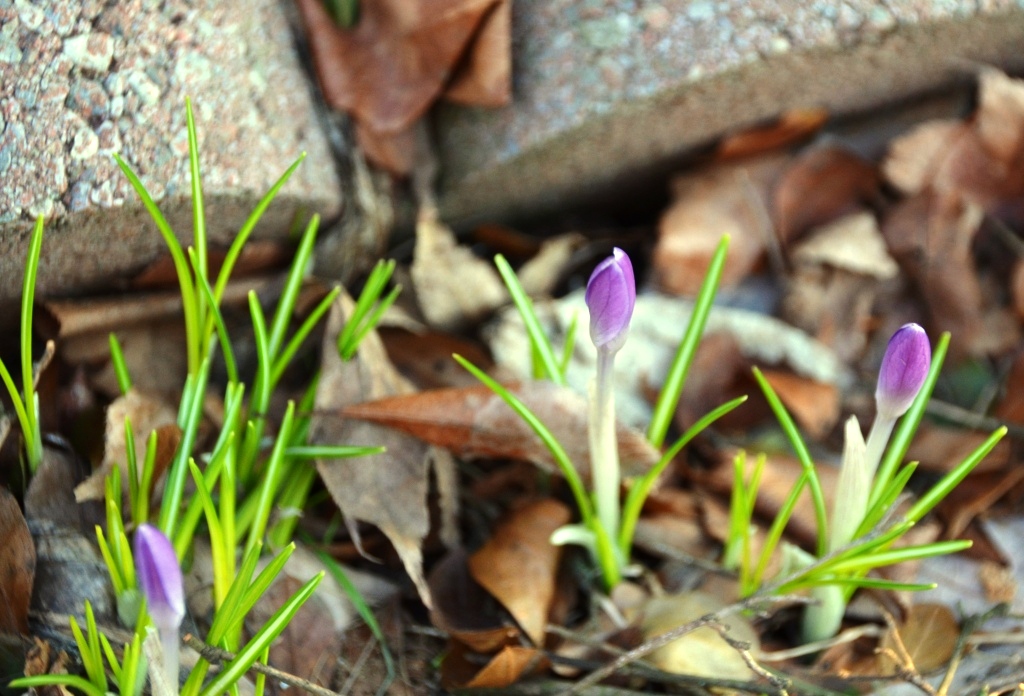 You know, when the winter is like the one we had in New England, you get to the point when you sort of stop believing that the spring will come. You wake up in the morning, your thermometer shows 20F, and your mind doesn’t even comprehends the concept of spring, flowers, grass – no, those leftovers of the snow are going to stay forever. Only a few days ago I was explaining to my daughter about the flowers called snowdrop in English, which are usually showing up as soon as snow melts, and I was lamenting that this year we probably will see no snowdrops as the winter was so brutal here.
Then today was the first official day of spring, and while it was still cold outside, it was definitely more palatable (read: warmer), and the snow was almost gone. And walking around the house all of a sudden I saw… flowers! It was simply magic, the magic of life happening right here, right now. No matter how brutal the winter is, the spring will come no matter what – and I was looking at the proof. Don’t know if this is exactly a snowdrop or simply a similar flower, but I was definitely happy to see it.
Okay, so spring is here. And for the instant gratification part? Easy. Here I’m talking about wine (wow – total surprise, huh?). You know, I can define the instant gratification as a sequence of a few very simple steps – twist, pour, sniff, say “ahh”, sip, roll your eyes towards the ceiling – have a moment of bliss. The wine which gave me this moment of blissful instant gratification – 2006 Mt. Difficulty Pinot Noir Central Otago, New Zealand. I wanted to have a good glass of wine, and as I only have a vague idea of what wines are in the cellar, I was simply looking through the wines on one of the shelves – and when I saw this bottle Mt. Difficulty, I thought – yes, that will do it – and it delivered. Beautiful classic Pinot Noir on the nose – a little smoky, a little earthy – and perfectly fresh, full of juicy cherries and herbs, harmonious palate. You know, the one which gives you an instant gratification. I loved that wine so much that I simply had to connect the first flowers with this wine – as you can see it in the picture below:

The spring is here! Let’s drink to Life! Cheers!
Wednesday’s Meritage – #MWWC8 Last Reminder, Water into Wine – A Hoax, Corks and Twist Caps, and More Wine in Numbers
Meritage time!
Last weekend happened to be way too busy, so I had to skip the traditional wine quiz (no worries, it is coming up next Saturday). However, I have tons of interesting stuff around the vine and the web, so let’s get to it.
First and foremost – do you feel lucky? More precisely – do you feel wine-lucky? Then share your luck with the world – and you have only few days left to do it. Monthly Wine Writing Challenge #8 is almost over – the submission deadline is Sunday, March 23rd, thus you have only about 4 days left – start typing. So far 7 blog posts had been submitted – here is the post by the #MWWC8 host, Kara The Sweet Sommelier, summarizing current status.
Remember I wrote recently about The Miracle Machine, the device which promised to almost magically create wine out of water and a few ingredients? Turns out, The Miracle Machine was simply a hoax – but it had its purpose. The goal of that “project” was to bring attention to the organization which actually has a very important mission – providing drinkable water to more than billion (!) people in the world, who have no access to the clean and drinkable water. The name of the organization is “Wine into Water”, so playing on the “water into wine” was almost warranted here. I think the “increased awareness” mission was successfully accomplished – here you can find more information about both the hoax and the Wine into Water project in itself.
To cork or to screw top? That is the question! The debate is still ongoing, and the jury is still out – aesthetics, spoiled wine, proper wine aging, consumer education – all is at play in the back and force dialog about corks versus screw tops. Here are few interesting links for you. Here you can find a short video of the winemaker explaining why they switched back from the screw top to the cork. On the same subject, here is the link to the blog post at The Wine-o-scope, which critically analyzes findings of the research on the corks versus screw tops. To rephrase, I would say that this blog post is attacking the research findings – and I actually have a lot of problems with the number of statements in the blog post, which I expressed in the designated comments section. Anyway, it is well worth your time, so go read it.
Two more interesting pieces are more or less related to the subject of wine in numbers. The first one is about wine in Big Numbers – here you can find the link to the post about who is who in the US wine market. If you like the numbers, this post is for you. You will find out that three leading companies in US produced more than half of all the wines in 2013, and you will also find out that company number 1, Gallo, makes more wine than bottom 26 producers. Is this very important information for the oenophiles? Probably not. Is it fascinating? I would say yes. Again, take a look for yourself.
The last one for today is the article in the Silicon Valley Bank (SVB) wine blog about Tasting Room Survey conducted by the SVB jointly with Wine Business Monthly, on the subject of profitability of the tasting room operations of the wineries – full report will be published in May. According to the survey, it appears that on average, 35% of the tasting room visitors don’t buy anything. Those people are called “melon squeezers” (read the article for full explanation of the term – in the nutshell, these are the people who touch the fruit but don’t buy it), and the article provides suggestions as to how to get rid of these annoying “melon-squeezers”. Even more fascinating than the article itself are the comments (there are lots of them), some of them suggesting that people must buy something if they visit the winery and that visitors have to buy the wine even if they don’t like it. To make it clear and simple, I’m peeved by this article and especially taken in conjunction with the comments, but I don’t want to end up with the huge rant in this blog post, so I will leave it up to you to read and come up with your own opinion (the rant might still be forthcoming).
And we are done for today. The glass is empty – but the refill is on its way. Cheers!
Monthly Wine Writing Challenge Reminder
The time left to connect luck and wine in potentially award-winning epistolary exercise is getting very short… You have less than a week to submit your lucky entry for #MWWC8, so get to that keyboard and start pounding, errr, I meant, typing…

Even though I am not the “official” host of Monthly Wine Writing Challenge 8 (#MWWC8), I like to think of myself as the Challenge’s “Goodwill Ambassador.” Thus, consider this a “friendly” reminder to get your butt in gear and get writing! Perhaps this month’s theme “Luck” does not particularly “speak” to you and you are finding it difficult to come up with a post. Maybe you have been incredibly busy hosting your Uncle Cletus who showed up on your doorstep three weeks ago and has been drinking your cellar dry ever since. Then again, you could just be a lazy son-of-a -female-dog and were planning on writing it this weekend (like me).
Regardless of your reason(s), as far as I can tell, there have only been five entries thus far (please let me know if that is not the case and I will be sure to include you here):
View original post 283 more words
More Than 20 under $20
A few days ago I was challenged to create a list of 20 wines under $20 which I can recommend. I generally shy away from this type of exercise, due to many reasons – I buy a lot of exotic wines (rare grapes, natural wines, old wines, etc.), and I also have my specific way of buying the wines (mailing lists, WTSO, Last Bottle, BinEnds, closeouts at my local store), so there is a good chance that my recommendations will be useless for majority of the people. But then I thought – no, I can actually do it. In my oenophile years, I accumulated a number of safe choices – I might not be buying those wines myself all that often, but nevertheless, there is a number of wines I tasted throughout the years, and they are consistently good, vintage into a vintage, and they are under $20. One problem though – there is no way this list can be limited by 20 wines. If you have seen any of my Top Dozen Wines of the Year lists, you know that they include not the dozen, but rather a two dozens and then some. So 20 under $20 simply sounds good, but then More Than 20 under $20 probably sounds even better, right?
Okay, without further ado, here is my list of More Than 20 under $20. Just to make it clear, this is how the list is built:
1. The wines are generic and widely available, can be found at many wine stores. As much as I love Fiction by Filed Recordings, which is generally under $20, the wine is almost impossible to find and thus will not make it into this list.
2. To the best of my knowledge, the wines are priced under $20, at most of the regular wine stores and/or supermarkets – yes, if you will buy the same wine at the convenience store in Vegas or a pharmacy in Miami, you might pay a lot more than $20, and sorry, I can’t help you with that.
3. Private label wines are not included, even if they are great and under $20 – sorry Trader Joe’s, Costco and Stew Leonard’s.
4. The list is not sorted, not rated and not prioritized in any way. These are all solid wines, vintage into a vintage – thus vintage is not specified either. I will provide brief descriptions as to why I like the wine – or may be no description at all. Also, some recommendations are general group recommendations, not for a specific wine.
5. The list is organized into Sparkling, White, Red and Dessert. I honestly wanted to include some Rosé, but quickly realized that I will not be able to do that.
Here we go.
Sparkling wines:
Saint-Hilaire Blanquette de Limoux, France – one of my all time favorite French sparkling wine. Dry, pleasant, refreshing. Typically around $11.99, unbeatable QPR at that price.
Domaine Chandon Blanc de Noirs, California – just love the depth of expression on this wine.
Domaine Ste Michelle Blanc de Blancs Columbia Valley, Washington – perfectly refreshing and outstanding value at around $10
Mionetto Prosecco, Italy – not the most mind-boggling sparkler, but very consistent and very reasonably priced.
Segura Viudas Brut Cava, Spain – both white and Rosé versions are very good, with great QPR. Sometimes, you might even get lucky, and find their flagship Segura Viudas Brut Reserva Heredad Cava, but this wine generally is a touch out of our range at around $22 (but still worth it).


White wines:
Honig Sauvignon Blanc Napa Valley – a perfect example of Sauvignon Blanc from California, very delicious, and one of the most reasonably priced California Sauvignon Blanc on the market.
Sauvignon Blanc, New Zealand – yes, I know it is a broad recommendation – but NZ Sauvignon Blanc is generally priced well under $20, and it is generally hard to go wrong with any of them – as long as you like grapefruit notes in your bright and invigorating wine.
Sauvignon Blanc, Chile – another general recommendation, yes – but again, it is hard to go wrong with Chilean Sauvignon Blanc, as long as you prefer a bit more lemon/gooseberry profile as opposed to grapefruit profile.
Muscadet de Sèvre et Maine, France – one more broad category recommendation – these wines are extremely food friendly, generally very well priced and will keep you refreshed with their cutting-through acidity. Look for the words “Sur Lie” on the label for the added complexity.
Botani Moscatel Seco, Malaga DO, Spain – every time I taste this wine, it puts a smile on my face. Delicious, with perfect QPR.
Bodegas Shaya Shaya Verdejo Old Vines Rueda, Spain – perfect Chardonnay-rivaling complexity, delicious wine. Excellent QPR. If you are in a mood to splurge (at around $26), try its older brother – Shaya Habis.
St. Urbans-hof Riesling, Mosel, Germany – I like this producer, with many wines reasonably priced under $15, widely available and generally well balanced in terms of sweetness and acidity.
-
- Botani Moscatel Seco Sierras de Malaga DO 2008
-

- Shaya
-
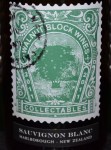
- New Zealand Sauvignon Blanc
-
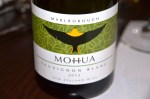
- Mohua Sauvignon Blanc
-
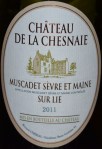
- Muscadet
Red wines:
Bogle Vineyards Petite Sirah, California – generally at around $11.99, this wine is literally impossible to beat in the QPR – dense and powerful, well balanced and round. Pretty much full Bogle product line is good and well priced, but Petite Sirah is a standout. Also, for a bit more money, but still under $20 ($17.99 or so) , try Bogle Phantom – big and decadent, with lots of ripe fruit, but still well balanced.
The Magnificent Wine Co. “House Wine” Red, Columbia Valley, Washington – nice, simple and consistent, very quaffable, vintage to a vintage.
Louis M. Martini Cabernet Sauvignon Sonoma County – finding good Cabernet Sauvignon under $20 is a serious challenge, I’m glad Louis M. Martini consistently delivers.
Georges Duboeuf Beaujolais Nouveau, France – yes, you read it right, I actually recommend Beaujolais Nouveau – Georges Duboeuf Beaujolais Nouveau gets better and better every year – and sports great QPR.
E. Guigal Côtes-du-Rhône Red, France – E. Guigal makes lots of great wines, this Côtes-du-Rhône not been an exception
Delas Côtes-du-Rhône Red, France – same as the previous wine, Delas is a great producer and these wines are very consistent
Catena Zapata “Catena” Malbec, Mendoza, Argentina – soft, simple, easy to drink – also a versatile choice at the restaurant
Bodegas Volver Tempranillo La Mancha, Spain – power and delight. ‘Nuf said, go try for yourself.
Bodegas Carchelo Carchelo “C” Jumilla, Spain – exuberant and exciting.
Bodegas Borsao Garnacha Tres Picos, Spain – one of the best expressions of Grenache at the great QPR.
Bodegas Lan Rioja Crianza, Spain – consistently good Rioja, bright and cheerful. Once you try it, you can’t believe how little you paid for what you got.
Castello Di Monsanto Chianti Colli Senesi Monrosso, Italy – it is actually pretty difficult to find mainstream Italian wines to recommend in the under $20 range – Monsanto Chianti is a good exception – excellent, supple and round wine at a great price.
Cono Sur Pinot Noir, Chile – simple, but surprisingly classic Pinot Noir, Chilean or not.
-
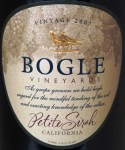
- Bogle Petite Syrah
-
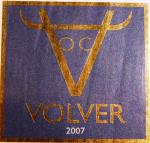
- Bodegas Volver
-
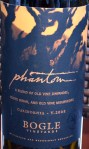
- Bogle Phantom
-
- Carchello
-
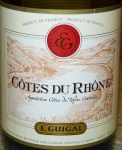
- E. Guigal Cotes du Rhone
Dessert wines:
Sandeman Founders Reserve Porto – a classic.
Late Harvest Wines, Australia – yes, a wide category, but generally very inexpensive and delicious
Late Harvest Wines, South Africa – same as above
That’s all I have for today for you in this group of more than 20 under $20. Of course there are hundreds and hundreds of wines under $20, which are consistently good – but you have to draw the line somewhere. What are your favorite wines under $20? What do you think of the wine sin my list? Cheers!
Wednesday’s Meritage – Wine Quiz Answer, National Wine Week, Las Vegas Wine Happenings, French versus American – Really?
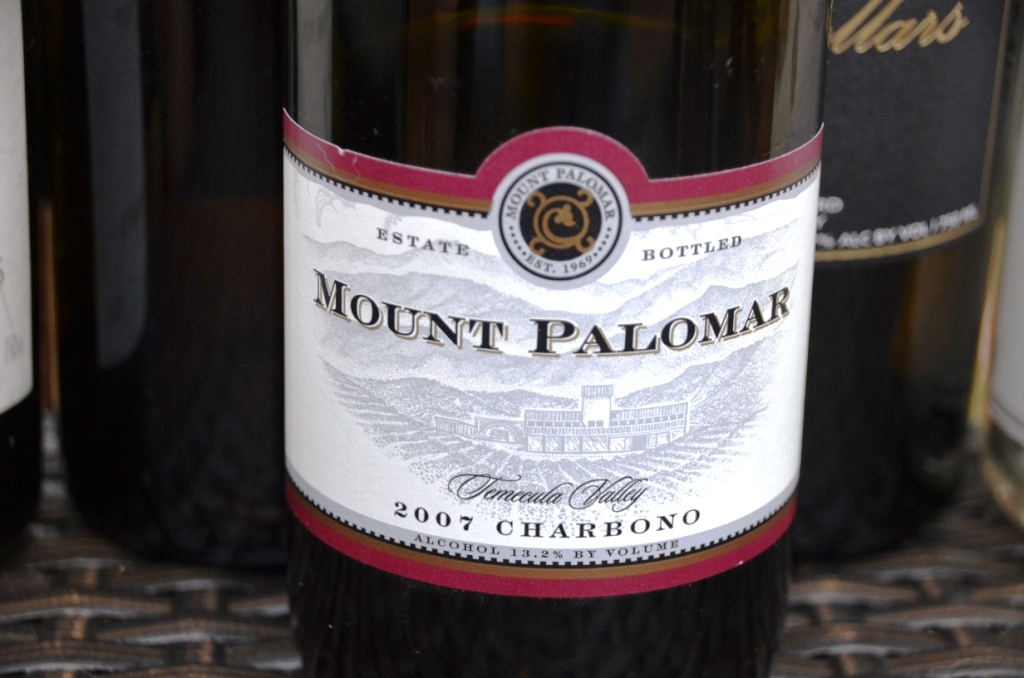
Mount Palomar Charbono
Meritage time!
Let’s start with the answer to the wine quiz #94, Grape Trivia – Bonarda/Charbono/Douce Noir. In the quiz, you were supposed to answer 5 questions about the red grape called sometimes Bonarda, sometimes Charbono, but should be called Douce Noir.
Here are the questions, now with the answers:
Q1: True or False: Bonarda is one of the 30 most planted red grapes in the world?
A1: True. At least as of 2010 it was, and there is an upswing curve in the Bonarda plantings in Argentina, so this definitely should hold true in 2014.
Q2: These are some of the grapes growing in Argentina. Sort this list by the area plantings in the descending order:
a. Bonarda, b. Cabernet Sauvinon, c. Criola Grande, d. Malbec
A2: The correct sequence is: Malbec, Bonarda, Criola Grande. Side note – I heard about Criola Grande grape for the first time while researching information for this quiz. Interesting to note that if we would be talking about year 2000, Criola Grande would be grape #1 on the list.
Q3: Which one doesn’t belong and why?
a. Turley, b. Bonny Doon, c. Robert Foley, d. Mount Palomar
A3: Bonny Doon is the one. The rest of the wineries produce Charbono wines today, but not Bonny Doon (side note – they were making Charbono in the past).
Q4: Wine Spectator calls wines with 90-94 ratings “Outstanding: a wine of superior character and style”. True or False: There are no Charbono wines rated as Outstanding by Wine Spectator.
A4: False. But it is false by the tiny, tiny margin – Robert Foley Charbono has the highest rating of 90 and the only Charbono wine with that rating.
Q5: True or False: From year 2000 to 2010, plantings of Bonarda in Argentina have increased by more than 20%
A5: True. The plantings went from 14989 acres in 2000 to 18127 in 2010.
It is interesting that participation in the wine quiz is very different from the week to the week – I’m sure that at this point as I’m playing in the land of the rare grapes, it makes people afraid to take a risk (where there is none!) and answer the quiz’s questions. Only Bill of Duff’s Wine made an attempt to answer the questions, so I definitely would to acknowledge him. At this point I have a few rare grapes lined up for the quizzes, so I plan to continue with that – but I hope that you, my readers, will make an effort to answer the questions in any case – you have nothing to lose, and will only get the benefit of learning.
Now, to the interesting stuff around the vine and the web!
Heard for the National Wine week? If you are like me, than the answer is no. Meanwhile, it appears that one of the well known restaurants in US, Smith & Wollensky, is celebrating 54th National Restaurant Week! Yes, this is somewhat of a late notice, but if you live in a close proximity to one of the Smith & Wollensky restaurants, you still have about 2 days to go there and taste 10 different wines for only $20 with the purchase of the lunch entree. Here is the link to the web site with more information.
Las Vegas is probably one of the most “happening” places on Earth – a city which exist with only one purpose – to entertain. Music, Art, Food – everything is big in Vegas. As you might expect, wine is also happening in Vegas. If Las Vegas is the part of your travel itinerary over the next few weeks, here is the blog post from the blog hosted by Vegas.com, which will help you to properly plan your travel itinerary and not to miss any of the wine events.
Last but not least for today is a very peculiar article by Tom Wark, a well known figure in the wine industry, who also writes the blog called Fermentation. Why peculiar? The blog is titled “Why French Wine Will Never Be as Interesting as American Wine” – tell me, what do you think of it? What I find peculiar, is that Mr. Wark is a wine professional – thus I would really expect that if anyone, he should really have an appreciation for the wine world as a whole and not make cheap tabloid type of statements, which are generally intended only to attract instant, but short living publicity. In his post, which you can find here, it seems that Mr. Wark got upset over someone else’ opinion about French wines being more superior to the American wines, and that is what prompted Mr. Wark’s post where he has a fictional dialog proving his point about American wines being interesting and I guess French wines being boring. I’m not even going to comment on that blog post here, as in today’s world, each and every country produces phenomenal wines which are only getting better and better, and winemakers everywhere – France, Italy, Spain, New Zealand, Georgia or California – are crossing the boundaries and test the limits literally every day. But I would suggest that you will read the post and shitload of comments it generated – I guarantee you will have fun. I also want to mention that Chris Kassel of Intoxicology Report took a pity on Mr. Wark and wrote the commentary to his post which he titled “Why American Wine Will Never Be As Interesting As French Wine” – you can find it here. Again, a fun reading and well worth your time.
And we are done here. The glass is empty – but the refill is on its way! Cheers!
Daily Glass: Few Wines, Beautiful and Interesting
Disclaimer: this blog post is not an attempt to create the new rating system. It is rather an account into the emotional escapades of the oenophile tasting wine.
Here I’m again with the super-indescriptive descriptor – beautiful wine. I wonder if the phrase “beautiful wine” gives you a mental image. I’m not talking about the exact image of an object shaped in the form of a bottle, but rather a mental anchor you can relate to “ahh, I understand”. Let me deconstruct this “beautiful wine” term as the following:
1. The wine is perfectly balanced – fruit, acidity, tannins, texture, structure – all together.
2. Drinking this wine is a pleasure
3. The wine is memorable
4. “Beautiful wine” designation is totally spontaneous and emotional. It usually happens after the first sip and the subsequent uncontrollable “wow”.
When it comes to the term of “interesting wine”, that happens when I’m puzzled, like “hmmm, interesting, I’m not sure what to think of it”. Please understand that it is very different from “ouch, it needs time”, “what is it???”, “crap” and “this is disgusting”. “This is interesting” simply means that I can’t put a handle on what I’m tasting, where, for instance, the initial sensation of round and silky is followed by something harsh and unbalanced. “This is interesting” usually ends up being extended into “hmmm, this is interesting, let’s give it some time”. From this point on, the wine can be put aside to be drunk at another day, or it might go into the decanter if I feel that it would be sufficient to change it.
Here are the few wines we had last week, some beautiful and some are … interesting.
2011 Field Recordings “Neverland” Red Wine Grassini Vineyard Happy Canyon of Santa Barbara (15.1% ABV, 75% Cabernet Sauvignon, 15% Petit Verdot, 10% Merlot. Aging: 50% new French barrels, 25% new American barrels, 25% seasoned French for 18 month) – believe it or not, but every time I open a bottle of Field Recordings wine (which is easy – just twist off the screw top), I have a moment of trepidation – will it be as good as everything else I tasted before from Field Recording? You could’ve noticed in this blog that I have a lot of happy reviews of the Field Recordings wines, thus it creates that uneasy moment with each new bottle opened. Luckily, this bottle of “Neverland” didn’t deviate from the trend at all – beautiful nose of cassis and blueberries, open, bright and concentrated, followed by more of cassis, sweet oak and blueberries – but nothing over the top, soft and delicious fruit with perfectly refreshing acidity, soft tannins and overall impeccably balanced. This was a beautiful wine – and equally dangerous (“dangerous wine” = disappears before you notice it). Drinkability: 8+
2012 Cane and Fable 373 Cabernet Sauvignon Paso Robles (14.9% ABV, 85% Cabernet Sauvignon, 10% Tempranillo, 5% Petit Verdot. Aging: 225L oak barriques, 25% new, 12 month) – this wine is the result of collaboration of Field Recordings’ Andrew Jones and Curt Schalchlin of Sans Liege fame. Different presentation of the bottle (yes, I know, that giant cricket on the label can be off-putting), and the bottle is enclosed with the actual cork and not the screw top as all of the Field Recordings wines. The nose was more restrained than the previous wine, but still showing cassis with some earthy overtones. On the palate, this was that exact “interesting wine”. It was showing nice fruit and structure, but was somewhat fluctuating on an off in terms of being round, or not. So this was an interesting wine to put aside, which I did. As you can take a hint from the cork enclosure, this wine is intended to age – and on the second day it came together, showing cassis with the addition of espresso and earthiness – I think that Tempranillo was holding it away from becoming Bordeaux-like, so this was the wine on its own, well balanced, restrained, and craving for food. I have another bottle and I definitely intend to give it a few years to see what it is capable of. By the way – a mini quiz for you – care to guess what 373 stands for in the name of this wine? Drinkability: 8-
2010 CVNE Monopole Rioja DOC (13% ABV, 100% Viura) – the oldest white wine brand of Spain, produced since 1915. Fresh citrus and herbs on the nose, impeccably balanced and restrained on the palate, with the notes of lemon and green apple, clean acidity, very pleasant to drink. I have a few more bottles, and I’m keeping them. Drinkability: 8
2012 Colline de l’Hirondelle Cocolico, France (15% ABV, 60% Chenançon Noir, 25% Grenache, 15% Syrah) – Another case of the interesting wine, this time due to a number of factors. First of all, this wine contains a new grape – Chenançon Noir from France. Second of all, the initial impression from this wine was more reminiscent of the big body, brooding Spanish Grenache – Shatter by Dave Phinney or Alto Moncayo come to mind – and it was not round enough and was asking for decanter – which was provided. After about 40 minutes, it showed plums and ripe sweet cherries, still powerful and big bodied, but more round and balanced then from the get go. Considering the price of $15.99, if you like big and powerful wines, this might be the one for you. Drinkability: 8-
And that concludes my post. Any beautiful or interesting discoveries you care to share? Comment away! Cheers!
Weekly Wine Quiz #94: Grape Trivia – You Say Bonarda, I Say Charbono

Bonarda Grapes, Source: Wikipedia
The Wine Quiz series is not meant to intimidate. The whole idea here is to have fun and learn something new. When answering the questions, it is fully encouraged to use all available sources of information, including Google or any other search engine. There are no embarrassing answers – the most embarrassing thing is not giving it a try…
Welcome to the summer time (for those of you in US – and no, don’t worry, I didn’t say “summer”, it is only a day saving time) and your new wine quiz!
We are continuing our grape trivia series, with the focus still on the red grapes, and today’s subject is the red grape called Charbono, also known as Bonarda, and … wait for it … Douce Noir!
If we are looking for the grape with the most confusing story of its origin, this well might be the winner. For the long time Bonarda, which is how the grape is known in Argentina, was considered to be the same as Bonarda Piemontese, the red grape from Piedmont in Italy. Charbono, which has almost the cult status in California (not in term of prices, but in terms of availability), even today is written up on some wine sites as “unique California grape of unknown origin”, however it was considered to be brought to California by Italian immigrants as Barbera. To complete the round of confusion, Douce Noir, a nearly extinct variety in France with only 5 acres planted today, was considered to be related to Italian Dolcetto (Douce in French and Dolce in Italian both mean sweet).
Douce Noir became known in France in Savoie region at the very beginning of the 19th century, and by the end of 19th century, it was the most planted grape in Savoie. It is also known in Jura under the name of Corbeau, which means “crow”, as the grape often has a shiny black color. About 15 years ago, based on DNA research it was established that both Bonarda and Charbono are in reality are Douce Noir grape!
Douce Noir is a very late ripening variety, it ripens after the Cabernet Sauvignon. It is known to have a very think black skin and has very high phenolic content, as well as high acidity, so it is capable of producing deeply flavored and concentrated red wines. It is found that the grape produces the best results in the areas where there is a substantial difference between day and night temperatures. While it is hard to find in France, the grape grows plentiful in Argentina (yes, as Bonarda). The plantings in California are small (less than 50 acres), but the resulting wines are quite unique and equally hard to find due to the very limited production.
And now, to the quiz!
Q1: True or False: Bonarda is one of the 30 most planted red grapes in the world?
Q2: These are some of the grapes growing in Argentina. Sort this list by the area plantings in the descending order:
a. Bonarda
b. Cabernet Sauvinon
c. Criola Grande
d. Malbec
Q3: Which one doesn’t belong and why?
a. Turley
b. Bonny Doon
c. Robert Foley
d. Mount Palomar
Q4: Wine Spectator calls wines with 90-94 ratings “Outstanding: a wine of superior character and style”. True or False: There are no Charbono wines rated as Outstanding by Wine Spectator.
Q5: True or False: From year 2000 to 2010, plantings of Bonarda in Argentina have increased by more than 20%
Bonus: have you ever had Charbono wines (talking specifically California here)? What do you think of them?
Good luck, enjoy the quiz and your weekend! Cheers!
Come for a Glass of Wine, Stay for the Food – Vinoteca in Greenwich, CT

Vinoteca Wine List
It is Friday night, and you are thirsty. Not the Dos Equis thirsty, necessarily, but may be a glass of wine thirsty. Or a cocktail and a glass of wine. Or may be couple of glasses of wine. Bottom line – you want to go out and have a glass of wine. So, where do you go? Yes, I know – this is beyond rhetorical – you can find wine at any restaurant today. But – if you just want a glass of wine, or you want a glass of white, and then glass of red, or you are simply in a mood to taste a few of the different wines, you have two issues. One – by the glass selection in a typical restaurant is limited, or may be even very limited, depending on your luck. Two – by the glass selection in many restaurants is grossly over-priced. When you look at the $16+ by the glass selection, the first reaction is “I’ll just have a glass of water”. Well – the purpose of this post is not to complain about by the glass restaurant prices. My whole point here is to let you in on a little secret and to tell you that I just found a solution to this wine glass craving issue, and I want to share it with you. The solution? Vinoteca Restaurant and Wine Bar in Greenwich, Connecticut.
As you walk into the restaurant, the first thing you see is a wine bar. And then you see another bar. And then the wine list, where each and every wine is available in the glass pour of different sizes and by the bottle. No exceptions. You want to build a flight of Italian reds? No problems. Are you in a mood for a few of the California whites? No problems at all. You want to compare classic Italian Sangiovese with the one from California? You got it. The wine list has just perfect size – there is enough variety, but you are not feeling overwhelmed with the task of finding the wine you want to drink in the foliant you can barely hold in your hands.


The core of the wine list is Italian, but there is still enough variety (California, France, Germany and more). The prices are quite reasonable as well. During the course of the evening we had a number of different wines which our gracious host Sasha kept bringing over. Here are my brief notes:
2012 Gundlach Bundschu Gewurztraminer Sonoma Coast – I read about Gundlach Bundschu wines in many blogs, but never had an opportunity to try them, so when I saw Gundlach Bundschu on the list, I really didn’t care what exact wine was it, I just had to try it. The wine was very nice – Gewurztraminer wines, in my opinion, don’t have the middle ground – they are either good (can be spectacular, yes), or terrible – they don’t have the “well, okay” range – so this was a nice Gewurztraminer, well balanced, with hint of honeydew, spicy with good acidity. Drinkability: 7+
2012 Ferrari-Carano’s Fumé Blanc Sonoma County – a classic California Sauvignon Blanc, with fresh gooseberry and lemon notes, good acidity, a bit too sweet to my taste. Drinkability: 7+
2011 Abbazia Santa Anastasia Contempo Nero d’Avola Sicily IGT – excellent, herbaceous undertones, warm, smooth, inviting, toasted oak and fruit notes. Drinkability: 8
2011 Louis M. Martini Cabernet Sauvignon Sonoma County – cassis on the nose, nice tobacco notes, touch of espresso, round and simple. Drinkability: 7+


So what happens after you have your first glass of wine? Yes, you want food. And food we got – plenty and delicious. The menu at Vinoteca is somewhat similar to the wine list – concise, but very diverse, with the good selection of “ahh, I must to try this” dishes.
We started with the nice selection of appetizers:
Polpettini (house made meatballs, whipped ricotta) – excellent, very tasty sauce, meatballs had nice texture.
Cozze (Prince Edward Island mussels, red curry, french fries) – well prepared mussels don’t need any explanations, right? The only thing which they demand is … yep, extra bread.
Panetto “Italian grilled cheese” (fontina, San Marzano sauce) – perfect comfort food, very tasty sauce.


Next, we had a few Pizzas to share – one better then the other:
Qauttro Formaggi (ricotta, gorgonzola, parmigiano, mascarpone) – was probably my favorite – very intense, cheeeesy
Rustica (charred tomatoes, olives, sea salt, olive oil) – perfectly fresh and delightful
Spicy Lobster (mascarpone, habanero, corn) – excellent spiciness, nice bite, and nice pieces of lobster. I would never think that lobster would work on the pizza – but it actually does!


As we were not fed enough yet, here came the salads:
Italian Wedge (bibb, iceberg, gorgonzola,tomato, crispy prosciutto) – The Wedge is one of my most favorite salads, ever since I tried it for the first time. Crispy bittersweet lettuce and salty bacon prosciutto – just perfect.
Kale (Bosc pears, walnuts, pecorino) – yes, I know kale is healthy and good for me … but it is just not my thing ( but other people loved it).
Greek Chop (cucumber, watermelon, feta cheese, red onion) – a nice version of the Greek salad, very fresh and light.


You think that was enough food? Apparently not! We got to taste a few more dishes:
Parpardelle Bolognese – believe it or not, but this was my single most favorite dish of the whole dinner. This pasta was served family style, and I swear I could’ve eaten the whole “family portion” just by myself – so homey, so comfortable, so delicious.
Pollo Scarpiello (cherry peppers, sautéed spinach, spicy sausage) – wood-fire roasted chicken – delicious! Perfectly tender chicken, and you can tell that it was roasted over the wood fire. Tasty!
Salmone Al Arranciata (mascarpone mashed potatoes, asparagus, blood orange) – I personally didn’t taste this dish, but people were very happy about it.


And finally – desserts!
Assorted Desserts – Cannoli Cake, Cappuccino Cake, Tiramisu, New York Cheesecake – do you think I can give you detailed notes on the desserts? Yep – I can’t. After that amount of food, the desserts were almost an afterthought. They all tasted good – however, none of them stood out. Note the presentation – I like the choice of the stand out plates.


That’s all, my friends. By the way, today is Friday – but even if you are not reading this post on Friday, you are probably in the mood for the glass of wine and some tasty food anyway, so why not give Vinoteca a try? I’m sure you will not be disappointed! Cheers!
Disclaimer: I visited the restaurant as a guest of management. All opinions are my own.
Vinoteca Restaurant & Wine Bar
33 Lewis Street
Greenwich, CT 06830
203-661-2354
http://vinotecagreenwich.com/

Last Bottle Sign Up ($10 credit)




 Talk-A-Vino