Weekend Wine Happenings
This past weekend was filled with different wine events, which I want to share with you. First and foremost – arrival of the No Girls wine. No Girls wine is made by Christophe Baron, the wine maker behind Cayuse – one of the cult wineries from Washington state. What is so special? No Girls wine is available only through the mailing list. If you ever dealt with winery mailing lists you probably know that before you get on the mailing list, first you spend time on the waiting list for the mailing list. It took more than two years for me to move from waiting list to mailing list with Turley, makers of the great Zinfandels. I think for more than 3 years I’m still on the waiting list for Alban, Cayuse and Carlisle. With No Girls wine, despite the fact that I signed up literally on the same day as the offer came in, initially I got an e-mail that I didn’t make the mailing list, with the follow up e-mail in a couple of month saying that I got an allocation.
Hence the excitement and anticipation associated with arrival of No Girls wine – 2008 Grenache and Syrah from La Paciencia vineyard in Walla Walla. I can’t tell you anything about the wine itself – I plan to give it some time first. However, even packaging alone can make you excited – and to explain what I mean, here are few pictures for you.

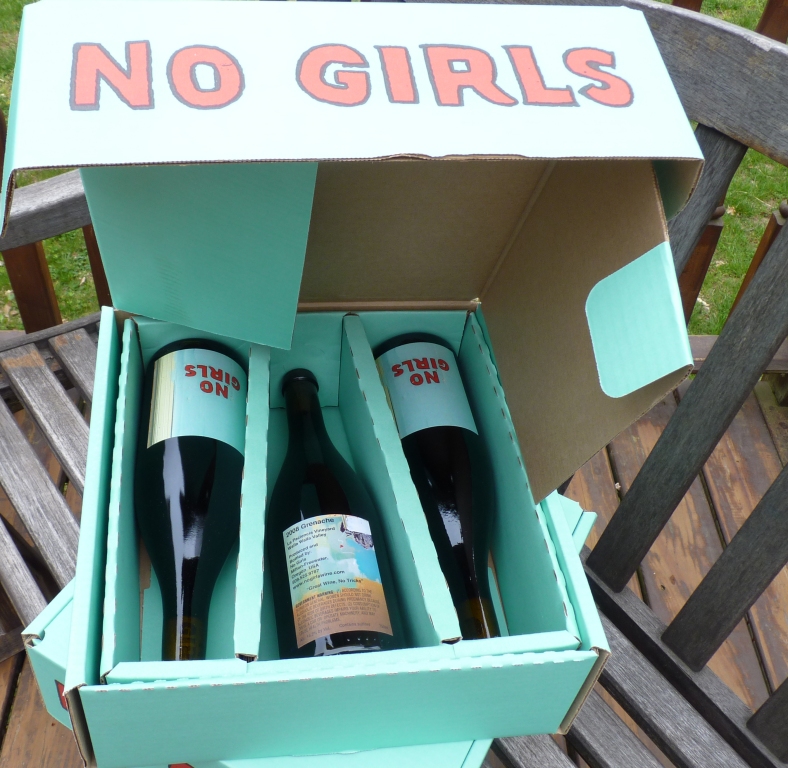

Very bright and clever – what do you think?
Now, on the subject of the wines I actually tasted over this weekend, there were few I wanted to talk about.
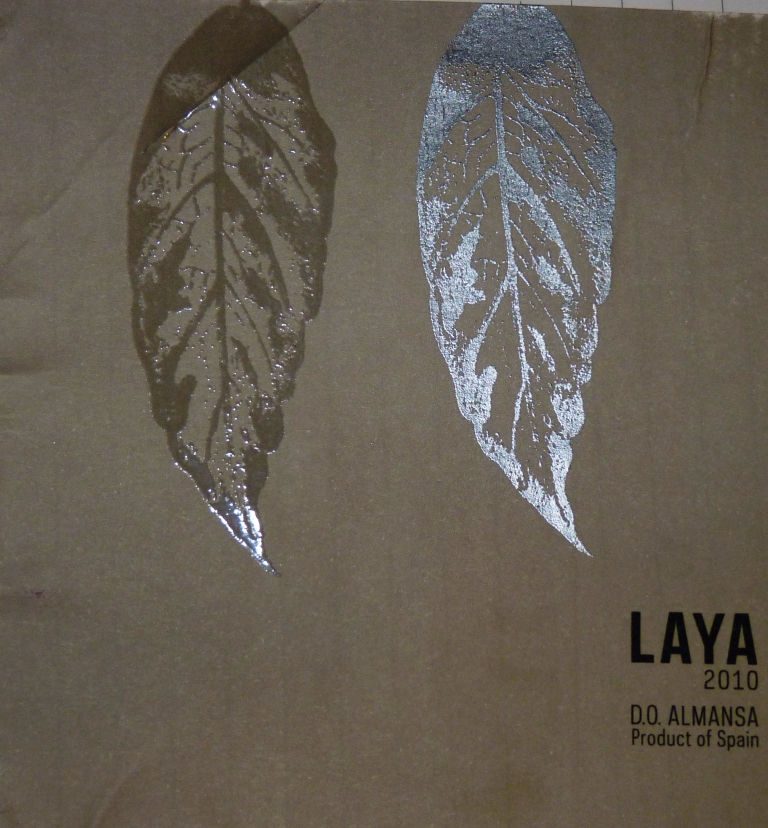
First one is a Spanish wine 2010 Laya D.O. Almansa (14.5% ABV). This wine is a blend of Garnacha (70%) and Monstrell (30%). When you open the bottle and take a first sip, it comes out very grapey and young. It took this wine 3 days to develop a nice undertone of richness, with some ripe red fruit, a touch of spices and smokiness. Considering the price ($7.99) this is a great everyday wine (Drinkability: 7+).
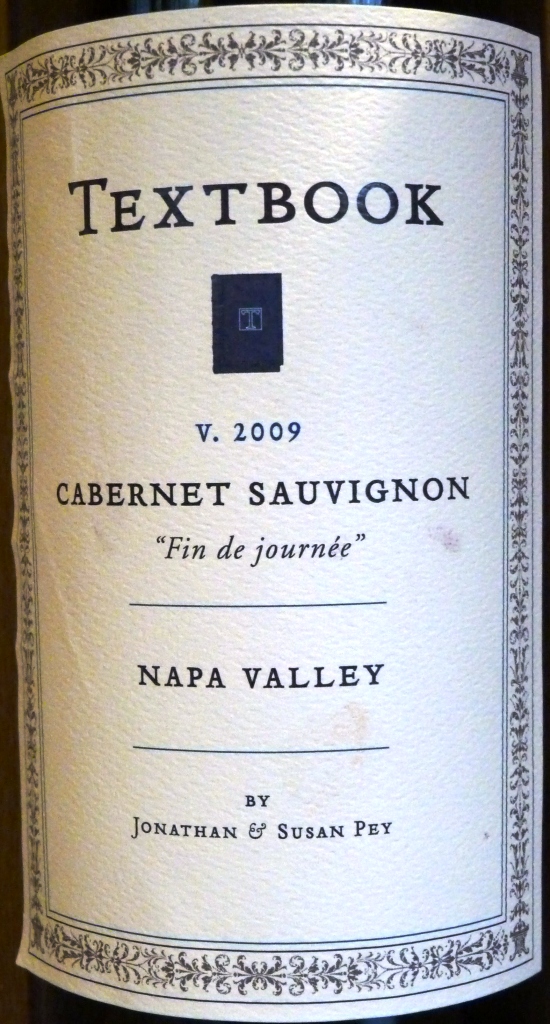 Next one is a 2009 Textbook Cabernet Sauvignon Fin de journee Napa Valley (14.5% ABV). I had this wine for a few months, waiting for the right moment to try it and building up expectations – somehow the name “Textbook” caused a lot of warm expectations, especially with the back label promising a “textbook Napa Cabernet”. The wine had a nice nose of the dense black fruit, not too jammy, but present. On the palate, the fruit grew together with nice tannins and silky texture, only to somehow stop short of delivering the “oompf”. Almost like watching the golf ball slowly rolling after the putt “almost, almost, almost, ahh”. Signature black currant was almost there, but didn’t really show up in its clean beauty. Don’t get me wrong – for a $20 Napa Cab, this was a good wine, but it had to battle my inflated expectations… and lost. Drinkability: 7+.
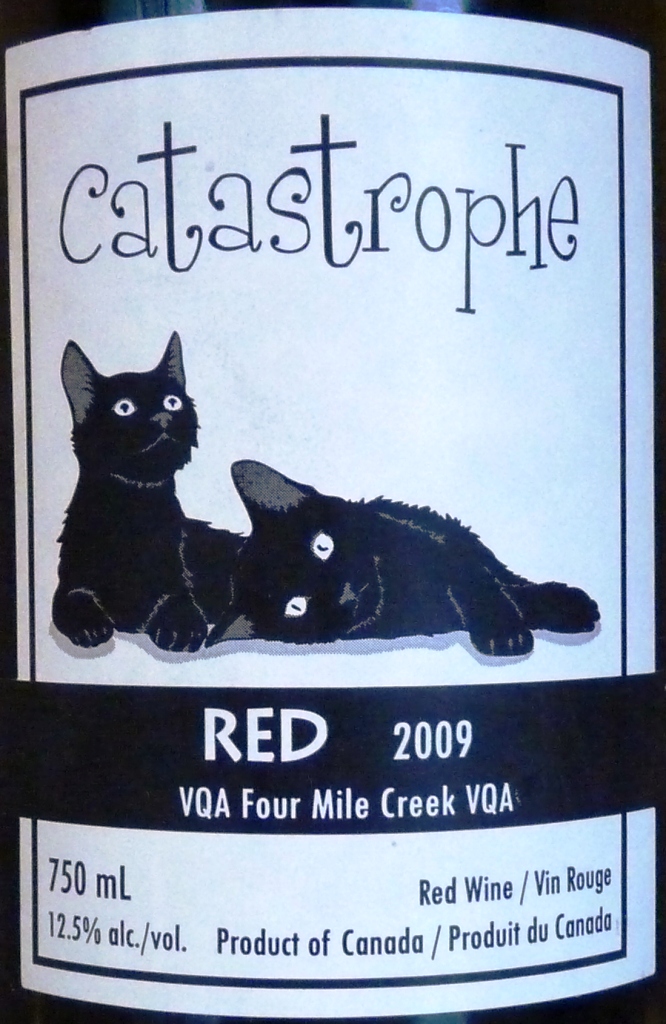
Last but not least was 2009 Catastrophe Red Cattail Creek Estate Winery, Four Mile Creek VQA, Canada (12.5% ABV). We brought this wine back from Canada after the last year’s trip. It is a blend of Gamay Noir, Merlot and Cabernet. On the nose, it has a bright red fruit. On the palate, there is more red fruit, such as sour cherries, hint of earthiness, good clean acidity, very balanced. Medium body and very easy to drink. This wine also would be a great food wine – too bad, I only brought one bottle back. Drinkability: 8-.
That’s all folks. Don’t forget that April 25th is a Wine Blogging Wednesday, with the theme “Barossa Bumerang” – find a bottle of Barossa wine from Australia, enjoy it, and write a blog post or at least leave a comment here. Have a great week! Cheers!
Weekly Wine Quiz #7 – Where In The World Am I?
One more week passed by, and here we go again – new wine quiz for you.
In the last week’s quiz you had to identify region which is not making wines from Pinot Noir grape. Correct answer is Beaujolais – while it is neighboring the Burgundy, one of the world’s best regions for Pinot Noir, Beaujolais wines are made out of grape called Gamay.
Now, this week’s quiz will be somewhat tricky, I think. Please take a look at this picture:
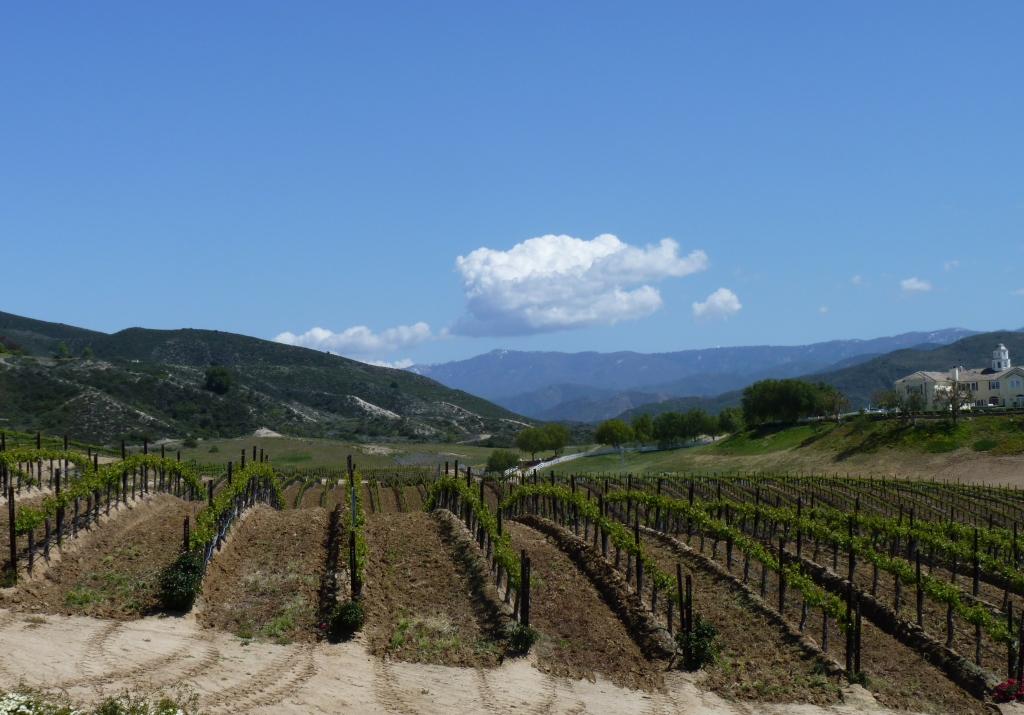
Can you guess where this picture could’ve being taken? Your possible choice are listed below…
Happy weekend and have fun! Cheers!
This Wine Costs What?!
 If you follow the wine discussions in the social media world, one of the most controversial (and therefore, popular and recurrent) subjects is price of wine. There is a full range of opinions out there, as you can imagine, from some people religiously advocating cheapest possible wines as their one and only choice, to those who pay $2500 for a bottle of Screaming Eagle or Chateau Petrus (to tell you the truth, I’m really curious as to what percentage of those spending the money on Screaming Eagle actually end up drinking it versus selling later on at an auction – but this is a subject for the whole another post). There had being also posts and articles advocating that consumers must buy only cheap wines due to the fact that majority is incapable to understand the difference between cheap and expensive wine anyway – here you can find my response to one such a post.
Why am I talking about the cheap value wines all of a sudden? While in California, I visited Trader Joe’s store near by. In Connecticut, where I live, Trader Joe’s sells only beer. In Massachusetts, Trader Joe’s has very good selection of wines (I wrote a few posts about those wines before – here are couple of links for you – one about Amarone and one more generic). Wine selection at this Trader Joe’s in San Diego definitely beats the Boston store hands down – great representation of many regions, with a lot of wines offered at a great prices. So I decided to run a simple experiment – let’s see what I can get for a $20. I spent $21 on three bottles of wine, and when I tasted the Dearly Beloved Forever Red … this blog post was born.
I will give you my tasting notes a bit later, but let me tell you – this wine was simply very, very good – at the price of $6.99, which I’m sure constitutes cheap wine in anyone’s book. I wonder how many people would reach out for this wine because of the label alone, which looks very cool, and then will put it back because they would think at $6.99 it can’t be good? I would very likely ignore this wine too, if I would not be conducting this experiment (not anymore, of course – after tasting it, I know I need a case). So what is driving the consumer behavior around the cheap wine? Outside of elitism, clever wine marketing and all the wine press which is trying to convince us that only more expensive is better, I think we have one fundamental issue coming out from our experience with cheap stuff. How many of you came back from the dollar store just to realize that what was looking almost as a treasure chest full of stuff for $10 or $15 is actually a $10 or $15 worth of junk, none of which can be used for its intended purpose? How many of us bought the cheapest tool just to understand that probability of killing oneself is a lot higher than probability of actually accomplishing the job you got the tool for? How many of us used cheapest possible material for a project, only to regret your decision every minute after and ending up paying a lot more than we would if we wouldn’t be so frugal to begin with? I think this experience is programming us to effectively disregard the cheap option simply from the fear of disappointment.
We transpose this experience onto our dealings with the wine world – and in a lot of cases we effectively end up losing. I have to tell you that I had a lot of $15-$20 wines, which end up being not good at all, with or without any comparison with this Dear Beloved wine. I tasted many $50 and $100 bottles which are not bad, but don’t give you nearly as much pleasure as this wine. Am I saying that from now on I will only be buying the wines for $6.99 or less? Not at all. And if anyone wants to spoil me with Chateau Petrus or DRC, I will be forever obliged. But if we will be able to avoid making assumptions and judgements based on the price of wine alone, we would be far better off in finding the wines we like at the prices we can afford. This is not simple. I would love to conduct a simple experiment – pour this wine to the two different glasses and tell people that wine in one costs $6.99, and the same wine in another one costs $19.99, and see how many people will wholeheartedly advocate the $19.99 wine to be far more superior to the $6.99 one. I’m sure it will be a fun exercise – something you should try at home (if you do, I will be glad to hear about your results). So we really need to work on our wine buying habits – we definitely will be far better off if we do.
Now, let me share the tasting notes with you. First, here are all three wines ($20.97 total + tax):
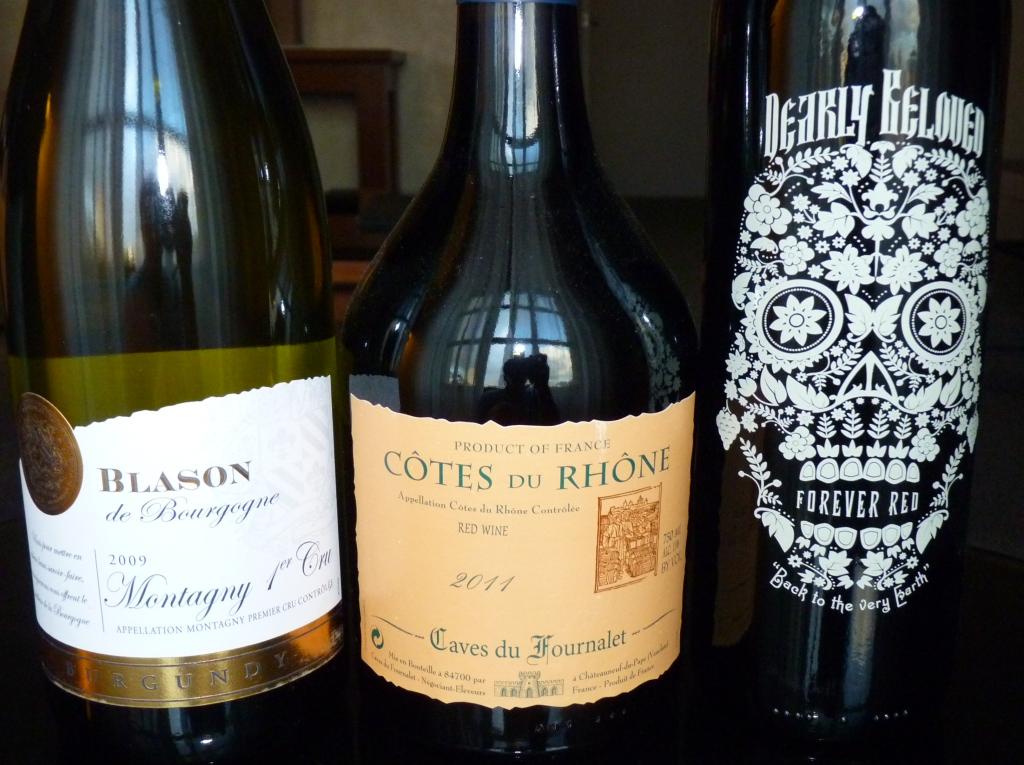
Let’s start with 2011 Caves du Journalet Cotes du Rhone (13% ABV, $4.99) – very soft and round. The wine rolls very smoothly in your mouth – very subtle tannins, good red fruit, good acidity – nice balance, nothing stands out, just round and smooth. Very easy to drink. Doesn’t give you any amazing “oompf”, but I’m sure would be a great party wine as it will appeal to the broad audience. Drinkability: 7.
Next – 2009 Dear Beloved Forever Red Central Coast, California (13.5% ABV, $6.99). Very nice nose of blackberries and some spice. More of the same on the palate – good red and black fruit, plums, ripe blueberries, warm spice, hint of eucalyptus, medium to full body, round tannins and and acidity, very balanced ( and stayed that way for 3 days). This is the description of much more expensive wine, but – $6.99 is $6.99… Definitely the wine to buy by the case. Drinkability: 8.
Last one – 2009 Blason de Bourgogne Montagny Premier Cru, Burgundy (13% ABV, $8.99) – Burgundy for $9? Can that be even drinkable? Nice and balanced. Nose of white apple and lychees. Very round on the palate, white fruit, with distant hint of vanilla and toasted oak, may be a tiny touch of butter. Good balance, good acidity – should be a good food wine. Drinkability: 7+.
That’s all for today folks. I’m glad it is a #WineWednesday, so this post will hopefully give you some food for thoughts. What are your great experiences with the cheap value wines, and what are the “not cheap wines” you regretted buying? Share it all here. Cheers and happy #WW!
Across: Grape, Starts With “O”, 6 letters
 We like puzzles. We like those little challenges, which are innocent but give us a sense of fight, achievement and winning. Here is a little puzzle for you – let’s see how well do you know grapes. Please name a grape which starts with ”O”, 6 letters. I will give you couple of minutes, take your time. Done? What it is? I’m sure some of you could’ve known it, but I honestly think that majority would not.
I don’t want you to feel discouraged. There are about 8,000 different grapes in the world (or more), and about 1,600 of them are used in winemaking, so chances of knowing all of them by a one person are slim to none. Okay, so what is my point, you ask?
The whole point of this little puzzle exercise was to show you an opportunity. An opportunity for an exciting journey and discovery of new experiences. This is an easy journey, which doesn’t require months of planning and tons of special equipment. You can start it any day by joining Wine Century Club. You can download an application, check-mark at least 100 grapes you tasted in your life (doesn’t have to be single grape wines – all blends are perfectly ok), and voila – you can become a member.
I started this journey about 4 years ago. It was relatively simple to get to the first hundred grapes. By the time I received the certificate, I found out that the club now has a new level – Doppel, which requires tasting of 200 grapes. New challenge, great! I started a new journey which was not as simple, and … yes, you got it right – by the time I got to the 200 grapes mark, Treble and Quattro levels appeared! I got to the Treble mark last year, and it was quite hard – had to start including clones in order to get there. But – if you are a ”life traveler”, your arrival to a specific place only means an opportunity to start going to the next destination – so I kept on going.
Just to make myself clear – the point of all this “wine century” journey is not collecting accolades or feeling unique and special. Not at all. The whole point of this journey is a discovery. I can’t tell you how many amazing wines I tried along the way – if you are looking to expand your “grape universe” and collect new experiences – this is definitely what you can achieve with this exercise of purposefully seeking new grapes and unknown bottles.
Trying to reach the ”Quattro” I decided that this shouldn’t be set as a hard task, definitely should be enjoyed more and taken easier than before. I don’t call it a ”quattro journey”, I do very limited updates, and only keep the total grape counter, which you can see at the top of the page if you’re reading this post on the web site.
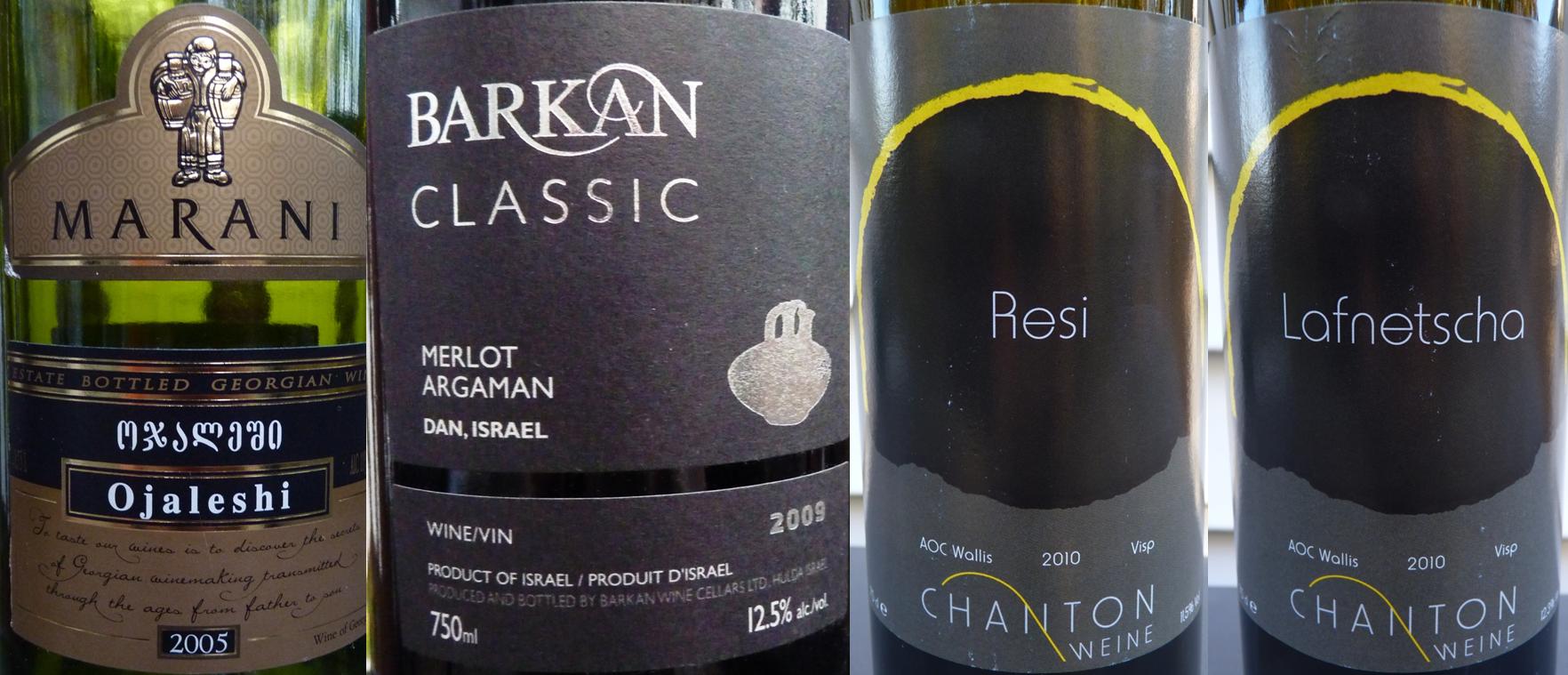
Nevertheless, it seems to be a good time to provide and update and change the grape counter, as I tasted a number of new wines (read: grapes), at Michael Skurnik tasting and not. First, an answer to the puzzle. The name of the grape which starts with ”O” and consists of 6 letters is Ortega – it is used in Germany and produces wines similar to Riesling. Overall, here are 10 new grapes to add the list:
Resi – 2010 Chanton Weine Resi Visp Wallis AOC, Switzerland
Vidiano – 2010 Alexakis Vidiano, Greece
Malagousia – 2010 Alpha Estate Axia White, Greece
Clairette Rose – 2010 Châteauneuf-du-Pape Blanc ‘Cuvée Speciale Vieilles Clairettes’
Doña Blanca – 2009 Godelia Bierzo Blanco, Spain
Bacchus – Château de Briat Armagnac, ‘Hors d’Age’ NV
Folle Blanche – Château de Briat Armagnac, ‘Hors d’Age’ NV
Ortega – 2006 Anselmann Trockenbeerenauslese Ortega. Pfalz, Germany
Ojaleshi – 2005 Marani Ojaleshi, Georgia
Agraman – 2009 Barkan Classic Merlot Agraman, Israel
And here are some pictures for you:
In case you want a head start on the project, I decided to share the list of grapes and reference wines – you can find a full table here. Note – if “reference wine” is empty next to the grape, it means I didn’t try that grape yet (example: Picpoul Noir). Conversely, if you got a suggestion for me as to where I can find an appropriate wine, I will be very appreciative…
That’s all for now, folks. Look for that unknown bottle on the shelf – who knows, you might find your best wine experience ever. Cheers!
The Amazing Power Of Wine
Saw a great video in the Dr. Vino wine blog – can’t help it, but I have to re-post. Anyone dares to repeat?
Have a wine and fun filled weekend, everyone. Cheers!
Weekly Wine Quiz #6 – No Pinot?
I guess it is Saturday, therefore, it is a time for our weekly wine quiz. Before we get to the new quiz, let me give you an answer for the past week’s quiz “Do you know Kosher wines” – correct answer is Massaya. While the name might be suggestive that it would be a kosher wine, this [very tasty, full bodied] wine is produced in Lebanon, and it is not Kosher. The rest of the wines on the list are Kosher, including Goose Bay, which I saw was a popular choice as a “non-kosher” wine.
Now, the theme for today’s poll is Pinot Noir. Pinot Noir is one of the most popular grapes in the world, and literally there are very few regions where wines are not made out of Pinot Noir. Below is a list of regions where great wines are made out of Pinot Noir – all except one. Which one do you think it is? Answer is coming next week.
Enjoy your weekend, everyone! Cheers!
Daily Glass: Chianti Escapades
 I haven’t done one of these ”daily glass” posts in a while, and at some point I really thought that these posts will be written daily. Some plans, huh? Okay, let’s talk about wine, shall we?
I have to tell you – once people know that I’m seriously ”into wine”, one of the first questions I hear is ”so, what’s your favorite wine?” – and this is the question I’m dreading literally the most – because I don’t have an answer. Depending on the mood, food, company and tons of other factors, I will be glad to drink different wines all the time. Better question might be – what wines I don’t like? You think you got me, right? No so fast. The only wines I don’t like are those which are bad (yes, I know – very lame and predictable answer) – and luckily, there are really very few of those. But – as we are having an honest talk here – I have to tell you that there are wines which I’m generally trying to avoid. Not that I don’t like them, but I don’t get much out of them – on average, barring any exceptions. Not trying to create any loaded pause here – one kind of wine which I often trying avoid is Chianti.
Why? A lot of Chianti wines I tasted are flat in their flavor profile – Chianti is usually considered a nice and easy wine to drink – which it is, but this ”ease” also takes away most of the excitement for me. Of course we can not and should not generalize – as I said, I’m avoiding it, but this is not vegans-do-not-eat-meat kind of avoidance – I’m always ready to be surprised.
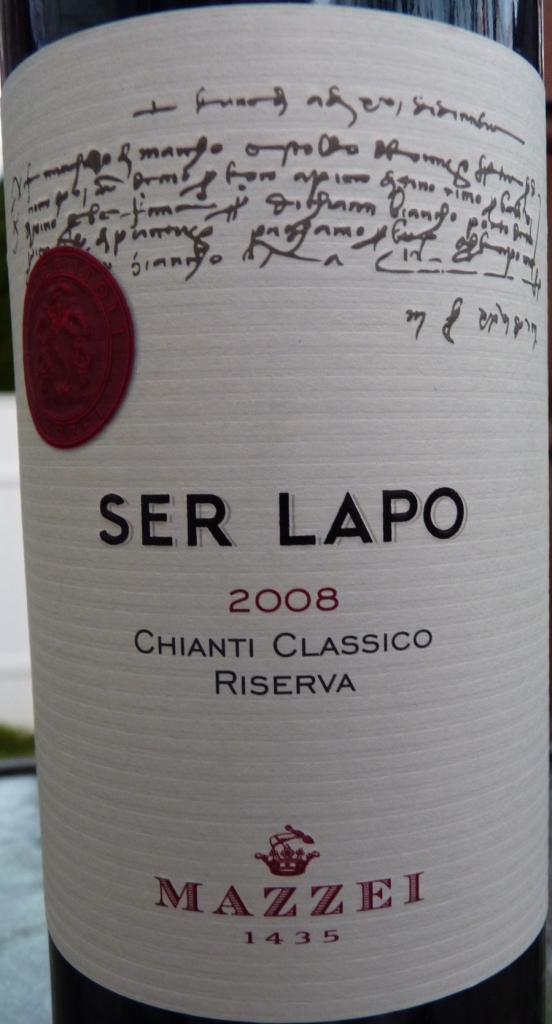
During the recent trip to Bottle King, I saw there 2008 Mazzei Ser Lapo Chianti Classico Riserva on sale. I did like the label, like the name (Ser Lapo, somehow it sounds good for me), like the price ($16.98), plus I have a bottle of 1988 Mazzei waiting to be opened – and I didn’t drink Chianti in a while – do you think that this is enough reasons to get a bottle? Yep, so did I.
Last Wednesday night bottle was opened. Beautiful dark garnet color – intense and promising. On the nose, there is energy – acidity, earthiness, some intense cherry flavor. Good start, right? I take a sip and…it is flat. Nothing is happening on the palate. I know I’m drinking wine, but that’s all – even after intense swirling in the glass, not much is happening. Gasp. This is precisely what I was talking about before.
It happens to be that recently I came across some notes from the ”unhappy” taster on Twitter, where ”leaf day” was suggested as a possible cause for wines not tasting right. After doing some research, I found lots of interesting read on Biodynamics – this is where the terminology is coming from (there is a lot of interesting discussions in blogosphere on the subject – here is one of the links for you). There is also an app for iPhone/iPad, called Wine Tonight, which I downloaded after doing the research. As you can imagine, when you have a problem nowadays, you look for an app for it, right? Yep, I decided to consult the app. Here is what I got:
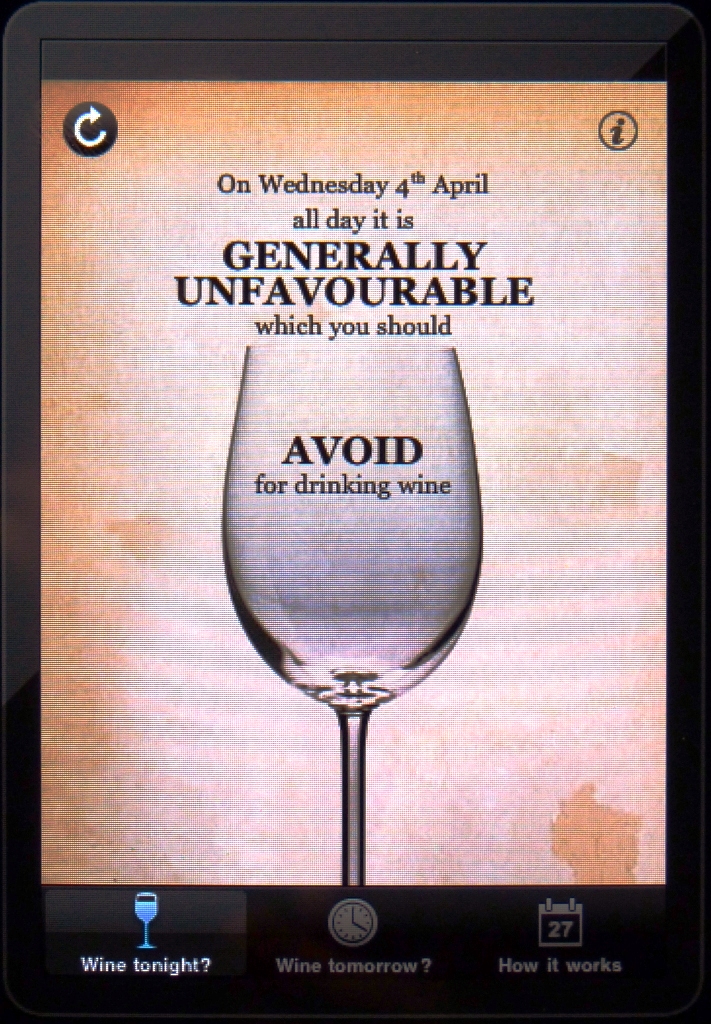
Okay, that explains it, right? Let’s leave biodynamics aside, as this is actually the post about Chianti, and let talk about the wine. I had to run some errands, so I left the bottle opened for about two hours. When I’m came back, I poured another glass of the Ser Lapo, and…should I stop here and say ”to be continued”? Nope, will be too cruel, I agree – let’s continue. Swirl, sip – and ”hello, gorgeous” moment. The wine opened up beautifully, offering lots of dark fruit, like cherries and blackberries, hint of dark chocolate, earthiness and bright acidity with serious tannins coming in the long finish. Very balanced, great wine giving you lots of pleasure (Drinkability: 8+).
The wine opened up even further the next day, so it definitely will evolve in the cellar. By the way, I consulted ”Wine Tonight” app out of curiosity again, and it told me that it was a ”root day” and drinking of the wine should be generally avoided. So if I would listen to that app, I would have to avoid drinking wine for two days in the row – I don’t think I like that app at all.
That actually concludes my story – and I wish you to have a ”fruit day” every time you have a glass of wine in front of you. Cheers!
Weekly Wine Quiz #5 – Do You Know Kosher Wines?
It is time for our weekly wine quiz. But – before we begin with the new quiz, I just realized something – I didn’t give you the answers for the 4 previous quizzes. I thought that I would do it in the comments, but then the answer will always stay with the quiz itself, which is probably not that good. Therefore, going forward, the answer for the quiz will always be provided in the next week’s quiz.
Now, here are the answers for the past quizzes.
#1,The official drink of the United States – correct answer is Bourbon. While it is not written in the Constitution, there were a number of Congress resolutions which support the claim of Bourbon to be an official drink of the United States. You can find more information on Wikipedia – here is a link.
#2, Bordeaux 1855 Classification – correct answer is Chateau Mouton Rothschild. Only 4 Chateaus were classified as “First Growth” in 1855, and Chateau Mouton Rothschild was not one of them. Baron Rothschild spent humongous amount of efforts on getting Chateau Mouton Rothschild classified as first growth in 1973 – here is a Wiki link for more information.
#3, Judgement of Paris – correct answer is Caymus Vineyards. Caymus makes great wines, but they didn’t participate in the famous 1976 competition in Paris. Here is a Wiki link for more information.
#4, Which One Doesn’t Belong – These are the red grapes used in Bordeaux – correct answer is Syrah. Here is yet another Wiki link if you need more information.
Now, let’s talk about the theme of today’s wine quiz – Kosher wines. We are in a middle of both Passover and Easter celebrations this year, and while it is impossible to create a wine quiz around Eastern wines ( because there are no wines designated as “only for Easter” in this world), we can talk about Kosher wines.
Kosher wines are a complex subject if you want to know the details of what and why – here is … yep, you got it – Wiki link for that. I just want to look at the subject of Kosher wines form the consumer’s point of view. Ten years ago, if you would want to drink a Kosher wine in US, you had literally one choice – Manischewitz – a sweet concoction which majority of the wine drinkers should avoid, unless you need some syrup on your ice cream. Little by little, situation changed, as quality of Israeli wines increased dramatically, and more and more Kosher wines started to be produced all around the world, from Australia to France to US. Today, if you want to drink a Kosher wine, you don’t need to dread it anymore – most of respectful wine stores carry great selection of Kosher wines, and finding an excellent bottle is not a problem anymore.
Now, to the quiz itself – below are the names of the Kosher wines from all over the world – all except one. Just by looking at those names, can you guess which one is not a Kosher wine? The answer is coming next week.
Happy Passover and Happy Easter! Cheers and enjoy!
Dozen of Personal Favorites From Michael Skurnik Portfolio Wine Tasting
 Thousand bottles of wine (this is not a mere matter of speech, but- more or less an exact count, give or take a hundred bottles). 4 hours. Come up with the list of 12 most favorite wines. What do you think about a task like that?
Whether you think it is easy or hard, this was my experience at the Michael Skurnik 25th Anniversary wine portfolio tasting few weeks ago in New York (selecting 10 wines was not the goal, of course, but tasting many great wines was).
”Overwhelming” would be an under-representation of the experience. Sip, swish for a second, think for a second, spit. Take a mental note, or may be a quick mark in the book. Move on to the next wine, then to the next table. Get through the crowd with your glass. Repeat until your palate is completely locked down by the amount of fresh tannins. Have a sip of fruity white to unlock and refresh. Continue and repeat until fully exhausted. Leave happy.
Above is a quintessence of the experience. Below, I would like to give you mostly a photo report with some comments on the most memorable wines. The list is not prioritized at all – if anything, it may be coming out in the order we tasted the wines. Here we go.
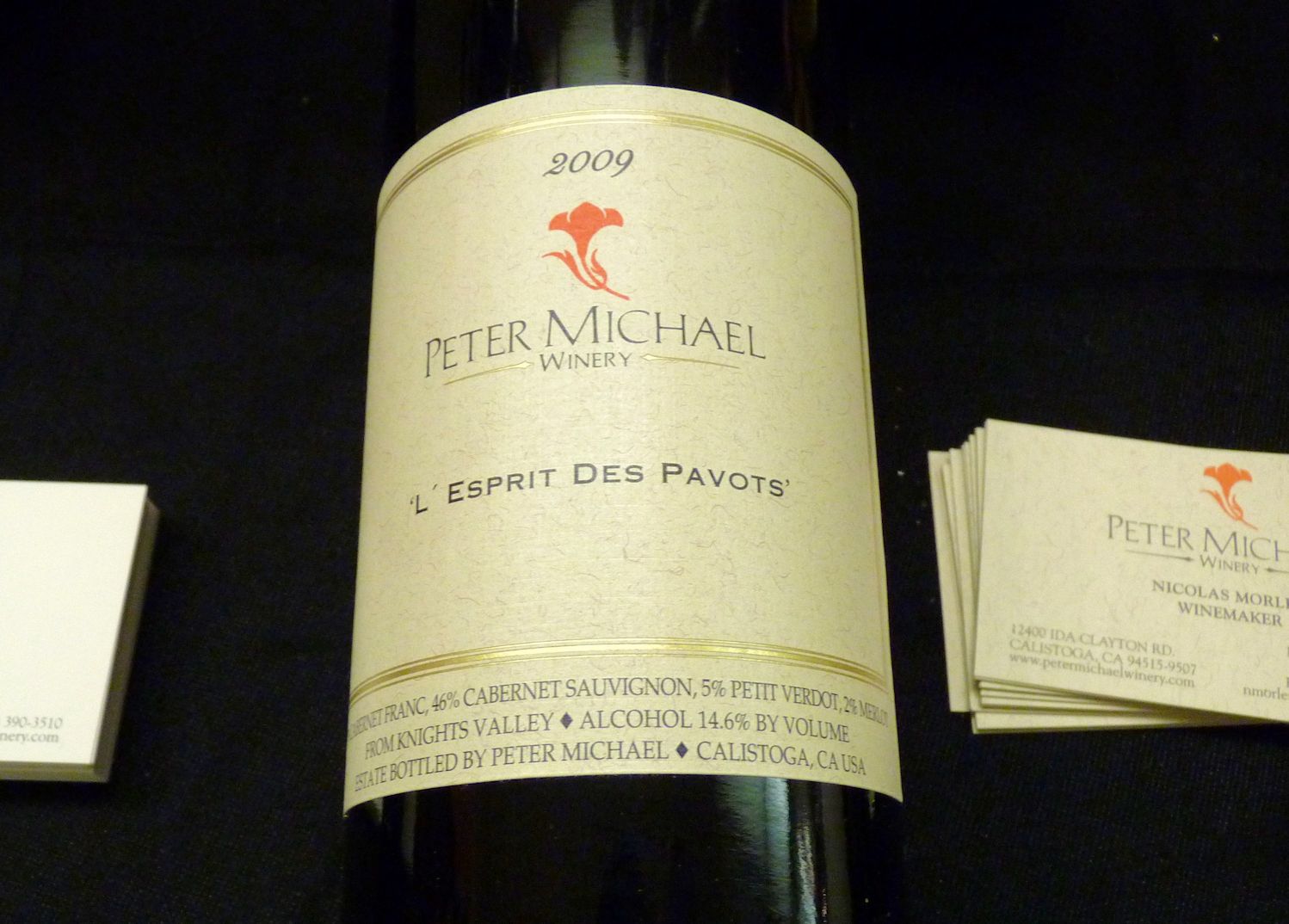
2009 Peter Michael ‘L’Esprit des Pavots’ – clean, gorgeous, elegant, balanced, approachable – this is Bordeaux-style red which you can drink now or cellar for next 20-30 years:
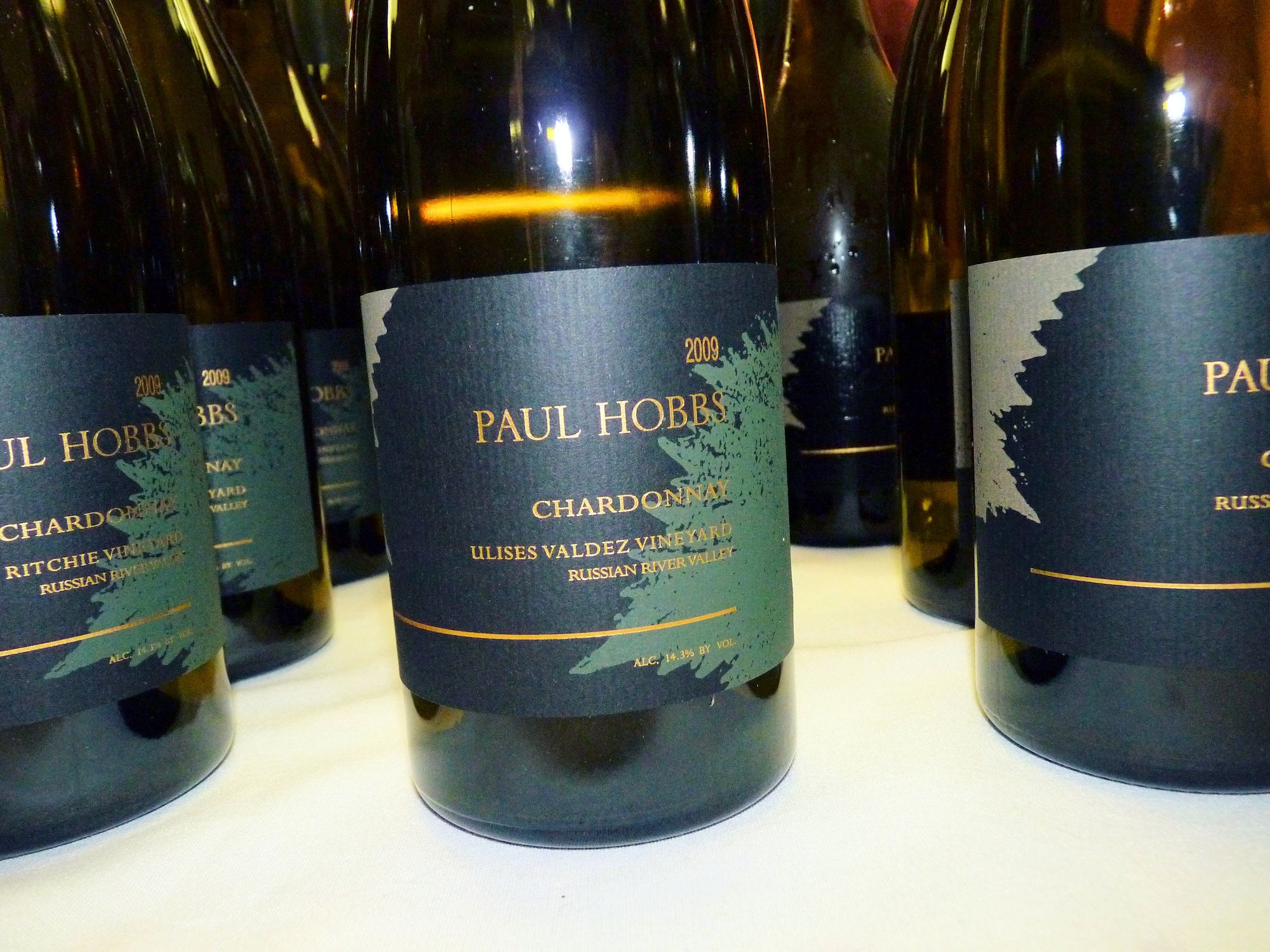
2009 Paul Hobbs Winery Chardonnay, ‘Ulises Valdez Vineyard’ – best non-French Chardonnay I tasted. Elegance and perfection of balance – acidity, hint of vanilla, hint of butter, hint of tasted oak – all in a perfect medley:
2009 Martinelli Syrah ‘Vellutini Ranch’ – full-bodied, luscious and well balanced, with nice dark fruit and spices. Outstanding Syrah:

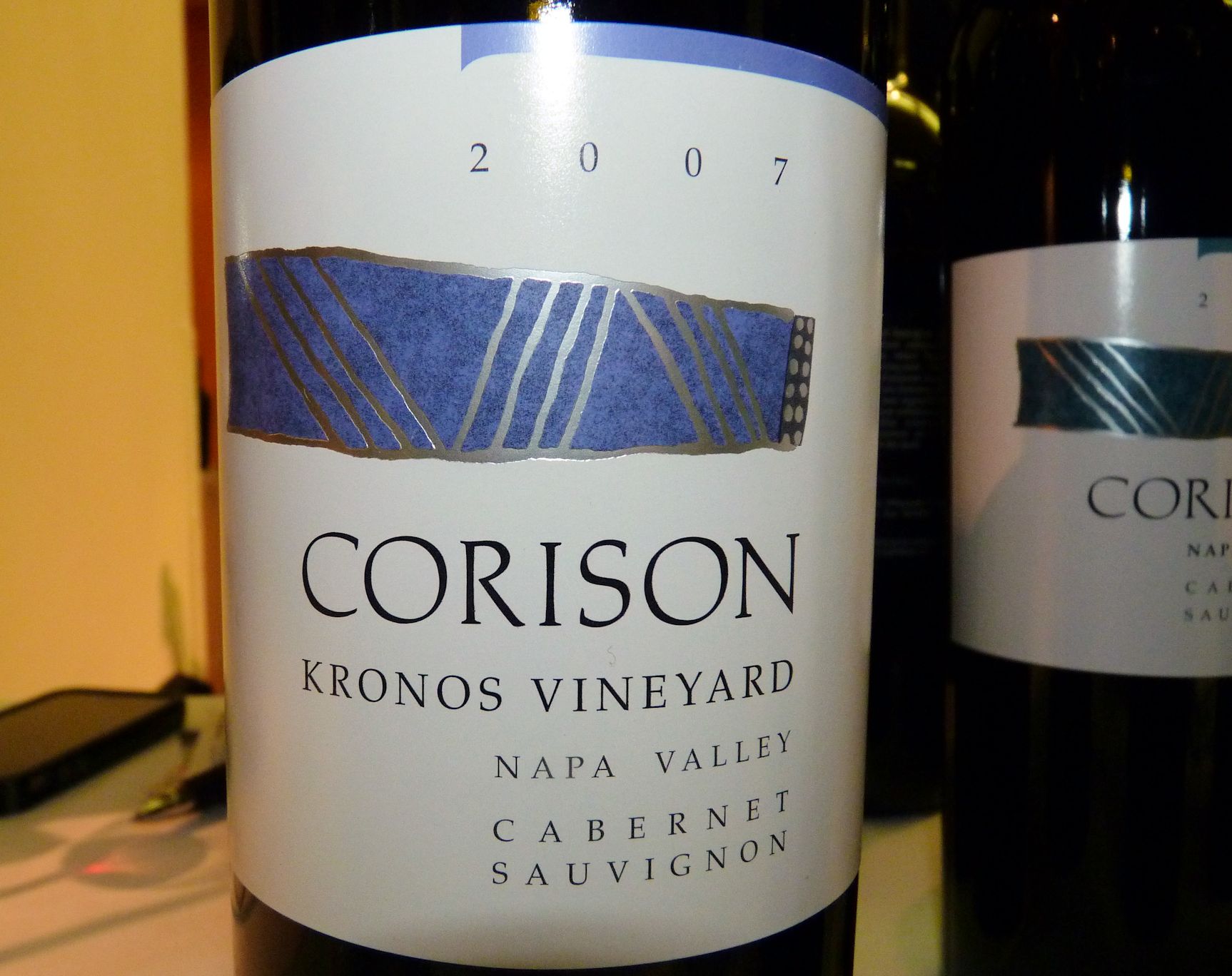
2007 Corison Cabernet Sauvignon ‘Kronos’ – I was really looking forward to trying this wine after Joe Roberts, a.k.a. @1WineDude, called it “Black Panther” in his review. I’m not sure I personally met the panther, I rather discovered a mystery. This wine is impossible to understand in the format of the standard trade wine tasting. It says “let’s dance a little longer, shall we”? When you take a sip of this wine, it is asking you to think – there is no flavor attack, no particular taste element standing out – instead, there is a perfectly balanced, thought-provoking, mysteriously delicious substance. This wine needs double time – time in the cellar, and time in your mouth – then you might stand a chance of solving the mystery:
2009 Domaine Newman Mazis-Chambertin – exemplary Pinot Noir, Pinot Noir by the book – whatever way you want to call it, this was one of the most elegant Pinot Noir at the tasting – perfect balance of earthiness, fruit, acidity and power:

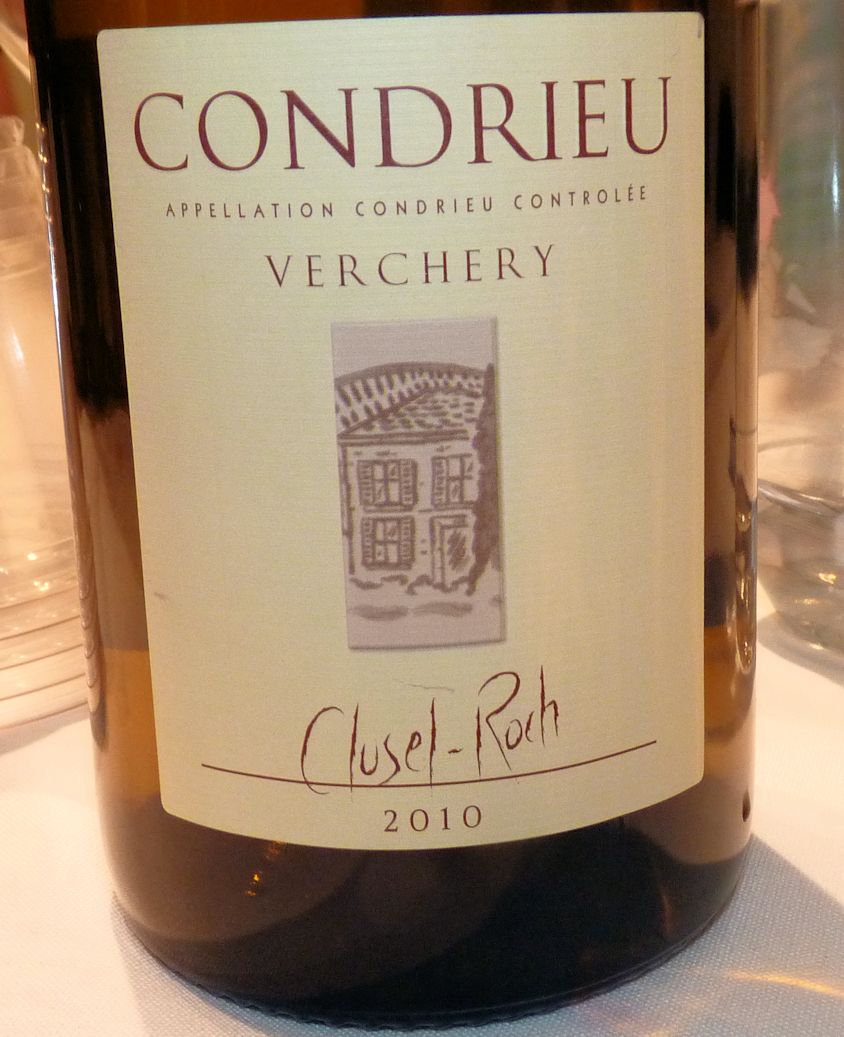
2010 Clusel-Roch Condrieu – beautiful full-bodied white, powerful and structured – great example of Viognier from the most classic Viognier Appellation:
2010 Domaine Saint Prefert Châteauneuf-du-Pape Blanc ‘Cuvée Speciale Vieilles Clairettes’ – fresh, elegant, beautiful white fruit, perfect acidity – definitely one of the best white wines in the tasting. Unfortunately, equally rare and hard to get:
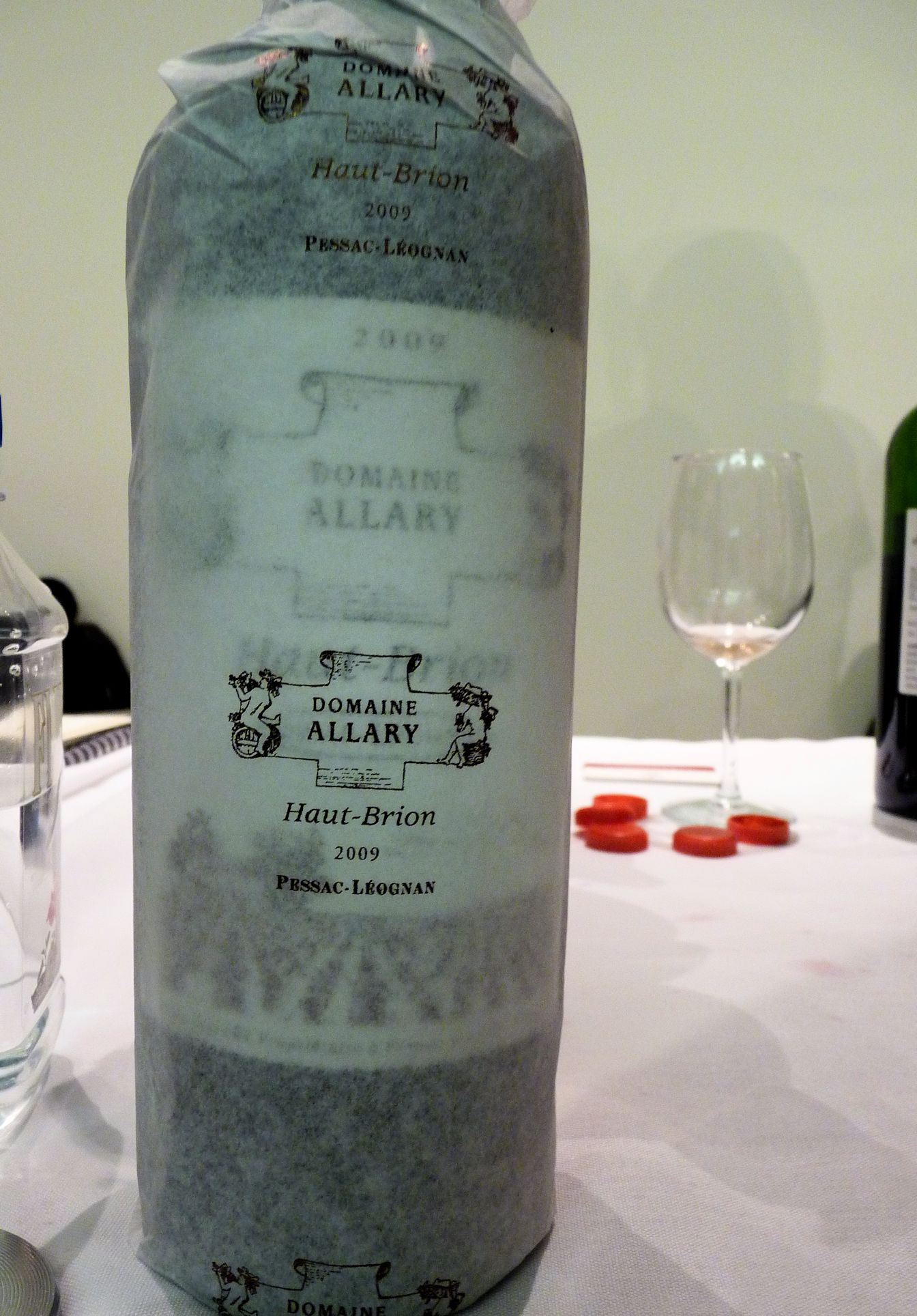
2009 Domaine Allary Haut-Brion Pessac-Léognan – classic Bordeaux from classic vintage. Perfect wine – you can drink it now, or wait for 30 years – the choice is yours:
2010 Boyer-Martenot Meursault 1er, ‘Perrières’ – absolute elegance ( yes, if you think that I’m abusing the word “elegant”, I agree with you, but I can’t find a better word to express my thoughts about these wines, so bear with me, please) – outstanding Chardonnay, great balance of white fruit, acidity, earthiness and tannins:

2011 Domaine du Moulin Méthode Gaillacoise – personal sparkler favorite at the tasting – bright, fresh, full-bodied, with apple and toasted bread perfectly showing on the nose and on the palate. Lots of pleasure:

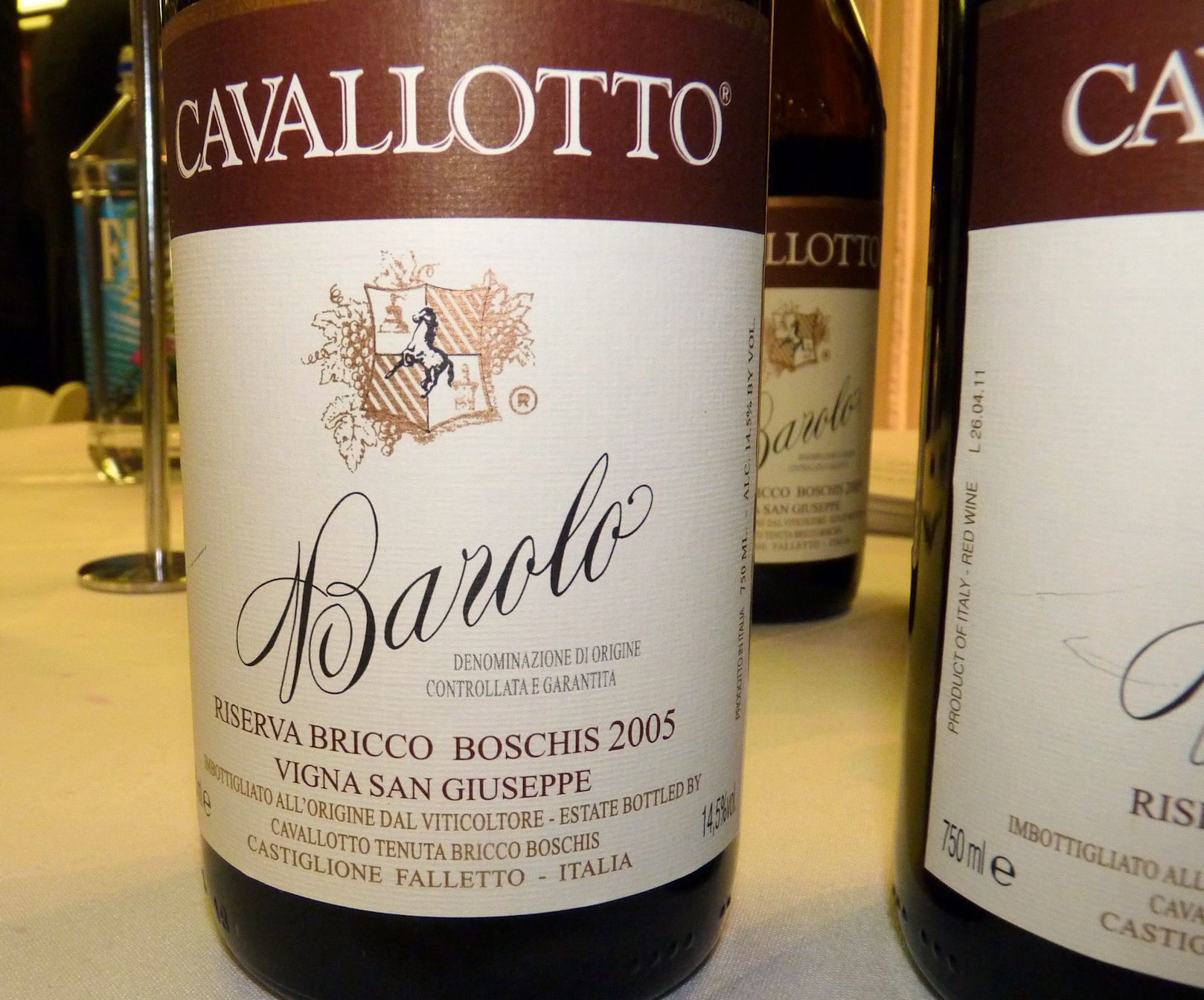
2005 Cavallotto Fratelli Barolo Riserva, ‘San Giuseppe’ – trying Barolos at the such tastings is always fun – you need to build your impressions quickly, before tannins will completely numb your palate. This wine had enough power to get through everything else I tasted before and deliver plums and dark cherries and outstanding balance of spices which make Barolo a King of the Wines. Truly an outstanding wine:
2007 Hendry Vineyards Cabernet Sauvignon and 2007 Hendry Vineyards Red Wine (Meritage Blend) – one of my biggest surprises in the tasting. I never heard of Hendry name before – they mostly had being known as a grape growers for all other prestigious winemakers. But then at some point they started making wines, and I can tell you – it was very hard to pick only one favorite out of the outstanding lineup of wines. This is why you see two red mentioned here – both are very elegant, balanced and varietally correct (and reasonably priced!):

This concludes our journey through the great tasting of Michael Skurnik wines – there were hundreds of other wines worth mentioning, but – sometimes I have to sleep too, right? Thanks for reading and cheers!
Some Wine Fun for April 1st
To celebrate International Fun [Fools] Day, I really wanted to write some serious post about, for instance, Chateau Petrus and Screaming Eagle wines available for sale in New York only for a day for $49.99, but – I’m not sure it would be that funny. I always admire great stories which look borderline real, put together for April 1st issues – like this one by Dr. Vino, or special reports in a Scientific American magazine, like this one – but sorry, I don’t have a talent to create a story like that on my own. Of course you don’t need to wait for the April 1st – you can find some [seriously] twisted wine fun in the Hose Master Of Wine blog at any day, but this usually goes way too far for me, so enter on your own risk.
Anyway, I feel like we need to celebrate April 1st, so I would like to offer you a video, which some of you probably saw before, but nevertheless – hopefully, it will put you in the right mood. Enjoy!
Have a great fun day and have fun with your wines. Cheers!
Last Bottle Sign Up ($10 credit)




 Talk-A-Vino