Craving Acidity
 I’m not complaining – complaining is futile, as things always can be worse than they are. I’m just stating – this is not my kind of weather. I don’t like it. I don’t like this stuffed hot air, so dense that it can be cut with the knife.
Don’t think cutting air with knife would be very effective. I guess there are better tools for making that hot stuffy air less noticeable. One of the best ones I know is acidity. No, I don’t mean rubbing myself all over with the slice of lemon, or drinking copious amounts of the lime juice. Of course I’m slowly nudging towards the main subject of this blog – wine. And one of the wines which possesses this refreshing, “hot-air-cutting” acidity is Muscadet from Loire.
Suggestive Labeling? Yes!
I realize it more and more now – I’m a sucker for a good wine labels. Yes, I know – don’t judge the book by its cover. Of course. But the first thing you see when you look at the bottle of wine is a label. Considering sheer number of wines in the average wine store, label is critical element of the wine’s success. It has to attract your attention. It has to seduce you. It has to promise you a great time. It has to be memorable. And the label has only a fraction of a second to make this all happen.
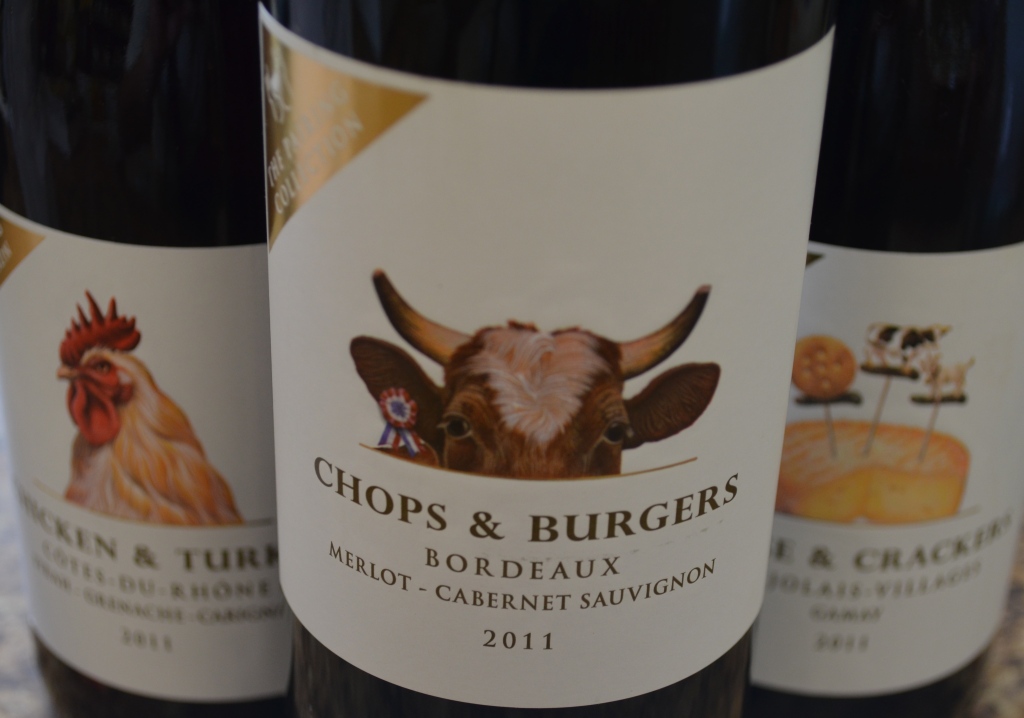
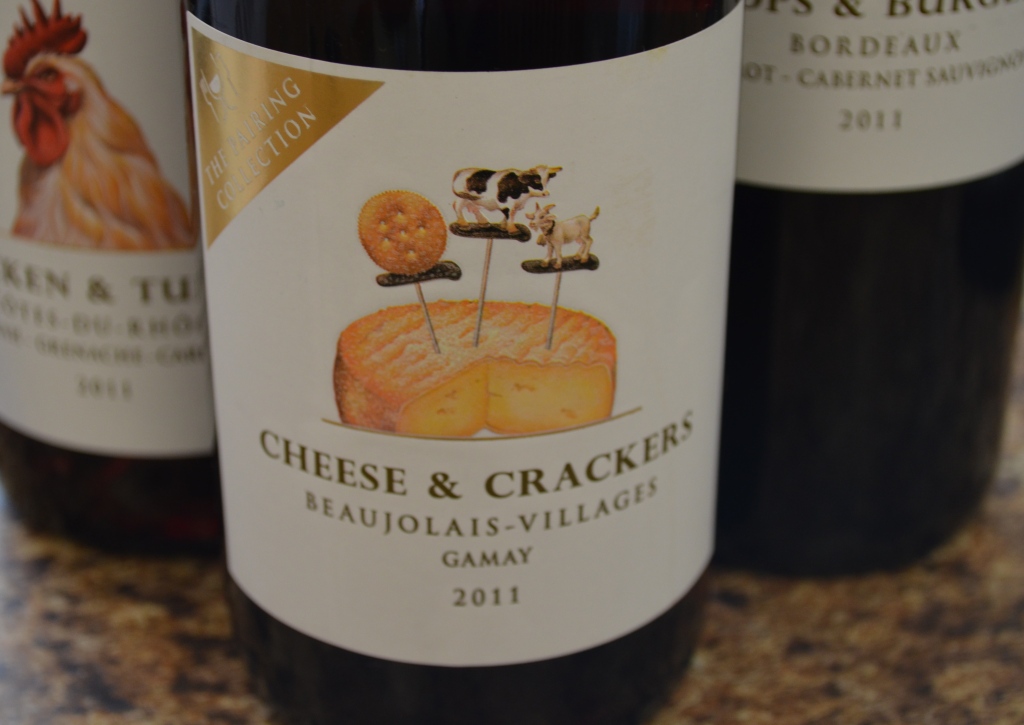
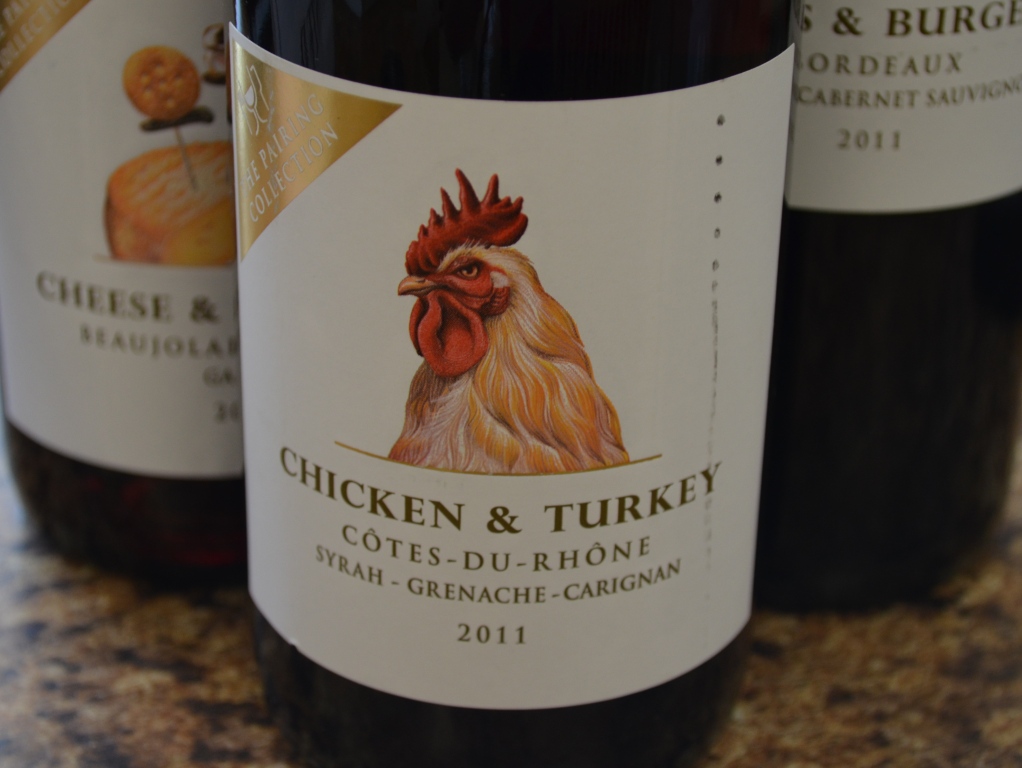
While visiting Cost Less Wines in Stamford, this is exactly what happened. Something caught my eye – the label I never saw before. I grabbed the bottle – and then there was another, and another, and another. A special project from Barton and Guestier – The Pairing Collection. If you remember Entwines, the joint project by Food Network and Wente, The Pairing Collection wines represent the next step – a very suggestive name and the picture on the front label, and the recipe in the back, and even QR code to take you to the specially designated The Pairing Collection web site – how cool is that?! Well, you be the judge – here are the labels.
Chops & Burgers Bordeaux red AOC:
Salmon & Trout Bordeaux white AOC:

And the back label:

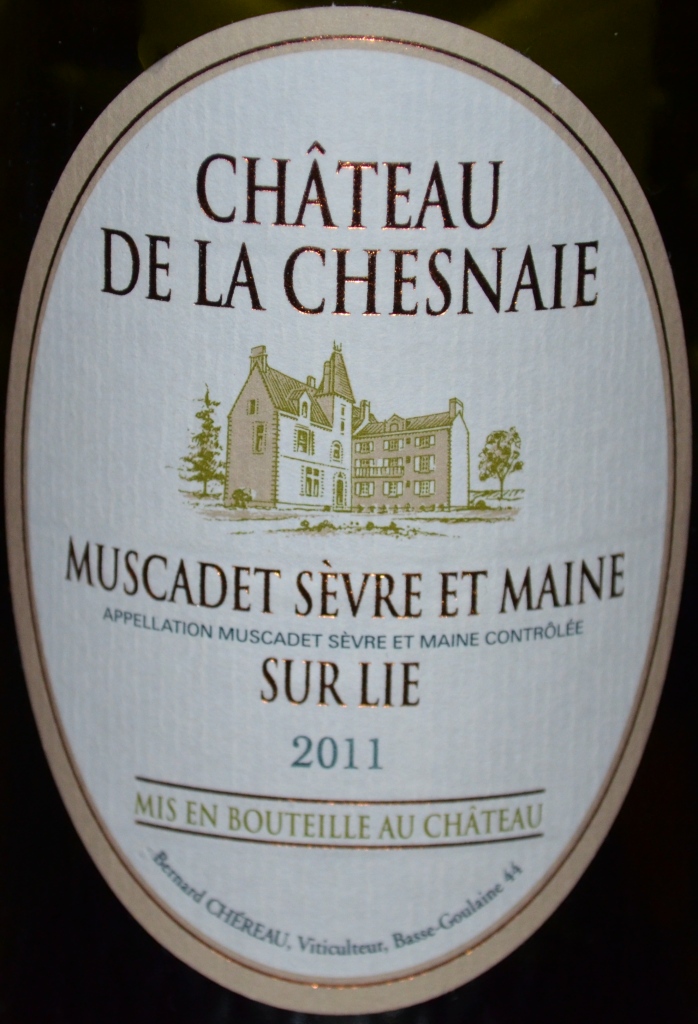
Lobster & Shrimp Muscadet Sèvre et Maine AOC:

and here is the recipe for you:

Cheese & Crackers Beaujolais Village AOC:
Chicken & Turkey Côtes du Rhône AOC:
So, what do you say? Do these labels speak to you? Let me know! Cheers!
Weekly Wine Quiz #23: There Is A Vineyard In UK …
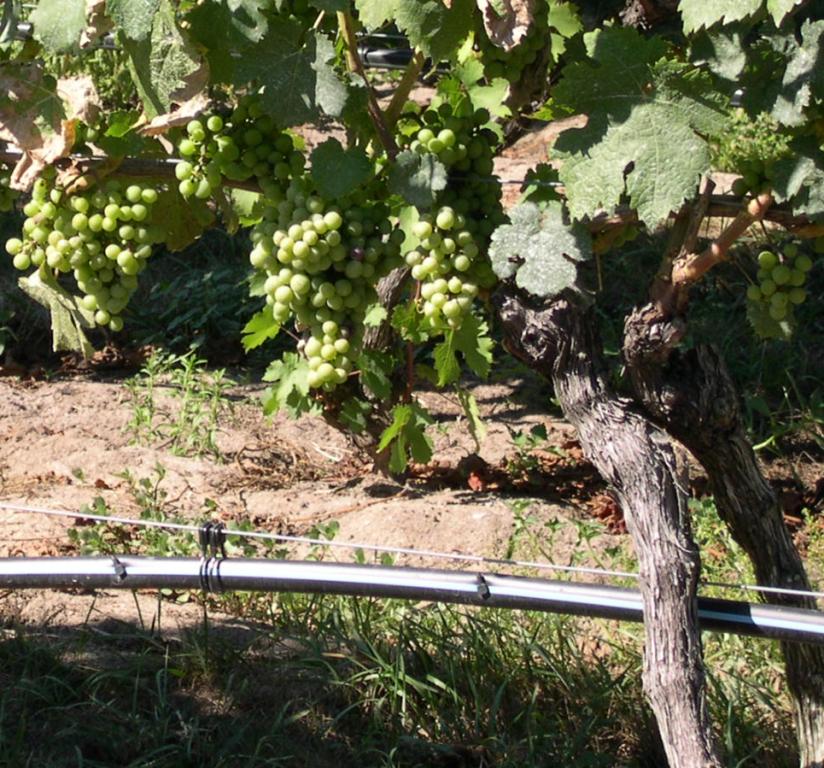 As the world’s eyes continued to be glued to the XXX Olympic Games in London, I think it is appropriate to follow the steps of our previous wine quiz and talk about UK wines.
Global warming or not, but the winemaking in UK is booming lately. Few years back, nobody thought of United Kingdom as a world-class wine-producing country, and now UK sparklers are winning one wine competition after another and attracting a lot of attention as worthy competitors of coveted Champagne. And it seems that winemakers in UK are moving pretty rapidly past just the sparkling wines and making other wines worth seeking.
As UK is a very young wine-producing country, there is limited number of grapes which are successfully growing there and producing the wines of notice. Below you will find a list of some of the grapes successfully used in the winemaking in UK, except one. Do you know which grape doesn’t belong?
Have a great weekend! Cheers!
Traif! Small Place, Big Experience
 Do you ever wonder how could we live without modern technology? For instance, how did we go about finding the good places to eat? Looking in Zagat? Calling a friend? Reaping and storing newspaper reviews and pages from the magazines, only to be never be able to recall where did we put them and what was the name of the restaurant? Despite being a techie, I can’t stop being amazed at what you can do today with such a “simple” tool as Google.
Couple of weeks back, we planned a weekend with friends in Brooklyn. Of course visiting the restaurant is a great form of entertainment, and as we do it pretty rarely with my wife, I really want to make sure that every visit would be a great experience. How can I do that? Two words: Google and Bloggers. You can use Google to get piles of relevant information. And then you can use Bloggers’ “labor of love”, their posts, in order to extract jewels from those piles.
Let’s go back to my restaurant search. Google faithfully produced a whole bunch of references when asked for the Brooklyn restaurant recommendations. One of the references attracted my attention – it was for the blog called Becoming Brooklyn, where I found the post with 5 recommended restaurants. Quick scroll through the relevant links and the decision was made – we are going to try the restaurant called Traif. Why? First, the menu looked interesting, and prices appeared to be reasonable. And the second reason? The restaurant offered chef’s tasting menu, priced extremely reasonably at $40 per person.
I love chef’s tasting menus. It gives you an experience instead of just a meal – and this is something which I would definitely prefer at any time. And so when we visited Traif this past weekend, chef’s tasting menu was our choice. To give you an idea of how was it, I need only one word – WOW! Taste, texture, presentation – everything was perfect. There was not a single dish we didn’t like. Every little morsel was absolutely delicious – this was really an Experience. The only way I can share it with you is through the pictures – I think they came out reasonably okay (just so you know, I’m rarely satisfied with the quality of my pictures) and you will get a feel for that experience. Of course the best thing you can do is to go and experience it for yourself, but meanwhile – here are the pictures.
Not shown – Gazpacho (sorry, I was slow at the beginning)
Butterfish Carpaccio with peach slices:

Not shown – blistered shishito peppers, canteloup, marconas, feta, mint, orange (sorry, people were too hungry! And I was slow again…)
dayboat scallops, creamy corn

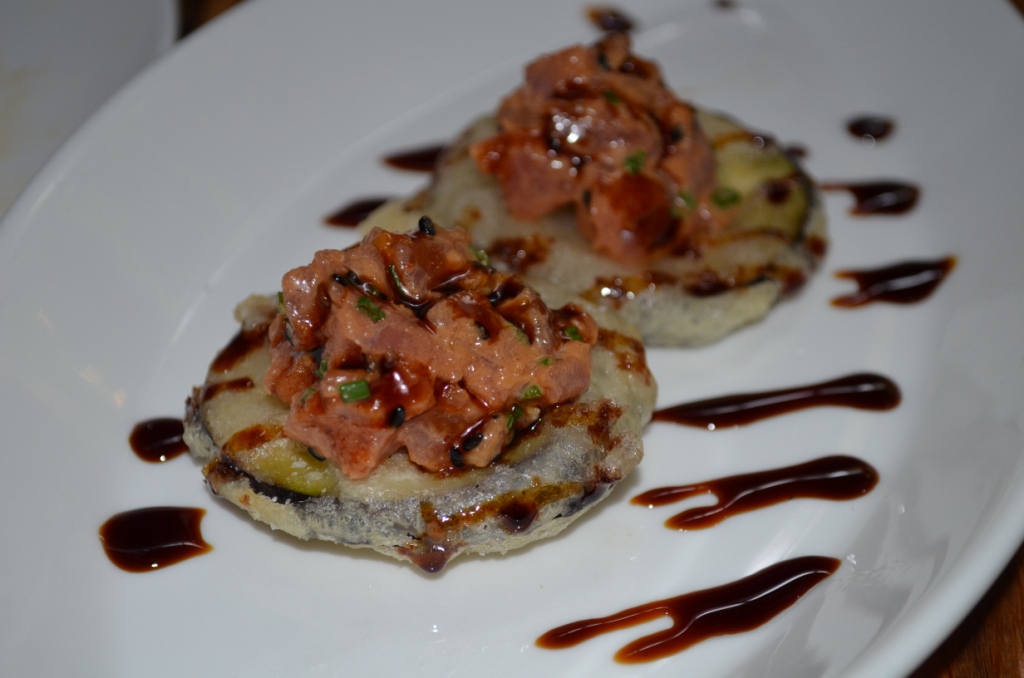
spicy, bigeye tuna, tempura japanese eggplant, kecap manis:
crispy soft shell crabs, crushed avocado, pineapple sambal, red papaya:

seared foie, fingerlings, ham chips, sunny egg, maple, hot sauce:

sautéed veal sweetbreads, asparagus, bacon, snap peas, shiitakes:

strawberry-cinnamon glazed baby back pork ribs:

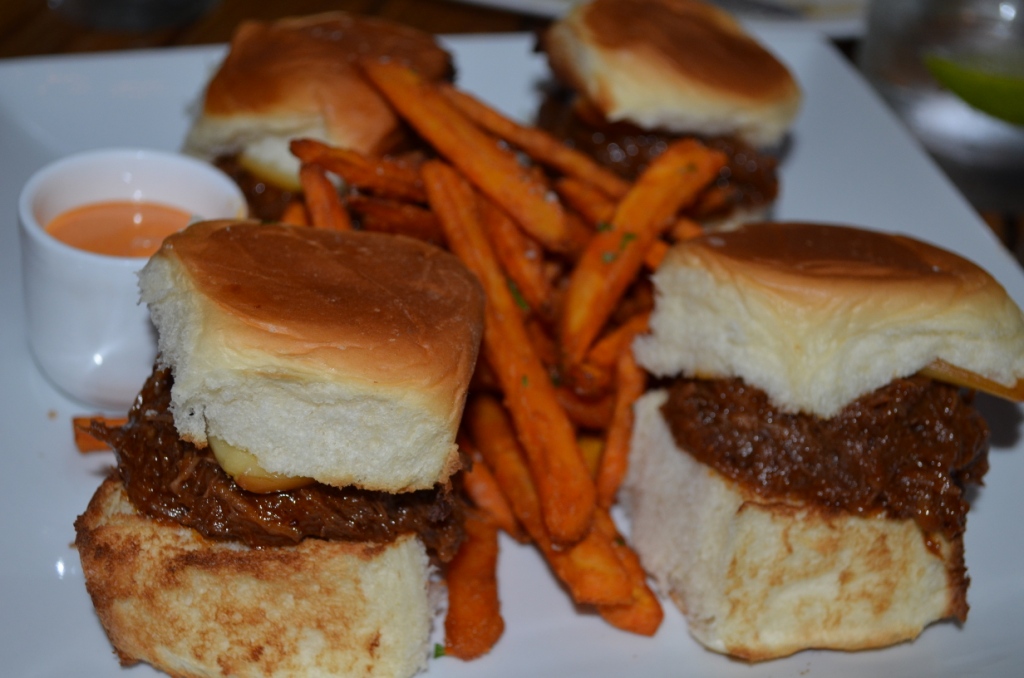
bbq, braised short rib sliders, sweet potato fries, smoked paprika aioli:
And for the dessert:
momʼs key lime pie, graham crust, pineapple:

bacon doughnuts, dulche de leche , coffee ice cream:

not shown – watermelon squares with molasses
I hope you liked my photo report, and I hope you are convinced that you need to experience Traif for yourself – believe me, you will not regret!
In case you wonder where is my favorite subject, wine, in this story – everybody were in the mood for cocktail or a beer, so I just had a glass of red Portuguese wine which was simple enough to not interfere with most of the dishes. But I have to note that wine list looked pretty good, diverse and reasonably priced.
Adding to the words of Iron Chef judges: Thank you Traif for the wonderful meal experience! Cheers!
Traif
229 S 4th St
Brooklyn, NY 11211
(347) 844-9578

Wednesday’s Meritage
Meritage Time!
As usual, we are staring with the answer for the Wine Quiz #22: Olympics for all, where you had to figure out which “unusual” country supplied one of the “official” wines for the XXX Olympics in London. It was interesting again to see the spread of the answers – however this time we have a winner (as he left a comment in the Quiz post). And the right answer is …(drum roll, please)… Brazil – as the host of Summer Olympics 2016. And the winner is – The Drunken Cyclist – he gets a big prize in terms of unlimited bragging rights!

I have a couple of things to bring to your attention. First, I found a very interesting blog called Foodimentary. Particularly, this blog lists all the daily (!) food holidays in US. I didn’t check all 365 days, but so far it seems that every day has a designated food holiday! If before you had to eat simply because you were hungry, now you can eat with the purpose and celebrate particular foods! There is a lot more in that blog besides the list of the food holidays – check it out.
Next, there was an interesting post by W. Blake Gray, talking about New York Post food critic’s opinion regarding restaurant wine lists – I don’t want to spoil it for you, I will just tell you that it is quite controversial ( and practically 100% opposite to my own opinion), so read it for yourself.
And last but not least – an advanced wine Holiday warning for you. While Foodimentary blog lists tons of food holidays, there are many wine holidays which are not mentioned – and I think the important one is coming up. On August 30th, wine social media will be celebrating 3rd annual #CabernetDay! I’m sure this will be quite exciting for many of my readers. I have only one request – if anyone plans to open Screaming Eagle, Harlan, Colgin, Bryant or anything else of that caliber, can I please, please (with the cherry on top!) get an invitation? There, I said it – now I have to let universe to work its magical ways.
We reached the bottom of our Meritage glass. Cheers!
Study of Grapes, 152 at a Time
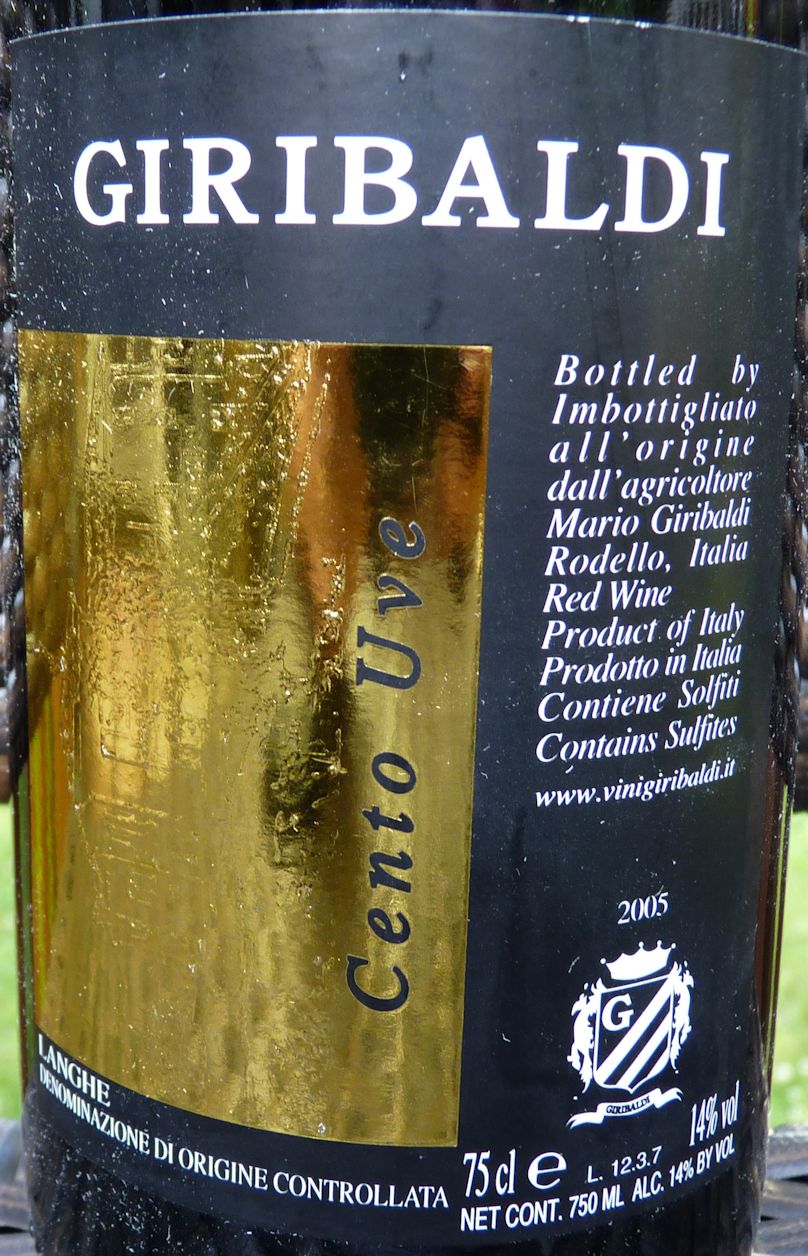 How do you experience 152 grape varieties, all at the same time? Easy. You get a bottle of Giribaldi Cento Uve wine and … voilà!
As you probably know, I’m an enthusiastic member of the Wine Century Club – a virtual club dedicated to the grape adventures. I already talked too many times about virtues of the Wine Century Club, thus I’m not going to bore you with those details again. Instead, let me focus on only one, dare I say it, sacred bottle of wine – 2005 Giribaldi Cento Uve Langhe DOC.
What makes this wine “sacred”? It is made out of 50% Nebbiolo and the other 50% containing additional 151 (!) varieties, so it can really help you to advance in the quest for higher levels of The Wine Century Club membership (except that it doesn’t count towards the first level of membership with 100 varieties). The wine is almost impossible to find in US – except one wine shop in Colorado which actually carries it (if you are interested, the wine is available from The Vineyard Wine Shop, 303-355-8324). When I called the store to order this wine, gentleman who answered the phone, Matt, said that he is quite convinced that they don’t have any wine under such name – after checking his computer, he was surprised more than me by actually finding it. At $60 + $20 for the shipping, this was definitely worth the experience.
Interestingly enough, finding this wine and drinking it was the easiest part – the tough (seriously tough) part was figuring out what grapes I already tasted and what grapes I can actually add to my list. As this is one of the coolest parts of Wine Century Club membership ( figuring out what is what in the grape world), let me explain it with appropriate level of details.
To begin with, the web site for this wine states that it contains 152 varieties. The list of grapes is nowhere to be found on the winemaker’s web site. The only place on internet where you can find the list is at the Indian Wine Academy. Well, list is a list, you say, right? Yes, but not precisely. As I need to properly account for all the grapes I already tasted, I need to go through that list very carefully, line by line. As soon as I started going through the list, I noticed duplications (same grapes listed twice, like Gamay, for instance) – I called it a red flag and decided that the right thing to do is to contact Giribaldi, the winemaker. After 2 or 3 of my e-mails went unanswered, I decided that it is a time to … get an audience support? No, call a friend! And as I happened to have a good friend in Italy, Corrado, I asked him to help me to get to the correct list. This was not easy, but after a few conversations with the winery, he was able to get full description of the wine, including the list of grapes.
Yay? Nope. The list of grapes was … identical to the one published on the site of the Indian Wine Academy! Fine. From here on, I had to figure it out myself. I converted the list to the Excel file, and sorted it alphabetically. Then I had to figure out how to get from 156 varieties listed to the 152 which we know this wine has. It later downed on me that 156 varieties include Nebbiolo and 4 Nebbiolo clones , therefore if we will take all 5 Nebbiolo varieties from consideration we will get to the target number of 151. Whew. Tired of me yet? No? Let’s continue.
Next step was to remove obvious duplicates, then go through the list again. For every grape I didn’t know, I used Internet resources to verify that such a grape exists (i.e., referenced at least once on one or more sites). Here is the good list of references in case you ever need to conduct a search on grape etymology (Italian grapes, if you will):
After all the cleanup, removing duplicates, fixing the spelling and checking the references, I got to the final list of 138 grapes (don’t ask me where the 14 went – let’s keep it a grape mystery), out of which I was unable to find any references for the grape called Michele Pagliari – therefore I’m keeping it on the list, but not counting towards the new grapes. In case you want to see a transition here is an excel file for you – note that is has multiple spreadsheets inside starting from full list. Here is the list of those final 138 grapes.
Legend: letter N next to the grape stands for Nero (red), B is for Bianche (white), Rs is for Rose. Showing in Bold are the grapes which I count as new grapes for my grape count.
| Aglianico N | Michele Pagliari N |
| Albarola N | Montepulciano N |
| Albarossa N | Moscato bianco B |
| Aleatico N. | Moscato giallo B |
| Alicante Bouschet N | Moscato nero di Acqui N |
| Ancellotta N. | Moscato Rosa Rs |
| Arneis B | Muller Thurgau B |
| Avanà N | Nascetta B |
| Avarengo N | Nebbiolo N. |
| Baco Nero N | Nebbiolo ( Bolla) N |
| Barbera bianca B. | Nebbiolo ( Rosè) N |
| Barbera N. | Nebbiolo (Lampia) N |
| Becuet N. | Nebbiolo (Michet)N |
| Bianchetta Tevigiano B | Negrette N |
| Bianchetta Veronese B | Neretta cuneese N. |
| Bombino Bianco B | Neretto di Bairo N |
| Bombino Nero N | Nero Buono N |
| Bonarda Piemontese N | Nero d’Ala N |
| Bosco Nero N | Nero d’Avola N |
| Brachetto N. | Neyret N |
| Bracciola N | Pampanuto N |
| Brunello N | Pecorino N |
| Bussanello B | Pelaverga (di Pagno) N |
| Cabernet Franc N | Pelaverga N |
| Cabernet Sauvignon N | Pelaverga piccolo N |
| Canaiolo B. | Petit Arvine N |
| Canina N | Petit Verdot N |
| Cannonau N | Pigato B |
| Carica l’Asino N | Pignola Nera N |
| Carignano N | Pinot bianco B |
| Catarratto comune B | Pinot Grigio G |
| Catarratto Nero N | Pinot Nero N |
| Chardonnay B. | Plassa N |
| Chatus N | Pollera 1 N |
| Ciliegiolo N. | Portugieser N |
| Colorino Nero N | Primitivo N |
| Cornalin | Prosecco B |
| Cornarea N | Quagliano N |
| Cortese B | Raboso Veronese N |
| Corvina Nera N | Rebo Nero N |
| Croatina N | Refosco da Peduncolo Rosso N |
| Crovassa N | Riesling B |
| Dolcetto N | Riesling italico B |
| Doux d’Henry N | Riesling Renano B |
| Durasa N | Rossese bianco B |
| Durasca (Dolcetto di Boca) N | Rossese N |
| Enantio N | Ruché N |
| Erbaluce B | Sangiovese N |
| Favorita B | Sauvignon Blanc B |
| Franconia N (Blaufränkisch) | Schiava Gentile N |
| Freisa di Chieri N | Schiava grossa N |
| Freisa di Nizza N | Schiava N |
| Gamay N. | Sylvaner Verde B |
| Gargiulo N | Syrah N |
| Grechetto N | Teroldego Nero N |
| Grignolino N | Timorasso B |
| Grillo B | Tocai Friulano B |
| Incrocio Manzoni N | Tocai Rosso N |
| Lambrusca di Alessandria N | Torbato B |
| Lambrusco Maestri N | Traminer aromatico Rs |
| Lumassina N | Trebbiano Toscano B |
| Maiolica N | Uva di Troia N |
| Malvasia di Casorzo N | Uva rara N |
| Malvasia di Schierano N | Uvalino N |
| Malvasia Istriana N | Veltlimer Fruhrot N |
| Malvasia nera lunga N | Verduzzo Trevigiano B |
| Manzoni bianco B | Vermentino B |
| Marzemino N | Vespolina N |
| Merlot N | Zweigelt N |
And A Few Words, Errr – Whiskys for The National Scotch Day
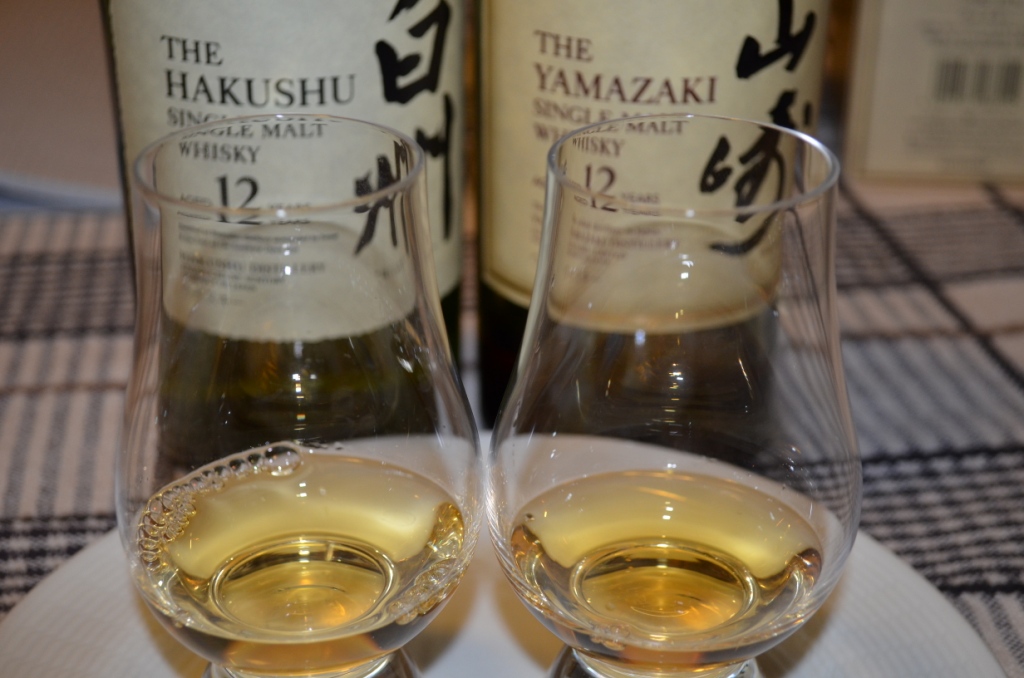 While you are not going to see it well marked in many calendars, July 27th was the National Scotch Day. Actually, if you like Scotch, you should definitely mark it in your calendar for good going forward- unlike some other wine holidays, it always takes place on July 27th – or it seems to be so, as I was unable to trace the origin of this holiday. There is enough references in various blogs mentioning the July 27th as National Scotch Day, so let’s just go with the flow.
Having more holidays is always better, especially when you get an opportunity to celebrate such a distinguished drink as Scotch. And the better word to use is Whisky, as all the Scotch is Whisky, but not all the Whisky is Scotch (and then you got much bigger world of Whiskey- one little letter “e” makes a world of difference – but let’s keep focus on the Scotch for now).
To celebrate in style, I decided to compare two whiskys, both made in Japan by the company called Suntory. Currently, Suntory makes three different lines of whiskys – Yamazaki, Hakushu and Hibiki, with the first two being single malts and the last one being a blend.
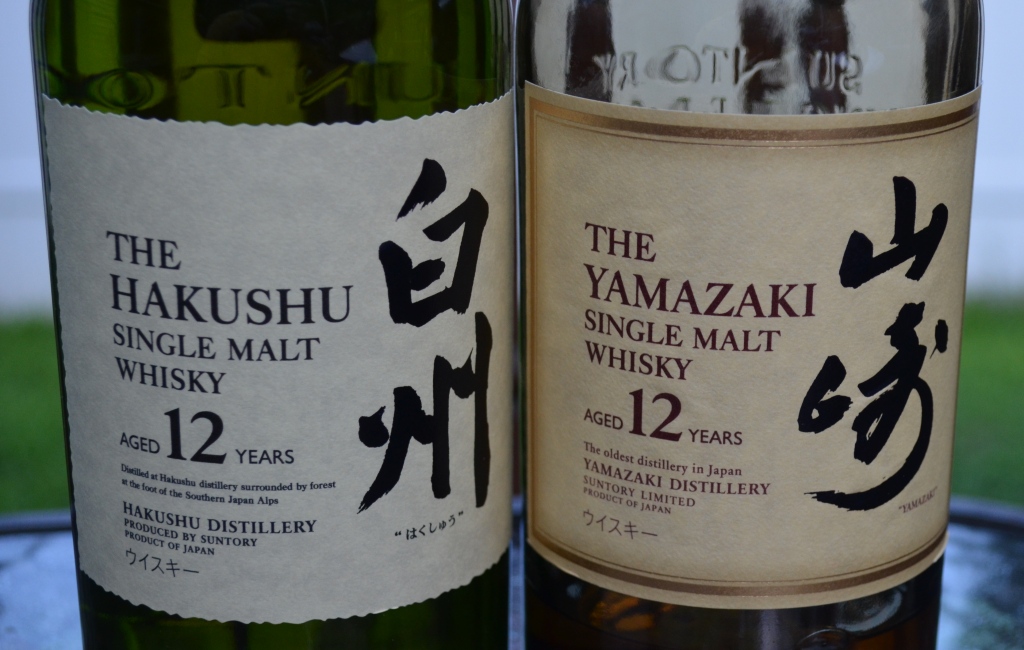
Yamazaki was one of my favorites for a while, but this was the first time I tried Hakushu (my brother in law brought it directly from Japan).
I started with Hakushu 12, which comes from the distillery under the same name, located in the forest in Southern Japanese Alps. On the nose, it had a touch of sweet smoke and a bit of grassiness. On the palate, Hakushu had a touch of sweetness, some vanilla notes, super soft and delicate, velvety and round in the mouth, with grass undertones and hint of butterscotch. Aftertaste was very complex, and had almost numbing qualities.
Yamazaki whisky comes from the distillery under the same name, which was the first malt distillery in Japan, opened in 1924 in the outskirts of Kyoto. This Yamazaki 12 was very clean on the nose with a bit of floral notes, more mellow than the Hakushu – but then I had the bottle open for quite a while, so this might be the factor. Very clean and smooth on the palate with more sweetness than Hakushu, caramel apple undertones and clean finish with high acidity.
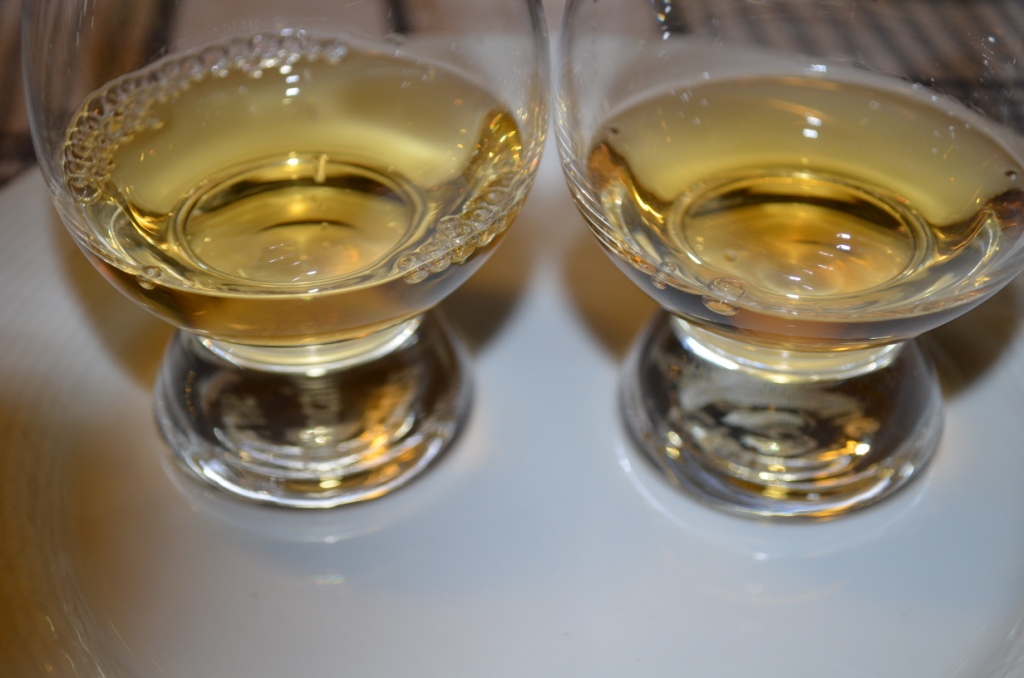 Oh yes, and in case you are wondering, I usually don’t add water to my scotch – with cask-strength sometimes being an exception.
Hakushu had higher complexity of the two, and Yamazaki showed lighter (both whiskys are labeled 43% ABV). If comparison might help, Hakushu was more of a Islay Scotch, similar to Lafroaig, and Yamazaki was much closer to Highland Scotches, similar to Glenlivet or Dalmore. I would highly recommend both Hakushu and Yamazaki – if you are into whisky, they are definitely worth looking for.
That’s all, folks. You don’t have to wait another year to celebrate Scotch – it is a great every day drink, without the need for any special reason to enjoy it. Cheers!
Weekly Wine Quiz #22: Olympics For All
XXX Olympic Games just opened with the beautiful ceremony in London, and for the next three weeks, the world will be cheering, screaming, crying and celebrating people willing to do more than their best. And of course, the world will continue eating and drinking.
At the moment, everything evolves around Olympics, and food and wine are no exception. Well, I don’t know if there is specially designated Olympic food – but wine – yes, there is.

Number of wines had been specially selected to be served during the Games. And truly in the spirit of the Games themselves, where 204 countries (I had no idea we even have that many on this little planet…) will be competing, some of the wines will be coming from quite unexpected places. The list below consists of lesser-known wine producing countries – and one of the wines you see above is coming from one of such countries. Do you know which country is that?
Have a great weekend! Cheers!
From Wine and Books To Wine In Books
 What do you take your wine with? There are few options, I guess. One (and most obvious) would be food. Another one would be a conversation (wine and conversation – a match made in heaven?). And then there is wine and the book – both get you in the mood, both complement and enhance each other and make the moment special (take your average week as an example – how many times per week you get to enjoy a quiet moment with book and the wine? What, zero? I hear you…).
Sometimes, wine even gets into the book – and I don’t mean by spilling it all over. Today is a Wine Blogging Wednesday #79, dedicated to Summer Reading, Summer Wine. The main question you are supposed to answer in your blog post is “What wine would your favorite fictional character drink?”.
I have two problem with this question – the same way as I can’t name my favorite wine, I can not name my favorite fictional character (there are many). And the second problem? Drinking wine (or any alcohol) is not necessarily a priority, no matter what the character is doing, therefore pinning it down is far from simple.
While I thought of a few different approaches ( including writing of the short essay about a character and the wine), advancing from thinking to the writing was not getting in sync with me. But then I thought of one of my all-times absolute favorite science fiction book. I can’t tell you how many times I read this book while I was growing up – 10, 20, 50 – I have no idea), but every time it was fresh and fascinating. This book was written in 1965 by two brothers, Arkady and Boris Strugatsky (originally in Russian), and it is called Monday Starts on Saturday. It is a science fiction (border line fantasy) book, talking about a research institute where wizards, sorcerers and just researchers work on exploring of the meaning of life (anyone who read the book in the original – I ask for your forgiveness for such a representation of this book). If anyone cares to read it in English, here the link to the full English text – however note that a lot of charm might be lost in translation.
So I decided to do a simple check for what kind of alcohol was mentioned in the book (using the word “bottle” as an anchor and remembering some of the key scenes). Here is the list:
- Wine (generic term, nothing specific)
- Champagne (again, nothing specific)
- Vodka (after all, this is a Russian book!)
- Cognac (with the perfect string attached: “A human might be just an intermediate element of evolution necessary to build a masterpiece of creation – a glass of cognac with slice of lemon” – note that translation is mine).
- Amontillado (pretty good, huh? This type of Jerez was mentioned by the name!)
- Elixir of Bliss (clearly a magical creation, but based on the personal experience, I would approximate it to an extremely old Pedro Ximenez Jerez)
Of course I might be missing something, but I like the list even as it is.
There you have it, my friends. My major point here? No matter what the characters are drinking, wine and books go perfectly hand in hand – hope you can find the time to enjoy both! Cheers!
Wednesday’s Meritage
 Hello and welcome to the special Wednesday – Wine Blogging Wednesday #79 it is, a.k.a. #WBW79.
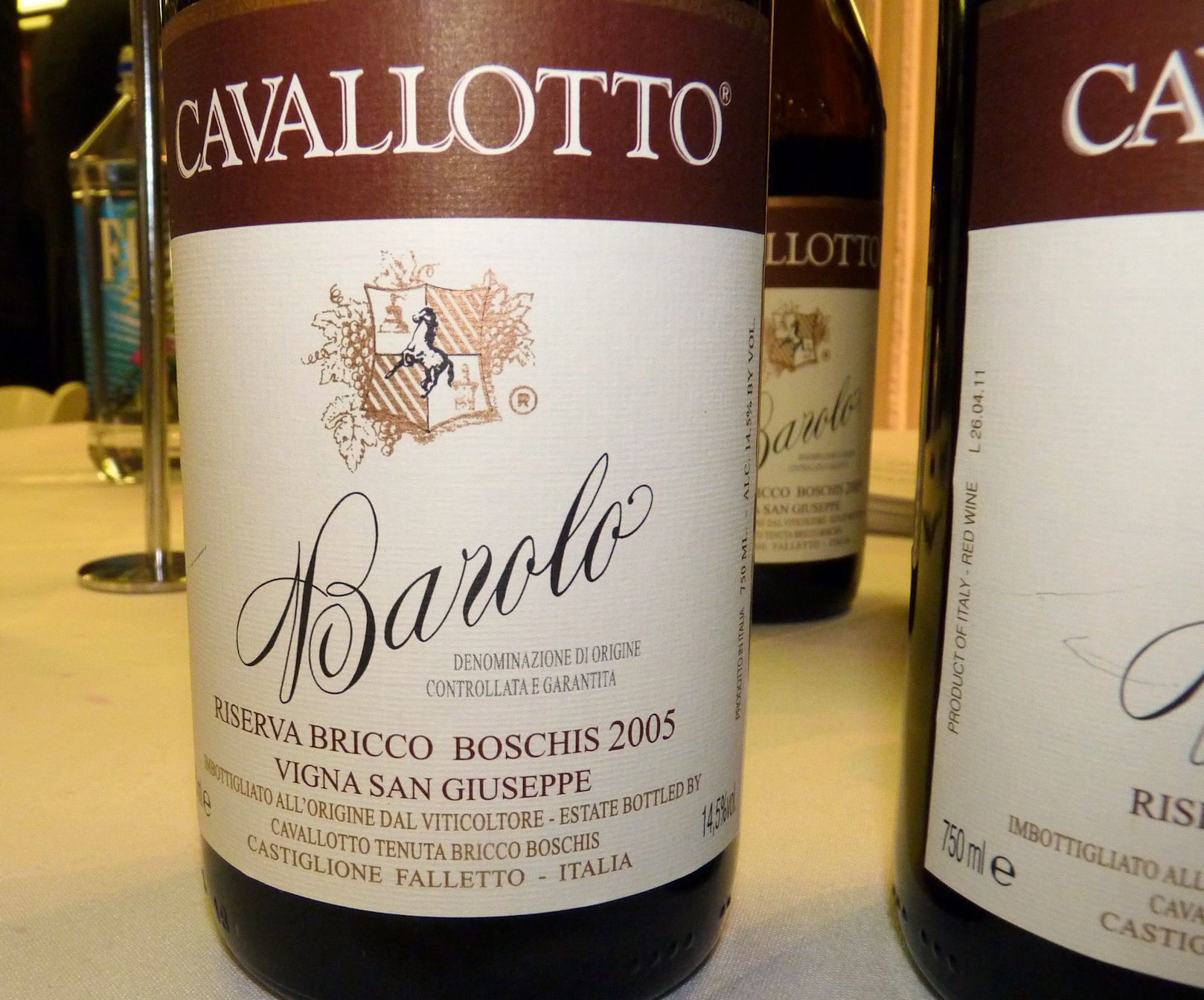
Let’s start from the usual routine – the answer for the Wine Quiz #21 – Do you Know the King? Similar to the previous quiz, this one also had a diversity of opinion as to which wine is called a “King of the Wines”. And the answer is … Barolo!
Believe it or not, but until the middle of the 19th century Barolo was a sweet wine (it probably sounds funny for anyone who experienced the power of Barolo) due to the deficiencies of the winemaking process. In the second half of the 19th century, invited French oenologist managed to change the winemaking process which resulted in production of completely dry wine. This dry Barolo wine became so popular among nobility of Turin that it was often described as “the king of wine” (here is a link for you with more information on the subject). Now that you know the king, you can enjoy Barolo even more (but don’t forget to decant it!).
Now it is time for the wine news. Let’s start form the Wine Blogging Wednesday #79 – Summer Reading, Summer Wine. This is probably one of the more difficult WBW events, as you are required not to drink the wine yourself, but rather explain to the world what kind of wine your favorite fiction character should be drinking, and why. I’m still not decided if I will will be writing my blog post for #wbw79 – may be yes, may be no – but I’m sure it will be fun to read what the other people will have to say.
Now, all the wine lovers who like value – please pay special attention. Wine Till Sold Out (a.k.a. WTSO) Cheapskate Wednesday is coming up on August 8th. Starting at 6 am Eastern, deeply discounted wines will be offered for sale every 15 minutes or may be even faster. All the wines will be priced in the range of $7.99 to $18.99 and you will have to buy 4 bottles or more to get free shipping. These “marathon” events are usually offering great values and shouldn’t be missed – here are couple of reports (one and two) I compiled from the past events in case you want to have a frame of reference. Get your cellar ready!
Moving along. Next, I want to bring to your attention two more interesting posts. First, W. Blake Gray wrote about the results of market research of consumers’ emotional attachment to the brand (of course primarily concerning alcohol brands). This is pretty short post (here is the link) – read it, some of the results are staggering and hilarious at the same time.
Last but not least: if you love wine and live in a close proximity of Boston (remember, airplanes are known to greatly shorten the distances), there is a restaurant you must visit until the end of August. Why? Because this restaurant (Troquet) is offering mind boggling dealson superbly aged wines (1966 Bordeaux for $75? unreal…) – for more details, please read this post by Richard Auffrey who writes The Passionate Foodie blog.
That’s all for today, folks. Hope you enjoyed this Meritage, and don’t worry – the next Wednesday will be here much sooner than you are expecting, so we will be talking again. And… don’t forget to leave a comment. And – think about your #WBW79 post. Cheers!
Last Bottle Sign Up ($10 credit)





