Study of Port: Great Restaurants
You know, I’m continuing this series about great experiences in Portugal (here are part 1, part 2 and part 3), and there is this annoying little voice inside which says “stop talking about it… Keep it for yourself… Once people will find out, they will all start going there, and all the great and inexpensive food and wine will become expensive and inaccessible… Keep it a secret…”. Never mind, the inner voice lost, and one can’t keep great experiences secrets anyway, so let’s proceed, shall we?
Today I want to present to you three restaurants, all three different, but literally one better than the other.
Let’s start with the place called bbGourmet. Actually, bbGourmet is a group of restaurants, and the specific one we visited is called bbGourmet Bull&Bear. The restaurant has good rating on Trip Advisor, but when I walked by the restaurant, it looked modern and not very inviting from outside, so at first I thought we can skip it. But then people on Trip Advisor probably know a thing or two about food, and the place was relatively close, so why not give it a try, right?
Restaurant indeed looked very modern inside, but with the nice ambiance. The menu had tasting option for €35 for four dishes. For another €15 you could add a wine pairing to all the dishes. Yes, you don’t need any hard guesses – of course this is what we did.
To give you a brief summary: perfect dishes + outstanding wines + very good pairing = great experience. I’m an engineer, remember? Of course it is fun to think in math terms, right? Okay, just ignore. Moving along…
First dish: Scallop with risotto. Perfectly gentle array of flavors, with sweetness of scallop complemented by mild tartness and zest of risotto.
Pairing: 2011 Prova Regia Arinto Vinho Regional Lisboa – 100% Arinto grape, bright acidity, some grapefruit notes, very similar to New Zealand Sauvignon Blanc – worked perfectly together with the dish.


Second dish: Sea Bass with black quinoa and fennel puree – that puree was particularlyoutstanding, overall an excellent dish
Pairing: 2012 Portal Colheita Branco Douro DOC, a blend of 45% Vinsinho, 20% Moscatel Galego Branco, 20% Malvasia Fino and 15% Rabigato. A bit drier than the previous white, more saddle and herbaceous flavors. Paired very well with the dish.


Third dish: Stuffed calamari. May be the best, definitely one of the best calamari dishes I ever had – perfect texture, perfect balance of flavors with the creamy sauce.
Pairing: 2011 Niepoort Redoma Rosé Douro DOC – a blend of 30%Tinta Amarela, 20%Touriga Franca and 50% others. A bit austere, needed a touch more fruit in my opinion. This was probably least successful pairing.


Fourth dish: Roasted veal. I’m not big on veal in general, but this was perfectly succulent dish. Those “potato chips” you see in the picture? They are not chips at all! They look like chips, but they soft literally like soft taco shells. Delicious!
Pairing: 2010 Portal Colheita Douro DOC Vinho Tinto – a blend of 60% Tinta Roriz, 25% Touriga Nacional, 15% Touriga Franca – very nice overall, good amount of dark fruit, soft and approachable, good oiverall balance.


And then – liquid desert! Secret Spot 40 years old Moscatel do Douro – I would guess, this is how winemakers play in Portugal – while they make the port all the time, every once in a while they make something for themselves – that is possibly the story behind this Moscatel (well, you will have hard time proving me wrong…). The wine was heavenly, with enough acidity to prevent it from becoming a syrup, and lots of complexity which can be rather expected considering the age. That was a perfect finish for a great meal.
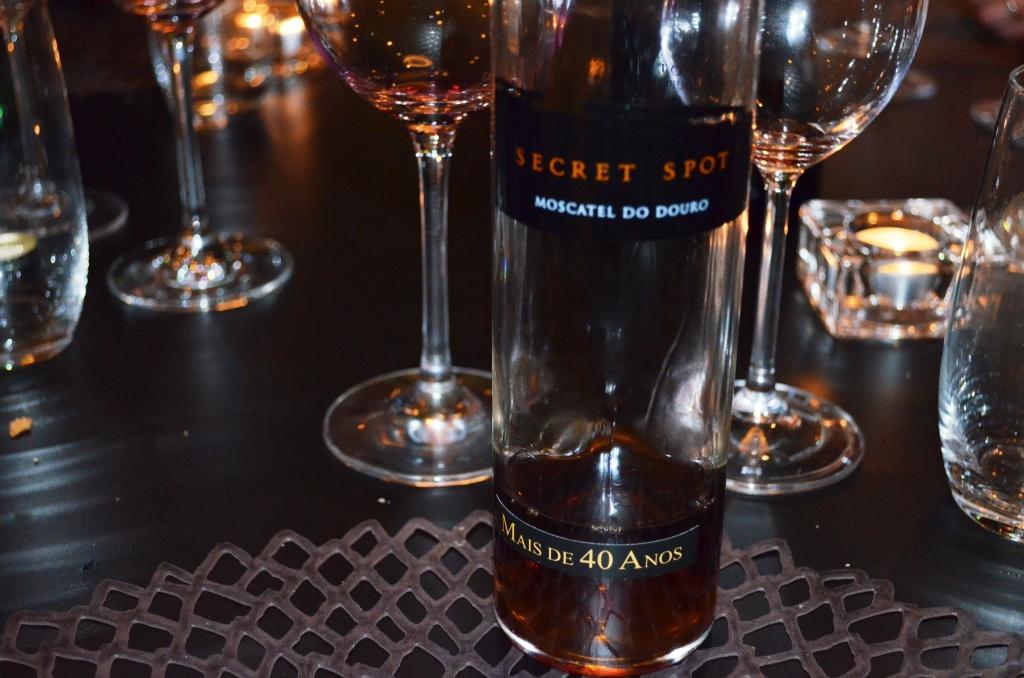
40 years old Moscatel
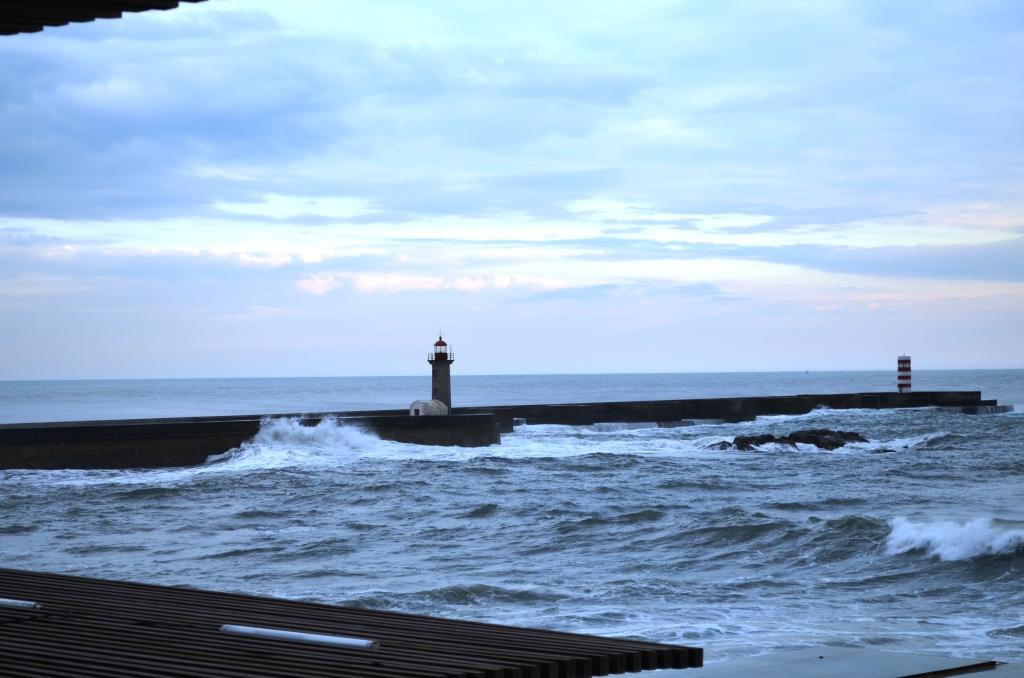
The next restaurant was called ShiS (at the time of writing, the #21 out of 376 on the TripAdvisor’s list of restaurants in Porto). The first thing to mention about this restaurant is its location. It is located right by the wall which protects Douro river from the ocean, and the views are just exceptional. Before we talk about food and wine, here are couple of pictures I managed to snap right by the restaurant:

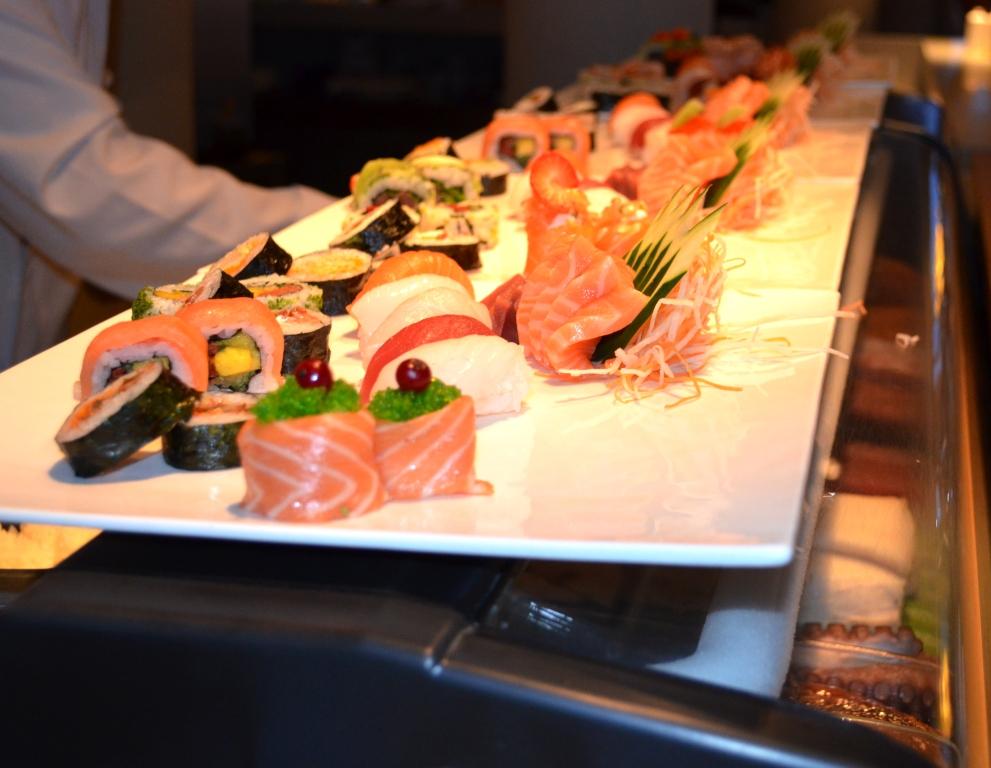
ShiS offers lots of choices of sushi and sashimi. This was our dinner in the making:
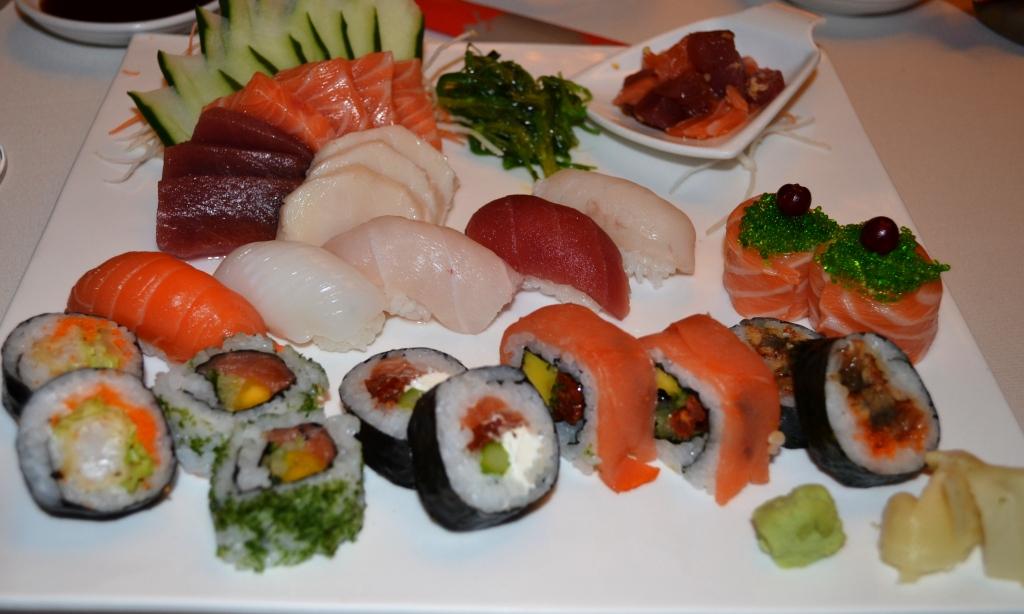
And this was my dish (chef’s selection sushi and sashimi combination):
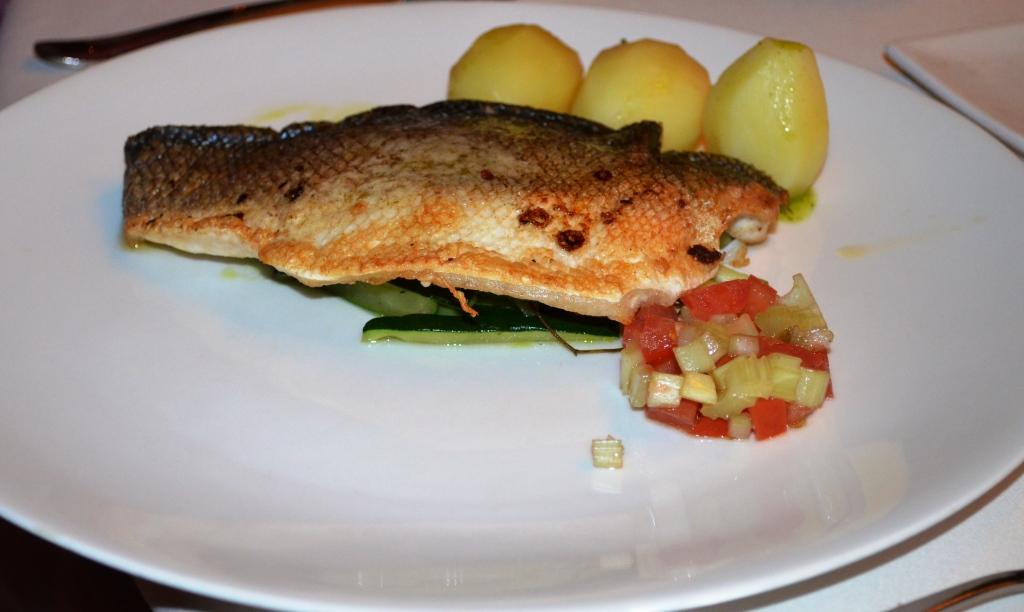
Here is also a sea bass dish:
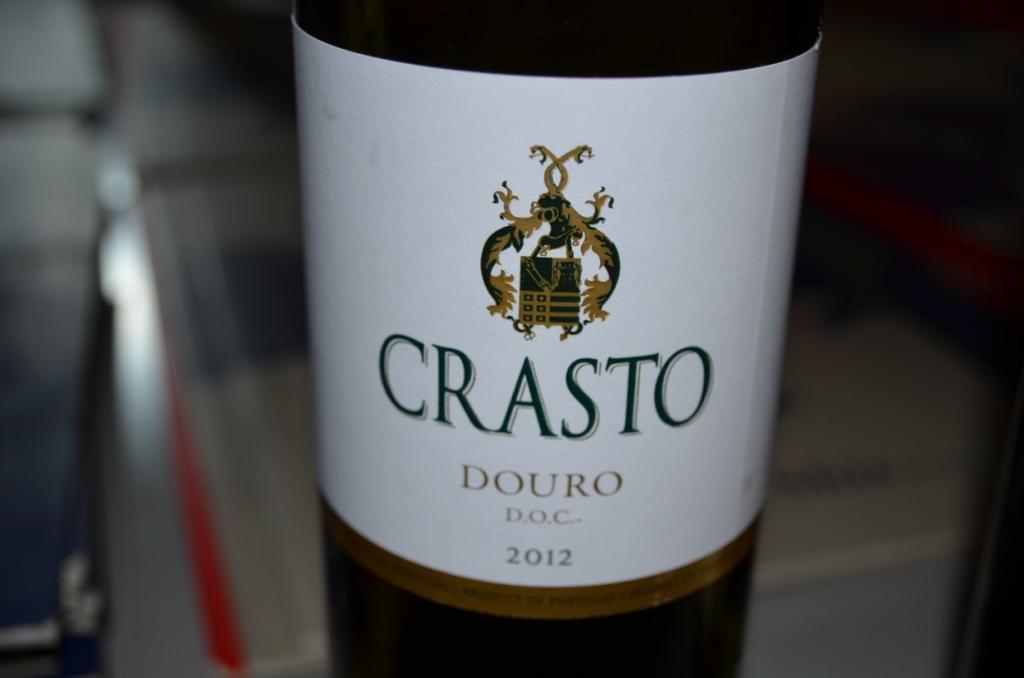
We had few of the very good wines. For the white we had 2012 Quinta do Crasto Douro Branco (a blend of Gouveio, Roupeiro and Rabigato) – somewhat on a fruity side, but overall dry, with good acidity and good balance. Quinta do Crasto produces some of the best wines in Portugal, especially when it comes to red, and these wines should be available in US.
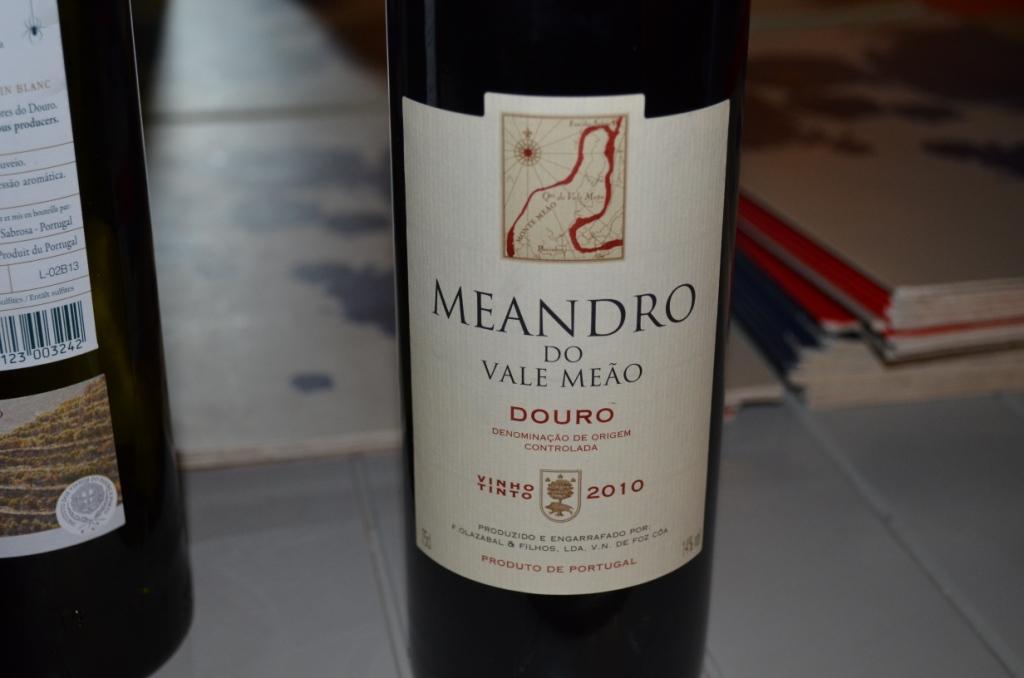
The red wine was 2010 Quinta do Vale do Meandro Meão Meandro Douro DOC, a blend of 45% Touriga Nacional, 30% Touriga Franca, 13% Tinta Roriz, 5% Sousão, 4% Tinta Barroca, and 3% Tinto Cão. Good dark fruit on the nose and on the palate, soft tannins, overall well balanced. It should be available in US and worth seeking.
Dessert – Crème brûlée with chocolate sauce and of course, Port! Taylor’s 20 years old Tawny was very good, with dried fruit and nutty notes, quite light and balanced (we finished the only two bottles the restaurant had, unfortunately).
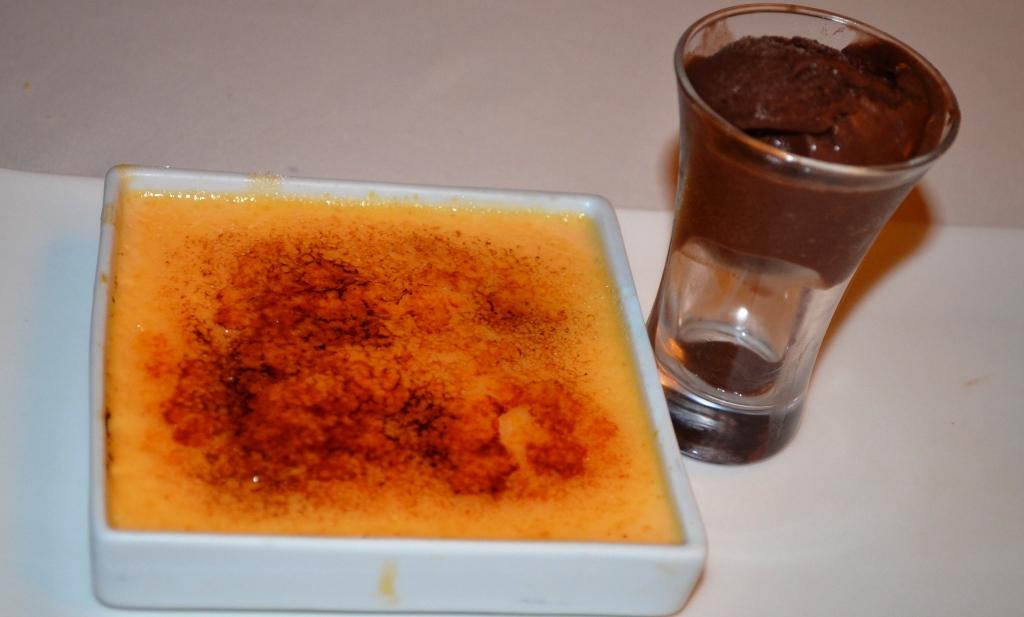
Crème brûlée with chocolate sauce
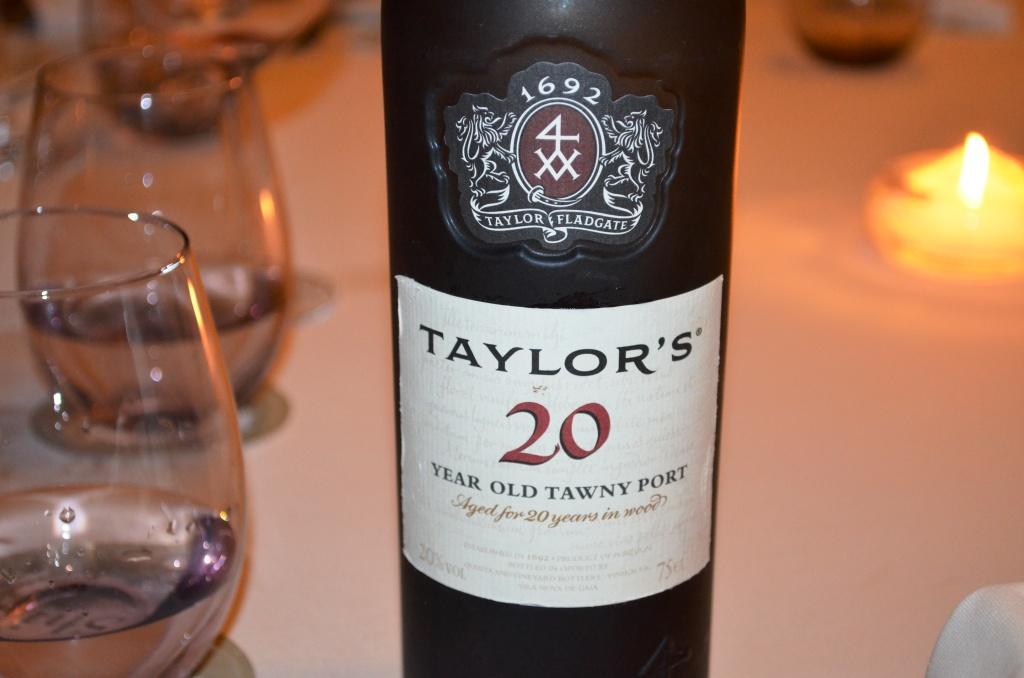
20 years old tawny – always appropriate
By the way, the wine list at ShiS has one interesting detail – it lists ABV for all the wines – I think this is pretty neat and I would be glad to see that in restaurants in the US:
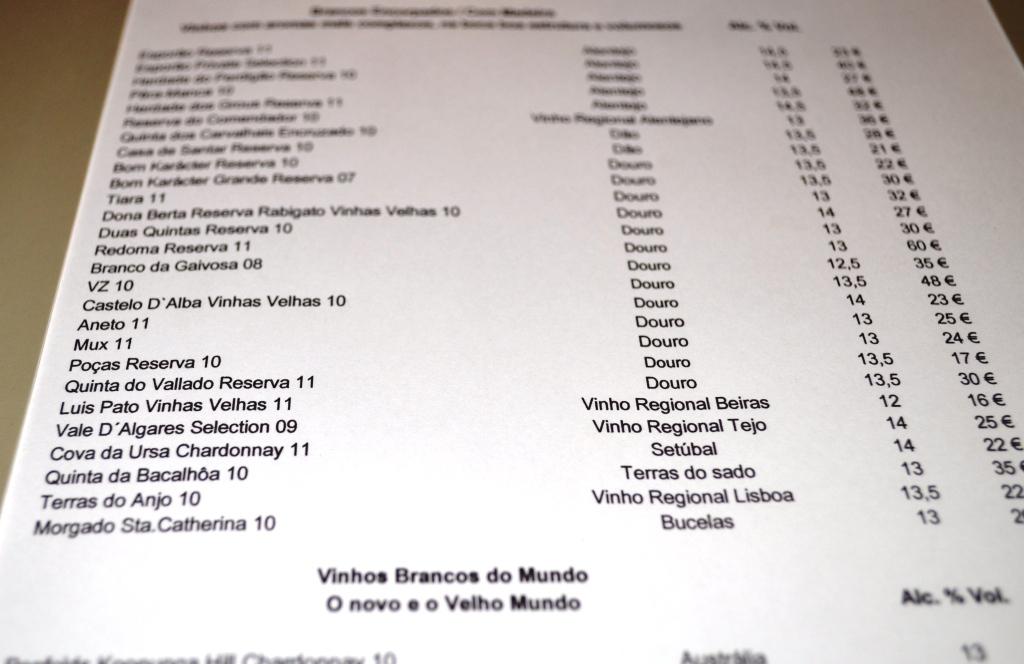
Wine list at ShiS – note ABV ratings for all the wines
And now last, but not the least experience I want to share with you – Cometa Restaurante.
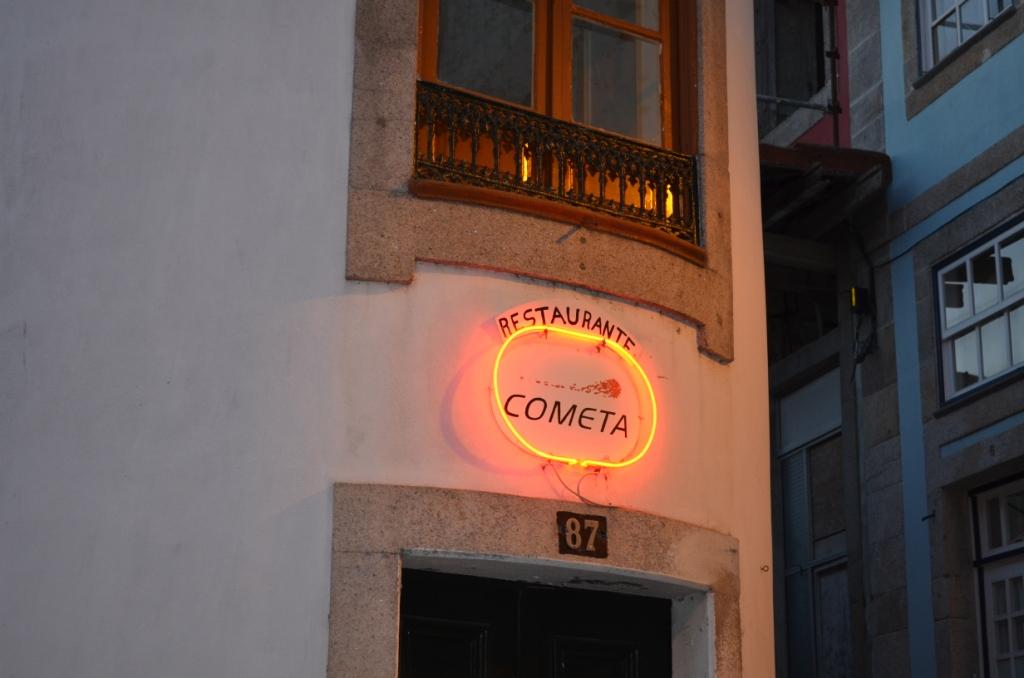
At the moment of this writing, it is #16 out of 376 on the Trip Advisor restaurant list in Porto. Very small restaurant, may be 8 or 10 tables, located on a top of a very long and steep set of stairs leading to the river. We had a very interesting experience at the restaurant with the set of small setbacks getting in the way, but not preventing us from having a great time overall.
The first issue was with wine – the restaurant had pretty small wine list, and even out of that small wine list, our first and then next choice were not available. Finally we settled on the white wine which restaurant had available. Then food became an issue too – most of us quickly set our minds on having a grilled squid – and it appeared that the restaurant only had one portion available for the five of us, so we had to come up with the other choices. The menu also had roasted chestnut soup with pomegranate seeds – but in reality, it was not available (sigh).
As the bottle of wine finally arrived at the table, things started to turn for the better (wine can fix all the problems in the world, right?). Then some appetizers arrived, and it was time to get another bottle of wine – only the same wine was not available anymore. Truth to be told, it was unfortunate that restaurant didn’t get the delivery of the wines they were supposed to get, so that was the reason for the shortcomings with the inventory. Okay, we went through the exercise of selecting the bottle of wine again, I would say, quite successfully – we picked 2010 Herdade Dos Grous Branco Vinho Regional Alentejano, a blend of Antão Vaz, Arinto and Roupeiro (typical for Alntejano white wines) – a medium to full bodied white, with good amount of white stone fruit, very round, good acidity and good finish.
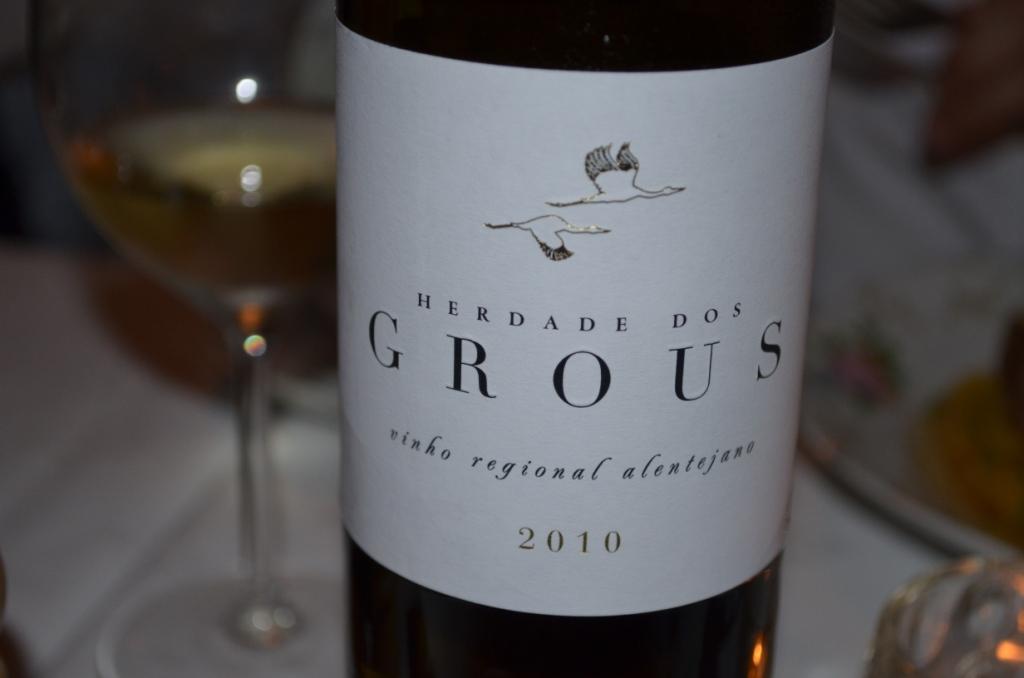
Herdade dos Grous branco
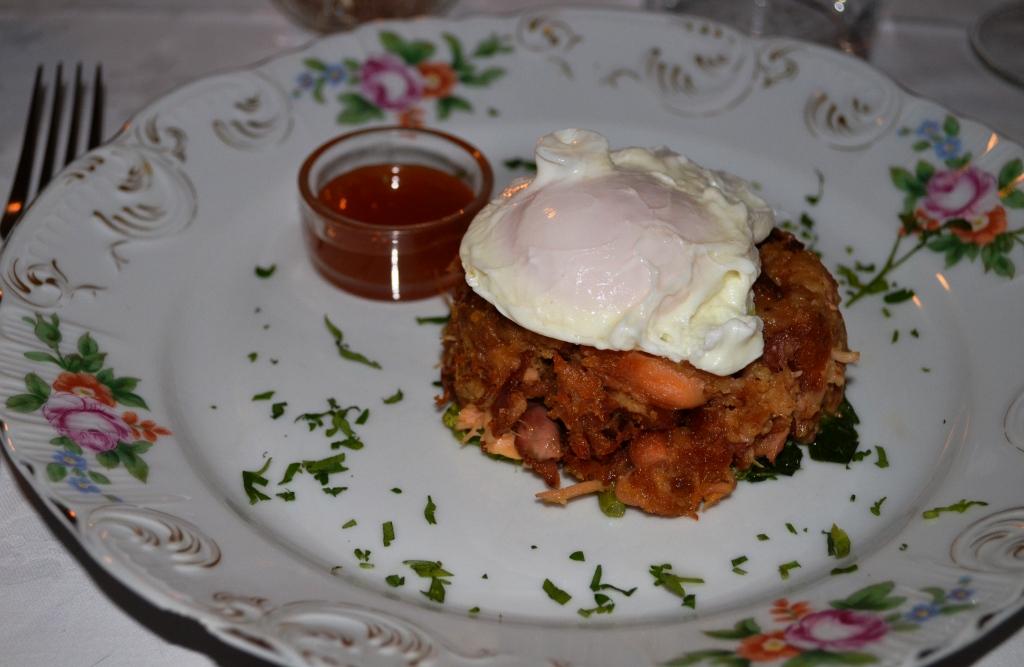
Next – our entrees arrived. I ordered the dish called “Portuguese sausage”, which was effectively a collection of poultry pieces, served with the sweet sauce. By the way, take a look at the china – I love those plates… Real food served on real plates – wow, what a concept! But it feels so unique nowadays, when even in the best restaurant you might get paper napkins instead of a real cloth… This Portuguese sausage was delicious – I’m not sure if it was a duck egg or not on top of it, but the whole dish tasted perfectly.
Considering all the troubles we had with our food and wine selection, the restaurant decided to compensate for that a little bit, and offered us complementary bottle of Sparkling wine, which didn’t encounter much enthusiasm on our side, as we were mostly done with the food. Seeing our reaction, we were offered a bottle of 2011 Niepoort Tiara Douro Branco (at €34, it is one of the most expensive wines on the list) – and all of a sudden, all our troubles seemed well worth having.
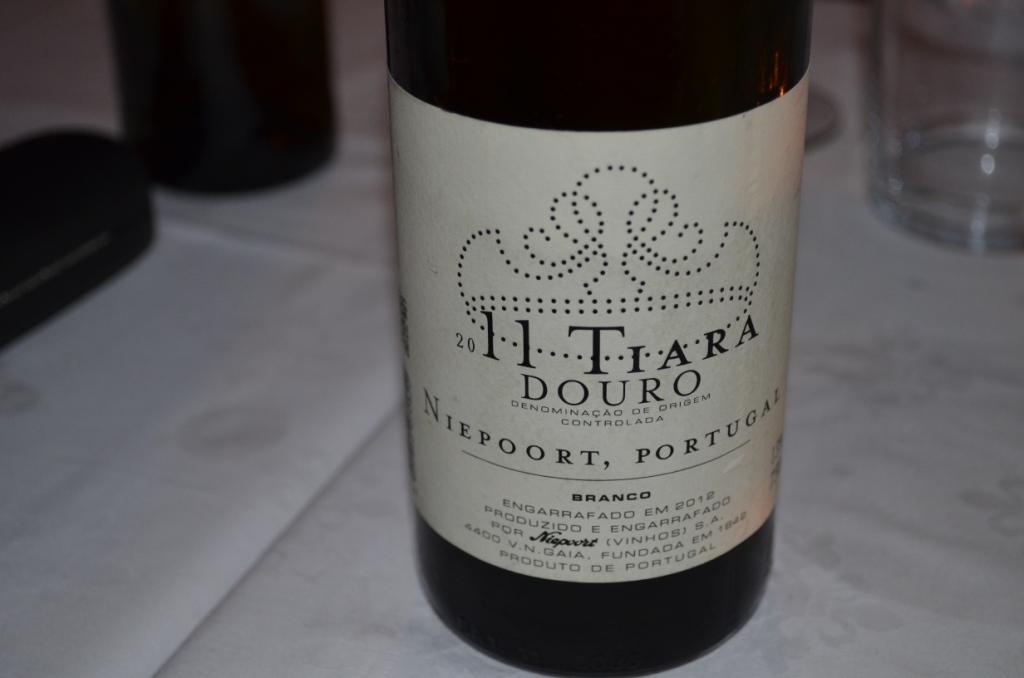
2011 Niepoort Tiara Douro Branco
This wine is a blend of Codega, Rabigato, Donzelinho, Boal, Cercial and other grapes. Bright and full bodied, excellent acidity, very uplifting. This wine has great textural presence, you really feel it in you your mouth, you can roll it around – but it is so balanced, the fruit, the acidity, the whole package is perfectly together. Reminds me of the great Pigato wines I experienced at the Gambero Rosso event. One of the very best white wines I ever had (yeah, my list of “very best” might be a bit too long…).
And then the dinner conclusion with dessert – I’m clearly abusing the “very best” here, but this was one of the very best apple desserts I ever had – apple tart with the scoop of ice cream:
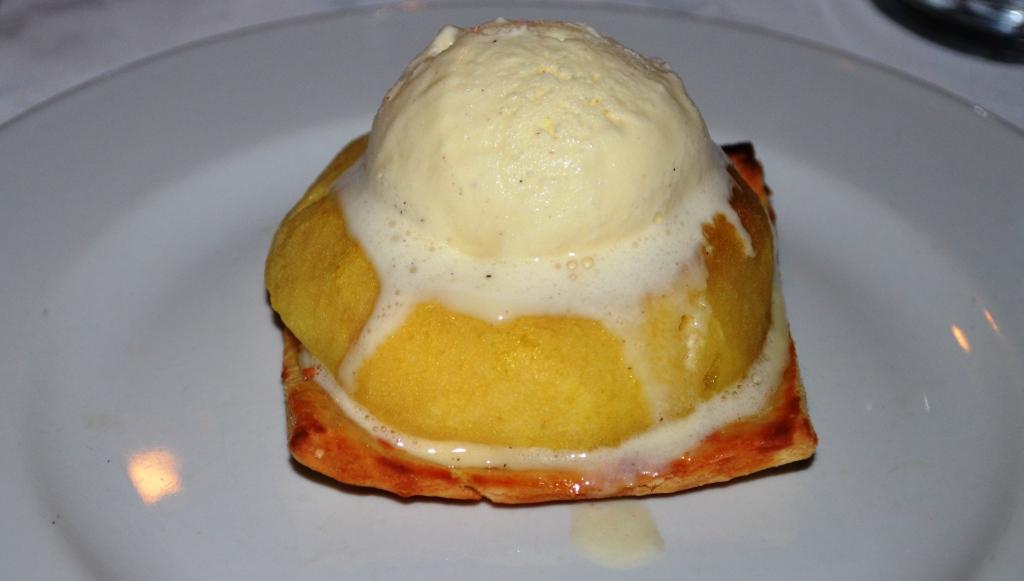
Apple tart
The apples were not visible, but very noticeable – big, juicy apples which say “bite me”. If you like apples – this was an outstanding dessert.
One parting note regarding Cometa Restaurante – the restaurant doesn’t accept international credit cards, so you should have cash on hand with you (well, there is an ATM near by, but it is always unpleasant when you can’t pay for your meal on the spot). By the way, care to guess how much this dinner cost us? We can skip the drum roll, but – it was only €35 per person!
And we are finally done! Every time I promise to myself to write short little posts, easy going for quick consumption – and I still end up with multi-page monstrosities with tons of pictures. Well, I hope I conveyed my main message – there are many great restaurants in Porto and I’m sure in the Portugal overall and they are still reasonably priced, so if you are thinking about going to Europe… No, I’m not encouraging you. Cheers!
Thursday Rant–Wine Blogs
Here is the post from the fellow blogger Jeff @ The Drunken Cyclist, with my comment which was left on Jeff’s blog:
You idea of “themes” is exactly what existed in the wine blogging world for many years – this is what was called Wine Blogging Wednesday, or #WBW, where the theme was set once a month with the “host”, and then all would be writing for that theme and the blogs would be posted and summarize. There used to be even a dedicated web site for that – after running for about 80 months, it is now closed : ( But here is a glimpse for you for what it was: http://drinkwhatyoulike.wordpress.com/tag/wine-blogging-wednesday/
Yours truly even participated in a few of the #WBW events, and it was fun. I don’t think we can do it more often than once a month (speaking strictly for myself), but I will be glad to support “Wine Blogger Challenge” if you want to start that movement. We can have a joint “announcement” from all of the supporting bloggers and we will need to promote it on Twitter, but again – you can count me in. And as a show of the support, I’m going to reblog your post on my blog 🙂
Cheers!

I have nothing against wine blogs–quite the opposite, I technically write one, I guess. I also follow several really great blogs and really admire their authors and are inspired by them daily. The problem I have with them is that as a “unit” there is really not much cohesion and at the same time not much in the way of differing viewpoints.
Both could be certainly due to the subject of our blogs: Wine appreciation is rather personal and certainly contextual. I might like a wine simply due to the fact that it tastes good to me. I might like a wine because it was part of an overall incredible experience for me. Another drinker/taster might be drinking the exact same wine in a completely different (or even a very similar) context and have a different opinion of the wine. When you come right down to it, though…
View original post 759 more words
Study of Port: Food and Wine Tidbits
Here I’m, continuing to report on my food and wine adventures in Portugal (here are the first and second posts from the series). Well, I guess “adventures” is really too much of a word for simply excellent food and wine experiences, but “adventures” put the things in the right prospective, isn’t it? Never mind, let’s just talk about food and wine.
On the first night we ended up at the small place called Restaurante Nova Europa. The place looked very authentic in the sense that they had a hard time to find an English menu, and our server spoke practically no English – that didn’t prevent us from having a very good dinner. Most of the people at the table ordered some version of the local fish called Bacalhau, which is a cod. It was offered in different variations – mine had a lot of potatoes:

Bacalhau
And as I often ignore food and wine pairing rules, the wine was red:

2010 Evel Tinto Douro
As most of the wines from Douro, this 2010 Evel Tinto Douro, this wine is made from the “classic set” of Portuguese grapes – Touriga Nacional, Touriga Franca, Tinta Roriz a Tinta Barroca. The same grapes are also used as a foundation for most of the Port wines, which are made in exact same Douro region. Good body, good depth, not necessarily spectacular but easy to drink and pleasant.
Now I would like to mention two of the very local products. First one is beer. I’m not sure how many different beers are produced in Portugal (I’m positive though that US microbrewery revolution didn’t take any roots in Portugal so far). The beer is called Super Bock, it comes in lager, stout and few other versions, and it is produced in the area just outside of Porto – according to Wikipedia. I only tried the stout, which was dark, rich, smooth and creamy. I have to mention though that it is somewhat dangerous to rely on my opinion about beer – for the most of the time I prefer dark beer and on contrary to many of my friends, I don’t find Guinness bitter. And here is the picture for you – the picture was taken by my friend Kfir, not by me – but he was using my camera, so I guess I have some rights to it…
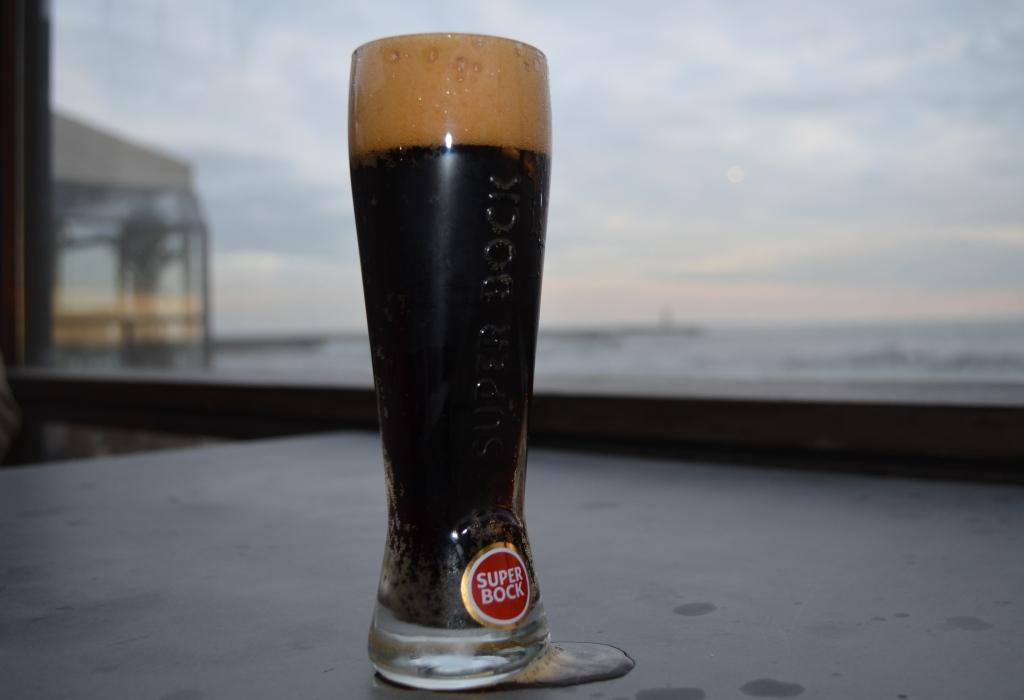
Super Bock stout, as captured by Kfir
Next item to bring to your attention is a local sandwich (supposedly it is Porto’s specialty) called Francesinha. This sandwich is made out of two slices of crust-less bread with various meats (or even veggies) in between – we saw it on the menu in most of the restaurants in Porto, and it can come with steak, white meat, various ham cuts and so on. The sandwich is completely covered by melted cheese (top and all sides), and it is served with the secret sauce which is supposed to be some combination of tomato sauce and beer. I had a steak version and it was very tasty. Believe it or not, but I’m not always carrying my camera to the restaurant, so Francesinha is probably the only dish I regret not taking my picture of – but someone thankfully did on Wikipedia, so below is the picture for you, courtesy of Wikipedia:

Francesinha sandwich, picture courtesy of Wikipedia
And then there was Cufra. Pardon my little drama here, and let me explain. We saw the restaurant while walking by, checked it out on the web, and it looked appealing enough. Service staff spoke not too much of English, but the menu was possible to understand, so we all ended up with decent food – but the wine was more memorable. For the white we had 2011 Castello D’Alba from Douro, a blend of Codega do Larinho, Rabigato and Viosinho – very typical blend for Douro white wine, all indigenous grapes (Wine Centurions, take note!). The wine was very nice, with good acidity and somewhat similar to New Zealand Sauvignon Blanc, only with less of grapefruit.
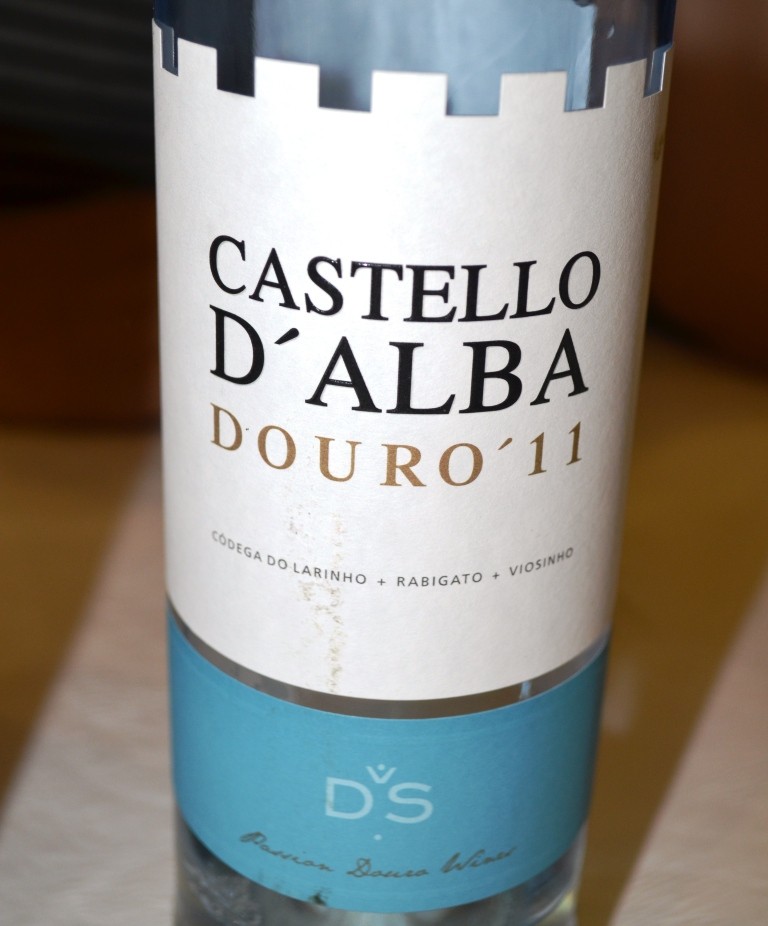
Castello D’Alba Douro White
Then we had a bootle of 2009 Quinta do Cardo Selecção do Enólogo Beiras DOC, a blend of Touriga Nacional, Tinta Roriz and Touriga Franca, produced by Quinta do Cardo. The wine was nothing short of being spectacular – with the exception of vintage port, during the whole week I only had one other red wine which was on the same level or may be even a touch higher – but I will talk about it in another post. Dense and concentrated, with dark fruit, plums and blueberries on the palate, all very round with the hint of smokiness. The wine was so good for the money (€14, in a restaurant!) that I even got two bottles right in the restaurant to take them back home.

Quinta do Cardo Selecção do Enólogo
When we went to the same restaurant second time, about a week later, the menu was quite different, and the wine were too. But – one of the reasons for the second visit was the desire to try the crab dish we saw someone ordering during the first time. Considering that Porto is located right on the cross of ocean and the Douro river, it is rather expected that fish and seafood should be very good – and this dish didn’t disappoint (hope you will find the below picture being enough of the proof):
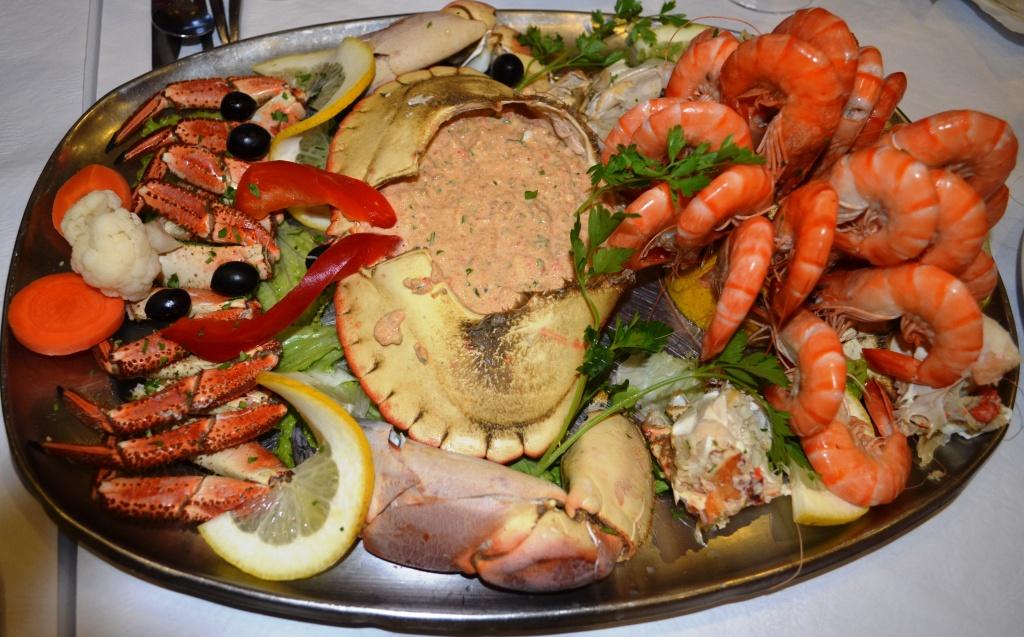
Crab and shrimp at Cufra
I can’t say the same about wines – there was different 2009 Quinta do Cardo wine on the list (about €4 cheaper), and while it was not bad, it was not anywhere as good as the first one. All in all, if you are in Porto and if you will be in the area, Cufra is well worth visiting.
Last place I want to mention (but not least by all means) is a restaurant called Rabelos. Just to give you some prospective, Rabelos are actually flat bottom boats which were used to transport barrels of Port from the wineries to the Port house cellars for aging. Nowadays the wine is transported by the tanker trucks, and Rabelos are only used to move tourists around.

Rabelos Restaurante
Anyway, the restaurant is actually located in Vila Nova de Gaia, a town which houses all the port cellars across the river from Porto. It is located very close to the bridge which connects Porto and Gaia, right along the boardwalk in a place which in general should be considered a tourist trap. But it was no tourist trap at all. The service was outstanding, and we got great recommendations and had great experience overall.
One of the starters was local feta cheese, dusted with Parmesan and slightly roasted with olive oil (take a note – I think it should be as easy to make it at home as it is delicious, and as a very least I’m going to try it…).

Roasted feta cheese with parmesan
Then we had beef carpaccio and shrimp salad – the pictures don’t do justice to those dishes, but both were delicious

beef carpaccio

shrimp salad
Next we had two dishes made from Bacalhau in different styles – one was baked with cheese sauce and one was grilled – both were outstanding:
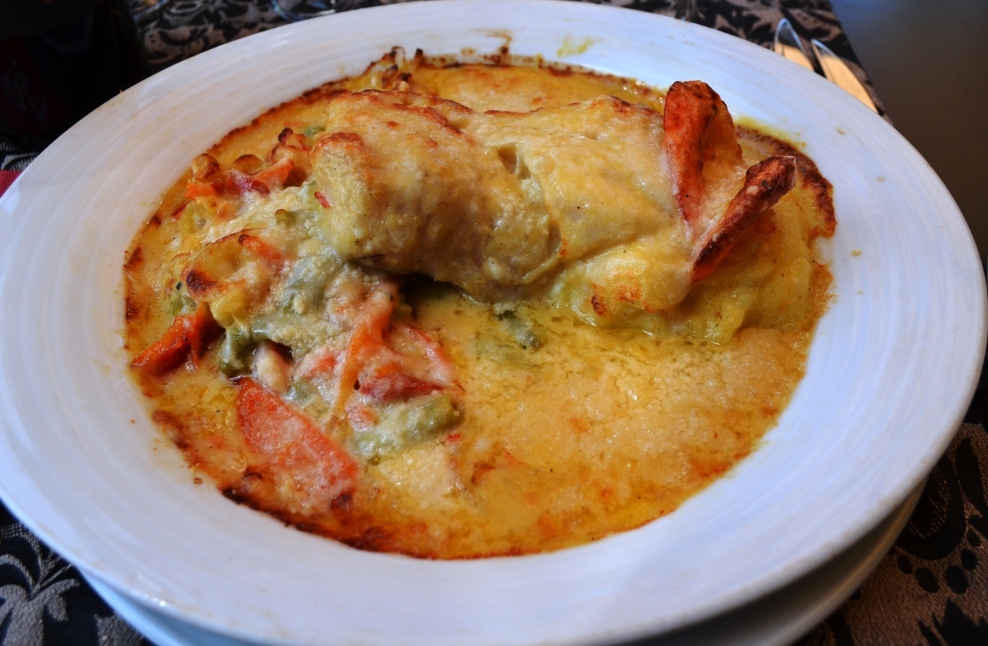
Bacalhau in cheese sauce

grilled bacalhau with shrimp
Again ignoring the pairing rules, we went with the red wine called 2010 Borges Quinta da Soalheira Douro Red, a blend of classic Douro red grapes, Touriga Nacional, Tinta Roriz, Tinta Barroca, Touriga Franca and Tinto Cão, made by Vinhos Borges. The wine had medium body, good acidity, nice red fruit on the palate, well balanced – perfect for every day drinking, considering you can find it.

Borges Quinta da Soalheira
For the desert, we had lemon cake (paired with white Port) and chocolate cake paired with simple tawny. Below are a few pictures – the first one is taken by me ( boring, sigh), and then two others taken by Kfir – I will need to learn how to really use my own camera…

Lemon cake, no excitement in the picture
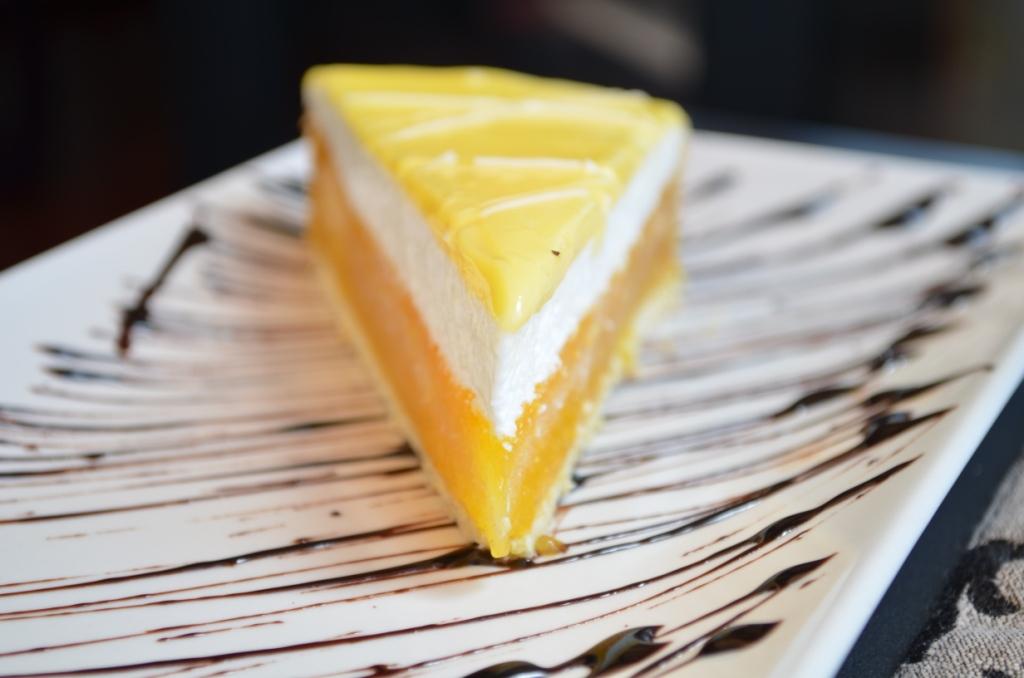
lemon cake, now with excitement, courtesy of Kfir

extreme chocolate cake, as captured by Kfir
And of course nobody can leave the restaurant without coffee, right?

Espresso!
That’s all, we are done for today folks. Sorry for all the pictures, hope you found them at least moderately entertaining. Until the next time – cheers!
Study of Port: First Port Experiences
I’m continuing my notes from Portugal (you can find previous post here). On Sunday we had some free time to walk around the town, so I have more pictures and some actual port tasting notes for you.
Let’s start with the pictures. We walked past beautiful cemetery (is it appropriate to use the word “beautiful” in conjunction with cemetery? not sure, but still). As my friend P likes to say – “lines!”:

Lines!

more lines!
Isn’t this pretty?
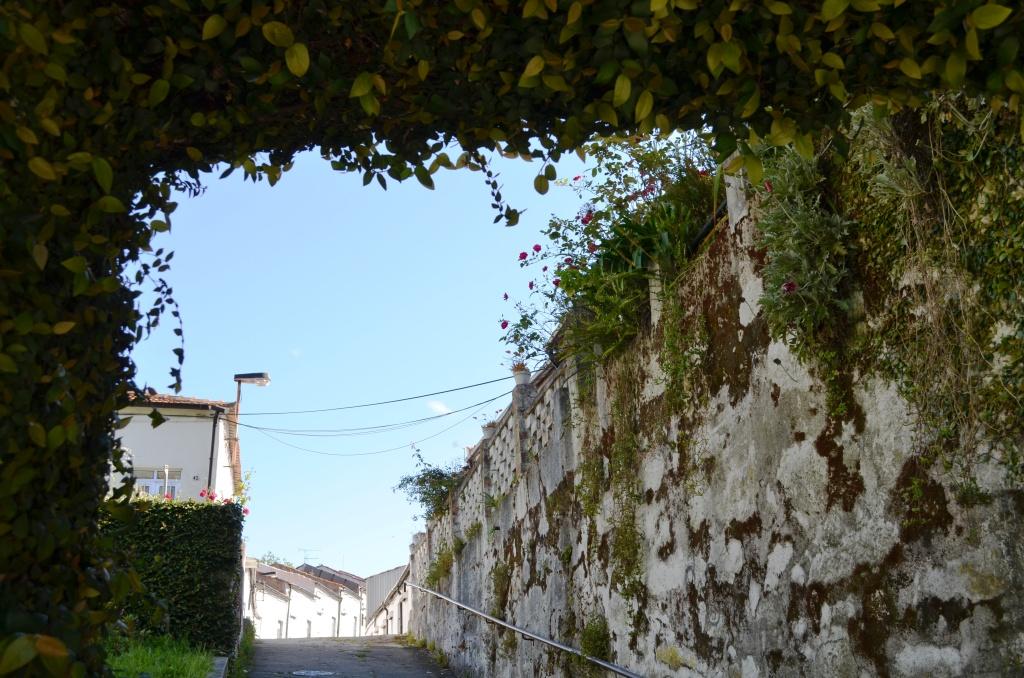
Someone has good sense of humor:

stop sign being carried away…
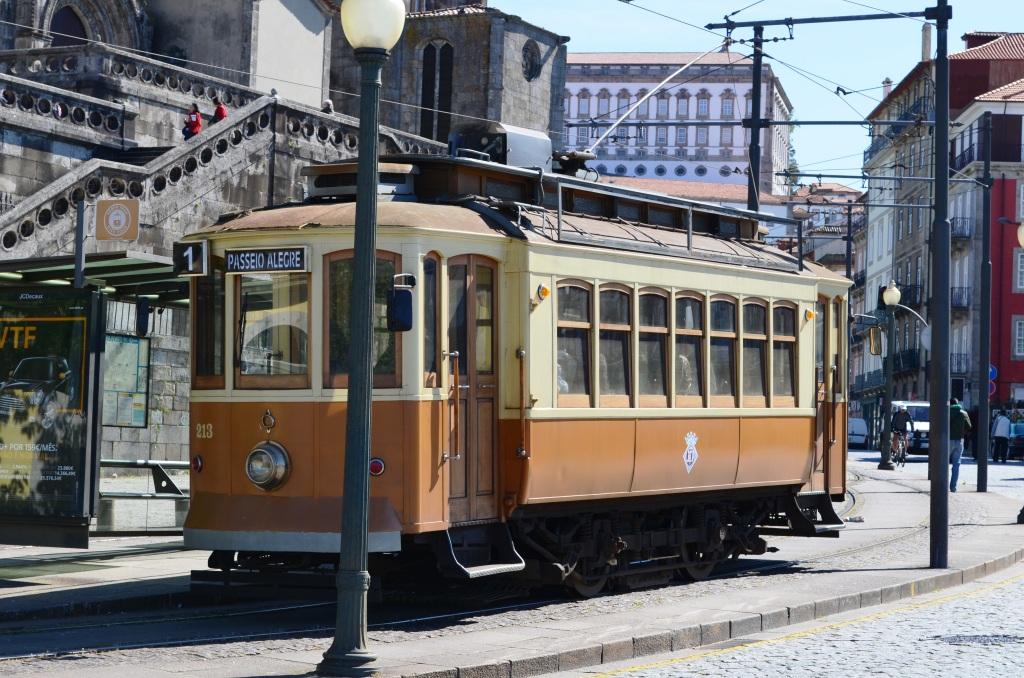
One of the modes of transportation in Porto:
Just look at this beautiful town:
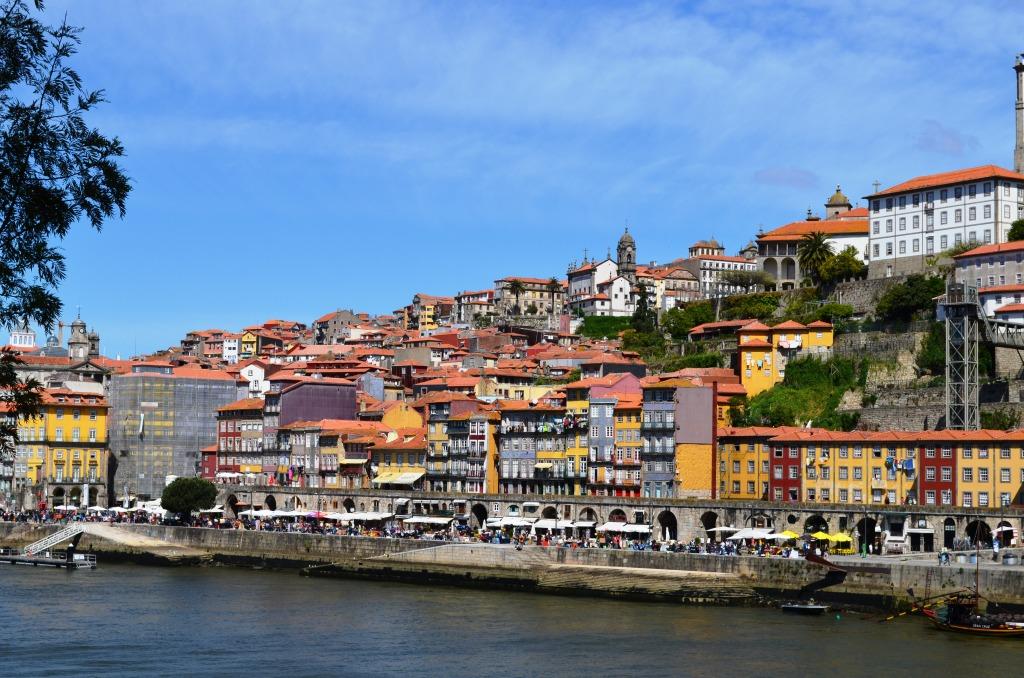
Porto
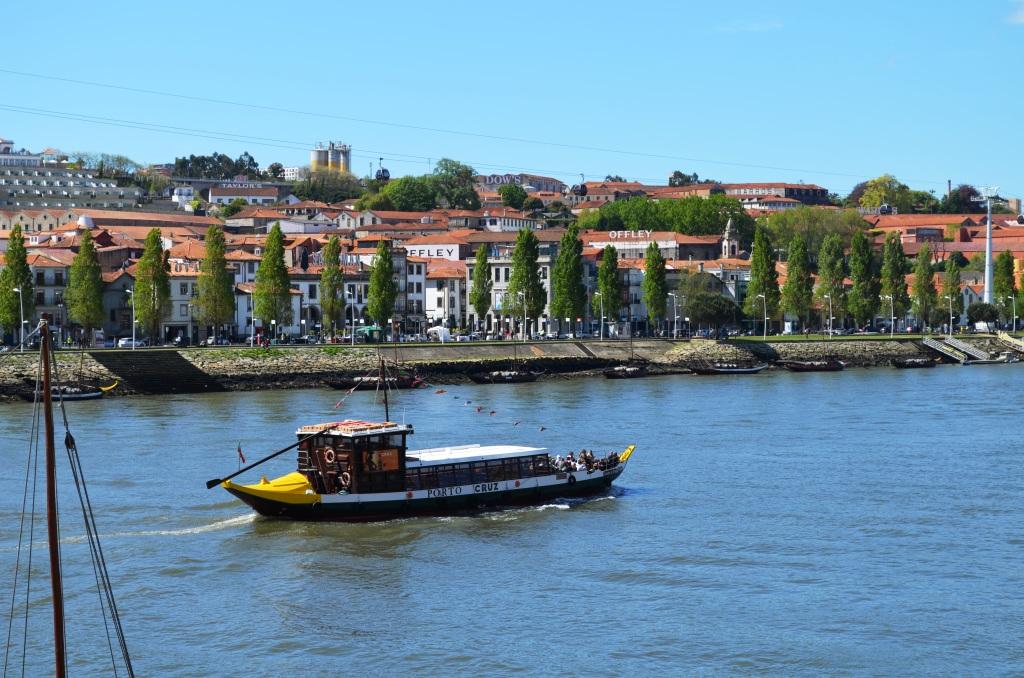
Port, I’m coming:
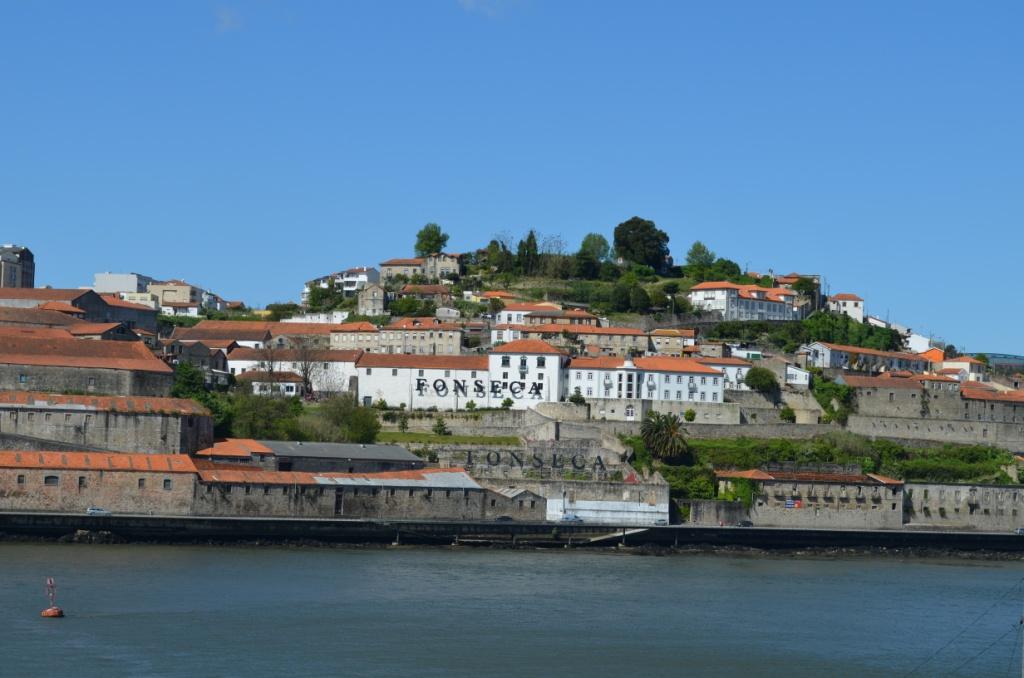
So we finally made it across the river (technically, all the port houses are located across the river from Porto in the town called Gaia). We made our first stop at Quinta do Noval. Quinta do Noval has all the operations in Douro valley, and only a small store in Porto, where you can taste limited number of their Ports. All the ports you can taste are packaged in the form of a single-pour tiny bottles, so as the result you can’t try any of their vintage ports, as those can’t be put in the small bottles. Let me explain.
There are many different types and styles of port, but at this point we only want to distinguish between vintage and non-vintage ports. To begin with, all the ports are made in the same way as any wine – the grapes are harvested, crushed and fermented until desired level of sweetness is achieved. From here on, Port making deviates from the regular wine making process – fermentation now is stopped with addition of very young brandy (neutral grape spirit), and then Port wine goes for aging in the barrels or vats, depending on what kind of port is in the making. Here the distinction will be also made between Vintage and non-vintage ports. If quality of the wine is outstanding, the Port house might declare a vintage year, and then the port will age in the oak cask only for 2 years, and then continue aging in the bottle. Otherwise, the port wine can age anywhere from 5 to a 100 years in the barrels, and it will produce ports with the age ( but not vintage) designation on them.
The key difference (important for us, consumers) between vintage and non-vintage port is that non-vintage port can be kept for extended amount of time after the bottle is open, while vintage port should be consumed within a day or two, same as any other wine. This is also the reason for Vintage port (which is typically very expensive) not being available for the tasting in the tiny bottles.
Okay, going back to our tasting – so we decided to try the 40 years Tawny port from Quinta de Noval:
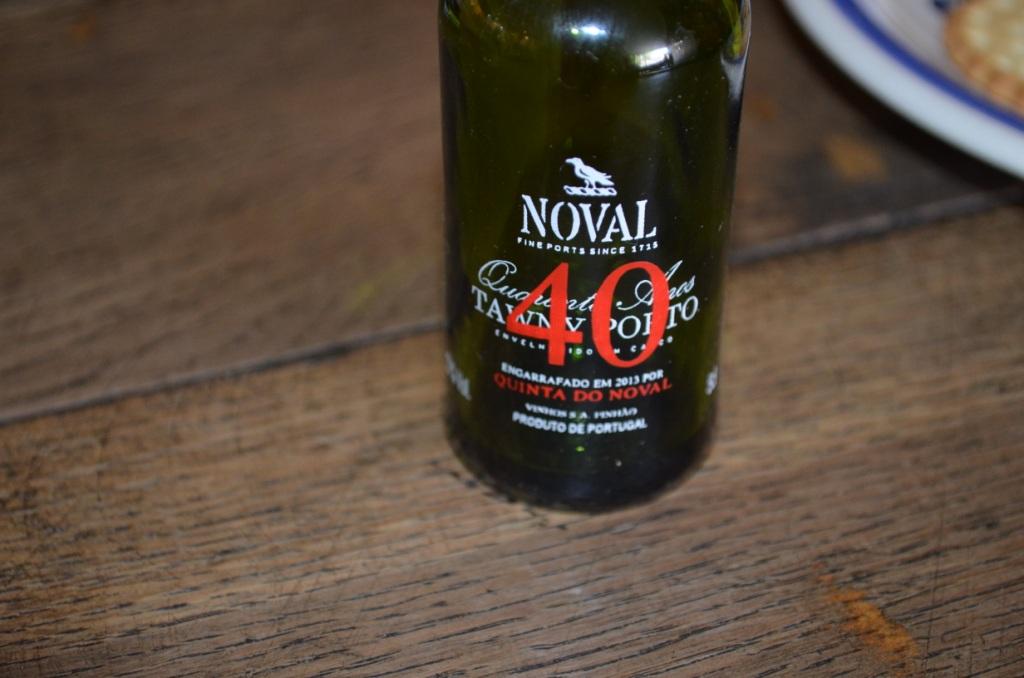
It was good and very complex, with lots of almond variations on the palate, dried fruit and pronounced acidity, which was taming the sweetness. It was good but not amazing (I would be disappointed if I would pay a full price for an actual bottle of it).
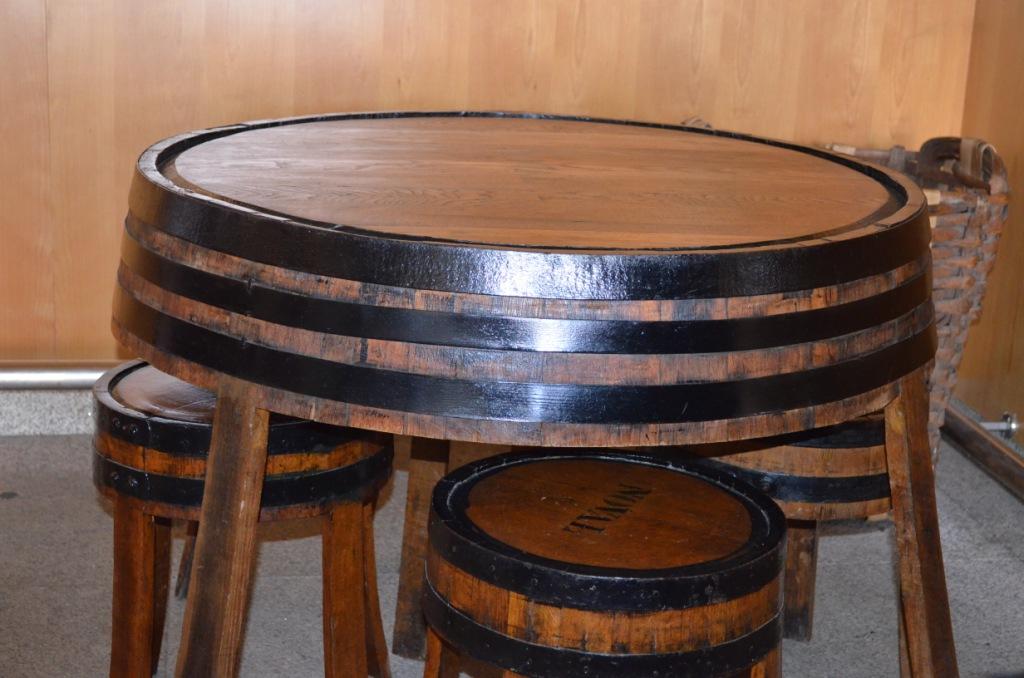
barrel table and stools at Quinta de Noval
Next we stopped at Sandeman:
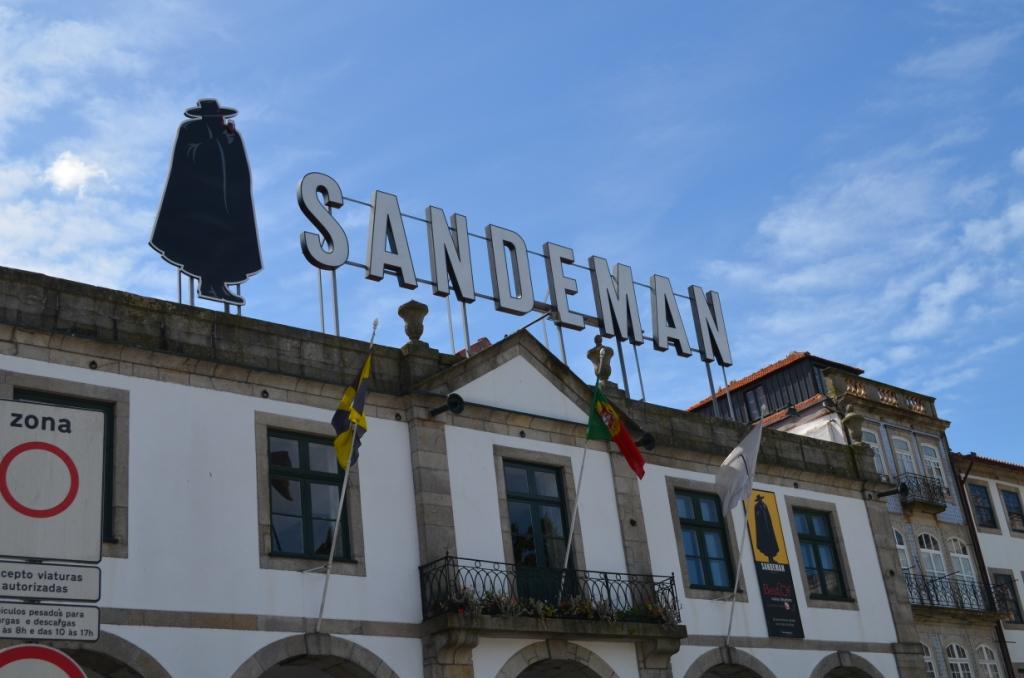
In most of the port houses you can go for the tour and then do the tasting – we decided to skip the tour and just do the tasting.
For the first time I tried White Port – and it was outstanding!
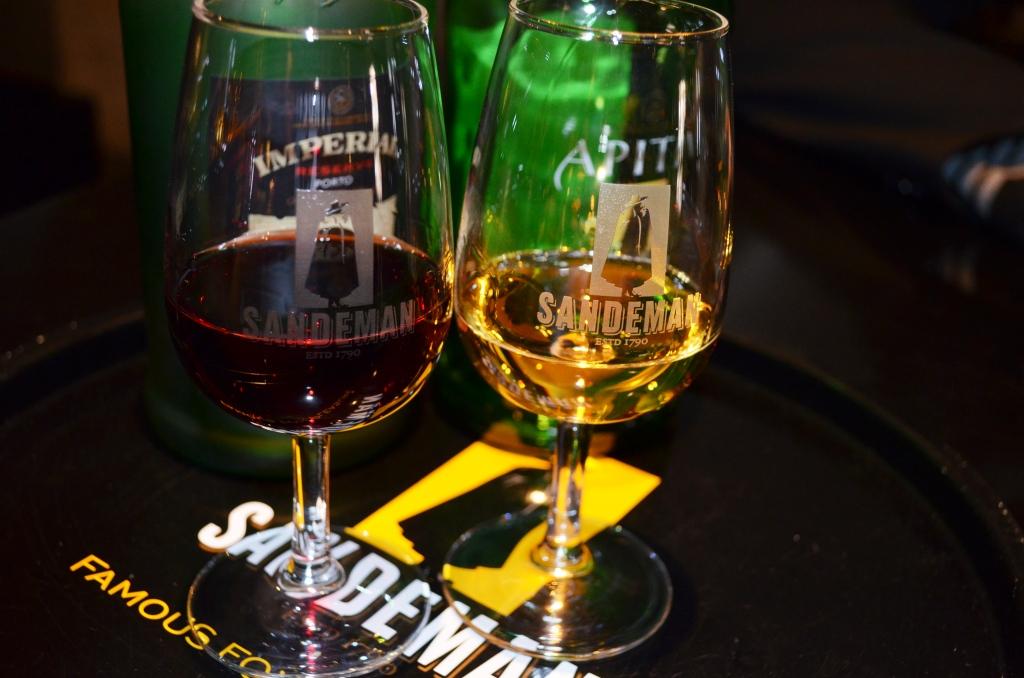
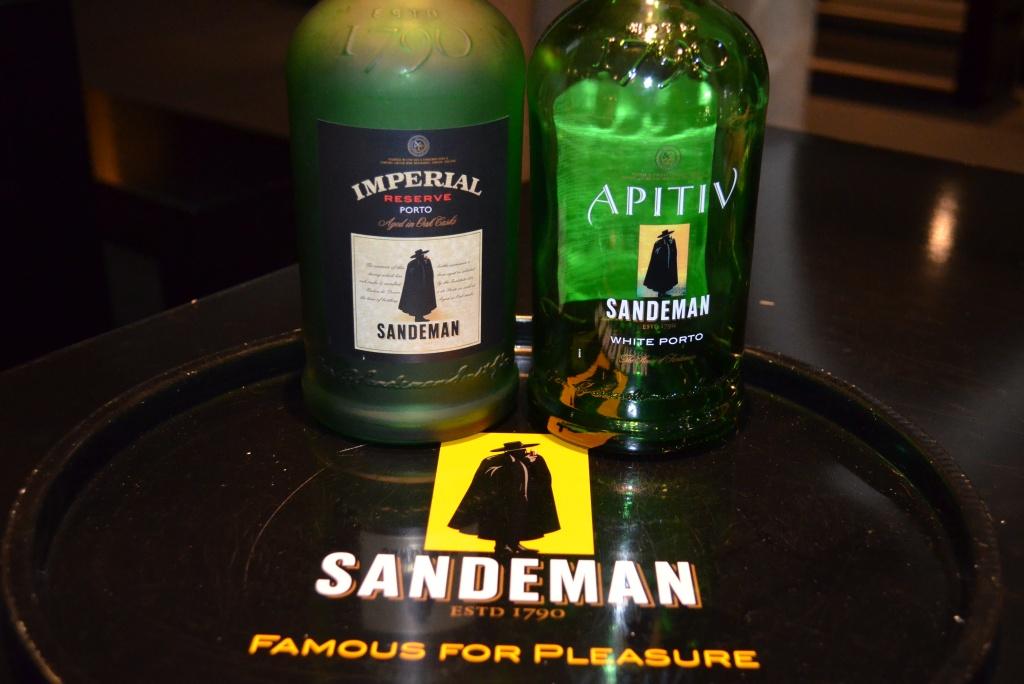
Sandeman Apitiv White Porto was aged for 3 years in the vat. It had golden color, good amount of sweetness ( but not cloying by all means), lots of white fruit, particularly white plums on the palate, good acidity. It was bright and uplifting, very refreshing wine overall.
Sandeman Imperial Reserve Porto ( 8 years of aging in the barrel) had sweetness perfectly supported by the structure underneath – dark fruit, good body, good acidity – overall, probably one of the best ports I ever had.
That’s all I have for you for now – in the next post we will talk about food experiences in Porto. Cheers!
Study of Port: Prologue
I have to break the tradition today – there will be no wine quiz for you to solve. Instead, I’m going to share the experience with you.
As you know, my day time work had nothing to do with wine. But – because of that work, I’m spending this week, in Portugal – hence the title of this blog post. I’m not just in Portugal, I’m actually in the city called Porto – and this is where the Port was born. Over the next few days, I plan to learn as much as I can about Port – and share that with you. But, considering that I’m still jet-lagged, there is not much I can share at the moment – besides a few pictures. Rest assured – more pictures and notes are coming soon!
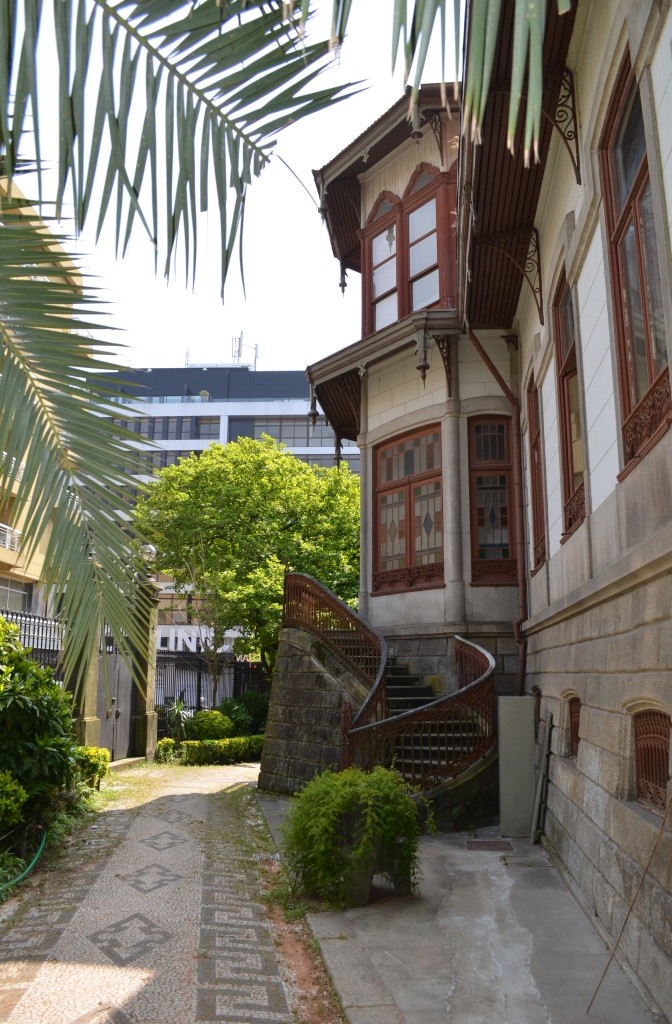
I have no idea what house is this, but I like it
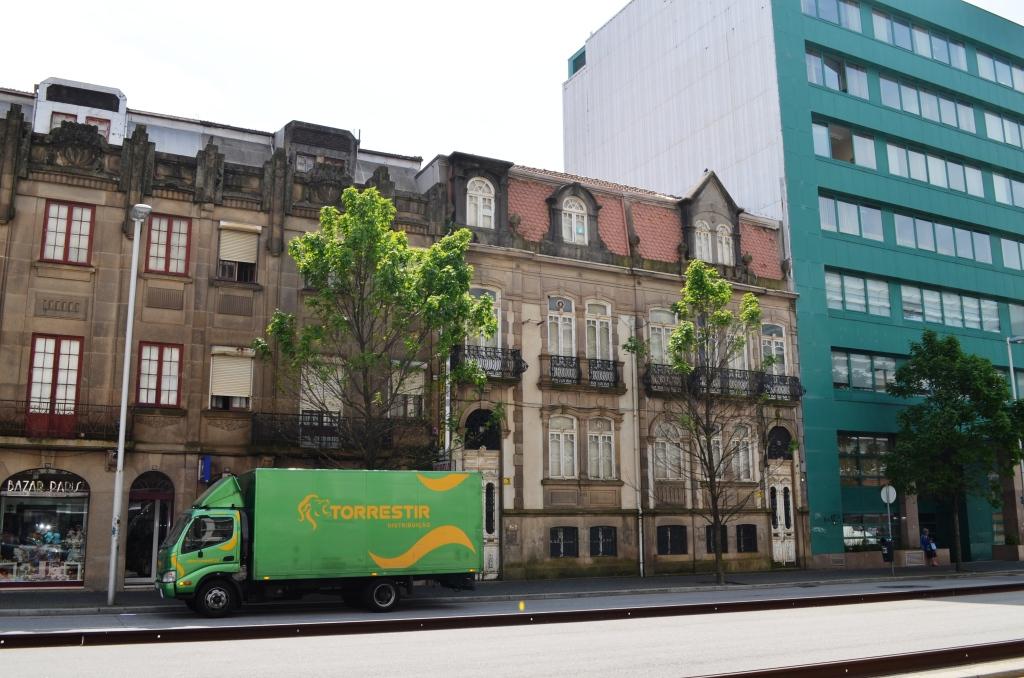
Love the combination of old and new – only in Europe…
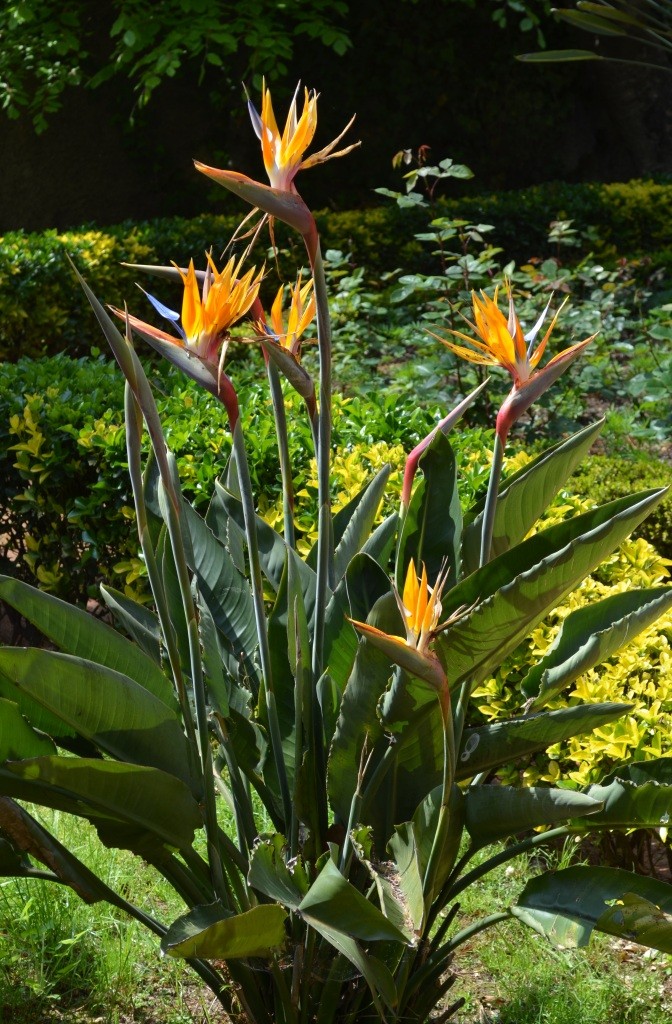
I’m sure you knew that I will not leave you without flowers
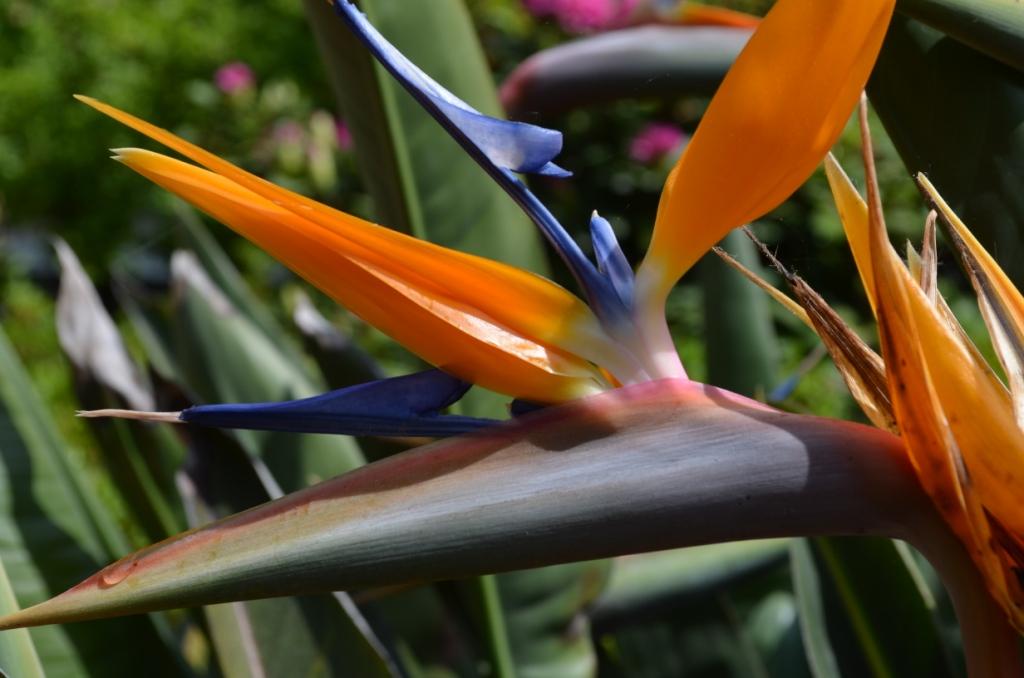
and more flowers
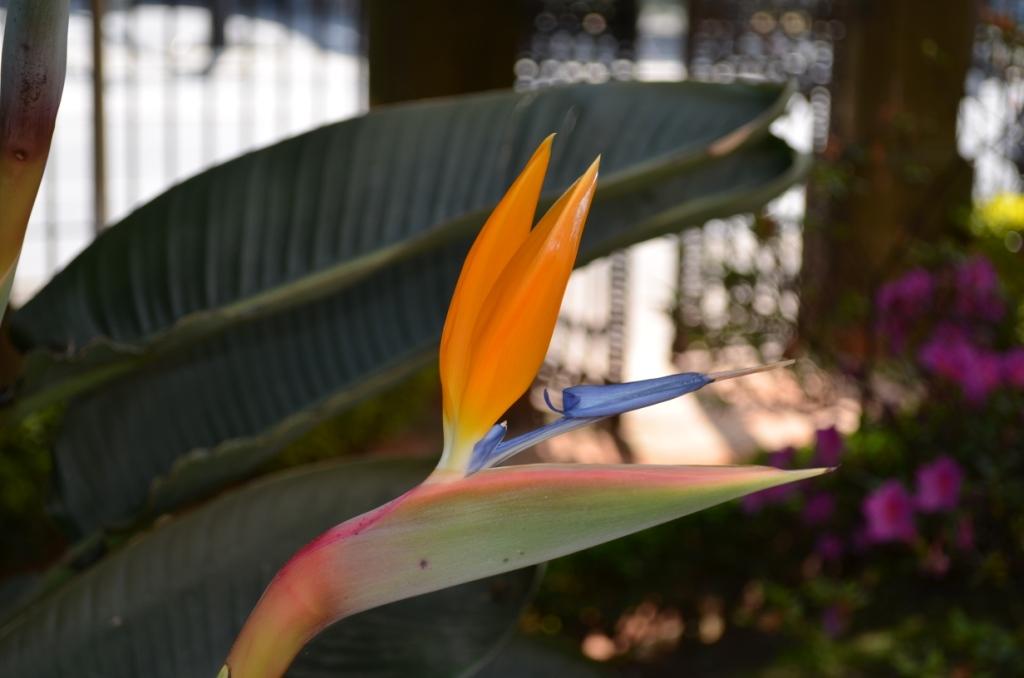
and more flowers…
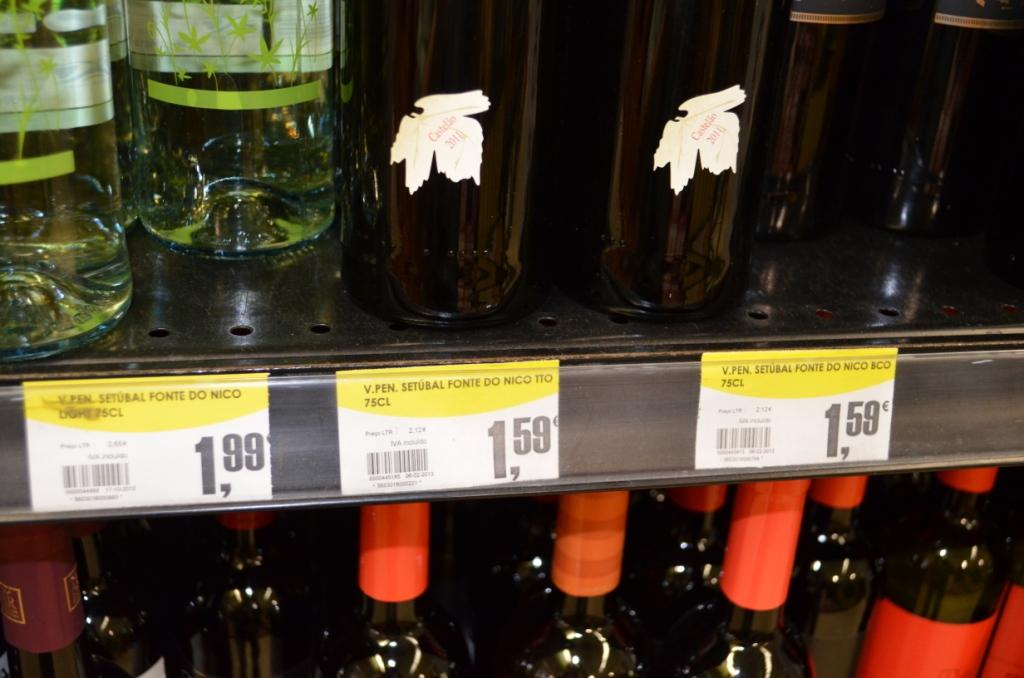
When was the last time you saw $2/bottle wines?
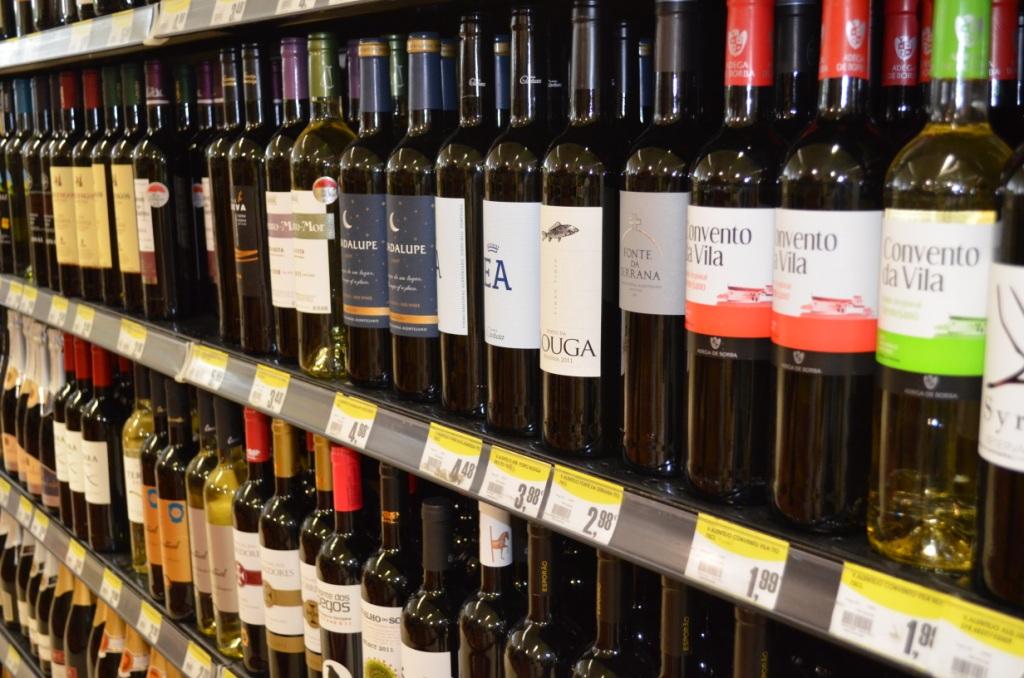
Actually, a lot of very inexpensive wine
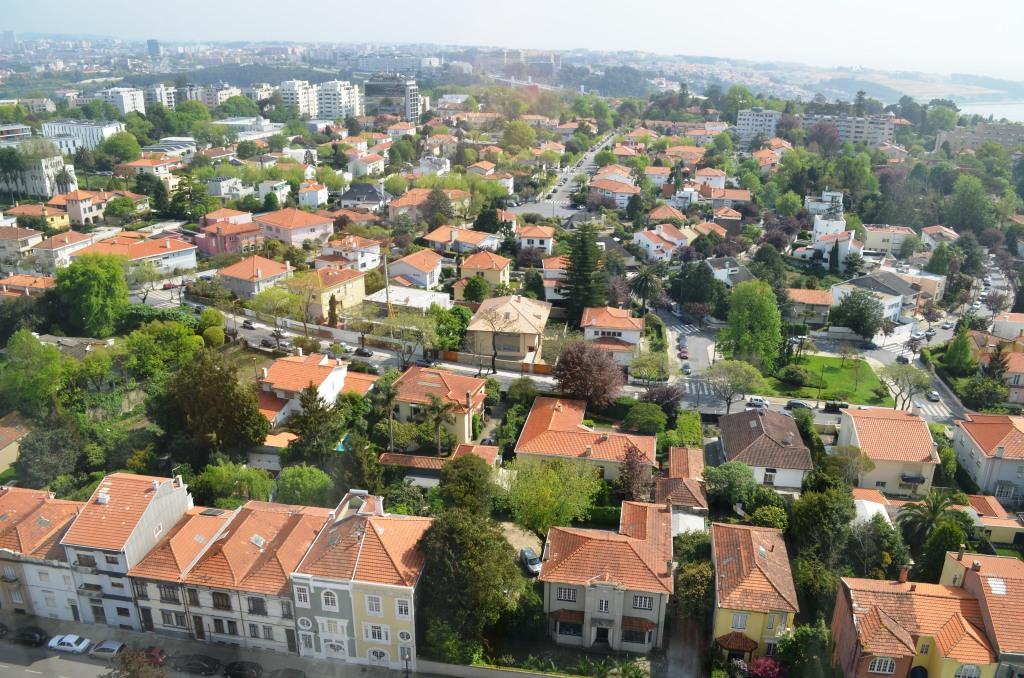
yes, I’m a sucker for the red roofs… Never can get enough of them…
That’s all I have for you for today, folks. Don’t worry – the wine quizzes will be back, just after we will talk a bit about Port. Cheers!
Wednesday Meritage – Wine Quiz Answer, Bordeaux 2012, Bottle Variations, Dishcrawl and more
Meritage time!
Let’s start with the answer for Wine Quiz #55, Grape Trivia: Pinot Noir. In the quiz you were supposed to answer five questions about Pinot Noir grape – here are the questions with the answers:
Q1: Can you explain the source and meaning of the grape’s name “Pinot Noir”?
A: Pinot Noir literally translates as “black pine”, due to the grape cluster’s resemblance of the pine cone.
Q2: True or False: Burgundy has the biggest plantings of Pinot Noir in France?
A: False – Champagne has much bigger area planted with Pinot Noir
Q3: Match the wine/producer with its country/region:
| A. Mt. Difficulty | 1. Burgundy |
| B. Evening Land | 2. New Zealand |
| C. Fleury | 3. Champagne |
| D. Hamilton Russell | 4. Oregon |
| E. Clos de Tart | 5. South Africa |
A: A2, B4, C3, D5, E1
Q4: Which major wine-producing country is literally unknown as a Pinot Noir producer?
A: Spain. There are literally no Pinot Noir wines coming out of Spain
Q5: From 1990 to 2010, annual Pinot Noir harvest in California increased approximately:
a. 2 times, b. 3 times, c. 5 times, d. 7 times, e. 9 times
A: According to the information you can find here, production of Pinot Noir went from 32,000 tons in 1990 to 147,732 in 2010 – thus correct answer is C, about 5 times.
Looking at the answers, it seems that everybody had no issues answering first 3 questions, but the last two proved to be more difficult. Nevertheless, we have 2 winners – armchairsommelier and vinoinlove both answered all questions correctly, so they get unlimited bragging rights. Jeff at thedrunkencyclist gets honorable mention with 4 correct Google free answers, as well as RedWineDiva also with 4 correct answers. Well done!
By the way, what do you think the theme of the next quiz will be? I’m going along the lines of major grapes, so what do you think is next?
Now, to the interesting stuff around the grapevine. Let’s start from Bordeaux 2012, or En Primeur 2012 event which recently took place in Bordeaux. This event takes place in the Spring of each year in Bordeaux, and this is the time when Bordeaux wines of previous year are offered for the future sales, and prices for those future sales are set. En Primeur 2012 was different from most of the prior years’ events – first, because Chateau Latour, one of the five famous First Growth producers, stopped participating in this events (from now on, they will only sell their wines when they are actually ready to drink, not the futures). Second interesting element – China’s appetite for Bordeaux is getting smaller, and now prices need to be corrected. Anyway, here is a summary by Jancis Robinson, offering her insight after attending the En Primeur 2012.
Now, I want to bring to your attention an interesting article about… bottle variations. No, I’m not talking about imperfections of the glass – I’m talking about the actual content, the wine, being different from bottle to the bottle. Here is the link – I think it is a very interesting reading.
Do you like beer? Yes, of course it is okay to like beer even if you are a wine lover. So if you like beer, here is an interesting site for you – BrewGene. It is both a web site and an app, which will allow you to find information on the beer, see what the others think about it, get recommendations for similar beers and more – I think this is pretty cool, so check it out.
Last but not least, a couple of food events – sorry, they are really only local events, but I want to mention them in any case. Dishcrawl, which I mentioned in my previous Meritage post, just announced a new event on June 11th, which will be taking place in Old Greenwich, Connecticut. As of the time of this writing, there were still 17 tickets available – if you are local in the area, or plan to visit around June 11th date – don’t miss out. Here is the link to the web site for you.
Another food related event is Taste of Westport, which will take place on May 2nd from 6 pm to 9 pm. Here is the link with lots of information about the event, all coming from OmNomCT blog which is a priceless source of information about all things food and drink in CT – if you live in Connecticut or in a close proximity, and you are not following this blog, you have to correct this mistake immediately.
And that’s about all I have for you, folks. The glass is empty. Until the next time – cheers!
Wine. That. Transforms.
If you followed this blog for a while, you know that I have a tendency to get excited around wines. May be “overly excited” is even better way to put it. Especially when I come across the wines which wow. Like this time.


Field Recordings wines are no strangers in this blog (2010 Fiction by Field Recordings was my 2011 wine of the year). Produced by Andrew Jones, grape-grower-turned-wine-maker, these wines are his personal accounts of people and places – every label on his wines will tell you where exactly the grapes came from, and who grew them – you can see an example above. And his wines have tremendous personality associated with them. What these wines do the best – they don’t leave you indifferent. Like this 2010 Field Recordings Petite Sirah Crockett Hill Vineyard Santa Ynez Valley (15.9% ABV, $22).
The very first smell of this wine just takes you away. Away from the day that passed. Away from all the little things which (of course you knew it), in essence, are not important at all. It is clean. It is powerful, It is beautiful. You can imagine any happy picture you want – the smell will support and carry it. Yes, it is pure fruit forward California wine – but it presents itself in such a bright and uplifting fashion, that this might be the way to spell “happiness” with wine.
The wine appears almost black in the glass. It is dense, it is concentrated, it is powerful. Blueberries, blueberry jam and blueberry pie all together – but without sweetness, all in very balanced, round form. You can have food with this wine – but what you really want is just this wine by itself. From the smell, the happiness continues in the glass.
Then your glass becomes empty. But you sit there, still smiling. Still carried away. To the happy place.
Is this an overly emotional account? You bet. But I invite you to find this wine and experience happy journey in the glass. Of course your personal happy wine might be different. I hope you will discover it. And I will drink to that. Cheers!
Preserve Internet Freedom: #StopCISPA

 As much as I’d like to do some wine blogging for you (starting with reporting on all the malbec madness last Weds!), I’m joining the internet boycott tomorrow, April 22, 2013.
And I hope you will too.
With all your free time, please call your elected representatives, too.
It’s that important.
Here’s a video about why.
Here’s a letter from Anonymous who is organizing the boycott.
View original post 201 more words
Weekly Wine Quiz #55 – Grape Trivia: Pinot Noir
Image source: Wikipedia
And the time has come for the new wine quiz. Continuing with our Grape Trivia theme, the new quiz is about Pinot Noir.
Pinot Noir. The grape behind some of the most expensive and thought after wines in the world. Almost never blended with other grapes. A major weapon in the hands of ABC oenophiles (Anything But Cabernet). At the same time, one of the most finicky, difficult to deal with grapes. To produce great wines, Pinot Noir requires ideal growing conditions. It is genetically unstable, and can easily mutate in the vineyard, producing grapes which look nothing like their parents. It can also “throw a fit” during fermentation and take the process out of control. But – all of it worth the “goodness in the bottle”, so today there is no shortage of great Pinot Noir wines coming in from all over the world.
Pinot Noir is one of the oldest known Vitis Vinifera grapes, specifically grown to be used in winemaking, with historical references going all the way back to the 4th century in Burgundy, France. Today Pinot Noir is growing literally in every winemaking country in the world, with the wines taking on wide range of expressions depending on the location’s climate and soil. Taste profile of Pinot Noir often includes lighter red fruits and berries – cranberries, strawberries, tart cherries, with hint of smokiness and mushrooms (earthiness).
Now, to the quiz!
Q1: Can you explain the source and meaning of the grape’s name “Pinot Noir”?
Q2: True or False: Burgundy has the biggest plantings of Pinot Noir in France?
Q3: Match the wine/producer with its country/region:
| A. Mt. Difficulty | 1. Burgundy |
| B. Evening Land | 2. New Zealand |
| C. Fleury | 3. Champagne |
| D. Hamilton Russell | 4. Oregon |
| E. Clos de Tart | 5. South Africa |
Q4: Which major wine-producing country is literally unknown as a Pinot Noir producer?
Q5: From 1990 to 2010, annual Pinot Noir harvest in California increased approximately:
a. 2 times
b. 3 times
c. 5 times
d. 7 times
e. 9 times
Have fun, good luck and enjoy your weekend. Cheers!
[My belated notes from ] Gambero Rosso Tre Bicchieri Event
 Two months ago I attended the Gambero Rosso Tre Bicchieri event in New York City. Writing this blog post late in the game has some advantages – particularly, I can refer you to the work of others. Here is the link to the excellent blog post by Stefano of Flora’s Table and Clicks and Corks fame. Moreover, I had the pleasure of attending the event in Stefano’s company, where his expert knowledge of Italian wines was very helpful in navigating the selection of about 500 creme de la creme wines. Thus you can even compare our notes (I doubt though you will find much discrepancy in our thoughts).
Every year since 1986, Gambero Rosso publishes its guide to Italian wines and awards its prestigious Tre Bicchieri (three glasses) rating to the best wines. An event like the one we attended has the purpose of showcasing all the best wines, and it attracts a lot of attention.
I have to start with the same rant as you can see in Stefano’s post. All the wineries were arranged by the distributors and not by the region – therefore, in the presence of 173 wine tables and countless people, my well-thought plan fell apart. Yes, I understand that distributors are important, but I don’t see why all the wineries couldn’t be pulled together by the region, instead of being all over the place. In terms of the overall organization, Vinitaly, which we attended about two weeks before the Tre Bicchieri event, was put together in a lot more logical way.
Leaving that aside, let’s talk about the event. I generally attend a good number of trade wine tastings. So when you start going from table to table, it takes time to find the wine which will “wow” you. What I didn’t realize at first was that the Tre Bicchiery event was different. All the wines which you taste there already had been preselected, they were all winners of the Tre Bicchiery award, and therefore they were all great wines by definition. This was exactly my experience. Table one – wow, this is good. Table two – very good. Table three – excellent! Table four – excellent again – what is happening? How is that possible? Ahh, it is the Tre Bicchiere event, so all the wines are rather expected to be great…
Another important part of the events such as Tre Bicchieri is the opportunity to meet a lot of great people there. For instance, we met Giuseppe Vajra, a winemaker at G.D Vajra in Piedmont, who was a pleasure to talk to.
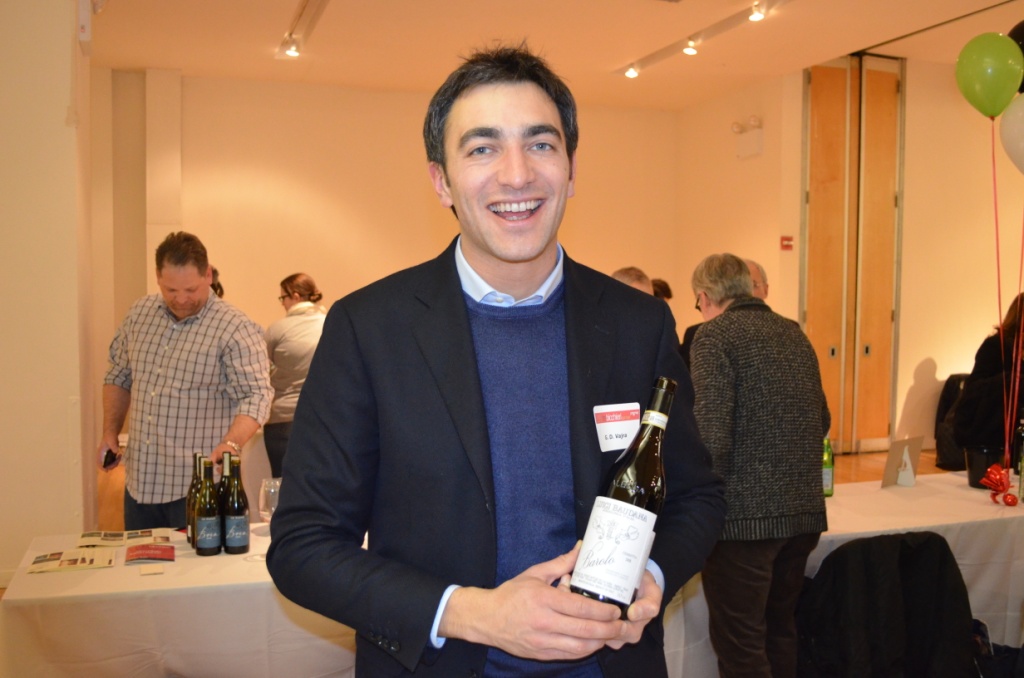
He gave us a taste of his 2004 Barolo Cerretta Luigi Baudana, which he was not supposed to do at the event ( this wine was not a part of the 2013 Tre Bicchieri awards), and the wine was stunning.
Meeting people is great, but navigating the crowds – not so much. Here is a “Hail Mary” style picture – you raise your arm with the camera as high as you can, at the angle you think will fit, and then release the shutter. Here are a few pictures for you, I think it gives you an idea that the event was quite busy:
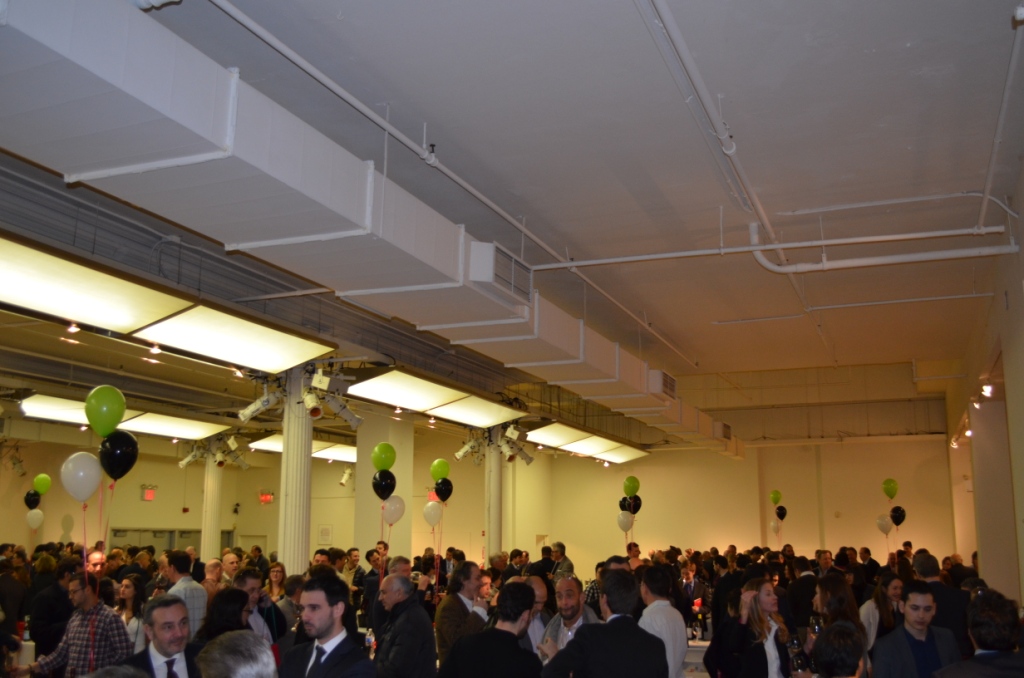
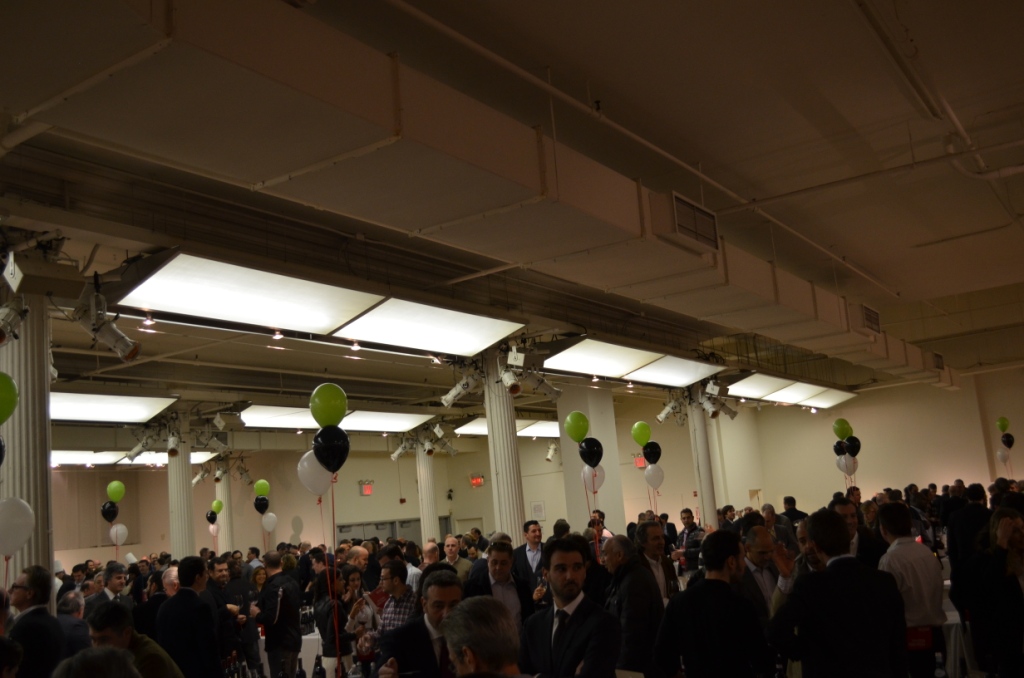
Another problem with an event like this? You are destined to miss out on some of the wines. Taking into account the gross level of disorganization at the event, it is obvious that you will miss out on the best wines. The list of the wines we missed includes Masseto, Ornellaia, Sassicaia, Oreno, Bertani, and more…


The real bummer in this group was Masseto, which is a part of my “Must Try Wines ” list – it is Super Tuscan made out of 100% Merlot – this is the wine that can rival Petrus. Well, maybe next year…
Now, let me offer you my highlights from the event. In the format of such an event, it is impossible (for me, at least) to take any detailed notes – I’m trying to experience as many wines as possible, only jotting down a single word descriptors at the best, which often don’t go beyond “wow” or “outstanding”. Below is the list of wines I really liked (a lot, huh?), with maybe one-word descriptors on them (or maybe not), and then I offer to your attention a picture gallery of mostly the same wines. Oh yes – and unlike the Gambero Rosso event itself, the wines below are grouped by region. Remember I recently suggested a new scale of ratings (yuck, ok, nice, wow, OMG) – let me use it here when possible, and I promise not to bring any “yuck” and “ok” wines to your attention. And one last note – not all the wines below have “three glasses” rating – some of them are rated at 2, but I believe they would still be worth your attention. Here we go.
ABRUZZO
2009 Torre dei Beati Montepulciano d’Abruzzo Cocciapazza – perfect!
ALTO ADIGE
2011 Abbazia di Novacella Alto Adige Valle Isarco Sylvaner Praepositus – outstanding bouquet on the nose, very nice overall
2009 Cantina Tarlano Alto Adige Pinot Blanco Vorberg Riserva – complex, beautiful, perfect minerality, wow!
CAMPANIA
2010 Nanni Cope Sabbie di Sopra il Bosco Terre del Volturno – nice acidity, very good overall. Added bonus – this wine has two rare grapes which I need to add to my grape count – Palagrello and Casavecchia
2010 Marisa Cuomo Casta di Amalfi Furore Bianco Fiorduva – my descriptors for this wine include “beautiful”, “amazing” and “balanced” – definitely a wow! wine. This is a very unique wine in many ways (outside of the fact that it is made out of three rare grapes Ginestra, Fenile and Ripoli) – I need to refer you to Stefano’s blog post where you can learn more about this fascinating wine.
FRIULI VENEZIA GIULIA
2010 Livon Collio Friulano Manditocai – complex nose, nice palate
2011 Ronco dei Tassi Collio Malvasia – nice minerality, very good overall
2011 La Tunella COF Ribolla Gialla Rjgialla – perfect white fruit, clean, excellent
2011 Livio Felluga Friulano – super-expressive wine, very good overall
LAZIO
2010 Sergio Mottura Grechetto Latour a Civitella – excellent
LIGURIA
2011 Cantine Lunae Bosoni Colli di Luni Vermentino Cavagnino – mint and apricot on the nose and palate, OMG
LOMBARDY
2009 Mamete Prevostini Valtellina Superiore Riserva – very unusual nose, perfect power.
2004 Ca’Del Bosco Franciacorta Brut Rose Cuvee Annamaria Clementi – 100% Pinot Noir, the nose of fresh bread and yeast, strawberries on the palate – OMG
2007 Ricci Curbastro Franciacorta Extra Brut – perfect
NV Ricci Curbastro Franciacorta Brut Rose – more complex than the previous one, OMG
2006 Ferghettina Franciacorta Extra Brut – 80% Chardonnay, 20% Pinot Noir; wow!
2007 Cavalleri Franciacorta Pas Rose – very bread-y, excellent!
2008 Guido Berlucchi Franciacorta Cellarius Brut – wow!
MARCHE
2010 Umani Ronchi Verdicchio dei Cazstelli di Jesi Classico Superiore Vecchie Vigne – wow!
2009 Umani Ronchi Conero Cumaro Riserva – excellent!
2009 Velenosi Rosso Piceno Superiore Roggio del Filare – roasted, gamey nose, a touch too sweet, but good
PIEDMONT
2009 Bricco del Cucu Dogliani Bricco S. Bernardo – 100% Grechetto, cherries on the nose and palate, very nice!
2008 Le Piane Boca – a blend of 85% Barolo, 15% Vespolina – wow!
2008 G.D Vajra Barolo Ceretta Luigi Baudana – this wine comes from a specific plot in the vineyard, called Baudana. This was a wow wine, but the next one was one level up, as it had an age on it
2004 G.D Vajra Barolo Ceretta Luigi Baudana – OMG
2008 Schiavenza Barolo Prapo – perfect fruit, open, beautiful, wow!
2009 Vietty Barbera d’Asti Superiore Nizza La Crena – excellent
2006 Massolino Barolo Villa Rionda Riserva – wow!
2010 Villa Sparina Gavi del Commune di Gavi Monterotondo – very nice
2008 Marchesi di Barolo Barolo Sarmassa – nice, round, perfect!
2006 Elvio Cogno Barolo Vigna Elena Riserva – excellent!
SARDINIA
2009 Cantina di Santandi Carignano del Sulcis Superiore Rocca Rubia Riserva – aged for 24 months in oak, excellent.
2009 6Mura Carignano del Sulcis – 120 years old vines, growing on sandy soils, very good balance, excellent.
SICILY
2010 Pietradolce Etna Rosso Archineri – very green
2010 Pietradolce Vigna Barbagalli – nice
2010 Donnafugata Ben Ryé Passito di Pantelleria – the only wine in Italy to receive top awards from all wine publications! Apricots on the nose and palate, perfectly balanced. Overall – wow and OMG!
2010 Tenute Rapitala Conte Hugues Bernard de la Gatinais Grand Cru – 100% Chardonnay, excellent, clean
2010 Firriato Ribeca Perricone – excellent! ( and the rare grape called Perricone)
TRENTINO
2006 Ferrari Trento Extra Brut Perle Nero – outstanding, off brut
2002 Ferrari Trento Brut Giulio Ferrari Riserva del Fondatore – 10 years aging on the lees, wow!
TUSCANY
2008 Famiglia Cecchi Chianti Classico Villa Cerna Riserva – very nice
2009 Famiglia Cecchi Coevo – wow!
2009 Tolani Picconero – 65% Merlot, perfectly Bordeaux in style, excellent!
2007 Poggio di Sotto Brunello di Montalcino – open, fresh, clean – wow!
2009 Poliziano Vino Nobile di Montepulciano – tannins! very good.
2009 Brancaia Chianti Classico Riserva – perfect balance, wow!
2010 Tenuta San Guido Montessu Isola dei Nuraghi – excellent!
2009 Tenuta Sette Ponti Orma Toscana – OMG! depth and breadth of this wine were phenomenal
2010 Marchesi Antinori Cervaro della Sala – perfect chardonnay, outstanding!
VENETO
2010 Ottello Lugana Superiore Molceo – perfumy, perfect!
2010 Ottello Campo Sireso – a blend of Cabernet Sauvignon, Merlot, Corvina and Lagrein – roasted notes, wow!
2009 Roccolo Grassi Valpolicella Superiore Roccolo Grassi -very nice
2007 Vignalta Colli Euganei Rosso Gemola – Merlot/Cabernet Franc blend, classic Bordeaux profile, wow!
2005 Cantina Valpolicella Negrar Amarone della Valpolicella Classico Villa Domini Veneti – pure chocolate on the nose, a bit too sweet and too tannic on the palate. Just ok (I know, I promised that there will be no ok or lesser wines – but I’m an Amarone junkie, you will have to excuse me for that…)
2007 Tedeschi Amarone della Valpolicella Classico Capitel Monte Olmi – 16% ABV, alcohol on the nose – not “yack”, but not good [at all]
2008 Tedeschi Amarone della Valpolicella Classico – very good
2006 Masi Amarone della Valpolicella Mazzano – 120 days of drying the grapes, good overall (not great), too much alcohol on the nose and palate
2008 Viticoltori Speri Amarone della Valpolicella Classico Monte Sant’Urbano – 15% ABV; wow!
And here is the photo gallery for you – enjoy!
Long post, after a long delay – but it is finally done. Yay! Cheers!
Last Bottle Sign Up ($10 credit)




 Talk-A-Vino