Weekly Wine Quiz #89: Grape Trivia – Dolcetto
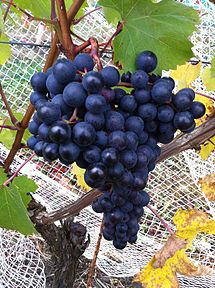
Dolcetto grapes. Source: Wikipedia
The Wine Quiz series is not meant to intimidate. The whole idea here is to have fun and learn something new. When answering the questions, it is fully encouraged to use all available sources of information, including Google or any other search engine. There are no embarrassing answers – the most embarrassing thing is not giving it a try…
Welcome to your new wine quiz!
We are back to our grape trivia series, continuing with the red grapes, and today’s subject is the grape called Dolcetto.
If you look at [probably best] known Italian wine regions, you will find some very interesting differences. If we take Tuscany, which probably comes to mind among the first, its signature grape, Sangiovese, is successfully growing in many other parts of the world, and lots of international varieties is producing magnificent wines on the Tuscan soils (super-Tuscan, anyone?). If we will now look at Piedmont, the home to Barolo, the king of wines, and Barbaresco, that region produces magnificent wines almost exclusively from the local indigenous grapes – and those local grapes are very scarcely distributed around the world, producing the wines of limited value.
Dolcetto, the subject of our today’s trivia, is one of the three better known red grapes of Piedmont – Nebbiolo and Barbera are two others. It is not very clear how Dolcetto made it to Piedmont, with some of the references suggesting that it had been growing there at least from the 16th century. The name of Dolcetto technically stands for the “little sweet one”, but it is believed that this is rather a coincidence and the name has actually a different source. Dolcetto is an early ripening variety which produces wines which have nothing to do with sweetness. Dark thick skin of Dolcetto contains large amount of anthocyanins, and imparts quite a bit of tannins to the resulting wines, as well as the dark color. Generally, Dolcetto wines are dry, lighter style than Barbera or Nebbiolo, with dark red and black fruit profile, such as black cherries and plums.
Best Dolcetto wines are mostly produced in the 7 different DOCs of Piedmont. It is also growing in Liguria under the name of Ormeasco. Dolcetto has very limited success around the world, growing in Australia and in a few regions of United States – California, Texas and Oregon.
And now, to the quiz!
Q1: Except the “sweet little one”, what is the other possible explanation to the name of the Dolcetto grape?
Q2: Sort these Piedmontese grapes in the order of time of ripening, from earlier to the later: Barbera, Dolcetto, Freisa, Nebbiolo
Q3: Wine Spectator calls wines rated in 95-100 range Classic (the highest and the most prestigious category). True or False: there are no Dolcetto-based wines rated in the Classic category
Q4: One of the North American grapes for the long time was assumed to be identical to Dolcetto ( until recent DNA tests proved it wrong). Do you what grape was that?
a. Chambourcin
b. Charbono
c. Marechal Foch
d. St. Croix
Q5: What is the suggested serving temperature for Dolcetto wines?
a. 65ºF to 75ºF
b. 60ºF to 65ºF
c. 50ºF to 60ºF
d. 45ºF to 50ºF
Good luck, enjoy the quiz and the rest of your weekend! Cheers!
[Not So] Simple Recipe: Stuffed Chicken Roll
I do like simplicity in making of the food – easy to make, reasonable prep time, limited number of ingredients – definitely all my preferences when it comes to cooking. But the interesting thing is that in any craft, cooking included, once you master a skill, it becomes simple (you can argue if you feel like it). Of course it becomes your personal simplicity – for the people who don’t practice the same art, your personal simplicity looks quite complicated.
The recipe I would like to share today falls in this exact category – it is essentially very simple – once you master the first step. I call this dish Chicken Roll – and roll it is, made from the whole chicken. The difficult first step is deboning of the chicken. I will not inundate you with the whole procedure of deboning – there are plenty of videos on internet where you will see all the step by step instructions. The key to make it simple? Practice, of course. Do it a few times, and the idea of deboning of the chicken becomes much less intimidating. And you can do quite a few different dishes once you will master that skill.
I’m not sure how this technique is taught in the culinary school – and if any professional is reading this blog (that is a scary thought!), feel free to ridicule my approach. The way I learned to debone the chicken (or any bird for that matter) is by putting the bird breast side down and first making the cut along the spine, so it looks like this:

Deboning of the chicken – first step
Once you made that first cut, you start slowly cut along the bones, using boning knife, separating the meat and pulling it back, so it looks something like this:
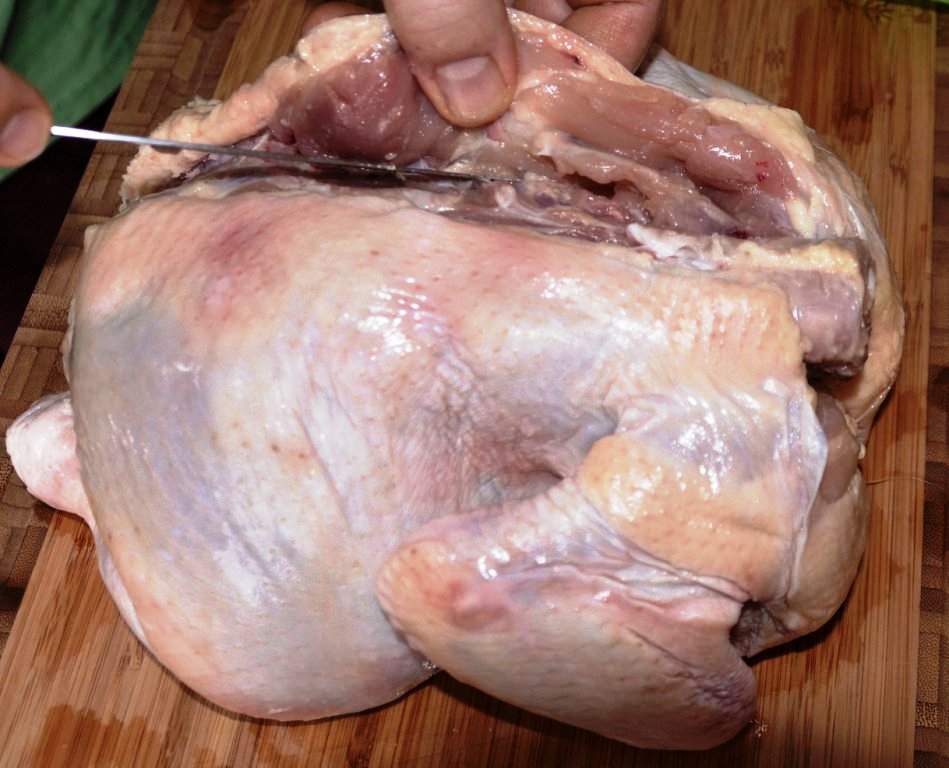
Cut and pull back
The reason I suggest doing it slowly is that you want to avoid cutting through the skin. There will be few challenging moments, where you will need to get through the joints, the one by the leg and the one by the wing – you just need to cut around them and then you will be able to cut through. Also, I suggest simply cutting off first two parts of the wings – there is not enough meat inside to try to debone those. In the end (takes me about 15-20 minutes to complete the process), you will end up with deboned chicken, which will look like this:

Deboned Chicken
From this moment on, your cooking becomes very simple! You need to decide on your stuffing – anything goes! You can use other meat as a stuffing, whether raw or cooked. You can use mushrooms. You can use broccoli. You can use couscous. You can use rice. You can use quinoa. You can use any combination of the ingredients. The keys is to use a limited amount, as you still need to make the dish into a roll. You season the chicken inside, put your stuffing in, roll is lengthwise, tie it up with the butcher’s string and … voilà! Roast and enjoy! See, I told you it is simple : )
For this particular chicken roll I used carrots and chicken sausages. Here is the recipe:
Chicken Roll, stuffed with carrots and chicken sausages
Prep time: 30 minutes. Cooking time: about 1 hour (20 minutes per pound)
1 large whole chicken, deboned
3 large carrots
1 lb chicken sausages or chicken sausage meat
Salt, pepper
Seasoning herbs
1 tbsp olive oil
cotton Butcher’s string
Serve: cold or warm, both should taste good.
Debone the chicken using the suggestions above and internet video as a guidance. Slice carrots lengthwise:

Carrots
Season the chicken inside using salt, pepper and any seasoning herbs your heart desires. I also used truffle salt, which imparts a bit of a mushroom flavor (it smells mostly by itself, you get very little aroma in the food):

salt, pepper, herbs
Ahh, most important part – have a glass of wine – cooking is a lot more enjoyable when the wine is involved!
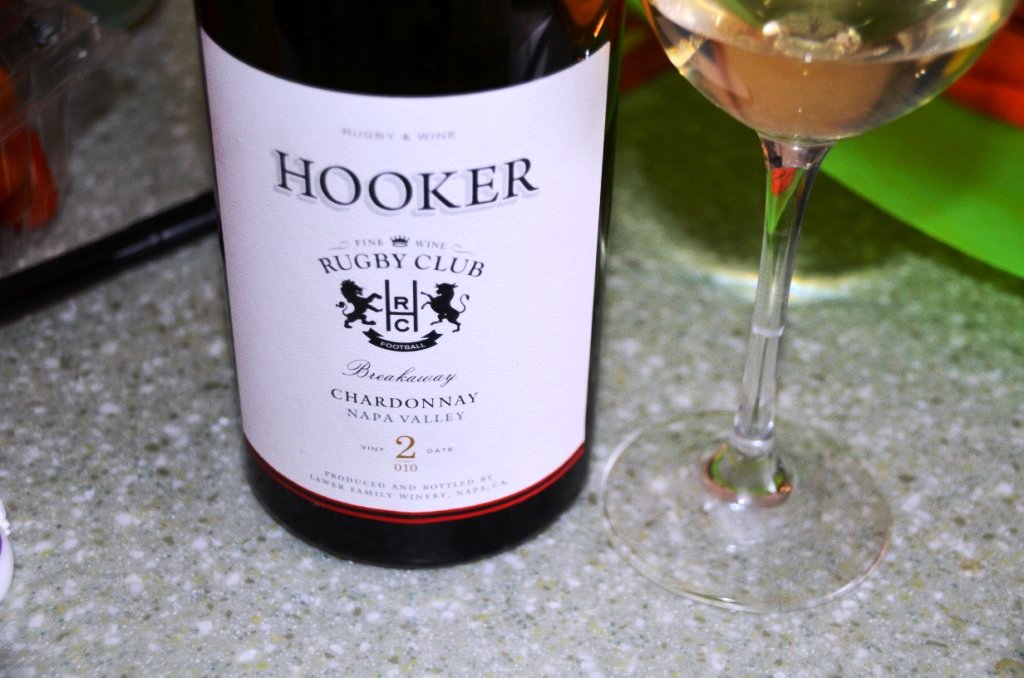
Hooker Chardonnay
I had some leftovers of Hooker Chardonnay form the previous day – it was delicious – just a touch of butter, vanilla, nice acidity – a perfect complement for any cooking.
You can now preheat the oven for 375F. Place carrots inside of the deboned chicken, then take chicken sausages, take them out of the casings and place on top of carrots. Yes, sausage meat would be easier to use in this case, but we have only one store in the town which sells sausage meat, and I didn’t feel like going.


The only steps left are to make a roll – lengthwise!, as you don’t want any skin inside – tie it up with butcher’s string, rub with olive oil, add salt, pepper and herbs on top and roast! Roast in the oven at 375F, uncovered, for about an hour ( estimate a 20 minutes per pound of meat without bones).


The result should look like this:

Roasted Chicken Roll
And this is how the roll looks inside:

Chicken Roll cut
That’s all I have for you for today. Let me know what do you think about this recipe. Would you make something like this? Have fun and cheers!
Wednesday’s Meritage – Wine Quiz Answer, #MWWC6 Vote, WTSO Marathon, Shoe as a Corkscrew
Meritage time!
Let’s start with the answer for the wine quiz #88, What Is It? In the quiz, you were given a picture with wine (alcohol) related object, and you were supposed to explain what this object is for and how it is supposed to be used.
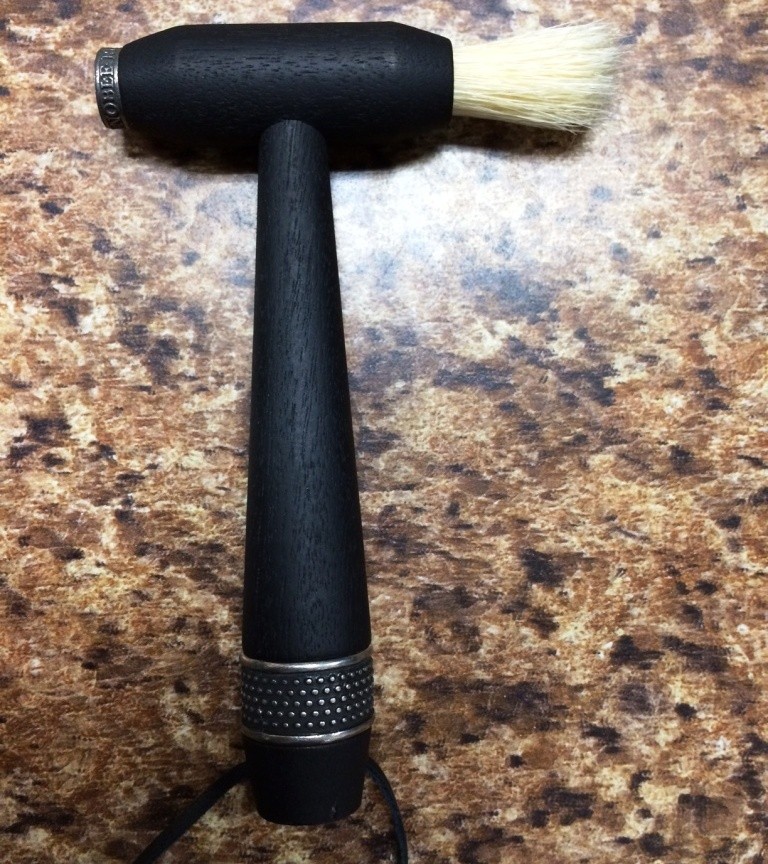
Below is the quiz picture with two additional pictures, which together should give you a good idea of what and how:


This tiny hammer is packaged with every bottle of Beluga Vodka Gold Line – hammer is intended to be used to break the wax seal on top of the bottle and brush should be used to clean up all the small pieces of wax.
This quiz had a number of comments with the answer, but pretty much for the first time I remember running these quizzes, many people referred to one of the previous answers as a correct one, instead of providing their own answer. This creates an interesting challenge in announcing the winner. Nevertheless, the winners of this quiz are Misha and Emil, and Patty of Bota and The Beast, Julian of VinoInLove, Trace Lee Karner and Suzanne of apuginthekitchen are all getting a “supporting winner” title. Well done!
Now, to the interesting stuff around the vine and the web!
First, the Monthly Wine Writing Challenge #6 with the theme of “Mystery”, hosted by Jeff a.k.a. The Drunken Cyclist, has concluded with the record number of participants (25). Now it is time to vote for your favorite post (actually, you can vote for up to three) – for all rules and regulations please refer to Jeff’s post here.
WTSO is doing it again! Mark your calendars – Tuesday, January 28th, starting 6 AM Eastern – you better be glued to your computer, or you are risking to miss out on hundreds of great deals! WTSO marathon (a Cheapskate Marathon) will be taking place with all the usual rules: all the wines are priced in $7.99 to $18.99, no e-mail announcements, all new wines are announced on twitter and only on twitter, new wines are offered every 15 minutes or sooner if the previous wine is sold out. Happy hunting!
Last interesting item I want to bring to your attention is a video about using the shoe as a wine opener in the crisis – okay, not really a crisis, but if you have a bottle of wine, and you want to drink it, your date is getting impatient – and there is no corkscrew in site – does that constitute a crisis in your book? Well, shoe is to the rescue! You can read about using the shoe as a bottle opener in the Dr. Vino’s blog, where he also offers a collection of cork screw errr shoe-opener videos – here is the link.
And we are done here. The glass is empty – but the refill is on its way! Cheers!
Mystery of Wine
 “Mystery” is a theme of the sixth round of the Monthly Wine Writing Competition, as selected by the originator of the series and winner of the previous round, The Drunken Cyclist.
Wine is a strange thing. If you think about it rationally, wine is just a fermented grape juice. This is where the mystery starts – how come this fermented grape juice became so important that it even made it into the Bible? How was this fermented grape juice discovered for the first time? How did it happened that this fermented grape juice became an object of study, worship, love, hate, desire, crime, greed, excitement, awe, horror, passion (continue the list on your own)? How come this fermented grape juice is such a facilitator of emotion? These are the mysteries of the wine, the fermented grape juice, and these mysteries are countless.
The subject of wine is vast, it allows all of us, people who are “into the wine” – oenophiles, aficionados, snobs, buffs, casual wine drinkers – whatever designation speaks to you – to ponder at all the different sides of all “things wine”, to find our own mysteries. Starting from the growing of the grapes, harvesting them, making the wine and getting it into the bottle, the mysteries are abound every step of the way. Once the wine goes into the bottle, this is when the actual “wine’s life” begins – of course, with its own set of mysteries, one of the biggest of which is a simple question: when to drink this wine?
The wine in the bottle is a living thing. It is changing all the time. It has its ups and downs, lows and highs. We have no way of knowing if the wine is at its”peak” until we open the bottle. Once the bottle is opened, there is no way of putting the wine back if we think we didn’t hit it right. Anyone who ever experienced the wine at its peak will tell you that you get an uncounted amount of pleasure from each and every sip. The moment we take on the opening of the bottle is a decision moment to solve that mystery – is this wine ready to give us tremendous joy – or not. Open the bottle too soon, when the wine is too young – and you don’t know what did you miss, what this wine could’ve become if you would only give it another 2, 5 or 10 years. Open the bottle too late, and you have so many regrets that you will never find out how great this wine was at its peak. Either way, the mystery will remain a mystery. Yes, you can listen to the experts about “wine drinking window”. You can solicit the opinion of your family, your friends, the bloggers and wine writers of all walks. You will build your own expertize. But every time with the bottle in one hand and the corkscrew in another, the mystery will be unsettling, until that corks is pulled and the wine will be going into the glass. And your hits and misses are unavoidable. You will go from “wow!” to “I can’t believe THIS WINE tastes likes this, what happened?”.
Every time I’m opening the bottle of wine, I’m experiencing the thrill of solving the mystery. Same as everybody else, I’m influenced by the label, by what I read about the wine, by the opinion of the others, by my prior experience. But those are only expectations – and those should be managed. Better yet, the expectations should be ignored. To solve the mystery, the cork must be pulled. And then… The best one is when you simply say “wow, this is amazing!”. Even then, is that the end of the mystery, you think? Quite often, this is not. As the true mystery will remain forever, unsolved, expressed by the two words: “how come?!”.
Need an example? I have one for you. Here is my mystery case in point:

Chateau Ste. Michelle Orphelin
2004 Chateau Ste. Michelle Orphelin Red Wine, Columbia Valley (13.9% ABV). It was one of my most favorite wines ever. I don’t remember the exact price, but I’m sure it was under $15, most likely even under $12 – I used to by this wine by the case. It was my favorite go to wine to share with the guests. Beautiful dark clean fruit, medium to full body, good firm tannins, balancing acidity – this was a pleasure in the glass. I was so disappointed when I was told ( I think some time in 2009, I might be off on that) – “you are buying the last bottles”. What? Why? The wine was only made for two years, 2004 and 2005 – and that was the end of it.
Okay, but I still had a few bottles in my wine fridge. And I remember to happily taking one of the bottles of 2004 Orphelin for a great occasion – Wine Century Club dinner, I believe in May of 2010. Those Wine Century Club dinners were arranged to take place all over the world on the same day, and we (Wine Centurions) were in competition with ourselves, trying to taste more unique and different grapes than we tasted last time. Thus my reason to bring this wine was two fold – yes, it was one of my favorites, but – it also packed in one bottle a very impressive line up of grapes: Syrah, Grenache, Cinsault, Mourvedre, Sangiovese, Petit Verdot, Cabernet Sauvignon, Souzao and Touriga – yeah, that’s what we call “the bang for the buck”.
So the cork was pulled, the wine was poured, the first sip is taken – and yes, my first thought, amplified by the facial expressions of the people around me, was “what happened”? The wine, instead of being great and energetic, was clearly past prime – a bit of the cooked fruit flavors, weak acidity, only the hint of the old greatness. How was that possible? The bottle was stored in the wine fridge all the time, and only recently it had being fresh and great. Yes, I heard that such a complex blends don’t age too well – but this was a great wine, how come?
Fast forward to December 2013. While going through the wine fridge, looking for the bottle to open (I love the fact that I have no system of storing the wines whatsoever – that allows me to extend the pleasure of touching many bottles in the search of one), I saw all of a sudden the familiar squares. Ha, what is that? I pulled the bottle of 2005 Orphelin. Ahh yes, now I recall – I also have a bottle of 2004 somewhere. Okay, fine, let’s free some space – let’s open the 2005. It probably will be “meh”, but okay. And it was … not! Had enough dark fruit both on the nose and the palate, not a sign of aging, supple tannins and robust acidity – definitely a pleasure to drink.
After the success of 2005, my thought was – so what is happening with 2004? How is that going to fare now? Will we be in for a treat or a bust?
Bottle found, cork is pulled, 2004 Orphelin pours into a glass. Dark ruby color, not a sign of age. The nose – perfectly fresh dark fruit, blackberries with a touch of plums. Palate – dense, firm, weaved together by the dark fruit and balancing acidity – clearly a perfect wine, at its peak – and I have no idea for long this peak will last.
Well, the duration of the peak is not that important anymore, as it was my last bottle. What happened with that wine back in 2010? What is a fluke, the bad bottle? Or was I super-lucky with my last bottle, which was not supposed to last that long, and it was just a pure luck, one out of a thousand? This will remain a mystery, which will never be solved. But I guess this is for the better. Every time, when pulling the cork, we are faced with the mystery – which we don’t need to solve. We only need to enjoy it. Let’s drink to the mysteries of our lives. Cheers!
Weekly Wine Quiz #88: What Is It?
The Wine Quiz series is not meant to intimidate. The whole idea here is to have fun and learn something new. When answering the questions, it is fully encouraged to use all available sources of information, including Google or any other search engine. There are no embarrassing answers – the most embarrassing thing is not giving it a try…
Welcome to the weekend and your new wine quiz!
I was planning to go back to the grape trivia series with this quiz, but then I was shown an object so peculiar that my immediate thought was – I have to make a quiz out of it! Here we are: take a look at the picture below – you don’t need to name the object (not sure if it has any specific name), but you have to explain what it is for and how it is used. Sorry – I know, this is not the best photo ever, but it shouldn’t be a problem for solving this quiz.
Good luck, enjoy the quiz and your weekend! Cheers!
Sparkling New Year Experiences
My brain is limited – it can only support one obsession at a time. Generally, this blog wins, but last month I got hooked on the Doctor Who series (yes, I’m a science fiction junkie), and over the last couple of days, the Doctor Who was clearly winning over the blog writing, as I couldn’t stop watching. Taking the obsession under control, I will try to switch some attention to this beloved blog.
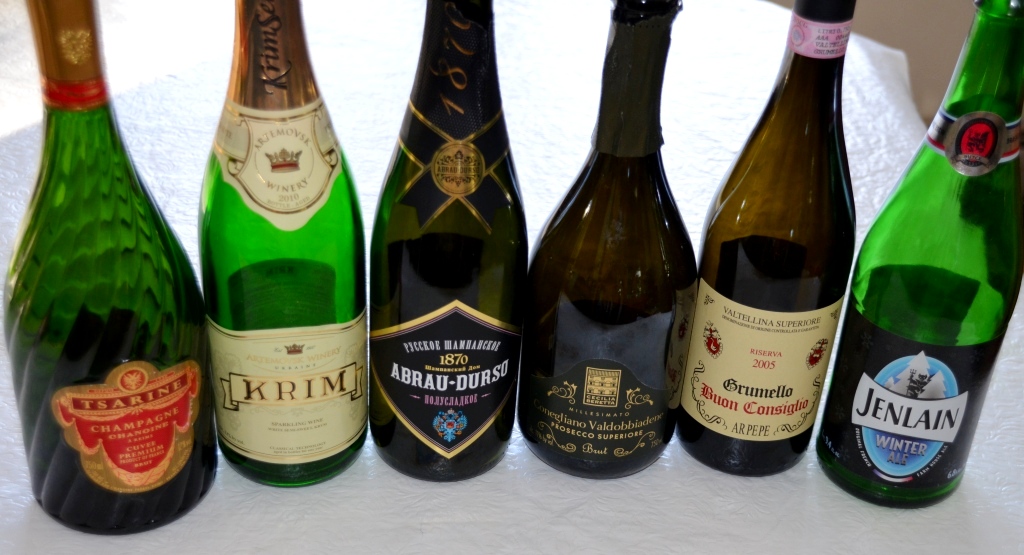 New Year’s day is a Sparkling wine time for me. It doesn’t have to be Champagne, but bubbles are indispensable part of the welcoming the New Year. And then January 1st is generally the day of bubbles – we have friends coming over for the small dinner and lots of bubbles on that first day of the New Year.
The 2014 was not an exception at all – so here are some of the Sparkling wines which added sparkle to our celebration. Oh yes, of course there were few other things to drink besides the sparkling wines.
If you look at the picture above, down on the right you will see… yes, this is beer! Somehow, I felt compelled to include it into the wine line up, as I was drinking it while we were cooking the day before the New Year. Also, when I see a French beer, there is almost a calling in my head “ahh, French beer, I must try it”. This was Brasserie Duyck Jenlain Winter Ale, a seasonal brew from France, produced using three French barley malts and three varieties of the most aromatic hops from Alsace (according to the back label). In style it was an Amber Ale, so it was round and delicate, with a spicy nose and very easy to drink, without any bite – in general Amber is one of my favorite beer styles, right next to the Porter.
Coming to the New Year’s day, we started our evening with 2012 Cecilia Beretta Brut Millesimato Prosecco Superiore Coneglian Valdobbiadene DOCG, Italy (11% ABV) – yes, I already talked about this wine before (here is the post), and I think at this point this is my most memorable Prosecco out of many I tried. It is perfectly together, balanced, elegant, structured and refreshing – and unbeatable value on top of everything. Drinkability: 8-
Then we had two non-common sparkling wines – one from Russia, and one from Ukraine. The Russian Sparkler was NV Abrau-Durso Semi-Sweet Sparkling Wine, Russia (10.5%-12.5% ABV) – fine mousse, touch of sweetness, ripe apples on the palate with a hint of peach, good acidity, overall quite elegant. Drinkability: 7+
The 2010 Artemovsk Krim Semi-Sweet Sparkling Wine, Ukraine (12% ABV, blend of Pinot Blanc, Aligote, Chardonnay and Riesling) was a notch up compare to the Abrau-Durso – perfectly refreshing bubbles, supple nose of apples with touch of yeast, just a hint of sweetness on the palate with balancing, rounding up acidity. If off-dry sparkling wine is your style (or a craving of the moment), I would highly recommend this wine. Drinkability: 8


What can be better than a nice wine label? Of course, a nice wine behind that label! This was the case with this NV Tsarine Champagne Cuvée Premium, Reims (12% ABV, 34% Chardonnay, 33% Pinot Meunier, 33% Pinot Noir). I was so impressed with the bottle and overall packaging, that I even had a wine quiz dedicated to this wine. I was a bit worrying that behind a gorgeous, royal, flashy label will be a so-so wine. Once I popped the cork and pour the wine, the worry went away in the instant. Perfect fizz, lots of energy in the glass. The nose shows everything which signifies Champagne to me – freshly baked bread, touch of yeast, a touch of an apple. On the palate, it had all of the same toasted bread, yeast and apple, coupled with clean, vibrant acidity – and lots of pleasure. Needless to say that this wine was gone in no time. Drinkability: 8
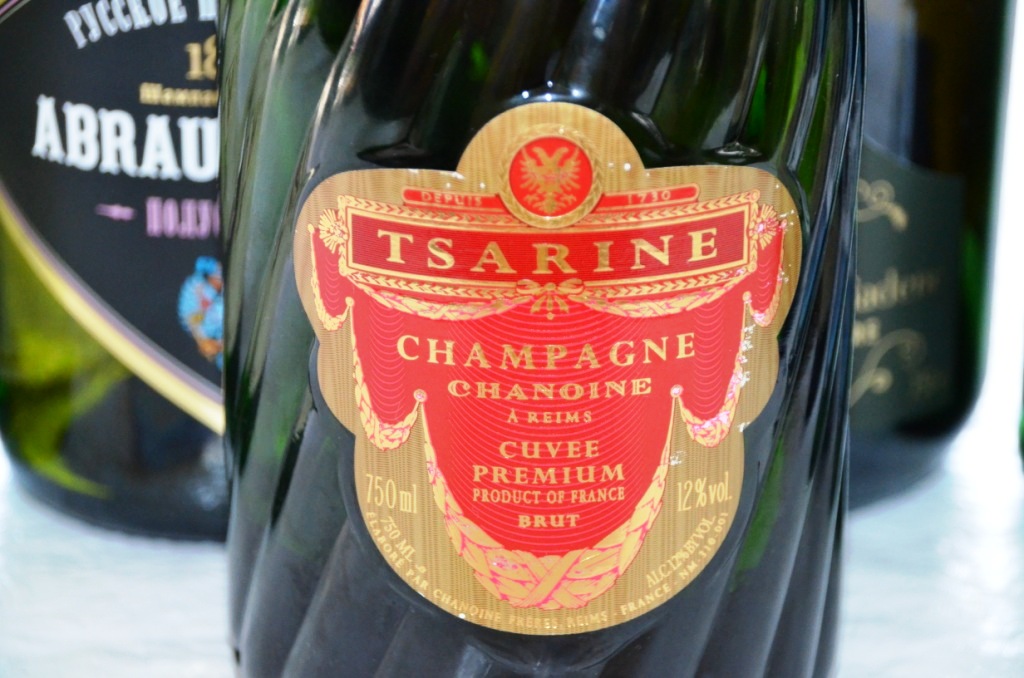
Tsarine Champagne
Our last bottle of the evening was 2005 AR Pe Pe Grumello Riserva Buon Consiglio Valtelina Superiore DOCG (13% ABV, 100% Chiavennasca, a.k.a. Nebbiolo), which Stefano generously brought over. This was an absolutely delicious rendition of Nebbiolo – brick orange hue in the glass, delicate aromas of plums and violets, with may be a whiff of cinnamon, fragrant, earthy and delicate on the palate – very un-Barolo in style, but perfectly balanced with the long finish and lots of pleasure in every drop. Drinkability: 8

Ar Pe Pe Grumello
And then, of course, there was food – I will give you just a few pictures – lots of traditional Russian style dishes – cold cuts, red caviar, salads, lots of pickled vegetables. I might share some recipes later on.


That concludes my report on our New Year’s extravaganza. Cheers!
Wednesday’s Meritage – Wine Quiz Answer, Wine Crimes, #MWWC6 Last Chance, Wine Books, New World’s Most Planted Grape
Meritage time!
First, let’s start with the answer for the wine quiz #87, how well do you know your wines.
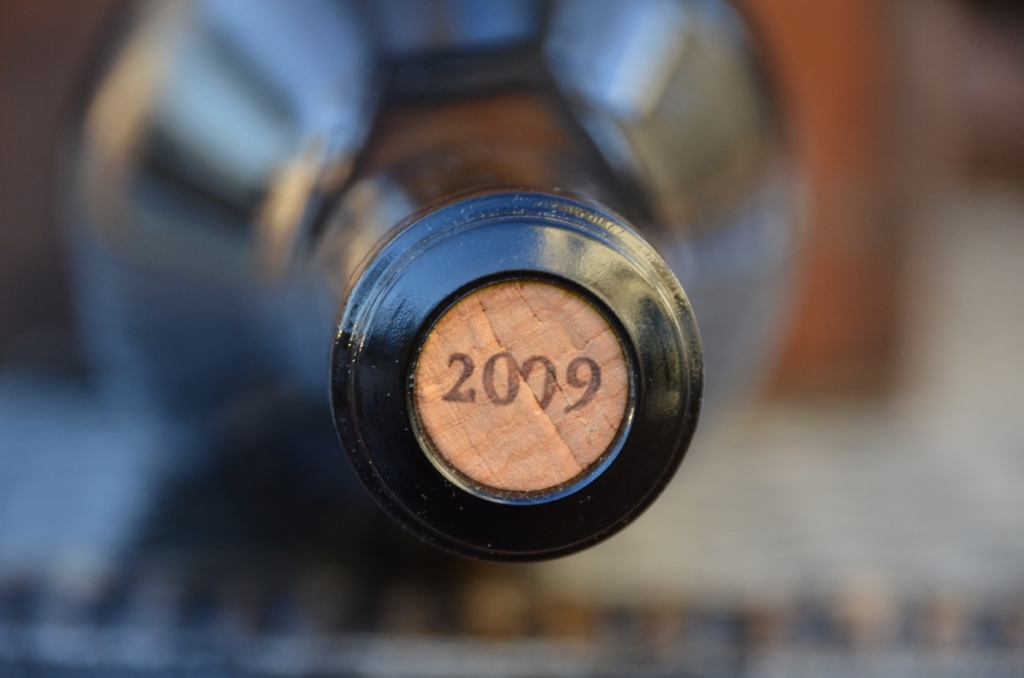
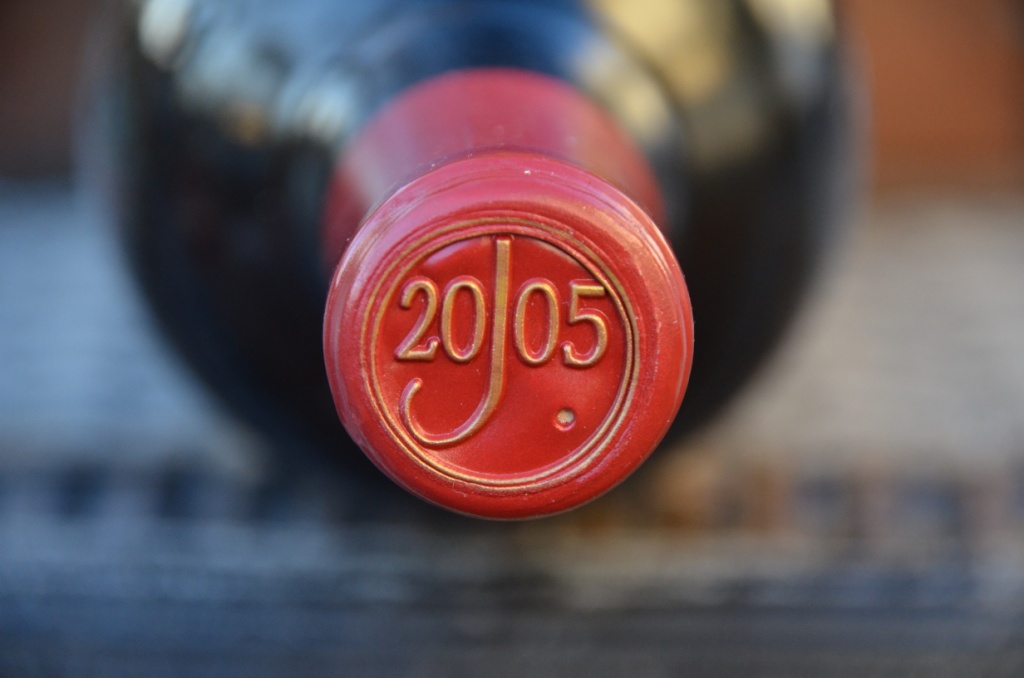
In the quiz, you were supposed to identify 8 different wines/wineries using the pictures of the top foils of the bottles. Here are the answers:
1. White Cottage Ranch, a winery in Napa Valley (looks like it might be closed now 😦 )
2. Burgess Cellars – winery in Napa Valley, making great Cabernet Sauvignon, Syrah and other wines
3. St. Francis – winery in Sonoma, producing wonderful Zinfandel and other wines
4. Lopez de Heredia, one of the classic Rioja producers from Spain
5. Talullah, a boutique winery in Napa
6. No Girls, an extremely limited production of Syrah and Grenache from Walla Walla Valley
7. Jordan, great producer from Sonoma, probably best known for their Cabernet Sauvignon
Bonus: Casa Burmester, a boutique Port producer from Portugal, also making wonderful dry wines
And here are the same pictures, only now you can see what is what:
-

- 1. White Cottage Ranch
-

- 2. Burgess Cellars
-

- 3. St. Francis
-
- 4. Lopez de Heredia
-

- 5. Talullah
-

- 6. No Girls
-

- 7. Jordan
-
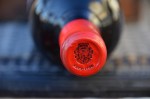
- Bonus: Casa Burmester
As I said many times before, this was a very tough quiz – people generally don’t pay attention to the bottle tops. In this round, Zak correctly identified 6 wines out of 8 ( including the bonus), so he is the winner of this quiz and he gets the distinguished prize of unlimited bragging rights. Well done!
Now, to the interesting stuff around the vine and the web!
As wine keeps growing in popularity, it becomes the subject of crime with much higher frequency. An excellent article from Mike Veseth at Wine Economist is talking about some of the latest wine crimes, where wine was stolen in a very sophisticated fashion. I like the “CSI Fine Wine” designation used for the article – definitely an interesting story to read.
Have you written about the wine mysteries in your life? Mystery is a theme for Monthly Wine Writing Competition #6, hosted by Jeff, a.k.a The Drunken Cyclist. The submission deadline is Monday, January 13th. You can read about all the rules in this post – but don’t delay, there are only few days left!
Do you like wine books? I personally do, but I don’t read them nearly enough – I read more blogs than the books lately. Nevertheless, here is an excellent list from W. Blake Gray, where he is talking about 9 of the latest wine books, all sounding very intriguing and worth reading, like “The Billionaire Vinegar”, which had been on my radar for a while. Did you read any of the books in the list? What do you think?
Last but not least – some wine numbers, for all of you, number junkies out there. The Drinks Business publication just published a very interesting article regarding the most planted grapes in the world. It appears that the most planted grape in the world as of now is nothing less than… (cue drum roll) … Cabernet Sauvignon! And hated/loved Merlot now is a close second – quite a change from Airen and Grenache being in the lead for a while. For more of the interesting interesting data, here is your link to the original article.
That’s all I have for you for today, folks. The glass is empty – but refill is on its way. Until the next time – cheers!
Weekly Wine Quiz #87: How Well Do You Know Your Wines, Part 2
The Wine Quiz series is not meant to intimidate. The whole idea here is to have fun and learn something new. When answering the questions, it is fully encouraged to use all available sources of information, including Google or any other search engine. There are no embarrassing answers – the most embarrassing thing is not giving it a try…
Welcome to the weekend and your new wine quiz!
As I skipped the traditional Meritage, I would like to start with the answer to the wine quiz #86, How well do you know your wines. In the quiz, you were given the pictures of the top of the wine bottles, and you were supposed to name the producer or wine based on that picture of that foil top. Here are the answers (and below are the pictures, now with the producer/wine names):
1. Laetitia, the winery in California producing Pinot Noir and Chardonnay wines
2. Cambria, the winery in California, also producing Chardonnay and Pinot Noir wines
3. Wente, large winery in California Livermore valley
4. Turley, California Zinfandel and Petite Sirah specialist (however, the picture was taken from the bottle of Turley The Label Cabernet Sauvignon)
5. La Rioja Alta, one of the best Rioja producers in Spain
6. Peter Michael, California winery producing great Chardonnay, Pinot Noir and Cabernet Sauvignon
Bonus: Satrapezo, a great wine made out of Saperavi grape by Marani winery in Georgia – I understand that this is a very obscure wine for many, this is why it was set as a bonus question.
-
- 1. Laetitia
-

- 2. Cambria
-

- 3. Wente
-

- 4. Turley
-
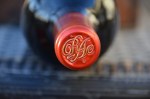
- 5. La Rioja Alta
-

- 6. Peter Michael
-

- Bonus: Satrapezo
Talking about the results – this was a tough quiz, with a few people being able to properly identify Wente, and then some guesses for the #2 being Cline – this is close, but incorrect. The “C” on the Cline bottles is done slightly in the different style.
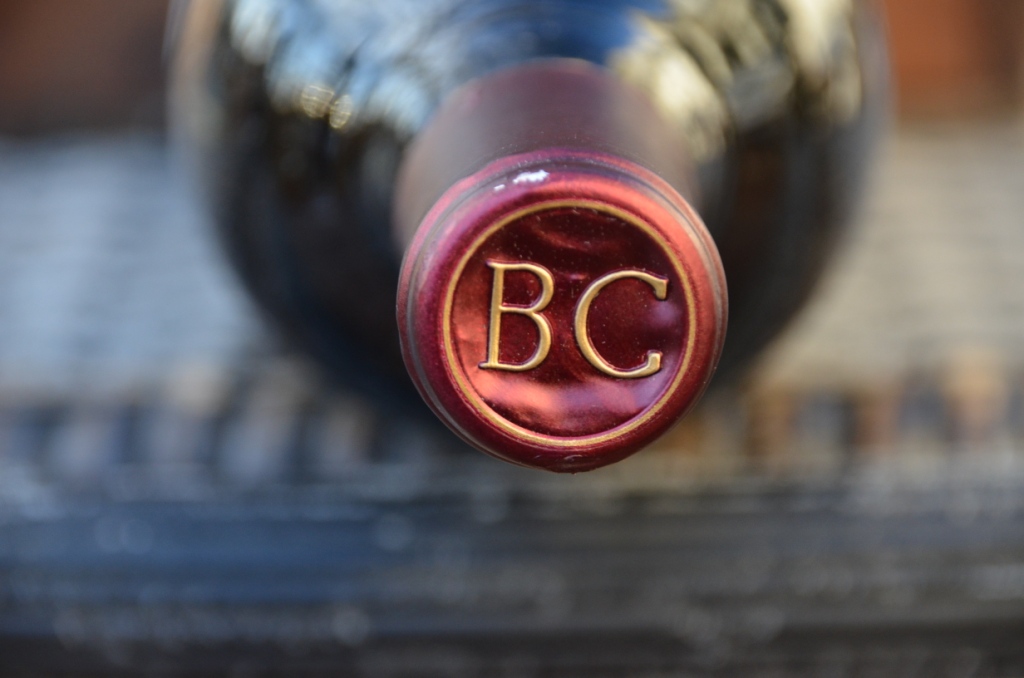
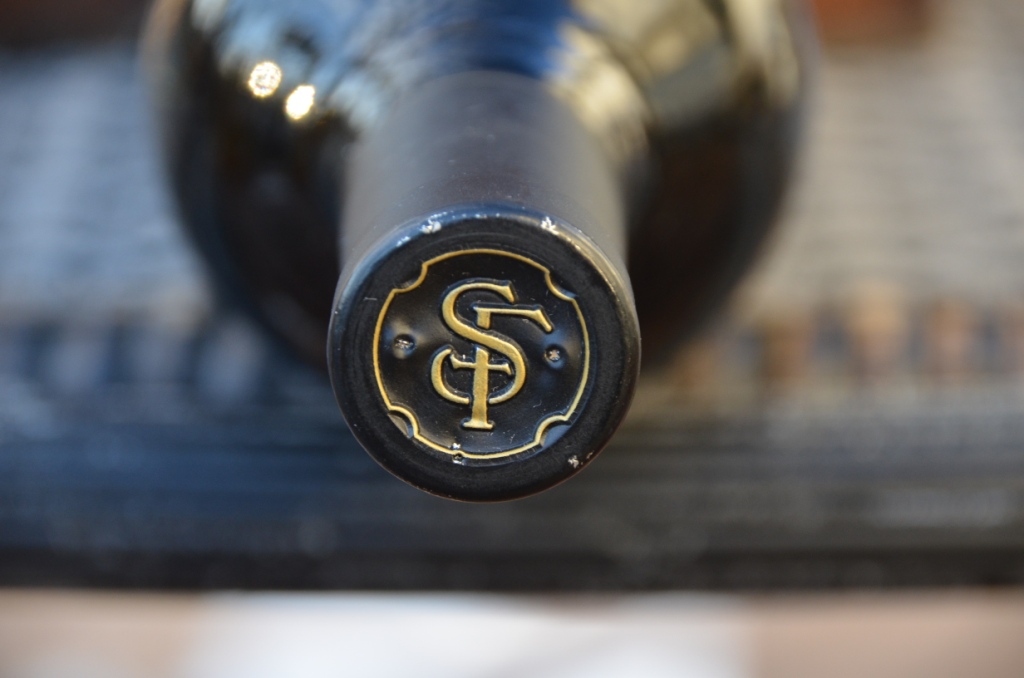
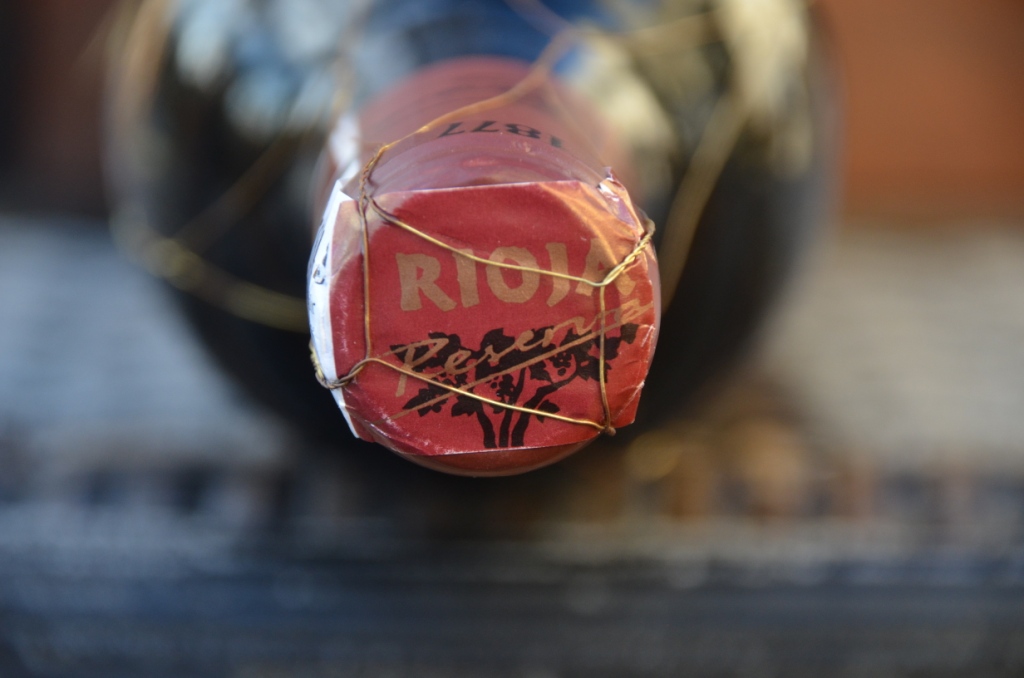
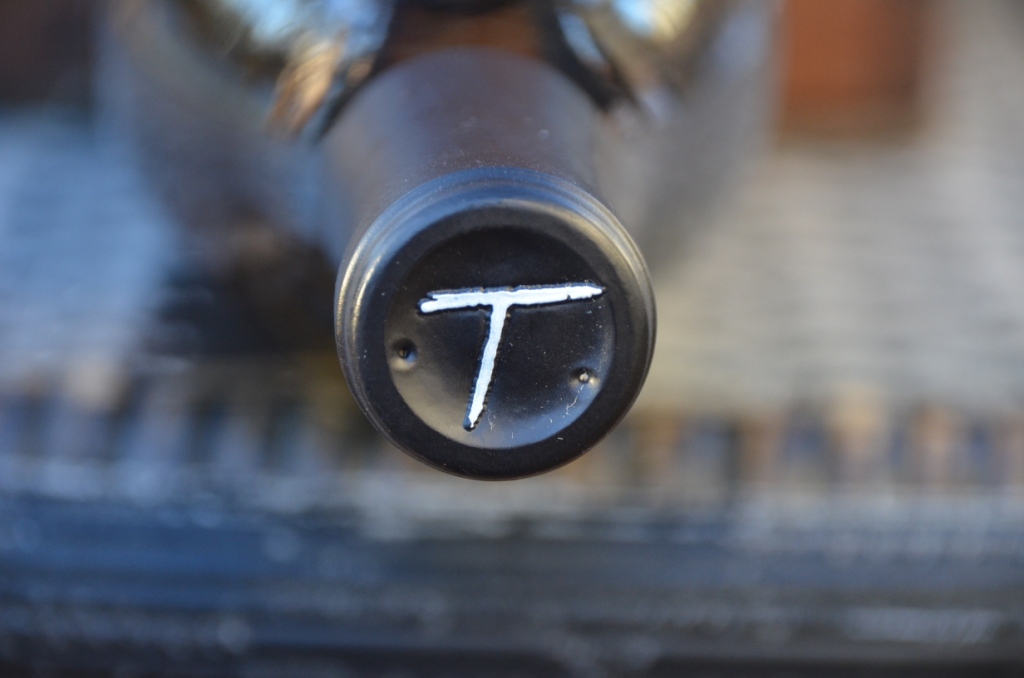
I still like this quiz, so here comes round number 2 – hopefully you can do better! Here we go:
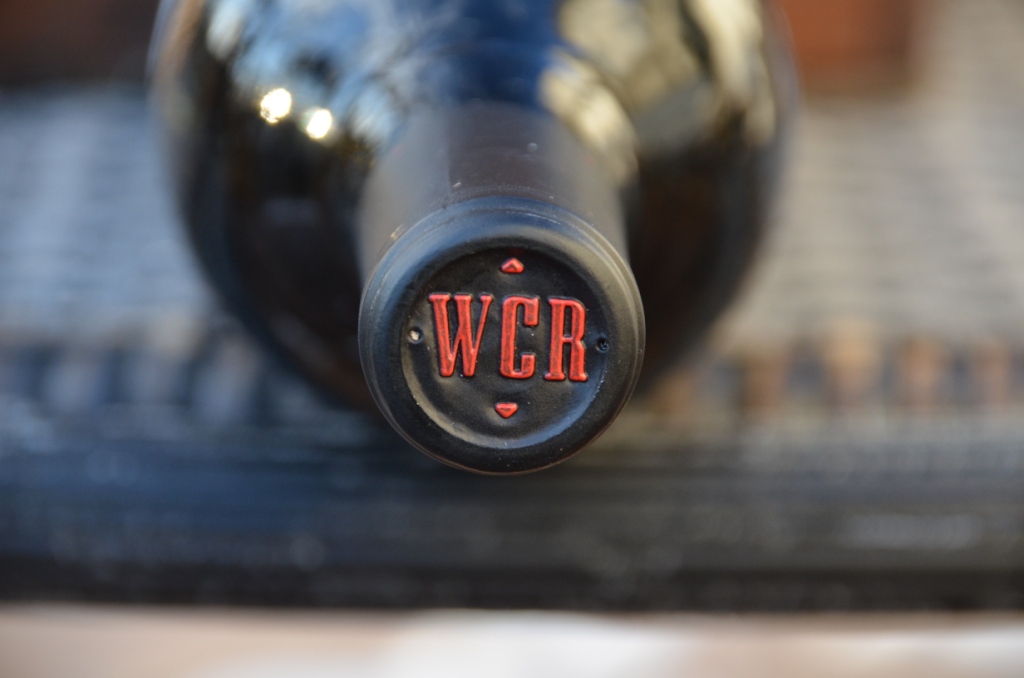
1. 
2. 
3. 
4. 
5. 
6. 
7. 
And the bonus question:
B. 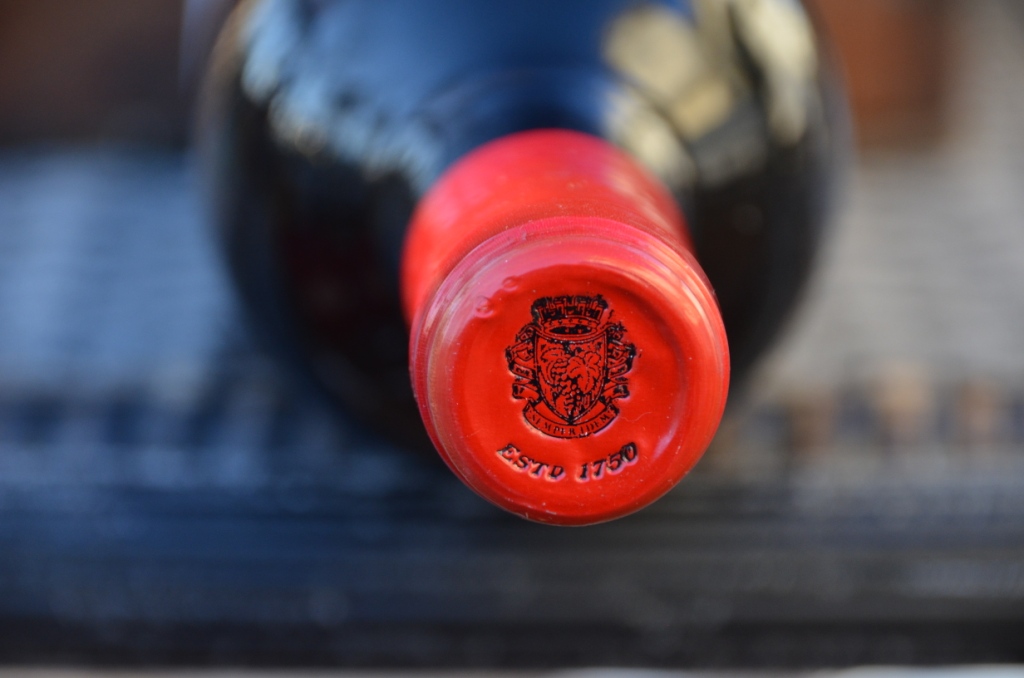
Good luck, enjoy the quiz and your weekend! Cheers!
Month in Wines (and Whiskys) – December 2013
At first I wanted to preface this post with the notion of December being somewhat uneventful in terms of great wine experiences, but as I was thinking about it, I realized that this would be a mistake to put it like that. So yes, December brought quite a few of the great discoveries.
Here we go:
NV Ayala Brut Majeur Ay Champagne, France (12% ABV, 45% Pinot Noir, 35% Chardonnay, 20% Pinot Meunier ) – one of the very best non-vintage champagne I ever tasted – perfectly complex, yeasty, showing aromas of the fresh bread and apples, all in a very bright and energetic package. Considering the price ($26.99 on special) is simply unbeatable (people, stop buying the yellow label, get the real thing and save some money!). 8
2011 Mt. Beautiful Sauvignon Blanc North Canterbury, New Zealand (14% ABV) – nice, restrained – recognizably New Zealand, but more in the Sancerre style, with grass and lemon prevailing over the grapefruit. Well balanced and very refreshing. 8-
2012 Mt. Beautiful Pinot Noir North Canterbury, New Zealand (13.5% ABV) – clean. delicate. perfectly balanced. perfectly delicious. Saying that Mt Beautiful Pinot Noir is beautiful sounds somewhat broken, but there is nothing I can do here – definitely an outstanding Pinot Noir of a rare precision. 8+
2010 Hooker Breakaway Chardonnay Oak Knoll District, Napa Valley (13.3% ABV) – Perfectly classic – vanilla, apple, butter and toasted oak, all elegantly connected, round and supple, perfectly balanced and supported by acidity. A pleasure. 8-
2011 Bogle Petite Sirah California (13.5% ABV) – probably one of the very best value wines in existence – I have to yet to taste a bad Bogle Petite Sirah. Amazingly consistent from vintage to a vintage – dark fruit on the nose and the palate, blackberries and raspberries, firm structure, powerful but elegant tannins, very good balance. 8-
2007 Talullah Syrah Bald Mountain Napa Valley (14.8% ABV) – inky black color in the glass, very restrained on the nose, nice dark fruit on the palate with the spicy notes. Definitely needs time to evolve. 8-
2004 Chateau Puy Arnaud Maureze Côtes de Castillon AOC (13.5% ABV) – very nice, rich, open and classic Bordeaux – hint of cassis, touch of bell peppers, well structured with firm tannins, good overall balance. 8-
2008 Gorys Crespiello Cariñena DO (14% ABV, 100% Old Vine Vidadillo) – outstanding. Very restrained, with nice dark fruit on the nose, on the palate shows raspberries and elegant sweet oak undertones, nice earthiness. Well balanced and intriguing, a thought provoking wine. Medium to long, mellow finish. This is the wine to be enjoyed slowly, preferably with the book or by the fire. Highly, highly recommended. Ahh, and on top of everything – a new grape. 8
1998 La Rioja Alta 904 Gran Reserva, Rioja, Spain (12.5% ABV) – dialed back and elegant, needs time to open up. Nice fruit, cedar notes, well present tannins, good overall balance. Needs time. 8-
2010 Quota 31 Primitivo Menhir Salento, Salento IGT (14% ABV) – playful and elegant. Dark, dense fruit, raspberries and blackberries profile, round tannins, good balance. Very enjoyable. 8-
And here are few of the whisky discoveries:
Blue Ridge Distilling Defiant Whisky, North Carolina (41% ABV, 100% Malted Barley) – North Carolina, really? Well, I’m kidding, I’m not that surprised at all – after tasting great drams from Oregon, Utah, Texas and New York, I believe that great whisky can be made anywhere, as long as you apply enough passion. This whisky was unique and different, as it was the most scotch-like compare to all other US whiskeys I tasted. Very well balanced with nice viscosity, some caramel undertones, herbs and acidity.
The Lost Distillery Company Auchnagie Blended Malt Whisky (46% ABV) – one of the very best whiskys I ever tasted – touch of smoke, perfectly clean and balanced. It is also a very unique product – you can read my original post for more details about it.
Gordon & MacPhail Highland Park 8 yo (40% ABV) – I know that many people will just turn their nose away from this scotch simply based on the “low age” of 8 years. To me, this was absolutely delicious – excellent peatiness (I love peat in my scotch, if you don’t – this will not be your drink), clean, balanced – an excellent dram.


That’s all I have to report for December. Cheers!
Happy New Year!
My Dear Readers, My Dear Friends:
I want to take a moment and wish you all wonderful, happy, healthy and peaceful New Year, the year filled with joy, happiness, love, friends, wine, laughter (the last three always go together), great moments, meaningful connections and great memories!
Cheers to the great 2014!
Last Bottle Sign Up ($10 credit)




 Talk-A-Vino