Archive
Experiences: Chef’s Tasting Dinner at Hotel Fauchere
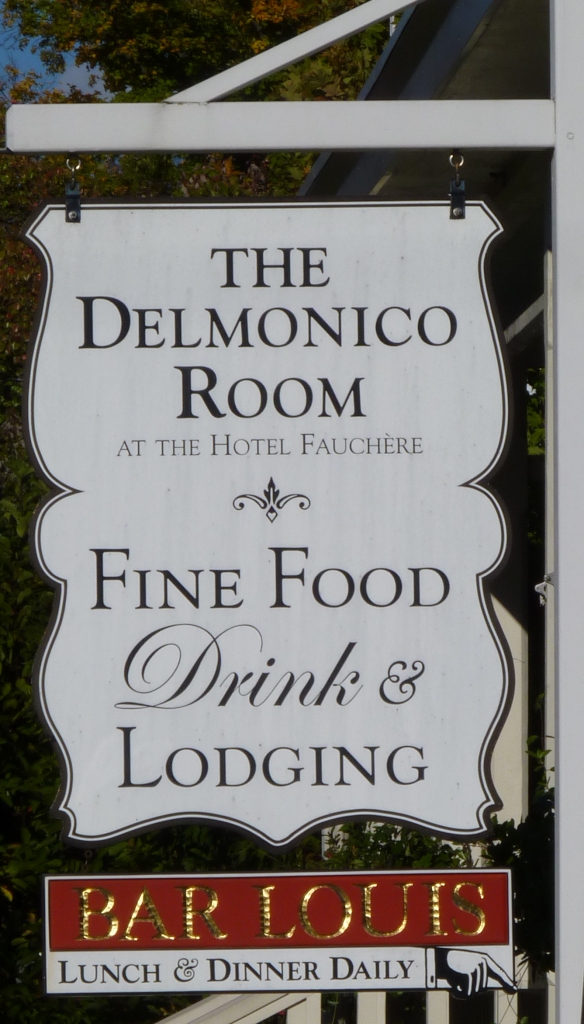 This is the last post in the series about our experiences at Hotel Fauchere in Milford, PA ( previous two posts can be found here and here). Have to warn you upfront – if you thought that there are too many photos in my posts, this one will be extreme – there are way too many pictures I want to share. Here we go…
Culmination point of our weekend getaway was chef’s tasting dinner, long anticipated and planned for. The dinner took place at The Delmonico Room at Hotel Fauchere – for historic reference behind the name and relationship with The Delmonico Room in New York, you can click here. Anticipated is fine, but what’s up with planning? Considering love of wine in the group, we decided to take upon the pairing of the tasting menu by ourselves. For the tasting and pairing experience, this was a good decision, for the service part – not so much. Not that I can really complain about service, all the plates, decanters, glasses and silverware were flying around properly, but the service was delivered in the stark contrast with “everybody smiling” (if you read my previous posts), I would say it was delivered with the stone face. There can be some objective reasons to that ( we brought our own wine, therefore I guess we questioned the level of wine service)… Anyway, let’s talk about food and wine
So we had 7 course tasting menu with two very small “single byte” dishes at the beginning and in the middle of the dinner. Menu focus was on the local, seasonal and fresh ingredients, and I think mission was accomplished quite well. We selected 7 different wines to pair with the dishes – 4 whites, 3 reds.
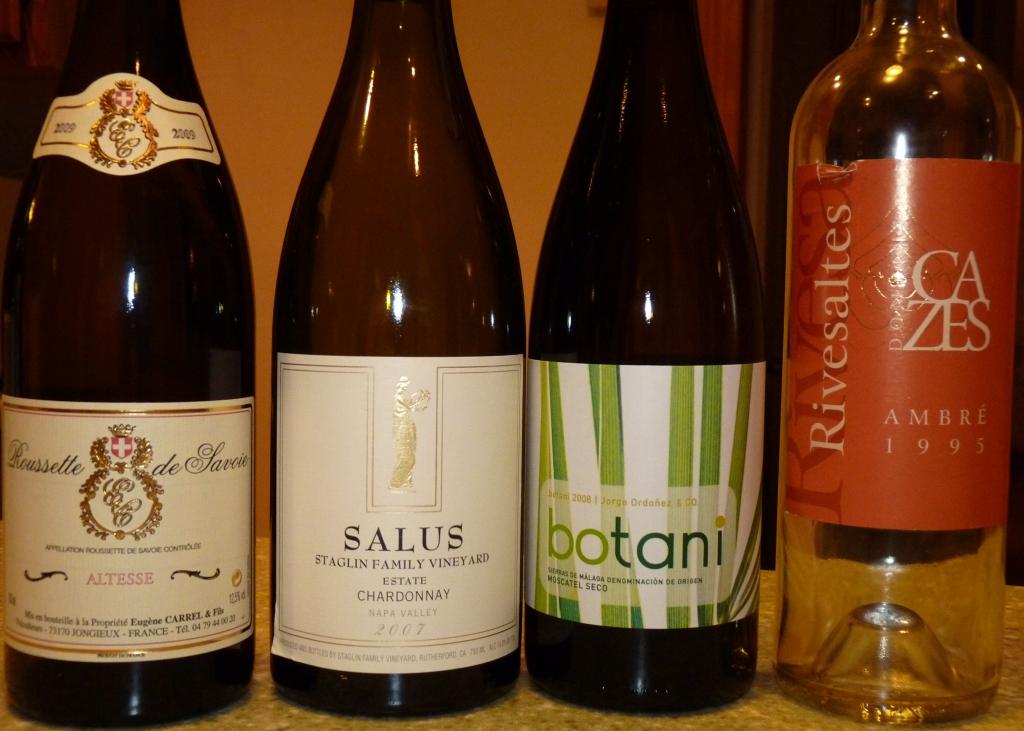 Here are the four whites:
2009 Domaine Eugene Carrel & Fils Rousette de Savoie Altesse, France
2007 Staglin Family Vineyards ‘Salus’ Estate Chardonnay, Napa Valley
2009 Jorge Ordoñez Málaga Botani Sierras de Màlaga
1995 Domain Cazes Ambré Riversaltes Languedoc-Roussillon
We made a lot of good decisions with this set – but more about it later.
And here are the three reds:
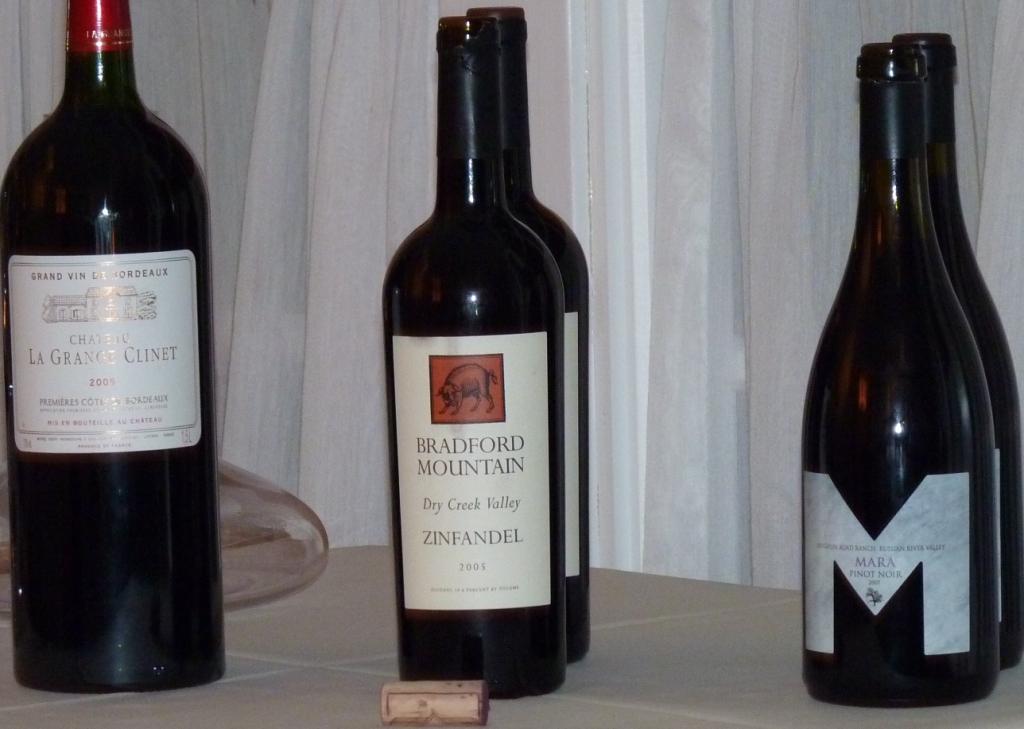
2007 Mara Pinot Noir Laughlin Road Ranch, Russian River Valley
2005 Bradford Mountain Zinfandel Dry Creek Valley
2005 Chateau La Grange Clinet Premier Cotes de Bordeaux
This was also a great selection, all worked very well with food – so lets get some details.
The first dish in tasting was Tortelloni A La Zucca (Seared Diver Scallop, Black Walnut, Sage Butter). Wine pairing – Rousette de Savoie Altesse.
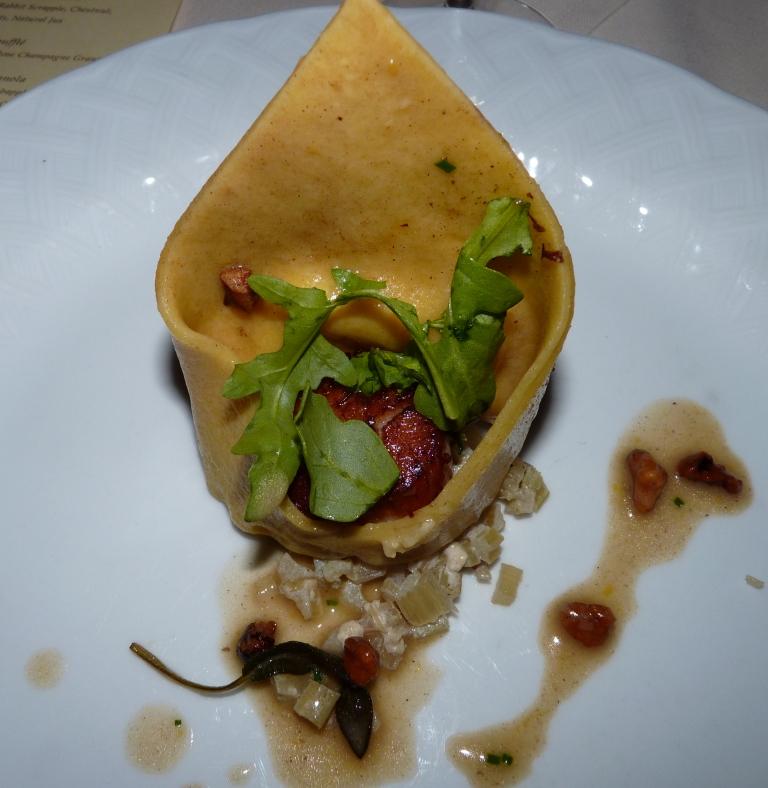 I would honestly question composition of the dish, as pumpkin tortelloni didn’t do anything to the scallop, tortelloni looked almost as a presentation piece. At the same time, wine worked very well with all of the components in the dish – apple, leeches and earthiness worked well with pumpkin filling, and wine had enough fruit and acidity to complement scallop. One important thing to mention here – with this wine I was able to make a progress in the treble journey, as Altesse is a grape from Savoie which I never tasted before. Color me happy – 273.
The next dish was Foie Gras De Canard (Porcini Mushroom, Brussles, Pear, Pomme Maxim). Wine pairing – Staglin Salus Chardonnay.
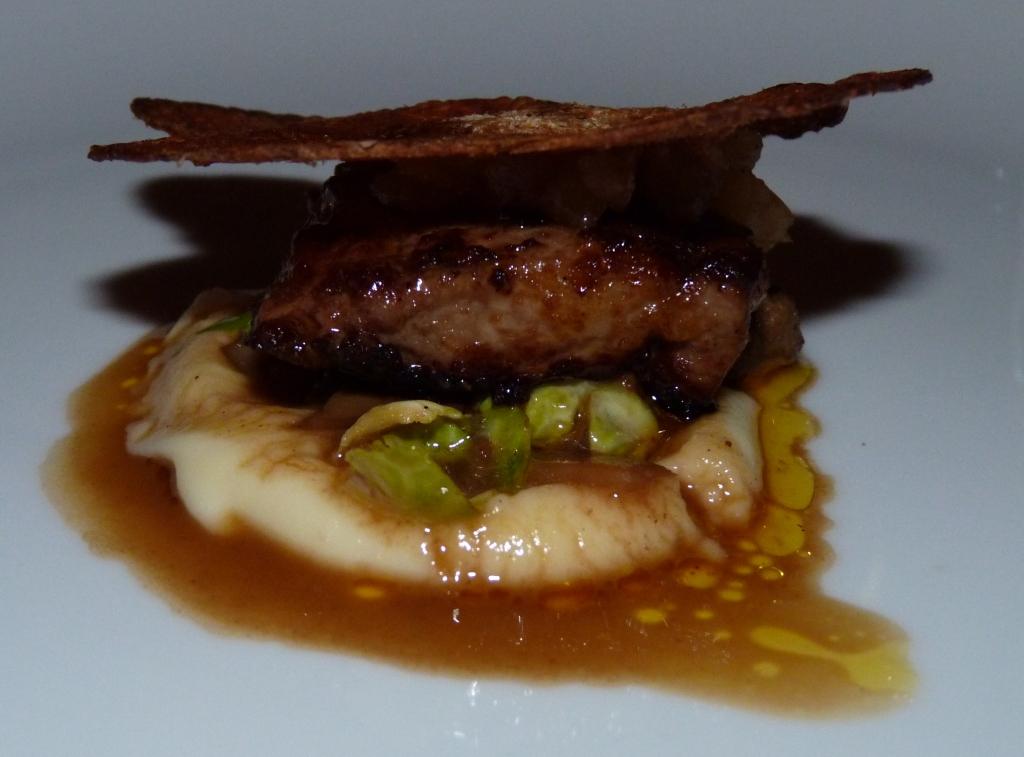 As we didn’t miss a single pairing ( pat on the shoulder), at least in my opinion, I will omit redundant [great pairing] in front of each description.
Salus is produced by Staglin Family, one of California cult wine producers from Napa Valley (Staglin Family Estate Cabernet Sauvignon 2007 just got WS 98 rating). Salus was one of the most beautiful chardonnays I tasted lately. Vanilla, butter, caramel, toasted oak and acidity of the wine worked perfectly with heavy but creamy texture of the foie gras.
Next dish was Roasted Black Sea Bass (Caramelized Sunchoke, Garden Chard, Cabernet Franc Emulsion). Wine pairing – Mara Pinot Noir.
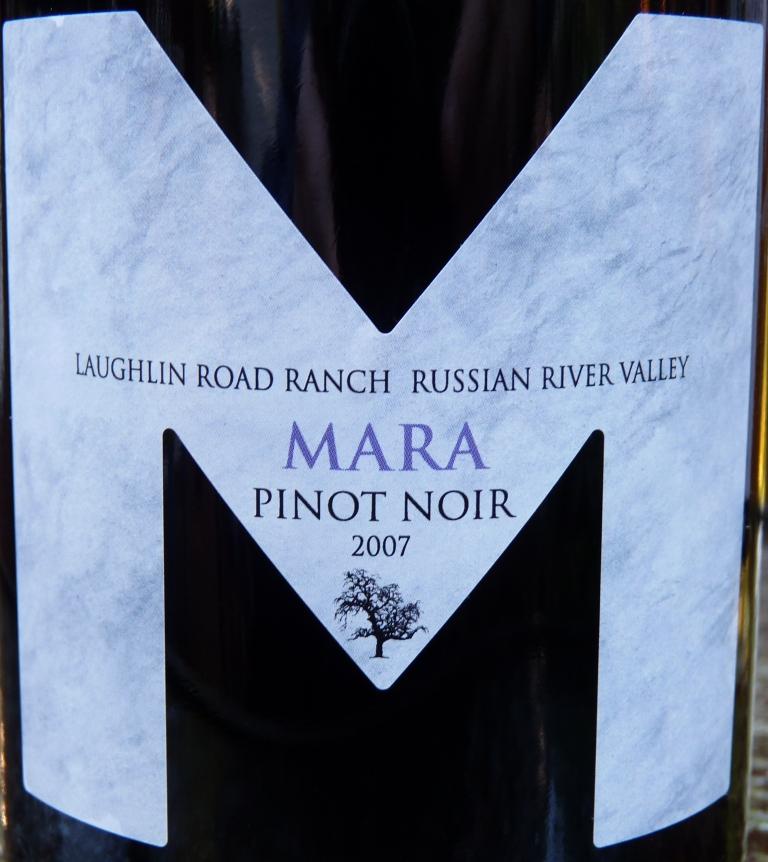 In case you wonder, there are actually two reasons why there is a wine label above instead of picture of the dish:
1. It was one of the best versions of Roasted Sea Bass I ever had. So, by the time I realized that I didn’t get a picture of the dish, it was too late.
2. And I guess it was also too late because everybody got carried away after taking a sip of Mara Pinot Noir.
Mara Pinot Noir was really a centerpiece of the tasting. “Oh my god” was major phrase at the table after the first sip of the wine. I don’t think that wine should be described in terms of color, fruit and acidity. This wine should be described in terms of opulence and decadence it cast upon the table. “Total and absolute balance” would be the right way to put it. Anyway, if you can find a bottle, you should experience it for yourself ( about 250 cases total production). In my “drinkability” ratings it is defnitely a 9+.
Next dish: Sautéed Squab (Confir Potatoes, Red Peppers, Serrano Ham). Wine pairing – Bradford Mountain Zinfandel.
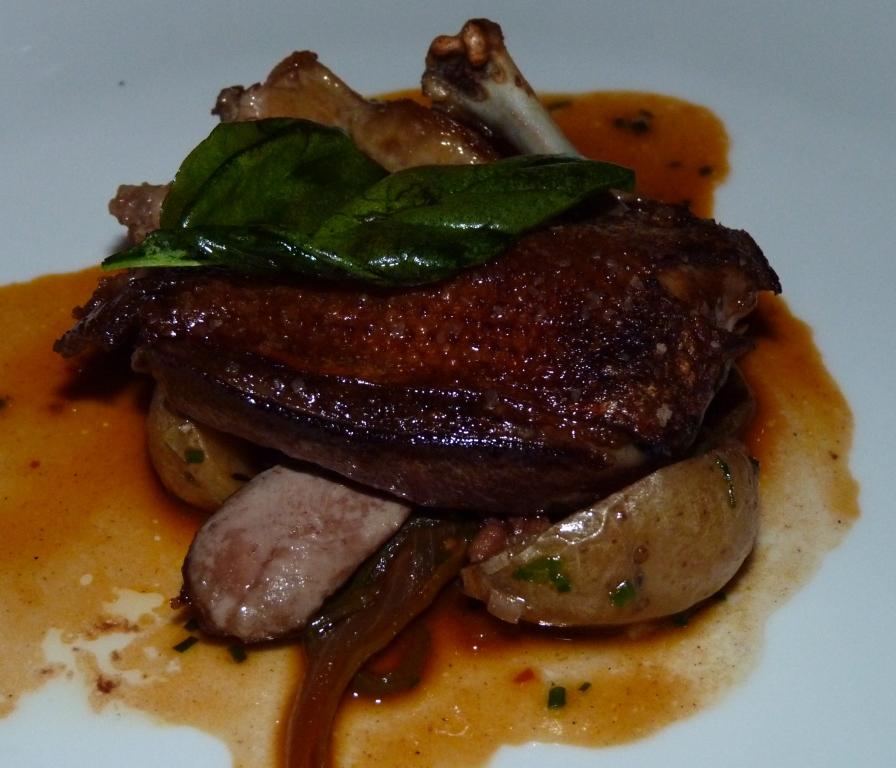
Deep earthy and gamey flavors of the dish ( tasted almost like a fried liver), were complimented well by spices and acidity of the wine. This was definitely a good combination.
Following on, major entree: Duo of Farm Raised Rabbit (Bacon Wrapped Loin, Rabbit Scrapple, Chestnut, Garden Carrots, Natural Jus). Wine pairing – Chateau La Grange Clinet Premier Cotes de Bordeaux.
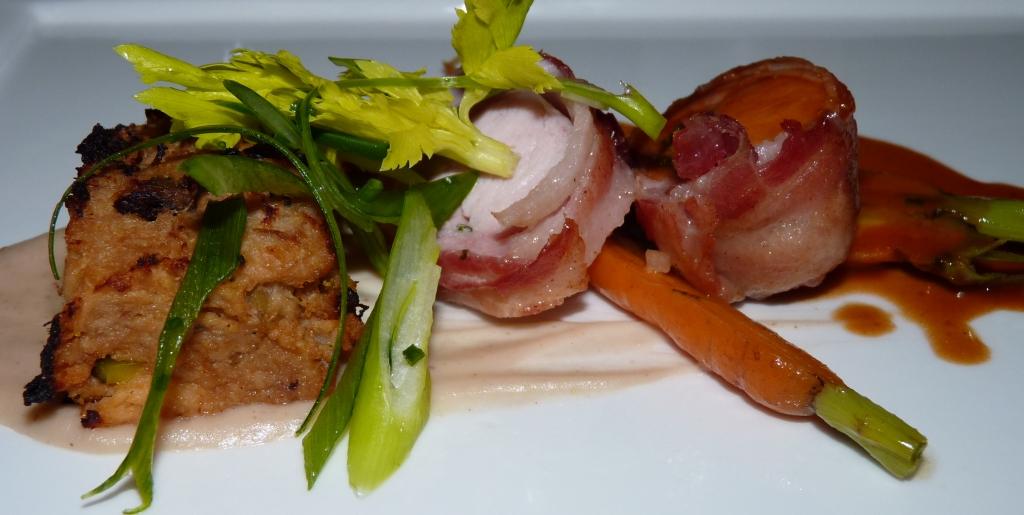 Bordeaux had being nicely decanted, so it was open enough in time for this dish being served. Coming from magnificent 2005 vintage, this wine can be drunk right now, but will improve with some time in the cellar. The wine worked well with the flavors of the dish – combination of tender, a bit gamey loin and fresh garden vegetables was well complemented by dark fruit flavors in the Bordeaux.
And now it is time for desserts: Cheese Soufflé (Pinot Noir Must, Grape Aspic, Rose Champagne Granite). Wine pairing – Botani Sierras de Màlaga.
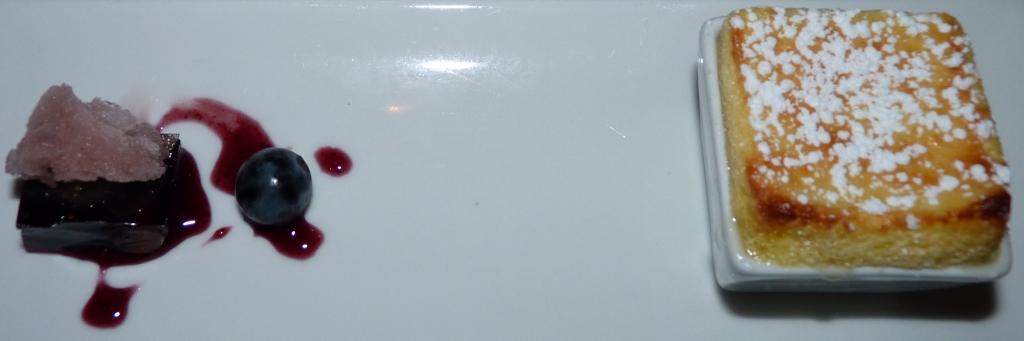 I discovered Botani Muscat at the dinner at The Capital Grille. This wine delivers incredibly bright acidity and fruit combination, every sip feels like it is full of live. That acidity was instrumental in this pairing. The wine worked quite well with both Granite and Souffle components of the dessert.
And last, but not least, one more dessert: Gala Apple and Granola (Apple Jack Caramel, Foraged Crabapple Confit, Cinnamon Gel, Pecan Brittle, Mulled Cider Ice Cream). Wine pairing: Ambré Riversaltes.
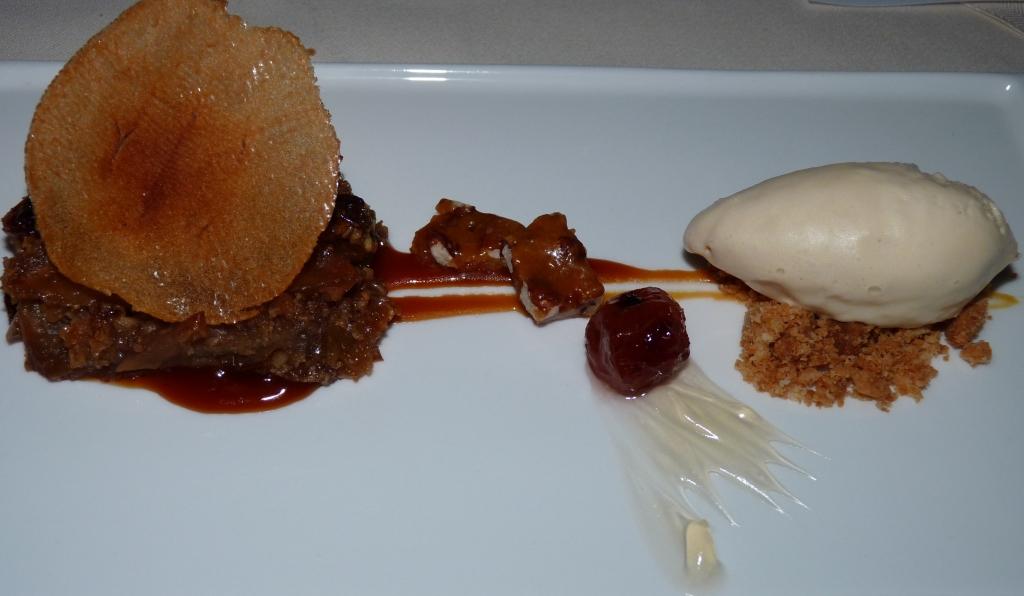 If Mara Pinot Noir was best of tasting, then this was the most interesting wine. This wine, made out of White Grenache, is made in the Solera style – it spent 7 years in the open tubs, developing delicate flavors. Ambré Riversaltes exhibited fresh and balanced flavors of toasted apple and caramel, which perfectly worked with “apple many styles” flavors of the dessert.
That’ s all, folks – it is time to conclude the report on the Hotel Fauchere experience. All in all, we had a great time, and will gladly do it again. The life journey continues…
Hotel Fauchère
401 Broad St
Milford, PA 18337
(570) 409-1212
http://www.hotelfauchere.com

Cakebread Cellars Tasting at Stew Leonard’s Wines
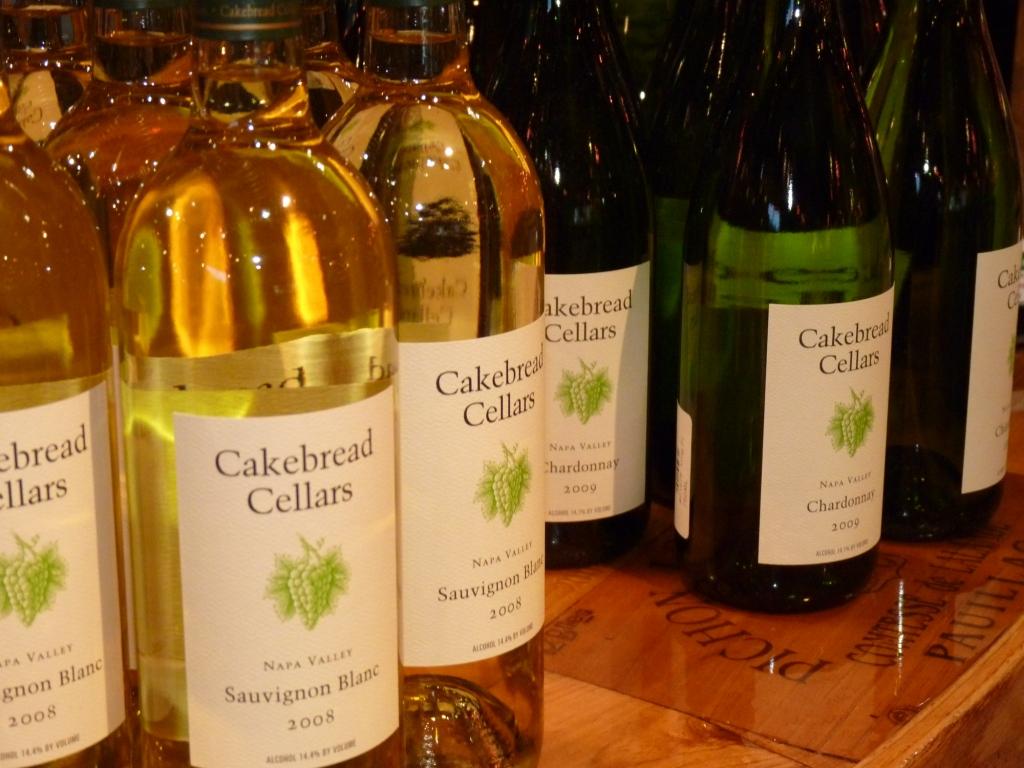 And again I have to thank Stew Leonard’s Wines folks for a free education session. This Friday and Saturday (October 1st and 2nd) you can try three different wines from the Cakebread Cellars. Cakebread cellars is a well regarded producer from Napa Valley in California, so I definitely was interested in experiencing their wines.
Two whites and one red were presented, all classical wines from Napa Valley – Sauvignon Blanc 2008, Chardonnay 2009 and Cabernet Sauvignon 2006, and I tasted them in this exact order. Just to share an overall expression – there are good wines, but I didn’t like them, especially taking into account QPR (Quality Price Ratio), a very popular metric used nowadays among wine aficionados. Sauvignon Blanc has a very nice nose, but on the palate it lacks the acidity, and while it finishes with the fresh cut grass (classic Sauvignon Blanc characteristic), the sensation is too warm and a bit burning. Considering this wine retails for $29.99, I would gladly take any time New Zealanad Sauvignon Blanc instead at $10 to $15 a bottle.
Chardonnay simply didn’t do anything for me. It is very young, somewhat of a Chablis style, but it was missing steely acidity of Chablis. I understand it is 2009, and it might need more time to evolve, but at $39.99 there are so many more better choices, I wouldn’t even go there.
And then the Cabernet Sauvignon, the king of Napa Valley wines – beautiful nose of classic cab, but no mid-palate weight and in general, not enough substance on the palate. At $74, it is really not a player – if not under $20, in the $30 – $40 category there are soooo many better choices…
To conclude, these Cakebread wines are definitely worth trying – and learning. I also have to tell you ( but it is a secret), that tomorrow I plan to try some very interesting wines – and I promise to report on that later on!
Can Wine Tasting Be Double Blind?
 Can wine tasting be double-blind? You think this is a misnomer, right? Let me explain myself. The basic premise of the “blind” wine tasting is that the taster has no idea what is he or she is dealing with, and by using swirling, sniffing, gargling and any other techniques should identify grape (or grapes), the place where the wine was made, and ideally the producer and the year. For the example of amazing blind tasting I have to refer you to the movie Bottle Shock (if you are into wines, definitely worth watching).
In general, tasting wines 100% blind is rare. What I mean is that even in the case of the blind tasting, there are some limiting factors which help you to identify the wine. For instance, when the wines are tasted blind for Wine Spectator ratings, usually the territory and a year and well known (and the goal of the tasting is simply to rate the wines as good and bad, not to identify grapes and producer). Even when I was tasting the wines for the Certified Sommelier exam (for more info – see About section), it was known that there will be no Pinot Grigio in the glass and grape choices would be really limited.
So what would I call a double-blind wine tasting? I was asked to taste home made wine and provide my opinion. I was asked a number of times and couldn’t refuse. I do call this double-blind – all I know is that the wine is made at home of someone leaving in Connecticut, and I don’t even know if it is made out of grapes or may be berries? Of course the whole purpose of this exercise was only to say whether I like the wine or not (no need to identify producer and the year 🙂 ), but who doesn’t want to play detective in such a case? Yes, I want to guess the grapes, and I want to guess it right!
While sharing my detailed tasting notes is really useless, as absolute majority of my readers will never taste this wine, I would like to still share a short summary. First and foremost, I did like it! I honestly don’t classify myself as a wine snob – I would gladly drink two buck chuck, as long as it tastes good. But I had a lot of home-made wines before – they are all sweet concoctions, mostly made out of fruit with addition of powerful alcohols – so they really have nothing to do with actual grape wines. This wine actually looked, smelled and tasted good, so here my notes, for what it worth:
Color: dark garnet.
Nose: wine opened with freshly squeezed berries, like raspberries and blueberries, complemented by lime zest.
Palate: very nice fruit (again raspberries, blueberries, ripe plums, some tropical fruit – very unusual for red wine), complemented with vibrant acidity and good tannins.
As you can see, it is a description of a very nice wine – and it was very nice indeed. So was it perfect? Well, it took me some time to realize what this wine was lacking. It was lacking place. There was no notion of terroir, no earth and no minerals. This wine can be from anywhere (and being made in Connecticut, it definitely is). Again, the wine was very drinkable, and a lot of commercially made wine have no notion of place whatsoever – but I think this is something to note when tasting the wine, so here it is.
What would you put as a grape(s) under such description? My top guess is Zinfandel, and if not, my next guess is Syrah. I don’t know the right answer, and I promise to share it – once I will find out.
And as I mentioned before – blind tasting is fun! Get your friends together and play the wine detectives game – I guarantee you a great time!
Treble Journey: Definitely Not Enough Of A Good Thing, Grapes #248 – #263
 For those who is just joining us and for those who forgot: if you wonder what this mysterious journey is, please take a look at this post. As I was wondering in my last post if there can be too many wines in the tasting, I’m continuing here with the update on the progress of the “treble journey”, inching on the ultimate destination point – 300 different grapes. Well, if tasting of the new grape can be defined as “inching”, or in other words, moving forward by an inch, then as a result of the last wine tasting I made more than a foot of the progress – 16 different grapes in one day. Considering that we are talking about that many grapes, I will simply list grapes and wines without providing much of the detailed notes or ratings (besides, with some of the wines, I will be very happy to never try them again…). Here is the list:
Ansonica – Donnafugata Anthilia White 2008, Sicily
Bovale Sardo – Serralori Rosato IGT 2009, Italy
Drupeggio – Palazzone Orvieto 2009, Italy
Frapatto, Nerello Capuccio – Dievole Fourplay Rosso 2007, Italy
Mantonico – Efeso Bianco IGT 2005, Italy
Moristel = Marbore 2003, Spain
Moscato Reale – Apianae 2007, Italy
Muscardin, Terret, Vaccarese – Domaine de Beaurenard Chateauneuf duPape Boisrenard Red 2007, France
Muscat de Frontignan – Klein Constantia Vin de Constance 2005, South Africa
Nuragus – Selegas DOC 2009, Italy
Rabo de Ovelha – Loios White 2009, Portugal
Roscetto – Ferentano Bianco Lazio IGT 2007
Scheurebe – Joseph Phelps Eisrebe 2005, California
So while it is great to add a big number of new grapes, each additional grape makes the “journey” more and more difficult, as now you need to search far and wide in order to find the new grape. But – this search and anticipation are big part of the process, so lets enjoy it.
To sum up – there are still 38 more grapes to go… Unique grape suggestions, anyone?
Is There Too Much Of A Good Thing?
 Assuming you like wine ( otherwise, I don’t think you would be reading this blog), what would you say of a prospect of trying many hundreds of wines in a day ( about 5 hours, to be precise)? I would think at first you would get excited, right. Now, let’s do some simple math – let’s say you will be tasting 500 wines, 1 oz each… will make it equal to 20 (!) bottles of wine. Don’t think that sounds appealing anymore? This is where the bucket with romantic name “spittoon” comes to the rescue (I’m sure many of you are appalled now – what, spit wines?! No way!) – but this is what the professionals have to do. So why is all this talk about professionals and wasted wine? Simply because that this past weekend, thanks to my friend Zak, an owner of Cost Less Wine and Liquors store in Stamford, I was able to join him in the “trade-only” wine tasting events run by two of the Connecticut wine wholesalers, Wine Bow and World Wide Wines.
Believe it or not, tasting wines in such quantities is a hard work. Of course nobody tastes 50o wines in the row – spitting or not, but your palate gets really tired from tasting and tasting and tasting, and while I’m looking only for the fun component of such an event, people in the trade have to actually make business decisions – getting right wines for the store or a restaurant is a border line between success and failure. Luckily, this hard work is associated with pleasure, so enough of the sad picture – no need to take pity. Yes, it is a great opportunity to try an amazing variety of wines, a lot of them being simply great wines, and for me personally it was also an opportunity to make progress in the treble journey ( which I did), but I will report on this in the next post.
 It is impossible ( and probably pointless) to write about all the great wines – but I would like to mention a few highlights. First, among the Cabernet Sauvignon, Neyers Ranch Conn Valley Cabernet Sauvignon 2003 and 2006 were simply outstanding, with pure Cabernet expression of black currant, chocolate and hint of eucalyptus, all beautifully balanced. Ladera Vineyards Cabernet Sauvignon, Napa Valley, Lone Canyon and Howell Mountain were all between excellent and outstanding – again, with beautiful and clean California Cabernet expression at its best. It is also worth mentioning that all of these wines are quite accessible with retail prices at $30 – $60 per bottle. Few more personal highlights among the reds were Morgan Monterey Syrah 2007 (less than $20 retail), amazing 100% Syrah demonstrating all the “textbook” Syrah spicy qualities, and then couple of Zinfandels, Bradford Mountain Dry Creek and Bradford Mountain “Grist” by C. Donatiello Winery, both from 2005.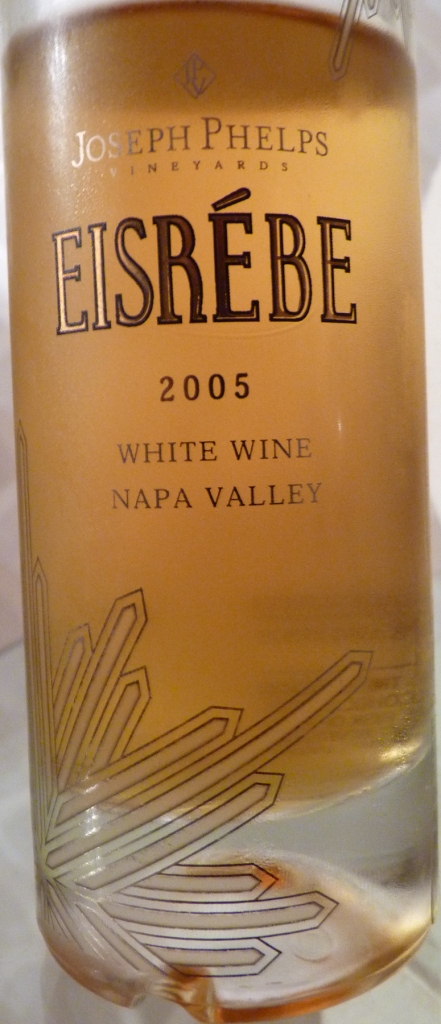
There were a lot of great white wines, but I would like to mention only one, again as personal favorite – the wine called Eisrebe by Joseph Phelps. This is desert wine made from the grape called Scheurebe ( that was a nice surprise for my “treble journey”), and it is done in the style of the Ice wines, except that as there is no chance for the grapes in California to naturally freeze at -8C, special cryogenic methods used to achieve “ice” wine result. The wine had an amazing balance of the white fruits, honey and ripe comice pears with refreshing acidity, so it was not overpowering the palate. Amazingly enough to me, this wine was also perfectly complementing wide variety of desserts, which is not very common from my experience.
All in all – it was a great fun, and I have to conclude that when it comes to the wine tasting, there can be no too much of a good thing (well, a “good thing” is an important hint here), and therefore I will gladly repeat it at any time.
Cheers!
The Capital Grille Experience – Great Wine and Dine
It is interesting how we experience things in life. Some things just happen, and some are long-planned and anticipated, maybe for no reason at all (as long as we get the experience we want before we cross the finishing line, we are doing good, right?). 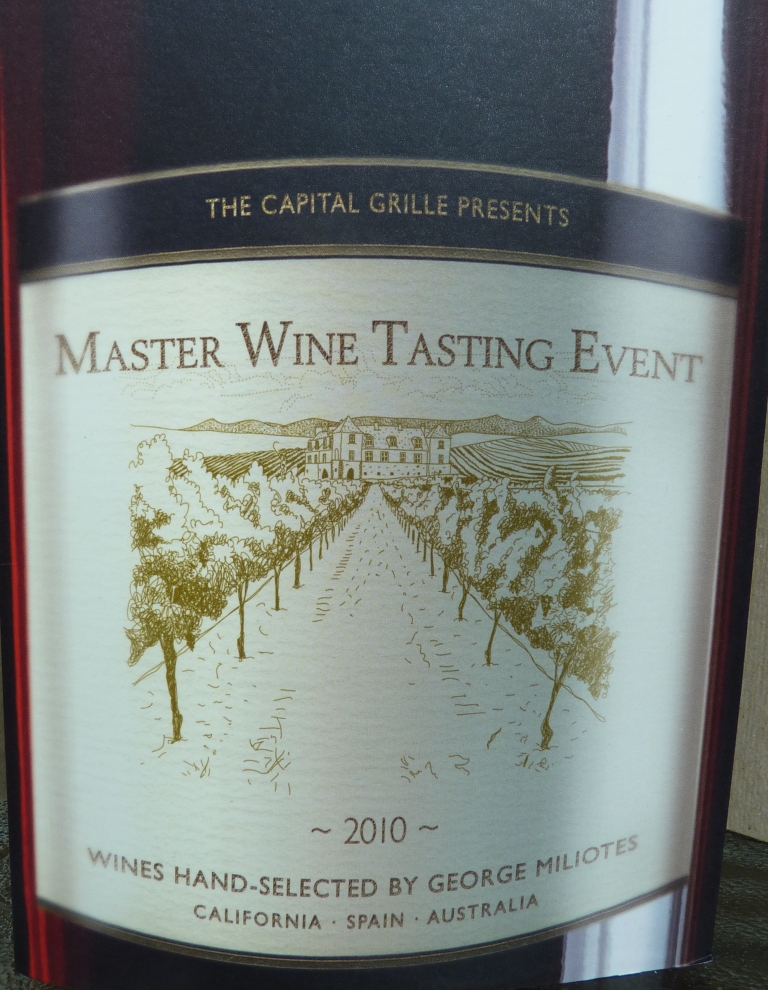 Same as Norton grape on my “to try” list for a long time ( see my last post on the subject), The Capital Grille was on the “to visit” list also for a while, at least from the moment the restaurant opened in Stamford. So finally this experience came through due to a combination of good circumstances – we had a good reason to visit (our anniversary), The Capital Grille was participating in Stamford Restaurant Week (as the restaurant is expensive, that makes it a lot more affordable), and The Capital Grille was running Master Wine tasting event, with 11 wines assembled by The Capital Grille’s Master Sommelier George Miliotes (you know by now that wines come first in this blog). So we decided that we have a great opportunity to see where the “we wine. we dine” motto of The Capital Grille will take us, and there we went.
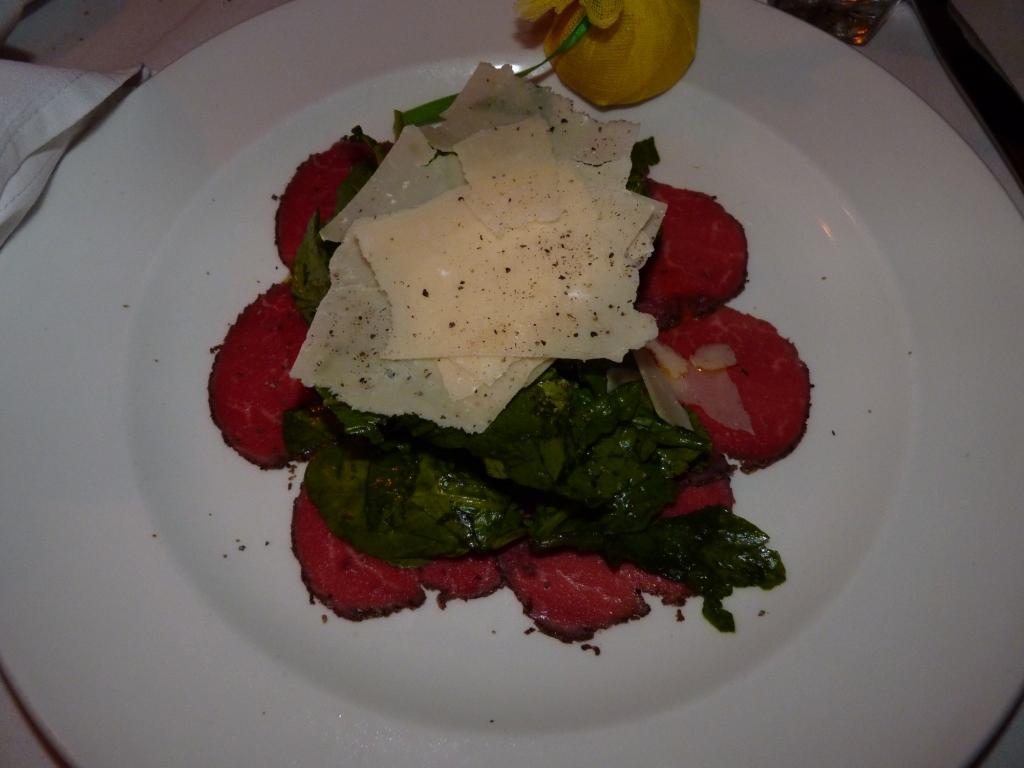
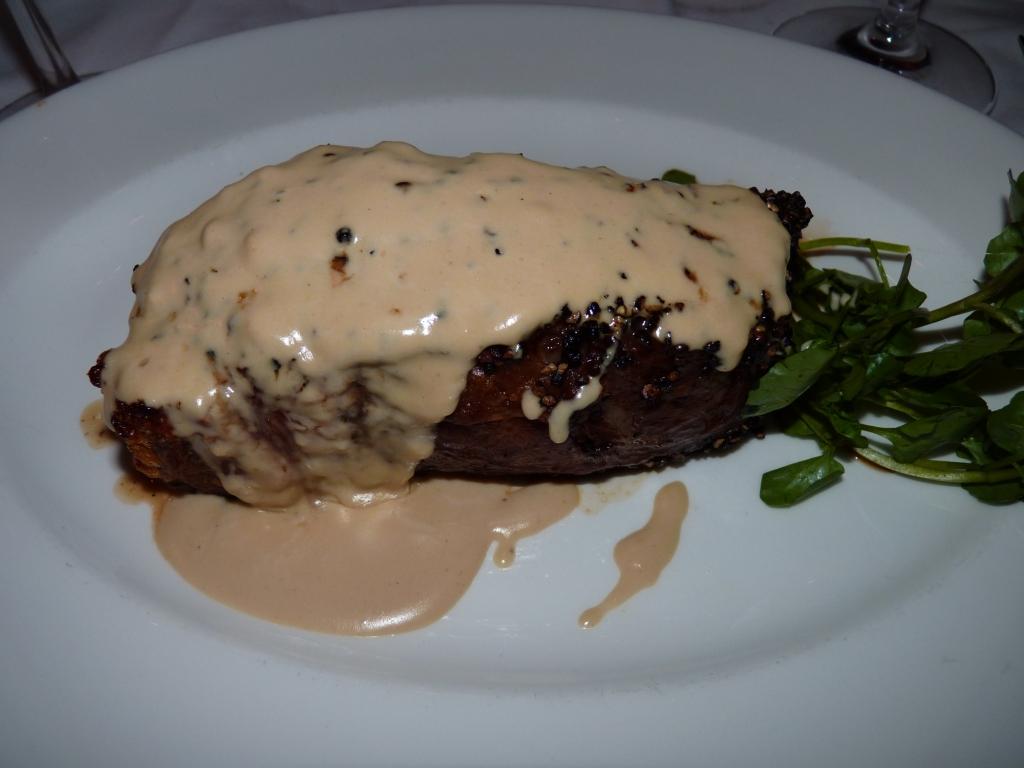
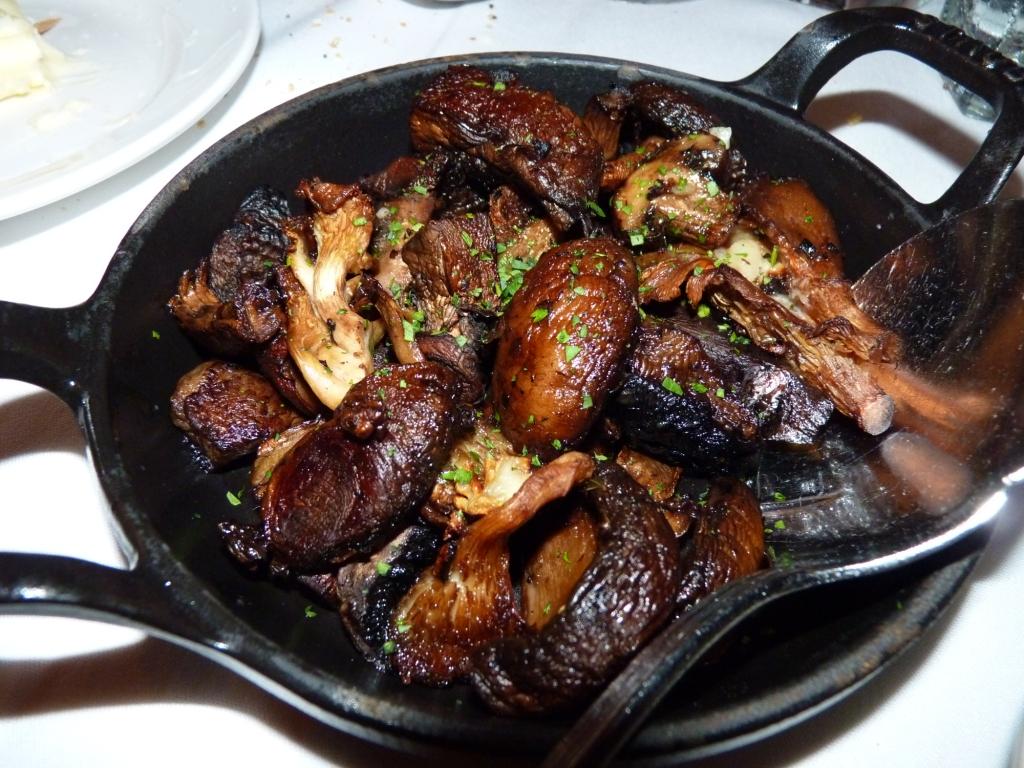
What a great experience! (should I declare this post complete?). From food to wine to service we had a great time all the way. Talking about food, the Wagyu Beef Carpaccio appetizer had an incredible flavor profile combining razor-thin slices of Wagyu beef, Parmesan cheese, and fresh arugula. Next, I have to say that nice thing about ordering steak done to your liking is that in addition to the standard scale of rare-medium-well done you can specify something like medium-rare plus, which is more than rare but less than medium – and then it is even better when you get the steak precisely the way you wanted ( yeah, I know, this is what we typically expect – but how often our expectations had not been met?). All four steaks had being done perfectly as requested, and the sides were outstanding (for the personal taste, Roasted Mushrooms had been my favorite).
Now, let’s talk about wine. The Master Event selection included 11 wines from California, Spain, and Australia, which in turn consisted of 6 reds, 3 whites, sparkling, and dessert wines. I was pleasantly surprised to see a number of wines from 2003 and even 2002. All the wines were very good and considering that the price of the Master Wine Tasting event was $25, I believe it presented a great value. As this is mostly a wine blog, let’s take a more detailed look at the wines included in this tasting (I’m going in the actual order of tasting). For what it is worth, each wine has a “drinkability” rating attached.
The Chook Sparkling Shiraz, Australia – was not tremendously impressive, medium body dry wine with bubbles 🙂 – Drinkability: 7
Whites:
Penfolds Bin 311, Thumbarumba 2008, Australia – I was recently surprised ( in a good way) by the quality of Penfolds Chardonnays. This particular wine was very nice, with a hint of oak and vanilla and a pleasant finish. Drinkability: 8-
Cambria Bench Break Chardonnay 2006, Santa Maria, California – This was one of the two “best of tasting” wines – it had a very noticeable amount of vanilla, butter, and toasted oak, but all of it was extremely balanced. This wine had great finesse. Drinkability: 8
Botani Muscat 2008, Malaga, Spain – beat all expectations. Incredible aromatics, fresh floral and various citrus fruit notes, great acidity – very nice wine overall. Another “best of tasting” wine. Drinkability: 8
Reds:
Triton Tinta del Toro Tempranillo 2008, Castilla y Leon, Spain – This wine was very dense and very earthy. In general, Toro wines are concentrated – and this one didn’t exhibit even a hint of fruit. I would guess it is either a food-only wine, or it needs time (probably both). Drinkability: 7
Avante Mencia 2009, Bierzo, Spain – Mencia makes some of the hottest wines right now. This wine was very interesting, light and fruity, with a hint of spicy cedar, with substantial tannins and a very, very long finish ( did I mention the long finish?). Probably will evolve with age. Drinkability: 7+
Greg Norman Reserve Cabernet Sauvignon 2002, Coonawarra, Australia – I have to honestly admit that I’m not a big fan of Greg Norman wines. This wine had a lot of eucalyptus notes and some dark berries, but it did lack an “umph” factor. Drinkability: 7
Greg Norman Reserve Shiraz 2003, Limestone Coast, Australia – same story as the wine before – lots of fruit, but not enough substance. Drinkability: 7
Freemark Abbey Cabernet Sauvignon Sycamore Vineyards 2003, Napa Valley, California – interesting wine, a bit all over the place. Has fresh fruit and fresh acidity, soft tannins. Drinkability: 7
Beringer Bancroft Ranch Merlot 2003, Howell Mountain, Napa Valley, California – Best of the red wines. Very good fruit, tannins and acidity which leads to overall good balance. This wine was perfect with the steak. Drinkability: 8-
Dessert:
Jorge Ordonez Muscat of Alexandria Victoria #2 2007, Malaga, Spain – nice dessert wine, has lots of honey, white peach and pear notes, has medium acidity and not enough minerality. This wine perfectly complemented the Classic Creme Brulee dessert. Drinkability: 7
As usual, here are some pictures:
Wagyu Beef Carpaccio:
Dry-Aged Steak au Poivre with a Courvoisier Cream Sauce:
Roasted Mushrooms (Portabella, Oyster, Shiitake and Crimini):
And last but not least, Steak Oscar:

As I mentioned before, the service was excellent, thanks to Mike Sabini – all the wine and food were showing on time and in proper order.
All in all – there are still few days left in both Master Wine Tasting and Stamford Restaurant Week programs – get up and go, use a good opportunity to experience great wine and food – in the words of Capital Grille, wine and dine.
Last Bottle Sign Up ($10 credit)




 Talk-A-Vino