Archive
WBC18: Like A Kid In The Candy Store – Again, or 4 Days in Walla Walla
 Back in 2014, I was visiting the state of Washington on business, and my obsession with local wines led me to the small town of Woodinville, about an hour northeast of Seattle. As I parked next to the industrial building and started going door to door, visiting one artisanal winery after another, I really felt like a kid in the candy store – the wines were delicious, and conversations with winemakers and not were even better than the wines – what else the wine lover needs? I was so impressed with that visit that my enthusiasm showed in the blog post, which won one of the Monthly Wine Writing Challenges (we called them MWWC) with the theme “local”.
The timing for the Wine Bloggers Conference 2018 (WBC18) was a little strange – for the most of the time, the conferences took place in August, and October is definitely not the ideal month to take time off (I know that many of the regulars couldn’t attend due to the timing). However, my high opinion of the Washington wines and the memories of visiting the Woodinville became the deciding factor, so I was able to find the time for this trip to Walla Walla in Washington.
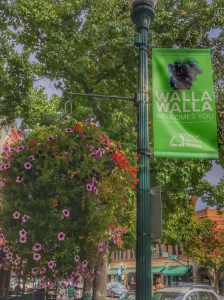
Boy, was I not disappointed. After a beautiful ride from the Portland airport along the Columbia River (I wish I would record a little video – the amazing scenery must be shared), I arrived at the Walla Walla. Walla Walla is a home to about 30,000 residents, but it is hard to tell from the tiny downtown. However, when it comes to wine, don’t let the small size to full you – Walla Walla downtown hosts 30 something tasting rooms, plus a number of full working wineries located within the city limits (there are 120 wineries in the Walla Walla Valley overall) – it is definitely a destination for any wine lover out there.


As it always happened so far (this was my fourth WBC), the 4 days of the Wine Bloggers Conference became a non-stop adventure of sipping, spitting and learning, and most importantly, spending time with the fellow bloggers. I can’t tell you how many wines were tasted during these four days – whatever happens at WBC, stays at WBC. But – I will be happy to share with you main takeaways from these 4 days. Here we go:
- Washington State produces some magnificent wines (duh) – at least on par with Napa, and often far exceeding the Napa offerings in terms of QPR – and they are predominantly red. All six Bordeaux varieties are doing quite well in Washington, both in the form of the Bordeaux blend and on its own. Merlot might be a king of Washington, but Cabernet Sauvignon can often fight for that royal crown, and quite successfully. The Syrah is definitely a queen, well deserving your attention, following by the other Mediterranean breeds, such as Grenache and even Tempranillo.
- Washington whites are much rarer find – but they can be equally delightful as the reds. Rhone varieties do particularly well (Marsanne, Roussanne), but Chardonnay, Sauvignon Blanc, Riesling, and even Albarino can deliver a happy surprise. An important reminder – please, please drink Rhone whites at the cool room temperature – they really taste better like that. Make them too cold, and they become indistinguishable and boring.
- Unlike California, where you can find 100+ years old [continuously farmed] vineyards, such as Bechtold in Lodi (farmed since 1886), and 150 years old continuously producing wineries, Washington wine industry didn’t survive the prohibition. What was striving in the 1860s, was completely destroyed in 1920s, and had to be rebuilt in 1960s. This information actually doesn’t have any deep meaning outside of being an interesting (and unfortunate) fact.
- I don’t believe you need to pay attention to the vintages for Washington wines, unless something ultra-bad happens, like out of blue frost in May. The temperatures are consistent, and so are the general climate conditions – too hot of a summer can be compensated by harvesting earlier. Well, the summers are typically hot, so the “canopy management” is a hot subject in winemaking circles. If the vineyard is managed properly, and winemaker does the job right, there is a good chance for consistency. In other words, don’t ask “how was that vintage”, just get the wine you want to drink. But – the way a lot of wines in Washington are made, especially coming from the small wineries – with utmost respect to the product at all stages – guarantees that the wines will age well. Give them some time, and prepare to be amazed.
I can probably think of more conclusions, but instead, I really want to tell you how my four days unfolded – just in case you wonder what one does at the Wine Bloggers Conference. Look at it more like the set of highlights as opposed to the detailed report. And then my plan is to convert many of this mentions below into the separate posts, to make my report more detailed – oh well, will see how that will work.


Day 1: After the beautiful ride along the Columbia River from Portland, I checked into the hotel, and then my next immediate stop was a tasting at the Seven Hills Winery, located right next to the conference hotel. After tasting at Seven Hills, next stop was the tasting at the Gård Vintners – with lots of delicious surprises. That tasting was followed with a very short walk back to the hotel to attend the Masters of Merlot session (now part of the official WBC program), presented by two of the Merlot Greats – Duckhorn and L’Ecole No 41 (very appropriate for the October, the #MerlotMe month).
Next was the mingling with the fellow bloggers around so-called Expo, where WBC sponsors poured their wines and offered their products. My last activity for the day was a superb, mind-blowing tasting at the Eternal Wines (more later) in lieu of group dinner. I also skipped all after-hours activities – that was enough for the first day.
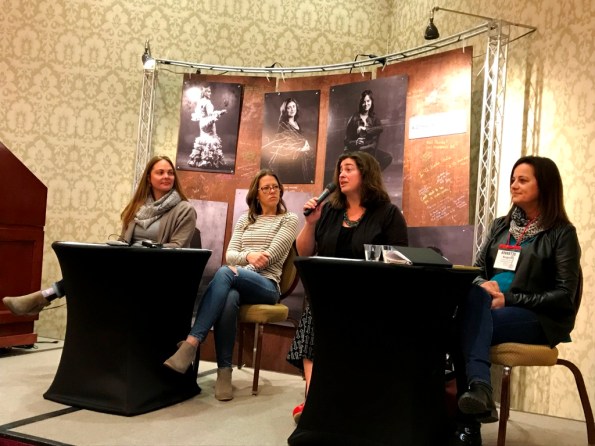
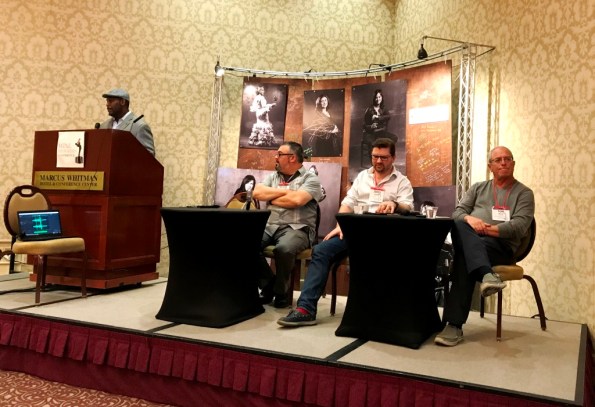
Day 2: The actual conference program started. One of the main morning highlights was the panel discussion by the 4 of the Walla Walla winemakers, talking about terroir, canopy management, and stories, their personal, real life stories. I also liked the panel of wine influencers, talking about the wine industry, wine writing, and Dos and Don’ts of wine blogging. During lunch, we had an opportunity to taste wines from the Cascade Valley Wine Country, where one particular wine, WineGirl Wines Red blend left a mark with me – a standout, flawless, round, and beautiful.
After lunch, I went with a group of friends to taste delicious Oregon non-Pinot wines from Troon Vineyards Applegate Valley, as presented by WBC veteran, Craig Camp (I believe Craig didn’t miss a single WBC event). We got back to listen to the keynote by Lewis Perdue, the founder of Wine Industry Insight publication, who was focusing on a seemingly simple concept – Trust – and the tenets of good writing.
Next session was one of my traditional favorites – Live Wine Blogging for red wines, and once that was over, we all left for the dinners at mystery wineries (nobody knew where they are going), with our mystery winery being Canoe Ridge. Do you think this was enough for a day? Wrong. It is never enough – the last part of the program was so-called “after party”, where we tasted lots more wines (attendees are invited to bring wines to share with the others for this late night session). My highlights from this late-night tasting were Chardonnay and Cabernet Sauvignon from Smith-Madrone and iOTA Cellars Oregon Pinot Noir vertical (2013, 2014, 2015). Whew, time to sleep.
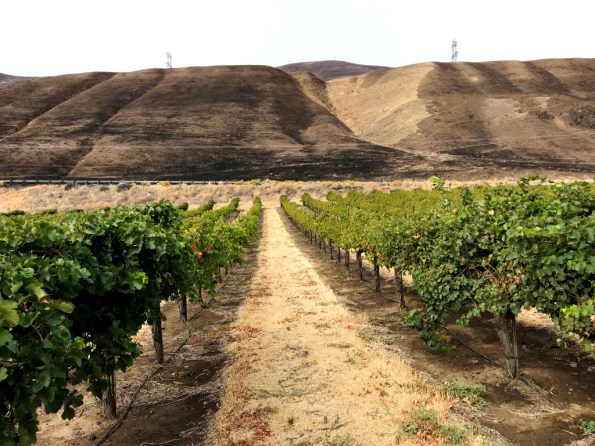
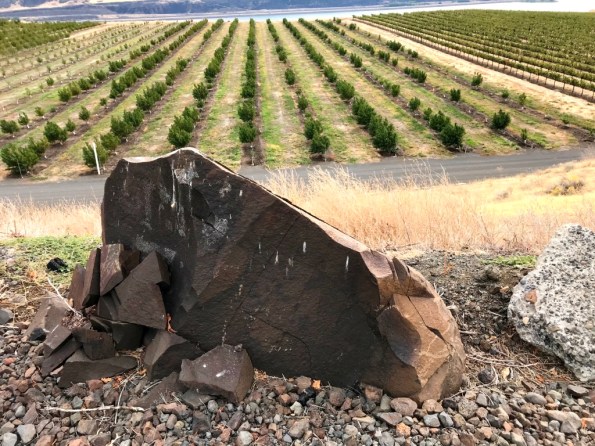
Day 3: The day started from learning about the location of the Wine Bloggers Conference 2019 – Hunter Valley in Australia, October 10-12, 2019. This sounds ultra-attractive – and equally impossible (in my own world). After a few of the breakout session, we went out for lunch at the Walla Walla tasting rooms which we had an opportunity to select the day before – my choice was Otis Kenyon Winery. Next was the session called Bubbles and Bites, a sparkling wine and food pairing lesson presented by Gloria Ferrer. Right after that, we had an in-depth lesson about European Cheeses. Up next was the “Lightning talks” session – 5 minutes presentations by the fellow bloggers with the slides rotating every 15 seconds. Wine Live Blogging session for whites and Rosé closed the main conference activities – which left us with the wine dinner with the vintners from Walla Walla. At the dinner, I fell in love with the wines from Revelry Vintners, which were simply stunning, and also enjoyed a few wines from Bergevin Lane. And then … yes, of course, another late night session (someone had to drink all that wine, right?)
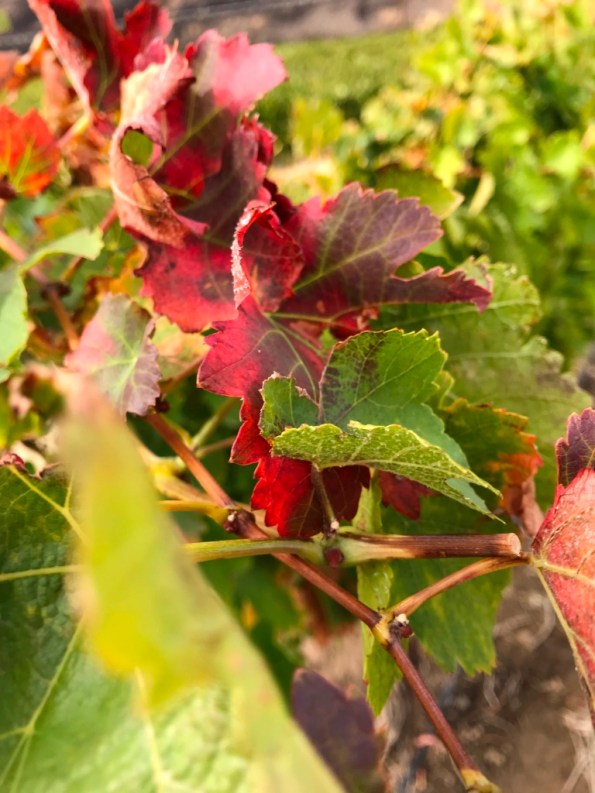
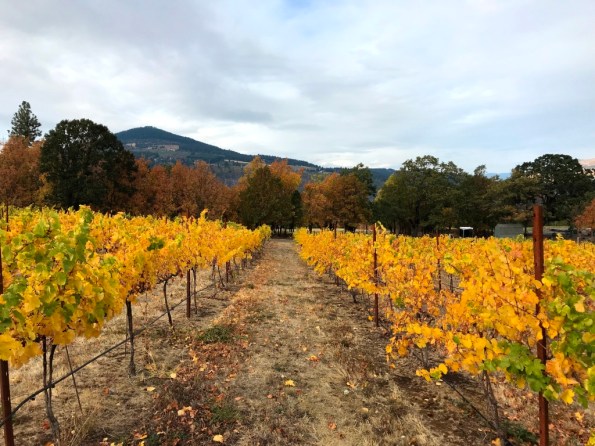
Day 4: The conference was officially closed, but – there were post-conference excursions. I visited Maryhill Winery in Walla Walla, and Cathedral Ridge Winery in Oregon, both offering spectacular views and delicious wines.
The End.
Here it is – my abbreviated report of the WBC18 activities. Speaking strictly for myself, I greatly enjoyed the conference – the place, the wines, people and conversations – everything work together very well to create a memorable experience. If you never attended the conference – do you want to attend one now, after reading my report? If you are a “regular”, what are your thoughts about WBC18 and will we see each other in Australia? Cheers!
Few Last Words About Washington Wines
All the good things come to an end – so did my trip to Washington and the series of the blog posts about Woodinville wineries (if you missed the series, here is the link to the first, “MWWC-award-winning” 🙂 post – you can explore it from there).
What is my main outcome of that trip? First, at the “duh” level – great wines are made in the state of Washington. Yes, yes, I understand how pathetic this revelation is. However, outside of Chateau Ste. Michele, Columbia Crest and may be Cayuse and Quilceda Creek, how many Washington wineries can you name if put on the spot? Meanwhile, the wines I tasted in Woodinville, where literally one better than another. When it comes to the focused winery visits and large tastings, I do have a bit of experience – 7 wineries, about 40 wines, and not a single wine wine I really didn’t care for? That is a serious result in my book. Couple that with most of the wines reasonable priced in the $25 – $50 range, and the picture gets even better. Spectacular Bordeaux blends with such elegance and finesse – these Washington wines definitely worth seeking out. Well, today you would have to mostly travel to the area if you want to experience the wines – but this is the only problem you might have with the wines. Bottom line – I was very happy with my discovery of Woodinville and its wineries, and in the words of the Terminator, “I’ll be back”.
So you think we are done here? Nope. I still have a few more Washington wines to mention – thanks to Vino Volo. I wrote about Vino Volo a number of times in the past – the company manages wine bars in [mostly] various airports around US and Canada. While good wine at the airport is the most welcome development of the past 5 or so years of the flying experience, my favorite part about Vino Volo is that whenever possible, the bars offer tasting flights of local wines – you should expect to find Texas wines in Austin, California wines in San Francisco and of course, Washington wines in Seattle!
I had about 2 hours before my flight back to New York, and when I saw the Vino Volo sign, that was a happy “Yes!” moment. A number ofthe Washington wine flights were offered, but when I saw the one with Leonetti Cellars Cabernet, I had to go for it – I only heard the name before and they considered to be an excellent producer, so I was definitely curious.
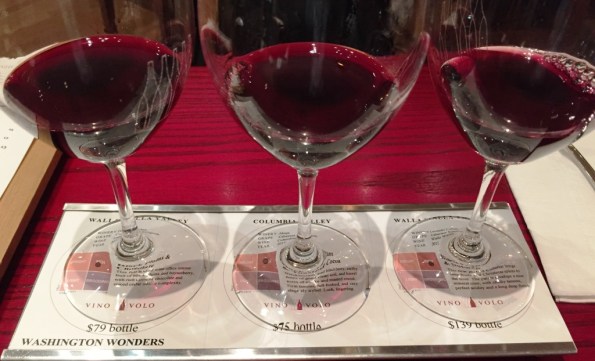
The flight consisted of 3 different Cabernet Sauvignon wines from Washington.
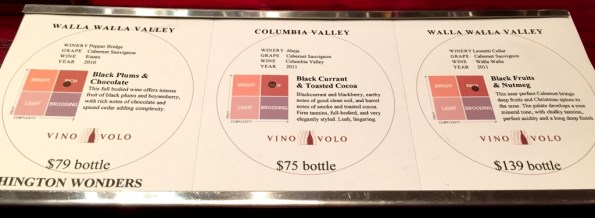
Here are my notes:
2010 Pepper Bridge Cabernet Sauvignon Estate, Walla Walla Valley – Raspberries and blackberries on the nose. On the palate, great depth, cassis, blackberries, pencil shavings, medium to full body, sweet tannins, elegant. Drinkability: 7+/8-
2011 Abeja Cabernet Sauvignon Columbia Valley – herbal nose with sage and lavender, touch of cassis. On the palate – dark chocolate, earthiness, nice mineral profile, good acidity, elegant. Drinkability: 8-
2011 Leonetti Cellars Cabernet Sauvignon Walla Walla Valley – Rich and concentrated nose, with the hint of forest floor, herbs, eucalyptus and great complexity. On the palate – round, spectacular, herbal profile with nutty aftertaste, more eucalyptus, long finish. Drinkability: 8+
Well, now it is the time to conclude the series for real. What can I tell you? If you are looking for the great wine experiences, put state of Washington, and Woodinville in particular, on the top of your list. For those of you who can experience the Woodinville wines and wineries at any time – lucky you. For the rest of us? Well, at least we know where to find them. Cheers!
Woodinville Wineries: Mark Ryan Winery
 This post is a continuation of the series about my winery experiences in Woodinville, Washington. Here are the links for the first four posts – introduction, Elevation Cellars, Pondera Winery, Des Voigne Cellars, Sparkman Cellars, Guardian Cellars and Fidélitas.
…walked towards the tasting counter, only to find out that the tasting room was closed for the day. I was told that there will be a special event in the tasting room, and they have to close earlier to prepare for that event, and unfortunately, I would have to come back to taste their wines. The tasting room itself looked very appealing, with the large format wines and wooden crates (the visual aspect of the “wineappeal” is so fascinating), I was really disappointed with the prospect of just walking away and finishing the great day on such a low note, especially after a so-so tasting at Fidélitas. So I used my last resort – I explained that I’m a blogger, and that I traveled from another coast, and it would not be possible for me to returned for the tasting any time soon. It worked! I was told that if I don’t mind sitting outside at the table, they will be glad to bring me all the wines to taste – but of course, thank you very much!

Tasting Room at Mark Ryan winery – aren’t does bottles look great?
The weather was beautiful ( it was not even raining! :)), and tasting outside was just an excellent proposition. The first wine which was brought to the table was 2013 Mark Ryan Viognier Columbia Valley (100% Viognier). I’m generally a bit worrying about Viognier wines – when they are good, they are absolutely spectacular in all aspects, from nose and the taste to the mouthfeel and the body. But when they are bad, they can be really daunting. Starting form the nose, Mark Ryan Viognier was spectacular – perfumy nose, perfect acidity, creamy mouthfeel, excellent balance and overall delicious. An interesting fact – this wine was partially aged in the concrete egg, which, according to the winery description, enhances the texture. I concur. Drinkability: 8.
The next wine was 2012 Mark Ryan NumbSkull GSM Walla Walla (58% Syrah, 26% Grenache, 16% Mourvedre) – beautiful ruby color, open nose of fresh berries (mourvedre dominated), blackberries, raspberries, thyme, earthiness – another delicious wine. Drinkability: 8
2012 Mark Ryan The Dissident Columbia Valley (54% Cabernet Sauvignon, 18% Merlot, 12% Malbec, 11% Cabernet Franc, 5% Petit Verdot) – cassis all the way! Texturally very present (my original note says “phenomenal texture”, but I don’t think “phenomenal” would be a universally recognized descriptor), round, clean and delicious. Drinkability: 9-


2012 Mark Ryan Long Haul Red Mountain (49% Merlot, 44% Cabernet Sauvignon, 6% Cabernet Franc, 1% Petit Verdot) – cassis again! Hint of green bell pepper, noticeable tannins, nice herbal component, round and delicious. Drinkability: 8+
2012 Mark Ryan Dead Horse Red Mountain (82% Cabernet Sauvignon, 9% Merlot, 7% Cabernet Franc, 2% Petite Verdot) – wow! Dusty tannins, cassis, big body, eucalyptus, delicious by all means. Drinkability: 9-
I guess you can tell that this was one exciting tasting – from my experience, this is quite a rare occasion when all the wines in the tasting are literally one better than the other. This was the second winery where I just had to buy the wine (got a bottle of NumbSkull and The Dissident). I’m really thankful to the kind folks at the Mark Ryan for being able to accommodate me despite their prepping for a special event – and I’m glad to be able to finish the day on such a high note.
This post essentially concludes the series about my short 3-hours run around the Woodinville wineries, but before I left the state of Washington, I had an opportunity to taste a few more interesting wines – we will talk about them in the next post.
To be concluded…
Woodinville Wineries: Fidélitas
 This post is a continuation of the series about my winery experiences in Woodinville, Washington. Here are the links for the first four posts – introduction, Elevation Cellars, Pondera Winery, Des Voigne Cellars, Sparkman Cellars and Guardian Cellars.
… and I arrived at a small shopping plaza (also known as strip mall in some part of US), only with wineries instead of shops. I decided to start with Fidélitas, which had a bright and shiny sign and was one of the two wineries recommended by Randy at Sparkman cellars. The tasting room was similarly busy (not!) as all the previous ones – a few people at the counter, and that is about it. I introduced myself to the girl at the counter, explained that I’m a blogger and asked if I can have a complementary tasting (the exact same thing which I did at 5 previous wineries). The reaction on girl’s face was rather resembling a consequences of an unexpected bite into a lemon. She was equally not moved with my business card (no, I was not expecting a bow or applause, but at least may be a mild interest I had at the other wineries?), and she sternly explained that free tasting is granted only to visiting winemakers; she will do it for me, but only as a big exception, and if I will come again, it will not be free anymore (please understand – we are talking about ten dollars).
I think this “warm welcome” affected the way I perceived the wines. Randy mentioned that Fidelitas makes big wines – and while the wines were good, they were not the big wines I was expecting. Here is what I tasted:
2013 Fidelitas Klipsum Vineyard Semillon Red Mountain – Nice, clean fruit, sweet nose, dry on the palate. Drinkability: 7
2011 Fidelitas Malbec Columbia Valley – cut through acidity, a food wine. Drinkability: 7
2011 Fidelitas Boushey Vineyard Red Wine Yakima Valley (48% Cabernet Sauvignon, 43% Merlot, 9% Cabernet Franc) – Excellent, clean, Bordeaux style. Drinkability: 8-
2010 Fidelitas Ciel du Cheval Vineyard Cabernet Sauvignon Red Mountain (92% Cabernet Sauvignon, 8% Petite Verdot) – powerful over the top tannins, clean and round, Bordeaux style. Drinkability: 7+
2010 Fidelitas Champoux Vineyards Cabernet Sauvignon Horse Heaven Hills – forthcoming tannins, nice, good acidity. Drinkability: 7+
I spent less than 15 minutes at Fidelitas. After a leisurely 15 seconds walk, I arrived at my last winery of the day, Mark Ryan. I opened the door and walked towards the tasting counter, only to find out that…
To be continued…
Woodinville Wineries: Guardian Cellars
 This post is a continuation of the series about my winery experiences in Woodinville, Washington. Here are the links for the first four posts – introduction, Elevation Cellars, Pondera Winery, Des Voigne Cellars and Sparkman Cellars.
Coming out of the Sparkman Cellars, I had my new targets set, and they were outside of the industrial park area. Walking past the open door on the way to my car, I heard the inner voice saying “we must go there”. I don’t know what exactly attracted that inner voice thingy, may be just the name “Guardian”, but I decided not to argue and stepped in. Boy, was I in for the lots of fun!
I was greeted by cheerful and smiling Jennifer, and had the first wine poured – 2013 Guardian Cellars Entrapment Chardonnay. From the get go, this was a delicious wine – chablis-like nose with the hint of gunflint and minerality, round, powerful, medium to full body and perfect vanilla profile. It’s been a while since I had such a beautiful rendition of Chardonnay. Drinkability: 8
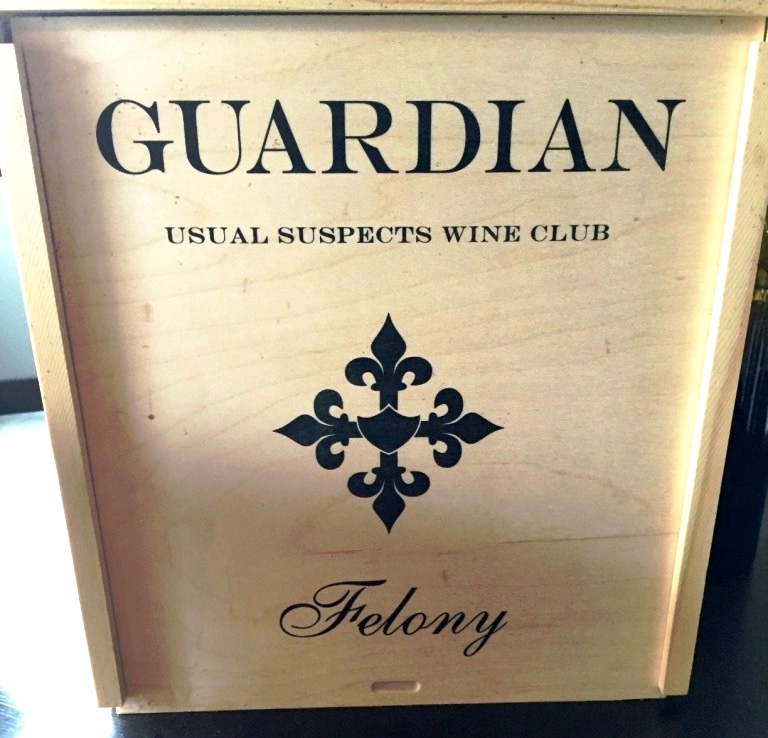
There were two more people in the tasting room (I think I was lucky with the football game happening at the same time, so it definitely lead to the reduced audience at the wineries). The TV screen behind the counter was running a slide show, and Jennifer started commenting on the pictures, telling the story of the winery bit by bit. By pure chance, Jerry Riener (who works as a police officer) one day stopped by the winery, and got fascinated with all the shiny stainless steel tanks and oak barrels. Next time, he offered his help (as a volunteer, of course) at the vineyard during the harvest, and little by little became an indispensable member of the team. This passion fully materialized when Jerry started The Guardian Cellars, which he owns together with his wife Jennifer Sullivan, who also has a full time job as a journalist for The Seattle Times. I can tell you, when you look at the winery and especially after you taste the wines, this passion comes through as something incredible. And to top it of, just look at the names of the wines – Entrapment, Confidential Source, Gun Metal – the pure ingenuity of all those names left me almost speechless. How about “Usual Suspects” as the name of the wine club, huh? Anyone remembers the movie?
I hope I managed to convey my general excitement – what is great is that it was not just the story and creative names of the wines – what was inside the bottles definitely was better than the thousands of words. Here are my notes:
2011 Guardian Cellars Chalk Line Columbia Valley (Cabernet Sauvignon, Syrah, Merlot, Malbec, Cabernet Franc, Petit Verdot) – nice, clean and simple. Looking at the list of grapes used in this wine, it is quite an eclectic mix – but it worked. Drinkability: 7+
2011 Guardian Cellars Confidential Source Columbia Valley (100% Merlot) – Clean Bordeaux notes, light, round, multilayered – it starts simple, and the depth comes back later. Drinkability: 7+
2011 Guardian Cellars Gun Metal Columbia Valley (55% Cabernet Sauvignon, 40% Merlot, 4% Cabernet Franc, 1% Petit Verdot) – delicious! Great texture, perfect concentration, round, smooth – a pleasure in every sip. Drinkability: 8
2011 Guardian Cellars The Informant Syrah Wahluke Slope (Syrah with a splash of Viognier) – an exemplary cool climate Syrah specimen. Dark roasted fruit, spices, pepper, very elegant and excellent overall. This wine broke my resistance – I just felt that I must get a few bottles. Excellent overall. Drinkability: 8
2011 Guardian Cellars The Rookie Cabernet Sauvignon Red Mountain (Klipsun, Obelisco and Ceil du Cheval vineyards) – perfection in the glass. Round, restrained, medium to full body, good mid-palate weight, an excellent aging potential. Impeccable balance. Drinkability: 8
I was very happy I listened to my inner voice and entered the doors of the Guardian Cellars – it resulted in a great encounter with passion, and I discovered delicious wines, which became very handy during one of the restaurant visits ( I think we depleted their whole supply of Guardian Cellars wines).
Finally, it was the time to say good bye to the industrial park wineries and visit those recommended by Randy at the Sparkman Cellars, as I had less than an hour left before 5 PM – time when most tasting rooms are closing. Short 7 minutes drive and I was …
To be continued…
Woodinville Wineries: Sparkman Cellars
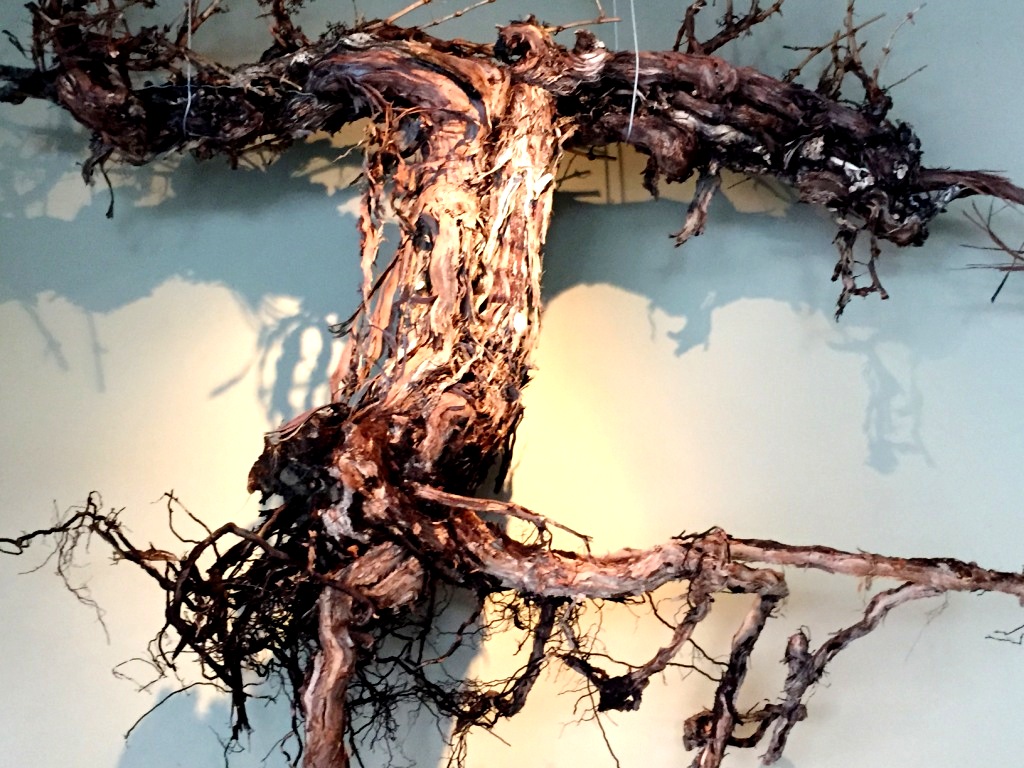
A root of the vine on the wall at Sparkman Cellars
This post is a continuation of the series about my winery experiences in Woodinville, Washington. Here are the links for the first four posts – introduction, Elevation Cellars, Pondera Winery and Des Voigne Cellars.
… and I walked into the winery called Sparkman Cellars. From all the wineries I visited in Woodinville, this was the only winery which was on my original list. It was also mentioned by someone at one of the previous wineries as the place to visit.
I barely finished explaining to Randy, a gentleman at the tasting counter, that I’m a wine blogger and I would like to taste through the wines, as I was literally attacked by one of the two women standing at the same counter. “Where are you from?”, she said, quite demanding. “Stamford, Connecticut”, I said, hoping we are done with the subject. She gave me a big understanding smile and said again “no, where are you from, REALLY?”. I generally don’t have a problem explaining to people that they hear a Russian accent, but this time around I was simply annoyed at the intensity of this inquiry, so I sternly repeated my answer “Stamford, Connecticut”.
At this point Randy decided to defuse the situation with the glass of 2013 Sparkman Cellars Birdie Dry Riesling Columbia Valley – it was nice and clean, with good acidity and that interesting savory minerality of the Washington Rieslings, which I now learnt (I hope!) to recognize as a trait. Drinkability: 7+
The next wine – 2012 Sparkman Cellars Enlightenment Chardonnay French Creek Vineyard Yakima Valley was delicious. Chablis nose (minerality, gunflint, hot granite), which I always enjoy in Chardonnay, was clearly present in this clean and round wine with a touch of vanilla. Drinkability: 8
Meanwhile, the lady next to my changed the tactics and explained that she is genuinely interested in recognizing the accents and figuring out where the people are from. May be it was a good wine, but I also decided to change my “I’m going to ignore you” stance, so we pretty much became friends by the end of the tasting, and both ladies kept telling me how much they like the wines at Sparkman and number of other wineries in the area, and also gave me lots of recommendations on other must visit wineries in Woodinville.
The tasting continued with 2011 Sparkman Cellars Wilderness Red Wine Columbia Valley (34% Cabernet Sauvignon, 27% Malbec, 15% Syrah, 12% Mourvedre, 8% Merlot and 4% Petit Verdot) – rather an eclectic blend as you can tell. The wine was quite delicious, but a bit over-extracted to my taste. Drinkability: 7
2011 Sparkman Cellars Ruby Leigh Columbia Valley (67% Merlot, 22% Cabernet Sauvignon,11% Malbec) was named after the youngest daughter of the winery owners. The wine was light and playful, showing the notes of the smokey raspberries, with medium body and medium finish. Drinkability: 7+
2012 Sparkman Cellars Ruckus Syrah Red Mountain (93% Syrah and 7% Viognier) – delicious dark fruit, roasted notes, spices. Perfect clod-climate Syrah, beautifully restrained. Drinkability: 8
2011 Sparkman Cellars Rainmaker Cabernet Sauvignon Yakima Valley (95% Cabernet Sauvignon and 5% Malbec) was delicious – dark power, tobacco notes, baking spices, very complex with long finish – on outstanding wine. This wine was poured as a “mystery wine” for the wine club members (you can see it above in the picture in the paper bag). Drinkability: 8+
This concluded the tasting at the Sparkman Cellars – sorry for the brief notes, I guess I was a bit distracted at this point. If you need better descriptions, you can take a look at the Sparkman Cellars web site – all the wines are presented quite well there.
Before I left the winery, I asked Randy what other wineries should I visit in my little time left until they all will be closed for the day (absolute majority of the wineries closes at 5 PM on Sunday), and he recommended Fidelitas and Mark Ryan, which were both outside of the industrial park, however still within 5-7 minutes driving distance. As I walked out of the Sparkman Cellars, another winery attracted my attention, and of course I decided to stop by…
To be continued…
Woodinville Wineries: Des Voigne Cellars
This post is a continuation of the series about my winery experiences in Woodinville, Washington. Here are the links for the first three posts – introduction, Elevation Cellars and Pondera Winery.
… and I entered the world of music at the Des Voigne Cellars. Soft jazz music was playing in the background, as I was greeted by the big white dog – of course I started the visit from getting acquainted with the winery dog first – ear-scratching is usually the best way. Melissa, who owns the winery together with her husband Darren (the winemaker), was smiling with relief from behind the counter, happy to see that we made friends.
There was no doubts that music ruled here – it was not only in the air, but also on the labels and inside the glass:
 If you can, spend a few seconds and look at these labels in detail. Both the graphics and the names of the wines are created by Darren, the winemaker, and these definitely join the list of most creative labels I ever saw. And the wines were on par with the labels.
We started with the 2013 Des Voigne Cellars The Groove White Columbia Valley (Chardonnay, Marsanne, Rousanne, Viognier) – vibrant and fresh on the nose, and perfectly clean and simple on the palate. This is the wine to enjoy any time, with or without the food – you just can’t go wrong with it, and at $18, it is simply a steal. Well, almost – with 43 cases production, it’s not going to stay around for too long. Drinkability: 7+
The 2010 Des Voigne Cellars The Groove Red Columbia Valley (43% Syrah, 36% Sangiovese, 17% Cabernet Franc, 4% Petit Verdot) had a very welcoming nose with touch of spice, more spices weer present on the palate with some roasted notes. Another excellent effort, and again a great QPR at $20 (your chances are a bit better with this wine – 210 cases produced). Drinkability: 7+
The next round was very interesting as well – take a look below:
 I was trying to figure out if there should be a correlation between the choice of label (a performer or an event) and the wine itself, but didn’t come to any conclusions. If you tasted these wines, I would be interested in your opinion on this subject.
2012 Des Voigne Cellars San Remo Sangiovese Columbia Valley (100% Sangiovese, Candy Mountain Vineyard) – my first experience with Washington Sangiovese – and a very pleasant one. Nice, clean and simple wine, medium body, some interesting cherry undertones. Definitely playful and resembling the original Sangiovese (the Italian version), only in the lighter package and more fruit driven. Drinkability: 7+
2012 Des Voigne Cellars Duke Zinfandel Walla Walla (95% Zinfandel Walla Walla, 5% Malbec Wahluke Slope) – yet another “first” encounter – first time ever I was tasting Washington Zinfandel. Very nice rendition, unusual nose, showing classic Zinfandel’s smokey raspberries on the palate, light, clean and well balanced. Drinkability: 7+
2010 Des Voigne Cellars Montreux Syrah Columbia Valley (96% Syrah Weinbau Vineyard, 4% Cabernet Sauvignon Dionysus Vineyard) – Finally, the first Syrah of the tasting (out of the 3 wineries – somehow, I expected to see it a lot more often) – inviting nose of red fruit, touch of coffee, baking spices and lavender on the palate, overall very clean and balanced. Drinkability: 8-
Do you want to see more cool labels? Here you go:

2010 Des Voigne Cellars “Untitled” Columbia Valley (57% Cabernet Franc, 29% Syrah, 14% Petit Verdot) – if previous three wines can be characterized as “playful”, these two were the serious hitters. This wine showed excellent concentration, powerful and firm structure, clean Cabernet Franc profile with cassis and bell peppers, as well as grippy tannins. I think it will perfectly open up in about 5-7 years, so you will need to give it time. Drinkability: 8-
2010 Des Voigne Cellars Duet Columbia Valley (94% Cabernet Sauvignon Dionysus Vineyard, 6% Merlot Bacchus Vineyard) – unusually perfumy nose, soft and round on the palate, with good depth – perfectly drinkable now, no need to wait. Drinkability: 7+
So we had the music record, musical events and performers and the musical notations – what’s left is someone to put this all together – The Composer:

2011 Des Voigne Cellars The Composer Wahluke Slope (99% Malbec, 1% Syrah, both from Weinbau Vineyard) – this was a delicious, light and round wine, with good amount of fresh red berries on the palate – simple and very pleasant. Drinkability: 8-
My musical excursion completed, and it was the time to move. The next winery was the only one on my original list, which I planned to visit from the beginning. Short drive around the buildings (moving from Building B to Building E), and I walked into the winery called …
To be continued…
Woodinville Wineries: Pondera Winery
 This post is a continuation of the series about my winery experiences in Woodinville, Washington. Here are the links for the first two posts – introduction and Elevation Cellars.
“What other winery do you recommend I should visit here?” I asked Steve before leaving. “Pondera”, he said. Okay. Short, very short walk from the building A to the building B, and I entered the tasting room of Pondera Winery.
I was greeted by Mel, one of the three owners of the Pondera winery. Pondera is focused on Bordeaux varietals, and it achieved a substantial recognition as a Bordeaux blends producer. As we were woking through the tasting, Mel proudly showed me a collection of gold medal-winning wines – 7 of Pondera wines received double gold medals in the blind tasting competition. Pondera 2009 Prima Donna red wine was recognized as one of the Top 100 wines of Northwest – not a small achievement by all means.
The tasting started from the 2013 Pondera Chardonnay Sagecliff Vineyard Columbia Valley. The wine had a subtle nose of vanilla, and more of the same on the palate. The wine spent 7 month on the lees, and while it had a creamy mouthfeel, the mid-palate was a bit heavy for my taste. Drinkability: 7
The next wine was 2011 Pondera Cabernet Franc Columbia Valley (90% Cabernet Franc, 10% Merlot) – the nose was rather muted, but the palate had a classic cassis and bell peppers – nice, clean and round, with a good balance. Drinkability: 7+
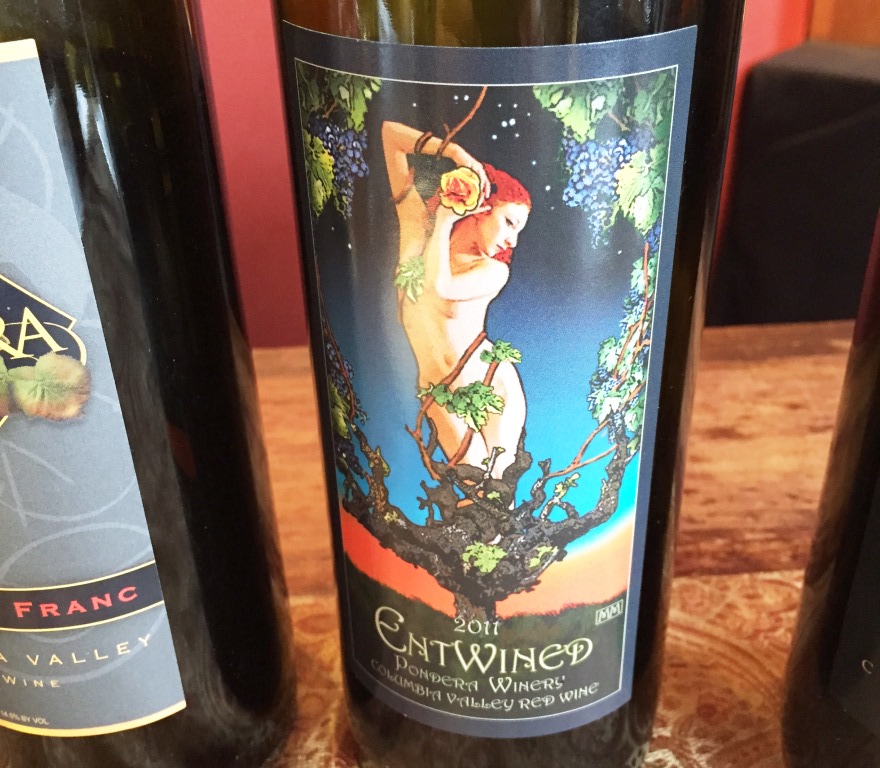
2011 Pondera Entwined Columbia Valley (57% Merlot, 26% Cabernet Sauvignon, 13% Cabernet Franc, 4% Malbec) showed as a classic Bordeaux blend – if I would sniff the glass without knowing what is inside, I would definitely think of classic Bordeaux, made in a bit more of a fruit-forward style, but still quite restrained. The wine showed equally well on the palate – cassis, blackberries, touch of chocolate, clean acidity – and asking for a bit of time with very noticeable tannins. The only non-classic Bordeaux component was a beautiful label. Drinkability: 8-
2011 Pondera SVS Number One Columbia Valley (59% Cabernet Sauvignon, 30% Merlot, 10% Cabernet Franc, 1% Malbec) was yet another classic Bordeaux rendition. Yes, I’m guilty of abusing the word “classic” here, but this was my true impression. Soft, round, clean and perfectly classic. Drinkability: 8-
2011 Pondera Malbec Stillwater Creek Vineyard Columbia Valley (97% Malbec, 3% Cabernet Sauvignon) was, in a word, outstanding. Round, soft, polished, with delicious blueberries and blackberries – this was one of the very few wines I didn’t use the spittoon for in the tasting. Just a pure pleasure. Drinkability: 8+
The last wine was a special treat – 2009 Pondera Prima Donna Columbia Valley (Merlot, Cabernet Franc, Malbec, Cabernet Sauvignon) was made only once, in the exceptional year (2009) only from the 2 exceptional barrels. Delicious, classic Bordeaux style, big, powerful, with chewy tannins and long life perspectives in the cellar (if you can get a bottle, there is). Drinkability: 8
Here you go, my friends. A wonderful Bordeaux blend experience – if you are looking for the bright, delicious, cassis-loaded glass of joy, jot down the name Pondera Winery, and see if you can find a bottle or two. Meanwhile, I’m off to continue my Woodinville discovery journey, stepping literally 5 feet to the left into another door…
To be continued…
Woodinville Wineries: Elevation Cellars
 This is the continuation of the posts about Woodinville wineries – the first part can be found here.
As I walked out of the car, literally the very first winery sign I saw was for the Elevation Cellars. The name sounded appealing, so it was an easy decision – looks like a perfect spot to begin the tastings.
Inside the space looked very much like an upscale large garage with the nice wooden door, but with the addition of shiny stainless steel tanks, as well as some oak barrels. I asked if I can taste the wines (of course – what kind of question is that if the tasting room sign says “Open”, right?), and also explained that I’m a wine blogger, which was taken somewhat matter-o-factly – but very friendly in any case.
We started tasting from 2013 Elevation Cellars Imperium Riesling Lawrence Vineyard Columbia Valley AVA. The Riesling had a very interesting profile with a touch of sweetness and some interesting minerality – it was actually resembling the Washington Riesling I didn’t appreciate during the pro tasting at WBC14 – however, the Elevation Cellars Riesling had an overall round and balanced profile with pleasant tartness in the finish, so overall I liked it quite a bit. Drinkability : 7+
Next I had the 2010 Elevation Cellars Cabernet Sauvignon Stillwater Creek Vineyard Columbia Valley AVA – this wine was almost a perfection in the glass, with clean and classic cassis aroma on the nose. On the palate, the wine was restrained, fresh acidity and medium to full body (lighter than most of the California Cabs would be), overall very round. Definitely an excellent wine for all occasions. Drinkability: 8
Our next wine was a perfect Bordeaux blend with the cool label – 2011 Elevation Cellars Jammin’ Red Blend Red Mountain and Columbia Valley AVA. I can’t describe it any better than to say “perfect Bordeaux blend” again – and in need of time. Cassis, touch of green bell pepper, very noticeable tannins in front of the mouth. Delicious and drinkable now, but it will definitely evolve further. Drinkability: 8-
2010 Elevation Cellars Merlot Stillwater Creek Vineyard Columbia Valley AVA was exactly what you should expect from Washington Merlot – it was bigger than the Washington Cabernet Sauvignon. Coffee and espresso notes, powerful tannins, great depth and again, the need of time. Give this wine 5-6 years, and you will not be able to put your glass down. Drinkability: 8-


I would think you would agree that the tasting looked quite good already, but we continued with more treats.
2009 Elevation Cellars Monolith Bordeaux Blend Hedges Vineyard Red Mountain AVA – absolutely delicious. Again, a clean nose of cassis, concentrated red and black fruit, chewy tannins, round and powerful. I learned that 2009 was an excellent year in Washington, and this wine was pretty much an exemplary rendition of the vintage. We also had an opportunity to drink this wine in the restaurant at dinner other night, and it was an absolute favorite of everyone. Drinkability: 8+
Before I will tell you about the last wine, I have to mention my main treat of the visit – a conversation with Steve Stuart, the winemaker and the owner of Elevation Cellars. At he time of my visit, Steve was working at the winery – there were some issues in the morning with some of the equipment breaking up and subsequent need of cleanup – but he was asked to talk to me, the blogger, so I felt like a real VIP : ). You can read the full story on the Elevation Cellars web site, but to give you a quick round up, Steve is an engineer, and he still works as an engineer during the week, and spending his weekends at the winery, following his passion. I didn’t want to take up too much of his already busy day, so I only asked Steve if he is using natural or cultured yeast for the fermentation, and he gave me an interesting answer (which makes a lot of sense). As an engineer, he likes to be able to control things, so he uses the cultured yeast. But it is not the need of control for the need of control itself – as a small winery, he really can’t afford for the fermentation to fail. When he is using the cultured yeast, he is certain that fermentation will start and finish. We also talked about few other things, but this was my most memorable takeaway. Then I asked if I can take his picture, and Steve agreed, albeit with some degree of resistance :).
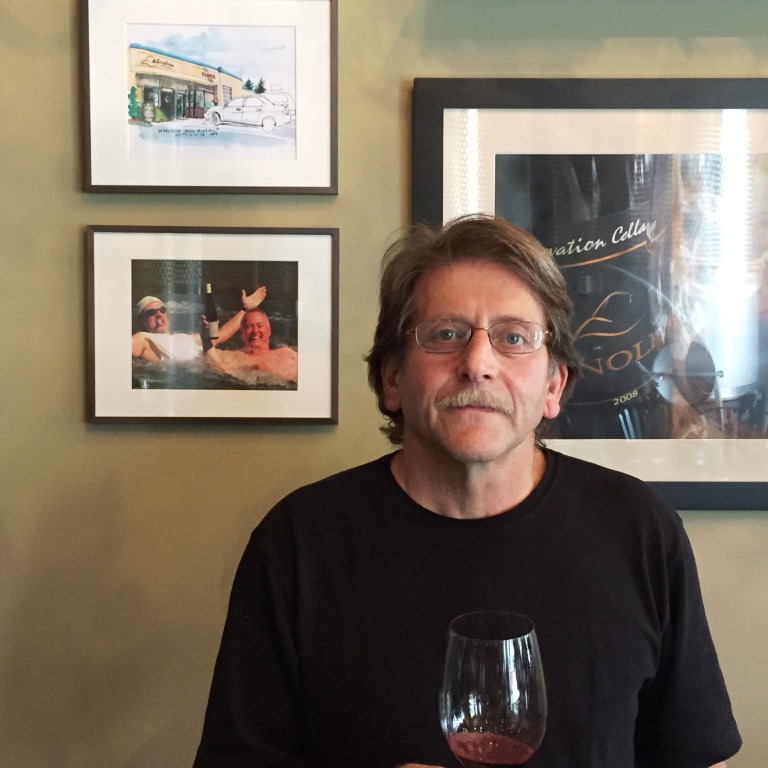
Steve Stuart, winemaker and owner at Elevation Cellars
The wine which Steve has in his hand, which we enjoyed drinking together, was truly a special treat – 2010 Elevation Cellars Reserve Cabernet Sauvignon Stillwater Creek Vineyard Columbia Valley AVA. Steve found out that one of the barrels of 2010 Cabernet Sauvignon was showing substantially better than the others – that barrel was bottled separately to become the Reserve Cabernet Sauvignon. My notes for this wine are very simple – wow! It was very much similar to the standard 2010 Cabernet Sauvignon – only with all the taste elements greatly amplified. Cassis, structure, balance – simply a wow wine. Drinkability: 8+
This sums up my first experience with the Woodinville winery – more posts will follow. Cheers!
Last Bottle Sign Up ($10 credit)




 Talk-A-Vino