Archive
Wine Gadgets: Traveling With Wine
Few weeks ago, a fellow wine blogger Jeff, better known as The Drunken Cyclist in the wine blogging world, decided to challenge the wine bloggers to create blog posts relevant to the specific theme (this is a very popular trend among photography bloggers). The theme of the first challenge is Transportation. The post I’m about to present to you was supposed to the written in any case as part of the Wine Gadgets series, but it also very conveniently fits the theme of the challenge, so here we go.
A little intro: this is the fourth post in the Wine Gadgets series, where we are discussing different tools enhancing wine appreciation. In case you missed any of the prior posts, here are the links: Series Intro, Wine Pourers, Wine Preservers.
Can we use the words “wine” and “travel” interchangeably? Of course not, what kind of silly question is that! But think about your travel for a second. How often your travel plans include visiting the winery, no matter where you go? If you are reading this blog, I can safely say that for the most of you, if you are within the day travel from the winery, you are willing to make a detour. Do you visit the wine stores when you are visiting a different state or a different country? Of course you do! Thus it is safe to assume that your travel includes some happy encounters with wine.
But (oh, you knew the “but” is coming) – how many of you dreaded the trip back home, with all that wine you fell in love with, especially if that trip home include the scary, shiny beast called…a-e-r-o-p-l-a-n-e? The thought of the bottle of red wine in your luggage and then red liquid thinly covering your favorite shirt and dripping blood-like from the suitcase all over the luggage carousel can be paralyzing, no questions. But – there is no reason to be afraid of that scary, shiny beast. All you need to do is to use … of course, the wine gadgets.
So let’s talk about wine travel tools which you have at your disposal. And of course, not all the trips which include carrying of the wine include air travel – most of them will not, absolutely – thus we will talk about different tools, suitable for long distance wine travel and not.
Here is the list of some of the useful wine travel tools:
- Wine Picnic Carrier (can be called a Picnic Tote) – usually a short haul solution
- Wine Skin – pretty universal, but more applicable for the long haul
- Wine Luggage/Wine Transporter – mostly for the long haul
- Wine Tote – there are multiple versions, all for the short haul
- Wine Bag – definitely short haul, but most useful when visiting the wine store
Now, here are some pictures:


Wine bag
Now, let’s talk about these tools one by one.
Picnic wine carrier is a simple tool, suitable for short distance travel, or at least a travel where your luggage is not a subject of rough handling – having that wine tote in the trunk of your car is really not considered a “rough handling”. Added bonus is thermal insulation – if you will put a cold bottle of wine inside, the temperature will be preserved for a while. Many different kinds of the picnic tote are available, with capacity varying from 1 to 6 bottles.
Wine luggage is a serious tool. I bought mine about 5 years ago. For the most of those 5 years, I kept contemplating whether it is suitable for the trip or not. Problem is that this suitcase is really suitable just for wine, so traveling with two suitcases in the times when you only want to have carry on, doesn’t really sounds exciting. Besides, every time I would look at that suitcase, a fearful thought would visit – will it be actually able to protect the wine? Finally, for my last trip to Portugal, where I knew I will be around the wine I decided that it was now or never moment, and just went ahead. That was actually an excellent decision – wine suitcase performed perfectly, and I brought home 12 bottles of wine, all safe and sound. As you can see in the picture above, all the bottles are secured by the two straps, with the dividers between them. The suitcase also has sturdy sides and top and bottom, which protects your precious content quite well. From now on, when my plans will include carrying around substantial amount of wine, the wine suitcase is “it”.
Wine Tote is a simple tool to conveniently carry around a bottle or two of wine, also keeping it at colder temperature if it was previously chilled. I typically use it when I need to bring a bottle of white wine to the party. Then again, if you primarily travel by car, this tool has very limited value. If your travel includes public transportation and/or long distance walking, this can be quite convenient.
Next tool is called Wine Skin. Bubble wrap padded thick and sturdy plastic poach cut in the shape of a bottle – this tool is pure genius in my opinion (here is a link which explains how wine skin works). The poach has a bottom flap with adhesive, so you can completely enclose the bottle inside, air-tight. Even if your bottle will somehow break, the liquid will stay inside. Theoretically, this is single-use device, but I have my set of wine skins which I’m using and reusing for the past 4-5 years, and yet didn’t discard a single one – the adhesive still holds quite well. The great thing about wine skin that it has no weight, and it takes literally no space in your suitcase. Thus you have it with you in your trip, and in case you come across the wine you want to bring home, you can do it safely and without worrying – and if you don’t, that’s okay too.
Last tool for today is Wine Bag – at some point many wine stores carried them, and they were typically sold for $2.99. The wine bags are great for their intended purpose – to bring wine back from the wine store. Same way as it is popular now to go to the store with your own bag, the same idea works here. Wine bags are definitely a lot more convenient than a cardboard box which is hard to carry and then they should be disposed of, or the paper bags. But – I guess the problem is that a lot of wine store visits are very spontaneous, and people forget to bring the bag! Anyway, I have a few of those, and when I remember (!), I always bring them over.
If you are interested in any of these wine travel tools, here are few links from Amazon: Picnic Wine Carriers, Wine Skin
And as we have done before, here is our gadget poll:
So, what do you say? Do you have your preferred wine travel tools? What do you think about tools we discussed here?
In the next Gadgets post, we will talk about chillers. Until then – cheers!
Study of Port: Epilogue
What starts with prologue, should end with epilogue, right? What was supposed to be may be one or two posts, became a whole series. In case you missed any of the posts, here is a full list for the study of Port series:
Finally, let’s talk about Port!
What else can I tell you? We had a great week in Portugal. Very short conclusion can be “great people, great food, great wines, great scenery, great time”.
All people we came across were very nice and helpful. Language barrier was never an issue (I also have to mention that a lot of people speak very good English) – one way or the other we were always able to understand each other. Hotel, restaurants, port houses, stores, our numerous walking tours will only stay in memory with great people encounters.
The food? Very good quality, very reasonably priced. Memorable moments? Bacalhau, Francesinha, lots of fresh fish and shellfish of all kinds. Tuna fish spread is served in almost all restaurants with the bread (you need to ask for butter). Port is available at the buffet breakfast in the hotel, next to the orange juice. Below is the best representation for you (sorry if I make you hungry):
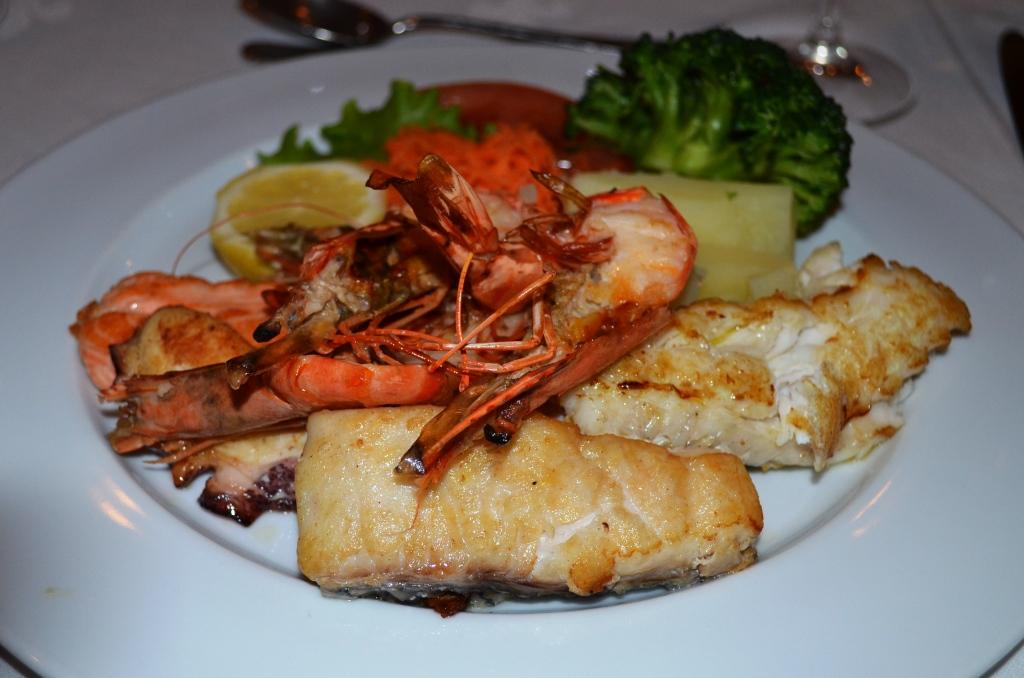
Portuguese Seafood
But probably the most important part about the food in Portugal is the fact that Portugal practically doesn’t import any agricultural products – everything is either produced, caught or raised locally, and you can taste it.
When it comes to wines, the story becomes interesting. First, there are about 80 grape varieties growing in Portugal, most of them are indigenous grapes. Here is a glimpse for you, as captured in the picture below:
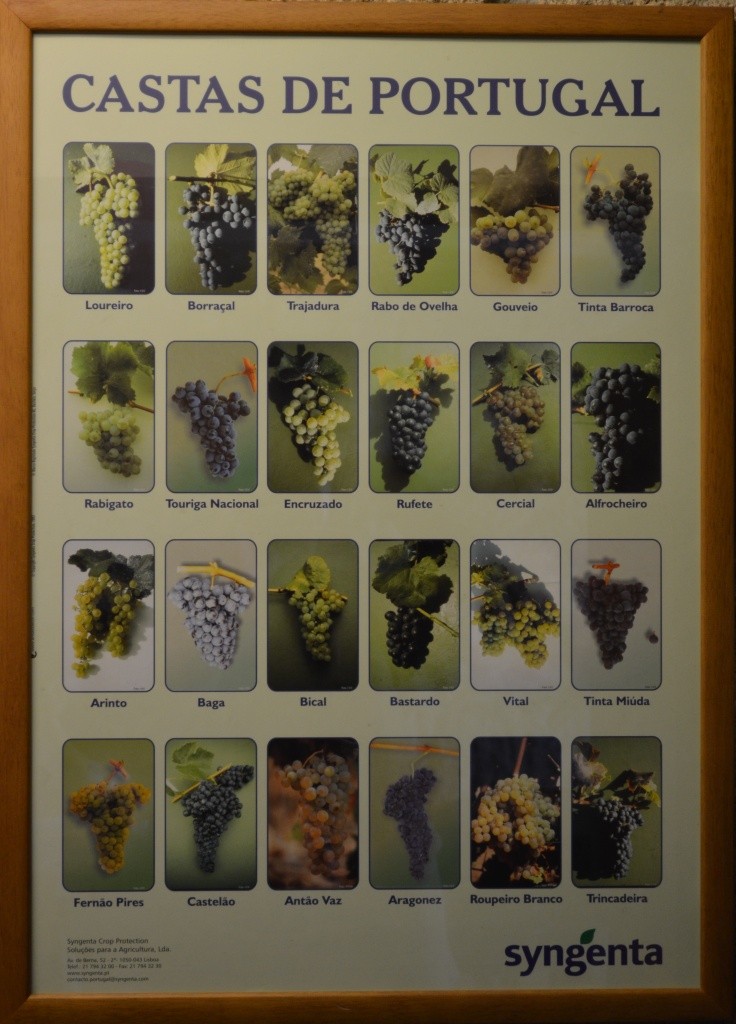
Portuguese Grape Varieties
By the way, these unique grapes are a great find for all aspiring Wine Centurions – I personally added 5 new grapes to my list – here they are:
Codega do Larinho – 2011 Castello D’Alba from Douro
Rabigato – 2011 Castello D’Alba from Douro
Moscatel Galego Branco – 2012 Portal Colheita Branco Douro DOC
Antão Vaz – 2010 Herdade Dos Grous Branco Vinho Regional Alentejano
Donzelinho – 2011 Niepoort Tiara Douro Branco
Outside of Port, very few of the Portuguese wines make it to US, and out of those few, there is even lesser number of wines of notice. Meanwhile, if you will make it to Portugal, you will be literally astonished by the availability of very inexpensive and absolutely delicious wines, both in the stores and in the restaurants. I already gave you my account of great wine encounters in the previous posts (Quinta do Cardo, Niepoort Tiara, Quevedo Vintage Port), but I actually saved the best for last – 2009 Casa Burmester Reserva Douro DOC (blend of Touriga Nacional, Touriga Franca and Tinto Roriz) was an absolute highlight of the red wines I tasted during the Porto trip.
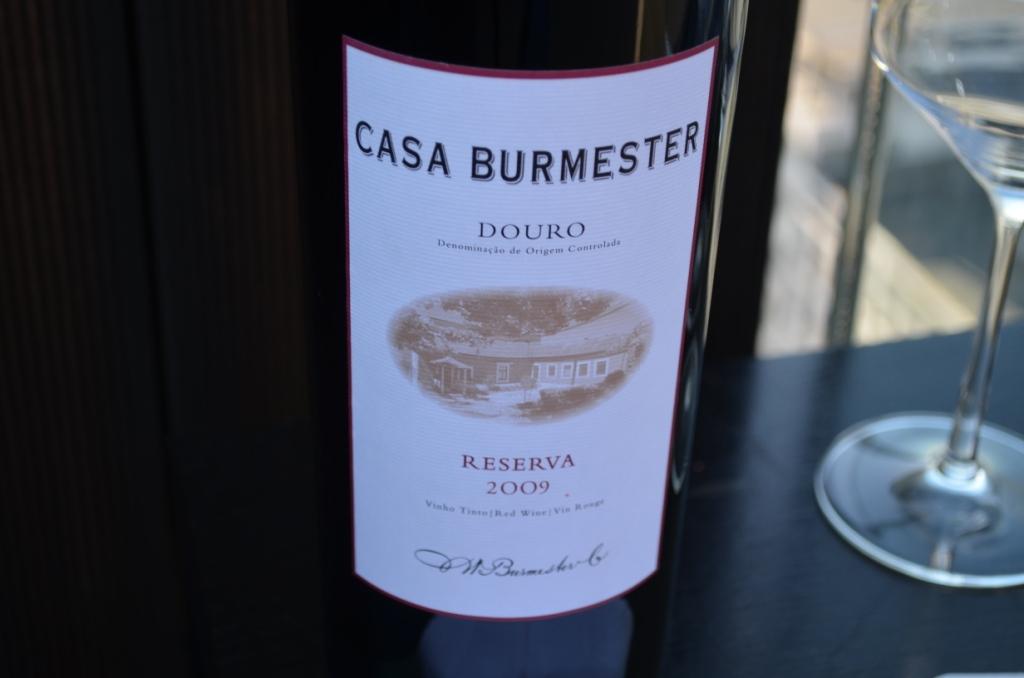
I don’t want to even describe this wine in terms of berries, chocolate, coffee, spices – it had everything, but the major thing about this wine was an absolute balance of fruit, structure, power, acidity, tannins – all the elements which make you go “wow” after the first sip where perfectly there. I can’t give you one to one analogy for the way this wine tasted, but to give you an idea of how impressed I was, I would safely put it in one line with 2000 Chateau Margaux, Vega Sicilia Unico and Vintage Krug Champagne. In case you are curious about my rating, this wine gets Drinkability: 9.
I believe I sufficiently inundated you with the pictures of the beautiful scenery, but let me still add a few more:
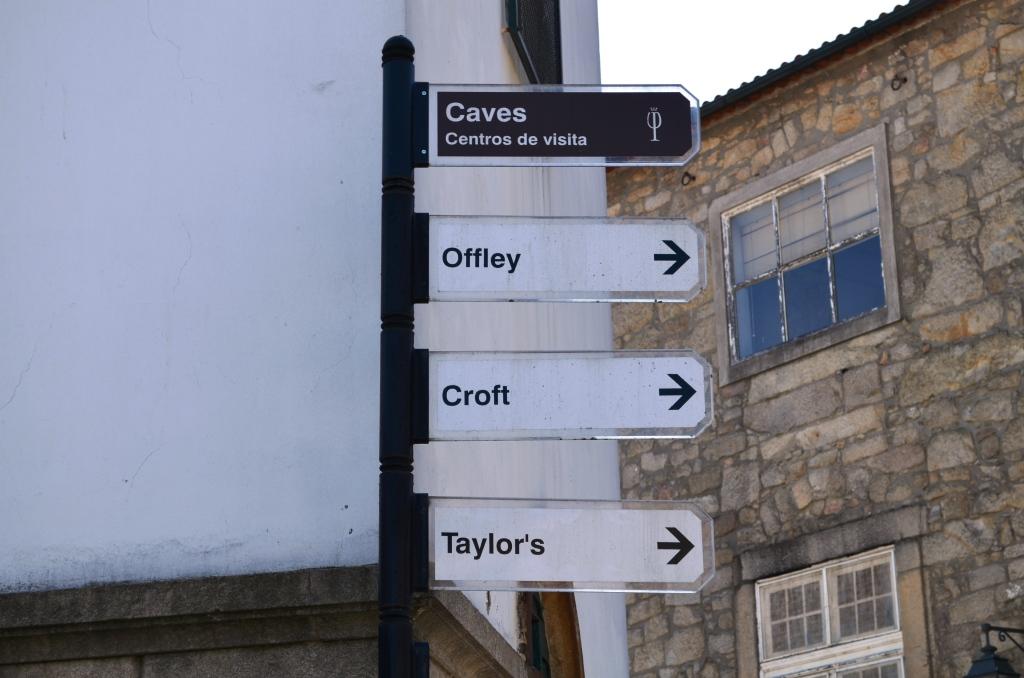
All roads lead to Port…
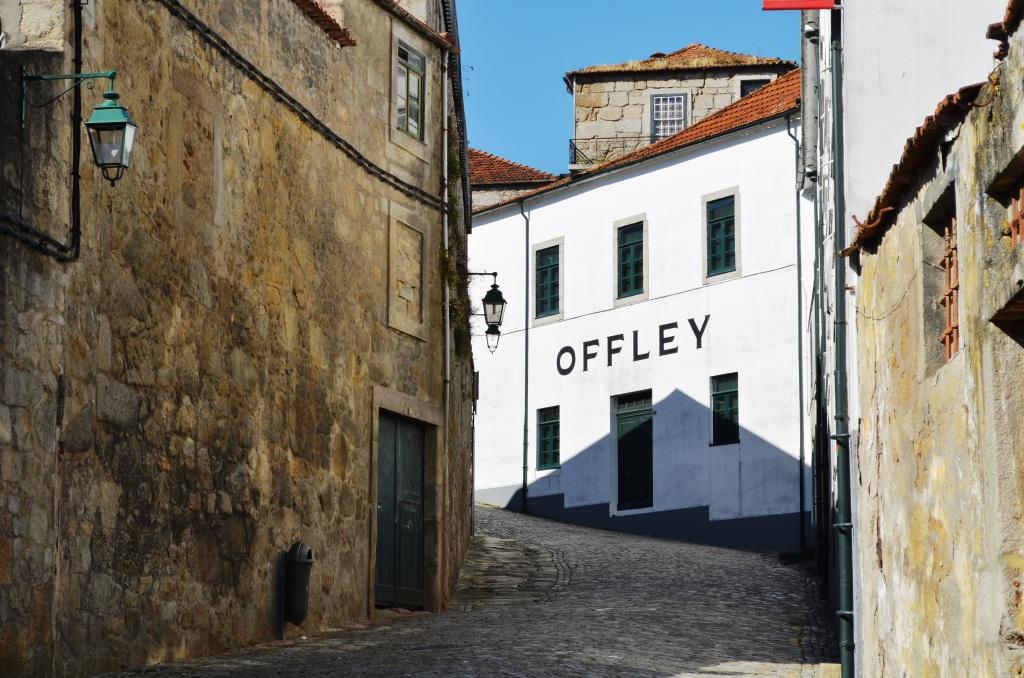
Awakening and Anticipation …
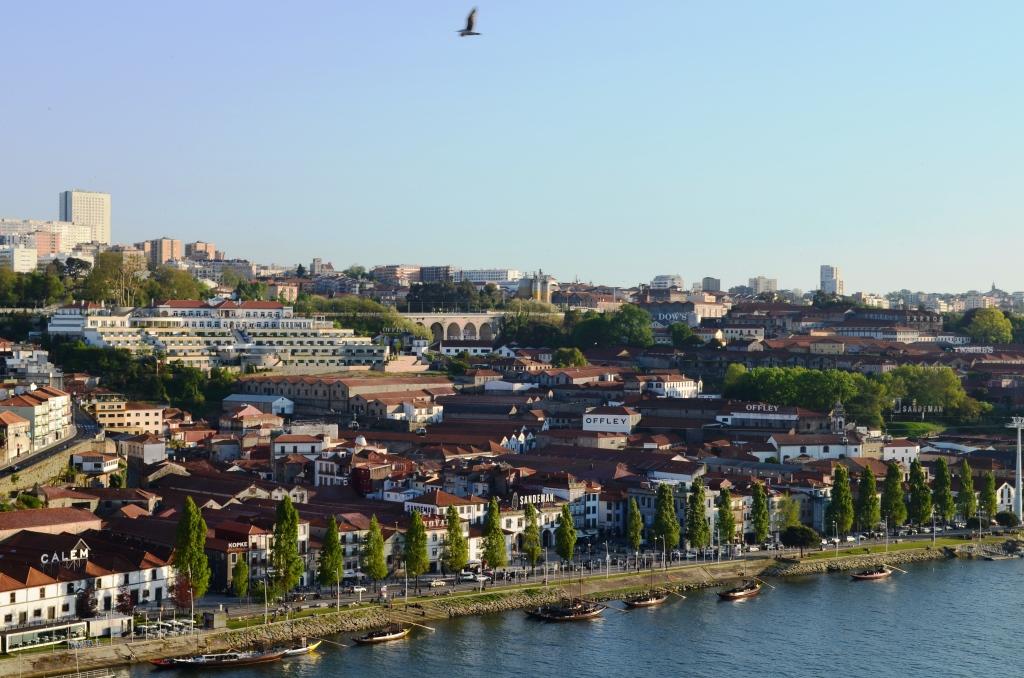
Vila Nova de Gaia
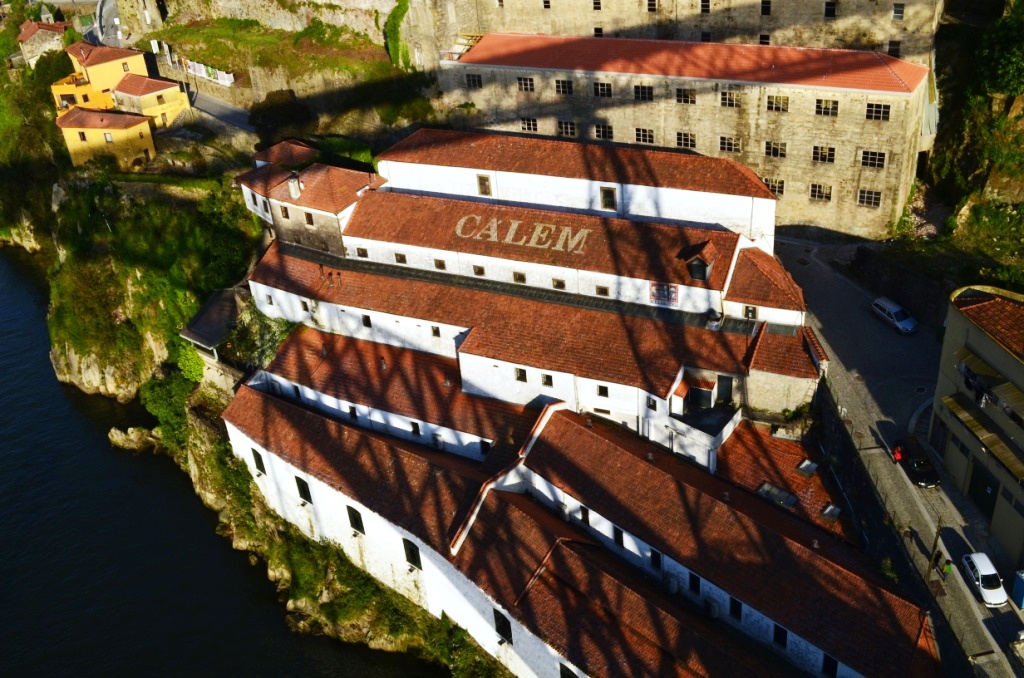
Port caves – view from above
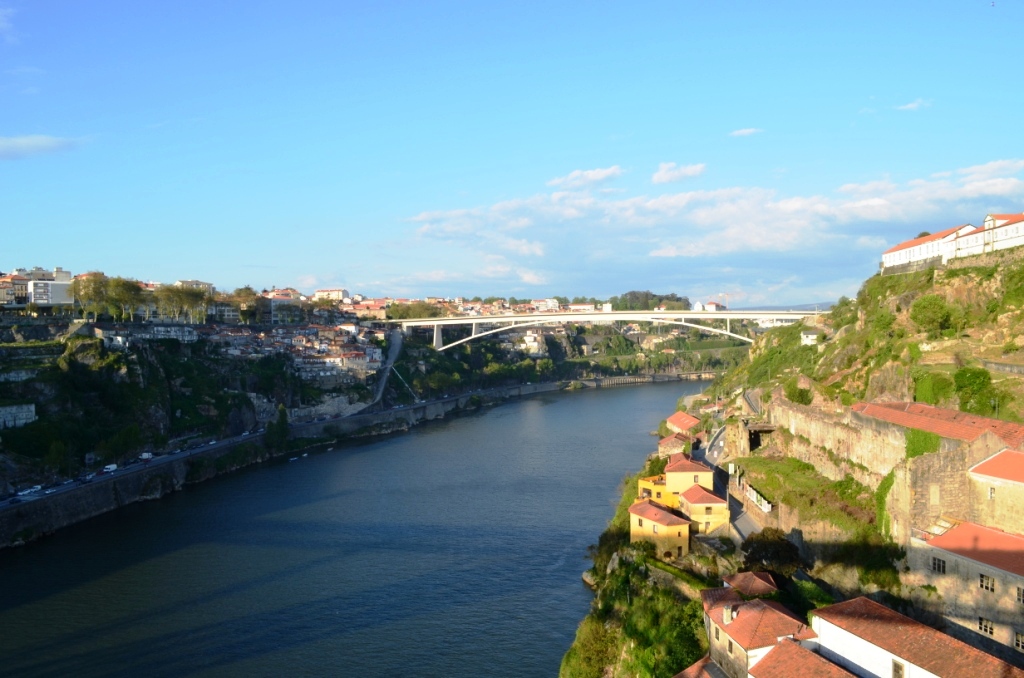
Douro River view
Time to finally conclude the series. I don’t know what you think, but I really enjoyed writing all these posts. I also saw a lot of happy comments, including those where people said that they will definitely go and visit Portugal (which will be very smart, if you ask me). If you will actually travel to Porto, I hope you will find some useful information here. And in any case, thanks for reading and cheers!
Study of Port: Finally, Let’s Talk About Port!
Finally, we’re arriving at the culmination point of our Study of Port cycle (here are the links to the previous four posts – post 1, post 2, post 3, and post 4). You probably noticed that while the cycle is called “study of port”, we talked very little about Port wines themselves.
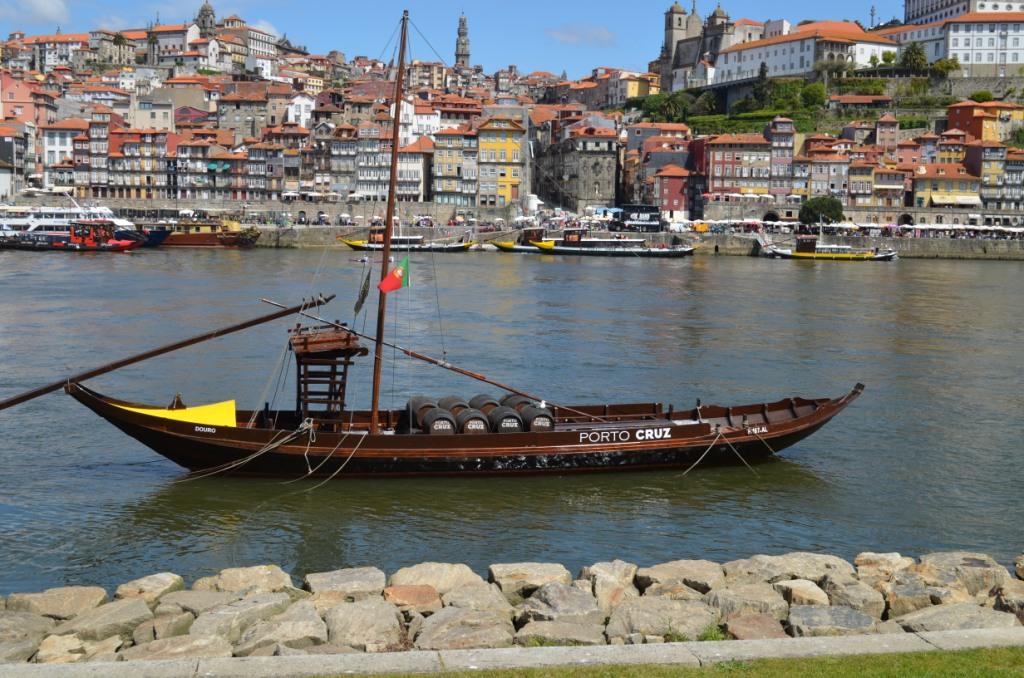
Port Transporter, called Rabelos, now only used to carry around the tourists
For me, Port is one of the most difficult subjects in wine (of course Burgundy classification and German wines are the crown jewels of “difficult wine subjects”). There are many different styles of wine, overall still collectively called Port. There are Ruby, Tawny, non-vintage, Vintage, Late Bottled Vintage, 10-, 20-, 30-, 40- years old ports, all available in the wide pricing range. On top of everything, Port is considered to be a dessert wine, and at a certain point in life, the brain just starts either outright protesting or at least behaving extremely cautiously around anything related to the word “sugar”.
Thus I was determined to use my Porto trip as a learning opportunity and do my best to acquire an understanding of the subject of Port directly from the source (I hope that clarifies the overall name of the theme chosen for this series of posts). Before I arrived in Porto, I sent out a few e-mails and twitter messages to the various Port houses, explaining that I’m a blogger and I would like to learn about Port and taste some of the older vintages. The only person who actually responded to me was Oscar Quevedo from the Quevedo Port house. After a bit of back and forth, we settled on the date and time.
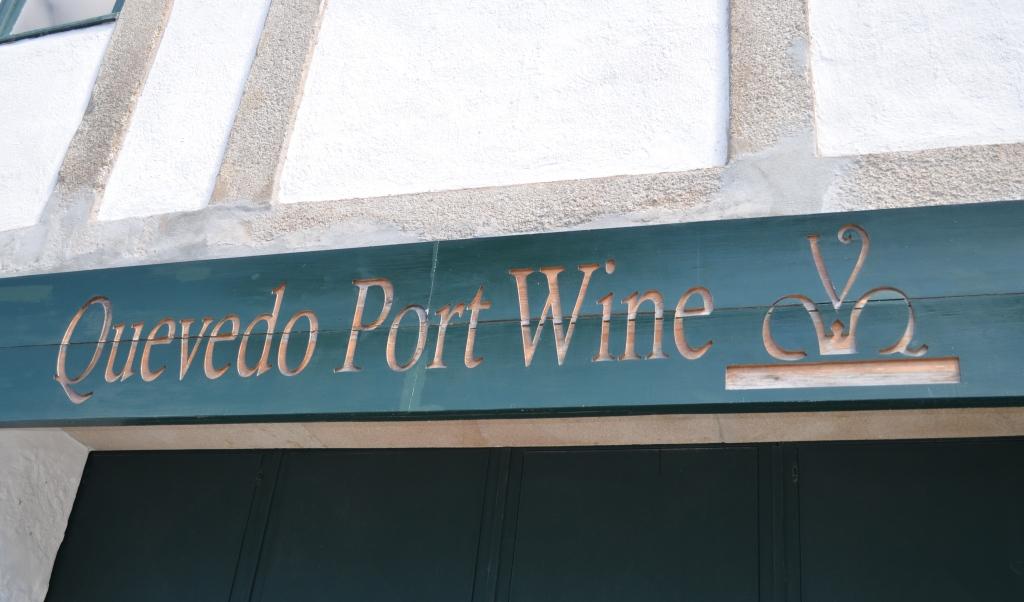
Once I arrived at the Quevedo Port house… Well, I will not inundate you with the long story, and the short story was that Oscar was not there (but he was very kind to stop by the hotel in the afternoon of the same day and undergo my very intense questioning for 30 minutes). Rachel and Manuel were “running the shop”, and while I was there at the Port house, I read a lot of useful information along the walls (I guess it can be called a self-guided tour), but that still didn’t answer all my questions (like why Vintage port should be consumed within 1 to 3 days from the opening of a bottle, and Late Bottled Vintage (LBV for short) does not. I started asking Rachel and Manuel all of my questions, and I think I drove them both a bit insane – I have to thank them both for their patience with me, especially Rachel, as she really did her best trying to figure out all the differences and details together with me.
I also tried young vintage port, 2010 Quevedo Vintage Port – and it made me happy.
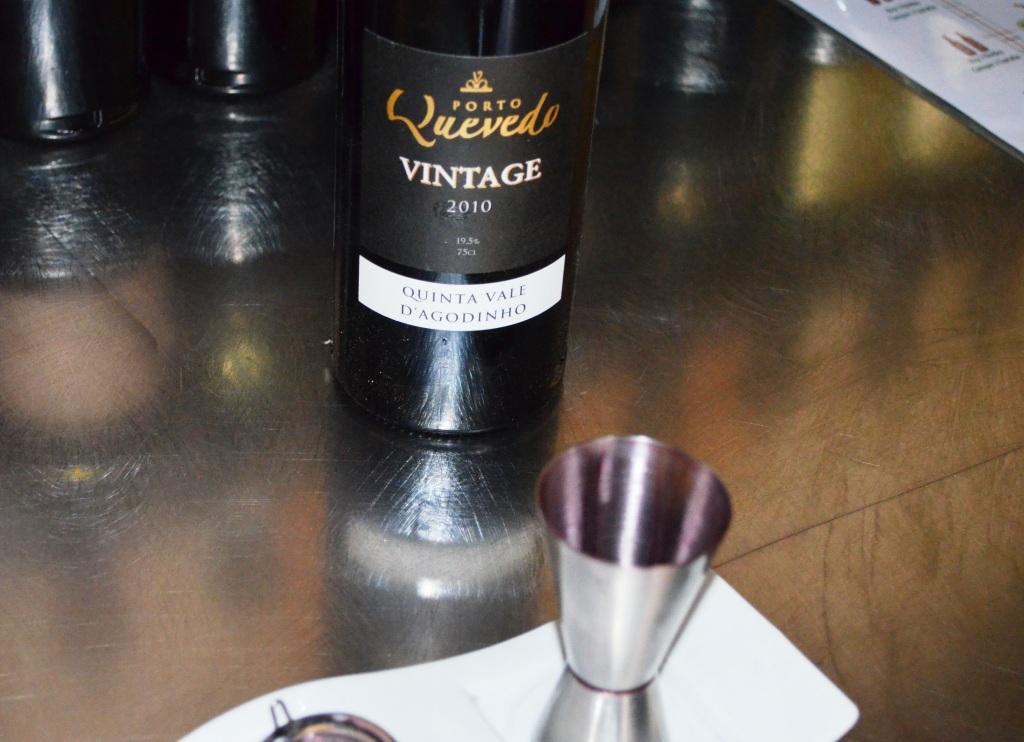
The vintage port is supposed to be filtered when it is poured into the glass, which was performed using the jigger and special metal mesh filter.
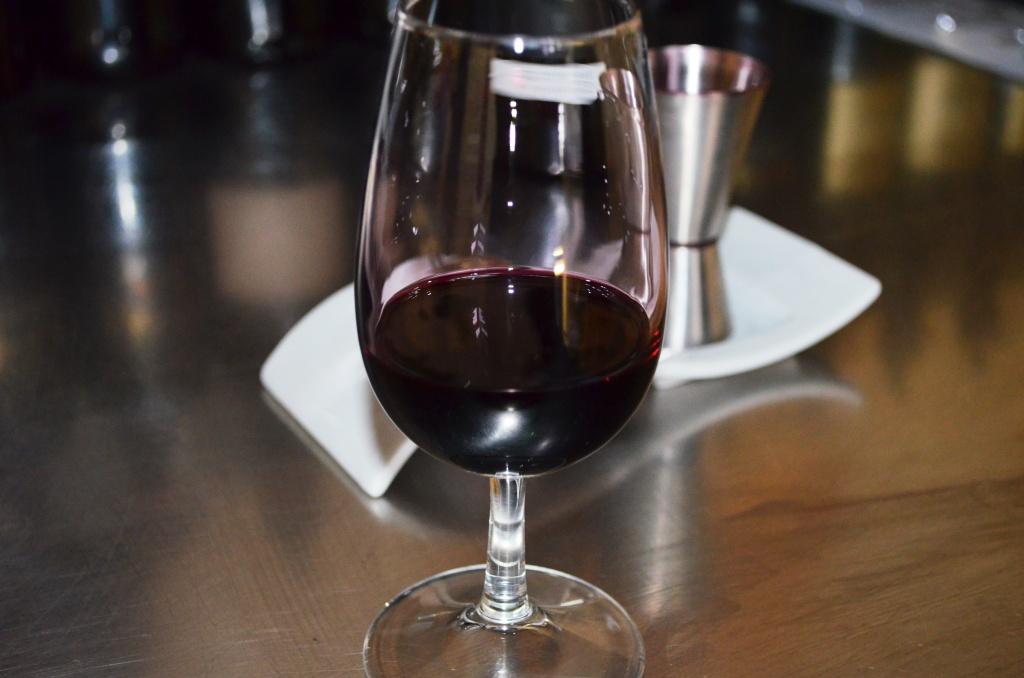
Every aspect of this wine was simply exciting. The color – I don’t know if the picture truly conveys the color, but it was deeply concentrated dark ruby red. The nose – ahh, all the fresh berries you can imagine, … And the palate – texturally present, dense, heavy, lots of fresh fruit. Yes, the was sweetness there, but oh so balanced with acidity, tannins, and overall power. So far I was refraining from rating the wines in this series of posts, but this wine was definitely a 9 and I’m sure it will be a part of my “2013 top dozen”.
When I met with Oscar in the afternoon, I used the opportunity to bombard him with questions in my effort to understand the wine called Port. And now I want to share my newly found understanding with you, so for what it is worth, below is my attempt to dissect and summarize the world of Port.
First, here are some interesting facts about Port.
- As with any other wine, the truth is in the eye of the beholder – and in our case, the “beholder” will be a winemaker. Effectively, the winemaker knows his vineyards, and the winemaker knows what vines are capable of producing specific kinds of ports – Tawny, Ruby, Vintage, non-vintage, and so on. But when it comes to Port, that winemaker’s knowledge is also verified before it can be put in the bottle and on the label – by the governing organization called IVDP.
- Instituto dos Vinhos do Douro e Porto, or IVDP for short, is a top authority regulating the production of all Port wines. When the winemaker wants to declare a vintage, the sample is sent to IVDP, where it is assessed ( in the blind format) for all the quality of the vintage port, starting from the color, and then vintage designation is either granted or declined. According to Oscar, IVDP knows everything about each and every port producer – how much of what kind of port is in the barrels, how many bottles were sold, how many bottles are still remaining with the Port house, and so on – IVDP owns and processes all the information related to the production of Port.
- Less than 1% percent of the total port production is designated as Vintage port.
- Most of the red port wines are made out of Touriga Nacional, Touriga Franca, Tinta Roriz, Tinta Barroca, Tinta Francisca and Tinta Cão grapes.
- Port is typically fermented for 3-5 days, after which fermentation is stopped with the addition of neutral spirit (grape brandy). The addition of the spirit is also a reason behind the port’s classification as “fortified wine”. The resulting port wine usually has ABV in the 18% – 21% range.
- Treading, the process of pressing grapes with the feet, is still in use today, but by a very small number of producers and only for the very special wines. The pressing by the feet creates just the right amount of pressure which doesn’t break the seeds – which helps to reduce the bitterness of the wine.
- The Vintage Port is the only port that continues aging in the bottle. Vintage port should be treated as regular wine in terms of handling and storage, and consumed 24-72 hours after the opening of the bottle.
- New oak barrels are never used in the production of the port. The barrels have to be used a few times for producing the regular wines, only then do they become suitable for the production of the Port.
Now, let’s look at the classification of the Port wines. As you know, I like using mind maps, so here is Port’s classification in the form of the mind map:
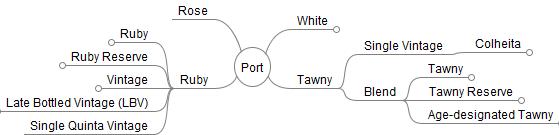
Port classification
Now let’s add some details:
- Rose Port
- the latest addition to the world of Port had been produced only for a few years. Very short contact with the skin after pressing. Personal note – I tried a few and had not been impressed so far.
- White Port
- 3 years aging in stainless steel or neutral oak, then blended, filtered, and bottled. It will not age in the bottle and is ready to be consumed when you bought it. After a bottle is opened, it should be stored in the fridge and consumed relatively quickly. Personal note – the white port from Sandeman was an eye-opening experience – you should really try it.
- Tawny – ages in the small oak barrels with controlled oxidation. All ports in this group don’t age in the bottle and are ready to drink when you buy them. Also, all ports will last for many weeks after the bottle is opened.
- Single Vintage
- Colheita
- Grapes from the single vintage. At least 7 years of aging in the oak barrel (can be longer), then blended, filtered, and bottled.
- Colheita
- Blend of vintages
- Tawny
- 4 years in oak barrel, blended, filtered, bottled
- Tawny Reserve
- 8 years in oak barrel, blended, filtered, bottled
- Age-designated Tawny
- 10 years old, 20 years old, 30 years old, 40 years old – all of these ports are blends of ports of various ages. The blend is composed by winemaker’s discretion – for instance, a 40 years old can be a blend of 30 years old and 100 years old.
- Tawny More Than 40 years old (not an allowed designation in the US)
- Tawny
- Single Vintage
- Ruby
- Ruby
- 3 years of aging in the stainless steel/neutral oak, then blended, filtered, and bottled. After opening, the bottle should be consumed within a few days, and best to be refrigerated.
- Ruby Reserve
- 6 years of aging in the stainless steel/neutral oak, then blended, filtered, and bottled. After opening, the bottle should be consumed within a few days, and best to be refrigerated.
- Vintage
- about 2 years in stainless steel, can be some time in oak barrels, bottled unfiltered, continue aging in the bottle. After opening, consume within 24-48 hours.
- Late Bottled Vintage (LBV)
- 4 – 6 years in the oak barrel (I’m sure about the age, not sure about oak barrel versus stainless steel)
- Single Quinta Vintage
- Somewhat complicated. It designates that grapes are coming from a single vineyard, but age/blending/bottling, etc. is not very clear. But for all intents and purposes, should be treated as a Vintage port.
- Ruby
I think I told you everything I know at the moment about Port – but I will keep adding and refining to this post just to make sure I got it all correctly. Before we part, here are a couple of pictures for you:
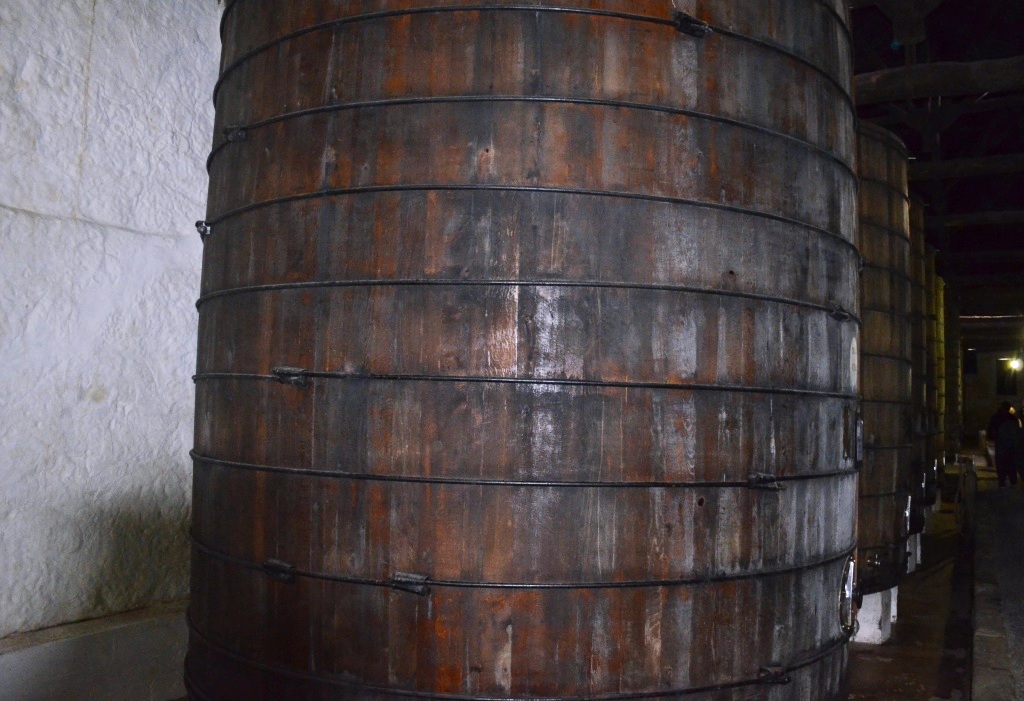
Ruby and White Port age in this huge barrels. One barrel holds 80,000 liters (about 20,000 gallons)
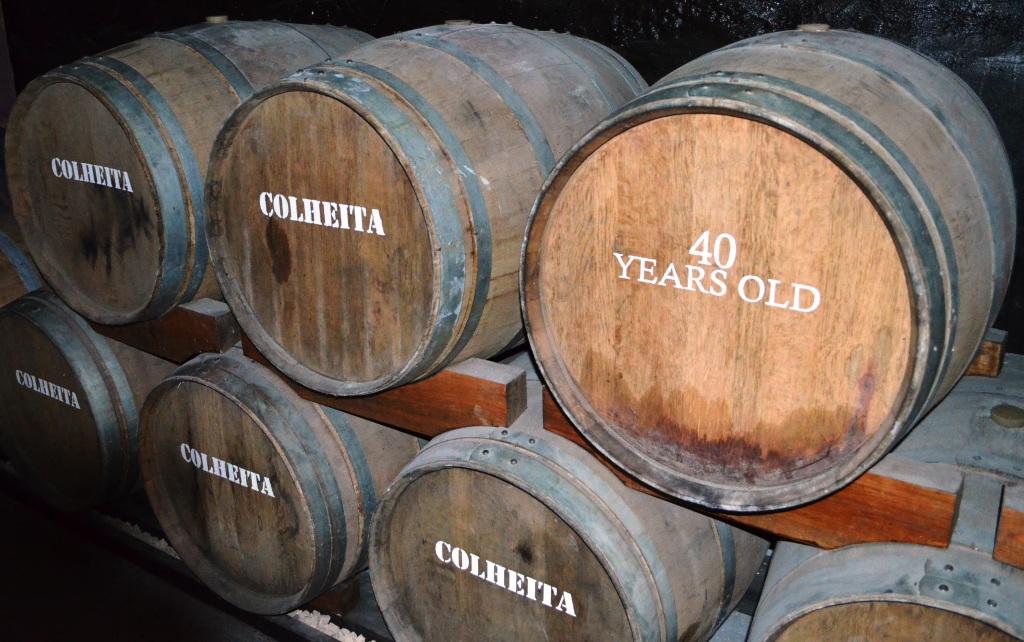
Tawny port ages in the small oak barrels

Do you remember where the cork tree grows? Yes, in Portugal!
That’s all I have for you, folks. Comments and corrections are most welcome. Cheers!
Study of Port: Great Restaurants
You know, I’m continuing this series about great experiences in Portugal (here are part 1, part 2 and part 3), and there is this annoying little voice inside which says “stop talking about it… Keep it for yourself… Once people will find out, they will all start going there, and all the great and inexpensive food and wine will become expensive and inaccessible… Keep it a secret…”. Never mind, the inner voice lost, and one can’t keep great experiences secrets anyway, so let’s proceed, shall we?
Today I want to present to you three restaurants, all three different, but literally one better than the other.
Let’s start with the place called bbGourmet. Actually, bbGourmet is a group of restaurants, and the specific one we visited is called bbGourmet Bull&Bear. The restaurant has good rating on Trip Advisor, but when I walked by the restaurant, it looked modern and not very inviting from outside, so at first I thought we can skip it. But then people on Trip Advisor probably know a thing or two about food, and the place was relatively close, so why not give it a try, right?
Restaurant indeed looked very modern inside, but with the nice ambiance. The menu had tasting option for €35 for four dishes. For another €15 you could add a wine pairing to all the dishes. Yes, you don’t need any hard guesses – of course this is what we did.
To give you a brief summary: perfect dishes + outstanding wines + very good pairing = great experience. I’m an engineer, remember? Of course it is fun to think in math terms, right? Okay, just ignore. Moving along…
First dish: Scallop with risotto. Perfectly gentle array of flavors, with sweetness of scallop complemented by mild tartness and zest of risotto.
Pairing: 2011 Prova Regia Arinto Vinho Regional Lisboa – 100% Arinto grape, bright acidity, some grapefruit notes, very similar to New Zealand Sauvignon Blanc – worked perfectly together with the dish.


Second dish: Sea Bass with black quinoa and fennel puree – that puree was particularlyoutstanding, overall an excellent dish
Pairing: 2012 Portal Colheita Branco Douro DOC, a blend of 45% Vinsinho, 20% Moscatel Galego Branco, 20% Malvasia Fino and 15% Rabigato. A bit drier than the previous white, more saddle and herbaceous flavors. Paired very well with the dish.


Third dish: Stuffed calamari. May be the best, definitely one of the best calamari dishes I ever had – perfect texture, perfect balance of flavors with the creamy sauce.
Pairing: 2011 Niepoort Redoma Rosé Douro DOC – a blend of 30%Tinta Amarela, 20%Touriga Franca and 50% others. A bit austere, needed a touch more fruit in my opinion. This was probably least successful pairing.


Fourth dish: Roasted veal. I’m not big on veal in general, but this was perfectly succulent dish. Those “potato chips” you see in the picture? They are not chips at all! They look like chips, but they soft literally like soft taco shells. Delicious!
Pairing: 2010 Portal Colheita Douro DOC Vinho Tinto – a blend of 60% Tinta Roriz, 25% Touriga Nacional, 15% Touriga Franca – very nice overall, good amount of dark fruit, soft and approachable, good oiverall balance.


And then – liquid desert! Secret Spot 40 years old Moscatel do Douro – I would guess, this is how winemakers play in Portugal – while they make the port all the time, every once in a while they make something for themselves – that is possibly the story behind this Moscatel (well, you will have hard time proving me wrong…). The wine was heavenly, with enough acidity to prevent it from becoming a syrup, and lots of complexity which can be rather expected considering the age. That was a perfect finish for a great meal.
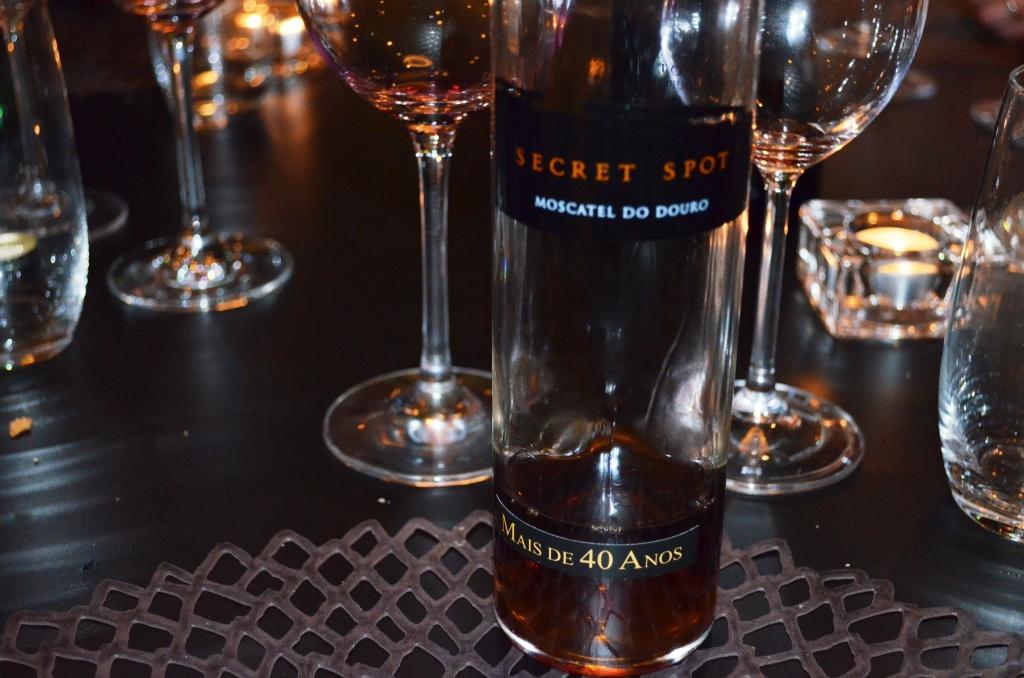
40 years old Moscatel
The next restaurant was called ShiS (at the time of writing, the #21 out of 376 on the TripAdvisor’s list of restaurants in Porto). The first thing to mention about this restaurant is its location. It is located right by the wall which protects Douro river from the ocean, and the views are just exceptional. Before we talk about food and wine, here are couple of pictures I managed to snap right by the restaurant:
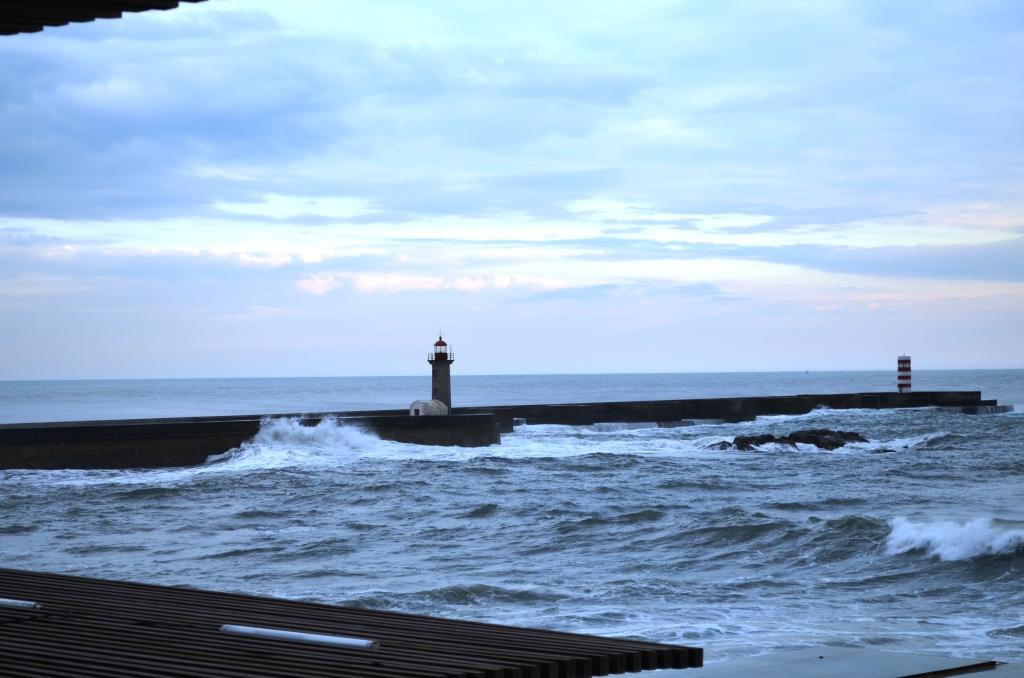
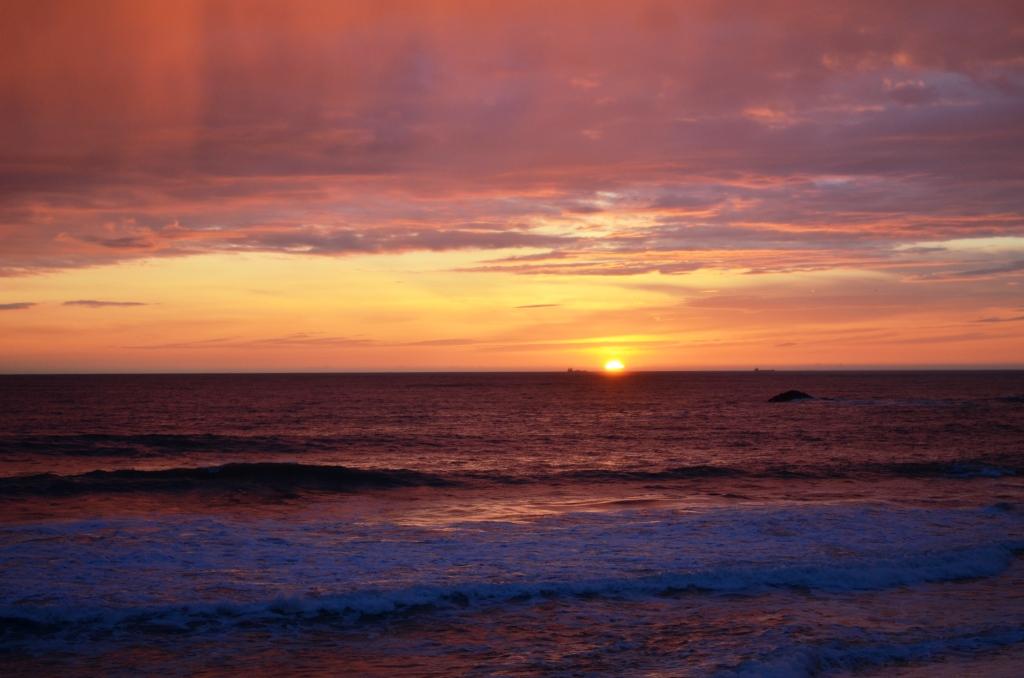
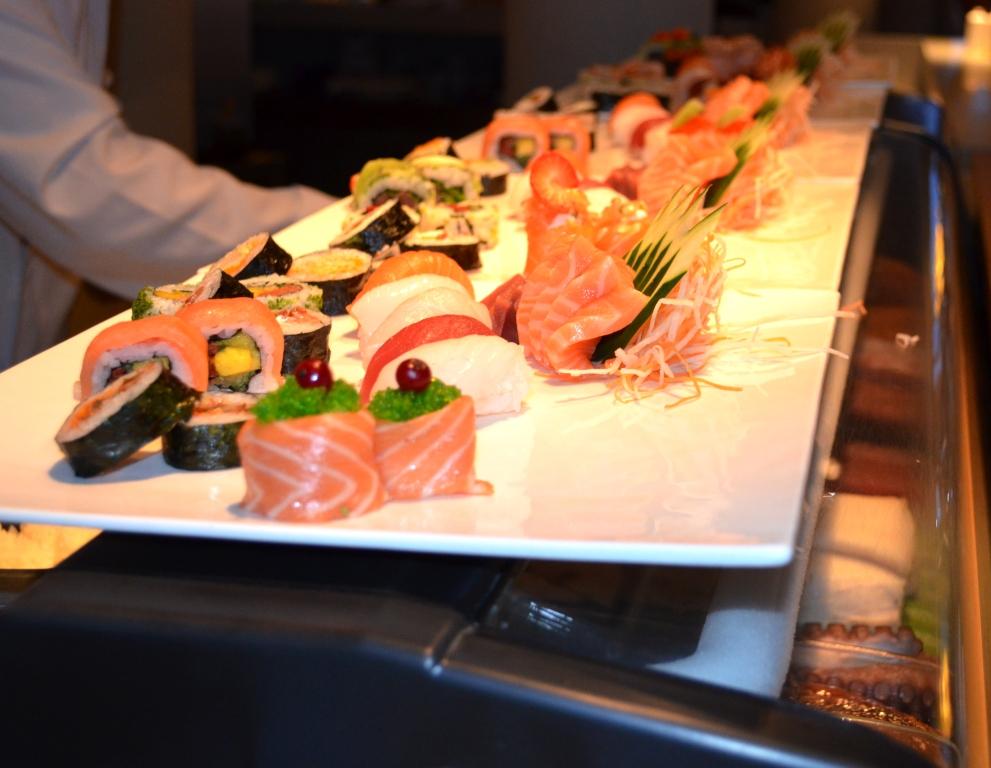
ShiS offers lots of choices of sushi and sashimi. This was our dinner in the making:
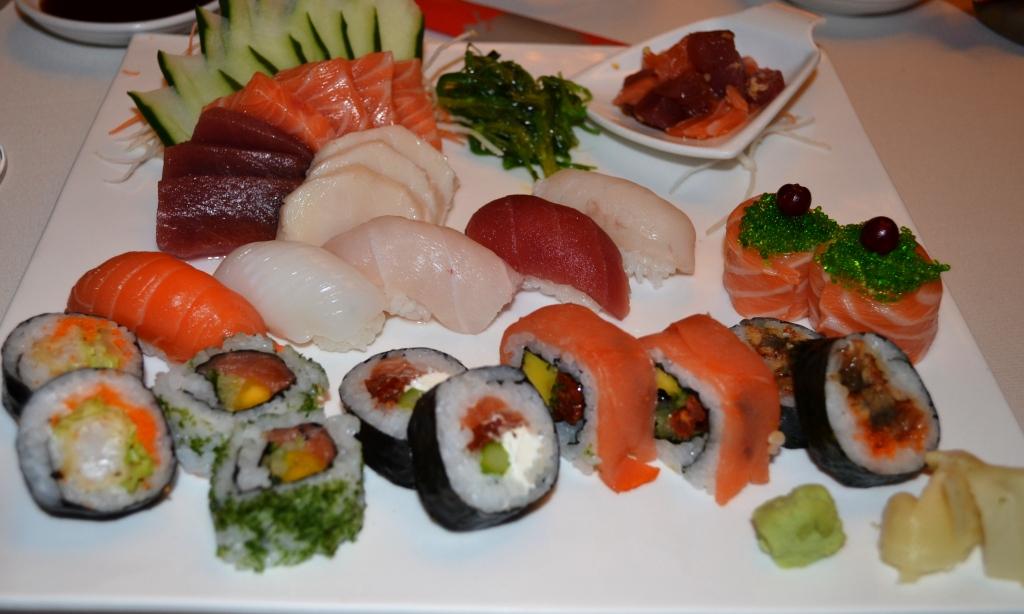
And this was my dish (chef’s selection sushi and sashimi combination):
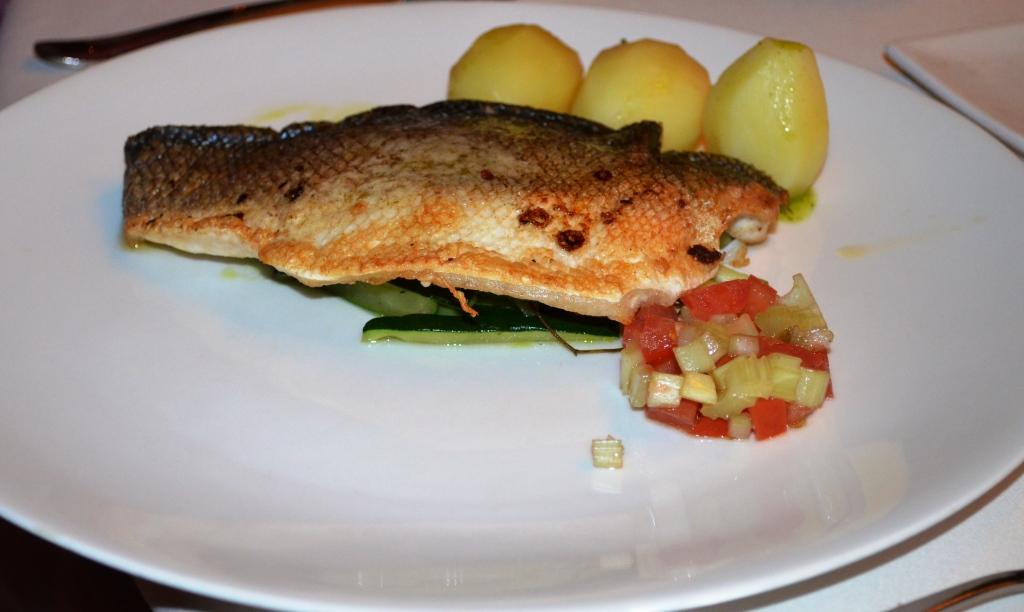
Here is also a sea bass dish:
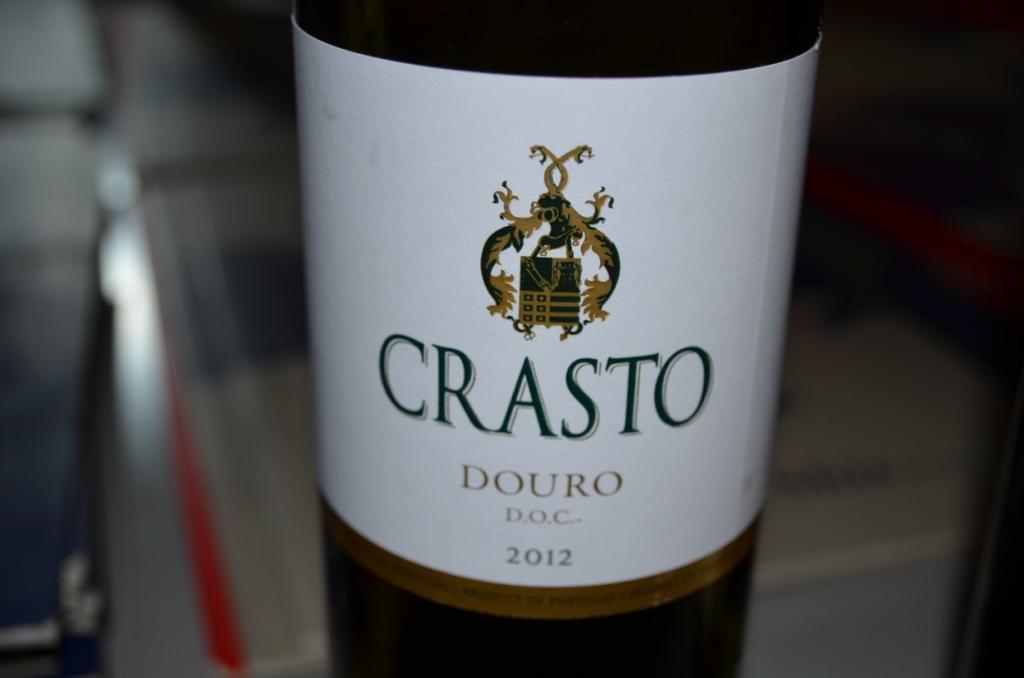
We had few of the very good wines. For the white we had 2012 Quinta do Crasto Douro Branco (a blend of Gouveio, Roupeiro and Rabigato) – somewhat on a fruity side, but overall dry, with good acidity and good balance. Quinta do Crasto produces some of the best wines in Portugal, especially when it comes to red, and these wines should be available in US.
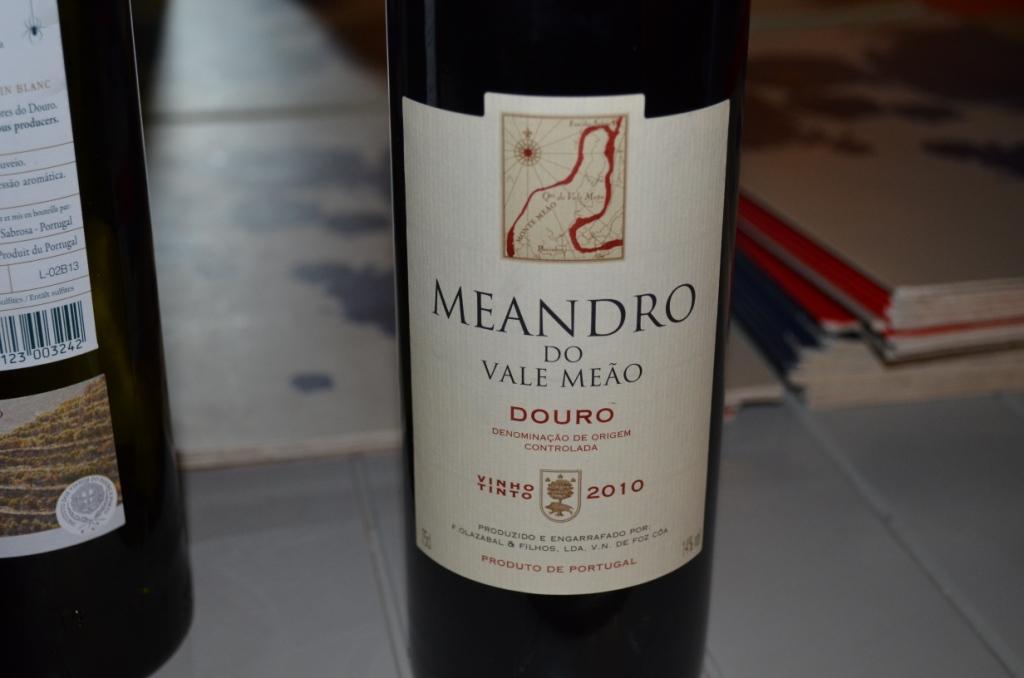
The red wine was 2010 Quinta do Vale do Meandro Meão Meandro Douro DOC, a blend of 45% Touriga Nacional, 30% Touriga Franca, 13% Tinta Roriz, 5% Sousão, 4% Tinta Barroca, and 3% Tinto Cão. Good dark fruit on the nose and on the palate, soft tannins, overall well balanced. It should be available in US and worth seeking.
Dessert – Crème brûlée with chocolate sauce and of course, Port! Taylor’s 20 years old Tawny was very good, with dried fruit and nutty notes, quite light and balanced (we finished the only two bottles the restaurant had, unfortunately).
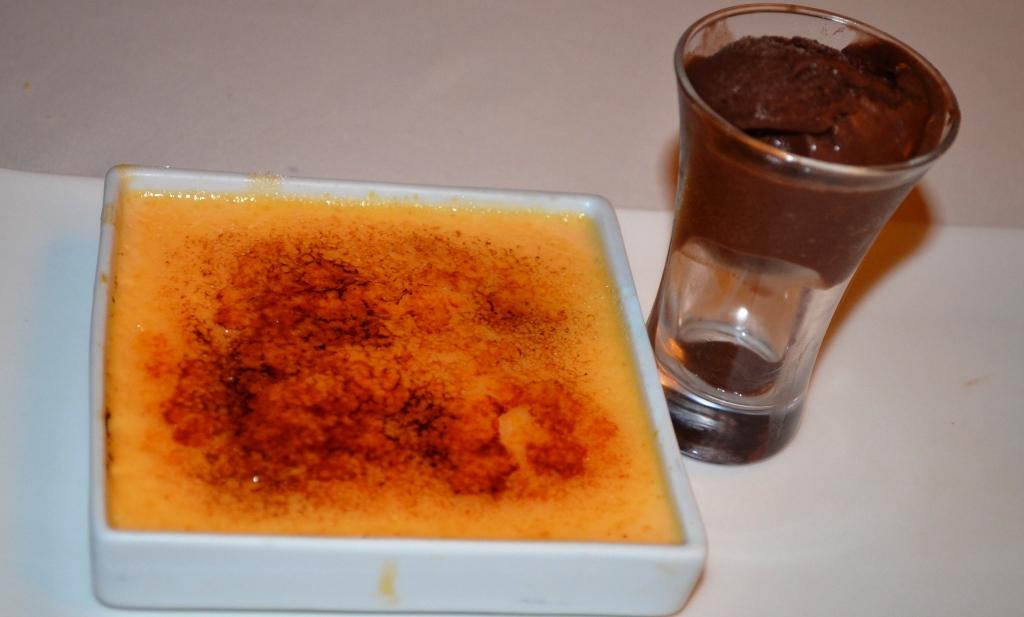
Crème brûlée with chocolate sauce
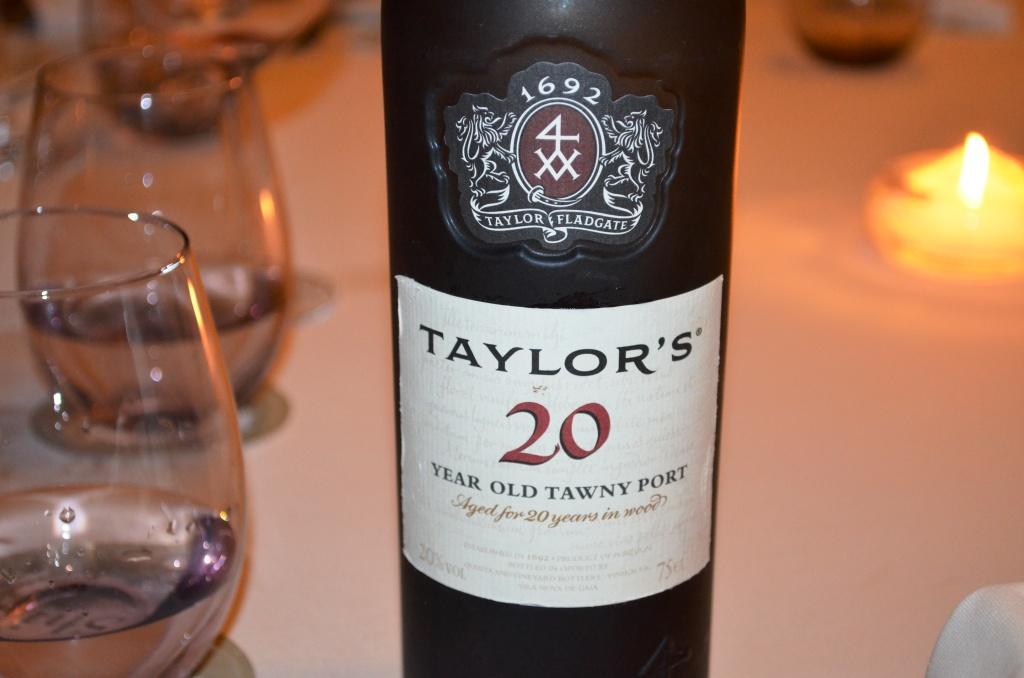
20 years old tawny – always appropriate
By the way, the wine list at ShiS has one interesting detail – it lists ABV for all the wines – I think this is pretty neat and I would be glad to see that in restaurants in the US:
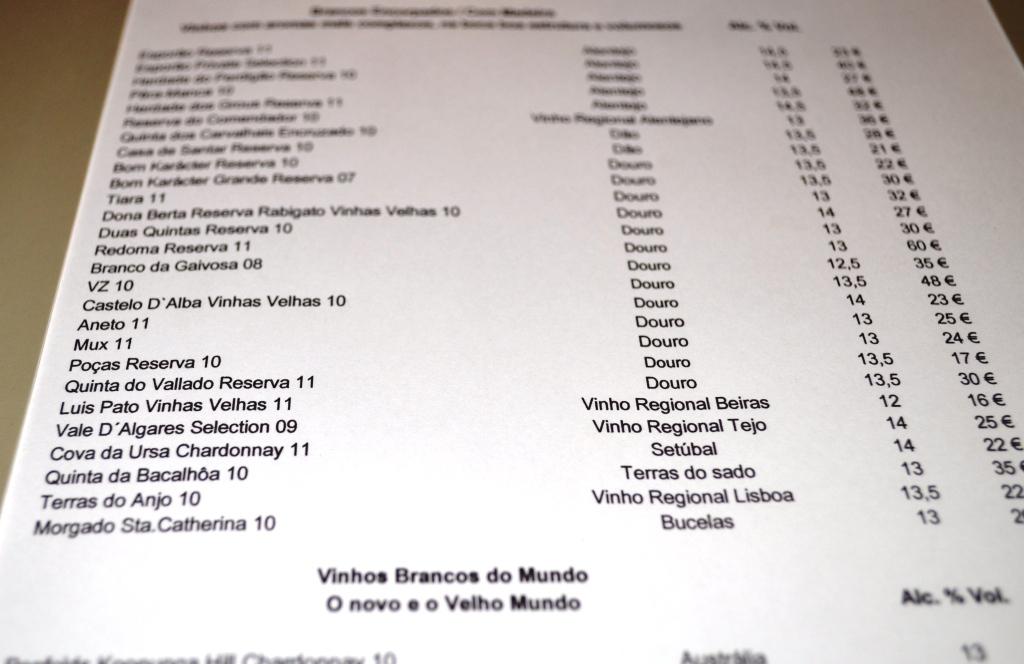
Wine list at ShiS – note ABV ratings for all the wines
And now last, but not the least experience I want to share with you – Cometa Restaurante.
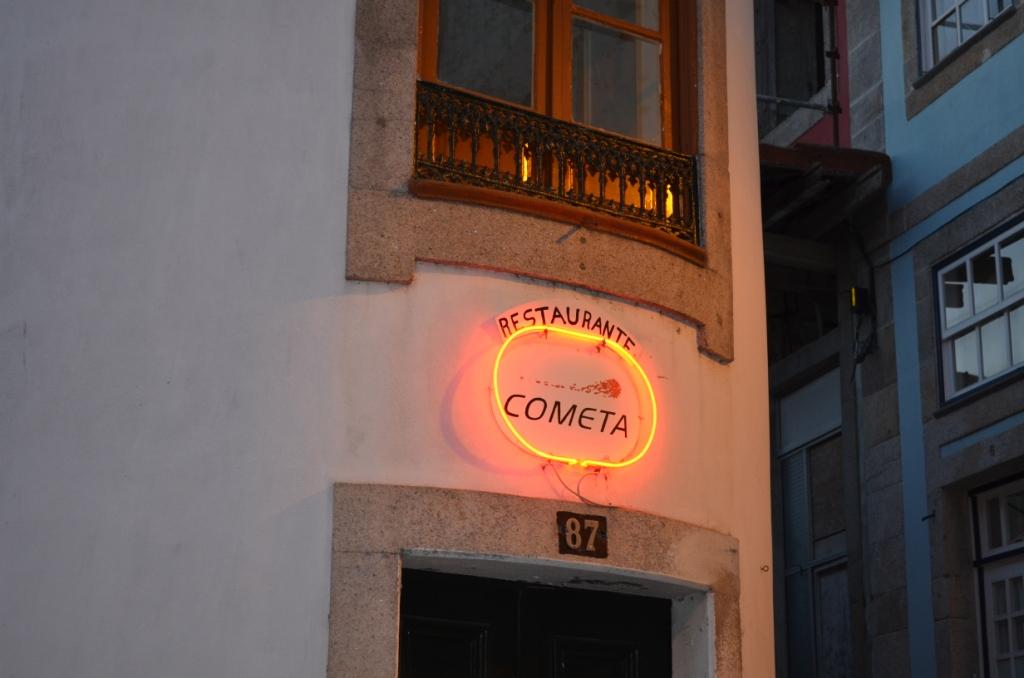
At the moment of this writing, it is #16 out of 376 on the Trip Advisor restaurant list in Porto. Very small restaurant, may be 8 or 10 tables, located on a top of a very long and steep set of stairs leading to the river. We had a very interesting experience at the restaurant with the set of small setbacks getting in the way, but not preventing us from having a great time overall.
The first issue was with wine – the restaurant had pretty small wine list, and even out of that small wine list, our first and then next choice were not available. Finally we settled on the white wine which restaurant had available. Then food became an issue too – most of us quickly set our minds on having a grilled squid – and it appeared that the restaurant only had one portion available for the five of us, so we had to come up with the other choices. The menu also had roasted chestnut soup with pomegranate seeds – but in reality, it was not available (sigh).
As the bottle of wine finally arrived at the table, things started to turn for the better (wine can fix all the problems in the world, right?). Then some appetizers arrived, and it was time to get another bottle of wine – only the same wine was not available anymore. Truth to be told, it was unfortunate that restaurant didn’t get the delivery of the wines they were supposed to get, so that was the reason for the shortcomings with the inventory. Okay, we went through the exercise of selecting the bottle of wine again, I would say, quite successfully – we picked 2010 Herdade Dos Grous Branco Vinho Regional Alentejano, a blend of Antão Vaz, Arinto and Roupeiro (typical for Alntejano white wines) – a medium to full bodied white, with good amount of white stone fruit, very round, good acidity and good finish.
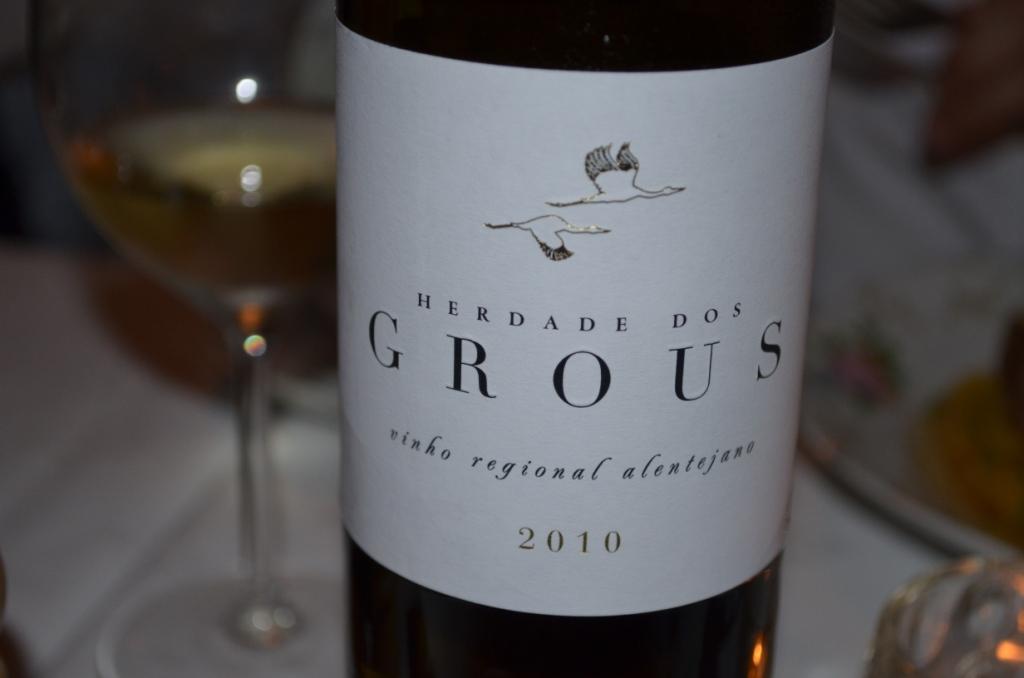
Herdade dos Grous branco
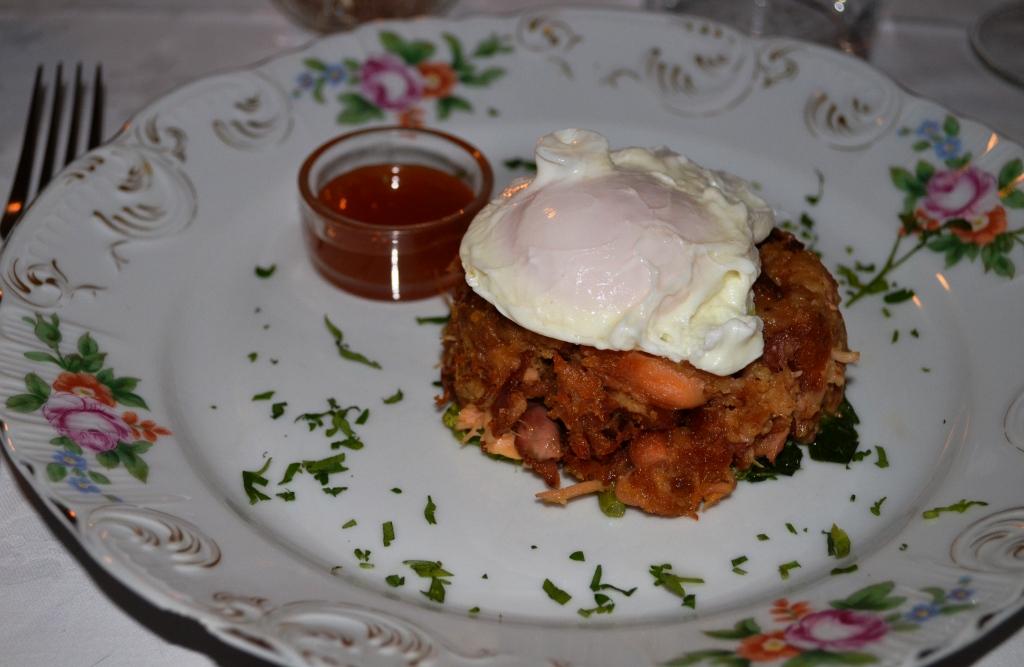
Next – our entrees arrived. I ordered the dish called “Portuguese sausage”, which was effectively a collection of poultry pieces, served with the sweet sauce. By the way, take a look at the china – I love those plates… Real food served on real plates – wow, what a concept! But it feels so unique nowadays, when even in the best restaurant you might get paper napkins instead of a real cloth… This Portuguese sausage was delicious – I’m not sure if it was a duck egg or not on top of it, but the whole dish tasted perfectly.
Considering all the troubles we had with our food and wine selection, the restaurant decided to compensate for that a little bit, and offered us complementary bottle of Sparkling wine, which didn’t encounter much enthusiasm on our side, as we were mostly done with the food. Seeing our reaction, we were offered a bottle of 2011 Niepoort Tiara Douro Branco (at €34, it is one of the most expensive wines on the list) – and all of a sudden, all our troubles seemed well worth having.
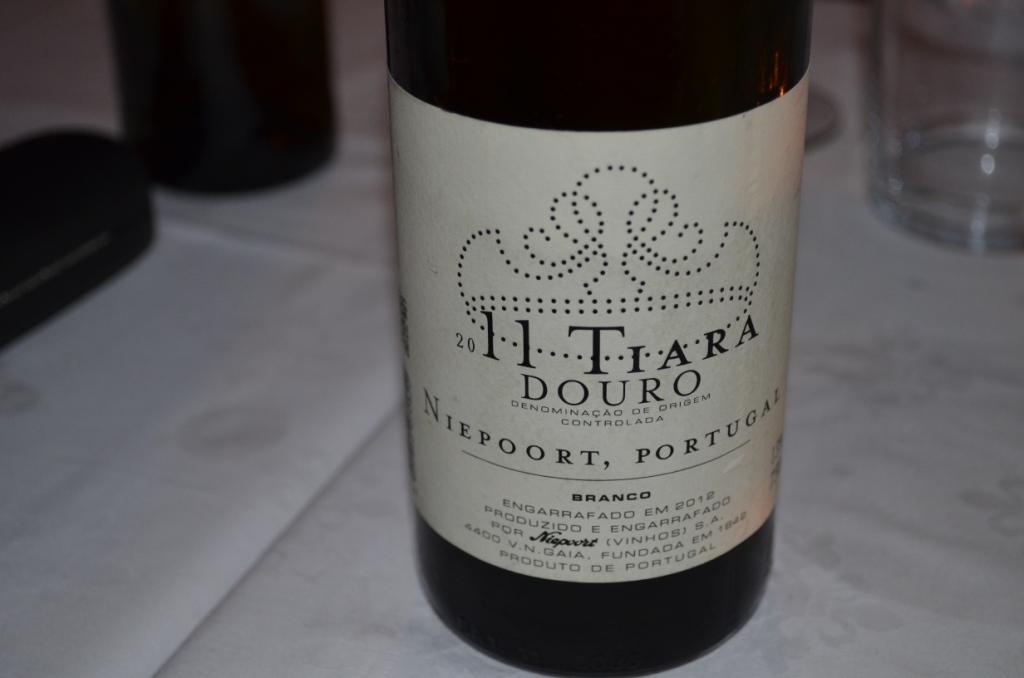
2011 Niepoort Tiara Douro Branco
This wine is a blend of Codega, Rabigato, Donzelinho, Boal, Cercial and other grapes. Bright and full bodied, excellent acidity, very uplifting. This wine has great textural presence, you really feel it in you your mouth, you can roll it around – but it is so balanced, the fruit, the acidity, the whole package is perfectly together. Reminds me of the great Pigato wines I experienced at the Gambero Rosso event. One of the very best white wines I ever had (yeah, my list of “very best” might be a bit too long…).
And then the dinner conclusion with dessert – I’m clearly abusing the “very best” here, but this was one of the very best apple desserts I ever had – apple tart with the scoop of ice cream:
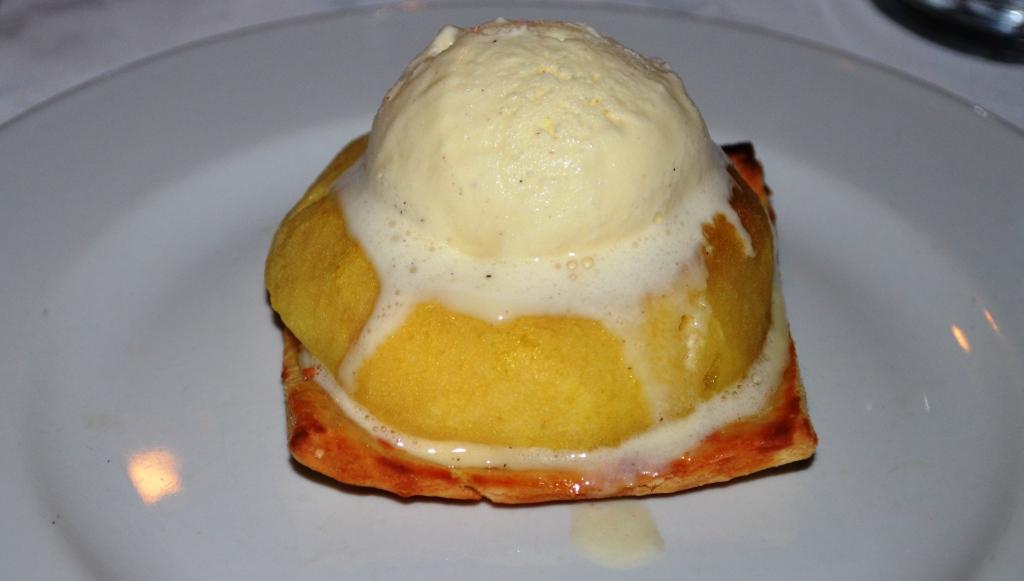
Apple tart
The apples were not visible, but very noticeable – big, juicy apples which say “bite me”. If you like apples – this was an outstanding dessert.
One parting note regarding Cometa Restaurante – the restaurant doesn’t accept international credit cards, so you should have cash on hand with you (well, there is an ATM near by, but it is always unpleasant when you can’t pay for your meal on the spot). By the way, care to guess how much this dinner cost us? We can skip the drum roll, but – it was only €35 per person!
And we are finally done! Every time I promise to myself to write short little posts, easy going for quick consumption – and I still end up with multi-page monstrosities with tons of pictures. Well, I hope I conveyed my main message – there are many great restaurants in Porto and I’m sure in the Portugal overall and they are still reasonably priced, so if you are thinking about going to Europe… No, I’m not encouraging you. Cheers!
Study of Port: Food and Wine Tidbits
Here I’m, continuing to report on my food and wine adventures in Portugal (here are the first and second posts from the series). Well, I guess “adventures” is really too much of a word for simply excellent food and wine experiences, but “adventures” put the things in the right prospective, isn’t it? Never mind, let’s just talk about food and wine.
On the first night we ended up at the small place called Restaurante Nova Europa. The place looked very authentic in the sense that they had a hard time to find an English menu, and our server spoke practically no English – that didn’t prevent us from having a very good dinner. Most of the people at the table ordered some version of the local fish called Bacalhau, which is a cod. It was offered in different variations – mine had a lot of potatoes:

Bacalhau
And as I often ignore food and wine pairing rules, the wine was red:

2010 Evel Tinto Douro
As most of the wines from Douro, this 2010 Evel Tinto Douro, this wine is made from the “classic set” of Portuguese grapes – Touriga Nacional, Touriga Franca, Tinta Roriz a Tinta Barroca. The same grapes are also used as a foundation for most of the Port wines, which are made in exact same Douro region. Good body, good depth, not necessarily spectacular but easy to drink and pleasant.
Now I would like to mention two of the very local products. First one is beer. I’m not sure how many different beers are produced in Portugal (I’m positive though that US microbrewery revolution didn’t take any roots in Portugal so far). The beer is called Super Bock, it comes in lager, stout and few other versions, and it is produced in the area just outside of Porto – according to Wikipedia. I only tried the stout, which was dark, rich, smooth and creamy. I have to mention though that it is somewhat dangerous to rely on my opinion about beer – for the most of the time I prefer dark beer and on contrary to many of my friends, I don’t find Guinness bitter. And here is the picture for you – the picture was taken by my friend Kfir, not by me – but he was using my camera, so I guess I have some rights to it…
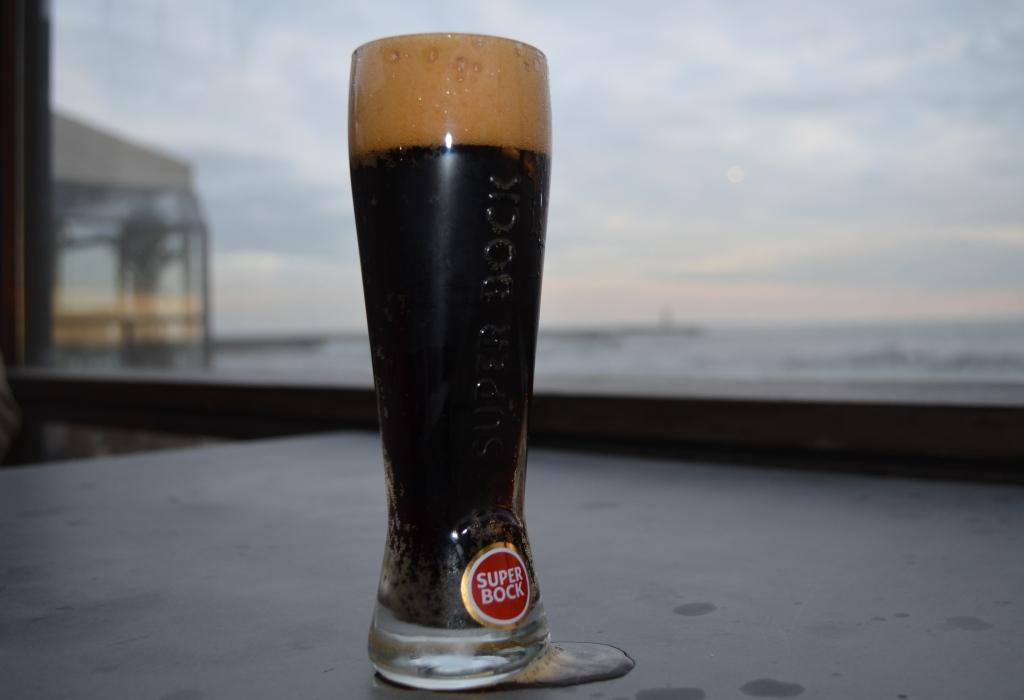
Super Bock stout, as captured by Kfir
Next item to bring to your attention is a local sandwich (supposedly it is Porto’s specialty) called Francesinha. This sandwich is made out of two slices of crust-less bread with various meats (or even veggies) in between – we saw it on the menu in most of the restaurants in Porto, and it can come with steak, white meat, various ham cuts and so on. The sandwich is completely covered by melted cheese (top and all sides), and it is served with the secret sauce which is supposed to be some combination of tomato sauce and beer. I had a steak version and it was very tasty. Believe it or not, but I’m not always carrying my camera to the restaurant, so Francesinha is probably the only dish I regret not taking my picture of – but someone thankfully did on Wikipedia, so below is the picture for you, courtesy of Wikipedia:

Francesinha sandwich, picture courtesy of Wikipedia
And then there was Cufra. Pardon my little drama here, and let me explain. We saw the restaurant while walking by, checked it out on the web, and it looked appealing enough. Service staff spoke not too much of English, but the menu was possible to understand, so we all ended up with decent food – but the wine was more memorable. For the white we had 2011 Castello D’Alba from Douro, a blend of Codega do Larinho, Rabigato and Viosinho – very typical blend for Douro white wine, all indigenous grapes (Wine Centurions, take note!). The wine was very nice, with good acidity and somewhat similar to New Zealand Sauvignon Blanc, only with less of grapefruit.
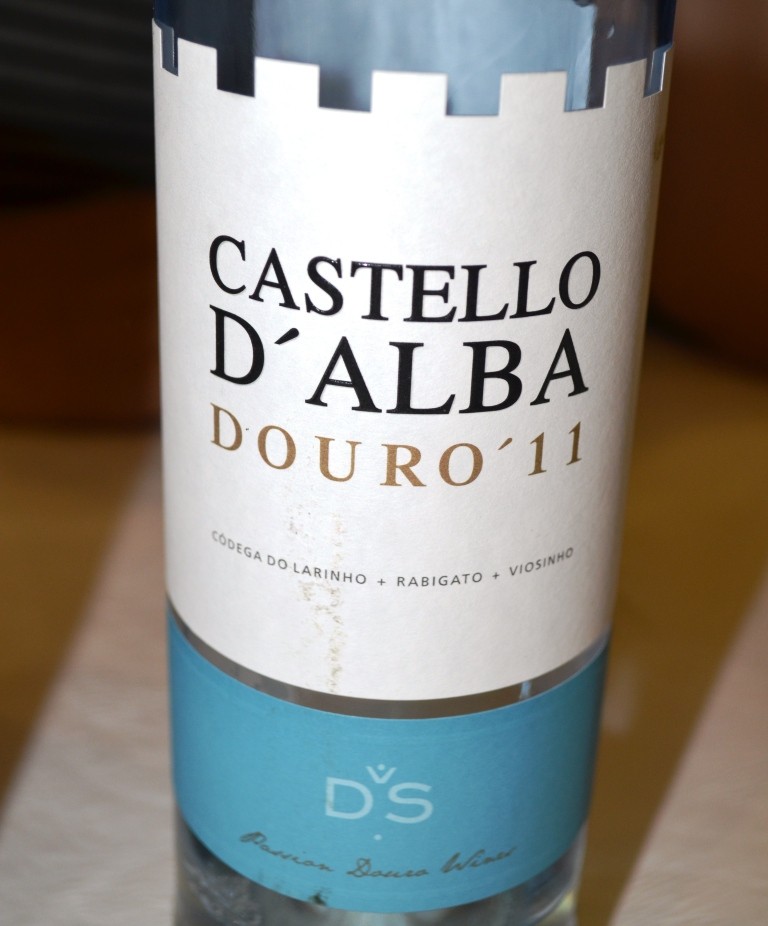
Castello D’Alba Douro White
Then we had a bootle of 2009 Quinta do Cardo Selecção do Enólogo Beiras DOC, a blend of Touriga Nacional, Tinta Roriz and Touriga Franca, produced by Quinta do Cardo. The wine was nothing short of being spectacular – with the exception of vintage port, during the whole week I only had one other red wine which was on the same level or may be even a touch higher – but I will talk about it in another post. Dense and concentrated, with dark fruit, plums and blueberries on the palate, all very round with the hint of smokiness. The wine was so good for the money (€14, in a restaurant!) that I even got two bottles right in the restaurant to take them back home.

Quinta do Cardo Selecção do Enólogo
When we went to the same restaurant second time, about a week later, the menu was quite different, and the wine were too. But – one of the reasons for the second visit was the desire to try the crab dish we saw someone ordering during the first time. Considering that Porto is located right on the cross of ocean and the Douro river, it is rather expected that fish and seafood should be very good – and this dish didn’t disappoint (hope you will find the below picture being enough of the proof):
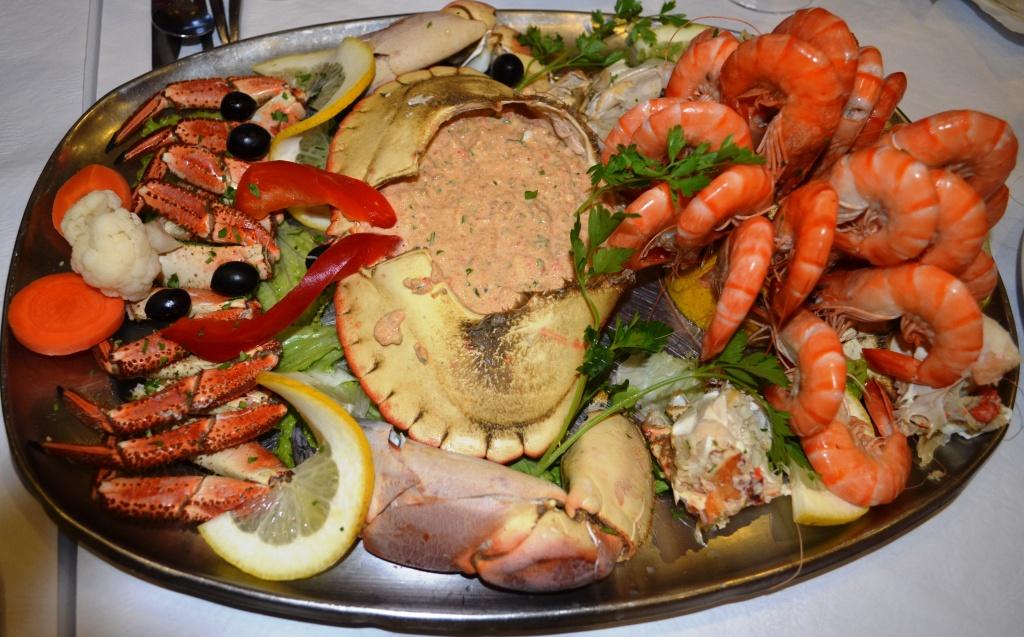
Crab and shrimp at Cufra
I can’t say the same about wines – there was different 2009 Quinta do Cardo wine on the list (about €4 cheaper), and while it was not bad, it was not anywhere as good as the first one. All in all, if you are in Porto and if you will be in the area, Cufra is well worth visiting.
Last place I want to mention (but not least by all means) is a restaurant called Rabelos. Just to give you some prospective, Rabelos are actually flat bottom boats which were used to transport barrels of Port from the wineries to the Port house cellars for aging. Nowadays the wine is transported by the tanker trucks, and Rabelos are only used to move tourists around.

Rabelos Restaurante
Anyway, the restaurant is actually located in Vila Nova de Gaia, a town which houses all the port cellars across the river from Porto. It is located very close to the bridge which connects Porto and Gaia, right along the boardwalk in a place which in general should be considered a tourist trap. But it was no tourist trap at all. The service was outstanding, and we got great recommendations and had great experience overall.
One of the starters was local feta cheese, dusted with Parmesan and slightly roasted with olive oil (take a note – I think it should be as easy to make it at home as it is delicious, and as a very least I’m going to try it…).

Roasted feta cheese with parmesan
Then we had beef carpaccio and shrimp salad – the pictures don’t do justice to those dishes, but both were delicious

beef carpaccio

shrimp salad
Next we had two dishes made from Bacalhau in different styles – one was baked with cheese sauce and one was grilled – both were outstanding:
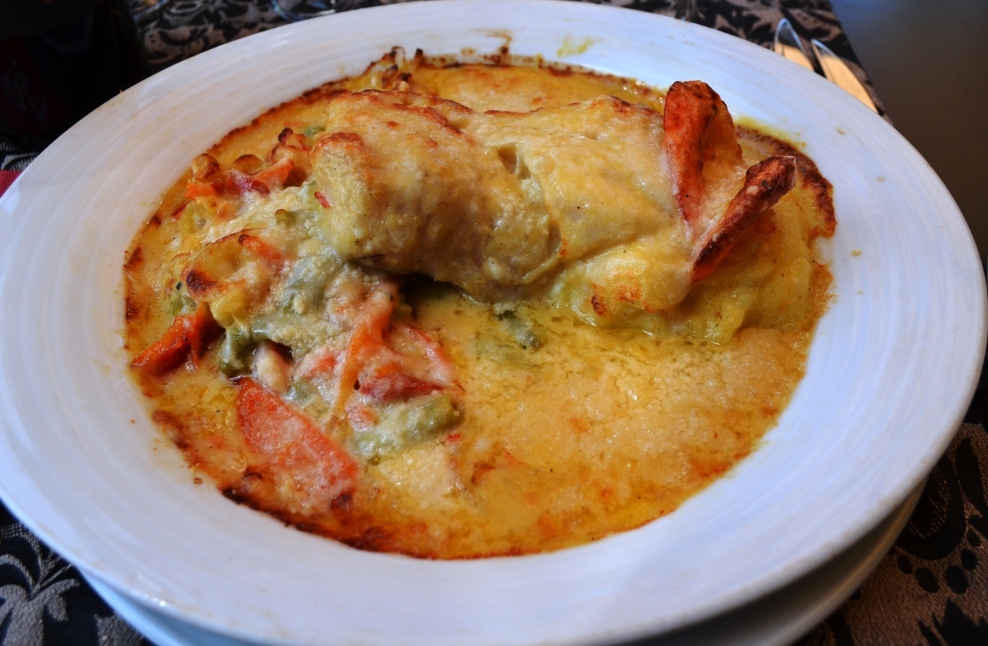
Bacalhau in cheese sauce

grilled bacalhau with shrimp
Again ignoring the pairing rules, we went with the red wine called 2010 Borges Quinta da Soalheira Douro Red, a blend of classic Douro red grapes, Touriga Nacional, Tinta Roriz, Tinta Barroca, Touriga Franca and Tinto Cão, made by Vinhos Borges. The wine had medium body, good acidity, nice red fruit on the palate, well balanced – perfect for every day drinking, considering you can find it.

Borges Quinta da Soalheira
For the desert, we had lemon cake (paired with white Port) and chocolate cake paired with simple tawny. Below are a few pictures – the first one is taken by me ( boring, sigh), and then two others taken by Kfir – I will need to learn how to really use my own camera…

Lemon cake, no excitement in the picture
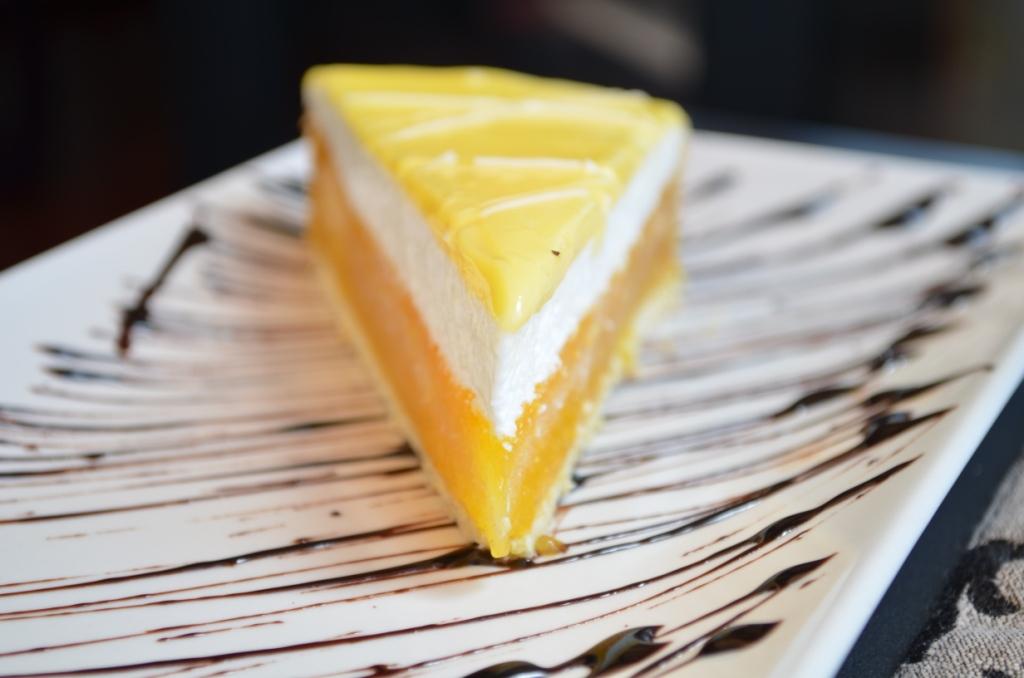
lemon cake, now with excitement, courtesy of Kfir

extreme chocolate cake, as captured by Kfir
And of course nobody can leave the restaurant without coffee, right?

Espresso!
That’s all, we are done for today folks. Sorry for all the pictures, hope you found them at least moderately entertaining. Until the next time – cheers!
Study of Port: First Port Experiences
I’m continuing my notes from Portugal (you can find previous post here). On Sunday we had some free time to walk around the town, so I have more pictures and some actual port tasting notes for you.
Let’s start with the pictures. We walked past beautiful cemetery (is it appropriate to use the word “beautiful” in conjunction with cemetery? not sure, but still). As my friend P likes to say – “lines!”:

Lines!
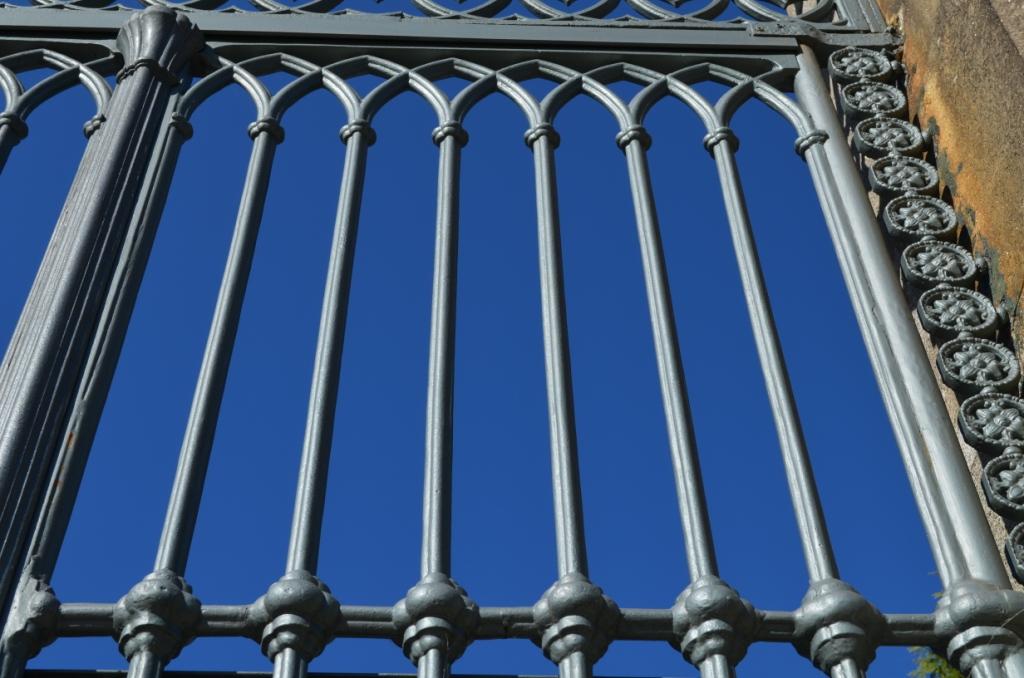
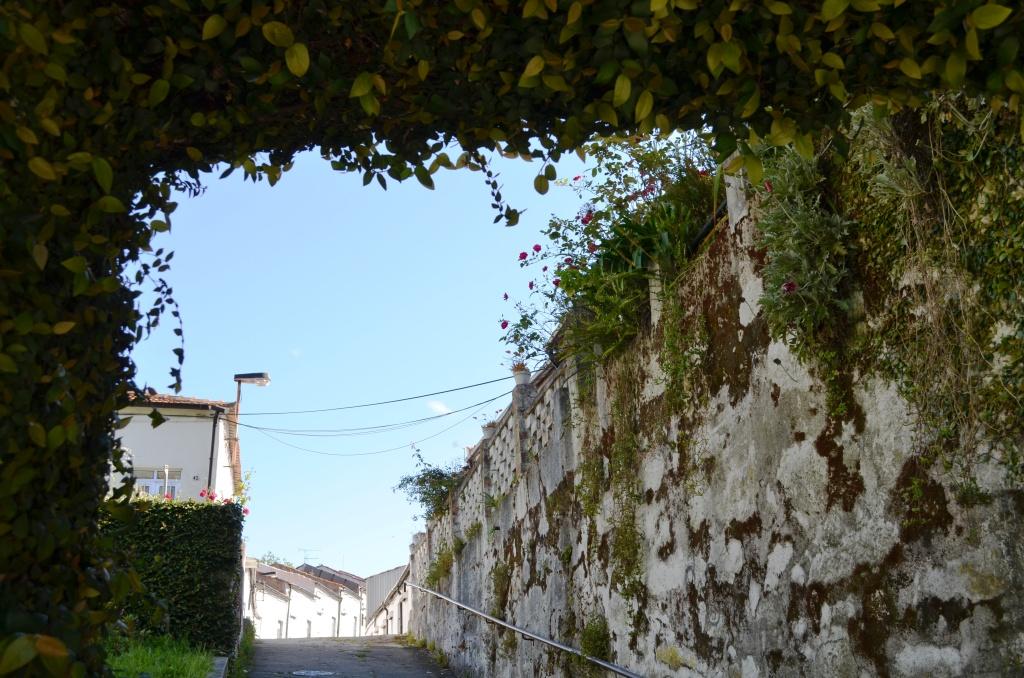
more lines!
Isn’t this pretty?
Someone has good sense of humor:
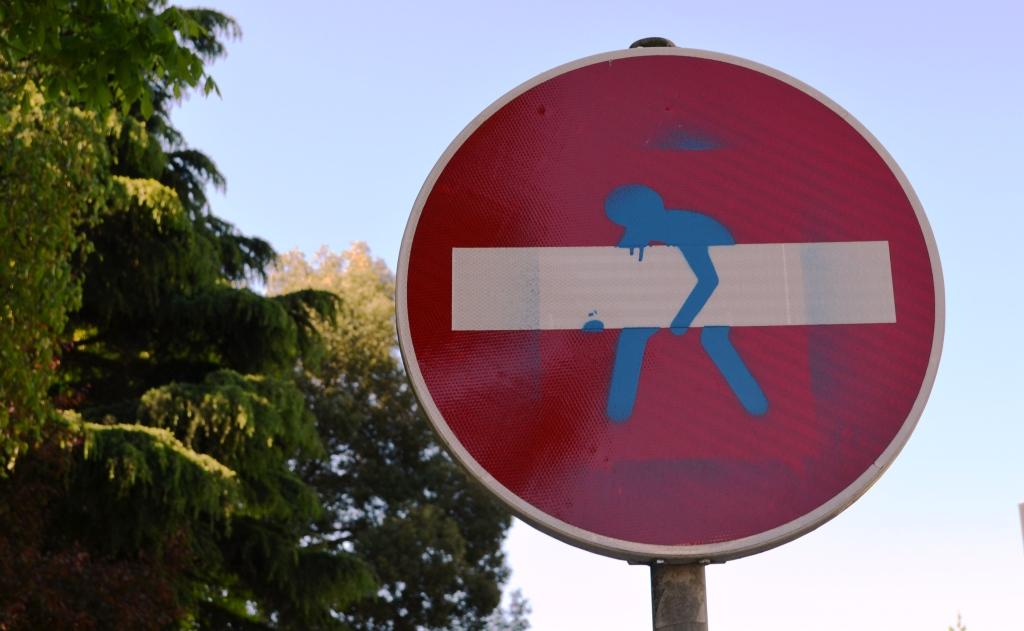
stop sign being carried away…
One of the modes of transportation in Porto:
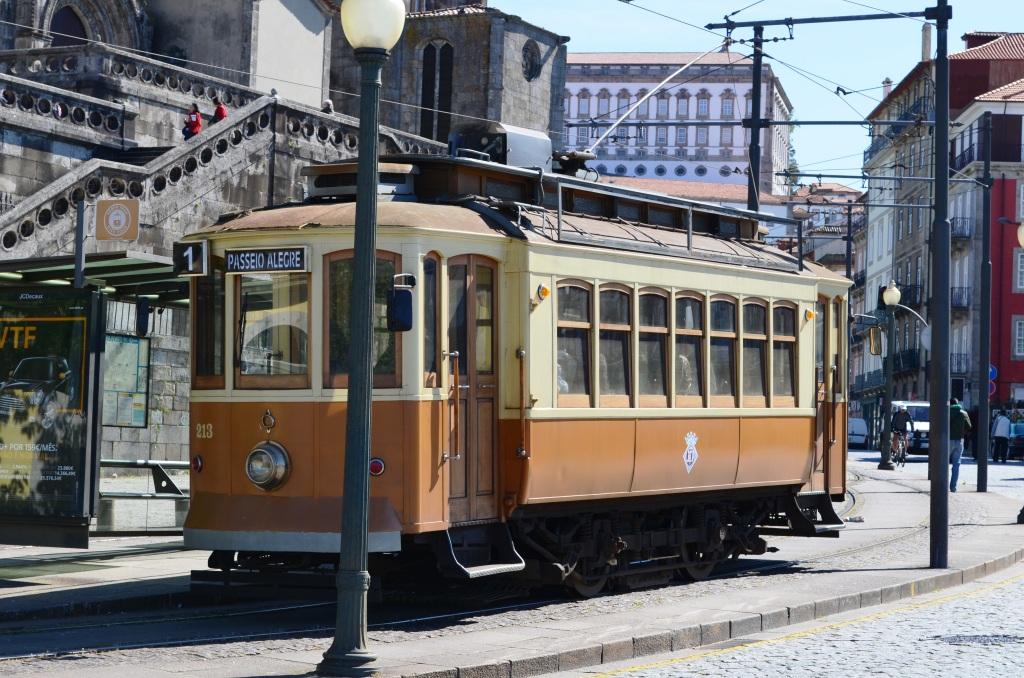
Just look at this beautiful town:
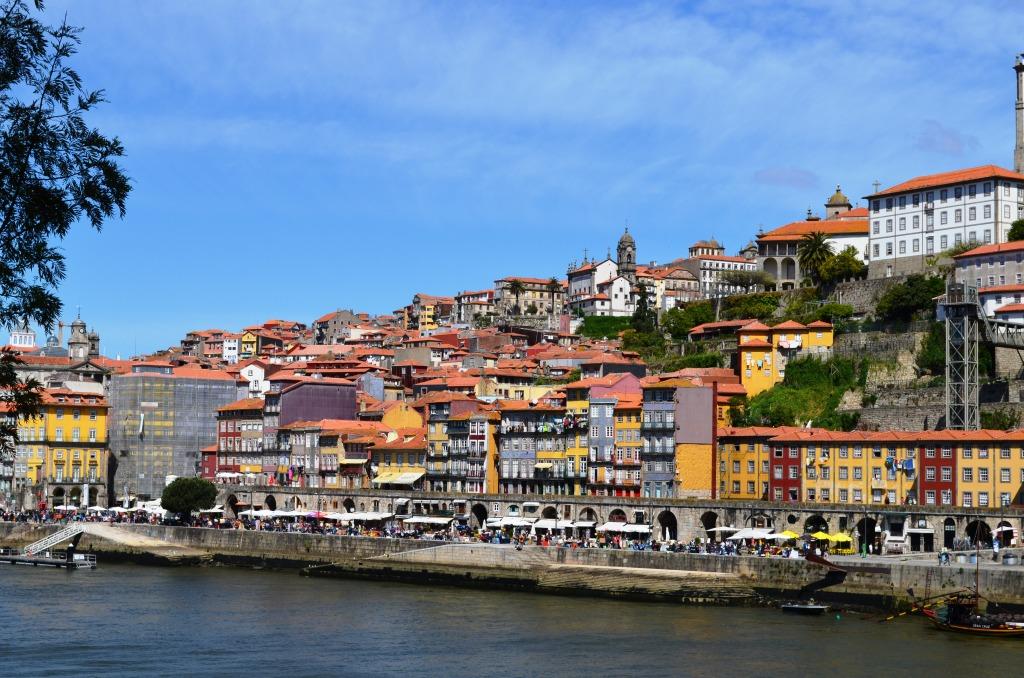
Porto
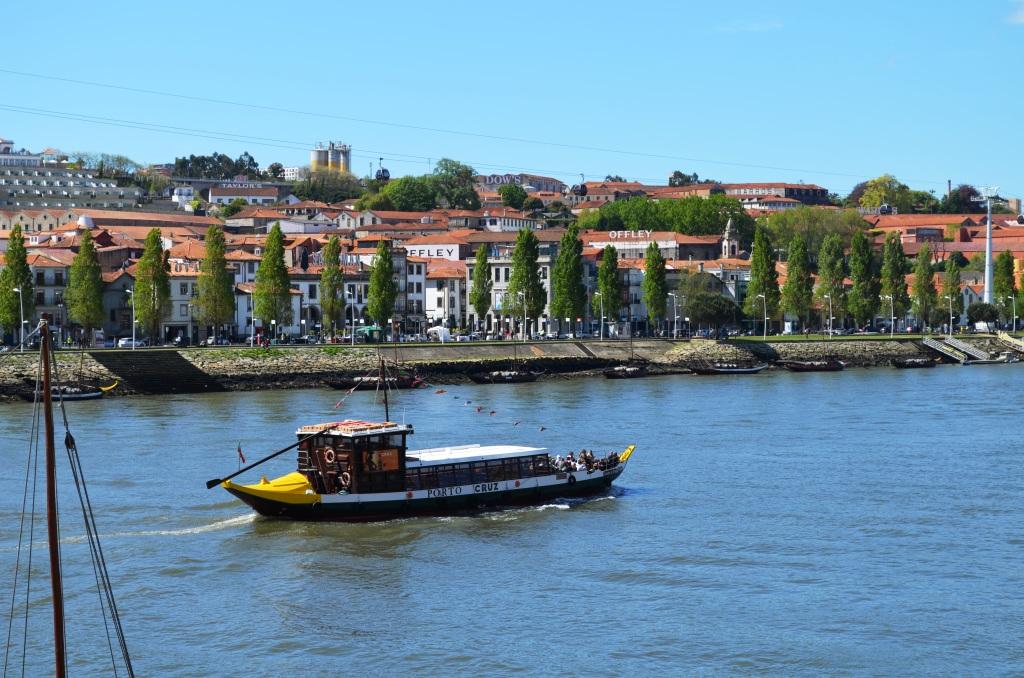
Port, I’m coming:
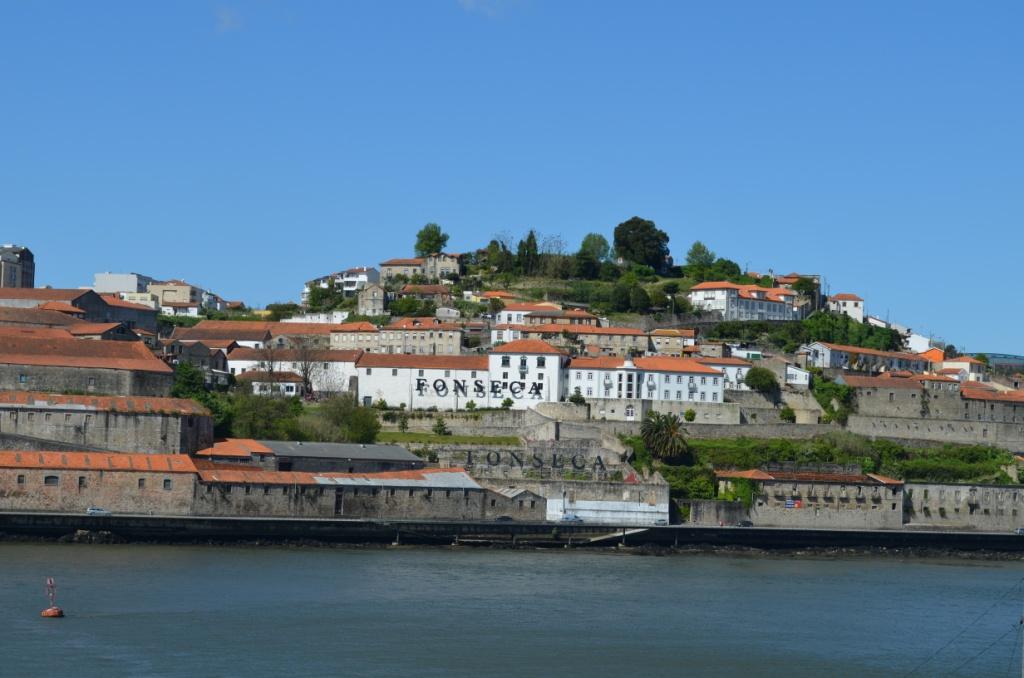
So we finally made it across the river (technically, all the port houses are located across the river from Porto in the town called Gaia). We made our first stop at Quinta do Noval. Quinta do Noval has all the operations in Douro valley, and only a small store in Porto, where you can taste limited number of their Ports. All the ports you can taste are packaged in the form of a single-pour tiny bottles, so as the result you can’t try any of their vintage ports, as those can’t be put in the small bottles. Let me explain.
There are many different types and styles of port, but at this point we only want to distinguish between vintage and non-vintage ports. To begin with, all the ports are made in the same way as any wine – the grapes are harvested, crushed and fermented until desired level of sweetness is achieved. From here on, Port making deviates from the regular wine making process – fermentation now is stopped with addition of very young brandy (neutral grape spirit), and then Port wine goes for aging in the barrels or vats, depending on what kind of port is in the making. Here the distinction will be also made between Vintage and non-vintage ports. If quality of the wine is outstanding, the Port house might declare a vintage year, and then the port will age in the oak cask only for 2 years, and then continue aging in the bottle. Otherwise, the port wine can age anywhere from 5 to a 100 years in the barrels, and it will produce ports with the age ( but not vintage) designation on them.
The key difference (important for us, consumers) between vintage and non-vintage port is that non-vintage port can be kept for extended amount of time after the bottle is open, while vintage port should be consumed within a day or two, same as any other wine. This is also the reason for Vintage port (which is typically very expensive) not being available for the tasting in the tiny bottles.
Okay, going back to our tasting – so we decided to try the 40 years Tawny port from Quinta de Noval:
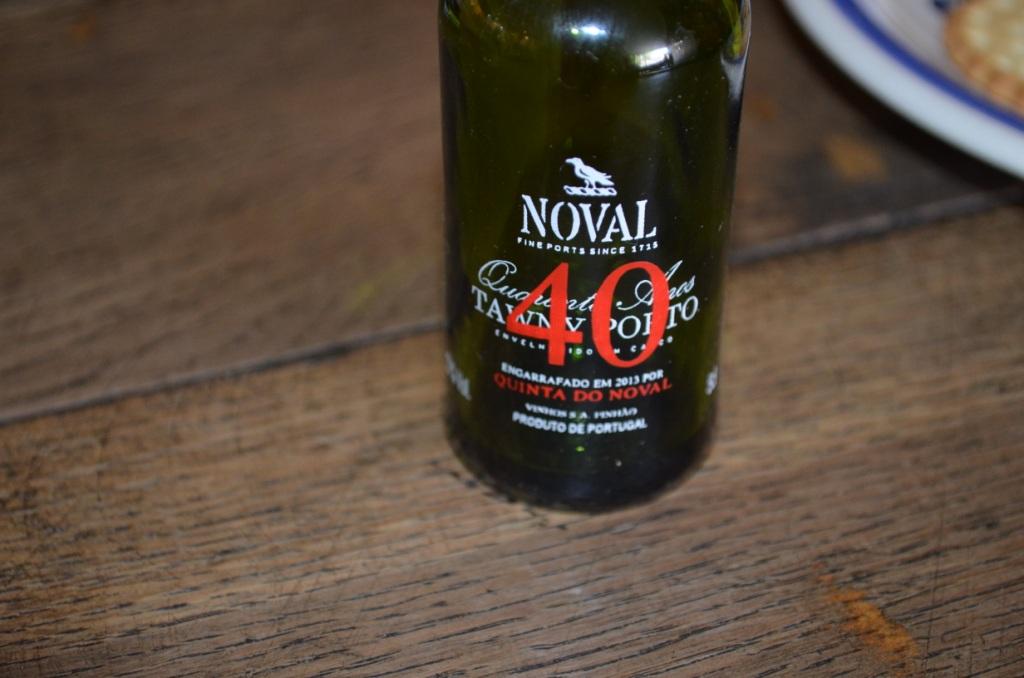
It was good and very complex, with lots of almond variations on the palate, dried fruit and pronounced acidity, which was taming the sweetness. It was good but not amazing (I would be disappointed if I would pay a full price for an actual bottle of it).
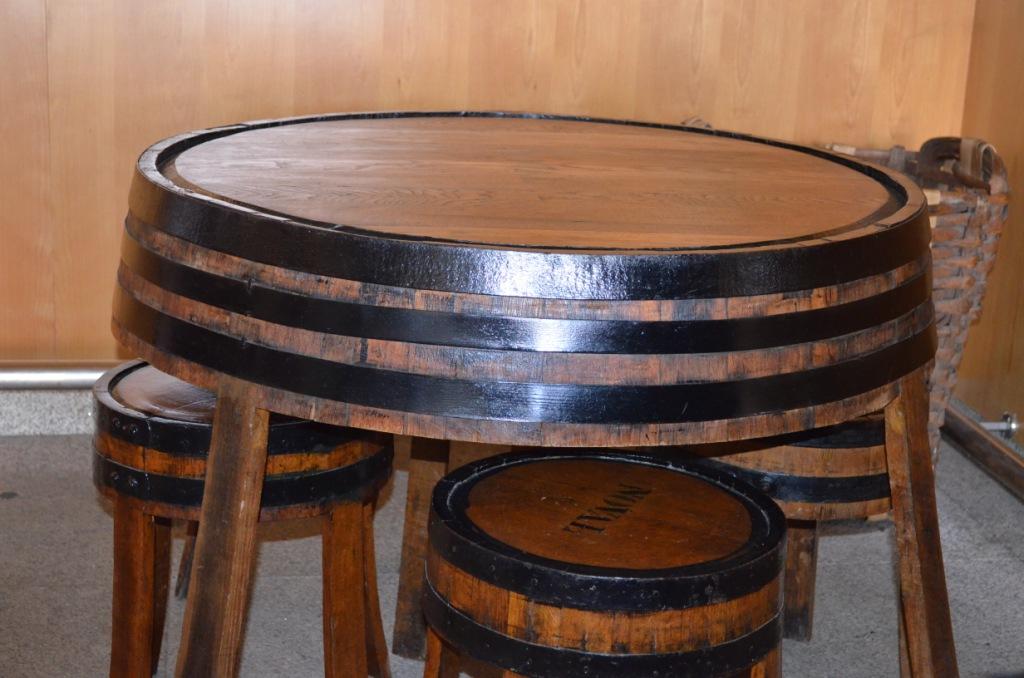
barrel table and stools at Quinta de Noval
Next we stopped at Sandeman:
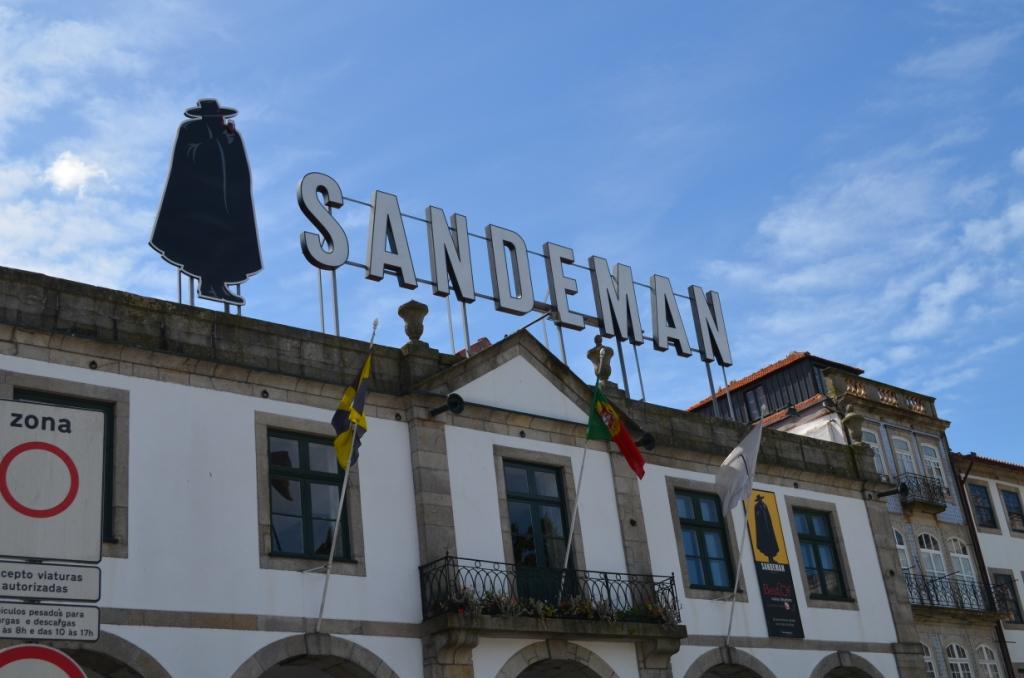
In most of the port houses you can go for the tour and then do the tasting – we decided to skip the tour and just do the tasting.
For the first time I tried White Port – and it was outstanding!
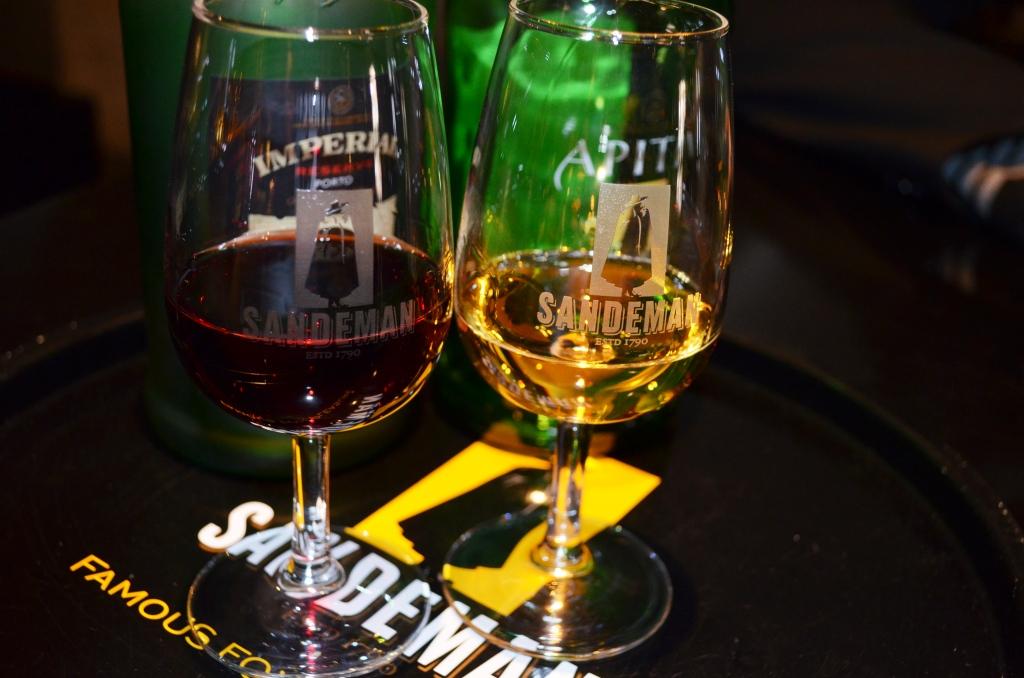
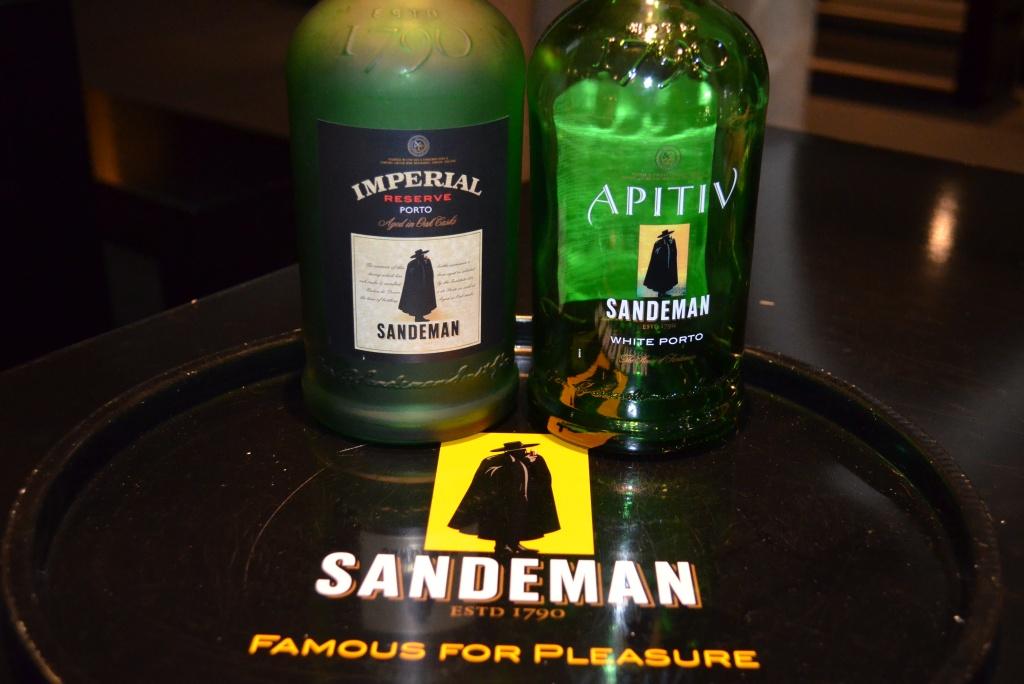
Sandeman Apitiv White Porto was aged for 3 years in the vat. It had golden color, good amount of sweetness ( but not cloying by all means), lots of white fruit, particularly white plums on the palate, good acidity. It was bright and uplifting, very refreshing wine overall.
Sandeman Imperial Reserve Porto ( 8 years of aging in the barrel) had sweetness perfectly supported by the structure underneath – dark fruit, good body, good acidity – overall, probably one of the best ports I ever had.
That’s all I have for you for now – in the next post we will talk about food experiences in Porto. Cheers!
Study of Port: Prologue
I have to break the tradition today – there will be no wine quiz for you to solve. Instead, I’m going to share the experience with you.
As you know, my day time work had nothing to do with wine. But – because of that work, I’m spending this week, in Portugal – hence the title of this blog post. I’m not just in Portugal, I’m actually in the city called Porto – and this is where the Port was born. Over the next few days, I plan to learn as much as I can about Port – and share that with you. But, considering that I’m still jet-lagged, there is not much I can share at the moment – besides a few pictures. Rest assured – more pictures and notes are coming soon!
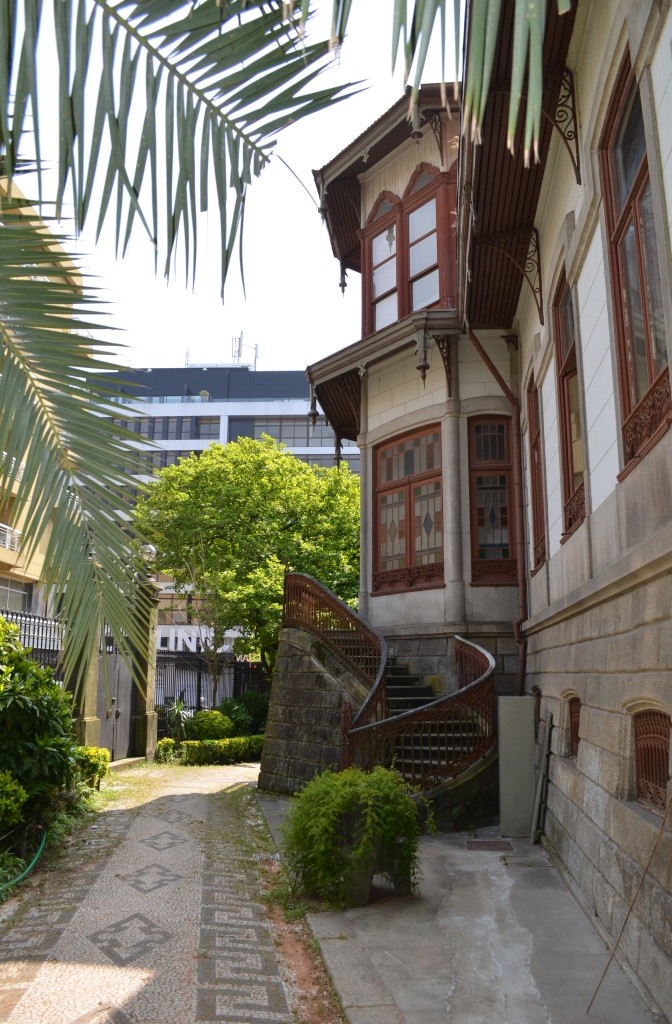
I have no idea what house is this, but I like it
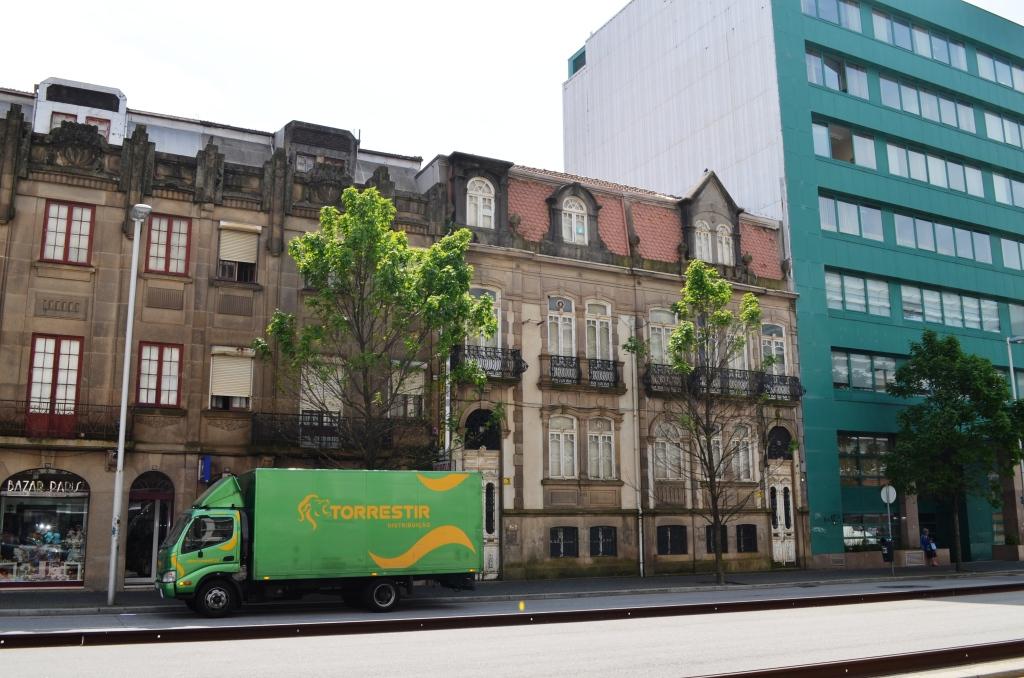
Love the combination of old and new – only in Europe…
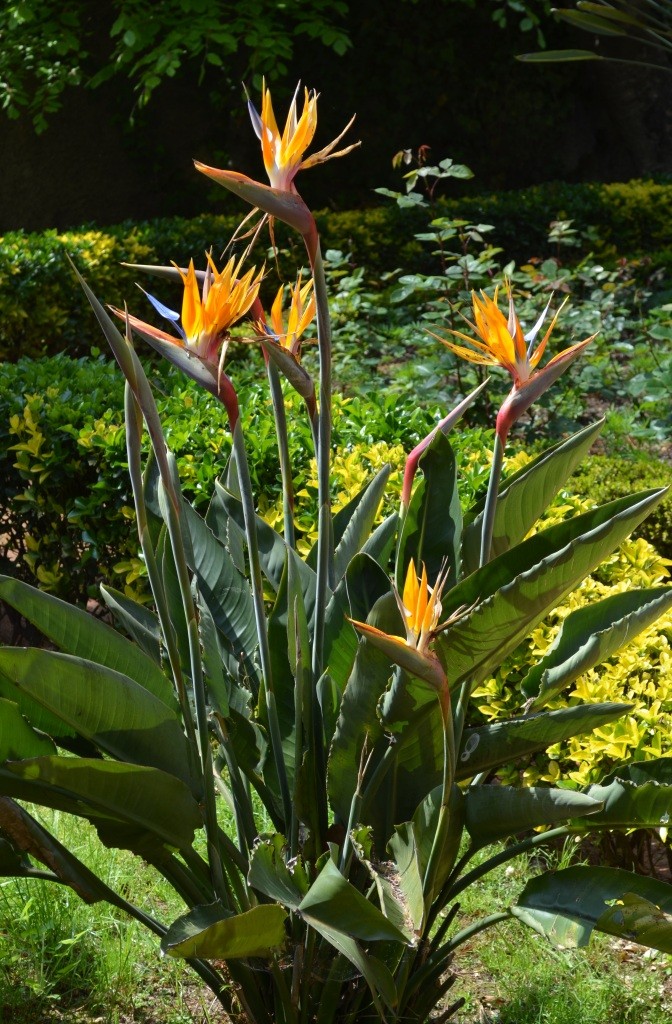
I’m sure you knew that I will not leave you without flowers
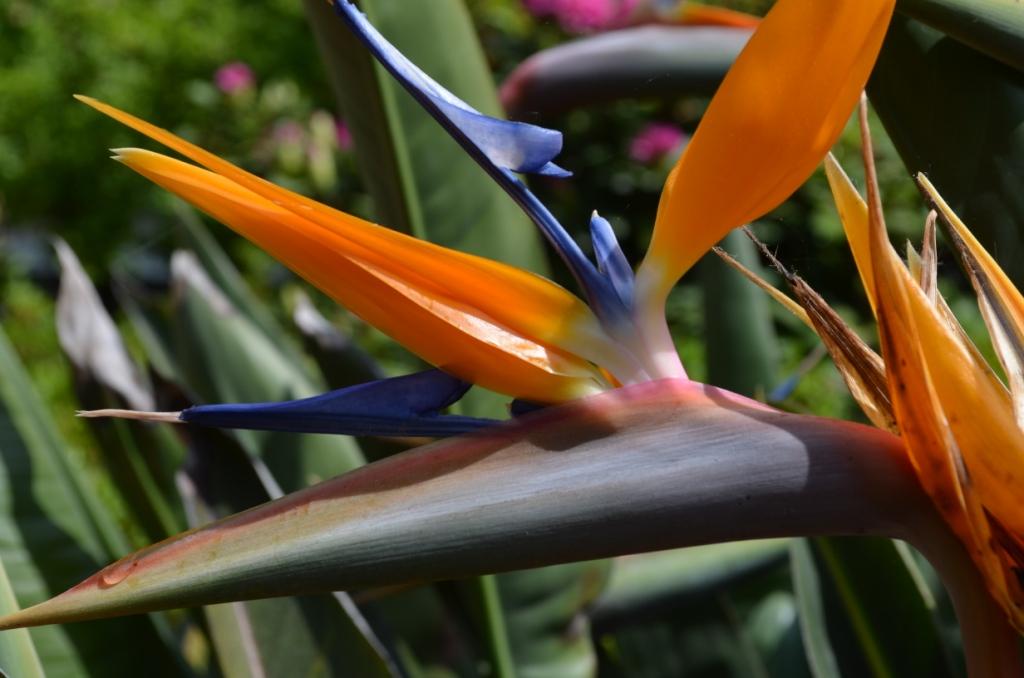
and more flowers
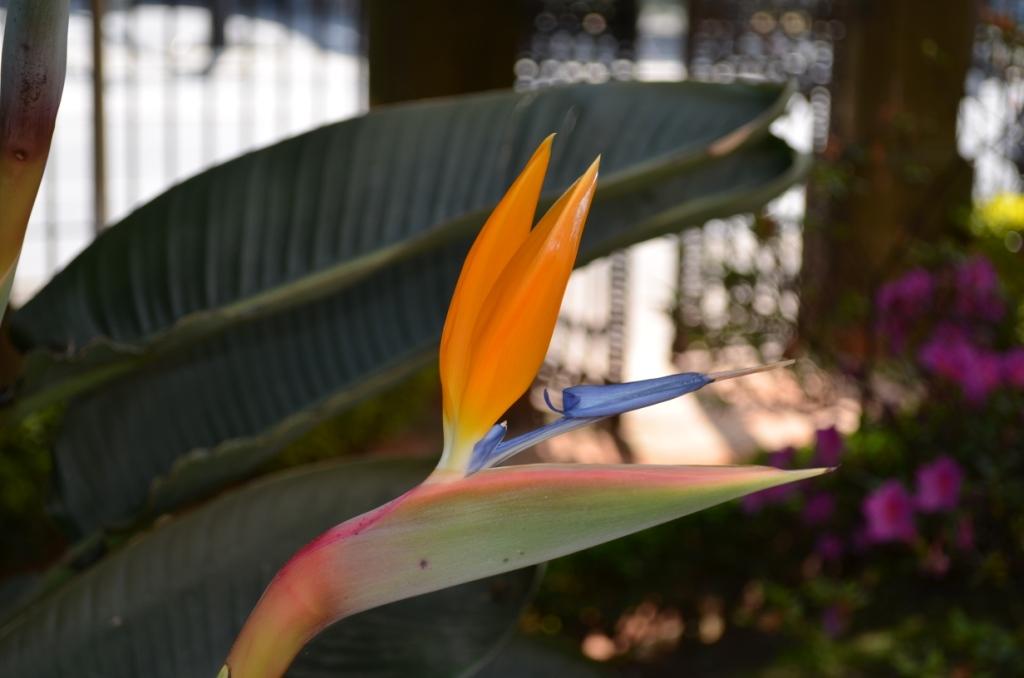
and more flowers…
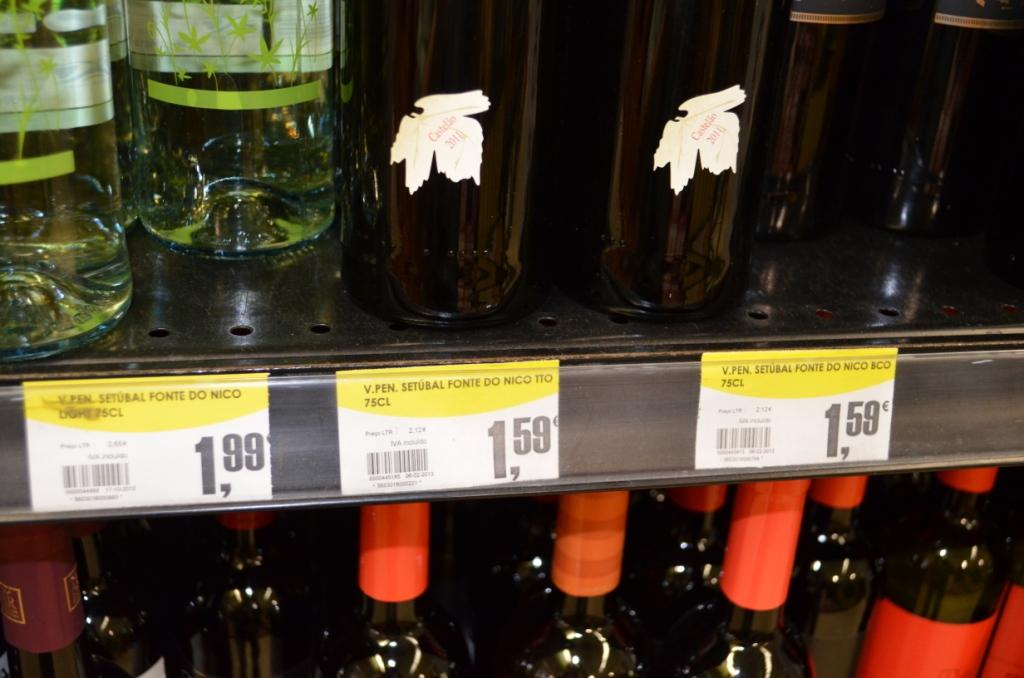
When was the last time you saw $2/bottle wines?
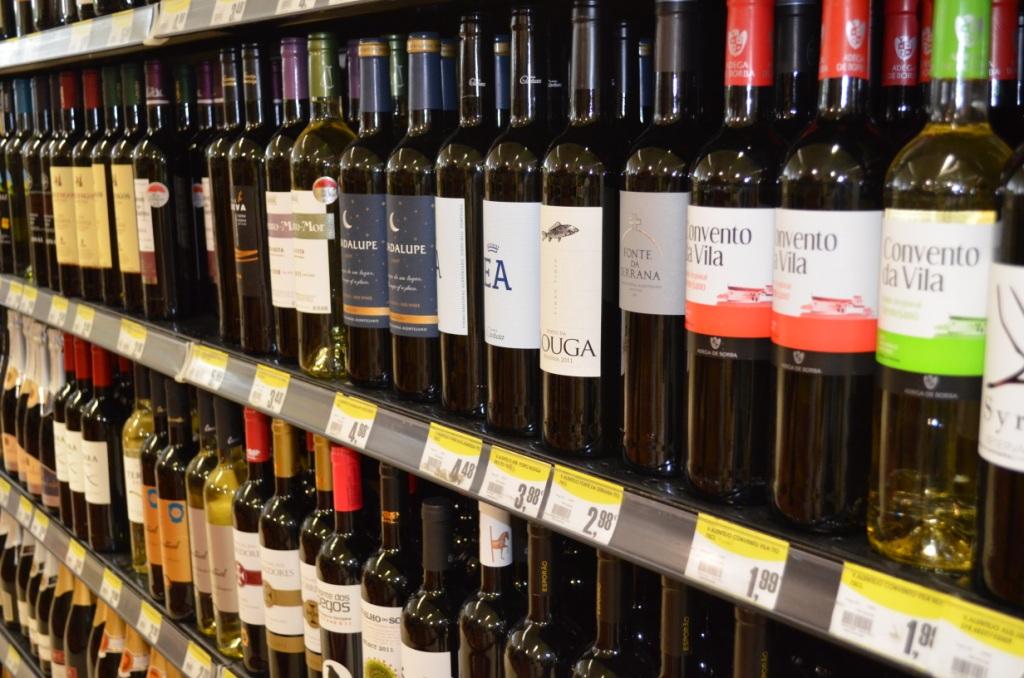
Actually, a lot of very inexpensive wine
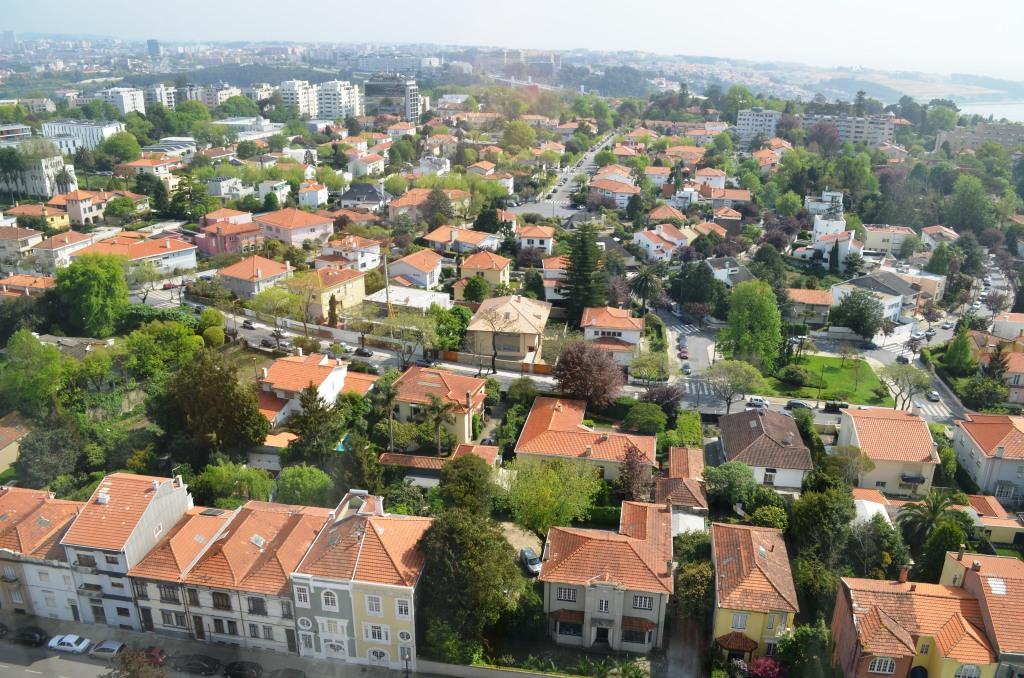
yes, I’m a sucker for the red roofs… Never can get enough of them…
That’s all I have for you for today, folks. Don’t worry – the wine quizzes will be back, just after we will talk a bit about Port. Cheers!
3 Days in Vegas – Day 3: Around and About
This is the last post in the series about our 3-days excursion to Las Vegas, which took place last September. In case you missed posts about first two days, here are the links – Day 1 Part 1, Day 1 Part 2 and Day 2. Yes, you should expect more pictures too.
 Just to recap, on the first day we were getting acclimated in Las Vegas and were running around to the point of total exhaustion. Our second day was all about amazing Grand Canyon experience, on which I reported with inclusion of lots of pictures. By the way, I don’t know if you noticed the “mini-quiz” question at the end of the second day post – I was asking you what I could’ve tried to take the picture of.
This was actually my attempt to take a picture of the Hoover Dam during the night from the window of the moving bus – talented, right?
Let’s proceed with our third day. This was our last full day in Las Vegas, as we were going back home the next day, thus our goal was to get as much of Vegas as possible within one day, but – at a reasonable pace. Besides, it was my wife’s actual birthday, so we had to do something about that as well.
I started my morning from the walk to the nearby convenience store and the liquor store. Wait, not true. I actually started my morning from taking of a few pictures through our room’s window. Just to show you that all those casinos are not called “resorts” for nothing, here is the proof:

And here is the view of the strip from our room:
 Now, let’s talk about the morning. You see, I already mentioned before that I have a problem with paying $4 for the bottle of water. Moreover, we prefer sparkling water which is often not even available in little stores inside the casinos. The convenience store was located literally across the street from Tour and Travel lobby of Mandalay Bay which we used the day before, and the liquor store was in a close proximity as well. The reason to go to the liquor store? I’m a cheap bastard, add I also have an idea of general wine prices, which makes me cringe looking at quadruple retail prices in the restaurant wine lists – thus getting a bottle of wine to for us to drink later on sounded like a good thing to do. I got a few bottles of seltzer, a bottle of Cava and California red blend – tasting notes will follow later.
Done with that, back to the room at around 9 am – time for a breakfast. Instead of going again to the buffet, we decided to go to one of the sit down restaurants inside the casino, Raffles Cafe. We decided to get two different omelets and over-sized french toast – all the food was okay, but not great. Well, at least pictures look okay:

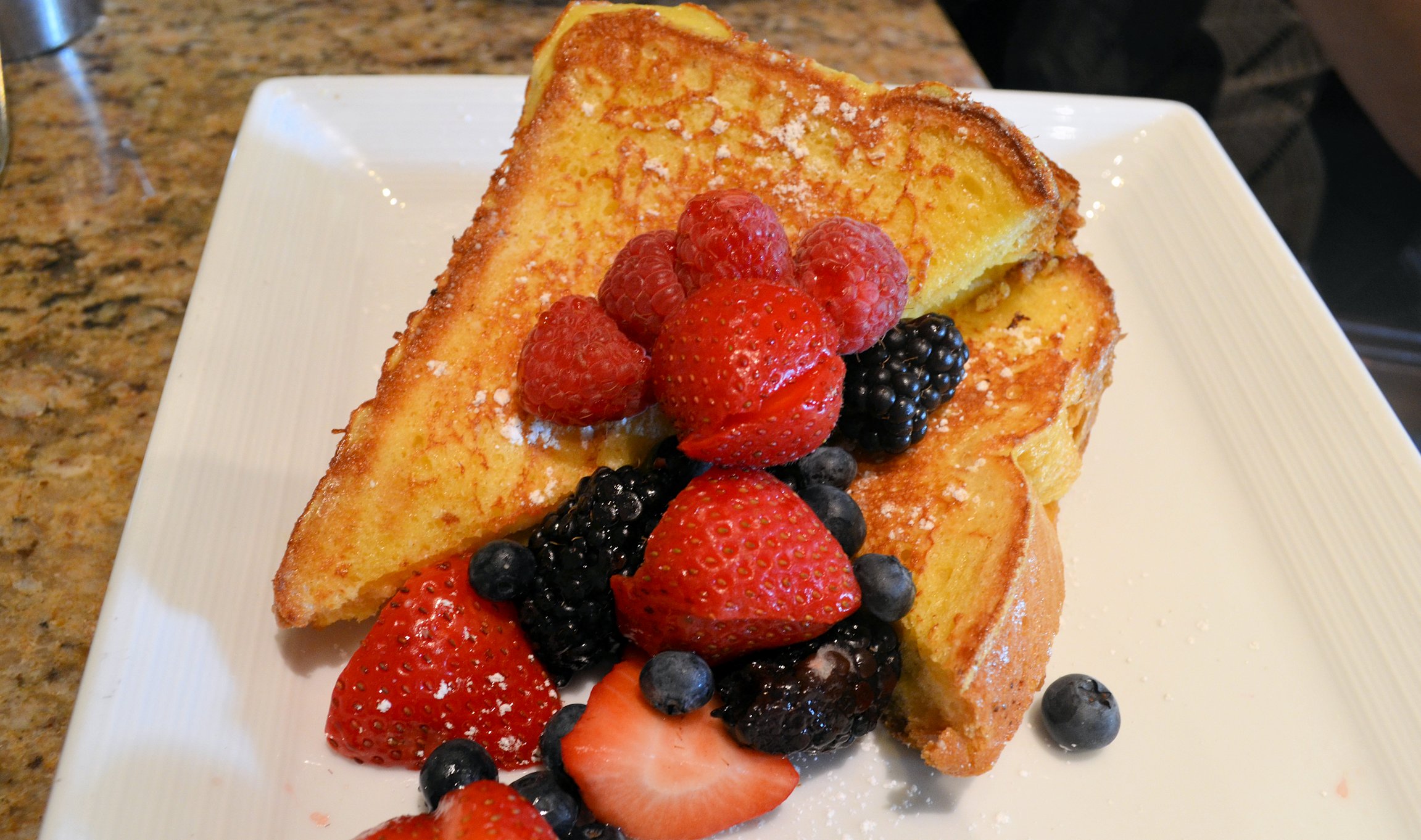
On the negative side, we had to wait a loooong time. And price wise, we paid for three dishes practically the same amount as in the buffet, so good buffet, such as the one at MGM Grand, definitely provides much better value. Please understand that I’m not taking about quantity of food – we ended up eating a lot more in the restaurant versus the buffet – I’m talking about quality and variety.
For the Day 3, our plan was simple – to enjoy ourselves. We already had two very intense days, we saw and experienced a lot, so no matter how little we would see on the day 3, our mission was already accomplished.
Let’s talk again about little planning. I like to know in advance what is happening in the place I’m going to (especially in the place like Las Vegas, where there are literally millions of things happening every given moment). Based on some prior reading and past experience, I had a few things in mind. “Bodies” exhibition, on its last few days, conveniently located at Luxor. Eiffel tower at Paris hotel. Dinner at buffet in Bellagio. Night time adults show, but not too late as we have to fly home the next day. More walking around without killing ourselves, as we did on the first day. Oh yeah, and we have to drink the wine at some point. Anyway, I think this was a pretty good plan, so we started from walking to Luxor and getting tickets for “Bodies” and the evening show called Fantasy.
“Bodies” had been going for a while already, exhibiting in different cities around the country. It actually presents lots of completely dissected human bodies and even individual organs, preserved with the special compounds and showing how our bodies operate. We were not allowed to take any pictures, but you can find some examples and more information about preservation process and other details at this link. We walked through the whole exhibition in about 40 minutes, and at times it was necessary to forcefully compose ourselves, as some visuals just got to you, so we both were very happy to finally walk through the exit door.
Our next stop was Paris (the casino, of course). Considering that this was Sunday in the middle of the day, we chose taxi as the mode of transportation and we got to Paris in about 5 minutes and under $10. Our goal was to visit at Eiffel tower, where you can get upstairs and enjoy 360° view of Las Vegas. This is the paid attraction, so we had to get tickets (there was no line). Quick elevator ride up, and here we are, looking at Bellagio fountains and all around from the top.

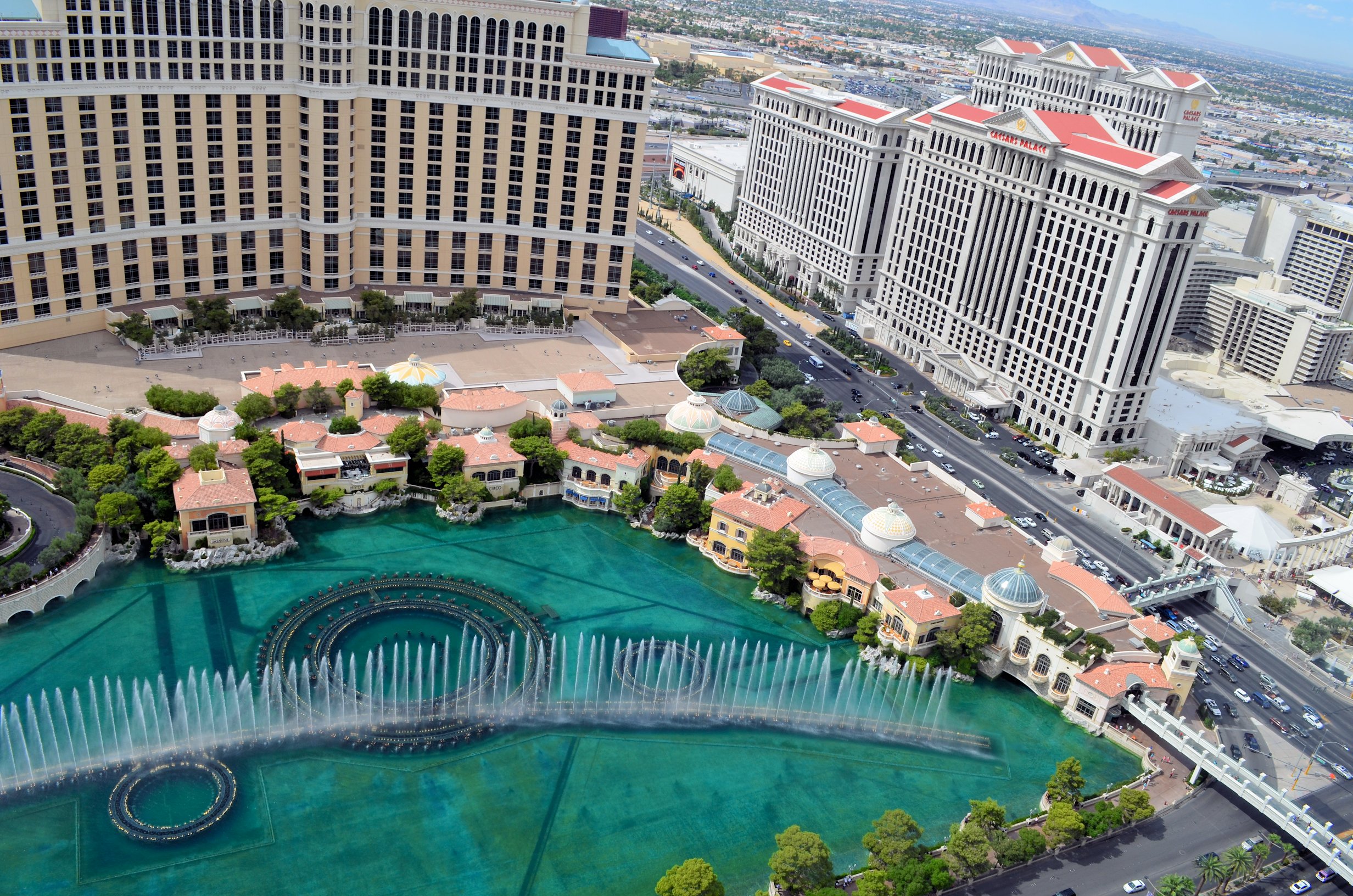


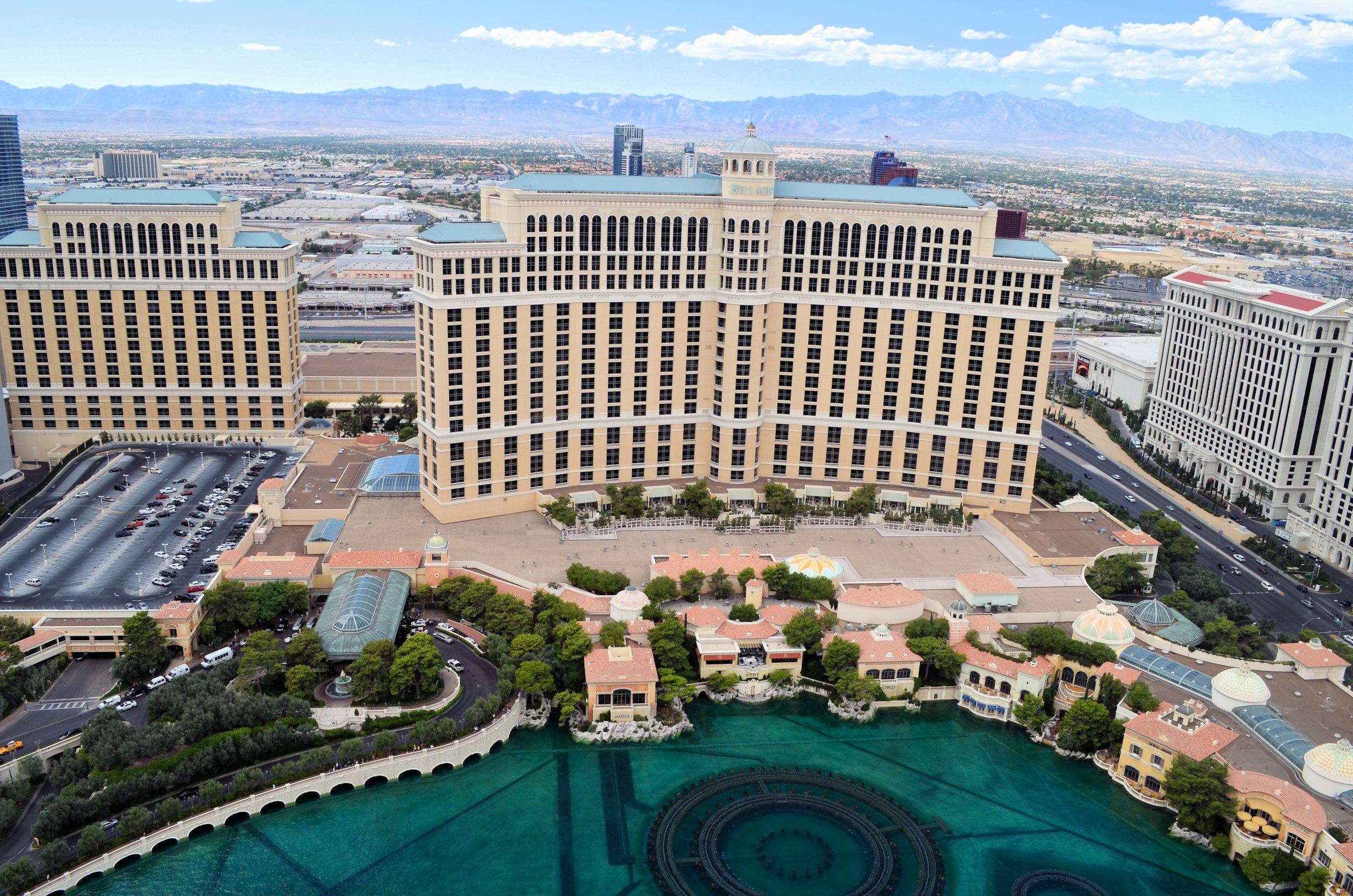
One interesting fact is that the Eiffel tower replica at Paris casino was originally designed to be an exact copy of the actual Eiffel tower, in exactly same size – but Las Vegas airport is too close, so the resulting tower was built at the half size of the original. Still, the views are beautiful and well worth your time.
As I mentioned, we didn’t want to squeeze too much into one day, so we decided to visit some of the casinos within walking distance of Paris, preferably with some additional attractions. First we went to Flamingo, which boasts Wildlife Habitat. That Wildlife Habitat was not difficult to find, but – I wouldn’t say this was exactly what we expected. There were a few flamingos, some other birds and a few fishes – pretty cool for Las Vegas, but hardly worth any special attention (unless you never saw a flamingo before, you are now in Vegas and seeing the pink bird was always your dream).
 As a side note I have to also mention that Flamingo is the most run-down casino on the strip, at least from what we saw (bottom line – you can skip it).
Next stop (short walking distance) was Caesars Palace.

From what we saw, this was probably the most lavishly appointed casino – beautifully designed in the classic Roman style.
We made an attempt to see a free show, called the Fall of Atlantis. Finding it required a pretty steep walk through a huge mall called Forum Shops. By the time we found the place, we had to watch the show somewhat from the distance, as there were lots of people there already.
 After two minutes, we found the acoustics terrible and show boring, so we decided to walk back through this huge place will millions of stores and then we just spent some time sitting on the bench and admiring all the beautiful architecture around us.


Next we walked to the Bellagio – our early dinner was calling. First we went again to the conservatory, now to see it in the day light. I took a few pictures, similar to the ones on the first day, only with a different lighting.


And – we had a light music to add up to the experience.
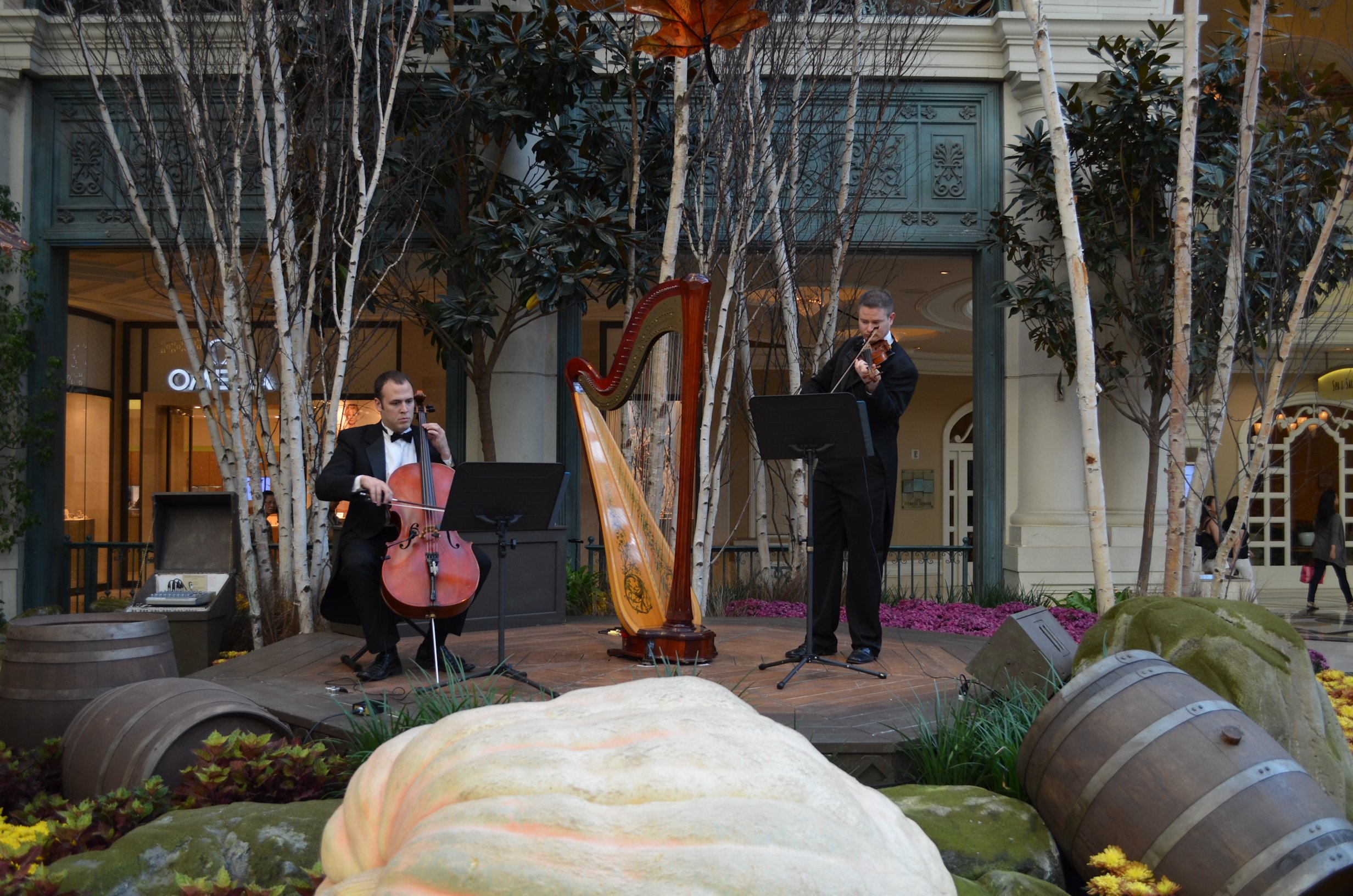
Do you think I can leave you without pictures of the flowers? Not a chance…
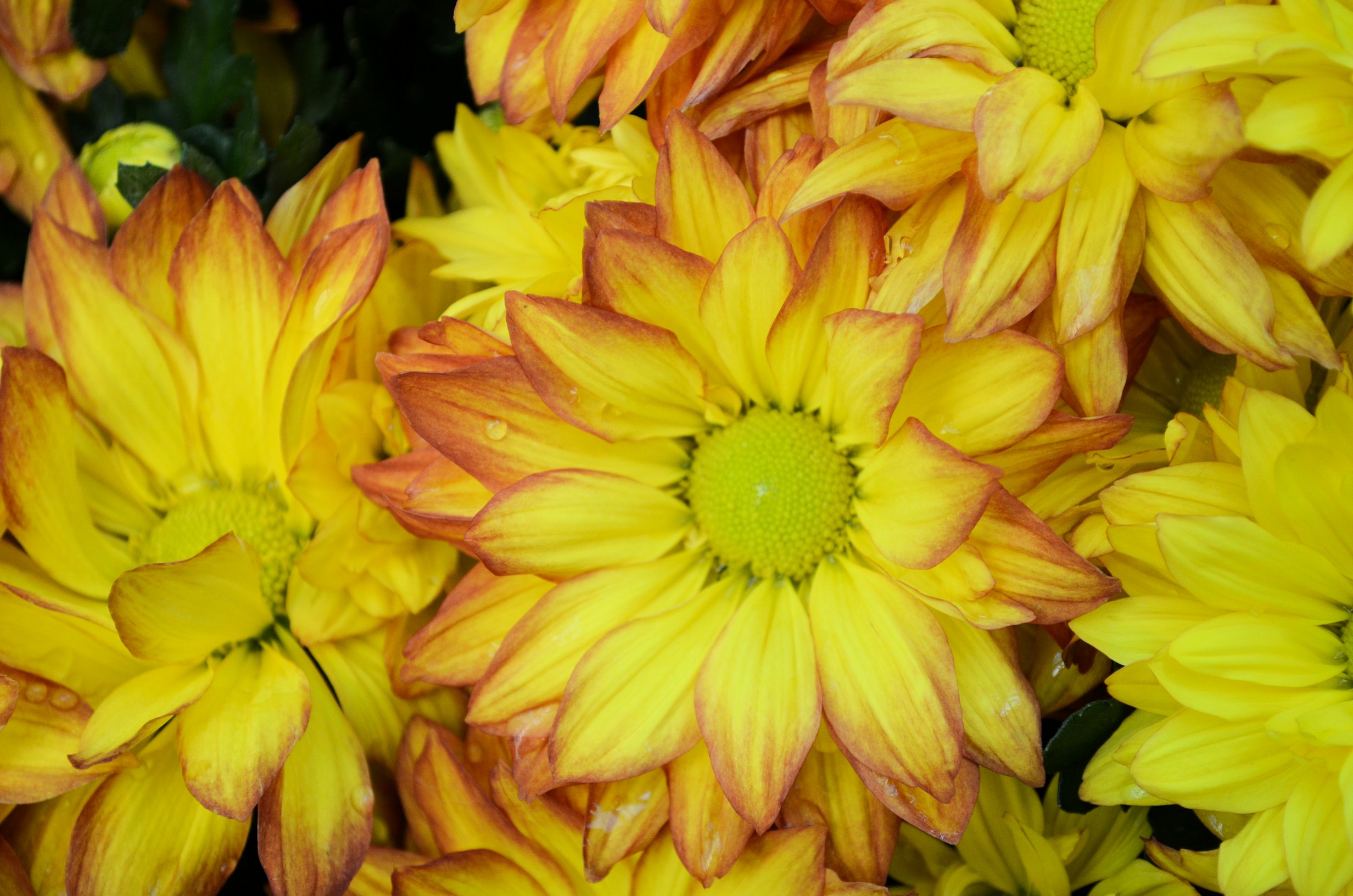

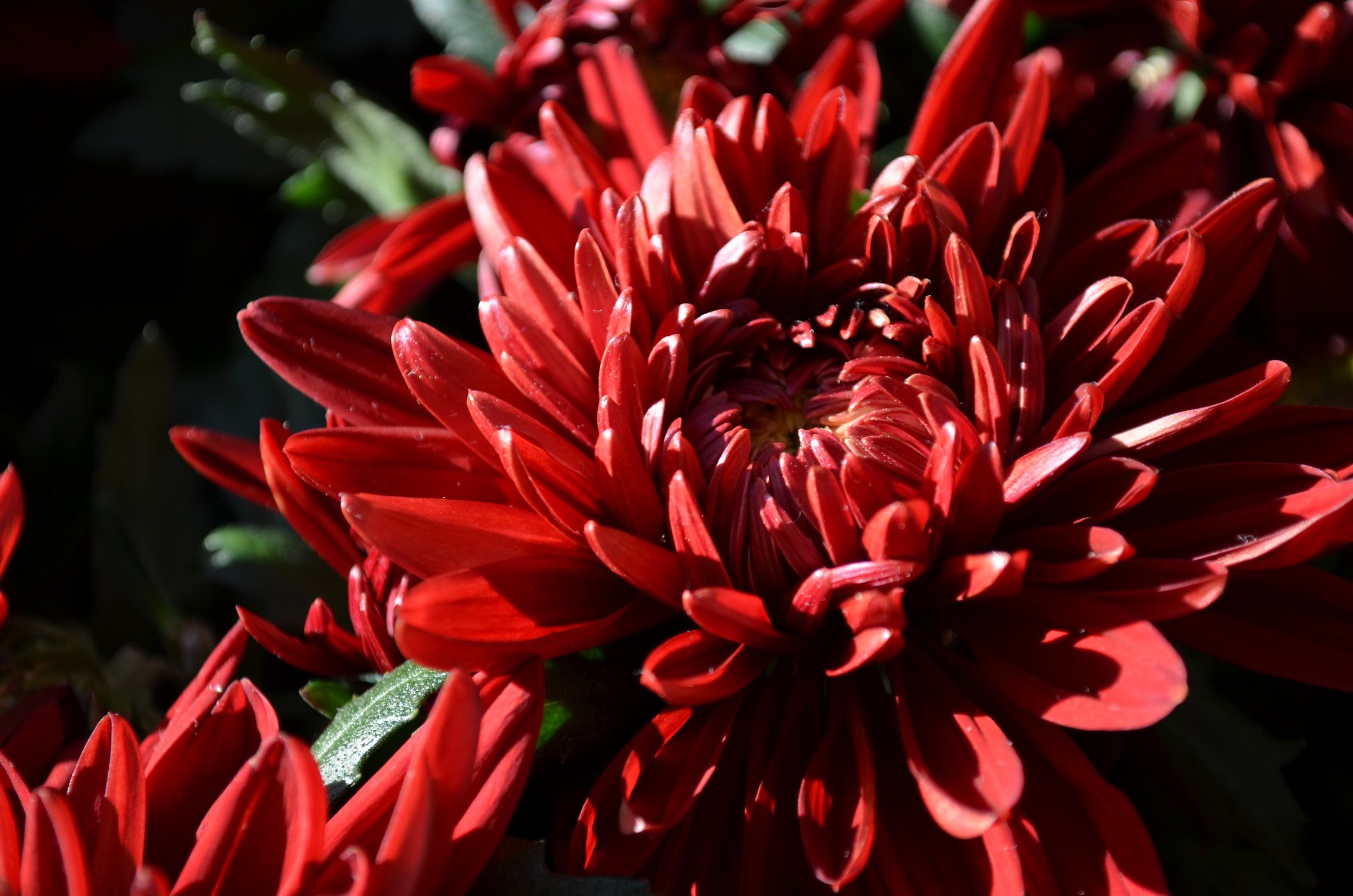
We headed to the Bellagio buffet at around 4:45 in the afternoon, which was a good call – when we were leaving it at about an hour later, the waiting line was extending back into the casino. In general, I believe the buffet at Bellagio is considered to be the best in Vegas (and I remember being pretty excited after visiting it about 5 years ago). This time – it was good – good variety of food, sumptuous crab legs (probably the main attraction there), good desserts – but it was lacking the “umpf”. May be because it was Sunday, may be my taste changed – I’m not sure, but the excitement was not there.
In any case, it was a good dinner, and now it was the time to go back to our room, open the wines and relax.
Here are tasting notes for the wines.
Poema Cava Brut Penedes ($14, 11.5% ABV) – yeasty, with notes of toasted bread, good acidity, good balance – excellent QPR

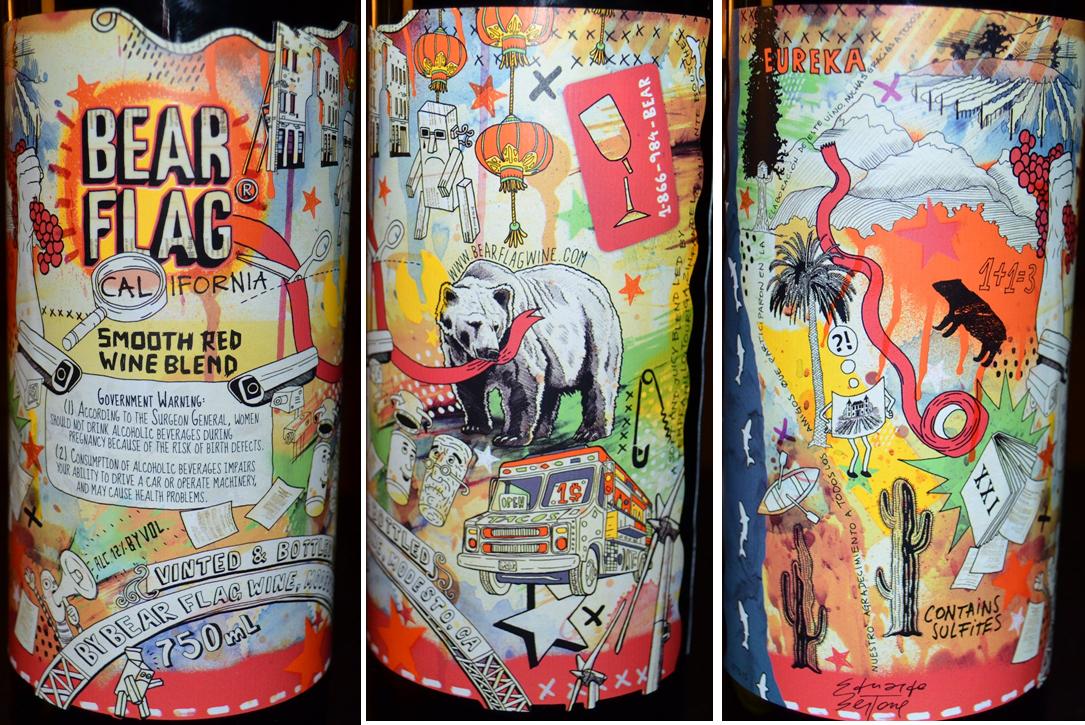
The red wine was Bear Flag Smooth Red, California ($12, 12% ABV) – a blend of Tempranillo, Touriga, Zinfandel and Alicante Bouchet – very nice, with the hint of smoke and cinnamon on the nose, ripe cherries, coffee and dark chocolate notes on the palate, good acidity, with little sharpness on the palate and mouthfeel a touch lighter than you might want – but very drinkable. Great QPR. Also the label was very interesting, completely surrounding the bottle:
Believe it or not, but this is pretty much all I have to tell you about our 3 days in Vegas. Yes, we went to see the show, Fantasy, and I guess it was something we expected – but nothing more and nothing less.
The next day we were on our way back to New York, and we were very happy to get home and hug the kids.
All in all, it was a great experience, and we had a great time – and we will gladly come back to Vegas at some other time.
I don’t know if you found any of these posts useful or even remotely funny, but I hope that at least liked a picture or two. Until the next time – cheers!
3 Days in Vegas – Day 2: Grand Experience
Last month I told you about first day of our 3-days excursion to Las Vegas (here are the links to the Day 1, Part 1 and Day 1, Part 2) – now it is the time to tell you about the Day 2 and really inundate you with pictures. Here we go.
When I opened my eyes in the morning, the first thing I did was to grab my phone. 5:58 AM. 5:58 AM. 5:58 AM????? Our tour pickup was supposed to be at 6:10 and the concierge highly recommended to be at that lobby at least at 6:05 – which will be in exactly 7 minutes from now – and I just opened my eyes???? Did we slept through the alarm clock, actually two of them? Okay, not important now.
“Hey, we blew it” I practically screamed grabbing my wife on the shoulder. She opened her eyes – and let me tell you something about my wife – she really (REALLY) doesn’t like to be rudely awaken in the morning – not with the loud voice, and especially not by the sudden push on the shoulder. “What are” she started, and then, lucky for me, she saw the clock – and she realized that my actions were, let’s say, somewhat justified.
I don’t know, my readers, what is your best “get out of the house” time – but I can tell you that at 6:02 we were already running through the casino floor. At 6:09 we were standing outside at the Tour and Travel lobby, despite the fact that when we asked for directions to this Tour and Travel lobby, casino worker said “you need to get where ???”. And the most surprising part – we managed not to forget our ticket confirmation and the camera – probably two most important things we needed. I’m still impressed, even now, when I’m writing it.
Anyway, 10 minutes later, the small bus arrived, and it took us to the place where we were taking the big bus. We got our printout receipts exchanged for the tickets, got our breakfast, which was included in the price of the trip – and consisted of some kind of the strange dry oatmeal bar (never saw that before, it looked very different from the normal breakfast bar) and the coffee. Well, hell with the breakfast – Grand Canyon was waiting, so in the next 2o minutes, we all loaded onto the big bus and left.
Going to Grand Canyon was always my dream – and somehow it was always associated with Las Vegas – I guess it was an assumption based on the lack of knowledge. How does the saying go, “ignorance is bliss”? In many cases, it is. Grand Canyon is 250 miles away from Las Vegas. If I would’ve known that, I would probably say it is too far, and we would probably not even attempt going there. I learned of a distance only after we got the tickets (non-refundable, of course), so it was too late to change anything. But to tell you honestly, the trip was planned so well with all the stops, information and the movies, that we didn’t even feel the distance.
As we started moving, our bus driver introduced himself – his name was Frosty, and originally he was from Ohio (if I’m not mistaken), but was living in Vegas with the family for many years already. Actually, Frosty deserves the highest praise – he kept us safe, entertained and informed – what else do you want from the 10 hours drive?
We learned a lot of fun facts about Las Vegas and the life in it. Here are some of the facts as I remember them (and it’s been a while since the trip, people!).
- Las Vegas used to be the fastest growing city in US – it is not right now, but it is still among the top 10.
- Las Vegas gets about 2 inches of rain during the year (in a good year).
- Las Vegas has its own water police, which is easy to imagine based on the previous fact. If you are caught washing your car on the street, you will get some serious fine.
- Las Vegas residents don’t pay income tax – who needs income tax when you can charge $4 for the bottle of water in Casino?
- Las Vegas is the City which Never Sleeps. Well, there is nothing new here, and we know that New Yorkers also refer to their city as “city that never sleeps” (as well as people in Tel-Aviv, who say the same thing about their town). Can you change your car’s tires after midnight in New York? I doubt so. Can you shop in the dance supply store in New York after the midnight? I don’t think so. But you can – in LasVegas.
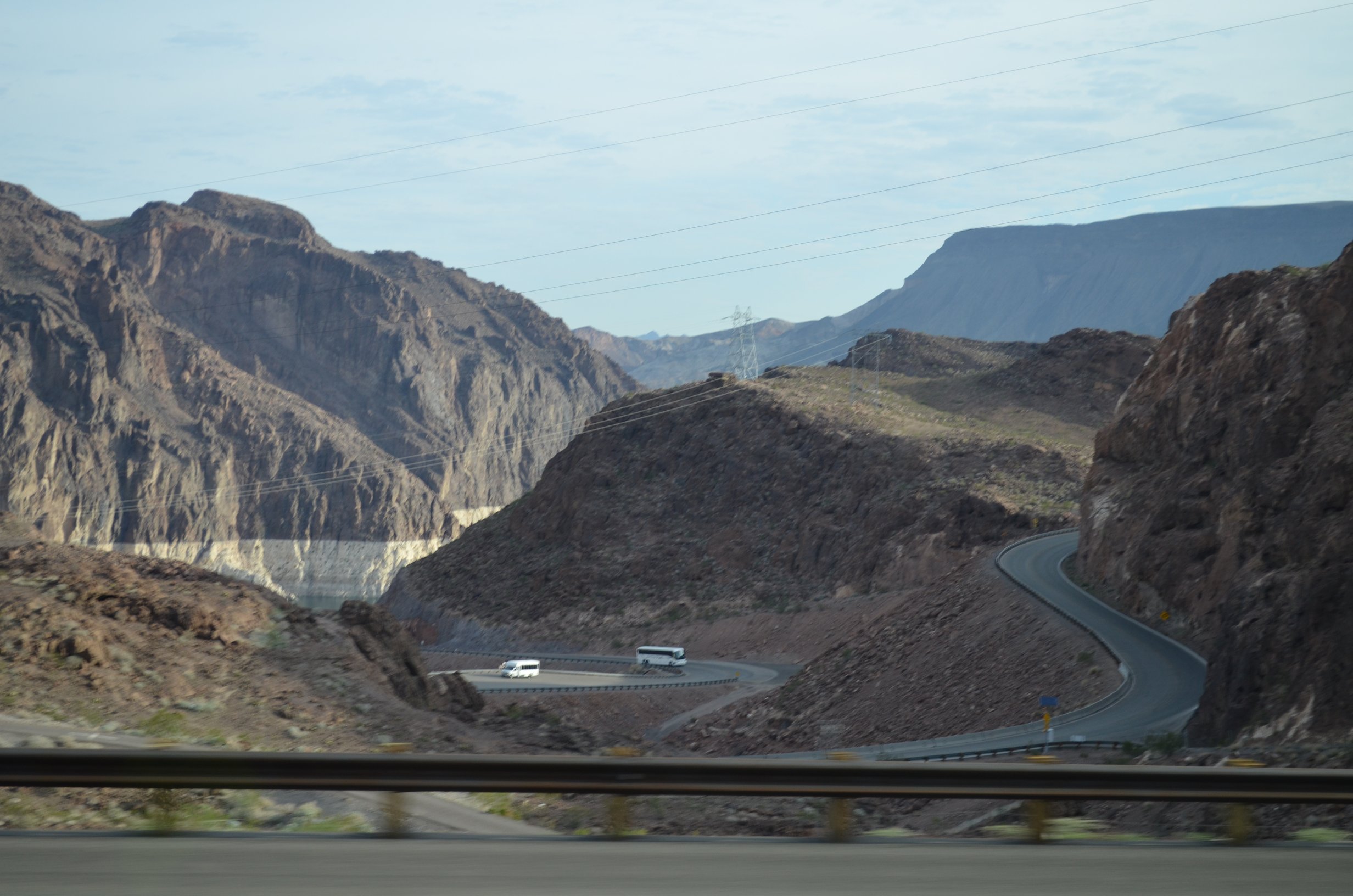
After we learned about the life in Las Vegas, we moved to the next subject – Hoover Dam, as we were getting close to it. No, we didn’t stop there, as we were driving on the new highway, which was not allowing any stops for sightseeing – but it was also making the trip shorter by about 2 hours, so all in all it was a positive thing. Here are some of my attempts to take a picture of the Dam through the window of the moving bus (yeah, fat luck):

We also watched a very interesting documentary about building of the Hoover Dam, where we learned about one of the most significant engineering projects in the US history, and about hard work and dedication of the people building that Dam during the years of Great Depression. We learned about Boulder City, Nevada, where gambling is still prohibited even today, which only very recently stopped being a dry city – and which is considered one of the best places to retire in the US. We learned that the people who were building the Dam had to sleep for many months right on the ground without any cover, and even if they were sick, they still had to bring themselves to work – if you don’t show up for any reason, there were thousands of people ready to take your job. Seeing the video of mighty Colorado River yielding to that hard work, sacrifice and perseverance of human beings was very moving as well.
We made a quick 15 minutes first stop – here is another picture for you:
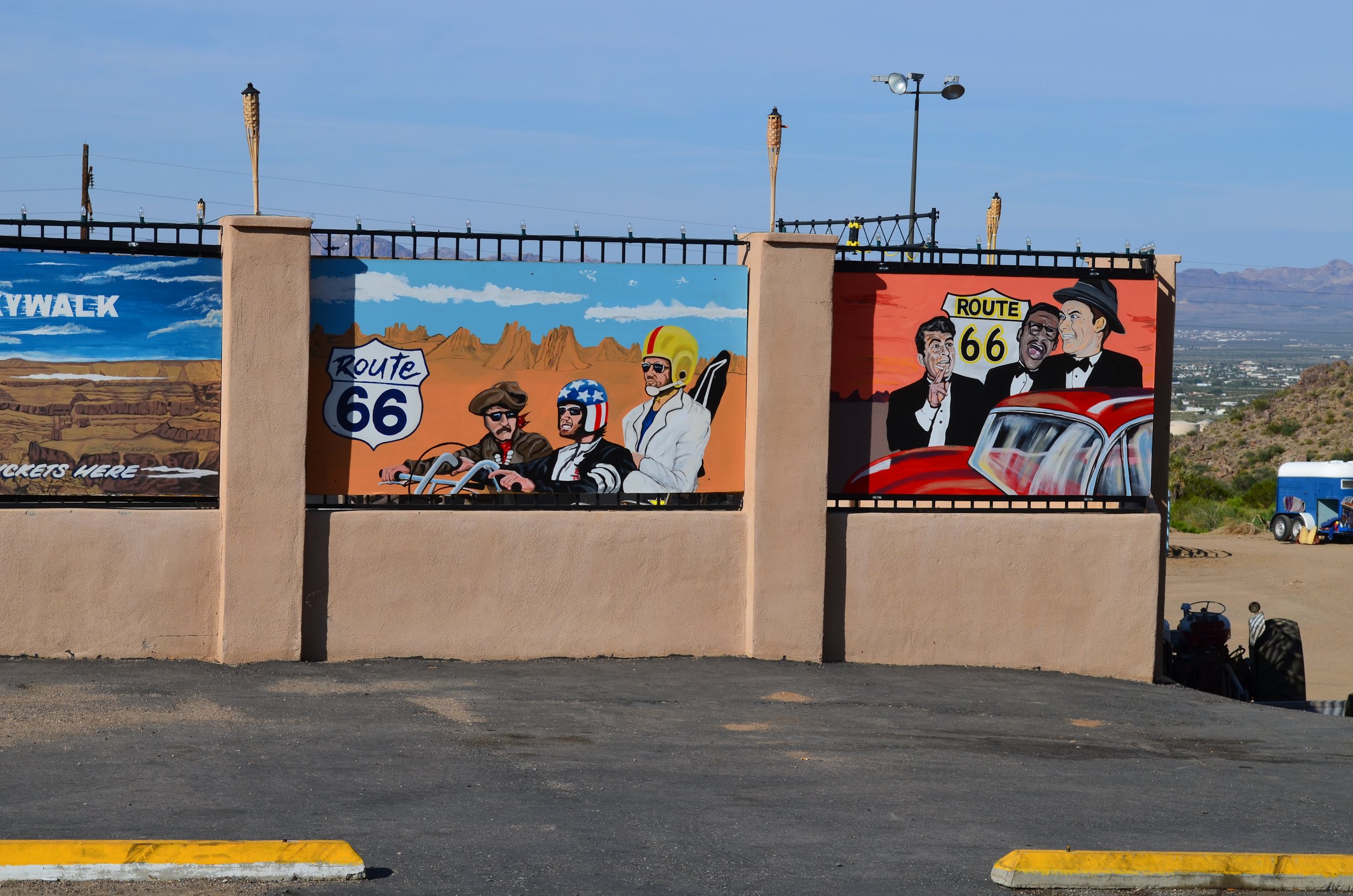
And after the stop we continued driving. We watched a movie, so the time went mostly unnoticeable, then we stopped for lunch – the lunch was done in the buffet style, of course, but it was very tasty! Note to self – take notes during the trip! By now, I don’t remember the name of the town where we stopped (the only thing I know- it was in Arizona), and I don’t remember the name of the restaurant – but the food was perfectly simple, and perfectly delicious in a home-style way.
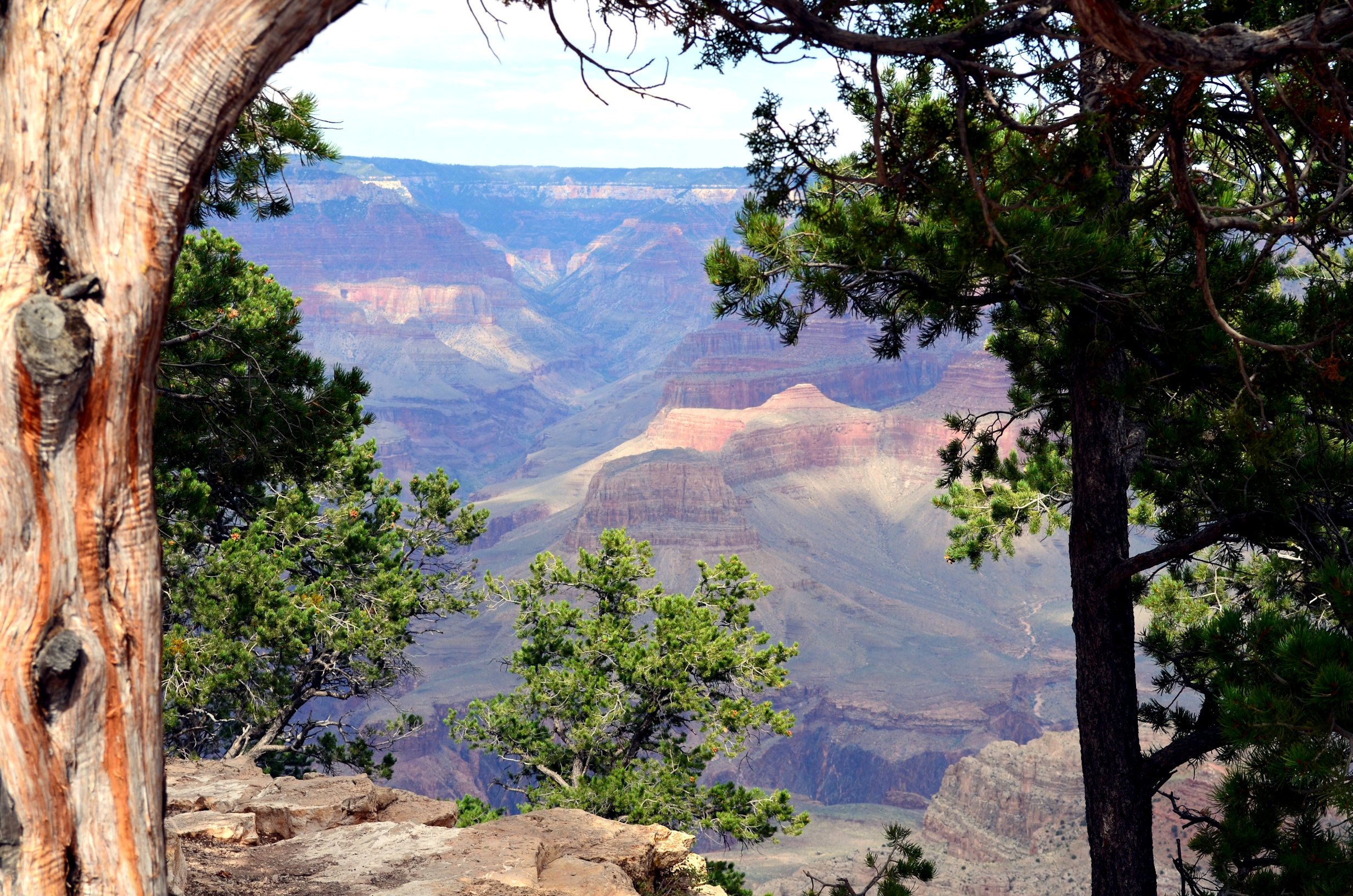
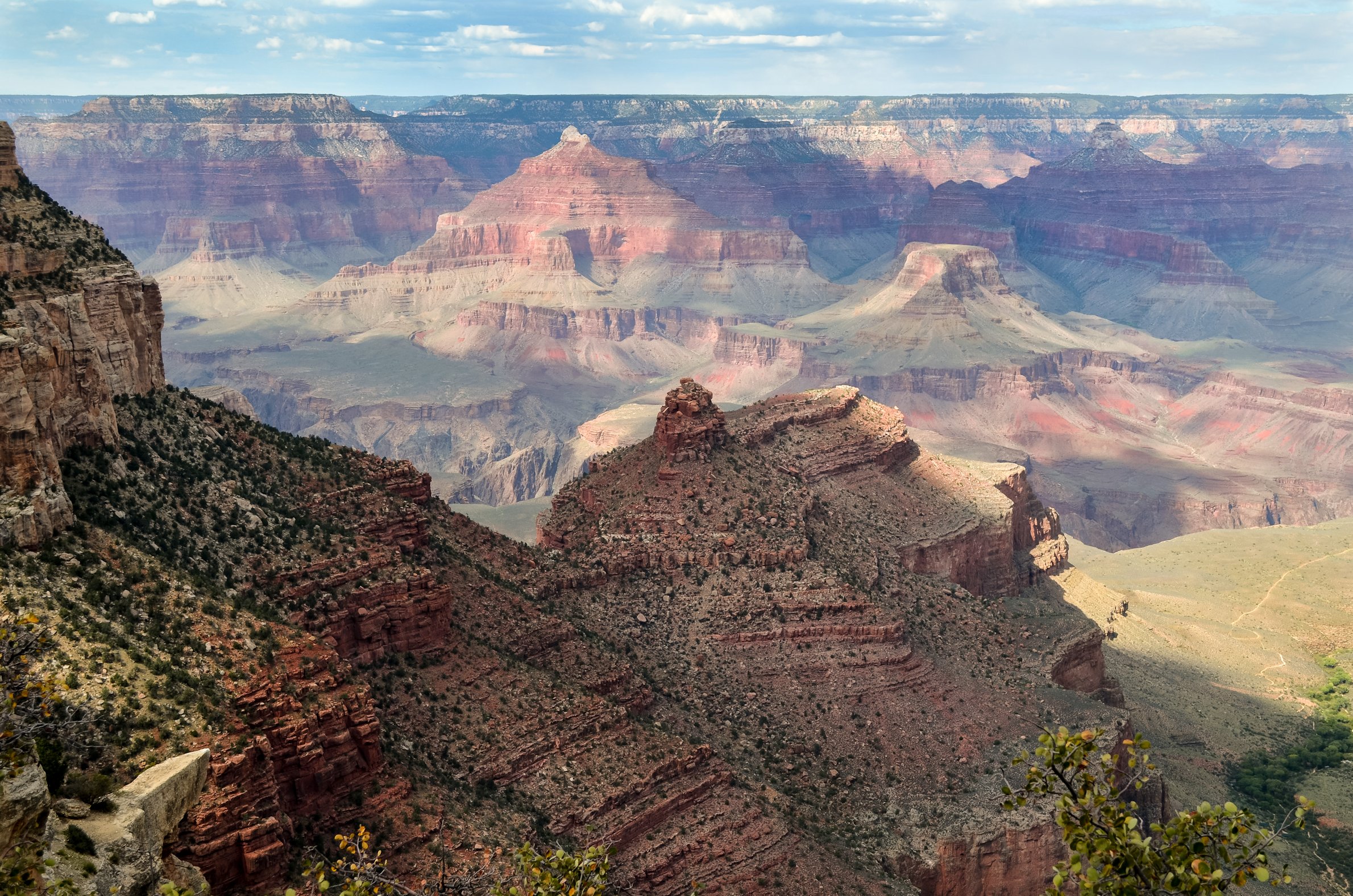
Once we were done with lunch, another 4o minutes ride, and we entered Grand Canyon National Park and arrived at the South Rim of Grand Canyon. And then the awe-inspiring view was all we could focus on for the next hour if not longer (it is hard to believe how short that hour appeared to be). No, my pictures unfortunately don’t convey the grandness of the experience and phenomenal range of emotions which those views impose on you (besides, I should’ve done better job preparing – at least some lens filters would do a lot of good). But for what it’s worth, here are the pictures:


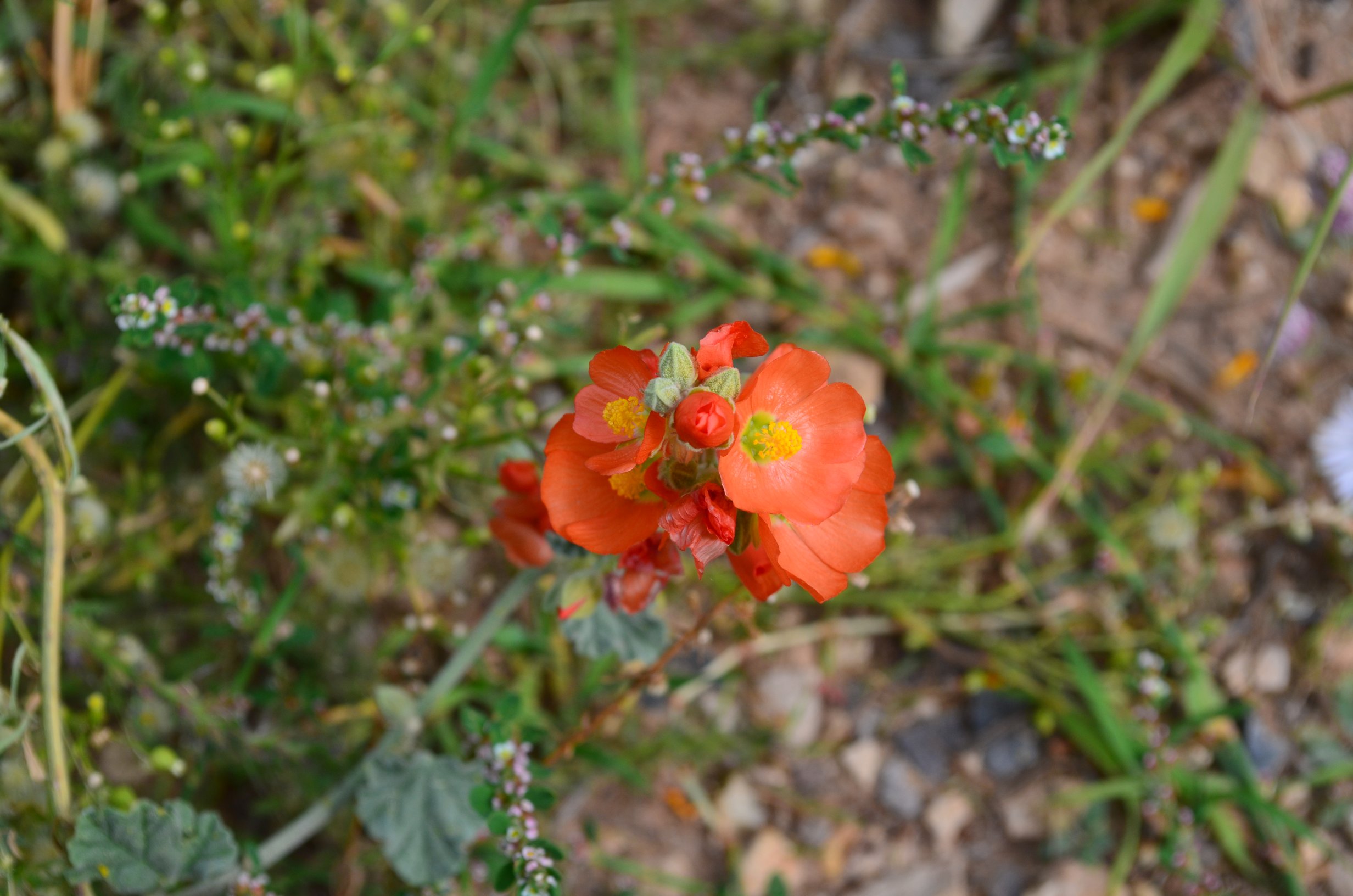
As you know, I love taking pictures of flowers – here are some at the Grand Canyon:
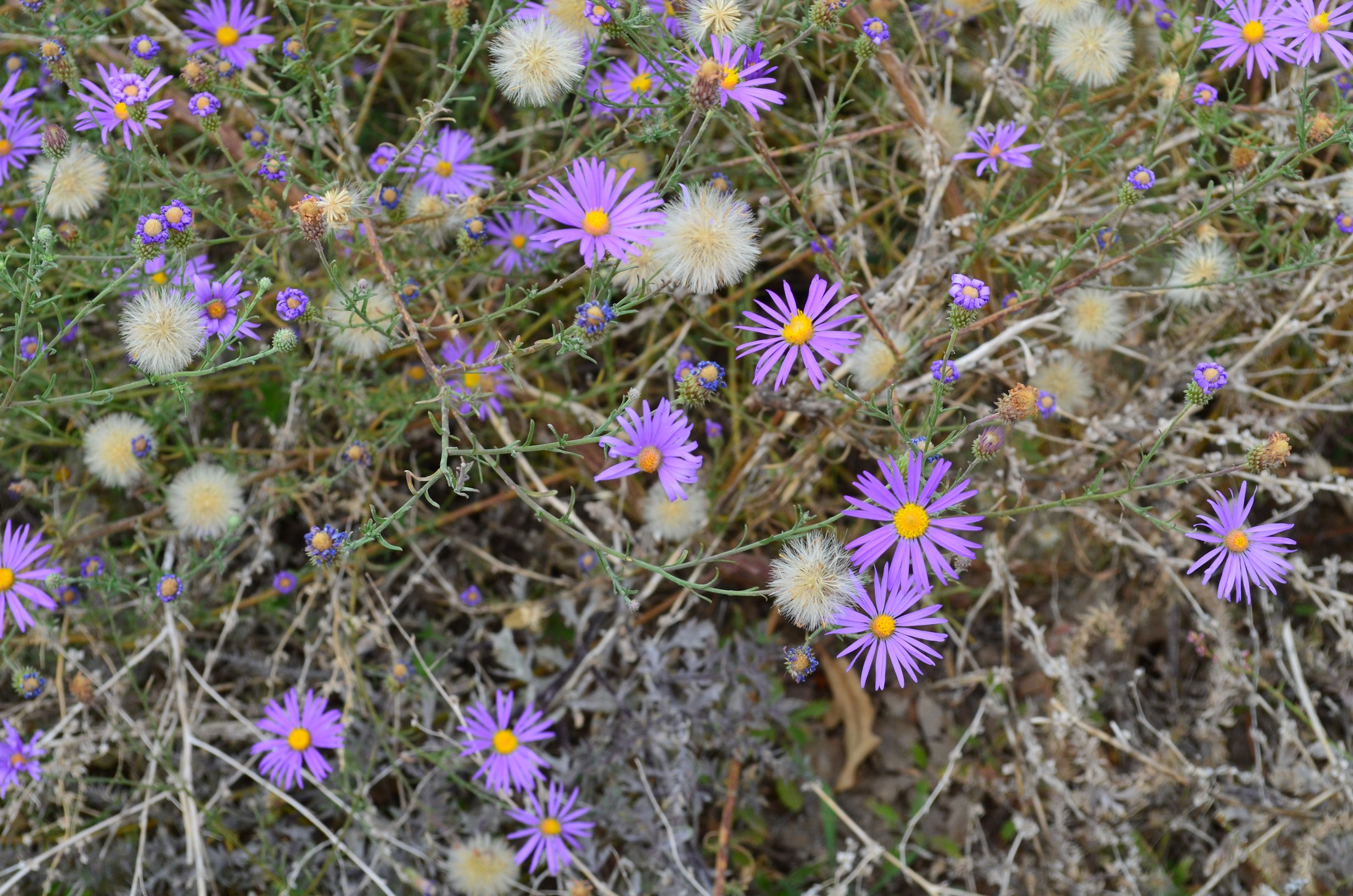
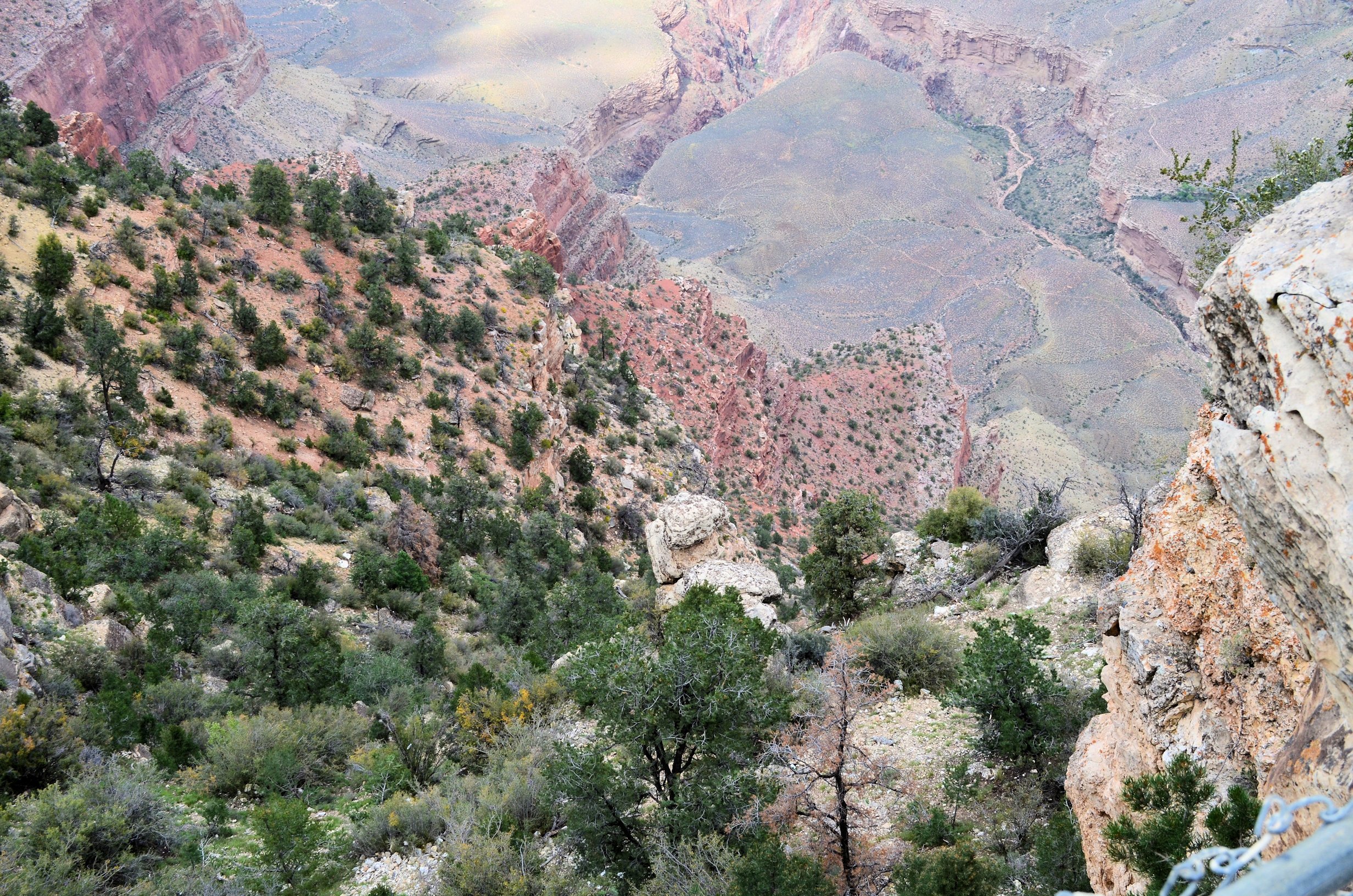
Is this the grand view or what?
Not a flower, but still fascinating:
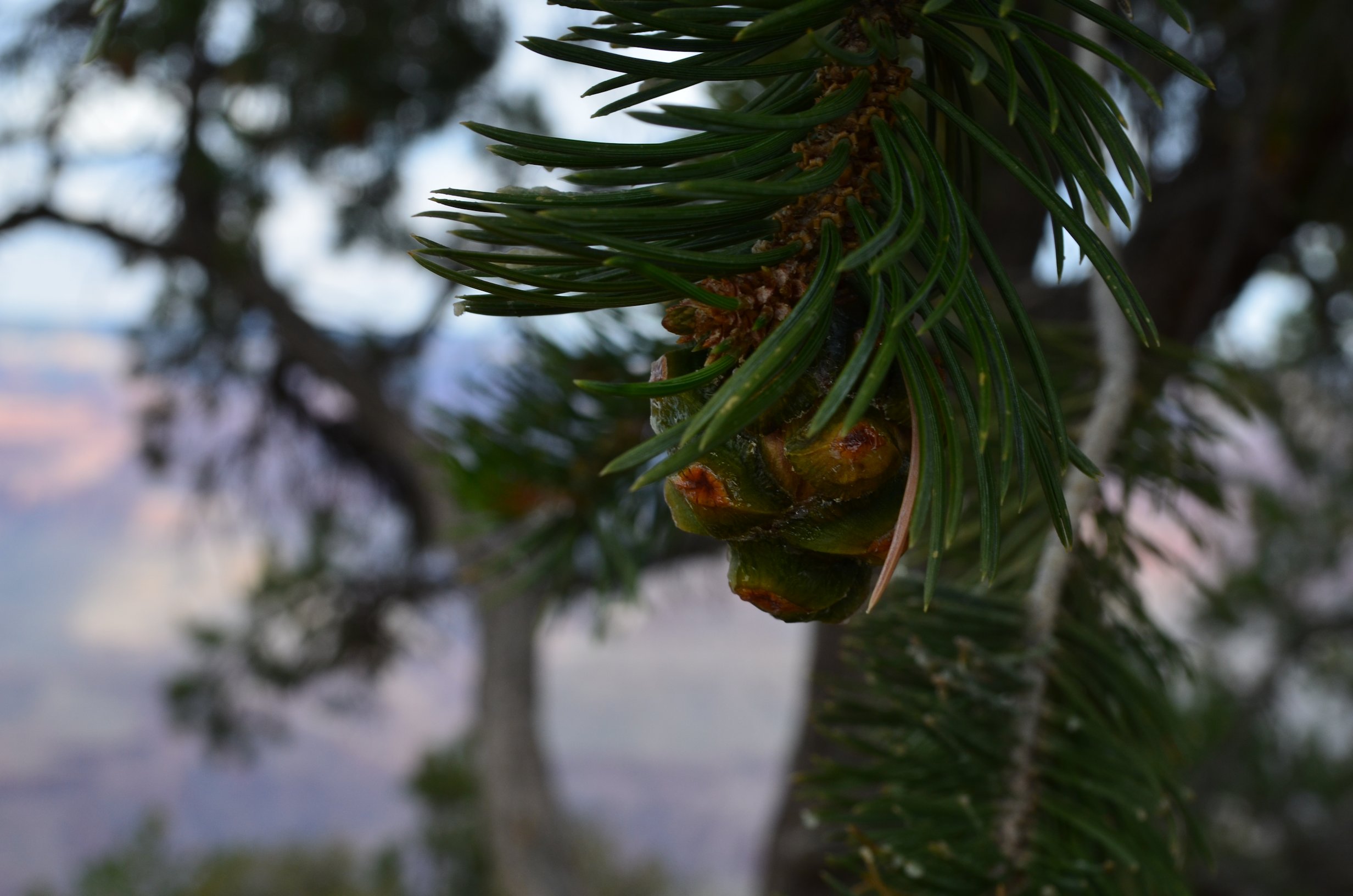



I have not idea what kind of plant is this, but it looks so good, I think it is holiday card-worthy:
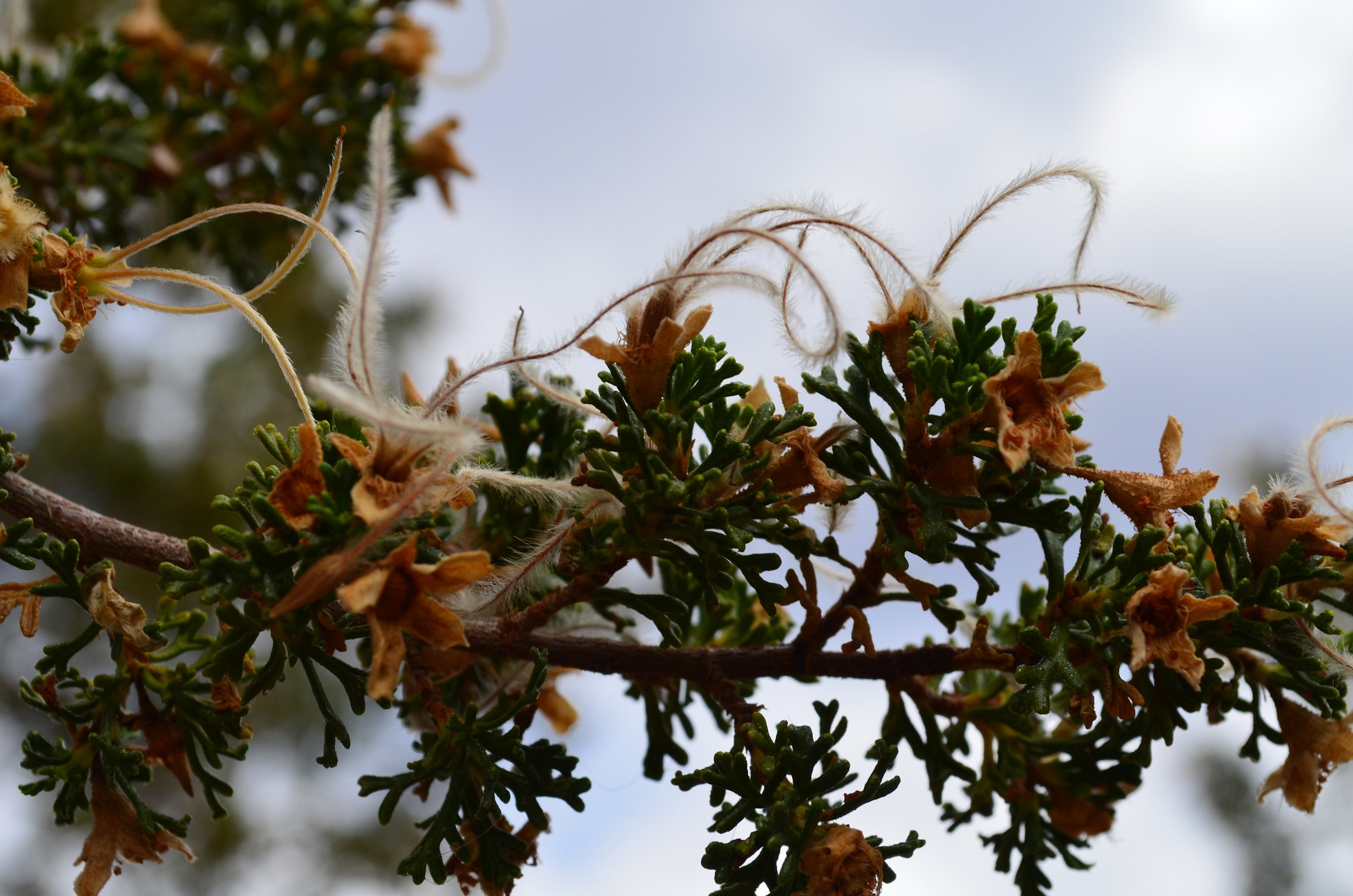
Do you think this branch was an alligator in the past life?

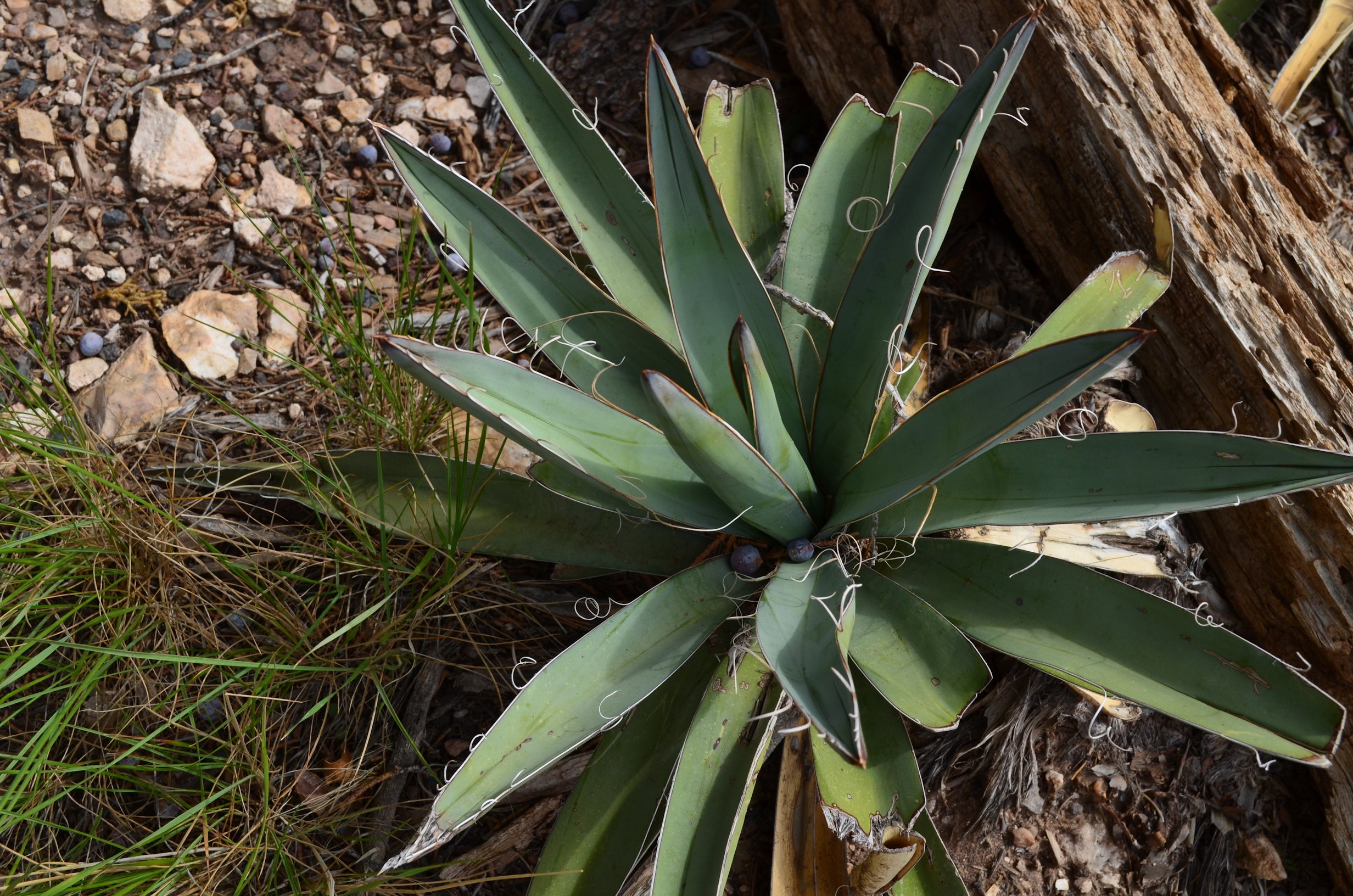
Was this an hour already? Ahhh, too fast! We got back to the bus and drove a bit more, then made another stop for about an hour. We stayed still at the South Rim, but at this stop there were few other “entertainment” options – small museum dedicated to the exploration of the Grand Canyon, an Inn, a restaurant, very big gift shop and so on. And here are more pictures:







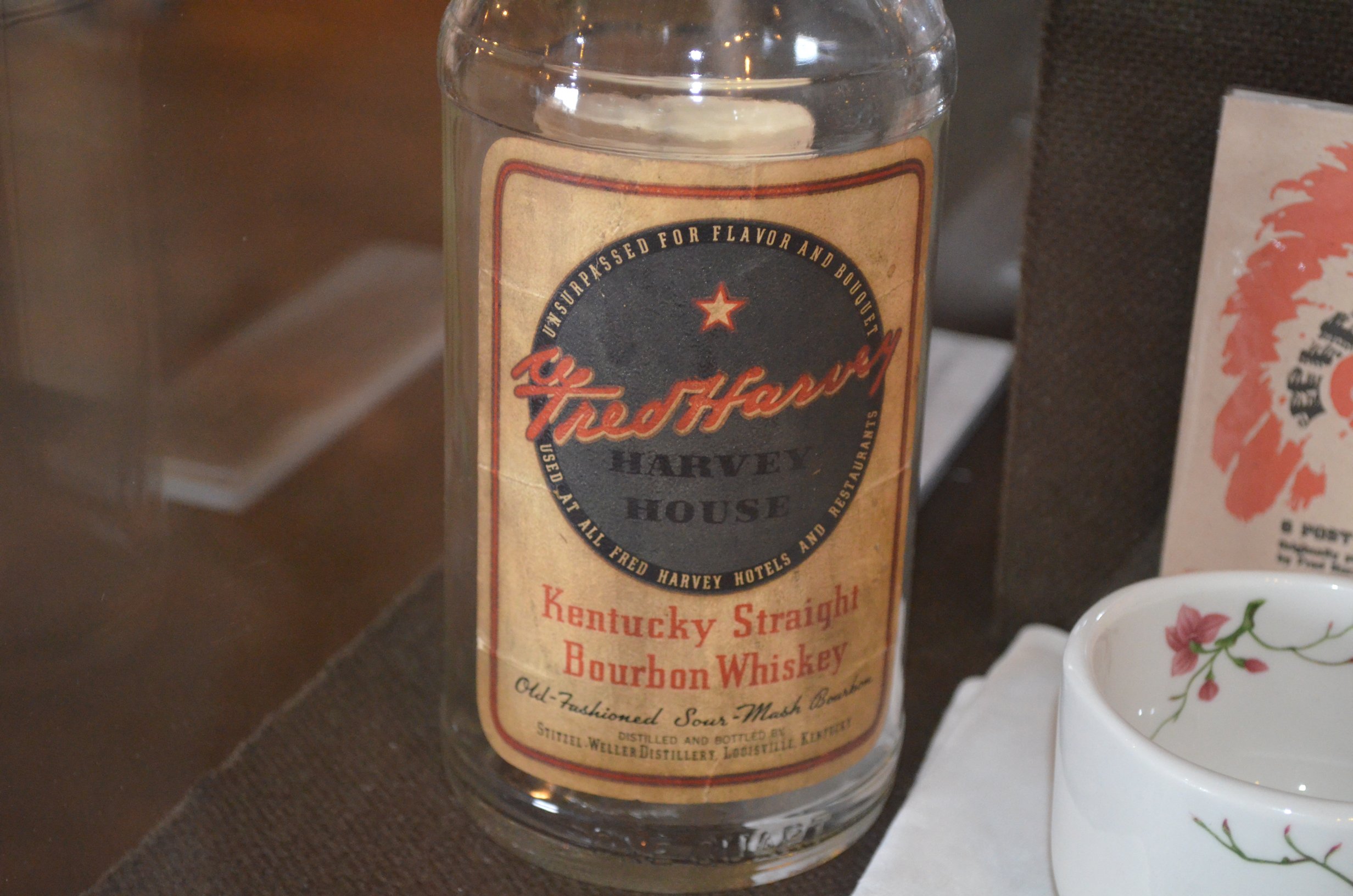
 What do you think attracted my attention in museum? Many things, of course – but particularly, the bottle from Kentucky Bourbon:
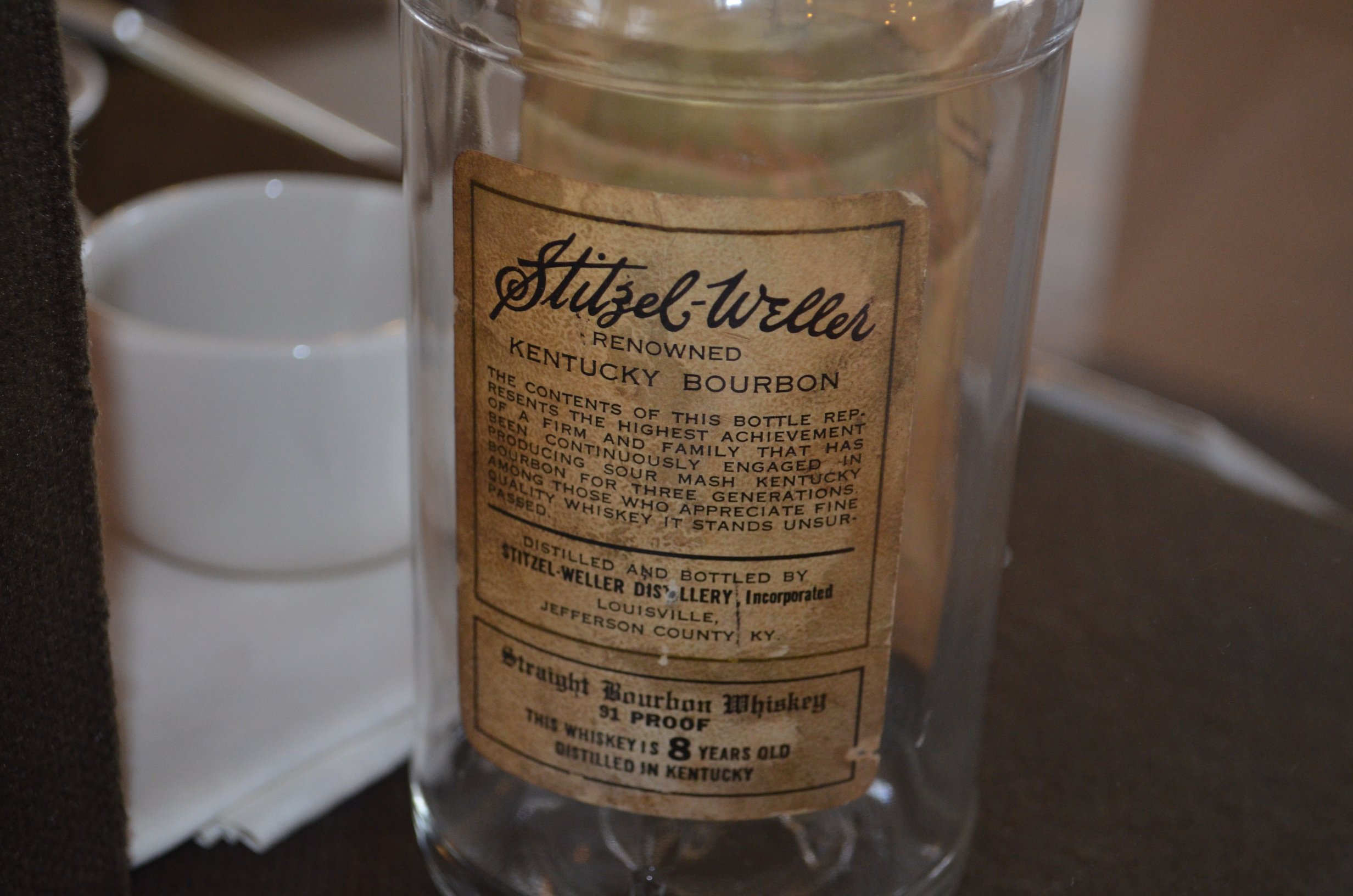
Those two hours, one on one with the Grand Canyon were really memorable – Grand Canyon definitely should be on everyone’s “must see” list.
On the way back, we continued learning interesting things. For instance, an interesting fact about human psychology – at the South Rim there is a man-made barrier along the edge of the Canyon, which should protect people from falling down. Every year, 6 to 8 people die falling off at the South Rim. At the West Rim, which territorially belongs to the Indian tribe, there is no barrier – and so far not a single person died there. And outside of this sad fact, you should definitely consider visiting West Rim of the Grand Canyon, as it has recently built whole glass Skywalk, extending above the Canyon at about 4,000 feet above the floor – I can’t even imagine how you should feel there, suspended in the air and surrounded by the timeless beauty.
We also watched the documentary about the trips down to the floor of the Grand Canyon. Do you know who can help you to get to the bottom of the Grand Canyon? If you thought of mules, you are correct! Those are specially trained mules, and they can carry people and all the load along the path which leads town. Sometimes this path goes along the edge, and the mules are taught to handle it – all humans should do is sit straight and not to get in the way. Among interesting facts I can tell you that during many years of those journeys, they didn’t lose a single person. Excited? Imagining yourself in the mule’s saddle taking a journey of your life? I don’t know how much it costs (I’m sure it is not cheap), but get in line – there is about one year wait for those tours.
The trip was winding down. We made two more stops on the way back, and then as we were getting somewhat close to Las Vegas, I tried to take a picture – of course in the dark and from the window of the moving bus:

As you know, I love quizzes, so here is a mini-quiz for you – what do you think I was trying to take a picture of? You might find an answer closer to the beginning of this post, but if you will not, I will tell you in the next post.
We got back to the hotel at about 10 PM, and after such a full day, the sleep was the only thing we really needed.
And before we will part, I want to thank our driver Frosty again (may be he will come across this post somehow), and I want to mention that we book our trip through the web site called Best of Vegas – this site is definitely recommended if you are planning your own trip. Our actual tour company was called Grand Canyon Tour and Travel, just in case you want to check them out.
There you have it, folks – our Day 2 Grand Experience in Las Vegas.
Next time we will get together on this subject, I will tell you all about Day 3 – and rest assured, there will be more pictures…
Sharing Sunshine And Beauty: Fall in New England
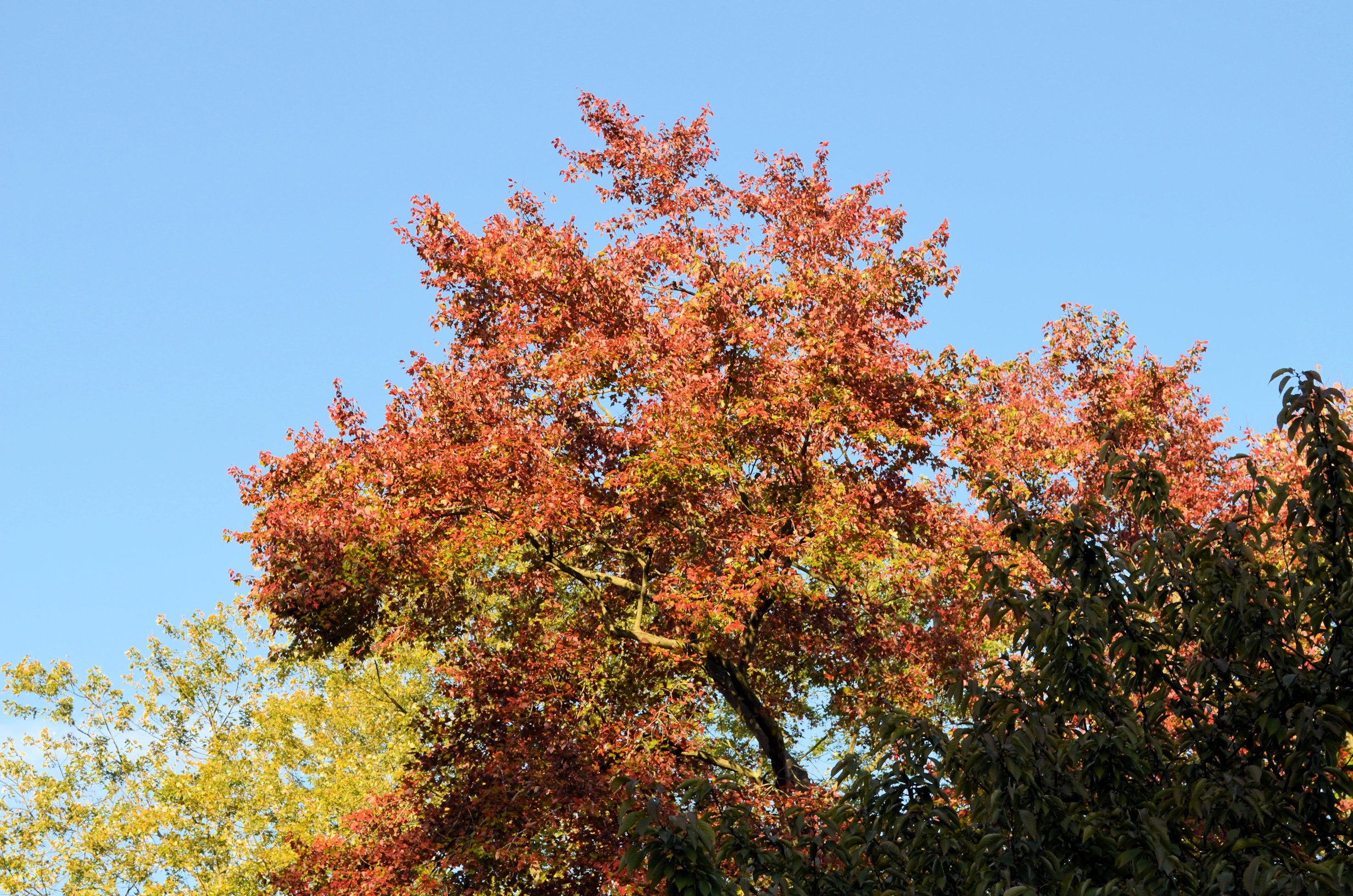
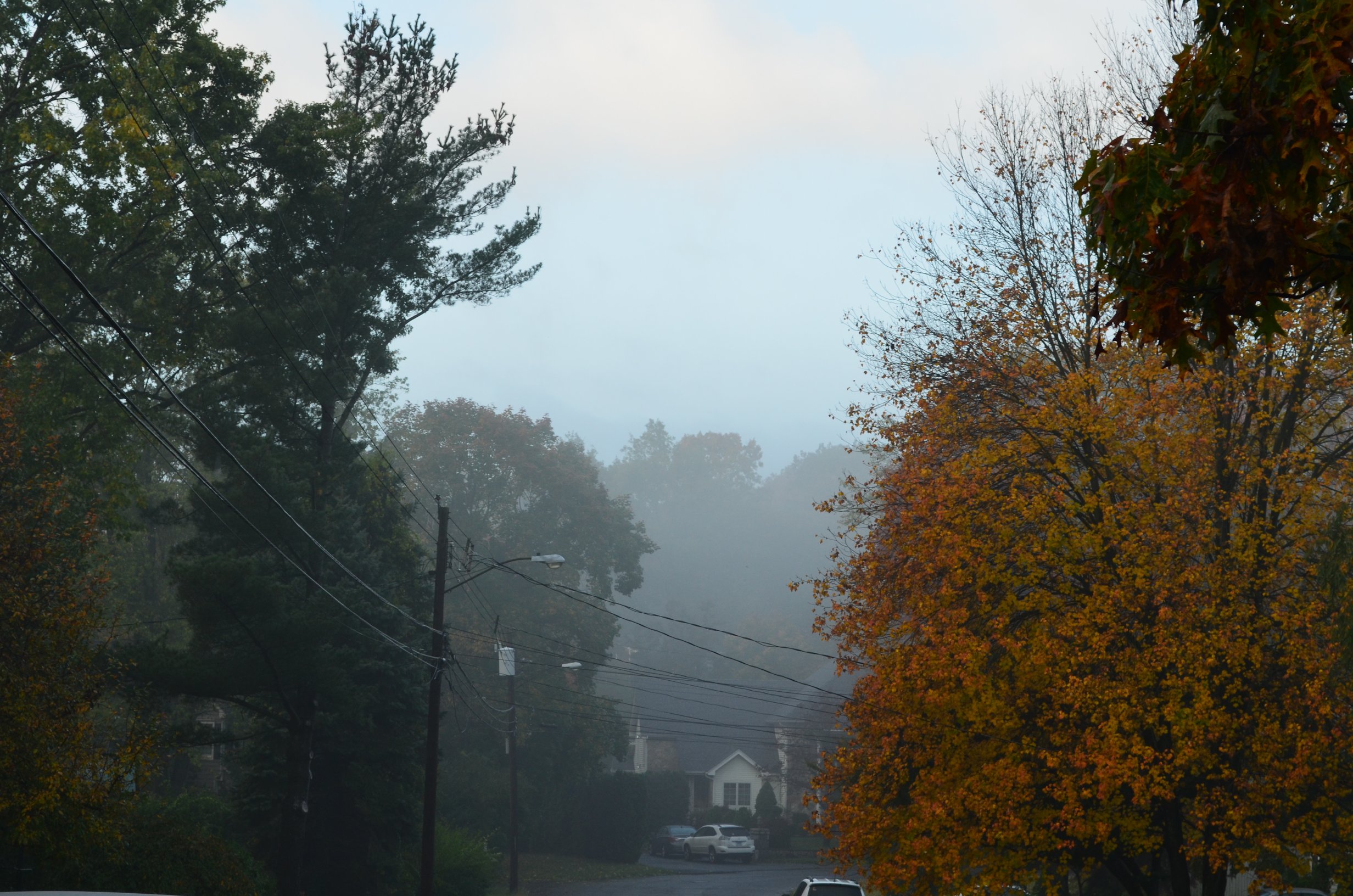
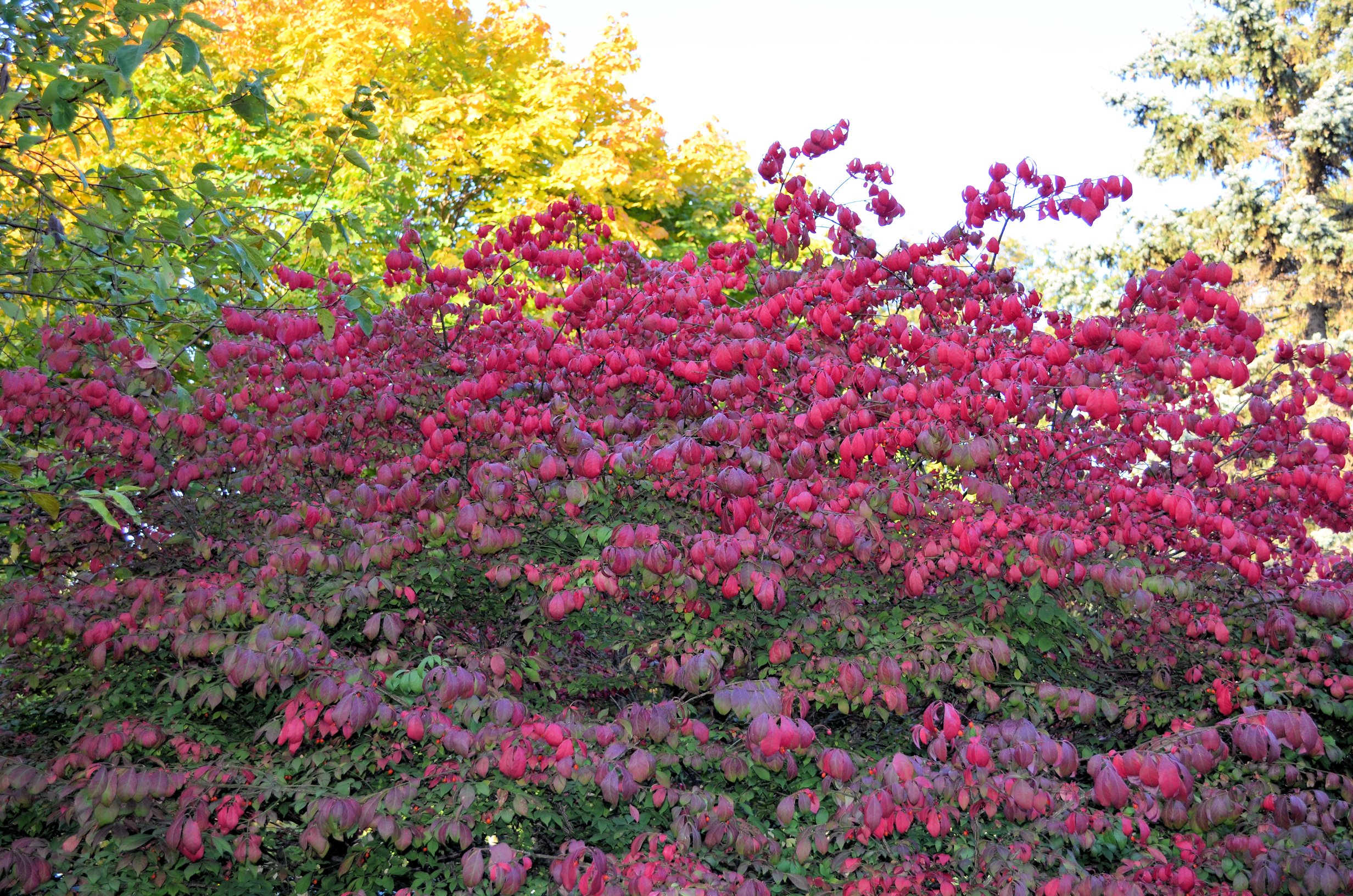
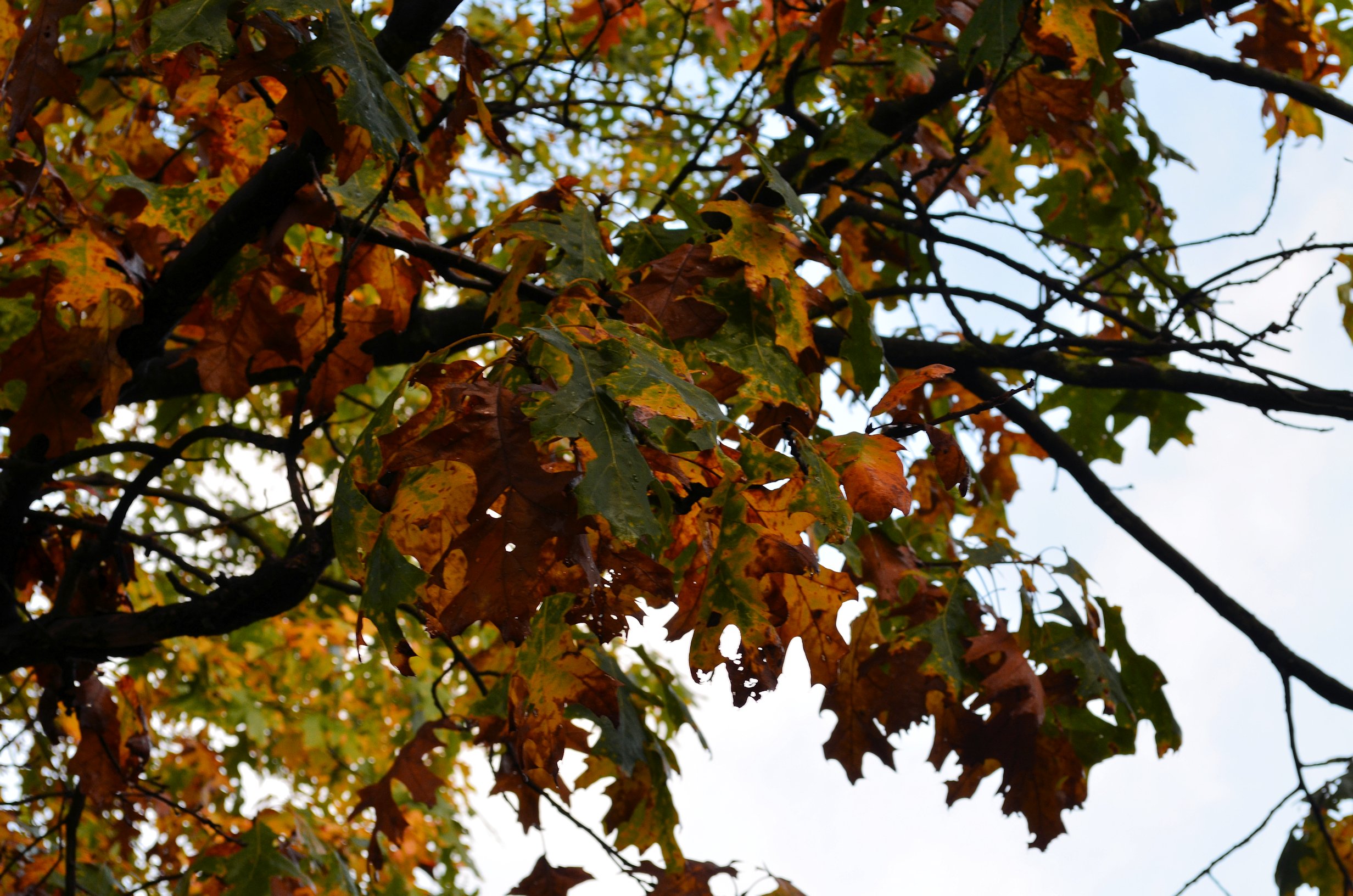
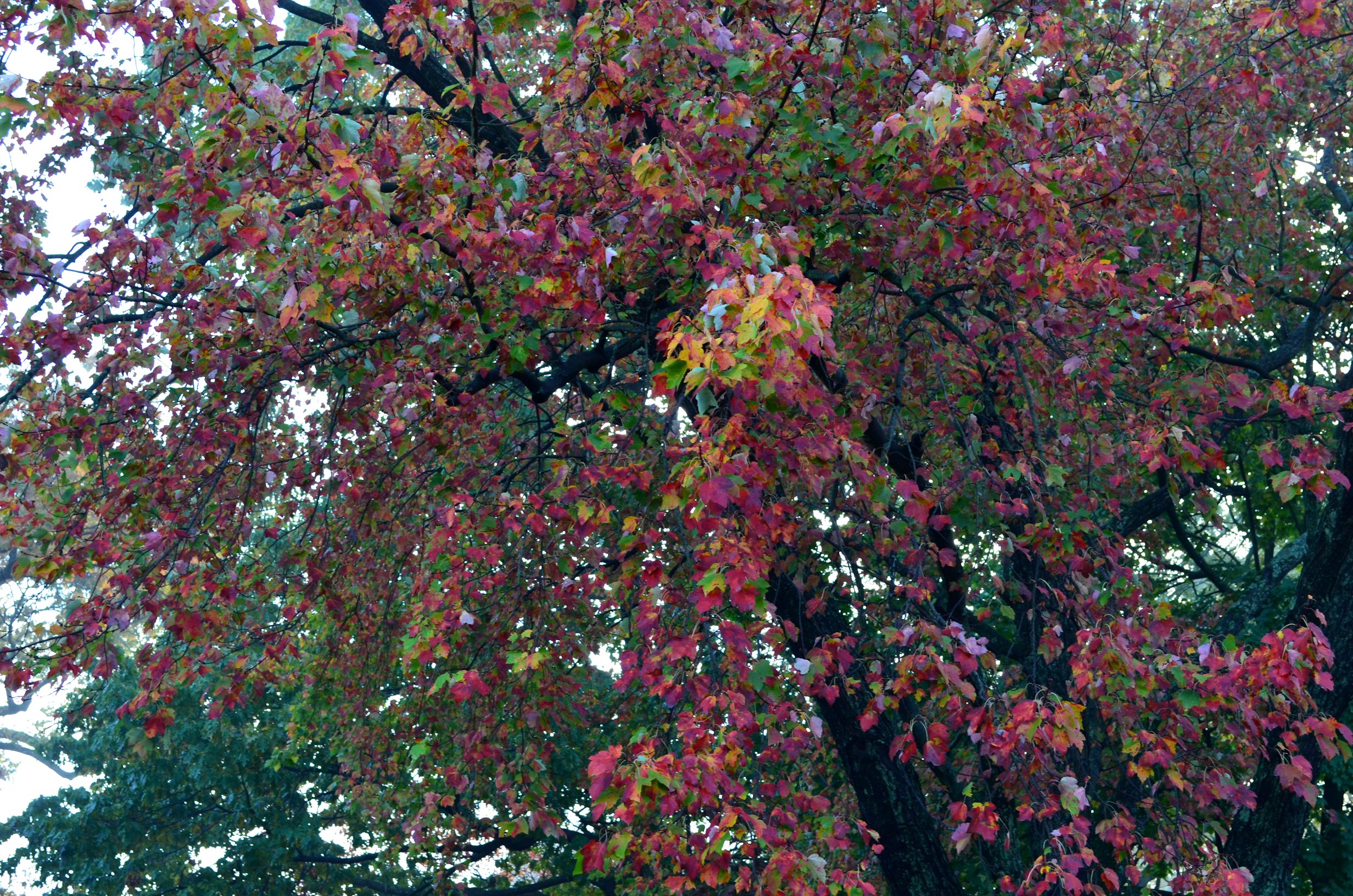
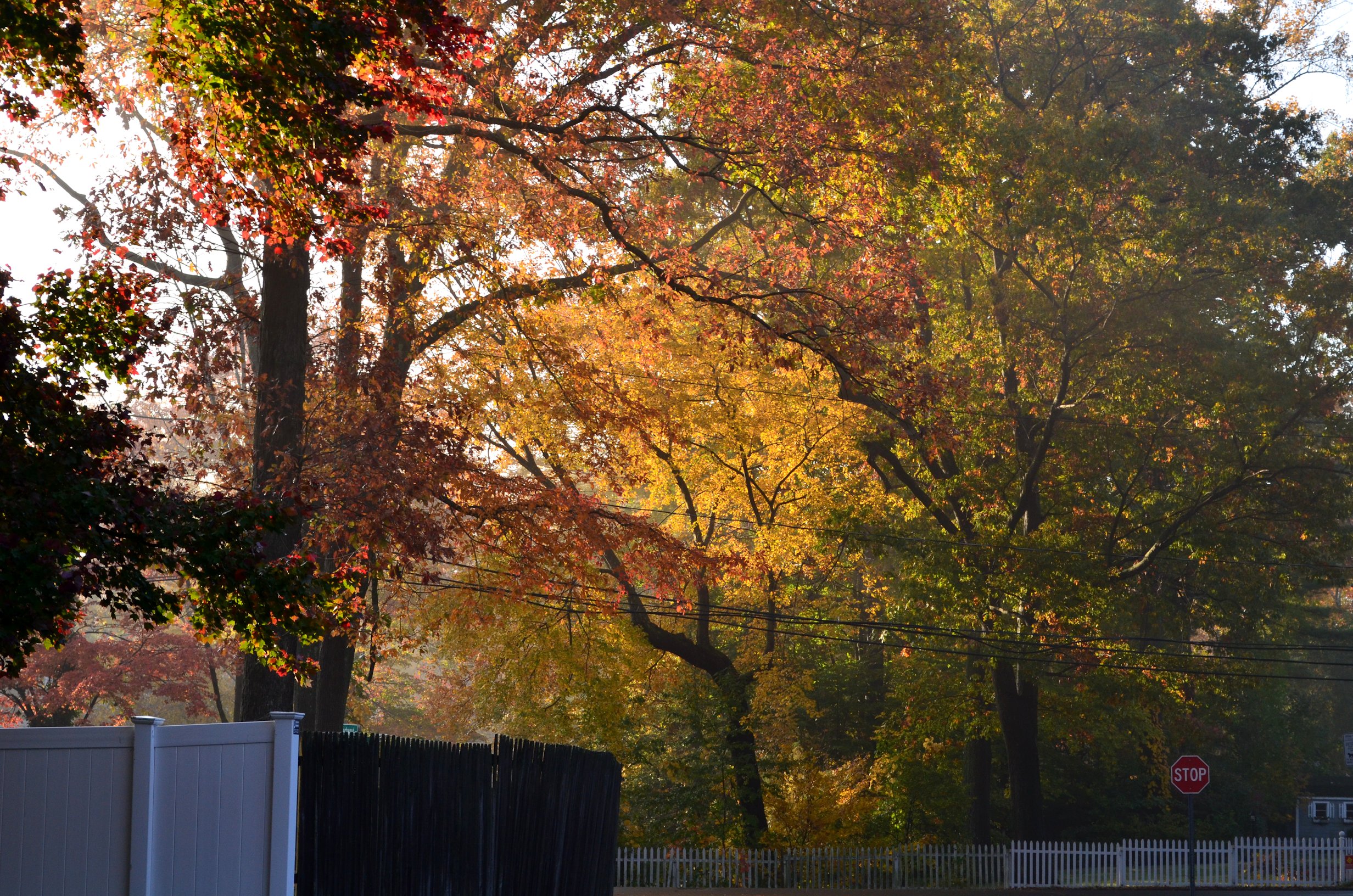
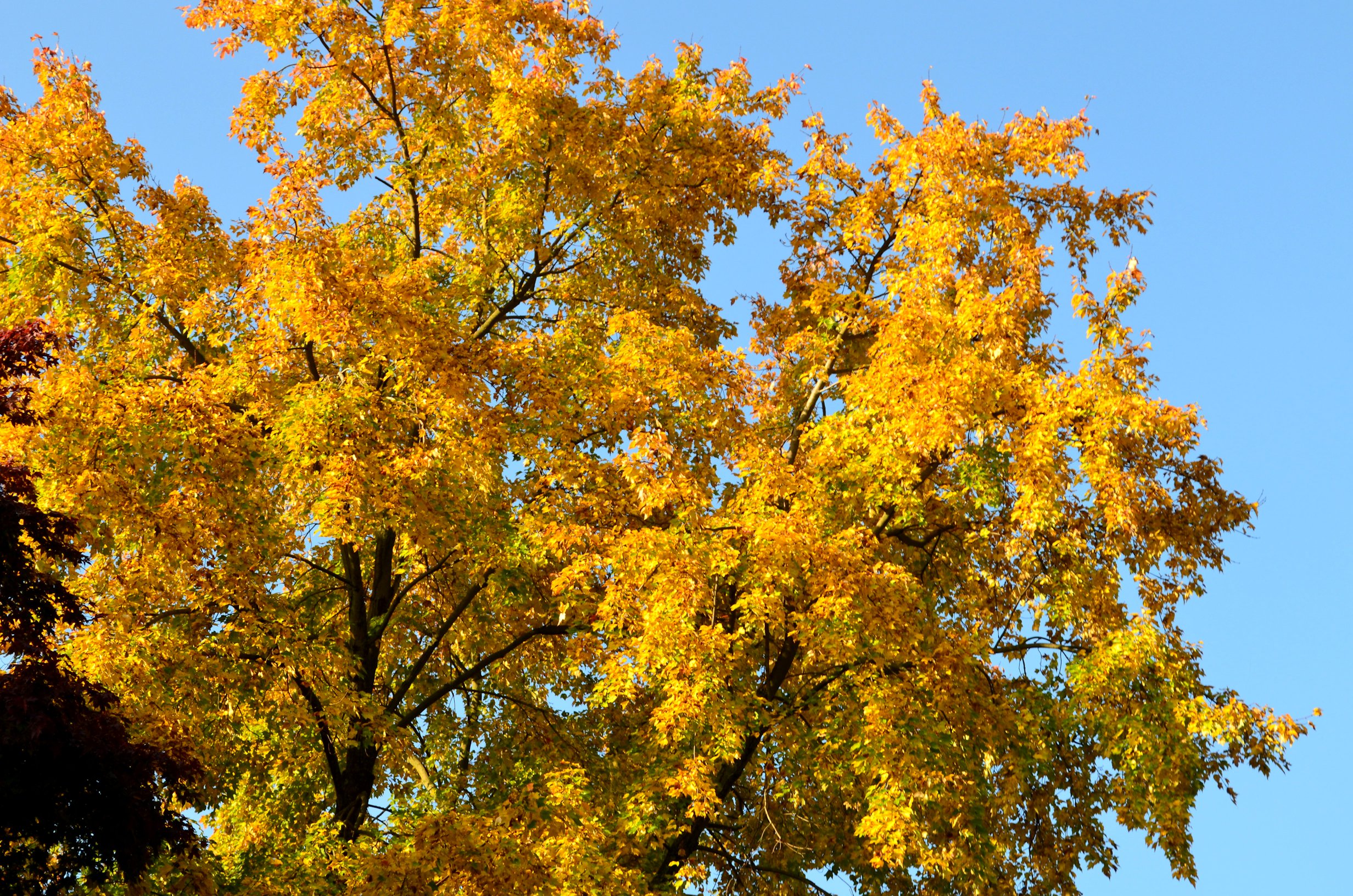
We had been blessed with such a magnificent weather today that I couldn’t help a strong urge to share that feeling with you. Fall (I guess the word Autumn will be more appropriate for my European readers) is a very special time in New England. People plan special sightseeing tours and getaways to immerse into this spectacular fiery of colors.
For those of us fortunate to live here, in one of the north-eastern states which comprise New England (Connecticut, Massachusetts, Maine, New Hampshire, Rhode Island and Vermont), such an immersion comes easy – it is enough to step outside and walk around the street, and all the beauty will surround you.
This year the colors had been beautiful (last year, unfortunately, the trees went from green to empty), so let me share with you a walk around my street. And before you will scroll down the pictures (by the way, my daughter helped me to take some of those), let me mention the wine. You know, you can pair wine and weather, right? So the beauty of this weather is that both white and red wines will pair equally well with it. It is the Fall, so you know that red wines are appropriate, but it is so sunny and beautiful that you want to get a little sunshine in your glass too.
Enough words – enjoy New England Fall colors!










Last Bottle Sign Up ($10 credit)




 Talk-A-Vino