Archive
Counting Grapes – Bulgaria and Turkey
Few new grapes to report over the last couple of weeks. This time they come from Bulgaria and Turkey.
I tried couple of wines from Turkey last year, and was not very impressed. This time I had two wines from producer called Kavaklidere, and they both were quite good.
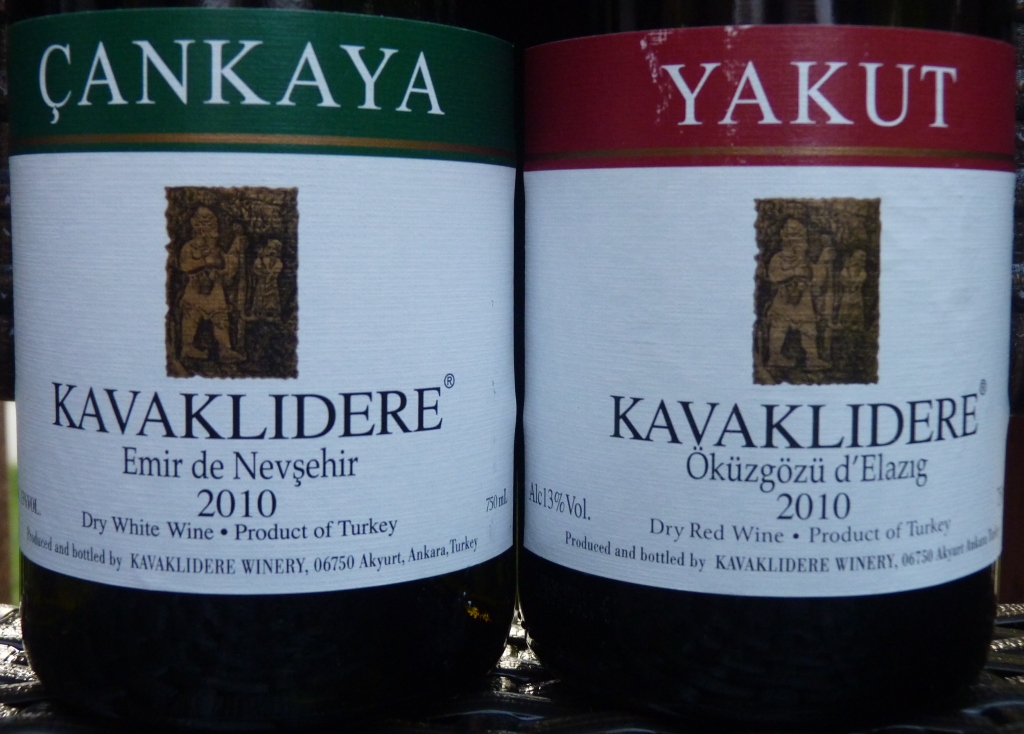
Here is information on grapes and wines:
Emir – 2010 Kavaklidere Cankaya Emir de Nevsehir. Very nice white wine, light, crispy, refreshing, good balance of fruit and acidity.
Öküzgözü, Boğazkere – 2010 Kavaklidere Yakut Okuzgozu d’Elazig. Red wine on a lighter side, somewhat reminiscent of good Beaujolais – good acidity, very light tannins, earthiness, very fresh and easy to drink.
Last time I had Bulgarian wines was more than 20 years ago, and it generates no memories of any kind. Now I tried four different wines from producer called Tcherga:
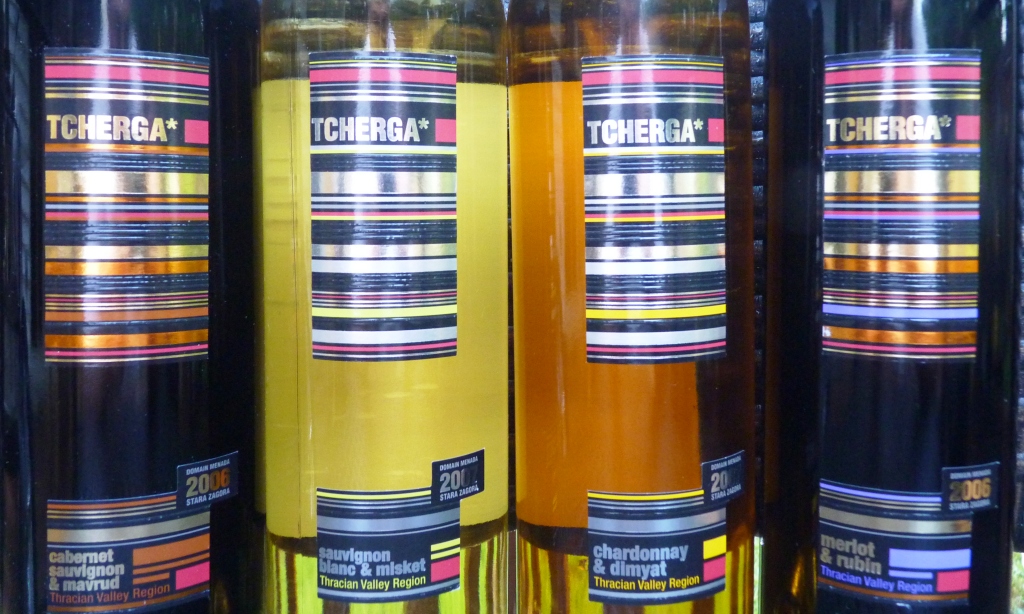
Each wine is a blend of a well known grape, such as Chardonnay, and one of the indigenous grapes. Here is the list of the grapes and wines with short descriptions:
Misket: 2007 Tcherga Sauvignon Blanc & Misket. Muted fruit, limited acidity – drinkable, but not necessarily enjoyable.
Rubin – 2006 Tcherga Merlot & Rubin. This was an okay wine, somewhat limited acidity, good fruit, but overall not very memorable.
Dimyat – 2007 Tcherga Chardonnay & Dimyat. There are two distinct choices – either the wine was oxidized, or it was special style. Either way it was not very enjoyable.
Mavrud – 2006 Tcherga Cabernet Sauvignon & Mavrud. Good fruit on the nose and on the palate, hint of sweetness. This can pass as daily table wine, but not necessarily would be my choice.
All together these are 7 new grapes which bring grand total to the 340. I think this is good progress, and I’m happy with the new discoveries. Until the next time (and I have a couple of really long overdue posts) -cheers!
Canada Food and Wine Experiences, In Pictures, Part 2
For the love of food photography, here is more pictures from our trip to Canada. Now we moved to the French Canada, Montreal and Quebec, and we definitely focused on experiencing the french-style food for as much as possible. Once again, if you want to read more on the actual restaurants we visited, you can find my reviews on Yelp (click here).
Let’s start with Montreal:
Cappuccino at Second Cup (the place is a striving Starbucks but not that great):

Steak at Le Grill Bistro:

Rack of Lamb at Le Grill Bistro (why is that rack of lamb always tastes amazing in Montreal?):

Breakfast at Chez Cora (again, but now in Montreal) – best Eggs Benedict I ever had, Hollandaise sauce is amazingly balanced !

More coffee – at Cafe Imagination (great place for inexpensive lunch in downtown Montreal):
Honestly – the coffee was good, but I love the cup…

Moving to Quebec now:
La Nouvelle France Resto-Bar Terrasse:
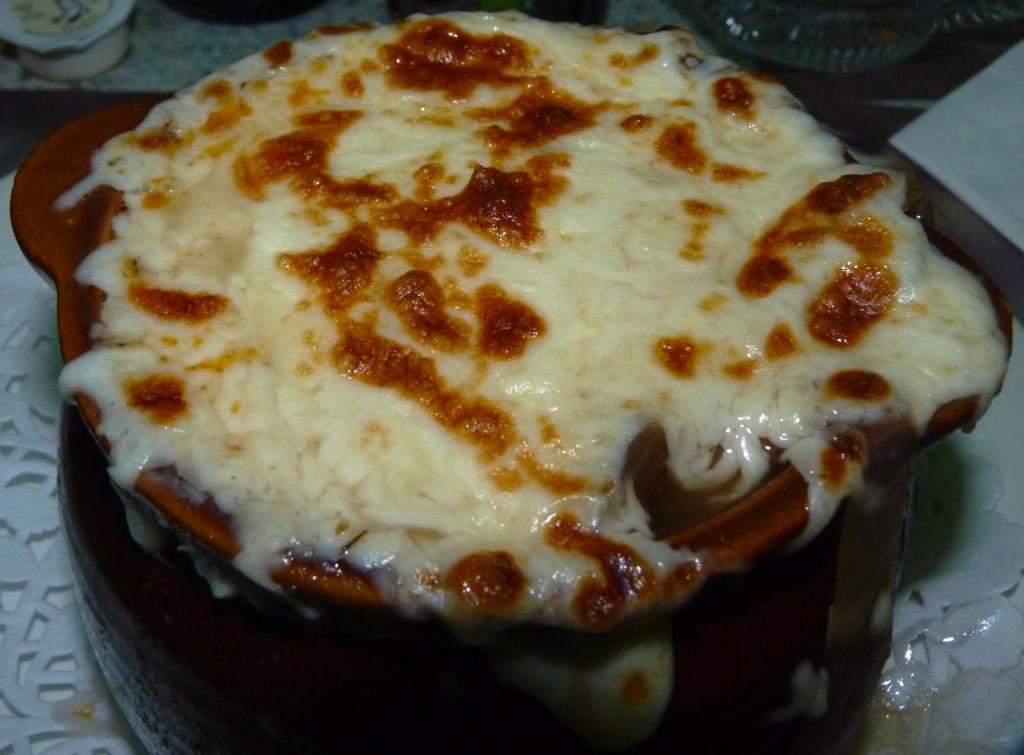
French Onion Soup (more classic than the one in Beef Baron):
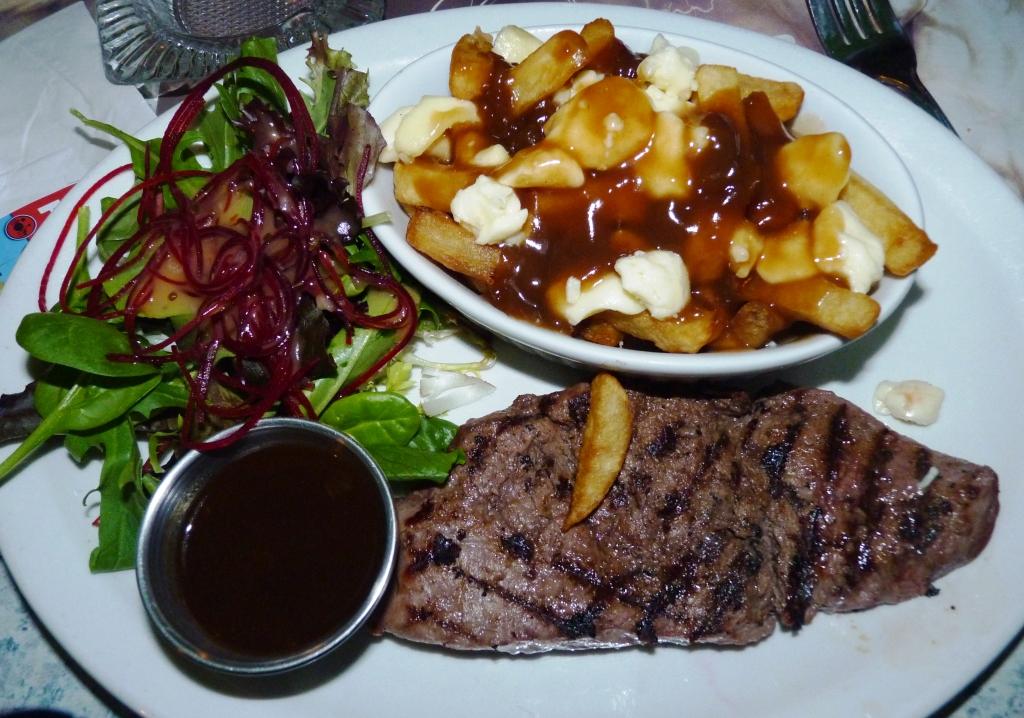
Steak with Poutine (Poutine is Quebec’s specialty – french fries with melted cheese and gravy – very very good):
Quebec Meat Pie (with poutine, of course) – sad thing is that meat pie was supposed to be great, but it was so dry, it was almost inedible:

Breakfast at Cosmos Cafe:
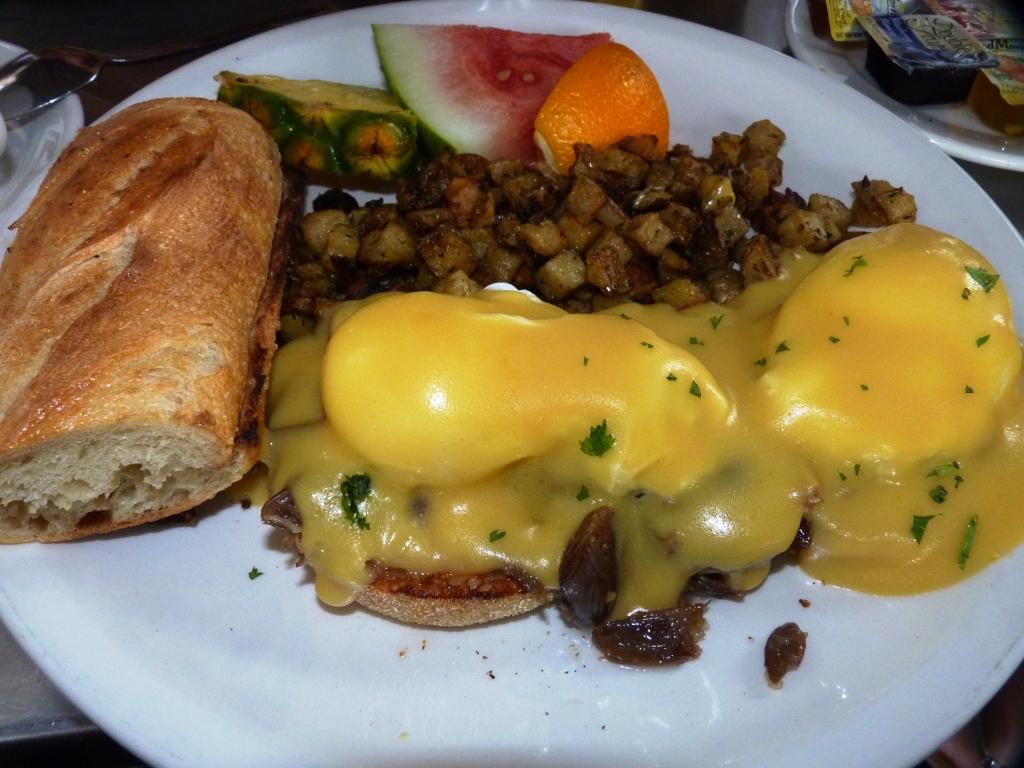
Eggs Benedict with Duck Confit (Eggs Benedict tasted very good – except for the duck confit which was way too salty and simply made no sense in this dish…):
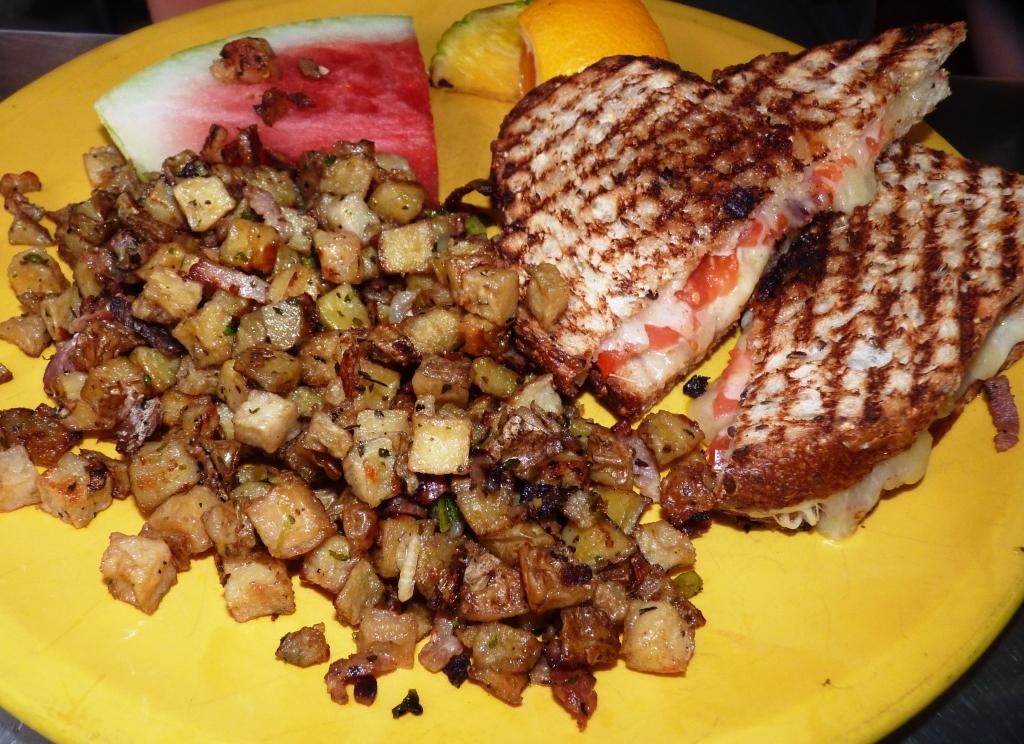
Panini Sandwich:
Le Brigantin Restaurant:
Yes, finally here is the wine – very nice rose LeRose Gabrielle, local Quebec wine:

Of course you can do Pizza any time and anywhere:

Lasagna (phenomenal, amazing array of spices, probably the best Lasagna I ever tasted):

Now, visiting Farmer’s Market in Quebec:
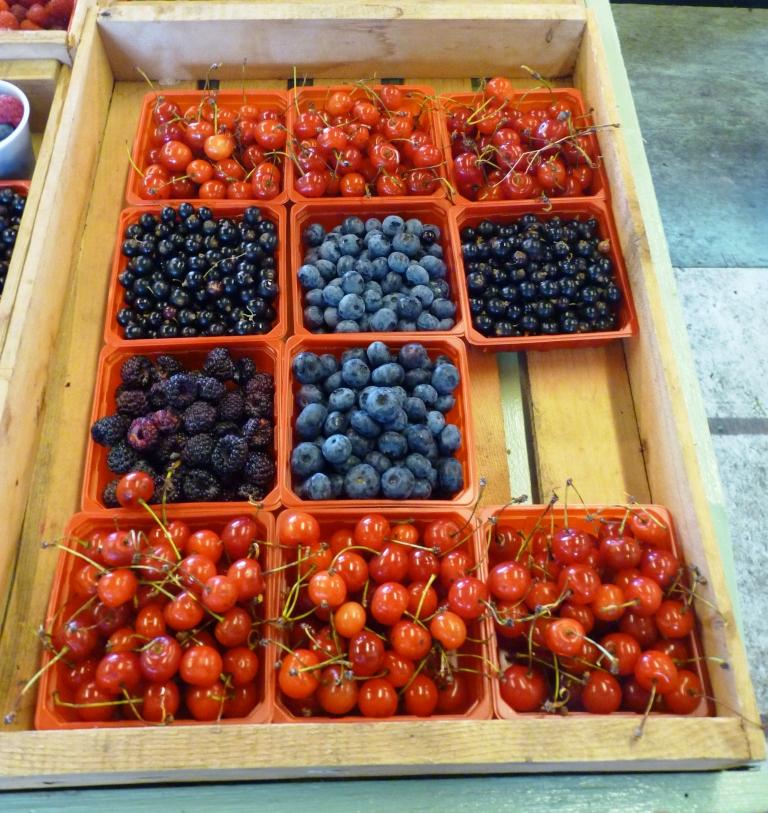
Fresh Berries:
I love Farmer’s Market where you can taste wine! Le Tourelle Vin Rouge (nice and simple):

Le Lapin Saute Restaurant ( the best food experience during the trip, real french cuisine):
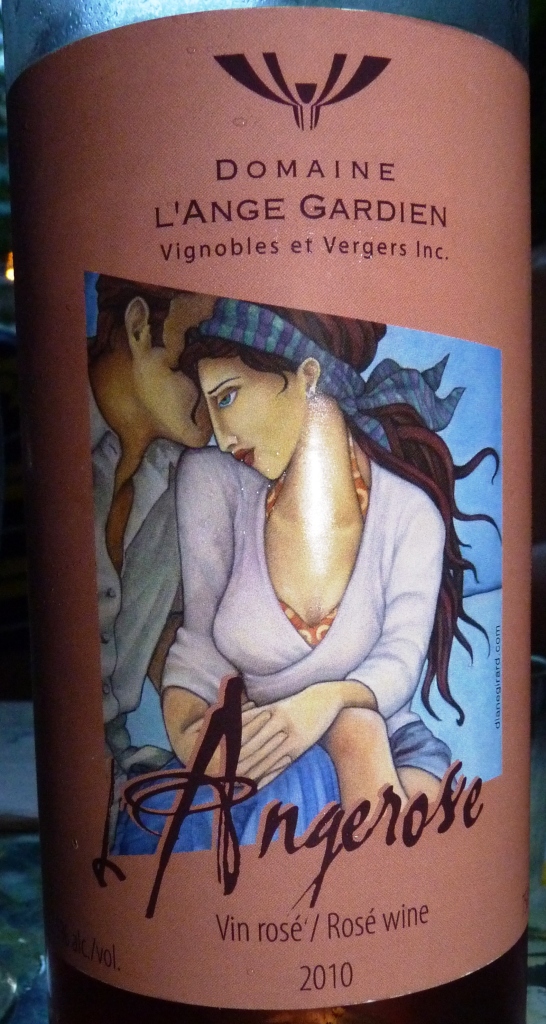
Of course wine goes first: L’Angerose Rose wine – very good, full body:
Blue Cheese and Berries Turnover (delicious):
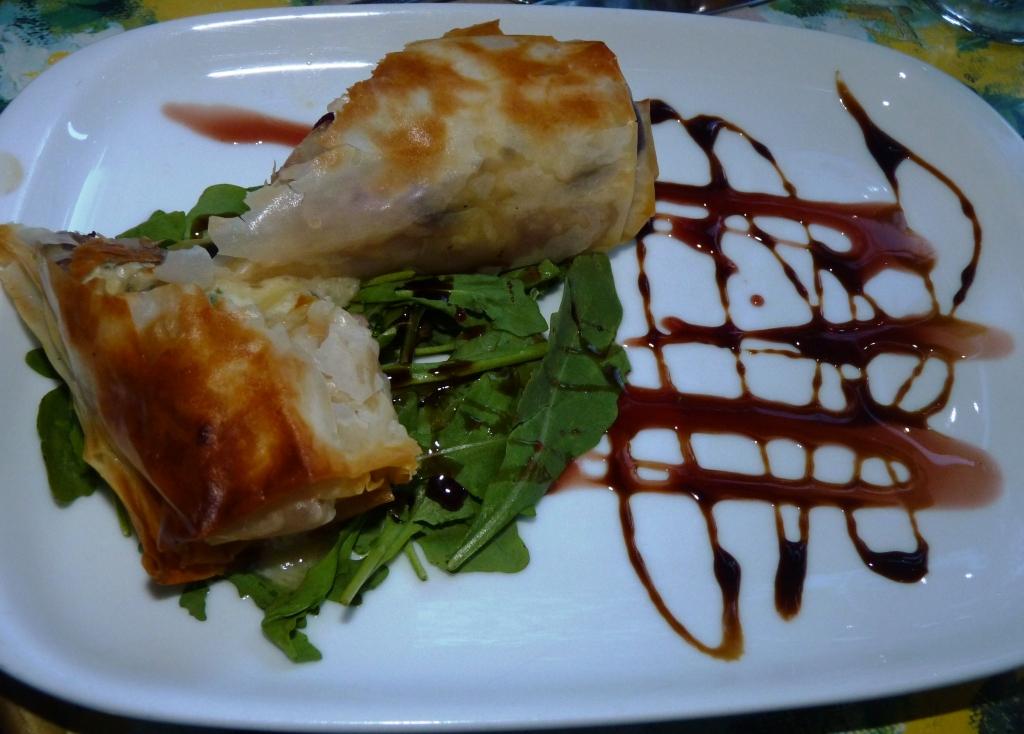
Escargot (unusual style and very tasty):

Rabbit Rilettes:

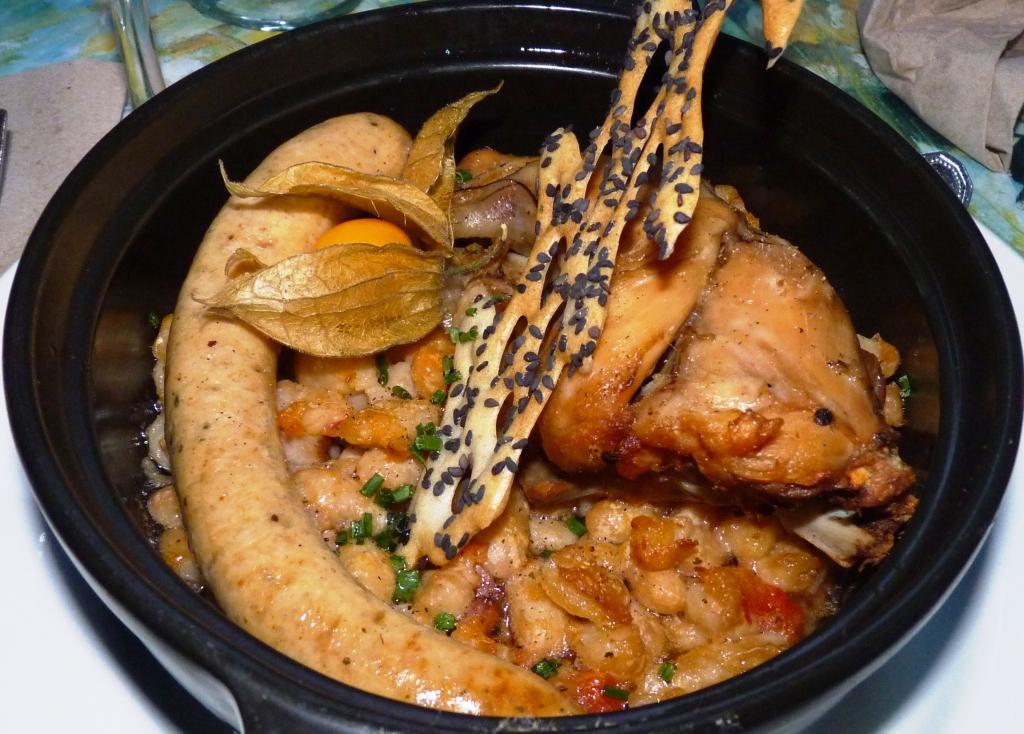
Cassoulet with rabbit leg and rabbit sausage (I’m very impartial to cassoulet and this one was excellent)
That concludes our food in pictures presentation. There still will be a blog post about Canadian wines, coming out soon. However, I want to mention that during this trip I managed to increase grape count by 5 (of course some are clones, but nevertheless):
St. Croix – 2009 De Lavoie La Tourelle Vin Rouge, Quebec
Radisson(ES 5-17) – 2010 Domaine L’Ange Gardien L’Angerose, Quebec
Sabrevois – 2010 Le Rosé Gabrielle Vignoble de la Rivière-du-Chêne, Quebec
Chardonnay Musque – 2009 Cattail Creek Chardonnay Musqué, VQA Four Mile Creek, Canada
Gamay Droit – 2009 Chateau des Charmes Gamay Noir St. David’s Bench Vineyard, Canada
That’s all, folks. Until the next time – cheers!
Counting Grapes
 Among many good wines of recent (yeah, I’m really behind in my writing) there were few of new grape encounters which I want to share with you. First is 2004 Ambasciatore Friularo Bagnoli DOC, made out of the grape called Friularo. I have to tell you that I actually have one problem with this wine – it is not available in US (if you know otherwise – please let me know), and I brought only one bottle from Switzerland (it is an Italian wine which I got in a supermarket in Geneva). This wine was beautiful, layered and powerful, very balanced, with great amount of dark red fruit, all complemented by great acidity and good tannins. This wine would age perfectly, so quick expedition to Geneva or any other place where this wine can be found, sounds like a good idea.
Next three wines were also very good – and they are all available in US, plus all three would be perfect for the summer day, so you can also expand your wine horizon and have good wines at the same time. Starting with the white, 2009 Petite Burja Vipavska Dolina from Slovenia was very nice and unusual – good acidity and sweet herbs on the palate. This wine didn’t have any pronounced sweet fruit notes, but instead it had well defined sweet herbs, may be cucumber-sweet. Very easy to drink. I have to note that this wine also sports one of the most unusual labels I ever saw – it seems that the winemaker had a problem with the getting the modern printer, and had to use a very old one, incapable of producing any graphics (or may be wine maker also used to be a computer engineer, who knows…).
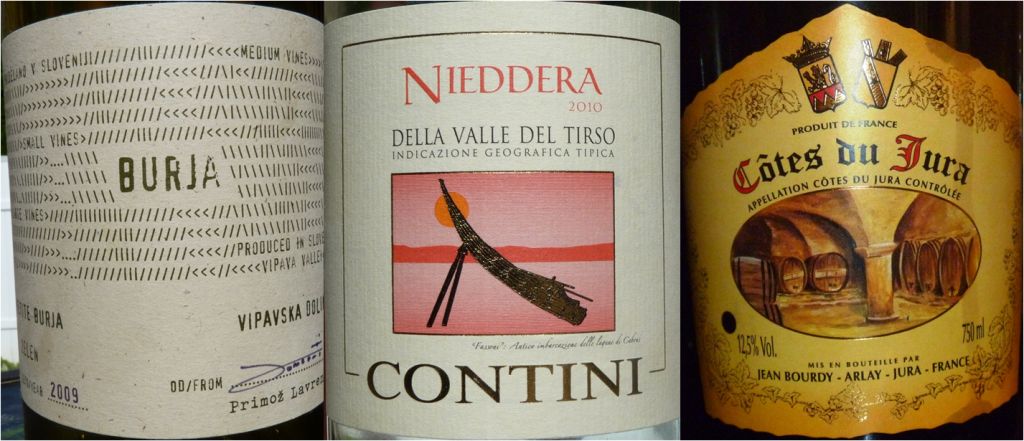
Moving from White to Rose, the next wine is 2010 Contini Nieddera della Valle del Turso IGT – nice and light, with medium body, good refreshing acidity, showing notes of cranberry – very good wine for a hot summer day. Nieddera actually is a local grape which was used for production of this wine.
Last but not least is 2006 Jean Bourdy Cotes du Jura Rouge, which is made out of three gapes – Poulsard, Trousseau and Pinot Noir (Trousseau is a new grape). This is a bio-dynamic wine, and it is very unusual in its flavor profile – but it is light enough to be enjoyed during summer (as soon as you will train your palate a bit on bio-dynamic wines – I will explain myself in one of the future posts very soon).
Four new grapes, four very interesting wines – very happy with this journey so far. Try to find them and experience for yourself – I’m sure you will not regret. Cheers!
About Coffee, Plus Some Updates
Why coffee? 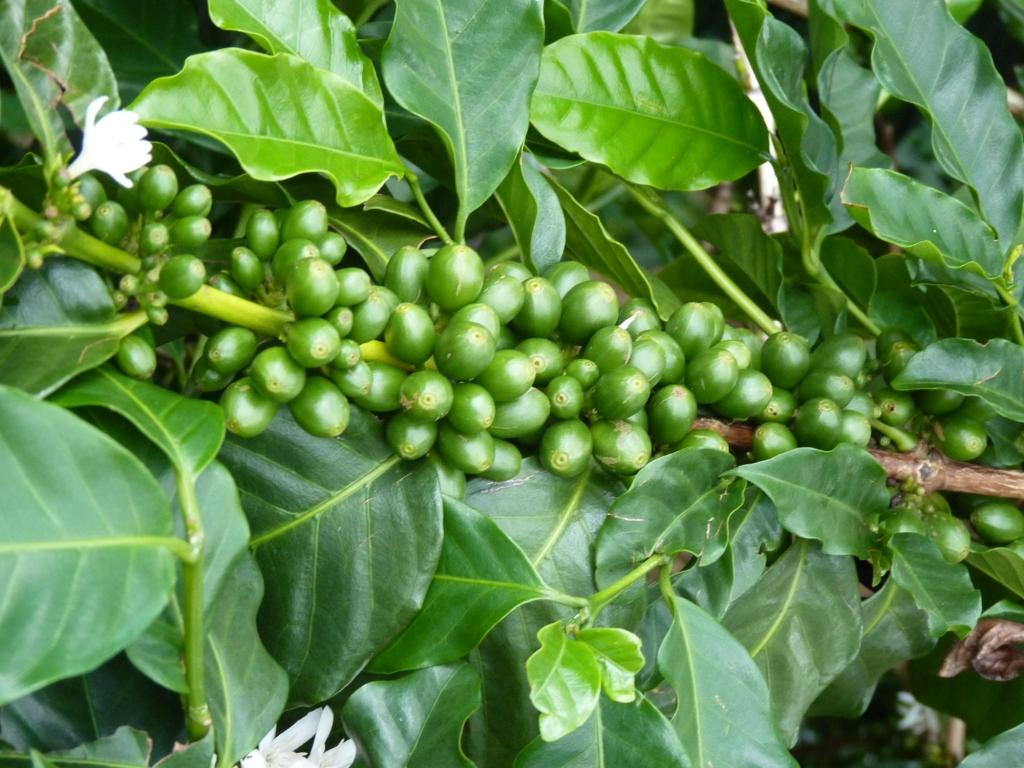 First, this is the answer to the last “What is it” post – it is actually Kona coffee berries (picture taken at Greenwell Farms in Kona, Hawaii). The reason to chose that picture was simple – I was fascinated by a number of similarities in coffee production and wine making – in both cases I’m talking about very good coffee ( Kona is one of the best coffee types in the world) and very good wines. Coffee berries are picked by hand, and also they are picked selectively – only individual ripe berries are taken from the bunch, and the rest is left to ripen. Coffee beans have their skin removed (sounds familiar?), and then they are left to dry under the sun (same as the grapes used for production of Amarone, one of my favorite wines). Once the coffee beans are dried and cleaned, they are left to rest for at least a month or two, before they will be roasted – and this is the step which is enforced by the years of experience and tradition, and nobody asks for explanations – this have to be done just because it has to be done. Again, the same element of mystery and tradition as in production of a good wine. And last, but not least – complexities of the final beverage. Good coffee, similar to the good wine, has layered complexity and brings a lot of pleasure. Anyway, I will look for more obvious picture for the next “what is it ” game.
Now, let’s talk about updates. First, the Treble certificate from the Wine Century Club has finally arrived! Not that I want to brag, but let me share the picture with you:
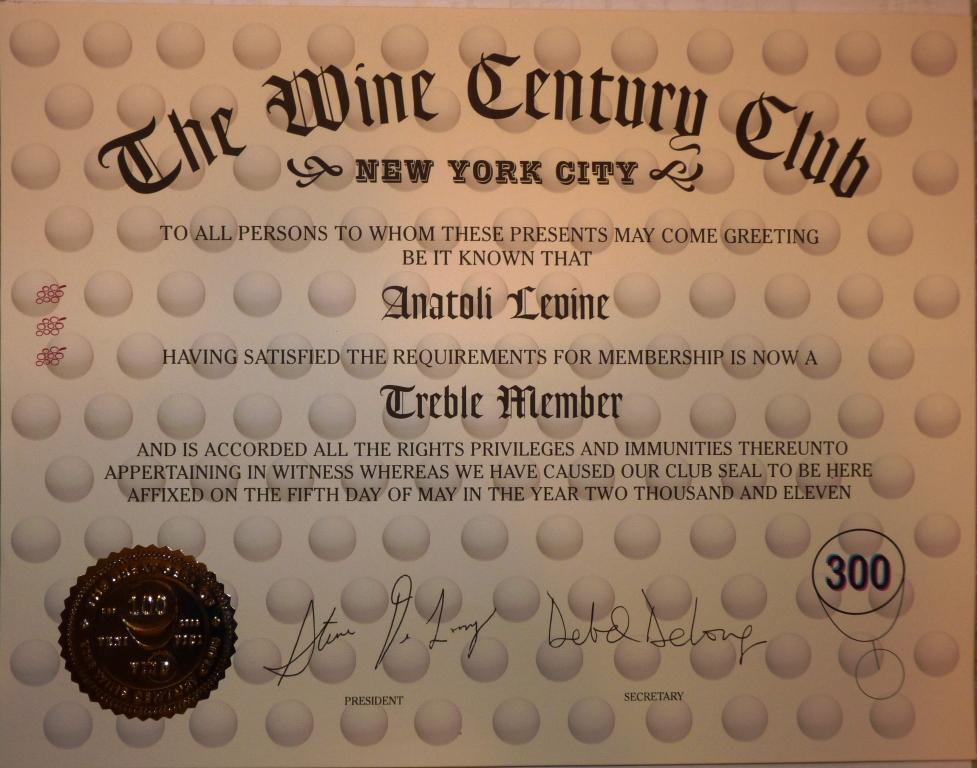
‘nuf said – getting to the Quattro level will not be too easy, so don’t expect to see a picture of another certificate any time soon.
Lastly, I’m continuing writing posts for The Art of Life Magazine. Last two posts were in “Forgotten Vines” series, talking about Jerez (Sherry) and Madeira, both wines are hard to find, but worth seeking – you can find posts here and here.
That’s all for now, folks. Cheers!
Counting Grapes: Some new, some old
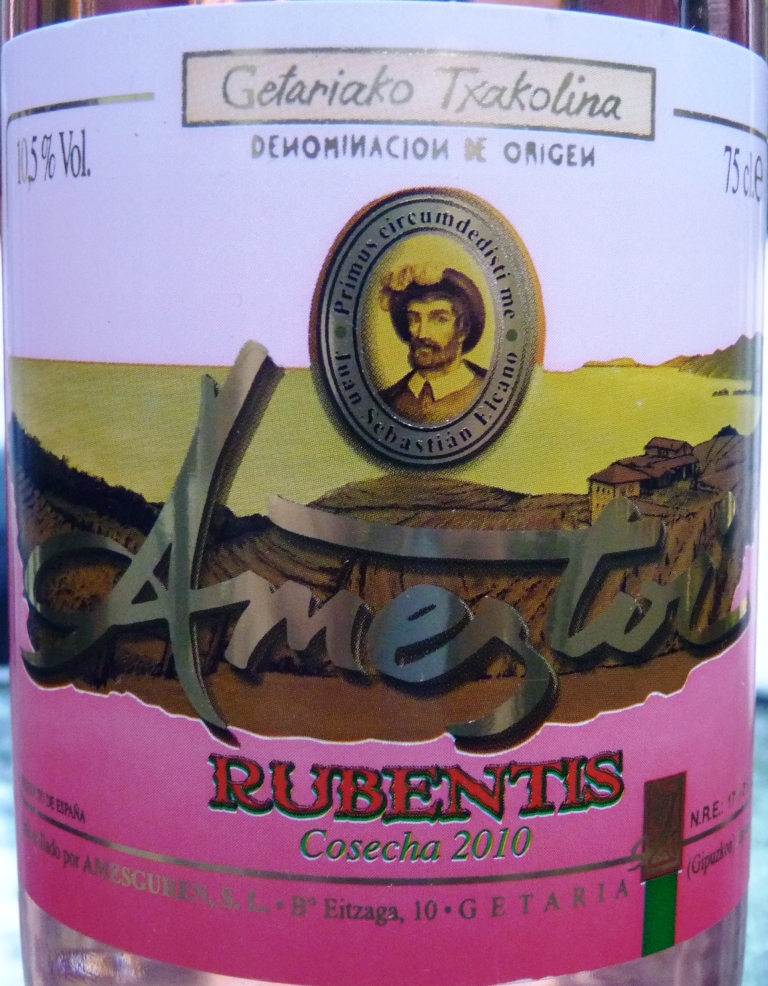 As you know, I’m still counting the new grapes as I come across them. Recently, I was able to add a few to the collection, which I’m happy to report on. I also want to note, that it is quite a rare case when all the new grapes are red (I think there are simply more white varietals used in the wine making), but it happened to be so. Without any particular order, first is the red grape called Hondarribi Beltza, which was one of the grapes used in 2010 Ameztoi Rubentis Rosé Getariako Txakolina wine form Basque region in Spain. The wine is difficult to find, but it worth seeking – very easy to drink, lightly fizzed (should be rather called effervescent), refreshing – perfect wine for the hot day.
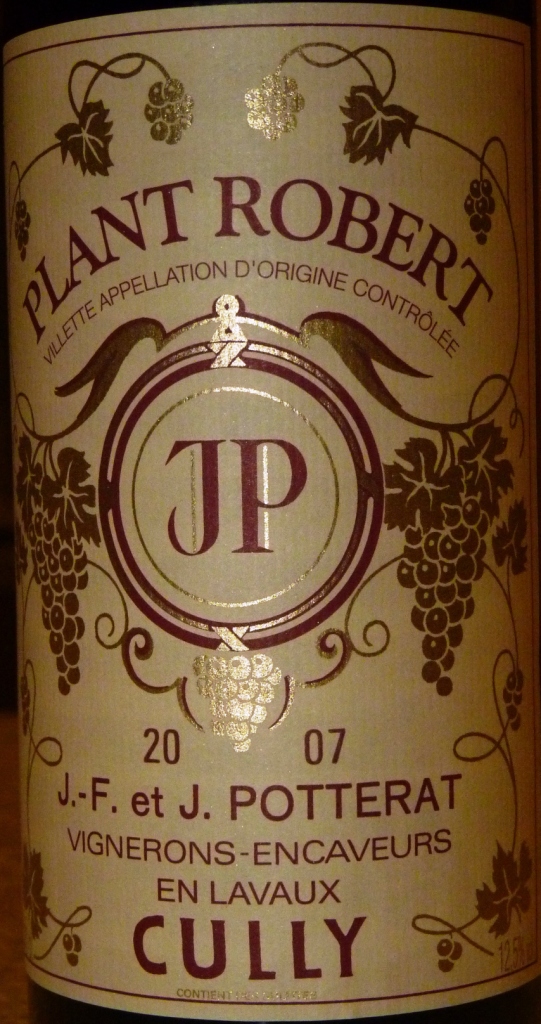 Next wine comes from Switzerland (as usual, courtesy of my friend Patrick), and it is made out of the red grape called Plant Robert. 2007 Plant Robert J-F. et J. Potterat Villette AOC, Cully is very nice, somewhat similar to wines made out of Gamay grape, however, this wine is more spicy and structured than a typical simple Gamay wine. It is very balanced and pleasant to drink (definitely an 8 in Drinkability terms). It is a pity that the wine is not available in US – it is great sipping wine which will also work quite well with wide variety of foods.
Next new grape is called Trepat and it again comes from Spain (as our first grape). I don’t know what is so special about many of these “unknown grapes”, but this 2009 Trepat Josep Foraster, same as many other rare grapes, is very elegant and spicy (of course always possible that my palate is off), with lots of dark fruit and structure on the palate.
So these are the 3 new grapes – so we need to talk about the “old ones”. The old ones are clones – but they are prominent clones. One of such clones makes the wine called Brunello di Montalalcino, and this clone is called Sangiovese Grosso. It is related to the main grape of the Chianti wines, Sangiovese, however, it has a lot more structure and power than regular Chianti wine. I had Brunellos many times, and it has very distinct taste, so this is simply logical to use Sangiovese Grosso as the grape in it’s own right.
Last but not least, another “old grape” is called Tinta de Toro, and it is used in the Toro region in Spain. Technically, Tinta de Toro is a clone of mainstream Spanish grape variety called Tempranillo, which is the main grape in Rioja and Ribero del Duero regions. Toro produces very dense and powerful wines, which require time to mellow out. I had Toro wines before, but my recent experience with the wine called 2007 Teso La Monia Alabaster (there will be a separate post about it) from Toro DO (which is considered best wine produced in Toro region) convinced me that this grape also deserves its own place in the grape quest, as it has lots of differences with the regular Tempranillo.
With the addition of these 5 grapes, I’m inching forward to the next level with 317 grapes accounted for. It’s a long journey to the 400 spot, but it is real fun – let the grape quest continue.
Daily Glass: Value Wines Project – Portugal, Italy and Oregon
 Here is another Value Wines project update. We had French, Portuguese and Italian wines covered in the project. Today’s update is bringing in a new region – Oregon.
So far I would say that the outcome of the project is very encouraging – a lot of good, very drinkable wines from all regions mentioned above, all priced very well. The wine from Oregon, 2009 Primarius Pinot Noir, however, I would have to call the biggest surprise of the project. Why so? It is not surprising that we can find good and inexpensive wines coming from Portugal, for instance – wine region is grossly ignored and underrated ( this is changing, though), so the winemakers have to price their wines accordingly. Oregon wines, on another side, are well known worldwide as a source of the Pinot Noirs, rivaling those of Burgundy – and so far my experience with any Oregon Pinot Noir under $15 had been largely negative (wimpy and diluted wines).
All in all, Primarius Pinot Noir ($11.99) was very good wine – smokiness and finesse of the classic Pinot Noir, layered and restrained fruit and very good balance – I think this is a great wine for the price (and even in general). I will put Drinkability at 7+.
 Next wine comes from Italy – 2009 Tedeschi Valpolicella Classico ($10.98), and it has both good and bad sides. For the bad side – the wine never came together in a glass. It tasted as all the taste elements – fruitiness, acidity, tannins and alcohol were pulling in the different directions. The wine is drinkable, but not really enjoyable – by itself. I would guess this is a food wine – paired together with some homemade marinara sauce over fresh pasta, it should taste ( and fare) quite differently. For now, I will put Drinkability at 6+. For the good side, I’m adding 3 new grapes with this wine – Rossignola, Negrara and Dindarella, so the total count increases to 312.
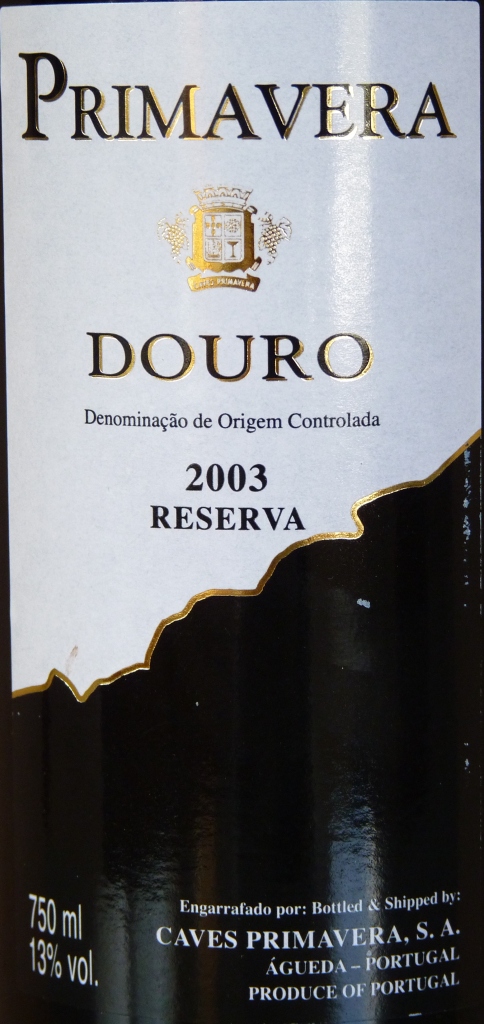
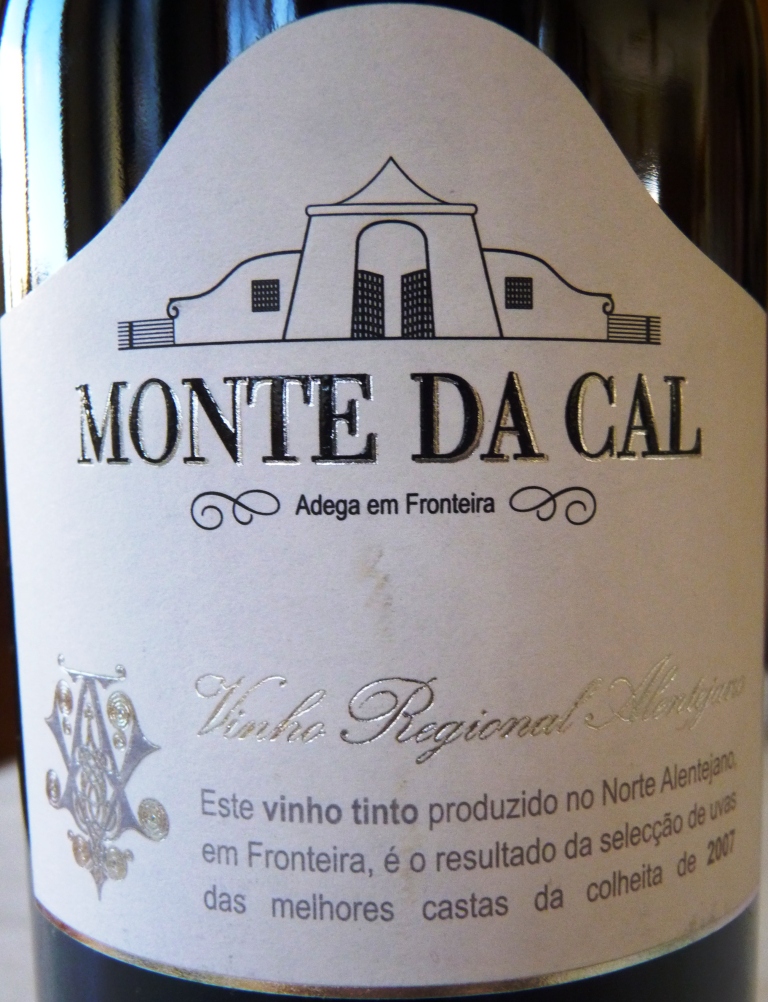
Three more wines from Portugal – 2009 Caves Vale do Rodo, Douro DOC ($6.98), 2003 Primavera Douro DOC Reserva ($6.98) and 2007 Monte Da Cal Vinho Regional Alentejano ($6.47). All three are very nice and simple wines, easy to drink and pleasant – and great value for the money. I will put Drinkability at 7 for all three.
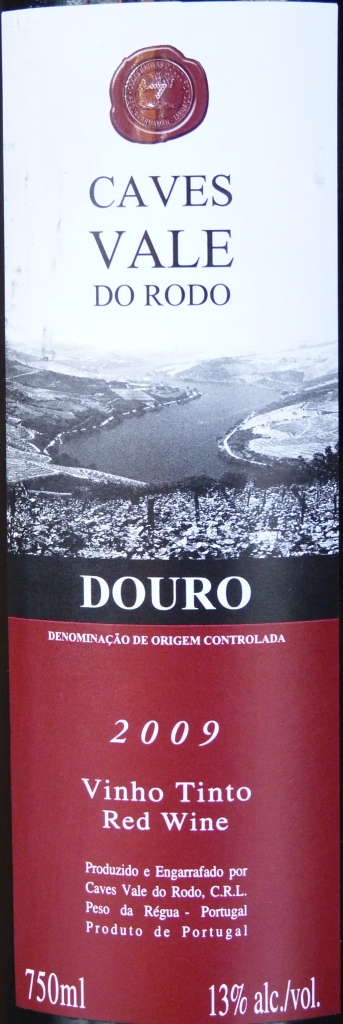
This concludes Value Wines project update for today. Few more wines are left to try in the current batch – as usual, the report will be coming soon.
Grape Quest Continues
 Treble Journey finished, destination reached – 301. Do I simply stop or do I leave the port for the next destination – Quattro? 400 different grapes to be experienced in some form?
Yes, I have to honestly admit that I enjoyed that Treble journey. I happened to discover real gems along the way, such as Nielucciu, Grolleau, Grignolino, Pigato, Pugnitello, Romorantin and many others. What now?
As it often happens with me, I decided not to decide. I don’t want to set my mind on the “quattro journey”, as level of obsession will go again ( as it was with Treble) really high. At the same time, the need to look for “what is actually inside of that bottle, may be it is a new grape?” became really ingrained into the DNA, and nothing I can do about it.
The decision is to take it as it goes. I’m not going to spend hours on internet, looking for the grapes I need to try to advance to the next level. At the same time, I’m going to keep paying attention to “what’s inside”, and continue counting the new grapes. To reflect that, “Treble count” on the front page is now “Grape Count”, and it will keep ticking.
And to make an early advance, I was quite lucky (thanks to my friend Zak) to attend a big wine tasting event (one of the posts in the near future will be raving about amazing wines we tried), so the grape counter is advancing by 8 – here is the list:
Gamay Saint Romaine: 2010 Domaine Robert Serol Cote Roannaise Rose “Cabochard”
Tressalier: 2009 Domaine Nebout SAt. Pourcain Blanc Tressalier des Graviers
Mondeuse: 2008 Roger Labbe Mondeuse
Colorino (Tintoretto): 2010 Terenzuola Rosato “Merla Rosa”
Albana: 2009 Fattoria Zerbina Albana di Romagna Secco “AS”
Vespolina, Uva Rara: 2004 Vallana Boca
Prugnolo Gentile: 2006 La Spinetta Il Gentile di Casanova
I’m looking forward continuing this journey – and of course, I will report along the way on all discoveries. Let’s go…
Value Wines Project And Other Updates
 Few more wines to report on in the Value Wines project. First, 2007 Rengo Valpolicella Classico Superiore Ripasso ($11.98). Valpolicella Ripasso is a little brother (or a sister, take your liking) of Amarone wines, which are my favorite red wines (when they are done right). Ripasso wines made from the second pass of the grapes already used to produce Amarone wines, hence the name “second pass”. So if anything, you should expect that Ripasso wine will resemble the Amarone wine itself. And it actually does in case of this Rengo Ripasso. This wine needs a bit of time for breathing, and then it resembles Amarone with sweet raisiny nose, and then soft fruit and very balanced tannins and acidity. This wine also has medium finish and it is easy to drink. Drinkability: 8-.
 The next wine is from France – 2009 Barc Vallee Borgueil Les Castines ($9.98). Borgueil wines are made out of Cabernet Franc grape. It is not easy to find a good Cabernet Franc wine, especially in this project’s price range. This wine was very nice and gentle, with good earthiness on the palate, good balance, good acidity. This wine is definitely food friendly and should work well with many dishes. It will also drink well over the next 3-4 years. Drinkability: 7+ .
The next wine in the series is called Caves Bonifacio from Portugal ($3.98). I typically avoid writing bad reviews – unfortunately, this particular wine was so bad, it tasted ” chemically engineered”, very unnatural. So it made it for the first bad bottle in the series (first out of 9). I will not even rate Drinkability here as the wine was undrinkable (had to go down the drain). Hopefully the next bottle will be better.
One more update not related to the value wines project. As you might know, I reached my goal of trying wines with 300 grapes for the Treble status in Wine Century club. However, the journey of discovery continues. I just had an opportunity to try another 8 new grapes, and I have another 5 to add shortly. Therefore, I’m continuing the journey without setting the goal of becoming Quattro member, and I changed the “treble status” section to the “grape count”, which will reflect the current state of this process. Will I make it to the quattro level? Who knows – but I will definitely have fun trying.
And one last note – few days ago, I was able to try some truly amazing wines – so be on a lookout for the interesting updates.
301!
 Can you guess from the title alone what this post will be all about? If you are not new to this blog, I’m sure you got it figured out, and if you didn’t spend much time here before, you can check this post, it will give you a hint. Yes, you got it right – I got to 300 different grapes, and now can officially apply for the Treble level at the Wine Century club! For anyone interested in seeing the copy of that application, you can find it here: Application_WineCentury_Treble.
This “Treble Journey” was interesting. It required complete focus: entering the wine store, you are on the mission. You are not looking for a nice bottle of reasonably priced Cabernet Sauvignon – instead, you are looking for the wine from the most obscure place (of course it is also located in the corner of the store you’ve never been to before), hoping it is made out of grape you didn’t try yet.
Reaching this 300 grapes level was big and often simply a communal effort. My friend Patrick was finding and bringing wines from Switzerland. My friend Zak, owner of Cost Less Wines and Liquors, was going after all of his suppliers asking for rare grape recommendations. I had to spend a lot of time trying to find unusual wines on the budget, sometimes bringing them from across the country or halfway from across the world (for instance, Emerald Riesling, which grows only in Israel). A lot of time went also into “grape research”, making sure that grape is unique or at least an officially recognized clone, and not just a different name for the grape already accounted for.
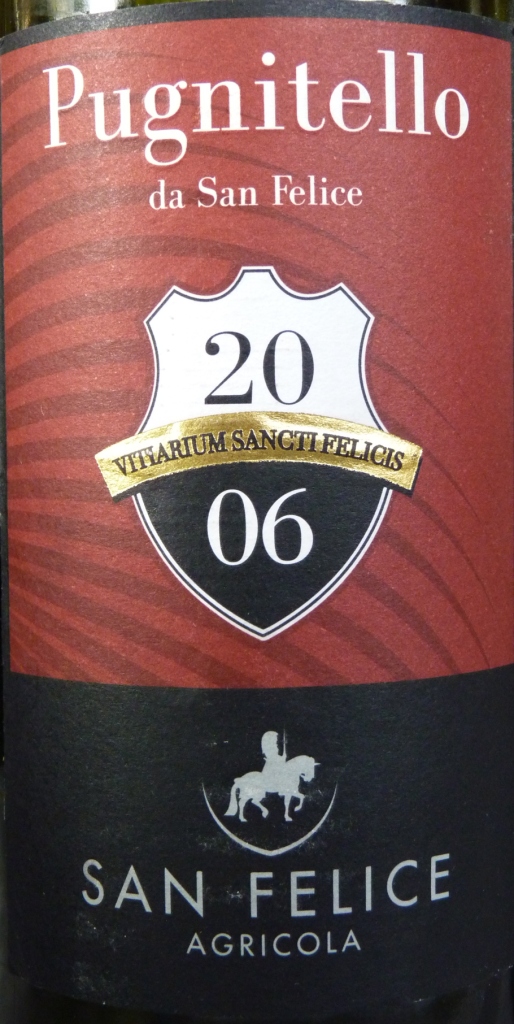
Anyway, here I am. 301. The grapes which helped to cross into the treble world were Findling (swiss clone of Muller-Thurgau), Coda di Volpe (Lacryma Christi del Vesuvio), Pigato, and Pugnitello:
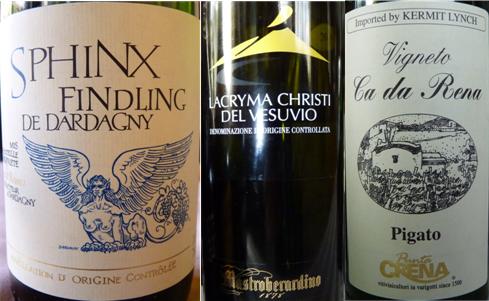
Both Findling and Lacryma Christi were nice wines (which is not always the rule when you are going after rare grapes), but the great thing was that Treble Journey finished in style, thanks to Pigato and Pugnitello wines. This 2009 Punta Crena Pigato Vigneto Ca da Rena from Liguria in Italy was one of the very best white wines I ever had – full body, great balance of fruit and acidity, with fruit taking back seat and letting polished roundness to shine – outstanding (Drinkability: 9). And 2006 San Felice Pugnitello from Tuscany was also outstanding, earthy and pungent, very balanced with a long finish (Drinkability: 9-).
Well, the Treble Journey is over. Am I done with this [tedious] process of grape discoveries? I don’t think so. The next level is called Quattro, and it requires… yep, 400 grapes! Anyone cares to join? Let’s go!
Treble Journey: On The Finishing Line, #293 – #297
 300. Getting closer and closer. It is amazing what dedication and focus can do – fine, yes, we learned that in school, the trick is to practice that “dedication and focus” thing.
When I restarted this crazy “grape quest” in May of 2010, I had no idea that I will be able to move from about 210 grapes to almost 300 in 7 month. But it’s actually happening – after this report, I will be 3 grapes away from 300. And those 3 additional wines (grapes) are simply waiting for its moment, quietly resting in the cellar. Looking back, yes, I had to use some clones, but in any case I was able to advance here without use of a secret weapon, the wine with 152 grape varieties in it!
Last big group of new grapes was largely based on varieties from Georgia. This latest group consists of 3 grapes from Italy, one from Hungary and one from Israel. Another interesting detail is that 4 out of 5 are part of the main application table – I really hope that main table will be complete one day!
 So the new grapes are:
Schiava – 2009 Elena Walch Schiava Alto Adige DOC, Italy – nice soft red wine, medium body, has a little gaminess.
Ruche – 2005 La Mondianese Ruche di Castagnole Monferrato DOC, Italy – Nice, gamey wine, very earthy and well balanced.
Erbaluce – 2008 La Torrazza Erbaluce di Caluso DOC, Italy – very acidic while cold, and showing some fruit when warms up, but not very distinguishable overall
Portugieser – 2008 Gere Villany Portugieser, Hungary – Again, gamey wine, very tight initially. Opened up after two days, became quite drinkable. Will beneft from a few years in the cellar.
Emerald Riesling – 2009 Teperberg Terra Emerald Riesling, Israel. It is not the fiurst time I write about Teperberg wines. This Emerald Riesling was a bit sharp on the edges and a bit dryer than you would expect from “semi-dry white wine”, but it was drinkable nevertheless.
The Treble Journey is nearing it’s finishing line. Will there be a Quattro Journey? Well, you will be the first to know…
Last Bottle Sign Up ($10 credit)




 Talk-A-Vino