Archive
For the Love of Madeira
 If I were to offer you a glass of Madeira, what would you say?
Okay, let’s take it up a notch: I assure you it will be a good Madeira.
Would you gladly accept it, or would you energetically decline?
I’m betting about 80% on the latter. And if you like wine, that would be simply your loss. But if you are in that 20%, accepting that glass of good Madeira would be a very wise decision.
Madeira has a long history of ups and downs, similar to many other wines. I wrote about Madeira a few times in the past (not enough!), so let me be obnoxious and quote one of my older posts about the history of Madeira.
Madeira wine takes its name from Madeira Island in Portugal. The history of Madeira, which started around the 15th century, is full of accidental discoveries, glory, overcoming of the hardship, rise and fall, and even love – if you are interested in the full story, you should take a look at the Madeira Wine website. In the 15th / 16th centuries, Madeira wine was created when wine was transported in barrels through the ocean to far away places such as India and China. It was found ( by accident, of course) that a long ocean voyage improves the taste of wine compared to the original one that went into the barrel. After many trial-and-error experiments, it became apparent that prolonged exposure to the warm weather was the culprit, and then the method of heating the wine up to 60°C (140°F) was invented. The process of heating up the wine is called Estufagem, and it is done after the wine is fermented in the oak barrels, same as any other wine – again, you can find more details online – you can find less colorful but more technical details on Wikipedia (click here). Just to give you a few more details from Madeira’s history, trade embargoes led to further improving Madeira by adding brandy spirits in order to preserve the wine. Barrels of Madeira left for a prolonged time under the rain led to the development of the new style of Madeira wine, called Rainwater.
In the 18th century, Madeira was one of the most popular wines in the world, especially in England and the United States. Madeira was used to toast the United States Declaration of Independence, and was highly regarded as a drink of distinction. Unfortunately, first mildew and then phylloxera epidemic delivered a way too powerful one-two punch, which the Madeira wine industry was unable to overcome. Madeira subsided to nearly a cooking wine level, and stayed like that for a long time. Luckily, overall uptake on the wine industry throughout the world helps to revive the Madeira industry, and now it is becoming possible to find a great drinking Madeira even in the US – and you will see why. And I have to note that one of the great qualities of Madeira is in the fact that, unlike practically any other wine, once you open a bottle of Madeira, it will stay the same more or less indefinitely, due to both the Estufagem method and fortification with the spirit.
Now that you have a bit of historical perspective, let’s take a deeper dive into Madeira wine.
Madeira is a beautiful island with a subtropical climate and luscious greenery. Madeira’s name means wood, oak – this is what the first settlers saw. Madeira’s climate sports tropical winds, hot summers, mild winters, and high humidity. It also offers lots of microclimates, from south to north. Mountains and forests cover 47% of the island, mostly with altitudes of up to 200 meters, reaching 700 meters in some areas.
There are about 475 hectares of vineyards growing on the island (about 1,200 acres), cultivated by 2,000 growers. Vineyards utilize a pergola system to ensure proper aeration.
Six main grapes are used in wine production on Madeira: Sercial, Verdelho, Boal, Malvasia, Tinta Negra, and Terrantez. It is interesting to note that Verdelho and Verdejo are different grapes! Another interesting fact is that Tinta Negra can be vinified as white, rosé, or red.
After the harvest, the grapes are pressed and fermented as with any other wines. Fermentation is subsequently stopped, depending on the desired sweetness, by adding neutral spirit. Next, the heating process takes place. Less expensive wines are usually subjected to continuous heating in the steel tanks surrounded by coils for at least 90 days. Higher-end Madeiras, especially the single-harvest ones, are usually heated using the system called Canteiro, where the wine in the oak barrels is secured in place using wooden beams (canteiro) and heated by mother nature for a prolonged period of time, inside the winery.
The majority of Madeira wines are blends, with the labels indicating the age and type of grapes (it is also possible to make Madeira without indicating age and the grapes). The age designations can be 5, 10, 15, 20, 30, 40, and 50 years. There are also single-harvest Madeiras, called Colheita, which should be aged for at least 5 years in oak, and Frasqueira which requires at least 20 years in oak. Another beauty of Madeira is in the fact that the wine can stay in the barrel indefinitely, and bottled only when needed – some of the known Frasqueiras exceed 200 years of age.
Three years ago, in 2022, I was lucky to attend the Madeira tasting in New York City, where I had an opportunity to taste some absolutely spectacular wines. The event included a Madeira Master Class as well as a walk-around tasting.
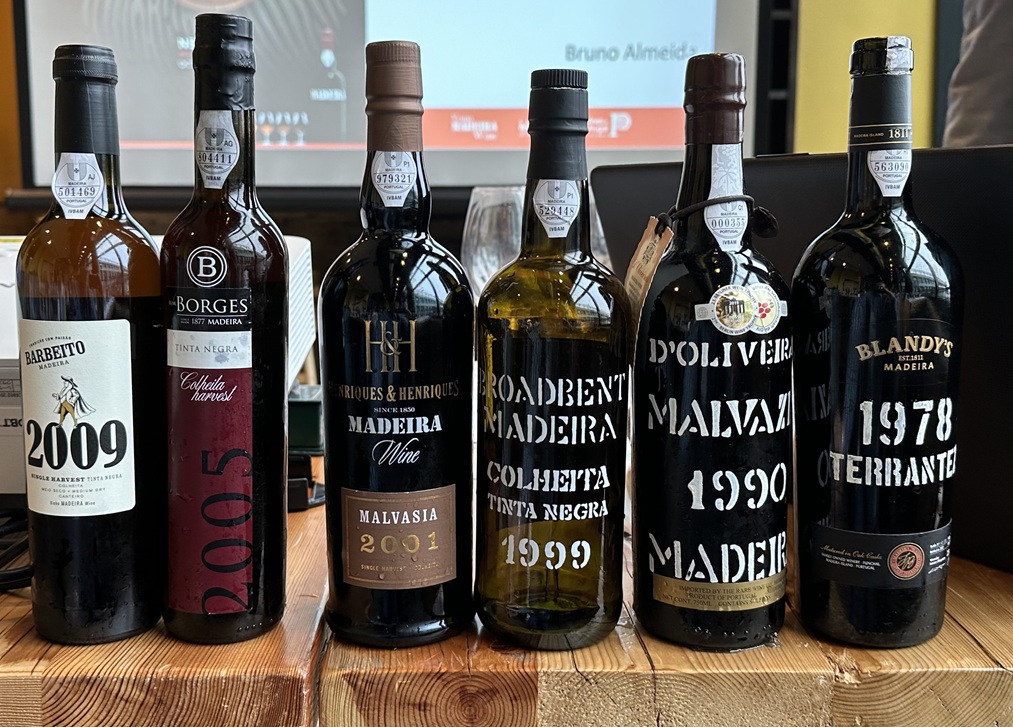
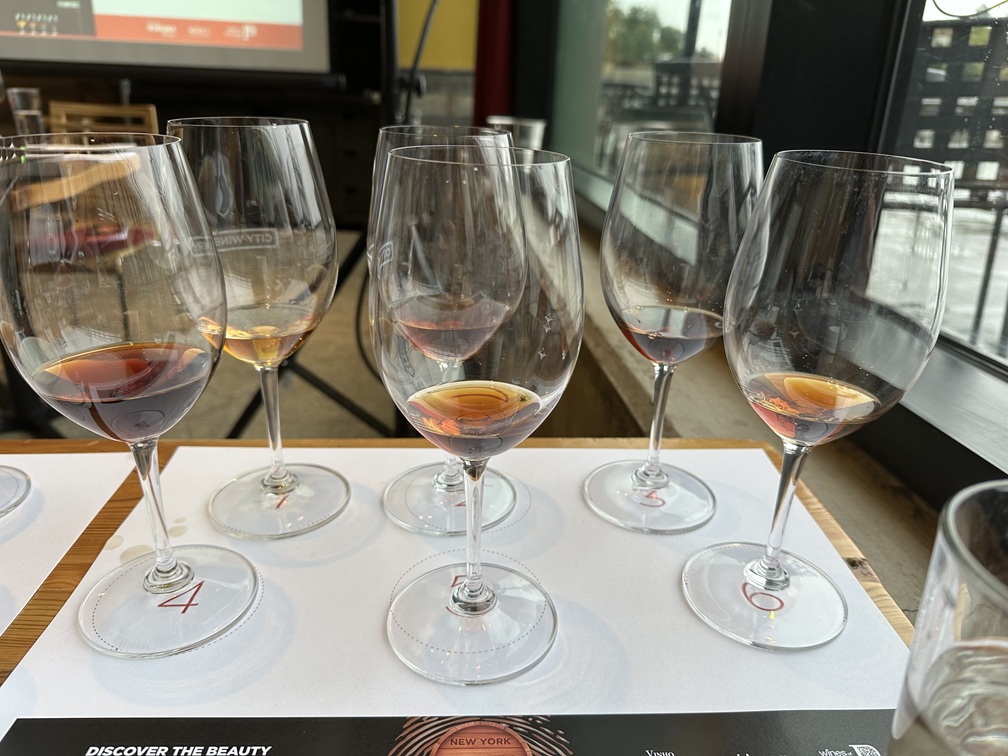


Here are the wines we tasted during the master class:
2009 Barbeito Single Harvest Tinta Negra
clean, open, light, easy to drink
2005 H.M. Borges Tinta Negra Colheita
Hazelnuts, dry fruit, figs, lemon, perfect acidity, beautiful dry fog finish. Lots of pleasure. Foie Gras would be perfect with it.
2001 Henriques and Henriques Malvasia Madeira
Complex herbaceous nose, nicely restrained
Salinity, acidity, supercomplex, dried fruit perfectly balanced
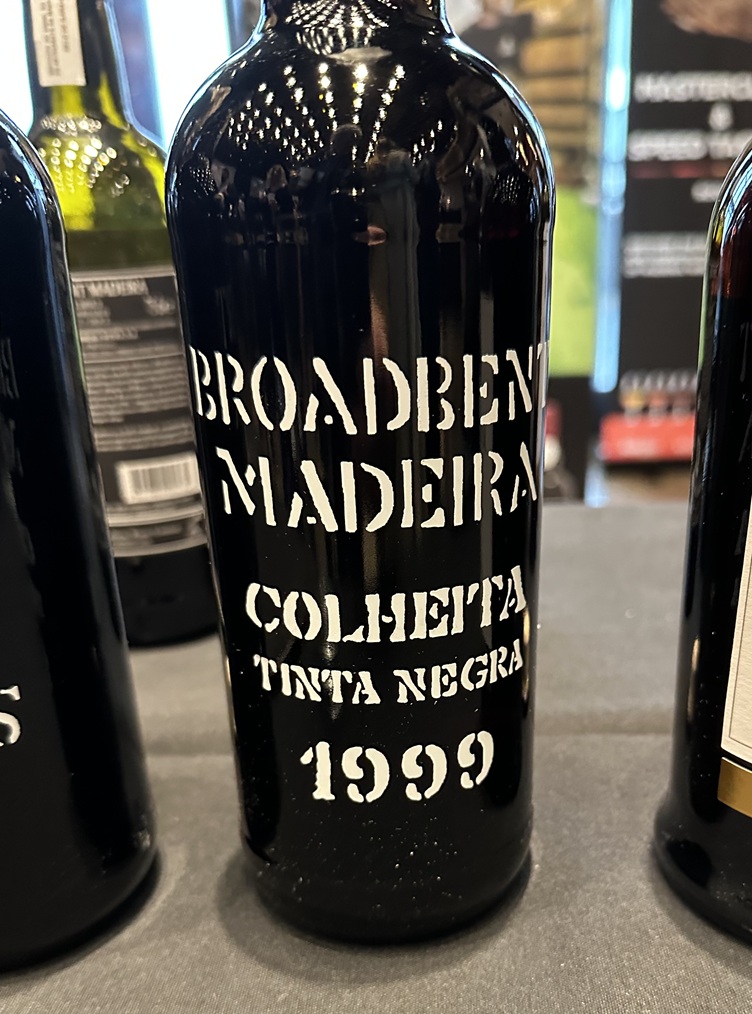
1999 Broadbent Tinta Negra Madeira Colheita
Chocolate, dried fruit compote, very restrained
Dried fruit, great acidity, toffee, tasty notes, outstanding.
1990 Pereira D’Oliveiras Malvasia Fresqueira Madeira
Bottled in 2018
Great herbaceous complexity, fall leaves, medicinal notes, eucalyptus
Amazing palate, dense, complex, loads of dried fruit and hazelnut. Superb.
1978 Blandy’s Fresqueira Terrantez Madeira
beautiful, herbal and vegetative notes, excellent balance, hazelnuts, salinity. Fresh and inviting.


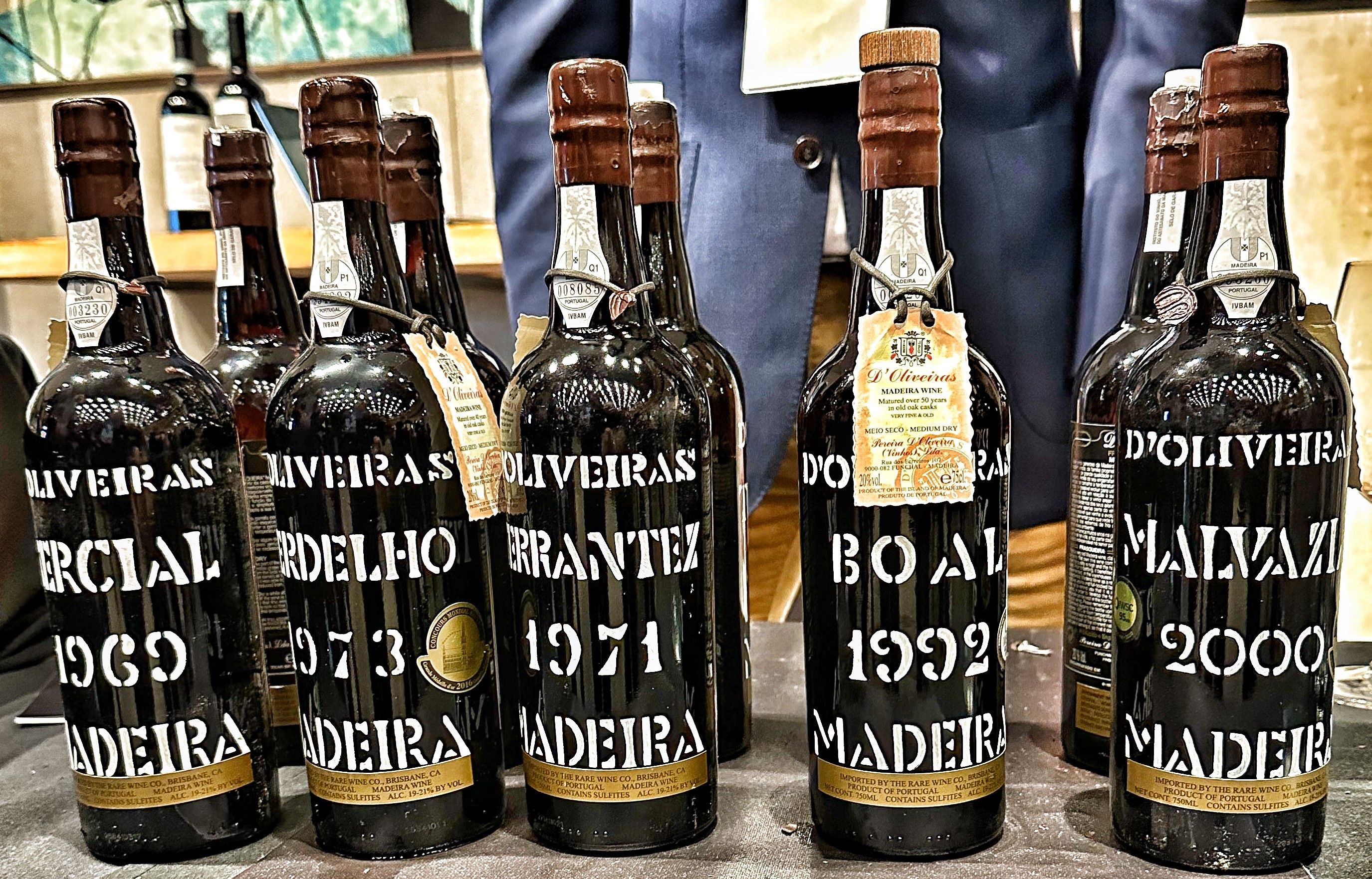
There were lots of gems in the walk-around tasting, such as Justino’s 1996, 1997, and 50 years old Madeiras; D’Olivera Colheita and Fresqueira Madeiras from 2000, 1992, 1973, 1971, and 1969 (1969 was bottled only in 2022); Broadbent 10 years old Sercial, Verdelho, Boal, as well as 1999 Tinta Negra Colheita, and others.
As I said before, Madeira really needs to be experienced, and you have a perfect opportunity to do so.
Coming November 18th, you can experience the beauty of Madeira for yourself. Here are all the details:
Experience the Magic of Madeira – Sip, Taste & Vote!
Tuesday, November 18, 2025 | 5:30pm – 8:30pm
Ideal Glass Studio | 9 W 8th Street, New York, NY 10011
Six producers, six bartenders, one delicious adventure.
You can get 2 tickets for the price of one ($55) using this link.
✨ Your ticket includes:
- Walk-Around Tasting featuring six top Madeira producers — taste rare bottles, some worth over $100.
- Cocktail Competition – six NY bartenders crafting unique Madeira cocktails. Taste and vote for your favorite!
- Food Pairings by Chef Nuno of Leitão.
- Mini “Speed Tastings” with Wines of Portugal Ambassador Eugénio Jardim, exploring Madeira styles in fun, 15-minute bursts.
- Cocktail Seminar: Madeira Cocktails Made Easy with bartender Francesco Dionese — learn how to shake, stir, and sip Madeira at home. (seating is limited).
Don’t miss your opportunity – and you can thank me later. Cheers!
An Eventful Friday – Sparkling, Port, Radio Talk Show and more
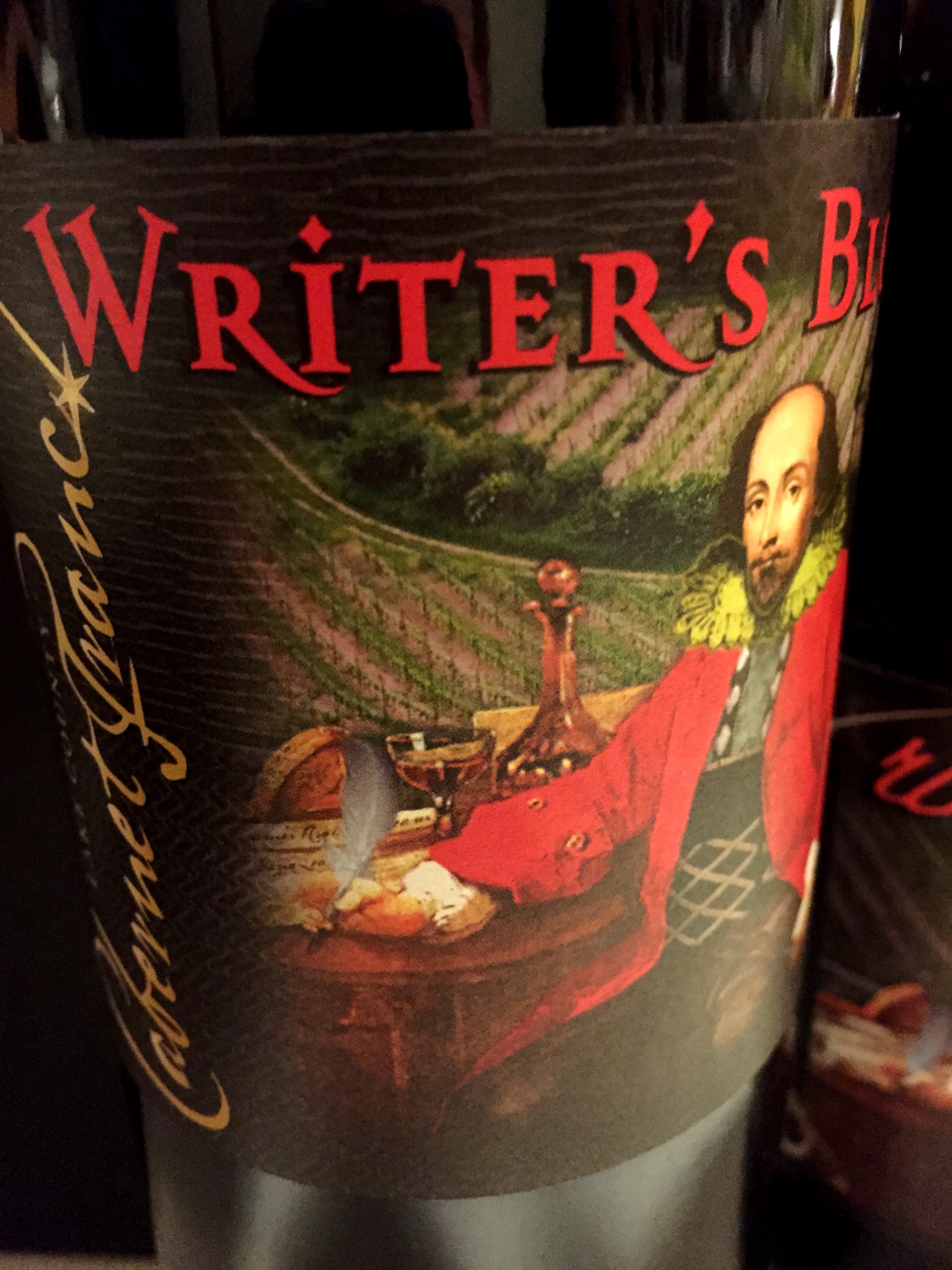 As you probably noticed, the number of posts on Talk-a-Vino is down very significantly. There are many reasons for that – different workload from my day time job, few time consuming projects we tackle at home, and of course the plain familiar writer’s block. Yep, the writer’s block – when there is lots running in your head, and you have a great difficulty to put something out on the “paper”. I tried to address the last one using the wine, I would hope specially made for such an occasion – the wine called Writer’s Block and made by Steele Wines in California. I first saw this wine mentioned in the blog I follow, called Mrsugarbears, and as you might see in my comment to that post, “Must. Find. This. Wine” was the first thing I said. I found the wine, and I got the Cabernet Franc and Grenache to try, out of the vast variety of the wines under that “Writer’s Block” label (you can see the full line of wines here).
We opened the 2011 Writer’s Block Cabernet Franc Lake County, California (13.8% ABV, $17) – it had eucalyptus, tobacco and fresh leaves on the nose. Palate was showing a medium body, tart blackberries, green bell peppers and more tobacco. On Friday, the characteristic cassis showed up, which made me happy while finishing the wine. Not sure it helped with my writer’s block, but I will gladly drink it again. Will try the Grenache next time. Drinkability: 7+
Let’s get back to that Friday. In the morning, the shipment of Horsepower Syrah arrived. I’m not sure how I managed to get on the list for this first release of super-highly allocated wine – but somehow I did, back in May. The wines comes from the legendary Christophe Baron (Cayuse, No Girls), from the tiny vineyards in Walla Walla Valley, all farmed sustainably and biodynamically (here you can read more about Horsepower Vineyards).
Okay, so it is all great, but not my main point here. I got a shipping notice from UPS at the beginning of the week, and then I got shipping delay notice from UPS, saying that the wine would be delivered only on Monday, which would be a problem as I’m traveling again next week, and there would be good chance that nobody would be able to sign for the wine during the day. This is why the delivery on Friday was so exciting that I even decided to share it in this post. This was also the first wine I received wine in the nice wooden box – so here are some pictures for you.


The next event on Friday was a really a double pleasure. At the beginning of the week, I connected to the @TheVineWineClub on Twitter, and then I got a note about possibly joining a radio talk show about the wine. Really? Yes, I can talk wine, I actually love to talk wine, so I said that I will be glad to do it – and it instantly happened, right on that Friday. At 3 PM, I was a guest at the regular radio talk show called “Off the Vine Radio Show with Benita and Terricinia“, hosted as you can tell from the name, by Benita and Terricinia. The theme was about the sparkling wines, so to support the conversation I decided to open a sample which I recently got – Ferrari Perlé from Trento in Italy. I almost feel guilty talking about Ferrari wine just matter-of-factly – the winery was founded by the Guido Ferrari in 1902; he was responsible for bringing Chardonnay grape into Italy, and he can be pretty much considered a father of Italian Méthode Champenoise wine industry. Full range of Ferrari sparkling wines is nothing short of spectacular and again, it really deserves it own coverage in a separate blog post.


This 2007 Ferrari Perlé Trento DOC, Italy (12.5% ABV, $35, 100% Chardonnay) was absolutely delicious – fine mousse, delicate aromas of apple and hint of toasted bread, perfect balance on the palate – apples, yeast, toasted bread, acidity – just very classic wine, making you say “ahh” after every sip. Drinkability: 8+
And the radio show – it was fun all the way! Benita and Terricinia were great hosts, very knowledgeable about the wine, so we definitely had a fun conversation (I really hope I didn’t overstepped my boundaries by talking to much)! I’m not going to recite our conversation here, but if you got a bit of time, here is the link for you for the broadcast. And if you will actually listen to the program – let me know (honestly!) what you think.
And the last highlight of the day – Port and Madeira tasting!


The tasting was focused on the Graham Port wines, one of the oldest Port houses in Portugal. There were 4 different ports presented in the tasting. The first one was really special, produced in the total quantity of 500 cases (less than 300 cases imported to US). This port was produced as part of the “Six Grapes” line, but for the first time in more than 100 years, it was done using the best grapes from 2011 and 2012 vintages, which were both simply outstanding vintages (some are saying that 2011 was one of the two or three very best over the last 100 years), and this is something never done before. You can read the full story here. Well, for what it worth, here are my notes:
Graham’s Six Grapes Old Vines Port ($34.99) – young and aggressive. Needs some time to mellow down – it has a sharpness of young fruit which still needs some polishing when it comes to the Port wine. After a bit of the breathing time, will perfectly finish a meal.
2011 Graham’s Vintage Port ($75.99) – again, this is the port from the amazing vintage, so it needs a lot of time to develop. Young bright fruit, blueberries and blackberries, firm and powerful body, excellent balance. Give it a 20 years, it will show what it is capable of.
Graham’s 10 Years Old Tawny ($27.99) – delicious. Dried fruit all over – figs, apricots, touch of hazelnut. And I love the bottle’s look and feel – this is a new packaging for this port which I think makes the wine shine even more.
Graham’s 20 Years Old Tawny ($45.99 – great price!) – make it double delicious. More dried fruit, nuttiness all the way, extremely complex. Thought provoking and might make you forget all the world troubles if you will be left alone with the bottle. My favorite from the tasting.
Last but not least – Blandy’s Malmsey 10 Years old Madeira ($23.99 – an amazing QPR) – a bit of sweet fruit on the palate, lots of complexity between nutty and salty profiles – delicious all the way.
Here we are, my friends – one eventful Friday. Writer’s blog, be bone – I can’t deal with you. Cheers and have a great week ahead!
Re-post: Forgotten Vines: Madeira
During 2011 I wrote a number of posts for the project called The Art Of Life Magazine – of course talking about my favorite subject, wine. The project closed and even web site is down, but as I still like the posts I wrote, so I decided to re-post them in this blog. Also, in that project, posts were grouped into mini-series, such as “Forgotten Vines” you see here – I will continue re-posting them from time to time.
Also note that the series was written for a slightly different audience – I hope none of my readers will take offense in the fact that sometimes I’m stating the obvious…
 Our first post in the Forgotten Vines series was dedicated to Jerez, a not-so-easy-to-find-but-worth-looking-for fortified wine from Spain. Continuing the series, let’s move a little bit to Spain’s west side neighbor, Portugal.
Talking about Portugal’s place on the wine map, what wine comes to mind first? Yes, of course it is Port. And while Port is single most famous Portugal wine, it is not the Port we want to talk about here (don’t worry, Port is squarely positioned in the line of “must-have” experiences, and we will talk about it later). We need to move a bit more down the map in the south-west direction, about 1000 km (600 mi) to the island of Madeira.
Madeira wine takes its name from the name of Madeira Island. History of Madeira, which started at around 15th century, is full of accidental discoveries, glory, overcoming of the hardship, raise and fall, and even love – if you are interested in the full story, you should take a look at Madeira Wine web site. In the 15th / 16th centuries, Madeira wine was created and transported in the barrels through the ocean to the far places such as India and China. It was found ( by accident, of course), that long ocean voyage improves the taste of wine compare to the original one which went into the barrel. After many trial and error experiments, it became apparent that prolonged exposure to the warm weather is the culprit, and then the method of heating the wine up to the 60C (140F) was invented. The process of heating up the wine is called Estufagem, and it is done after the wine is fermented in the oak barrels, same as any other wine – again, you can find more details online – you can find less colorful but more technical details on Wikipedia (click here). Just to give you a few more details from Madeira’s history, trade embargoes led to further improving Madeira by adding brandy spirits in order to preserve the wine. Barrels of Madeira left for prolonged time under the rain lead to development of the new style of Madeira wine, called Rainwater.
In the 18th century, Madeira was one of the most popular wines in the world, especially in England and United States. Madeira was used to toast United States Declaration of Independence, and was highly regarded as a drink of distinction. Unfortunately, first mildew and then phylloxera epidemic delivered way too powerful one-two punch, which Madeira wine industry was unable to overcome. Madeira subsided to nearly a cooking wine level, and was staying like that for the long time. Luckily, overall uptake on the wine industry throughout the world helps to revive Madeira industry, and now it is becoming possible to find a great drinking Madeira even in US – and you will see why. And I have to note that one of the great qualities of Madeira is in the fact that unlike practically any other wine, once you open a bottle of Madeira, it will stay the same more or less indefinitely, due to both Estufagem method and fortification with the spirit.
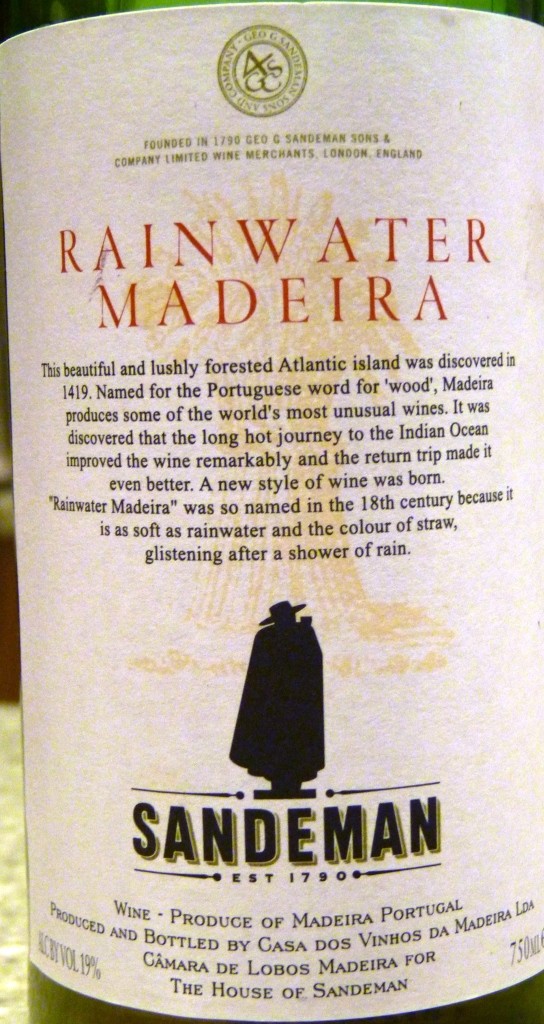
As we say here, time to open a bottle. Madeira comes in many different versions, from completely dry to the sweet. The Rainwater Madeira is somewhat of a simpler style, but still very enjoyable. This Sandeman Rainwater Madeira is deep and heavy on the nose, with hint of aged cheese and sweetness (overripe apple sweetness). On the palate, it shows the same concentration of the sweet notes, which is not really supported by acidity, so the wine comes somewhat unbalanced – however, as a desert wine to have with sharp cheese (like blue cheese, for instance), it will create a heavenly combination.
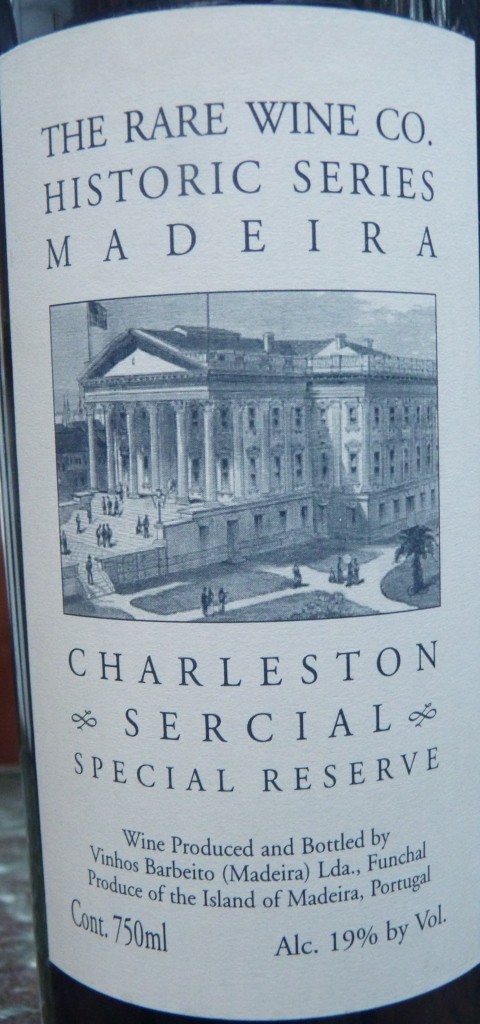 The next wine, Charleston Special Reserve Sercial is few levels up the previous wine. It comes as incredibly complex on the nose – nutty, with hint of sweetness and herbs, lots of herbs. Beautifully balanced on the palate with acidity and sweet delicate flavors of apple blending together perfectly. This Madeira has very long finish and can be used equally well before, during and after dinner – just take your pick. Definitely worth seeking.
Well, it is a great time to be a wine lover – abundance of experiences just grows daily. Now that you are empowered with the knowledge of Jerez and Madeira, it is time for personal encounter – find the bottle and enjoy it tonight!
Last Bottle Sign Up ($10 credit)




 Talk-A-Vino