Archive
The Wine I’m Willing To Drink For The Next Ten Days – Marcus by Marco Sambin
Yes, you read it right, and it is a pretty bold [personal] statement. “I will be glad to drink this wine over the next 10 days” was the first emotional reaction as I took a sip of this wine. The reason for this bold statement? Simple. The wine was ready to drink from the get go. You know how often you take a sip of wine and say “well, I think it needs to breathe a little”, or “nice, but let me give it some time”? This wine didn’t need time. Fruit, body, acidity, tannins – all present in a cohesive, as I often call it, “together” package. Instantly available. Instantly delicious.
What makes this “bold personal statement”? My reaction to the first sip was “ahh, I will be glad to drink this every day. Period”. I never experienced this before – with the best wines I had, I would still pick something else to drink the next day, even if that “best wine” was still available. With this wine – yes, I would gladly keep opening the same bottles day after day. Well, possibly that was a reaction to the fact that this was my one and only bottle.
This bottle was actually a sample, and before I will continue talking about the wine, I want to share my frustration with samples. I don’t actively solicit samples (as a general rule – but yes, with exceptions), but then I don’t refuse samples either; I always warn the submitters that the review will be posted only if I happen to like the wine. When the sample arrives, especially if it is a red wine, the frustrating cycle starts. On one hand, I need to open it sooner rather than later, as the sender is awaiting my feedback. On another hand, I treat samples same as the regular wines – I wouldn’t open wine just to take a sip and dump the rest, even if it is only a sample. And I would also make an effort to involve my wife into the tasting, and as she generally prefers the red wines, it becomes difficult to find the right time to open the bottle. All in all, I’m getting torn between the need to open the bottle and the desire to still find the right time for it. There, I let it out.
Now, this particular sample has its own story. Back in April I was contacted by the winery called Marco Sambin from Italy, inviting me to come and taste their flagship wine, called Marcus, at the Vinitaly expo in Verona. When I mentioned that I will not be attending the Vinitaly, they offered to send me a sample – however, they could deliver it only inside Italy. You know, I already said it many times in this blog – having good friends is one of the most important things in life. My dear friend Stefano, who is constantly in between US and Italy, was able to get this bottle for me (it took only about two month for the bottle to get from the Italy into my hands). It then also took me about 6 additional weeks for find the right moment to open the bottle – hence my rant about samples (see above).
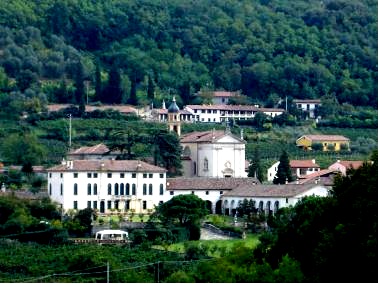
Villa Contarini in Valnogaredo, from the Marco Sambin presentation
Never mind all of that. What important is that I was able to experience a great bottle of wine. Marco Sambin winery (Azienda Agricola Marco Sambin), a small 10 acres estate, was founded in 2002 in Euganean Hills area in Veneto by Marco Sambin, Full Professor of Psychology at the University of Padova. I don’t want to recite all the information from the web site – you can read it for yourself here, and these are just some of the interesting facts. Cabernet Sauvignon, Merlot, Cabernet Franc and Syrah are all growing at the estate. The estate is farmed using organic and biodynamic principles. All the harvest is done by hand, and once the grapes are sorted and destemmed , they are gently crushed and fermentation process starts using only natural yeast, each grape variety fermented on its own. After the fermentation, which lasts for about 15 days, the wine is pressed and goes into the French oak barrels (both new and used), still each variety on its own; the wine will age in oak for the next 12 month. Only then the final cuvée is blended and bottled. Once bottled, the wine will still spend 6 -12 month before it can be released. On average, only 6,000 bottles are produced every year.


And now, here are my notes about the wine itself. The 2010 Marco Sambin Marcus Veneto IGT (14% ABV, Cabernet Sauvignon 45%, Merlot 40%, Cabernet Franc 10%, Syrah 5%) had very dark garnet color in the glass. On the nose, it showed concentrated red fruit, cassis, pencil shavings, baking spices and lavender, very complex and inviting. The palate delivered delicious fruit, perfectly present but not over the top, clean acidity, supple tannins and impeccable balance. Long finish, and every sip was leaving you craving another one. Drinkability: 9
Here you have it – the wine I’m willing to drink for the next ten days. Except it was my one and only bottle, and this wine is not available in US (if you are an importer who is reading this by any chance, the winery is looking for representation in the US – you can contact them using the information on the web site, or drop me a note, I will be glad to connect you). Is there a wine you will be glad to drink day after day after day? Cheers!
Beautiful Land, Beautiful Wines, and Pursuit of Passion – #WineStuidio Experience with ZGR Imports
Once again, I’m starting the blog post with rhetorical and repetitious opening: have you ever had… (I can imagine some of you rolling your eyes and may be even clicking away… but let me finish, nevertheless) the wines from the region called Le Marche in Italy? With high degree of confidence, I would guess that many of you would say “no” – while better known in Italy and in Europe, wines of the Region Marche are not all that familiar to the wine consumers in US – but it is what we will be talking about here.
Region Marche is located in the Central Italy, up on the Adriatic Sea. As many other areas in Italy, Marche boasts beautiful hills, serene beaches and old city citadels, the towers and the walls which you can see when you drive along any of the highways and the roads. And of course, you can find wine and olive oil pretty much everywhere.


When I visited Marche for the first time about 9 years ago, the area was known best for its white wine called Verdicchio. Verdicchio is actually a white grape, which is known to produce slightly perfumed, brightly acidic, medium bodied wines. Two of the best production areas for Verdicchio are Verdicchio de Castelli di Jesi DOC and Verdicchio di Matelica DOC. When it comes to the reds of Le Marche, I was not all that impressed at that time. Rosso Piceno, one of the most popular red wines in Marche, a blend of Montepulciano and Sangiovese, which I tasted during my visit, was rather simplistic. Lacrima di Morro d’Alba, one of the indigenous red grapes of Le Marche, was also rather unimpressive, with the wines coming through as too acidic and too light. All in all, my first encounter with the wines of Le Marche left me with great impression of Marche’s whites, and so-so opinion of the reds. Another conclusion we can make that I simply was not very lucky with my selection of red wines.
It was then. Now, a bit more than a month ago, I participated in the virtual educational event on twitter called #WineStudio. In the past, I wrote a number of times about #WineChat events, where people get together for the virtual wine tasting on Wednesday night. The difference between #winechat and #WineStudio is that #WineChat events are usually a single-time events (one hour on Wednesday night starting at 6 PM Pacific/9 Eastern), but #WineStudio events usually span the period of three weeks, with one hour long sessions every Tuesday nights at 6 PM Pacific/ 9PM Eastern. And another (most important) difference between two events is #WineStudio’s focus on education, on presentation of the wine region and the host itself, where the host can be wine importer or a distributor.
While I definitely had a delay with this post (this time it was not really a procrastination – life was simply getting in the way), as it often happens, the delay was helpful. Last week Matt Kramer published a wonderful article in the Wine Spectator, called “The Most Powerful Force in Fine Wine Today“, where he was explaining the role and importance of the wine importers in educating wine consumers and creating the appreciation, demand and overall market for the fine wine. One of the major traits all of the successful wine importers have in common is passion. It is the passion for the wine region, passion for the winemakers, passion for the wines what makes them successful. And passion for the Le Marche – the land, the people, the wines – was clearly showing in conversation with Jonathan Zeiger, the principal at ZGR Imports, our host for the Le Marche #winestudio event.
Jonathan’s company solely focuses on the wines of Le Marche, and I can tell you, that focus and the passion were clearly showing in the wines. Jonathan explained that while Verdicchio is well known and well established, the rising star in the region is the white grape called Pecorino (yes, it is the grape and not the cheese). The wine which we tasted, clearly supported that claim. 2012 Centanni Pecorino Offida DOCG, Italy (14.5% ABV) – the wine started as acidic and grassy, and when warmed up a bit, became creamy and round. It became a a supple white, with lots of big flavors, very concentrated, but still refreshing, and quite unique and different. Drinkability: 8-
And the reds… Both red wines were designated as Rocco Piceno, and both were the blends of Sangiovese and Montepulciano – but this is where the similarities end. To say that I was blown away by the first taste of Centanni Rosso di Forca would be an understatement. 2012 Centanni Rosso Di Forca Rosso Piceno DOP, Italy (13.5% ABV) – one of the best Pop-and-Pour wines I ever had. From the moment the glass “cork” was pulled out, it was a luscious, luxurious, round and delicious wine, one sip after another. Loads of fruit, silky smooth tannins, perfectly present texture, velvety mouthcoat (are you salivating by now?), perfect balance. Drinkability: 9-.
During the last session of the event we tasted 2010 Rio Maggio Rosso Piceno DOC (13.5% ABV) – excellent wine, but very different from the previous one – dark restrained fruit, a touch of cherry pit, perfect acidity. The wine was very restrained, but equally elegant at the same time – it was very vinous, if that makes sense to you as a descriptor, and thought provoking. Drinkability: 8-
There you have it, my friends. You should really follow the passion – the passion of the people who make the wine, and the passion of the people who go out of their way to bring those wines to you – and that quest for passion will never fail you. Discover the passion – and you will drink well. Cheers!
Weekly Wine Quiz #103: Grape Trivia – Blends, Part 7
 The Wine Quiz series is not meant to intimidate. The whole idea here is to have fun and learn something new. When answering the questions, it is fully encouraged to use all available sources of information, including Google or any other search engine. There are no embarrassing answers – the most embarrassing thing is not giving it a try…
Welcome to the weekend and your new wine quiz!
We are continuing our grape trivia series, focusing on the blends, even if it is a blend of 1. White, Red, Rosé, Sparkling, Still, Fortified and Dessert – all goes. Oh yes, and we will blend in some regions and even wineries as well, just to make it more fun.
So how do you feel about red blends for today? I know, the temperatures in US and Europe are rising, but quite honestly, while I know that it is very popular and appropriate to set the wine preferences based on the temperature outside (red for the winter, whites and light red for the summer), I personally go by the mood and general desire, no matter what the thermometer says. So for today, it is reds.
And now, to the quiz!
Q1: As you know, Merlot is one of the Bordeaux stars. Below are some of the best Merlot wines Bordeaux can produce, but only some of them are made from 100% Merlot. Do you know what wines are those?
a. Château Le Pin
b. Château Petrus
c. Château Hossana
d. Château Certan Marzelle
Q2: What is common between the following 3 Bordeaux producers: Château Trotte Vieille, Château Belle Assise, Château Le Bel
Q3: Wine lovers around the world are well familiar with so called GSM wines and their great range of expression, coming from Rhone valley in France, Australia, US and may other places. If we are to replace the Syrah in GSM blend with the Cinsault, which will produce powerful, dense, concentrated, long living red wines, where do you think such a wine most likely will come from? You need to name not just the country, but the exact region in order to get a full point here.
Q4: Sangiovese is a star grape of Italy, used in many regions and producing great range of wines. Montepulciano is another well known red Italian grape, most often associated with juicy, delicious and versatile wines made in the region of Abruzzo. If the wine is made as a blend of Monteluciano and Sangiovese, often in 50/50 proportions (doesn’t have to be always 50/50), can you name the region where these wines would most likely come from?
Q5: Below is the [partial] list of grapes which I personally call “Power Grapes” (I’m contemplating the blog post under the same name for a while). When used on their own (at a 100%, no blending), these typically black-skinned grapes produce powerful, dense, extremely concentrated wines, often with gripping tannins. For each grape below, can you identify the region(s) and the country(ies) making best known wines from those grapes? You don’t have to name all countries and the regions, one per grape is enough:
a. Alicante Bouschet
b. Sagrantino
c. Saperavi
d. Tannat
e. Vranec (or Vranac)
Good luck, enjoy the quiz and your weekend! Cheers!
Rediscovering Chianti – Cool? Traditional? How about Fun and Tasty!
 What is the major pleasure of the wine journey? You never arrive! No matter how much you know, how many wines did you taste, how familiar you are with the producers, there is always something new, something unexpected, something to learn and discover. Case in point – Chianti. Say the word “Chianti” – what image comes to mind? Come on, don’t even start on Fiasco, please. The “image” here is more of “what do you think of the Chianti”? Outside of being (sometimes) a safe and inexpensive choice at the restaurant, or a no-brainer selection to accompany the pasta dinner, how often do you dream of a bottle of Chianti, left alone salivate at one thought of the particular bottle of Chianti wine? Yeah, I thought so. But – the wine is a never ending journey – so let’s take a look at what is going with the Chianti nowadays.
A few weeks ago I attended a Chianti seminar and tasting in New York. The goal of the seminar was simple – to convince the group of wine bloggers, writers and wine trade professionals that Chianti is cool. Actually, this was the request from the event organizer, Consorzio Vino Chianti, that the seminar attendees would tweet about the event using the hashtag #ChiantiCool. To showcase the “cool” factor, 6 wines which we tasted during the seminar were presented in the semi-blind way. Of course all the wines were Chianti, but we were not given the information about the producers – and all the bottles were wrapped in the tin foil, so nobody would get any ideas.
The very first wine we tasted simply put me on the offensive. It was so tremendously acidic, it was hard to enjoy it at all – some people in the audience claimed that this was a “traditional Chianti the way it should be” – well, may be, but this was not cool at all in my book. Going from one wine to another, it felt like the wines were slowly improving, with the wines #5 and #6 been quite decent. Here are the brief notes, for what it worth:
- Chianti DOCG Riserva 2010 (12.5% ABV, 80% Sangiovese, 10% Canaiolo, 10% Trebbiano) – dark ruby color. Pure ripe tart cherries on the nose, hint of earthiness, touch of herbs. Palate – astringent and acidic, ouch! Drinkability: 5
- Chianti DOCG Riserva 2010-(14% ABV, 80% Sangiovese, 15% Merlot, 5% Syrah) – Dark Ruby color, Caramel and blackberries on the nose. On the palate, some cherries in the back, lacks depth. Drinkability: 7-
- Chianti Rufina DOCG Riserva 2010 (12.5% ABV, 90% Sangiovese, 5% Canaiolo, 5% Colorino) – dark ruby color. Cherries, earthiness, similar to the wine #1. Prevalent biting acidity on the palate – definitely a food wine, more balanced than the wine #1, but lacks depth. Okay as food wine, not a sipping wine by all means. Drinkability: 7
- Chianti DOCG Riserva 2010 (13% ABV, 90% Sangiovese, 5% Canaiolo, 5% Colorino) – Dark ruby color. Interesting dustiness on the nose, herbs, cherries, touch of plum. On the palate, lots of tannins in front, soft acidity, some cherries. Drinkability: 7+
- Chianti Montalbano DOCG Riserva 2010 (13.5% ABV, 100% Sangiovese) – Dark garnet color. Beautiful legs from switling. On the nose, the wine is beautiful, complex, with nutmeg and herbs. On the palate, it is sweet and savory, with good fruit, many layers and very good balance. Drinkability: 8-
- Chianti Colli Fiorentini DOCG Riserva 2010 (14% ABV, 90% Sangiovese, 10% Cabernet Sauvignon) – Garnet color, a bit lighter than the others. On the nose, there is lots of earthiness, cherries and savory notes. Palate shows matching earthiness (great!), herbs (thyme, sage), perfect complexity and nice long finish. Drinkability: 8


I don’t know what was the principal of selecting wines for the seminar, but cool they were not really. Thus after the seminar ended, I was questioning the whole presence of myself at the event, especially considering that now I had to wait for another hour before the walk-around tasting would start. I definitely glad that I was there with Stefano (Clicks & Corks), as it made the wait a lot more palatable.
Without any expectations, we started our walk-around tasting with the table number one. The very first sip of the very first wine literally made me shake my head in disbelief. The wine was simply delicious (tasting notes will follow). And wine after wine after wine made me to go wow, and then wow and wow again. Power, finesse, clarity, perfect balance – literally each and every wine we tasted was at the top of the game. It was almost mind-boggling to hear the winemakers explaining that their wines are made in the traditional style. Yes, I get it – it is a traditional style, as many wines were made as a blend of Sangiovese, Canaiolo and Colorino, but then the Chablis-like minerality on the nose, coupled with the layered, luscious fruit instead of just leather and tobacco notes – I have a hard time calling this “traditional” – but I will gladly call these wines “cool!”.
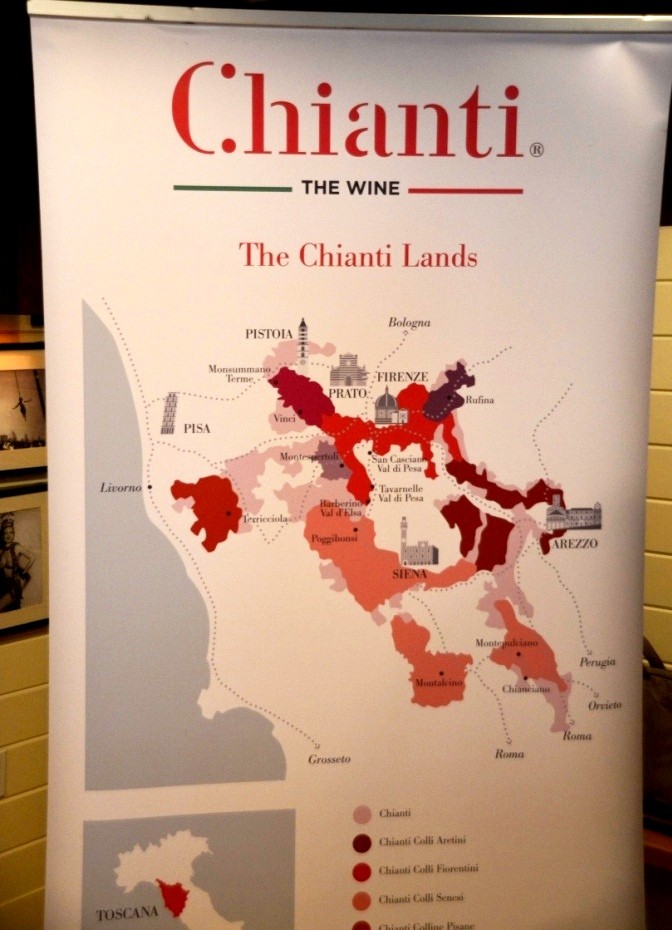
What gives, you ask? I think there are a couple of factors which are dramatically changing the story of the Chianti wines. First factor, or rather factors, are the modern winemaking techniques – in one word, the Quality. Better quality of the grapes, harvesting at a pick, reducing yield, improved fermentation capabilities, the barrels and tanks are better and cleaner, and so on. And then, it is the …. Terroir! When I commented to one of the winemakers that a few of his Chianti bottlings from the same year taste so incredibly different, he answer was “of course”. His property, which is about 100 acres in size, has 5 (!) different micro-climatic zones… Most of the people come to think of Tuscany, the land of Chianti, as something universally monolithic. Yes, with the idyllic moniker of “rolling hills of Tuscany”, but one and the same. At the same time, Chianti is a huge grape growing area, with probably a hundred of the sub-zones and microclimates, all producing “traditional”, but oh-so-different wines. In most of the cases, people can think of Chianti, Chianti Classico and Chianti Rufina, but actually Chianti is so much more than just these three regions – Colli Aretini, Colli Fiorentini, Colline Pisane, Colli Senesi, Montalbano, Montespertoli are some additional sub-zones, never mind single vineyards. Winemakers are learning all the time, what works and what doesn’t, and we are lucky to be able to taste the products of their labor of love.
Did I get you tired of my rambling by now? Okay, time to talk about wines. Below you will find the tasting notes. Yes, there were lost of wines, and they were so good! I also made an effort to extend above and beyond my simple “+++” ratings to give you more descriptors. I don’t throw those “+++” ratings easily – and here, a lot of wines were simply outstanding, table after table after table.
Here we go:
Azienda Agricola Corbucci – this was a very impressive start – very nice and approachable wines, made in the “drink any time” style
2012 Chianti DOCG “Corbucci” – ++, dry, leather, good acidity, a bit astringent
2012 Chianti DOCG “9Code” – +++, old vines, 7 days fermentation. fruit, earth, balance!
2009 Chianti DOCG Riserva “Corbucci” – +++, aged for 2 years in French barriques, excellent!
Azienda Agricola Emanuela Tamburini
2012 Chianti DOCG “Mauro” – +++, 90% Sangiovese, 10% Canaiolo, light, open, earthy nose. Very much Bordeaux in style on the palate.
2010 Chianti DOCG Riserva “Italo” – +++, aged for 24 mo in combination of cement tank and oak barrels, beautiful, open, layered
2008 Vin Santo del Chianti DOC “D’Incanto” – ++, oxidized style, aged in small open barrels for 5 years without topping off


Azienda Agricola La Cignozza
2010 Chianti DOCG – +++, 80% Sangiovese, 15% Canaiolo, 5% Mammolo, aged for 1 year in big barrels. Roasted meat on the nose, perfect acidity, dark fruit – excellent!
2008 Chianti DOCG Riserva – +++, 80% Sangiovese, 20% Canaiolo. Sweet open nose, nice fruit, multi-layered – outstanding!
Azienda Agricola Lanciola – harvesting by hand, 2 green harvests, 5 different microclimates within one vineyard!
2012 Chianti DOCG “Podere Elisa” – +++!
2012 Chianti Colli Fiorentini DOCG “Lanciola” – +++, outstanding, open
2011 Chianti DOCG Riserva “Podere Elisa” – +++ excellent!
2011 Chianti Colli Fiorentini DOCG Riserva “Lanciola” – +++, barnyard and roasted notes, wow!
2008 Vin Santo del Chianti Colli Fiorentini DOCG “Lanciola” – ++++, unoxidized style, caramel, apricot, candied fruit, perfect balance, wow!
Azienda Agricola Malenchini
2012 Chianti DOCG – +++, 5% Merlot, stainless steel, nice, light, smokiness, pleasant
2012 Chianti Colli Fiorentini DOCG – +++, 10% Canaiolo, smokiness, balance, power, a bit of tannins


Azienda Agricola Pietraserena – Arrigoni
2011 Chianti Colli Senesi DOCG “Poggio al Vento” – +++, Sangiovese/Syrah (10%), 1 year in barrique, 1 year in bottle. Restrained nose, beautiful!
2011 Chianti Colli senesi DOCG “Caulio” – +++, 100% Sangiovese, roasted nose, nice fruit, open, clean, easy to drink
2012 Chianti Colli Senesi DOCG – ++, 10% Canaiolo, cement tanks. Coffee, roasted notes, a little short on palate
Bindi Sergardi
2012 Chianti DOCG “Poggio al Sorbo” – +++, 100% Sangiovese, vineyard at 750 ft elevation, stainless steel, Raspberries and smoke, mocha, chocolate on the nose, clean and open palate
2012 Chianti Colli Senesi DOCG “Bindi Segrardi” – +++, red fruit, clean, elegant, beautiful
Cantina Sociale Colli Fiorentini Valvarginio
2010 Chianti Colli Fiorentini DOCG “Collerosso” – +++, organic wine, pure tobacco on the nose, same on the palate, beautiful balance
Cantine Fratelli Bellini – traditional and very good
2013 Chianti DOCG “Bellini” – ++-|, 5% Canaiolo, 5% Colorino, young, simple, easy to drink
2010 Chianti Rufina DOCG Riserva “Bellini” – ++-|, aged for 2 years in oak, nice, easy, simple, soft, touch of leather
Cantine L’Arco
2012 Chianti DOCG “L’Arco” – ++-|, 10% Merlot, touch of smoke
2011 Chianti DOCG “Principe del Sole” – ++-|, soft, round
2009 Chianti DOCG Riserva – ++-|, 10% Canaiolo, nice, soft
Castel di Pugna
2012 Chianti Colli Senesi DOCG “Ellera” – ++, simple, clean
2008 Chianti Colli Senesi DOCG “Ellera” – +++, excellent, sweet fruit, nice, elegant
2011 Chianti Superiore DOCG “Villa Cambi” – ++-|, nice, elegant, open
2007 Chianti Superiore DOCG “Villa Cambi” – +++, aged for one year in Tonnau, roasted fruit, plums, spices, excellent!
2008 Chianti Colli Senesi DOCG Riesrva “Ellera” – ++-|, 5% Canaiolo, nice, elegant, restrained
Castello del Trebbio
2013 Chianti DOCG – ++-|, Sangiovese/Canaiolo, stainless steel, brilliant ruby color, fresh berries, sweet fruit, good acidity, simple!
2009 Chianti Rufina DOCG Riserva “Lastricato” – +++-|, nice complexity, leather, spices, fresh, elegant


Le Fonti a San Giorgio
2012 Chianti DOCG – ++, 5% Pignatello, nice, soft, simple
2013 Chianti DOCG – ++, fresh, clean
2011 Chianti Montespertoli DOCG – ++, Sangiovese/Merlot, very goo, unusual garden herbs
2009 Chianti Montispertoli DOCG – +++, smokey blueberries, roasted notes, liquid steak, wow
2010 Chianti Montispertoli DOCG Riserva – ++3/4, 15% Merlot, nice, round, strawberries, good tannins, pepper, tobacco
Pietro Beconcini Agricola
2012 Chianti DOCG “Antiche Vie” – +++,excellent, clean, blackberries, mocha
2010 Chianti DOCG Riserva “Pietro Beconcini” – ++, cherries, nice, round, supple
Pieve De’ Pitti
2011 Superiore Chianti DOCG “Cerretello” – +++, Sangiovese/Canaiolo/Black Malvasia, nice, balanced, unusual fresh fruit notes
2010 Superiore Chianti DOCG “Cerretello” – ++++ nose/+++ overall. Nose – wild berries, perfect balance, fruit, very fresh overall
2009 Superiore Chianti DOCG “Cerretello” – +++-|, amazing nose – Barolo!
2008 Superiore Chianti DOCG “Cerretello” – +++, wild berries on the nose, perfectly powerful palate
2007 Vin Santo del Chianti DOC – ++, Trebbiano and San Colombano, aged in Chestnut wood, nice, could use a bit more acidity
Podere Volpaio – organic and beautiful
2010 Chianti DOCG “Volpaio” – ++, nice, simple
2010 Chianti DOCG “Terre De’ Pari” – +++, Beautiful, open, fruit on the nose, perfect balance on the palate, delicious tannins
2004 Chianti DOCG Riserva “Terre De’ Pari” – +++, Tobacco, smoke, barnyard on the nose – wow, beautiful
2001 Chianti DOCG Riserva “Terre De’ Pari” – +++, same as 2004, with even more complexity.


Ruffino
2012 Chianti DOCG – ++, nice, light, simple, good fruit
2012 Chianti Superiore DOCG “Il Superiore” – ++-|, nice, good fruit, good balance, good acidity
Val di Botte
2013 Chianti DOCG “Val di Botte”– ++, nice simple, $3 wholesale!!!
2012 Chianti [Classico] DOCG “Val di Botte” – +++, excellent, soft, round, clean, beautiful.
Villa Artimino
2012 Chianti DOCG – +++, nice, round, touch of smokiness, tobacco
2011 Chianti Montalbano DOCG – +++, pure minerality, gunflint, cherries, tobacco, earth, nice fruit, excellent balance
Overwhelmed? Well, I really wanted to share these notes. I don’t know if you read them at all, if you did not – just scroll back for a second, and then tell me – how often do you describe Chianti wine as “smoke, gunflint, wild berries, liquid steak, smokey blueberries, mocha, chocolate”? And yes, I had to use all of those descriptors – as this is what these wines were calling for. Is that cool? You bet. This is also traditional – but now, the beauty and diversity of Tuscan terroir shines through these wines. Don’t take my word for it – while I insist that Chianti now are fun and tasty (and cool!) wines, go grab a bottle and prepare to be blown away, as I had. Cheers!
A Night of Great Food and Great Wine – Arezzo in Westport, CT
 Have you ever been in the situation where you read about the restaurant and look at the menu, and your first thought is “ahh, it’s that same thing again…”? Continuing the situation, how many times did you actually still ended up going to the restaurant, and afterwards were glad you did? My personal account – more often than I care to admit! My latest experience – the restaurant called Arezzo Ristorante & Bar in Westport, Connecticut.
Arezzo is located at the intersection of route 1 and Riverside Ave, with its patio overlooking Saugatuck river. While restaurant had been in the same location for a while, you can consider it brand new – Juan Ceballos and chefs/brothers Llanos are the new owners of the Arezzo restaurant.
What I really like in the restaurants is the diversity of the setting – this is when the restaurant inside doesn’t look “uniformly the same”. Arezzo has a number of different areas – a spacious bar, almost as a separate room, a “foyer” with soft and comfy chairs, the main dining room, huge patio – you can come to the restaurant many times and every time discover something new.
Open kitchen and huge wood-fired oven, imported directly from Italy, are definitely creating the next level of excitement for the guests – I don’t know about you, but I can stare at the tamed flames for a very long time…


We started our evening in the bar. I personally made a rookie mistake of ordering Espresso Martini as my first drink – while very tasty, this was definitely a drink to have after the meal, not before. Well, I’m still working on my cocktail culture…


As usual, a few words about the wine list. May be only two words – Very Good. While the list is not big (which is a good thing in many cases – flipping through 50 pages looking for a bottle of wine is not the fun for all), it is modern, attractive and not boring, sporting a number of unusual wines by the glass together with some safe choices. Bottle selection is also very good, and reasonably priced, which for me is always important.
The wine list is focused on the Italian wines, with some California and France. After the fiasco with espresso martini, I needed to refresh my palate, so I started with 2011 Donnachiara Irpina Coda di Volpe DOC, Campania (13% ABV), the wine made out of indigenous Italian grape from Campania, Coda di Volpe. Bright golden color in the glass, inviting nose of white stone fruit and perfectly vibrant acidity on the palate, paired with dense and round, medium to full body mouthfeel – just what I needed (Drinkability: 7+).
The red wine, suggested by Juan, was an absolute favorite of the group. Renieri is an excellent producer, making the wines in the number of regions in Italy. While I was somewhat familiar with their Brunello wines, this wine was new to me – 2010 Renieri Invetro Ross Toscano IGT (14% ABV), a super-Tuscan blend of 50% Sangiovese, 25% Cabernet and 25% Merlot. Dark ruby in the glass, clean nose of dark red fruit, very inviting, and beautifully refreshing palate – ripe raspberries, cassis, plums, warm spices, touch of minerality, full bodied and perfectly balanced with tannins and acidity in check. Great wine overall. Drinkability: 8+.


And then, there was food.
A number of appetizers were served while we were at the bar.
Pizza Margherita ( fresh tomato, basil, homemade Mozzarella) – fresh, sweet tomato, basil – always a winning combination.
Focaccia Robiola di Arezzo (white truffle oil) – this was sublime, as anything with the right amount of truffle oil.
Lobster Arrancini (saffron aioli and Lemon) – absolutely delicious, very tasty bites!
Rosemary Marinated Shrimp Skewers – one of the group favorites – incredible balance of flavors.
Italian Sausages Skewers with Roasted Peppers – simple and very well executed. Also a pleasure to look at.


The rest of our dinner was served at the table. First, a trio of pasta:
Risotto (fresh porcini mushrooms, truffle oil) – incredible, simply incredible. If you like mushrooms, I’m sure you are not going to leave a single morsel on the plate, no matter how big the portion will be. The umami factor simply doesn’t let you put the fork down.
Short Rib Tortellini (braised us jus sauce) – why all the braised, slow cooked meat invokes such a homey feeling? This was delicious.
Cavatelli ai Piselli (home-made pea-ricotta, how and sweet sausage ragout) – this was perfectly on par with two other dishes – savory and satisfying.


Pan Seared Pink Snapper (caponata purée, fregola, vegetables) – one of the best pieces of fish ever – flaky, perfectly seasoned and cooked.


Roasted New Zealand Lamb Chop (spinach, tomato, Yukon gold potatoes) – to tell you the truth., I’m extremely picky about my lamb chop – I don’t want any fat on it, I want it to be perfectly seasoned, so it will not have that unpleasant lamb flavor – yes, I’m high maintenance when it comes to the lamb chop. So what can I tell you about the lamb chop which was served to us? In a word, wow. In another word – delicious. Seasoning, texture, taste – wow.


For dessert we had Pannacotta and Nutella Pizza – yes, it was very tasty, and I will spare you my lame attempts to describe it.


And we are done here. The only thing left to do, as usual, is to thank Juan Ceballos and Executive Chef Vinicio Llanos for the wonderful food and wine. Whether you are living in the area or visiting, Arezzo will be a perfect dining destination for you. Cheers!
Disclaimer: I attended the restaurant as a guest of management. All opinions are my own.
Arezzo Ristorante & Bar
5 Riverside Ave
Westport, CT 06880
 203-557-9375
http://www.arezzowestport.com/

Daily Glass: Wine, Beautiful and Different
Have you ever caught yourself using the same expression over and over again, to the point of being annoyed with oneself, but not been able to do anything about it? One of my expressions, pretty much a single word, is “beautiful”. Yes, of course I mean it in the wine context. The best case scenarios include the first “wow” once your nose encounters the aroma exuding from the glass, connecting to the “wow, this is beautiful” after the first sip, when aroma and bouquet altogether transform into a beautiful (oops, sorry), memorable experience. Yes, I know, reading the wine reviews consisting of “wow, this is beautiful” notes is somewhat pointless, and if it draws your ire, feel free to take it out in the comments section below – but I have to say it when it happens.
The wine I’m talking about today was exactly like that. I got this bottle from a friend back in October. The wine is made by his father in Sicily – a small family production, for all I understand. One consequence is the fact that there is no information available on internet – and the bottle doesn’t have a back label, so I can only share my impressions. But – it was a beautiful wine.

The color of this 2012 Contrada Santa Croce Casteltermini Sicilia Cuvée Artisanale Chardonnay Grillot (13.5% ABV) was intense yellow with an orange hue – I don’t think the wine was aged in oak, but it was definitely fermented on the lees, and probably was aged on the lees for a good few month, to have such an intense color. It was also showing a bit cloudy in the glass – I can assume it was unfiltered.
And then there was was the nose. You know, that aroma which you can commonly pick up on many wines from Sicily – the volcanic soils, the touch of sun and minerals, inviting and promising, with hint of lemon zest. And then the palate. Totally unique. Starting from light, dry, almost effervescent midpalate feel. Then showing mature fruit, apricot and apricot pit, finishing with mouthwatering acidity, prickling sides of the tongue with fresh lemon notes. One sip inviting another. Until the wine is gone, and you are left with the memory.
Let’s drink for the beautiful wines and people making them. Cheers!
VIA Masterclass: Amarone
 Continuing the subject of VIA Masterclass (here is the link to the previous post about Barolo masterclass), I want to talk about Amarone, one of the most uniquely Italian wines. The class was called “Amarone – The Velvet Underground”, and I think the name is very fitting. Let me explain.
Have you ever experienced a great Amarone? To me, the great Amarone starts with the nose which you can’t forget. As the wine is made from the grapes which had been dried under the sun for at least 90 days and thus more resembling the raisins than actual grapes before they will be pressed, it shows all those beautiful flavors of the dry, sun-aged fruit. After the aromas, which you can’t stop inhaling, comes the body – perfectly dry, perfectly full, perfectly powerful. This is what good Amarone is supposed to be. If you will think about the process, you will understand why Amarone has its price (think about the fact that most of the grapes lose about 40% of their mass – how many more grapes do you need to make the same bottle of wine?) – but if good Amarone is your wine, you will be willing to pay the price.
If you will search my blog for Amarone, you will find many posts, a lot of them complaining, hinting at my disappointment (I very rarely talk negatively about wines – I prefer not to write about bad experiences instead of bashing them). As of late, it became increasingly difficult to find Amarone as I described above, soft and velvety, but powerful and beautiful at the same time. A lot of the wines have very muted nose, and super-alcoholic, over-extracted, unbalanced body (and I just boasted about my non-confrontational style, huh).
This is where information from our Masterclass became very helpful. Yes, first we listened to the history of Amarone (discovered by accident, when the cask of Recioto, a famous sweet wine made from the dried grapes (passito) , was allowed to ferment through and became a dry elegant wine with – alas – bitter taste! Hence the name – Amarone, from the word Amaro – bitter). Then we talked about the geography and various sub-zones of Valpolicella region in Veneto – this is where Amarone is produced, with the best Amarone coming from the (not surprisingly!) hillside vineyards. Over the last decade, there was a huge increase in demand for Amarone worldwide. Think about the following facts. Consortium of Amarone producers was established in 1973 to regulate production of Amarone – so the production statistics are available from approximately that time. Amarone area plantings increased from 11431 acres in 1972 to 15723 in 2009. At the same time, all the way until early 2000s, there were about 1 million bottles of Amarone produced per year. In 2007, this number jumped to 8 (!) million, and then to the 16 (!!) million in 2008. Yes, it is great to have such a demand, but – where do you get the grapes to increase your production so dramatically over such a short period of time? You have to allow your vineyards to overproduce, and you have to lower your standards of quality and harvest the grapes from the vineyards which in the past you will never take the grapes from for your flagship wines. You see, Amarone is a top wine of Valpolicella. Amarone wines are typically made from Corvina, Corvinone, Molinara and Rondinella grapes, taken in the different ratios as each grape brings its own qualities tot he wine. Wines of Valpolicella are made from the same grapes – but it would be those which were not good enough to be made into Amarone.
To satisfy this huge demand in Amarone, there is also a push to extend the production area of Amarone, which would lead to the further deterioration of quality. In 2013, Amarone Consortium approved the increase of Amarone production zone by 30%, which will mainly come from the flatlands. To fight against it, 12 Amarone producers (Allegrini, Begali, Brigaldara, Masi, Musella, Nicolis, Speri, Tedeschi, Tenuta Sant’Antonio, Tommasi, Venturini, Zenato) created Amarone Family association (Famiglia dell’Amarone d’Arte) back in 2009, with the goal of pushing back and defending traditions of quality in production of Amarone. Marilisa Allegrini, currently the Head of Amarone Family association was present at the masterclass and she had an opportunity to talk briefly to all the attendees.
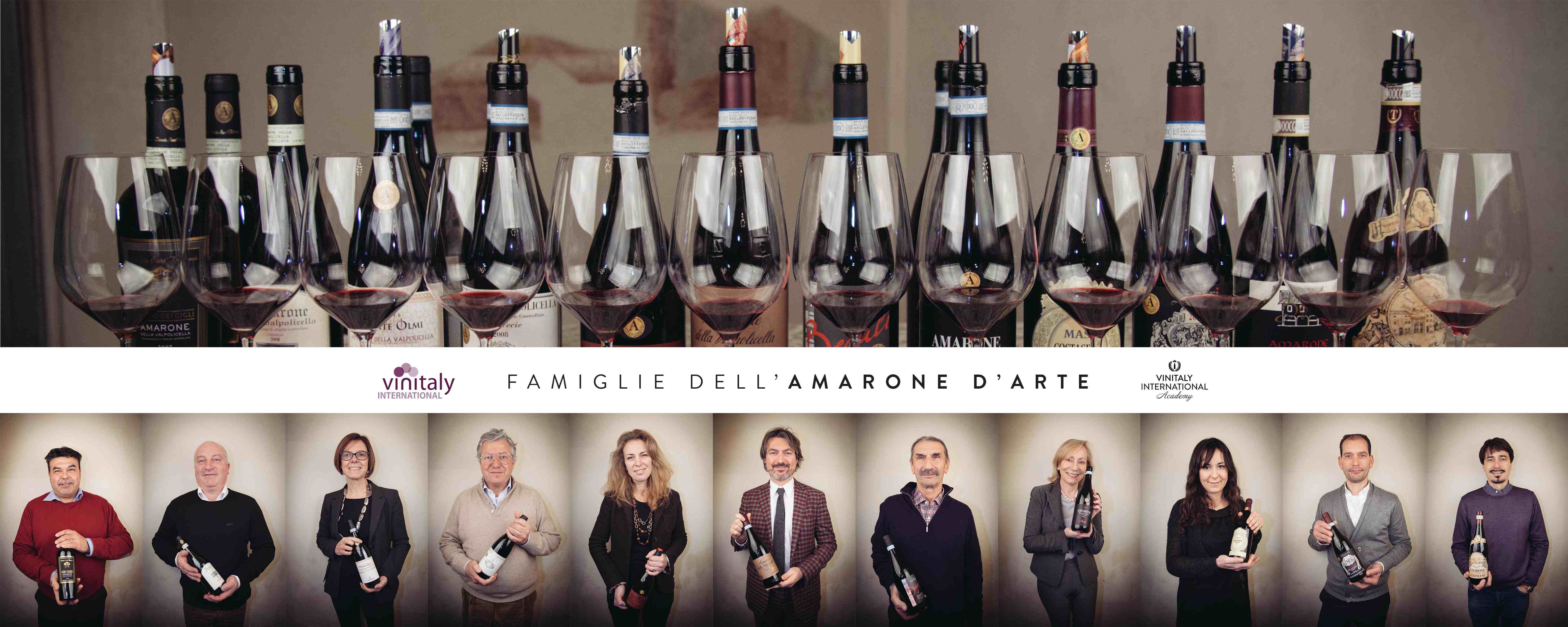 And then there was the tasting, of course. We went through 11 different Amarone wines, and here are the notes (this are my actual notes in its progression, like declaring the wine “best so far”).
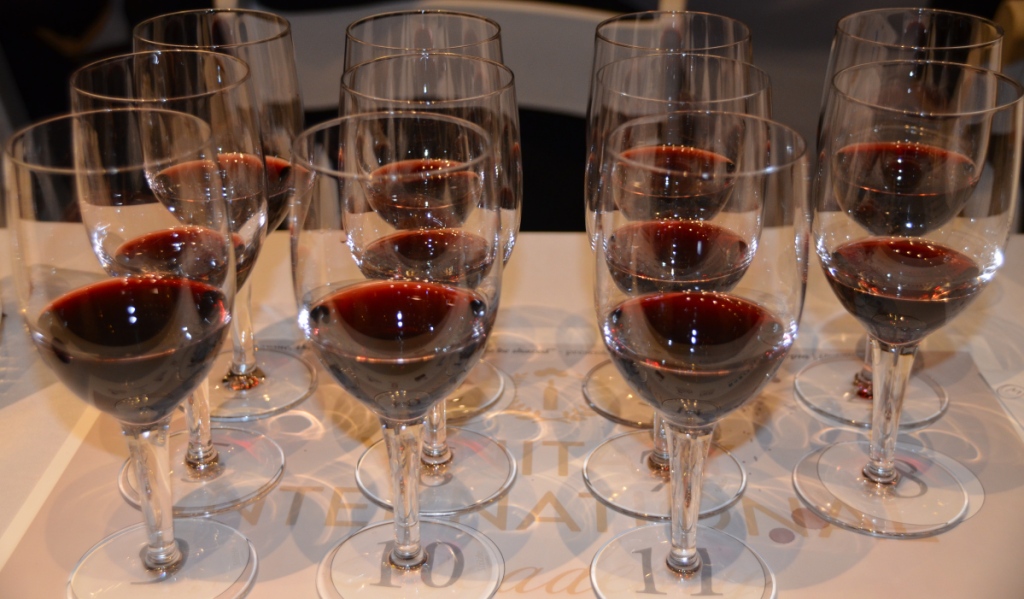
1. 2010 Tommasi Viticoltori Amarone della Valpolicella Classico DOC
Nose: ok, traditional nose of a red wine, but not Amarone
Palate: over extracted and super-bitter
2. 2008 Begali Amarone Classico
Nose: campfire, then dark fruit with medicinal undertones
Palate: bitter, biting
3. 2009 Speri Amarone Classico Vegneto Monte Sant’Urbano
Nose: green and vegetative
Palate: bitter, over extracted.
4. 2009 Masi Agricola SPA Amarone Costasera
Nose: nice, open, hint of sweet fruit
Palate: not bad. Not too bitter, good power, clean balance. ++-|
5. 2009 Allegrini Amarone
Nose: best so far – beautiful, nice, open, fresh berries
Palate: closed, bitter
6. 2009 Zenato Amarone della Valpolicella Classico DOC
Nose: exceptional – true Amarone nose – fresh jammy fruit, but very balanced – raisins, figs – wow! +++
Palate: nice, soft, round – very good.
7. 2008 Musella Amarone della Valpolicella Riserva
Nose: nice! Fresh, open, good fruit
Palate: excellent. Best so far – nice, clean wine, powerful tannins without bitterness. +++
8. 2008 Brigaldara Amarone Case Vecie
Nose: nice, good dried fruit
Palate: good, clean, round – outstanding! Even better than the previous wine +++
9. 2008 Tedeschi Capitel Monte Olmi della Valpolicella Classico DOC
Nose: nice, concentrated fruit, good
Palate: needs time, but still perfectly round +++
10. 2008 Venturini Amarone
Nose: interesting nose, but pretty closed.
Palate: too austere. Not bad as a wine, but not good as Amarone
11. 2007 Tenuta Sant’Antonio Amarone Campo dei Gigli
Nose: dark, concentrated fruit, blueberries, raspberries
Palate: very good, but a bit bitter. It’s a bummer as I had a great experience with this wine at the tasting in September.
That’s all I have for you for today. What do you think of Amarone? Share your experience! Cheers!
VinItaly and Slow Wine 2014 – Fun, Education, and Lots of Wines
 The story started 48 years ago, with the event called “Italian Wine Days”, which hosted a number of Italian wineries willing to present their wines to the world. Since then, VinItaly grew into one of the biggest wine shows in the world – its main 4 days event typically is taking place in April in Verona and attracts more than 140,000 visitors from 116 countries. Starting in 2013, VinItaly started the new initiative, called VinItaly International, with the goal of taking the Italian wines on the road and bringing them to the United States, Russia, China and other countries.
Outraged by the planned construction of McDonalds restaurant on Spanish Steps in Rome, the Slow Food movement was created in Italy in 1986, quickly becoming an international phenomenon, aiming at educating people about slow, real and delicious food, just the way it should be. Since then, Slow Food movement was embraced by millions of people in more than 160 countries around the world. Starting in 2010, Slow Food started publishing its wine guide, called (you guessed it) Slow Wine, dedicated to the wines which are best at demonstrating the Slow Food values, the wines with the sense of place.
For the second year in the row, I had a pleasure of attending combined VinItaly and Slow Wine event in New York city (here is the link to the post about last year’s event). This year, the pleasure was also greatly enhanced by the fact that I was joined by Oliver (the winegetter), his wife Nina and Stefano (Clicks & Corks) – as you can imagine, everything is better in a great company.
In addition to all of the wines being available for the walk around tasting, VinItaly also brought a great educational program to this year’s event. This educational program, consisting of the multiple seminars presented during the day, was part of the new VinItaly’s initiative, called Vinitaly International Academy (VIA). I talked to Stevie Kim, Managing Director of the VinItaly International, who explained that this new VIA program will offer both educational seminars (called Masterclass) on various Italian regions and wines, as well as unique tasting opportunities, such as for instance, a tasting of the vertical of Sassicaia – I really hope my invitation to such a Masterclass will not get lost in the mail. Dr. Ian D’Agata, a researcher, journalist and an author of a number of books about Italian wines, was appointed as the Scientific Director of VIA, and he was teaching a number of masterclasses presented at New York’s event. I was lucky enough to attend most of the Masterclasses offered during the VinItaly event – I will have separate posts for those, as subjects of Barolo Cannubi, Amarone and Franciacorta are well worth it.
Here is a small filmstip prepared by VinItaly with Stevie Kim and Ian D’Agata, explaining what the VIA is all about:
 Before I will talk about some of the wine highlights from the event, I want to share some of the interesting stats offered during the press conference. The data below present various numbers regarding wine imports into the US – if you are in love with numbers as much as I am, these are the interesting stats, all shared as part of the information package by VinItaly tour. These are the various import statistics as presented by the US Department of Commerce:
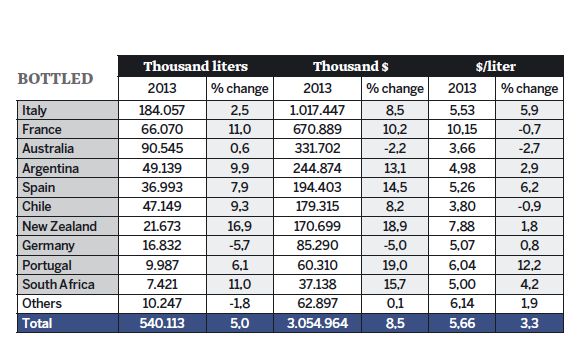
Imports to US Jan – Sep 2013

Compare the data above with this one – Imports to Canada Jan – Sep 2013

Imports to US 2007- 2012 year over year data
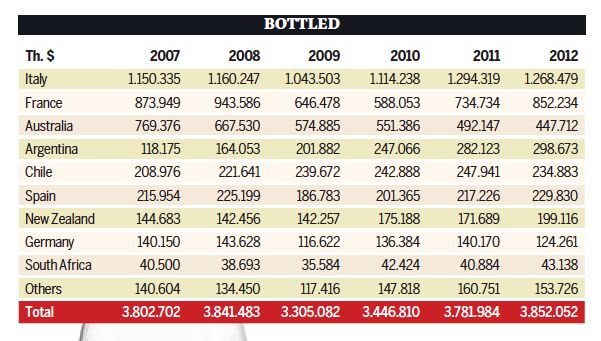
Imports to US 2007- 2012 Still Wines

Imports to US 2007- 2012 Sparkling Wines
I would assume you are sufficiently inundated by numbers, so let’s talk a bit about the wines before we round up this post.
With all the Masterclasses presented at VinItaly, this is where my focus really was – learning about and tasting lots of great wines, per-arranged by Ian D’Agata. I had about 2 hours of time on the tasting floor itself, primarily focused on giving a “rare varieties” whirlwind run tour to Nina. As usual, I took an extremely short notes and primarily used my trade show rating system of +. ++ and +++ (yes, with exceptions for ++-| and ++++). Below are some of the most memorable wines from that tasting:
2011 Aquila del Torre Riesling Friuli Venezia Giulia – +++ excellent
2010 Aquila del Torre Refosco Friuli Venezia Giulia – +++ clean, open
NV Brut Rosé Prima Nera Friuli Venezia Giulia – +++, very unusual sparkler made from the rare red grape called Schiopettino
2012 Cantine San Marco Romae Bianco, Lazio – +++ clean, beautiful (this wine is made out of Malvasia del Lazio)
2012 Sant’Isidoro Colli Maceratesi Ribona Pausula, Marche – ++-|, nice, good acidity (made out of rare grape Maceratino, which is a new grape for me!)
2010 G.D. Vajra Langhe Freisa Kyé, Piedmont – ++-|
Three great wines from Planeta (Planeta is a great producer from Sicily, and it rarely disappoints)
2011 Planeta Cerasuolo di Vittoria Classico Dorilli , Sicily – +++. beautiful complexity
2008 Planeta Noto Nero d’Avola Santa Cecilia, Sicily – +++ power!
2012 Planeta Sicilia Fiano Cometa, Sicily – +++
2012 La Parrina Vermentino, Tuscany – +++
Montenidoli Il Templare, Tuscany – +++, good
And then one and only – Caberlot!
2010 Podere Il Carnasciale Caberlot, Tuscany – ++++ nose, complexity!
2009 Podere Il Carnasciale Caberlot, Tuscany – ++++ spices, amazing
2011 Podere Il Carnasciale Il Carnasciale, Tuscany – +++ (this is second label of Caberlot wines)
2010 Boscarelli Vino Nobile di Montepulciano, Tuscany – +++
2011 Leonido Pieropan Soave Classico La Rocca, Veneto – +++ beautiful
2011 Leonido Pieropan Valpolicella Superiore Ruberpan, Veneto – +++
2010 Antonelli San Marco Montefalco Rosso, Umbria – +++
2009 Tabarrini Montefalco Sagrantino Colle Grimaldesco, Umbria – +++
2010 Tabarrini Montefalco Rosso, Umbria – +++
And that concludes my first report from the VinItaly 2014 event in New York city – more posts to come, so stay tuned… Cheers!
Benvenuto Brunello, or Notes from Brunello Deep Immersion
This is not a quiz post, however – let me start with the question: what do you think of Brunello di Montalcino, the noble wine made out of the Sangiovese? Well, technically it is Sangiovese, but in practicality Brunello di Montalcino is made out of the grape called Sangiovese Grosso, sometimes simply called Brunello. When people need to provide an example of the best Italian wines, the triple-B, Barolo, Barbaresco and Brunello, are the very first names which cross oenophile’s mind, so this is the Brunello we are talking about here. So, what is your experience with Brunello?
To carry the denomination of Brunello di Montalcino DOC or DOCG, the wines must be made from 100% Sangiovese Grosso grapes, and age at least 2 years in oak casks, and then at least 4 month in the bottle (at least 6 month for Riserva designation), but many producers age it for a lot longer. First time Brunello wines can appear on the store shelves is 5 years after the vintage date.
There are tons of books and web sites with countless pieces of information about the region, the history of the wines, the food, the people – I’m not going to simply repeat all of that. However, I can’t resist to share this magnificent picture of the Montalcino, as it was shared by the Brunello Consortium – I generally only use my own pictures in the blog, but this is soooo beautiful!

Montalcino Panoramic. Source: Brunello Consortium
To celebrate the release of 2009 vintage, The Consortium of the Brunello di Montalcino Wine (Cosorzio del Vino Brunello di Montalcino), an association of all Brunello producers, arranged the series of seminars and tastings in New York and Los Angeles, and I was fortunate enough to attend the event in New York – hence this post where I’m sharing my impressions. Before I will get down to the details and inundate you with tasting notes and pictures, let me share some general notes and observations (yes, you can call it an executive summary):
- According to the representative of the consortium, 2009 was a “4 star year” as opposed to the 5-star, such as 2007 or 2001 (or upcoming 2010). In 2009, growing season had rainy spring, but good hot and sunny September, which helped with overall quality. 2009 Brunello supposed to be more approachable at the younger age (my note: some were, and some were very far from being approachable).
- Some interesting facts:
- There are 90 clones of Sangiovese used in the production of Brunello di Montalcino.
- Montalcino is a large region, so different areas of Montalcino region produce different wines, due to vastly different soils and climate conditions (what is Italian for Terroir?) Unfortunately, those different areas are not indicated in any way on the label – you actually have to know the location of the vineyards for each respective producer to know what to expect. The special guide produced for the show had very helpful tiny maps showing the approximate location of each and every winery represented in the guide.
- The use of oak (type, duration, etc) is changed from vintage to vintage.
- I actually think that while deemed approachable, 2009 still needs time. Few of the 2004, 2005 and 2006 Brunellos which snuck into the tasting, showed up just magnificently.
- The 2012 vintage of Rosso di Montalcino, a simpler, typically less oaked wine, also made out of Sangiovese Grosso, is showing up in the stores. This wines should be ready to drink now (but many will age well too, depends on the winemaking style).
- Based on the tasting, I much preferred 2011 Rosso di Montalcino over the 2012 – don’t want to think too hard about the reason, but if you are looking for delicious bottle of a good Italian wine to drink now, 2011 Rosso di Montalcino might be “it”.
- Don’t know if this is a trend (and definitely don’t want to be spotting any trends), but in this tasting, there were surprisingly large number of corked bottles. I had to call out at least two bottles, and with another three I ate my words, only mumbling “aha, this is good”. I do attend trade tastings regularly, and this is not normal. I rarely drink Brunello, so if anyone who is reading this actually drinks a lot of Montalcino wines, I’m curious to know your opinion. Bottom line here – trust your palate. If you think the wine is corked, most likely it actually is!
Now, let’s talk about the seminar. Both the seminar and the tasting were, of course, about Montalcino wines. The difference is that during the seminar you are sitting down and listening to the presenter(s) as opposed to walking around with the glass and the book in your hand – but most importantly, you have enough time to completely analyze the wine – color, nose, palate – everything at your own pace, one by one. Here are my notes regarding the 8 wines presented during the seminar, in the order of tasting:

2009 Capanne Ricci Brunello di Montalcino DOCG (14.5% ABV, $54.99, aged 3 years in large oak barrels plus bottle age). Drinkability: 7
Color: Garnet color
Nose: Very pronounced and intense, with cherries and leather
Palate: Austere, just powerful tannins, some good background acidity. Way too tannic to be appreciated at the moment.
2009 Col D’Orcia Brunello di Montalcino DOCG (14.5% ABV, $55, aged 3 years in Slavonic and French oak casks plus 12 months in the bottle). Drinkability: 7+
Color: Bright ruby
Nose: Touch of plums
Palate: Nice cherries, much softer than the previous wine, can be drunk right now
2009 Loacker Corte Pavone Brunello di Montalcino DOCG (15% ABV, $75, aged 3 years in oak). Drinkability: 8-
Color: Dark garnet color
Nose: Spectacular, intense, with a lot of bright fruit.
Palate: Cherries and lots of bright fruit, has a lot going on. Still needs time, but very enjoyable already.
2009 Palazzo Brunello di Montalcino DOCG (14.5% ABV, $70, aged 36-40 months in oak, 8-12 months in the bottle). Drinkability: 7-
Color: Dark ruby
Nose: Overall quite restrained, with a hint of cherries
Palate: Cherries and then tannins and only tannins on the palate. The tannins feel over-extracted – this wine might never open.
2009 Pinino Brunello di Montalcino DOCG (14% ABV, $50, aged 30 months in Slavonic oak). Drinkability: 7
Color: Garnet with brick-ish hue
Nose: The fruitiest nose of all. Cherries and blueberries.
Palate: Cherries and tannins. Tannins overly intense in front of the mouth, and somewhat uni-dimensional.
2009 Tenute Silvio Nardi Brunello di Montalcino DOCG (14.5% ABV, $69.99, aged 12 months in new and old french barriques, 18 months in large Slavonic oak barrels, at least 12 months in the bottle). Drinkability: 7+
Color: Garnet.
Nose: Nice and balanced, with the hint of cinnamon and coffee.
Palate: Nice, open, with bright cherries and more manageable, but still aggressive tannins. Can be enjoyed now, but still needs more time.
2009 Il Grappolo Fortius Brunello di Montalcino DOCG (14.5% ABV, $N/A, aging in oak barrels plus bottle age). Drinkability: 8
Color: Garnet with brickish hue
Nose: Very promising, elegant, with cherries and raspberries.
Palate: Beautiful, lots of fruit, ripe cherries, present but not overpowering tannins. Best of tasting.
2009 Tenuta San Giorgio Brunello di Montalcino DOCG (14.5% ABV, $55-$60, aged 12 months in French oak barrels, then 24 months in large Slavonic oak casks, 12 months in the bottle). Drinkability: 7
Color: Garnet with brickish hue
Nose: soft and expressive, but shows off alcohol
Palate: nice fruit, sour (very sour) cherries, pepper in the back is a bit out of place. Aggressive tannins.


For the walk around tasting, I did my best to taste as many wines as possible, before my palate gave up (it is very hard to taste only red, intensely tannic wines – remember, there were no whites) and the place got really really crowded. I used the same system of plus signs (+, ++, +++) as I do in the trade tastings – of course with few of the ++++ exceptions. Below is the list of most exceptional wines I experienced in the tasting:
2009 Banfi Poggio Alle Mura Brunello di Montalcino DOCG – beautiful! +++
2007 Banfi Poggio Alle Mura Riserva Brunello di Montalcino DOCG – wow! ++++
2009 Belpoggio Brunello di Montalcino DOCG – very nice, approacheable
2012 Belpoggio Rosso di Montalcino DOC – beautiful fruit, open, herbs
2011 Brunelli Rosso di Montalcino DOC – integrated, beautiful! +++
2006 Camigliano Gualto Riserva Brunello di Montalcino DOCG – beautiful! nice depth, density. +++
2011 Capanna Rosso di Montalcino DOC – beautiful, open +++
2011 Caparzo Rosso di Montalcino DOC – one of the most unusual. Intense strawberries on the palate.
2009 Il Palazzone Brunello di Montalcino DOCG – nice, good fruit +++
2007 Il Poggione Vigna Paganelli Riserva Brunello di Montalcino DOCG – excellent, powerful and balanced
2011 Il Poggione Rosso di Montalcino DOC – excellent, great fruit +++
2008 La Togata Brunello di Montalcino DOCG – probably the most delicate, beautiful fruit, tobacco in the back ++++
2008 Podere Le Ripi Lupi Sirene Riserva Brunello di Montalcino DOCG – wow! beautiful! open! ++++
2006 Podere Le Ripi Lupi Sirene Riserva Brunello di Montalcino DOCG – wow! ++++
2009 Podere Le Ripi Amore & Magia Rosso di Montalcino DOC – beautiful! complex, Crème brûlée (no sugar!) on the palate ++++
2008 Podere Le Ripi Bonsai Rosso di Montalcino DOC – wow!
2007 Ridolfi Riserva Brunello di Montalcino DOCG – very good! needs more time +++
2009 Sasso di Sole Brunello di Montalcino DOCG – excellent fruit! +++
2004 Sasso di Sole Riserva Brunello di Montalcino DOCG – plums, cherries, wow! Perfect complexity, both nose and palate ++++
2011 Sasso di Sole Rosso di Montalcino DOC – spectacular nose, good fruit, tobacco, earthiness +++1/2
2012 Talenti Rosso di Montalcino DOC – tobacco, complexity, balance! +++
2009 Uccelliera Brunello di Montalcino DOCG – sweat and beautiful! +++
2008 Uccelliera Riserva Brunello di Montalcino DOCG – wow! stunning! ++++
2012 Uccelliera Rosso di Montalcino DOC – great! tobacco, fruit, exellent! +++
2011 Verbena Rosso di Montalcino DOC – wow! ++++
2011 Villa Poggio Salvi Rosso di Montalcino DOC – excellent! +++
2012 Voliero Rosso di Montalcino DOC – beautiful! +++
And we are done! But before we part, I have to leave you with the drool picture, the one which makes the oenophile’s heart race:
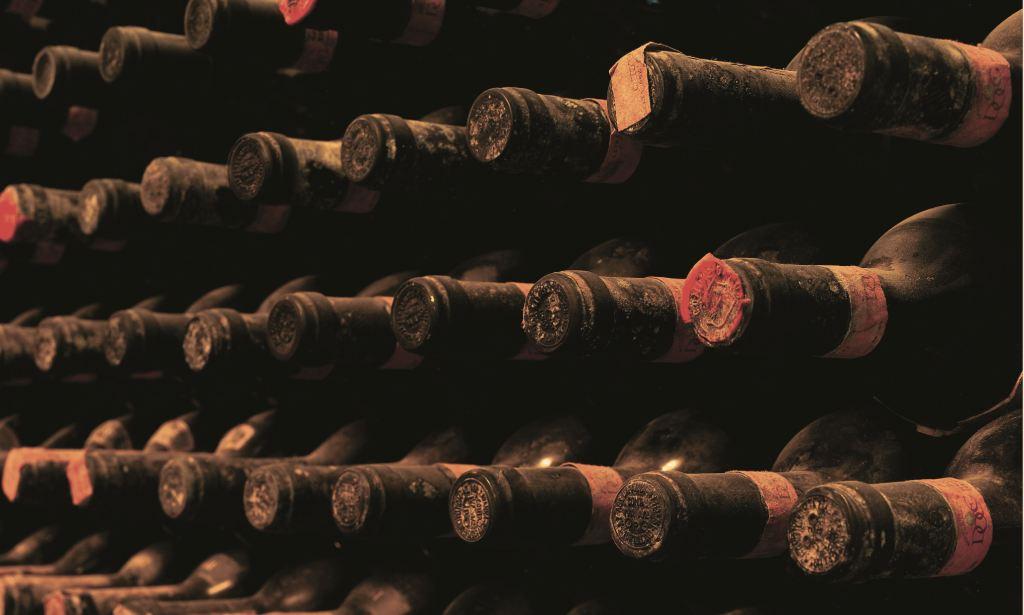
Old Brunello wines. Source: Brunello Consortium
This was a great experience, and I’m already looking forward to welcoming Brunello 2010. I have a sneaky suspicion it will be pretty tasty… Cheers!
Weekly Wine Quiz #89: Grape Trivia – Dolcetto
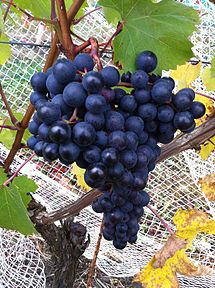
Dolcetto grapes. Source: Wikipedia
The Wine Quiz series is not meant to intimidate. The whole idea here is to have fun and learn something new. When answering the questions, it is fully encouraged to use all available sources of information, including Google or any other search engine. There are no embarrassing answers – the most embarrassing thing is not giving it a try…
Welcome to your new wine quiz!
We are back to our grape trivia series, continuing with the red grapes, and today’s subject is the grape called Dolcetto.
If you look at [probably best] known Italian wine regions, you will find some very interesting differences. If we take Tuscany, which probably comes to mind among the first, its signature grape, Sangiovese, is successfully growing in many other parts of the world, and lots of international varieties is producing magnificent wines on the Tuscan soils (super-Tuscan, anyone?). If we will now look at Piedmont, the home to Barolo, the king of wines, and Barbaresco, that region produces magnificent wines almost exclusively from the local indigenous grapes – and those local grapes are very scarcely distributed around the world, producing the wines of limited value.
Dolcetto, the subject of our today’s trivia, is one of the three better known red grapes of Piedmont – Nebbiolo and Barbera are two others. It is not very clear how Dolcetto made it to Piedmont, with some of the references suggesting that it had been growing there at least from the 16th century. The name of Dolcetto technically stands for the “little sweet one”, but it is believed that this is rather a coincidence and the name has actually a different source. Dolcetto is an early ripening variety which produces wines which have nothing to do with sweetness. Dark thick skin of Dolcetto contains large amount of anthocyanins, and imparts quite a bit of tannins to the resulting wines, as well as the dark color. Generally, Dolcetto wines are dry, lighter style than Barbera or Nebbiolo, with dark red and black fruit profile, such as black cherries and plums.
Best Dolcetto wines are mostly produced in the 7 different DOCs of Piedmont. It is also growing in Liguria under the name of Ormeasco. Dolcetto has very limited success around the world, growing in Australia and in a few regions of United States – California, Texas and Oregon.
And now, to the quiz!
Q1: Except the “sweet little one”, what is the other possible explanation to the name of the Dolcetto grape?
Q2: Sort these Piedmontese grapes in the order of time of ripening, from earlier to the later: Barbera, Dolcetto, Freisa, Nebbiolo
Q3: Wine Spectator calls wines rated in 95-100 range Classic (the highest and the most prestigious category). True or False: there are no Dolcetto-based wines rated in the Classic category
Q4: One of the North American grapes for the long time was assumed to be identical to Dolcetto ( until recent DNA tests proved it wrong). Do you what grape was that?
a. Chambourcin
b. Charbono
c. Marechal Foch
d. St. Croix
Q5: What is the suggested serving temperature for Dolcetto wines?
a. 65ºF to 75ºF
b. 60ºF to 65ºF
c. 50ºF to 60ºF
d. 45ºF to 50ºF
Good luck, enjoy the quiz and the rest of your weekend! Cheers!
Last Bottle Sign Up ($10 credit)




 Talk-A-Vino