Archive
Wednesday’s Meritage – Wine Quiz Answer, #MWWC5 Theme, Not Really [Wine Shortage], Australian Wine and more
 Meritage time!
First, let’s start with the answer for the wine quiz #80, grape trivia – Mourvèdre.
In the quiz, you were supposed to answer 5 questions about white grape called Mourvèdre. Here are the questions, now with the answers:
Q1: Name two grapes, most famous blending partners of Mourvèdre.
A1: Grenache and Syrah. GSM is the best known blend with M standing for Mourvèdre. The G stands for Grenache, and S is for Syrah (Shiraz).
Q2: Wine Spectator calls wines rated in 95-100 range Classic (the highest and the most prestigious category). True or False: there are no Mourvèdre-based wines rated in the Classic category
A2: False. A number of Domain Tempier wines from Bandol have 96 rating from the Wine Spectator.
Q3: Fill in the gaps: The oldest, continuously producing Mourvèdre vine is located at ___ Vineyard in ___, and it is about ___ years old.
A3: My answer: The oldest, continuously producing Mourvèdre vine is located at Hewitson Old Garden Vineyard in Barossa, Australia, and it is about 160 years old – here is my source of info. Of course I understand the “the oldest” claims are tough to prove – I’m sure few other producers claim the same. But the age (160) and general location (Barossa, Australia) seems to be generally correct.
Q4: Explain potential origins for all three names of the grape – Mourvèdre, Mataró and Monastrell
A4: Let me actually quote my answer directly from this source: Mourvèdre “first became established in Cataluña where it took on the names Mourvèdre (after Muviedro, the Moorish name for the city of Sagunto, near Valencia) and Mataró (after Mataró in Cataluña). In Cataluña the grape was grown by monasteries, leading to the name Monastrell (from the Latin monasteriellu) in that region”.
Q5: True or False: France plantings of Mourvèdre far exceed the plantings in Spain (no tricks here – Mourvèdre and Monastrell are used interchangeably, you have to assume it is the same grape).
A5: False. Plantings of Mourvèdre in Spain are about 6 times of the plantings in France.
So today we have a grand winner, the drunken cyclist, who answered all 5 questions correctly. We also have a winner, the winegetter, who answered all 5 questions mostly correctly, with the slight discrepancy on the question 3 – but nevertheless, they both get the grand prize of unlimited bragging rights. I also want to acknowledge my blogging friend Patty P’s 2013 photo project who was answering the questions for the first time – she answered the first question correctly, and I really like her take on the question #4. Great job!
Now, to the interesting stuff around the vine and the web!
I have a few interesting things for you. First, congratulations to the winner of Monthly Wine Writing Challenge #4, Anthony Davies, who writes the blog Confessions of a Wine Geek. Anthony just announced a theme for #MWWC5, which is Feast (very timely, considering Thanksgiving in the US, where it is all mostly one giant feast). Here is the link to the blog post with all the rules.
Now, I’m sure you read or heard somewhere about impending wine shortage. As the wine is ever increasing in popularity and demand all over the world, you would imagine that the report from the good source, showing for how many millions of cases demand exceeds the supply, will be picked up all over the news. And it was. Only the thing is that the numbers are numbers – question is what you do with those numbers. So in case you panicked (or were just amused), I have a very good article for you to read – it is written by W. Blake Gray, and it explains in good detail that no, you don’t need to stock up on wineand you will still find the good bottle to drink at the price you will be willing to pay.
Next post I want to bring to your attention is about Australian wines. It is a pity that selection of the Australian wines in the wine stores is not anything it used to be, as Australia makes a lot of great wines. This article, written by Mike Veseth at The Wine Economist, is talking about the work Australian winemakers are doing to restore the image of the Australian wines and squarely put them back to the wine stores and the cellars around the world.
Last but not least for today is an interesting open letter written by Alder Yarrow of Vinography to the United Kingdom. Turns out that association of Wine and Spirits Wholesalers of America is offering its help to the good people of UK, suggesting that they know how to protect public from the dangers of unregulated wine market (oh, horrors, free commerce!), which seems to be of concern to the people in UK. In case you don’t know, it is the US wholesalers who you have to thank for monopolistic pricing and draconian shipping laws in many of the states, and overall inability of wine consumers to get the wines they want. So Alder’s open letter to the United Kingdom is definitely worth reading, it is hilarious – here is the link where you can find it.
That’s all I have for you for today, folks. The glass is empty – but refill is on its way. Until the next time – cheers!
Weekly Wine Quiz #80: Grape Trivia – Mourvèdre, a.k.a Monastrell
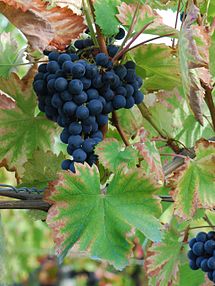
Mourvèdre grapes, as shown in Wikipedia
The Wine Quiz series does not mean to intimidate. The whole idea here is to have fun and learn something new. When answering the questions, it is fully encouraged to use all available sources of information, including Google or any other search engines. There are no embarrassing answers – the most embarrassing thing is not giving it a try…
Welcome to the weekend and your new wine quiz!
We are continuing our grape trivia series, with the focus again on the red grapes, and today’s subject is red grape called Mourvèdre, also known in Spain under the name of Monastrell, and also known as Mataro in Australia.
Mourvèdre is one of the very old grapes. According to the general consensus, Mourvèdre originated in Southern Spain at around 500 BC. From Spain, the grape spread into France, where it became popular in Roussillon region, and then made it into Provence and Rhone. Mourvèdre was brought into US and Australia in the 19th century, but it was used mostly for blending or even bulk juice production for home-made wines. It was not until the late 20th century when the grape started gaining popularity in US and Australia, producing both high end blends as well as single-grape wines.
Mourvèdre requires a warm climate and a substantial amount of sunshine in order to produce ripe, concentrated grapes. In the cooler conditions, the grape will exhibit mostly herbaceous and vegetative flavors, not very suitable for the winemaking. Under the proper growing conditions, Mourvèdre produces grapes with expressive fruit (blackberries, blueberries) and gamy flavors, with medium acidity. Mourvèdre also known for its thick skin, which allows for a good color and tannin extraction. Mourvèdre is used in a production of a single grape red wines (in Bandol, France, and many regions in Spain), as well as in various blends (for instance, it is one of the allowed 18 grapes in Châteauneuf-du-Pape). It is also used in a production of Rosé and sweet wines, and it is allowed to be blended into the Cava, Spanish Sparking wines (to make Cava Rosé).
And now, to the quiz!
Q1: Name two grapes, most famous blending partners of Mourvèdre.
Q2: Wine Spectator calls wines rated in 95-100 range Classic (the highest and the most prestigious category). True or False: there are no Mourvèdre-based wines rated in the Classic category
Q3: Fill in the gaps: The oldest, continuously producing Mourvèdre vine is located at ___ Vineyard in ___, and it is about ___ years old.
Q4: Explain potential origins for all three names of the grape – Mourvèdre, Mataró and Monastrell
Q5: True or False: France plantings of Mourvèdre far exceed the plantings in Spain (no tricks here – Mourvèdre and Monastrell are used interchangeably, you have to assume it is the same grape).
Good luck, enjoy the quiz and your weekend! Cheers!
Wednesday’s Meritage – Wine Quiz Answer, Chateau Latour, Natural Wines, Sauternes 2013 and more
 Meritage time!
Let’s start with the answer for the wine quiz #79, grape trivia – Cabernet Franc. In the quiz, you were supposed to answer 5 questions about a red grape called Cabernet Franc. Here are the questions, now with the answers:
Q1: One of the most famous wines in the world has Cabernet Franc as a major (2/3 or so) component of its blend. Do you know what wine is that?
A1: Unimitable Château Cheval Blanc uses at least 2/3 of Cabernet Franc grapes in their main wine
Q2: Cabernet Franc has a special relationship with the frost. Can you explain that?
A2: Icewine! The grapes should be frozen on the vine in order to produce the Icewine. While Icewine was typically produced from the white grapes, Inniskillin estate in Ontario was one of the pioneers who started producing Icewine from the red grapes, namely Cabernet Franc.
Q3: Which one doesn’t belong and why:
a. Bourgueil, b. Chinon, c. Saumur-Champigny, d. Saint-Chinian
A3: Saint-Chinian. It is an AOC in the Languedoc area which doesn’t make wines out of Cabernet Franc. The other three AOCs are located in the Loire, and all make Cabernet Franc wines.
Q4: This unique grape grows only in one place in the world, and it is a cross between Merlot and Cabernet Franc. Do you know what grape it is?
A4: Caberlot. I admit this was a difficult question. However, I mentioned this grape before, when I discovered it during VinItaly tasting this year (here is the link).
Q5: In Italy, Cabernet Franc is often confused for another rare Bordeaux grape. Do you know the name of that rare grape?
A5: Carmenere.
Looking at the results, we don’t have a winner today – however, both Frankly Wine and Eat with Namie get honorable mentions for properly answering 4 questions out of 5. Well done!
Now, to the interesting stuff around the web and vine!
Boy, what an eclectic mix I have for you today! First, just a quick last minute reminder – #MWWC4 vote closes today. If you still didn’t read and vote, you might have your last chance to do it here.
Now, how much do you know about Chateau Latour? Same as the most, you probably heard of it as a producer of one of the most sought-after wines in the world, and you probably know that it is generally very expensive. Recently, Chateau Latour made a lot of press by pulling out of the En primeur (wine futures) system, where wines are acquired by consumers before they are actually released, hedging both on saving the money and availability of the wine. Here is the link to the Wine-Searcher article, where you can actually learn a lot of interesting facts about Chateau Latour. I also want to mention that the Wine-searcher website is really becoming a great source of wine information, not just the price comparison tool.
Next subject – Natural wines. How much do you know about natural wines? What do you think of them as a category? Well, the article I want to bring to your attention is not exactly natural wine 101 tutorial, but it is rather a rant by Europe’s Best Sommelier of 2013, Arvid Rosengren, who is based in Copenhagen. A lot of his comments are most relevant for the local food and wine scene, but nevertheless, it makes a very interesting read.
Are you a fan of Sauternes, a sweet wine gems from Bordeaux? If you are, I have good news for you – 2013 is a great year, and you should be looking for these wines when they will be released. Contrary to 2012, when Chateau d’Yquem, the most coveted producer in Sauternes, decided not to produce their flagship Chateau d’Yquem wine, 2013 harvest shows a lot of botrytized grapes, which is a necessity to produce sweet wines in Sauternes. By the way, if you like red Bordeaux, 2013 doesn’t look all that great. Here is the link to the article where you can learn more.
The last piece I have for you has nothing to do with wine. It is written by Kimberly at whiskeytangofoxtrot4 blog, where she is talking about the power of the words. While her post, called Word, sounds rather personal, I think it is very powerful writing and it definitely well worth a few minutes of your time.
That’s all I have for you for today, folks. The glass is empty, but the refill is on its way. Cheers!
Weekly Wine Quiz #79: Grape Trivia – Cabernet Franc
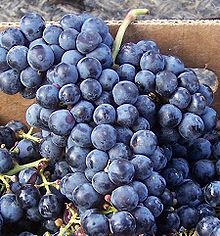
Cabernet Franc grapes, as shown in Wikipedia
The Wine Quiz series is not meant to intimidate. The whole idea here is to have fun and learn something new. When answering the questions, it is fully encouraged to use all available sources of information, including Google or any other search engine. There are no embarrassing answers – the most embarrassing thing is not giving it a try…
Welcome to the weekend and your new wine quiz!
We are continuing our grape trivia series, and we are back to the red grapes. Today’s subject is the red grape called Cabernet Franc.
According to many sources, Cabernet Franc is first appearing in Bordeaux in the 17th century, with a good chance of being around for much longer. From Bordeaux, it made it to Loire valley, where it is often used to produce single-varietal wines. In Bordeaux itself, Cabernet Franc is typically used as part of the blend together with Cabernet Sauvignon, Merlot, Petit Verdot and Malbec. Today Cabernet Franc is spread out all over the world, both used in Bordeaux-style blends (Meritage) and as single varietal bottlings – Australia, New Zealand, Italy, Chile, US, Argentina, Canada are all have a good amount of plantings of Cabernet Franc. In the US, Cabernet Franc is successfully grown all over the country, with some of the best wines coming from California, Washington and New York states.
Cabernet Franc is known to be a parent of Cabernet Sauvignon ( together with Sauvignon Blanc), so the typical flavor profile of Cabernet Franc is somewhat similar to the Cabernet Sauvignon, with black currant, raspberries and green bell peppers flavors being most typical. At the same time, Cabernet Franc wines often have more earthy aromatics and a little bit lighter in the body. Cabernet Franc also buds and ripens at least a week earlier than Cabernet Sauvignon, and it is more resistant to the low freezing temperatures during winter, which allows it to be cultivated successfully in the colder climates.
And now, to the quiz!
Q1: One of the most famous wines in the world has Cabernet Franc as a major (2/3 or so) components of its blend. Do you know what wine is that?
Q2: Cabernet Franc has a special relationship with the frost. Can you explain that?
Q3: Which one doesn’t belong and why:
a. Bourgueil
b. Chinon
c. Saumur-Champigny
d. Saint-Chinian
Q4: This unique grape grows only in one place in the world, and it is a cross between Merlot and Cabernet Franc. Do you know what grape it is?
Q5: In Italy, Cabernet Franc is often confused for another rare Bordeaux grape. Do you know the name of that rare grape?
Good luck, enjoy the quiz and your weekend! Cheers!
Wednesday’s Meritage – Wine Quiz Answer, Global Champagne Day, Dishcrawl SoNo, Tempranillo Day and more
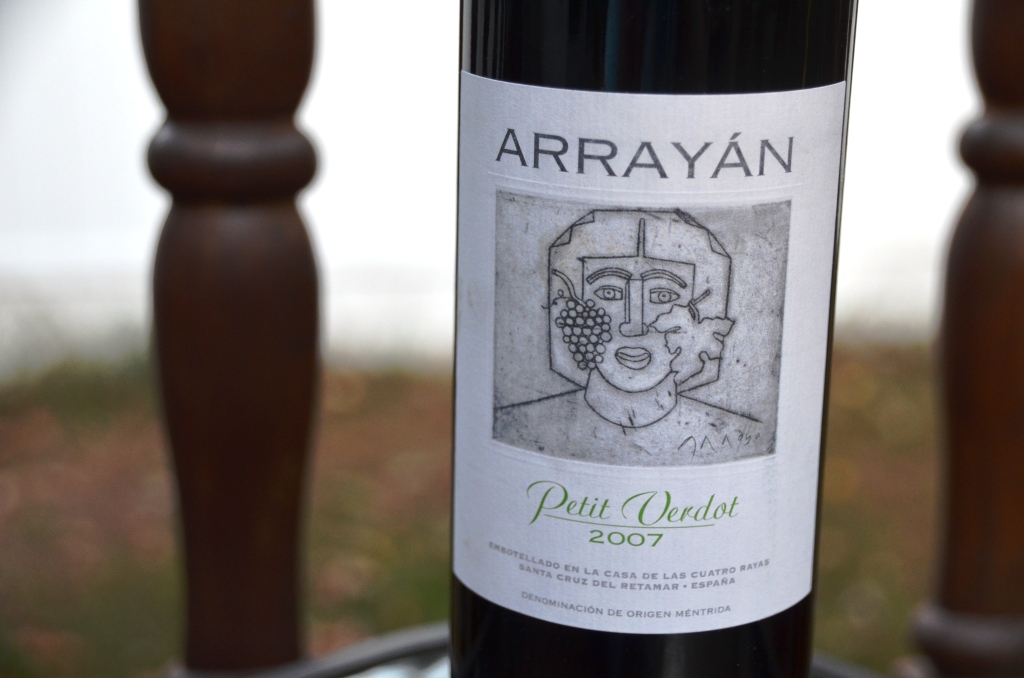
Arrayán Petit Verdot, Spain
Meritage time!
Let’s start from the answer to the wine quiz #78, grape trivia – Petit Verdot. In the quiz, you were supposed to answer 5 questions regarding the red grape called Petit Verdot. Here are the questions, now with the answers:
Q1: Explain the meaning of the name Petit Verdot
A1: Petit Verdot stands for the “little green”, as a reference to the small size of the grapes and the tendency to retain green (underripe) grapes even at the harvest time
Q2: Name four grapes, main blending partners of Petit Verdot in France
A2: We are talking about classic Bordeaux five here, the blending partners of Petit Verdot are Cabernet Sauvignon, Merlot, Cabernet Franc and Malbec
Q3: True or False: Australia’s plantings of Petit Verdot far exceed the plantings of Petit Verdot in France
A3: True. Australia embraced Petit Verdot starting from the second half of the 18th century, increasing its plantings, where Petit Verdot plantings in France had being on the downturn for a while.
Q4: While Petit Verdot is a difficult grape to work with, two events were major contributors to the demise of Petit Verdot in Bordeaux. Can you name those two events?
A4: Phylloxera epidemic in the late 1800s and the frost of 1956. As a difficult to grow and not essential grape, Petit Verdot followed the path of Malbec, with a dramatic reduction in plantings after the cataclysmic events.
Q5: While it is not impossible to find a pure 100% Petit Verdot wines made in Bordeaux, those wines are rather the exceptions. What is the typical percentage of Petit Verdot in Bordeaux blends?
A5: It is very often 1% to 2%, and in general stays under 5%. There are exceptions, of course.
Bonus question: what was your personal encounter with Petit Verdot? Do you have any memorable bottles?
Australia, Spain and [interestingly enough] Long Island, New York come to mind when I think of single-grape Petit Verdot bottlings. Some of the wines were just purely spectacular, like 2007 Jamesport Petit Verdot from Long Island, or this 2007 Arrayán Petit Verdot from Spain.
I’m glad to report that we had a good participation in the quiz, and most importantly, we have a lot of winners! Patrick Kleiner (who has no web site), the drunken cyclist and Vino in Love are all correctly answered all 5 questions, so they are our ultimate winners and get unlimited bragging rights. Well done! I also want to mention Duff’s Wines and Eat with Namie as they both made only minor mistakes and got about 4.5 correctly out of 5, so they both get an honorable mention.
Now, to the interesting stuff around the web and the vine!
I don’t have much of the interesting reads for you today, so it is mostly various events announcements.
First, don’t forget that Monthly Wine Writing Challenge #4 (#MWWC4) is in its final hours – it ends today, on October 23rd. The theme is “oops” – send your submission over to TheWineKat, and best to do it on Twitter with the hash tag #MWWC4.
Next, it appears that this coming Friday, October 25th, is a Global Champagne Day 2013 (I’m sure TheDrunkenCyclist is oozing with joy :- ) ). You have an option of finding a good place to celebrate in style, or just crack open whatever sparking goodness your heart desires, and celebrate the celebration drink!
While you still have time to get ready, don’t miss the International Tempranillo Day coming up on November 14th. There are plenty of Tempranillo events happening all over the country, and the good Tempranillo bottle is so easy to find nowadays, you have no excuse to miss this celebration.
Last but not least, at least for the local Connecticut foodies, Dishcrawl event is for South Norwalk (SoNo) will take place on November 20th. Based on my recent dining experiences in South Norwalk, this event shouldn’t be missed! For more details and to get your tickets, please visit Dishcrawl site.
That is all I have for you for today. The glass is empty – but refill is on the way. Until the next time – cheers!
Weekly Wine Quiz #78: Grape Trivia – Petit Verdot
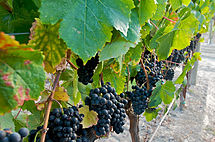
Petit Verdot, as shown in Wikipedia
The Wine Quiz series is not meant to intimidate. The whole idea here is to have fun and learn something new. When answering the questions, it is fully encouraged to use all available sources of information, including Google or any other search engine. There are no embarrassing answers – the most embarrassing thing is not giving it a try…
Welcome to the weekend and your new wine quiz!
We are continuing our grape trivia series, and we are back to the red grapes! Today’s subject is Petit Verdot.
Origins of Petit Verdot are unknown, and according to one of the theories, the grape came to Bordeaux region in France with ancient Romans. Petit Verdot is a very tricky grape in the vineyard – its early budding makes it susceptive to the early spring dangers, such as frost. Its very late ripening puts it in danger of the same frost and some of the diseases, At the same time, small berry with thick skin offers a lot of concentrated tannins and structure when it ripens properly.
This tricky behavior in the vineyard with tendency to underripe, results in Petit Verdot sometimes even not included in the final blend in Bordeaux wines. However, the grape behaves a lot more consistently in the warmer climates. Petit Vedot made it to Australia in 1800s, and it is successfully growing in most of the wine making countries around the world (Spain, Italy, US, Chile, Argentina, New Zealand), producing the best results in the warmer climates. in the US, it is growing in many regions across the country, from New York to Texas to California to Oregon. At its best, Petit Verdot produces dense, powerful, concentrated and age-worthy wines.
And now, to the quiz!
Q1: Explain the meaning of the name Petit Verdot
Q2: Name four grapes, main blending partners of Petit Verdot in France
Q3: True or False: Australia’s plantings of Petit Verdot far exceed the plantings of Petit Verdot in France
Q4: While Petit Verdot is a difficult grape to work with, two events were major contributors to the demise of Petit Verdot in Bordeaux. Can you name those two events?
Q5: While it is not impossible to find a pure 100% Petit Verdot wines made in Bordeaux, those wines are rather the exceptions. What is the typical percentage of Petit Verdot in Bordeaux blends?
Bonus question: what was your personal encounter with Petit Verdot? Do you have any memorable bottles?
Good luck, enjoy the quiz and your weekend! Cheers!
Wednesday’s Meritage – Wine Quiz Answer, #MWWC4 Deadline Nears, What Vinotype Are You, Understanding Luxury Goods
 Meritage Time!
Let’s start with the answer to the wine quiz #77, grape trivia – Savagnin. In the quiz, you were supposed to answer 5 questions about white grape called Savagnin, best known in the Jura region of France. Here are the questions, now with the answers:
Q1: Australia makes wines from Savagnin grapes. However, when the grape was planted, it was assumed to be …?
A1: Albariño. We actually already talked about it when we run through the Albariño quiz, only in reverse (in the Albariño quiz, Savagnin was the answer).
Q2: Wine made from Savagnin was one of the most expensive wines ever sold at an auction. It was sold at about:
a. $98,000, b. $74,000, C. $47,000, d. $30,000
A2: b, ~$74,000. See the full answer below
Q3: Continuing previous question – do you know what wine was that? Bonus part: can you also identify the vintage?
A3: This wine was 1774 Arbois Vin Jaune, sold at an auction in France for €57,000, which would be about $77,000 considering today’s exchange rate.
Q4: Name at least two other wines, produced in the same way as way Vin de Paille, one of the popular wines made from Savagnin.
A4: To produce Vin de Paille, after the harvest, the grapes are dried out on the straw mats for a few month, to concentrate the flavors. Similar methods of production are used for Vin Santo, Amarone, Sfursat of Valtellina and a number of others.
Q5: Which reddish-skinned ( but technically white) grape is a close relative of Savagnin?
A5: Gewurztraminer. Savagnin is closely related to the whole Traminer family, and Gewurztraminer, “an aromatic Traminer” is known for its reddish skin.
There was very little participation in this quiz (sad, but mostly expected). We don’t have the winner, but I have to acknowledge Namie from Eat with Namie for her excellent attempt at the quiz.
Now, to the interesting stuff around the vine and the web!
First, a friendly reminder. Your Oops! moment is getting near – the deadline for #MWWC4 (Monthly Wine Writing Challenge #4) is next Wednesday, October 23rd. The #MWWC4 is hosted by The Wine Kat, and the theme is Oops – you better get your wine oops together, or it will be a clear oops on your part… I have an idea, I hope to be able to find time to actually put it into the blog post, or oops.
Now, couple of interesting articles for you. First one is coming from The Wine Economist blog, where Mike Veseth is suggesting that all wine drinkers can be divided into the four categories, or Vinotypes – sweet, hypersensitive, sensitive and tolerant. The concept of the Vinotype is described in the book by Tim Hanni, MW, and Mike is explaining the concept in his blog post – but you should probably read the book. In the post, there is also a link to the web site where you can quickly perform your Vinotype assessment. I actually did, and came out as “Tolerant” – I would probably accept that, but the description provided for the Toerant type didn’t match me for a second. Well, YMMV – see it for yourself.
The second post I want to bring to your attention comes from Seth Godin, who is one of the very few people I would call as my mentor. His understanding of the world is nothing less than stunning to me, and every time I read his daily blog posts, it is almost a revelation of a simple truth, right in front of you. Seth’s post, called Understanding Luxury Goods, has nothing to do with wine in the direct form. However, every time we scoff at a bottle of Screaming Eagle, or Chateau Petrus, or 1755 Taylor Port at a price of north of $3000, or 1966 DRC at $10,000, understanding of how the luxury works helps to put things in perspective. Read it for yourself, and better yet, subscribe for Seth’s blog – it will provide infinite value compare to your subscription price.
That’s all I have for you for today, folks. The glass is empty – but refill is on the way! Until the next time, cheers!
Wednesday’s Meritage – Wine Quiz Answer, #MWWC4 Theme, Merlot is Back!, And a Few Videos
Meritage time!
Let’s start from the answer to our weekly wine quiz #76, grape trivia – Roussanne. In the quiz, you were supposed to answer 5 questions about white grape called Roussanne.
Here are the questions, now with the answers:
Q1: Explain the source of the name Roussanne
A1: Name Roussanne most like comes from the word “roux”, which refers to the reddish color of the grapes.
Q2: Which one doesn’t belong and why:
a. Hermitage, b. Côte-Rôtie, c. Châteauneuf-du-Pape, d. St.-Joseph
A2: b. Côte-Rôtie. Roussanne is allowed to be blended into the red wines of the three other regions – but the white grape allowed to be used in Côte-Rôtie is Viognier.
Q3: Outside of Northern Rhône, the traditional bending partner of Roussanne is…
A3: Grenache Blanc is the most popular blending partner for Roussanne outside of Northern Rhône
Q4: Roussanne was re-introduced in California in the 1980s, only to be proven in the late 1990s to be not the Roussanne but another grape. Do you know what grape was that?
A4: Viognier. Randall Grahm, winemaker from Bonny Doon winery, brought [illegally] a number of cuttings of supposedly Roussanne from France at the beginning of 1980s. In 1998 it was found that the grape is actually Viognier, not the Roussanne.
Q5: One of the first California “Roussanne” wines from the 1980s had a specific name. Can you name that wine?
A5: The “Roussanne” wine was produced by Randall Grahm under the name of Le Sophiste.
Sadly, there was very little participation in this quiz – I have to acknowledge Julian at VinoInLove, who was a sole participant – thank you Julian! I guess I’m going to far into the vineyard with some of my latest quizzes… Well, one more white grape, and we are switching back to the red right after.
Now, to the interesting stuff around the vine and the web!
First of all, we have a new theme for the Monthly Wine Writing Challenge! Now in its 4th round, it is hosted by The Wine Kat, winner of the round #3. The theme of the #MWWC4 is… OOPS!, and I can tell you that oops is looming, as the submission deadline is already very close, it is only two weeks away – October 23rd. Get your writing pants… oops, may be glass? Writing hat? Well, whatever oops gets you moving, get it on and start writing. The theme announcement and all the important dates can be found here.
Just a quick question at the moment. What do you think of Merlot? Do you still have an image of Miles “I’m not drinking no #$%^ Merlot”, or does it trickle back to you table and Cellar? Well, I can tell you that about 100 Merlot producers from California want to make sure you will once again look at Merlot seriously. Tomorrow, October 10th, is actually the start of #MerlotMe, a month-long celebration of Merlot, taking place both with the live events and all over the social media. You can find more details about the festivities here – and don’t wait, grab your bottle already!
Continuing the theme of Merlot, I wanted to share with you this video, made by one of the Merlot pioneers, Gundlach Bundschu:
And for no other reason, but just for your enjoyment on this Wine Wednesday, here is the video which I wanted to share a while ago – a “Blurred Lines” parody, made by the enterprising folks at Jordan (in addition to making great wines, they also have one of the best social media outreach in the wine industry):
That’s all I have for you for today, folks. The glass is empty – but refill is on its way. Until the next time – cheers!
Weekly Wine Quiz #76: Grape Trivia – Roussanne
 Welcome to the weekend and your new wine quiz!
We are continuing our grape trivia series, still focusing on the white grapes, and today’s subject is the white grape called Roussanne.
Last week we talked about grape called Marsanne, and today’s quiz is about its close friend, Roussanne. Similar to Marsanne, Roussanne is also seemed to appear first in the Northern Rhône, and then from there it slowly got into the other wine regions. Today it is growing in different areas in France, in Australia, California, Washington, Texas ( up and coming to the greatness), Spain and … Italy. If you remember, Italy was the major winemaking country which didn’t make any Marsanne wines. Another interesting note about Roussanne is that it is actually allowed to be a part of the 18 grapes permitted in Châteauneuf-du-Pape wines.
Roussanne is a late ripening variety, and it is also susceptible to the various grape diseases, which makes it tricky to work with in the vineyard. However, Roussanne compensate from those vineyard difficulties with great flexibility in the hands of the winemaker, helping to create full bodied, long living wines which greatly improve with age. This is where Roussanne is often paired with Marsanne to create those spectacular ( and very expensive 😦 ) white wines of Northern Rhône.
And now, to the quiz!
Q1: Explain the source of the name Roussanne
Q2: Which one doesn’t belong and why:
a. Hermitage
b. Côte-Rôtie
c. Châteauneuf-du-Pape
d. St.-Joseph
Q3: Outside of Northern Rhône, the traditional bending partner of Roussanne is…
Q4: Roussanne was re-introduced in California in the 1980s, only to be proven in the late 1990s to be not the Roussanne but another grape. Do you know what grape was that?
Q5: One of the first California “Roussanne” wines from the 1980s had a specific name. Can you name that wine?
Good luck, enjoy the quiz and your weekend! Cheers!
Wednesday’s Meritage – Wine Quiz Answer, #MWWC3 Winner, The Way You Pour, Wine and Shutdown, and more
Meritage time!
As usual, let’s start from the answer to the wine quiz #75, grape trivia – Marsanne. In the quiz, you were supposed to answer 5 questions about white grape called Marsanne. Here are the questions, now with the answers:
Q1: Name the grape, typical blending partner of Marsanne in Northern Rhône
A1: Roussanne.
Q2: True or False: Plantings of Marsanne in Australia far exceed Marsanne plantings in France.
A2: True. Actually, about 80% of worldwide plantings of Marsanne are located in Australia
Q3: Solve the riddle and explain: Part of 8, but not part of 18
A3: Marsanne is one of the 8 white grapes officially allowed in the Rhône appellations. At the same time, Marsanne is not a part of the 18 grapes officially allowed to be used in Châteauneuf-du-Pape appellation
Q4: Marsanne is known in Switzerland under the name of …
A4: Ermitage [blanc]
Q5: Name major wine producing country which doesn’t make any Marsanne wines of notice
A5: Italy. Yes, Italy makes no wines out of Marsanne – at least no wines which can be easily accessible or found on the internet.
I’m glad to report that we have a winner! Jeff of the drunken cyclist fame correctly answered all 5 questions, so he is our uncontested winner and he gets the coveted prize of unlimited bragging rights. Well done!
And now, to the interesting stuff around the web and the vine!
First of all, we have a winner for the Monthly Wine Writing Challenge #3! The Wine Kat wrote the winning story, which you can find here. Congratulations to the winner! Now we are all eagerly waiting to learn the theme for the challenge #4 – hopefully it will be announced soon…
Do you know that the way you pour the wine affects how much you drink? Here is the link to the post on the subject. Weather you hold the glass, tilt the glass, pour red or white – all of this factors affect the amount you consume – according to this study, of course.
Wondering about the connections between US Government shutdown and wine? I had no idea there is one, until I read this post by Dr. Vino. TTB, the government agency which approves all the new labels, is part of the shutdown. On one side it makes perfect sense as it is seemingly not-essential. At the same time, as opposed to many other parts of the government, this one actually makes money… Anyway, read the article for more details.
Actually, there is another small post by the same Dr. Vino, which I want to bring to your attention. Before you read it, I have a question for you. Which country do you think might request to put the words “wine kills” on the labels? No, it is not United States. Interestingly enough, it is France, which is concerned with the fact that people drink wine, so this was one of the proposals as a way to reduce wine consumption. Another, similarly bright proposal, was suggesting to ban all the internet writing about the wine – brilliant, isn’t it? You can read the post here – it is short and interesting.
That’s all I have for you for today, folks. The glass is empty – but refill is on its way. Until the next time – cheers!
Last Bottle Sign Up ($10 credit)





