Archive
Waterstone Cabernet Sauvignon Experience, And A Few Words About Food
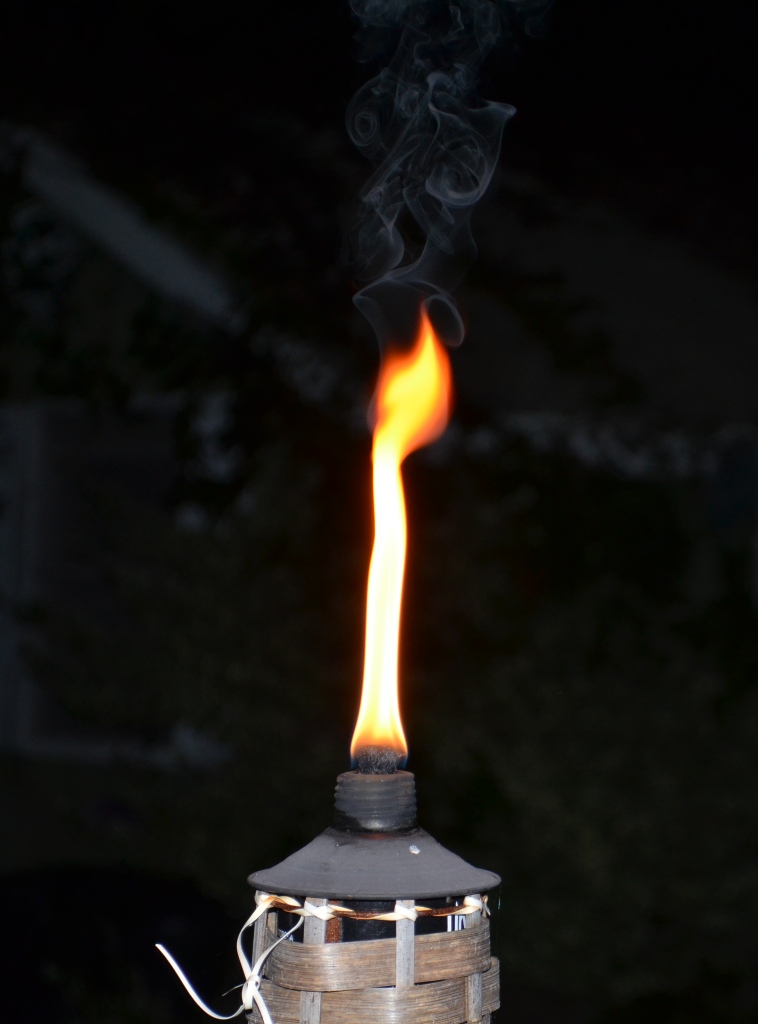 If I’m not mistaken, last week was literally the first week in Connecticut when evenings became enjoyable – which also meant that we could have a family dinner outside!
Dinner outside is one of the little pleasures of suburban life, when you can get to enjoy the food twice. Not that cooking the food on the stove is not enjoyable – but somehow, doing it outside on the open fire creates the whole separate feeling. And then the whole process of having food outdoors also brings different level of pleasure – I don’t know about you, but whenever possible, in a restaurant I ask for the table outside, to be able to enjoy both food and the weather, and here I don’t even need to ask anyone to get the table outside!
Yes, I will get to the Waterstone cab in a second (after all, that should be the subject of the post, right?) – but let me talk about the food for a moment. Our local Fairway had jumbo shrimp and fillet Mignon on sale, so the menu was a no-brainer. Of course you have to have something green on the grill, so I think asparagus is one of the best greens you can grill:
 I have a feeling that the recipes’ page is coming up in this blog – little by little, I learned to make a few dishes consistently well, so I think sharing the recipes makes sense (but let me sleep on it). One important thing about my recipes – more often than not, I don’t use the exact measure. I can’t tell you to use a quarter of teaspoon of salt, a half of it or the whole one – I just rely on a “gut feeling” for “enough or not”. For the asparagus, I use a dash of salt, black pepper, granulated garlic, olive oil and a splash of balsamic – mix it all together and let it “marinate” for 30 minutes or so. And then of course the key part is not to overcook the asparagus, so it will retain the crunch. I typically have a grill at 400°F and put the asparagus down for 1 minute, turn around, and keep it for another minute – and it is done.
I made shrimp on a skewer. You need to clean the shrimp, and marinate it for 30 minutes to an hour in the fridge (don’t marinate for too long, or it will become a mush). For the marinade ( considering I had 1 pound of shrimp) I used about 1/4 of a cup of olive oil, 4 -5 minced garlic cloves, juice of one lemon ( you can add wine vinegar also, if you want) and a couple of Penzey spices – I used Cajun and Lemon Pepper. About 2 minutes on each side at the same 400°F grill, and … voila:
 This shrimp was probably one of the best I ever had ( and made) – I also think kids were in the violent agreement with me – no shrimp survived the evening.
And the steak – everybody can make steak on the grill, so there is not much to talk about – here is the picture for you:

Quite honestly, I should’ve used more salt – but this you probably can’t tell it from the picture. I rehabilitated myself the next day by generously using Montreal seasoning mix, but I don’t this is important in the context of this blog.
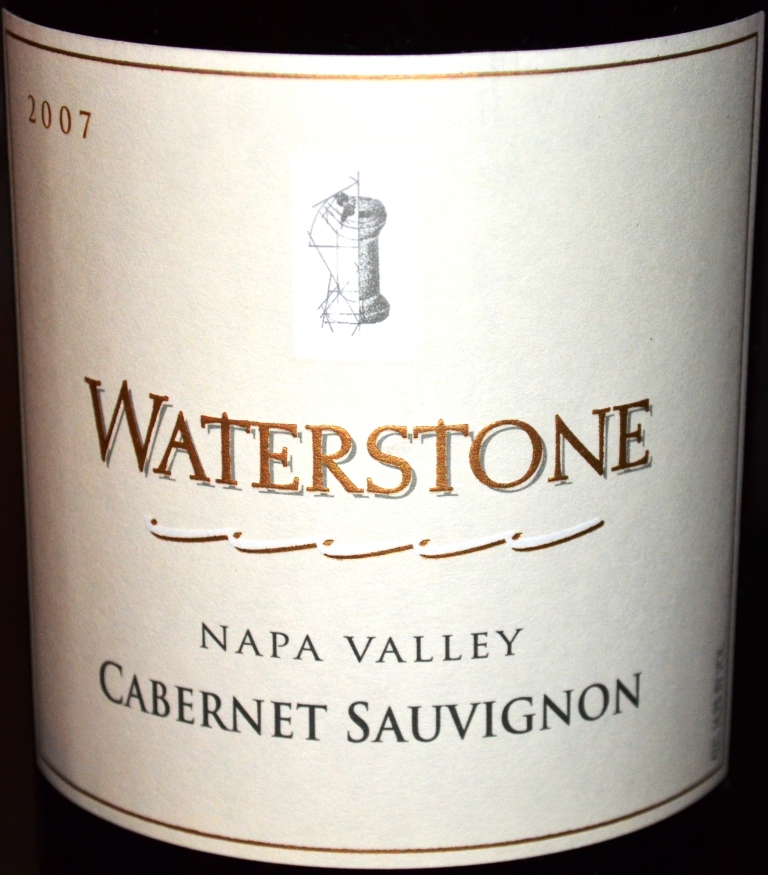 And then, of course, there was wine. First I read about Waterstone Cabernet Sauvignon in the e-mail from the Benchmark Wine Company, where it was listed as one of the “stuff favorites”. Further checking on internet seemed to be hinting at connection between Harlan Estate, producer of one of the absolute top (“cult” is the word) California wines and Waterstone Cabernet Sauvignon – the rumor which Jancis Robinson unequivocally dismisses.
Whether the rumor is true or not is not that essential – Benchmark’s recommendation along with unpretentious label was enough to build my expectations (okay, I’m lying about the rumor – of course I want this wine to be made out of Harlan’s juice, at about 1/30 of a price of the bottle of Harlan Estate). Interestingly enough, if you will read about the Waterstone Winery, which was established in 2000, it doesn’t own any vineyards, which means that grapes should be sourced from the other vineyards, so the whole idea of wine being made out of Harlan juice, entirely or at least partially, is not that impossible. Anyway, with all those expectations, I was still taking my time, until Zak (owner of Cost Less Wines) told be that he only has about 10 bottles left, so … (he took a pause after “so”) I realized that the time has come.
As you can see from the picture below, I approached entire matter of experiencing the Waterstone very seriously, using my “special occasions only” Cabernet set from Reidel (we have enough glasses for the regular use, and those Reidel glasses don’t last long):
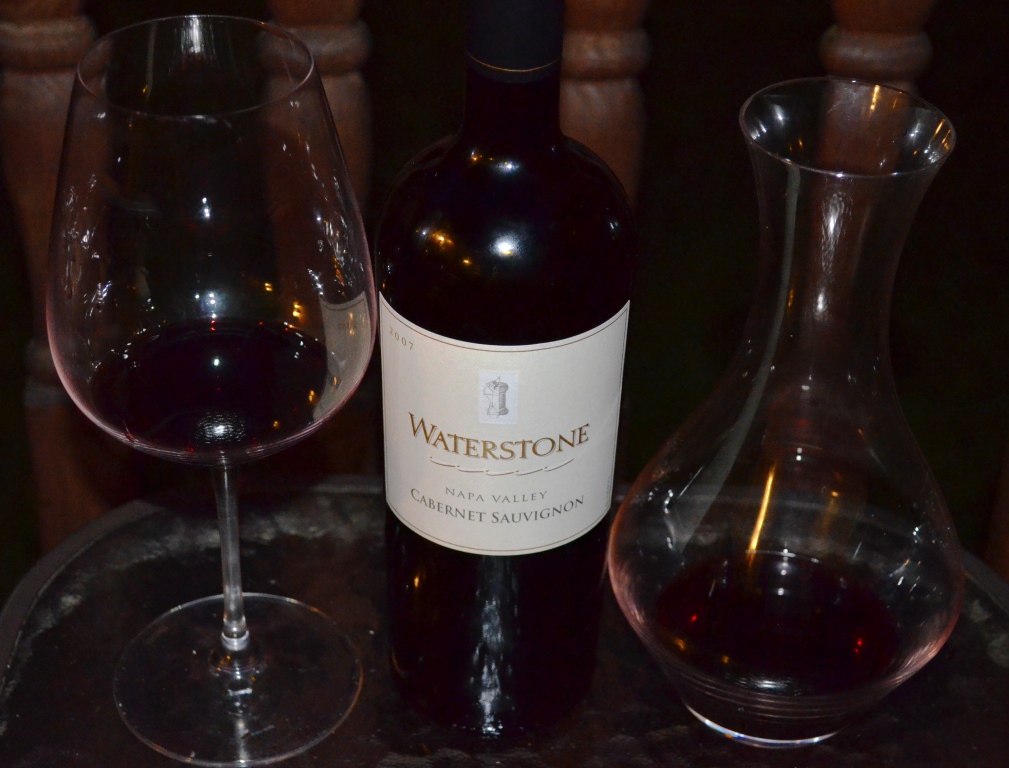
Every time I use these special Reidel glasses, the first smell sensation I get is the one of a wet dog – I guess I don’t know how to use them properly… That smell has nothing to do with the wine, and it disappears after a few sips, but it sure gets in the way of your first impression. Well, let’s talk about the wine. This 2007 Waterstone Cabernet Sauvignon Napa Valley (14.5% ABV, $27.99) has 80% Cabernet Sauvignon, 16% Merlot, 3% Cabernet France and 1% Petite Verdot, and it was aged in french oak barrels for 22 months. The wine had a perfect nose of blueberries. Not blueberry pie or blueberry jam, but a clean, perfect, balanced nose of fresh berries. This was followed by nice dark fruit on the palate, luscious and round, with some eucalyptus and touch of licorice, excellent balance of tannins, acidity and fruit. Drinkability: 9-. It is interesting to note that the wine was a bit all over the place on the second day, and I had nothing for the third day ( while I expect that it probably would taste better). Here is an artistic rendering of the event by my daughter:
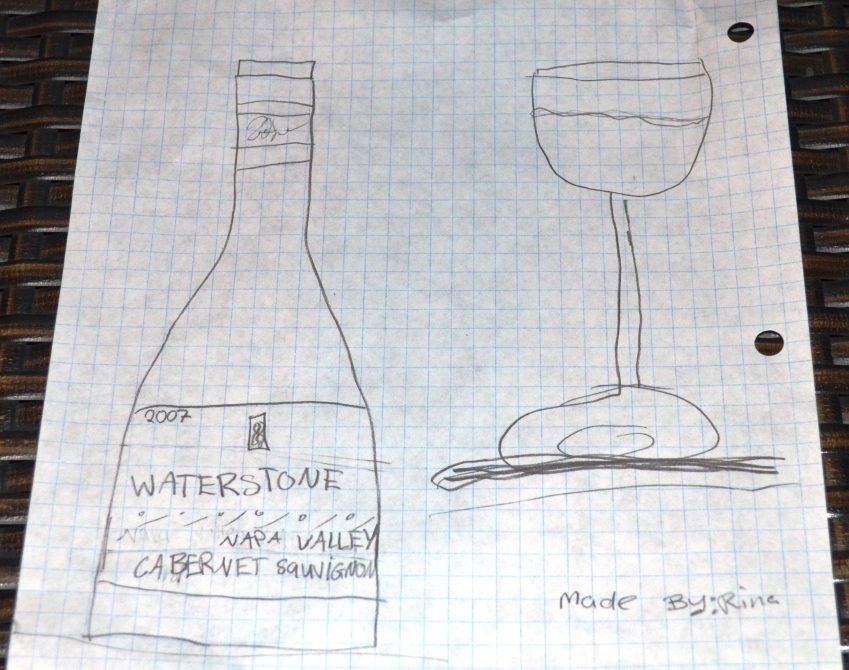 There you have it, folks. I think this is the wine to buy by the case, if you can find it, of course. If you tasted this wine, I will be glad to compare notes. If you didn’t taste it yet, try to find it – and then I will be glad to compare notes. Cheers!
P.S. you can also consider this post as an early contribution for #CabernetDay which is coming up on Thursday, August 30th.
Wednesday’s Meritage – Wine Quiz Answer, Wine Blog Awards, 1368 grapes, and more
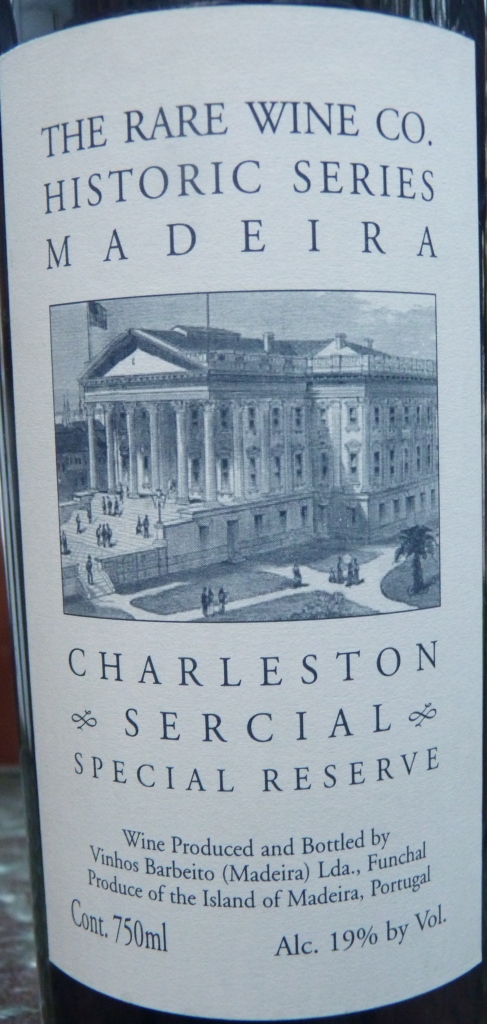 Happy Wine Wednesday everyone! Hope that all the WBC2012 attendees recuperated by now and again consider wine as something enjoyable and not as a chore.
It is Meritage time, so let’s start from the answer for the Wine Quiz #25 – Extreme Wines. The question was about wines which are not destroyed by heat, but instead, are “made” by it. And the right answer is… Madeira! Madeira wine, which was discovered as a by-product of a long sea journeys of the wine barrels, is commercially made using the method called estufagem, where wine is heated up to 130F for at least 90 days. If you haven’t tried Madeira recently, you should, as the Madeira is currently in the process of revival, and it has a lot to offer.
And now for the sipping, errr – wine news section. Wine Blog Awards winners had been announced at WBC12 – here is the list. Congratulations to all the winners!
Decanter magazine just announced that Wine Grapes book is ready to be published. The book is written by Jancis Robinson and the team, and it provides information on 1,368 (!) wine grapes – looks like I got long ways to go in my Wine Century quest.
For those of us who missed Wine Bloggers Conference 2012, here is the summary by Tom Warks. I know that The Drunken Cyclist also attended WBC2012 – I will be very interested in reading his prospective on the conference.
Quick reminder for the upcoming wine holiday (NJVinoMan, please take notice : ) ): 3rd Annual Cabernet Day (#CabernetDay hash tag on Twitter) will be celebrated on August 30th – I hope you have enough time to decide on that special bottle.
That’s all for today, folks. Cheers!
Serious Fun With Wines
In case you are wondering about the “serious fun” versus “not so serious fun”, somehow this title just got stuck in my head when I thought about this post, and I decided not to fight that. Also, when you have Gaja, Ornellaia, Turley, Bertani and whole bunch of other interesting wines, I think “serious fun” is a good way to put it. And to stress even further how serious the fun was, I’m even using different style of pictures for this post instead of usual “just label” style (and yes, you are right, I also use an opportunity to play with my new camera).
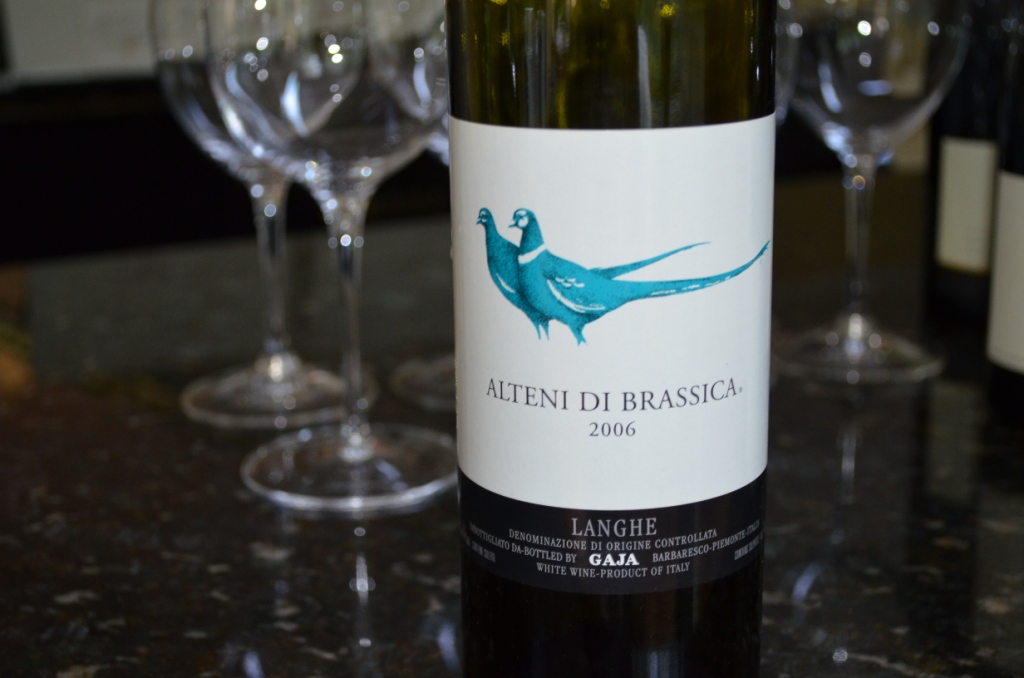
What is your first thought when you see the name like Gaja on the wine list? I don’t know about you, but in majority of the cases I would expect to see a red wine there. Yes, I can think of Gaja Chardonnay, and only because it typically looks at least as an affordable possibility on the wine list, as opposed to the Gaja red wines, which are not. So the wine we had was a white wine made out of …(wait for it)…Sauvignon Blanc!
2006 Gaja Alteni di Brassica Langhe DOC, Italy was a total surprise. Mineral nose, with wet stone, smoke and heavy grass. Touch of white fruit on the palate, more stone, touch of lemon, perfectly balanced. Finish lasted for 3 minutes, if not longer! Very beautiful wine. Drinkability: 9
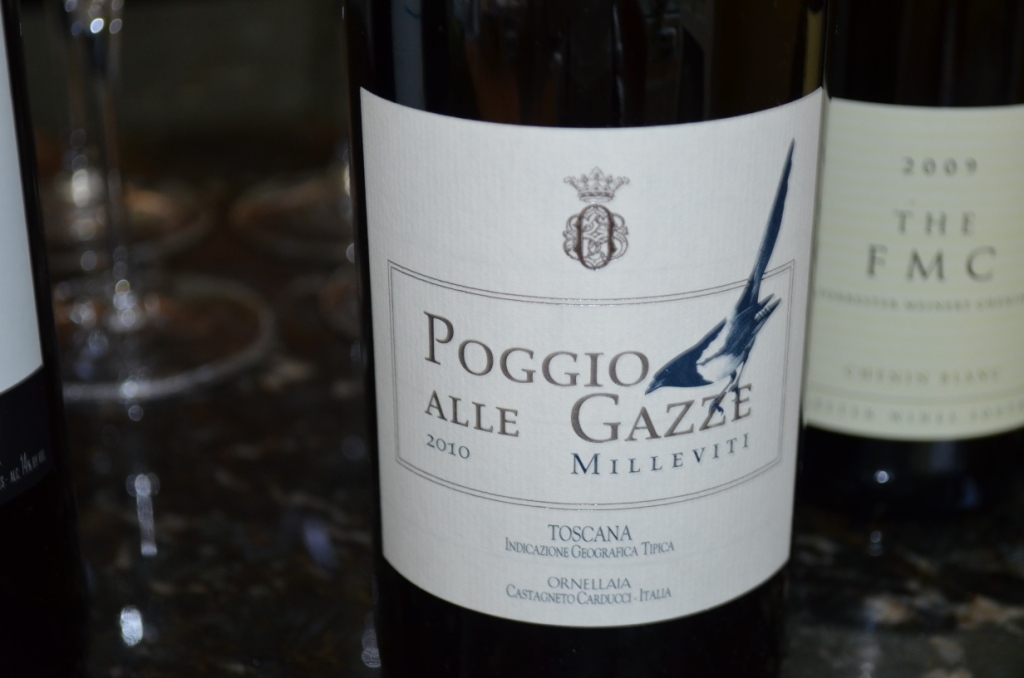
The next wine we had was also coming from a very respectful Italian producer, Tenuta dell’Ornellaia. And the wine was…yes, white again! The grape? Yep, Sauvignon Blanc. 2010 Poggio alle Gazze dell’Ornellaia, Toscana IGT was simply delicious, with perfumed nose of lychees and white apple. Palate was exhibiting nuts and ripe apple. Very long finish with some tropical fruit notes coming in later on. Bright, round, amazing! Drinkability: 9
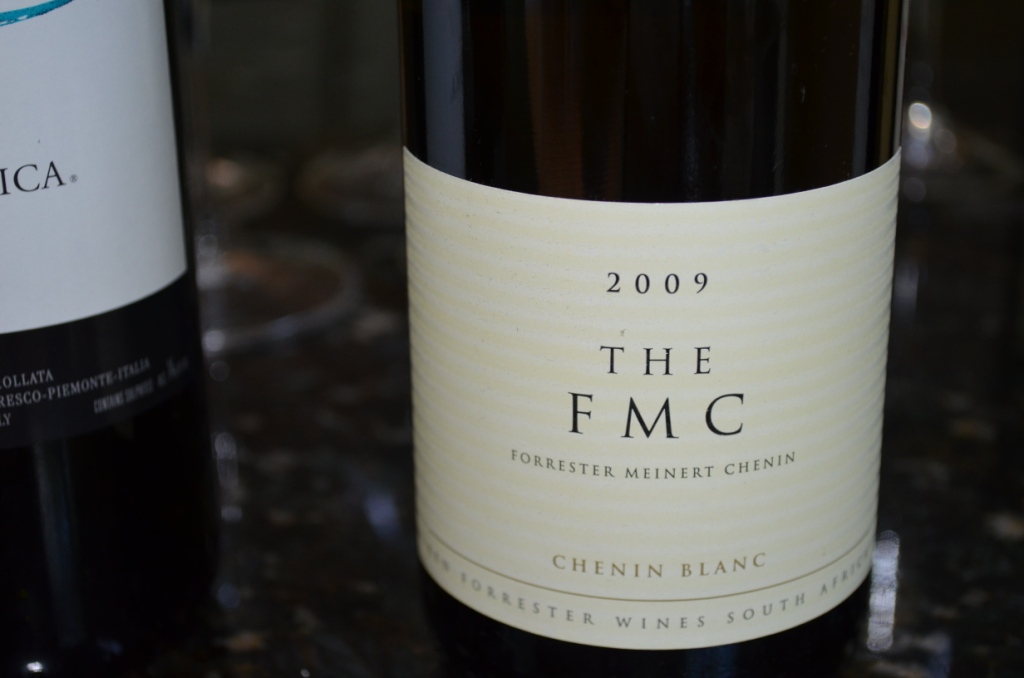
We continued our “whites’ extravaganza” with 2009 Ken Forrester The FMC ( (Forrester Meinert Chenin), South Africa. This wine was made out of the Chenin Blanc grape. While Chenin Blanc is one of the signature white French grapes from Loire, it also makes great wines around the world. It does particularly well in South Africa, where it is also known under the name Steen. This particular The FMC wine is a single vineyard flagship wine of Ken Forrester, one of the oldest producers in South Africa. This wine had a beautiful nose very similar to a typical chardonnay – nutty with some acidity, bright yellow color, very round. Drinkability: 8+

Done with whites. Before switching to the reds, we had a different, very unusual wine – as you can judge from the color above, this wine is not called “Orange” for nothing. Orange wine is one of the latest trends, where skin of the white grapes is left in the contact with juice during maceration. This imparts a nice deep yellow/orange color, hence the name, orange wine. This wine also was not some fly by night experimental plonk. 2008 Marani Satrapezo 10 kvevri, Georgia (100% Rkatsiteli grape, all coming from specific block of the Kondoli vineyard) was made in a traditional Georgian style with maceration for 20-25 days in historical clay vessel called Kvevri.
The wine had beautiful orange color. On the nose it had aromas of a bright fresh apricot. Palate was dry, full bodied, vegetative with enough brightness, touch of apricot but no sweetness whatsoever. After three hours in decanter the wine softened considerably – this wine definitely would benefit from a few years in the cellar. Drinkability: 8
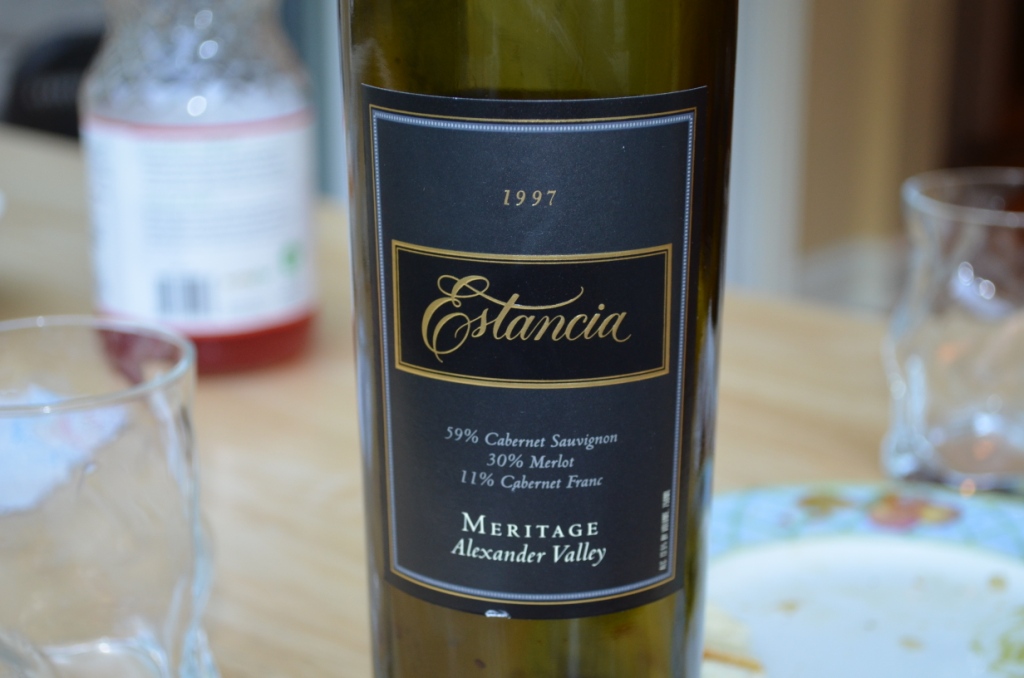 Okay, we are finally switching to reds – with it’s own set of surprises. We started from 1997 Estancia Meritage Alexander Valley (Cabernet Sauvignon/Merlot/Cabernet Franc blend). The wine had perfect color – dark, concentrated ruby red. Eucalyptus, wet stone, dust and raspberries on the nose. Bright red and black fruit on the palate with cassis, eucalyptus and licorice – perfect balance, nice, soft tannins. Drinkability: 8+
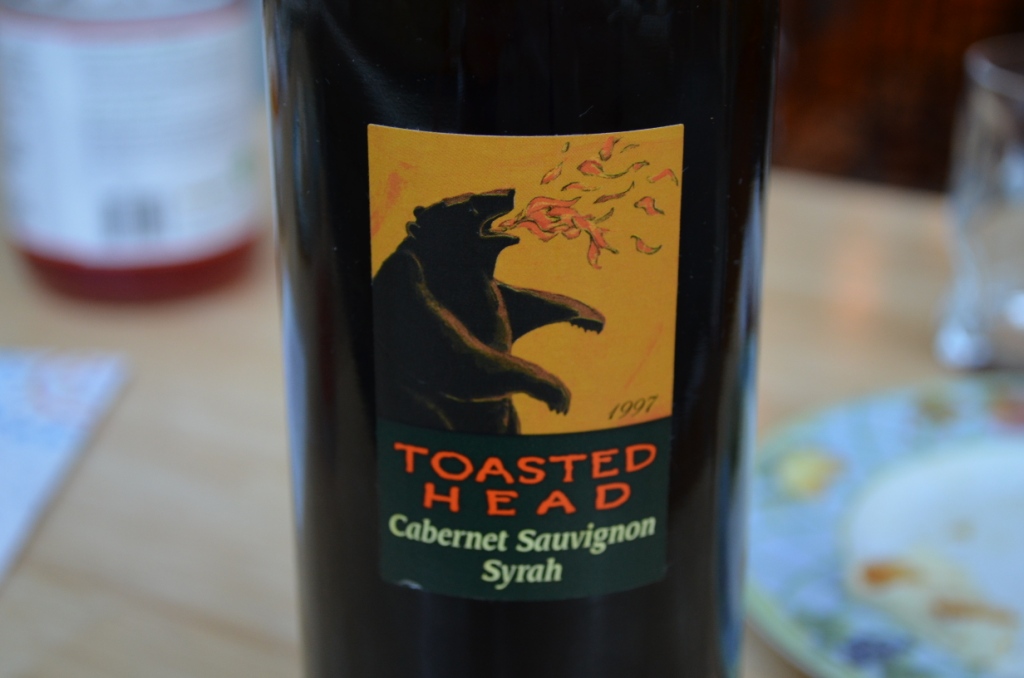 This was probably the biggest surprise of the evening – 1997 Toasted Head Cabernet Sauvignon Syrah California. Generally, Toasted Head makes simple everyday wines – which you generally are not going to age. This wine was simply lost in the cellar, and we opened it to taste but with the full readiness to dump it. To our astonishment (too strong of a word, but – why not), the wine had perfect acidity, bright youthful color, good black fruit, soft tannins and a touch of cassis. Drinkability: 8
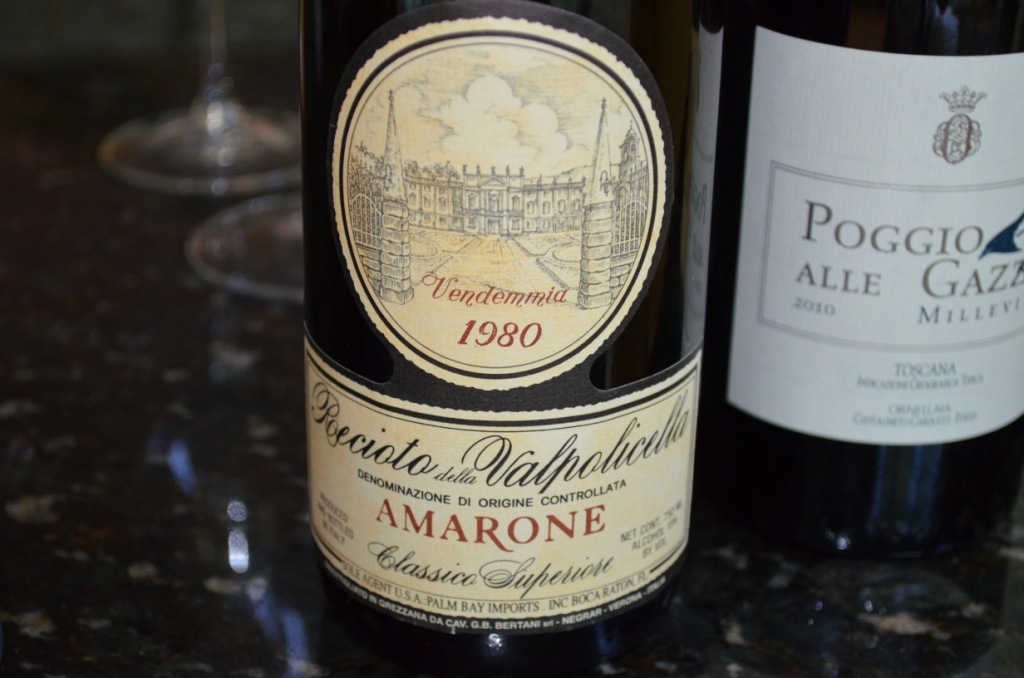
The next wine was Giribaldi Cento Uve – but this will be a subject of a separate post, so I will skip my tasting notes for that wine. And the next wine was the one … we killed – it sounds way too strong, I know – but please read on. Amarone are typically big enough wines, so we decided to decant this wine – without even tasting it first (but the nose was perfect!). This was a [big] mistake. After 3 hours in decanter, the wine became barely drinkable. Another 30 minutes later, the fruit came back, both on the palate and the nose, only to disappear shortly after. Note to self – be careful with decanting. Considering this experience, I will not give this wine any rating – it simply wouldn’t be fair.
As you might expect, we didn’t just drink – we had a lot of good food as well. Just to give you an example, here is lamb kabob in the process of making:
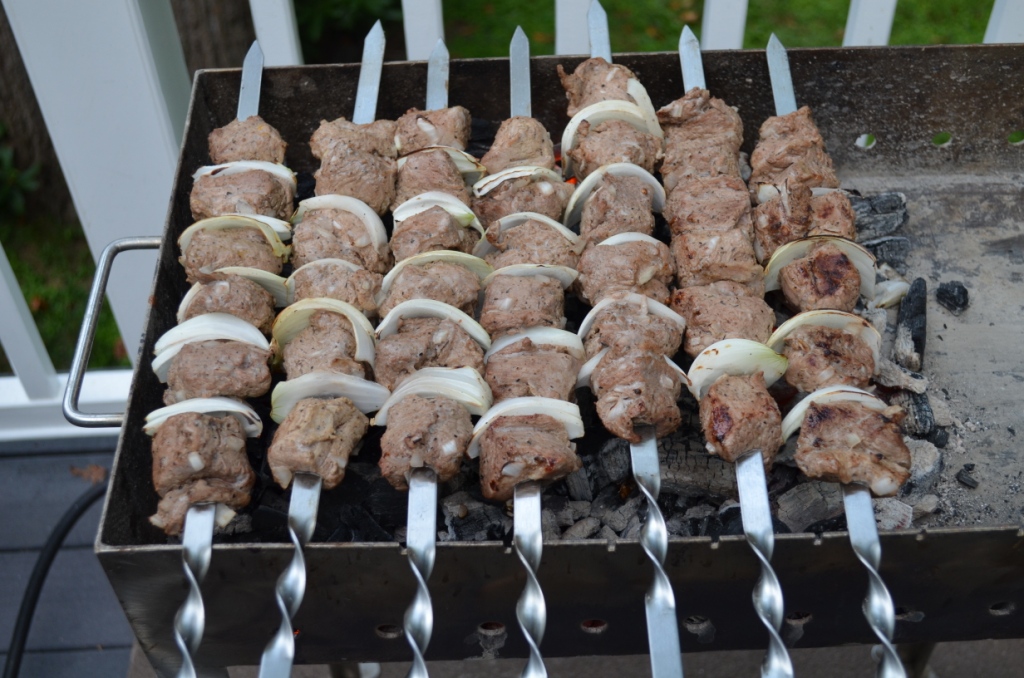
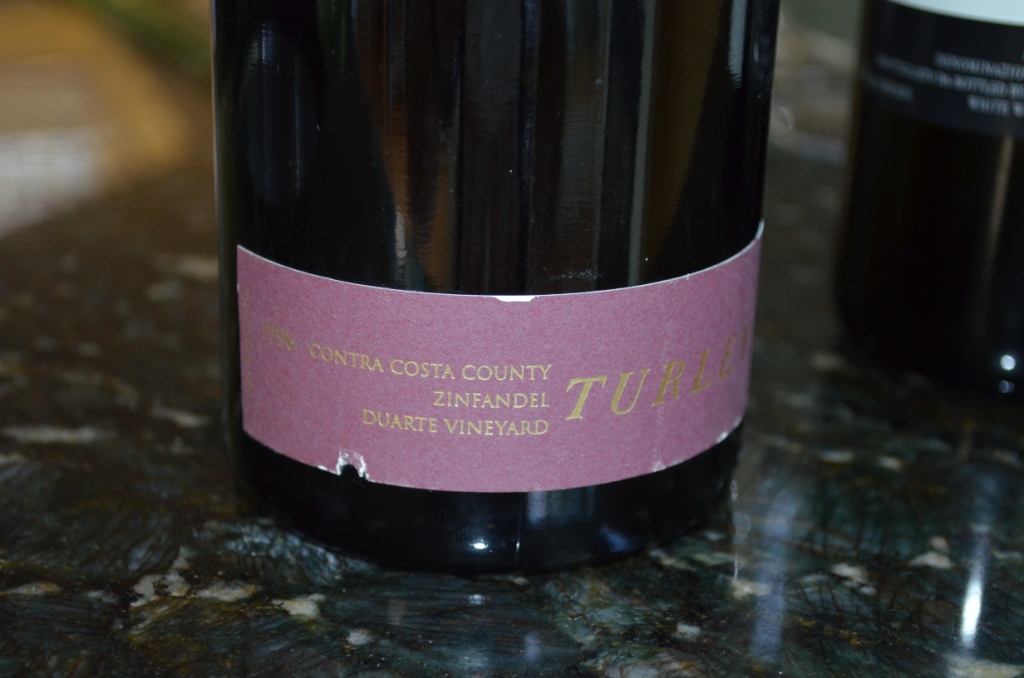
To complement the lamb, we had 1996 Turley Duarte Zinfandel – nice fruit, raspberries on the nose and the palate, hint of jammy fruit later on, plus some eucalyptus. Very good overall balance for the wine at 15.4% ABV. Drinkability: 8-
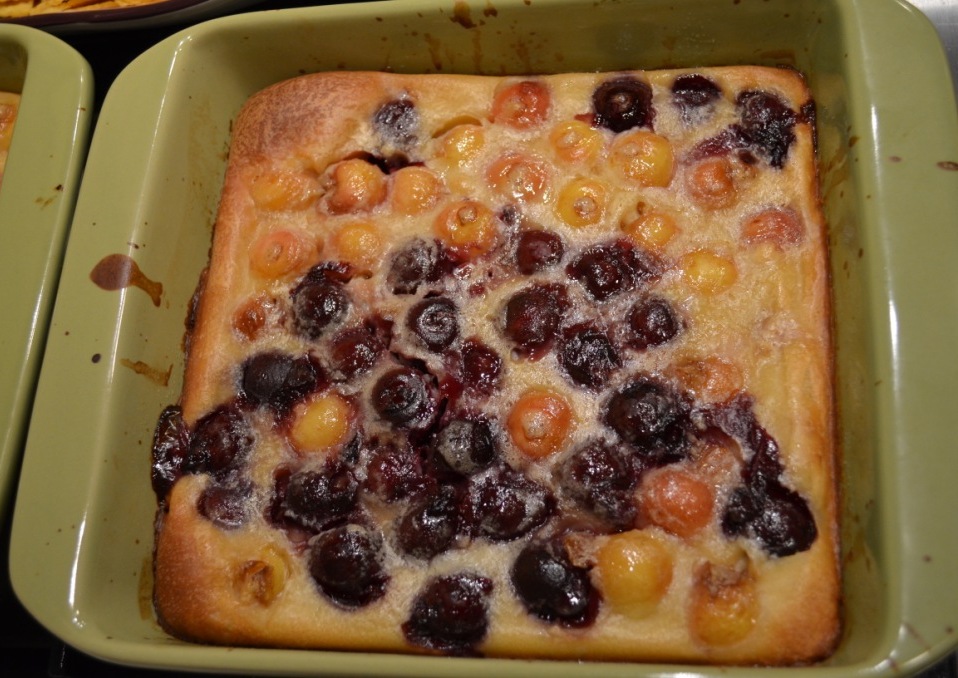
And then of course there was a dessert – Clafoutis (no further comments, just look at the picture):
This was definitely a great experience. Pretty rare case when all the wines worked very well and were absolutely delightful – if I can only re-taste that Amarone… Well, may be one day. Wishing you great wine experiences! Cheers!
Weekend Wine Happenings
This past weekend was filled with different wine events, which I want to share with you. First and foremost – arrival of the No Girls wine. No Girls wine is made by Christophe Baron, the wine maker behind Cayuse – one of the cult wineries from Washington state. What is so special? No Girls wine is available only through the mailing list. If you ever dealt with winery mailing lists you probably know that before you get on the mailing list, first you spend time on the waiting list for the mailing list. It took more than two years for me to move from waiting list to mailing list with Turley, makers of the great Zinfandels. I think for more than 3 years I’m still on the waiting list for Alban, Cayuse and Carlisle. With No Girls wine, despite the fact that I signed up literally on the same day as the offer came in, initially I got an e-mail that I didn’t make the mailing list, with the follow up e-mail in a couple of month saying that I got an allocation.
Hence the excitement and anticipation associated with arrival of No Girls wine – 2008 Grenache and Syrah from La Paciencia vineyard in Walla Walla. I can’t tell you anything about the wine itself – I plan to give it some time first. However, even packaging alone can make you excited – and to explain what I mean, here are few pictures for you.

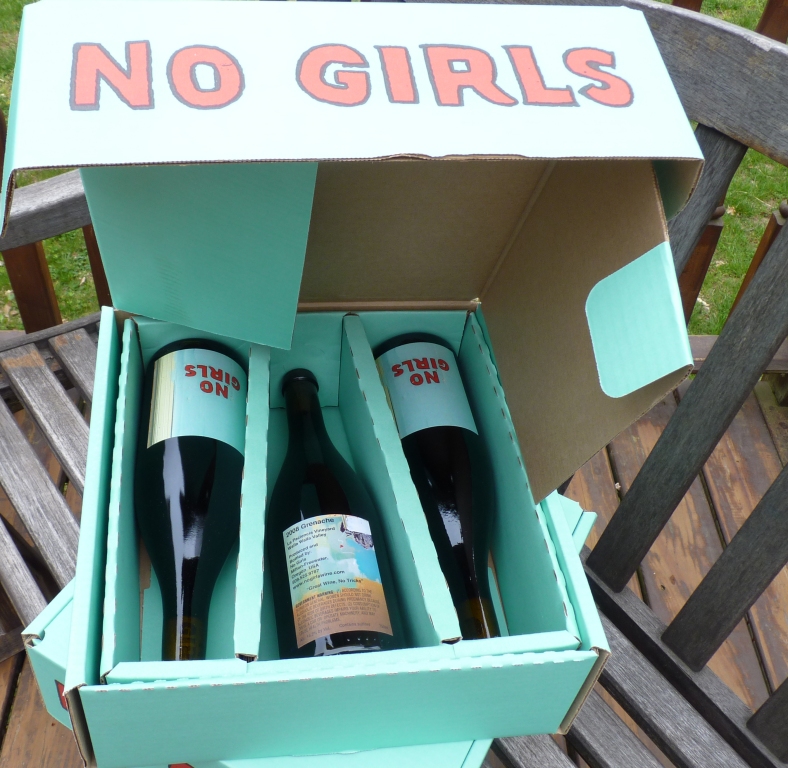

Very bright and clever – what do you think?
Now, on the subject of the wines I actually tasted over this weekend, there were few I wanted to talk about.
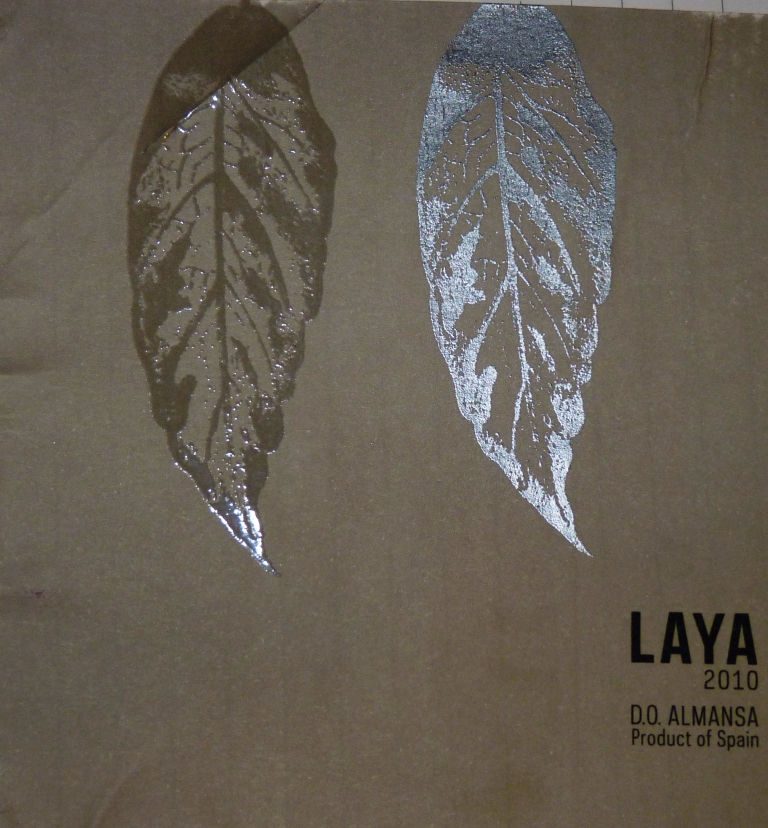
First one is a Spanish wine 2010 Laya D.O. Almansa (14.5% ABV). This wine is a blend of Garnacha (70%) and Monstrell (30%). When you open the bottle and take a first sip, it comes out very grapey and young. It took this wine 3 days to develop a nice undertone of richness, with some ripe red fruit, a touch of spices and smokiness. Considering the price ($7.99) this is a great everyday wine (Drinkability: 7+).
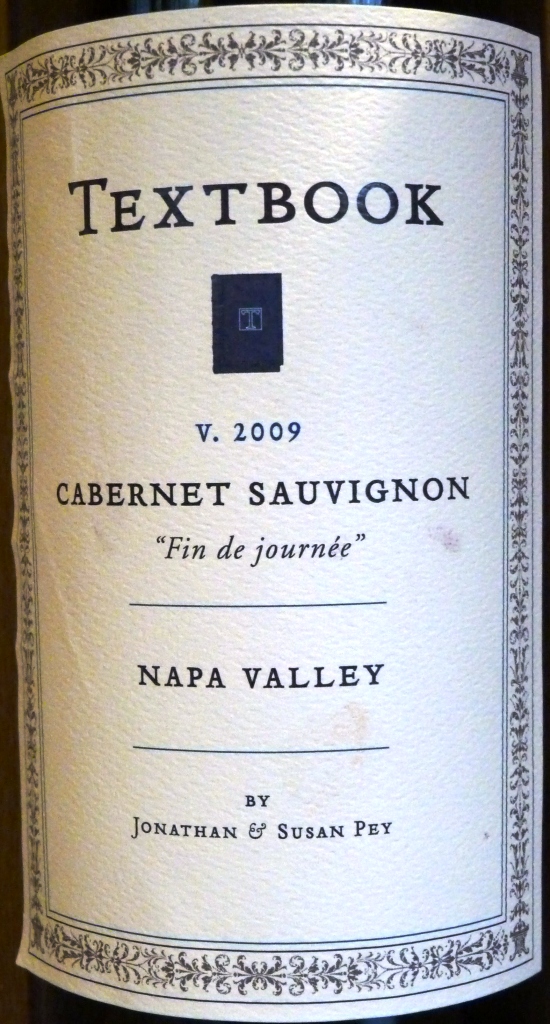 Next one is a 2009 Textbook Cabernet Sauvignon Fin de journee Napa Valley (14.5% ABV). I had this wine for a few months, waiting for the right moment to try it and building up expectations – somehow the name “Textbook” caused a lot of warm expectations, especially with the back label promising a “textbook Napa Cabernet”. The wine had a nice nose of the dense black fruit, not too jammy, but present. On the palate, the fruit grew together with nice tannins and silky texture, only to somehow stop short of delivering the “oompf”. Almost like watching the golf ball slowly rolling after the putt “almost, almost, almost, ahh”. Signature black currant was almost there, but didn’t really show up in its clean beauty. Don’t get me wrong – for a $20 Napa Cab, this was a good wine, but it had to battle my inflated expectations… and lost. Drinkability: 7+.
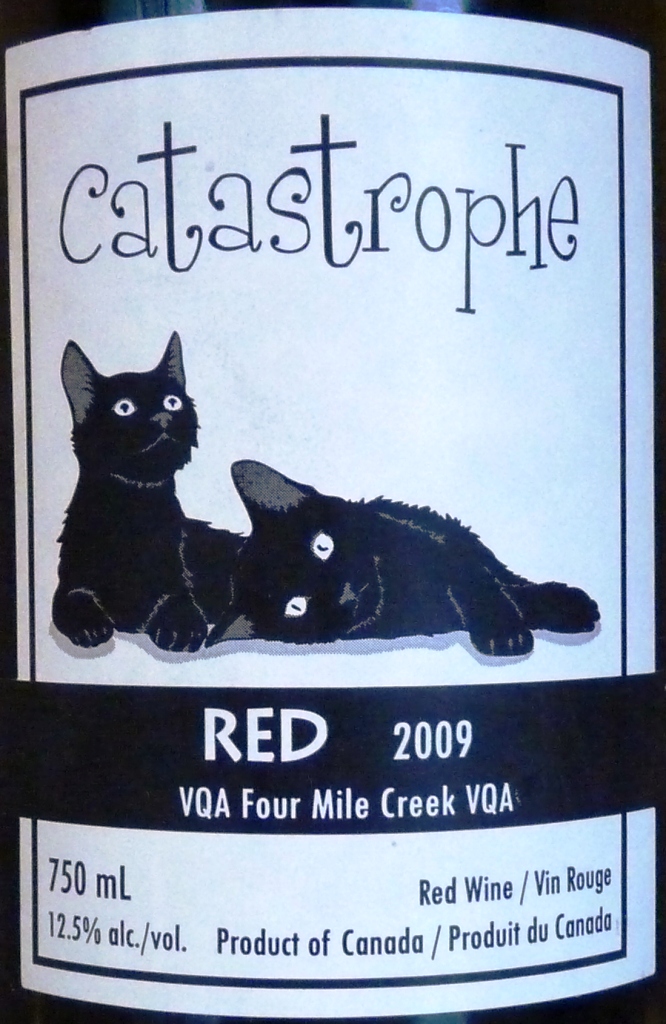
Last but not least was 2009 Catastrophe Red Cattail Creek Estate Winery, Four Mile Creek VQA, Canada (12.5% ABV). We brought this wine back from Canada after the last year’s trip. It is a blend of Gamay Noir, Merlot and Cabernet. On the nose, it has a bright red fruit. On the palate, there is more red fruit, such as sour cherries, hint of earthiness, good clean acidity, very balanced. Medium body and very easy to drink. This wine also would be a great food wine – too bad, I only brought one bottle back. Drinkability: 8-.
That’s all folks. Don’t forget that April 25th is a Wine Blogging Wednesday, with the theme “Barossa Bumerang” – find a bottle of Barossa wine from Australia, enjoy it, and write a blog post or at least leave a comment here. Have a great week! Cheers!
Notes from Slocum & Sons Wine Tasting in Connecticut
This past weekend I attended yet another great wine tasting by Connecticut wine distributor Slocum and Sons. Of course when hundreds of wines are presented in the tasting, there is a good chance of finding lots of great wines among them. This tasting was no exception – I had a lot of tasteful encounters at the event. Here are some notes, with pictures, as usual.
Let’s start with the sparkling wines. One of the first wines we tasted was Armand de Brignac Brut Gold (Ace of Spades):

The Champagne is this sparkled (no pun intended) bottle was good, with good body, green apple and zinging acidity running in the back. At the same time, as I’m always looking for QPR when I’m thinking about wine, this wine, the most expensive in the entire tasting, at about $270 per bottle, doesn’t not represent value at any level. If I have to spend this amount on the bottle of Champagne, I would much rather drink Krug.
Continuing sparkling wines category I have to mention Champagne Vollereaux, which is a Growers Champagne. We tried Vollereaux Brut NV, Vollereaux Rose Brut NV and 2004 Vollereaux Cuvee Marguerite – all beautiful wines, full flavored champagnes, with the most expensive one still being less than 1/4 of the price of Armand de Brignac – and delivering more pleasure.There were other great Champagnes there, such as Laurent Perrier and Veuve Clicquot, but I also have to mention a wide variety of excellent Cavas, sparkling wines from Spain – here is the picture of the line up of one of my all time favorites – Segura Viudas, with all four wines being one better than the other:

Moving one to the white wines, there were some personal discoveries and some “meet and greet” with old favorites. In the “personal discoveries” group first I would like to mention 2008 Trefethen Dry Riesling Oak Knoll District, Napa valley – this is the first California Riesling which I really enjoyed – it got all the beautiful white fruit, balancing acidity and even hint of petrol!

The next discovery are two wines from Bodegas Shaya – 2010 Bodegas Shaya Verdejo Rueda DO and 2009 Bodegas Shaya Habis Rueda DO.

Both wines are made from the 100 years old vines Verdejo, first wine fermented in stainless steel tanks and second one, Habis, fermented in French oak barrels. Bodegas Shaya comes out with very clean fruit and minerality expression, good acidity, very balanced. But once you taste Habis, the first and immediate impression is Wow – this will beat any Chardonnay! I don’t want to push it too far, but I would love to see this wine next to Peter Michael Chardonnays in the blind tasting – that would be a very interesting experiment.
Few more highlights in the white wines category. Three of the Talbott Chardonnays – 2009 Tabott Sleepy Hollow Chardonnay, 2009 Talbott Logan Chardonnay and 2009 Talbott Kali Hart Chardonnay were all outstanding, showcasing balanced wines, with good acidity, white fruit and hint of vanilla. I didn’t have Talbott wines before, so I was very impressed with the quality. And then in the “familiar category” I want to mention two Spanish whites, both of them I got to know thanks to the The Capital Grille’s “The Generous Pour” summer wine program. These wines are 2010 Jorge Ordonez Botani and 2010 Bodegas La Cana Albarigno.
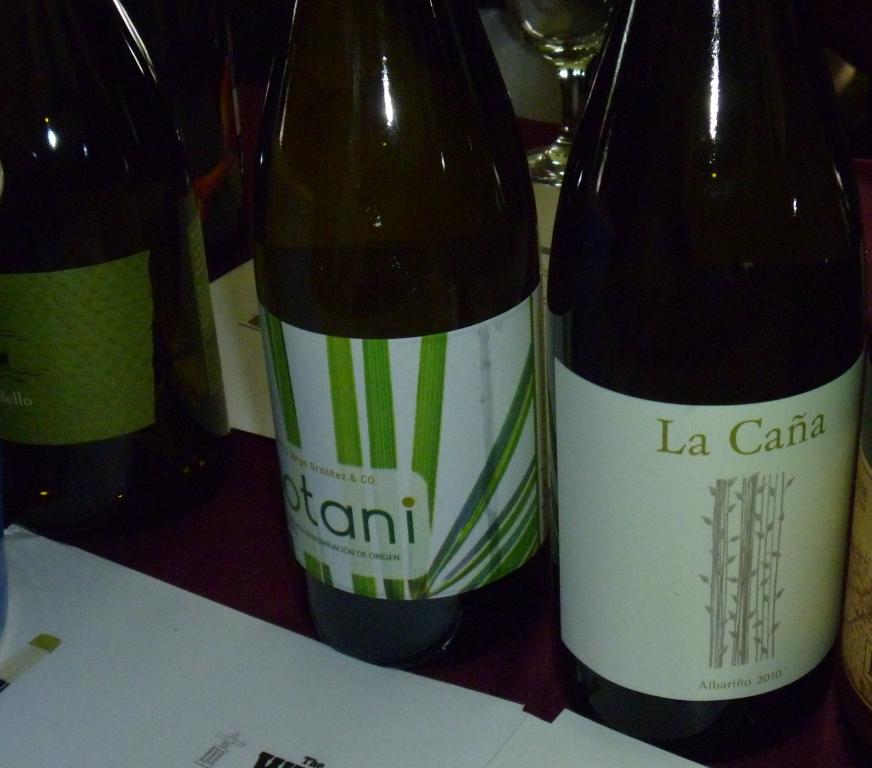
Both were beautifully refreshing, with floral notes on the nose, with La Cana having a bit more of acidity and mineral expression – both wines should be perfect on any summer day.
Coming to reds, the task of sharing my impressions becomes even more challenging – there were A LOT of great ( did I say “great”?) wines from Spain, California and France, so I will have to resolve to more of the pictures than words.
I want to start from the wines of Charles Mara. As some of you might remember, 2007 Mara Pinot Noir Laughlin Road Ranch was my most favorite wine last year (#1 in the Top Dozen). Now, I had an opportunity to try 2008 Mara Pinot Noir Laughlin Road Ranch Russian River Valley. What a radical departure! If I would be given those wines in the blind tasting, I would never even guess that those wines are coming from the same vineyard, left alone made by the same person. While 2007 was California Pinot at its best, 2008 is a pure Burgundy – dry, austere and in need of time – it probably needs another 5 years to open up.
Another very interesting wine was 2008 Mara Russian River Valley Zinfandel “old vines”:

As Charles Mara said himself, he was trying to make a “super-Tuscan” of Zinfandels, by blending zinfandel grape with Cabernet Sauvignon grapes from two different vineyards. I think he successfully accomplished that, ending up with powerful, dense red wine, showing beautiful fruit with a great restraint. This wine also need at least another 5 years to showcase fully.
Spanish reds selection at the tasting was so strong that it is nearly impossible to decide what wines should be mentioned and which were my favorites – El Nido, Alto Moncayo, Muga, Sierra Cantabria, Tesso La Monja – all powerful, beautiful wines, all age-worthy, delivering pleasure right now and for the next 30-40 years (or longer). I guess I would have to put a stick in the ground and say that 2007 Bodegas El Nido El Nido was my favorite Spanish wine in the tasting ( with the second thought in my head – well, yeah, and what about … ) – powerful, with amazing structure, firm tannins, good fruit, very balanced – “wow” was my single word descriptor.

By the way, standing next to El Nido are two Spanish wines, 2009 Blau and 2009 Can Blau – both were outstanding, fresh, with lots of sour cherries on the palate – and quite affordable for every day enjoyment.
There are few more reds I want to tell you about. First, it is Chateau Leoville Poyferre from Saint Julien. I already wrote about great experience with 2005 Chateau Leoville Poyferre Grand Cru Classe wine (here is the link to the post). This time I was able to try first, second and third labels of Chateau Leoville Poyferre – 2006 Chateau Leoville Poyferre Saint Julien Grand Cru Classe, 2006 Pavillion de Poyferre Saint Julien and 2008 Chateau Gulliver Bordeaux AOC.
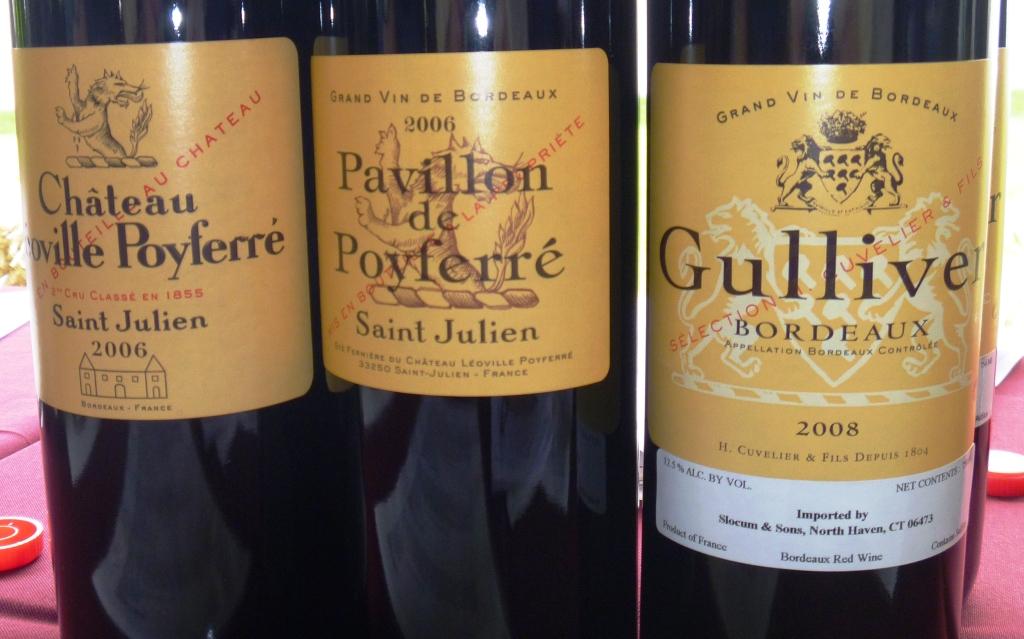
Chateau Gulliver was the lightest from the group, showing lots of earthy notes on the palate, and both Chateau Leoville Poyferre and Pavillion de Poyferre were big, powerful and well structured wines, with chewy tannins and lots of dark fruit, very balanced.
There was another set of wines which belong to the same group (owned by Chateau Leoville Poyferre), but coming from across the ocean – from Argentina, to be precise. These are the wines from Cuvelier Los Andes – take a look at the similarities in the label design:

Two out of four wines presented in the tasting were my favorite – 2009 Cuvelier Los Andes Cuvee Maule, soft and round, and 2007 Cuvelier Los Andes Grand Vin, a Malbec blend, big and powerful.
Last but not least was a group of wines from Ferraton, coming from Northern France – 2006 Ferraton St. Joseph La Source, 2007 Ferraton Cote Rotie L’Eglantine and 2006 Ferraton Hermitage Les Miaux:
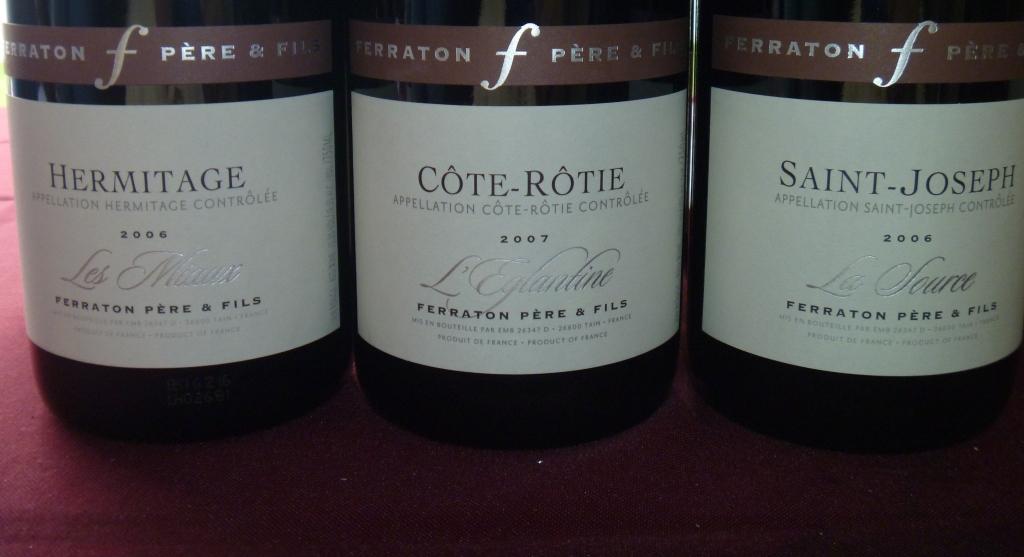
Both St. Joseph and Hermitage were classic Syrah wines, earthy, spicy, with the hint of white pepper and good amount of dark fruit. But my absolute favorite was Cote Rotie. First, I have to admit that it was my first ever taste of Cote Rotie. Actually Cote Rotie meaning in English is “roasted slope”, due to the amount of sunlight and positioning of the vineyards. You could actually taste all those roasted rocks in this wine, creating unforgettable impression. Needless to say this was my absolute favorite in the tasting.
I think it is time to finish – there were still more wines I wanted to share with you, but I think this is enough for now. More great stories is coming, but for now – cheers!
Wine Experiences, From Canadian Riesling to Cult Californian and Beyond
 Delaying, delaying, delaying. I have so many experiences and moments to share – and literally, the whole of September had been a dread. This September will have the least number of posts since I started to regularly write this blog. Oh well. It’s been a busy month, at work and outside, so hopefully October will be more fruitful in terms of wine (and life) writing.
Let me just sum up some of my recent experiences. One of the very first things I want to mention is a substantial advance in the “grape count” – adding 11 new grapes (reaching a total of 351) – well, yes, some of them clones. The Clonal Project Riesling from Cattail Creek winery in Canada brings in 4 different Riesling clones. It was also possible to taste those clones individually, but at about $100 for the set, it was an expensive proposition. However, this Clonal Riesling, a blend of four clones was outright delicious, with a great harmony of fruit, earthiness and acidity – it was a great wine. Here is the list of all the new grapes:
Riesling Clone 239, Riesling Clone 49, Riesling Clone 21 Young Vines, Riesling Clone 21 Old Vines – 2009 Riesling Clonal Blend, VQA Four Mile Creek, Canada
Zibibbo – Donnafugata Ben Rye, Passito di Pantelleria DOC
Pignolo – 2007 Bastianich Callabrone Rosso, Friuli DOC
Schioppettino – 2007 Bastianich Callabrone Rosso, Friuli DOC
Vranac – Rubin Vranac, Serbia
Mavrotragano – 2006 Atlantis Red, Santorini, Greece
Carignan Blanc – 2009 Pico’VDP de l’Herault Blanc
Trepat Blanc – 2007 Blanc de Montsalvat, Priorat DOC
Have to honestly tell you that all these wines were very good, each having it’s own personality and very pleasant to drink. I’m also very glad to add Pignolo and Schioppettino grapes, as those two are part of the main table in the Wine Century club application – may be one day it will be complete!
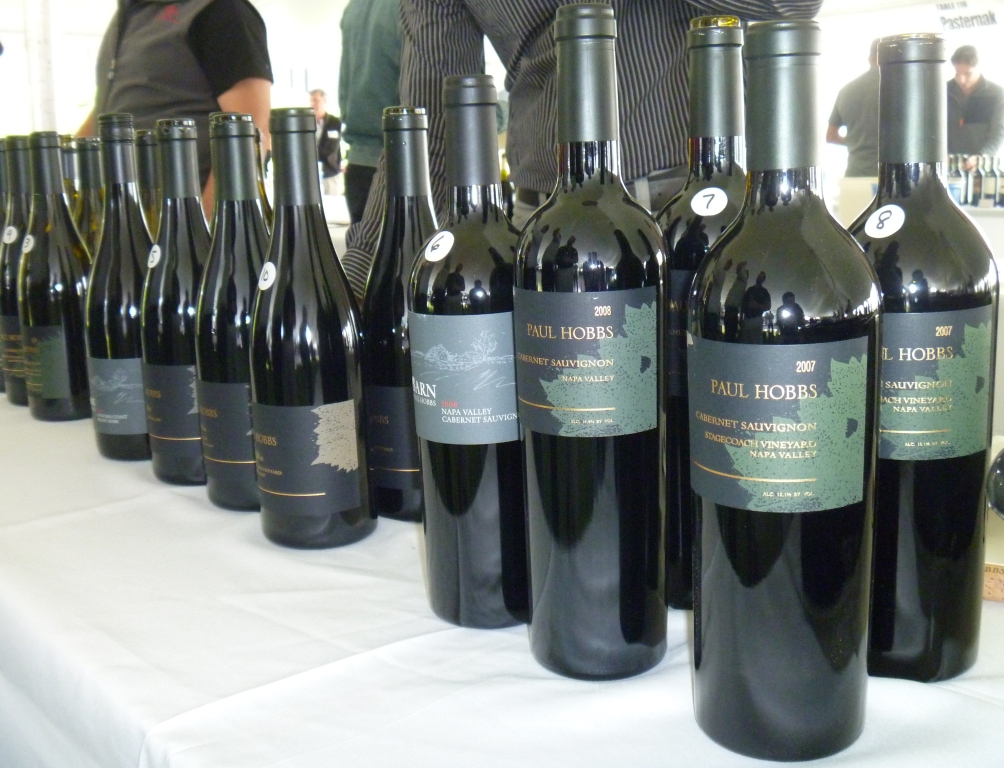
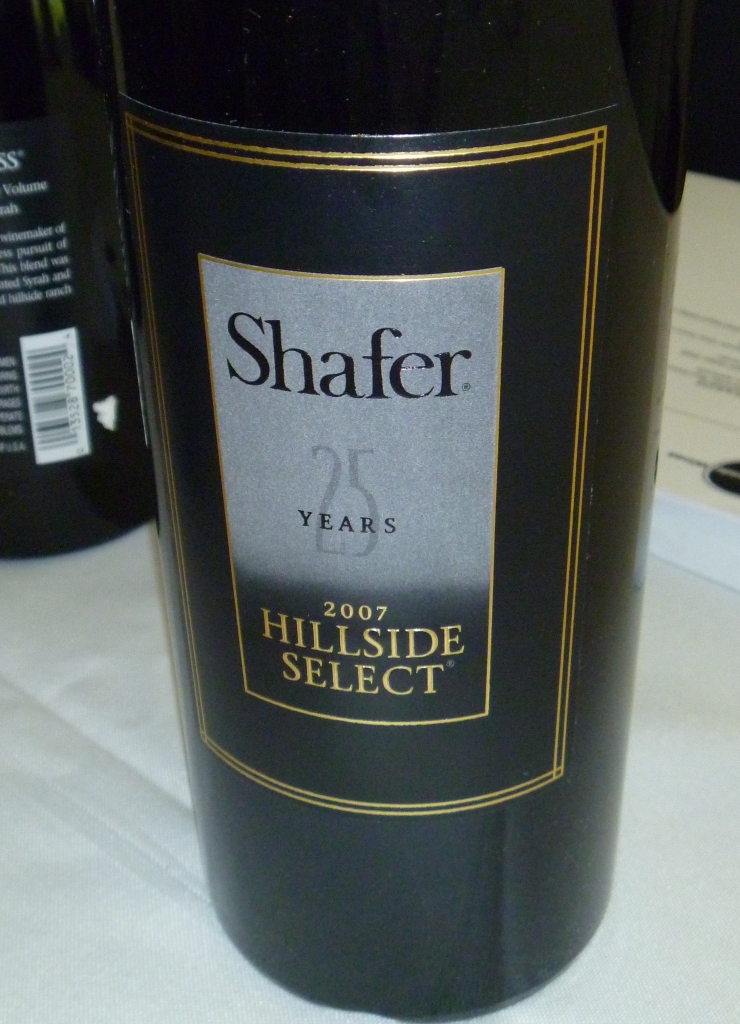
During September I was lucky enough to attend two trade wine tastings. One word to describe the experience is – “overwhelming”. I can’t do a fair representation of all the great wines we tried – Paul Hobbs, Shafer Hillside, Honig, Evening Land, Bussia Barolo, Archery Summit, Blankiet Estate, Palmaz, … – the list can go on and on (just to give you an idea, there were about 1400 wines in the first tasting, and about 700 wines in the second – of course nobody tried all those wines, but you understand the size). Here are some of the highlights, in pictures:
Paul Hobbs wines:
Evening Land Pinot Noirs from Oregon – amazing:

Shafer Hillside:
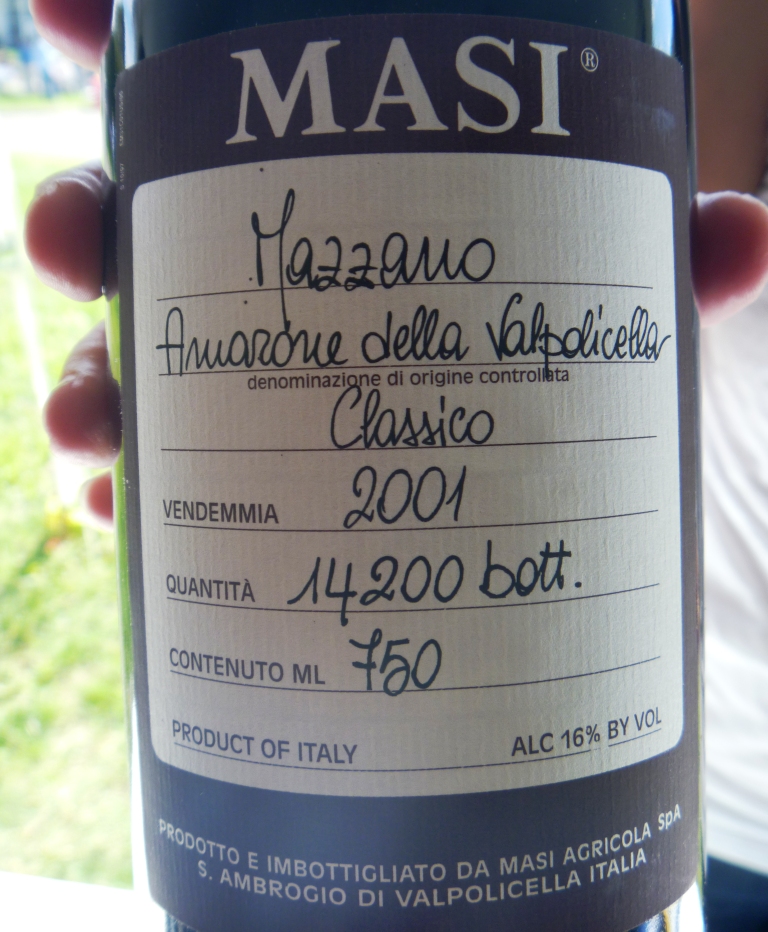
2001 Masi Mazzano Amarone – this is what Amarone should taste like – absolutely amazing, my personal favorite in tasting:
To complete the updates, I started new series of blog posts at The Art Of Life Magazine – the series dedicated to spirits, and first two posts in the series are talking about Brandy and Scotch.
That’s all for now, folks. Have to go – talk to you later. Cheers!
Celebrate Two Noble Grapes in One Day – What Are You Drinking Tonight? #CabernetDay and #TempranilloDay
I’m honestly puzzled, but somehow September 1st had being declared an international #CabernetDay and #TempranilloDay – it feels like there are not enough days in the calendar to properly celebrate all the grapes? Anyway, it is what it is, right? And the celebration is on, which means … oh boy… you have a reason to have a glass (or two or …) of wine tonight!
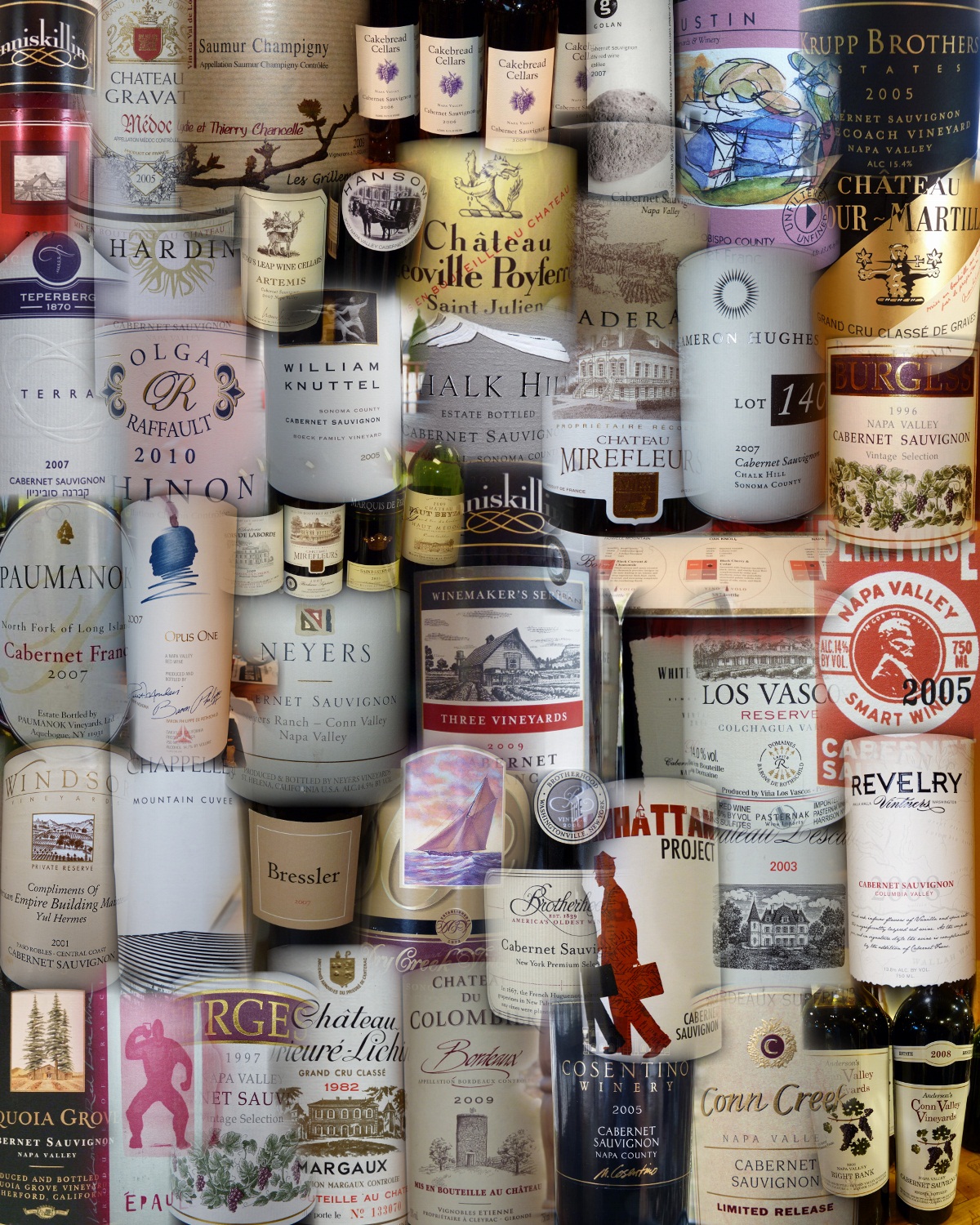
To celebrate Cabernet Day, all you need to do is to open a bottle of your favorite (or better yet, the one you never had) Cabernet Sauvignon or Cabernet Franc wine (and of course Cabernet blend will do quite well too), and then tell the world how great it was (if you will only tell your neighbor, that will also count). With abundance of choices from Bordeaux, California, New York, Washington, Australia, Canada, Italy, Argentina, Chile, Spain, Israel and pretty much everywhere else, you will have no problems finding a good bottle of Cabernet to enjoy. And instead of giving you any particular recommendations, I would like to simply reflect on some of the past experiences:
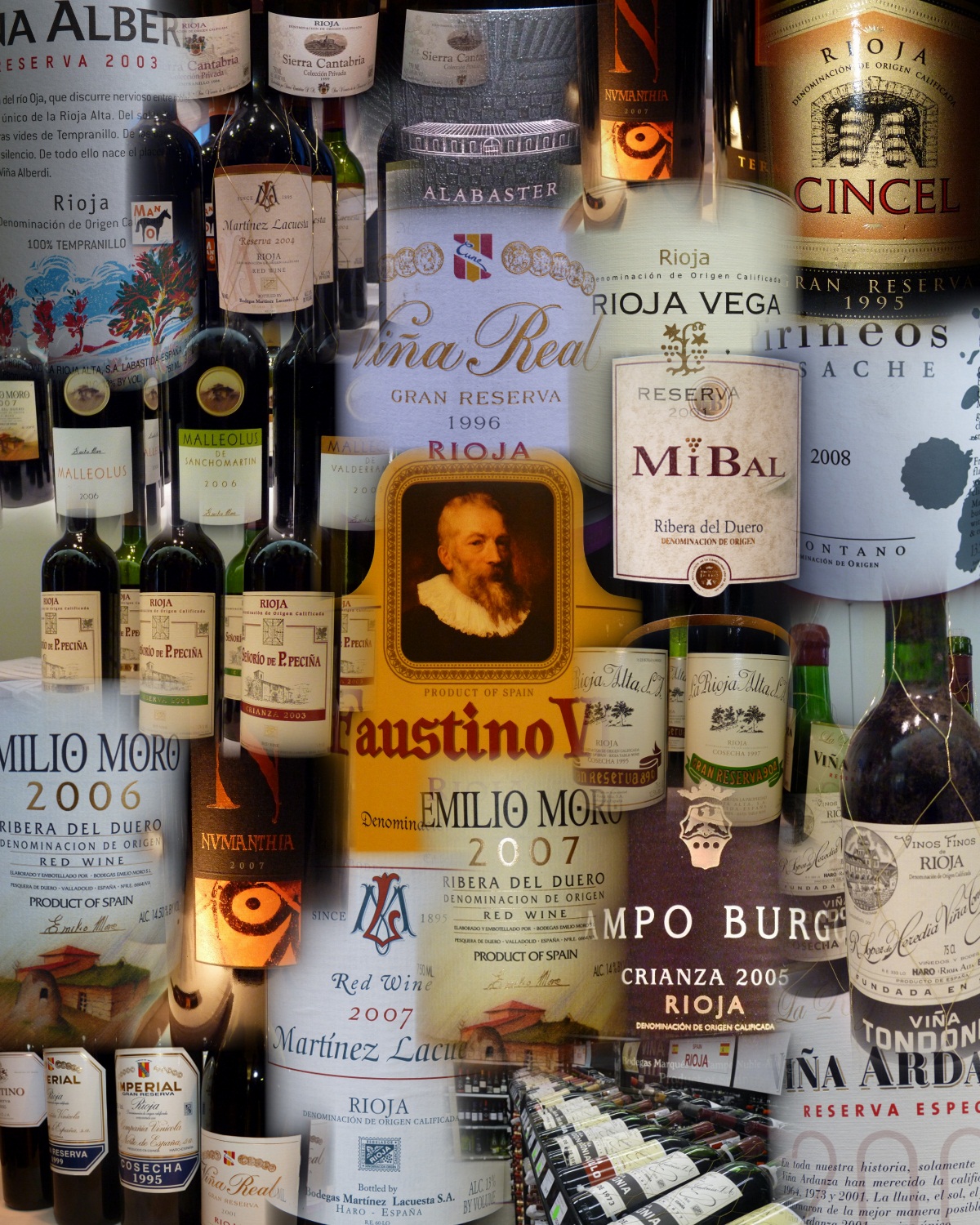
Next, we definitely should acknowledge Tempranillo, a noble grape of Spain. While this grape is slowly trickling into other winemaking regions, it is a true star in Spain, where it shines in Rioja and Ribero del Duero regions, making some of the most beautiful (and age-worthy) wines in the world. You can also find it producing good results in Portugal, however, under the names of Aragonez and Tinta Roriz. Again, no particular recommendations as to what wine to open, just some reflections here for you:
Whatever bottle you will end up opening, the routine is not new – all you need to do is to enjoy it. And if you will be kind enough to leave a comment here, I will be glad to enjoy it together with you. Cheers!
Food Network, Coming To The Bottle Near You
 Yesterday I found out that Food Network is not about only food anymore. Of course wine always was present in various Food Network shows, but only as a cooking ingredient. Now Food Network teamed up with Wente Vineyards to make your in-home entertainment easier by bringing you food friendly wines, which will also fit any budget (all wines are priced at $10.99 at Cost Less Wines and Liquors).
I’m ashamed to admit that I never heard about Wente Vineyards before, and it appears that they are the oldest continuously operated family-owned winery ( they’ve in business for more than 128 years) located close to San Francisco in Livermore Valley. It is interesting to note that Wente Vineyards has Certified Sustainable designation, which means that that they are using sustainable methods to produce their wines ( which is good for us, consumers).
So far there are 4 different wines in the Entwine series, two whites and two reds – Pinot Grigio, Chardonnay, Merlot and Cabernet Sauvignon.

The idea behind the Entwines is simple – food and wine are meant to be consumed together, and Food Network wants to help you to make the pairing effortless and enjoyable. On the Entwines dedicated web site you can find  recipes and food/wine pairing suggestions. Useful pairing information is also available on the back label of each and every bottle.
So what about wines themselves? I had an opportunity to try all four wines yesterday. They are all nice, easy to drink and should pair well with food – but may be they are too easy to drink for my taste. When I drink wine, I’m looking for the experience, and one of main questions which I’m trying to answer for myself is whether or not I would want to experience that wine again. While it might be interesting to try the Entwines with food, these are not the wines I would have a desire to experience again. At the same time, if you need to entertain a group of people, these wines will do just fine, exactly because of their simplicity (don’t forget also that they are inexpensive). In terms of Drinkability, I would rate them all at 7-, except Chardonnay which had more substance to it, so I will give it a 7.
You should try it for yourself – I’m sure these wines will be widely available. As for the Food Network and wines, I think they can kick it up a notch, by introducing a Wine Program. And guess what – I would be delighted to host it. Yep. We can all dream – let’s drink to that. Cheers!
Overcoming Writer’s Block (Actually, a Daily Glass Post)
 Over the course of last week, I found it almost impossible to write even a line in the blog. There is plenty of stuff to write about – Spanish Wine Festival, Bordeaux Vertical Tasting, many great wine encounters – and, nevertheless, not a line. Like someone turned the switch off. Until today, when I happened to share my frustration with my 12-year old son. He asked how my writing was going, and explained that it is not going well, as I can’t produce anything. Ah, writer’s block, he said, nodding understandingly. That’s it. As it often happens in my beloved Fantasy books, once you know the True Name of something or someone, you can control it. Here as well, once I managed to name my inability to write as a “writer’s block”, situation magically became controllable, and here I’m am – or to be more correct, here is the post, which I wanted to write before I will get to the couple of big subjects.
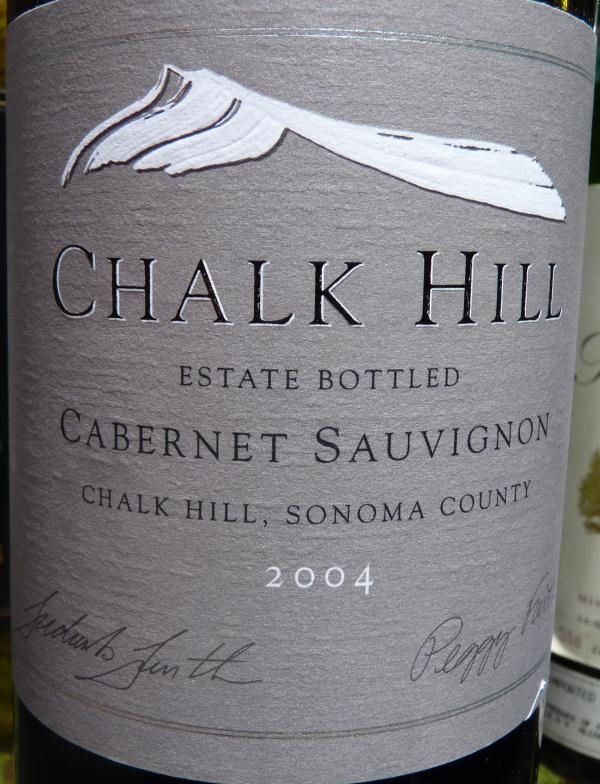
I wanted to talk about life lessons and tasting of the 2004 Chalk Hill Estate Bottled Cabernet Sauvignon, coming from very respectful producer in Sonoma County, Chalk Hill. Why life lessons, you ask? Very simple. I pride myself with being a semi-pro when it comes to wine. One of the important traits of such a self-image (in my opinion, of course), should be an ability to take the wines objectively – even if I don’t like the wine, I expect myself to be able to declare that while the wine is not in my style, it is still a good/well made wine.
First sip of this 2004 Cabernet – and I don’t follow that “objective” rule even for a split second – I declare wine as not my style at all and also simply as not being a goods wine. Reason for such declaration? The first sensation I got on the palate was “burnt fruit” – this is not necessarily a standard term, but I use it to describe an over-ripe fruit flavor, which used to be very common in inexpensive Australian Shiraz. Therefore, after the first sip, I declare that I can’t drink this wine at all.
Now, talk about luck – I was actually lucky that the wine, which was opened during a dinner with friends, was not finished completely. Subsequently, I had an opportunity to finish this wine two days after the bottle was opened (bottle was preserved with vacuum pump). As you can see, the word “opportunity” was used to describe the experience, so I guess you can sense some change. Yes, magical transformation took place over those two days. The wine became incredibly elegant, with silky smooth tannins and very gentle, yet powerful mouth-feel. Classic Cabernet fruit flavors, such as black currant and blackberries were present, together with hint of eucalyptus and cedar, in perfect harmony with acidity and tannins. This was truly a magnificent wine, and I was simply upset with my inability to recognize great wine from the get go. Drinkability: 9
Oh well, I learned my lesson, and I also learned to control writers’ block (hope both statements are true). And I will have to prove that I did by not repeating these mistakes again. Of course you will here about it – through this exact blog. Until the next time – cheers!
Tasting Wines of Anderson’s Conn Valley
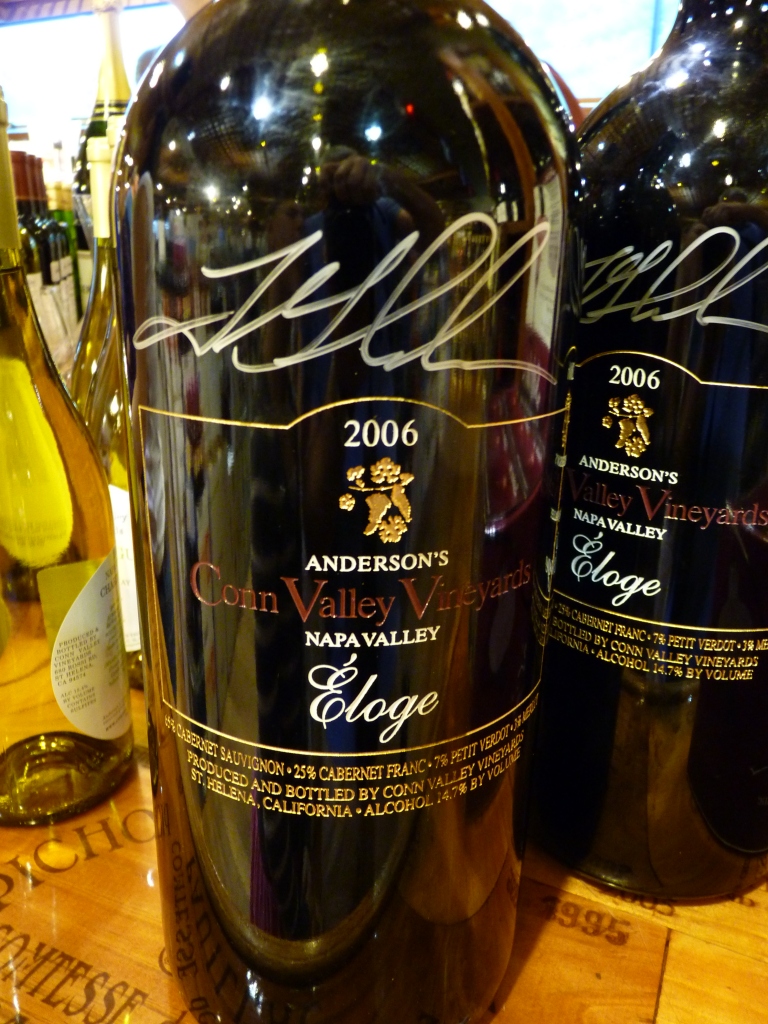 Once again Stew Leonard’s Wines brought up a excellent opportunity to experience wines (you can find some of the old posts about wine tasting at Stew Leonard’s Wines here). This time, the tasting included wines from Anderson’s Conn Valley Vineyards in Napa Valley, California.
Four different wines were presented in the tasting: 2009 Anderson’s Conn Valley Prologue Chardonnay, 2008 Anderson’s Conn Valley Prologue Cabernet Sauvignon, 2008 Anderson’s Conn Valley Right Bank and 2008 Anderson’s Conn Valley Cabernet Sauvignon Reserve. There was also wine #5 there, 2006 Anderson’s Conn Valley Eloge, but only available for sale, not for tasting (in large, 3L bottle format, at $599 each).
2009 Anderson’s Conn Valley Prologue Chardonnay had a very nice nose of white fruit, very delicate and inviting. On the palate, it was also nice and light, but too sweet – the elegance was lost behind that unexpected sweetness. Don’t get me wrong – this was still a nice wine, and it was, of course, a dry wine – but it was asking for more acidity. And for my personal taste I like more tannins and butter. Drinkability: 7+
Next was 2008 Anderson’s Conn Valley Prologue Cabernet Sauvignon. As winemaker Todd Anderson, who was present at the tasting, said, “this wine for made for the price point”. The price point ( in that particular store) was $23.99, which would make it a reasonably priced Cabernet Sauvignon. The wine was oaky, with some fruit showing up in the background. It will probably improve over the next 4-5 years. Drinkability: 7
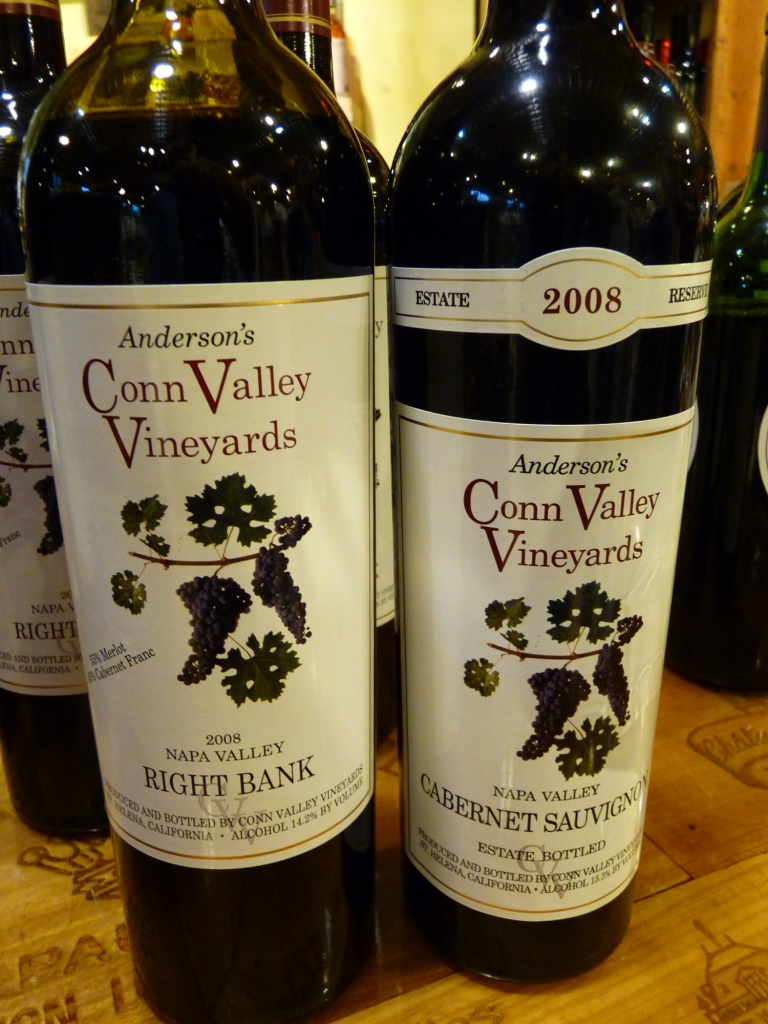 Next in the tasting was 2008 Anderson’s Conn Valley Right Bank red, which is a Bordeaux style blend ( Merlot/Cabernet Franc). This wine actually was quite enjoyable, with good structure and good balance of fruit, acidity and tannins, nice, very delicate earthy notes of the good Bordeaux, and with medium finish. This wine was best in tasting. It will also improve with ageing, probably over the next 10 years or more. Drinkability: 8-
Lat wine in the tasting was 2008 Anderson’s Conn Valley Cabernet Sauvignon Reserve, 100% Cabernet Sauvignon grape. This wine had a great nose of black currant and blackberries, and very delicate balance on the palate. At the same time, it was lacking the body and was falling short on the finish. It is quite possible that this wine will improve with age, or may be even with the breathing time, but as it was presented in the tasting, it was lacking the “umph” factor. Drinkability: 7+
Overall, it was great to be able to try good California wines, and if you are not following Stew Leonard’s Wines on Facebook, click here to open their page and become fun – this way you will not miss any opportunities to try some good wines. Until the next time – Cheers!
Last Bottle Sign Up ($10 credit)




 Talk-A-Vino