Archive
Daily Glass: Experiencing Trader Joe’s Wines
When it comes to Trader Joe’s stores,  I’m a big fun – I think that everything sold there has good quality and fairly priced (in our wine terms, has good QPR).
I also heard that some of the Trader Joe’s stores also sell wine. Living in Connecticut, the most you can find in supermarket or a food store is beer (wine is sold only at the liquor stores). While visiting friends in Brookline in Massachusetts, I suddenly realized that Trader Joe’s is literally across the street from their house – and it might be selling wine!
Guess what? Yep, it does. The store itself was bigger than any Trader Joe’s I’ve being to before, but besides that, wine section was – Wow! Looking at the prices – double wow! Lots of wines at $4.99 ( outside of Trader Joe’s line called Charles Shaw, which is priced at $2.99), and overall, very substantial selection. Yes, I had before wines which were good and very inexpensive (same price range), but in general it is hit and miss.
Next I saw… 2 different Amarone at $16.99 and $18.99, a Barbaresco at $12.99 and Barolo for $16.99. Yes, you got it right – I got all of those except Barolo, and of course, tasting notes will be coming.
Let’s start from the basics – let me share my thoughts on Charles Shaw wines. First I tried 2010 Charles Shaw Cabernet Sauvignon. It was quite drinkable, however resembling more Beaujolais Nouveau, with its fresh fruit grapey taste. It was easy to drink, lighter bodied wine. Interestingly enough, on the second day this wine became very sweet and went beyond my style of enjoyment. Was it a great wine? No. Was it a good wine which you can drink occasionally – yes. Was it a great wine considering QPR, with the price of $2.99? Absolutely. Drinkability: 6+.
The next day I opened a bottle of 2009 Charles Shaw Chardonnay. The wine was very nice, had good amount of white fruit, some tropical fruit – but not overly fruity, with good acidity in the back. This was a good Chardonnay, with or without QPR. On the next day, wine developed some kind of chemical aftertaste, which disappeared as wine warmed up a bit, but overall it lost some of the brightness which was well exhibited on the first day.Drinkability: 7-.
To give you a bottom line, I think both wines were quite drinkable, and Chardonnay was more or less varietally correct (Cabernet was not so much). Would I want to drink these wines every day – not really, but occasionally – no problems at all. Do these wines have great QPR? You bet. Should you try one – absolutely. This is your call for action for tonight – find a Trader Joe’s store which sells wine, get a few different bottles of Charles Shaw wines, try them and report back here. Meanwhile, I’m all ready for my Amarone, so I need to go now. Cheers!
Daily Glass: Margaux Experience
 Few days ago we had a magnificent experience with two great Bordeaux wines from Margaux Appellation (I love my friends!). Margaux appellation is located on the left side of Gironde river in Medoc, and it is a home to so called First Growth, Chateau Margaux, and it also has the biggest number of classified second and third growth out of all other appellations in Bordeaux. Cabernet Sauvignon, Merlot, Cabernet Franc and Petit Verdot are the main grapes used in the wine production.
Two wines we had with the dinner were 1998 Chateau Palmer (classified third growth) and 2001 Chateau Lascombes (classified second growth). We decanted both wines for about an hour, just to get them to open up. Chateau Palmer showed lots of white truffles on the nose from the get go, and those white truffles stayed with the wine until the last drop. Chateau Lascombes started very tight, and opened up little by little to show some black truffles on the nose.
I can’t help but to mention that Chateau Palmer has a great web site, where you can find information about wines from the past vintages going back to 1959. The 1998 Chateau Palmer we were drinking was composed of 52% Merlot, 43% Cabernet Sauvignon and 5% Petit Verdot. If you like wines with the little age on them, this wine was just amazing. White truffles on the nose, white truffles on the palate. Round and polished, with great structure and tannins which are not firm already, but have enough grip if you swish the wine around in the mouth for a few moments. Good acidity, overall very balanced. One word description – delicious. Drinkability: 9-.
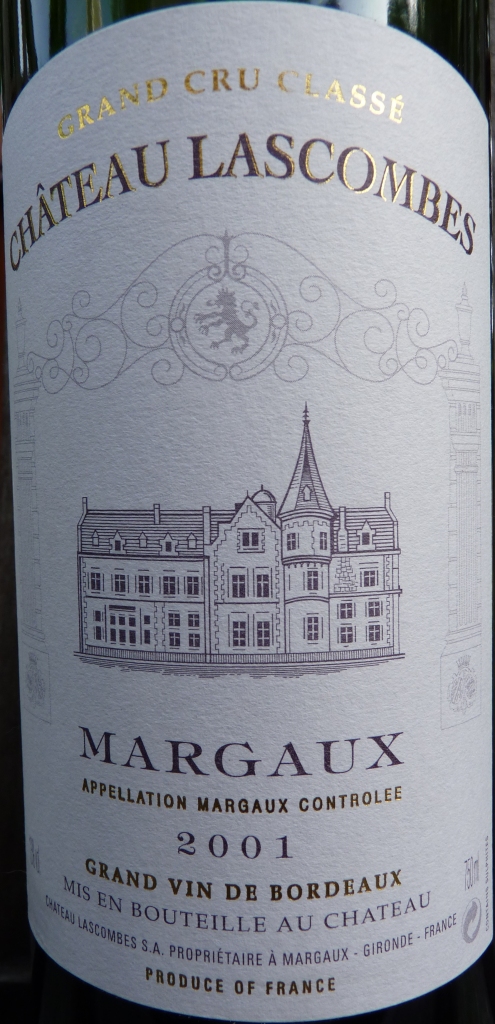 Chateau Lascombes was three years younger, but of course that age difference has little meaning when it comes to wines which can last for 50 years or longer – growing conditions would have much bigger effect. 1998 had nice and dry summer, and 2001 had very hot summer and rainfall right before the harvest time (here is the link to the wine information on the Chateau Lascombes web site). This is all interesting, right? Well, okay – not that we could taste it in the wine. 2001 Chateau Lascombes was big and powerful. Hint of black truffles lasted for a while after the wine was open, but it was not present on the palate. The wine was very structured, still with the firm tannins and lots of dark fruit on the palate, very balanced. Drinkability: 8.
This was definitely a great experience with magnificent wines (I can’t thank Emil enough!). I don’t know how I would do in a blind tasting, but it was very interesting to find great similarities in the wines made in a close geographic proximity and technically having very similar terroir. White truffles or black, but the wines were similar on the nose, which I find fascinating – it was the first time I tasted wines of such level effectively back to back, so it was a great learning moment.
That’s all for now, folks. I wish you great wine discoveries – cheers!
Daily Glass: Domaine Breton Bourgueil, A Vinous Vino
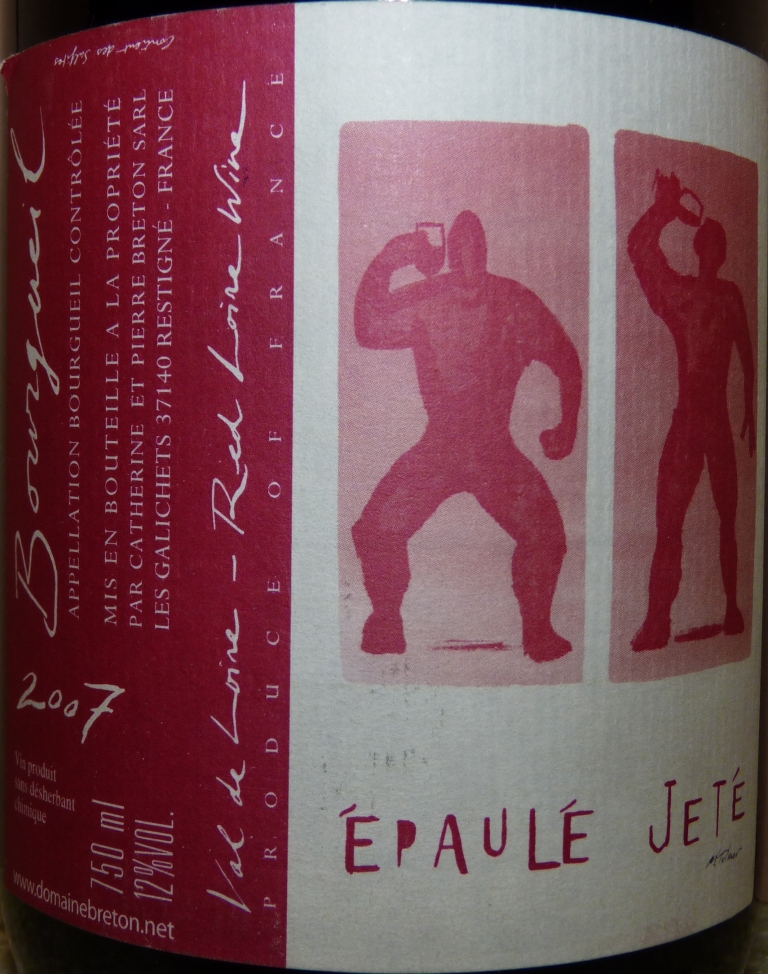 Do you know how old tavern smells? The one were thousands of wine bottles were opened, and wooden tables soaked up all the spills and drops of the wine during many tens or may be even hundreds of years? I don’t know about you, but for me this smell means “hello, vino was here!”. This is what you get when you pour this 2007 Epaule Jete Catherine and Pierre Breton Bourguiel in the glass. You get the most vinous nose you can imagine – not a hint of sweetness, not a hint of berries – only a noble smell of the ageless wine with the whiff of acidity. On the palate you get earthiness, minerality and more acidity, all delicately balanced by the early sour cherry kind of fruit.
Once I tasted this wine, one of the first thoughts was – it reminds me of a recent experience. It was so light and transparent (noted after tasting: 12% alcohol) that it brought back memories of the natural and biodynamic wine tasting at the PJ Wine (here is the link to that post). Similar to the wines in that tasting, this Cabernet Franc wine also let the Terroir to shine through, unadulterated. After checking the web site for Domain Breton – voila, it appears that this wine is also natural, organic and biodynamic!
All in all this was a great experience – I’m not sure it will be easy to repeat, as it was the only bottle I had (I got it in Lavinia wine store in Geneva). Oh well – this wine is worth seeking and experiencing, so talk to your favorite wine store guy – I will certainly talk to mine. Cheers!
Daily Glass: 2009 Irony Pinot Noir
 I guess partially encouraged by all the #pinotsmackdown conversations on Twitter, I decided to open Pinot Noir tonight. The bottle I opened was 2009 Irony Pinot Noir, Russian River Valley.
My luck with California Pinot Noir varies widely (I think I can count more misses than hits, I just typically don’t write about those). To my delight, this wine was a hit. After a few moments of breathing, it came out very smooth and mellow, with beautiful smoky nose (one of my favorite properties of a good Pinot). Balanced fruit on the palate, lots of strawberries, some violets, good acidity and soft tannins. Very long finish. I will put Drinkability at 8-.
Next week, on September 1st, we will be celebrating Cabernet Day (#CabernetDay, for more information and rules of participation you can click here) – make sure to celebrate with all the wine lovers by opening that special bottle you’ve being saving for so long. Also, considering that there are more than 600 grapes used in winemaking, and only 365 days in a year, I’m sure we can make every day a special grape day. Cheers!
Overcoming Writer’s Block (Actually, a Daily Glass Post)
 Over the course of last week, I found it almost impossible to write even a line in the blog. There is plenty of stuff to write about – Spanish Wine Festival, Bordeaux Vertical Tasting, many great wine encounters – and, nevertheless, not a line. Like someone turned the switch off. Until today, when I happened to share my frustration with my 12-year old son. He asked how my writing was going, and explained that it is not going well, as I can’t produce anything. Ah, writer’s block, he said, nodding understandingly. That’s it. As it often happens in my beloved Fantasy books, once you know the True Name of something or someone, you can control it. Here as well, once I managed to name my inability to write as a “writer’s block”, situation magically became controllable, and here I’m am – or to be more correct, here is the post, which I wanted to write before I will get to the couple of big subjects.
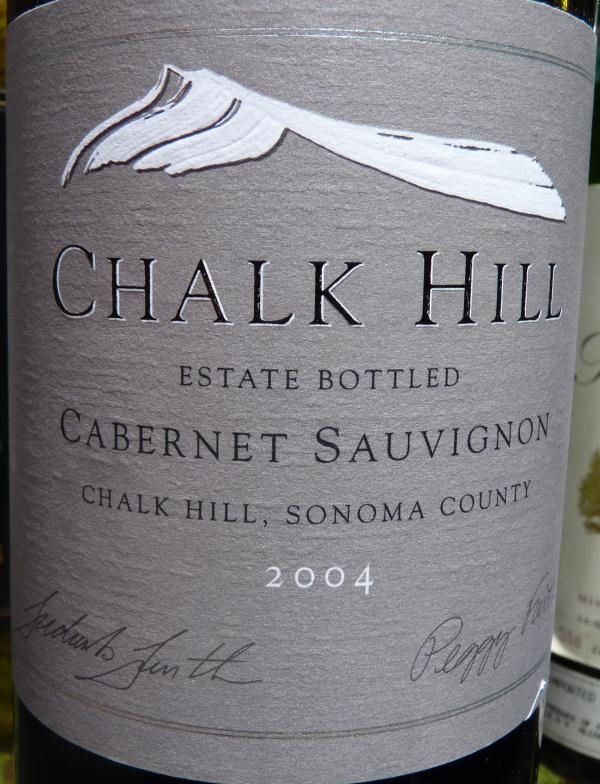
I wanted to talk about life lessons and tasting of the 2004 Chalk Hill Estate Bottled Cabernet Sauvignon, coming from very respectful producer in Sonoma County, Chalk Hill. Why life lessons, you ask? Very simple. I pride myself with being a semi-pro when it comes to wine. One of the important traits of such a self-image (in my opinion, of course), should be an ability to take the wines objectively – even if I don’t like the wine, I expect myself to be able to declare that while the wine is not in my style, it is still a good/well made wine.
First sip of this 2004 Cabernet – and I don’t follow that “objective” rule even for a split second – I declare wine as not my style at all and also simply as not being a goods wine. Reason for such declaration? The first sensation I got on the palate was “burnt fruit” – this is not necessarily a standard term, but I use it to describe an over-ripe fruit flavor, which used to be very common in inexpensive Australian Shiraz. Therefore, after the first sip, I declare that I can’t drink this wine at all.
Now, talk about luck – I was actually lucky that the wine, which was opened during a dinner with friends, was not finished completely. Subsequently, I had an opportunity to finish this wine two days after the bottle was opened (bottle was preserved with vacuum pump). As you can see, the word “opportunity” was used to describe the experience, so I guess you can sense some change. Yes, magical transformation took place over those two days. The wine became incredibly elegant, with silky smooth tannins and very gentle, yet powerful mouth-feel. Classic Cabernet fruit flavors, such as black currant and blackberries were present, together with hint of eucalyptus and cedar, in perfect harmony with acidity and tannins. This was truly a magnificent wine, and I was simply upset with my inability to recognize great wine from the get go. Drinkability: 9
Oh well, I learned my lesson, and I also learned to control writers’ block (hope both statements are true). And I will have to prove that I did by not repeating these mistakes again. Of course you will here about it – through this exact blog. Until the next time – cheers!
[Unanticipated] Burgundy Pleasure and Other Grape Encounters
 Looking through the cellar, many bottles have their stories, memories associated with them: “Ahh, I remember I brought this bottle from Italy. And it was raining like crazy when we stopped by that small wine shop in Paris, where this bottle is from. And this one – it was our vacation in Florida (coconut wine, anyone?). Aha, this one I got as a present for my birthday… And those five? I hope they will be as good as the first one was three years ago…”.
Then you stumble upon a bottle on which you go totally blank: “No, I don’t recognize the producer or the winery. Did I bring it from somewhere? Probably not. Where could I buy it? I think I got it as a present?”. Good thing in such a case is the fact that most likely you will have no expectations, so you will take this wine for what it is.
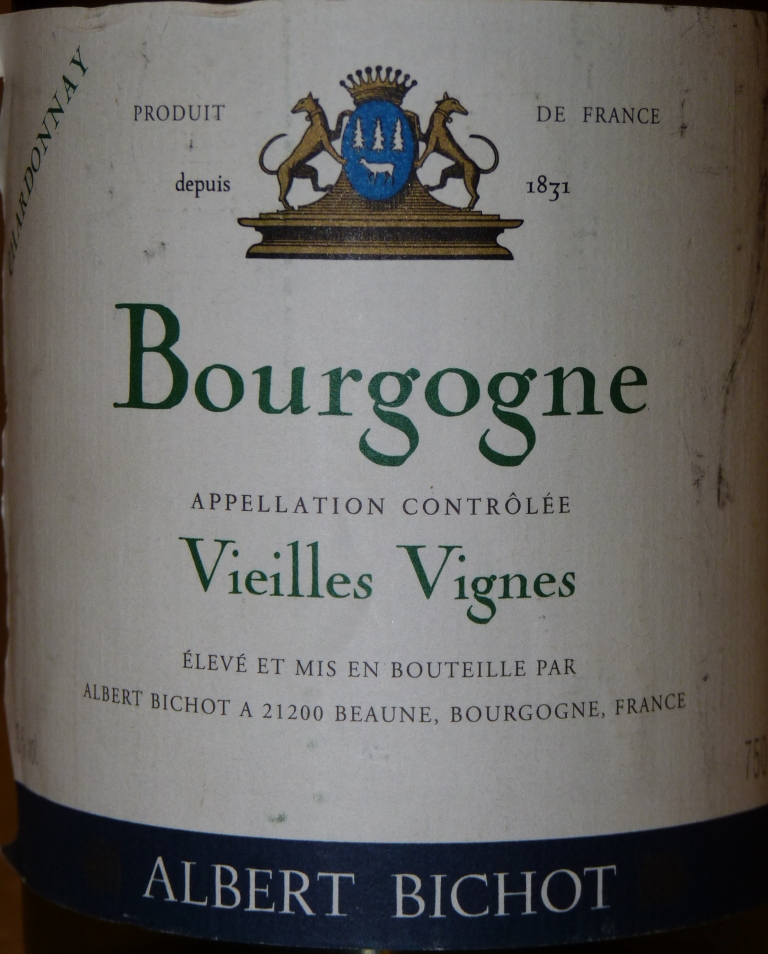
This was exactly my experience with 2004 Albert Bichot Vieilles Vignes Bourgogne – I had the bottle for a while, but how did it end up in my wine fridge, I had (and still have) no idea. Considering the wine was 7 years old, and from unknown ( for me) producer, it could’ve been already gone in terms of quality and pleasure, so the decision was made – the time has come to open the bottle.
This 2004 white Burgundy (100% Chardonnay, of course) happened to be in a perfect shape! Vanilla and touch of spices on the nose, hint of vanilla and lichee fruit on the palate, good acidity – very round and perfectly balanced (Drinkability: 8). Turns out it was a good choice – and having no expectations made it even better experience.
As I mentioned “other grape encounters”, let’s move from France to Italy. I recently had a chance to experience some of my most favorite wines – Amarone. You can read about it in details here – this is my post at The Art of Life Magazine. While the Amarone from Vaona was excellent, I’m still trying to find Amarone which will deliver the same mind-blowing experience I had with 1997 Le Ragose Amarone at the Windows on the World Wine School (read The Art of Life post for the full story) – of course full report is guaranteed if I will be able to find that wine.
And another “grape encounter”, this time moving across the globe east and south, we are getting from Italy to Georgia (and I’m not talking about one of the 50 US States). Few days ago, I was lucky enough to attend Georgian Wine tasting, which I can summarize in one short word: “WOW!”. Extensive report is coming in one of the near future posts, but for now I would like to mention great progress with unique grape count – it increased by 7! In case you are curios, here is the list of grapes and wines:
Chinuri – 2009 Pheasant’s Tears Chinuri Qvevry
Tetra – Alazanis Valley White
Goruli – 2009 Chateau Mukhrani Goruli Mtsvane
Pink Rkatsiteli – 2010 Alaverdi Monasteri Rkatsiteli Qvevry Rose
Kavkveri – 2010 Pheasant’s Tears Kavkveri Qvevry
Tavkvery – 2010 Pheasant’s Tears Tavkvery Qvevry
Shavkapito – 2009 Chateau Mukhrani Shavkapito
Total grape count now reached 324, and counting. Happy grape discoveries to everyone! Cheers!
Daily Glass: Pinot Noir… for $6?
 Few days ago, I was caught by surprise with the question: “We like Pinot Noir, would like to ask for your recommendation, and we need to find a bottle…” – as you can imagine, at this point I’m ready for action – of course, Pinot Noir, I can recommend many great wines – but then I heard the end of the question: “for 6 dollars”, and I immediately went into “oops” mode. Yes, I can recommend Pinot Noir, but not for $6! Closest I tried was something generic from Burgundy for $12, and it was unpalatable enough so I had a tough fight with myself to use it even for cooking. I know some good Chilean Pinot Noir, but even that would cost $15. Yes, I know good wines which would cost $6 – but those would be mostly Portuguese.
Well, when in trouble, ask for advice, right? This is exactly what I did – I stopped by my friend Zak at Cost Less Wines and Liquors in Stamford, and thought that I would puzzle him with the same question – I need a bottle of Pinot Noir for $6. Luckily, Zak didn’t hesitate much: here it is, $5.99, and it is quite drinkable, was his advice. I was still a bit suspicious, as it is a French wine, and as I already mentioned, I did have a bad experience with inexpensive Pinot Noir. But at such a price point, you wouldn’t argue too much, right? So I grabbed the bottle and decided to give it my best try.
I’m glad I did! This 2009 Maison Nicolas Pinot Noir Reserve was actually very nice, simple and round, with good dark fruit on the palate, medium body and pleasant finish (Drinkability: 7). No, it didn’t have silky smooth seductive charm of Charles Mara Pinot Noir, or the smokiness and finesse of Russell Hamilton Pinot Noir – but it was a Pinot Noir with all the characteristic cherries and violets which can be picked up on the palate. By the way, can you guess where this wine was made? Yes, of course it is France, but where in France? Nope, it is not Burgundy – this wine comes from the region without limits – if you said Languedoc, you are correct, this wine has designation of Vin De Pays D’Oc. Also I want to mention that this wine comes from Maison Nicolas which delivers wines from many different regions in France, a lot of them quite inexpensive.
The moral of this story is very simple – don’t be deterred by the low price of the wine, and ask for the advice – there is a good chance you will be happy in the end.
Great [Accidental] Experience: Chateau Leoville Poyferre
 I recently mentioned that I started to write a series of posts for The Art Of Life Magazine. Currently, the series is covering Best Hidden Secrets of the Wine World, and last post was dedicated to the second labels. As the whole notion of the second labels was originated in France, of course my intent was to talk about one of the “second label” wines from Bordeaux.
I decided to go with Chateau Leoville Las Cases Clos Du Marquis, which is a second label of Chateau Leoville Las Cases Grand Vin de Leoville. 2005 was available ( and it was a great year), and I ordered (online) the Clos du Marquis for about $50 – of course I would be glad to go with second label of Chateau Latour, but that would ring about $500, which was definitely not budgeted for this exercise.
So I got the wine, it was the right year, and it was Chateau Leoville, so I tasted it for the post. Then I started working on the post, and of course I wanted to mention both first and the second label. This time I used the full name of the wine, Chateau Leoville Poyferre, and when I failed to find it as a second label, I finally understood that something is off! Well, it was a rare case of “off” to my benefit. Actually Chateau Leoville Poyferre which I got instead of Clos De Marquis is a first label (second label for this wine is called Château Moulin Riche), never mind the fact that it costs twice as much as Clos De Marquis was. I ended up getting another, real second label wine for The Art Of life Post, as talking about this wine would not help the goal of the article (La Croix de Beaucaillou was also not bad, as you can read for yourself in that post).
As everything in life has two sides, tasting this wine was also good and bad. The good part was in the fact that this wine, 2005 Chateau Leoville Poyferre from Saint Julien in Medoc, was outstanding. To describe it in the few words, it is muscles and power in a perfect balance. Perfect balance of dark fruit, spices, eucalyptus, tannins and acidity, however all in need of time. This wine needs another 10-12 years to really shine. Don’t get me wrong – it is perfectly enjoyable now – but it begs you to give it time to evolve. I would put drinkability to 9.
Where is the bad part, you ask? The bad part is that at $100 a bottle, it was truly an accidental experience – this is outside of my wine budget, so I will have to hope for another lucky mistake (yeah, fat chance). Oh well, I’m glad I had this experience and I was able to share it with you. Until the next time – cheers!
Pleasant Surprises: Petit Verdot From Spain?!
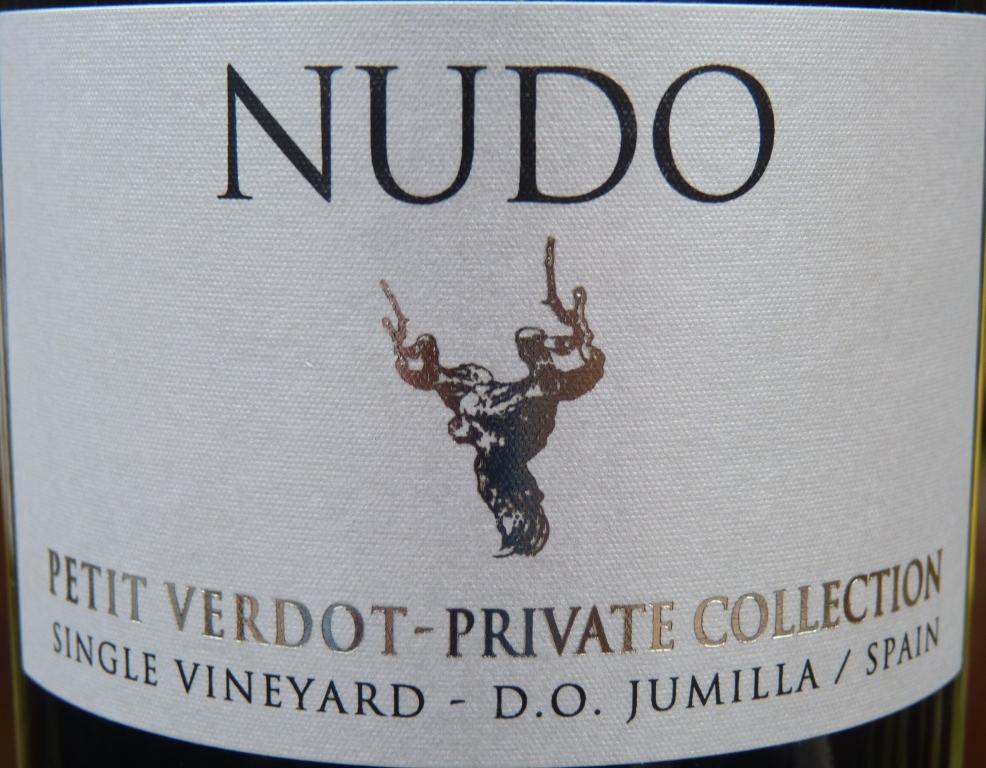 You might be as surprised as I was, walking into my local wine store (Cost Less Wines and Liquors, of course) an finding Petit Verdot from Jumilla region in Spain! Let me explain the “surprise” element. Petit Verdot is very rarely used as a single grape to produce a wine. To be more precise, it is primarily is blending grape, used in Bordeaux wines to fortify the structure. It is typically added in the 10% or less quantities. I have to note that in the past 5-10 years, the grape became more popular for single grape bottling, especially in the New World, places like Australia, Chile and United States. Actually, Petit Verdot from Jamesport vineyard on Long Island I tried last year was amazing ( you can read the post here), but it was equally priced at $100 per bottle. But again, this is new world, and Spain is really not in the New World when it comes to wine (fine, may be it is, depending on the region – but this should be a subject for another post).
T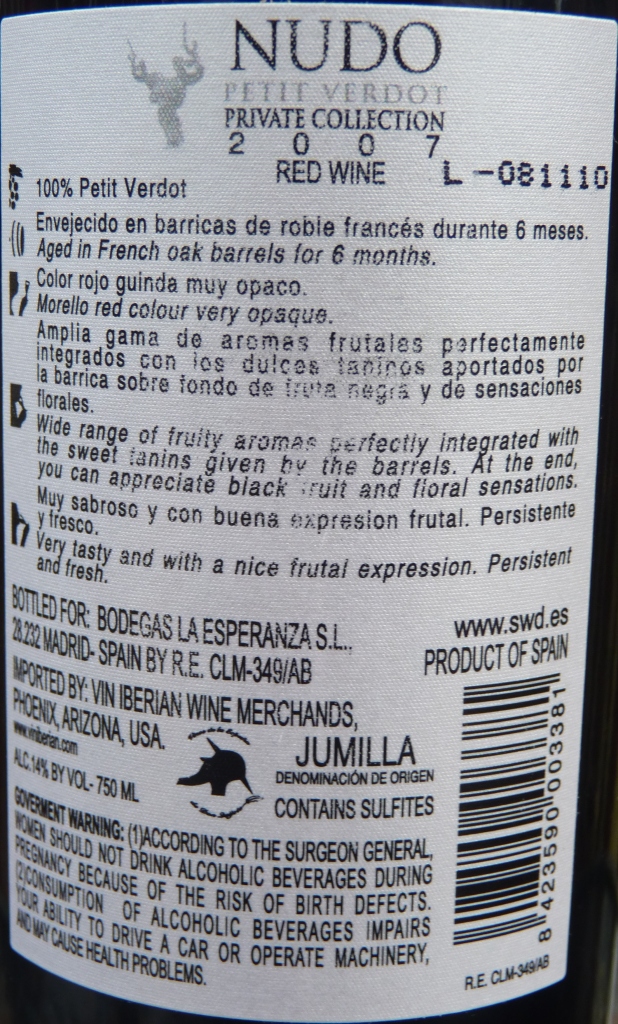 hen comes another part of the surprise – Petit Verdot is really not a typical grape for Jumilla region. Typically, wines from Jumilla are made out of grape called Monastrell. A lot of Monastrell wines ( inexpensive, needless to say) have a grapey taste to them and many of them don’t belong to the group of “my favorites”. Of course, there are wines like El Nido by Bodegas El Nido (blend of Cabernet Sauvignon and Mourvedre, 97 rating by Robert Parker), which are totally different, but even those are rare for the area. Still, 100% Petit Verdot?
Please meet 2007 Nudo, Single Vineyard Petit Verdot from Jumilla DO, Spain. It is 100% Petit Verdot, aged for 6 month in French oak. Very balanced, beautiful fruit expression complemented by the notes of tobacco and hint of leather. It is not as concentrated as that Jamesport Petit Verdot was, but still very nice and pleasant wine to drink. At $12.99 – it is your great winning every day wine, hands down. Drinkability: 8-
Pleasant surprises are the best – as the wine world delivers better and better wines, be on a lookout for more great unusual wines from unusual places. Cheers!
Value Wines Project: Finishing On The High Note
 Value Wines – it was a fun project. Of course the subject of value wines is endless – there are many blogs fully dedicated to the value wines. However, for me it was a project – here is group of wines, all wines are under $12, let’s see how this group will fare.
I believe the results of this project are in line with the general notion of great improvement in the quality of wines across all regions in the world (I’m sure you read about it in many places). Only one wine out of 15 was really not drinkable, couple of wines were at the border of decency, but majority was quite drinkable with few wines being simply excellent (don’t forget – we are talking about value wines under $12, not first growth Bordeaux).
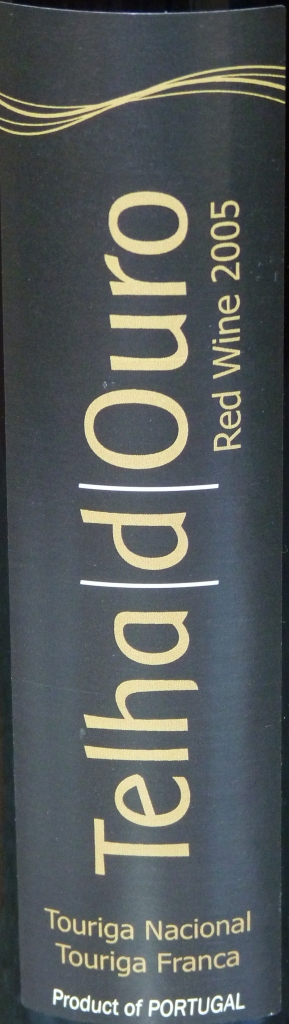
I’m glad to say that the last wine I tried in the project was one of those excellent wines. 2005 Telha d’Ouro Vinho Regional Estremadura ($6.99), blend of two Portuguese noble grapes – 50% Touriga Nacional and 50% Touriga Franca. The wine exhibited blackberries and soft plum on the nose. More ripe plums on the palate together with tobacco and hint of pepper. Tannins were hiding at the beginning ( wine had to breathe for about 30 minutes), then opened very powerfully (may be even over-powering). Presence of good 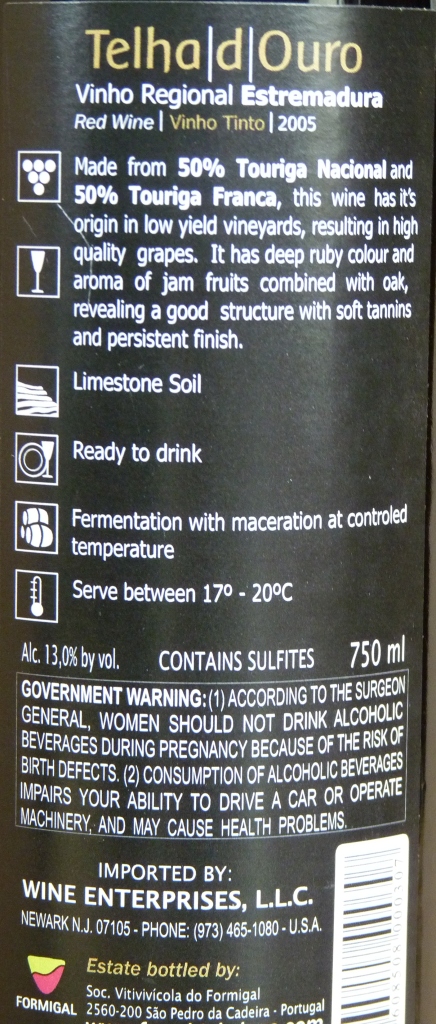 acidity makes this wine nicely balanced. It also shows long finish. All in all, excellent wine and deserves drinkability rating of 8.
I also want to mention that I really love back labels on the Portuguese wines. A lot of wines sold in us have a government warning on the back label, plus sometimes a note explaining how much love went into that particular bottle of wine. Sometimes you can find useful information, but this rather an exception than a norm. When it comes to Portuguese wines, they practically always have a great back label which provides a lot of useful and interesting information, such as grape composition, type of soil, how the wine was fermented, suggested serving temperature and so on ( you can see for yourself). Don’t know about you, but this is type of information I’m typically interested in.
That’s all for this project. I will be glad to see your comments regarding your own value wine experiences, and I wish you all lots of good wine discoveries. Cheers!
Last Bottle Sign Up ($10 credit)




 Talk-A-Vino