Archive
Expanding My Wine Map of Argentina
Let’s start with the question: name winemaking region in Argentina, other than Mendoza. You have 5 seconds. Fine, take 10. Your time is up! Hmmm, no answer, huh?
May be I couldn’t hear and you said “Uco Valley”? That would be a good answer, though Uco Valley is a high altitude sub-appellation in Mendoza. But don’t feel bad; as a bare minimum, it makes two of us – Mendoza was the only appellation I knew in Argentina until a few weeks ago.
 Then I was offered to try a few Argentinian wines from the appellation I never heard of – Salta, located all the way up in the northwest. In addition to unknown appellation, the wines were coming from the high altitude vineyards – not just high, but the highest in the world. I’m always interested to learn about the effect of extreme conditions on the grapes and wines. Poor soils and lack of water make vines to work hard, which is then manifested in flavor. High altitude usually means a large difference in day and night temperatures, which makes grapes to concentrate flavors. So yes – new region and high altitude vineyards – I’m definitely game.
The wines I got to try were produced by two wineries, both part of Hess Family Wine Estates collection. Wine production at Bodegas Colomé dates all the way back to 1831, when the winery was built high in the Andes Mountains. The pre-phylloxera Malbec and Cabernet Sauvignon vinies were brought in directly from Bordeux in 1854, and they still produce fruit today, which is used for the Reserva wines. Today, Bodegas Colomé sustainably farms highest elevation vineyards in the world, including Altura Máxima, located at the 3,100 meters (about 10,170 feet) above sea level (mind boggling, if you ask me).
The second winery, Amalaya, is much, much younger – it was founded in 2010 as a project by Bodegas Colomé, with the idea to grow more than just signature Malbec and Torrontés, but the other old world varietals as well (like Cabernet Franc, for instance). It was built high up in the desert, where nothing was growing before. I like this quote from the winery web site, I think it explains well the philosophy behind it and explains the colorful labels: “Amalaya means «Hope for a Miracle» in native language. the miracle is revealed from the heart of the Cafayate desert in a mystical and magic way, in order to provide us vines with excellent quality. The holistic circle embodies the fertility of the «pachamama» or «mother earth».”
I had an opportunity to try Malbec and Torrontés wines produced by Amalaya and Bodegas Colomé – below you will find my tasting notes:


2015 Amalaya Malbec Salta Argentina (13.9% ABV, $16, 85% Malbec, 10% Tannat, 5% Syrah, 5,900 feet above sea level)
C: Dark garnet, practically black
N: black truffles, ripe plums, touch of cinnamon, licorice, warm, inviting
P: lighter than expected, medium body, a bit of back burn on the palate, under extracted?, unbalanced. After 2 days, the wine leveled out and became more balanced, with dark core.
V: 7- initially, 2 days after opening – 7, wine improved.
2015 Amalaya Torrontés/Riesling Salta Argentina (13% ABV, SRP: $12, 85% Torrontés, 15% Riesling, 5,500 feet above sea level)
C: light straw pale, just a touch darker than water
N: exuberant, intense, lots of ripe tropical fruit, guava, mango
P: crisp, clean, good acidity, good balance, grassy notes after warming up
V: 7+, very good, refreshing wine


2013 Colomé Estate Malbec Salta Argentina (14.9% ABV, SRP: $25, 100% Malbec, 4 high altitude vineyards from 5,600 to 10,100 feet)
C: dark Garnet, practically black
N: intense, ripe fruit, plums, cherries, touch of roasted meat
P: polished, silky smooth, fine grain tannins, dusty mouthfeel, tar, dark restrained fruit, needs time to open,
V: 8/8+, good aging potential
2015 Colomé Estate Torrontés Valle Calchaquí Salta Argentina (13.5% ABV, SRP: $15, 100% Torrontés, vineyards altitude from 5,600 to 10,100 feet)
C: straw pale
N: lightly perfumed, restrained, touch of tropical fruit, hint of lemon
P: continues to be restrained, elegant, fresh clean and balanced, touch of white fruit with good acidity, good structure
V: 8, elegant white wine, definitely a next level for Torrontés, great QPR
As you can tell from my notes, these were good wines. Would I claim that I clearly saw the effects of the high altitude? No, not at all. To make such an observation would probably require a tasting (blind) of seemingly similar wines, produced at the different altitudes – may be someone will come up with such a tasting, that would be cool. In any case, these were interesting wines and I’m glad I had an opportunity to try them. Have you had any of these wines? What are your thoughts? Cheers!
Celebrate Malbec!
This very blog exists for more than 6 years, so in my mind, I’m sure I’ve written about pretty much everything, especially when it comes to such a heart-warming subject as grape holidays.
Only it turns out I have not.
Sunday, April 17th is 6th (!) annual celebration of World Malbec Day. So how many times over those 6 special occasions I’ve written a post for the Malbec Day? Aha, you got that. Zero.
Well, this is incorrect. None for the previous five, but we are talking about Malbec today, so the problem is finally fixed.
Thinking about grapes with long and turbulent history, Malbec might be the most prolific example of such. Taking its roots in Middle Ages, being a choice wine of the kings, shining in Bordeaux and all over the France and then literally disappearing from the face of the earth, but luckily, finding its second, and very prosperous life in Argentina – not too many grapes can brag about such an adventurous life. By the way, if you are curious about the events I mentioned here, you can test your knowledge of Malbec with this quiz, or you can just jump straight to the answers.
Starting from the second half of 19th century, Malbec found its new home in Argentina. Consistently dry climate of Mendoza happened to be just what Malbec needed to strive. As there are two sides to everything, the ideal growing conditions lead to overproduction and subsequently dull wines. It was not until the 1980s that Malbec commanded proper attention for the quality instead of quantity, and slowly became one of the darlings of the wine world – depending on who you would talk to, Malbec is considered the hottest wine at the moment. Starting from the bottom of Andes in Mendoza, plantings of Malbec are now extending to the higher and higher elevations, offering new range of expression of already delicious wines.
Argentinian Malbec wines are easy to like for many palates – while appearing big and powerful in the glass with its inky, almost black color, Malbec wines are usually round, soft and mellow, avoiding spikes of tannins and acidity which often upset wine drinkers looking for relaxing glass of wine. Interestingly enough, Malbec from other regions, such as Cahors in south of France, shows totally differently and often offers very forceful personality, so if you are looking for that soft and mellow Malbec, you might want to ask for the Argentinian Malbec by name.
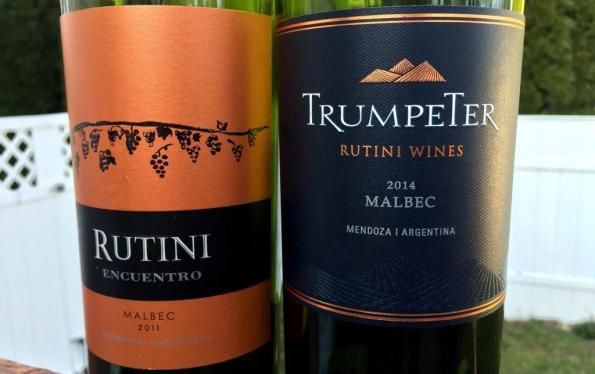
Today I want to bring to your attention two Malbec wines I had pleasure of tasting recently. It is not the first time I’m talking about Rutini wines from Argentina in this blog – here you can find my interview with Mariano Di Paola, winemaker at Rutini wines, as well as tasting notes for few other Rutini wines. Here are the notes for the two Malbec wines:
2014 Rutini Trumpeter Malbec Mendoza Argentina (14% ABV, SRP $11.99)
C: dark garnet
N: freshly crushed fruit, sage, savory notes
P: clean, earthy, tart cherries with hint of licorice, touch of sweet tobacco
V: 7+/8-, nice, refreshing, round, great QPR
2011 Rutini Encuentro Malbec Mendoza Argentina (13.5% ABV, SRP $18.99)
C: dark garnet, inky
N: roasted notes, tar, cherries, warm, inviting, touch of barnyard
P: soft, round, sweet berries, concentrated, good acidity, perfect balance. Became dark and concentrated on the day 2/3.
V: 8, very enjoyable, easy to drink; will evolve with time – you should forget few bottles in the cellar…
Here you are, my friends. Celebrate Malbec, this grape definitely worth your attention. Cheers!
From Marche to Mendoza, With Vine
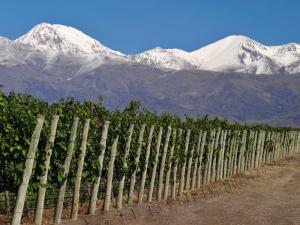
Rutini Vineyards. Source: Rutini Wines web site
In 1884, Felipe Rutini arrived to Mendoza area in Argentina. Continuing family traditions from the early 1800s when his father, Francisco Rutini, started making wine in the area known as Le Marche in Italy, he planted grapes and started making wine now in Argentina. Don Felipe, as he became later known at, was 19 years old when he founded La Rural winery in the district of Coquimbito. In 1925, Rutini family continued pioneering traditions of Don Felipe by planting first vines in the Tupungato area of the Uco Valley, a high altitude home to some of the very best vineyards in Argentina.
Today Rutini family is one of the biggest wine producers in Argentina, making about 9.5 million bottles of wine per year and exporting it to the 40 countries. You might be well familiar with the line of wines under a common name of Trumpeter, which include Chardonnay, Torrontes, Malbec, Cabernet Sauvignon, Pinot Noir and a number of others – Trumpeter is one of the 6 different ranges produced by Rutini Wines. Recently, Rutini Wines started introducing a new “Classic Series” line of wines in the United States, and I wanted to share my impressions from few of the wines in this line which I had an opportunity to taste.
But before we talk about the wines, let’s talk a bit more about Rutini family wine business today. Once again, I got together – well, yes, virtually, same as few times in the past – with Mariano Di Paola, head winemaker for Rutini Wines and one of the top winemakers in Argentina, and I had an opportunity to ask him a few questions. Here is what we talked about:
Q: Rutini family started making wines in Italy. Is there still a connection today at the Rutini Winery back to the traditions and customs of Region Marche?
A: No there are no direct links, but we still try to use the original Rutini winemaking influence today. Felipe Rutini was a visionary man who believed in Argentina’s winemaking capabilities, planting the first vines in Mendoza, and generations after we still work hard to maintain his legacy.
Q: If I understand correctly, Rutini is introducing its Classic Collection wines in the US. For how long had you been producing the Classic Collection wines? What were the main markets for it until now?
The Rutini collection was first released in Argentina with the 1996 Malbec, followed by Merlot and Gewürztraminer. It has been available in the U.S.: NY, TX, FL, MD, DC, MA, RI, and CA since the end of 2013.
Q: What are the oldest vines growing at Rutini vineyards?
A: Select Malbec vines in La Consulta date back over 100 years.
Q: What was the source of inspiration for the Rutini Sauvignon Blanc?
A: We wanted to create a well- balanced Sauvignon Blanc that spoke to the true characteristics of this varietal and represented the best quality of this wine.
Q: Sauvignon Blanc is really not the grape Argentina is known for. Do you think Argentinian Sauvignon Blanc has its own style and will become a wide movement?
A: Yes, Argentine Sauvignon Blanc has its own style which is heavily dictated by the particular growing region. Our continental climate, highly influenced by the Andes, and high altitude provide us with optimal grape growing conditions. Sunny day and dry summer conditions allow us to harvest fully ripened grapes. The cool evening temperatures and controlled irrigation serve to prolong hang time and to create a good balance between sugar and acidity. As there is more interest to try other Argentine varietals, there will be more Sauvignon Blanc production. Our Sauvignon Blanc style, of course, offers really good acidity, lemongrass aromas, floral aromas, but we also focus on producing a mineral style.
Q: Malbec is unquestionably a star red grape of Argentina. Is there a next great Argentinian Grape on the horizon, or is it going to be Malbec for a while?
A: We are always experimenting with different varietals, and while the native varietal Torrontes produces an exceptional and distinct white wine, Malbec will always shine when grown in this region, and it really speaks for the tradition and future of winemaking in Argentina.
Q: Do you use any of sustained, organic or biodynamic methods in production of your wines?
A: In our vineyards we do not practice organic or biodynamic methods, due to the health and hygiene of the plants themselves and the nobility of our soils, all of which , the use of pesticides that may eventually affect the vineyard is not necessary.
Q: It seems that most of the Rutini wines made from the grapes coming from the multiple vineyards. Do you have any plans to produce single vineyard or even single plot wines?
A: Yes, we do have plans to produce single-vineyard wines. At the moment wines are in the aging process and will launch in the market soon. ( Malbec and Cabernet Sauvignon ).
Q: Probably a very unexpected question 🙂 – I understand that Rutini wines are sold in China. How big and/or important that market for Rutini family wines? What wines sell best in China?
China is a very important market for Rutini. As of 2013, the U.S. and China represented 50% of our sales, with the Rutini collection being the most popular brand sold. Chinese consume mostly red wines /red blends and for Argentina, they prefer of course Malbec and Cabernet Sauvignon. Sparkling also sells well in this market.
So, what do you think? I think it was a very interesting conversation, albeit virtual. But now, I’m sure you are thirsty, so let’s have some wines. Here are my notes on the 3 Rutini wines form the Classic collection which I tasted:


2012 Rutini Wines Rutini Sauvignon Blanc Mendoza Argentina (12.5% ABV, $25, 3 months in oak, 50% new, 50% 2nd and 3rd use)
C: light golden
N: minerality, Chablis-like nose, very restrained
P: plump, creamy, delicious. I would never identify this as Sauvignon Blanc – Marsanne, Roussanne or Chardonnay come to mind. The wine was also not over-chilled, just chilled slightly. This wine is an enigma – coming straight from the fridge, it shows more of restrained sweetness, somewhat between New Zealand and California style
V: 8-, unique and interesting. The price looks somewhat high, but then this wine clearly aims at a nice Sancerre, so this provides a rationale behind it
2012 Rutini Wines Rutini Malbec Mendoza Argentina (14% ABV, $35, 12 months in oak, 80% new French oak, 20% new American oak)
C: dark garnet
N: licorice, a touch of tobacco, dark chocolate, blackberries, very inviting
P: fresh berries, touch dark chocolate, raspberries and blueberries, very smooth, medium body
V: 8-. I have to be very honest – this is not exactly my type of wine – however, there is a large category of wine drinkers who will be ecstatic about this wine because of its smoothness.
2012 Rutini Wines Rutini Cabernet Sauvignon Mendoza Argentina (14% ABV, $35, 14 months in oak, 50% new oak, 50% second use oak)
C: dark garnet
N: a touch of mint, fresh berries, black currant, a touch of barnyard, very interesting
P: surprisingly light and smooth, medium body (very unusual for the Cab), blackberries, vibrant acidity, good balance. Shows firmer structure after 10–15 minutes in the glass.
V: 8-, lighter style with lots of pleasure, this wine would definitely appeal to the people who prefer their reds to be not too heavy
Have you had any of the Rutini Wines, Classic Series, Trumpeter or any other? What are your thoughts?
I would like to thank kind folks at Gregory White PR for helping with the virtual interview and for providing the samples. Cheers!
Daily Glass: World Cup-Appropriate Wine
As I didn’t have time to look for the interesting news and articles for the traditional Meritage post, I will skip it and will give you the quiz answers next week. And for today, let’s just talk about an interesting wine find.
Literally days before the World Cup started (even if you are not following the World Cup 2014, I assume you are aware of the soccer’s (it is football for the world outside of the United States) main tournament, taking place in Brazil), I got an e-mail from the Last Bottles Wine, offering the wine with the picture of the soccer ball on the label.

How appropriate, I thought, I definitely should get this wine, especially considering the price of $18 per bottle – and so I did. Not only this wine has a picture of soccer ball on the label, it is also associated with one of the best known names in the soccer today – Leo Messi, the star of the Argentinian team and one of the very best players in the world.
Same as Leo Messi, the wine hails from Argentina, and yes, it is a Malbec (star player to star grape), and it is produced by the Casa Bianchi, an excellent Argentinian winery which makes a wide range of wines, from simple everyday wines to the ultra-premium, cellar-worthy bottles. The connection between the wine and Leo Messi? Simple. As the back label says, “collaborate with the Leo Messi Foundation in long lasting commitment to building projects focused in health-care and educational developments for children with social disadvantages”.
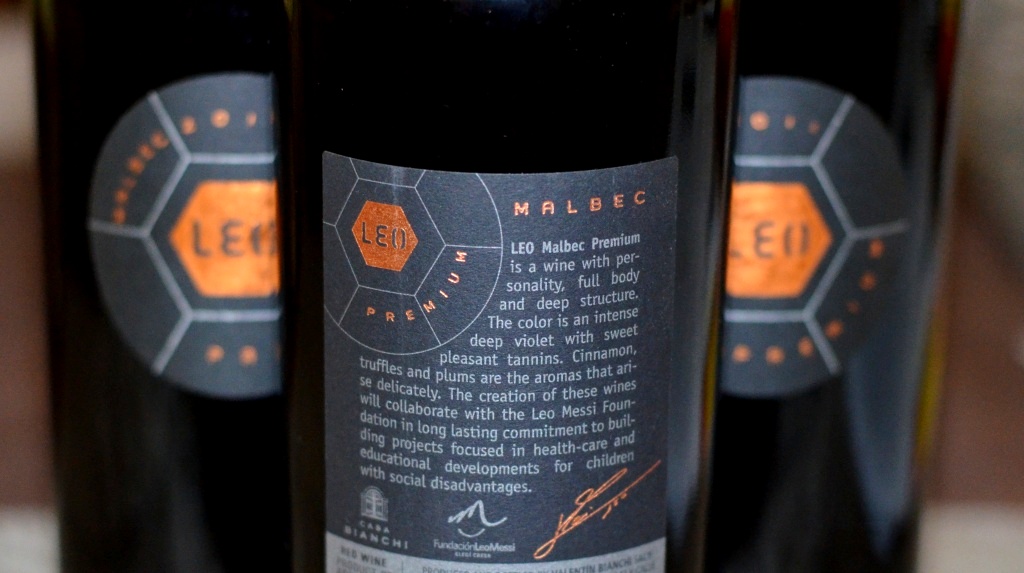
Let’s talk about the wine – 2011 Casa Bianchi Premium Leo Malbec, Mendoza, Argentina (15% ABV). It was definitely World Cup game -worthy. Dark garnet color in the glass. Beautiful nose of supple fruit, herbs and spices – a touch of eucalyptus, a bit of the dark chocolate – very promising. On the palate, the wine opened up very dense, balanced and smooth, then showing some spicy spikes as it was breathing in the glass. On the second day the wine showed more of that spicy nature, with some acidity and tannins not always dancing together. I believe it will come around in another 3-4 years, it is a bit too young at the moment to show its full potential. Drinkability: 8-
That’s all I have for you – go back to the game and wish Leo Messi all the luck – he and his team will need it. Cheers!
Wednesday’s Meritage – Wine Quiz Answer, Oh No, Don’t Lose The Bottle, Wine Prices, Reminders and more

Donna Paula Torrontés
Meritage time!
First, let’s start with the answer for the wine quiz #72, grape trivia – Torrontés.
In the quiz, you were supposed to answer 5 questions about white grape called Torrontés. Here are the questions, now with the answers:
Q1: Name three varietals of Torrontés growing in Argentina
A1: Torrontés Riojano, Torrontés Sanjuanino, and Torrontés Mendocino
Q2: Wine Spectator calls wines rated in 90-94 range Outstanding. True or False: there are no Torrontés wines with Outstanding rating?
A2: True. The highest rated Torrontés from Bodega Colomé has a rating of 88 points.
Q3: As established by DNA analysis, Torrontés is a cross of two grapes. One of them is Muscat of Alexandria. The second grape played an important role in the early days of winemaking in the United States. Do you know what grape it is?
A3: Mission. Torrontés is a cross of Muscat of Alexandria and Mission grape, which used to be widely planted in California in the 1800s.
Q4: Most of the Torrontés is growing in pretty unique conditions, for most of the plantings being at a high altitude. Name one problem which needs to be controlled for the production of the high quality wines.
A4: Overproduction. Torrontés enjoys almost ideal growing conditions, with dry mountain air, no diseases and plenty of water – but that doesn’t allow grapes to concentrate the flavor and produce high quality wines.
Q5: True or False: Torrontés produces both dry and dessert wines
A5: True. Santa Julia, Susana Balbo and number of others produce Late Harvest Torrontés wines.
Talking about the results, I was glad that there we people who said that they had Torrontés before and they like it. And of course there were those who said that they never had it before – I hope this quiz will make at least one person curious enough to go and find a bottle of Torrontés to try – this shouldn’t be difficult at all. We have only one person who attempted to answer the questions – while Linda from Foxress didn’t answer all the questions correctly, she definitely gets an honorable mention for attempting to solve the quiz.
Now, to the interesting stuff around the vine and the web!
Boy, there are lots of things to talk about. First, I came across an interesting article by Chris Kassel, who writes an outstanding blog called “Intoxicology Report” – if you enjoy the high level of language sophistication almost to the point of reading challenge (for me it is), read Chris’s blog, I promise you will not regret. In this article, Chris shared his view on the latest series of commercials themed “Lose the Bottle” and produced by Black Box Wines. I don’t want to take away from your pleasure of reading Chris’s hilarious comments, so I recommend you will read the article first, and then watch the commercials.
Next, Steve Heimoff ponders at the high prices of the brand new wines in their first release (here is the link to the blog post). Steve is talking about new Central Coast wine made by Raj Parr (famous sommelier at RN74 in San Francisco) and released at measly $90/bottle; he is trying to figure out the logic and reason behind such a high introductory price. My personal view on the price of wine is that any price is possible, but in the free market, you have to have enough people willing to pay the money, and if you do – good for you, and if you don’t – you are out. The post is definitely an interesting read, and make sure to read through the comments, some of them being quite interesting.
Another post from Steve Heimoff is an excellent set of instructions for the perfect day in Napa Valley. I like his take on the tasting at the most of Napa vineyards nowadays (“slurp 3 of something for $25”), so if you are planning a Napa getaway, make sure to read this post which will help to improve the experience.
Now, a friendly reminder: you need to possess your possessions – the Monthly Wine Writing Challenge #3 with the theme “Possession” is still on, with the deadline for submissions on September 23rd. Get possessed and write. All the rules and other important information can be found here.
Do you like Spanish wines? Do you live in New York City or in a close proximity of? Don’t miss Spanish Wine Festival 2013, taking place on October 4th at The Metropolitan Pavilion. This will be your great opportunity to experience Vega Sicilia, Emilio Moro, Clos Mogador, Clos Martinet, multiple Rioja verticals and many other outstanding wines. Click here for all the details.
And the last update for today. I changed my Top Wine Ratings page ( I mentioned it in the post yesterday), and I also added the menu links for my top dozen wines for 2010, 2011 and 2012 – for all of you who likes the lists, these are a few more to play with.
That’s all I have for you for today, folks. The glass is empty – but refill is on its way. Until the next time – cheers!
Weekly Wine Quiz #72: Grape Trivia – Torrontés

Torrontés grapes, as shown in Wikipedia
Welcome to the weekend and your new wine quiz!
We are continuing our grape trivia series, still focusing on the white grapes, and today’s subject is Torrontés.
How often do you drink Torrontés? Do you know at least what country it is coming from? Yes, I understand that my choice of the grape for today’s quiz might be questionable – Torrontés is not a mainstream grape by all means. But as we are continuing with the white grapes, and the last white grape we talked about was the spanish grape called Albariño, the choice of Torrontés as a subject for today’s quiz is almost automatic for me.
Torrontés has a relatively short history, first appearing under its name in the second half of the 19th century in Argentina. Originally it was thought that Torrontés came from Spain, where there is a grape with the same name, but it appears that the two have nothing in common. While Torrontés plantings only amount to the 10% of total grape plantings in Argentina, it yields about 20% of the total wine production. Torrontés today is mostly growing in Argentina with some small plantings appearing on the other side of the Andes, in Chile. Torrontés wines typically have very expressive aromatics, more of a floral nature, coupled with crisp acidity on the palate, which makes them a great accompaniment to the wide variety of dishes. Best Torrontés wines come from the regions of Salta and Cafayate, where grapes are growing at the altitude of 5,000 ft (~1700 m) above sea level.
And now, to the quiz!
Q1: Name three varietals of Torrontés growing in Argentina
Q2: Wine Spectator calls wines rated in 90-94 range Outstanding. True or False: there are no Torrontés wines with Outstanding rating?
Q3: As established by DNA analysis, Torrontés is a cross of two grapes. One of them is Muscat of Alexandria. The second grape played an important role in the early days of winemaking in the United States. Do you know what grape it is?
Q4: Most of the Torrontés is growing in pretty unique conditions, for most of the plantings being at a high altitude. Name one problem which needs to be controlled for the production of the high quality wines.
Q5: True or False: Torrontés produces both dry and dessert wines
Even if you don’t feel like answering the questions in the quiz, I’m curious to know if you had Torrontés wines, and if you did, what do you think of them.
Good luck, enjoy the quiz and your weekend! Cheers!
Last Bottle Sign Up ($10 credit)




 Talk-A-Vino