Archive
Fall Colors – Stamford, 2013
This fall was so dry and warm – you can’t even think of comparing it with the fury of 2012. It is only now, over the last couple of weeks, the colors became amazing ( and it is November!). Don’t know what is the reason, but prevailing colors this fall are yellow and gold. Of course we have our fair share of red, but gold is the theme.
You can consider this a sequel to the post I did last year – and for no other reason, but for your viewing enjoyment, here are the Fall colors of 2013 – just by walking around my neighborhood. Enjoy and cheers!


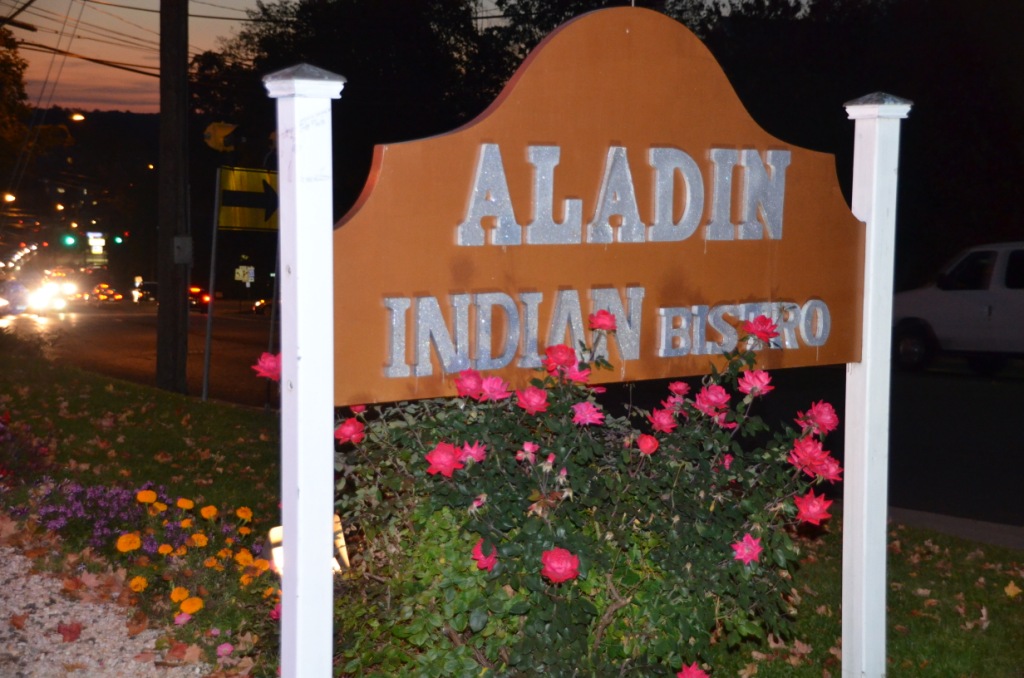
Indian Cuisine Deep Dive, At Aladin Indian Bistro in Norwalk, CT
 Do you know what is curry? Well, may be you do, but it appears that I didn’t. To be more precise, I thought I knew – and I didn’t. Anyway, the explanation is coming down below – keep reading and looking at the pictures.
Aladin Indian Bistro located at the busy intersection in Norwalk, CT, literally around the corner from one of the best food stores in the area, Stew Leonard’s. Despite the busy intersection part, there is plenty parking in the back, which definitely helps. I don’t know about you, but when I’m thinking about going to the restaurant, parking is probably one of my very first concerns – I need to know if I will be circling around the busy street for half an hour or not, so again, I’m talking about important stuff here.
The Aladin’s interior is nicely appointed, with wood and leather, with enough space between the tables, and comfortable and inviting lighting.
 As we got situated at our table, the neverending array of food started to appear. First, it was Papadum, the thin crisp flatbreads, made out of yellow lentil flour right at the restaurant – very tasty on its own and with the sauces. By the way, as I consider this visit more of a personal learning of the Indian cuisine, I will include here the links to the relevant articles on Wikipedia – here is the one for Papadum. We were also served a trio of accompanying sauces – Mint sauce, Braun Tamarind sauce and Onion Vinegar relish – all worked very well with papadum.


Our first dish was Spiced Sea Bass Pakoda (Sea Bass Fritters. Chili Yogurt sauce) – tender pieces of fish, deep fried in a special batter. This dish was quite successful in texture and had very mild spicy profile. I also really liked the presentation. By the way, continuing our education here, Pakoda ( often spelled as Pakora) is the common name for the deep fried snack in India and other Asian countries – here is your link to Wikipedia to learn more.


Next dish was Artichoke-Scallion Pakoda (Roasted eggplant Tamarind aioli). Unfortunately, it was really dry and chewy – it looks pretty, though.

Artichoke-Scallion Pakoda
Ahh, almost forgot – of course we were drinking wine. The wine list at Aladin is small, but I found it to be quite appropriate for the type of cuisine the restaurant is serving. There is a good selection of the both light whites and reds, also the prices look quite reasonable. Overall we had 3 different wines during the course of a dinner. For the white, we had 2011 Chateau Ste. Michelle Saint M Riesling, Pfalz, Germany – very nice, simple, some honeydew notes on the palate, with a good amount of acidity and touch of sweetness, very refreshing – and most importantly, working quite well with practically all the dishes. Our first red was 2012 Gougenheim Malbec, Mendoza, Argentina – simple red, with some good acidity and light raspberries profile. Later on we switched to the 2012 900 Grapes Pinot Noir Marlborough, New Zealand – nice Pinot Noir profile, with some plump cherries both on the nose and the palate, may be a touch too sweet, but working well with the dishes.
Our dinner continued with the trio of Chicken Kebabs – done in three different styles, all pieces perfectly tender, moist and juicy. When I cook myself, I generally avoid chicken kebab, as I typically have a hard time trying not to dry it out. The kebab which we were served, was probably one of the very best I ever had.

Chicken Kebab
The next dish was probably one of the most favorite in the group – it is probably enough to say that we asked for the refill a couple of times. The dish was Karari Bhindi (Crispy okra with red onion, cilantro and green chili), as we called it a “crispy okra salad” – a perfect combination of spices and crunchy texture, very tasty.


Appearing next were a few dishes. Bagar Dal (yellow lentil flavored with cumin, curry leaves, fresh garlic and dry chili) was very tasty, and so was Rogan Josh Traditional (Goat with tomato curry with a hint of Yogurt):


Just to go on with our overall theme of learning, here is the link for Dal (a thick stew made out of dried legumes) and Rogan Josh – an aromatic lamb or goat-based stew. I don’t get to eat goat all that often, so it was an interesting experience and overall a very tasty dish.
Next up – Signature Lamb Dampak (tender Lamb cubes cooked in a sealed copper vessel) – this was a bit more familiar than the previous dish, very flavorful and aromatic, perfectly going over the jasmine rice, an excellent dish overall:


And then we had bread! Well, if you are familiar with the Indian cuisine, you know that I’m talking about Naan. It is generally served hot, and it is one of my very favorite types of bread you can get in the restaurant. It perfectly accompanies all of the stew-like dishes, and it literally melts in your mouth. We went through quite a few baskets of Naan, as you can never get enough of it.


Remember I asked you if you know what curry is? This was the question which Chef Roy, the Executive Chef and Owner of Aladin, asked us during one of his appearances:
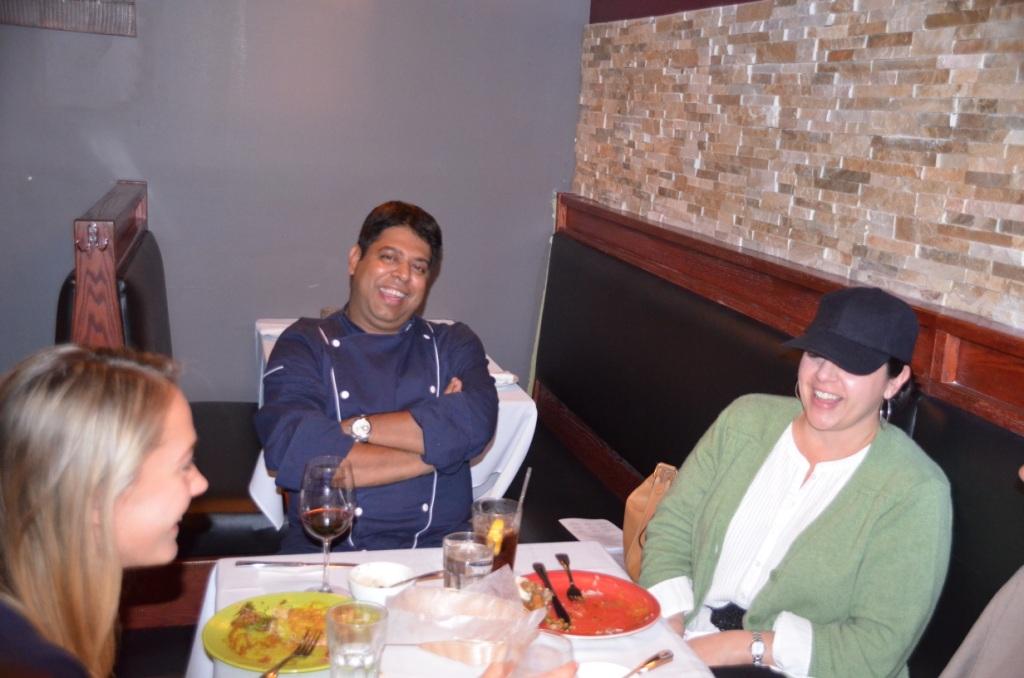
Chef Roy talking to some of our dining crew
I felt that the question is probably not as straight-forward as it seemed, but nevertheless, my answer was “of course! it is a spice!”. Well, this is exactly where I was wrong. Curry is a way of cooking with multitude of spices, but not the spice on its own! There all sorts of curry spices, all widely used in the cooking throughout the Asia, and they often share some common ingredients, like coriander and cumin, but overall, all those curries are different depending on the country and the dish which they will be used for. Apparntly “curry spice” as a nomenclature, was created a few hundred years ago, to sell a common blend of spices to the Westerners, as Asian-style cooking was becoming popular in Europe. And again, I have to refer you to the Wikipedia if you want to learn more.
Just to share my personal learning with you, I also learned that coriander is a seed of… cilantro! I love cilantro in everything, and I use coriander quite often, especially when it comes to the Fall cooking (roasted butternut squash soup is one example) – but I had no idea they are related! Live and learn…
Anyway, there are still a few dishes worth mentioning. We had Tawa “Surf n Turf” (combination Tandoori kebab platter of meat and seafood), very tasty:


There were more dishes, but I honestly lost track at that point of what was what, so here are the pictures (but I remember that everything was tasty!):


And, of course, the desert! Traditional Rice Pudding, nice, creamy, may be a touch too sweet for my taste, but still very refreshing after such an extensive meal:

Rice Pudding
All in all, this was an excellent “deep dive” into the world of the Indian cuisine, very unique and different. And as usual, the last thing left to do is to thank Chef Roy and his staff for the excellent meal and great education. Cheers!
Disclaimer: I attended the dinner as a guest of management. All opinions are my own.
Aladin Indian Bistro
36 Westport Ave
Norwalk, CT 06851
Phone: (203) 939-9040

Weekly Wine Quiz #80: Grape Trivia – Mourvèdre, a.k.a Monastrell
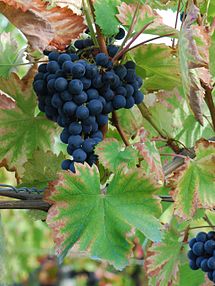
Mourvèdre grapes, as shown in Wikipedia
The Wine Quiz series does not mean to intimidate. The whole idea here is to have fun and learn something new. When answering the questions, it is fully encouraged to use all available sources of information, including Google or any other search engines. There are no embarrassing answers – the most embarrassing thing is not giving it a try…
Welcome to the weekend and your new wine quiz!
We are continuing our grape trivia series, with the focus again on the red grapes, and today’s subject is red grape called Mourvèdre, also known in Spain under the name of Monastrell, and also known as Mataro in Australia.
Mourvèdre is one of the very old grapes. According to the general consensus, Mourvèdre originated in Southern Spain at around 500 BC. From Spain, the grape spread into France, where it became popular in Roussillon region, and then made it into Provence and Rhone. Mourvèdre was brought into US and Australia in the 19th century, but it was used mostly for blending or even bulk juice production for home-made wines. It was not until the late 20th century when the grape started gaining popularity in US and Australia, producing both high end blends as well as single-grape wines.
Mourvèdre requires a warm climate and a substantial amount of sunshine in order to produce ripe, concentrated grapes. In the cooler conditions, the grape will exhibit mostly herbaceous and vegetative flavors, not very suitable for the winemaking. Under the proper growing conditions, Mourvèdre produces grapes with expressive fruit (blackberries, blueberries) and gamy flavors, with medium acidity. Mourvèdre also known for its thick skin, which allows for a good color and tannin extraction. Mourvèdre is used in a production of a single grape red wines (in Bandol, France, and many regions in Spain), as well as in various blends (for instance, it is one of the allowed 18 grapes in Châteauneuf-du-Pape). It is also used in a production of Rosé and sweet wines, and it is allowed to be blended into the Cava, Spanish Sparking wines (to make Cava Rosé).
And now, to the quiz!
Q1: Name two grapes, most famous blending partners of Mourvèdre.
Q2: Wine Spectator calls wines rated in 95-100 range Classic (the highest and the most prestigious category). True or False: there are no Mourvèdre-based wines rated in the Classic category
Q3: Fill in the gaps: The oldest, continuously producing Mourvèdre vine is located at ___ Vineyard in ___, and it is about ___ years old.
Q4: Explain potential origins for all three names of the grape – Mourvèdre, Mataró and Monastrell
Q5: True or False: France plantings of Mourvèdre far exceed the plantings in Spain (no tricks here – Mourvèdre and Monastrell are used interchangeably, you have to assume it is the same grape).
Good luck, enjoy the quiz and your weekend! Cheers!
Month in Wines – October 2013
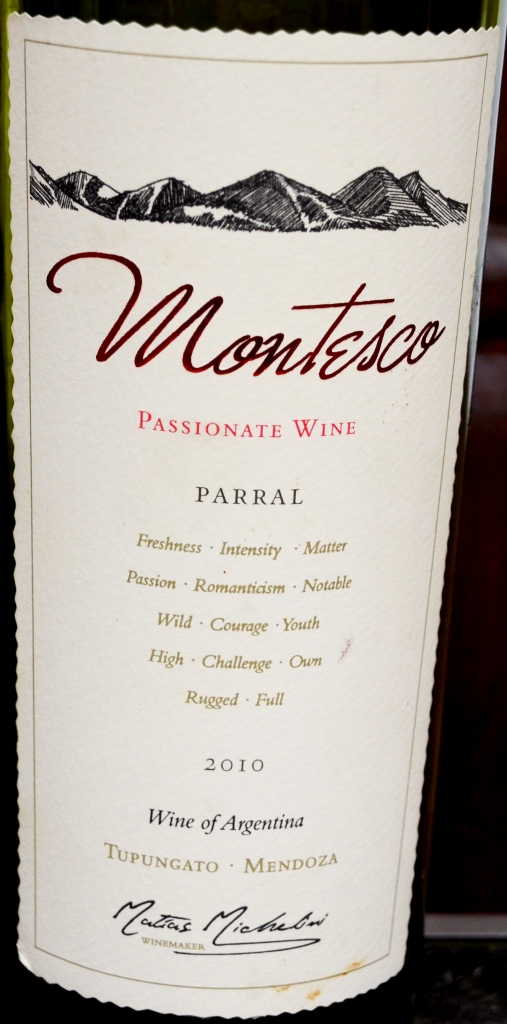
Montesco Passionate Wine
Another month is passing by, and it is the time to summarize the best experiences. Definite highlight of this month were all the wonderful wines I tasted in Portugal – the 1970 White Port is hard to topple – but there were other great wines…
Without any particular order, here we go:
2010 Montesco Passionate Wine Parral, Tupungato, Mendoza (14% ABV, 40% Malbec, 30% Cabernet Sauvignon, 30% Bonarda) – the name says it all. Very inviting nose, layers of fruit, dark cherries, blackberries, supple tannins, energetic acidity and joy in every sip – excellent wine all around. 8+
2009 Turley Zinfandel Tofanelli Vineyard, Napa Valley (15.2% ABV) – dark, concentrated, with the core of traditional Zinfandel’s blackberry aromatics and palate, perfectly accentuated by espresso and dark chocolate notes. Perfectly dry, structured, firm and balanced, with a long finish. 9-
NV Lagranja 360 Cava Brut (11.5% ABV, 70% Xarel-lo, 30% Parellada) – simple and elegant, perfectly refreshing, just a touch of sweetness, good acidity, very balanced overall. 8-
NV Egly-Ouriet Brut Tradition Grand Cru, Ambonay (70% Pinot Noir, 30% Chardonnay) – a beautiful wine. Touch of yeast on the nose, crisp acidity and noticeable fruit notes on the palate. Outstanding. 8+
NV H. Blin Brut, Vincelles (80% Pinot Meunier, 20% Chardonnay) – perfect acidity with somewhat of a medium body, nice mid-palate weight, very round. Excellent. 8-
NV Pierre Gimonnet & Fils 1er Cru Brut Blanc de Blancs Sélection Belles Anneés (100% Charodnnay) – very nice nose of brioche and touch of apple, same on the palate with some interesting mineral undertones. Very good. 8-
2003 Quevedo Colheita Tawny Port (barrel tasted) – mature, dried fruit, like figs and may be dried apricots, but it was very balanced and still perfectly fresh. 8+
1996 Quevedo Colheita Tawny Port (barrel tasted) – outstanding, mature, with the perfect medley of dried fruit, figs, raisins, and excellent supporting acidity. 9-
1970 Quevedo White Port (barrel tasted) – Elegant, complex, somewhat reminiscent of the mature Pedro Ximenez sherry, but with the dialed back sweetness, perfectly mature fruit, hazelnuts and, believe it or not, still very refreshing and all around spectacular. 9+
1974 Quevedo Colheita Tawny Port (tasted pre-bottled) – very complex, with the good amount of dried fruit, that nuttiness which only well aged Port or Jerez can demonstrate, all with still very present acidity. 9
2007 Arrayán Petit Verdot, DO Mentrida, Spain (14% ABV, 100% Petit Verdot) – concentrated, powerful, very dense, firm and structured, but showing some nice blueberries. Noticeable earthiness with some pencil shavings. 8
2007 Jamesport Vineyards Petit Verdot Reserve, Long Island, NY – powerful, all around dark fruit, notes of the dark chocolate, soft tannins, balancing acidity. Needs some time to open. Will age nicely for the next 10-15 years. 8
2005 Jamesport Vineyards Merlot Block E, Long Island, NY (13.5% ABV, 80% Merlot, 10% cabernet Sauvignon, 10% Syrah) – beautiful nose of dark fruit and chocolate. Velvety, silky slick on the palate, layers of supple dark fruit, soft tannins, clean acidity, overall very balanced with long, sexy finish. 8+
2012 Ernie Els “Big Easy” Chenin Blanc, Western Cape, South Africa – nice body presence – medium to full body, somewhat plump with white stone fruit notes and soft acidity. Overall, very pleasant. 8-
That should be about all for the month of October. Did you have any memorable wine experiences? Care to share? Cheers!
Wednesday’s Meritage – Wine Quiz Answer, Chateau Latour, Natural Wines, Sauternes 2013 and more
 Meritage time!
Let’s start with the answer for the wine quiz #79, grape trivia – Cabernet Franc. In the quiz, you were supposed to answer 5 questions about a red grape called Cabernet Franc. Here are the questions, now with the answers:
Q1: One of the most famous wines in the world has Cabernet Franc as a major (2/3 or so) component of its blend. Do you know what wine is that?
A1: Unimitable Château Cheval Blanc uses at least 2/3 of Cabernet Franc grapes in their main wine
Q2: Cabernet Franc has a special relationship with the frost. Can you explain that?
A2: Icewine! The grapes should be frozen on the vine in order to produce the Icewine. While Icewine was typically produced from the white grapes, Inniskillin estate in Ontario was one of the pioneers who started producing Icewine from the red grapes, namely Cabernet Franc.
Q3: Which one doesn’t belong and why:
a. Bourgueil, b. Chinon, c. Saumur-Champigny, d. Saint-Chinian
A3: Saint-Chinian. It is an AOC in the Languedoc area which doesn’t make wines out of Cabernet Franc. The other three AOCs are located in the Loire, and all make Cabernet Franc wines.
Q4: This unique grape grows only in one place in the world, and it is a cross between Merlot and Cabernet Franc. Do you know what grape it is?
A4: Caberlot. I admit this was a difficult question. However, I mentioned this grape before, when I discovered it during VinItaly tasting this year (here is the link).
Q5: In Italy, Cabernet Franc is often confused for another rare Bordeaux grape. Do you know the name of that rare grape?
A5: Carmenere.
Looking at the results, we don’t have a winner today – however, both Frankly Wine and Eat with Namie get honorable mentions for properly answering 4 questions out of 5. Well done!
Now, to the interesting stuff around the web and vine!
Boy, what an eclectic mix I have for you today! First, just a quick last minute reminder – #MWWC4 vote closes today. If you still didn’t read and vote, you might have your last chance to do it here.
Now, how much do you know about Chateau Latour? Same as the most, you probably heard of it as a producer of one of the most sought-after wines in the world, and you probably know that it is generally very expensive. Recently, Chateau Latour made a lot of press by pulling out of the En primeur (wine futures) system, where wines are acquired by consumers before they are actually released, hedging both on saving the money and availability of the wine. Here is the link to the Wine-Searcher article, where you can actually learn a lot of interesting facts about Chateau Latour. I also want to mention that the Wine-searcher website is really becoming a great source of wine information, not just the price comparison tool.
Next subject – Natural wines. How much do you know about natural wines? What do you think of them as a category? Well, the article I want to bring to your attention is not exactly natural wine 101 tutorial, but it is rather a rant by Europe’s Best Sommelier of 2013, Arvid Rosengren, who is based in Copenhagen. A lot of his comments are most relevant for the local food and wine scene, but nevertheless, it makes a very interesting read.
Are you a fan of Sauternes, a sweet wine gems from Bordeaux? If you are, I have good news for you – 2013 is a great year, and you should be looking for these wines when they will be released. Contrary to 2012, when Chateau d’Yquem, the most coveted producer in Sauternes, decided not to produce their flagship Chateau d’Yquem wine, 2013 harvest shows a lot of botrytized grapes, which is a necessity to produce sweet wines in Sauternes. By the way, if you like red Bordeaux, 2013 doesn’t look all that great. Here is the link to the article where you can learn more.
The last piece I have for you has nothing to do with wine. It is written by Kimberly at whiskeytangofoxtrot4 blog, where she is talking about the power of the words. While her post, called Word, sounds rather personal, I think it is very powerful writing and it definitely well worth a few minutes of your time.
That’s all I have for you for today, folks. The glass is empty, but the refill is on its way. Cheers!
Just Arrived…
When I saw a big sturdy envelope yesterday in the mail, my first thought was “is that the…” – and yes, it was – my Quatro certificate from The Wine Century Club!

Wine Century Clun Quattro Certificate
Yes, I know that I tasted over 400 grapes, but somehow getting this piece of paper felt very good. And while I was thinking about the next level, the coveted 500, or Pentavini as it is called in The Wine Century Club, I didn’t feel encouraged – now I do. Thus you should expect to see more posts about obscure grapes and wines on this pages. But this is what makes it fun!
Join The Wine Century Club and start your journey now – you can thank me later! Cheers!
Henri’s Reserve – The Art Of Boutique Champagne
Did you know that every last Friday in October now has a designated “wine holiday”? Yep, and not just any wine holiday – it is actually a Global Champagne Day (Champagne and Friday perfectly go together, don’t they?) My “problem” (may all of our problems be so hard) of choosing the bottle of Champagne to open to celebrate Global Champagne Day last Friday was taken care of by invitation I got from Henri’s Reserve – to come and celebrate Champagne Day in style at Southport Galleries in Connecticut.


Henri’s Reserve is a boutique Champagne purveyor, primarily focusing on the small, artisanal Champagne producers. Most of the common Champagne people buy in the stores come from so called Champagne Houses, such as Moët & Chandon, Bollinger, Louis Roederer, Veuve Cliquot and many others. For the most part, Champagne houses buy the grapes from the grape growers, and make (blend) their wines to have a persistent, chateau-specific taste. At the same time, a number of grape growers (there are about 19,000 of them in Champagne) also produce their own wines. Until recently, those wines were literally impossible to find outside of France – but over the last 5-7 years, the situation changed and so called Growers Champagne became more available in US and other countries.
You might ask what is so special about Growers Champagne? While Champagne houses are mostly focused on blending to achieve their house-specific taste, growers are a lot more terroir-driven. Growers know their best vineyards and best parcels inside those vineyards, and that knowledge translates into unique wines with the sense of place – often at a lot more affordable price than the wine coming from the big houses. To give you one example, one of my favorite Champagnes from this tasting, Egly-Ouriet Grand Cru, comes form the village of Ambonnay. One of the most exclusive Champagne houses in the world, Krug, also produces the wine from the vineyards in the Ambonnay village. That Krug wine, called Clos de Ambonnay, would set you back at around $2700 per bottle (probably the most expensive Champagne on the market). While I’m not comparing Egly-Ouriet Champagne with Krug (never tasted Clos de Ambonnay), it costs almost 40 times less that that bottle of Krug, and at around $70, it is really an excellent Champagne.
Getting back to Henri’s Reserve – they actually make the Growers Champagnes available to the average wine consumer. If you look at Henri’s Reserve web site, you will find a lot of useful information about Champagne in general, pairing of Champagne with the food, how to open the Champagne bottle, entertaining with Champagne and a lot more. What is most important, though, is that you will be able to buy some of those excellent growers Champagnes.

Ruth Frantz of Henri’s Reserve addressing the audience
Now, let’s talk about our Global Champagne Day celebration. We had an opportunity to try 9 different Grower Champagnes. I didn’t focus on taking the detailed notes, as I was very busy mingling, so below is the list of the wines we tried with my brief notes. Don’t worry, it will be easy to figure out if I had any favorites.
NV Guiborat Fils Grand Cru Blanc de Blancs, Cramant (100% Chardonnay) – clean crisp acidity, a bit of brioche on the nose. Very good. Drinkability: 7+
NV Jacques Lassaigne Banc de Blancs Le Vignes de Mongueux (100% Chardonnay) – also perfectly clean and crisp, touch of yeast on the nose. Very good. Drinkability: 7+
2006 Guiborat Fils Grand Cru Blanc de Blancs, Cramant (100% Chardonnay) – has all the traits of vintage Champagne – brioche, toasted bread, apples, touch of yeast – but very delicately balanced, not over the top. Very good. Drinkability: 7+
NV Egly-Ouriet Brut Tradition Grand Cru, Ambonay (70% Pinot Noir, 30% Chardonnay) – a beautiful wine. Touch of yeast on the nose, crisp acidity and noticeable fruit notes on the palate – not in the terms of sweetness, but just more pronounced white fruit sensation than it would be in the typical Champagne. Outstanding. Drinkability: 8+
NV H. Blin Brut, Vincelles (80% Pinot Meunier, 20% Chardonnay) – perfect acidity with somewhat of a medium body, nice mid-palate weight, very round. Excellent. Drinkability: 8-
NV Pierre Gimonnet & Fils 1er Cru Brut Blanc de Blancs Sélection Belles Anneés (100% Charodnnay) – very nice nose of brioche and touch of apple, same on the palate with some interesting mineral undertones. Very good. Drinkability: 8-
2002 H. Blin Blin’s Brut Edition Limitée Millésimé (40% Pinot Meunier, 30% Pinot Noir, 30% Chardonnay) – this wine was the last one in the tasting, and it didn’t reach the optimal serving temperature, unfortunately (was too warm).
NV H. Billiot Grand Cru Brut Rosé, Ambonnay (80% Pinot Meunier, 20% Chardonnay) – crisp, clean, may be a bit too acidic for Rosé. Or may be it was too cold (can Champagne be too cold?). Drinkability: 7
NV Jean Laurent Blanc de Noirs, Celles-sur–Ource (100% Pinot Noir) – very nice, medium body, interesting complexity. Very good. Drinkability: 7+
I have a confession to make. I’m not a Champagne guy. I appreciate a glass of a good bubbly, whether it is Champagne, or Prosecco, or Cava – but Sparkling wine is not my usual daily wine. Having said that, you know what happened after this tasting? I was craving Champagne! I resolve not to wait until the next Global Champagne Day to satisfy that craving – and you might expect to see more sparkles in this blog. Thank you, Henri’s Reserve, for the great time! Cheers!
Weekly Wine Quiz #79: Grape Trivia – Cabernet Franc
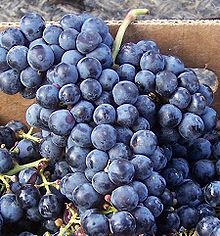
Cabernet Franc grapes, as shown in Wikipedia
The Wine Quiz series is not meant to intimidate. The whole idea here is to have fun and learn something new. When answering the questions, it is fully encouraged to use all available sources of information, including Google or any other search engine. There are no embarrassing answers – the most embarrassing thing is not giving it a try…
Welcome to the weekend and your new wine quiz!
We are continuing our grape trivia series, and we are back to the red grapes. Today’s subject is the red grape called Cabernet Franc.
According to many sources, Cabernet Franc is first appearing in Bordeaux in the 17th century, with a good chance of being around for much longer. From Bordeaux, it made it to Loire valley, where it is often used to produce single-varietal wines. In Bordeaux itself, Cabernet Franc is typically used as part of the blend together with Cabernet Sauvignon, Merlot, Petit Verdot and Malbec. Today Cabernet Franc is spread out all over the world, both used in Bordeaux-style blends (Meritage) and as single varietal bottlings – Australia, New Zealand, Italy, Chile, US, Argentina, Canada are all have a good amount of plantings of Cabernet Franc. In the US, Cabernet Franc is successfully grown all over the country, with some of the best wines coming from California, Washington and New York states.
Cabernet Franc is known to be a parent of Cabernet Sauvignon ( together with Sauvignon Blanc), so the typical flavor profile of Cabernet Franc is somewhat similar to the Cabernet Sauvignon, with black currant, raspberries and green bell peppers flavors being most typical. At the same time, Cabernet Franc wines often have more earthy aromatics and a little bit lighter in the body. Cabernet Franc also buds and ripens at least a week earlier than Cabernet Sauvignon, and it is more resistant to the low freezing temperatures during winter, which allows it to be cultivated successfully in the colder climates.
And now, to the quiz!
Q1: One of the most famous wines in the world has Cabernet Franc as a major (2/3 or so) components of its blend. Do you know what wine is that?
Q2: Cabernet Franc has a special relationship with the frost. Can you explain that?
Q3: Which one doesn’t belong and why:
a. Bourgueil
b. Chinon
c. Saumur-Champigny
d. Saint-Chinian
Q4: This unique grape grows only in one place in the world, and it is a cross between Merlot and Cabernet Franc. Do you know what grape it is?
Q5: In Italy, Cabernet Franc is often confused for another rare Bordeaux grape. Do you know the name of that rare grape?
Good luck, enjoy the quiz and your weekend! Cheers!
Farm-to-Table Dining At Its Best: Bailey’s Backyard in Ridgefield, CT
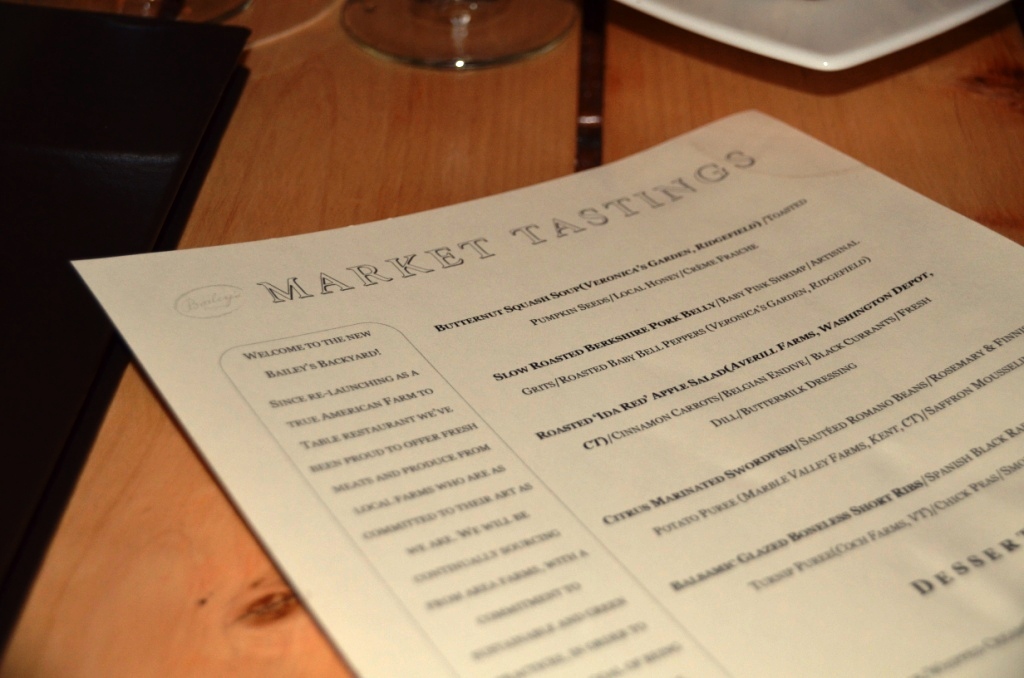 What do you think is the most important ingredient in the farm-to-table dining? Fresh local herbs? Fresh local cheese? Humanely raised chicken from the nearby farm? Based on my recent experience at Bailey’s Backyard, an American Farm-to-Table restaurant, the main ingredient of successful farm-to-table dining is … passion.
It was enough to listen to the Chef Forrest Pasternack, who was presenting each and every dish during the dinner, to see and feel the passion. Each and every ingredient had its place. The potatoes were not just the random potatoes from Idaho, there had an exact source – Maple Valley Farms in Kent, CT. Whipped cream was not coming from the random can acquired in the Restaurant Depot – it was coming from the farm in Litchfield, Connecticut. Every little ingredient had an exact source, and there was a relationship built behind all those ingredients – and that takes a lot of passion and hard labor.
And then you can see, or rather taste, the results of passion and hard labor. Each and every dish we had at the dinner had a soul. You could taste and admire each ingredient by itself, and then they played together in the concert, delivering an immaculate experience. As usual, I will attempt to present our dinner in the form of the pictures – it will not do the justice to the unique experience, but it probably can make you hungry.
We started with the cocktails, of course. Fresh and local ingredients in the cocktails are as important as in the food, and Brian, the master behind the bar, had a great selection of carefully crafted concoctions. I had The Ballard (Cucumber infused gin, fresh lemonade, splash of elderflower liqueur), which was tangy, a bit grassy and very refreshing.


The first item to appear on the table was, of course, the bread. To describe it, the first thing which comes to mind is “loaded” – raisins, cranberries, spices, perfectly breakable texture, very tasty – locally baked, of course:
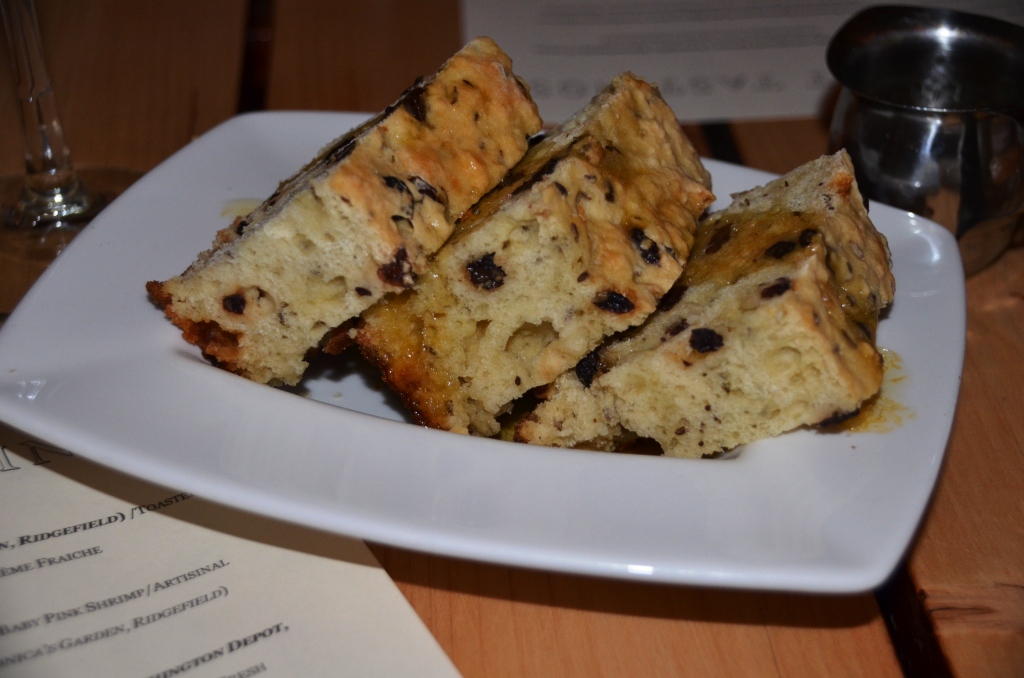
Fresh “loaded” bread
Our first dish was Butternut Squash Soup (butternut squash from Veronica’s Garden, Litchfield, Toasted Pumpkin Seeds, local honey, Crème fraîche) – it was presented step by step – first the plates with all the condiments came out, and the hot soup was poured into each individual plate. The soup was well balanced, with the nice creamy texture, a bit of a heat and a touch of cinnamon.


As you can imagine, for me the dinner should include wine (of course I can make exceptions – if I’m in the BBQ joint, beer is my friend). The wine list at Bailey’s Backyard is simple, but quite versatile, with most of the wines priced quite reasonably. Considering that this is a farm-to-table restaurant, the only change I would suggest is to add a selection of local (CT/NY/MA), organic and natural wines (in case Brian would read this post : ) ). I took a full advantage of the “by the glass” selection, and had three different wines with the dinner. First one was 2012 Actobat Pinot Gris, King Estate, Oregon. The cutting edge acidity which was present in this wine, was working very well with the soup – while accidental, this was a successful pairing.

King Estate Pinot Gris
Next up was Slow Roasted Berkshire Pork Belly (Baby Pink Shrimp, Artisanal Grits, Roasted Baby Bell Peppers – Veronica’s Garden, Ridgefield) – roasted baby bell peppers worked perfectly with pork – this was definitely an excellent combination. Sweetness of shrimp and creamy, oozy grits were adding a great complexity here as well.
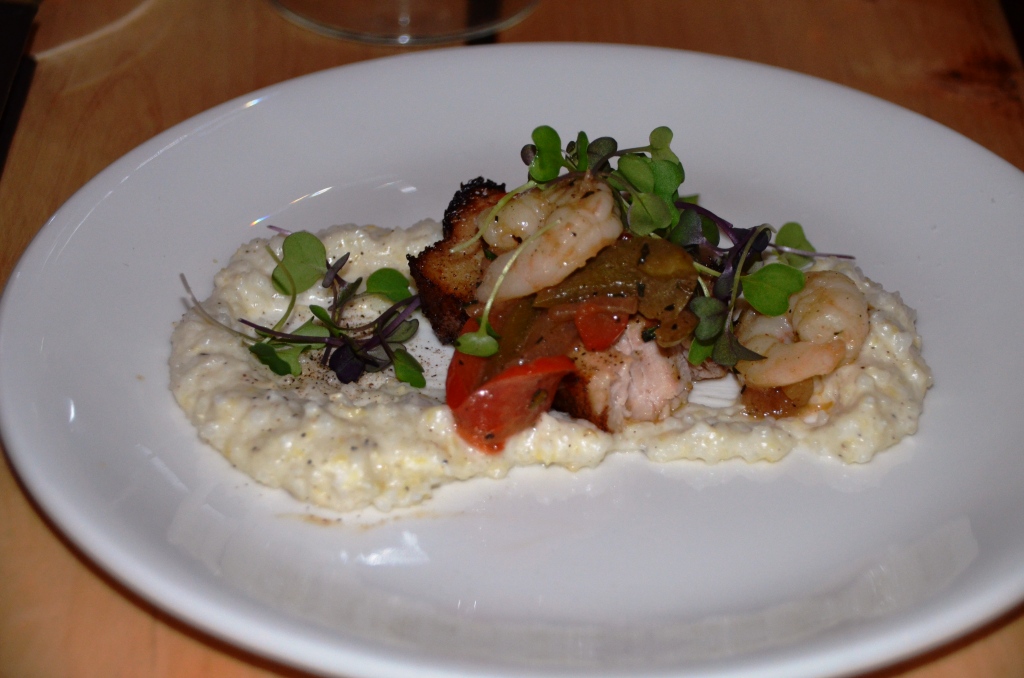
Slow Roasted Berkshire Pork Belly
Now for the next glass of wine I had 2012 Ernie Els “Big Easy” Chenin Blanc, Western Cape, South Africa – this wine had a bit less acidity than the Pinot Gris, and it had some nice body presence – medium to full body, somewhat plump with white stone fruit notes. Worked perfectly with the next two dishes.
Slightly changing the pace, the next dish was a salad – Roasted ‘Ida Red” Apple Salad (Apples – Averill Farms, Washington Depot, CT, Cinnamon Carrots, Belgian Endive, Black Currant, Fresh Dill, Buttermilk Dressing) – it was very interesting to listen to the passionate presentation of this dish by Chef Forrest, talking about black currants being soaked in the Riesling, mentioning all the farms where the different elements of the dish were sourced from – really different and unique. The dressing was perfectly balancing the dish, and everything worked together as a whole – perfect crunch in the texture, sweetness, acidity – including the bright visual appeal.


Next we were presented with Citrus Marinated Swordfish (Sauteed Romano Beans, Rosemary & Finnish Potato Puree – Maple Valley Farms, Kent, CT, Saffron Mousseline) – swordfish (caught that day in Boston) was perfectly cooked, which is not an easy task by itself, and then it was simply heavenly together with that homey, rustic puree (next time, I just want a bowlful of that puree). Excellent dish overall.


The dinner was nicely progressing according to our tasting menu, and then we had a surprise. White plate with the spoon appeared in front of everyone. Rested in the spoon was Herbed Ricotta Gnocchi with truffle powder. Chef Forrest came out to quickly present the dish, and then all of us happened to eat it almost at the same time. So this, my friends, was a true food porn at its best – forget the picture, the picture tells you nothing , but you had to hear that almost simultaneous moan coming from everybody, followed by the “oh my god” expressions. I remember some of the Food Network competitions required chefs to make the best single bite-sized food they can. Single bite or not, this was one of the most spectacular food experiences I ever had. I can’t describe it any better for you, sorry – but if you are in a mood for some food porn, the address of the restaurant is at the bottom of this post.
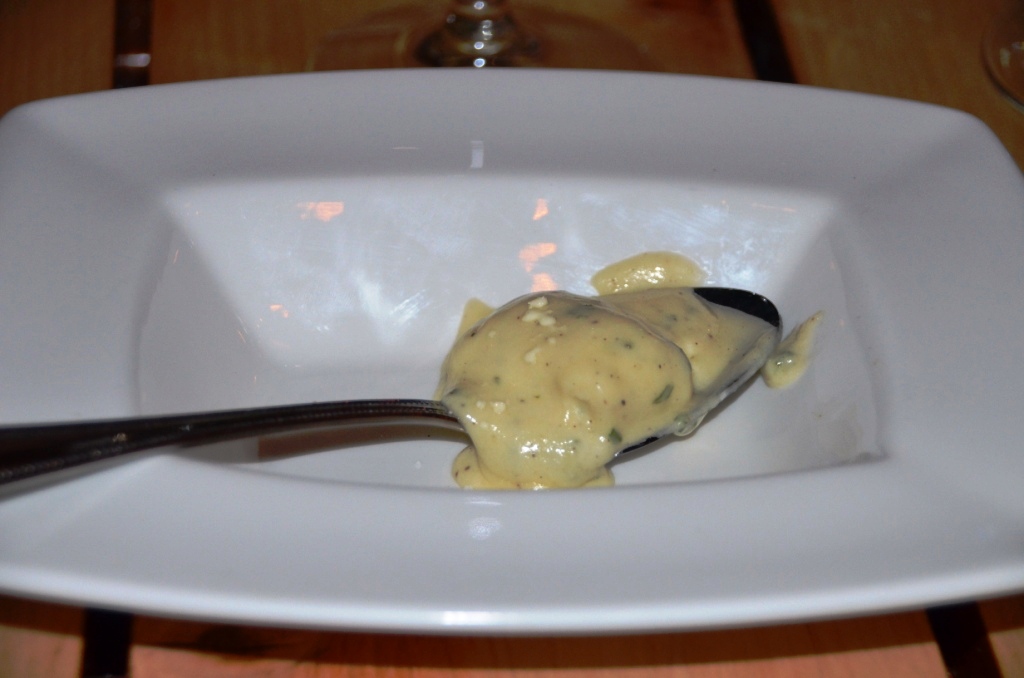
“omg” Herbed Ricotta Gnocchi
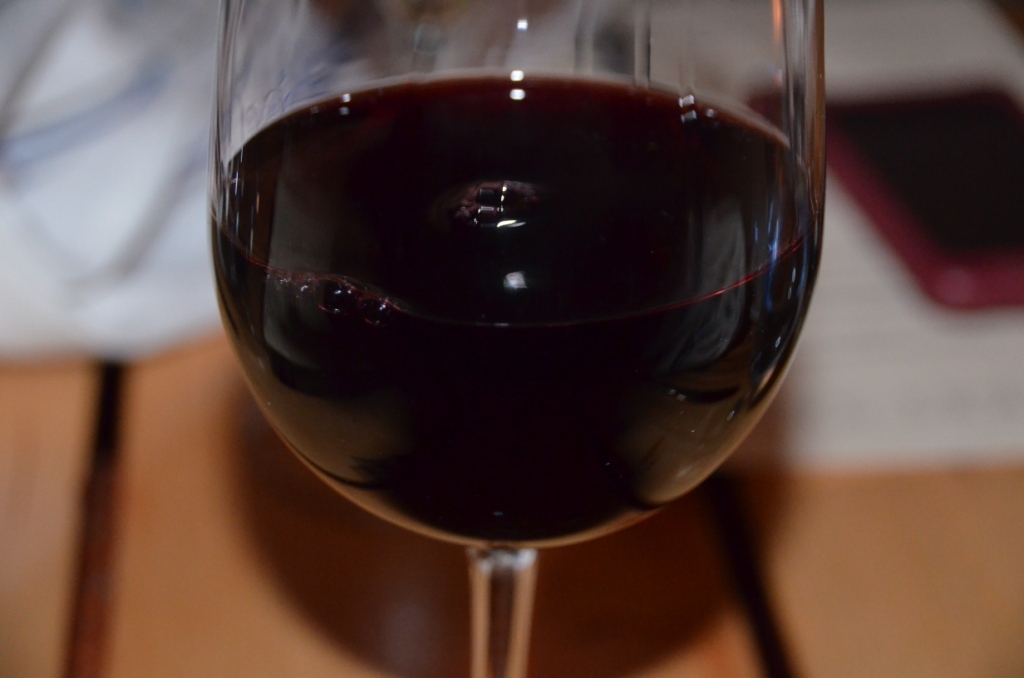
Before getting to our last main course dish, I got a glass of red wine – 2010 Rocca delle Macìe Sasyr Sangiovese Syrah, Tuscana IGT – dark red fruit nose, medium to big body, plums, hint of dark chocolate and espresso notes on the palate, nice balance. Enough power to stand up to the short ribs.
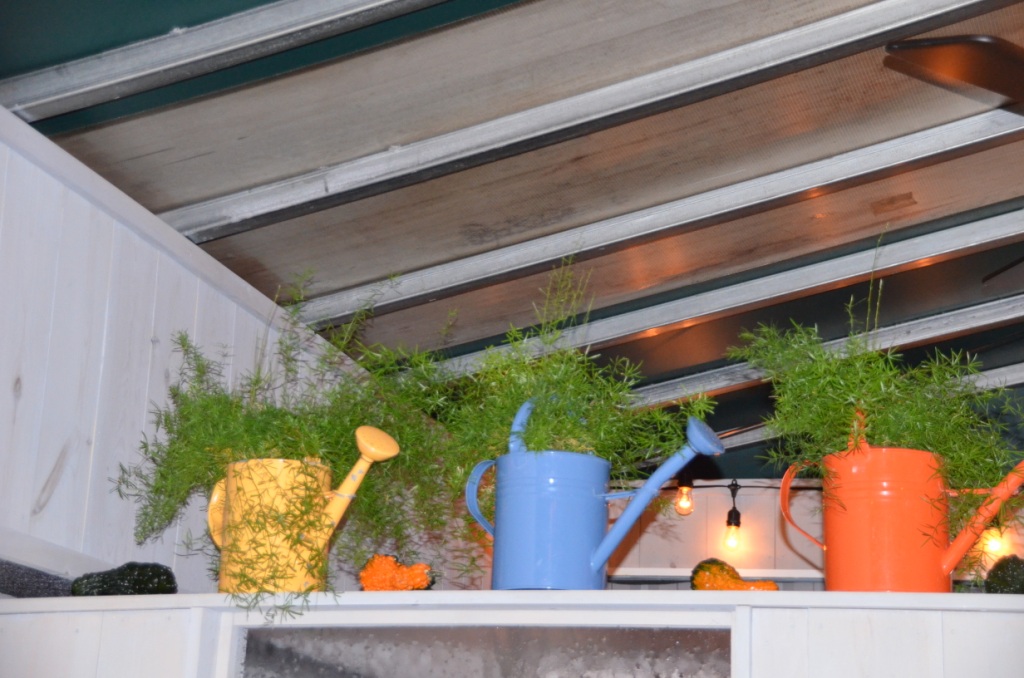
love the decor…
Last entree – Balsamic Glazed Boneless Short Rib (Spanish Black Radish, Gilfeather Turnip Puree – Coch Farms, VT, Chick Peas, Smoked Paprika) – I would have to call this dish an ultimate comfort food. Everything perfectly worked together, and if you ever had well prepared, slow cooked short rib, you know how heart-warming that meat gets, after it absorbs all the flavor and literally falls apart so it can be eaten with the spoon. This was a perfect finish to our main course.


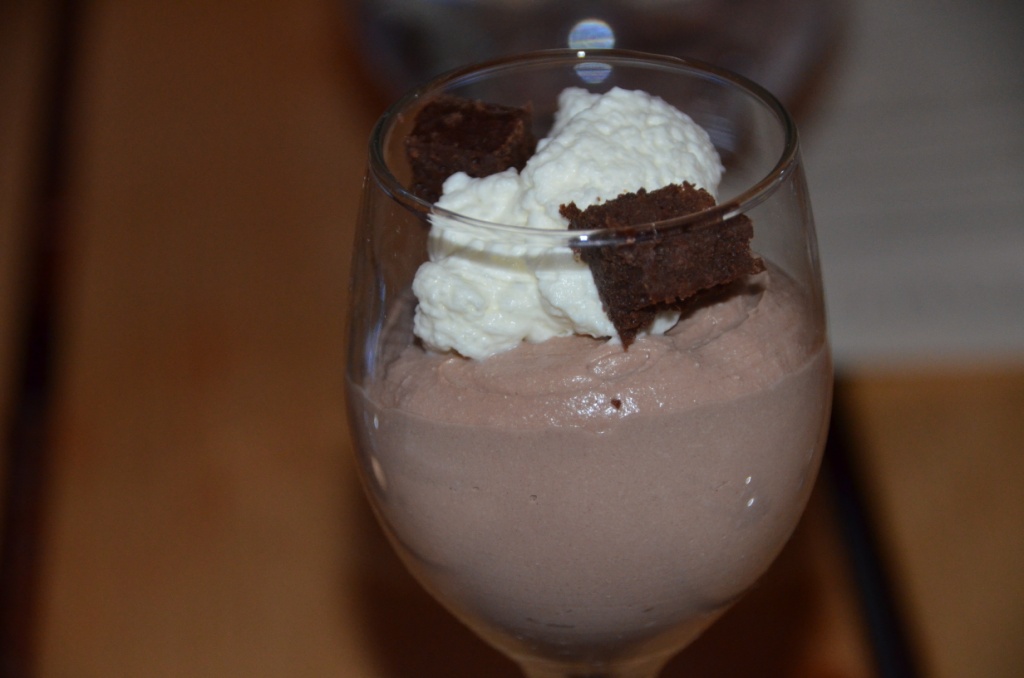
And then there was dessert. We had two different desserts. First, it was Nutella Mousse (whipped cream – Arethusa Farms, Litchfield, CT, Chocolate Crumble) – perfectly light, not overly sweet, very tasty:
Our last dessert was Pumpkin Cloud 9 (Brioche “Pain Perdu”, Whipped Pumpkin Custard – Jansal Valley Farms, Westport, MA) – another staged dish, where the brioche arrived first, then the whipped pumpkin custard was individually scooped on top of each “toast” – another very balanced dish, not overwhelming with sugar or pumpkin notes itself. It was an excellent finish to the very tasty meal.


All the dinners come to an end. It is interesting to see how 3 hours go by unnoticed, when you have a great company, great food, great service. This was definitely a unique experience, listening to the Chef presenting each and every dish, talking about what farm-to-table really means, talking about all the farms and all the people who work very hard to create this wonderful experience.


As always, the last thing left to do is to thank Chef Forrest, drinks master Bryan Walsh, and the owner and our host Sal for their passion and the wonderful time we had. We will be back!
Disclaimer: I attended the dinner as a guest of management. All opinions are my own.
Bailey’s Backyard
23 Bailey Avenue
Ridgefield, CT 06877
203-431-0796
http://www.baileysbackyard.com

Wednesday’s Meritage – Wine Quiz Answer, Global Champagne Day, Dishcrawl SoNo, Tempranillo Day and more
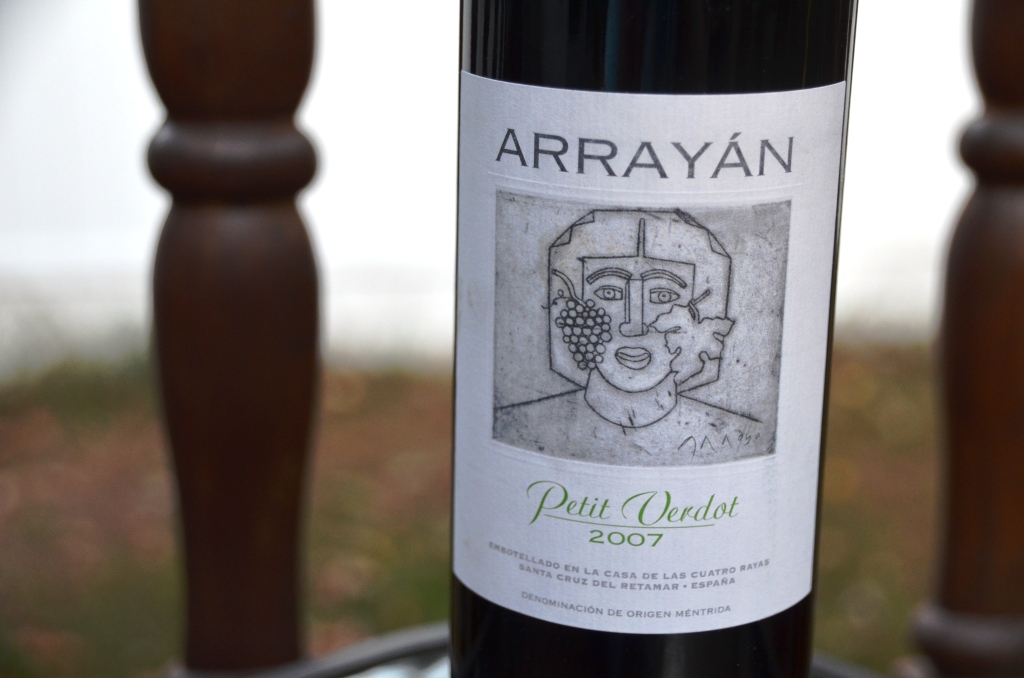
Arrayán Petit Verdot, Spain
Meritage time!
Let’s start from the answer to the wine quiz #78, grape trivia – Petit Verdot. In the quiz, you were supposed to answer 5 questions regarding the red grape called Petit Verdot. Here are the questions, now with the answers:
Q1: Explain the meaning of the name Petit Verdot
A1: Petit Verdot stands for the “little green”, as a reference to the small size of the grapes and the tendency to retain green (underripe) grapes even at the harvest time
Q2: Name four grapes, main blending partners of Petit Verdot in France
A2: We are talking about classic Bordeaux five here, the blending partners of Petit Verdot are Cabernet Sauvignon, Merlot, Cabernet Franc and Malbec
Q3: True or False: Australia’s plantings of Petit Verdot far exceed the plantings of Petit Verdot in France
A3: True. Australia embraced Petit Verdot starting from the second half of the 18th century, increasing its plantings, where Petit Verdot plantings in France had being on the downturn for a while.
Q4: While Petit Verdot is a difficult grape to work with, two events were major contributors to the demise of Petit Verdot in Bordeaux. Can you name those two events?
A4: Phylloxera epidemic in the late 1800s and the frost of 1956. As a difficult to grow and not essential grape, Petit Verdot followed the path of Malbec, with a dramatic reduction in plantings after the cataclysmic events.
Q5: While it is not impossible to find a pure 100% Petit Verdot wines made in Bordeaux, those wines are rather the exceptions. What is the typical percentage of Petit Verdot in Bordeaux blends?
A5: It is very often 1% to 2%, and in general stays under 5%. There are exceptions, of course.
Bonus question: what was your personal encounter with Petit Verdot? Do you have any memorable bottles?
Australia, Spain and [interestingly enough] Long Island, New York come to mind when I think of single-grape Petit Verdot bottlings. Some of the wines were just purely spectacular, like 2007 Jamesport Petit Verdot from Long Island, or this 2007 Arrayán Petit Verdot from Spain.
I’m glad to report that we had a good participation in the quiz, and most importantly, we have a lot of winners! Patrick Kleiner (who has no web site), the drunken cyclist and Vino in Love are all correctly answered all 5 questions, so they are our ultimate winners and get unlimited bragging rights. Well done! I also want to mention Duff’s Wines and Eat with Namie as they both made only minor mistakes and got about 4.5 correctly out of 5, so they both get an honorable mention.
Now, to the interesting stuff around the web and the vine!
I don’t have much of the interesting reads for you today, so it is mostly various events announcements.
First, don’t forget that Monthly Wine Writing Challenge #4 (#MWWC4) is in its final hours – it ends today, on October 23rd. The theme is “oops” – send your submission over to TheWineKat, and best to do it on Twitter with the hash tag #MWWC4.
Next, it appears that this coming Friday, October 25th, is a Global Champagne Day 2013 (I’m sure TheDrunkenCyclist is oozing with joy :- ) ). You have an option of finding a good place to celebrate in style, or just crack open whatever sparking goodness your heart desires, and celebrate the celebration drink!
While you still have time to get ready, don’t miss the International Tempranillo Day coming up on November 14th. There are plenty of Tempranillo events happening all over the country, and the good Tempranillo bottle is so easy to find nowadays, you have no excuse to miss this celebration.
Last but not least, at least for the local Connecticut foodies, Dishcrawl event is for South Norwalk (SoNo) will take place on November 20th. Based on my recent dining experiences in South Norwalk, this event shouldn’t be missed! For more details and to get your tickets, please visit Dishcrawl site.
That is all I have for you for today. The glass is empty – but refill is on the way. Until the next time – cheers!
Last Bottle Sign Up ($10 credit)




 Talk-A-Vino