Stories of Passion and Pinot: Kate Ayres of Penner-Ash Wine Cellars
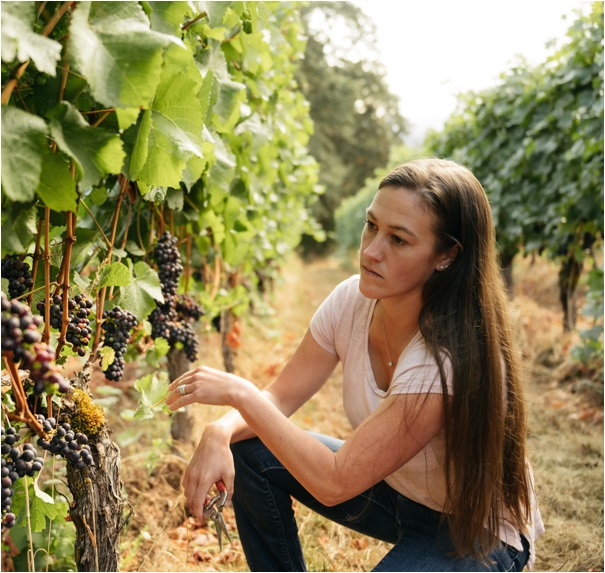
Kate Ayres. Source: Jackson Family Wines
125 cases of Pinot Noir in 1998.
9,000 cases of Pinot Noir, Syrah, Riesling, and Viognier in 2011.
16,000 square-foot winery building designed with human ergonomics in mind.
12 vineyards.
Numerous accolades.
This is a brief “history in numbers” of Penner-Ash Wine Cellars, founded by Lynn and Ron Penner-Ash in Northern Willamette Valley Yamhill-Carlton AVA in 1998. The winery quickly grew to prominence, best known for its lush, layered Pinot Noir. In 2016, Penner-Ash Wine Cellars was acquired by Jackson Family Wines (JFW), joining Gran Moraine, Zena Crown and other Oregon wineries as part of JFW’s “cool-climate” Pinot Noir portfolio.
Kate Ayres had become the Winemaker at Penner-Ash Wine Cellars in the spring of 2018. Continuing traditions is not an easy job, and so I had an opportunity to sit down (virtually) with Kate and ask her a few questions.
Here is what transpired in our conversation.
[TaV]: Reading about the history of the winery, I came across the fact that the winery was designed with “human ergonomics” in mind. Can you expand on this, provide some details for someone who never visited the winery?
[KA]: Lynn and I are both petite female winemakers and that was really a driving factor when creating our gravity flow winery. We tend to ferment in small fermenters (one-, two- and three-ton) that are just short enough that I can smell the tops of each tank at standing height. The tanks are all easily moveable by pallet jack and require very little “heavy lifting.” In addition, because of the tiered nature of the winery, we rarely use pumps and aren’t hauling hoses up and down the winery.
[TaV]: Also in the same historical overview, I found an interesting mention of “unanticipated soil diversity”. Why “unanticipated”, and how is this impactful from the point of view of the Penner-Ash wines overall?
[KA]: I believe this is in respect to our Estate Vineyard. We have 15 acres planted to Pinot Noir in the Yamhill-Carlton AVA, which is typically characterized as sedimentary soil. In the case of our vineyard, we have a volcanic line running down the middle of our upper Pommard and 666 blocks, down through our lower Pommard blocks.
[TaV]: What is your winemaking philosophy – whole cluster fermentation, natural yeast versus inoculated yeast, oak regimen, etc?
[KA]: We love experimentation in the winery and will pivot depending on what the vintage is throwing at us. There are some vineyards that we love to whole cluster ferment, but I wouldn’t consider us a “whole cluster” house. 25-40% in a fermenter is our happy spot. While we have a plethora of inoculated yeast strains we like to use, we are also happy to let tanks head in the native direction when it fits. Our oak regimen has evolved over the years to match our changing environment. We like lower impact barrels that can provide structure and sweetness, but less overt “oaky” aroma. Our basic philosophy at Penner-Ash remains the same as it was on our starting day. We craft beautifully textured and layered wines that are approachable and ageable. This is done with a diversity of vineyard sites, a simple approach to winemaking, and a delicate handling of the wines through their life.
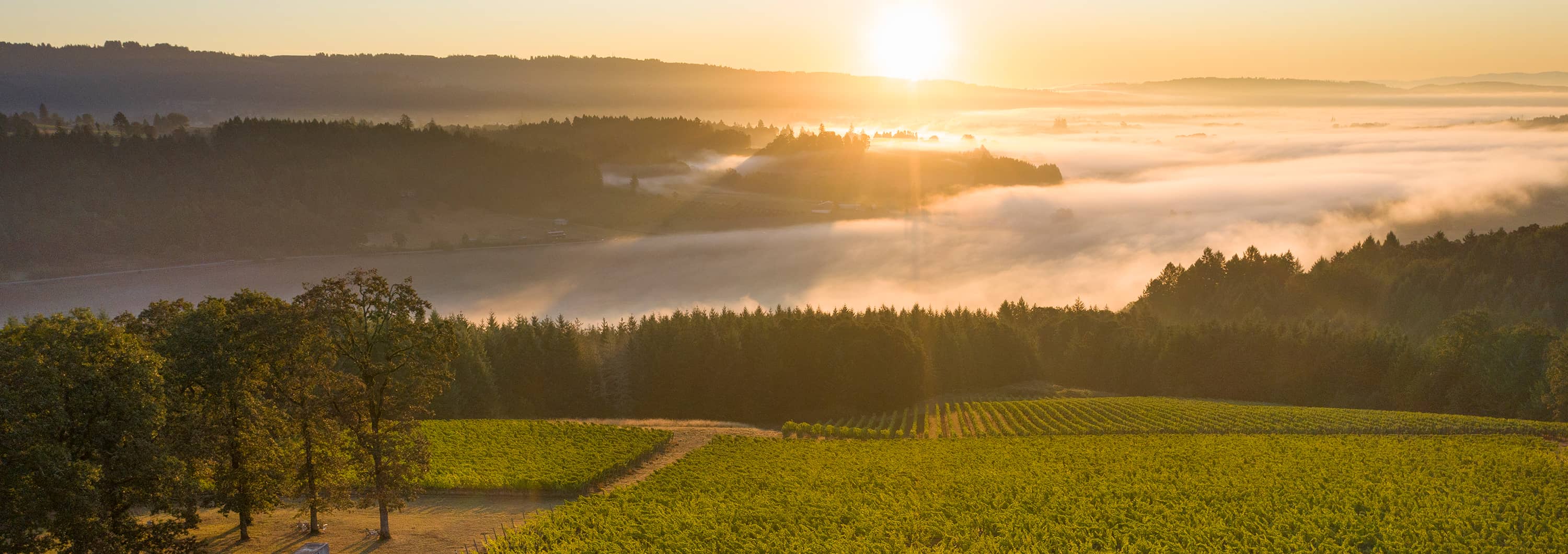
Penner-Ash Cellars. Source: Jackson Family Wines
[TaV]: At Penner-Ash, you get to work with many different vineyards. Do you have a most favorite and most challenging one?
[KA]: How cruel to pit them against each other! Each vineyard is so special to its location, and that is what makes my job so incredibly exciting and invigorating each harvest. For example, there are times when certain weather events just hit a single sub-AVA. So while that particular vineyard might be more difficult for that vintage, other vineyards may remain unaffected.
[TaV]: One question I like to ask all the winemakers I have a chance to speak with – what is your take on biodynamic viticulture?
[KA]: I think this has become such a polarizing question. There are many aspects to biodynamic viticulture which make so much sense to me. Working within the natural balance and diversity of the ecosystem seems like a no-brainer. I find it harder to see the relevance of the spray schedules, mixtures, and decisions based on moon phase.
[TaV]: Based on what I can see on your website, Penner-Ash offers today a large number of white and red wines. Sparkling and Rosé make a notable absence. Do you make any of the sparkling or Rosé? If not, any future plans?
[KA]: We make a rosé, but not a sparkling wine. As you’ve noted, we make many wines. At this point in time, I’d like to keep my focus on those wines that we know and we make well.
[TaV]: Practically all of your wines are vineyard-specific. Have you ever considered producing block-specific wines, from Penner-Ash Estate or any other vineyards?
[KA]: We have dabbled in block specific (clonal specific) wines for fun with the Shea Vineyard and have in the past put together a complete set for the consumer. It was a fun thing to show people, but was a huge labor of love (all hand bottled). They are certainly fun one-off projects to toy with, but harder to consider as a long-term product.
[TaV]: Going back to the wine lineup – the majority of the wines produced by Penner-Ash are Chardonnay and Pinot Noir. And then you have lonely Riesling and Syrah. Any plans for any other grape varieties? Maybe a Pinot Gris? Tempranillo? Something more eclectic?
[KA]: I’d love to dabble in a new red or two and we’ve also done some fun tasting of Chenin Blanc and Sauvignon Blanc from Oregon. I think Sauvignon Blanc coming out of the Willamette Valley is really interesting and fun.
[TaV]: Can you describe your typical day in the vineyards?
[KA]: As the growing season progresses my days usually start in the vineyard for the first couple of hours before returning to the winery to taste/blend/crush samples. We have a lot of vineyards to cover, so I tend to try to visit 2-3 vineyards in a morning if possible.
[TaV]: We can’t ignore climate change – how do you take the effects of it in your day to day operation? How are you taking it into account for the longer period, say the next 10 years?
[KA]: Looking at alternative varieties is certainly high on the list. In the more immediate future I’ve pulled back the amount of cap manipulation the wine sees in its lifetime. There was a time where we would punch down a fermenter three times a day. Now we find ourselves doing one punchdown a day and touching it twice just in the peak of fermentation. Our oak regimen as discussed earlier is also in response to warmer years. Of course it would be remiss of me if I didn’t note that much of the work is done in the vineyard. Whether it be in cover crops, tilling or not tilling between rows, leaf removal (or not), etc. These are all things we are working on for a warmer trend.
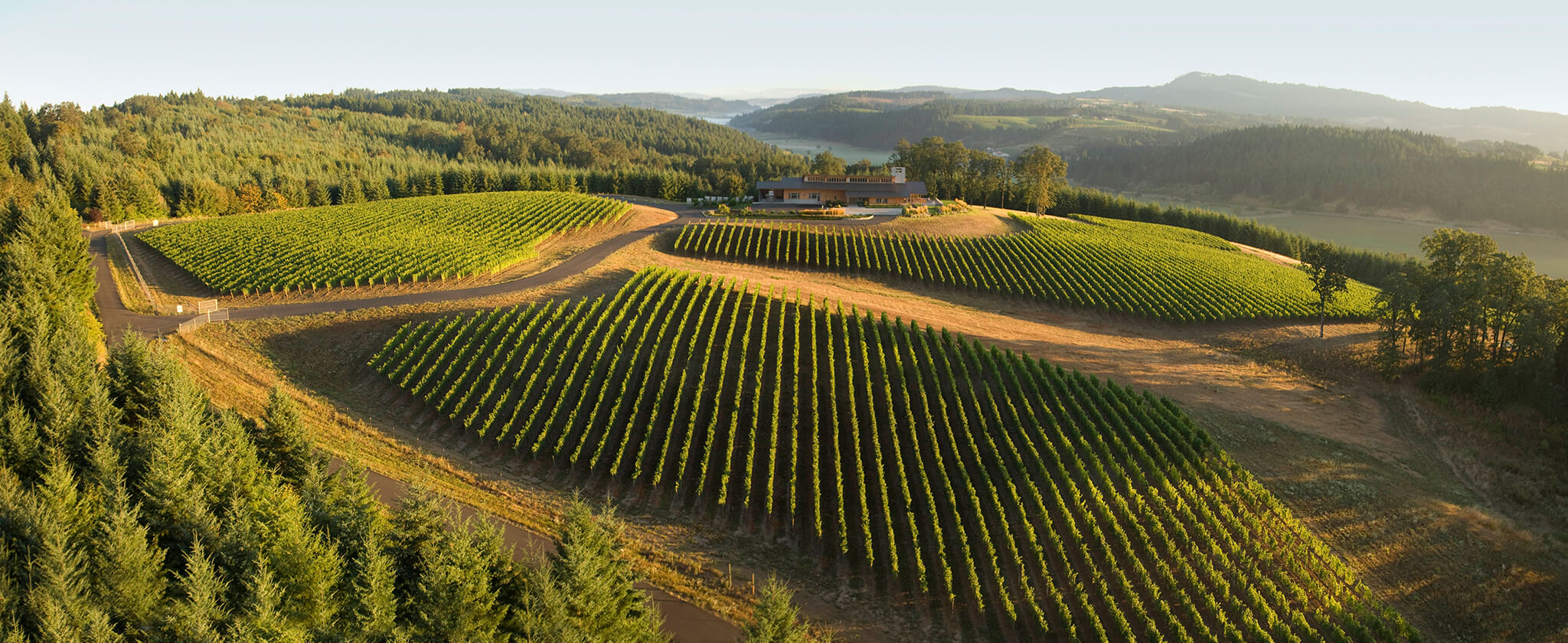
Penner-Ash Cellars. Source: Jackson Family Wines
[TaV]: Given an opportunity to work anywhere in the world, is there a winery or a winemaker you would choose to work at/with?
[KA]: I’ve been lucky enough to work in several winemaking regions in the world, but never in France. Given the relationship with Domaine Drouhin Oregon, I’d love to get a chance to work with Véronique.
[TaV]: Along the same lines – is there a wine you always wanted to make but didn’t get the chance to do it yet?
[KA]: That’s a hard one to answer. There are so many varieties of wine out there that it’s hard to put a finger on what exactly I’d desire to make most. I’m just happy that my early learning years took me to winegrowing areas that broadened my experiences and gave me an opportunity to create many different varieties of wines.
[TaV]: What was it like working with Lynn when you started at Penner-Ash in 2018?
[KA]: I actually started working with Lynn in May of 2016 but was promoted Winemaker in 2018. Working with Lynn has been one of the biggest delights of my career. As we all know, Lynn is a staple in this industry and that in and of itself can be intimidating, but she created such a warm and welcoming environment for me. We really worked in lockstep as she taught me about each of the vineyards we source fruit from; the pillars on which Penner-Ash rests. I can’t begin to recount the funny conversations we shared across the blending table from each other, the barrels we’ve tasted and scored, the fermenters we smelled together each morning. The relationship I was able to form with Lynn over the past nearly seven years has been nothing less than incredible. She was a mentor, but even more she became the most amazing colleague.


As usual, I had an opportunity to try a few wines from the Penner-Ash cellars – here are my notes:
2021 Penner-Ash Chardonnay Willamette Valley (14.6% ABV)
Straw pale
Apples, a touch of vanilla
Clean, crisp, Whitestone fruit and apples on the palate, distant hint of honeysuckle. The fruit quickly dissipated on the finish, with lingering tartness and afterward, acidity.
7+/8-, if you are looking for classic but very lean chardonnay, this is your wine.
2021 Penner-Ash Pinot Noir Willamette Valley (14.1% ABV)
Dark Ruby
Cherries, plums, and violets -classic Pinot nose
Very interesting temperature dependency
At room temperature, the wine appears as classic California Pinot Noir, with sweet cherries, plums, vanilla, borderline flabby
When served chilled, the wine is dark and concentrated, with a core of tart cherries and some espresso notes. Perfectly structured and full of energy.
Room temperature: 7/7+
Fridge temperature: 8-
Here you, my friends. Another story of passion for the finicky grape. Until the next time – cheers!
P.S. For more stories of Passion and Pinot please visit the series’ main page.
Leave a reply to mukulmanku Cancel reply
Last Bottle Sign Up ($10 credit)




 Talk-A-Vino
Wonderfully written. Loved reading it.
Thank you for your kind words!