Archive
Wine Bloggers Conference (#WBC14), Day 3
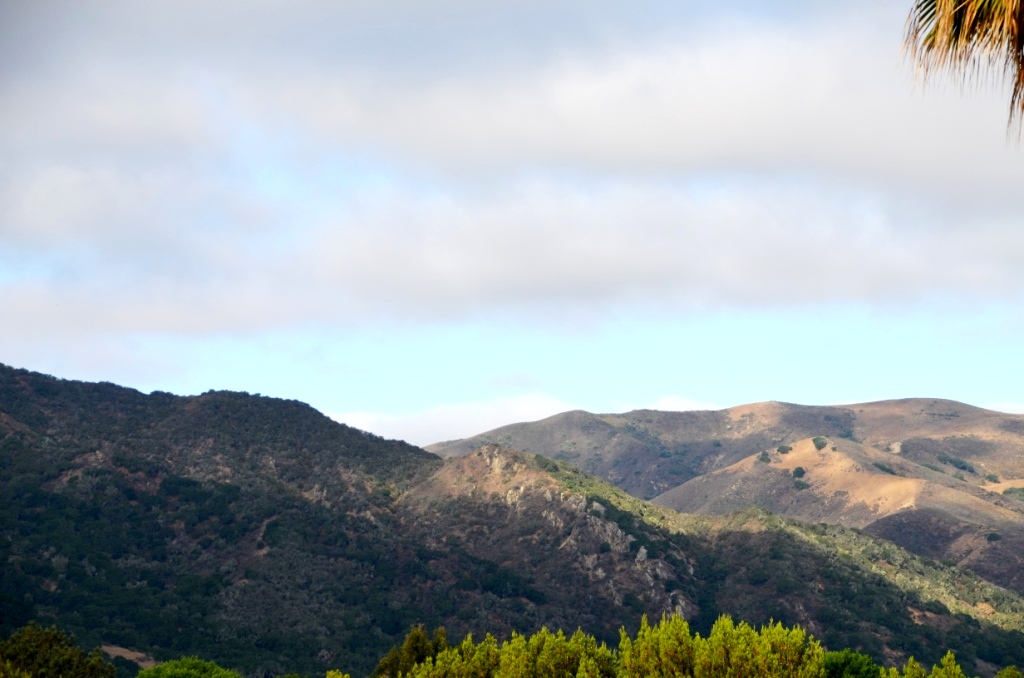 A month after, but we are on the finishing stretch! Don’t know if it makes sense to provide such a detailed account of the day’s events now – but, I feel compelled to complete this self-appointed assignment. Here is what was happening during the Day3, technically the last day of the Wine Bloggers Conference (here are my notes from the Day 1 and Day 2).
We started our morning a bit earlier than the day before, and with the breakout session, not with the brunch (yeah, I was getting very comfortable starting to drink the wine at 10 am, but no…). From the group of offered breakout sessions I chose the one called Business of Blogging. Considering the amount of time, hard work and obsession going into all of the blogs, it is only reasonable to expect that bloggers would be interested in learning about the ways their passion can bear some tangible fruit (yep, I’m talking about money here).
The session was presented by the twin sisters, Alexandra and Kymberly Williams, who run popular fitness blog called Fun and Fit. Their blog is also a successful business, thus they definitely have a lot of good advice to offer. Here are few of the basic takeaways from that session:
- Ethics – your reputation is all you got. Make sure you have the business ethics rules, and follow them.
- Referrals! (Cooperate, don’t compete) – help the others, and they will help you.
- Say no when necessary – don’t take upon every project which might be coming your way – sometimes, “no” is the best answer.
- Ask what you want (people can’t read your mind) – I think this is quite clear
- Clarify and define – work on your offerings!
- Negotiate – find the way to get what you want!
- Work with brand partners, help them to make money, and build relationships – I think you got this one
- Know your readers and service to their lifestyle – know your followers and give them what they want
Second breakout session was about Search Engine Optimization (SEO), and still no wine…. SEO is literally one and only tool bloggers have to be found and to build the listening audience. The session was presented by Timothy Resnik from the company called Moz, which provides set of tools for search optimization and web site analytics. Timothy’s presentation was excellent and very detailed – unfortunately, I can’t take an advantage of most of his suggestions, as it requires a self-hosted blog web site, such as WordPress.org, and I’m using here WordPress.com, where I pretty much have no control over analytics data. Just in case this information might help you, Timothy’s presentation is available on SlideShare – here is the link.
Next – yes, we got to drink wine, as this was the lunch time! It was the lunch with with the Santa Barbara County winemakers, and there were many of them present, pouring and explaining at the same time. I have to admit that the choice of food for the lunch with wine was very strange – technically, the only choice was green salad with grilled chicken, made in three slight variations of flavor – this is not the food to serve if you expect people to drink the wine. Well, anyway, the were many good wines, and here are just a very few highlights:
2013 Baehner Fournier Rosé de Merlot, Santa Ynez Valley – very impressive, clean strawberries profile on the nose and the palate, supple, plump, with substantial body and overall delicious. Drinkability: 8
2011 Consilience Grenache Santa Barbara County – restrained fruit on the nose, round, well balanced, smokey fruit in the back. Drinkability: 8-
2010 Bedford Archive Syrah Santa Barbara County – elegant dark fruit on the nose and palate, dark and dense. Drinkability: 8-
2012 Stolpman Vineyards Estate Syrah Ballard Canyon – dark roasted fruit, touch of spices, good balance. Drinkability: 8-
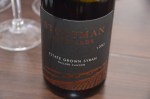
We started afternoon again with the breakout sessions. This time all the sessions were dedicated to wine and of course, included the tasting (Theme: Wine Discovery Breakout Sessions). Out of the 3 available, I picked Ballard Canyon Syrah session (two others were Sanford Winery Sta. Rita Hills and Wines of Greece) – I love Syrah in all forms, and I never heard of Ballard Canyon, so it was an easy choice for me.
Let me say a few words about Ballard Canyon appellation first. Ballard Canyon AVA is not even one year old – it was approved in October of 2013. Syrah is the primary grape in this small appellation located right in the middle of the Santa Barbara County:
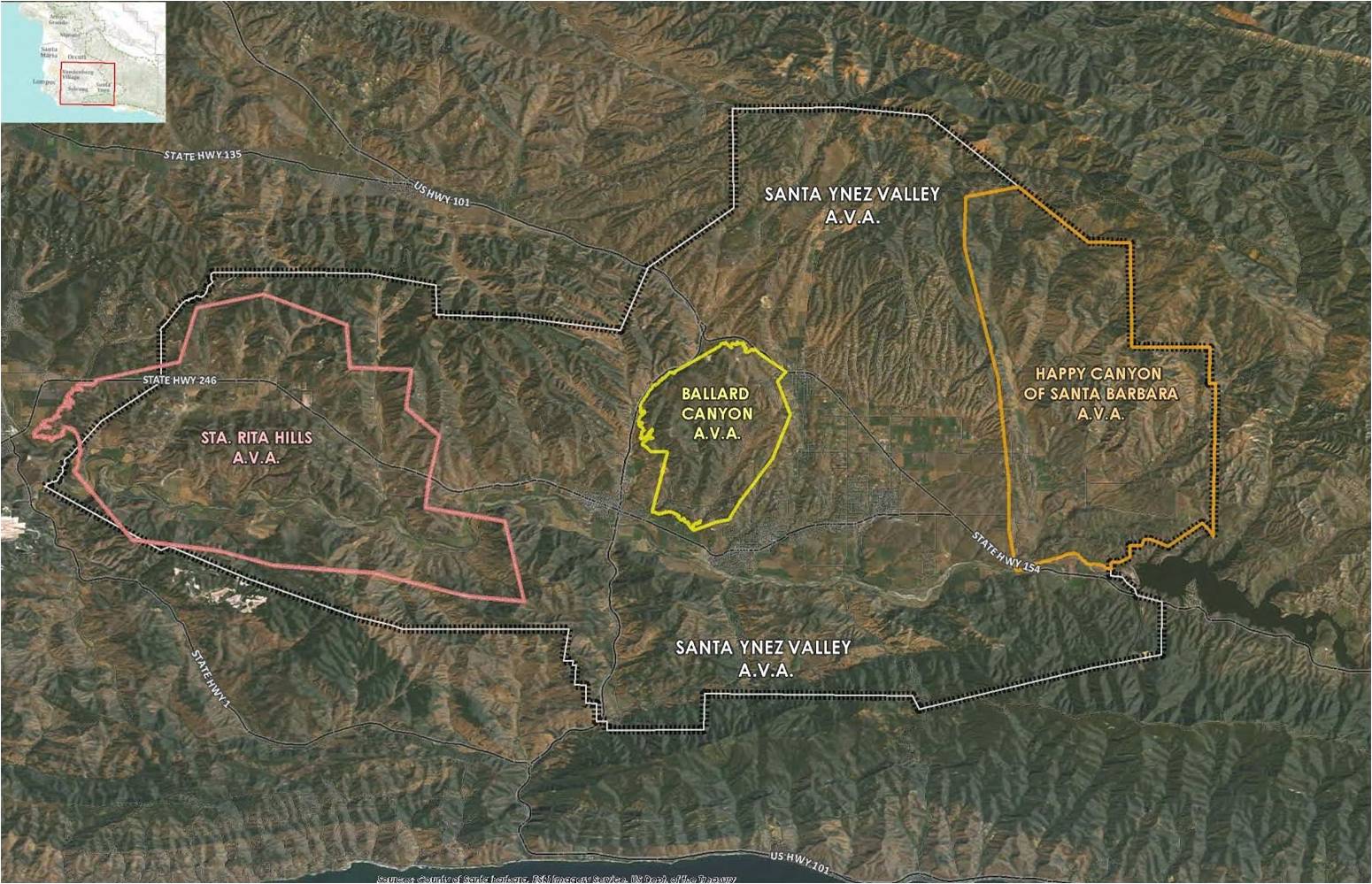 Ballard Canyon AVA was created to capture the essence of soil and climate through the noble grape, Syrah, which is significant enough for this AVA to be known as “Syrah Territory”. Well, yes, Syrah is not the only grape growing in Ballard Canyon AVA, but Syrah plantings exceed plantings of all other grapes, red and white, combined.
The session was presented as a panel discussion, with Patrick Comiskey, Senior Editor for the Wine & Spirits Magazine starting it off with introduction into the state of Syrah in the US. Patrick is one of the leading authorities on the Rhone varieties (and Syrah is squarely one of them), and he is also writing the book on American Rhône movement. I was surprised to hear from Patrick that Syrah is not doing well in US, that it is very difficult to sell and it doesn’t get much recognition. Leaving Shiraz aside for a moment, best known Syrah wines in the world are coming from France. If we will compare Syrah with Cabernet, Merlot and Pinot Noir based on the French wines, and then will look at the US, the proportions of popularity/demand are about the same. And thinking about all the cult and impossible to get wines such as Sin Qua None, Alban, Saxum, Cayuse, No Girls and many others, I think Syrah is doing not that bad… Oh well, I would love to debate it with Patrick over a glass of 1999 La Landonne, but let’s get back to our Ballard Canyon session.


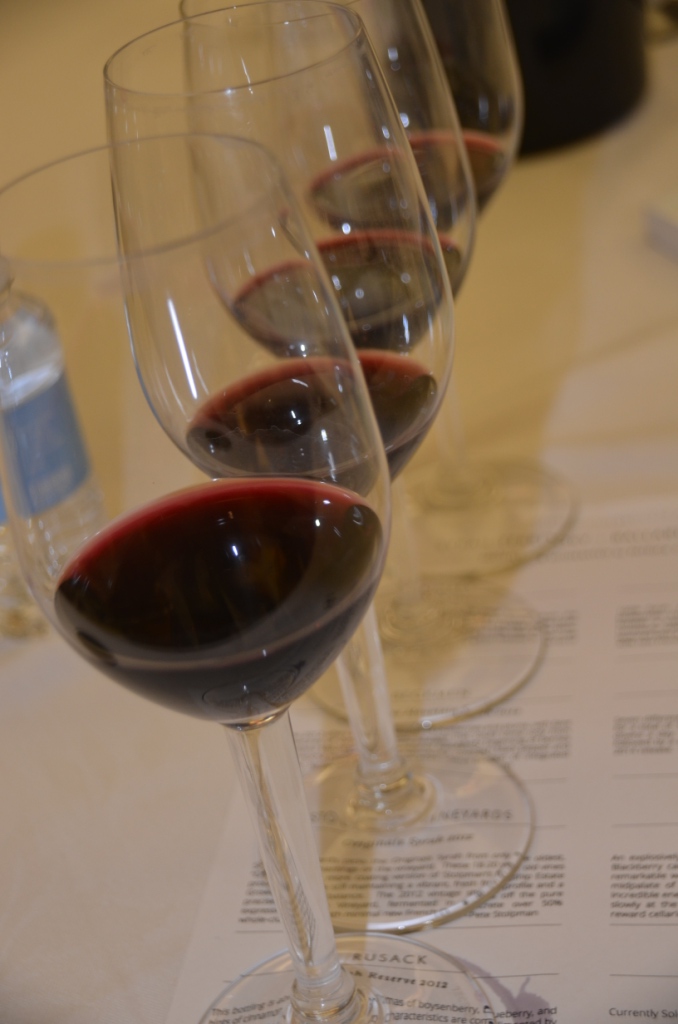 Eight Ballard Canyon winemakers presented at our session (which is a half of total of 16 wineries in the Ballard Canyon AVA), and we had an opportunity to try 7 different wines (the Saarloos + Sons was completely sold out). Here are my notes from the tasting:
2012 Kimsey Syrah
Southwest corner of the appellation. Soft fruit on the nose, dark roasted notes. Spicy, mineral, strong acidity. Young vineyard. Drinkability: 7
2012 Beckmen Purisma Mountain Syrah
BiodynamicLly farmed since 2006, certified since 2009. Tobacco on the nose, nice dark fruit, inviting. Nice, soft fruit, perfect acidity, dark chocolate. Drinkability: 8-/8
2012 Stolpman Original Syrah
Nice, open nose, fresh red fruit,blueberries, a bit sharp on the palate, cherries, espresso. Drinkability: 7+
2012 Rusack Syrah Reserve
Nice, concentrated nose, hint of fresh berries – blueberries, raspberries, touch of roasted flavors. Beautiful fruit on the palate, fresh berries, but supported by fresh tannins. Needs time as tannins are overpowering. Drinkability: 7+
2010 Harrison Clarke Cuvée Charlotte Syrah (15.2% ABV)
Hint of barnyard! dark fruit, baking spices. Cherries on the palate, tannins explicit. Drinkability: 8-
2010 Larner Estate Syrah
Bright Fresh berries, touch medicinal smell on the nose (iodine?), inviting. Beautiful palate, a touch of pepper, enveloping tannins, fresh and open berries, lavender. Drinkability: 8
2010 Jonata Sangre de Jonata Syrah
Bright nose of your fruit, touch of blueberries. More bright fruit on the palate, but then green branches and strong tannins, lacking pleasure. Drinkability: 7
Our day continued with the Panel of Professional Print Wine Writers. Steve Heimoff, James Conaway and Mike Dunne, professional journalists, wine writers and authors of a number of wine books, talked about various aspects of the wine writing. This happened to be one of the most controversial panels of the WBC14, which generated multiple blog posts and whirlwind of opinionated exchanges among the participants. I would have to agree with the Messrs. Heimoff, Conaway and Dunne that in a big schema of things, the quality of writing in the wine blogs can be greatly improved (this very blog you are reading is definitely the subject of such criticism). For the rest of it, just google “Panel of Professional Print Wine Writers wbc14”, and you will get tons of reading material blasting this session, presenters and content – though I have to say that I disagree with a lot of popular criticism. When presented with information, often it is our personal choice whether we will see it as positive or negative, so let’s leave it at that (yes, I do think it was a useful session overall).
Moving on, our next session was the Live Wine Blogging – The Reds, the speed tasting of the red wines, which I already covered in the full detail here. Well, it was actually the last organized session for the day. We still had more wine to drink events in the agenda, but from point of view of the organized sessions we were done.
Our next event was Wines of the World Reception, where we had an opportunity to taste wines from Greece, Italy, Portugal and other countries. At this point in time, I lost an ability to take any kind of reasonable tasting notes, so I had to go simply by “aha, this is good” or “ouch, moving on”. I have to mention that wines of Greece helped me to make a good progress with my Wine Century Club journey towards the coveted Pentavini (500 grapes tasted level) – I added 5 new grapes:
Liatico – 2011 Domaine Douloufakis “Dafnios” Liatiko Crete (red)
Krassato – 2007 Tsantali Rapsani reserve Rapsani AOP Greece (red)
Stavroto – 2007 Tsantali Rapsani reserve Rapsani AOP Greece (red)
Avgoustiatis – 2013 Mercouri Estate Lampadias Rose, Greece (red)
Savatiano – 2013 Papagiannakos Savatiano Greece (white)
Last two events of the day – Wine Blog Awards Presentation and Dinner. To me, Wine Blog Awards feels like a coveted achievement. However, for the last three years, watching the process of nomination, then selection of the finalists and then, for the first time, presentation of the awards, gives me only a thought of diminishing returns. The duration of the time for nomination is literally reducing from a year to a year, and nomination period is open out of blue (I don’t know if this is the attempt to reduce the number of nominations?). This year, we didn’t even know who the judges were. Selection of the wine blogs for the finalists is very strange, as many of the same blogs are nominated for the different categories, and moreover, the blogs are nominated year after year after year. And finally, out of the 9 awards, only two winners were present at the WBC to pick up their awards… It is funny that if you go to the Wine Blog Awards web site now, instead of finding information about the 2014 winners, you can finally find out who the judges were… The whole wine blog awards process needs a revamp and a fresh start, it is way too disorganized as it is.
You know what – this blog post is becoming one of the longest I ever written, so I need to round it up. The food at the dinner was okay, the wines were very good – there was a good selection of the Santa Barbara County wines present at every table, and the selection was different from the table to a table. After dinner, there was more wine – not only parties continued in the number of rooms and suites, but also a number of people brought the wines with them to share, and it was really the last night to drink them. I tried for the first time Horton Norton from Virginia – I had Norton wines before, but this was the first time I tried any of the Horton wines, which is considered one of the best wineries in Virginia (the wine was excellent). Then there were Texas wines, courtesy of SAHMMelier. She brought 2012 Brennan Vineyards Viognier (perfumy and delicious) and 2011 Bending Branch Winery Tannat (powerful and sophisticated). We also tasted 2001 Cottonwood Canyon Pinot Noir Santa Maria Valley (fragrant and beautiful for the 13 years old wine), and 2011 Kalyra MC2 Santa Ynez Valley (restrained and balanced). For some reason, I’m under impression that there was also a wine from Oklahoma (!), but – no picture and no notes, so yeah, it is my loss.


And we are done, done, done here! Sometimes procrastination has its rewards – only yesterday I got the email from organizers of WBC14, Zephyr Adventures, which also included the link to the blog post with all presentations from the WBC14 – here it is if you would like to look at them. And (almost) last but not least – Wine Bloggers Conference 2015 will take place in the beautiful town of Corning in the Finger Lakes region in New York, August 13-16, 2015 – if you are into the wine blogging, you definitely have to be there, you have to experience WBC to yourself. The registration is open now, and (this is what they say) availability is limited, so you might want to think about putting the stake into the ground now…
Last thing (I promise) before we are done – I would like to thank Zephyr Adventures and Santa Barbara Vintners for the great event they put together for all the wine bloggers. I know firsthand how hard it is to organize a great conference, and especially considering the size and diversity of the wine bloggers group, I can only say wholeheartedly “Thank you very much!!” for all the hard work put into bringing together such a great event.
Yes, we are done. If you are still with me, thank you very much for reading. Cheers!
Wine Bloggers Conference 2014: Live Wine Blogging
I’m continuing my stories from the Wine Bloggers Conference 2014 (here are the links to the Day 1 and Day 2 posts). The subject of this post is tasting of the wines in the time-constrained scenario, or the Live Wine Blogging sessions (also some attendees called it “speedtasting”).
When it comes to the wine tastings of the large scale, I pride myself with being a professional. I’m attending trade wine tasting events for many years, and I don’t have any issues being faced with 300-400 wines in only 3 -4 hours of time. No problems. You use spitton, and you are very decisive about what you want and don’t want to try. I also take pictures and very minimal notes (typically the “+” signs with few descriptors) to designate the wines I like.
The Live Wine Blogging Session was yet a very new and different experience. All attendees sit at the round tables. Each table has a number in the middle. Winemakers are ready with their wines and information in hand. As soon as the host says “go”, winemakers approach the tables they are next to, start pouring their wines and talk about them. 4 minutes 30 seconds into this, the host shouts a “30 seconds warning”, and on the 5 minutes mark the next instruction is “winemakers, go to the next table” (next table with the higher number it is). The session lasts for 50 minutes – 10 wines, 5 minutes per wine.
This is the “Live Blogging Session” – so the bloggers are expected to share their impressions live in real time as they taste the wines. What do you think about the 5 minutes time allotment for this task? I found it quite challenging. Yes, 5 minutes is more then plenty to figure out if you like the wine or not. But to come up with some reasonable impressions and taste descriptors (don’t think “nice wine” is a good qualifier) and to share them with the world with the 140 characters limit is not a simple task in my opinion. I don’t know how the winemakers felt, but for sure I was exhausted by the end of each 50 minute session.
Another feature of this live wine blogging exercise is complete unpredictability – the only known factor is the color of the wine which will be served in the session (White and Rose or Red). The wines come from all over the world, and there are lots of participating wineries, so at every table attendees only get to taste a fraction of the total selection available for the session. The wines also represented a broad range of price points – from $10 simple Washington Riesling to the $125 rare California Cabernet Sauvignon.
I did my best to adhere to the principal of the “live blogging” and posted all notes on twitter as we tasted the wines, in real time (if interested, look for twits with #wbc14 hashtag). For what is worth, below are the notes as they appeared on Twitter, with the small processing I did to make them more concise. To give you a “live” example, here is how the twits looked like in the real time:
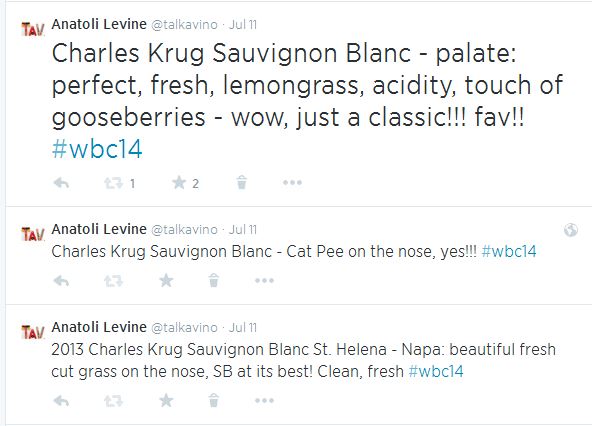 Here are my notes for the white wines (each line represents a separate twit, so mostly I had 2 twits per wine, with some exceptions):
2013 Main & Geary Chardonnay Sonoma – beautiful nose, tropical fruit, apple, touch of vanilla and green apple on the palate
2012 Cornerstone Cellars Sauvignon Blanc Napa Valley – a lot of white fruit on the nose, palate: touch of grass, steely acidity
Cornerstone Cellars Sauvignon Blanc is made to age. long finish, very acidic. Food wine
2013 Aridus Viognier Arizona (!) – beautiful nose, classic floral Viognier – wow palate! Very elegant (despite a touch of heat)
also nice saltiness on the palate, great complexity. Most favorite so far
2012 Alta Maria Vineyards Chardonnay Santa Maria Valley – great nose, nuttiness, vanilla, touch of butter
closed on the palate, Chablis like acidity. needs time!
2012 Fess Parker Viognier Santa Barbara County – nice nose, minerality and gunflint. Sweet fruit on the palate, very balanced, short-med finish
finish is longer than I thought, nice acidity. Very good overall
2011 Scratchpad Chardonnay Central Coast – label and the bottle – creativity through the roof!!!
Chablis-like nose, minerality, touch of vanilla, but the palate is somewhat single dimensional. Malo noticbl
2012 Pacific Rim Riesling Columbia Valley, WA – Sweet nose, nice acidity, good fruit – but overall doesn’t resemble Riesling
it is a nice wine for $10, but it wouldn’t pass for Riesling if I crave one. Okay summer wine
2013 Urban Legend Grenache Blanc Capay Valley – beautiful nose, white ripe fruit, fresh, clean
fresh palate, good acidity, white stone fruit, minerality – very pleasant. Medium finish
2012 Uproot Grenache Blanc Santa Ynez Valley – restrained nose, nice minerality, melon, earthiness
palate: acidity, spices, nutmeg, minerality, clean, refreshing. very Good overall
2013 Charles Krug Sauvignon Blanc St. Helena – Napa: beautiful fresh cut grass on the nose, SB at its best! Clean, fresh
Cat Pee on the nose, yes!!!
palate: perfect, fresh, lemongrass, acidity, touch of gooseberries – wow, just a classic!!! fav!!
Charles Krug Sauvignon Blanc was definitely my most favorite wine of that session. Aridus Viognier from Arizona was most unique (I don’t get to taste too many wines from Arizona). The “prize” for most creative design goes to the Scratchpad Chardonnay, taking into account both the cool label and a little pencil which hangs of the bottle top – unfortunately, the taste didn’t fully support the creativity of the bottle.
And here are the reds:
2012 Garnet Vineyards Estate Farmed Pinot Noir Sonoma Coast – beautiful ruby color, touch of smoke, earthy, herbaceous
beautiful sweet fruit on the palate, young gripping tannins, pomegranate, slight heat in the back
long sweet finish. Needs a bit of time (2012)
Vineyard 511 2010 Cabernet Sauvignon Diamond Mountain – dark garnet color, sweet plums and cassis on the nose, touch of eucalyptus
beautiful! Great density, soft, approachable, with firm tannins, perfect acidity. will evolve greatly
Rodney Strong Vineyards 2011 Symmetry Meritage – open herbaceous nose, touch of red fruit, raspberries
nice Bordeaux blend, cherries, firm structure, firm tannins
2011 Rios de Chile Reserve Carmenere – barnyard, smoke, complexity on the nose, bacon and roasted meat
beautiful, round,concentrated, dark fruit, herbs, spices
2006 Jordan Winery Cabernet Sauvignon – beautiful nose, open fruit, touch of earthiness, cassis, the same on the palate. Perfect Cab!
2010 Jordan Winery Cabernet Sauvignon – wow, open, explicit nose, eucalyptus, soft fruit, wow again. young tannins
2010 Adelaida Cellars Touriga Nacional – mind blowing nose, beautiful fresh fruit, wild berries – strawberries and blueberries
spectacular palate of fresh berries, firm, concentrated, excellent balance. Great wine
2011 Danza Del Sol Cabernet Franc Temecula Valley – varietally correct nose, touch of cassis and eucalyptus, green bell pepper
great palate, fresh fruit, balancing tannins and acidity. An excellent effort
2012 Ferrari Carano Siena fresh berries nose with hint of smoke and tobacco
sweet fruit on the palate, some cherries, round and delicious. Excellent balance
2011 Carr Winery Cabernet Franc Santa Ynez Valley interesting nose – mineral, with some cherries, eucalyptus, cassis
soft, delicious palate, with more eucalyptus, cassis and greens bell pepper. Perfectly balanced and soft
2010 Grassini Wines Estate Cabernet Sauvignon on the nose, young fruit with some smokiness, minerality
lots of sweet fruit on the palate (too much for me), mocha, good structure
2011 Taken Red Wine Napa Valley – blueberries and blackberries on the nose, nicely restrained
palate – delicious, perfect acidity, firm tannins, good structure, right amount of fruit and excellent balance
The red wines line up was very impressive, it is hard to pick the favorite. The Adealida Touriga Nacional from Paso Robles was probably the most unusual (my first 100% Touriga Nacional wine from US), and very tasty. Jordan is always a stand out for me, and both 2006 and 2010 were delicious. My wine of the day was still the Vineyard 511 – a rare treat from the Diamond Mountain district (tiny area of 500 acres in size) in Napa Valley, perfectly structured and impeccably balanced wine; the conversation with Ed and Irene Ojdana who makes the Vineyard 511 Cabernet Sauvignon was a pleasure in itself. I also have to mention Taken Red wine from Napa Valley, which was simply put on our table after the session concluded – this was an excellent wine, created by Carlo Trinchero and Josh Phelps, both coming from the very well respected winemakinig families in California.
Here we are – two speedtasting, live wine blogging sessions. I know that this exercise is very polarizing for many attendees – some hate it, and some love it. I’m in the latter category, and I definitely enjoyed the sessions and already looking forward to the repeat at the next year’s conference. What do you think – would you love it or hate it? Cheers!
Wine Bloggers Conference 2014 (#WBC14), Day 2
Yet another ambitious project hitting the dust. I was determined to write blog post updates in the morning of the very next day of the Wine Bloggers Conference – and as you can see, it didn’t happened – I’m back home in Connecticut (nope, not even that – I’ actually on vacation in Cape Cod, and Wine Bloggers Conference 2014 is fading in the metaphorical rear view mirror. Nevertheless, I will finish this the way I initially envisioned – as a series of the blog post about WBC14. Let’s get to it…
 Friday was the first full day of Wine Bloggers Conference 2014 (WBC). My impressions in a few words? Overwhelmed. Is there a word for “more than overwhelmed”? The pace of learning, connecting, tasting, analyzing, networking, mingling and tasting more, more and more was incredible. Here is what was happening throughout the day – brunch (yep, a 10 AM brunch) with Portuguese wines and dishes from Brazil, India, Japan and Portugal – 11 wines and 12 different dishes. Then the opening of the conference and a keynote by Corbett Barr. A panel session with Santa Barbara County winemakers (rather founding fathers of the winemaking in Santa Barbara). Speed tasting of the 10 white wines in 50 minutes (very intense). A breakout session called “How The Pros Taste”, which included both the Pros and the wines. An excursion to the mystery destination (yes, with more wines). The Wine Tourism in North America Expo (yep, with more wines to taste), an unofficial before-party in one of the hotel suites before the actual official after-party, and then finally (oh yes, the best for last!), an official after-party, hosted by Jordan and J Wineries. So, how is that for a day for you? Pretty full schedule, huh? I will leave speed tasting and our mystery excursion for the separate posts, but for the rest of the program, here are my quick impressions.
Brunch with Portuguese food and wine was the very first in our day’s program. As I wrote a few times about Portuguese food and wines before, I would definitely agree that both Portuguese wines and cuisine are well worth the attention. At the brunch, we had an opportunity to experience 11 different wines (both white and red), as well as 12 different dishes. If you take a historic perspective on Portugal, hundreds of years ago, Portuguese influence was spread all over the world. To show that world-wide influence, the dishes in the brunch we coming from the different regions which came into a close encounter with Portuguese culture – namely, the dishes from Brasil, India, Japan and Portugal itself (of course!) were part of our brunch. I will not inundate you with all the details of the dishes and wines (despite taking the detailed notes) – I just want to mention two of my favorite wines. For the whites, 2012 Julia Kemper Branco Dão DOP was delicious, with touch of grass and flowers, very interesting nose, light and simple on the palate. As an added bonus, this wine also added one more rare grape to my collection, Encruzado. From the reds, 2010 Quinta do Romeu Colheita Douro Tinto was my favorite, with very nice dark fruit, medium body, open and round, and good balance. And for the rest of it – here are the pictures of the wines and dishes.
Next up – the conference officially opened with the keynote from Corbett Barr. Listening to Corbett Barr, an entrepreneur whose business, Fizzle, was built starting from the blog, was very relevant at the wine bloggers conference – if not as a role model, definitely as a success model his talk was reaching to the heart and soul of all the attendees (and if someone would tell me that it was not, I would question your premise of being at the bloggers conference). 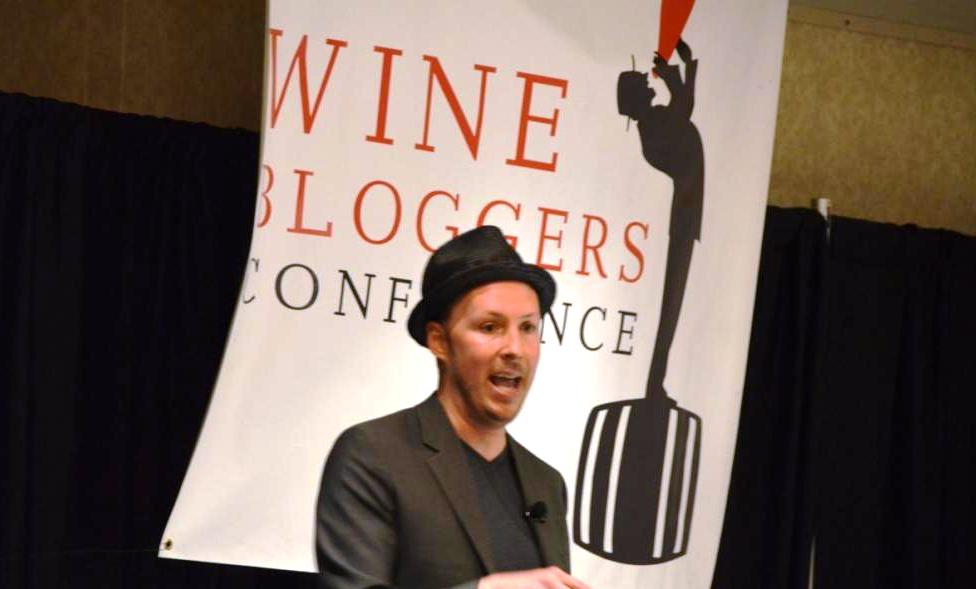 After telling his personal story, Corbett offered a number of do’s and dont’s for building the successful blog and converting it to the business. In short, here are the main ideas:
- Character Trumps Credentials – your passion is more important than many technical accolades and certifications you can achieve. Yes, the certifications are important, but it is passion, will and tenacity which will be a foundation of your success.
- Be different. Stand out. Don’t blend in. Yes, you have to find your own way, don’t be “one of many”.
- Find what works. Don’t repeat exact same thing over and over again, expecting that magically what was not working 100 times, will work on 101st. If something doesn’t work, looks for what will – but keep going.
- Hope is not a marketing strategy. Find where your readers are and figure out how to get in front of them.
- Your blog is not your business. Understand what your business is. The blog is just a tool to help your business, but not the business by itself.
- Keep going, constantly evolving. If you will continue looking for what works and improve all the time, you will [almost magically] leapfrog at some point to your success.
- Mastermind 101 – “You are the average of the five people you spend the most time with” – Jim Rohn. Talk to the people who “get it”. If you will talk to “achievers”, you will [at some point] becoe one yourself.
This is a very lose approximation of what Corbett Barr had to say, but I hope I was able to give you at least the basic idea. And for more information, head over to his web site and read, read, read.
Our day continued with the panel session of Santa Barbara winemakers. Session was moderated by Larry Shafer, the winemaker behind the Tercero label, and it brought together the people who were instrumental in starting and growing Santa Barbara wine industry – Richard Sanford, Ken Brown, Rick Longoria and Bob Lindquist. We learned about the Santa Barbara wine region which started in 1968 with the Santa Barbara Winery, and had grown into the prominent producer of Pinot Noir and Rhone-style wines. 40 different grape varieties are growing today in Santa Barbara area, and a lot of Santa Barbara grapes are shipped to Paso Robles and Napa and used in the coastal blends. Passion, friendship and love to the beautiful Santa Barbara wine region is something which was clearly showing through the words of all the winemakers.
Our next session was the speed tasting of white wines and Rose, which I will be talking about separately – I can only tell you that it was a fun exercise.
You know what else is great about the wine bloggers conference? You get to taste the wines which are not necessarily are even yet available to the general public. Case in point – a unique Viognier, Marsanne, Roussane blend from … Argentina – 2012 Hand of God Fingerprint Series Sobremesa Vineyard VRM White Blend. The wine is in the process of being brought to the United States, and nevertheless we had an opportunity to taste this aromatic, big and well structured white wine, which was simply poured by the winemaker while we were walking from one session to another.


The last session of the day was a so called breakout session, where we had to chose between three different sessions running in parallel in the different rooms. I decided to go and learn “How the Pros Taste”. This session was a panel discussion led by Steve Heimoff, the wine writer who is now the Director of PR for Jackson Family wines, Joe Roberts, a.k.a. 1 Wine Dude, and Patrick Comiskey, senior editor for Wine & Spirits magazine. The idea of the panel was to discuss the ways of the professionals tasting tens of thousands of wines every year, and issues they are facing – and I think the panel did the fine job with issues and challenges. Talking about the “ways” was a bit less successful – I would expect the panelists to explain more of a “how to”, their methods for assessing the wines in the mass quantities – which didn’t take place. And then we tasted 4 wines, 3 of which we selected by the panelists, and one “double blind”, unknown even to the panelists. The selected wines were supposed to represent the unique view point of each panelist, the wines which are “best of the breed” and emotionally engaging. Considering that, I would highly question the rationale of including very obscure wines in this “representative” tasting, but this is mostly what happened. The 2012 Yves Leccia Patrimonio Blanc, a Vermentino wine from Corsica, had nothing but the acidity and didn’t speak to me at all. It didn’t create nor demonstrated any emotional connection. 2013 Poet’s Leap Riesling Washington, while might be typical for Washington, didn’t deliver much pleasure either, and it didn’t connect with the Washington Rieslings as I know them from the Chateau St. Michelle or Snoqualme. Again, I would highly question inclusion of such a wine as “exemplary”. The red wines fared a lot better. 2011 Cambria Clone 4 Pinot Noir Santa Maria Valley was quintessentially Californian, with beautiful nose of smoked cherries, exemplary palate full of forest floor, gentle fruit and perfect balance. Our double-blind wine surprised everybody, including the esteemed panel – clean cherries and acidity were pointing in the direction of Montepulciano from Italy, and the wine happened to be an Yangarra Grenache McLaren Vale from Australia – but it was a very tasty wine. All in all, this was an interesting session, but I would like to see it done differently, more focused on classic methods and classic wines (definitely for the whites).


And then we had a mystery bus excursion. I will keep it a mystery until the next post (trust me, it was good enough for the separate post). When we came back in the evening, we still faced … yes, you guessed it – more wine! The Wine Tourism Throughout North America expo was focused mostly on California wines (or may be I was too tired to notice anything else). I tried a few wines, out of which 2010 Mad Hatter Napa Valley was clearly a stand out – dense and concentrated, with layered fruit, it had a lot of dark power (similar to its color), very drinkable now, but holding also a great promise to evolve. This wine was made by the famed Andy Ericsson (Screaming Eagle, Harlan, Favia and many others). Few other interesting wines were 2007 Terra Valentine Spring Mountain District Cabernet Sauvignon Napa Valley, very clean and classic. 2011 Steven Kent Vinery Cabernet Franc Livermore Valley was perfectly on the mark with beautiful cassis undertones, and 2012 Vasco Urbano “Norm” Grenache Livermore Valley was luscious and delicate, with nice fresh fruit on the nose and the palate.


The “before-Party” for after party was generously hosted by Banfi folks in one of the hotel suites, and the highlights were mostly Italian wines with the few of the wines from Washington state. The 2013 Pacific Rim Chenin Blanc Yakima Valley was perfectly balanced and had an excellent fresh white fruit, a bit of mineral notes and rounding acidity. The Sartori di Verona Ferdi Bianco Veronese IGT was very unique and unusual, an Amarone-style wine (100% Garganega grapes, dried for 40 days on straw mats), with big fruit notes, full body and somewhat sharp acidity.


And last, but not least – an offical after-party, hosted by J Vineyards and Jordan! Both J and Jordan are some of my favorite wines in general, and what a treat it was! Probably unsurprisingly, I was a bit tired after such a day, so I didn’t take too many pictures. But the wines were outstanding. J were pouring both of their sparklers, the White and Rose, as well as the Pinot Noir. And Jordan… How about a full vertical of the Jordan Cabernet Sauvignon Alexander Valley from 2002 until the 2008, including 2005 and 2006 in both 750 and magnum sizes! All the wines, including 2002, tasted fresh and delicious – again, no detailed notes (if you want to blame me for the luck of attention, be my guest). I was especially happy to see that 2002 showing absolutely no signs of age, and 2005 being delicious with still powerful tannins – I have a few bottles of 2005 in the fridge and it seems that I have no reason to touch the for a good while. 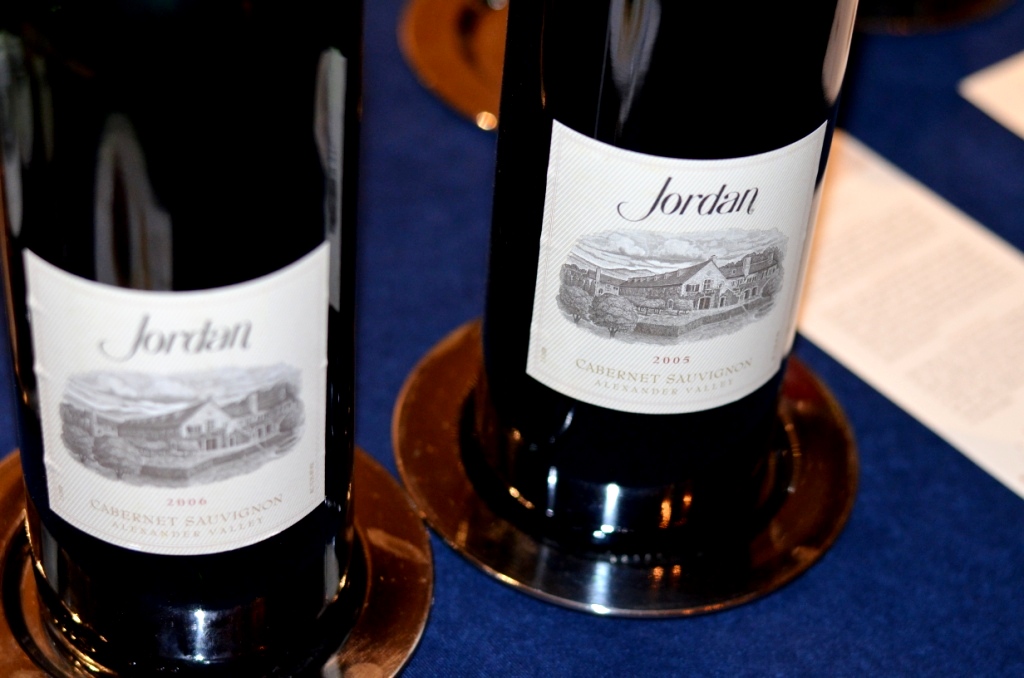 For what it worth, this was an attempt to give you an idea of the happenings in the first day of Wine Bloggers Conference (two more posts will be coming). Hope you are still reading this, and if you are, I want to thank you for your patience. Just one question, if I may – after reading this post, did it make you want to come to the #WBC15, or stay away from it as far as possible? Let me know! Cheers!
P.S. For some reason, this was one of the most difficult posts I ever wrote for this blog… But I’m glad I finished it.
Wine Bloggers Conference 2014 (#WBC14), Day 1
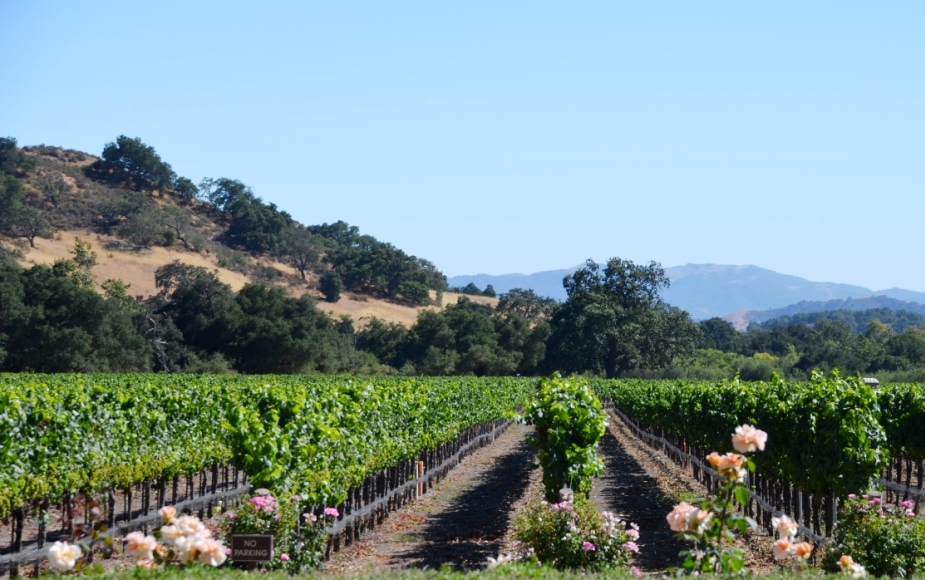 I’m attending the Wine Bloggers Conference 2014 in Santa Barbara, California, and what I will try to do is to give you a brief round up of my daily experiences. This is my only hope to have some level of concise picture of what was happening at the conference – there are way too many wines to taste and way too many experiences to have – unless I do this daily, it will all blur together next week.
In case you are not familiar with the event, Wine Bloggers Conference is exactly what the name says – an event where wine bloggers, wine writers and wine producers get together and discuss all the aspects of the “wine media”. Now in its 7th year, the Wine Bloggers Conference (WBC for short) is taking place in different locations, generally related to the wine production, and this year the location is Santa Barbara county. This is my first WBC event (had been contemplating for a while), so many things are new to me. That’s all I have for the intro, if you are interested in more details, please take a look at the WBC web site.
Here is what I managed to do on my first day. I started the trip early in the morning (at about 3:30 AM) to get from New York to Santa Barbara. The two hours delay, thanks to United (my beloved airline with love/hate relationship), didn’t help, but still didn’t derail may plans, only made me to move a bit faster. Arrived, got a car (with additional unexpected delay now courtesy of Hertz) and then started driving to the Zaca Mesa winery, my first destination. Took the wrong turn, ended up on the beautiful mountain-side drive, so things started to turn to the better.
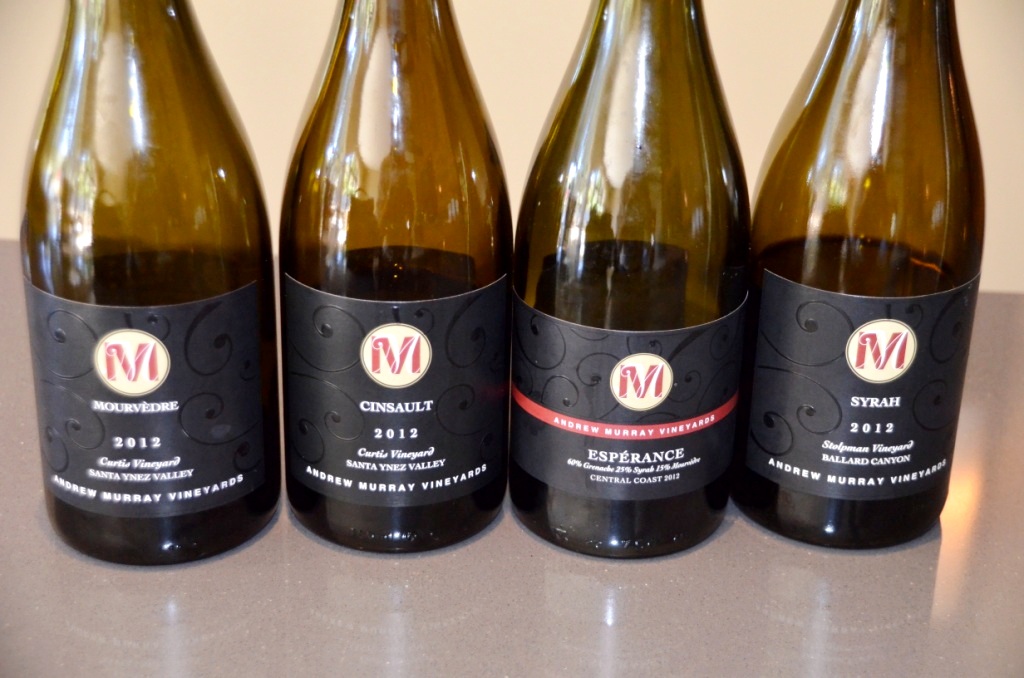
I managed to visit three wineries which we were on my list for Santa Ynez Valley – Zaca Mesa, Fess Parker and Andrew Murray. I will not give you full details of the tastings now (will reserve for the separate post), but I can tell you that all three wineries had some absolutely outstanding wines (outstanding enough to force me to break my resolve not to buy any wines during this trip). Syrah was a star at Zaca Mesa, Pinot Noir was outstanding at Fess Parker, and I was blown away by the rendition of all the Rhone varietals (Cinsault, Mourvedre, Syrah and Viognier) at Andrew Murray Vineyards – here is one picture for you:
After the tour of the wineries, I arrived to the hotel, and later on went for the expo and reception, where we had an opportunity to taste wines (surprise) and look at some innovative products.
As with any conferences and expos, we were offered a number of giveaways. Here is the most thoughtful one – bottle of water with attached travel pack of advil, for the “morning after”:

Water and Advil, how thoughtful!
Before I wil present the highlights of the tasting, let me tell you about couple of interesting product presentations. First, there was a Sonic Decanter – the device which subjects the bottle of wine to the sound energy for about 35 minutes, which completely changes the taste profile of wine. First I wanted to dismiss it as a simple gimmick, but after tasting the wine before and after, I found out that it actually works and changes the taste. If this is a good thing or a bad thing, I will let you decide after the separate post.

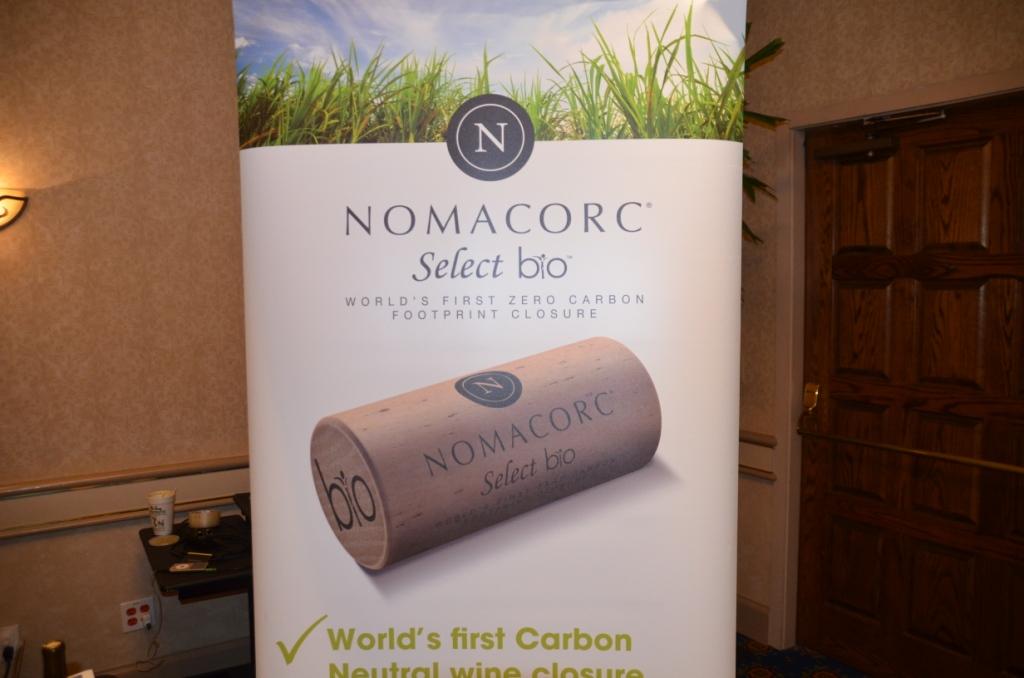 Another interesting presentation was given by Nomacork, a producer of the engineered cork. This cork is made out of the real cork tree, but it is not just a piece of the bark, it is made out of the actual cork tree material, and it can be engineered to allow different levels of oxygen exposure to the wine. To show how it works, the folks at Nomacork had a tasting of the same wine, 2012 Viognier, bottled at the same exact time with two different corks, allowing different levels of the oxygen penetration. The wine which was allowed more oxygen was showing considerably better, so this definitely works. The advantage of Nomacork is consistency, as it eliminates bottle variation, ability to control oxygen intake and the fact that it is still made from the natural material (versus Stelvin screw top, for instance) – and it is the cork which you will have to pull out and not just screw off. The disadvantage to me – I like the natural cork, and I like bottle variation, that mystical element in wine. But – as anyone else, I don’t like tainted wine… So I really can’t make up my mind on this.
And now, few of the wine highlights. Here is what I liked during the tasting – I can only give you “best memory effort” notes, as there were no paper handouts of any sort, so I had to rely only on my camera and the memory. Still, these are the wines which stood out.
2012 Ken Brown Chardonnay Nielson Vineyard Santa Maria Valley – beautiful, classic Chardonnay, with all the flavors being present and in balance – vanilla, butter, toasted bread, perfect acidity.
2013 Tercero The Outlier Gewurztraminer Santa Barbara County – I was very impressed – Gewurztraminer is one of the most difficult grapes to achieve balance, and this wine had it – touch of spice, touch of floral notes, creamy and round – an excellent wine.
2011 Alta Maria Vineyards Pinot Noir Santa Maria Valley – classic California Pinot Noir, good concentration, very well balanced.
2010 Baehner Fournier Vineyards Solus Cabernet Sauvignon, Santa Ynez Valley – classic, concentrated, hint of green bell peppers, delicious overall.
2011 Santa Barbara Winery Primitivo Joughin Vineyard, Santa Ynez Valley – another surprise – excellent, balanced wine, muted raspberries and good concentration, good acidity. Very solid effort.
2010 Ken Brown Pinot Noir Rancho La Vina Vineyard, Sta. Rita Hills – excellent California Pinot Noir – dark power and finesse.
2012 Alma Rosa Pinot Noir La Encantada Vineyard, Sta. Rita Hills – another excellent California Pinot Noir – perfect fruit and perfect balance.
2011 Longoria Tempranillo Santa Ynez Valley – and yet another surprise. Excellent Tempranillo, more on the level of Toro than Rioja or Ribera del Duero – powerful, dense, but well balanced and not over the top. I’m happy do discover more of the old world grapes perfectly executed on the US soil.
That concludes my report about the first day of the conference. Stay tuned, as we are only getting started : ). Cheers!
Wednesday’s Meritage – Wine Quiz Answer, #WBC14, Project Genome, What is in the Price
Meritage time!
Let’s start with the answer to the wine quiz #107, Grape Trivia – Blends, Part 10.
This was the last quiz in the Blends theme of the grape trivia – we are going back to the single grape quizzes for a while, before changing the subject of the quizzes to something else. But for now, here is the final set of the questions about blends – now with the answers.
Q1: Name the region in France, where total of seven of red and white grapes are permitted, but absolute majority of the wines is made out of three grapes, which includes both red and white. Blend and single grape wines are permitted, and majority of the wines (even made from single grape variety) are blended.
A1: Champagne. While Arbane, Chardonnay, Petit Meslier, Pinot Blanc, Pinot Gris, Pinot Meunier, and Pinot Noir are all allowed grapes in Champagne, absolute majority of wines is made out of Chardonnay, Pinot Noir and Pinot Meunier.
Q2: Name region in France, where multiple red and multiple white grapes are allowed to be used in production of a single red wine.
A2: Châteauneuf-du-Pape. 18 grapes are allowed to be used in production of this famous red wine, a mix of both reds and whites.
Q3: This wine in the old world wine region are traditionally made as a blend of 4 grapes (only 4 are allowed) , with one grape considered to be the major, and 3 others used in various proportions, or possibly none at all. These wines are known to have great affinity to oak and have classification based on the aging time in oak and in the bottle. Flavor profile often includes eucalyptus and cigar box, and wines have great ability to age, especially in the best years. Can you name this region?
A3: Rioja. Rioja wines are made out of the combination of Tempranillo, Mazuello, Garnacha and Graciano, with Tempranillo typically being the main grape.
Q4: This protected (trade mark protected) word came around a bit more than 25 years ago to designate the wine blend (can be both red and white) which resembles in its composition and grape usage one of the most prestigious and best known wines and overall wine styles in the world. Do you know what this word might be?
A4: Meritage! in 1988, Meritage Alliance was created in California by the group of winemakers, to promote creation of the Bordeaux-style blends, both red and white, without infringing on the Bordeaux protected name. According to Wikipedia, the red Meritage wine “must be made from a blend of at least two of the following varieties: Cabernet Sauvignon, Merlot, Cabernet Franc, Malbec, Petit Verdot, or Carmenère, with no varietal comprising more than 90% of the blend”. The same goes for the white Meritage wine: “must be made from a blend of at least two or more of the following varieties: Sauvignon blanc, Sémillon or Muscadelle du Bordelais, with no varietal comprising more than 90% of the blend”. Another interesting fact is that Meritage is a trademark protected word, and any winery using it on their labels must pay the alliance a license fee.
Q5: Wine Spectator’s rating of 100 points ( an “absolute perfection” so to speak), is not easy to get – to the date, there are only 75 wines which got the 100 rating from Wine Spectator. Taking into account only the red wines on the top 100 list, which grape or grape-dominated blend got the score of 100 most often? Different vintages of the same wine should be counted as separate votes.
a. Cabernet Sauvignon or Cabernet Sauvignon based blend, b. Merlot or Merlot based blend, c. Nebbiolo, d. Pinot Noir, e. Syrah or Syrah based blend
A5: Cabernet Sauvignon and Cabernet Sauvignon based blends are definitely in the lead among this elite group – 17 different wines received the coveted 100 points rating from the Wine Spectator. Merlot and Merlot based wines are trailing behind with 11 different wines receiving the honors.
When it comes to the results, looks like I can never estimate the difficulty of the quiz properly. I thought this was somewhat difficult, but I was proven wrong – today we have 3 winners! Jennifer Lewis (no web site), Gene Castellino (no web site) and benway69 (no web site) all correctly answered 5 out of 5 questions, so they are all the winners of this quiz and they all get the coveted prize of unlimited bragging right. Excellent Work! vinoinlove gets an honorable mention with 4 correct answers out of 5.
Now, to the interesting stuff around the vine and the web!
In the mere two weeks, The Wine Bloggers Conference 2014, dubbed WBC14, will take place in Santa Barbara County in California. More than 300 people have signed up to attend the 3 days event, to meet, greet, talk, learn and of course, drink the wine. I’m very excited as this will be my first WBC event, and of course full report will follow. I’m looking forward meeting everyone there (I know that both SAHMMelier and the drunken cyclist will be in attendance), so if you are going, let’s connect! You can find all the details about the conference at the WBC web site.
While the next interesting read item is geared more towards the wine professionals, I think many of you will find it quite interesting. Constellations Brands, one of the biggest wine producers and distributors in the world, recently published the result of the multi-year study of the behavior of the wine consumers, under the name of the Project Genome. Based on the results of that study, all wine consumers are split into the 6 different categories (Price Driven, Everyday Loyals, Overwhelmed, Image Seekers, Engaged Newcomers, Enthusiasts), with the detailed analysis of buying patterns of all the people in each category. There is a lot of interesting info in this article, so I suggest you will go read it for yourself here.
Last one for today is an interesting article at Wine-Searcher, written by Tyler Colman (who is also known as Dr. Vino). In the article, Tyler is attempting to break up a price of a $100 and then a $2 bottles of wine, to identify the price elements attributed to the different participants – the winery, distributor and the retailer, as the bottle of wine is making its way to the consumer’s hands. While it is not necessarily 100% precise, it gives you some food for thought. You can find the article here.
And we are done here. The glass is empty – but the refill is on its way! Cheers!
Last Bottle Sign Up ($10 credit)




 Talk-A-Vino