Archive
Wednesday’s Meritage – Wine Quiz Answer, Transportation Challenge Round Up, Cabernet Day, Can We Resurrect #WBW?
 Meritage Time!
Let’s start with the answers for the wine quiz #64, Grape Trivia – Riesling. In that quiz, you were supposed to answer 5 questions regarding Riesling grape.
Here are the questions, now with the answers:
Q1: Riesling is a very popular grape in US and Canada, growing in many regions. Considering the plantings of the Riesling in the regions, can you sort the list below from the biggest area plantings to the smallest?
a. California, b. New York, c. Ontario, Canada, d. State of Washington
A1:correct sequence is Washington, California, Ontario, New York
Q2: Have you heard the term “noble rot”, which is often associated with certain types of Riesling? Can you explain what this term means and to which Riesling wines it is typically applicable (at least in Germany)?
A2: Noble Rot is actually a grape fungus, officially called Botrytis Cinerea, which affects a number of different grapes and leads to subsequent shriveling (drying) of the grapes while on the vine. This drying of the grapes tremendously concentrates sugars, which allows for the grapes to be used in production of the sweetest of all Rieslings – Trockenberenauslese.
Q3: Riesling is known for sometimes developing a specific aroma which has typically nothing to do with the wine – but it is not a fault. Do you know what aroma is that?
A3: Petrol. Believe it or not, but many Riesling wines (in some rare cases, even Riesling wines outside of Germany) can develop this petrol aroma. It is usually perceived only on the nose, and it doesn’t give you a feeling of being at the gas station – it is just a light hint, but when it is present, you can safely guess your wine being Riesling even in the blind tasting.
Q4: Name one major(!) wine producing country which doesn’t produce any Riesling wines.
A4: Spain. Spain is a home to the plenty of wonderful white grapes – but it doesn’t produce any Rieslings at all.
Q5: If you look at the bottle of German Riesling, you will typically see the word such as Kabinett or Spatlese written on the label. Such words typically indicate the level of sweetness you should expect from wine – even though this is not a precise definition, as these words only indicate sugar amount in the freshly pressed grape juice – the level of sugar in the resulting wine can be quite different depending on the way the fermentation is done. Can you sort the following list of these key indicators from the lowest sugar content to the highest?
a. Auslese, b. Berenauslese, c. Eiswein, d. Kabinett, e. Spatlese, f. Trockenberenauslese
A5:The correct line up is Kabinett, Spatlese, Auslese, Berenauslese/Eiswein, Trockenberenauslese (if you need full level of details, you can always go to Wikipedia).
It seems that the first question proved to be most challenging of all, as nobody was able to provide the right answer – as the result, we don’t have a winner this week. At the same time, The Wine Getter and Foxress both get an honorable mention with 4 correct answers out of 5.
Now, to the interesting stuff around the vine and web!
First of all, I want to bring to your attention a roundup of a Monthly Wine Blogging Challenge started by Jeff (a.k.a. The Drunken Cyclist). About a month or so ago, Jeff announced a wine blogging challenge based on the theme, similar to the challenges which are popular among photography bloggers. The first theme was Transportation, and the idea was to write the wine blog post which would relate to the designated theme. 10 wine bloggers participated in this challenge, and you can find links to all the blogs posts in this round up. I think this is a great idea and I hope more wine bloggers will participate next time.
Who remembers the Wine Blogging Wednesdays (#WBW)? Similar to the challenge I mentioned above, the WBW events had a theme, which in the most cases was a grape, a type of wine or a wine region, and they also had a host. The host was typically the one who suggested the original theme, and also it was the host’s job to provide a roundup of all the submitted blog posts. These #WBW events had a very good run of almost 8 years, and there was a dedicated web site which is still somewhat accessible. I think it might be cool to bring the #WBW events back – in case you experienced any of them, feel free to comment – do you think Wine Blogging Wednesday events should be resurrected?
Last but not least – the Cabernet Day is coming! Well, not tomorrow – but August 29th is the day. And you know how it works – the summer will be over in a blink, so it is never to early to prepare for celebration of such a noble grape as Cabernet. Here is the link to the invitation I received for the this Cabernet Day – join the festivities!
That’s all I have for you for today, folks. The glass is is empty – but more Meritage is coming. Cheers!
Weekly Wine Quiz #64: Grape Trivia – Riesling
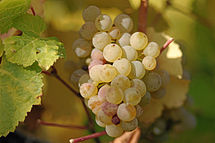
Ripe Riesling Grapes, as captured in Wikipedia
Welcome to the weekend and your new wine quiz!
And the moment you’ve being waiting for is here – as promised, we are switching to the white grapes! For the next 10 or so quizzes, we will be talking about white grapes. And we are starting with nothing less than the Riesling!
Riesling is one of the major white grapes (that “major” list typically includes Riesling, Sauvignon Blanc and Chardonnay) with long and somewhat turbulent history. The first official mentions of Riesling appear 1400s in Germany and then Alsace. From there, Riesling had been growing in popularity for the long time, about 100-120 years ago even surpassing red Bordeaux wines both in price and demand. Unfortunately, with prolonged wars and also subsequent Germany’s focus on quantity instead of quality in the middle of 20th century, Riesling lost its leadership position and currently is engaged in the uphill battle to regain its old popularity.
Overall, Riesling is considered to be very terroir-driven (similar to Pinot Noir), which you can easily see just by trying, for instance, German, Australian and Alsatian Rieslings side by side – you might perceive them as completely unrelated wines. Substantial acidity makes Riesling very food friendly (it is one of the most versatile white wines) and also allows it to age for a very long time – even 100 years would not be unheard of. Riesling is quite popular world-wide, growing in pretty much all major wine producing countries and slowly but steadily increasing both in terms of production and acreage.
Let’s get to our quiz, shall we?
Q1: Riesling is a very popular grape in US and Canada, growing in many regions. Considering the plantings of the Riesling in the regions, can you sort the list below from the biggest area plantings to the smallest?
a. California
b. New York
c. Ontario, Canada
d. State of Washington
Q2: Have you heard the term “noble rot”, which is often associated with certain types of Riesling? Can you explain what this term means and to which Riesling wines it is typically applicable (at least in Germany)?
Q3: Riesling is known for sometimes developing a specific aroma which has typically nothing to do with the wine – but it is not a fault. Do you know what aroma is that?
Q4: Name one major(!) wine producing country which doesn’t produce any Riesling wines.
Q5: If you look at the bottle of German Riesling, you will typically see the word such as Kabinett or Spatlese written on the label. Such words typically indicate the level of sweetness you should expect from wine – even though this is not a precise definition, as these words only indicate sugar amount in the freshly pressed grape juice – the level of sugar in the resulting wine can be quite different depending on the way the fermentation is done. Can you sort the following list of these key indicators from the lowest sugar content to the highest?
a. Auslese
b. Berenauslese
c. Eiswein
d. Kabinett
e. Spatlese
f. Trockenberenauslese
Good luck, enjoy and have a great weekend! Cheers!
Re-post: Affordable Luxuries of the Wine World: Sweet Wines
During 2011 I wrote a number of posts for the project called The Art Of Life Magazine – of course talking about my favorite subject, wine. The project closed and even web site is down, but as I still like the posts I wrote, I decided to re-post them in this blog. Also, in that project, posts were grouped into mini-series, such as “Affordable Luxuries” you see here – I will continue re-posting them from time to time.
Also note that the series was written for a slightly different audience – I hope none of my readers will take offense in the fact that sometimes I’m stating the obvious. Ahh, and I think this post is very appropriate today, as we celebrate Valentine’s Day – Happy Valentine’s Day to all!
 We are continuing our “affordable luxuries” series. In the previous posts we were comparing Hermitage and Crozes-Hermitage wines, as well as Grenache and Garnacha. Today we will talk about sweet wines.
First, let’s make sure we are all on the same page. We will be talking about real wines, made out of grapes, with soul and heart – this excludes white zinfandel, as well as blueberry, peach and coconut concoctions from further consideration. Second, I deliberately avoid using the word “dessert” wines, as that creates and expectations that we will be talking about wines which should be served only after a meal – where sweet wines are just the wines which have a lot of sweetness in the taste – but they are balanced and interesting enough to be actually served at any time during the meal or by themselves. I remember how Kevin Zraly, famous American wine educator, described his dining experience in Sauternes, area in France making some of the best in the world sweet wines: while he was expecting Sauternes to be served only with desserts, quite on contrary, they were served as aperitif, with an appetizer and entrée course, and then, of course, with dessert.
If you look at the sweet wines in general, you will find wide variety of styles, with differences a lot more pronounced than, for instance, between classic Burgundy and fruit forward California Zinfandel. It would make it a fun project to classify the sweet wines of the world (hmmm, note to self), however, it would never fit in the format of the entertaining blog post, so let’s defer this for some other time, and let’s just lay down some basic facts.
Essentially, sweet wines can be made from absolutely any grape used in the wine making. There are some grape varieties, like Muscat, which are known to develop very high sugar levels and thus used more often in production of the sweet wines. Nevertheless, grapes are always harvested when they contain enough sugar to be made into the wine of particular style, whether it is Rioja, or Burgundy, or California Cabernet Sauvignon or anything else. Once grapes are harvested, they undergo a process of fermentation – that’s when sugars are converted by the yeast into the alcohol.
What makes wine to taste sweet is the amount of sugar left in the wine after fermentation is complete (it is called “residual sugar”). So in a very simplistic way, when we make sweet wine, we want grapes to have as much sugar as possible – which can be achieved by late harvesting the grapes, or by drying grapes under the sun, almost making them into raisins before the fermentation (this process is called passito), or by letting grapes to shrivel on the vine as the result of noble rot, or by letting grapes freeze on the vine and then making wine out of the frozen grapes. Whew, so much information in a single sentence! If you want to actually learn more about the same in a slow down form, take a look at the Wikipedia article on the sweet wines.
In order to retain sugar in the wine, we need to stop fermentation before all the sugar is converted into alcohol. There are two ways to do so. One is by adding pure alcohol, which kills all the leftover yeast and therefore fermentation stops. This is how Port wines are made, for instance. Another way to stop fermentation is by lowering the temperature of the liquid, which will technically achieve the same result as adding the alcohol (yeast stops converting sugars into alcohol), and then filtering the yeast out. This is how Riesling wines are made, for instance. There will be of course a difference in the amount of alcohol in the resulting wines – Ports typically have 19%, and Rieslings typically are ranging from 7% to 12%.
Now, after all this technical details, we are supposed to be talking about affordable luxuries, right? We learn to like (and crave) sugar from the moment we are born, so it is very easy to like sweet wines. But – it is not maple syrup we are talking about – it is a wine after all. The idea of a great wine is that it gives us pleasure – and pleasure of wine is dependent on the balance, whatever the balance would mean to you. Therefore, sweet wines are not been an exception at all – we want them to be balanced, same as any other wine we enjoy drinking. You want the balance of sweetness, acidity, fruit, minerality and alcohol – in other words, you want sweet wines to have sense of place and being well made.
Same as for any other wines, you will find sweet wines at full range of prices. Legendary Chateau d’Yquem from Sauternes will get you anywhere from $600 to $2000 per bottle, depending on the year and availability. At the same time, you can enjoy Haut Charmes Sauternes (Number 12 on my 2010 Top Dozen wines list) for $17. You can find Ruby Port for about $10 ( not necessarily very enjoyable), going to Rozes over 40 years old Port for about $100 (amazing, Number 2 on my 2010 Top Dozen) and then to the Taylor Fladgate Scion 155 years old (dream) at $3000 per bottle – if you can find it, of course.
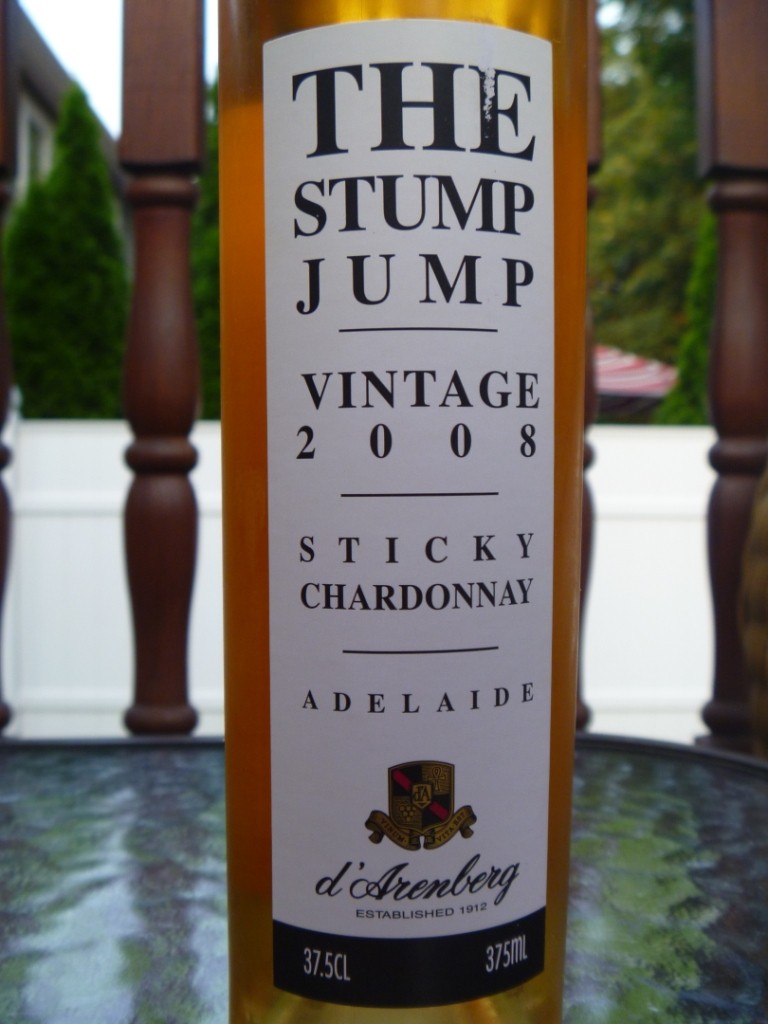 So for this post, let’s compare 2008 d’Arenberg Stump Jump Sticky Chardonnay from Australia (about $10 for 375 ml bottle) with 2006 Dr. Loosen Riesling BA ($20 for 187 ml bottle, so it is 4 times more expensive).
This sticky Chardonnay is a very nice wine, showing lots of peach, ripe apple and honey notes on the palate, with good acidity. When you try this wine by itself, the perception is “very good” – you just need to forgive some rough edges, a little sharpness on the palate.
So one would be technically quite happy with this Dessert wine – at least until he or she will have a chance to try the Dr. Loosen Beerenauslese Riesling. Light and beautiful, effervescent, with exposed minerality, smooth and balanced, with clean acidity and light sweetness. Very easy to drink and without any heavy aftertaste (as some sweet white wines can do). While d’Arenberg Sticky Chardonnay is quite drinkable, Dr. Loosen Riesling is definitely few notches above in terms of delivering pleasure.
Well, it is time to conclude. I hope you got a few ideas to explore – and don’t be afraid to experiment and look for your own personal wine pleasures – the reward is well worth it. Cheers!
Wednesday’s Meritage: Happy Independence Day!
 First and foremost: Happy July 4th! It feels a bit strange when the holiday falls in a middle of the week, but still it is a nice break.
Now, here is the answer for the Wine Quiz #18 – Wine and Independence Day. It was great to see a variety of opinions, but the right answer is…Madeira! Now almost forgotten (but seemingly coming back, little by little) Madeira was the wine used to toast Declaration of Independence on July 4th, 1776. The great thing about Madeira is that it was made to easily withstand a sea voyage in the barrel, were the other wines would arrive in totally insipid condition. If you want to read a bit more about Madeira, here is the link for you. And I would actually recommend to take it further – if you haven’t had Madeira recently, find a good bottle (forget the cooking stuff, please, get the real thing) – you might discover something you will really like.
For the news updates, I have a few things for you. First, for the “local” news, I finally updated my blogroll to add all the blogs I mentioned in my recent post.
I also want to bring to your attention a special “wine day” holiday. It is not even a day – it is a month-long holiday! In one of his recent posts, NJVinoman mentioned that we need more wine holidays – so his wish is granted – July is The 31 Days Of German Riesling! Now you have 31 days to celebrate the light, refreshing and versatile wine, perfectly complementing any hot summer day.
Last but not least – in addition to The Generous Pour program I mentioned in the last news update, The Capital Grille announced the return of their $18 “Plates” lunch menu for the summer. Well, there is a fine print there – you should check if you local Capital Grille is actually participating in the program – you will find the list of location at the bottom of the link I just shared. But if your Capital Grille is listed – don’t miss it!
That’s all I have for you for today, folks. Let me know what you are going to open to celebrate July 4th (Madeira, may be?). Happy Independence Day! Cheers!
Oh, My Sweet Valentine… – 2005 Version
 As I did recently with the post about Champagne, let me present you with an article written for the same Stamford Times newspaper in 2005 – talking about sweet wines for your special Valentin’s day, which is coming up in less than a week. For what it worth, here it is in its entirety.
* * *
Well, Valentine’s Day is around the corner. All stores are full of heart-shaped things, candies in particular. Seems that “sweet” is closely entwined into our tradition of Valentine’s Day celebration, and sweets and romance usually go together. While we are on the subject, did you ever think of where the word “honeymoon” came from? If you know the answer – great, you can skip the last paragraph, if not – please keep reading and you will get an answer at the end.
Now, let’s talk about the sweet substance which usually doesn’t come in the heart-shaped form, but nevertheless is worth mentioning – let’s talk about sweet wine. So how come the wine can be sweet? Do they add sugar to it? No, usually, nobody adds sugar to the wine. Sugar is developing in the grape as it ripens, and it is a result of photosynthesis ( no sun – no sugar – no wine, very simple formula). As the grape ripens, the amount of sugar is increasing, thus the idea is very simple – the longer time grape spends under the sun, the sweeter it becomes. The later harvest is, more sugar the grape will have. Have you seen the words “late harvest” on the wine label? What it telling you is that the grape spent more time on the vine and was harvested late, thus you should expect that the wine under such label will generally be sweeter.
Well, then, if sugar is naturally present in the grape, how come most of the wine we drink is not sweet at all – they are so-called dry wines? After grapes are pressed, when grape juice is fermented by adding yeast, the fermentation process stops by itself once all sugar is converted into alcohol – this is why we usually don’t taste sugar in the wine. Based on that fact, we can see that if grape has too much sugar, we might get wine very high in alcohol, which will usually defeat the purpose. The fact that the amount of sugar in the grape needs to be controlled often dictates the starting date of harvest. But when the goal is to produce sweet wine, the grapes are usually left on the vine for as long as possible, they shrivel under the sun, almost becoming raisins, plus very often it is desirable that the mold, called Botrytis cinerea, or “noble rot” will develop on the grapes. This will ensure that grape will have the maximum concentration of sugar, which will be then only partially fermented into alcohol, thus producing a sweet wine.
One more fact would be interesting to note – as it is necessary to wait until the grapes are “raisiny” enough to be made into a sweet wine, usually a small number of suitable grapes is harvested, and also such suitable grapes should be picked by hand multiple times. This translates into the fact that very often sweet wines carry a high sticker price (however an exception, but some German Rieslings, for instance, can go for $400 per 375 ml bottle)
To make sweet wines even more concentrated, as unusual as it sounds, next after sun and heat come frost. This is how so-called ice wine is made – grapes are harvested well into the winter months when the temperature drops below 17°F. Frost leads to the further dehydration of grapes, thus ensuring even higher levels of sugar and flavor in the grape. The grapes are pressed while frozen, and usually, a very limited quantity of the grape juice is extracted, which in turn means once again – you guessed it right – high prices. Just to add a historical perspective, ice wine was first produced in Germany at the end of 18th century and since then it is becoming more and more popular and it is now produced in other countries with great success (Austria and Canada are two of top contenders).
So where sweet wines are made? The answer is – pretty much everywhere. While covering all different sweet wine regions in this article would be impossible, let’s take a quick tour around the world.
We will start in … France, of course. Some of the best sweet wines in the world are produced in the region of Bordeaux called Sauternes. Sauternes wine is made primarily out of grape called Semillon. The most famous wine in Sauternes is made at Chateau d’Yquem – you wouldn’t regret having Chateau d’Yquem served at your romantic dinner.
While we are in Europe, let’s make another stop – Germany. Assumingly, German Rieslings don’t need much introduction. Riesling wine is made out of the grape with the same name – Riesling. There are different levels of sweetness (five of them) in German Rieslings – starting from the one called Kabinett, which is a semi-dry wine, and going to the one called Trockenbeerenauslese ( TBA in short), which makes very rich, sweet, honey-like wine ( the price also follows the trail).
Of course, when talking about wine, we can’t forget about Italy. While most of its fame is coming from the red wines like Barolo and Barbaresco, there are a number of well known sweet wines coming from that beautiful country. Asti Spumante, a sweet sparkling wine, would be one. Moscato di Asti would be another one – lightly fizzed wine with a fresh and delicate aroma. Vin Santo out of Tuscany (produced in the Chianti region) might also sound familiar.
Let’s cross the ocean now – in the United States, sweet wines are produced in the number of regions, best of them arguably coming from upstate New York and the state of Washington. These sweet wines are usually made out of Riesling grape. Canada is also worth mentioning as since 1973 it became a very respected producer of ice wine and compete very well in that category with both Germany and Austria.
While there is more to the geography of the sweet wines ( we didn’t even get to talk about Australia, Chili, Spain, Portugal, and others), let’s talk about how and what to serve them with. The serving temperature range for the sweet wines is rather large, from 50°F to 65°F. You can choose the serving temperature depending on what characteristic of the wine you want to bring out – for the sweetness you can serve it warmer (57°F – 65°F), but if you want to stress the light and refreshing side of the wine, you can serve it colder (50°F – 57°F).
What to serve with the sweet wine? One possible choice – nothing. After all, there is plenty of sugar in that glass to qualify as a dessert by itself. But if you want to have the sweet wine with food, the rules are the same as for any wine in general – it can either complement or contrast the food. You can serve sweet wine with dessert to complement it, or you can contrast – serve a nice Riesling with blue cheese, for instance.
One thing left before we conclude – the answer to the “honeymoon question”. The word comes from ancient Persia, where it was a tradition for the father of the bride to provide a month-long supply of alcoholic beverage called mead (made out of honey) for the groom to be enjoyed after the wedding. As lunar calendar was used at that time, hence the “honeymoon” word.
With this, we will conclude our short journey to the world of sweet wine. This Valentine’s Day, bring a bottle of sweet wine to your sweet Valentine, and to make sure it will taste the best – enjoy it together! Cheers!
Experiencing Wines of Canada
 Coming back to the memories of “ahh-so-distant-by-now” our Canada vacation (it’s been almost a month!), I need to share my wine experiences with you. You might remember two earlier posts (you can find them here and here), which I prefer to refer to as “picture reports”, which gave you the visual expression of the food and some of the wines in Canada. However, we had an opportunity to spend some time in one of the Canadian wine countries, surrounding the small town of Niagara-on-the-Lake – and it was an eye-opening experience for me.
Until this trip, my idea of Canadian wines was very simple – Icewine. I knew for a while that Canada makes some really famous Icewines, which compete with German and Austrian Icewines. Outside of Icewine, my only reference were wines of the Finger Lakes region in upstate New York (general direction of Canada). While I wouldn’t claim that I visited a mass amount of wineries in Finger Lakes, in a few places we visited the only drinkable wines were Rieslings, and all the red wines were plain bad. Therefore, these were my expectations for Canadian wines.
I decided to start from the winery with the name at least I heard of – Inniskillin, and of course, the only wine I knew “of fame” there was an Icewine. As a side note, I want to mention that the winery had a playroom for kids – which is a very important factor in letting adults enjoy wine tasting, even during family vacation. The first wine we tried was 2010 Two Vineyard Riesling – very clean, good tropical fruit expression, all paired with beautiful acidity, a nice finish. This was a great start of the tasting. The next wine completely blew me away – the 2009 Legacy Series Pinot Gris. First, I didn’t expect Pinot Gris to be produced in Canada. But is not the main factor. Very complex, with explicit minerality and spicy bouquet on the palate, this wine still puts a smile on my face when I think about it.
 After having a great start with the whites, my level of expectations increased for the reds – and rightfully so. 2009 Montague Estate Vineyard Pinot Noir was very nice, varietally correct with a precise expression of smokiness and red fruit. Again, I would never expect to find a Pinot Noir of such clarity at a winery located so high up North – but I did. 2009 Shiraz Cabernet had perfect acidity, good minerality, just the right balance of dark fruit. 2009 Cabernet Franc was simply my favorite red wine – perfect, very balanced, with clearly expressed green peppers and explicit minerality (you might think that I’m abusing the term – but minerality was one of the key characteristics of all the Inniskillin wines we tasted, so I can’t help myself but to call it out).

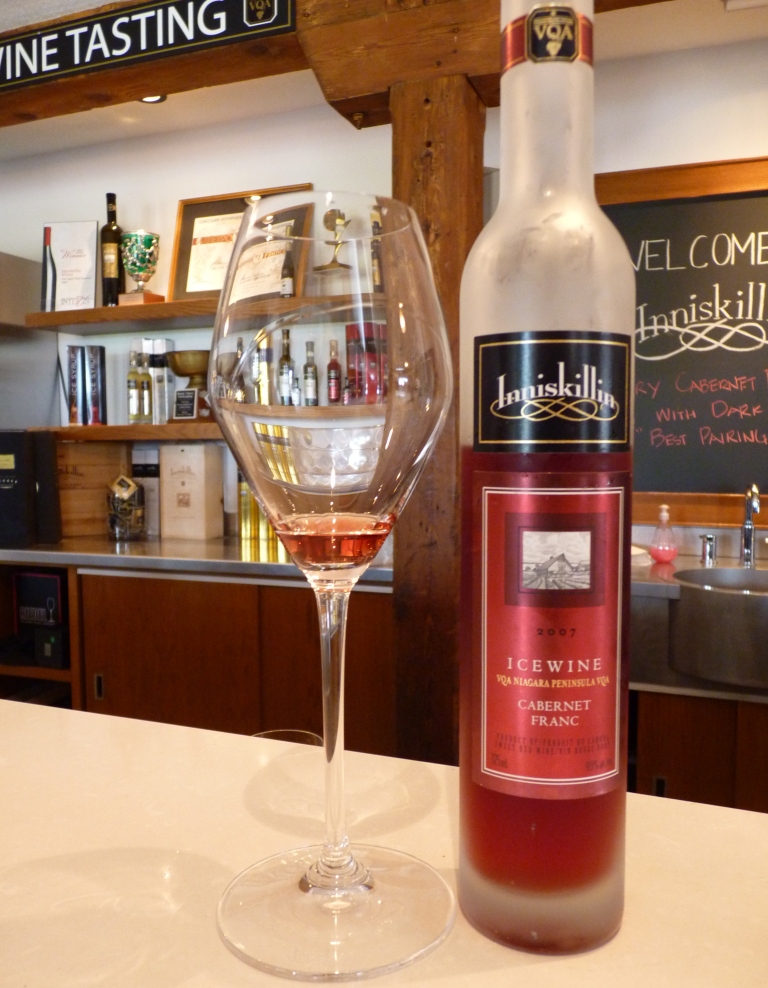
As you might expect, sweet wines were next. We are not talking about some arbitrary late harvest wines – we are talking about Icewines, which have the highest sugar concentration out of all sweet wines, as the grapes are ripening on the vines until the frost reaches –8°C (about 17F) – then the grapes are harvested while being frozen and pressed right away – which yields a tiny amount of super-concentrated grape juice – this is why the wines are called Icewine (also such a low yield explains the high price of the Icewines). First, we tried the 2010 Sparkling Vidal Icewine, which was very light and delicate. 2007 Cabernet Franc Icewine was a real star though. I have to mention that Inniskillin was the first winery to produce Icewine from the red grape. Also, Inniskillin worked together with Riedel, the leading wine glass maker in the world, to produce a specially shaped Icewine glass that enhances the aromatics of the Icewine.

Going back to Cabernet France Icewine, it was incredible, one of the best ever dessert wines I ever tried. Why am I saying that? Balance. Ultimate Balance was the first and foremost characteristic of this wine. Beautiful balance, perfect lingering acidity, and literally unnoticeable sweetness – great wine. All in all, it was an outstanding lineup of wines at Inniskillin, I can’t recommend highly enough each and every wine I tried.
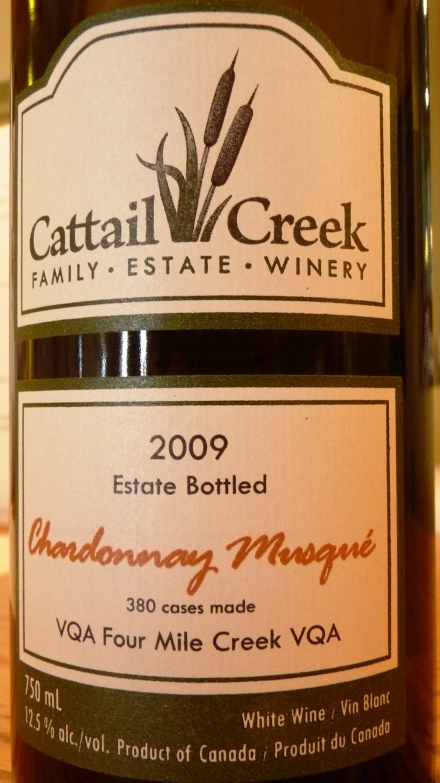 Next stop we made at the Cattail Creek Family Estate winery. One of the reasons to pick that particular winery was the fact that they have a few wines with the grapes I didn’t have before, like Chardonnay Musque, or different Riesling clones. I’m glad we stopped by, as we found more great tasting wines, plus most of the wines are made in very small quantities, so many are available only at the winery itself. First, we tried 2008 Catastrophe White, which was perfectly refreshing, with good acidity and a good amount of white fruit. Then we tried 2009 Catastrophe Red, which had very good balance, nice red and black fruit expression, soft and pleasant. It is interesting to note that Catastrophe wine series labels depict real cats who lived at the winery. Last but not least was the 2009 Chardonnay Musque – very nice, with good acidity, good reflection of what Chardonnay is, good subtle tropical fruit expression, more as a hint. This was yet another great experience.
Our last stop was Chateau des Charmes. This winery had the most impressive building of all:

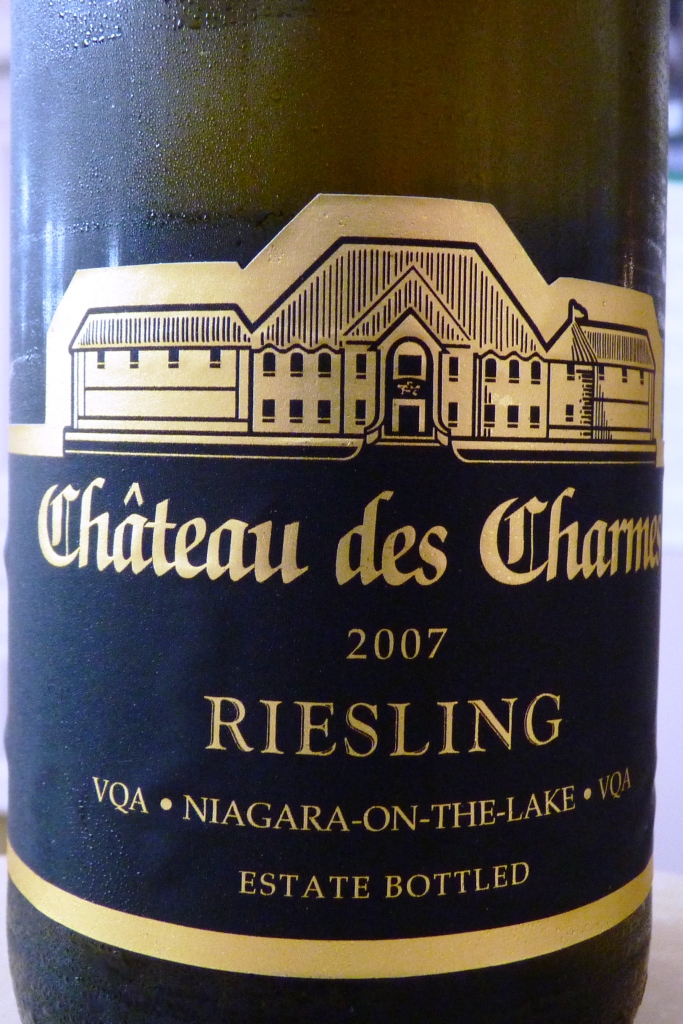 The wines here were also very impressive. We started with 2007 ‘Old Vines’ Riesling (I wanted to experience “old vines” Riesling) – and to my complete surprise, this Riesling had a Petrol nose! I was always under the impression that Petrol nose is a property of only German Rieslings – and here we go, Riesling from Canada with full classic German Riesling expression. In addition to the Petrol nose, it also had very good fruit, medium body and perfect balancing acidity. Next were more of the very impressive Pinot Noirs. 2007 Pinot Noir had a beautiful nose, and lots of tannins on the palate – it was unusually muscular for the Pinot Noir, probably in need of a few years to open up, but still, it was very good. 2007 ‘Old Vines’ Pinot Noir was also very big and powerful, with a clean smoky nose, but also needing time as the previous wine.
 Last but not least was 2008 Gamay Noir ‘Droit’, which happened to be a clone of Gamay and therefore it accounted for an additional grape for my “counting grapes” project. This wine had a very unusual herbaceous nose, and was nice and light on the palate – definitely a food-friendly wine.
That concludes the Canadian wine story, as we didn’t have time to visit more places. But even based on this experience, if before I knew of only Icewines from Canada, now all the Canadian wines are squarely on the “to find and drink” list for me – and I highly recommend that you will make an effort to find them and try them as well. The challenge is – I didn’t see that many Canadian wines on the shelves of the wine stores here in Connecticut. Oh well, hopefully, we can change that. Cheers!
80 Sips, Loud Music And New Grape (Treble Journey #277)
 Last Friday we attended “Around The World in 80 Sips” wine tasting event in New York City, organized by Bottlenotes. The idea of the event is to present wines from all over the world, from such wine stalwarts like France, Italy and Australia to literally unknown wine producing countries such as Lebanon. There were more than 100 wines presented in the event, which was not free ($75 standard ticket price, we paid $50, courtesy of The Austrian Wines).
Overall, I found the event somewhat challenging to enjoy. No, nothing wrong with the wines – there were a number of very good wines to taste. My first issue was really (I mean, really) loud music. There was not possible to talk face to face, never mind listening to the explanations about wines. The second issue was the sheer crowd. I really like wine tastings, big and small – if I only have a chance, I attend them as much as possible – wine tastings are the best places to learn and experience. I’ve being to all kinds of events – trade only and consumers, with thousands of wines present and with the handful of wines. I never being to the event where you have to stand for 10 minutes, not even in the line, but with your arm with the glass fully extended through the crowd, in the hope that wine will make it into your glass – mind you, we are not talking about tasting Petrus or Screaming Eagle here.
Leaving all the inconveniences aside, there were a number of good wines from those I was able to reach. Particularly, there were a number of interesting wines from Austria. This is where I managed to pick up grape #277, Rotgipfler, with the wine called Stadlmann Rotgipfler Tagelstiner 2008. My particlar favorite here was Fritsch Pinot Noir 2004, which had finesse and elegance of the classic Pinot, with more pronounced earthiness, typical for Austrian wines. It is interesting to note that we went through 3 bottles to really get the beauty of this wine showing – first was so so for some reason, second one corked but the third one was shining.
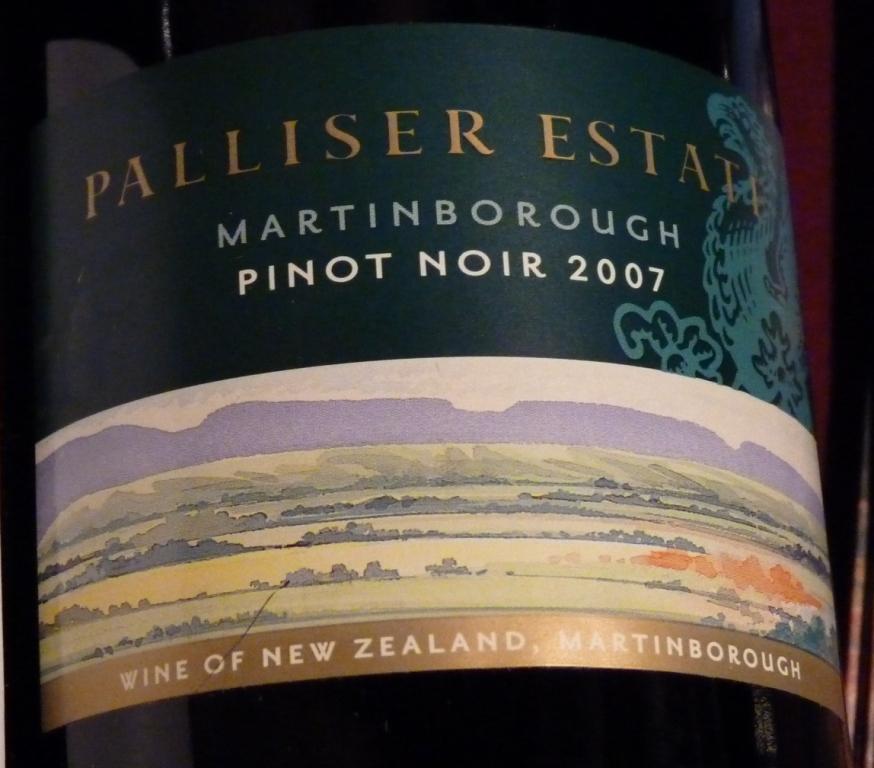 My overall tasting favorites were a couple of wines from New Zealand. First, a Pinot Noir 2007 from Palliser Estate in Martinborough. There were a number of good Pinot Noir wines from New Zealand, both from Martinborough and Central Orago, from 2007 and 2008 vintages. This particular Palliser Estate Pinot Noir had the most elegance out of the group, with classic Pinot smoky nose and restrained fruitiness of the New World wine.
The other two of my favorites where two white wines from New Zealand, one of them being total surprise. 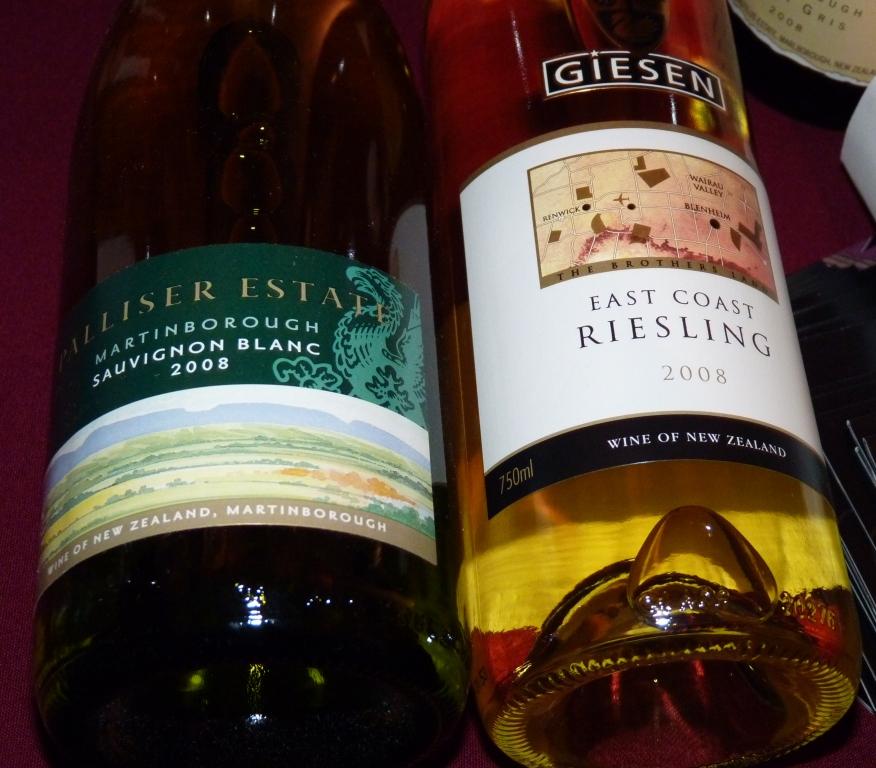 First was Sauvignon Blanc 2008 from the same Palliser Estate. I have to honestly admit that I have a weakness towards New Zealand Sauvignon Blancs – I enjoy them very much. The Palliser Estate Sauvignon Blanc had more of everything – not that it was a fruit bomb, no, simply the fruit was a lot more pronounced, such as in-your-face-gooseberry. I would put Drinkability of this wine at 8+.
And the surprise came in the form of Riesling from New Zealand. Why the surprise? First, I never had before a Riesling from New Zealand. Second, based on the experience with neighboring Australian Rieslings, which I find too dry and not pleasant, my expectations were quite low. And the surprise was in the fact that this particular East Coast Riesling from Giesen was actually tasting like … German Riesling, only done more in the fruit forward style (not sweet at all, the Kabinett level), very nice and pleasant.
To conclude: am I grateful for the experience I had? Of course. Wine tastings are always fun. Will I attend another Bottlenotes event? As of right now – I don’t think so, but hey, you never know…
Last Bottle Sign Up ($10 credit)




 Talk-A-Vino