Archive
Wednesday’s Meritage – Wine Quiz Answer, #MWWC5 Vote, Peter Mondavi Turns 99, The Oldest Wine Cellar?, and more
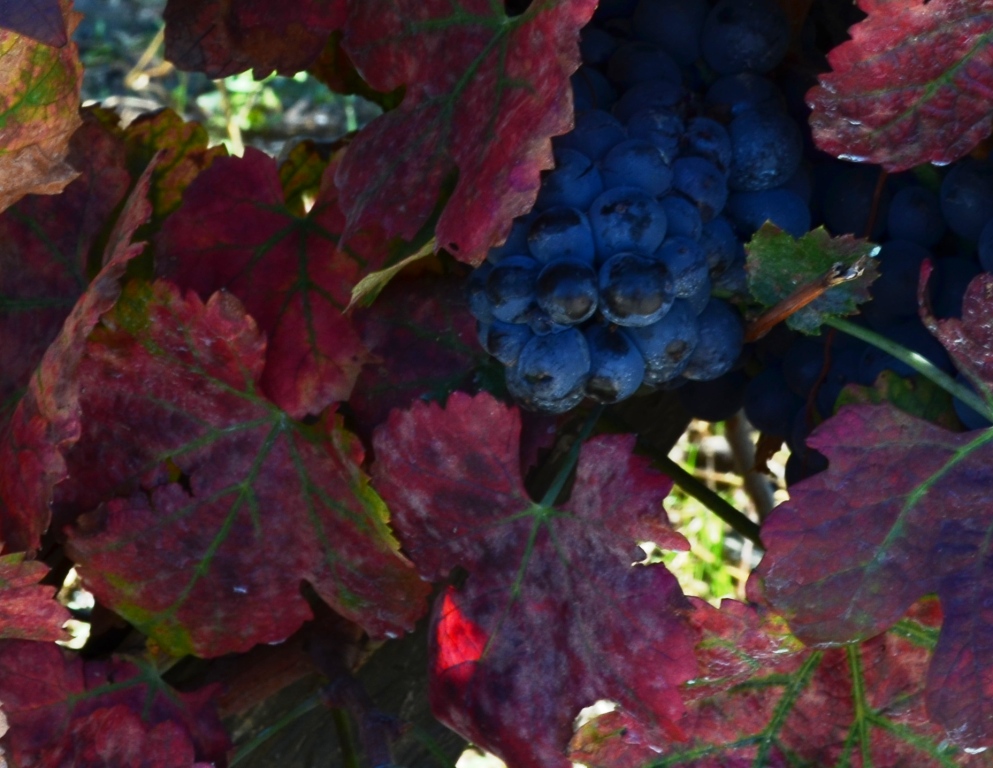
While not Carménère, this gives you an idea of color
Meritage time!
First, let’s start with the answer for the wine quiz #83, grape trivia – Carménère.
In the quiz, you were supposed to answer 5 questions about red grape called Carménère. Here are the questions, now with the answers:
Q1: Explain the name of the grape Carménère
A1: The name Carménère originates from the French word for crimson, carmin – that relates to the fact that the leaves of Carménère turn beautiful crimson color in the fall.
Q2:Similar to Merlot/Carménère confusion in Chile, the discovery was recently made in one of the well known old world wine producing countries – the grape they thought was ___, actually happened to be a Carménère. Name the grape, the country, and the region within this country where confusion took place.
A2: For the long time, winemakers in Friuli-Venezia Giulia in Italy thought that they were making the wines from Cabernet Franc – only to find out that it was actually a Carménère!
Q3: As the sequel to the previous question – the confusion also spread into the New Wolrd winemaking country. Name the grape been mistaken and the country.
A3: New Zealand imported Cabernet Franc vines out of all places, from Italy – oops? Yes, It was actually a Carménère!
Q4: Wine Spectator calls wines rated in 95-100 range Classic (the highest and the most prestigious category). True or False: there are no Carménère-based wines rated in the Classic category
A4: False . A number of Chilean wines from Casa Lapostolle got the 96 rating, and they are a Carménère-based blends
Q5: Name three grapes, often blended together with Carménère.
A5: Cabernet Sauvignon, Merlot and Cabernet Franc are often blended together with Carménère.
“We had rather a low participation in the quiz, but – we do have a winner” – was my opening line here. Now, with the last second entry, we have two winners! Patty from P’s 2013 photo project and Namie from Eat with Namie both correctly answered all 5 questions, and they both get the prize of unlimited bragging rights. Well done!
Now, to the interesting stuff around the vine and the web!
I have a few interesting things for you. First, you can vote now for the winner of the Monthly Wine Writing Challenge #5, with the theme called “Feast”. Here is the link to the blog post where you will find all the contenders’ blog posts and can vote!
The next article I want to bring to your attention is from the Wine Spectator, and it is dedicated to the Peter Mondavi – the older brother of Robert Mondavi. As amazing as it sounds, Peter Mondavi turns 99, and he still actively runs his winery, Charles Krug in Napa Valley. You can find the article here – definitely an interesting read, very relevant to the past and present of California wine.
How old do you think the oldest known wine cellar is and where do you think it is located? An archaelogical excavation in the norther Israel unearthed a cellar, which is estimated to be 3,700 years old. I think this is a very respectful age. No, the wine didn’t survive for that long, but nevertheless, I think this is a fascinating find. Here is the link for the Wall Street Journal article with more details.
Thanksgiving, an American holiday we will celebrate on Thursday, prompts lots of conversations about wine, and American wine in particular. I want to bring to your attention a very interesting article written by Mike Veseth at The Wine Economist blog, where he is talking about American wines. When we say “American Wines”, we actually don’t mean the wines made only in California – the wines are produced in all 50 states, and 12 of those states have more than a 100 wineries each! I find this information very interesting. Also from Mike’s article you can jump to the web site called Wines and Vines, which seems to offer a wealth of data regarding the wine industry – check it out.
Last but no least – don’t forget WTSO Gift Marathon on December 2nd (full details can be found here). WTSO just announced some of the wines which will be a part of the marathon – Beringer, Insignia, Philippe Prie, Caymus – I think it will be a very interesting event, so point your browser to the WTSO on Monday, December 2nd and happy hunting!
Ahh, and before we part – Happy Thanksgiving and Happy Hanukkah!
That’s all I have for you for today, folks. The glass is empty – but refill is on its way. Until the next time – cheers!
Wednesday’s Meritage – Wine Quiz Answer, #MWWC5 Theme, Not Really [Wine Shortage], Australian Wine and more
 Meritage time!
First, let’s start with the answer for the wine quiz #80, grape trivia – Mourvèdre.
In the quiz, you were supposed to answer 5 questions about white grape called Mourvèdre. Here are the questions, now with the answers:
Q1: Name two grapes, most famous blending partners of Mourvèdre.
A1: Grenache and Syrah. GSM is the best known blend with M standing for Mourvèdre. The G stands for Grenache, and S is for Syrah (Shiraz).
Q2: Wine Spectator calls wines rated in 95-100 range Classic (the highest and the most prestigious category). True or False: there are no Mourvèdre-based wines rated in the Classic category
A2: False. A number of Domain Tempier wines from Bandol have 96 rating from the Wine Spectator.
Q3: Fill in the gaps: The oldest, continuously producing Mourvèdre vine is located at ___ Vineyard in ___, and it is about ___ years old.
A3: My answer: The oldest, continuously producing Mourvèdre vine is located at Hewitson Old Garden Vineyard in Barossa, Australia, and it is about 160 years old – here is my source of info. Of course I understand the “the oldest” claims are tough to prove – I’m sure few other producers claim the same. But the age (160) and general location (Barossa, Australia) seems to be generally correct.
Q4: Explain potential origins for all three names of the grape – Mourvèdre, Mataró and Monastrell
A4: Let me actually quote my answer directly from this source: Mourvèdre “first became established in Cataluña where it took on the names Mourvèdre (after Muviedro, the Moorish name for the city of Sagunto, near Valencia) and Mataró (after Mataró in Cataluña). In Cataluña the grape was grown by monasteries, leading to the name Monastrell (from the Latin monasteriellu) in that region”.
Q5: True or False: France plantings of Mourvèdre far exceed the plantings in Spain (no tricks here – Mourvèdre and Monastrell are used interchangeably, you have to assume it is the same grape).
A5: False. Plantings of Mourvèdre in Spain are about 6 times of the plantings in France.
So today we have a grand winner, the drunken cyclist, who answered all 5 questions correctly. We also have a winner, the winegetter, who answered all 5 questions mostly correctly, with the slight discrepancy on the question 3 – but nevertheless, they both get the grand prize of unlimited bragging rights. I also want to acknowledge my blogging friend Patty P’s 2013 photo project who was answering the questions for the first time – she answered the first question correctly, and I really like her take on the question #4. Great job!
Now, to the interesting stuff around the vine and the web!
I have a few interesting things for you. First, congratulations to the winner of Monthly Wine Writing Challenge #4, Anthony Davies, who writes the blog Confessions of a Wine Geek. Anthony just announced a theme for #MWWC5, which is Feast (very timely, considering Thanksgiving in the US, where it is all mostly one giant feast). Here is the link to the blog post with all the rules.
Now, I’m sure you read or heard somewhere about impending wine shortage. As the wine is ever increasing in popularity and demand all over the world, you would imagine that the report from the good source, showing for how many millions of cases demand exceeds the supply, will be picked up all over the news. And it was. Only the thing is that the numbers are numbers – question is what you do with those numbers. So in case you panicked (or were just amused), I have a very good article for you to read – it is written by W. Blake Gray, and it explains in good detail that no, you don’t need to stock up on wineand you will still find the good bottle to drink at the price you will be willing to pay.
Next post I want to bring to your attention is about Australian wines. It is a pity that selection of the Australian wines in the wine stores is not anything it used to be, as Australia makes a lot of great wines. This article, written by Mike Veseth at The Wine Economist, is talking about the work Australian winemakers are doing to restore the image of the Australian wines and squarely put them back to the wine stores and the cellars around the world.
Last but not least for today is an interesting open letter written by Alder Yarrow of Vinography to the United Kingdom. Turns out that association of Wine and Spirits Wholesalers of America is offering its help to the good people of UK, suggesting that they know how to protect public from the dangers of unregulated wine market (oh, horrors, free commerce!), which seems to be of concern to the people in UK. In case you don’t know, it is the US wholesalers who you have to thank for monopolistic pricing and draconian shipping laws in many of the states, and overall inability of wine consumers to get the wines they want. So Alder’s open letter to the United Kingdom is definitely worth reading, it is hilarious – here is the link where you can find it.
That’s all I have for you for today, folks. The glass is empty – but refill is on its way. Until the next time – cheers!
Last Bottle Sign Up ($10 credit)




 Talk-A-Vino